What’s Up with That? Piece by piece, a city rebuilds.

When I arrived in Harrisburg some 11 years ago, I had quite a few “what’s up with that?” moments.

For instance, a large, boarded-up stone building at 3rd and Boas streets that clearly had once been a stunner—what’s up with that? Ditto, the tall, majestic building a few blocks away, blighted and deteriorating, and the abandoned brick pile on Verbeke Street that had a few fading Art Deco flourishes.

What was up with all of these—and many others?

As a new resident, I wanted to know how they had reached their lowly states, especially since they all were located so close to the Capitol complex, home to thousands of state workers daily.

Perhaps my greatest “what’s up with that?” came the first time that I saw the 1000-block of N. 6th Street. Here was an entire block of blight, with one major exception, the popular lunchtime spot, the Jackson House.

Every day, hundreds of state employees breezed right by these ruins to grab a legendary Jackson House burger or sub. Logically, you’d think that someone would see a business opportunity to re-develop this area. But no.

So, how did this happen?

It’s actually a complex story and one that, in the ensuing years, TheBurg would return to again and again. I can’t tell it all in this space, but it shares two elements common to most blight stories in Harrisburg—and in other once-thriving industrial cities across the United States.

Element #1: Flight. Starting in the 1950s, industry closed, and people began leaving the city for the suburbs, commuting in for, increasingly, service-sector jobs, which, in Harrisburg’s case, mostly meant state government. The 1972 flood was the nail in the coffin here, as residents took their federal flood money—and the few pennies that opportunistic slumlords gave them for the properties—and fled in a second huge wave.

Element #2: Disinvestment. Property owners stopped maintaining their buildings. Typically, they rented them out, for increasingly less money, until they became utterly uninhabitable. Then, instead of fixing them up, they boarded them up, and the dilapidation continued. Some fell apart slowly, others collapsed suddenly. Some sold for taxes, some landed with the Redevelopment Authority, others were flipped to speculators who let them rot further.

All of this happened to the 1000-block of N. 6th Street.

Of the six properties on the west side of the street, one caught fire, one collapsed in a

storm, one pancaked in, one was boarded up and the other should have been. Only the Jackson House, smack-dab in the middle of the street, remained truly sound.

And that, in a nutshell, was what was up with that.

Also, the blight fed on itself so that, for more than 50 years, few imagined that any of the old commercial streets of Midtown Harrisburg could be any different.

But then they were.

Fortunately, it turned out that the opposite also could happen. Just as blight can spread, so can redevelopment, and that’s where we are now in this story.

Over the past decade, nearly every one of the blighted, boarded-up buildings I saw on my first walk through Midtown has been renovated and redeveloped.

One is now StartUp. One is H*MAC. One is the Millworks, and another is the Coba apartment building. There’s Midtown Scholar and the Susquehanna Art Museum and ModernRugs and Campus Square and numerous smaller shops and restaurants like Yellow Bird Café, Pastorante and Urban Churn. One is even TheBurg.

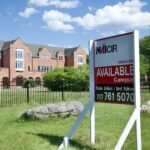
Redevelopment has become such a powerful force that it’s now rolled over even the most desperate of streets—the 1000-block of N. 6th.

Currently, three of the buildings are being redeveloped as a mix of apartments and retail. Brothers LeSean and LeRon McCoy, Harrisburg natives and professional football players, are investing in the block, undertaking two cellar-to-roof renovations. They also hope to buy and build new on the vacant corner parcel, where the former Bethel AME Church burned down in 1995.

This street has a great deal of meaning to Harrisburg. It is one of notable history, the last remaining block of what was once an extensive African-American commercial enclave—a street of barbers, rooming houses, hotels, groceries and other businesses that catered largely to a black clientele in segregated Harrisburg, and it was almost lost. Well, unfortunately, some of it indeed was lost, but some now will be saved, so that life will return again to the street—that is, for more than a quick bite at lunchtime.

I find that, in Harrisburg (maybe everywhere), there are the glass-half-full and the glass-half-empty people. The latter might say—well, that’s fine for Midtown, but what about the rest of the city?

I try to be an optimist, but understand their point, too. Heck, on my block, two small apartment buildings have been condemned this year alone. There are still far too many old-time property owners who regard Harrisburg as only a place to extract money from, not invest in, seemingly believing that even simple building maintenance is a dollar out of their pocket.

But I’m not going to begrudge redevelopment where it happens. A revived 6th Street is good for the city, especially because it links up with other progress nearby, creating a critical mass to attract people and motivate further investment. It’s gotten to the point that, walking around the city, I still have my “what’s up with that?” moments. However, when I do, it’s because I see the boards coming off and construction signs going up.

Lawrance Binda is editor-in-chief of TheBurg.

Continue Reading

Poured in Perry: “Hop” over to River Bend–the oldest, um, only–brewery in the county.

Just a short spin down a tree-lined lane from Newport, situated along the Juniata River, you will find the oldest brewery in Perry County— River Bend Hop Farm and Brewery.

“Since we own the only brewery in Perry County, we enjoy claiming the title of the oldest brewery in Perry County, even though it only opened two years ago,” quipped co-owner Tom Beers.

River Bend boasts an “ever-changing” beer menu featuring sour, dark, hoppy, sweet and light flavors, including house-made sodas.

“I prefer the dark beer and Denny the IPA,” Beers said. “Our customers have shown a preference for a German wheat beer we call hefeweizen.”

In addition to the 13 beers on tap, River Bend offers food such as burgers and pulled pork sandwiches—popular complements to their beer. With a farm-to-table restaurant, they grow their own vegetables and many fruits such as blueberries and blackberries.


Ground Up 

In 2014, Denny and Wendy Browne bought a 22-acre farm.

Denny had grown up on a farm, so it wasn’t a far stretch from his childhood. While attending an organic farming conference in Pittsburgh, the Brownes sat in on a seminar about growing hops.

Afterwards, they decided they wanted in on this cash crop, considering the rapid growth in craft beer production. While at the conference, they bought the equipment needed to raise hops on their new farm. Three days later, they asked a group of friends if they would be willing to help them plant the hops. Tom and Melissa Beers were on board.

“When we began planting hops, we never really intended to start a brewery,” Beers said. “We just evolved into it.”

In the fall of 2014, Beers and the Brownes erected a trellis system that was needed to support the hops. As winter intervened, their work was postponed.

The next spring, they put up 25,000 feet of cables to support the strings on their 1,000 plants, hand-wrapping each of the 22- to 24-foot plants around the strings. The group finished the planting in early May 2015, soon harvesting a small crop.

The next step was renovating the barn for use as the restaurant.

“We needed to gut it and start from scratch by putting in new floors and closing in one end,” Beers explained.

He added that there were production specifications for firewalls, electricity and plumbing that they needed to follow. Lastly, they had to add a new bathroom for customers, as well as the bars on each of the two floors.


An Evolution

Not being experienced brewers, the group’s initial efforts, by their own admission, did not turn out well. So, they decided it was best to hire a professional brewer. They have now hired a second brewer so that Beers and Browne can focus on marketing and managing a staff of four full-time and 30 part-time employees.

River Bend Hop Farm and Brewery officially opened in September 2017.

“We were all thrilled when we opened,” Beers said. “Initially, we started with six beers. After six months, we graduated to 12 beers, and now we brew a total of 13, one of which is a sour.”

Looking to expand further, the owners pondered the possibility of adding a stand in Cumberland County. However, they faced resistance.

“We were told we would never be able to sell craft beer in the county since the locals are domestic beer drinkers,” Beers said. “Happily, after partnering with a number of nonprofits at festivals, we have discovered that is not the case at all. Our experience has far exceeded our expectations.”

In March 2019, River Bend Hop Farm and Brewery opened a stand at the West Shore Farmers Market with six beers on tap to go.

“Our growth has really been an evolution, one step at a time,” Beers said.


River Bend Hop Farm and Brewery is located at 1800 Lower Bailey Rd., Newport, and also has a stand in the West Shore Farmers Market in Lemoyne. For more information, call 717-315-6764 or visit www.riverbendhopfarmandbrewery.com.

Continue Reading

Dog Days of Autumn: Unleash family fun at Fort Hunter’s Howl-O’Ween.

If you find dogs in costumes to be more appealing than all those Reese’s and Hershey’s bars combined, Dauphin County’s Fort Hunter Park has a sweet treat for you.

On Oct. 27, Fort Hunter hosts its second annual Howl-O’Ween, which will attract all kinds of doggies in disguise—and other sociable pets are invited, as well.

You are encouraged to dress for the weather, and if you are really in the spirit of the season, dress to complement your costumed canine.

Last year’s head-turners included two white dogs dressed as Oreos (they were the creamy centers, of course), a Rhodesian ridgeback that was a dead-ringer for a lion, a “Superdog” with an entourage of superheroes, a skunk, a lumberjack and Eeyore joined by the entire Winnie-the-Pooh crew.

All of those costumes were showcased in the parade.

Because a handful of the more “free-spirited” dogs decided to stray from the neat procession line, the parade will be replaced this year by individual appearances. Every furry friend will have their day as they walk across a stage on the lawn by the barn for their five minutes of fame and can enter to win a prize as the funniest, scariest, most creative or other contest superlative.

Last year, the free event surprised even the organizers by attracting a crowd of some 500 animal-lovers and their beloved pooches—along with one old goat (who just came as he was), said Julia Hair, park manager.

Besides the always-irresistible dogs in dresses, the famous rescue dog, Libre of Speranza, will be on hand.

Also on tap will be an obedience demonstration by Mia Sumata, an agility demonstration by the Dauphin Training Club, Steppin’ Woofs dancing dogs demonstrations, and sheep herding demonstrations by Marianne Walters.

Guests can also dress up their pets in mustaches, hats and other hilarious props in the photo booth, sniff their way past pet-themed vendors, have their kids’ faces painted, and decorate pumpkins. Organizations like the Humane Society, Castaway Critters, Furry Friends Network, Honey’s RAID, Speranza and Phoenix Assistance Dogs of Central PA all will be on hand. Pet-themed snacks, hot dogs and beverages will be for sale.

You can bring your cat or any other type of pet, but Hair said that dogs seem to be the best fit.

“This is the perfect time when dog owners and dogs have a place to come to mingle,” Hair said. “There are no expectations—just to be dog owners and get together.”

And if you are not yet a dog owner but want to be, many of the pet rescues will bring animals eligible for adoption with them.

“Last year, it was a lovely, sweet time for people with dogs to enjoy being with their dogs and other dogs, and this gave them the opportunity to do just that,” Hair said.

Hair gave credit to Fort Hunter board President Allen Lengle for the canine inspiration, after he saw a similar idea at Rehoboth Beach in Delaware.

Hair also thinks it’s a match made in heaven because the original owners of Fort Hunter—the Reily family—owned a parrot and a monkey.

She said that some costumes are store-bought and some are homemade, but they are all highly creative.

“This is just a sweet, simple festival on a Sunday afternoon,” she said.

Dauphin County Board of Commissioners’ Chairman Jeff Haste, who oversees the county Parks and Recreation Department, called it a “fun event for families and their pets.”

“On most days, the news can be awful, and this little thing, you come away feeling like hope is not lost. There’s good in the world,” Hair said. “Here, we have happy people and happy animals, and all we needed was a place to hold it.”

So, grab some pumpkin spice coffee, don your creepiest or most comical Halloween outfit, dress the dog, and immerse yourself in some paws-itively adorable puppy love.

Howl-O’Ween takes place Sunday, Oct. 27, noon to 4 p.m., at Fort Hunter Park, 5300 N. Front St., Harrisburg. For more information, visit www.forthunter.org.

Continue Reading

Mission Accomplished: Each year, packed buses leave central PA and head out of town on the summer mission trip.

Arthur Susan Ryder (center) with fellow members of the LutheranHANDS mission trip.

“Nana, papa, what happened to your house?” asked Kelli Williams’ grandson, when he saw the devastation Hurricane Florence had unleashed on her North Carolina home.

Williams recounted this story to me as we stood in her kitchen amidst the sound of impact drivers, the smell of spackle, and the chatter of 20 people working to restore her home. I thought to myself, “This is why people go on mission trips!”

Service isn’t new to me, but I’ve never experienced the “summer mission trip.” Loosely defined, a mission trip involves a group of people leaving home with a common goal of positively impacting those on the receiving end.

I served with LutheranHANDS, a Harrisburg-based organization co-founded and run by Jesse Woodrow and his five-member board of directors.

A small organization, LutheranHANDS takes about two mission trips a year and was birthed out of devastating Hurricane Katrina in 2005, when Woodrow, his now-wife and a bunch of their 20-something friends headed to New Orleans. Woodrow said that LutheranHands wasn’t created in one moment, but the idea began with a group of people saying, “Let’s do this.”

Now, it was my turn to do this.

The parking lot was full of luggage, adult leaders, young people and their parents, in various degrees of good-byes, anxious to get going.

I asked Luke Foery, a recent high school graduate from York, why he was going on the trip.

“Why not?” he said. “Work hard, get sweaty, help people out.”


Semper Gumby

In North Carolina, we arrived at a facility run by Baptists on Mission. The organization had recently renovated an old middle school and transformed it into the mission control of relief work.

The well-appointed dorm sleeping area harkened back to summer camp, with cubbies to hold our belongings. We had on-site showers (a luxury!), common areas for socializing and a large cafeteria.

I would act as an adult leader on team six, keeping track of youth, assigning tasks to the team, and, perhaps most importantly, making sure the crew drank enough water. The weather for this trip would be square—90 degrees, 90 percent humidity.

After a 7 a.m. proper Southern breakfast, including biscuits and grits (I could get used to that), we headed to our worksite. A double-wide trailer with a cinder block foundation, the house had been gutted to the studs and floor joists. Like many houses in Duplin County, a Federal Emergency Management Agency (FEMA) trailer, where the owner now resided, sat in the backyard. Nine months out from Florence, most people were not yet back in their homes.

Supplies for our site had been ordered, but had not yet arrived. Our work crew leader, Kevin Kincaid, announced our working motto, “Semper Gumby” (“Always Flexible”), as we were moved to another worksite until our supplies arrived—two days later.

Mission trips always involve flexibility. Coordinating worksites and large groups takes time. Supplies and tools frequently aren’t available when needed.


Look at That

Arianna Heidingsfelder was especially adaptable, spending her 16th birthday in North Carolina. Fingers and elbows dappled with paint and decorated with her a birthday sash, she was all smiles enjoying a birthday cake.

I asked her about missing her birthday at home.

“At first, I was kind of disappointed because, two years ago in New Orleans [another LutheranHANDS trip], I had my 14th birthday there,” she said. “But I come to help people and make new relationships and make some stronger.”

Her birthday gift? On this trip, she was painting rather than mudding drywall.

Not only young people joined LutheranHANDS. Kathy Panther, 67, looking for more to do during her retirement, was on her first mission trip.

“It reminds me of camp as a kid and the feeling of getting together and working on a team,” she said.

Crews worked on houses in various stages of repair.

Penn State sophomore Matt Little served as a work leader at a demolition site. He led his group with the battle cry, “We have two hammers. Let’s get to work!” The team tore out drywall and insulation and loaded a monstrous pile of debris into a dumpster under the shade-free, blazing North Carolina sun.

The Williams’ home was further along than many. Veronica Angus, using previous mission trip experience and some extra guidance, taped and spackled a 12-foot drywall seam. We celebrated as she announced, “Look at that sexy seam!”

The crew spent much time talking with Williams and her husband. Woodrow stressed that the purpose of this trip was not only to “get stuff done,” but also to create relationships with our homeowners and one another. We were encouraged to listen to their stories.

Williams said that, when the Cape Fear River began rising, they “grabbed totes of pictures and cards, four or five outfits,” and left. They returned later by kayak to see three feet of water in their home.

Now, Williams was buoyant as she saw all the work being done, assisting in every way possible.

“If I would have done all this myself, it wouldn’t have been as special,” she said. “This is the good you don’t get to hear about.”

The group’s goals also involved pushing themselves, teaching and learning new skills.

Team six’s new skill was insulation installation. Everyone learned the proper technique for cutting, folding over the paper tabs, and using a staple hammer to attach the insulation to the studs. At first, we worked clumsily. But as time went on, we mastered the stapler and cut insulation like butter. I nicknamed one team member “the hammer” because of her staple hammer wielding skills.

Most impressive was the participants’ willingness to do really hard, really hot, really dirty, and sometimes scary work, like entering the 18-inch crawl space under the house. Peering under the floor into the confined space, I nearly panicked. But like many of our team, I awkwardly slithered underneath, laid on my back and pushed eight-foot sections of insulation into the joists, affixing it with pieces of wire called tiger teeth.

One team witnessed a snake enter the space ahead of them. Daunted but determined, they scrambled in anyway, finished the work, and emerged with a sense of accomplishment, like slaying a dragon.

Exhilarated, yet tired, we boarded buses to head home, knowing we wouldn’t see the end of the work we’d begun. We left with the relationships we built and the satisfaction that Williams’ grandson is now making decorating plans for his new bedroom at nana and papa’s house.

For more information about the LutheranHANDS Foundation, visit www.lutheranhands.org.

Continue Reading

Pearly Whites, Pastes & Pitfalls: How to whiten and not weaken.

Dressed to kill for that first date, a make or break interview for your dream job, a long overdue night out, and the last thing you want is a dingy, yellow smile. Years of coffee, tea and food stains vanish in seconds as you rinse free the black, sticky mess from your teeth revealing underneath a dazzling, bright, shiny set of pearly whites.

This is the illusion that charcoal toothpaste companies try to sell you, which isn’t much different than the whitening toothpaste propaganda you see on a daily basis. A whiter and brighter smile is the most coveted outcome of dental treatment, and it’s no surprise that whitening toothpaste is the No.1-selling and sought-after type of toothpaste when it comes to the American consumer.

Whitening pastes can be a powerful and cost-effective ally in restoring that dull smile, but like most things that seem too good to be true, caution is advised.

Most whitening pastes act as abrasives, which remove stains from the outer layer of your tooth called enamel. It may take months before you achieve a noticeable result. Enamel is exceptionally hard, but it is still susceptible to wear from over-brushing and, once removed, it will never grow back.

The American Dental Association has developed a scale known as “Relative Dentin Abrasivity” (RDA), which we use to score toothpastes and determine if they are helpful or harmful. Surprisingly, there are quite a few toothpastes that are harmful, dangerous or damaging for your teeth, and most of those are promoted as whitening pastes. If you are going to be using a whitening paste, do some research before buying and compare the following information to make a healthy choice for your teeth.

  • 0-70: Low abrasive and safe
  • 70-100: Medium abrasive—safe for enamel but dangerous if you have gum recession
  • 100-150: High abrasive—can be dangerous for your teeth
  • 150-250: Very high abrasive—harmful limit, damaging for teeth
  • 250 and above: Not recommended

Since not all pastes are created equal, here are some tips on what to look for and what to avoid when perusing your store’s dental aisle.

Pastes promoted as sensitive tend to have some of the lowest RDA values available and tend to whiten using a detergent action. This detergent action helps to gently lift stains from your teeth just like your laundry detergent does for your clothes. Sensodyne True White works through detergent action and scores an RDA less than 15 compared to Crest 3D White Vivid, which scores a whopping 205 RDA.

Charcoal toothpastes are becoming more popular as many seek to move towards simpler and less engineered options. Many charcoal toothpastes have been formulated to provide a safe RDA. However, self-mixed charcoal powders may not have the same consistency. These can be dangerous as their RDA values vary and may be damaging for your teeth, especially if you have gum recession.

Whatever choice you make, be sure to update your dentist and hygienist so they can help you avoid any issues with your specific situation.

Keep Smiling,
Dr. Sleuth

Our Tooth Sleuth, Dr. Josh Capozzi, does most of his sleuthing at Capozzi Dental in Etters. 

Visit Dr. C’s Facebook and comment with questions for Dr. C to answer in his next article. www.facebook.com/capozzidental.

Continue Reading

Fill ‘Er Up: Classic cars, tasty brews on tap at annual Autos & Ales.

It’s probably not often that a brewer is asked to match the color of an automobile, but that’s exactly what Mad Chef Craft Brewing did when creating the featured brew of the AACA Museum’s 2019 Autos & Ales event.

This year marks the 10th anniversary of the classic auto museum’s popular fundraiser, with participation by some 35 of the state’s best breweries.

“We’ve been doing this for 10 years, and it’s a lot of fun,” said Jeffrey Bliemeister, the museum’s executive director. “It’s our staff’s favorite event.”

This year’s featured brew by Mad Chef matches the 1969 Big Bad Orange AMX two-seat muscle car that’s in the museum’s permanent collection. The eight-cylinder sports coupe, of which only 284 were made, runs on 102-octane fuel, so Mad Chef’s custom brew is made with 102 bittering units to match.

Each year, Autos & Ales is held entirely inside the three floors of the 70,000-square-foot museum just outside Hershey, which doesn’t make it “weather dependent” like many other local events, said Nancy Gates, the museum’s director of marketing and communications. While there, attendees are welcome to explore the Smithsonian-affiliated museum, which includes a wide range of cars, buses, motorcycles and other automobiles from the 1890s through the 1980s.

“When we first started this event 10 years ago, we only had a couple of hundred people,” Gates said. “For the last few years, we’ve sold out. We find that 800 to 900 people is a good number because we don’t want long lines.”

The Nov. 1 event kicks off at 6 p.m. with a VIP happy hour, with guests receiving an exclusive tasting of Big Bad Orange, the limited edition, double IPA customized for the event by Mad Chef. Regular admission begins an hour later.

“We are honored and very happy to be invited to get to be a part of this event,” said Francisco Ramirez, who co-owns the East Petersburg, Pa.-based brewery along with Greg Kendig.

Although Big Bad Orange was created as a “high octane” brew with an alcohol content of around 8 percent, Ramirez described it as “very smooth,” saying that it tastes like an IPA with a lower alcohol content.

Gates views Autos & Ales as an “interesting marriage” between the museum and craft breweries. Ticket proceeds help the museum, while an onsite auction benefits the Juvenile Diabetes Research Foundation. All Autos & Ale brewers are required to donate a sale item for the auction.

In the mood for food? Autos & Ales is rolling out expanded food offerings this year, included in the price of admission, Gates said. The menu includes ham and sirloin sliders, a pasta station, meatballs, walking tacos and veggies/fruits with dips, all by C&J Catering of Lower Swatara Township.

A best-tasting wings competition featuring local restaurants also is on tap for the evening. Although the Penn Hotel has taken the prize for the past two years, around a half-dozen area eateries are expected to compete for this year’s title.

Live entertainment will be courtesy of Smooth Like Clyde, a five-piece band from Harrisburg, and Mixed-Up Productions, a local DJ company.

Tröegs Independent Brewing of Hershey is the largest participating brewery this year, while Howling Henry’s of Palmyra is the smallest. Participants include a who’s who of central PA breweries, including such popular local names as the Millworks (Harrisburg), Tattered Flag (Middletown) and Newfangled (Lower Paxton Township), as well as more distant breweries like Free Will Brewing (Perkasie), Boom City (Williamsport) and Pilger Ruh (Pottsville).

For guests not favoring beer, J&P Winery of Grantville will be on hand with wine slushies. In all, around 35 brewers are expected to participate in this year’s event, and designated driver tickets are also available at a lower price.

“People like variety and like to see something new every year,” Bliemeister noted. “So, we keep that in mind when planning this popular event.”

 Autos & Ales takes place Nov. 1 at the AACA Museum, 161 Museum Dr., Hershey. For more information and to buy tickets, visit www.aacamuseum.org.

Continue Reading

A Journey, a Cause: A personal crisis sparked a movement to battle breast cancer.

In 1993, Pat Halpin-Murphy beat breast cancer.

She could have simply returned to her daily routine, but she felt called to do something more.

“After I got over the shock of the diagnosis and finished treatment, I really felt that I was spared, and something of a miracle, and I wanted to give something back,” she said.

She soon founded The PA Breast Cancer Coalition. Its goal—“to help find a cure for breast cancer so that our daughters don’t have to,” she said.

The Lebanon-based organization aims to tackle breast cancer through legislative advocacy, education and research funding.

Dressed in a pink blazer, adorned with a shiny, faceted gemstone breast cancer awareness pin, Halpin-Murphy explained its first focus: to force insurance companies to provide mammograms at no cost (no copay, no coinsurance or deductible) for women beginning in their 40s.

At the time, many insurance companies didn’t pay for them, and those that did often didn’t cover women under 50. Halpin-Murphy’s cancer was discovered when she was in her 40s.

“People all over the state rose up to get the legislation through,” she said.

And, in 1994, it passed. Halpin-Murphy noted that this law didn’t pass federally until 2010.

Since then, the PBCC has successfully championed legislation that requires mammography centers to notify women of their breast density, that removed a time limit for insurance companies to cover breast reconstructive surgery and that extended Medicaid coverage for breast cancer treatment, among other victories.


A Bonfire

Personal advocacy and education are also important to the PBCC. One way the group accomplishes this is through the traveling photo exhibit, 67 Women, 67 Counties: Facing Breast Cancer in PA.”

“At that time [1993] not everyone was comfortable saying, ‘I’m a breast cancer survivor,’” said Halpin-Murphy. “Some women were and some women weren’t, and that’s still true. And we wanted to make a comfortable, safe space for women with breast cancer to do that.”

In the end, hundreds of women applied to be in the exhibit.

“I feel like we started a bonfire,” she said. “People had just been waiting for a way to acknowledge what they’d been through in their treatment and survivorship.”

One of those women was Joyce Ashe of Steelton. In a booth at Panera Bread, sporting white and pink, custom-made breast cancer sneakers, given to her by her son, she talked about her breast cancer journey.

She was diagnosed in 2010 and discovered the PBCC through a friend at church.

That same friend had the PBCC send Ashe a “Friends Like Me” care package. That free package included information, a personal note of encouragement, books and other items.

“The note inside said, ‘This box has been put together by people who’ve been through what you are going through, and you’re not in this journey alone,’” she said. “That meant so much to me. I was so overwhelmed.”

Ashe has taken her experience and used it to help others.

She hums with enthusiasm for the work and described herself as a “mammo nag,” encouraging women, especially in the African American community, to get mammograms and to reach out to others if diagnosed.

“It’s a journey not to be taken alone,” she said. “Why shed a tear and use a tissue when you can have a hug?”


Current Focus

One in eight women will be diagnosed with breast cancer and, with the diagnosis, comes the “what ifs.” PBCC helps people with these concerns through its full-time Director of Patient Advocacy Dolores Magro.

“You get diagnosed one day, and the next day you are in the world of things you don’t know,” Magro said.

Callers to the hotline have access to Magro’s 24 years of gathering resources for women and men diagnosed with breast cancer. She connects them with financial assistance, prosthetics, employment solutions, free mammograms, treatment for those without insurance and much more.

What makes the PBCC special is that “you get a person not a phone tree,” Magro said.

PBCC has awarded 98 peer-reviewed research grants, totally $3 million. Money from that research has assisted in developing a new element to help in the treatment of inflammatory breast cancer, an especially aggressive form, giving women longer periods of wellness.

Halpin-Murphy said that a current focus is on women with recurring breast cancer.

“We have more survivors than ever, but we can’t forget our sisters with metastatic breast cancer,” she said.

Funding for this research and advocacy comes from grassroots partners, “mostly through private individuals and organizations,” said Halpin-Murphy. Groups hold dress-down days, golf outings and events such as the “Drive Out Breast Cancer Campaign” held at major car dealerships in the area.

The PA Dairymen’s Association supports the PBCC by offering free Farm Show milkshakes on Oct. 1 at the state Capitol, when the fountain begins running pink for National Breast Cancer Awareness Month.

Another important event is the PA Breast Cancer Coalition Conference, held at the Hilton Harrisburg on Oct. 18. This event brings survivors and those coping with cancer together for networking, workshops and fun.

“We don’t do depressing,” said Halpin-Murphy

Her own breast cancer experience birthed an organization that’s been fighting for and alongside women for 26 years. It’s moved closer to its goal.

“Treatment for breast cancer has improved immensely over the last several decades, and women are living longer and longer after diagnosis,” she said.

To learn more about the PA Breast Cancer Coalition, send a “Friends Like Me” box, or register for the PA Breast Cancer Coalition Conference, visit www.pabreastcancer.org. Patient advocate Dolores Magro can be reached at 610-622-3390.

Continue Reading

Holy Troll-y: “Troll” fans feast this month at Midtown Cinema.

There are no trolls in “Troll 2.”

There are goblins. In fact, the film’s working title was “Goblin,” but the film’s distributors rebranded the film in hopes that it would get more clout as a sequel to “Troll.” This was a strange decision given that “Troll 2” didn’t even have the same filmmakers as its predecessor.

It starts to make a little bit more sense when you pull back the layers and realize that “Troll 2” was a terrible, terrible movie—so much so that people began referring to it as the “best worst movie” (a term coined by a documentary about the production). The low budget, painfully awkward deliveries and laughable scenarios garnered a cult following for the film. So, while “Troll 2” had nothing to do with “Troll,” the torch of Trolldom had been lit nonetheless.

Since then, other filmmakers have made sequels—“Quest for the Mighty Sword” and “The Crawlers,” which have both confusingly been referred to as “Troll 3.” And now there’s “Under ConTROLL,” which has its PA premiere on Oct. 19 at Midtown Cinema. Each film has carried that torch, creating a strange, beloved fanbase of people who indulge in the ridiculousness of it all. None of these films had any actual connection—different production team, different storylines, etc.—except for the title of “Troll.”

But “Under ConTROLL” has a trick up its sleeve. It does manage to unite at least two of the films in its makeshift past. This time, the story is about trolls, adhering more to the world of the original “Troll,” while also borrowing one of the starring characters from “Troll 2”: George Hardy’s Michael Waits.

In anticipation of the PA premiere, I interviewed Hardy to fill in the blanks about this strange, beloved series. Hardy plans to be at the double feature—yes, that’s right, both “Troll 2” and “Under ConTROLL” will be playing that night—for a Q&A after the premiere.

What does Hardy think of the two films?

“We just wanted to make a fun little film,” he said.

Hardy had been new to his acting career for his performance in “Troll 2,” being a dentist by trade, and what an experience for his first production. The director, Claudio Fragasso, is Italian and had a difficult time explaining his vision to his English-speaking cast.

“There was a language barrier,” Hardy explained, which made most of the lines come across as stilted and strange.

In contrast, German filmmakers made “Under ConTROLL” with a mostly German cast (except for Hardy, of course, whose lines were dubbed over in English, creating a wonky, disconnected effect in the process). But, at least this time, there was much more communication between the cast and crew.

“Under ConTROLL” is much more self-aware than the other films, even making several references to its infamous predecessor. “That sounds like a really, really bad movie,” one character drawls after Michael Waits explains the nightmare he went through previously.

It is a story of a troll who disguises himself as a beautiful woman in order to collect the things he needs—a magician, a book of magic and a male virgin—to free his fellow trolls from a magical prison. At times, the film feels like a low-budget version of “Labyrinth,” playing up the fantastical, ridiculous costumes and leaning into its personal history of low-production value. Hardy praises the crew as “efficient and hardworking individuals, and it really shows—that they were able to do so much with such a small budget.”

While the film definitely plays up its B-movie qualities, it accomplishes just what Hardy and the rest of the cast and crew hoped—it’s a fun movie to watch. The tried-and-true fans of this series will love the new addition, that’s for sure, and the film even leaves room for more sequels to come. Whether you’re a fan or a “Troll” virgin (watch out—the trolls can smell you out if you are), you will want to check out this double feature. 

“Troll 2” and “Under ConTROLL” play Oct. 19, starting at 7 p.m., at Midtown Cinema, 250 Reily St., Harrisburg. A Q&A with actor George Hardy follows the double feature. For more information, visit www.midtowncinema.com.


OCTOBER SPECIAL EVENTS
AT MIDTOWN CINEMA

Central PA Open Screen
Thursday, Oct. 3, 7 p.m.

“Monty Python and the Holy Grail” (1975)
Friday, Oct. 4, 9:30 p.m.
Saturday, Oct. 5, 7:30 p.m.

National Theatre Live
“One Man, Two Guvnors”
Sunday, Oct. 6, 1 p.m.

“Frankenstein”
Sunday, Oct. 20, 4 p.m.
Sunday, Oct. 27, 4 p.m.

Down in Front! presents
“The Crawling Eye” (1958)
Friday, Oct. 11, 7 p.m.

Vidjam of Horror screening
Sunday, Oct. 13, 7 p.m.

3rd in the Burg $3 Movie:
“Hocus Pocus” (1993)
Friday, Oct. 18, 9:30 p.m.

“Troll 2”/”UnderConTROLL” Double Feature
With George Hardy Q&A
Saturday, Oct. 19, 7 p.m.

“Nosferatu” (1922)
with improvised rock score by The New Mutants
Monday, Oct. 21, 7:30 p.m.

“The Cabinet of Dr. Caligari” (1920)
with improvised score by jazz trio, including pianist Anthony Haubert
Tuesday, Oct. 22, 7:30 p.m.

“Carnival of Souls” (1962)
Wednesday, Oct. 23, 9:30 p.m.

“Practical Magic” (1998)
Thursday, Oct. 24, 7:30 p.m.

“VHS Trick or Treat”
Friday, Oct. 25, 9:30 p.m.

“The Witches” (1990)
Saturday, Oct. 26, 2 p.m.

“Rocky Horror Picture Show” (1975)
Saturday, Oct. 26, 8 p.m. & 10:30 p.m.

Moviate Presents
“Freaks” on 16mm
Sunday, Oct. 27, 7 p.m.

“Night of the Living Dead” (1968)
Monday, Oct. 28, 9:30 p.m.

“Re-Animator” (1985)
Tuesday, Oct. 29, 9:30 p.m.

“The Exorcist” (1973)
Wednesday, Oct. 30, 8 p.m.

“Halloween” (1978)
Thursday, Oct. 31, 7 p.m. & 9:30 p.m.

Continue Reading

September News Digest


Stop Signs, Charging Stations for 3rd Street

Harrisburg will retain two of four stop signs on N. 3rd Street that were threatened with removal until City Council can make a final decision on their fate.

Mayor Eric Papenfuse said last month that his administration has decided to retain the stop signs at Emerald and Kelker streets, but remove them at Harris and Boyd streets.

These are temporary measures until the 3rd Street corridor project is complete, Papenfuse said. At that time, council will have the option of making a final decision on the signs by changing the city’s traffic control map.

“The traffic control map will come to City Council for approval once the project is done,” Papenfuse said.

In early August, residents along the corridor were surprised to learn that the city planned to remove stop signs on N. 3rd Street at those four intersections. Soon after, numerous residents appeared at a council meeting to protest the removal.

At the Harris and Boyd street intersections, the stop signs will be replaced with yield signs. A pedestrian crosswalk also will be added at Harris Street.

“I agree with Boyd,” said Councilman Westburn Majors. “I’m concerned about Harris Street because there’s the senior living building there.”

Papenfuse added that the 3rd Street project unexpectedly will extend into next year for the downtown area south of Forster Street for two principal reasons.

First, Harrisburg University has requested a work stoppage at S. 3rd and Chestnut streets until it removes its heavy equipment from the immediate area as part of the construction of its 17-story academic tower and hotel.

Secondly, the city has received a $40,000 state Department of Environmental Protection grant to install eight electric vehicle charging stations in front of the State Museum. The installation of the electrical infrastructure will delay completion of the project in that area, Papenfuse said.

Moreover, the city plans to complete the sidewalk-widening project around the state Capitol. About eight years ago, the sidewalk around the Capitol on Walnut Street and most of N. 3rd Street was widened. However, the project wasn’t completed, leaving the original, narrow concrete strip in place from North to State streets. That sidewalk now will be widened, as well, finishing the walkway.


Harrisburg Adopts Artsfest

When Jump Street announced it was shutting down, many Harrisburg residents wondered who would run the city’s beloved Artsfest celebration.

Now we know, as the city has opted to take the event in-house.

For 2020, Megan Roby, the city’s director of special events, will take the lead in organizing Artsfest, the long-running, three-day, arts-focused celebration along the city waterfront, said Mayor Eric Papenfuse.

“The city is taking on Artsfest for next year because no one else has stepped up,” he said.

Artsfest takes place in Riverfront Park each Memorial Day weekend, attracting more than 200 art exhibitors and vendors, as well as thousands of visitors. Several years ago, the nonprofit arts group, Jump Street, took over the event from long-time organizer, the Greater Harrisburg Arts Council. However, Jump Street now is dissolving.

Papenfuse said that adopting Artsfest, in its 53rd year, wasn’t his preferred option, but that he feared that the event wouldn’t happen otherwise.

“We can’t let Artsfest disappear,” he said. “It’s too valuable to the city.”

For one year, the city hopes to hire Melissa Snyder, the long-time executive director of Jump Street, as a consultant. To that end, City Council introduced a resolution last month that, if approved, would pay Snyder $10,000 to help transition the event from Jump Street to the city.

Papenfuse estimates the total cost of Artsfest to be about $100,000. In the end, he expects the city to break even from sponsorships and other event revenue.

The city already organizes the two other big summer events in Riverfront Park—the July 4 Food Truck Festival & Fireworks and the three-day Kipona festival over Labor Day. It also puts on such events as the Fire & Ice Festival in March, the holiday parade in November and the downtown New Year’s Eve celebration.


Ribbon Cut on River Walk

Harrisburg’s deteriorating river walk has been repaved, as the city last month unveiled a ribbon of new concrete running about two miles.

The $1.6 million project laid new concrete along much of the 10,275-linear-foot walk from Shipoke to Maclay Street, though, in a few places, old walk was repaired, not replaced, due to funding restrictions.

The project only replaced the river walk itself, not the stairs leading to the Susquehanna River. Fixing the steps, city Engineer Wayne Martin said, is a massively expensive project, though the city might be able to patch some areas.

The work was funded by a $1.5 million federal Transportation Alternative Program grant, with the city kicking in about $160,000.

At the ribbon-cutting, city officials were joined by a group of bicyclists who took a ceremonial first ride on the newly laid white concrete.

Bike Harrisburg’s Dick Norford explained that the river walk and steps were part of Harrisburg’s City Beautiful movement of the early 20th century, which gave the city numerous parks, as well as paved roads and a functioning sewer system.

In fact, the walk itself came into existence to shield a sewer interceptor, which runs beneath it.

“This is such a vital link because the Greenbelt is not just a beautiful recreational trail,” Norford said. “When a city is more inviting to walking and biking, it’s a better place to work, a better place to live and a better place to play.”

The project actually began several years ago, when the walk along the Shipoke waterfront—badly damaged from the 2011 flood—was replaced. Work kicked in again last fall, took a break for the winter, and started up again in spring.


Superintendent Condemns Voucher Proposal

A top official of the Harrisburg school district has come out strongly against a proposal that would allow city students to use public money to attend private schools.

Last month, the district’s acting superintendent, Dr. John George, called a proposed bill by House Speaker Mike Turzai (R-Allegheny) “ill-timed” and said it would “harm the majority of children in the Harrisburg school district.”

Turzai currently is seeking co-sponsors for a proposed bill that would establish a “pilot voucher program” specifically targeted at the Harrisburg school district. It would award “scholarships” of $4,100, which city children could use to attend private or other public schools.

The proposal also calls on the state to contribute another $3,000 in a “tuition grant,” bringing the total to $7,100 per student.

“Speaker Turzai’s proposal is ill-timed and undermines the Financial Recovery Act of 2012, the very legislation for which he advocated,” George said, in a statement. “By removing additional monies from the school district that is already financially distressed, the proposal seriously disrupts the recovery process and wrecks additional havoc, virtually guaranteeing that the district will forever remain in financial distress.”

George further stated that Turzai’s proposal “requires parents to pay a portion of the tuition,” which “may help a few, but it comes at the expense of harming the vast majority.”

“It also only further widens the economic disparity between those who can afford to pay tuition and the poorest of the poor,” he stated.

Turzai began circulating his proposal among lawmakers soon after the school year began in the 6,700-student district. He said that such action was needed given the poor performance among students on state test scores and the fourth-lowest high school graduation rate in the state.

“By allowing Harrisburg families to choose the right education environment for each student, we can finally resolve the decades-long failure to provide an adequate education to Harrisburg children,” Turzai wrote in his memorandum to House members seeking co-sponsors.


Sewer Project Resumes

Capital Region Water is giving its Front Street interceptor project another go, closing a part of Riverfront Park in Uptown Harrisburg until early November.

CRW last month closed the park between Shamokin and Emerald streets until Nov. 9 to install 1,765 feet of new pipe liner, called “cured in place” pipe, which helps prevent failure, sinkholes and leakage.

“We appreciate everyone’s patience during construction as we address our critical and aging infrastructure,” said CEO Charlotte Katzenmoyer in a statement.

The park needs to be shut down in the area due to construction and because aboveground pipes have been installed in the park to bypass water flows during the installation, CRW said.

Last year, CRW closed down the park for several months as it attempted the same project. However, the city utility authority was unable to complete it due to worse-than-expected deterioration of the 105-year-old Front Street interceptor, as well as unexpected utility conflicts, CRW has said.

The 30-inch diameter interceptor carries about 2.3 million gallons of wastewater every day from Harrisburg and Susquehanna Township to the Front Street pump station.

The project will not lead to full road closures on Front Street, but park pedestrians will be detoured across the street until completion.


Commonwealth to Build on D&H Site

When D&H Distributing announced its departure from Harrisburg, many city residents wondered what would replace the company at its longstanding Uptown headquarters.

Now we know.

Last month, the state Department of General Services announced that the commonwealth plans to build a three-story, 120,000-square-foot building to house hundreds of workers displaced from the former Harrisburg State Hospital grounds in Susquehanna Township.

“We are glad to be able to announce the award of this lease that will put nearly 900 employees into a physically and technologically advanced workspace,” said DGS Secretary Curt Topper, in a statement.

In January, D&H announced that it would move to a new office campus in Lower Paxton Township after almost seven decades on the 2500-block of N. 7th Street.

DGS said that the new office building will house employees from the Office of Administration’s Office of Information Technology and the Department of Human Services, including staff from offices of its medical assistance programs, income maintenance, administration, youth and families and its 24/7 ChildLine operations.

Most workers will be relocated from buildings at the former State Hospital, which the state is trying to sell. Some also will relocate from an office building on Herr Street and the Office of Medical Assistance Programs space in Camp Hill.

According to DGS, the state is entering into a build-to-suit lease with Hudson Asset Advisors, which will demolish the low-slung, sprawling D&H building. On the site, it then will build a 120,000-square-foot building with 1,000 parking spaces.

DGS expects to break ground in early 2020, with the first workers moving in during the first quarter of 2021.

DGS did not reveal financial terms, but said that it would once the pricing and terms of the lease are finalized.


Library Buys Historic House, Will Expand

For many years, two prominent parcels on N. Front Street in Harrisburg had common ownership and a shared history.

More than a century ago, those parcels separated, and the building’s side yard became the site of the McCormick Riverfront Library.

Now, those two properties are linked again.

In a recent ceremony, Dauphin County Library System (DCLS) officials announced that they had purchased the original, two-century-old house next door to the McCormick Library, with plans to renovate and turn it into administrative offices.

“This project lets us restore and preserve this historic structure,” said DCLS Executive Director Karen Cullings. “It is one of the oldest buildings in the city.”

Ken Frew, the long-time librarian for the Dauphin County Historical Society, affirmed the historic credentials of the building at 27 N. Front St.

Frew said that Stephen Hills, who came to Harrisburg to construct the original state Capitol, built the Georgian-style house for his own home around 1812. He owned the building for many years, eventually renting it out to Gov. John Schulze, one of a group of houses now known as “Governor’s Row.”

“If I had to compile a list of the top-10 most-historic houses in Harrisburg, this house would be in the top five,” Frew said.

In July, DCLS bought the 5,458-square-foot house for $295,000 from long-time owner, attorney William Balaban.

The library itself sits on land that originally was the side yard to the building, bequeathed by a later owner, Sara Haldeman Haly, who had a garden on the property.

“I am truly honored that we were able to acquire the property that was Sara’s home,” Cullings said.

Cullings said that DCLS was “in the formative stages of the project,” as it still needs to raise money for the substantial renovation.

Once the renovation is done, DCLS plans to move its administrative staff into the house. That will free up space in the library for more family and children’s activities, including STEM and arts-related programming, Cullings said.

Next door, DCLS plans to renovate the house’s first floor for community meetings and events and also will allow public access to the courtyard in the back, she said.

DCLS board President Andrew Enders wrapped up the brief ceremony with a pitch to the community to help the project come to fruition.

“It’s time for the Dauphin County Library System to continue to make our mark on this community,” he said. “But we need your support. Whether it’s your time or your money, we’ll take it.”


Urban Meadow Extension Proposed

Harrisburg hopes to extend an existing walkway by two blocks, offering a landscaped pedestrian link between the new federal courthouse and the heart of Midtown Harrisburg.

The city has applied for a $75,430 grant to PA WalkWorks, a state Department of Health program, to extend the “urban meadow” to N. 6th Street from its current terminus at Fulton Street.

“With the courthouse being built, we would like to see this extension,” confirmed Mayor Eric Papenfuse.

About a decade ago, three blocks of Boyd Street, from N. 3rd to Fulton streets, were transformed from a street alley into a pleasant walkway and bike path with the installation of pavers and native plants.

The project was part of a larger master plan to revitalize the area. In the early 2000s, the city acquired and cleared several blocks of blighted houses and commercial buildings along the 300- and 400-blocks of Reily Street.

The Harrisburg Redevelopment Authority eventually sold these blocks to GreenWorks Development and HACC, and they’re now surface parking lots. Recently, GreenWorks received a $2 million state grant to help fund a $26 million, 135-unit apartment and retail building planned for the 300-block of Reily.

The current urban meadow runs in back of these parcels.

If received, the grant would pay for design work for the two-block extension up Boyd Street to N. 6th Street, making the walkway nearly ¼-mile in total. Papenfuse said the city also is applying for a Dauphin County gaming grant, which would help fund the remainder of the project, including construction.

City Council must ratify the application to PA WalkWorks, though the city has already submitted the application in order to meet an Aug. 30 deadline.


Home Sales, Prices Climb

Both home sales and prices swung up in August in the Harrisburg area, largely due to falling interest rates.

The Greater Harrisburg Association of Realtors credited declining mortgage rates for sales that rose 5.3 percent to 720 units compared to the year-ago period. Median sales prices increased by 10.5 percent to $199,500 over the same period, GHAR said.

In Dauphin County, sales totaled 346 units, an increase of 16 units, while the median sales price rose 12.1 percent to $184,900 compared to August 2018, according to GHAR. Cumberland County saw sales go up by 9.7 percent to 350 units, with the median price up by 9.3 percent to $218,500.

Perry County had a decrease in volume, with sales down by 11 units to 24 units compared to the year-ago period, GHAR said. The median sales price also dropped, down 9.5 percent to $153,750.


So Noted

Jason Isbell has put Harrisburg on his upcoming concert tour, scoring a date at the Forum. The Grammy Award-winning Americana/roots icon will play on Dec. 20 as part of the Harrisburg University concert series.

Open Stage of Harrisburg announced last month that it was rebranding simply as “Open Stage” and changed its logo. The changes were made in anticipation of opening its expanded and renovated theater in downtown Harrisburg.

Recycle Bicycle last month moved out of its home of the last four years, the Atlas Street Warehouse in Uptown Harrisburg. The nonprofit wants to purchase a new, permanent home, preferably on Allison Hill, and hopes to make an announcement soon.

Salman Rushdie is returning to Harrisburg in December, with an appearance at Midtown Scholar Bookstore. The world-famous author will speak and sign books to promote his newest novel, “Quichotte.”

Shady McGrady’s is up for sale, joining a number of other long-established bars and restaurants to hit the market in the Harrisburg area. The owners are asking $650,000 for two buildings, plus the liquor license and fixtures. In recent months, several other local institutions have been listed for sale, including the FireHouse Restaurant in Harrisburg and the Glass Lounge in Susquehanna Township.

Two Poodles debuted in the Broad Street Market, selling scratch-made bagels from its stand in the brick building. Owners Bill Weber and Shea Mascia, who reside in Elizabethtown, also sell bagels in York Central Market.

Whitaker Center is turning 20-year-old classroom space into a new, 3,000-square-foot STEM Design Studios in the Harsco Science Center. Très Bonne Année, an annual, wine-focused fundraiser, is underwriting much of the $450,000 cost of the new STEM center.


Changing Hands

Benton St., 512: J. Eldred to V. Doan, $103,000

Briggs St., 1836: BSR Rental Trust to J. Cruz & C. Soto, $69,000

Chestnut St., 2123: T. Barton to T. Allen, $200,000

Cumberland St., 119: S. Pritchard to J. & L. Weigle, $129,000

Delaware St., 262: WCI Partners to A. Hanlon, $114,000

Derry St., 2414: U.S. Bank NA to HT Properties LLC, $36,400

Green St., 1100: B. Smith to D. & K. Rosemarino, $169,900

Green St., 1430: B. Rice to K. Roberts, $148,000

Green St., 1612: B. Brubaker to G. Hoffner, $150,000

Green St., 1710: Federal National Mortgage Association to M. Della Porta, $120,000

Green St., 1920: WCI Partners LP to A. Hanlon, $123,000

Green St., 1935: R. Holder to T. Holder, $200,000

Green St., 2320: M. Chajai to M. Sadi, $31,000

Hale Ave., 444: P. Huynh to MRG Homes LLC, $55,000

Harris St., 414: J. Underhill to Z. Jackson, $107,000

Herr St., 415 & 426 Snipe Al.: J. Foreman to K. Baran & R. Gillis, $62,500

Holly St., 1937: T. Hardison to CR Property LLC, $30,000

Hudson St., 1131: T. Smarsh to M. Hester, $104,000

Hudson St., 1257: R. Madara to R. & N. Purdy, $125,000

Hummel St., 210: Justgeoff Partners LLC to Ice Properties LLC, $51,000

Kensington St., 2142: C. Smith to D. Anderson, $75,000

Lexington St., 2615: A. Oglesby to S. Das, $59,900

N. 2nd St., 402: North Front Associates to N&R Group, $200,000

N. 2nd St., 509: 509 Partners LLC to Pennsylvania School Boards Association Insurance, $335,000

N. 2nd St., 1519: H. Task to T. Kunkle, $224,900

N. 2nd St., 1821: W&P Real Estate Investments to R. Rammouni, $56,000

N. 2nd St., 3115: G. Fiaschetti to C. & C. Harris, $77,900

N. 3rd St., 2331: F. Laoukili & M. Mtere to S. Morton & R. Bushner, $970,000

N. 4th St., 2434: PA Deals to L. & C. Lautsbaugh, $70,000

N. 4th St., 3309: D. Wright to K. Dierolf, $121,000

N. 5th St., 2326: L. Palmer to S. Wolfe, $87,000

N. 5th St., 2558: V. Rivas to R. Morel, $65,000

N. 5th St., 2731: PA Deals LLC to R. Narinesingh, $79,900

N. 6th St., 2646: Preferred Trust Company Custodian & D. Clements to Builders Property Management & Marketing Group LLC, $42,000

N. 12th St., 1002: Cameron St. Body Shop Inc. & Aumiller’s Auto Parts Inc. to DF Herr LP, $750,000

N. 15th St., 1419: 1900 Capital Trust II to S. Jumaevo & A. Ruziev, $33,000

N. 16th St., 716: H. Lowery to J. Vazquez, $135,000

N. 16th St., 1223: KDR Investments LLP to W. West, $79,000

N., 17th St., 117: Justgeoff Partners LLC to Ice Properties LLC, $40,000

N. 18th St., 706: C. Harper to T. Mulally, $55,550

N. Cameron St., 33: Musalair Trust to 27 33 N. Cameron St. LLC, $5,264,000

N. Front St., 1525, Unit 303: A. Cahall & M. Brenner to R. & S. Cuyjet, $127,000

Peffer St., 329: Secretary of Housing & Urban Development information Systems & Networks to J. Secrest, $34,500

Penn St., 1931: R. & B. Precourt to Z. Ashley & A. Garman, $150,000

Pennwood Rd., 3127: J. Bell to N. Lilla, $125,000

Rolleston St., 1411 & 1315: Keystone RH LLC to JWM Associates, $1,360,000

Rumson Dr., 331: D. Burns to T. Ait, $85,000

S. 14th St., 47: Redevelopment Authority City of Harrisburg to Capital Region Economic Development Corporation, $115,000

State St., 131: Grandtree Farms Incorporated to WCI Partners LP, $150,000

State St., 1406: JRC Properties LLC to AISH Partners LLC, $80,500

State St., 1726: K. Fearnbaugh to Three Bridges Holdings LLC, $69,500

Verbeke St., 222: E. Dean to S. Price & D. Lyons Jr., $157,500

Walnut St., 1818: J. Monroe Trust to F. Counts, $33,000

Woodlawn St., 2259: D. Enders to HL Bowman Building LLC, $199,963

Woodlawn St., 2323: Brothers & Sister Food Service Inc. to Indigo Foods USA, $680,000

Harrisburg property sales for August 2019, greater than $30,000. Source: Dauphin County. Data is assumed to be accurate.


Continue Reading

Just Like Abuela Used to Make: El Rancho brings family favorites from Central America to Harrisburg.

El Salvadoran pupusas.

A glass mug the size of my head filled with a cool Guatemalan horchata sat in front of me as Mexican music brought life to the already vivid orange room.

A waitress asked me if I had tasted the sweet, milky drink before. I told her that this was my first time, though a quarter of the mug already sat empty. I kept sipping until owners Manuel Ambrocio and Maria Ramirez greeted me.

Little did I know I should’ve saved room for the food to come.

The husband and wife duo opened El Rancho Restaurante y Pupuseria in August on N. 3rd Street in downtown Harrisburg. The couple has compiled a menu with dishes hailing from El Salvador, Mexico and Guatemala.

While there are other Mexican restaurants in the area, none fit the authenticity that Ambrocio and Ramirez were looking for. Even fewer incorporated food from multiple Central American countries.

“We wanted something real home-style,” Ramirez said. “Now, we won’t have to go to Maryland to get the food we like.”

Most popular on the menu are the El Salvadoran pupusas—corn dough stuffed with meat, cheese or vegetables and fried until golden.

If you’re stopping in for lunch or a light dinner, tostadas, tamales, burritos and tortas are a few of El Rancho’s other offerings. The less adventurous have options like burgers and salads.

When dinner comes around, there is a full list of entrees featuring fajitas and chicken, steak and rice plates.

How will you decide what to order? Well, maybe you’re better off doing what one customer did and ordering one of each. Even the owners find it hard to pick a favorite.

“Everything we put in here is something we like,” Ambrocio said.

Both Ambrocio and Ramirez have always loved to cook.

When Ambrocio moved to the United States from Guatemala, he embedded himself in the food service industry, working at different restaurants and grills. Ramirez, having learned her way around the kitchen from her grandmother, loved to bake and even started making cakes for friends and family.

They both had a dream of opening their own restaurant where they could make and sell food that did more than satisfy appetites, but spark memories.

“We want to give them the experience of going back to your grandma’s house,” Ramirez said. “Obviously, it won’t compare to what your grandma makes, but we try to make it as comparable as we can.”

Ambrocio remembers eating pupusas prepared by his mom. During recess at school, he would go to the store with $2 in hand to buy tostadas for a midday snack.

Now, he’s selling them, and so far, people can’t get enough.

“This is my first time trying them,” said customer Champa Dulal. “I don’t even know the name of it, but it’s good.”

Harrisburg resident Cachet Adams hadn’t even finished her pupusas before describing them as “bangin’” and “slappin’.” It was her first time trying them, as well.

Besides enjoying the food, Ambrocio and Ramirez hope to create a culture where everyone feels welcome and at home whether they’re a newcomer or not.

“We want everybody to smile in here,” Ramirez said. “I don’t want to look at it as a business, but as a family. We treat people that come as family.” 

El Rancho Restaurante y Pupuseria is located at 210 N. 3rd St., Harrisburg. For more information, visit www.el-rancho-restaurante-y-pupuseria.business.site.

Continue Reading