Warm & Welcoming: On North Street, a stunning restoration, an enticing cup.

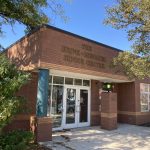
If you haven’t been to Harrisburg in awhile, you may do a double take as you walk up historic North Street near the Capitol.

Where once there was a graffiti-pocked, tumbledown ruin, there is now a fully restored building and, inside, awaiting you, a delicious cup of coffee.

In October, Elementary Coffee Co. opened there, inside a light-filled, first-floor space with a full view of turning leaves glistening in the sparkling sunshine.

At the helm of Elementary’s operations is Andrea Grove, who founded the business out of a desire to showcase the best parts of the craft coffee movement.

“Craft coffee is beautiful and worthy of existing because it’s delicious, but also because it gives significant payment to the farmers, and it’s honest in all its spheres,” she said. “At least it should be, if you’re doing it correctly.”

She paused, thinking.

“There’s a way to do that but still make it accessible to everyone—to make it warm and welcoming.”

Grove has a certain kindness about her and an authenticity that is evident from the moment you meet her. These qualities carry throughout every aspect of Elementary’s operations—from a commitment to transparent business practices to fair wages for everyone, from the growers of the beans she roasts to her barista team.

Five years ago, Grove began selling coffee at her Broad Street Market stand, and, as she expanded, wanted to do it just as thoughtfully as she had navigating the company’s founding years.

This included her approach to choosing a shop location.

“I firmly believe that the right thing will come along if you’re willing to wait,” she explained.

There were several possibilities along the way, but, once the opportunity arose to locate on picturesque North Street, a stone’s throw from the state Capitol building, she knew she’d found the right spot.

The only hiccup? That right spot was a historic building in need of extensive restoration to make it habitable. Since its last occupant—a French restaurant called Coventry—closed its doors in 1990, the building slowly fell apart, complete with a generally moldering exterior, broken windows and a crumbling roof.

Last year, Harrisburg attorney Matthew Krupp and a business partner bought the property and mounted a basement-to-roof restoration, with apartments upstairs and, now, Elementary Coffee on the first floor.

To build out her space, Grove enlisted Chris Dawson Architects, which developed a custom design. Then, working alongside local carpentry expert Misha Kaschock, who served as project manager, Grove played the role of general contractor.

Priority lay in ensuring that the shop design effectively conveyed Elementary’s brand.

“Hence, all the windows so people can literally see in here,” Grove said. “Hopefully, there’s a transparency and honesty to what’s going on behind the glass.”

Grove and Kaschock worked closely throughout the project.

“When you get Misha, you also get someone who’s extremely dedicated to the product and becomes a friend,” she said.

Raw materials quickly became a focus.

“I do believe that, whether or not people know it, they can feel that a space is real,” Grove said.

The end result is a quietly beautiful testament to the company that Grove and her team have worked so hard to build.

The milky walls and rustic slate floor provide counterpoints to the softer details. Lustrous, hand-hewn, live-edged wood is prominent throughout the space. Bar seating against a wall of windows invites a wave from passersby and frames North Street for customers as they enjoy a drink. A large workspace of inky granite provides ample room for the Elementary team to craft beverages.

For Kaschock’s part, he worked to infuse the shop’s design with touches emblematic of Grove’s personality and the brand’s ethos.

“There’s kind of an elemental theatrically to the natural aspects of the space,” he said. “They’ll change with time and help make it something that can be lived in and broken-in over time.”

Ultimately, the full build-out took a little more than a year, which wasn’t what Grove expected.

“I was fully convinced that we’d announce the shop in January and be open by April,” she said, with a laugh.

She’s okay with having had to wait a bit.

“I think, nowadays, people expect a certain type of speed,” she said. “This has been a good lesson for us to slow down and remember that good things are worth waiting for.

In addition to the aesthetics, there are standout environmental components to the shop, such as composting and recycling containers for waste and a permeable surface out back to help prevent run-off during a hard rain. Less evident are the energy efficient hot water heater, coffee roaster and zoned HVAC.

And in an effort to cut down on single-use packaging, once on-site roasting is in full swing, customers will be able to bring in their own containers when purchasing beans.

As for bells and whistles, for now, Grove and her team are focused on establishing a day-to-day rhythm and setting up on-site roasting. Looking ahead, she reeled off a list of offerings she can envision at the space, ranging from live music to political rallies, skill shares, poetry writing and, of course, coffee cuppings.

“That’s one of the really cool things—the possibilities are endless here,” she said.

For the holidays, Elementary will offer a signature winter blend dubbed the “Abominable Snowman,” complete with a branded sticker by local artist and Elementary team member Ryan Spahr.

Be sure to stop in for a cup. After all, as Grove noted, “Conversations happen so easily over a beverage.”


Elementary Coffee Co. is located at 256 North St., and at the Broad Street Market, 1233 N. 3rd St., Harrisburg. For more information, visit www.elementarycoffee.co or the Facebook page.
Continue Reading

Silver Cup: Special merch, celebrations and a collab brew mark Cornerstone’s 25th anniversary.

Sue Pera

Sue Pera lives by the motto, “Strong women drink strong coffee.”

The co-owner of Camp Hill’s Cornerstone Coffeehouse even offers T-shirts for sale bearing that sentiment.

This holiday season, thanks to an all-female coffee collaboration, Cornerstone customers can also enjoy a limited-edition cup of 25th anniversary blend coffee crafted by another strong woman in the business, Andrea Grove of Harrisburg’s Elementary Coffee Co.

It was Cornerstone manager Nicole Miller’s idea.

“Nicole came to me and said, ‘We’re women-owned, Elementary is women-owned, and wouldn’t it be great to collaborate with Andrea?’” Pera said. “I thought it was a great idea.”


Vital Asset

With independent coffee shops sprinkled throughout central Pennsylvania, it’s a much different scene today compared to 1994 when Cornerstone opened its doors.

Sue and Al Pera believe that Cornerstone was the first, and, therefore, the oldest dedicated coffeehouse in the capital region. They purchased the business from its original female founders and have operated it for more than 20 years. That’s more than half of their 37 married years.

The couple has “tweaked” everything over the years, adding a lunch menu, cooking school, catering and private dinner parties. A full breakfast and lunch menu features everything from biscotti to tuna melts, teas and smoothies, vegan treats, salads, plus Jack and Jill Ice Cream.

There are two items that have never changed, which Sue calls “retro recipes”—oat bars with a fruit filling and “peanut butter dreams,” a low-fat brownie with no refined sugar.

But the cornerstone of the menu, pun intended, is the coffee.

Cornerstone’s famous breakfast blend has always hailed from Lancaster’s College Coffee Roasters, espresso comes from Golden Valley Farms Coffee Roasters of West Chester, Sumatran is roasted by Tally Ho Coffee of West Chester, and flavored coffees come from Kaffé Magnum Opus of New Jersey. The one thing it all has in common? All coffee products are organic and fair trade.

And they go through a ton of it—well maybe not exactly a ton—but 200 pounds of coffee and 40 pounds of espresso weekly. In a typical month, that calculates to 11,500 steaming hot beverages.

“Every town needs a coffeehouse—it’s essential to living, a great place to communicate,” said Mary Beth Brath, director of the Downtown Camp Hill Association. “It’s so important now, in our age of technology, that people get out and have person-to-person conversations.”

There are about 100 businesses in Camp Hill’s downtown district, Brath said, and Cornerstone “is a vital asset, a meeting place and downtown hub, for all those businesses, especially as a walkable community.”

Throughout the day, people of all ages gather, from retirees in coffee klatches to moms with toddlers enjoying ice cream treats. The parking lot, like a good cup of coffee, is almost always filled to the brim.

“So many people tell us, ‘I had my first date here,’ sweet stories, as well as stories about businesses that started with their first meetings here,” Miller said. “It’s been a cornerstone for a lot of people.”

Anniversary celebrations kick off with a community launch party on Nov. 30, Small Business Saturday, with many former baristas returning. Commemorative merchandise, which coincides with the holiday season, includes a T-shirt bearing an ink sketch of the coffeehouse created by local artist Jonathan Frazier and bagged 25th anniversary blend coffee.


Homage

The collaboration with Elementary Coffee will be a major part of the anniversary celebration.

Pera likes the fact that, right across the river, great coffee is being produced—and by a woman-owned and run business.

Much like area brewery collabs, “the coffee industry is becoming more collaborative rather than competitive,” Grove said. “Taking this step was huge for both of us, and it proves what similar industries can do together.”

On what proved to be one of the hottest days of the summer, with temperatures soaring to 105 degrees, the collaborators gathered for a “cupping,” or tasting, at the Broad Street Market, where Elementary’s roasting operations were located.

Grove prepared several unique blends, and surprisingly, both Sue and her co-owner husband Al agreed on the same coffee—perhaps because it’s the perfect union of their tastes in coffee.

“It’s a cute homage to their relationship,” Grove said, “Because it blends Ethiopian, which is Sue’s favorite, and Sumatran, which is Al’s favorite.”

Grove describes the banner blend as a combination of warm, fruity Ethiopian coffee notes and Sumatra’s mellow, chocolatey and earthy tones.

“When we met, I immediately liked Andrea,” said Sue. “I have such respect for her. She’s an all-around great person, so smart.”

That abides well with the coffeehouse’s own recipe for success, said Miller, who has managed Cornerstone for nine years.

“People say they need coffee to survive, but they choose to come here,” she said. “It might sound cheesy to say, but everyone here is kind-hearted, and coffee served with kindness tastes better.”


Cornerstone Coffeehouse is located at 2133 Market St., Camp Hill. For more information, visit www.thecornerstonecoffeehouse.com.

Continue Reading

Forge This: Our writer pounds away at the Drunken Smithy.

Gina Napoli

Having stemmed from a strong and well-populated family tree of metal workers, I half-expected the spirits of my ancestors to whisper instructions during my metal-forging class at the Drunken Smithy.

Though I had some good instincts, the Napoli millwrights and boilermakers of yore remained decidedly silent. My higher goal then became not to scald my lily-white hands.

The Drunken Smithy, a.k.a. Eitri Jones, also has steelworkers in his lineage.

Jones grew up playing in scrap metal yards in western Pennsylvania. His education and chemistry background made him a natural for demonstrating blacksmithing at various festivals and the Renaissance Faire, as well as teaching weapons forging in his Palmyra workshop.

The workshop lies within whistling distance from the railroad tracks in downtown Palmyra. Listening to the whirring and huffing of trains going by adds to the ambience. The basement-level workshop vents its heat upward, making breathable the jeans and steel-toed boots, with added sweaty safety layers of gloves, goggles and masks.

While safety is paramount, so is common sense, with a little humor to wash it down. Completely clad in regulation safety gear, Jones said, “If you see me wearing my gloves, it’s because I got complacent and recently burned myself.”

Like most of the guys in the class, I chose to draw out a railroad spike into a knife. It looked like the simplest of the beginner projects, and I wanted an excuse to use the verb “brandish.” My husband George chose to make an axe from a template that already had an unrefined axe shape to it.

Of the 7:1 male-to-female ratio in the workshop, Jones said, “Typically, we have more females in the class. We’ve even had some bachelorette parties here.”

Jones’ assistant, Red Chandler, had a grandfather who was a farrier, and she used to give demonstrations in Colonial Williamsburg. “Now I make swords,” she said, helping the one sword-forger in our class find room in the communal forge furnace.


Agitate It

Because metal must be orange-hot in order to reshape it, we spent almost two hours of the class alternately heating the metal and pounding it out, heating the metal and pounding it out. The pounding wasn’t anything like hammering a nail.

I flexed both arms, raising a sledgehammer above my head, forcing use of muscles unused since high school band camp. And I had to get as many strikes as I could with only a short window of orange metal time. As soon as the metal turned reddish black, back into the furnace it went.

“If you pound the metal, and it’s not hot enough, it could break off,” Chandler said.

While my metal was reheating, we pulled George’s axe out of the furnace. I felt like a medieval dentist learning how to handle the lava-hot metal with blacksmith tongs. I held the metal to the surface of the anvil while he hammered. It remains the only anvil I have seen outside of a Looney Tunes cartoon.

Four metal shards heated to 1,800 degrees Fahrenheit chipped off the spike’s surface, sizzled through my arm hair, and branded my forearms like a badge of honor. If those teeny blisters were still there, I would be pointing to them as proof that I’m a self-proclaimed warrior princess.

In truth, I cheated a little. Using the hydraulic hammer shortened the hand-pounding time by probably half. If we waited on my arm strength to finish the flattening process, we would still be there.

A moment converged when our weapons were flat and thin enough, our arms too rubbery to continue, and the scent of meat wafted under our noses. The gathering space for break time included one forge furnace dedicated to roasting hot dogs on metal rods.

Jones’ apprentice Reuben set out a fetch-your-own, family-style picnic dinner on a rustic table. I washed my hands in the industrial sink and ripped off a paper towel to create a makeshift paper plate. We were also invited to grab a home-brewed something out of the cooler.

We spent the second half of class sanding and grinding the rough edges. We stood side-by-side along an impressive row of 10 sanders, each running our blades along the edges, dipping often in water to cool it down. As with sandpaper, rough grit came first, fine grit second. I paused often to inspect my blade. This was for effect only. I had no idea what it should look like when complete. One of the tools, used by Jones alone, was a two-belt sander designed to evenly create double-edged blades.

Once my knife was sharp enough, Chandler dipped it in brine, and it was ready to brandish. But the axe and sword, made from an iron-carbon alloy, required tempering for strengthening. The metals were heated to between 400 and 700 degrees then dipped (or quenched) in oil. While George dipped orange-hot metal into a bucket of oil, I held my breath and scanned for emergency exits.

Chandler said, “If it catches fire, just stir and agitate it until the fire goes out.”

Say what?

Catch fire it did, and the fire dissipated with a little stirring, just as she said in her tone of “nothing to see here.”

At the end of the evening, the two women in the class finished the final sharpening of the weapons. (Truth: Chandler sharpened five knives, an axe and a sword in the time it took me to finish my own knife.)

The men convened in the break area to sit in rocking chairs, listen to Celtic music, finish their drinks, and throw axes at a target. On my second axe throw—ever—I hit the business card and won a prize.

Don’t be too impressed, though. My first throw hit the ceiling. This likely caused the spirits of my ancestors to smack their palms to their foreheads. But I am hopeful that my first hand-forged weapon made them proud.


The Drunken Smithy is located at 61 W. Front St., Palmyra. For more information, call 717-448-5911 or visit www.drunkensmithy.com or his Facebook page.
Continue Reading

Piece of Candy, Piece of History: Clear toy candy is an old-fashioned, PA Dutch treat.

Chances are that you don’t remember finding clear toy candy in your Christmas stocking, but your grandparents might have.

Sweetly nostalgic, clear toy candy doubles as both hard candy and toy trinket or action figure. When your choo-choo train or rocking horse got too dirty from racing it along the floor with your friends, you just washed it off and licked it, then raced it along the floor some more.

Hand-crafted in small batches in the old Pennsylvania Dutch kitchen tradition, clear toy candy’s history can be traced as far back as 1750 in Philadelphia. The candy then traveled west along with much of the PA Dutch population. Because it retailed at about 18 cents apiece in the era of penny candy, it was considered an elitist confection.

Today, the process of making clear toy candy is a dying art. Because it isn’t mass-produced or made in microwaves, you can buy it in only the most specialized candy boutiques.

Or you may be lucky enough to find it in a history buff’s kitchen.

Harrisburg resident George Kopp (and disclaimer, the author’s husband) has been making clear toy candy as a hobby for almost two decades. He regularly demonstrates his technique at different Christmas-themed fairs and festivals.

“I get invited somewhere most years around Christmas—Fort Hunter, the American Legion, my dad’s nursing home,” Kopp said, adding that the Linglestown Christkindlmarkt will be a new venue this year for his candy demos.


Total Control

To make clear toy candy, artisans like Kopp pour liquid sugar into intricate metal molds featuring miniature Christmas decorations, animals and other three-dimensional shapes. Traditional candy colors are red, green and yellow only. The food coloring adds no flavor, so all colors taste the same.

“We have found candy variations of other colors, some with flavoring, and some even have a lollipop stick,” Kopp said. “This is not the true traditional clear toy candy.”

To cast the sugar into shapes, candy makers use sturdy metal molds with intricate details. Not only is clear toy candy a dying art, so is manufacturing the molds.

In the 1860s, the prolific Thomas Mills and his brother, George, made molds and other candy-making equipment. Their patented, three-dimensional molds were hinged, signed and numbered. The company went out of business in 1946.

A handful of other mold manufacturers popped up over the years and melted back down in the Philadelphia area between 1853 and 1990. Nancy Fasolt, owner of Cake and Kandy Emporium in Lancaster, made reproductions of many of these molds until her death in 2015. Kopp picked up this hobby in the early 2000s, when he saw Fasolt give a clear toy candy demo at Hershey Museum’s Christkindlmarkt.

“We walked home with a kit and a recipe that day,” he said. “And since she mentioned she had metal molds for sale, I took her business card, too.”

Because the replica molds don’t have hinges, Kopp uses strong clamps to hold them together. The molds can be anything three-dimensional—animals, sailboats, baskets, even an old-fashioned Father Christmas. The molds tend to have Easter or Christmas themes due to the favorable weather conditions.

“You need zero humidity in the air to make the candy,” Kopp said. “If it’s too sticky outside, you’ll get cloudy candy pieces.”

Early molds were made from brass and cast iron. Later came aluminum molds. They are popular with today’s few candy artisans because they are lighter, rust-resistant and food-safe. If you do find older molds, many of them are better suited for a museum or for hanging on a kitchen wall due to corrosion, tarnish, warping or breakage. Some older molds contain lead or pewter. Many of the older metal molds were donated to the war effort to make weapons.

Speaking of weaponry, when Kopp makes clear toy candy, it’s like watching one of those cooking shows in which the perfectionistic chef is in total control and his apprentice (me) needs to be reprimanded on which steps to do next. When it’s time to demo and people are around, we try to keep things more civilized.

 Kopp will offer clear toy candy demonstrations this month at the following two events:

  • Dec. 8, 1 p.m. to 4 p.m.—Fort Hunter Victorian Christmas, in the summer kitchen attached to the mansion, behind the gift shop
  • Dec. 14, 10 a.m. to 6 p.m.—Linglestown Square Christkindlmarkt


Toy Kitchen

If you’re feeling ambitious, here’s how to make your own clear toy candy. But be warned, it’s a fussy production. There will be sunk costs in the equipment, but the candy ingredients are inexpensive.

You may find a similar recipe containing barley sugar and cream of tartar. That recipe dates from prior to 1818, when imported cane sugar became cheap and plentiful in Pennsylvania. For best results, make this candy when the weather is cold and free of humidity.

Special Equipment

  • Pot with pouring spout
  • Cast iron clear toy molds
  • Candy thermometer
  • Paper towels
  • Metal file

Ingredients

  • Olive oil or non-stick cooking spray
  • 2 cups granulated sugar
  • 1/2 cup water
  • 2/3 cup corn syrup
  • Red, green and yellow food coloring


Instructions

Prepare Molds

  1. Lay molds on flat surface.
  2. Lubricate lightly with olive oil or non-stick cooking spray.
  3. Use clamps or rubber bands to secure mold pairs together.

Start Cooking

  1. Combine sugar, water and corn syrup in pot.
  2. Attach thermometer to side, without it touching the pot’s bottom. Do not stir, which can cloud the candy.
  3. At 250 degrees, add several drops of food coloring. Do not stir. Boiling will churn the color and distribute it
  4. Heat to 300 degrees.

Mold the Candy

  1. Remove from heat, remove the thermometer, and wait for the bubbles to pop. Ignore the old adage and watch the pot, because you do not want the liquid to cool and harden in your pot.
  2. Pour liquid into molds.
  3. Remove from molds when the candy gets hard.
  4. Wipe oil from candy with a paper towel.
  5. Trim any sharp edges with a file.
Continue Reading

Beat Box: As an Allison Hill substation sets to open, the city and community anticipate greater police presence, engagement in the neighborhood.

Many of Gloria Merrick’s clients at the Latino Hispanic American Community Center (LHACC) are walkers.

They come to and from the center, and most other places in Allison Hill, on their feet. For some, they are unable to get a license; others don’t have access to a car.

This may not be too big of an issue if they just need to swing by the corner store or walk to church. But, if a visit to the Harrisburg Police Bureau is needed, an Allison Hill resident is looking at an over 20-minute walk.

At least, that’s how it has been.


Flag Down

For many years, Allison Hill had a police substation on this spot on S. 15th Street. It eventually fell into disuse and was shuttered.

A few years ago, the bureau decided to reopen the station, but the building was beyond repair. So, a new plan was hatched to demolish the old precinct and replace it with a prefabricated structure.

In December last year, funded mainly through a federal Community Development Block Grant, pre-built units arrived on trailers to be assembled. The city was looking at a $1 million project that officials hoped would be finished within a few months.

However, with numerous complications, the substation construction wasn’t completed until September. It should be open to the public by the end of the year, said Harrisburg Mayor Eric Papenfuse.

“A lot of people in this community already know this as the police substation,” said Cpl. Josh Hammer, the bureau’s community policing officer. “We are re-putting our flag down.”

This time around, Hammer and his counterpart, Blake Lynch, the bureau’s community policing coordinator, will spend most of their time in the Allison Hill station as opposed to the downtown station.

“This will help the community policing team develop relationships,” Papenfuse said.

Within the building is an entrance area with a reception desk and meeting room for civilians and officers to talk in private. In the back section sits a roll-call room, locker room, kitchen and office for both Hammer and Lynch.

With 24/7 staff, community members will be able to speak with officers and report crimes at their convenience. However, Hammer reminds residents to still call 9-1-1 for emergencies.

“We really want it to be open to everybody to come through,” he said.

Papenfuse stated that, based on how this model in Allison Hill works, the city may consider a similar substation for Uptown Harrisburg. They are currently looking at relocating the downtown station to Uptown, but, if that doesn’t happen, a substation would be an option.


Hand-in-Hand

With the substation as a symbol, the bureau has a commitment to being available and having a strong presence in the Allison Hill community, said Lynch.

“I think we will see a lot more foot traffic and the opportunity to connect with residents in this community—which often does feel forgotten,” he said.

This is precisely why Merrick is excited to see the substation back in action. With LHACC located, as she would say, in the heart of Allison Hill, she hopes that more people see the potential in the community.

“We will be able to expand our relationship [with the police] further because of the close proximity,” Merrick said. “It could also take away that stigma that the police only come out when something is wrong.”

Not only will Hammer, Lynch and other officers be going door-to-door to talk with neighbors, but residents also will be invited to a picnic area that will be constructed in an adjacent lot by next summer.

“Imagine having your birthday party at a police station,” Lynch said smiling.

He explained that their plans include hosting cookouts and movie nights for the community in an effort to foster relationships.

The Allison Hill police substation will also help decrease response times by officers. There is a room for officers to file reports, saving them from making the trip downtown, which can be time-consuming and aggravating. This way, they have more time to spend in the community, responding to needs.

“Some of the best conversations I had with citizens when I was a young patrol officer were right here at the Hill CP,” Hammer said. “I specifically remember a few conversations that were really positive, and I think the only reason those conversations developed was because of the Hill CP. I’m hoping some of our younger guys and our older guys will have the same experience.”

Through conversations such as these, Merrick hopes that not only residents will benefit, but so will officers.

“We can have a cultural influence on them,” she said. “We can make it more diverse in its delivery and service.”

The Allison Hill substation is placed in a neighborhood familiar with crime, and Lynch has talked with many residents who are tired of seeing shootings and drug deals on their street. A sense of relief came with the news that the substation would be back in operation and officers would be on regular walking patrols.

Lynch sees the substation’s presence functioning as a crime deterrent, but also as a sense of security for everyone else—two sides of the same coin. But, as he stated earlier, this is a community that is often viewed negatively or neglected, so gaining people’s trust may take time.

“The trust is going to have to be earned, more so than just putting up four walls,” Hammer said. “This is a step in the right direction.”

The Allison Hill police substation is located at 313 S. 15th St., Harrisburg.

Continue Reading

Carols for a Cause: Local musicians fight homelessness, bring “Joy to the Burg.”

Sheldon Jones

When Sheldon Jones moved to the area about two years ago, he wanted to be involved in the music scene and engaged in the community.

He found a way to do both.

He took up the guitar again, adopted the stage name of Loco Lobo, and came up with a plan.

“It was one of my crazy ideas,” Jones said. “But other people took me up on it.”

The idea was to ask local bands and musicians to donate a Christmas song—either classic or original—and sell an album, with proceeds going toward programs to benefit the city’s homeless.

The album is “Joy to the Burg,” created in cooperation with Christian Churches United’s HELP Ministries and Susquehanna Harbor Safe Haven.

“I discussed the idea with rock legend Shea Quinn of the Sharks and the Luv Gods and Greg Platzer, lead guitarist of Grumpy, and it took on a life of its own,” Jones said.

“O Holy Night” isn’t exactly a song Quinn is likely to record, given that the Luv Gods are a high-energy, five-piece rock group.

“But there is something beautiful about the song and about the mission,” Quinn said. “So, when Sheldon asked, I agreed.”

Another contributor is No Last Call, a band formed in 2009 by Ted Reese and fellow trumpet player, Doug Wilburne. They modeled it after other brass bands that pop up on street corners or at community events—with a repertoire of rock, pop and jazz covers.

“Our band plays some Christmas tunes, but we put a raucous spin on most things,” Reese said. “It’s not usually pretty. But there are a wide variety of styles on the album, so we’re playing a brassy version of ‘Carol of the Bells’ arranged by one our members, Jim Neidinger.”

Indeed, said Jones, the musical genres represented range from rock to country-western, from classical to bluegrass and more.

Among the other 14 songs are “We Three Kings” by the Steve Rudolph Trio, “Greensleeves” by Ryan Chilcote, “The Work of Christmas” by the Susquehanna Chorale and “Winter Wonderland” by Grumpy.

Jones himself recorded John Denver’s “Christmas for Cowboys.”

“Joy to the Burg” was unveiled during a press conference and musical performance last month in the state Capitol’s main rotunda. Since then, the album has been available for purchase on compact disc or digital download.

One hundred percent of album proceeds will go to support the Christian Church United homelessness programs.

The organization does more than distribute clothes and meals—it also helps people find jobs, Jones said.

“It’s much more difficult to address,” he said. “It’s not just treating symptoms.”

CCU provides a continuum of homeless services that aim to prevent homelessness, provide short-term help when a household is in crisis, and offer long-term assistance for people to achieve and maintain permanent housing.

“’Joy to the Burg’ seemed like a great way to both raise awareness about the need for supporting people experiencing homelessness, as well as an effective avenue to raise funds to support our programming,” said Darrel Reinford, CCU executive director. “We will use the money to build our capacity in all of the programs mentioned with the goal of reducing the homeless population in Dauphin County.”

Beyond the performers, many recording studios donated their time to produce the album, which sells for $20. The download costs $15.

The CD will be sold through CCU member churches, retail stores, online and other means, Jones said.

“I really admire Sheldon Jones for producing this project,” Reese said. “He came to town only recently, but has poured his personal resources and time into ‘Joy to the Burg.’ Who can bring more than a dozen bands and artists together in less than a year? He is making a tremendous impact to help—and inspire.”

The “Joy to the Burg” CDs can be purchased by calling 717-585-0107 or by visiting www.JoytotheBurg.com.

Continue Reading

The Gift of Grape: Steve–I mean Santa–has something for under your tree.

At this time of year, many questions come to mind. Is this gift the right color? Will they like this? What should I take for the meal?

With these queries in mind, I attended the recent Chairman’s Selection tasting. I didn’t find answers for everything I was wondering about, but I did find many good wines that will make great gifts and will match up with many a holiday feast.

Keep sipping,
Steve

White Wines

Bayten Sauvignon Blanc 2018, $9.99, Code #79140
Fresh, tangy unoaked white from Loire valley by way of South Africa. Clean, with grapefruit flavors.

Starmont Sauvignon Blanc 2017, $11.99, Code # 79136
Classic Loire grape from Napa Valley. Well-balanced with lemon, lime and mint accents.

Joao Cabral de Almeida Camaleao Alvarinho 2018, $11.99, Code #79125
Zesty wine from Iberia’s best grape. Good acidity with hints of peach and minerals. For seafood and shrimp.

Bourgogne Select Chardonnay Macon Villages 2018, $12.99, Code #79107
Tasty unoaked chardonnay from southern French Burgundy. Good depth and fruit. Versatile on your holiday table.

Divum Chardonnay Monterey 2016, $11.99, Code #79124
Creamy Cali white with great texture, fruit and hazelnut notes. Nice finish.

Raymond Reserve Selection Chardonnay 2017, $13.99, Code #79138
Stylish Cali chard. Great food wine with pear and honeysuckle. Great on the holiday table.

Red Wines

J. Wilkes Pinot Noir 2017, $16.99, Code #79132
Easy drinking pinot from Santa Barbara County. Cherry, berry and spice flavors dominate. Good bargain.

Boedecker Cellars Stewart Pinot Noir Willamette Valley 2015, $19.99, Code # 79097
Well-balanced and subtle pinot done in a French style with wild berry and herbal flavors.

David Bruce Pinot Noir Russian River Valley 2017, $26.99, Code #79152
Big Cali pinot from one of the West Coast’s best regions. Big fruit with great depth and long finish.

Domaine Les Verrieres Les Sept Fontaines 2014, $10.99, Code #79104
Fruit-driven blend from Landuedoc with classic Rhone varieties in a fresh, unoaked style.

Domaine Terlato & Chapoutier Shiraz Lieu-Dit Malakoff, $15.99, Code #79154
Big Aussie shiraz from obscure wine region. Great fruit with balance plum and clove palate.

Luigi Bosca Malbec Single Vineyard Lujan De Cuyo D.O.C. 2016, $15.99, Code #80609
High quality malbec from Argentina. Big fruit, tame tannins, big alcohol. Great balance.

Cune Rioja Gran Reserva 2011, $19.99, Code #79100
Well-aged Spanish tempranillo. Well-balanced fruit and tannins. Good finish. Great food quaff.

Bersano Generala Barbera Nizza Riserva 2015, $14.99, Code #79128
Highly rated Italian red. Full-bodied and balanced with great fruit and nice finish. For Italian BYOBs.

Bersano Nirvasco Barolo 2015, $25.99, Code # 79129
Classic Nebbiolo from Piedmont region. Easy drinking with dried cherries and rose-petal nuances. Drink now or lay down for later.

Villa Mora Montefalco Sagrantino 2010, $17.99, Code #79076
Huge Umbrian red from a great vintage. Deep and dark with earth and cherry notes. Open, decant, pour.

Gabriel Meffre Domaine De Longue Toque Gigondas 2015, Code #79073
Classic blend from southern Rhone region. A good year with wines to match. Balanced and nuanced. Delicious.

Continue Reading

Super Bowls: A Mediterranean meal, one piece at a time, at Olive Oil Grille.

It started out with a bang early one Saturday morning in May 2017.

The implosion of Senate Plaza had turned into a spectator sport with many area residents gathering, some with lawn chairs, to witness the spectacle, which paved the way for a flurry of development that is still occurring in the Erford Road area.

When brothers John and Niko Kranias got wind that the Camp Hill Commons strip mall was open for business, they realized that the Olive Oil Grille had found a home.

“We had evaluated various markets and chose Camp Hill Commons due to the large amount of businesses in the area, including hospitals and nursing homes,” John said.


Blue Zone

The Kranias brothers are no strangers to the restaurant business, having learned at the side of their father, who owned a pizza shop in Gettysburg. When their dad retired, the sons took over for a time before selling the business, moving to Greece and operating a restaurant there.

“Living in Greece, we learned a lot about the Greek culture and Greek food in the Mediterranean region,” John said. “It was a great experience.”

He said that they learned about a region of the world called Ikaria, which is designated as a “blue zone.” For those unfamiliar with the term, a “blue zone” is a region of the world where people live longer than average, with diet being an essential part of a healthy lifestyle.

Upon returning to the states, the brothers moved to Mechanicsburg and set up shop in Camp Hill Commons as a fast-casual Mediterranean restaurant, implementing some of the concepts they had learned about in Greece.

The restaurant, which seats about 60, is open for lunch and dinner seven days a week. Customers queue up at the front and proceed forward, assembly-line style, to build a bowl or fill a pita.

They start with a “base,” such as rice, arugula, a “power blend” of super foods (kale, brussels sprouts, radicchio and broccoli), or an “ancient grain mix” comprised of quinoa, lentils and pearl barley, mixed together with olive oil and salt. Dips and spreads like tzatziki, yogurt dill aioli, fire feta (spicy) and roasted red pepper hummus can be added, along with a protein like grilled chicken, pork or beef. Toppings are next, with choices such as herbed white beans or tomatoes and cucumbers. To top it all off, customers can choose one of six “finishes” like vinaigrette or white balsamic herb dressing.

If this seems complicated, it can be, especially for the first visit, but staff is always at the ready to walk customers through the myriad choices. The Kranias family also has their website set up to make pre-ordering easy.

“The combinations are practically endless,” said Niko, adding that there is something for nearly every diet, with keto, vegan, vegetarian and gluten-free choices.

Customers can rest assured that they won’t encounter a “deer in the headlights” look if they arrive with a series of questions. John’s wife Maryam sees to it that the staff is trained to know every detail for those with dietary restrictions.


Positive Energy

The owners pride themselves on the fact that no freezer, microwave or fryer is used in the making of their food.

Daily deliveries come from local purveyors like Strites Orchard, Bow Creek Farms and others to ensure fresh food, all the time. The restaurateurs are particularly proud of their olive oil, which hails from a 10-acre grove in Corinth, Greece, which they own with one of their cousins.

“We brought some in for the back of the house to use in our recipes and are thinking of importing some for sale in the restaurant,” John said.

A selection of seasonal soups is also available, like the hearty French lentil. Delicious, with plenty of flavor, it’s capable of laying to rest any preconceived notions that vegan, gluten-free soups are all bland.

Maryam, who is also the marketing director, pointed out that the mini pita kids’ meal also offers a choice of the aforementioned ingredients and has thus far been well received.

“One child was here eating and dancing, and the parent told me she only dances when she loves her food,” she said, with a laugh.

John DiMaggio, a Dillsburg resident, is another happy customer.

“I like it because there are so many options and, every time I’ve visited, I’ve had a good experience,” he said. “The quality is consistent, and the staff is so friendly. I feel like I’m a valued customer, and it’s nice to have something to bring home to the family for dinner sometimes.”

Jeanne Edwards finds the restaurant conveniently located within walking distance from her home.

“I like the freshness of the foods they offer and the fact that it’s not microwaved,” she said. “They just do a wonderful job with the flavors.”

Edwards said that she especially enjoys the soups, the salad bowls, the specialty fountain drinks like blue raspberry lemonade and the staff.

“They are just really friendly,” she said.

The Kranias family said that they are very happy with the reception they’ve received from the community so far.

“I love cooking, and seeing the reaction from the people is what I like the most,” John said. “Just the other day someone said to me, ‘Thank you for being here.’ We work long hours, and that positive energy is what keeps us going.”


Olive Oil Grille is located at 71 Erford Rd., Camp Hill. To learn more, call 717-761-4455 or visit
www.oliveoilgrille.com.

Continue Reading

In for a Penny, In for a Pond: New gallery is designed to help foster Carlisle’s growing arts community.

Kirsten Olson

If you’re driving down Pomfret Street in Carlisle, Pat Craig’s business is hard to miss.

The striking blue building, with the black shutters, bay window, purple door and orange sign identifying it as “Pat Craig Studios,” stands out among the neighborhood shops, beckoning visitors to take notice.

And there’s always a quirky, sometimes seasonal, street tableau to seal the deal. This Halloween, Craig featured a jumble of jack-o’-lanterns scattered around a purple mannequin sporting a mirrored mosaic dress and a sky-high headpiece crafted of flowers and greenery. Inside her shop are additional items carefully chosen to elicit a smile or an “aha.”

Her latest creative project is located right next door. That endeavor, called “The Penny Gallery at The Pond,” is an homage to her former neighbor who lived there previously.

“We asked her for first consideration should she age out of the house,” said Craig.

As to the name—a pond supports a vast collection of organisms, Craig explained, a perfect moniker for a place meant to nourish and encourage an array of artists and their work.


Something Unusual

The area comprising West Pomfret and South Hanover streets has been dubbed the “So-Hi Arts District” for its collection of boutique shops, galleries, dining and entertainment. The fact that the Carlisle Arts Learning Center is within steps of the Penny Gallery at the Pond was icing on the cake for Craig when she made the decision to create a business that would integrate seamlessly into the neighborhood.

The project started in 2017 with an extensive renovation to transform the former residence into a gallery for artists to show their work.

Craig wanted to create something unusual and memorable in the space, so she hired an artist who painstakingly laid out 140,000 pennies to create the one-of-a-kind floor. The project took some 900 hours to complete.

“I wanted something to draw people—something they would share with others to create an interest all its own, without upstaging the artists who show here,” Craig said.

For some, the structure itself, dating to the 1790s, might be enough of a draw. Craig has preserved an area of the wall showing the original logs so that people can appreciate the history of the building.

“When they did the renovations, they realized that there was a log home beneath the plaster house,” Craig said.

Craig is collaborating with Dickinson College to get the word out to artists looking to satisfy their program requirements by displaying their work at a gallery.

“When students are working towards their master’s degree in art, they are required to have a solo show in an established gallery,” she said. “It’s often difficult for them to secure walls in a bigger gallery when walls are booked up two and three years in advance.”


Feeds Me

Over the years, Craig has learned that, in order for a business like hers to be sustainable, she had to create “layers of income.” So, besides renting out the first floor out for events and allowing students to show in the gallery, she also created a hub for artists to rent studios.

Visitors who stop by may see Kirsten Olson at work on the first floor, creating utilitarian ceramic pieces, or climb the steps to see Shannon Hemauer’s photography hanging on the walls. Hemauer, who specializes in boudoir photography, said that she enjoys the space and its connection to the community.

Sherri Blum is an artist and interior designer who began renting from Craig this fall. Blum is known as a high-end baby nursery designer who has worked for celebrities and incorporates her artwork into nursery design. What Blum enjoys now is being a part of the community.

“I love the camaraderie of being among other artists and thrive in that atmosphere,” Blum said. “Having other creatives around just feeds me.”

Fran Piper works on the third floor and has known Craig for 30 years. Piper is a painter of landscapes, people, animals and more, using colored pencil and watercolors.

“It’s the best street to be on, and we all help one another,” she said.

Craig’s immediate plans for the future include finishing an outside space as the weather warms.

“It will serve as an open-air pavilion for event rentals,” she said.

She also is hoping to host more events for area nonprofits. In September, an “Out of the Darkness” show was organized for suicide awareness and, earlier in the year, the Penny Gallery was the site for a Red Tomato Farm event to help support adults with intellectual disabilities.

“We’d like to do six shows in 2020 based on that kind of partnership,” she said.

Craig added that the relocation of the Carlisle Arts Learning Center to Pomfret was a catalyst that has helped the area to grow as an arts hub.

“The hope in all of this is that more people will come,” she said. “It really did give us a bigger foothold for our neighborhood to embrace our art culture and continue on that path.”

The Penny Gallery at the Pond is located at 32 W. Pomfret St., Carlisle. To learn more, call 717-805-3519 or visit the Penny Gallery at the Pond on Facebook.

Continue Reading

Over Hill and Hollan: Anna Manotti’s central PA roots dig deep in new EP.

After journeying across the country and across the Atlantic, local musician Hollan has arrived home to Pennsylvania with her debut EP, “Ready as the Day.”

Hollan, known offstage as Anna Manotti, is a 23-year-old native of the Harrisburg area. While she has spent time living in California and Germany, her love of Pennsylvania seeps through as she discusses the local music scene that has had a heavy influence on her songwriting, in addition to artists such as Feist and Bea Troxel.

Hollan always knew she wanted to be a musician and describes her music as singer-songwriter indie-folk, stemming from an “aha” moment at the age of 15, when she first discovered folk artists such as John Denver.

“I didn’t know folk music existed, but when I heard it, I knew it was exactly the kind of music I’d always wanted to hear and make,” she said.

“Ready as the Day,”comprised of four self-written songs, was released in early October. Lyrically focused, the songs trail the transition from adolescence to young adulthood, but they’re deeper than a coming-of-age story. Together, they’re a reckoning of identity, shaped through many different places and personal relationships. The title itself seeks to bridge the songs together as they were written over the course of several years, and she now feels ready to share them with the world.

“Water,” one of the new tracks on the EP, was written from a place of loneliness and introspection when Manotti first moved home from Germany.

“The song is about going back into different times in my life and remembering who I was in those moments,” she said. “It’s the song that has had the most impact on people, which, in turn, made me feel less alone. It’s a really important song to me.”

The recording process took place in a studio in northern California, where she worked closely with emerging producer Justin Grimaldo and a handful of musicians to bring the EP to life. Grimaldo and Manotti each spoke to their creative collaboration and momentum throughout the process.

“Anna’s songs each stand on their own, and that is all one could ever hope for in writing timeless pieces,” Grimaldo said.

In addition to her solo work as Hollan, Manotti is pursuing collaborative projects with other Pennsylvania musicians. Her vocals appear on fellow Pennsylvania musician Zach Wood’s song, “Rain Down,” which has more than 40,000 hits on YouTube.

Manotti is looking forward to expanding her reach. While her dreams stretch as far as the stage at Red Rocks, she is confident that central PA is a great place to grow due to its own ever-evolving music scene and proximity to the bigger East Coast cities.

“I’m at a place with my music career where I’m really ready to get out there,” she said, with an eager smile. “I feel like I’m exploding inside.”

“Ready as the Day” is available to stream. For updates and upcoming shows, visit www.hollanmusic.com and follow on Facebook and Instagram @hollanthemusician.

Continue Reading