Wolf extends “stay-at-home” order to 7 more counties, including Lebanon, Franklin

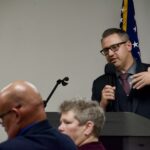
Gov. Tom Wolf (right) at a recent virtual press briefing

Gov. Tom Wolf on Tuesday extended the state’s “stay-at-home” order to seven additional counties, including Lebanon and Franklin counties in central Pennsylvania.

As of Wednesday’s update, the state Department of Health reported 36 positive cases of COVID-19 in Lebanon County and 21 in Franklin County. Neither county has reported a fatality from the disease.

The other counties included on Tuesday are in western or northern PA: Cameron, Crawford, Forest, Lawrence and Somerset counties.

On Monday, Wolf extended the stay-at-home order to two other south-central PA counties: Dauphin and Cumberland. Lancaster and York counties are the other two local jurisdictions among 33 counties now under the order, which currently runs through April 30.

As of today, the commonwealth has reported 5,805 positive COVID-19 cases, as well as 74 deaths from the disease.

Under the “stay-at-home” order, people may leave their residences only to perform any of the following allowable individual activities and allowable essential travel:

  • Tasks essential to maintain health and safety, or the health and safety of their family or household members (including pets), such as obtaining medicine or medical supplies, visiting a health care professional, or obtaining supplies they need to work from home
  • Getting necessary services or supplies for themselves, for their family or household members, or as part of volunteer efforts, or to deliver those services or supplies to others to maintain the safety, sanitation, and essential operation of residences
  • Engaging in outdoor activity, such as walking, hiking or running if they maintain social distancing
  • To perform work providing essential products and services at a life-sustaining business
  • To care for a family member or pet in another household
  • Any travel related to the provision of or access to the above-mentioned individual activities or life-sustaining business activities
  • Travel to care for elderly, minors, dependents, persons with disabilities, or other vulnerable persons
  • Travel to or from educational institutions for purposes of receiving materials for distance learning, for receiving meals, and any other related services
  • Travel to return to a place of residence from an outside jurisdiction
  • Travel required by law enforcement or court order
  • Travel required for non-residents to return to their place of residence outside the commonwealth
  • Anyone performing life-sustaining travel does not need paperwork to prove the reason for travel.

The following operations are exempt:

  • Life-sustaining business activities
  • Health care or medical services providers
  • Access to life-sustaining services for low-income residents, including food banks
  • Access to child care services for employees of life-sustaining businesses that remain open as follows: child care facilities operating under the Department of Human Services, Office of Child Development and Early Learning waiver process; group and family child care operating in a residence; and part-day school age programs operating under an exemption from the March 19, 2020 business closure Orders
  • News media
  • Law enforcement, emergency medical services personnel, firefighters
  • The federal government
  • Religious institutions

Those experiencing homelessness are not subject to this order but are strongly urged to find shelter and government agencies are urged to take steps needed to provide shelter for those individuals, according to the state.

Continue Reading

New COVID-19 cases exceed 700 in PA; first death reported in Dauphin County

The state Department of Health’s shaded coronavirus map

Pennsylvania today continued to set a new daily mark for cases of COVID-19, with 756 new positive cases reported.

With the new cases, the commonwealth now has a total of 4,843 confirmed coronavirus cases, according to the state Department of Health. The latest tally is up from 4,087 total cases yesterday, when 693 new cases were reported.

Moreover, the health department also reported 14 additional deaths from the virus, bringing that total to 63 fatalities statewide, including the first in Dauphin County. In addition, three people have died in  in Lancaster County, one more than yesterday, and one person has died in Cumberland County.

“The continued rise in cases combined with our increasing deaths from COVID-19 reflects the seriousness of this situation,” Secretary of Health Dr. Rachel Levine said.

The virus has now spread to 60 of Pennsylvania’s 67 counties.

Locally, Dauphin County now has 45 confirmed cases, Cumberland County has 36 cases, Lancaster County has 123 cases, York County has 66 cases, Lebanon County has 28 cases, Adams County has nine cases and Perry County has one case.

Philadelphia County continues to have the most confirmed cases with 1,197 cases, followed by Montgomery County with 570 cases.

Statewide, 42,488 coronavirus tests have been performed, with 37,645 testing negative, according to the state health department. Yesterday, the state reported that 37,864 people had been tested for the virus.

Of the patients who have tested positive to date, the age breakdown is as follows, according to the health department:

  • Less than 1 percent are aged 0-4
  • Less than 1 percent are aged 5-12
  • 1 percent are aged 13-18
  • Nearly 10 percent are aged 19-24
  • Nearly 41 percent are aged 25-49
  • Nearly 29 percent are aged 50-64
  • Nearly 19 percent are aged 65 or older.

Most of the patients hospitalized are aged 65 or older, as are most of the patients who have died, according to the department. There have been no pediatric deaths to date.

In addition, the Pennsylvania State Police yesterday issued 11 warnings over the weekend for failure to comply with Gov. Tom Wolf’s order that “non life-sustaining” businesses shut their physical locations. The police have now issued 107 warnings since last Monday, but have not yet issued any citations.

The state has also issued “stay-at-home” orders for people in 26 counties. Locally, that includes Dauphin, Cumberland, Lancaster and York counties.

“We need everyone to listen to the orders in place and to stay calm, stay home and stay safe, Levine said. “We know that these prolonged mitigation effects have been difficult for everyone, but it is essential that everyone follows these orders and does not go out unless they absolutely must.”

Levine continued to emphasize that Pennsylvanians should do the following:

  • Wash your hands with soap and water for at least 20 seconds or use hand sanitizer if soap and water are not available.
  • Cover any coughs or sneezes with your elbow, not your hands.
  • Clean surfaces frequently.
  • Stay home to avoid spreading COVID-19, especially if you are unwell. 

For more information, visit the PA Department of Health’s COVID-19 website.

Continue Reading

Trailing Along: Parents, kids enjoy nature together through Hike it Baby Harrisburg.

Heather Das was at the gym when she overheard some parents talking.

They were discussing their hiking group that met regularly in Harrisburg. A Midtown resident, Das was intrigued. She loved the outdoors, but living in the city wasn’t exactly the prime place for tree-lined hiking trails. Besides, she was a mom to two girls. How did other parents make time?

Her inquiry led her to find out the group, with the fitting name of Hike it Baby, wasn’t just for parents, but for their kids, as well.

Das and her girls went on their first hike in Wildwood Park with the group in 2016. Light snow dusted the trail, and a cold air nipped their noses.

“The first time I went, there was a sense of community, regardless of the weather,” Das said.

She had found her community and knew this was where she and her daughters belonged. Almost immediately after joining, Das started hosting her own hikes and became a Hike it Baby ambassador.


City Strolls

Hike it Baby is a nonprofit with more than 300 branches that host over 1,500 hikes each month across North America. Their mission is to connect families with young children to each other and to nature.

Harrisburg formed its own branch of Hike it Baby in 2015. There are currently nine ambassadors for the branch and more than 3,000 members in their Facebook group. Anyone is welcome to join, and they typically host a couple of hikes each week.

“Living in the city, we relied on Hike it Baby as our outdoor time,” Das said. “I’ve been lucky to find a lot of moms that are looking to explore and not just do simple trails.”

Some of the hikes have included White Rocks Trail in Boiling Springs, Lebanon Valley Rail Trail and the Appalachian Trail. The crew also enjoys Harrisburg hikes like the Greenbelt and participates in what they call “urban strolls” around the city and City Island.

Denise Hirn, another ambassador, especially loves trips to small local playgrounds and parks.

“We like to go to smaller parks to bring awareness to them,” she said.


Walk the Trail

When Hirn initially joined Hike it Baby, her goal was to lose the weight from her recent pregnancy and to help cope with the postpartum depression she faced. She bought a framed backpack baby carrier, excited to be part of a group that fit well with her interests.

“I was looking for a community, and traditional mom’s groups didn’t fit me,” she said. “I wanted to be around other like-minded people who wanted to be outside.”

What both Das and Hirn found wasn’t just a community of their own, but one they were happy to involve their children in for the sake of friendship and education.

“A lot of children in the group have grown up together,” Das said. “It’s neat to see newer people come in with babies, and the next thing you know they are teaching them to walk on the trail.”

Both moms also desire to see their kids learn to love and respect nature as they do. Hike it Baby often practices principles of “leave no trace” to keep the outdoors litter-free and does occasional cleanup hikes at local parks.

No matter the time of year, the Hike it Baby crew will be outside. Even in the colder months, they hold workshops to train families on how to layer clothes well.

They also hold food and diaper drives for children in need in the community, and they collect baby carriers for group members to use.

Whether it’s to get their kids away from screens, get their minds off work or to enjoy community, Hike it Baby is all about getting more people in nature.

“We are devoted to getting young children outside,” Hirn said.

And although the group has “baby” in the name, Hirn assured, “you don’t ever really age out.”

To participate in a hike or learn more about Hike it Baby Harrisburg, join their Facebook group or visit https://community.hikeitbaby.com/branches/harrisburg-pa/.

Continue Reading

Bands & Bucks: When HU Presents plays, the local economy hums along.

When Dauphin County Commissioner Jeff Haste learned about Death Cab for Cutie’s avid followers, he figured the band would draw a crowd to its June 2019 Riverfront Park concert. Then the rains came, and he thought, “I don’t know if this is going to work.”

“But it did, and I thought that was a really telling point,” he said now, looking back on the soggy HU Presents concert that restored live music to the banks of the river. “I remember that day, seeing groups of people come into town and go into restaurants before the show. That’s what we want to do—help drive business to our different restaurants and shops and help grow our economy.”

While HU Presents, the Harrisburg University-sponsored series, fills a live-music void by attracting big names and notable niche acts to Harrisburg stages, it’s also bringing new dollars to restaurants and hotels in and around the city. All told, the series has pumped $1.5 million into the local economy, according to Haste.


Open Wallets
Beginning in November 2018, HU Presents established itself with shows at Club XL, on the city’s outskirts. Then it added downtown venues, choosing sites that best suit each act and its audience. Grace Potter rocked the Forum. Cage the Elephant, 2020 Grammy winner for rock album of the year, is coming to Riverfront Park, as is the Icelandic band, Of Monsters and Men.

Harrisburg old-timers may remember a thriving music scene, with name acts at the pulsating Metron or the laid-back Gullifty’s Basement. In that spirit, HU Presents originated as a spinoff of Harrisburg University’s inaugural esports event, the HUE Festival, in 2018. HU wanted to bring people downtown while raising brand awareness in an interactive, cost-effective way, said HU President Eric Darr.

“Whatever we can do to improve the city of Harrisburg, improve the life here, that’s what we should do,” said Darr, who admits to being “a little crazy” about annual family excursions to concerts and music festivals. “The music represents one of the ways for improving life and economics in the city of Harrisburg for everybody.”

The shows are factors in downtown’s expanding arts scene. Harrisburg Downtown Improvement District Executive Director Todd Vander Woude cited a surge in offerings, aided by recent growth in residential options.

“The more people down here, the more it helps everybody out,” he said.

Restaurant owners have noticed, he added. All those music lovers and culture vultures arrive with open wallets.

“You definitely know when it’s show night,” agreed Hilton Harrisburg General Manager Joe Massaro. “You get a big crowd early. You see people leave at the same time to go to their show, and then you get a later showing when people come back for drinks.”

Hotels get a boost, too. The Hilton often books the acts and their crews appearing in Harrisburg and Hershey, said Massaro. Haste is seeing travelers from Baltimore, Reading and Philadelphia, complementing a rise in out-of-towners coming for jazz and blues offerings.

“I want folks to know that we’re somewhat of a hip area, and we’re going to make it a performing arts area, and we’re going to make it a fun place to be,” he said.

HU Presents helps brand the Harrisburg area as “an important destination,” said Massaro.

“You might not see a direct result on that one particular show, but any time you’re promoting a region as having a robust culture, with wonderful things to see and do, that helps you in many other time periods,” he said.


Main Engine
Consistent, quality programming gives visitors’ bureaus timely and unique experiences to promote, said Rick Dunlap, spokesman for Visit Hershey & Harrisburg. HU Presents extends concert season beyond the warmer months into “our typically slower tourism seasons,” he said.

“That is important when we are looking for ways to drive more visits and overnight stays during fall and winter,” Dunlap said.

Dauphin County raked in nearly $2.5 billion from travelers in 2018, according to the Pennsylvania Department of Community and Economic Development. But while lodging and food and beverage showed increases from 2017, spending of $587 million on recreation—the category that includes arts and live music—represented a slight dip.

Music promoters know central Pennsylvania because Hershey Entertainment & Resorts has long attracted top acts to a market that’s comparatively small in the stadium-tour scene, said HU Director of Live Entertainment and Media Services Frank Schofield.

“We’re so lucky to have Hershey in central Pennsylvania,” said Schofield, the entertainment veteran who heads HU Presents and herds all the cats necessary to get live shows on stage. “I don’t think people in this area realize how blessed we are because people in most markets our size still have to drive two to three hours to see a major-market show.”

The emergence of music streaming compels bands to make their money on the road. With the acts that don’t fill stadiums but are now packing XL Live, the Forum and Riverfront Park, “you just have to ask,” Schofield said.

“Bands always want to play to the crowds and get to their listeners,” he said. “Shows that we are doing in downtown Harrisburg give them that opportunity.”

The appearance of Death Cab for Cutie “helped HU turn the corner as far as the agencies realizing we can handle the bigger shows,” said Schofield.

“There are so many music options out there in live entertainment, whether it be a small club, major stadium tour, mid-level theater or whatever,” he said. “We all work together, and we all get along.”

Dauphin County and corporate sponsors share the vision for the series, said Schofield.

“HU is the main engine behind this force that’s driving the music scene, trying to get people excited about getting out to a show, coming to the city, getting a babysitter and buying a ticket,” he said. “There are a lot of fun things we’re doing. I don’t think we’ve seen the top yet, but we continue to grow, and it’ll be interesting to see whether this thing levels out year after year.”

Darr constantly encounters people thanking him for the music revival.

“I can’t put a dollar sign to it, but if part of the goal is to make Harrisburg and the region seen as a place to settle down and come visit and be a part of, then I’d say we’re doing a pretty good job,” he said.

HU Presents has upcoming shows at XL Live, the Forum and in Riverfront Park. For information and tickets, visit www.concertseries.harrisburgu.edu.

Continue Reading

A Star Is Born: PA Capital-Star journalists reflect on their first year, ponder what lies ahead.

John Micek

About a year ago, a new type of journalism splashed down in Harrisburg.

The Pennsylvania Capital-Star was one of three nonprofit newsrooms that launched within months of each other, all dedicated to covering state news.

Recently, we sat down with the Capital-Star’s four journalists—Editor-in-Chief John Micek, Associate Editor Cassie Miller and reporters Stephen Caruso and Elizabeth Hardison—to find out how the first year has gone. In the process, we also touched on such topics as nonprofit news and the often-dysfunctional relationship between Harrisburg the city and Harrisburg the capital.

Excerpts from our interview follow, edited for clarity and length.


TheBurg: How did the Pennsylvania Capital-Star get its start?

Micek: I was at PennLive in 2018. I was approached by an organization called the States Newsroom Project, which said they were opening up this new outlet in Pennsylvania, and would I be interested? After a couple of conversations back and forth, I decided that, yes, this was worthwhile.


TheBurg. What attracted you to it?

Micek: First and foremost was the idea of building something new from the ground up. At that point, PA Post was here; Spotlight PA had not yet launched. And I put in 20 years of my working life to covering Pennsylvania state government. It was the idea of creating a new voice within that, to help add to coverage because, at that point, the Capitol pressroom was fairly depleted. It’s wonderful to see so many new faces up there now working away and to have so many eyes on state government. But, at that point, it wasn’t really like that.

The really great thing about the States Newsroom Project was the idea that we could give voice to under-heard voices in the public dialogue, those who don’t always make it into the committee hearings, those who don’t make it into the hallways of power. So, now you see a lot of focus—through Lizzy’s work on criminal justice reform, for instance—on people who often have the whole system weighted against them. Stephen does outstanding work on climate. So, we tried to find the places that we thought weren’t receiving as much coverage or weren’t being paid attention to in the way that they probably should have been and trying to really build the coverage there, trying to elevate those voices.


TheBurg: Tell me about the foundation that supports you.

Micek: We are organized as a 501(c)3 nonprofit. The nearest analog I can draw is that we are funded in much the same way that NPR is funded, a mix of individual and foundation donors. The States Newsroom Project is based in Raleigh, and we’re right now in 15 states, with the goal of having 20 by year’s end. It’s a very aggressive model.


TheBurg. Tell me about your reporting beats.

Stephen Caruso

Caruso: I cover the PA House. I cover environmental issues, specifically focused on climate, and I cover labor. Those are the three areas. The House brags about being the “people’s house,” so it’s important that the people have free and fair access to information about it. That’s what I try to do in my beat.

I would say, for how I do my job, it’s a pretty long leash. On a session day, I’m up in the Capitol, and I just run around until I find people who I know will talk to me, and I do the best I can to get the information we need. I think that ideally is what statehouse reporting should be doing, and that’s what I strive for, to be focused on what is happening and what needs to be explained to people, because a lot of this is not readily evident. We need to try to explain why Harrisburg matters and explain what’s happening.

Hardison: I cover criminal justice and education. There’s a lot of interesting bipartisan convergence in Harrisburg right now about what people call criminal justice reform. It’s not all as sweeping and consequential as people want it to be, and there are so many giant, unaddressed, unchallenged practices in our criminal justice system that need reform that politically have been non-starters for people, like sentencing reform. I also cover the state Senate. So, that’s kind of where I started day one—I was assigned to the state Senate, and then we really just defined beats over time based on what we were interested in. Stephen and I had very different interests, so we were able to just define what we wanted without stepping on each other’s toes.

Cassie Miller

Miller: I’ve only been here since November. So, I have not really established beats the way that Stephen and Lizzy have. I’ve been more filling in as needed, bouncing around in a broad range of things. So, I’ve done things like census stuff, trying to explain the census and how it works and the potential impact. Right now, I’m working more on an understanding of the budget. So, I can fill in when these two are busy with the Senate and the House, and I can jump around where needed. I also do a lot of multimedia stuff, a lot of photo stories and videos. I’m also John’s right-hand. So, whenever anything in the office needs to be addressed, or any administrative stuff, I can pitch in there.


TheBurg. What is one of the more surprising things you’ve found about how the state works?

Hardison: One of things that surprised me is how non-essential the city of Harrisburg is to the state. When I was covering the city (at TheBurg), I remember that Act 47 reform was passing, and that was hugely consequential for the city. It was a pocketbook issue because there was the specter of really big tax increases for the city residents if the state didn’t move on some kind of Act 47 reform. It was like all anyone in Harrisburg could think about for a month. Then we go into the Capitol to cover it, and the scale of perceived importance was a lot different. It was just kind of another item. It passed in the Senate, which was its last stop, without any debate or anything. It was just one of many votes they took that day. It was sobering or surprising to me that something could seem so important in a community, but then the scale just changes on the state level. I thought there would be more interplay, but [Harrisburg] really is just a sound stage for the state government.

Micek: Honestly, one of the reasons I looked to Lizzy as a potential staff member when we started was because she had that knowledge, so she could serve as that bridge between city issues and state issues. The city matters to me. We put the office in downtown for that very reason. We have a really wonderful columnist named Anwar Curtis who tells the stories of the people of the city. That was a very conscious decision to make sure that the people on the Hill knew that their actions did not exist in a vacuum, that the state Capitol was not some island floating on a hill, but, in fact, they had this entire city all around it.


TheBurg: This happens not only on a legislative level but on a departmental level. It seems to me that the state hardly recognizes the city of Harrisburg at all, except as a place to transit through to get to and from work.

Elizabeth Hardison

Hardison: The city is kind of a case study: How do you fund and keep these small cities in Pennsylvania financially solvent? No one has a good answer. We are in one right now, a third-class city that struggles for various reasons—a big swath of non-taxable property, depopulation, people fleeing for the suburbs. It’s just really hard to fund services. You could cut lawmakers the benefit of the doubt and say, well, if you’re from rural Pennsylvania or the suburbs of Philadelphia, you’re not really familiar with the problems of third-class cities. But you come in and work here every single day. There’s a reason that the roads you take in to get to your place of work are filled with potholes. It’s because of decisions that people make.

We had a school district that was failing by every single measure in the city. There were reasons for that to do with leadership. But it’s also a funding problem, the way our schools are funded. You can see the inequities in schools, between here and Camp Hill. So, it kind of heightens the irony, the fact that Harrisburg can languish because of choices that people make. It need not be this way.

Micek: As someone who’s watched state government for a long time, one of the things that I find encouraging is the infusion of younger lawmakers, newer members who are coming into the House and the Senate who look at this and are not content to let things roll along the way they are. A lot of people come in, and they’re full of wide-eyed idealism, and they’re sucked into the vortex, and they become this sort of stereotypical state lawmaker. My hope is that there are enough people who exist outside of that. You know, it’s going to take forever, but at least there may be some incremental progress.


TheBurg: After a year, what have you learned, what changes do you feel you need to make?

Micek: The one thing that has been most gratifying is that people have been telling me that we’re everywhere, which is fantastic. They quite literally see Stephen running up the stairs to get to somebody or that Lizzy has turned around a really quality story on schools or criminal justice. Out of the gate, the goal was to establish us as a legitimate and respected news organization, and the only way to do that was to flood the zone with coverage. People say that they come to us now for their state government news. That’s been the most gratifying thing by far.

We moved into larger public service projects. We have the #PennForward project that we launched in September, which looks for evidence-based solutions to big public policy problems confronting the commonwealth. We spent four months doing nothing but looking at the issue of gun violence from every angle and trying to find solutions, hopefully passing those along so that they could become part of the dialogue. We’re now moving on to climate and fossil fuels.

We just launched the Purple State Project, which is a four-state project across the States Newsroom network. We’ll be sharing stories across the four properties throughout 2020, hopefully, calling attention to issues that are relevant to voters in all four of those states, making a difference in the dialogue there.


TheBurg: How are you preparing for the election?

Micek: Frantically. It’s beyond a cliché. Pennsylvania will be hugely important in 2020, and we want to play a role in vigorously covering that campaign, recognizing that Lizzy and Stephen, their first priority is covering the General Assembly. We will need to have bodies on the ground across the state to help us with our coverage. The goal of the Purple State Project is the same thing—it’s the economy of scale across the four properties. I would be remiss if I didn’t point out the fact that we have the largest Washington bureau of any Pennsylvania news organization. We have three people in D.C. who work across the sites, who work across the network.


TheBurg: Do you believe that the nonprofit model is viable across other types of journalism?

Micek: Being a journalist is all I ever wanted to do, and I hope it’s all I hope to do until I can’t do it anymore. And that means finding a way to keep doing it, because, obviously, the old model doesn’t work anymore. If that means finding large donors who believe in the importance of journalism as a civic mission, I’m OK with that. It’s a way to hold power accountable. It’s a way to tell the stories of the people who need to have their stories told.

The best thing about it is that nobody tells us what to do. All of our calls are made in house. There are no ads, there’s no paywall. We don’t share people’s personal information. So, to me, there’s more of a purity about the model in a lot of ways.

You hear these stories across the country about these local papers shutting down, creating these news deserts in these small towns. I think that’s where the nonprofit model could do the most good. Some of those billionaires should take their money into Youngstown, Ohio, and find a way to revive the Vindicator as a nonprofit. Put their billions there. When you take journalists away at the local level and elected officials feel that nobody is watching them, the accountability and that watchdog function goes out the window. I’m glad we’re here, but it’s even more critical in these tiny towns across the country.

You can find the Pennsylvania Capital-Star at www.penncapital-star.com.

Disclosure: Elizabeth Hardison is a former reporter for TheBurg.

Continue Reading

Emotional Ride: Coming-of-age complexities in heartfelt “Charm City Kings.”

The very first character we meet is dead.

We meet him through a video he’s recorded. His brother, 14-year-old Mouse (Jahi Di’Allo Winston), watches the video on his phone while riding the bus in Baltimore. It’s a moment of nostalgia, but also a little foreshadowing for where the story might lead us. It is clear that Mouse’s brother loved motorcycles; it is also clear that he died. One can connect the dots quite quickly.

Director Angel Manuel Soto’s “Charm City Kings” follows Mouse’s story as he struggles to balance the love of his family, his friends and his hobbies in such a way that is common for inner-city kids. Mouse has a lot going for him, as far as most teenaged boys are concerned. It’s clear that he has been raised in a loving environment. His mother (Teyonah Paris) constantly worries over him, and a local police detective has taken it upon himself to mentor Mouse, even getting him an under-the-table job at the local veterinarian’s due to his love of animals.

And then there are his friends. Steadfast and up for antics, Lamont (Donielle T. Handley, Jr.) and Sweartagawd (Kezii Curtis) are never too far away. The three of them have a fascination for motorcycles, and Mouse often sneaks out of the house, paying his sister to be quiet, in order to see “The Ride”—a summertime tradition in which motorcyclists perform tricks in the streets and defy the cops. The most favored motorcycle gang that shows up for these performances is the Midnight Clique, a crew that Mouse and his friends very much want to be a part of. Maybe it’s the connection to his brother or maybe it’s just that the prospect of owning a bike would make him look cool, especially in front of the new girl in town, Nicki (Chandler DuPont).

Police Det. Rivers (William Catlett) sees this bike obsession in Mouse, and he does his best to steer him away from it. After all, look what happened to his brother. But someone else sees Mouse’s passion for bikes as well—Blax (Meek Mill), an ex-convict who used to be a part of the Midnight Clique and now runs a mechanic’s shop. He hooks Mouse up to work for free at his shop in order to earn himself a bike and teach him a thing or two about life along the way.

The contrast between these two mentors’ fostering techniques really adds some complexity to the film. But whether the teachable moments are well meant or, in fact, harmful to Mouse is the real question. As Mouse struggles to place his priorities, and he and his friends take measures to be a part of the gang, the stakes rise higher and higher. Mouse must learn to grow up, but he must decide how he will grow up—and that is the beauty of “Charm City Kings”.

It’s a beautiful film, with high-energy cinematography and a straight connection to Mouse’s emotional journey. This is partly a credit to Soto for his decisions as a director, but mainly praise for Winston, who absolutely will steal your heart no later than 10 minutes into the film and will hold onto it well past the credits. Honestly, the younger members of the cast are the reason to watch the film. While Paris really sells her motherly love for Mouse, Catlett and Mill don’t get enough depth in their characters to really wow us with their performances (which is more of a comment on the writing than it is for the actors).

This is a summer indie classic in the making. It’s a great gem with a little bit of action and a lot of heart. Don’t miss “Charm City Kings” at Midtown Cinema in April.

“Charm City Kings” plays this month at Midtown Cinema, 250 Reily St., Harrisburg. For more information, visit www.midtowncinema.com.

Continue Reading

Artist in Focus: Rebecca Muller

April is flower month, so we could think of no better person to be our “Artist in Focus” than Gettysburg resident Rebecca Muller.

Muller got her start in floral art and design some 11 years ago when she began cultivating flowers while working on a farm. Since then, she’s grown her skills into a company called LOCAFLORA Design, which creates 3D flower installations from local, sustainably sourced flowers.

“In many ways, I believe flowers can be a platform for empathy in the community, and I consider floral installations to be one of the greatest ways for people to share an artistic experience,” she said.

When Muller is not creating flower art, she can be found at the Foundry Makerspace in StartUp Harrisburg and at Waldo’s & Company, a Gettysburg-based arts nonprofit, where she’s director of operations.

For more information and to see additional designs, visit www.locafloradesign.com.

Continue Reading

More Is More: Harrisburg’s housing challenges run deep, requiring a broad approach.

You may have noticed, but sometimes life doesn’t make a lot of sense.

Candy corn, Auto-Tune, all those cat videos on the Internet—I don’t get it.

Life in Harrisburg can be quite confounding. Why does Forster Street have the same number of through lanes as the Pennsylvania Turnpike? Ah, the mysteries.

I find the housing situation here especially mystifying.

Here, you have a city where demand for a decent apartment seems to far outstrip the supply, yet there is practically no new development. Harristown is basically the only developer in the city adding inventory and, it’s doing so largely because its charter mandates that it revive the downtown.

Meanwhile, the city has thousands of developable lots, places where buildings used to be, but that have burned down or been bulldozed over the past 60 years. And, according to a 2018 study, Harrisburg has another 4,000 abandoned houses and commercial buildings. Yikes.

So, if developers wanted to build, they could. There’s a ton of opportunity in the form of empty land and empty buildings. Then why aren’t they?

According to builders I’ve spoken with through the years, there are three main reasons


High cost/low ROI
It’s expensive to build in Harrisburg. Land and buildings in downtown and Midtown tend to be costly, and many “available” properties sit for years on the market because they’re priced too high. Construction costs also tend to be high, especially when builders need to close off streets, work beside or near other structures and do expensive abatement and preservation work.

Also, most builders are not in the landlord business. Once a building is up, they want out. In Harrisburg, they often have trouble recovering their investments post-construction, much less turning a decent profit. There are a few Harrisburg-based companies that are buy-and-hold builder/managers, but they’re the exception and operate on a fairly small scale.

Land is much cheaper in other parts of the city, but total project costs still tend be more than builders can recover through rents or sales. For instance, the city’s MulDer Square townhomes cost almost double to build compared to what they sold for, the difference made up through government subsidies.

In Harrisburg, there’s another type of “builder”—the renovator. These generally are individuals attracted to the city for its charm, history, walkability and access to amenities. They like old buildings and city living and, so, are less price sensitive. I fall into this class. Since I’ve lived in Harrisburg, I’ve renovated several buildings and ultimately lost money on every one. My decision to live in Harrisburg is a lifestyle choice, not an economic one.


Regional competition
Harrisburg is not an island. The city competes regionally for residents, for businesses, for capital, for workers and for everything else. Thus, when developers decide to build in central PA, they have many places to choose from.

Builders are most likely to select an area where they can make the greatest profit—with low input costs and robust demand. For sheer return on investment—after all, construction is a business—Harrisburg has a tough time competing with the likes of Hampden and Lower Paxton townships

Harrisburg has more success competing in another category—not regionally, but nationally, against other cities. Compared to Washington, New York, Boston and Philly, Harrisburg is a ridiculous bargain. Perhaps that’s why we’ve seen in-migration from larger places, from veteran city-dwellers who happen to find themselves in central PA. Once again, I resemble that remark.


Slumlords
Blight is a big problem in Harrisburg, even in so-called nicer neighborhoods, with numerous implications for housing.

First, many blighted properties end up condemned or torn down, removed from the market entirely, thereby reducing supply. Second, rundown houses discourage people from moving into a neighborhood, even when it’s well located or otherwise desirable.

But perhaps the greatest problem is the self-perpetuating nature of slumlordism. If a rundown property is for sale, it’s often priced at a premium, based on its current cash flow. This assumes that the new owner, just like the old one, will spend virtually nothing on the property, happy to collect rent as the building falls apart around them. The inflated sales price scares off renovators, who need to get the property at enough of a value to make a costly restoration economically feasible.


Currently, Harrisburg is pondering a new housing policy. In my opinion, the city needs a universal solution to its difficult, complex, perplexing housing problem, overcoming some of the hurdles described above.

This broad solution might include zoning changes for denser development, stricter codes enforcement, homebuyer programs, tax incentives, renovation assistance and the greater use of organizations like the Lancaster Housing Opportunity Partnership. It also should include a welcoming attitude towards newcomers who want to live and invest in Harrisburg.

A universal solution might also include an affordable housing element. However, a smart, targeted affordable housing statute should be part of an overall solution that encourages more building and renovation. Otherwise, Harrisburg runs the real risk of having not just one active developer, but none at all.

In urban real estate, there’s a popular catchphrase that says, “more is more.” It means that a city needs more decent housing, period. It needs to remove obstacles, fight blight, welcome newcomers and bravely fight NIMBYism. I agree.

Lawrance Binda is co-publisher/editor-in-chief of TheBurg.

Continue Reading

To Serve, Inspire: AME Church honors five community leaders during Women’s Day.

Vera Cornish

Angel Fox

Rev. Dr. Brenda Alton

Pat Gadsden


Dr. Siéta Achampong

When Pat Gadsden was young, the strong male role models in her family instilled a sense of equality and strength into her role as a woman.

“They made it clear to me and my sister that women were just as competent as men in the family,” she said. “My dad had no patience with his daughters succumbing to males. We were responsible for ourselves. We didn’t let being female get in the way of anything we wanted to accomplish.”

The African Methodist Episcopal (AME) Church holds an annual Women’s Day to “uplift women and recognize the contributions they have made,” said Myra Blackwell, Women’s Day co-chair.

With a theme designed around the mnemonic WOMEN: Worship, Orchestrate, Motivate, Encourage, Noteworthy, this year’s honorees bring a lifetime of servant leadership and substantial contributions to the local community.

“We chose women from the community who embody each category,” Blackwell said. “We want men and young children to see one common theme of consistency and unity, something to inspire everyone.”


Worship
Rev. Dr. Brenda Alton, CEO of Brenda Alton Ministries (BAM!), is a community advocate and grassroots organizer. As a child, her elders who served the spiritually and socially poor inspired her to do the same.

As an ordained minister, she founded Holistic Hands Community Development Corp., Teaching Teachers’ Bible Institute, Sweet Love of Jesus Ministries and Kingdom Embassy (formerly Harambee United Church of Christ), where she served for 15 years as senior pastor. Traveling throughout the United States and internationally, she has given her life to building leaders, instructing and motivating people in their gifts and calling.

“Women are being honored for their life experiences, their survival skills, their ability to impart knowledge, and to lead with wisdom,” Alton said. “This is significant to me because I get to share honoring women who are a true life source in their homes and the community.”


Orchestrate
Dr. Siéta Achampong, principal of SciTech for 15 years, always knew she wanted to serve youth either as a teacher or a principal. The many awards SciTech has earned, plus her personal awards for her leadership and community involvement, are a testament to her dedication to developing young people.

“It’s important to set aside a day to recognize women,” Achampong said. “Over the years, we haven’t always been equal to our male counterparts. Students need to see women being successful in running a household, serving in leadership positions.”


Motivate
For all those who personally knew the late Vera Cornish, her recent passing at age 64 came as a shock.

With a prolific and impressive resume of board and committee appointments, speaking engagements, fundraising endeavors, strategic consulting, career fairs, published works, special events, and influential awards, Cornish served the community as a speaker, facilitator and strategist.

Filling a social niche critical to Harrisburg’s demographic makeup, Cornish published the multi-cultural lifestyle publication, The Urban Connection of the Capital Region, produced and founded the Women of Heritage Breakfast, the Access & Opportunity Breakfast Series, and the Access & Opportunity Career Fair. She also served in ministry for almost two decades. She left behind her a large set of shoes to fill.

On a personal note, I attended one of Cornish’s workshops almost 20 years ago. She convinced me to stop focusing on improving my weaknesses, outsource them instead, and imagine how much further my energy could travel by focusing on building my strengths. That game-changing piece of advice is the reason I wisely no longer cook (my family is grateful, too).


Encourage
As a young person, Pat Gadsden volunteered in her school and as a candy striper for the Red Cross. Those were just seedlings of what would grow into forming the professional training/consulting firm, Life Esteem.

Through her business, Gadsden leads workshops and seminars, administering to businesses, state agencies, colleges, schools and human service organizations. Along with her husband and pastor of Imani African Christian Church, Nathaniel Gadsden, she ministers to the community through the church and through various print and electronic media.


Noteworthy
Angel Fox serves as chief of staff to state Rep. Patty Kim. She is also CEO of both Fox’s Wash & Go Laundromat and Tears for Tarina, a nonprofit organization for domestic violence assistance and awareness. In 2011, she lost her best friend and teammate to domestic violence.

“I knew, when she passed, that I had to keep her legacy alive and bring awareness to our community,” Fox said. “I know God has a calling for my life, and he is using me.”

Fox cited her toughest job currently as raising her two boys as a single mother and acknowledged that her community involvement can take time away from them.

“For my boys to see me get this award is well worth it,” she said. “And for my mother and my sister being a part of this, knowing they were my positive role models, it’s an honor.”


Along with celebrating Women’s Day during Bethel AME Church Harrisburg’s regular services, the church provides its congregation with opportunities to expand their knowledge by offering parenting classes and a prayer breakfast specifically geared toward women.

“We’re looking to make a difference in areas we know there is still a need for improvement,” Blackwell said.

Bethel AME Church Harrisburg’s pastor, Rev. W. Ouemonde Brangman, recognized the Women’s Day event as a “way to inspire women to reach their highest potential, trust God through difficulties, and acknowledge the contributions and sacrifices countless women have made.”

“I don’t give back to the community for awards or a paycheck,” Fox said. “So, getting this award is for the community to let others know they can do it, as well.”

The Women’s Day celebration takes place on Sunday, April 26, at Bethel AME Church, 1721 N. 5th St., Harrisburg, at 10 a.m. For more information, visit their Facebook page “Bethel AME Church, Harrisburg, PA.”

Continue Reading

Research on a Roll: HU, Bodhana Group team up to explore tabletop games as therapy.

If you’re a tween, spending time with imaginary characters from Dungeons & Dragons, My Little Pony and Scooby-Doo may sound like a fun way to spend an evening. But it also can be therapy.

That’s the message of the Bodhana Group, a York-based nonprofit that has been using tabletop role playing games (RPG) as therapy for more than a decade.

“I’m finding it works,” said Jack Berkenstock, Jr., founder and executive director. “I have seen firsthand kids who have gone from wallflower to debonair in six months. I’ve seen kids develop confidence to go on job interviews, start their own social engagement with other people, using the game language as a kind of passport to other friends.”

Berkenstock, a master level therapist, described tabletop RPGs as “playing pretend with rules.”

Not to be confused with computer RPGs, tabletop RPGs run solely on the imagination of the players. Each player takes on a role with certain characteristic and powers under the tutelage of the “game master.” The game master sets the stage—hunting the pillaging dragon, for instance—and the players begin describing the step-by-step means to do that.

And now the Bodhana Group is partnering with Harrisburg University to explore the safety, effectiveness and value of RPG therapy. Recently, HU Prof. Adams Greenwood-Ericksen received a $20,000 Presidential Research Grant to pursue research on RPG games in therapeutic settings.

Greenwood-Ericksen, the director of HU’s User Experience Center, said his research has two goals.

First, he wanted to support the Bodhana Group as they’re a local group “doing great stuff” in an interesting area. Also, he saw a unique and creative way to add to an important field of knowledge.

“This is an opportunity to find out stuff about an area that’s underrepresented and understudied, and that’s really important, and where we have a potential to make a real impact,” he said.

This type of therapy took root in the United States in the 1970s, but it never gained much traction locally, Berkenstock said. The Bodhana Group is one of only three organizations on the East Coast using RPG therapy, he said.

“It would be nice to be able to say to people, ‘We know it’s working, and this is his how it works, or why it works,’” Berkenstock said.

This research would be especially beneficial when using games to treat clients because people sometimes don’t believe that this is more than just a good time.

“Because of the topic area, because it relates to games…there’s a certain level of ‘side-eye’ that you get,” said Greenwood-Erickson.

But fun is what keeps young people interested.

“It isn’t good enough to be a good therapist. It also takes a person who’s skilled at running a good game,” Berkenstock said. “There’s a lot of intentionality between characters.”

A great deal of planning goes into each session. For example, if a client has trouble with anxiety, the game master will lead the game in a direction where the person can address that anxiety, always maintaining the ability to pull back if it becomes too much. At any time, a client can tap the “X” card, which means that a break is needed.

The therapy also fosters collaboration, critical thinking and creativity. If a group member falls into a pit—hypothetically, of course—others will work on a solution to get them out or maybe even join them. Players sometimes use dice to decide if an endeavor fails or succeeds, moving on from there, developing resilience.

HU wanted to participate in the study because, just like RPG itself, the university is all about problem-solving and experiential learning.

“We’re interested in giving students the opportunity to do real-world work and real projects when they are undergrads or graduate students,” said Greenwood-Ericksen. “So, when they go off into the world, they have real experience on their resumes.”

He said that he can’t say what the research will find and then quoted Albert Einstein, “If we knew what we were doing, it wouldn’t be research.”

What’s known is that this research has the potential to benefit HU students and area youth, as mental health challenges often surface in the college or younger years, said Greenwood-Ericksen.

Harrisburg University has collaborated with the Bodhana Group in the past, offering training and sponsorship at its annual, three-day convention, Save Against Fear, which promotes therapeutic gaming and teaches therapists how to incorporate RPGs into their practices.

“The opportunity to get a study started, to study the efficacy of this and how useful it could be, is a dream come true,” Berkenstock said “It’s something not only that we can talk about with other professionals, but it’s also something that the field needs.”

To learn more about therapeutic gaming and the Bodhana Group, visit www.thebodhanagroup.org. To learn more about Harrisburg University, visit www.harrisburgu.edu.

Continue Reading