Three-week virus trend unchanged, as PA reports 1,334 new COVID-19 cases

PA Department of Health Secretary Rachel Levine (right) during her virtual update on Saturday

More than 1,300 additional Pennsylvanians have tested positive for the coronavirus, the state Department of Health announced today.

In its daily update, the department said that 1,334 more residents have been confirmed positive for COVID-19 as of midnight, bringing the total to 48,305 since the pandemic began in early March.

This data is in line with a three-week trend, which has largely seen newly reported cases range from 1,000 to 1,500 each day. Overall, almost 21 percent of PA residents tested have shown to be positive for the virus.

Locally, total diagnosed cases are as follows:

  • Adams County: 141 cases (yesterday, 140)
  • Cumberland County: 365 cases (yesterday, 349)
  • Dauphin County: 617 cases (yesterday, 601)
  • Franklin County: 325 cases (yesterday, 313)
  • Lancaster County: 1,904 cases (yesterday, 1,820)
  • Lebanon County: 710 cases (yesterday, 694)
  • Perry County: 33 cases (yesterday, 32)
  • York County: 664 cases (yesterday, 651)

“As we see the number of new COVID-19 cases continuously change across the state that does not mean we can stop practicing social distancing,” said department Secretary Rachel Levine.

The commonwealth also reported an additional 64 deaths from the disease for the 24 hours ending at midnight. Since the pandemic began, 2,418 Pennsylvanians have now died due to COVID-19, according to the department.

Around central PA, the COVID-19 fatality data now is as follows:

  • Adams County: 4 deaths (yesterday, 4)
  • Cumberland County: 17 deaths (yesterday, 17)
  • Dauphin County: 25 deaths (yesterday, 25)
  • Franklin County: 8 deaths (yesterday, 7)
  • Lancaster County: 112 deaths (yesterday, 106)
  • Lebanon County: 10 deaths (yesterday, 9)
  • Perry County: 1 death (yesterday, 1)
  • York County: 11 deaths (yesterday, 11)

Statewide, Philadelphia County continues to have the most confirmed cases with 12,948 cases, followed by Montgomery County with 4,487 cases. The two counties also have reported the most deaths statewide from the disease: 422 and 369, respectively.

Nursing homes and personal care facilities have been particularly hard hit by the virus. Out of total deaths, 1,614, or almost 67 percent, have occurred in residents from nursing or personal care facilities, according to the health department.

In nursing and personal care homes, there are 8,827 resident cases of COVID-19, and 1,148 cases among employees, for a total of 9,975 at 478 distinct facilities in 44 counties, according to the health department.

In addition, 2,989 of total cases in PA are in health care workers.

Statewide, 235,376 coronavirus tests have been performed, with 187,071 people testing negative, according to the state health department. Yesterday, the state reported that 227,448 people had been tested for the virus.

Of the patients who have tested positive to date, the age breakdown is as follows, according to the health department:

  • Nearly 1 percent are aged 0-4
  • Nearly 1 percent are aged 5-12
  • 1 percent are aged 13-18
  • Nearly 6 percent are aged 19-24
  • Nearly 38 percent are aged 25-49
  • Nearly 27 percent are aged 50-64
  • Nearly 27 percent are aged 65 or older.

Most of the patients hospitalized are 65 or older, as are most of the reported deaths, according to the state. There have been no pediatric deaths to date.

Levine continued to emphasize that Pennsylvanians should do the following:

  • Wash your hands with soap and water for at least 20 seconds or use hand sanitizer if soap and water are not available.
  • Cover any coughs or sneezes with your elbow, not your hands.
  • Clean surfaces frequently.
  • Stay home to avoid spreading COVID-19, especially if you are unwell.

“We must continue to stay home to protect ourselves, our families and our community,” Levine said. “If you must go out, please make as few trips as possible and wear a mask to protect not only yourself, but others. We need all Pennsylvanians to continue to heed these efforts to protect our vulnerable Pennsylvanians, our health care workers and frontline responders.”

For more information, visit the PA Department of Health’s COVID-19 website.

Continue Reading

The Week that Was: News and features around Harrisburg

Qui Qui Musarra, chef and an owner at Rubicon, Mangia Qui, & Suba, from a Dani Fresh photo feature in the May issue of TheBurg, which was released this week.

Around TheBurg, week six of the shutdown didn’t seem that different from weeks five, four, etc., etc. Amid the holding pattern, there was some bad news and some very good news. If you missed any of our coverage, we have it all listed and linked below.

COVID-19 pandemic continued to plague the commonwealth, and, each day, we reported on the health department’s grim tally. Click here for the latest update on cases and fatalities.

Gov. Tom Wolf offered further detail on beginning to dial back restrictions on movement and businesses. When will your area migrate from the red to the yellow category? Two online stories, one on Monday and one on Friday, offered information on counties that will make the move next week.

Harrisburg residents and officials should be commended for creatively stepping up to help those in need during the pandemic. So says our editor, who penned a blog post praising the local response to the crisis.

Harrisburg City Council
funded its portion of the new Neighborhood Business Stabilization Program, designed to inject funding into hurting city businesses. At its virtual legislative session, council also approved a couple of important development projects. Our online story has the details.

Invasive pests are a huge problem in Pennsylvania, especially as we transition to warmer weather. Our magazine feature describes the scope of the issue and how people can help.

One Midtown is a new Friends of Midtown program designed to encourage people to patronize local businesses during the pandemic. Read our online story–then show off your receipts!

Sara Bozich continues to stare out her window, hoping that one day she’ll be able to enjoy adult company again. Until then, she has a weekly list of virtual things to do this weekend and some local businesses to patronize.

TheBurg came out with our May issue, a bit slimmed down but still full of community news and features. We continue delivering the hard copy to places that are open for business, but encourage people to read it online, as well.

TheBurg team of reporters, writers, designers and artists picked up 16 Keystone Media Awards, including the coveted “sweepstakes” award for best overall performance in our category. What and who won? To find out, check out our proud editor’s blog post.

Do you receive TheBurg Daily, our online digest of news and events delivered right to your email inbox? If not, subscribe here!

Continue Reading

Wolf announces loosening of shutdown restrictions for 24 PA counties

Gov. Tom Wolf today during his virtual speech.

Gov. Tom Wolf made it official today—state-at-home and business restrictions will be relaxed first in the northwest and north-central parts of the commonwealth.

In a virtual announcement, Wolf specified that 24 counties will be the first to migrate from a “red” to a “yellow” category on May 8, primarily in largely rural areas of Pennsylvania lightly impacted by the COVID-19 pandemic.

“Over the past two months, Pennsylvanians in every corner of our commonwealth have acted collectively to stop the spread of COVID-19,” Wolf said. “We have seen our new case numbers stabilize statewide and while we still have areas where outbreaks are occurring, we also have many areas that have few or no new cases.”

The 24 counties are Bradford, Cameron, Centre, Clarion, Clearfield, Clinton, Crawford, Elk, Erie, Forest, Jefferson, Lawrence, Lycoming, McKean, Mercer, Montour, Northumberland, Potter, Snyder, Sullivan, Tioga, Union, Venango and Warren.

Those counties, he said, have relatively low per-capita rates of COVID-19 cases, along with the ability to conduct testing and contact tracing of their populations.

The Wolf administration is using a three-color system to guide re-openings. Most of the state remains under a “red” phase, which includes a stringent “stay-at-home” order and the mandatory closure of the physical locations of “non life-sustaining” businesses.

In the “yellow” category, stay-at-home restrictions are lifted, and businesses may operate their physical locations under certain safety procedures. Closures of schools, gyms, casinos and other indoor recreation centers, hair and nail salons, as well as limitations around large gatherings, remain in place.

“Operations that cannot allow for social distancing must remain closed,” Wolf said today.

The “green” phase indicates a general reopening, as long as state Department of Health and U.S. Centers for Disease Control guidelines are followed.

Wolf said that counties could be moved back into the red category if COVID-19 case counts increase, and he urged PA residents everywhere to continue to minimize contact with one another.

Wolf declined to offer a timeline for lifting restrictions in other parts of the state, but did say that “we have our eyes on counties in the southwest and a few in the south-central region that have lower new-case rates.”

“We’re going to be reopening facilities in these counties as quickly as we can, but we want to maintain public safety,” he said.

To guide reopening decisions, the state is using a “risk-based decision support tool” developed by Carnegie Mellon University. This analysis tool factors in such criteria as reported number of COVID cases per population of an area; ICU and medical/surgical bed capacity; population density; population over age 60; and re-opening contact risk, such as the number of workers employed in a currently closed industry sector.

“Our goal since this pandemic was first identified in Pennsylvania has been to save lives while ensuring that the public health system does not become overwhelmed with people suffering from COVID-19,” Department of Health Secretary Dr. Rachel Levine said. “Our contact tracing and testing plans will ensure that as we begin to resume our daily activities, we can do so safely and without fear.”

Continue Reading

Another 1,200 PA residents test positive for COVID-19, in line with long-term trend

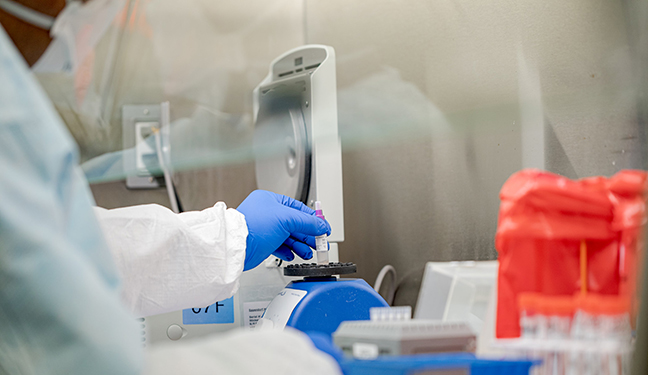
An image from the state Department of Health lab in Exton, Pa.

More than 1,200 more Pennsylvanians have tested positive for the coronavirus, the state Department of Health announced today.

In its daily update, the department said that 1,208 more residents are confirmed positive for COVID-19, bringing the total to 46,971 since the pandemic began in early March.

This data is in line with a three-week trend, which has largely seen newly reported cases range from 1,000 to 1,500 each day. Overall, about 21 percent of PA residents tested have shown to be positive for the virus.

Locally, total diagnosed cases are as follows:

  • Adams County: 140 cases (yesterday, 137)
  • Cumberland County: 349 cases (yesterday, 343)
  • Dauphin County: 601 cases (yesterday, 584)
  • Franklin County: 313 cases (yesterday, 284)
  • Lancaster County: 1,820 cases (yesterday, 1,765)
  • Lebanon County: 694 cases (yesterday, 676)
  • Perry County: 32 cases (yesterday, 30)
  • York County: 651 cases (yesterday, 641)

“As we see the number of new COVID-19 cases continuously change across the state that does not mean we can stop practicing social distancing,” said department Secretary Rachel Levine.

The commonwealth also reported an additional 62 deaths from the disease for the 24 hours ending at midnight. Since the pandemic began, 2,354 Pennsylvanians have now died due to COVID-19, according to the department.

Around central PA, the COVID-19 fatality data now is as follows:

  • Adams County: 4 deaths (yesterday, 4)
  • Cumberland County: 17 deaths (yesterday, 16)
  • Dauphin County: 25 deaths (yesterday, 25)
  • Franklin County: 7 deaths (yesterday, 6)
  • Lancaster County: 106 deaths (yesterday, 104)
  • Lebanon County: 9 deaths (yesterday, 9)
  • Perry County: 1 death (yesterday, 1)
  • York County: 11 deaths (yesterday, 9)

Statewide, Philadelphia County continues to have the most confirmed cases with 12,544 cases, followed by Montgomery County with 4,406 cases. The two counties also have reported the most deaths statewide from the disease: 424 and 362, respectively.

Nursing homes and personal care facilities have been particularly hard hit by the virus. Out of total deaths, 1,560, or about 66 percent, have occurred in residents from nursing or personal care facilities, according to the health department.

In nursing and personal care homes, there are 8,478 resident cases of COVID-19, and 1,097 cases among employees, for a total of 9,575 at 452 distinct facilities in 44 counties, according to the health department.

In addition, 2,878 of total cases in PA are in health care workers.

Statewide, 227,448 coronavirus tests have been performed, with 180,477 people testing negative, according to the state health department. Yesterday, the state reported that 221,365 people had been tested for the virus.

Of the patients who have tested positive to date, the age breakdown is as follows, according to the health department:

  • Nearly 1 percent are aged 0-4
  • Nearly 1 percent are aged 5-12
  • 1 percent are aged 13-18
  • Nearly 6 percent are aged 19-24
  • Nearly 38 percent are aged 25-49
  • 27 percent are aged 50-64
  • Nearly 27 percent are aged 65 or older.

Most of the patients hospitalized are 65 or older, as are most of the reported deaths, according to the state. There have been no pediatric deaths to date.

Levine continued to emphasize that Pennsylvanians should do the following:

  • Wash your hands with soap and water for at least 20 seconds or use hand sanitizer if soap and water are not available.
  • Cover any coughs or sneezes with your elbow, not your hands.
  • Clean surfaces frequently.
  • Stay home to avoid spreading COVID-19, especially if you are unwell.

“We must continue to stay home to protect ourselves, our families and our community,” Levine said. “If you must go out, please make as few trips as possible and wear a mask to protect not only yourself, but others. We need all Pennsylvanians to continue to heed these efforts to protect our vulnerable Pennsylvanians, our health care workers and frontline responders.”

For more information, visit the PA Department of Health’s COVID-19 website.

Continue Reading

Burg Blog: And the Keystone Goes to …

Each day, it seems like we’re faced with an overload of bad news. So, it was wonderful to get some good news for a change.

On Thursday, we learned that TheBurg received 16 individual and group Keystone Media Awards, a peer-reviewed contest sponsored by the Pennsylvania NewsMedia Association Foundation.

According to PNA, it received more than 2,700 entries from 122 news organizations, with entries judged by working journalists in Colorado.

Our awards cover a wide range of areas, including reporting, writing, photography, illustration and design and include the prestigious “Sweepstakes” award for the best performance statewide in our category.

But let us delay no further. As I have in recent years, I have all the winners listed below, with links so you can see what the judges deemed to be some of the best work done statewide in 2019.


Editorial Writing: First Place, Lawrance Binda (3 editorials)

Make Forster Safer

Cursed City

Where Are the Incumbents?


Column Writing: First Place, Lawrance Binda (3 columns)

Column What’s Up, HBG Engaged, Gimme Shelter


Ongoing News Coverage: Second Place, Lawrance Binda (5 articles)

State Takes Over Harrisburg School District

Judge expected to issue order barring Harrisburg school board from entering into contracts

State to take over Harrisburg school district as administration concedes receivership fight

Harrisburg school district leaders swept out as receiver brings in outside team

Harrisburg school district finances “in shambles,” computers missing as recovery team begins work

School receiver calls financial audit “clear indictment” of former administration practices


News Feature Story: First Place, Susan Ryder

“Out by Sunday”: With a property sale, a homeless camp disbands and long-time residents wonder where to go next


Sports Feature: First Place, Maddie Conley

The Trainer Is In


Diversity: First Place, Yaasmeen Piper, Diane McCormick, Maddie Conley, Barbara Trainin Blank (5 articles)

Diversity submission


Lifestyle/Entertainment Beat: Honorable Mention, Stephanie Kalina-Metzger

Lifestyle Beat Food


News Page Design: First Place, Megan Caruso, Kristen Fava, Billy Hicks


Feature Page Design: First Place, Megan Caruso


Feature Page Design: Second Place, Megan Caruso


Graphic/Photo Illustration: First Place, Rich Hauck


Graphic/Photo Illustration: Second Place, Stephen Haas


Graphic/Photo Illustration: Honorable Mention, Rich Hauck


Feature Photo: Honorable Mention, Billy Hicks


Photo Story/Essay: Second Place, Landon Wise

Continue Reading

Burg View: Harrisburg Together, Stronger

Part of Harrisburg’s 3rd Street commercial district, full of small businesses devastated by the shutdown

The COVID-19 pandemic is a unique type of misery rarely experienced—a profound health, economic and social crisis all wrapped up into one singular horror.

Humans, though, can be a pretty resilient and innovative bunch, and, in the Harrisburg area, we’ve seen numerous cases of people using their specific strengths and skills to try to help those most affected.

Since the pandemic hit, we’ve written stories about these efforts, such as the Hope Tree, which blinks brightly every night in Riverfront Park, “Grub for Scrubs,” an initiative designed to assist both suffering restaurants and stressed health care workers, and, most recently, the “One Midtown” campaign. There are many others.

On Tuesday night, more hope arrived for hurting businesses, as Harrisburg City Council funded its portion of the $1 million Neighborhood Business Stabilization Program. This joint program between the city and the nonprofit Impact Harrisburg will award up to $10,000 to city-licensed businesses to help them weather the economic storm.

This program should be applauded for many reasons, but I especially like it because it shows that government, so often maligned, can be creative and focused in addressing an extremely serious problem—and one that ordinarily would fall outside its purview.

In the case of this new program, two entities have combined forces to put money exactly where it’s needed—to help keep small businesses in the city breathing until they’re able to survive on their own again.

Impact Harrisburg, a creature of the Harrisburg Strong Plan (remember that?), still has money available from when it was originally funded some seven years ago. Meanwhile, the city is turning an ugly duckling into a swan by tapping a stink-bomb of a program—the decades-old, dormant revolving loan program (I get nauseated just thinking about it)—where over $2 million sits awaiting good use.

No doubt the Impact Harrisburg board has a tough task ahead selecting who will receive funds. According to city Solicitor Neil Grover, the program is already over-subscribed with the application deadline still a week away.

I don’t envy their position. I’m confident that board members will use their best judgment, but they’re also setting themselves up for criticism, unfortunately. That often happens when selecting winners and losers, and now the stakes are especially high.

Also, I know my city, where, too often, no good deed goes unpunished, and some people always seem to be on the edge of outrage.

But, hey, tough times call for tough leaders, and that time has arrived for Impact Harrisburg. It may turn out that no applicant gets everything they want or need, but those who qualify get something. I’m interested to see they approach Harrisburg’s version of a Solomon’s choice.

So far, I’ve been incredibly impressed with this community’s imaginative and earnest response to the sudden catastrophe that’s befallen us. People have stepped up strongly to support health care workers, restaurants, businesses and even community journalism. We now can add city officials to this long list of creative thinkers piecing together creative solutions.

To learn more about the Neighborhood Business Stabilization Program, visit the Impact Harrisburg website.

Lawrance Binda is co-publisher and editor-in-chief of TheBurg.

Continue Reading

Nearly 1,400 new COVID-19 cases reported in PA, in line with recent trend

An image from the state Department of Health lab in Exton, Pa.

Nearly 1,400 more Pennsylvanians have tested positive for the coronavirus, the state Department of Health announced today.

In its daily update, the department said that 1,397 more residents have been confirmed positive for COVID-19, bringing the total to 45,763 since the pandemic began in early March.

This data is in line with a three-week trend, which has largely seen newly reported cases range from 1,000 to 1,500 each day. Overall, about 21 percent of PA residents tested have shown to be positive for the virus.

Locally, total diagnosed cases are as follows:

  • Adams County: 137 cases (yesterday, 130)
  • Cumberland County: 343 cases (yesterday, 324)
  • Dauphin County: 584 cases (yesterday, 558)
  • Franklin County: 284 cases (yesterday, 264)
  • Lancaster County: 1,765 cases (yesterday, 1,703)
  • Lebanon County: 676 cases (yesterday, 648)
  • Perry County: 30 cases (yesterday, 30)
  • York County: 641 cases (yesterday, 624)

“As we see the number of new COVID-19 cases continuously change across the state that does not mean we can stop practicing social distancing,” said department Secretary Rachel Levine.

The commonwealth also reported an additional 97 deaths from the disease for the 24 hours ending at midnight. Since the pandemic began, 2,292 Pennsylvanians have now died due to COVID-19, according to the department.

Around central PA, the COVID-19 fatality data now is as follows:

  • Adams County: 4 deaths (yesterday, 4)
  • Cumberland County: 16 deaths (yesterday, 15)
  • Dauphin County: 25 deaths (yesterday, 21)
  • Franklin County: 6 deaths (yesterday, 6)
  • Lancaster County: 104 deaths (yesterday, 103)
  • Lebanon County: 9 deaths (yesterday, 9)
  • Perry County: 1 death (yesterday, 1)
  • York County: 9 deaths (yesterday, 9)

Statewide, Philadelphia County continues to have the most confirmed cases with 12,297 cases, followed by Montgomery County with 4,307 cases. The two counties also have reported the most deaths statewide from the disease: 424 and 351, respectively.

Nursing homes and personal care facilities have been particularly hard hit by the virus. Out of total deaths, 1,505, or almost 66 percent, have occurred in residents from nursing or personal care facilities, according to the health department.

In nursing and personal care homes, there are 8,112 resident cases of COVID-19, and 1,032 cases among employees, for a total of 9,144 at 452 distinct facilities in 44 counties, according to the health department.

Statewide, 221,365 coronavirus tests have been performed, with 175,602 people testing negative, according to the state health department. Yesterday, the state reported that 214,884 people had been tested for the virus.

Of the patients who have tested positive to date, the age breakdown is as follows, according to the health department:

  • Nearly 1 percent are aged 0-4
  • Nearly 1 percent are aged 5-12
  • 1 percent are aged 13-18
  • Nearly 6 percent are aged 19-24
  • Nearly 38 percent are aged 25-49
  • 27 percent are aged 50-64
  • 26 percent are aged 65 or older.

Most of the patients hospitalized are 65 or older, as are most of the reported deaths, according to the state. There have been no pediatric deaths to date.

Levine continued to emphasize that Pennsylvanians should do the following:

  • Wash your hands with soap and water for at least 20 seconds or use hand sanitizer if soap and water are not available.
  • Cover any coughs or sneezes with your elbow, not your hands.
  • Clean surfaces frequently.
  • Stay home to avoid spreading COVID-19, especially if you are unwell.

“We must continue to stay home to protect ourselves, our families and our community,” Levine said. “If you must go out, please make as few trips as possible and wear a mask to protect not only yourself, but others. We need all Pennsylvanians to continue to heed these efforts to protect our vulnerable Pennsylvanians, our health care workers and frontline responders.”

For more information, visit the PA Department of Health’s COVID-19 website.

Continue Reading

Weekend Roundup with Sara Bozich

Alert! That old adage, April showers bring May flowers is HAPPENING this weekend. The forecast is sunny and 70s. GO OUTSIDE!

Top Picks:

More ideas

Top picks to-go/delivery

Boneshire Brew Works  4-packs and growler sales 4-7 p.m. Thursday and Friday; 12-4 p.m Saturday Order online Tattered Flag Brewery & Still Works  Food, to-go beer, spirits, canned cocktails – 11 a.m. to 7 p.m. Order online Appalachian Brewing Co. – Mechanicsburg Food take-out only 4-8 p.m Monday-Thursday; 12-8 p.m. Friday-Sunday Beer + spirits take-out only – 12-8 p.m. Daily at the Mechanicsburg location Call 717-221-1080 to order View menu Ploughman Cider  Take-out cider a the Taproom 12-5 p.m. Friday and Saturday Online cider sales now available. HOLLA Spirits  Spirits available to order online 20% of all sales go to U.S. Bartenders’ Guild COVID-19 Relief Program and other virus relief funds – Read more MoMo BBQ Co.  Open for take-out and limited delivery, 11 a.m. to 4 p.m. Family meals available. View menus on Facebook. Call 717-550-7995 R.G. Hummer Meats & Cheese  OPEN during Broad Street Market Hours (See more below) Shop in-person or Call-ahead pre-orders 717-232-4150 Fresa Bistro Open for take-out and limited call-in delivery Call 717-216-8754 or use GrubHub Broad Street Market Open mostly normal hours; limited customer entry; some vendors closed – BUT – many offering online delivery Cornerstone Coffeehouse 7 a.m. to 3 p.m. daily for carryout Limited food menu available There are more and more restaurants doing pick-up/delivery — check-in with your favorites.

Culture + Chill

Check out our Culture Vulture series – ways to experience life outside while, ahem, inside. Midtown Scholar Bookstore Shop online here, plus SAVE 10% on used books with code SCHOLARSALE Shop new books through affiliate BookShop Enjoy virtual author events Midtown Cinema Purchase a gift card or renew your membership now to keep them going, then reap the benefits of your purchase once they reopen! Secure a future movie night for two – with two tickets, two small popcorns, two small sodas, and two bags of candy! Stash Vintage Shop online via Etsy All local orders free pickup or free delivery (over $35) Save 25% off your purchase of 2 or more items online, plus look for flash sales
Stay home + stay healthy!
Continue Reading

Depression Reflections: Area residents share memories that parallel today’s unprecedented times.

John Wolfe was 5 years old, riding in the front seat of the family car with his sister, his mother at the wheel. All of a sudden, a runaway trolley car from the Spring Grove-to-Hanover line barreled toward them.

His mother’s instincts kicked in. She instructed him to jump into the backseat.

He did—and it likely saved his life. Tragically, his mother was killed upon impact, and his sister died days later.

“I go to bed with that memory every night,” said Wolfe of York, now 94. “I tried to live a life my mother would be proud of.”

To Wolfe, that accident, in 1930, is synonymous with the country’s spiral into the Great Depression.

“My dad and I moved in with my grandmother—we had nine people in the same house, on West Market Street in York,” he recalled. “It was a little crowded.”

The fact that his father was a Packard mechanic meant he was employed despite the Depression.

“All the lawyers and doctors in York drove Packards,” said Wolfe. “In effect, all three adults in our household pooled their money together so that we could survive.”


Really Shaky

In the midst of today’s COVID-19 pandemic, record unemployment figures, and economic uncertainties, are there comparisons to the Depression era?

“The Great Depression was the only time in the last century we’ve experienced a huge economic downturn,” said Scott Hancock, chair of Gettysburg College’s history department.

We spoke just as a record-breaking 3.3 million Americans filed for unemployment in late March.

“That 3.3 million figure is Depression-era type numbers, though the difference is the incredible jump—it appears unemployment claims jumped by about 3 million in one week,” Hancock said. “Nothing that sudden has ever happened before. So, even though comparisons with the Great Depression are in some ways limited, I think that kind of one-week jump in unemployment also shows we are in uncharted waters.”

He’s quick to point out that he’s a historian—not an economist—but he makes a few observations.

“Part of what leads to the Depression is poor business practices—a lot of economic growth in the ‘20s was built on credit, which is what we saw in 2008—really shaky,” Hancock said. “The question I would be asking: Is our economic growth from 2008 to now built on things that are more stable than the early ‘90s into 2000s? If so, maybe the economy will recover from the hit we’re about to take.”

Hancock points to the Depression’s effects on society. It was a time when America’s middle class developed a stronger empathy for the poor.

“It’s an odd side effect of the Great Depression, and it will be interesting to see whether that happens today [as a result of the pandemic],” said Hancock. “I was glad to see that Harrisburg has halted evictions—a judge here in Adams County did likewise. So, at least there’s some humanity being demonstrated by our political and judicial leaders. I hope that continues to grow.”

Bill Blando, 85, of New Cumberland, remembers the tight-knit community bonds that evolved from the Depression era in his Lower East Side, New York neighborhood.

“There would be rent parties,” Blando recalled. “Neighbors would gather together, play the accordion, and contribute food and treats. People would drop money into a pot, and it would be enough to help that neighbor pay their rent.”

He also has a standout memory of a time when no neighbors lent a hand.

It was around 1940. His father needed $14 to pay the monthly furniture bill from Hecht’s Department Store. He was $7 short.

“The sheriff came and hauled all of our furniture down from the fifth floor where we lived. My mother was devastated. She was crying in the street,” Blando said. “Everything sat on the curb, including a little pedal car of mine. But there were a couple things the sheriff allowed us to keep—my sister’s crib and a youth bed for me.”

Blando was 5 years old, and the memory is still imprinted in his mind. He can visualize and describe the scene.

“My dad subsequently got a job with the WPA [Works Progress Administration], building sidewalks,” he said. “We were able to buy some basic furniture after that.”

Blando’s father, Nunzio, had the mentality of a survivor. In fact, he survived the 1918 flu pandemic, considered by the Centers for Disease Control to be the most severe pandemic in modern history.

“He was 7 to 8 years old,” Blando said. “His mother and two aunts took care of him, wrapping him up in blankets, applying hot rags so that he would sweat it out, for two, three, four days. Somebody went over to the local church and summoned the priest to administer last rites, and my aunts shooed him out. He lived for the next 70 years.”


The Script

The current COVID-19 sheltering-in-place reminds Marge Farrell of her childhood, when she had the chicken pox and was quarantined. She heard family stories about her mother and brother who battled diphtheria before she was born. Her father was quarantined with them until they recovered.

Farrell, of York, was born in 1928 and will turn 92 this month. The stock market crash on October 29, 1929, plunged the country into the Depression when she was just a year old.

“I grew up in the coal region, in Mt. Carmel, where it was depressed most of the time,” Farrell said. “I still had a very happy childhood. I knew we didn’t have much money, but I didn’t really know anybody that did, so I didn’t know any different.”

Thinking back on that time, she said there was a paradox at play.

“During the Depression, we weren’t necessarily confined to our homes,” she said. “You just didn’t have the money to go anywhere.”

Indeed, traffic deaths dropped during the Depression because people weren’t driving as much. Other silver linings during this time included the birth of popular board games like Monopoly and Scrabble, radio shows and kitchen gardens. Hollywood transitioned from silent films into classic movies like 1939’s “The Wizard of Oz” and “Gone with the Wind.”

Hollywood, however, isn’t writing the script for today’s pandemic.

“My family would tell you I like to avoid happy endings,” said Hancock. “There’s a part of me that loves that about Americans. That American optimism is a stereotype, but the academic in me sees the problems in that. It papers over some brutal reality.”

“Not to minimize the coronavirus—it’s life threatening—but I hope what can come out of it is more of a desire to address the inequity [in society], because this is going to affect more of the people who have the least ability to deal with it,” Hancock predicted.

Our communities, as well as government agencies, will play starring roles in the pandemic’s solutions.

“This is having a real tangible effect, and like the Depression, it can create networks of community where people can figure out ways to help each other,” Hancock said. “That’s not the cure-all. We need the government to play a role, too. Dealing with this will hopefully force us to figure out ways to make society a bit more equitable.”


Sidebar 1: Words of Wisdom

All of the older folks interviewed for this story offered advice, gleaned from their life experiences, on how to survive challenging times such as the COVID-19 pandemic.

John Wolfe said the secret to weathering life’s storms is “staying busy.” He was working on a 1,000-piece puzzle featuring 37 different World War II airplanes, a gift from his granddaughter, when I spoke to him.

“It might take me a month or two,” he said.

But he knows a thing or two about tests of time. During his lifetime, he built 14 grandfather clocks. He also wrote a book about the history of the York Airport, where he devoted nearly his entire career as an airplane mechanic and co-pilot. Over the years, he also authored books on West Manchester Township’s 200th anniversary and his church’s 250th anniversary.

Marge Farrell said the two most important things that have helped her through life’s ups and downs are patience and faith.

“I don’t know how people get through without it,” she said.

And when I spoke to Bill Blando, he mentioned he’d be calling the daughter of one of his neighbors next. She had tested positive for COVID-19. All of his neighbors were regularly checking in on each other.

Blando, a retired newspaper reporter, summarized today’s pandemic with the long view of a lifetime of journalism.

“There will be a time when we look back on this,” he said. “We will remember these times for the rest of our lives—even our Pennsylvanians who are mostly German and so stoic but kindhearted to help their neighbors.”


Sidebar 2: Family Soundtracks

If you’ve been fortunate enough to spend time with your grandparents or great-grandparents, you’ve probably heard some great family stories. And chances are, many of those stories are about survival, especially of hard times like the Great Depression, much like the ones included here.

A Depression-era story was passed down in my family, as well, with the proof standing in my home office, within sight as I write this very story. It’s a mahogany piano my first generation American great-grandfather Paul called his “Depression piano.”

Paul, a musician like his father before him in Czechoslovakia, owned a baby grand piano prior to the Depression. But he swapped it for a player piano when the Depression hit to keep family and friends’ spirits up, buoyed by its entertaining rolls of music happily spinning out tunes. Music can soothe the soul through troubled times, and the player piano worked its magic—like a giant music box, the rolls of music programmed the keys to magically play.

My great-grandfather always intended to return the “Depression piano” for his beloved baby grand once the Depression lifted. But the player piano became beloved too, and like a good story, was passed down to my mother, and then to me.


Continue Reading

Pets & Pandemic: Animals, like their humans, are suffering from this crisis.

Kristen Zellner got $50 from a customer asking her to put it toward pet food for households in need. Annette Reiff started a pet-food bank. Animal rescues are fielding calls from pet-foster aspirants.

“It’s pretty wild how much people just want to help each other and animals,” said Zellner, owner of Abrams & Weakley General Store for Animals in Susquehanna Township.

In the COVID-19 crisis, humans are hurting, and when humans hurt, their pets are not far behind. Throughout the midstate, pet stores and animal rescues are going about their business as usual, even as they step up their pet lifelines.

At Abrams & Weakley, Zellner began offering curbside pickup in mid-March. She also spread the word that her store can deliver to the homebound and offer donations or discounts to those in need.

“It’s beautiful,” she said. “We have had people call us and send money for their friends to buy food.”

The Humane Society of Harrisburg Area’s pet food bank has seen a “significant increase” in use since the crisis began, said Director of Marketing and Outreach Amanda Brunish.

“There are a lot of people who are losing income and need a helping hand, and that’s why we’re here,” she said. “Our mission is to build a better community for pets and people, and it’s not just about the homeless animals here. It’s about ensuring that pets stay in the homes they’re in now.”

Castaway Critters volunteer Annette Reiff, of Harrisburg, put out calls for donations for a pick-up pet food bank outside Tri-County OIC in Midtown. A large donation from Purina, via a York warehouse storing grocery overstocks, supplied enough dog food. More cat food donations are needed.

“I’ve been checking every day,” said Reiff. “The bins have been mostly empty. I fill them up again and check the next day.”

As the economy plummets, animal rescues are more concerned than ever that people unable to care for their pets will surrender them to shelters—already groaning—or abandon them, said Reiff.

That fear is driving much of the pet-itarian effort.

“I wouldn’t want anyone to have to get rid of a pet because they can’t afford food or basic things,” said Zellner. “I’m happy to go into our donation box and deliver to somebody who needs it.”

At HSHA, applications for a ramped-up fostering campaign—coincidentally, launched just before the crisis broke—have tripled since March. Even people who can only foster while they’re working from home or are laid off are welcome.

“People have really embraced fostering,” said Brunish. “We don’t know how long this is going to last, and we don’t know what kind of circumstances we’re going to run into. It’s nice that people want to give a helping hand.”


Ready to Roar

HSHA especially hopes for kitten fosters and is eager for kitten-related donations—kitten replacement milk, kitten wet and dry food.

The reason? Seems that animal shelters are a necessity that remains open. Pet adoptions, too, although they continue in virtual and no-touch form. Spay-neuter is not, and veterinarians are withholding non-elective surgeries, like their people-doctor counterparts.

The pandemic hit just as kitten season was accelerating. As young as 4 months old, those early kittens will become kitten mamas.

At trap-neuter-return program Steelton Community Cats, a lack of supplies is hindering the monthly surgical clinic conducted by Dr. Diane Ford of Vetting Zoo, Palmyra.

“Everybody, every rescue, every humane society, every TNR program is just doing the best we can with what we have,” said longtime volunteer Rosemary Loncar.

March and April clinics were canceled, but Steelton Community Cats is ready to roar as soon as possible.

“Each month, we will be doing 80 cats,” said Loncar. “We really are behind the 8-ball right now, because all of those cats we were supposed to do in March—most of the females are probably pregnant.”

Taking care of people is top priority, she added, but “we’re biting at the bit. We really do want to get started.”


Like a Flood

Boiling Springs-based Furry Friends Network has seen “a huge amount of interest in helping, both adoption and foster,” said co-founder Robin Scherer.

However, Scherer must hope that those potential pet foster parents can wait. Southern shelters that normally send dogs up north for adoption are not transporting.

“We’re in a holding pattern for new dogs,” said Scherer. “We’d love to have more foster help in normal times, and I hope that the people who are offering to help will offer to help after the pandemic is over.”

She does “fear what is coming down the tracks,” especially with more than 150 cats still remaining from last year.

“These poor kittens,” she said. “I know what I can handle here, and that capacity is going to be filled up quickly. It’s like a flood. The kittens are a pandemic of their own.”

Although the donations that help Furry Friends Network pay for medical care have virtually stopped, Scherer is “totally against putting pleas for help out right now.”

“Everybody is in the same boat,” she said. “Businesses are struggling. People are struggling. It’s real for everybody.”

She does hope, though, that people consider adopting, including older cats and dogs.

“The animals need us, but I think people need the animals as much during this period of time,” Scherer said. “They can bring a lot of joy into your life. As long as you go into it realizing that they’re going to need you after the pandemic is over. A wonderful thing to do would be to keep helping them.”

Author’s note: Sweeney the tabby cat contributed keyboard strokes to this story.


Lending a Paw

Want to help? Contact these pet organizations and others.

Continue Reading