Weekend Roundup with Sara Bozich

Psst – Mother’s Day is this Sunday. If you still need help in this department, check my Gift Guide and my rundown of local brunch offerings (to go/curbside/delivery of course!)

Top Picks:

More ideas

Top picks to-go/delivery

Boneshire Brew Works  4-packs and growler sales 4-7 p.m. Thursday and Friday; 12-4 p.m Saturday Order online Tattered Flag Brewery & Still Works  Food, to-go beer, spirits, canned cocktails – 11 a.m. to 7 p.m. Order online Appalachian Brewing Co. – Mechanicsburg Food take-out only 4-8 p.m Monday-Thursday; 12-8 p.m. Friday-Sunday Beer + spirits take-out only – 12-8 p.m. Daily at the Mechanicsburg location Call 717-221-1080 to order View menu Ploughman Cider  Take-out cider a the Taproom 12-5 p.m. Friday and Saturday Online cider sales now available. HOLLA Spirits  Spirits available to order online 20% of all sales go to U.S. Bartenders’ Guild COVID-19 Relief Program and other virus relief funds – Read more MoMo BBQ Co.  Open for take-out and limited delivery, 11 a.m. to 4 p.m. Family meals available. View menus on Facebook. Call 717-550-7995 R.G. Hummer Meats & Cheese  OPEN during Broad Street Market Hours (See more below) Shop in-person or Call-ahead pre-orders 717-232-4150 Fresa Bistro Open for take-out and limited call-in delivery Call 717-216-8754 or use GrubHub Broad Street Market Open mostly normal hours; limited customer entry; some vendors closed – BUT – many offering online delivery Cornerstone Coffeehouse 7 a.m. to 3 p.m. daily for carryout Limited food menu available There are more and more restaurants doing pick-up/delivery — check-in with your favorites.

Culture + Chill

Check out our Culture Vulture series – ways to experience life outside while, ahem, inside. Midtown Scholar Bookstore Shop online here, plus SAVE 10% on used books with code SCHOLARSALE Shop new books through affiliate BookShop Enjoy virtual author events Midtown Cinema Purchase a gift card or renew your membership now to keep them going, then reap the benefits of your purchase once they reopen! Secure a future movie night for two – with two tickets, two small popcorns, two small sodas, and two bags of candy! Stash Vintage Shop online via Etsy All local orders free pickup or free delivery (over $35) Save 25% off your purchase of 2 or more items online, plus look for flash sales
Stay home + stay healthy!
Continue Reading

Gov. Wolf proposes “civilian corps” to provide COVID-19 testing, tracing to assist reopening effort

A screen shot of PA Gov. Tom Wolf (right) today

The commonwealth plans to launch a statewide civilian “corps,” which would provide COVID-19 testing and contact tracing.

Gov. Tom Wolf made the announcement today, saying that the new “Commonwealth Civilian Coronavirus Corps” would permit the state’s economy to reopen more quickly and fully, while having the added benefit of providing jobs during a time of high unemployment.

“We do not want to spend the next few months or the next year cloistered inside our homes,” he said, during a virtual speech. “We want to be able to resume working, going to school, going to church and visiting our loved ones. We want to reopen businesses of all types, and we want to be able to do this with as little risk as possible.”

The new corps would be deployed around the state specifically to test for the illness and provide contact tracing—tracing those who an infected person may have come in contact with so they can be identified and quarantined.

“To reopen our economy to its maximum potential, we will need to boost our ability to contain this highly transmissible virus,” he said. “[The corps] will reduce our unemployment rate while making a lasting health and economic contribution to our commonwealth. By maximizing our testing and contact tracing capabilities, we can contain COVID-19 without widely freezing the movement of Pennsylvanians.”

Even with the corps, the state likely will not be able to resume activities that include large crowds, such as concerts, he said.

According to Wolf’s office, the Commonwealth Civilian Coronavirus Corps would:

  • Partner with local public health agencies, community organizations and nonprofits to expand Pennsylvania’s existing testing and contact tracing initiatives.
  • Leverage additional resources to fund testing and contact tracing initiatives.
  • Explore “creative ways” to recruit experienced Pennsylvanians with health care and public health experience to support the initiative.
  • Coordinate existing resources deployed by the commonwealth, including community health nurses and county health departments that are currently conducting testing and contact tracing throughout the state.

The Commonwealth Civilian Coronavirus Corps will also provide an opportunity for Pennsylvania to recruit and train COVID-19-impacted dislocated and unemployed workers into public service for contact tracing roles, Wolf said.

To foster this new workforce, the corps would:

  • Engage partners in the workforce development system, existing allied health training programs, and AmeriCorps programs to build and strengthen a public health workforce across the commonwealth.
  • Leverage existing workforce development resources to recruit, train and connect the public health workforce with employment opportunities.
  • Engage public health and health care employers to connect trained workers with long-term career opportunities.

Wolf said he would unveil more details of the program “in the coming weeks.”

“We have slowed this virus through shared sacrifices,” he said. “We have bought precious time. We now need to use that time effectively by building a program that will allow commonwealth to function as much as possible while we wait for a vaccine.”

Continue Reading

Nora Carreras named to seat on Harrisburg school board

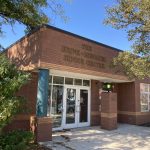
The Harrisburg school district’s Lincoln administration building

The Harrisburg school district has named Nora Carreras to its board of directors, filling an open seat following the death of Gerald Welch.

In a statement, district Receiver Janet Samuels said that she appointed Carreras, who works for the PA Department of Human Services, due to her “long history as a public servant along with her wealth of knowledge of resources that support children, families and the broader Harrisburg community.”

Under state code, Samuels had 30 days to fill the seat, which was left open after Welch died of COVID-19 complications on April 15. Welch was elected last year to the nine-member board and was in the first year of a four-year term. Carreras’ appointment runs through next year.

“It is a pleasure to welcome Ms. Nora Carreras to the Harrisburg school board of directors,” said Acting Superintendent Chris Celmer. “Ms. Carreras has a proven track record of providing advocacy and support for at-risk families through the commonwealth of Pennsylvania.”

In a statement, Carreras expressed excitement for the opportunity.

“I am honored to join and support the district’s effort to bring increased educational quality and fiscal accountability,” she said. “Every student in the city of Harrisburg deserves the opportunity to thrive, to learn in a supportive environment and reach their full potential.”

Continue Reading

New COVID-19 cases in PA fall below 1,000 again, fourth day in a row

An image from the PA Department of Health lab in Exton.

Pennsylvania appears to have further flattened its coronavirus case curve, as new COVID-19 cases fell below 1,000 for a fourth straight day.

The department today reported 888 newly diagnosed cases as of midnight, bringing the total to 51,845 cases since the pandemic began in early March. Yesterday, the state reported 865 new cases.

Overall, about 20 percent of PA residents tested have shown to be positive for the virus.

Locally, total diagnosed cases are as follows:

  • Adams County: 148 cases (yesterday, 148)
  • Cumberland County: 386 cases (yesterday, 382)
  • Dauphin County: 711 cases (yesterday, 695)
  • Franklin County: 406 cases (yesterday, 396)
  • Lancaster County: 2,041 cases (yesterday, 2,018)
  • Lebanon County: 774 cases (yesterday, 766)
  • Perry County: 34 cases (yesterday, 34)
  • York County: 722 cases (yesterday, 716)

Newly diagnosed cases peaked in the state in early April at nearly 2,000 positive cases. They then fell to a range of 1,000 to 1,500 for about three weeks before falling below 1,000 each day since Sunday.

The health department today also reported an additional 94 COVID-19-related fatalities, meaning that 3,106 Pennsylvanians now have died from the disease in less than two months.

Around central PA, the COVID-19 fatality data now stands as follows:

  • Adams County: 5 deaths (yesterday, 5)
  • Cumberland County: 26 deaths (yesterday, 25)
  • Dauphin County: 29 deaths (yesterday, 29)
  • Franklin County: 9 deaths (yesterday, 9)
  • Lancaster County: 145 deaths (yesterday, 144)
  • Lebanon County: 15 deaths (yesterday, 15)
  • Perry County: 1 death (yesterday, 1)
  • York County: 11 deaths (yesterday, 11)

Statewide, Philadelphia County continues to have the most confirmed cases with 13,742 cases, followed by Montgomery County with 4,827 cases. The two counties also have reported the most deaths statewide from the disease: 625 and 471, respectively.

“As we prepare to move a number of counties from red to yellow, we need all Pennsylvanians to continue to follow the social distancing and mitigation efforts in place,” health Secretary Rachel Levine said.

On Friday, the state plans to move 24 counties in the northwest and north-central parts of the state from “red” to “yellow” categories, thereby loosening business restrictions and stay-at-home orders there.

Nursing homes and personal care facilities have been particularly hard hit by the virus. Out of total deaths, 2,108, or almost 68 percent, have occurred in residents from nursing or personal care facilities, according to the health department.

In nursing and personal care homes, there are 10,010 resident cases of COVID-19, and 1,372 cases among employees, for a total of 11,382 at 502 distinct facilities in 44 counties, according to the health department.

In addition, 3,316 of total cases in PA are in health care workers.

Statewide, 256,340 coronavirus tests have been performed, with 204,495 people testing negative, according to the state health department. Yesterday, the state reported that 250,882 people had been tested for the virus.

Of the patients who have tested positive to date, the age breakdown is as follows, according to the health department:

  • Nearly 1 percent are aged 0-4
  • Nearly 1 percent are aged 5-12
  • 1 percent are aged 13-18
  • Nearly 6 percent are aged 19-24
  • 37 percent are aged 25-49
  • Nearly 27 percent are aged 50-64
  • 27 percent are aged 65 or older.

Most of the patients hospitalized are 65 or older, as are most of the reported deaths, according to the state. There have been no pediatric deaths to date.

Levine continued to emphasize that Pennsylvanians should do the following:

  • Wash your hands with soap and water for at least 20 seconds or use hand sanitizer if soap and water are not available.
  • Cover any coughs or sneezes with your elbow, not your hands.
  • Clean surfaces frequently.
  • Stay home to avoid spreading COVID-19, especially if you are unwell.

“We must continue to protect our most vulnerable Pennsylvanians, which includes our seniors, those with underlying health issues, our healthcare workers and our first responders,” Levine said. “I am proud of the work that Pennsylvanians have done so far, but we cannot stop now, we must continue to take the necessary steps to protect ourselves from COVID-19.”

For more information, visit the PA Department of Health’s COVID-19 website.

Continue Reading

Substantially more money may soon flow into Harrisburg’s small business grant program

A screen shot of Harrisburg City Council’s virtual work session on Tuesday

Harrisburg is looking to significantly boost a fund that is offering grants of up to $10,000 to small businesses.

At Tuesday night’s City Council work session, city officials said that another $1.25 million soon may be injected into the Neighborhood Business Stabilization Program.

“We would look forward to expanding our partnership with Impact Harrisburg and have a round two of funding,” said Marc Woolley, the city’s business administrator.

Over the past two weeks, Impact Harrisburg, a nonprofit formed as part of the city’s 2013 financial recovery plan, has been accepting applications for the program, which offers grants of up to $10,000 to help city-licensed small businesses survive the economic crisis caused by the COVID-19 pandemic.

However, according to Harrisburg Mayor Eric Papenfuse, the need for assistance quickly exhausted the $1 million pot of money, funded evenly by the city and Impact Harrisburg.

“I can tell you that there is far more need than even the funds that are available,” he told council members during the virtual meeting.

A week ago, city Solicitor Neil Grover, who chairs the Impact Harrisburg board, told council members that requests for grants already were double the $1 million fund.

Therefore, Impact Harrisburg has decided to commit another $750,000 to the program, Papenfuse said.

In addition, the administration, Papenfuse said, would like to kick in another $500,000, that money originating from supplemental CARES Act funding from the federal Community Development Block Grant (CDBG). City Council would need to approve that distribution.

Papenfuse also said that he expected Impact Harrisburg, which is administering the program, to make an announcement soon of award recipients for the first funding round.

“I believe that Impact Harrisburg’s plan is to close out this initial round with an announcement by the end of the week,” he said.

Continue Reading

New COVID cases dip below 1,000 again; fatalities revised sharply higher

An image from the PA Department of Health lab in Exton

For a third straight day, new COVID-19 cases remained below 1,000 in PA, the first time this has happened in more than a month.

The state Department of Health today reported 865 newly diagnosed cases, bringing the total to 50,957 since the pandemic began in early March. Yesterday, the state reported 825 new cases.

Tuesday’s new-case data may be significant, since case numbers have tended to dip on Mondays, but then re-surge for the Tuesday report, which did not happen this week.

Overall, about 20 percent of PA residents tested have shown to be positive for the virus.

At the same time, the state reported the largest daily increase in confirmed fatalities—554 for the period ending at midnight. This means that 3,012 Pennsylvanians now have died from the disease in less than two months.

While the one-day fatality increase is high, Department of Health Secretary Rachel Levine has said repeatedly that her department is constantly adjusting its data based upon reports from counties and other sources.

And, in fact, Levine’s office today attributed the sharp increase to “our continued work to reconcile data from various sources” for fatalities that have occurred over the past two weeks.

Around central PA, the COVID-19 fatality data now stands as follows:

  • Adams County: 5 deaths (yesterday, 4)
  • Cumberland County: 25 deaths (yesterday, 18)
  • Dauphin County: 29 deaths (yesterday, 28)
  • Franklin County: 9 deaths (yesterday, 8)
  • Lancaster County: 144 deaths (yesterday, 113)
  • Lebanon County: 15 deaths (yesterday, 10)
  • Perry County: 1 death (yesterday, 1)
  • York County: 11 deaths (yesterday, 11)

The Philadelphia area showed the greatest revision of its fatality data. Philadelphia County now has 627 fatalities compared to 424 yesterday, while Montgomery County has 443 deaths compared to 382 yesterday.

Locally, total newly diagnosed cases are as follows:

  • Adams County: 148 cases (yesterday, 148)
  • Cumberland County: 382 cases (yesterday, 375)
  • Dauphin County: 695 cases (yesterday, 652)
  • Franklin County: 396 cases (yesterday, 377)
  • Lancaster County: 2,018 cases (yesterday, 1,991)
  • Lebanon County: 766 cases (yesterday, 756)
  • Perry County: 34 cases (yesterday, 34)
  • York County: 716 cases (yesterday, 702)

Statewide, Philadelphia County continues to have the most confirmed cases with 13,563 cases, followed by Montgomery County with 4,687 cases.

“As we prepare to move a number of counties from red to yellow, we need all Pennsylvanians to continue to follow the social distancing and mitigation efforts in place,” Levine said.

On Friday, the state plans to move 24 counties in the northwest and north-central parts of the state from “red” to “yellow” categories, thereby loosening business restrictions and stay-at-home orders there.

Nursing homes and personal care facilities have been particularly hard hit by the virus. Out of total deaths, 2,029, or more than 67 percent, have occurred in residents from nursing or personal care facilities, according to the health department.

In nursing and personal care homes, there are 9,625 resident cases of COVID-19, and 1,284 cases among employees, for a total of 10,909 at 495 distinct facilities in 44 counties, according to the health department.

In addition, 3,012 of total cases in PA are in health care workers.

Statewide, 250,882 coronavirus tests have been performed, with 199,925 people testing negative, according to the state health department. Yesterday, the state reported that 245,590 people had been tested for the virus.

Of the patients who have tested positive to date, the age breakdown is as follows, according to the health department:

  • Nearly 1 percent are aged 0-4
  • Nearly 1 percent are aged 5-12
  • 1 percent are aged 13-18
  • Nearly 6 percent are aged 19-24
  • Nearly 38 percent are aged 25-49
  • Nearly 27 percent are aged 50-64
  • 27 percent are aged 65 or older.

Most of the patients hospitalized are 65 or older, as are most of the reported deaths, according to the state. There have been no pediatric deaths to date.

Levine continued to emphasize that Pennsylvanians should do the following:

  • Wash your hands with soap and water for at least 20 seconds or use hand sanitizer if soap and water are not available.
  • Cover any coughs or sneezes with your elbow, not your hands.
  • Clean surfaces frequently.
  • Stay home to avoid spreading COVID-19, especially if you are unwell.

“We must continue to protect our most vulnerable Pennsylvanians, which includes our seniors, those with underlying health issues, our healthcare workers and our first responders,” Levine said. “I am proud of the work that Pennsylvanians have done so far, but we cannot stop now, we must continue to take the necessary steps to protect ourselves from COVID-19.” 

For more information, visit the PA Department of Health’s COVID-19 website.

Continue Reading

Burg Guest Blog: On the Brink

After six or seven weeks in quarantine-land, I feel like I’m “on the brink.”

Some days it feels like I’m standing on the edge of a proverbial cliff, taking in the scenery of our new normal, and feeling pretty positive—counting my blessings, and processing it all with my feet firmly planted on solid footing. Other days, not so much. I could easily slide over the edge of that cliff, dragging my cabin with me—from the worst case of cabin fever ever.

And then when the phrase “cabin fever” pops into my head, I remind myself that I should be grateful that I have a cabin (home) so that I can indeed shelter in place. And then I remember why all the medical experts recommended quarantine against this crazy virus, which leaves me feeling guilty because in the grand scheme of things, maybe I don’t have it so bad. All I need to do is stay put, stay safe, abide by the stay-at-home orders and “be.” It doesn’t sound hard, so why is it?

Maybe it’s because we were on the brink of spring, still in the infancy of 2020, when all this hit. I feel cheated, as if the calendar is in some slow sick reversal of time. Instead of bursting forth into spring activities—proms and graduations, baseball games, summer vacation planning, let’s go!—we’re rewinding back into the cooped-up winter doldrums. Some of the brightest highlights of my life in quarantine are when I “escape” cabin fever by taking a run or working in my garden (which thankfully is starting to show signs of spring). I have never been behind actual prison bars, but going for a run feels a little like a jailbreak—making a real run for it. And no matter how many miles I run, it’s never far enough to truly escape coming back to the reality of our new normal. How I wish I could just keep running.

And there’s another big brink in sight. As a society, our communities, businesses, and states are on the brink of reopening. But the very definition of a brink is an edge—an edge with an element of danger. And like all societal issues, there are edges to many of the arguments being tossed into the abyss between the pro and con factions. Which reminds me, sadly, that everything is heightened into a political issue these days.

The gung-ho pro-openers want to rush over the brink and jump headfirst, back into the business of everyday life. And who can blame them? Many are on the brink of losing their jobs and businesses. My heart breaks for small business owners especially, because as we approach this brink, I know they can’t all possibly have parachutes on their backs.

And not that anyone is exactly con, or against, reopening, but at the other extreme, some are approaching the brink with baby steps—they want to reopen slowly, steadily and surely. And who can blame them? This is all unprecedented, and where brinks are concerned, proceeding with caution sounds like a good idea.

But the ultimate brink to me is health-related. There are those fighting for their lives, battling COVID-19, on the brink of death. There are healthcare workers on the brink of being worked to death. One of my favorite cities in the world, New York City is on the brink—or maybe already over the brink—of massive tragedy. There’s an ever-spiraling-higher fatality count approaching 70,000. How can 70,000 people dying, especially within the span of a few weeks, “not” bring anyone to the brink of a sobering reality check?

So surveying the scene, considering all the facts and arguments swirling around us like a brisk breeze at the brink, I honestly feel paralyzed. I don’t know whether to plan anything for 2020, or to write off the entire year. I don’t know if and when I’ll see—and hug!—friends and family in person, or whether we’re looking at virtual visits via Zoom for the indefinite future. As much as I want to move on with life, I’m also afraid that if we move too fast we’ll end up right back where we started. I don’t know whether it’s safe to leave my house—face covering on, hand sanitizer ever-handy, social distancing mental mindset switched on—or to toss these items aside like a bad choice in Halloween costume, and just. leave. the. house. Or, do I stay put, holed up? I don’t know whether to take a step forward or backward, toward the brink or away from it.

And because I don’t know the answers to any of these questions, I do the one thing, the only thing I’m still sure about these days. I lean on my faith. While I’m stuck in this gray area of muck, stuck on the brink.

Karen Hendricks is president of Hendricks Communications, a frequent Burg contributor and host of TheBurg Podcast.

Photo: PA’s 1,000 Steps Trail

Continue Reading

Burg View: Case Count

PA Department of Health Secretary Rachel Levine (right)

When calculating COVID-19 data, should nursing home cases be counted with the rest of the population?

For Department of Health Secretary Rachel Levine, the answer is an emphatic yes. She insists that all cases should be counted together. On Monday, while answering a reporter’s question, she said the following:

“We are not going to separate nursing home cases from other cases in the counties. What we have certainly learned in this global pandemic of COVID-19 is that we are all interconnected. One section of our community, such as a nursing home or personal care home, impacts the general community, and the community impacts that facility. The staff goes back and forth. So, it really is an example of how we are all connected, and it’s very important to include those type of facilities among other congregant settings in the total counts for a county.”

I respectfully disagree with her argument, which, frankly, I find illogical.

In fact, nursing homes have indeed been cut off from the general community—they’re no longer interconnected. Not even family members can visit their loved ones anymore.

Even in normal times, nursing homes are very unique places. They’re comprised almost entirely of elderly, frail people, many with serious underlying health conditions. In addition, the residents live in very close quarters. Unfortunately, these conditions became the perfect breeding ground for the coronavirus.

The data reflect this.

As of Monday, 67 percent of total COVID-19-related deaths statewide have been residents of nursing homes or personal care facilities. Meanwhile, there are nearly 10,000 positive cases of COVID-19 in nursing homes–about 19 percent of total cases. These residents there aren’t going anywhere and can’t have visitors, so they pose little danger of virus spread to the broader community.

As Levine states, the staff does venture outside the facility, and they represent another 2.4 percent of total cases. At this point in the pandemic, we should reasonably expect–we should insist–that nursing home staff be routinely tested and avoid venturing out.

Now, this issue wouldn’t matter so much if the stakes weren’t so high—but they are. They’re sky-high.

For almost two months, people have been stuck inside their houses. Many have lost their livelihoods. Businesses are beginning to go under. People are suffering financially, personally and psychologically. Their lives have been profoundly impacted. They’ve canceled weddings, missed graduations, skipped funerals and can’t go to school. People can’t see loved ones, and those who live alone basically can’t see anyone.

Given the enormous stakes, state officials need to exercise the greatest wisdom when making decisions on our behalf. For one, they need to recognize the obvious fact that there is a tremendous difference between cloistered nursing home populations and the broader population outside those facilities. This difference must be taken into account.

Let’s say, for instance, you live in Montgomery County.

You’ve already been in lockdown for almost two months, and let’s face it, with nearly 5,000 positive cases, there’s little chance you’re getting out anytime soon, based upon the state’s own “color” categories and metrics.

Meanwhile, 80 nursing homes in the county make up nearly one-third of all those positive cases. Should you have to suffer under lockdown for an additional month or two or three because the state has decided to lump together nursing facility cases with non-nursing facility cases?

It simply doesn’t make sense.

To date, most Pennsylvanians have understood that sacrifice has been necessary, but we also shouldn’t have to sacrifice unnecessarily. Combining this data has the very real effect of prolonging the shutdown substantially, adding to our suffering with no real benefit to public health.

I urge Secretary Levine to reconsider and reverse her position on this issue.

Lawrance Binda is co-publisher and editor-in-chief of TheBurg.

Continue Reading

COVID-19 cases top 50,000 in PA, as new cases hit month-long low

The state Department of Health lab in Exton, Pa.

The total number of COVID-19 cases in PA broke through 50,000 today, though new cases sank to their lowest point in over a month.

The state Department of Health today reported 825 newly diagnosed cases, bringing the total to 50,092 since the pandemic began in early March.

This represents the lowest number of new daily cases since March 31, when 756 new cases were registered.

Case numbers have tended to dip on Mondays, which health Secretary Rachel Levine has attributed to less frequency of reporting to the department over weekends.

For more than three weeks, new cases in PA have generally ranged from 1,000 to 1,500 each day. Overall, about 20 percent of PA residents tested have shown to be positive for the virus.

Locally, total diagnosed cases are as follows:

  • Adams County: 148 cases (yesterday, 145)
  • Cumberland County: 375 cases (yesterday, 373)
  • Dauphin County: 652 cases (yesterday, 634)
  • Franklin County: 377 cases (yesterday, 351)
  • Lancaster County: 1,991 cases (yesterday, 1,936)
  • Lebanon County: 756 cases (yesterday, 735)
  • Perry County: 34 cases (yesterday, 34)
  • York County: 702 cases (yesterday, 679)

“As we prepare to move a number of counties from red to yellow, we need all Pennsylvanians to continue to follow the social distancing and mitigation efforts in place,” health Secretary Rachel Levine said today.

On Friday, the state plans to move 24 counties in the northwest and north-central parts of the state from “red” to “yellow” categories, thereby loosening business restrictions and stay-at-home orders there.

The commonwealth also reported an additional 14 deaths from the disease for the 24 hours ending at midnight. Since the pandemic began, 2,458 Pennsylvanians have now died due to COVID-19, according to the department.

Around central PA, the COVID-19 fatality data now is as follows:

  • Adams County: 4 deaths (yesterday, 4)
  • Cumberland County: 18 deaths (yesterday, 18)
  • Dauphin County: 28 deaths (yesterday, 28)
  • Franklin County: 8 deaths (yesterday, 8)
  • Lancaster County: 113 deaths (yesterday, 112)
  • Lebanon County: 10 deaths (yesterday, 10)
  • Perry County: 1 death (yesterday, 1)
  • York County: 11 deaths (yesterday, 11)

Statewide, Philadelphia County continues to have the most confirmed cases with 13,316 cases, followed by Montgomery County with 4,645 cases. The two counties also have reported the most deaths statewide from the disease: 424 and 382, respectively.

Nursing homes and personal care facilities have been particularly hard hit by the virus. Out of total deaths, 1,646, or about 67 percent, have occurred in residents from nursing or personal care facilities, according to the health department.

In nursing and personal care homes, there are 9,345 resident cases of COVID-19, and 1,224 cases among employees, for a total of 10,569 at 494 distinct facilities in 44 counties, according to the health department.

In addition, 3,084 of total cases in PA are in health care workers.

Statewide, 245,590 coronavirus tests have been performed, with 195,498 people testing negative, according to the state health department. Yesterday, the state reported that 240,641 people had been tested for the virus.

Of the patients who have tested positive to date, the age breakdown is as follows, according to the health department:

  • Nearly 1 percent are aged 0-4
  • Nearly 1 percent are aged 5-12
  • 1 percent are aged 13-18
  • Nearly 6 percent are aged 19-24
  • Nearly 38 percent are aged 25-49
  • Nearly 27 percent are aged 50-64
  • 27 percent are aged 65 or older.

Most of the patients hospitalized are 65 or older, as are most of the reported deaths, according to the state. There have been no pediatric deaths to date.

Levine continued to emphasize that Pennsylvanians should do the following:

  • Wash your hands with soap and water for at least 20 seconds or use hand sanitizer if soap and water are not available.
  • Cover any coughs or sneezes with your elbow, not your hands.
  • Clean surfaces frequently.
  • Stay home to avoid spreading COVID-19, especially if you are unwell.

“We must continue to protect our most vulnerable Pennsylvanians, which includes our seniors, those with underlying health issues, our healthcare workers and our first responders,” Levine said. “I am proud of the work that Pennsylvanians have done so far, but we cannot stop now, we must continue to take the necessary steps to protect ourselves from COVID-19.”

For more information, visit the PA Department of Health’s COVID-19 website.

Continue Reading

New daily COVID-19 cases dip below 1,000 again in PA

An image from the PA Department of Health lab in Exton.

Nearly 1,000 additional Pennsylvanians have tested positive for the coronavirus, the state Department of Health announced today.

In its daily update, the department said that 962 more residents are confirmed positive for COVID-19, bringing the total to 49,267 since the pandemic began in early March.

This data is in line with a three-week trend, which has largely seen newly reported cases range from 1,000 to 1,500 each day. Overall, about 20 percent of PA residents tested have shown to be positive for the virus.

Case numbers have tended to dip on Sundays and Mondays, which health Secretary Rachel Levine has attributed to less frequency of reporting to the department over weekends.

Locally, total diagnosed cases are as follows:

  • Adams County: 145 cases (yesterday, 141)
  • Cumberland County: 373 cases (yesterday, 365)
  • Dauphin County: 634 cases (yesterday, 617)
  • Franklin County: 351 cases (yesterday, 325)
  • Lancaster County: 1,936 cases (yesterday, 1,904)
  • Lebanon County: 735 cases (yesterday, 710)
  • Perry County: 34 cases (yesterday, 33)
  • York County: 679 cases (yesterday, 664)

“As we see the number of new COVID-19 cases continuously change across the state that does not mean we can stop practicing social distancing,” Levine said.

The commonwealth also reported an additional 26 deaths from the disease for the 24 hours ending at midnight. Since the pandemic began, 2,444 Pennsylvanians have now died due to COVID-19, according to the department.

Around central PA, the COVID-19 fatality data now is as follows:

  • Adams County: 4 deaths (yesterday, 4)
  • Cumberland County: 18 deaths (yesterday, 17)
  • Dauphin County: 28 deaths (yesterday, 25)
  • Franklin County: 8 deaths (yesterday, 8)
  • Lancaster County: 112 deaths (yesterday, 112)
  • Lebanon County: 10 deaths (yesterday, 10)
  • Perry County: 1 death (yesterday, 1)
  • York County: 11 deaths (yesterday, 11)

Statewide, Philadelphia County continues to have the most confirmed cases with 13,179 cases, followed by Montgomery County with 4,552 cases. The two counties also have reported the most deaths statewide from the disease: 423 and 381, respectively.

Nursing homes and personal care facilities have been particularly hard hit by the virus. Out of total deaths, 1,635, or almost 67 percent, have occurred in residents from nursing or personal care facilities, according to the health department.

In nursing and personal care homes, there are 9,122 resident cases of COVID-19, and 1,194 cases among employees, for a total of 10,316 at 492 distinct facilities in 44 counties, according to the health department.

In addition, 3,031 of total cases in PA are in health care workers.

Statewide, 240,641 coronavirus tests have been performed, with 191,374 people testing negative, according to the state health department. Yesterday, the state reported that 235,376 people had been tested for the virus.

Of the patients who have tested positive to date, the age breakdown is as follows, according to the health department:

  • Nearly 1 percent are aged 0-4
  • Nearly 1 percent are aged 5-12
  • 1 percent are aged 13-18
  • Nearly 6 percent are aged 19-24
  • Nearly 38 percent are aged 25-49
  • Nearly 27 percent are aged 50-64
  • Nearly 27 percent are aged 65 or older.

Most of the patients hospitalized are 65 or older, as are most of the reported deaths, according to the state. There have been no pediatric deaths to date.

Levine continued to emphasize that Pennsylvanians should do the following:

  • Wash your hands with soap and water for at least 20 seconds or use hand sanitizer if soap and water are not available.
  • Cover any coughs or sneezes with your elbow, not your hands.
  • Clean surfaces frequently.
  • Stay home to avoid spreading COVID-19, especially if you are unwell. 

“We must continue to stay home to protect ourselves, our families and our community,” Levine said. “If you must go out, please make as few trips as possible and wear a mask to protect not only yourself, but others. We need all Pennsylvanians to continue to heed these efforts to protect our vulnerable Pennsylvanians, our health care workers and frontline responders.” 

For more information, visit the PA Department of Health’s COVID-19 website.

Continue Reading