Southwest PA to move into least-restrictive “green” phase next Friday

PA Gov. Tom Wolf (right) during today’s press conference

Sixteen more counties will move to the least-restrictive green phase next Friday, mostly in the western and southwestern parts of the commonwealth.

Gov. Tom Wolf made the announcement today during his first live, non-virtual press conference since the pandemic began in March.

These counties are Allegheny, Armstrong, Bedford, Blair, Butler, Cambria, Clinton, Fayette, Fulton, Greene, Indiana, Lycoming, Mercer, Somerset, Washington and Westmoreland counties.

In addition, all remaining red counties, including Lancaster County and the Philadelphia metropolitan area, will move into the yellow phase on Friday.

Today, Dauphin and Lebanon counties, along with several counties in the northeast part of the state, moved into the yellow phase, while most counties in the northwest and north-central parts moved into the green phase.

Pennsylvania uses a three-color system–red, yellow and green–to guide re-openings following the virtual shutdown of the state earlier in the COVID-19 pandemic. Each phase further peels back Wolf’s stay-at-home order and business closures and restrictions, which were imposed in March.

Wolf said that his administration made these loosening decisions based upon recommendations of “medical epidemiological experts.”

“The goal here is to make that every Pennsylvanian is confident that they’re going to be safe moving from one of these phases into the next,” he said.

Wolf also cited “progress” fighting the COVID-19 pandemic. New case numbers have been on a constant, if slow, decline for nearly two months, while testing has increased substantially.

As many as 13,000 new tests have been conducted daily recently, Wolf said, and new positive cases are now subject to contact tracing.

“Because of this, we’re able to take important steps to return to a sense of normalcy, again, as we remain careful and vigilant,” he said.

Moreover, he said that, while he believes that his stay-at-home order and business restrictions have worked to fight spread of the virus, “we can’t isolate ourselves forever.”

“It is important that we continue to act with caution especially as we reopen,” he said.

Continue Reading

New COVID-19 cases just below 700 in PA, continuing long-term trend

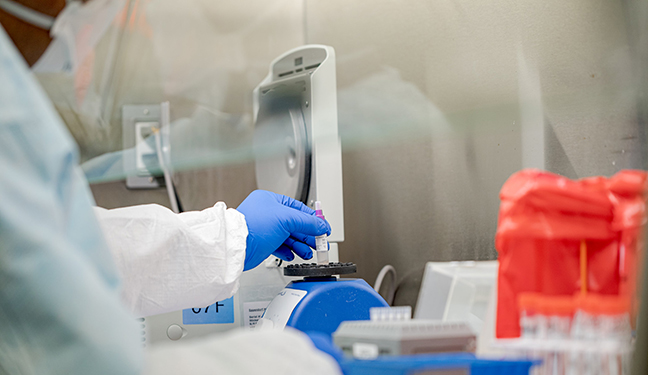
An image from the PA Department of Health lab in Exton

New COVID-19 cases in PA came in just below 700 today, as the commonwealth reported a continuing long-term trend of slowly falling new infections.

The state Department of Health today reported 693 new positive cases for the period ending at midnight.

This marks 19 days straight with new case numbers below 1,000 in Pennsylvania. With the additional cases, 70,735 Pennsylvanians have now been diagnosed with the coronavirus.

Cases peaked in early April at nearly 2,000 daily new cases. Since then, cases have shown a gradual, relatively steady decline, despite increasingly greater testing levels for the virus.

Of the new cases today, 177 are in residents of nursing and personal care homes.

Locally, total diagnosed cases are as follows:

  • Adams County: 241 cases (yesterday, 240)
  • Cumberland County: 621 cases (yesterday, 618)
  • Dauphin County: 1,231 cases (yesterday, 1,212)
  • Franklin County: 762 cases (yesterday, 759)
  • Lancaster County: 3,105 cases (yesterday, 3,056)
  • Lebanon County: 950 cases (yesterday, 944)
  • Perry County: 56 cases (yesterday, 54)
  • York County: 991 cases (yesterday, 970)

Overall, 16.1 percent of PA residents tested have shown to be positive for the virus.


The health department also reported another 108 fatalities, meaning that 5,373 Pennsylvanians have died from the disease since March.

Of the newly reported fatalities, 16 were residents of nursing or personal care homes.

Around central PA, the COVID-19 fatality data now stands as follows:

  • Adams County: 7 deaths (yesterday, 7)
  • Cumberland County: 48 deaths (yesterday, 47)
  • Dauphin County: 72 deaths (yesterday, 71)
  • Franklin County: 34 deaths (yesterday, 31)
  • Lancaster County: 292 deaths (yesterday, 286)
  • Lebanon County: 33 deaths (yesterday, 33)
  • Perry County: 2 death (yesterday, 2)
  • York County: 26 deaths (yesterday, 25)

Statewide, Philadelphia County continues to have the most confirmed cases with 18,156 cases, followed by Montgomery County with 6,906 cases. The two counties also have reported the most deaths statewide from the disease: 1,300 and 674, respectively.

“As Pennsylvania continues to move forward in the process to reopen, we need to remember that the threat from COVID-19 has not gone away,” health Secretary Rachel Levine said.

So far, the state has moved 57 of Pennsylvania’s 67 counties into the less restrictive yellow phase, including Dauphin and Lebanon counties today. By June 5, the remainder of the state will exit from the red phase.

Nursing homes and personal care facilities have been particularly hard hit by the virus. Of total deaths, 3,517, or 65.4 percent, have occurred in residents from nursing or personal care facilities, according to the health department.

In nursing and personal care homes, there are 15,335 resident cases of COVID-19, and 2,565 cases among employees, for a total of 17,900 at 603 distinct facilities in 44 counties, according to the health department.

In addition, 5,280 of total cases in PA are in health care workers.

Statewide, 437,705 coronavirus tests have been performed, with 366,970 people testing negative, according to the state health department. Yesterday, the state reported that 427,846 people had been tested for the virus.

Of the patients who have tested positive to date, the age breakdown is as follows, according to the health department:

  • Nearly 1 percent are aged 0-4
  • Nearly 1 percent are aged 5-12
  • Nearly 2 percent are aged 13-18
  • 6 percent are aged 19-24
  • Nearly 37 percent are aged 25-49
  • 25 percent are aged 50-64
  • 28 percent are aged 65 or older.

Most of the patients hospitalized are 65 or older, as are most of the reported deaths, according to the state.

Levine continued to emphasize that Pennsylvanians should do the following:

  • Wash your hands with soap and water for at least 20 seconds or use hand sanitizer if soap and water are not available.
  • Cover any coughs or sneezes with your elbow, not your hands.
  • Clean surfaces frequently.
  • Stay home to avoid spreading COVID-19, especially if you are unwell.

“As counties move into the yellow and green phases, we must take personal responsibility to protect others,” Levine said. “Wearing a mask, continuing to maintain social distancing, and washing your hands frequently are all steps we can take to help protect others, including our most vulnerable Pennsylvanians, our essential workers and our healthcare system.”

 For more information, visit the PA Department of Health’s COVID-19 website.

Continue Reading

Small Businesses, Big Problems: The pandemic forces owners to adapt, get creative to survive

Elementary Coffee’s Andrea Grove makes a delivery in Harrisburg.

About eight months ago, Andrea Grove, the owner of Elementary Coffee Co., was sitting in her newly opened storefront in Harrisburg’s Capitol district.

It capped a years-long process of searching for a location—then building out the space—to add to her growing business in the Broad Street Market.

Little did she know what lay ahead—that’s she’d be forced to close just months later.

With the COVID-19 crisis hitting small businesses hard, many owners found themselves in Grove’s position, offering limited services or having to close completely.

“We weren’t on our feet yet with opening up the shop,” Grove said. “I love to take care of the community, and, if I can’t in some way, that’s really terrifying for me.”

Stuck in a similar situation, El Rancho Restaurante and Pupuseria opened less than a year ago. Husband and wife team Manuel Ambrocio and Maria Ramirez dreamt of opening their own place—and they had. But they now faced an unusual, completely unpredictable situation.

“When this started [the crisis], I got really worried,” Ambrocio said. “We just started so not a lot of people knew about us.”

One of the few restaurants in the area specializing in Salvadoran cuisine, El Rancho was still building up its reputation. The owners wanted to be known for their authentic dishes and welcoming atmosphere.

Now, they’ve had to find alternative ways to do that with takeout boxes and deliveries.


Online Switch

The coronavirus crisis has forced many small businesses to get creative—very creative. Things had to operate differently than before, whether that meant limiting hours, moving sales online or closing completely.

Grove decided to close both Elementary locations in the Broad Street Market and the new North Street shop. She furloughed all of her employees and applied for a loan from the federal Paycheck Protection Program.

Now, each day, Grove gets up early, deals with online orders, and works on a roasting schedule. She still brews coffee regularly, sometimes fueling those still working at the market or sharing with friends at Knead Pizza.

“It’s essentially just me doing everything,” Grove said.

Online wholesale orders remained strong. Fortunately, Elementary already had a substantial online presence before the crisis.

The switch to online didn’t come as easily for other businesses.

Emily Drobnock, owner of Knock Knock Boutique in Hershey and Elizabethtown, was never a fan of online shopping.

“I love the experience of shopping, being able to see items in person and touch them,” Drobnock said.

She had a limited amount of her jewelry and beauty items online, but, with her shops closed, she needed to add more.

So, now, Drobnock photographs and uploads products to Knock Knock’s online store every day. It’s tedious work and takes time, but it’s worth it.

“I’m thrilled we have any online sales,” she said. “I’ve felt supported by customers and the community since we had to close.”


Really Cool

At the beginning of the crisis, Ambrocio was worried. Hardly anyone came to El Rancho and, with state government offices closed, a large chunk of their customer base was gone.

With slowing business, Ambrocio and Ramirez closed their dining room and resorted to takeout and curbside pickup. They adjusted their hours to mainly dinner only, but kept their full menu available.

Ambrocio understands that many people are facing unemployment, and money is tight. He began offering discounts on family meals and promoted specials to help customers.

Mobile ordering platforms like Grubhub, Doordash and Uber Eats have handled much of El Rancho’s deliveries. Ambrocio thinks this has helped increase their capacity for delivery and will extend beyond the crisis. However, nothing can substitute for the sit-down dining experience.

“I’ve been seeing a lot of familiar faces, but I miss seeing everyone from lunch,” he said. “We got used to seeing the same people every day.”

Keeping in touch with customers has been more important than ever for these businesses. For all three, social media has played a big role in communicating with patrons.

“What we are going through right now is actually really cool,” Grove said. “We have the opportunity to serve the community even if we aren’t serving coffee.”

Elementary broadcasts “brewing sessions” on Instagram Live to showcase their own baristas and guest hosts. Artists, poets and local leaders from Harrisburg and around the country have joined the sessions.

“Spreading positivity is our underlying purpose,” she said.

Knock Knock Boutique has been posting on social media often, as well. Drobnock utilized Facebook Live to interview one of their vendors, a candle-maker.

“We have so many products that are handmade,” she said. “I love encouraging people to shop small.”

Being a small business during this time has caused restaurants, coffee shops and retailers to worry. What will business look like when they can fully open again? How long will it take for customers to come back?

While the wellbeing of their business has remained a concern for all of them, they’ve been able to hold on to hope.

“You can only put your best foot forward, and that has to be good enough,” Grove said.

Elementary Coffee Co. is located in the Broad Street Market and at 256 North St., Harrisburg. Visit www.elementarycoffee.co.

El Rancho Restaurante and Pupuseria is located at 210 N. 3rd St., Harrisburg. Visit www.el-rancho-restaurante-y-pupuseria.business.site.

Knock Knock Boutique has locations at 110 W. Chocolate Ave., Hershey and 8 S. Market St., Elizabethtown. Visit www.shopknockknock.com.

Continue Reading

Above, Beyond: For some, the pandemic became a call to duty.

Alisha Perry, center, owner of That Cupcake Lady, delivers cupcakes to UPMC Pinnacle healthcare workers.

The COVID-19 crisis began with a flurry of people raiding cleaning supply aisles and stockpiling toilet paper. Stories surfaced of scammers buying cases of hand sanitizer in order to price gouge later.

For some, stock up and hunker down was their choice in crisis. But others took a different approach by lending a hand. Even if it was at a distance.

Whether through baking cupcakes for health care workers or looking out for the homeless, community members stepped up to use their powers for good during the crisis.


Food for the Frontline

We hear a lot about the frontlines of the coronavirus pandemic. More professionals are called in, more supplies are needed, and more patients are being treated there. Harrisburg-area hospitals face the same difficulties, but many have tasted a moment of sweet relief.

Alisha Perry, owner of That Cupcake Lady in Harrisburg, stepped into some of the most dangerous areas during the pandemic to provide essential workers a dessert break.

“I wanted to do something to bring them some joy,” Perry said. “If a cupcake can do it, that’s what I can do.”

During her first week of “Cupcakes for a Cause,” Perry baked and delivered 400 cupcakes to 10 locations on the east and west shores, including Hershey Medical Center, UPMC Pinnacle and the Harrisburg Police Bureau.

Strawberry shortcake, banana pudding and red velvet were a few of the flavors she brought. Community donations helped Perry purchase ingredients.

“It’s a small thing, but it’s a big deal to them in this time,” she said.

Not only are essential workers getting cupcakes, but, through the “Grub for Scrubs” fundraiser, local restaurants are making deliveries as well.

Local Harrisburg design company andculture and its startup accelerator, Catamaran, wanted to find a way to put meals in the hands of healthcare workers at UPMC Pinnacle.

“We have a lot of friends and colleagues working in health care,” CEO David Hickethier said. “It’s a really challenging service they’re providing.”

Over 20 local restaurants, coffee shops and bakeries joined the initiative to provide hot meals to essential workers at both Harrisburg Hospital and UPMC Pinnacle Community Osteopathic.

Community members donated to their local favorites, and, every time $1,000 was raised for a restaurant, meals were provided. Over $11,000 was raised by early May.

“Our team of caregivers is working around the clock to ensure the health and safety of our patients and each other,” said Andrea Potteiger, vice president of nursing operations at UPMC Pinnacle. “A hot meal gives us time to step away from the frontline, replenish and recharge. It really means a lot.”

andculture’s goal was to simultaneously help those on the frontlines and give restaurants some business in difficult times.

“The community has got to pull together, and we’ve got to find ways to support each other,” Hickethier said.


Helping Neighbors

Sam Fullam is no stranger to tough times. After facing abuse as a teenager, she fell into a life she wasn’t proud of. Fortunately, she had a support system of people who helped her get back on her feet. Now, Fullam works hard to give back to those in her community facing difficult situations.

“It was hurtful to me that not everyone has that support system,” she said. “I wanted to make sure people have the capability to live their best life.”

Already helping the York community through various projects, Fullam knew she needed to do something for the most vulnerable populations during the COVID-19 crisis.

So, she launched the South Central PA COVID-19 Response Group to provide care package deliveries to people in York, Dauphin, Lancaster and Cumberland counties.

“When this pandemic started, I knew so many people would be out of work and struggling,” Fullam said. “I thought—how can we provide help to people without reinventing the wheel?”

She knew of many organizations and food banks that were giving food to people in need, but she wondered how the homebound would get what they needed. She decided the best way to fill the gap would be to deliver food straight to homes.

Organized through a Facebook group, the response team has eight hubs—volunteers’ houses where donated food is collected and stored. Over 200 people signed up to assemble and distribute packages containing food, hygiene items and other necessities. On average, 100 care packages are delivered each week. Volunteers will also grocery shop and run errands for people.

“People who were in the situation where they never had to ask for help are now in the situation where they need help,” Fullam said.

For some communities in Harrisburg, the crisis is making worse an already difficult living situation.

What are people supposed to do with a stay-at-home order when they don’t have a home?

Todd Vander Woude, executive director of Harrisburg’s Downtown Improvement District (HDID), had the same concern.

Harrisburg’s under-housed and transient community relied largely on public restrooms in restaurants and bars. With businesses closing, these people would have nowhere to wash or use the bathroom.

HDID and Harristown Enterprises joined up to provide comfort stations in the downtown area. Four Port-a-Potties and two wash stations were placed near a Market Street office building.

“It was our small way to really help those who are less fortunate,” Vander Woude said. “It’s something we felt we could do to make things a little bit easier for them.”


Feeling the Love

These people and organizations are in it for the long haul. No matter how long it takes for things to start getting back to normal, they plan to keep helping their neighbors.

“The risk of going out to do this is worth it,” Perry said. “Seeing the pictures of those smiles compared to what I had previously seen—it’s gratifying.”

These are just a few of many examples of local heroes helping their community in one of its greatest times of need. In a time full of fear and uncertainty, neighbors have stepped up to strive for the common good.

“Whenever you have a situation like this, you see the good that comes out in people,” Vander Woude said.

For more information about Harrisburg’s Downtown Improvement District, visit www.harrisburgdid.com. To contact or place an order at That Cupcake Lady, visit www.truestoryevents.com. To reach out to the South Central PA COVID-19 Response Group, visit their Facebook page. For more information about the Grub For Scrubs fundraiser, visit www.grubforscrubs.com.

Continue Reading

Viral Logic: Round 1 is ending. We need to approach Round 2 with more wisdom, greater balance.

Illustration by Rich Hauck.

Back in forever ago (mid-March), an old college buddy called me for a chat.

He phoned just as his region, the San Francisco Bay Area, was beginning to hunker down for the foreseeable future. The same thing was happening here.

“This doesn’t feel right to me,” I said, as the streets of Harrisburg emptied almost overnight.

We went on to discuss how bizarre it was that a place could be so busy and thriving one day and, like someone flipped a switch, vacant and desperate the next. He was more convinced than I was that a lockdown was the way to go.

“What would you do differently?” he asked, sounding like the college professor that he is.

“I’m not sure,” I responded. “But layering on a profound economic and social crisis to a health crisis doesn’t seem like the best solution to me.”

And, months later, as I sit here in my empty office, having walked from my empty house, through an empty city, I continue to think two things.

First, unlike the Twitter jockeys who populate my feed, I don’t mind admitting ignorance. This is an unprecedented and incredibly complex situation with many moving parts and no easy answers. No one truly knows how to yield an optimal outcome.

Not Gov. Wolf or Secretary Levine. Not President Trump. Not you, not me, not anyone. We’re all making it up as we go along, whether we’re creating national policy, state policy or household policy. I think it’s healthy to admit that and to have tolerance for mistakes and corrections.

And, secondly, I continue to think that a scorched-earth policy derived from panic almost always leads to disastrous unexpected consequences.

I actually told my friend that I wished that we, as a country, had prepared better, that we had the ability to quickly mobilize a system of wide-scale testing and the rapid deployment of needed resources. But I guess, upon reflection, we all wish that. To me, this lack of preparation shows an extraordinary failure at the highest levels of our federal government.

Concurrently, I told him, that, from the beginning, we should have acted to vigilantly protect our most vulnerable people. And, in fact, the pandemic’s grim statistics show that we also failed to do that. COVID-19 has burned through nursing homes and other care centers at a shocking rate. As I write this, 65 percent of all deaths from the disease in PA have been in congregant care centers.

So, where to now?

Throughout May, Pennsylvania began slowly opening back up. In most areas of the state, the governor switched his “red” to “yellow,” allowing some activities to resume in places with low or falling rates of COVID-19.

As summer progresses, we’ll continue to see fewer reds and more yellows and greens.

My hope is that we learned something—actually, a lot of things—from our first big battle with the coronavirus, because it likely won’t be our last.

Absent a vaccine, we’re going to have to learn to live with this monster.

So, here’s hoping that, during a second or third round, we do things far better than the first time around, making decisions based more on knowledge and less on panic and improvisation.

We need a solid plan based on more testing, better therapies, contact tracing where possible, and a concerted community effort to protect our most vulnerable. Well, I’ll leave the rest to the experts because I’m certainly not one.

However, I will say this—we cannot shut down society cold again. That should be the baseline on which we operate. There needs to be some balance between our health, our economic and our social needs, which all are important.

I’ve thought many times about what Harrisburg will look like on the back end of this. Will we be able to spring back? As I sit here, after more than two months of shutdown, I’m cautiously optimistic. But I also know that time is not our friend. How long before all we’ve built begins to crumble? Some businesses are already on their last legs, patience is wearing thin, and people are taking sides. The unity of the early days is dissipating as the weather warms and the suffering continues.

In the end, I hope that we’ve learned many things from what may be a warm-up for future outbreaks. We’ve had our trial-and-error period. Next time around, we must take our collective experience and newfound wisdom and do it all much, much better.

Lawrance Binda is co-publisher/editor-in-chief of TheBurg.


Continue Reading

History Keeper: As Harrisburg changes, Calobe Jackson Jr. tells the stories of what came before.

LeRon McCoy, Calobe Jackson and Ryan Sanders.

Calobe Jackson nimbly treads a narrow path behind his childhood home. He plants a hand on a low concrete wall.

“My dad had this wall put in, probably around 1937 or 1938,” he said.

Jackson’s memories are modest. Sweeping barbershop floors. Pears growing on backyard trees. But when Harrisburg’s history-keepers talk about Jackson, they pull out the superlatives. “Living treasure.” “Walking encyclopedia.” “Historian’s historian.”

Calobe Jackson, Jr., turned 90 in April. With his steel-trap memory and will-do attitude, he has spent decades in community service. His contributions have broadened the scope of Harrisburg’s past, even as he steps into the future as a muse for revitalization of a key piece of African-American entrepreneurial history.


Stories They Told

In 1934, World War I veteran Calobe Jackson, Sr., relocated his barbershop and his family, including 4-year-old Calobe, Jr., from Strawberry Alley to N. 6th Street.

In a mixed-race neighborhood, “Jack’s Barbershop” joined a thriving African-American business scene. German Jackson (no relation) ran the Green Book-listed Jackson House rooming house and restaurant next door. A beauty school was on the other side. At the funeral home on the corner, morticians would embalm bodies in the basement and carry them upstairs via a stairwell leading to the sidewalk.

These are the stories Jackson shares as he walks around his old neighborhood.

“You had the major African-American businesses right together, and that is very symbolic,” he said. “They were prosperous during segregation, and they’re still the most popular businesses. Most African Americans go to the African-American barbers or beauticians, the undertakers and the restaurants.”

As young Calobe worked around the barbershop, he heard the tales of old-time Harrisburg from the doctors, lawyers and politicians in the chairs.

“I was fascinated by the stories they told,” he said.

He especially loved stories of the Old 8th Ward, where a thriving, diverse neighborhood had given way to expansion of the Capitol grounds.

His step-grandfather would take Calobe to Negro League baseball games.

“All these great stars—(Josh) Gibson and (Satchel) Paige,” he said. “I saw them play.”

Jackson graduated from William Penn High School, where he ran track. He attended Lincoln University until being drafted into the Army, where his proclivity for math landed him a spot as a surveyor. His unit—possibly one of the last all-black units before President Harry Truman desegregated the armed forces—stayed stateside during the Korean War.

After military service, Jackson worked his way up to post office superintendent, a problem-solving role that energized his puzzle-loving brain. He married Betty Canady in 1957. They raised two sons and a daughter. Betty died in 1976.

Jackson served on the Harrisburg school district’s elected school board and appointed board of control. He never feared the future, from childhood days building crystal radios to his years leading establishment of the school district’s Marshall Math Science Academy and the Harrisburg High School SciTech Campus. From 2005 to 2010, he served on the board of the fledgling Harrisburg University of Science and Technology.

“Harrisburg University has some very innovative courses,” Jackson said. “These things they’re into with the (esports) gaming—that’s part of the future.”


A Toast

After retiring in 1990, Jackson started tracking down details on all the stories he had heard over the years. He and fellow historians bonded over their hours spent in the Pennsylvania State Library’s microfilm section.

He has contributed memories and meticulous research to a long string of projects—creating African-American history trails, commemorating U.S. Colored Troops, celebrating Harrisburg’s sesquicentennial, preserving cemeteries, exploring jazz and the Negro Leagues, researching Old 8th Ward residents for the Commonwealth Monument Project.

Ken Frew, librarian for the Historical Society of Dauphin County, remembers when Jackson asked for an obituary that wasn’t in the society’s files. Visiting the State Library the next day, Frew asked for two rolls of microfilm that might yield the obit, but they were loaned out. Frew went into the microfilm room, “and there’s Calobe with the two rolls.”

“When he has a lead on something, he follows through on it,” Frew said.

With Jackson’s contributions of informational gems from his own collection, Frew expanded the Historical Society’s file of African-American history from a small file to one now outgrowing a drawer.

Fellow historians marvel at Jackson’s accuracy and his generosity in sharing his knowledge.

“He’s sort of like a living Wikipedia,” said Historic Harrisburg Association Executive Director David Morrison.

HHA’s 2020 Preservation Celebration—postponed to Sept. 20 because of the pandemic—features “A Toast to Calobe Jackson.”

For HHA, Jackson worked with historian Jeb Stuart to create an African-American history route for the YWCA of Greater Harrisburg’s Race Against Racism. He also helped HHA intern Kristian Carter write about African-American businesses and, said Morrison, “the subtle segregation in that these black-owned businesses existed and thrived because people couldn’t go downtown and shop.”

“He was one of several people, and certainly the dean of African-American historians, who have helped to integrate African-American history into general history, locally and beyond,” said Morrison.

Jackson’s accuracy derives from his talent for matching memories “with actual documentation,” said Stuart. “He’s unbelievable. He’s sharp.”

Jackson provides context that makes pictures emerge from the scattered puzzle pieces of history, said arts activist Lenwood Sloan—even if it means, as in one case, sharing a racist account of a visit by 19th-century abolitionist and journalist Martin Delaney.

“You’re creating fact-based history and not legend and mythology,” Sloan said. “Memory tends to gild things. Some of the things that Calobe turns up are not that pretty.”


A Pillar

Post-World War II, most of the 6th Street African-American business corridor gave way to Capitol Complex expansion and urban renewal. One stretch survived—the historic buildings of Jackson House, Jack’s Barbershop and the corner funeral home that was originally the Ridge Avenue UMC parsonage, later known as the Swallow Mansion.

“They’re the only thing left from that time,” said Jackson.

Through late historian Hari Jones, Jackson connected with Ryan Sanders, a partner in Vice Capital with NFL veterans LeRon and LeSean McCoy. The team is revitalizing Jackson House and the former funeral home to create Jackson Square, transforming the dilapidated buildings into apartments and retail.

Jackson’s firsthand knowledge of the site helped forge a narrative of African-American entrepreneurship and its role in overall Harrisburg history, said Sanders.

“He is absolutely a pillar of this project,” he said. “Accuracy is very, very important here. As we’re telling the narrative and the storyline, we’re setting the groundwork for future endeavors on this property.”

Jackson’s memories helped give momentum to reinvigorating “an important anchor to the community,” added LeRon McCoy. “Hearing those original stories and what these buildings meant, it only cemented the idea that we wanted to rebuild them.”

As the new federal courthouse drives revitalization of N. 6th Street, noted Morrison, Jackson is enhancing the effort by helping restore the corridor as “a special boulevard of African-American heritage.”


Keeps Him Young

In every conversation about Calobe Jackson, someone references the man himself.

“He’s one of my favorite historians,” said Frew. “One of my favorite people, even if he wasn’t a historian. He’s just a good guy.”

“He’s just a heck of a nice guy,” seconded Morrison

Added Sloan: “He is a gentle man and a gentleman.”

But make no mistake, Sloan said. Jackson’s work counterbalances Harrisburg’s culture of “perpetually emerging” but largely peripatetic African-American organizations that have no place to call home—no black bookstore or art gallery or theater group with a sign out front and its own door to walk through, Sloan said. In a heritage marked by displacement, people such as Jackson are “temples of memory” pointing toward permanence.

“If it wasn’t for people like Calobe who remind us that we were here and that we thrived and survived for a time, we would be forgotten, or worse than forgotten, discounted,” Sloan said. “Calobe reminds us that we count.”

Jackson says simply that his work keeps him young.

“It keeps your mind flowing,” he said. “I’m in good health to be 90. A couple of ailments like some people get. The way my mind works, the idea of having this thirst for history, this thirst for knowledge, keeps you going.”

“A Tribute to Calobe Jackson and Harrisburg’s African-American Heritage,” will be live-streamed on Sunday, Sept. 20, starting at 5 p.m. Click here for more information and to view the event.

Support quality local journalism. Become a Friend of TheBurg!

Continue Reading

Artists in This Time: A Photostory

Our lives and collective consciousness have been challenged and changed through the pandemic, and it’s difficult to reflect on what that really means right now, while still experiencing what will surely ripple for decades. But through the intersection of creative practice and community politic, area artists among us are adapting and creating and coping.


Ryan Spahr

Ryan opened the back gate and started clearing toys from view of the sidewalk. Their partner, Morgan, wrangled the younger of their two kids, who was blazing through the back door with a squirt gun. Shelter in place, it seems, is a particular flavor of challenging when you have kids.

“I’m not really making any art,” Ryan says.

Truthfully though, they have still been able to squeeze out a few pieces: a series of 21st Century Gibson Girls, “erotic frog art” for a friend’s book project, a few #quarantinedrawingchallenge pieces, a new label for Elementary Coffee, and a few other ongoing projects. But they’re just used to doing so much more.

Ryan has been baking copious amounts of bread, though. It’s a tactile, creative outlet since they can’t carve out a lot of studio time. With their partner still working full time and the kids not in school, Ryan can have their hands in making bread and still be able to engage as a parent. It’s also their way to seize the means of production and cut out industrial yeast. Ryan’s even made a few loaves for other folks and jests that they’re starting a mega-micro-bakery.

Jovana Sarver

Jovana’s usual projects have been sidelined during the pandemic: drawing, DJing, creating live multimedia installations and other art. She’s also no longer working at Rubicon as a server. But, while being mindful of frugality for the first time in her life, she actually has the time to really explore what kind of medium she wants to focus on.

Dyeing fabric was something that she started doing before stay-at-home orders, but now she’s fully immersed. She’s been foraging lichen on the Greenbelt to test and develop dyes, working with indigo, ice dyes and Cochineal dyes. There is a long line of vibrant pieces hanging between the blooming trees in her backyard.

She’s a bit conflicted at times—the weight of this time is undeniable, and she still experiences moments of despair, but over all, sheltering in place has given her the opportunity to re-center and discover.

Caitlin Graci

Caitlin sat perched on the stoop outside of her downtown apartment with a cup of coffee.

Bare Bones Theatre Ensemble, the theater company of which she is the founder and artistic director, is in a unique position compared to other theater companies. They don’t have to worry about the strain a physical space incurs during the pandemic’s economic burden. But, even so, live performance theater will be drastically impacted for the foreseeable future and perhaps years to come.

Companies of actors will have to stay small and, for now, live audiences cannot exist. Caitlin is patiently moving forward with table readings over Zoom calls, virtual meetings for her company to check in with each other, plans for plays and musicals with two- to six-person casts, and bouncing around new ideas to bring shows to life.

The dramatic shift in dynamic of performance is both devastating and exciting for Caitlin. She’s excited to rise to the challenge and problem-solve logistics, think outside the box, as Bare Bones has been known to do. But it is also apropos to mourn the loss of the live audience. Part of the magic of theater is the sync of heartbeats and the shared experience.


Tristan Bond

Tristan has been a massage therapist at Hershey Spa for 11 years, but, like many businesses, the spa has been closed since mid-March. He’s trying to be mindful of not procrastinating with ample free time. Activation comes and goes, but, when his hands are busy, the ideas are fluid. Keeping his brain and body active are instrumental to maintaining creative flow.

He’s been working on concepts for two murals in Midtown and feeling grateful that the pandemic hasn’t tabled the projects. Tristan is a little worried that there might be complications ordering supplies right now, but they will be his first murals painting directly on a wall instead of using parachute cloth, and he loves the prospect of growing as a muralist.

Tristan is also glowing more than usual. He’s going to be a dad soon, and, pandemic be damned, he is so excited.


Hanniel Sindelar/Mister Treats

Hanniel lounges on the green patio furniture at the base of the deck covered with manicured, potted plants and a small antique clown statue. It’s a stark comparison to seeing Hanniel in their drag character, Mister Treats.

The loss of work and the shelter-in-place have presented a range of challenges for the freelance artist and Sundae Best co-founder and artistic director. With theater shows and costume design projects on hiatus during this time, all of Hanniel’s focus has shifted to safely moving Sundae Best and Fruit Boots, the monthly punk drag show, to virtual platforms, creating video drag and burlesque performances, exploring those characters deeper, pinup photography and mask making. All of these things simultaneously lend to giving care to themself, their partner, their drag family and wider community during the time of crisis.


Phil Wells

Phil lost some projects due to the economic hardship of the small businesses that usually contract him, especially restaurants and small retail shops. But he feels fortunate to have picked up a couple of projects as places like Little Amps transitioned for modified service. They hired him to make a hand-painted sign and to modify a coffee cart previously intended for Troegs, which will now live at the downtown shop on State Street.

He’s had a bit more time to draw, sketch custom furniture designs, and work in the garden.

Walking through the gate of Phil’s house feels like walking into some kind of city garden oasis. The side of the house has been tilled into beds of lettuce, arugula, peppers, tomatoes, peas and an alphabet of other vegetables and produce.

Community connectivity was always incredibly important to Phil and his partner, Kate. They were already planning on doing what he calls a “homestead style” vegetable garden, but, with the looming pandemic, they expedited a lot of the work this spring with intentions to produce high yield—much more than they need. He hopes that the crisis opens up more discussion on solving issues of food insecurity here in Harrisburg.


Gabe Taylor/Baby Flamingo

Gabe is the youth programs coordinator at the LGBT Center and GLO, as well as a Sundae Best drag performer named “Baby Flamingo.” They also float between other artistic expressions—photography, jewelry making, music—but hate calling themself “an artist.” Something about the label feels confining.

Video drag performance was never something that really interested Gabe, but creating video performance for the virtual Fruit Boots event meant they could use music that would have otherwise proven difficult in a live setting and find deeper latitude with their drag character.

As someone who is mindful about inclusion in organizing, they noticed that the way mediums have evolved into virtual events opens accessibility for disabled folks who previously were unable to participate. Access that was denied because it was not necessary for the larger group is now essential for the survival of not just art and performance, but a massive range of events. Realizing this moment is crucial to remembering to keep that access open as the community gradually moves out of shelter in place.


Michael Tschop/Felicia O’Toole 

The drag artist and Sundae Best co-founder Michael Tschop, more widely known as Felicia O’Toole, was used to performing eight to 10 drag performances a month. Weekends have been especially difficult. Losing physical proximity to their community as well as the live gigs felt like a sucker punch to the gut. But drag is still a labor of love. Felicia is a curious dive into their extroverted self, and a little bit of reinventing through video performance has resulted in some wildly entertaining “How To” videos.

They’ve helped quickly transition Sundae Best and Fruit Boots to a virtual platform with co-host, Mister Treats, as well as moving their solo event, “Boozy Bingo” at Zeroday to an online, weekly event instead of monthly. It’s giving them and folks who tune in something to look forward to on Thursday nights.


Garrick Dorsett

Garrick leans back in the chair on his front porch in Camp Hill and jokes that he is the mayor of the porch. It’s almost the time of day when the neighborhood folks stroll by his house to walk their dogs. He’s been spending a lot of time out there.

Garrick is the coordinator of the graphic/interactive design and photography program at HACC, and he’s had to finish teaching this semester’s studio photography course over Zoom. He has sorely missed his classroom and workspace through shelter in place. His artwork is a steady consciousness stream of two-dimensional lines, a kind of haptic discovery that thrives in the energy of the academic environment that he leads.

“It’s really hard for me to say I’m not making anything.”

He’s referring to his usual studio practice, but, in the next breath, tells me he’s been whittling walking sticks for folks he knows, knife handles, and a slingshot to feed peanuts to the squirrels in his yard. “I don’t know, I just really love straight sticks,” he laughs.

Continue Reading

An Experience in Resilience: Mental health experts offer keys to surviving these pandemic times.

Ryan Smith in his kitchen.

Everything is frozen in time inside Deb Smith’s fifth-grade classroom at Red Mill Elementary School in Etters.

The date on the board still reads, “Friday, March 13,” even though, three months later, the always highly anticipated last day of school is Friday, June 5.

“Make no mistake—our fifth graders are missing a lot of rites of passage,” said Smith, in her 25th year of teaching. “They are missing award ceremonies, concerts and ‘move-up day’ when they normally travel to the middle school for a tour. They’re anxious about it, and I don’t have all the answers.”

One of the biggest challenges in her own household is making sure her online teaching sessions don’t interrupt her son’s ninth-grade Zoom classes.

A quarantine “bright spot” was the day of a special delivery: The Red Land High School’s marching band trailer dropped off a 5-foot-long vibraphone, similar to a xylophone.

“We joke about putting a tablecloth on it and making it our dining room table,” said Smith.

Ryan, 15, said the percussion instrument adds a new activity to his “new normal.”

“I miss being at school, eating lunch with my friends,” he said. “I’m mostly staying occupied, doing puzzles, video games. I’m reading more books. I’m also learning how to cook. I made a cake and used the mixer with my mom, and my dad taught me how to make hamburgers, plus I’m mowing the lawn. One of the biggest challenges is keeping your brain engaged in positive ways.”

That challenge—to stay positive—is something Sara Houser can relate to. The 19-year-old college sophomore left her classes and Temple University apartment “abruptly” amid the pandemic in order to continue her studies online, from her Carlisle home.

“Some days are harder than others,” Houser said. “I’m just sad I can’t see my friends. On the hard days, I try to distract myself with other things.”

Her family regularly plays games, works out together, and finds “fun ways to cope.”

“I’ve always thought of myself as an introvert, but I realize through this experience that I really love and miss being around people,” Houser said. “I’ll be more grateful and appreciative of little things when we get back to normalcy.”

Little things like daily conversations mean a lot to Tricia Donley and her students.

Donley, a Mechanicsburg High School English teacher, said a number of her students regularly log into her online office hours—not because they need academic help—but because they want to talk.

“Everyone is feeling a little lonely and isolated—a lot of students are saying, ‘We love breaks and snow days, but this is a little much.’ We all miss school and the human interaction,” Donley said.

There are some bright spots. Donley has found innovative ways to stay connected to her students, such as using the app Good Reads to discuss books they’ve read while quarantined. And the school library launched virtual book clubs.

“I miss being with my students—that’s been the roughest transition,” Donley said. “We didn’t have a chance to say goodbye or conclude anything—it’s hard. I miss the human connection—that’s why I became a teacher. Right now, going online to talk with them is the highlight of my day.”


New Normal

That ability to adjust—even though it’s difficult—is one of the keys to our collective mental health through the pandemic, according to experts.

And that key can be summarized in one word: resilience.

“Resilience is really the ability for children and adolescents, as well as adults, to be able to get through a stressor or trauma and to be able to learn and grow from it, versus having negative reactions or feelings consumed by that stressor or worry,” said Jennifer Rothman, of the National Alliance on Mental Illness (NAMI), based outside Washington, D.C.

Resiliency is a skill typically developed during childhood and adolescence. Developing it now, during the pandemic, is perhaps the ultimate challenge for today’s youth—as well as adults who may not have had the opportunity to develop resilience in their younger years.

“Resilience comes in and plays a key role in what we’re all going to look like when we come out of this pandemic, when we’re able to go back to school, back to work and how we adapt to those additional changes,” Rothman said.

And it’s “normal” to feel anxious about all the changes we’re experiencing in our daily lives.

“People are feeling highly anxious and certainly struggling to find the new normal—it is typical to feel that way,” said Dr. Melissa Brown, a clinical psychologist with PinnacleHealth Psychological Associates in Harrisburg. “Some are feeling depressed… there are cancellations of major events, loss of jobs and changes in routines,”

Brown offered three vital pieces of advice, to help people cope at any age.

“The first thing I say to people is, ‘Find out what you can control.’ We can’t see this virus, but when we can grab onto something, it tends to calm us—our routine and schedule, eating properly and sleeping,” she said. “And make sure you’re connecting with your support systems.”

Exercise and movement are the second key components. And finding a sense of purpose, especially by helping others, is the third key. Brown advises people to seek positive activities such as delivering meals to family and friends.

Developing resilience relies on positivity, creativity and ingenuity.

“Finding alternate ways to celebrate major life milestones like a birthday is going to take a little creativity,” Brown said. “Getting creative taps into resiliency and hopefulness, trying to motivate yourself and finding the positive—that’s what I encourage people to do. Maybe it’s not getting on the plane and going to Florida, for example, but how can I bring Florida to me?”

And that’s exactly how Smith is approaching one of her fifth graders’ rites of passage.

“We’re missing our field trip to Philadelphia,” said Smith. “But our tour guides are offering virtual tours, a Constitutional walking tour of historic sites, and the kids seem really excited about it.”

PinnacleHealth Psychological Associates is located at 205 S. Front St., Harrisburg, 717-231-8360.

For information on NAMI, see nami.org; the NAMI helpline is 800-950-6264; text “NAMI” to 741741 for 24/7 confidential, free crisis counseling.

Continue Reading

Taking Root: The new Allison Hill Farmers Market to offer healthy foods for Harrisburg.

Strolling through the stands of an open-air farmers market, flanked by the bright greens, juicy reds and sunny yellows of summer, it’s easy to see why it’s more than just an outdoor store.

It’s a place in the sun. A hub for friends to meet. A succulent scavenger hunt. An opportunity to chat about healthy food, new recipes and the neighborhood.

The new Allison Hill Farmers Market promises to be that and more, as our social-distancing selves venture out from forced isolation to snap up fresh fruits and vegetables—no cans, pre-packaged snacks, junk food, artificial ingredients or frozen bites to be found.

It is the handiwork of Tri-County Community Action (TCCA), located just a half-block away from the market and the Allison Hill Community Garden.

Isabel Blumenthal, market coordinator, said that the market will have “a plethora of produce to offer throughout the season.”

Local vendors have already pledged to provide asparagus, kale, lettuce, spinach, beets, cucumbers, peppers, potatoes, broccoli, squash, tomatoes, strawberries, sweet corn, eggplant, cucumber, green beans, watermelon, strawberries, okra and sweet potatoes.

Fresh herbs, such as basil, cilantro, thyme, mint, sage, fennel, rosemary, oregano, savory, and lovage, will also be available, as will artisanal products like thyme butter, flavored vinegar, comfrey salves, fennel glycerin soaps, potted perennials, honey, tea and hemp products.

Produce boxes, similar to those offered at a CSA (community supported agriculture), will be available for pickup from Harrisburg Urban Growers, and eggs will be available from a local farmer as well, Blumenthal said.

Vendors are expected to be able to accept the Farmers Market Nutrition Program (FMNP) vouchers.

“We are so excited because this is the market’s first year,” Blumenthal said.


Making Adjustments

The idea took root years ago, and has come into full bloom in 2020, despite the scourge of the coronavirus.

For years, community members asked for a local food marketplace, Blumenthal said. That ties in nicely with TCCA’s mission to tackle food insecurity and promote self-sufficiency throughout the Allison Hill community.

The produce is so “local” that fruits and vegetables will often come from the soil of community members’ own urban gardens.

And the deals will be hard to beat.

“Thanks to TCCA and our sponsors, the farmers market will be offering a SNAP Matching Program,” Blumenthal said. “Not only does the AHFM accept SNAP benefits. Individuals who redeem these benefits will have double to spend at the market.”

She explained that the program matches up to $10 in benefits. So, if you purchase $10 worth of eligible products on your EBT card, you receive another $10 to spend at the market.

Like all farmers markets across Pennsylvania, the Allison Hill market will make adjustments to mitigate the spread of COVID-19. Because the Wolf administration has deemed farmers markets an “essential” business, it can operate even if stay-at-home orders remain in place.

Their pre-opening, pandemic-conscious preparations include offering a pre-order and drive-through pickup option for those who prefer reduced-contact shopping.

​”Farmers markets are a fundamental piece of Pennsylvania’s supply chain, something many Pennsylvanians have become acutely aware of in recent weeks,” Secretary of Agriculture Russ Redding said in guidance from the department.

The department’s guidance includes these suggestions:

  • Offer delivery or pickup options and online or phone ordering.
  • Pre-package bags of fruit, vegetables and other items to limit shoppers’ handling of food and to keep customers moving quickly.
  • Offer designated times for high-risk and elderly persons to shop at least once a week.
  • Communicate with consumers via website or social media to explain changes, delivery options or other precautions to mitigate against COVID-19.
  • Separate stands to limit crowds and consider limiting the number of customers in the market at one time.
  • If possible, have a different person handle products and handle money, or wash hands and sanitize between tasks.
  • Remove tablecloths and eliminate samples and eating areas.

The guidelines also offer farms the opportunity to open an on-farm stand to sell raw produce, eggs, or shelf-stable packaged foods such as jams, jellies or baked goods without additional food safety licenses.

This guidance augments state Secretary of Health Rachel Levine’s directives to wash hands frequently, wipe down surfaces often, and stay home if you feel sick.

Blumenthal hopes the Allison Hill market fills far more than kitchen pantries and refrigerators. She wants it to help fill the stomachs of residents who may often go hungry or undernourished, improve the health of residents, build entrepreneurship among local farmers and residents and enrich community life in Allison Hill.

Other summer offerings planned at AHFM include cooking demonstrations, free health screenings, no-cost samples, talented musicians, cooking classes, smart gardening practice and recipe swapping.

For anyone who loves a juicy tomato, a creative concoction for dinner, and fresh air and fresh fruits and vegetables, Wednesdays are your green-letter day.


The Allison Hill Farmers Market is located at 1421 Derry St., Harrisburg. It debuts on Wednesday, June 10, 3 to 7 p.m., and will continue every Wednesday through mid-October. For more information and updates,
visit www.cactricounty.org/ahfm or follow Tri-County Community Action on Facebook.

Continue Reading

His Outro: On the cusp of retirement, Jeff Woodruff reflects on 17 years managing the Harrisburg Symphony Orchestra.

When Jeff Woodruff started as executive director of the Harrisburg Symphony Orchestra in August 2003, he was attracted to the opportunity to be the “number one” managerial person.

At the same time, Woodruff, who was raised in Los Angeles and had lived in many different parts of the country, was a little uncertain about the destination.

“If anyone had told me I’d end up living in Harrisburg, my response would have been, ‘No way,’” he said. “I look a leap of faith, coming here with a wife and two little children. I took on a new adventure. I didn’t know Stuart Malina [HSO’s music director], and I had no idea what it would be like to live here.”

It didn’t take long for Woodruff to realize his “leap of faith” had led to the “highlight” of his career.

“HSO represented all the key ingredients to success,” he said.

He developed a good relationship with Malina—whom Woodruff calls “a model for music directors everywhere”—and found quality leadership at the board level, as well as the staff level. He also found effective fundraising in the Harrisburg Symphony Society—a vital component for a nonprofit.

Moreover, Woodruff said, HSO is a “first-rate orchestra. Relations with the musicians have been good.” The orchestra’s beautiful venue is another advantage.

“We’re fortunate that it performs in a state-owned facility and has a very good relationship with the management of the Forum,” he said.

With some sadness, Woodruff, who is almost 77, decided it was time to complete his tenure. He retires this month and, for his service, has been named a 2020 honoree for Distinguished Service to the Arts in the Capital Region, an annual award bestowed by Theatre Harrisburg.

“I’d like to enjoy life,” he said. “I’m not seeking another job, though I may do volunteer work for nonprofits.”

Traveling with his wife is also on the agenda. There are many places in Europe and the United States they’d like to go. Woodruff also plans to visit museums and attend music and theater performances. His wife, in fact, worked part-time for the Oakes Museum of Natural History at Messiah College.

The couple also has a property near Carlisle.

“After 17 years, I’m not selling the house and moving,” Woodruff said. “Short term at least, we’re staying in the area.”

He also said he’s “a phone call away” and can be available if needed if the new executive director, Matthew Herren, should want to consult. But Woodruff also knows Herren, a native of the area, will want to establish his own patterns.

Looking back, Woodruff—who previously worked in administrative posts at the Houston Symphony, Florida Orchestra in Tamp Bay and Grand Teton Music Festival in Jackson Hole, Wyo.—found much that was gratifying at the Harrisburg Symphony.

For one thing, there’s Malina, now in his 20th year as HSO music director.

“He lives locally, raised his family here,” he said of Malina. “He’s a wonderful colleague, and the orchestra is considerably better than when he came.”

Plus, HSO’s proximity to big cities means it can draw from a large pool of fine musicians.

The feeling between the outgoing executive director and the longstanding music director is mutual.

“It’s impossible to encapsulate in a few sentences all that Jeff has done for the HSO over the course of his tenure,” Malina said. “I think his most significant accomplishment is the atmosphere of transparency, caring and trust that he brought to our orchestra.”

Malina also complimented Woodruff for the no-drama environment he created.

“There is none of the intrigue and combativeness that one often finds in our business,” he said. “[Woodruff] has been a wonderful partner. I will deeply miss his leadership, his passion and his friendship.”

In his retirement, Woodruff looks forward to another phase of involvement—enjoying the area’s arts scene not as a participant, but as an enthusiastic fan.

“We have orchestral, chamber, jazz and many other first-rate cultural offerings here,” he said.

To learn more about the Harrisburg Symphony Orchestra, visit www.harrisburgsymphony.org.


Continue Reading