The Week that Was: News and features around Harrisburg

Muralist Katie Trainer works on a window at Bacco Pizzeria and Wine Bar.

Happy Thanksgiving! As always, we’re thankful to our readers, our Community Publishers and each and every Friend of TheBurg for supporting our local news operation. Catch up on our weekly coverage below. 

Amma Jo, a boutique store, will reopen in Strawberry Square downtown on Dec. 4, our online story reported.

Bella Sicilia Bakery & Deli is a new Italian restaurant scene offering authentic tastes of Sicily and Italy, right in Camp Hill, according to our magazine story.

Capital Region Water announced Harrisburg residents will pay about 6% more for water and sewer next year, our online story reported.

December issue of TheBurg dropped last week, and our publisher welcomes readers to our annual issue focused on holiday fun. He even hints that a gift of Burg merch might be the perfect stocking stuffer.

Downtown Harrisburg is covered in festive, holiday window paintings thanks to artist Katie Trainer, our online story reported. Harrisburg and the DID collaborated to provide the paintings to business owners at no cost. 

“Emmett Otter’s Jug-Band Christmas,” new from Open Stage, is a family-friendly show worth seeing this holiday season, says our reviewer. The show runs Nov. 22-Dec. 23.

Governor Dick Park and Tower allows a person to time travel in Mount Gretna, according to our arts writer Bob in his magazine story.

Harrisburg City Council this week pitched a $127.4 million budget for its operations next year, our online story reported. The budget included a proposed $20,000 raise for the mayor, a post which has not seen a raise in 20 years.

Harrisburg parks are in the midst of major renovations and upgrades, thanks to a $13 million grant that the city must use before year-end, our online story reported. The upgrades span four parks.

Harrisburg School District will start outsourcing its payroll operations to a third party, our online story reported. The board also cast votes concerning Hill Farm’s management and John Harris’s spring musical.

Peacock Alley Boutique and Collective is a new consignment shop in New Cumberland that grew from a close friendship, our magazine story reported.

Sara Bozich has a full list of things to do this holiday weekend, including holiday markets and Christmas light shows. Find her compiled list here.

Strawberry Square will host various musical groups during lunchtime this holiday season, our online story reported. The musical performances are free to attend and will take place on the UPMC stage. 

Susquehanna Art Museum is celebrating a decade in its permanent home on N. 3rd Street in Midtown with a celebratory exhibit, our online story reported. The exhibition is open Dec. 3 — Feb 15.  

Uber rides are offered free through Nov. 29 through a renewed Sober Ride Home program, our online story reported.

Do you receive TheBurg Daily, our daily digest of news and events delivered right to your email inbox? If not, sign up here! 

Support quality local journalism. Join Friends of TheBurg today! 

Continue Reading

Harrisburg water/sewer rates set to rise about 6% in 2026

Recent utility work in Harrisburg

Harrisburg water and sewer customers will pay about 6.3% more for service in 2026, according to new rates set by Capital Region Water (CRW).

On Tuesday, the CRW board approved its new rate structure, which will increase the monthly bill for the average residential customer by $6.06, from $95.76 to $101.82, according to the Harrisburg-based utility.

“The CRW team carefully considered these rates to strike a balance between covering necessary operational costs and providing fair and equitable charges to customers,” CRW said, in a statement. “This ensures that critical drinking water, wastewater and stormwater services and infrastructure remain reliable and safe for the entire service territory.”

Broken out, the 2026 rates are as follows:

  • Water charge: $11.63 per 1,000 gallons (average increase of $2.47 per month)
  • Wastewater charge: $11.43 per 1,000 gallons (average increase of $3.18 per month)
  • Stormwater charge: $7.18 for most residential customers (increase of 41 cents per month)

According to CRW, the 2026 budget focuses on critical areas such as “infrastructure improvements, water quality initiatives and environmental stewardship,” as it continues a decades-long effort to reduce wastewater flowing directly into area waterways during rain events.

Last year, the average monthly bill for CRW customers in Harrisburg rose by 3.7%.

For more information on CRW, visit www.capitalregionwater.com.

If you like what we do, please support our work. Become a Friend of TheBurg!


Continue Reading

Accessory boutique to reopen in downtown Harrisburg

Dewberry Alley in Strawberry Square

A familiar business will soon return to Strawberry Square.

AMMA JO, an accessories showroom, will hold a grand opening in downtown Harrisburg on Dec. 4, marking the third time the storefront has operated in Strawberry Square.

The boutique will offer handbags, accessories, gifts, art and home accessories at its location inside the Market Street entrance of Strawberry Square.

“We are returning to the downtown because we enjoyed our previous experience in Strawberry Square, and we feel that the energy is coming back to the downtown experience – we want to be a part of that!” said owner Amma Johnson.

AMMA Jo will host its grand opening at 11:30 a.m. on Dec. 4.

“We’re thrilled to welcome Amma Johnson back to the downtown,” said Brad Jones, president of Harristown Enterprises, which owns Strawberry Square. “Amma has a fantastic brand and is an inspiration for other retailers and small businesses here in Harrisburg.”

For more information about AMMA JO, visit their website.

If you like what we do, please support our work. Become a Friend of TheBurg!          

Continue Reading

Harrisburg School District to hire outside firm for payroll; approves extension for group’s use of Hill Farm

The Harrisburg School District board on Tuesday

At a meeting Tuesday night, Harrisburg School Board members moved to eliminate the district’s payroll coordinator position and begin running payroll services through an outside firm.

After much discussion, board members voted 7-2 to immediately begin using EDM Financial for employee payroll. The company estimated the cost would be $80,000 to $89,000 per year for its services, which will be billed hourly and extend through Dec. 31, 2026.

Chief Financial Officer Marcia Stokes explained that the move would save the district an estimated $45,000 and help streamline the payroll process.

However, Chief Recovery Officer Lori Suski, the district’s former state-appointed receiver, cautioned the board Tuesday about the estimate.

The district, which exited receivership in June, is still on a tight leash financially as it is monitored by the state.

“I just want to make sure that it doesn’t exceed $89,000 because, obviously, there would be a lot more costs incurred, considering the fact that we are not reducing personnel to offset this cost,” commented Suski, who continues to advise the board.

Up until this point, a single school district employee had overseen all payroll operations. In line with bringing on EDM, the board moved 8-1 to eliminate the employee’s payroll coordinator position. It then voted unanimously to create a new staffing accountant position for the same employee.

According to Human Resources Director Marlena Lang, the employee’s salary as payroll coordinator fell between $71,000 and $96,000 and will remain the same in her new role.

Board members Ellis Roy and Brian Carter questioned the payroll’s outsourcing.

“My biggest thing is: Is this cost effective for the district?” asked Roy.

Carter, the lone ‘no’ vote for eliminating the payroll position, questioned why district employees couldn’t continue to do payroll themselves.

“Shouldn’t we be cross training our employees to do these jobs, so we don’t have to outsource anything?” Carter said.

Stokes added that having payroll people “who service other districts” could help Harrisburg improve its process, which is currently “a pretty heavy lift.”

“This is just a payroll accountant, who is hired through EDM,” she said.

Stokes clarified that the district can get out of the contract with EDM “with very little notice,” if payroll services end up costing more than expected.

In another decision, the board approved extending a license agreement with Harrisburg-based Wildheart Ministries in a 5-3 vote. The organization will continue operating the Hill Farm, located on district-owned property at 18th Street and Eugene Alley, through November 2028, using the land to grow food and provide educational opportunities for students.

Board members Danielle Robinson, Carter and Roy voted ‘no,’ while board member Annie Hughes abstained from the vote, as a member of Hill Farm’s advisory board.

The district also unanimously greenlit several other contracts at the meeting.

One contract continued a dual enrollment agreement with Temple University that gives qualifying 11th- and 12th-grade students, with a GPA of at least 3.0, the chance to take college courses for both high school and college credit. Per the contract, Temple will offer a range of classes, including those on interpersonal communication, mental illness, special education, and child and teen development. Additional classes will examine hip hop and young adult books through lenses of race and identity and the importance of college.

Additional contracts approved a total of $2.1 million for roof restorations for four school buildings: Foose Elementary, Lincoln Elementary, Camp Curtin and SciTech. The work will be done by Tremco Roofing and Building Maintenance.

The board also approved $3,879 for John Harris High School’s spring musical. The amount will cover licensing and materials to run three performances of the one-act musical “Once on This Island” between March 27-29, 2026.

If you like what we do, please support our work. Become a Friend of TheBurg!           

Continue Reading

Weekend Roundup with Sara Bozich


Plan your weekend with my weekly list of things to do around Harrisburg and central PA!

What you’ll find ⤵️

For something new: If I were going to be in town, I wouldn’t miss A Charlie Brown Jazz Christmas with The Eric Mintel Jazz Quartet at The Englewood.

Worth noting: Post-Thanksgiving Holiday Markets, Yam Yam at XL, lots of turkey trot-type stuff

Things on my agenda this weekend: OOO to Pittsburgh through Saturday, then SoMa Christmas Market!


🆕 Quick Weekend Links: ThursdayFridaySaturdaySunday


New + Noteworthy

you know, ICYMI

Sara’s Top Picks

for the group chat

Wednesday | Thanksgiving Eve

Thursday | Thanksgiving

Friday

Saturday

Sunday


Extras

  1. Coronet Park to open in early 2026. If you want to check it out, make sure you’re on my email list.
  2. Want to share an ‘extra’? Email Sara with interest! 
If you like what we do, please support our work.
Continue Reading

Harrisburg proposes 2026 budget with no tax hike; council approves two housing developments

Mayor Wanda Williams presented her proposed 2026 budget to City Council on Tuesday.

Harrisburg began its annual budget review process with City Council on Tuesday.

Mayor Wanda Williams announced the city’s proposed 2026 general fund budget of $88.1 million, which does not include a property tax increase.

“This is a balanced budget with no tax increase,” Williams said. “That achievement required discipline in a year marked by sharply rising insurance costs, a volatile fuel market and inflation that continues to strike nearly every municipal service.”

The total proposed budget, including the capital projects fund, state liquid fuels fund and neighborhood services fund, among others, is $127.4 million.

Of note in the proposed budget are significant raises for several city officials—including a $20,000 raise for the mayor. According to Interim Business Administrator Sam Sulkosky, the mayor’s current $80,000 annual salary has remained the same for 20 years, since 2006.

City Solicitor Neil Grover said that the mayor decided to propose the raise, describing the move as a “tough political call,” which has discouraged elected officials in the past, but saying, “it makes good sense.”

“It’s been a long time. It’s something that needed to get done,” he said.

In addition to the mayor, the proposal includes $5,000 raises each for four city council members: Ausha Green, Jocelyn Rawls, Ralph Rodriguez and Rob Lawson, who was elected in November and will take his seat in the new year.

The city controller would receive a raise as well, $5,000. Newly elected, Karen Balaban will take the seat from current controller Charlie DeBrunner in January.

Sulkosky said that, according to the law, elected officials may only get a raise at the beginning of their term, which is why only some elected officials would get a raise this year. Others who begin a new term in two years would get raises at that time, he said.

In addition to the financial burdens that Williams said would impact the 2026 budget, officials said that a large number of county property tax reassessments and dismal parking revenue still impact the city—issues that they had highlighted during last year’s budget presentations. Williams said that the city plans to save money by bringing more work, such as road paving and demolition, in-house.

Currently, however, the proposed budget includes a surplus, with general fund revenues projected at $92.3 million. Sulkosky explained that some of that was due to the city’s $2 million increase in fire protection revenue from the state, bringing that total to $7 million. Additionally, Sulkosky said that, because the city’s union contracts are not approved yet, possible pay increases are not yet factored into the proposed budget.

Council will review and discuss the proposed budget with each department head at hearings on Dec. 2, 3, 4 and 8.

In other news, council gave the green light to two housing projects planned for the city.

Harrisburg-based WCI Partners plans to convert an office building at 1909 N. Front St. into 60 market-rate apartments. The building is currently occupied by Hersha Hospitality, but according to WCI, the company is downsizing and moving locations.

Under the proposal, WCI would create all one-bedroom units in the four-story, 58,832-square-foot building. There are also 71 off-street parking spaces.

Council approved the land development plan by a vote of 5-2, with council president Danielle Hill and member Crystal Davis voting against it. Hill said her “no” vote was due to the project not including affordable housing.

Also, Handles Helping Hand Foundation received approval to construct four attached, three-story affordable townhomes on vacant land at 1605 to 1613 Market St.

The project site is currently owned by the Harrisburg Redevelopment Authority. A small community garden used to operate onsite, but the lot has since become blighted. The developer will consolidate the five parcels on the land and subdivide it into four lots.

The $1.5 million project is expected to be completed in the spring of 2026, according to foundation president Chris Franklin, a Harrisburg native and former Harlem Globetrotter. Townhomes would be sold to lower-income families for around $120,000.

If you like what we do, please support our work. Become a Friend of TheBurg!          

Continue Reading

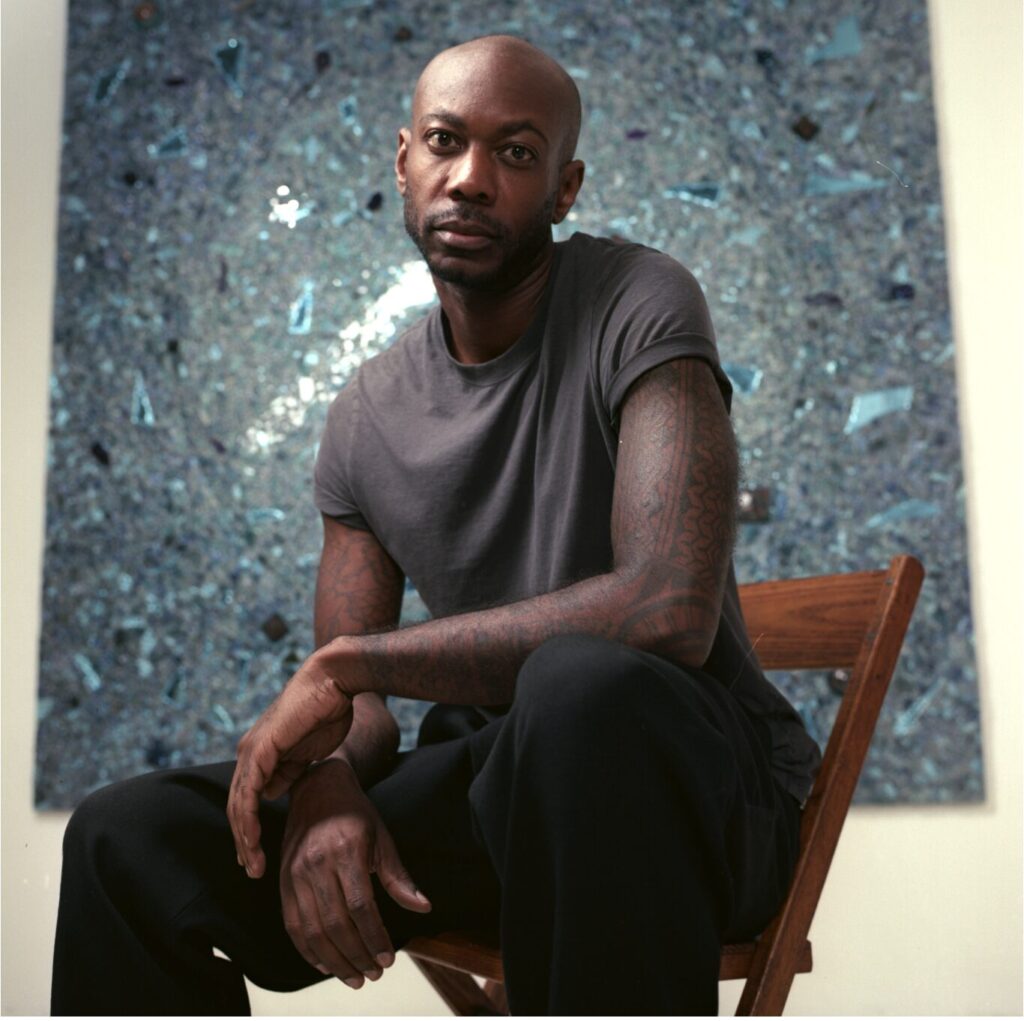
It Happened on Herr: Harrisburg abstract artist returns home for a major exhibit at SAM.

Alteronce Gumby

These days, Bronx-based artist Alteronce Gumby spends most of his time in a New York City studio creating abstract, cosmic paintings. But the painter’s first fascinations with light, color and perception began in his native Harrisburg.

His current Susquehanna Art Museum exhibition, “If Herr Street Could Talk,” has returned 25 pieces of his mixed-media art just a few blocks away from the childhood stomping grounds that shaped his artistic eye.

“He was right here in our backyard,” Susquehanna Art Museum Executive Director Alice Anne Schwab said.  

With this homecoming show, the Harrisburg High graduate hopes to inspire the city’s young artists. 

“You can come from humble beginnings and still be a creative person,” he said. “You can be whatever you want to be.” 

As a child, the now internationally celebrated, award-winning painter didn’t realize that being an artist was a career path available to him. His mother worked as a pastor and a secretary, and his father was a custodian for the state. He said there was no talk of exploring creative careers in his working-class family. He stumbled into it.

After completing a drafting and design vo-tech program in high school, he entered an architecture program at HACC and signed up to study abroad in Spain. While visiting the Picasso Museum in Barcelona, he had an artistic awakening. 

“That was what really opened my eyes to fine art, painting, drawing, ceramics and sculpture,” Gumby said. 

When he returned home, he remembers visiting the Susquehanna Art Museum and other contemporary art galleries in the area. Soon after, he moved to New York City, where he continued thinking about Picasso and eventually enrolled in the city’s Arts Students League to practice figure drawing. 

During this time, a friend invited him to the Museum of Modern Art. 

“She kind of ghosted me, and so I ended up going by myself and seeing this amazing show by abstract expressionists,” he said. “From there, I was just really in love with painting and abstraction.” 

He started painting with bright colors in his room, and soon, an instructor at the Art Students League suggested that he go back to school for art. 

He did just that, enrolling at Dutchess Community College in Poughkeepsie, N.Y., as an art major. From there, he transferred to Hunter College and got a BFA in painting and, subsequently, an MFA in painting and printmaking from Yale University. 

He’s since spent nine years out of the classroom, honing his unique technique. 

Common materials of Gumby’s include oil and acrylic paint, gemstones, resin, shards of glass and fabric.  

“And imagination,” he said. 

His pieces put color theory into practice—sometimes playing with monochromatic hues, other times, high contrast opposites. The highly reflective materials that Gumby applies to the surface of his paintings alter the color of his pieces when the observer moves. 

His fascination with the viewer’s shifting perception of color is rooted in his experience as a person of color, he said, and seeing how color could be used to “open up the conversation” around color and the human condition. 

Rachel O’Connor, director of exhibitions at the Susquehanna Art Museum, said his art is transportive in this way. 

“One of the wonderful things that his work can do, is give you this moment to intentionally observe color, to intentionally observe light,” O’Connor said. “On top of that, he welcomes the viewer to take space to think even further about what color can mean to us.” 

Nostalgically, Gumby also draws inspiration from light and colors he saw growing up on Herr Street, where his maternal and paternal grandmothers lived, respectively, on the 1700- and 1500-blocks.  

He can still vividly see the shadows dancing across the brick houses as he walked between his grandmothers’ houses after school—the light dancing across the leaves he’d rake or the snow he’d shovel for them, and the rainbow casting through a suncatcher hung on one of their windows. 

He’s described the exhibition as both a tribute and an offering to his home city.  

“To bring the experiences I have had back to Harrisburg and to share my work with the community that helped raise me — it’s pretty big,” he said. 

“If Herr Street Could Talk” runs through Feb. 22 at the Susquehanna Art Museum, 1401 N. 3rd St., Harrisburg. For more information, visit www.susquehannaartmuseum.org.


If you like what we do, please support our work. Become a Friend of TheBurg!

Continue Reading

Vision & Values: New directors take the helm at three of Harrisburg’s longest serving homelessness providers

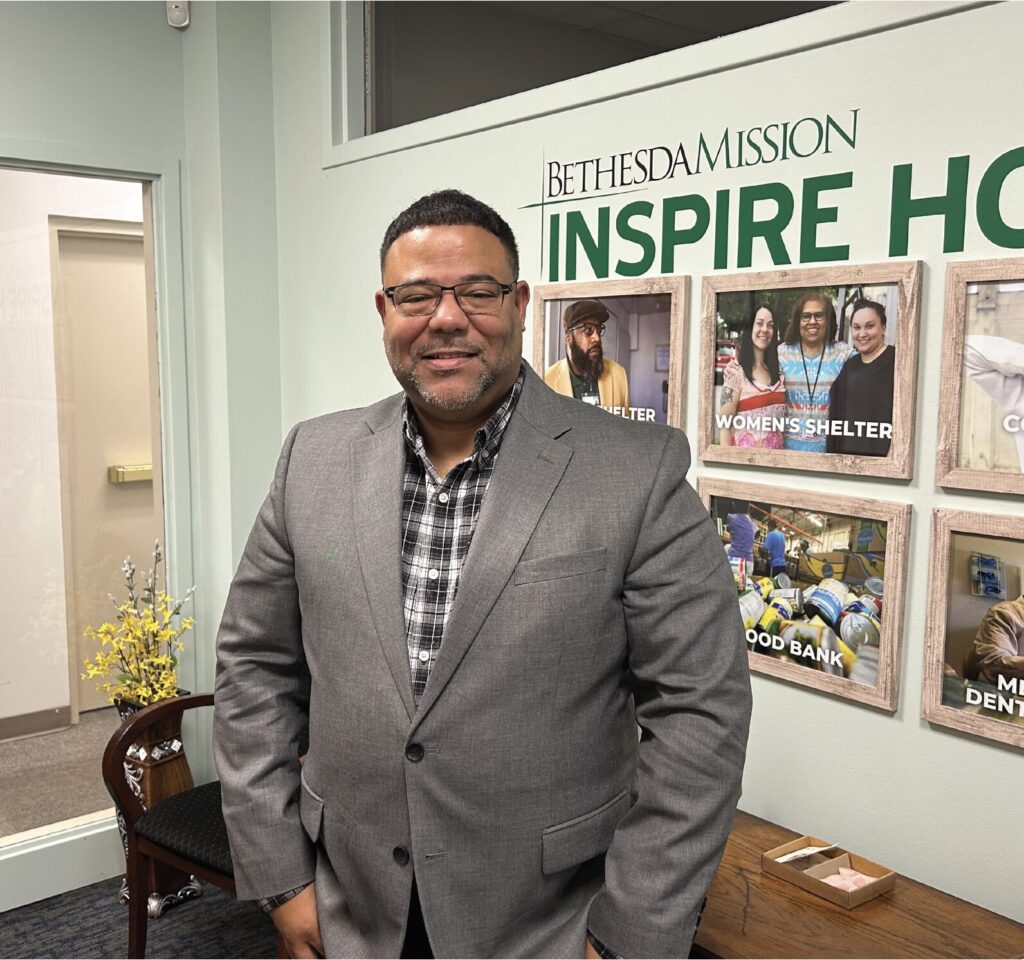
George Chochos

George Chochos has never liked the term “at-risk youth.” He prefers “youth with potential.”

That’s a phrase that could have defined the Albany, N.Y., native’s younger years, though he likely didn’t think so at the time.

In many ways, Chochos, the new executive director of Harrisburg’s Bethesda Mission, may have been just like the clientele that Bethesda serves.

In his youth, he got in trouble in school, began facing legal issues, experienced family trauma, started using drugs and faced homelessness. Eventually, he got jail time in the maximum-security Sing Sing prison in New York.

Chochos was later moved to Eastern NY Correctional Facility and became one of 15 students to participate in Bard College’s prison initiative, which offered inmates an opportunity to get a degree.

“Everything changed,” he said.

Chochos found a different path in life, earning a college degree while in prison, working as a chaplain at rescue missions and, a year after being released from prison, was accepted into Yale Divinity School.

“My first semester, a front-page article in the New Haven Register came out that said, ‘From Jail to Yale,’” Chochos said.

Chochos graduated with two master’s degrees and went on to work for Georgetown University and Vera Institute, creating college programming for people in prison and advocating for federal Pell grants for the incarcerated.

Afterwards, working his way out of several jobs by creating and implementing solutions, Chochos went on to find the next, leading him to Harrisburg late last year. With not only an impressive professional background in the field, Chochos feels that his personal history makes him well-suited for the job.

During his first time preaching at Bethesda’s chapel service, Chochos shared his story. Later, someone told Chochos that they asked a Bethesda client if they knew the new director.

“Supposedly, they said, ‘oh yea, that brother understands,’” he said.

Chochos is not alone as the new director of one of Harrisburg’s longest serving homeless and community service providers. In addition to Bethesda, both Downtown Daily Bread and Christian Churches United of the Tri-County Area have new top officials.

In our October issue, we published a story on organizations that are taking unique, innovative approaches to housing the unhoused locally. However, nonprofits like Bethesda, DDB and CCU have logged decades marked by service to the community and have become institutions that residents, and even transplants to the city, rely on.

Still leaning on the tried-and-true service methods, new leaders at the top of each of the three pillars are casting their own visions for the future of service in Harrisburg.

“Many times, places like rescue missions and shelters, it can almost feel like how prison felt for me. It was like a bracket in my life,” Chochos said. “It’s not like when I got to prison, I knew there was going to be a pathway to some kind of life post-incarceration. What I would like to see with Bethesda Mission is for us to have pathways to education, pathways to employment, pathways to long-term housing.”
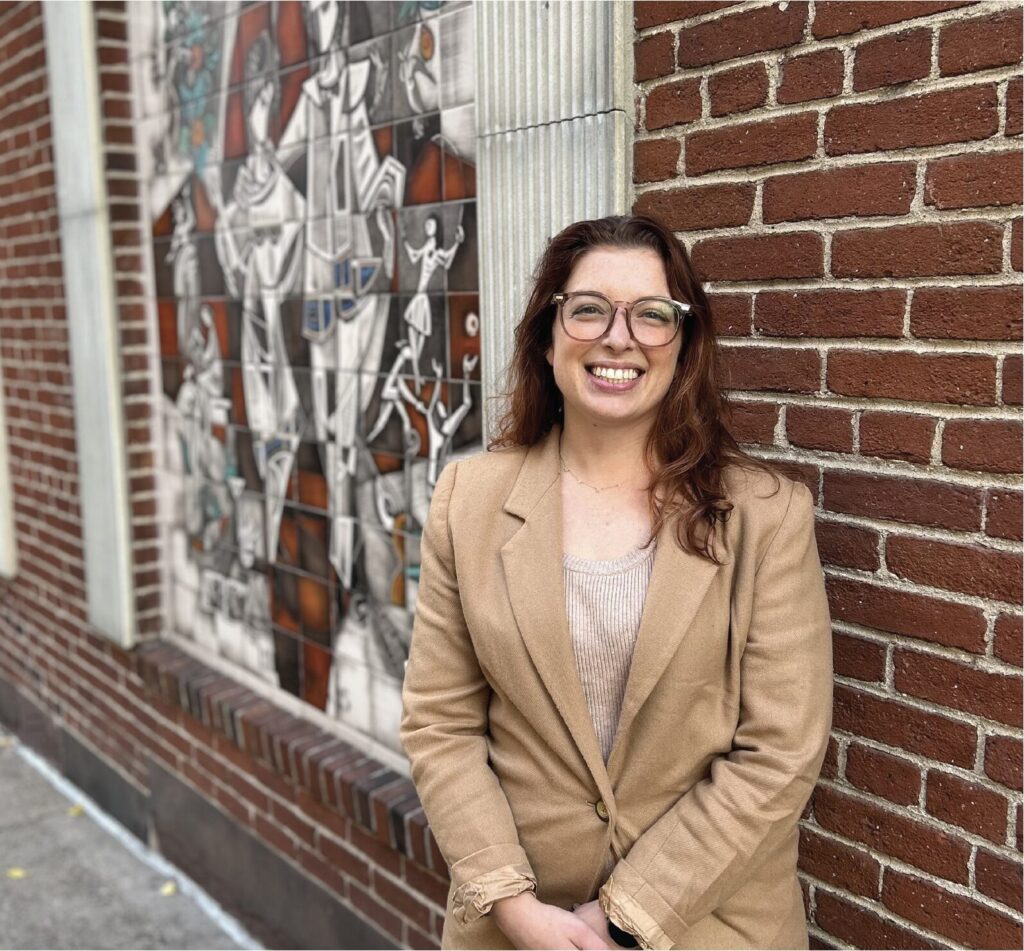
 

Kristen Herman

Puzzles & Potential

For a decade, Kristin Herman worked in the prevention field, serving at the Pennsylvania Coalition Against Domestic Violence.

She advocated for grant funding for domestic violence programming and studied how trauma, systemic barriers and other experiences can lead to relationship violence.

Now as the executive director of Downtown Daily Bread, Herman is working on the other end of the service spectrum.

“This is very much the opposite end. This is crisis work. We’re giving meals, we’re giving showers, we’re giving day shelter,” she said. “I interact with clients here. I get to do things like fix the dishwasher and unclog the toilets.”

And while her work now is very hands-on, Herman feels confident that her prevention background will be an asset to the nonprofit.

“It was a way for me to transition and take the skills that I have in prevention and seeing the bigger picture of how folks end up on DDB’s front doorstep,” she said. “I really like puzzles and, I would say, potential. So, looking at something and being like […] ‘how do all these pieces fit together?’”

Like Herman, Matt Reichard was looking to move into a more direct assistance role.

Reichard most recently served as the associate pastor at CrossPoint United Methodist Church in Lower Paxton Township and has also worked at Paxton Ministries and operated a medical clinic with his wife in Haiti.

When Reichard saw the opening at Christian Churches United, he decided to apply.

“It piqued my interest as something that’s a little bit different than the church setting and back into the community work like I had done in Haiti,” he said.

Reichard started as director earlier this year, at a time when there have been a lot of changes and uncertainty at the local, state and federal levels regarding human services.

“It’s always kind of in the background, but it doesn’t keep us from doing what we do, for now,” he said.

Fortunately, federal budget and funding changes and pauses haven’t caused any service or program cuts yet for CCU, because homelessness continues to rise in Harrisburg, as it does nationally.

“It’s a growing problem,” he said. “That’s something that I wanted to try to do something to help with.”
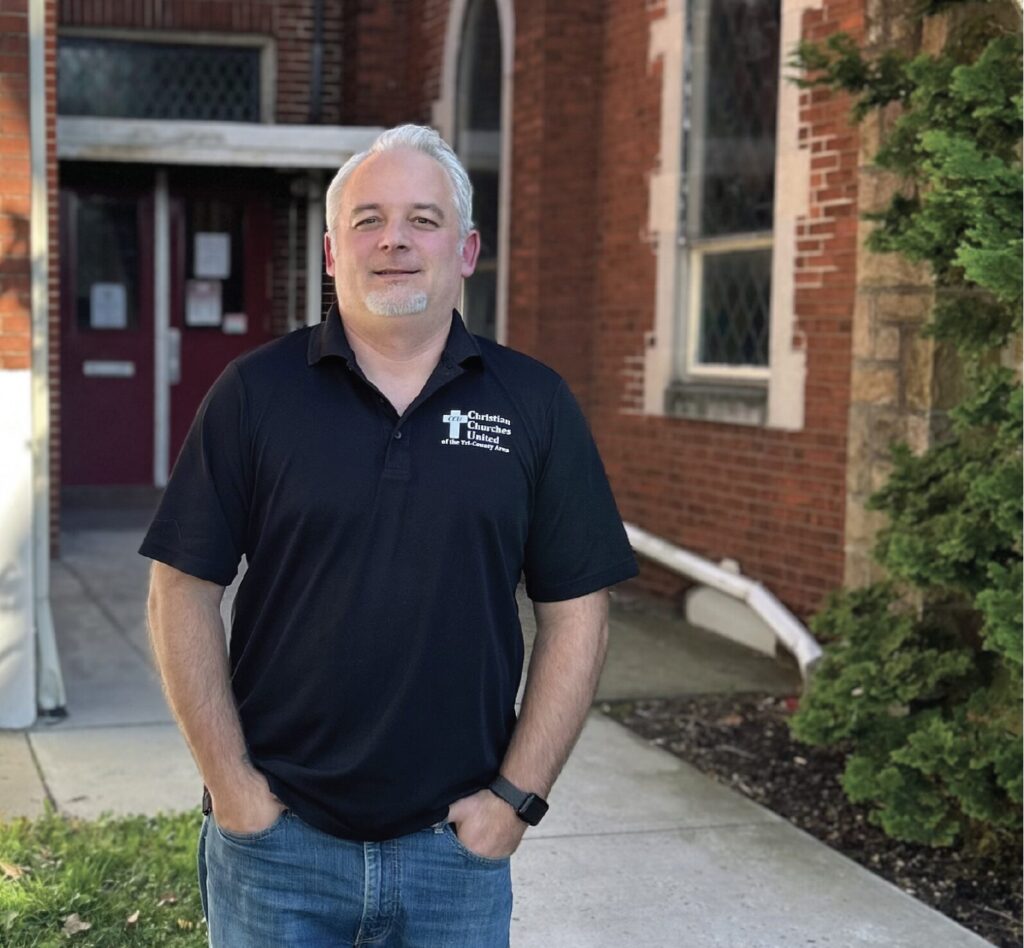
Matt Reichard

Everything Approach

For CCU, Reichard sees one of the biggest needs as continuing to beef up the organization’s homeless prevention efforts through programs like rental assistance. He’s also focused on keeping CCU’s shelter space for adults, which is heavily utilized, running smoothly. In the future, he hopes to expand shelter options to include families with children.

Reichard sees the work that other, newer community groups are doing to address homelessness, such as through building tiny homes and organized tent encampments. He appreciates the fresh attempts at finding solutions, but emphasized the need for a variety of approaches, including older, more established ones.

“I think the two have to work together,” he said. “The newer things are great, and I love new ideas, but I think it takes an everything approach. It’s going to take everybody working together. Some of these newer things will work for some people, but not for others. Some of the older things will work for some people, but not for others. It just depends.”

At DDB, Herman would also like to expand existing programs to make more space for highly-in-demand shelter beds and hot meals.

For Bethesda, Chochos has a vision to bring his expertise in college programming to the shelter by offering pathways to education to clients, possibly even partnering with a university to open a satellite campus onsite.

“That way when somebody comes to Bethesda Mission, there’s not that uncertainty at the back end, but there is a pathway,” he said. “I think that would also motivate people to want to be in our programs. When you know there’s housing at the end, there’s employment at the end, or I can get my education while I’m here.”

While the issue of homelessness continues to climb, all three of the new directors have plans to continue growing their organizations to meet the needs in Harrisburg.

“When I was a chaplain, [my goal] was to help people move from hopelessness to hopefulness. And that’s really what I want to instill,” Chochos said. “Hope can motivate you in ways that other things can’t.”

For more information about Bethesda Mission, visit www.bethesdamission.org. 

To find out more about Downtown Daily Bread, visit www.downtowndailybread.org.

To learn more about Christian Churches United of the Tri-County Area, visit www.ccuhbg.org.

If you like what we do, please support our work. Become a Friend of TheBurg!          

Continue Reading

December Publisher’s Note

At the end of the year, our schedule gets tossed into the air.

While everyone decorates and parties, TheBurg staff scrambles to meet early deadlines, finalize our stories, and get our monthly magazine into your hands.

The rapid-fire Thanksgiving to Christmas to New Year’s train of holidays is always challenging, and this year is especially tough for us, given the quirks of the calendar.

Nonetheless, no worries. As always, we’ll meet our deadlines, with our print magazine packed with community news, commentary, features, events and fun. And, like each December, this issue focuses heavily on the holidays and how we celebrate here in the Harrisburg area.

This month, we have holiday stories that range widely from local attractions to light displays to seasonal entertainment and more. We also have some great ideas on ways to give back to the community, if that’s on your to-do list.

If it is, we hope that you’ll consider putting something special from TheBurg under your tree, as merch sales help fund our mission of serving this community. Currently, we offer sweatshirts, T-shirts and ballcaps through our website or, if you prefer, just drop by our office. Donning your Burg gear also shows the world (or at least your fellow Wegman’s shoppers) that you support our work and your community.

For the holiday season, we also hope you’ll consider joining Friends of TheBurg, our membership program. To say “thanks,” we’ll send you a Burg-branded tote, delivered right to your door. You’ll also get an invitation to the Burg Bash, a huge annual party to honor our members (and my single-favorite night of the year). To date, we’ve had over 700 individuals, families, groups, companies and organizations become members—so please, join in the fun!

OK, I think I’m all pitched out for the month. It’s time now to turn the page and dig into our annual seasonal issue. TheBurg staff wishes you and your loved ones the happiest of holidays!


Larry, Lauren, Meg, Maddie, Natalie and Lex

Lawrance Binda
Publisher/Editor

If you like what we do, please support our work. Become a Friend of TheBurg!          

Continue Reading

Lack of Capitol: In Harrisburg, an absent state workforce shatters small business dreams

Illustration by Rich Hauck

When I first moved to Harrisburg, Aleco’s was my go-to spot for a quick, cheap meal.

At the time, the (very) casual eatery was located at North and 2nd streets, a cozy spot frequented mostly by neighborhood denizens like me.

Aleco’s was run by Jose, originally from Mexico and one of the hardest-working people I’ve ever met. If you dropped in at 7 a.m., he’d happily grill up a breakfast sandwich for you. For lunch and dinner, he furiously dished out burgers, cheesesteaks, sandwiches and huge salads. On Saturday nights, the late-night drinking crowd showed up, standing in a long line that often wound up the block, for greasy slabs of pizza at 2 a.m.

The place never seemed to close, and Jose never seemed to take a day off.

Mike, an older guy who lived nearby, waited every week for the Tuesday night pasta special—a mountain of spaghetti, meatballs, salad and garlic bread, all for about eight bucks.

“Look at all this food,” he said to me more than once, marveling at the pile on his plate. “It’s the best deal in town.”

Unfortunately, Aleco’s salad days (excuse the pun) wouldn’t last. About eight years ago, his landlord didn’t renew his lease, wanting the first-floor storefront for himself. So, Jose relocated a few blocks away, just across from the Capitol building, hoping to tap into the state worker market. Unfortunately, by now, we all know how this story ends.

A pandemic, 25,000 missing state employees, empty office buildings—and another Harrisburg small business down the drain, another dream shattered. In late October, I tried to stop in for lunch, but found the doors locked, the always-open place dark and empty. I tried calling, and the phone went unanswered.

Recently, TheBurg was named Small Business of the Year by the Harrisburg Regional Chamber, and, this month, I have the great honor of accepting this award on behalf of my amazing, creative, committed staff.

Because of this, I thought I might write a column about what it takes to be a successful small business in Harrisburg, an admittedly tough place to make it. I even sketched out a few ideas, addressing concepts like consistency, quality, flexibility, responsibility and dedication, which I believe are components of our success.

But then I realized that, no, that’s not enough. In Harrisburg, you can be a business that does all these things right—and still find yourself run over by some force beyond your control.

A pandemic might hit. Inflation may roar. And, worse of all, your Capitol customer base might stop showing up for work. Over the last five years, all these things happened to the hardest-working man in Harrisburg.

Of course, it isn’t only Jose. The catalogue of shuttered downtown businesses is a long one. Just last March, I wrote about another sandwich shop, Deco Grab & Go, which suffered a similar fate, and, well, I could go on and on. The list goes far beyond lunch spots, including law firms, lobbyists, banks, shops, consultants, bars, etc., which, since the pandemic, have closed, downsized or relocated, leaving many buildings half or fully empty.

My phone rang recently and a building owner, clearly upset, told me that he feared losing his anchor tenant, a downtown business that likely wasn’t renewing its expiring lease. He placed the blame squarely on Gov. Shapiro, who continues to allow most state workers, much of the time, to work remotely.

He said that he believed Shapiro had a responsibility either to order all state workers back to the office or to help fund the redevelopment of downtown Harrisburg—say, a one-time $100 million payment to help convert empty offices into residential space, where there is a demand.

Great idea, I told him, but, also, good luck with that. The problem, I said, is that Harrisburg is an orphan. Neither party gives a hoot about its own capital city.

For the Democratic governor, allowing state employees to continue working from home is the path of least resistance. Why rock the boat, upsetting the workforce, even if in-office work is superior? A future Republican governor might try to reverse that. However, that could prove difficult, considering that so many workers have grown accustomed to remote work or hybrid schedules.

Last year, I wrote a column saying that we, in Harrisburg, need to admit that state workers aren’t coming back and move on, opening a new chapter in the city’s history. I imagine a future in which Harrisburg finally fulfills its destiny as a great small city located on a majestic river, with a walkable, mixed-use downtown full of shops, restaurants and attractions. But, sure, such a transition will take gobs of money, and I have no idea where that will come from.

Even if it happened, it’ll be far too late for Jose and the many other small business owners who have become collateral damage since the pandemic. One day, a whole new crop of starry-eyed entrepreneurs will take their place. I can only wish them better luck than the poor souls who, deciding where to locate their businesses, once looked at the sprawling, stately Capitol Complex, with thousands of weekday workers, a guaranteed customer base, and confidently thought, “Well, at least this will never go away.”

Lawrance Binda is publisher and editor of TheBurg.

If you like what we do, please support our work. Become a Friend of TheBurg!          


Continue Reading