Perilous stretch of Forster Street in line for big improvements, pending grant award

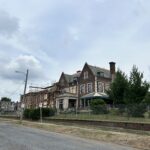
Forster Street in Harrisburg looking west towards Front Street and the Harvey Taylor Bridge.

If Harrisburg City Council has its way, major improvements will be coming down the road for Forster Street.

On Tuesday night, council unanimously approved submission of a grant application for $832,437, which would fund work to reduce the width of Forster Street between the Harvey Taylor Bridge and N. 2nd Street, among other changes.

“This is a new grant. It just came into existence,” said city Engineer Wayne Martin, at last week’s council work session, where the grant application was discussed in detail. “It’s federal transportation funds, so there are only so many certain roadways in the city that are eligible for those funds.”

The application, part of the “Capitol Gateway” project, now goes for approval to the Harrisburg Area Transportation Study (HATS), a regional transportation planning body covering Dauphin, Cumberland and Perry counties.

“It is a high-priority project,” Martin said. “I think it will score well. It’s been mentioned in about six different HATS safety transportation studies that have been done.”

Martin said the area is the most crash-prone in the city, with 47 vehicle crashes recorded between 2015 and 2018 within 250 feet of the intersection of Front and Forster streets.

Currently, the wide road already has one lightly used “slip” traffic lane westbound and lacks crosswalks at two intersections. The pedestrian intersections that do traverse Forster Street–one at Front Street and one at 2nd Street–are not compliant with federal Americans with Disabilities Act (ADA) requirements.

If received, the funds would be dedicated to reducing road width, creating new pedestrian crossings, replacing curbs, building bump-outs and installing landscaping.

The actual cost of the project is nearly $1.1 million. The city would provide its 20-percent match of $245,818 by taking on the pre-construction design and inspection process, Martin said.

In 2015, the state paved Forster Street but did not install ADA-compliant ramps. In fact, the project removed a crosswalk on the eastbound side of the Front and Forster intersection.

Martin said that the project is a perfect fit for the HATS grant, as HATS studies already have identified the area as currently unsafe for motorists, pedestrians and bicyclists. It also is a regional connector between the city and suburbs, as well as a major commuter route.

During last week’s work session, several council members wondered why this project was selected over other high-priority road projects, such as improvements to State Street on Allison Hill.

“I want to make sure that we’re investing equally in all parts of our city,” said council member Ausha Green. “With Vision Zero, I know that one of the biggest focuses is State Street. So, to me, I would have rather seen that be a focal point of a major grant like this as opposed to something downtown.”

Martin said that the city was pursuing a parallel effort to improve pedestrian safety on State Street in its “rapid response” effort, which is part of the city’s “Vision Zero” program to eliminate pedestrian fatalities.

Mayor Eric Papenfuse has said that the city has been in negotiations with the state Department of Transportation both to allow the improvements to State Street and to help pay for them.

“State Street has been a priority since Vision Zero was enacted,” Martin said. “The only reason we selected this one is because of its current ranking on the (HATS) Regional Transportation Plan because it has that regional transportation importance. It hits all the requirements. It would be almost hard not to fund, and that would give us the opportunity to look for other sources for State Street.”

In other council action on Tuesday night, members unanimously approved a grant application for $250,000 to the PA Department of Community and Economic Development’s Greenways, Trails and Recreation Program. If received, the money would help fund the city’s planned Chutes and Ladders Playground in Reservoir Park.

The city currently has raised $500,000 of the estimated project cost of just over $1 million, which includes installation of an ADA-compliant permeable parking lot. Of the previously raised money, $250,000 has come from a state Department of Conservation and Natural Resources grant and the other $250,000 from federal Community Development Block Grant funds.

On Tuesday, City Council unanimously approved two other infrastructure-related measures:

  • A resolution to enter into an agreement with Philadelphia-based Kimley-Horn & Associates for engineering and design services for improvements to Chestnut and Walnut streets downtown, including new sidewalks and curbs, with a maximum cost of $165,000, funded with a state grant.
  • A resolution to enter into an agreement with Mechanicsburg-based Wilson Consulting Group for engineering services to extend the Boyd Street Urban Meadow from Fulton to N. 6th Street, with a maximum cost of $75,000, funded by a Dauphin County gaming grant. According to Martin, the agreement is for pre-construction design services, and the city is seeking funding for actual project construction.

Continue Reading

Harrisburg council proposes citizen’s advisory board to guide policing policy, improve relations

Harrisburg police vehicle

Harrisburg is reviving a proposal to create a citizen’s advisory board to help improve relations and communications between city residents and the Police Bureau.

City Council on Tuesday night introduced an ordinance that would create a “Citizens Law Enforcement Advisory Committee,” a seven-person body that would act as a liaison between residents and the bureau, as well as help promote effective communication, make policy recommendations and gather information, among other responsibilities.

Two weeks ago, council members held a silent vigil and a press conference in front of city hall, vowing then to make changes in police policy. At that event, council member Ausha Green, chair of the public safety committee, said that council may consider forming a citizen’s police advisory board.

Council briefly considered creating such a body several years ago, but never acted on the proposal.

In its currently proposed form, the citizen’s committee would consist of seven volunteer members, each residing in different policing districts. City Council would appoint four members and the mayor would appoint three, all subject to approval by the full council.

According to the proposal, the board’s core functions would be:

  • Fostering a better understanding of the role of law enforcement and reviewing policies, practices and data.
  • Providing residents with a forum to voice concerns about police interactions and responses and to facilitate change in law enforcement practices.
  • Promoting policies and practices for the protection of the community to ensure “fair, just and dignified treatment.”
  • Providing recommendations to the police bureau, the mayor and city council.
  • Foster positive relationships and understanding between residents and the police.

The ordinance was not discussed in detail at the meeting, but was placed into council’s public safety committee for deliberation at the June 30 work session.

Click here to read the full text of the proposed ordinance.

Continue Reading

Harrisburg School District approves 2020-21 budget, deficit eliminated by COVID relief funding

Receiver Janet Samuels speaks at a virtual Harrisburg school board meeting on Monday night.

Harrisburg school district Receiver Janet Samuels gave her approval on Monday night to a $158.2 million district budget for the 2020-21 school year.

The district originally was looking at a $4.2 million deficit in the spending plan due to shortfalls caused by the COVID-19 pandemic, but one-time federal CARES Act funding of $4.7 million filled the gap.

There will be no tax increase this year.

“To be at the point where we have a structurally balanced budget—I’m happy where we are today,” Acting Superintendent Chris Celmer said.

The original deficit projection came with lower expected revenues from earned income taxes, PILOT tax payments, real estate taxes and increases in the state’s basic and special education subsidies, all caused by the pandemic’s economic fallout.

The one-time relief funding may aid the district this year, but could result in a tighter budget next year if the economy doesn’t improve.

The $158.2 million budget compares to a $155 million final budget for the 2019-20 school year. The increased spending is due to increased employee salaries and benefits and other higher expenses.

Business Administrator George Longridge explained the changes to the discount, base and penalty periods of real estate taxes. The tax timing will mirror the city’s, giving taxpayers until Dec. 31 to pay without penalty.

“We are changing a bit because of the stresses of times right now,” he said. “We want to try and provide a little break for the community.”

For more information, visit the Harrisburg School District’s website.


Continue Reading

The Week that Was: News and features around Harrisburg

A local family poses for the “Front Steps” project

What a week! This past week, the news never seemed to stop around the country with major stories breaking, especially out of the U.S. Supreme Court. In case our local coverage got crowded out, you can catch up now, as all our stories are listed and linked below.

Allison Hill Farmers Market is up and going for its inaugural year. Our magazine feature story shows how a community group is bringing local, fresh food to an underserved area of Harrisburg.

Bethesda Mission started work on its new women’s shelter, with a ceremonial sledgehammering to the old building. Our online story offers the details on where, when and how.

Black Lives Matter protestors once again gathered at the state Capitol. Our photo gallery offered a look at the scene as people rallied and marched.

COVID-19 new case count continued to slowly fall across PA. We published our daily updates for another week, as Dauphin and Perry counties finally turned green. We’ll now switch to a weekly update unless events warrant.

Harrisburg school district this week marked one year under state receivership. So, how has it gone? In our online story, we found that the receiver and her team received pretty good grades for their performance, though student academic achievement remains a concern.

Hope is making a comeback, at least around TheBurg newsroom. In his editorial, our editor cites this past week as potentially historic and certainly a step in the right direction as people continue to struggle and strive for equality and rights.

Juneteenth is upon us, with celebratory events taking place all over Harrisburg. Our preview story showed what was planned for this celebration of Black history, culture and freedom. We then shared an online story of one of the day’s activities, as the city took possession of a bronze map replica of the Old 8th Ward from the forthcoming Commonwealth Monument Project.

Lebanon County is the state’s wallflower, the only county to retain “yellow” status as all remaining yellow counties turn green next week. In our story, Gov. Tom Wolf says the decision is based on health policy, but health Secretary Levine hinted at additional motives.

Modern Rugs combines artistry and utility, the magic taking place in a completely renovated building in Midtown Harrisburg. Our arts writer went for a visit and, in his blog, expressed threads of delight with what he found.

Roger Baumgarten made the most of life under lockdown, using his photography skills to snap people under quarantine and, in the process, raising money for Salvation Army Harrisburg. Our online feature story tells how this one man was able to use his idle time to make such a difference.

Sara Bozich spend her first full week in the green zone, slowly getting used to life at 50 percent. Check out some of her best ideas for things to do this weekend around the Harrisburg area.

Shawan Rice and her band, Shawan and the Wonton, are arguably one of the best-known Harrisburg-based bands. Fittingly, we profile Rice as part of our series on local musicians for African American Music Appreciation Month.

Summer camp may look a bit different this year, but, well, doesn’t everything? Our online feature story explains how several popular local camps are adapting to pandemic times.

Do you receive TheBurg Daily, our online daily digest of news and events delivered right to you email inbox? If not, sign up here!

Friends of TheBurg is a great way to support your favorite community magazine and daily news source. Would you like to learn about our new membership program? Then click here!

Continue Reading

For Juneteenth, Harrisburg gets a reminder of what’s been lost, a preview of what’s to come

Lenwood Sloan, right, presents a replica map of the old 8th Ward to Harrisburg Mayor Eric Papenfuse.

Although the weather is looking gloomy, today is filled with celebration as the state recognizes Juneteenth, the holiday commemorating the freedom of enslaved African Americans.

As part of the day’s events, members of the IIPT Harrisburg Peace Promenade presented the City of Harrisburg with a bronze map replica of the historic Old 8th Ward.

“This is an exciting day for our city and country,” Mayor Eric Papenfuse said of the holiday. “This is part of a national conversation about how we can continue to learn and grow.”

The bronze map shows houses, churches, synagogues and other landmarks from the neighborhood that was demolished for the expansion of the Capitol grounds. The Old 8th Ward was primarily an African American and immigrant community that was displaced with the expansion.

“The future is judged by how well we preserve the true and just stories of the past,” Lenwood Sloan, director of the project, said.

This piece, which will hang in the Harrisburg City Government Center, is one of a series of four replicas of the Old 8th Ward. The first was given to Peggy Grove, a supporter of the Peace Promenade project. The second went to Gov. Tom Wolf, the third to the city today, the fourth will go to the county, and the final has yet to be decided.

The A.R.T Foundry of Lancaster is responsible for the creation of the map.

The map will reflect the top of the Orators’ Pedestal—the base of the Commonwealth Monument Project. On the pedestal, 100 families’ names are engraved, as well as maps of Old 8th Ward streets. At the top of the pedestal will stand four historic African American figures from Harrisburg—Frances Harper, Thomas Chester, Jacob Compton and William Howard Day.

The monument will reside on the Capitol grounds at 4th and Walnut Streets, with the finished project set to be unveiled on Aug. 26.

“This will be the first African American monument on the Capitol grounds,” said Kelly Summerford, treasurer of the project. “That has to mean something.”

While just a portion of the larger Commonwealth Monument Project was presented today, it draws even greater significance from the day’s holiday.

“We find this a very fitting way to begin our festivities on Juneteenth,” Papenfuse said.

For more information on the Commonwealth Monument Project, visit https://digitalharrisburg.com/commonwealth/. For more on the IIPT Harrisburg Peace Promenade, visit their website.


Continue Reading

African American Music Appreciation Month: Shawan Rice

If you live in central PA, you’ve probably heard of Shawan Rice and her band, Shawan and the Wonton. The singer-songwriter has brought her melodic voice and heartbreaking lyrics all across Pennsylvania and the east coast.

There is no other way to describe the 25-year-old’s voice but soulful. Her music, featuring traces of blues, R&B and folk laced together with her autobiographical lyrics, will probably wreck you but help you heal all over again.

“It’s soul music—music made for the soul,” she said. “You can feel it inside you.”

Rice has been making music since she can remember. As a child, she loved musicals so much (especially Shirley Temple) that she would reenact them for her family, with her brothers serving as her background dancers.

At 13, she taught herself how to play the guitar and could finally bring a tune to the songs she was creating. At 14, she recorded her first self-titled EP and started getting into the open mic scene. She also performed for her first live event thanks to her friend, Fish. The event, hosted on State Street in Harrisburg, was meant to give people who were experiencing homelessness a chance to experience the arts.

“It was an exciting experience. It was my first little dip into live performing,” she said.

But, at 15, a dark period hit. She dropped out of her high school in place of cyberschool. There were battles with alcoholism and abusive relationships.

“Unfortunately, I created a very isolated experience for a few years. It was a lot of darkness…and just kinda losing control of my life,” she said. “But, fortunately, got on out to the other side of it.”

Music was her saving grace. Collecting her feelings and turning them into art helped her process those feelings and heal. So, she kept making and recording music but didn’t release anything until she was around 18.

Around this time, she met Daniel Delaney, who encouraged her to start playing live and publishing her music again. She and Delaney, along with musician Torrey Long, recorded their EP, “Assorted Inebriations.”

This was the beginning of Shawan and the Wonton.

Today, Rice, Delaney (drums), Xander Moppin (bass), Mike Dempsey (keys), Nate Young (guitar and keys), Dani Fiore (percussion) and Jason Mescia (saxophone) have performed all across the United States as Shawan and the Wonton.

The band took their mixture of soul, blues, R&B and folk everywhere from Little Amps in Harrisburg to venues in New Orleans and Florida.

Currently, the band is putting finishing touches on their studio album. Rice is also working on a project with Moppin and plans on releasing some singles in the coming months.

Even though Rice has been performing for over a decade, she doesn’t consider herself an entertainer. According to her, her music isn’t about entertainment. It’s a form of survival.

“If I don’t [make music] I’ll die. It’s not an expression… It’s survival.”

And she’s not slowing down anytime soon.

In five years, Rice will, of course, be making music, but, overall, she just sees herself as being happy.

“Hopefully, smiling on a sunny day, but if it’s raining that’s OK too,” she said. “I just want to have that contentment in my heart wherever I find myself in five years.”

Check out Shawan and the Wonton on Spotify, YouTube and Soundcloud. For more information, visit their website, Instagram and Facebook.

This story is one in a series of local musician profiles in celebration of African American Music Appreciation Month.

Continue Reading

All PA counties to enter “green” reopening phase next week, except Lebanon County

PA Gov. Tom Wolf (right) at a recent press update

All Pennsylvania counties will enter the “green” phase of reopening next week, with one notable exception—Lebanon County.

Gov. Tom Wolf today said that 13 of the remaining 14 “yellow” counties will move to green on Friday, June 26. These include Berks, Bucks, Chester, Delaware, Erie, Lackawanna, Lancaster, Lehigh, Montgomery, Northampton, Philadelphia and Susquehanna counties.

Philadelphia County, which has been hardest hit by the COVID-19 pandemic, will move to green on June 26, but will retain some additional restrictions until July 3 at the request of county officials, according to Wolf’s office.

Then there’s Lebanon County.

Late last month, by a 2-1, party-line vote, Lebanon County commissioners declared their county to be in the “green” reopening phase without the approval of the state Department of Health.

According to Wolf’s office, the county since has seen an “uptick in cases and is unable to move to green.”

“Lebanon County’s partisan, politically driven decision to ignore public health experts and reopen prematurely is having severe consequences for the health and safety of county residents,” said health department Secretary Rachel Levine, in a statement. “Case counts have escalated and the county is not yet ready to be reopened. Lebanon County has hindered its progress by reopening too early. Because of this irresponsible decision, Lebanon County residents are at greater risk of contracting COVID-19.”

According to the state, Lebanon County has failed to meet two of the state’s four requirements for entering the less restrictive green phase. For instance, it has not shown two weeks of sustained, decreasing new case counts, as per the state’s “county dashboard.”

Today, Lebanon County reported 16 new COVID-19 cases, and yesterday, just 10.

“When these 12 counties move on June 26, we will have nearly every county in green,” Wolf said. “It’s a testament to the many residents and businesses that have sacrificed over the past three months to stay home and adhere to the guidance the state has provided to protect lives and livelihoods. As we begin to reopen, I urge everyone to stay alert and continue to follow social distancing to maintain the momentum of mitigation we have in place.”

Today, Dauphin and Perry counties locally entered the green reopening phase.

Continue Reading

New coronavirus cases bump up above 500 in PA, first time this week

COVID-19 cases and testing over time. Source: PA Department of Health

New COVID-19 cases bumped up in PA, with the state reporting over 500 new diagnoses.

The state Department of Health today reported 526 new positive cases for the 24-hour period ending at midnight.

This breaks a trend of five straight days near 400 cases, though the long-term trend of lower cases overall remains intact.

Cases peaked in early April at nearly 2,000 daily new cases. Since then, cases have shown a gradual decline, despite increasingly greater testing levels for the virus.

With the additional cases, 80,762 Pennsylvanians have now been diagnosed with the coronavirus.

Locally, total diagnosed cases are as follows:

  • Adams County: 309 cases (yesterday, 304)
  • Cumberland County: 768 cases (yesterday, 758)
  • Dauphin County: 1,725 cases (yesterday, 1,708)
  • Franklin County: 872 cases (yesterday, 855)
  • Lancaster County: 3,911 cases (yesterday, 3,867)
  • Lebanon County: 1,226 cases (yesterday, 1,210)
  • Perry County: 79 cases (yesterday, 77)
  • York County: 1,229 cases (yesterday, 1,209)

Overall, 12.6 percent of PA residents tested have shown to be positive for the virus.

The department also reported an additional 38 deaths, meaning that 6,399 Pennsylvanians have died from the disease since March.

Around central PA, the COVID-19 fatality data now stands as follows:

  • Adams County: 11 deaths (yesterday, 10)
  • Cumberland County: 61 deaths (yesterday, 61)
  • Dauphin County: 118 deaths (yesterday, 111)
  • Franklin County: 42 deaths (yesterday, 42)
  • Lancaster County: 344 deaths (yesterday, 336)
  • Lebanon County: 40 deaths (yesterday, 40)
  • Perry County: 5 deaths (yesterday, 5)
  • York County: 35 deaths (yesterday, 34)

Statewide, Philadelphia County continues to have the most confirmed cases with 20,404 cases, followed by Montgomery County with 8,046 cases. The two counties also have reported the most deaths statewide from the disease: 1,550 and 780, respectively.

“With more than half of the state now in the green phase of the process to reopen, it is essential that we continue to take precautions to protect against COVID-19,” health Secretary Rachel Levine said. “The commonwealth’s careful, measured approach to reopening is working as we see case counts continue to decline even as many other states see increases. But the virus has not gone away.”

Nearly all of the Harrisburg area is now in the “green” phase of reopening, which means fewer restrictions on businesses and gatherings. Locally, Lancaster and Lebanon counties are the only counties that remain in the more restrictive “yellow” phase.

Nursing homes and personal care facilities have been particularly hard hit by the virus. Of total deaths, 4,345, or 67.9 percent, have occurred in residents from nursing or personal care facilities, according to the health department.

In nursing and personal care homes, there are 16,895 resident cases of COVID-19, and 3,012 cases among employees, for a total of 19,907 at 651 distinct facilities in 47 counties, according to the health department.

In addition, about 6,141 of total cases in PA are in health care workers.

Statewide, 637,218 coronavirus tests have been performed, with 556,456 people testing negative, according to the state health department. Yesterday, the state reported that 624,068 people had been tested for the virus.

Of the patients who have tested positive to date, the age breakdown is as follows, according to the health department:

  • Nearly 1 percent are aged 0-4
  • 1 percent are aged 5-12
  • 2 percent are aged 13-18
  • 6 percent are aged 19-24
  • Nearly 37 percent are aged 25-49
  • Nearly 25 percent are aged 50-64
  • Nearly 28 percent are aged 65 or older.

Most of the patients hospitalized are 65 or older, as are most of the reported deaths, according to the state.

Levine continued to emphasize that Pennsylvanians should do the following:

  • Wash your hands with soap and water for at least 20 seconds or use hand sanitizer if soap and water are not available.
  • Cover any coughs or sneezes with your elbow, not your hands.
  • Clean surfaces frequently.
  • Stay home to avoid spreading COVID-19, especially if you are unwell.

“Each of us has a responsibility to protect ourselves, our loved ones and others by wearing a mask, maintaining social distancing and washing our hands frequently,” Levine said. “Together, we can protect our most vulnerable Pennsylvanians, our essential workers and our healthcare system.”

For more information, visit the PA Department of Health’s COVID-19 website.

Editor’s Note: With this article, we are ending our daily COVID-19 updates, which we began three months ago. Instead, we will report weekly, each Friday, or as breaking news warrants.

Continue Reading

Burg View: This Remarkable Week

Black Lives Matter protest at the PA Capitol on Wednesday

Can a single week change history?

If so, this past week may long be remembered for the remarkable events that have unfolded.

First, on Monday, the U.S. Supreme Court ruled 6-3 that federal civil rights law protects gay, lesbian and transgender people from job discrimination. Then, on Thursday, a 5-4 majority struck down the Trump administration’s attempts to dismantle the DACA program, allowing some 650,000 undocumented immigrants who came to this country as children to stay here—at least for now.

This, from what is typically regarded as a conservative-majority court.

The greater Harrisburg area has both a large and growing LGBTQ+ community and a large and growing immigrant community. These decisions help protect the ability of both to confidently live, work and thrive here, though it’s now up to Congress to finally pass permanent legislation to ensure the futures of our area’s immigrant “dreamers.”

To cap off this week, today is Juneteenth, the state’s newest holiday, with a day of events planned locally and nationally to celebrate Black history, culture and freedom. Meanwhile, the Black Lives Matter movement continues to protest and press for civil rights, equality and an end to police brutality.

A remarkable week indeed.

A month or so ago, I told a colleague how disappointed I was with my generation—the Gen X/Baby Boomer crowd. When I was young, I attended many protests, thinking that our voices could lead to change. Looking back, however, I felt like we failed to make much progress toward a better, more equitable society.

But now this time has come like a bolt, a renewed era of activism and optimism, led by young people and people of color, but including a broad swath of society across cultures and generations—and now with, of all the unimaginable twists, assists from the U.S. Supreme Court.

Life remains unsettled. There are still plenty of questions, struggles and unknowns, especially as the global pandemic grinds on. But suddenly, the world seems so much more hopeful, so much brighter. For this incredible, history-making week, we can believe again in Rev. Martin Luther King Jr.’s famous quote: “The arc of the moral universe is long, but it bends towards justice.”

Lawrance Binda is co-publisher/editor-in-chief of TheBurg.

Continue Reading

Gov. Wolf makes it official, signs order moving Dauphin, Perry counties to “green” reopening phase

State guidance for locations in the “green” reopening phase.

It’s official—Dauphin and Perry counties will move to the “green” phase of reopening at midnight.

Gov. Tom Wolf released a statement tonight saying that both he and Department of Health Secretary Rachel Levine signed orders allowing eight counties to move from the yellow phase to the less-restrictive green phase.

In addition to Dauphin and Perry, these counties are Franklin, Huntingdon, Luzerne, Monroe, Pike and Schuylkill.

As of  Friday, 54 of Pennsylvania’s 67 counties will be in the green phase, with 13 counties, mostly around the Philadelphia area, still in the yellow phase. All of the greater Harrisburg area will be in the green phase except for Lancaster and Lebanon counties.

The green phase eases most restrictions by lifting the stay-at-home and business closure orders. Notably, it allows many businesses, such as bars, restaurants, salons, gyms and entertainment facilities to open, though at 50 percent of capacity.

“While this phase facilitates a return to a ‘new normal,’ it is equally important to continue to monitor public health indicators and adjust orders and restrictions as necessary to ensure the spread of disease remains at a minimum,” according to a release from Wolf’s office.

New COVID-19 cases have been slowly falling in Pennsylvania for more than two months after hitting a peak the first week of April. For the past week, new diagnoses have hovered around 400 daily.

Continue Reading