Voices of Our Community: Lenwood Sloan

Lenwood Sloan


Following the death of George Floyd and the nationwide and local Black Lives Matter protests, we asked several members of our Harrisburg community if they would like to share their personal stories.

I’ve been so many places in my life and times!

My journey includes three U.S. coasts and four continents. Since 2005, I have referred to myself as Harrisburg’s “foster child.” A refugee of Katrina, I fled New Orleans and was lucky enough to land here in the Rendell administration as director of cultural and heritage tourism.

Refugees are different than immigrants. We fled from one place instead of choosing another. Foster children are in a perpetual state of waiting for “a forever family.” While I work hard to belong, I’m constantly confronted with the salutation, “You’re not from here, are you?”

Fifteen years doesn’t count! I know people who have been here five decades and still get the same question. You see, unless you were born here, you are never from here. You’re instantly measured and identified by your church, the neighborhood you grew up in, or the year you graduated from John Harris or William Penn High School. You’re constantly asked, Who’s your Momma? What lodge did your grandfather belong to?”

Foster children always have that lost look in their eyes. We are always searching for a sense of permanency. We’re always looking for “our people!”

When I arrive in a new place, I always head directly for the town’s MLK Boulevard. Every town usually has a roadway named for the great civil rights leader, right? Not Harrisburg. In fact, it’s the only city I’ve come across that named a boulevard after the Exemplar of Peace and then reversed the action! The only evidence I could ever find of its existence is a disturbing archival record and a pile of signs in the back of a public works building.

As a Black historian, I’m always looking for the presence of the past. Where are the markers of the legacy of my people? Where are the symbols of our achievement against the odds? If you were born here, you might identify the few and vanishing markers of our heritage. If not, you’re lost.

While working on a cultural project along the four-mile Riverfront Park, I could not find a single monument, plaque, bench or emblem of achievement exemplifying the contributions of African Americans. Walk the entire Capitol Complex, and you’ll find precious few markers promulgating our presence there either!

But let’s stay in the present! Where do you take African American tourists to discover Harrisburg’s Black amenities? You’ll find no thriving Black business district, no African American bookstore, art gallery, Black-owned theater, Afro dance center, literary society, public choir. There’s no local Black baseball game to attend or marching band to fall behind. Indeed, when asked, the answer often is, “There used to be!”

“Used to be” is simply not good enough! Cultural identity is built on a foundation of brick-and-mortar institutions, physical signs and symbols which ground and substantiate it. Black-owned enterprises become the loom on which we weave the cultural and multicultural warp and woof of a people. They’re the safe houses of our images, icons, artifacts and memorabilia.

I continue to wonder as I wander, where do Black people exist on the landscape of Harrisburg’s memory? Where are the safehouses of our cultural experiences? Who’s recording what it is to be Black in Harrisburg for present children and future generations? Who’s building monuments to our achievements?

Martin Delaney, the great Pennsylvania abolitionist who fought for freedom with the U.S. Colored Troops in the Civil War, wrote, “Every people should be originators of their own destiny.” Today and every day, we should work hard to pay it forward so that we have something to look forward to with hope and something to look backwards on with pride.

Lenwood Sloan is the executive director of the Commonwealth Monument Project. He serves as the governor’s appointee to the Capitol Preservation Committee and board member of the Mid Atlantic Arts Foundation.
Continue Reading

Voices of Our Community: Danielle L. Bowers

Danielle L. Bowers

Following the death of George Floyd and the nationwide and local Black Lives Matter protests, we asked several members of our Harrisburg community if they would like to share their personal stories.

At any given moment, while sleeping in the privacy of my own home, like Breonna Taylor, while failing to signal a lane change while driving, like Sandra Bland, or while walking down a Chicago street, like Frankie Ann Perkins, I could become the next hashtag #SayHerName.

Black lives matter ALL WAYS and ALWAYS. Everyone has a critical role to play. We must put our energy behind efforts that will make an immediate impact within the City of Harrisburg. Here are a few ways that will yield immediate results.

Vote. Elect candidates whose values align with your own. Politics are the heart of the local community. Every day, you are impacted by political decisions, decisions related to access to quality healthcare, education, childcare, housing and jobs. Be a part of the solutions to ensure your basic needs are fulfilled. Vote like your life depends on it, because it does.

Complete the Census. Census participation will provide federal funding for public transit, early childhood education, school lunches, senior housing and public safety programs. By completing the census, the City of Harrisburg can receive federal funding for programs supporting our must vulnerable residents—our senior citizens and children over the next decade.

Actively engage in City Council meetings. City Council meetings are held every Tuesday. You have an opportunity to participate in the meeting by offering public comment on a bill or resolution on the meeting agenda. You may also offer public comment on any other matter of interest within the city. Public comments become a part of the formal meeting record. Hold us, your local elected officials accountable.

Progress requires effort. The Black Lives Matter protests are a step toward achieving progress. The protests successfully engaged the youth, the old, Black, Brown and white people to march for a cause greater than themselves. While some are marching in the streets, others are raising their voices to achieve progress by engaging their elected officials through phone calls and e-mails. Know that all efforts are seen and heard.

Many of our non-Black colleagues are interested in continuing to make a difference beyond the protests. Our colleagues have been strong allies, showing up and supporting Black and Brown people. We need accomplices. Accomplices will assist in dismantling the oppressive structures impeding the progress of the Black and Brown marginalized communities without fear of consequences. No progress will be made until those with perceived power will recognize our value in all spaces we occupy. We bring a perspective that must be at every table to truly effectuate change. Be brave, become an accomplice. Break down barriers. Change the board rooms, workplaces; include us wherever decisions are made. Equality should be everyone’s fight.

Black lives matter ALL WAYS and ALWAYS. Every day, Black men and women have an influence on our lives. The traffic light, mailbox, dustpan, clock, almanac and ironing board are just a few inventions that were developed by brilliant Black men and women. Let’s not forget the Black urban planner who surveyed the land off of the Potomac River that would become our nation’s capital, Washington, D.C.

Viola Davis recently shared a post that resonated with me. Viola stated, “A revolution has many lanes—be kind to yourself and to others who are traveling in the same direction.” Our tactics may have us in different lanes, but know we are traveling in the same direction. Let’s improve our city together for future generations to thrive and prosper. Say Her Name, Say Their Names, Black Lives Matter ALL WAYS and ALWAYS.

Danielle Bowers is a member of Harrisburg City Council.

Continue Reading

Expecting Better: New report focuses attention on improving maternal health

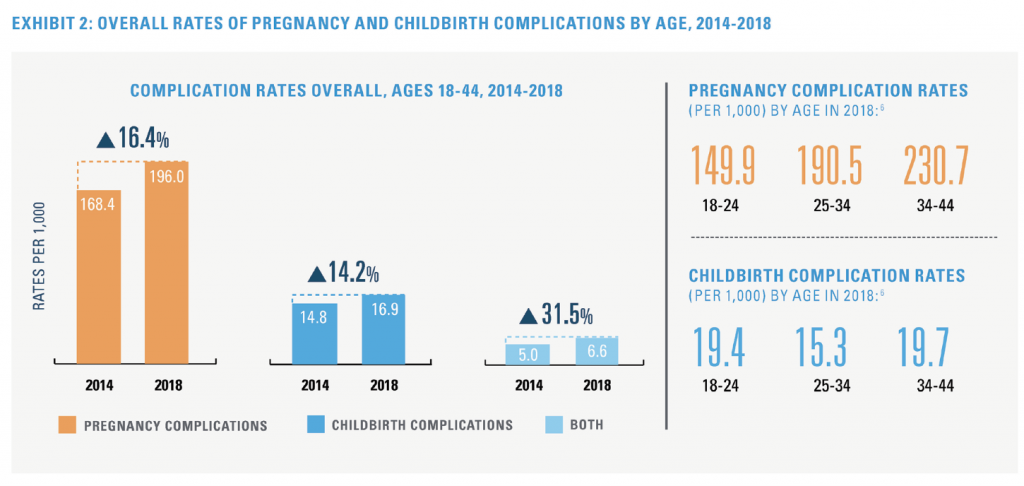
The pregnancy rate is down, but the rate of pregnancy and childbirth complications is on the rise, according to the Blue Cross Blue Shield Association’s latest Health of America report.

That report, which examined claims data from 1.8 million pregnancies among women aged 18 to 44 from 2014 to 2018, underscored the importance of focusing on maternal health in America.

The pregnancy rate declined 2%, with millennials accounting for 85% of births. And while 80% of women had uncomplicated pregnancies and deliveries, the report also found that from 2014 to 2018:

  • Pregnancy complications (gestational diabetes, preeclampsia) increased 16.4%.
  • Childbirth complications (eclampsia, cardiomyopathy, embolism, sepsis, respiratory distress) increased 14.2%.
  • The rate of women experiencing both pregnancy and childbirth complications increased 31%.
  • The number of women diagnosed with postpartum depression increased 30%.
  • Nearly one in 10 new mothers, including three of every 10 in the 18 to 24 bracket, was diagnosed with postpartum depression.
  • 4% of women received no postnatal care at all.
  • Chronic physical and behavioral conditions that can complicate pregnancy and childbirth grew significantly. Obesity increased 100% from 9.1% to 18.2%; major depression grew 35% from 4.1% to 5.5%.

Pregnancy and childbirth problems can harm mothers and babies and heap enormous costs on the system.

Pregnancy complications increase the average cost of a vaginal delivery by 16% and a C-section delivery by 18%, the report stated.

Childbirth complications increase the average cost of these deliveries by 63% and 52%, respectively.

Routine prenatal and postnatal care improves pregnancy and childbirth outcomes, but the report found that 14% of women did not get prenatal care within the first trimester of pregnancy and a third received less than the recommended 10 prenatal care visits.

Social barriers such as limited availability of appointments, lack of transportation and too few providers contributed to the dismal numbers, the report said.

“It’s a disturbing trend,” said Capital BlueCross Chief Medical Officer Dr. Jennifer Chambers.

“Quality care is critical to helping women lead healthier lives that reduce the likelihood of tragic and costly pregnancy and childbirth complications,” she said  “A greater focus on maternal health will improve lives now and will pay dividends for years to come as that healthier child ages.”

Blues plans across the nation are already working to focus more on maternal health care through the Blue Distinction Center and Blue Distinction Center+ program.

Blue Distinction Centers are healthcare facilities and providers that have met strict care guidelines and demonstrated expertise in any of 11 specialty care areas, including maternity care. Pennsylvania has 18 such hospitals, with several in Harrisburg, Camp Hill and Hershey.

Those with the “plus” designation have also demonstrated a high degree of efficiency in delivering that healthcare. There are 33 such hospitals in Pennsylvania.

In 2018, Pennsylvania ranked third behind Texas and Florida for the highest number of pregnancies, with 25,550. It ranked eighth in the nation with 214.8 pregnancy complications per 1,000, and 14th for most cases per 1,000 of postpartum depression.

Capital BlueCross has been collaborating with WellSpan Health in an effort to improve access to care and improved outcomes for moms and babies. Their joint effort will launch this summer.

The insurer promotes preconception care in which women can learn how to take care of their bodies prior to pregnancy by monitoring high blood pressure, checking folic acid levels and making sure vaccines are up to date.

Additionally, Capital BlueCross supports expecting and new mothers with resources and advice for a healthy pregnancy and can link case managers with moms and babies with special needs.

For more information, visit www.capbluecross.com.


Continue Reading

Summertime, with a Twist: Harrisburg seasonal favorite activities change, take new form

Artwork along Sprocket Mural Works’ Mural Trail

Summer is always busy for Ross Willard. Dozens of kids flock to his shop in Allison Hill in the course of a day to get a hand with a bike repair or pick up a new set of wheels.

Recycle Bicycle is especially busy this summer. With the COVID-19 pandemic restricting many indoor activities, families are looking for ways to get outside and entertain themselves.

“People say, ‘Ross slow down,’ but I can’t, there are people in need,” he said.

With the core of Recycle Bicycle’s volunteers in their 70s, the shop had to close for safety reasons, but that didn’t stop Willard’s phone from ringing off the hook. It wasn’t long until the team was back fixing bikes by appointment.

“One day, I went in two hours early, stayed one hour late, wore a mask the whole time and didn’t take a bathroom break,” Willard said.

Just another summer Saturday in Harrisburg.

Out and About

At the start of summer, people were just creeping out of their houses, testing the waters of returning to public life. But with Harrisburg now in the “green” phase of reopening, sidewalks are filling back up and stores are re-opening their doors.

Still, summer will look different this year.

One of the most notable changes was the city’s decision to close its pools. Not unique from many other cities, Harrisburg acted out of caution.

“I know this is going to be a disappointment for many, but there are a couple things that could be seen as positives that come out of this,” Harrisburg Mayor Eric Papenfuse said in a Facebook Live broadcast.

He mentioned the possibility of maintenance work on the pools and applying for grants to build a spray park in the coming years.

Along with closing the pools, the Department of Parks and Recreation is holding limited events this summer.

Department Director Kevin Sanders said that the city will host a series of movie nights beginning in July.

Although there’s no access to the pools this summer, outdoor activities are not hard to find.

After closing for a few weeks, Water Golf’s mini-golf course on City Island opened in early May.

“The city gave us approval to open whenever we wanted to,” Owner Jeff Palkovic said. “If I couldn’t keep my employees and customers safe, I wouldn’t have opened up.”

Water Golf employees are taking precautions to ensure the safety of their customers. They sanitize clubs and balls after each use, installed a sneeze guard at the front counter and encourage customers to wear masks as well as social distance.

Palkovic said their concession stand has been picking up even more than the golf, acknowledging the desire people have to get out of their homes.

The response from golfers has encouraged Palkovic, as many have been extra supportive.

“Normally we get 999 really nice people out of 1,000,” he said. “This year, it’s even better than that. Everyone is so excited.” 

In Session

Even with school out for the summer, students around the city participate in educational experiences—aka, summer camp!

Most are still on for the summer, although their format may look different.

Open Stage, for one, is holding a 10-week virtual theater arts class.

“Things are different this summer, but I think that has given us license to change things up,” Producing Artistic Director Stuart Landon said. “We’ve put together a really cool curriculum.”

While Open Stage summer courses are typically focused on a specific topic, this class will be more general, Landon said. Topics included are musical theater, acting, theater history, design and tech. There will be a group for 8 to 12 year olds and one for 13 and older.

“This situation is not going to keep us down,” Landon said.

Bethesda Mission’s Community Center in Allison Hill is also holding camp, but chose to take an in-person approach.

Starting in June, groups of about 25 kids each have been participating in outdoor and indoor activities. Executive Director Scott Dunwoody explained that the teen group is especially important because it provides internships and job training.

Art & Nature

For those looking to get out and enjoy the sunshine, there’s plenty to do outdoors in the city.

Throughout the pandemic, Harrisburg parks have remained open.

“We are a community in Harrisburg that is fortunate that we made the decision to keep our parks and playgrounds open,” Papenfuse said. “We felt from the beginning that it was important for people to be able to go out to exercise and take walks.”

The Capital Area Greenbelt, Wildwood Park and Riverfront Park are of few of the most popular nature spots in the city. Wildwood is currently holding “Art in the Wild,” the park’s annual environmental art exhibition.

Sizeable trees populate each of these parks, offering shady resting places.

In addition, Sprocket Mural Works is encouraging people to stroll through the city for a self-guided mural tour. There are 40 murals to observe, 14 of which are new this year.

Whether you’re staying indoors and out of the heat or enjoying the summer sunshine, good news—summer is still on in Harrisburg.

Recycle Bicycle is located at 1722 Chestnut St., Harrisburg. For more information, visit www.recyclebicycleharrisburg.org.

Water Golf is located at 600 Riverside Dr., Harrisburg (City Island). Visit www.h2ogolf.com for more information.

To learn more about Open Stage’s Alsedek Theatre School, visit www.thealsedektheatreschool.com.
Bethesda Mission’s Community Center is at 1438 Herr St., Harrisburg. For more information, visit
www.bethesdamission.org/our-ministries/community-center.

To download a map of Sprocket Mural Works’ Mural Trail, visit www.sprocketmuralworks.com.  

Wildwood Park is located at 100 Wildwood Way, Harrisburg. Visit www.wildwoodlake.org.

Continue Reading

Voices of Our Community: Blake Lynch

Blake Lynch

Following the death of George Floyd and the nationwide and local Black Lives Matter protests, we asked several members of our Harrisburg community if they would like to share their personal stories.

 Growing up in central PA, I was raised by a single mom after my dad passed away.

During my childhood, I had positive interactions with our local police department through their focused community policing efforts. I believe their efforts helped shaped my young view of policing. I did have to counter that, however, with a culture that spoke of doubts in trusting the police. I had “the talk” with my mother and uncles about how to “act” around police and white people. I was told multiple times about implicit bias and how that might shape my interactions with people, but especially those who are white. I may encounter things my friends may not just because of something I could not control, my skin color. The stark reality is that not all men are treated equal in a land where it is proclaimed that all are created equal.

When I attended a midstate college as a student, I had another experience. I was driving back to campus on a Sunday night around 9 p.m. I noticed, in my side mirror, red and blue lights. I wasn’t speeding, so I kept driving, thinking that the car was going around me. I realized quickly that I was being pulled over. The officer approached my window and asked for information. I gave it to him and asked him why I was being stopped tonight. He didn’t answer but instead began questioning me.

“Where are you coming from?” “It’s late, what brings you to the area?”

He then asked where was I going. When I answered that I was going back to college, he gave me a look that said he didn’t believe me. The next few words he spoke cemented my thoughts that I was trying to keep back. When I told him what college I attended, he sarcastically said, “Oh yeah, really?”

In my mind, everything my family and culture had ever told me about driving while black became real in that moment. I was scared. I thought, “How I can get out of here?”

I quickly blurted out, “Can I give you my student ID?” With my hands shaking, I found my school ID and handed it to the officer. He looked at the ID, looked at me, went back to his car, ran my information, came back and returned it back to me and told me to have a good night. He went to his car, turned off his lights and pulled off. I sat there confused and wondered, “What just happened?” I have shared this story with people over the years, including several in law enforcement. No one could provide a reason other than what I originally thought. I had never been so scared in my life.

As I recall that story, it’s amazing how God will use one part of your life to potentially set a course and use your experience to help others. I’ve now worked with law enforcement for more than two years. I have watched members of the Harrisburg police department run towards dangerous calls for help, observed them de-escalate very tense situations, work long hours to solve cases for grieving families, serve food to needy families and play basketball with kids. Many in law enforcement know there is more work to do to make our community a better place to live, work and raise a family in a welcoming community that we all want to see. I am blessed to now be able to help be a bridge and be a part of the change I want to see for our region. Everyone wants to live in a community where we all can feel safe, valued and respected.

Blake Lynch is the community policing coordinator for the Harrisburg Police Bureau.


Continue Reading

Century of Grace: For 100 years, the Parkway has watched the river run

At 100 years old, this regal Front Street landmark looks good for her age, but love, care and pride have a lot to do with that.

Opened in 1920, the Parkway was one of first apartment complexes in Harrisburg and considered one of the most elegant. A century later, it remains so popular that residents still wait months for a vacancy.

“The Parkway was built to cater to the clientele in those days who wanted the prestige of a Front Street address without the maintenance of keeping a home,” said David Morrison, executive director of Historic Harrisburg Association. “It combines the graciousness of a private home in an apartment.”

The five-story complex originally was built with 30 units in a charming architectural design that Morrison described as “a blend of Georgian Revival and 20th Century International.”

Originally, all units featured a formal entrance leading into a spacious living room, three bedrooms and bathrooms, maid’s quarters and a formal dining room. Floor-to-ceiling windows still offer majestic views of the Susquehanna River.

In the 1980s, the Parkway was renovated inside and out by its then-owners. The building was reconfigured to create a new total of 34 apartments. Only six units retained floor plans as originally constructed, while others were converted into two-bedroom units.

Outside, a row of single-family garages directly behind the complex was eliminated to ease cramped parking accommodations.

“Visitors had to park several blocks away,” Morrison noted.

With this, service parking and a new rear entrance off of Bartine Street were created.

Nonetheless, much of what makes the Parkway unique remains as it was built in 1920, such as claw-foot bathtubs, hardwood oak floors and plaster ceilings, said building manager Larry Bosak. Apartment walls are topped with wooden picture rails to avoid placing nails in the plaster for wall hangings.

Bosak has served as the Parkway’s manager since 1997. His base is a first-floor office within the complex.

“Our maintenance shop is here,” he said. “Most of our stuff is done in-house.”

Bosak is proud of the Parkway’s rich history. He’s quick to point out that the building is on the U.S. Department of the Interior’s National Register of Historic Places. A plaque commemorating that honor sits outside the rear of the building.

“It’s great to be a part of history like this,” Bosak said. “It’s a dream come true for me.”

Christina Heintzelman moved into the Parkway 18 months ago. Her adopted home is an upper unit with a direct view facing the river.

“I like the view the best,” she said. “It’s absolutely beautiful. It’s also very affordable here with wonderful maintenance, and I’m surrounded by friends.”

Another plus? Heintzelman lives only 65 steps away from where she works. For the past seven years, she’s worked in the office of the Pennsylvania Council for the Blind, which is located on the Parkway’s ground floor.

The Parkway’s residents are friendly, too, she said. When not in a pandemic, building neighbors get together to grill on summer holidays and celebrate Christmas.

“We have a lot of great tenants,” agreed Bosak, equally proud of his building and its people.

Morrison returned the compliment, emphasizing that Harrisburg’s historic properties are only as good as their owners and landlords.

“It was very well built, well designed, and, importantly, has been well maintained,” he said.

The Parkway is located at 925 and 931 N. Front St., Harrisburg.


Continue Reading

Six Months in the Mirror: Strange days, indeed

Illustration by Rich Hauck.

In the news business, big surprises are few.

At first blush, that may sound strange because isn’t novelty intrinsic to the word, “news?”

But, during my long career as a journalist, I’ve found that most “news” isn’t really all that new to those of us on the beat. Issues and events fall into patterns. So, if you’re a reporter covering a story over time, you often find that you can predict what’s going to happen before it occurs.

Most people say what you expect them to say. Most votes go as you think they will.

Then comes 2020, the year that broke all the rules.

Going into it, I expected the presidential election to be the big, dominant story. That’s hardly an act of great insight, right? Likely, most people thought exactly the same thing.

However, a pandemic, a crashing economy and a few enormous protests later, I have to admit that my prediction skills are lacking, at best.

Honestly, I’m still trying to get my brain around all that has happened in the first half of this year. What does it mean for the country? And, most importantly, what does it mean for the city I live in and report on every day?

As I sit here in June, writing this column, I would say that the earth beneath us is still shifting quickly, but I see a few patterns emerging.

First, I’ve been incredibly impressed with the creativity and resilience of our small business community. Harrisburg’s small business owners are a dedicated bunch, and I’m in awe of their focus and imagination as they had to cast aside their old business plans and pull new ones together on the fly. The future is still uncertain, especially as assistance like the Paycheck Protection Program expires. However, I’m increasingly confident that these owners are survivors who can overcome almost anything thrown at them.

Secondly, I’m going to do a slight turnabout and applaud the thousands of protestors who have descended on the state capital over the past few months. If you follow my scribbling, you may know that I expressed concern about these protests impacting our city neighborhoods, as they have several times. But, as I look around today, I see a neighborhood that’s no worse for the wear. We’re all still here, there hasn’t been any looting, and property damage has been quite minor. Yes, there have been some tense times, but nearly all of the demonstrations have been peaceful, the protesters passionately dedicated to their causes. This says a lot considering that the protests have been some of the largest and most persistent in the history of this city. It also says a great deal about the problems in our society and the urgent need to solve them.

Thirdly, the city government deserves recognition. The city, along with the nonprofit Impact Harrisburg, found creative ways to dole out more than $2 million to help the city’s struggling small businesses survive the devastating economic crisis. A few weeks later, the city and the Downtown Improvement District did something that, absent COVID, would have seemed downright radical. They closed downtown streets for outside dining, an experiment that proved to be a tremendous success. City officials also acted quickly to address issues of police conduct and procedures following the Black Lives Matters protests. It remains to be seen which reforms will ultimately pass into law. Certainly, this issue will persist in the corridors (and Zoom meetings) of city hall well into the second half of the year.

Lastly, I want to acknowledge the impact of the Black Lives Matters protestors themselves. As the clock struck midnight on Jan. 1, 2020, I certainly didn’t imagine that, a few months later, we in the media, in business, in government, etc., would be analyzing and searching for ways to improve racial equality and justice in this society. George Floyd’s death and the resulting worldwide protests have brought a singular focus to the perniciousness and persistence of racism across time and generations, and a reckoning is long overdue.

As I look back on the first half of 2020, I see a society and a city trying to regain its footing. However, with a presidential election quickly approaching, I expect that the year may grow more chaotic yet. Is that possible? At this point, I’ve learned not to underestimate the year 2020.

Lawrance Binda is co-publisher/editor-in-chief of TheBurg.

Continue Reading

Voices of Our Community: Dr. Kimeka Campbell

Dr. Kimeka Campbell

Following the death of George Floyd and the nationwide and local Black Lives Matter protests, we asked several members of our Harrisburg community if they would like to share their personal stories.

Joy in Justice.

It’s 2:12 a.m. My eyes pop open, and my heart begins to race. I immediately begin to think about all the things I must do. I start putting everything in order. Walk the dogs. Shower. Get to work. Attend meetings. Hopefully eat lunch. Answer emails. Make phone calls. Mentor my staff. It’s only 2:15 a.m. The other side of my mind is trying to remind me to…Calm down. Breathe. Go back to sleep.

But what about George Floyd? It’s okay, you can think about that later. But what about Breonna Taylor? It’s extremely sad. She was asleep in her own bed. But what about Shaleek Moss? Sigh. 2016 seems so long ago. Did we fight hard enough for him? And don’t forget all the work that you must do in the community! My mind races on.

This has been my life for a long while. But the persistent anxiety has never been more present and visceral than in the last few weeks. There is so much work to do in the community and so much that goes undone.

But during this resurgence of terror, pain and struggle—there is hope. As I continue my community work, I remember.

Working in this community gives me life. Keeps me sane. Brings me peace. And strangely fosters a sense of joy. It’s a joy that is rooted in the hope for a better future, and the hope of equitable life experiences for all people. It’s the hope that, as I am lifting up Black voices, Black struggles and Black experiences, that we elevate the conversation. That we lift up society. Because when we lift up Black lives, we lift up all lives.

When we lift up Black lives, we lift up all lives. The joy this refrain brings fills my heart and calms me down. I go back to sleep and rest to fight another day.

There is Joy in Justice.

Dr. Kimeka Campbell is co-founder of Harrisburg Young Professionals of Color.

Continue Reading

Flea Forward: HBG Flea vendors switch to online sales, but miss their community

Jewelry by Amanda Burg

The COVID-19 crisis switched strolling through stores to scrolling online.

Not that people hadn’t been doing that already—I mean, they’re making drones to deliver packages. But this time, online shopping wasn’t so much an act of laziness as it was necessity.

Amazon lives off the e-commerce model, eating up consumers’ money and spitting out mass-produced goods wrapped in cardboard. But most small businesses take smaller bites.

Kat Dreibelbis has always made art. Art you can hold and admire. Her drawings and paintings come from a place of whimsy, surrealism. In one watercolor, a cat wears eyeglasses; in another, a trumpet sprouts a flower. In 2012, she began selling her work under the name Black Kat Luck and took it to festivals and markets.

Selling her art online isn’t something Dreibelbis is overly invested in. She’s partial to the in-person experience of buying and selling. This is why she has always loved the HBG Flea Market and why its temporary closing has been so hard for her.

“Not having that has hit home of how much we invest in the flea community,” Dreibelbis said.

Same Mission

When Meghan Weaver and Mary Imgrund started the HBG Flea, they had one goal—support local artists.

Over the past few months, tables that usually held handspun pottery, sweet smelling soaps and delicately crafted jewelry sat folded up in storage. Strawberry Square saw no crowds looking for a one-of a-kind find, and Midtown Cinema’s parking lot sat empty, as well.

The COVID-19 crisis may have put the physical market on hold, but that didn’t stop Weaver and Imgrund from fulfilling their mission.

“We had to do something to support the small businesses,” Imgrund said. “For many artists, that is a primary source of income.”

Knowing small businesses took a hard hit in the crisis, Imgrund and Weaver wanted to provide free assistance to their vendors

The pair set up the “Creative Outlet,” an online listing of their vendors. This would give the artists and small business owners a chance to sell and customers a way to buy. Over 60 local makers are available to peruse.

“It just feels like a different form of the same mission,” Weaver said. “It was a natural extension for us.”

Special Place

Eight years ago, Amanda Burg started making jewelry. With raw crystals and mixed metal, she crafts unique Bohemian style rings, necklaces and earrings. It began as a hobby, but Burg soon realized it was more than that. She opened a shop, Amanda Leilani Designs, on Etsy and set up booths at markets.

“The HBG Flea is actually the first market I did, so they hold a special place in my heart,” Burg said.

While Burg already had an established online presence, the market is a source of business she counted on. Each month, she set up shop at the HBG Flea.

“For a lot of people, myself included, it’s their livelihood,” she said.

Fortunately, Burg saw an increase in her online sales in April and May. She attributed that to the fact that people had no option but to shop for many products online. Burg also mentioned that the Creative Outlet helped drive customers to her site.

“To be able to support artists in a time like this is so important,” she said. 

Flea Family

While the business of the market provides for artists, it’s the community aspect they miss the most.

“I miss my vendor community so much,” Burg said. “I miss seeing everyone each month.”

Dreibelbis has felt encouraged by having regular flea-goers reach out to check in on her.

“It’s really lovely to hear from them,” she said. “They’re rooting for the business.”

The re-opening of the HBG Flea in person is scheduled for July 11 in the Midtown Cinema parking lot. Weaver and Imgrund said the capacity will be limited and social distancing and wearing masks will be required.

Both Burg and Dreibelbis are hopeful that people will continue supporting local businesses, no matter what format that takes.

“It all comes back to building the community that you want to exist in,” Dreibelbis said.

For more information on the HBG Flea or to shop from its vendors, including Black Kat Luck and Amanda Leilani Designs, visit www.hbgflea.com.


Continue Reading

Run On: Amid pandemic, many find therapy on the run

A body in motion tends to stay in motion.

Sound familiar? It’s part of Sir Isaac Newton’s first law of motion.

Physics aside, it’s also a credo many runners live by.

“Running provides a sense of freedom—I find joy in it, and running has always been one of my coping mechanisms,” said Joe Church, 68, a longtime Harrisburg resident who now resides in Dover, York County.

And he knows a thing or two about staying in motion. Church typically runs 50 to 60 miles per week. He’s completed 103 marathons—at least one in each of the 50 states, on all seven continents and in 44 different countries. He also ran the marathon distance (26.2 miles) around a cruise ship deck. Not once—but 29 different times. And those runs were just for fun (at least that’s how Church defines them), so they didn’t count as actual “races.”

In March, Church was in the Cook Islands, planning to run a marathon there, when the pandemic swept across the globe to the United States. The race was canceled, flights were being canceled, but he was able to catch one of the last ones home—just in time for Pennsylvania’s stay-at-home orders.

But he’s not exactly a homebody—running provided an “escape.”

“It helped me because when you’re thinking about people getting laid off from their jobs, or people not being able to pay their rent—I have friends in that situation—running allowed me to take that in my head and deal with it,” Church said. “If I feel any anxiety, running has always been a relief.”

Many runners, like Church, find running therapeutic during the pandemic. According to an informal poll of more than 200 River Runners, a Harrisburg-area running group, 75 percent said they’ve been maintaining or increasing their typical running mileage since the pandemic.

And apparently there’s a psychological reason for that.

“So much control was taken away from us during the pandemic, and most everybody’s coping skills were taken away too, and that’s one reason we’re seeing a surge in walking and running—people are going stir-crazy, cooped up,” said John Dennis, a counselor and sports psychologist at Parenting & Family Solutions LLC, with offices in Harrisburg and Lancaster. “And for long-time runners, it’s part of their daily routine—a spirituality, like a religion.”

Running, he said, improves the mind, body and spirit. Beyond the obvious physical benefits, the release of endorphins decreases stress, anxiety and depression and regulates a healthy appetite and sleep cycle.

Those endorphins, a “runner’s high,” are addictive—in a good way.

“In terms of mental health… for the majority of people, running is a way to clear their head,” Dennis said.

However, mentally and emotionally, COVID-19 also constructed hurdles on runners’ paths. After months of training, many runners are “grieving” the loss of canceled races—the non-existent high school track season, local races and high-profile events such as the Boston Marathon, Dennis said.

One of those runners is Scott McGeary, 32, of Harrisburg, who’s been a competitive runner since his high school days at Central Dauphin East. With his 2020 race schedule canceled, he’s increased his weekly run totals to about 90 miles.

“Running is my identity—more so than anything else,” McGeary said. “My eating schedule, my travel schedule—everything is based around running. It’s my stress relief, my exercise, my fun time, my socialization, my competitive outlet.”

McGeary, clinic director and physical therapist at Mechanicsburg’s Pivot Physical Therapy, has a recommendation for brand-new runners: a couch-to-5K plan that involves intervals of running and walking that gradually introduces your body to running.

Runners over-doing their mileage may become his patients this fall.

“It typically takes three to six months for overuse injuries, so the fallout from COVID-19 changes in running are a few months down the road,” McGeary said.

The social aspects of run clubs, or lack thereof during the pandemic, is also affecting runners.

“Enjoying a cup of coffee with friends after a run—that will come again,” said Mary Lou Harris, 73, of Camp Hill. “While I’m not always cognizant of my age, when I realized I was part of that vulnerable population, I realized I had to be smart and run strictly solo—the social things can wait.”

Harris, the founding race director of Harrisburg’s “Capital 10-Miler: A Run for the Arts,” is concerned about the pandemic’s ripple effects on races, charities that typically benefit from race proceeds, plus race-related tourism.

“As we come out of this, I think people will be looking for races closer to home—perhaps smaller races trying to help a charity,” said Harris. “In terms of runners’ comfort level in racing again, providing a safe, healthy race environment is really a puzzle. People are scrunched together at the start and finish lines—how do you make that safe?”

Amid the pandemic, both Harris and Church signed up for a number of “virtual race challenges,” in which runners track their total monthly or summer miles. For example, the Runnsylvania 283 organized by Fleet Feet Mechanicsburg challenges runners to rack up 283 miles—the approximate distance across the state—between the first and last days of summer. The sign-up fee includes a shirt and other goodies; proceeds benefit a nonprofit assisting with COVID-19 relief efforts.

At her age, Harris wonders, “Have I run my last [traditional] race? It’s sobering but you come to terms with it.”

Church is simultaneously participating in several virtual race challenges. In addition to the Runnsylvania 283, he’s running virtually across New York (a 1,000K distance) and Tennessee. He submits his running mileage to all three challenges.

“One of the benefits, if there is a bright side of pandemic running, is that in real life you can only go to one race at a time,” said Church. “But with virtual races, I can be virtually in many places at once.”


Continue Reading