Artist in Focus: Tristan Bond

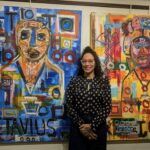
If you’ve had a meal or drink in the HMAC courtyard, you’ve probably seen Tristan Bond’s work.

He’s the creator of the circular mural of the surrealist deer, a work mounted during the 2017 Harrisburg Mural Festival. Or perhaps you’ve seen his work at the HBG Flea or the Odd Ones Bizarre at the Millworks.

If you have, you’ll probably see certain threads running through his work, as his style is inspired by a combination of Japanese culture, anime, retro wave, Afro punk and pop culture.

“I believe my work shows the power that we all hold within ourselves,” Tristan says. “There are layers to us all, vulnerability and also strength, and I like to capture that by creating empowering pieces with strong female and male characters depicted as warriors and dressed in geometric armors.”

We’re delighted to share images of Tristan’s work on this page. To see more, follow him on Instagram at @bond_of_art.

Continue Reading

The New Developers: In Harrisburg, African American builders are revitalizing neighborhoods, cultivating community

Corey Dupree. Photo by Dani Fresh.

Ask Corey Dupree what African Americans can bring to city development, and he says, “I love this question.”

African-American developers “bring perspective” on the power of development to serve comprehensive needs.

“Our objective is to make sure these communities rise from, quote-unquote, ‘the rubble,’ because the phoenix does rise from the ashes,” said Dupree, a partner in the planned transformation of the former Bishop McDevitt High School into an eco-friendly complex.

African Americans comprise about half of Harrisburg residents, but they have traditionally “limited ourselves to a minority stake in projects,” said developer Ryan Sanders. But now, behind the plans for several high-profile projects are African Americans with ties to the city and commitments to community.

In the wake of nationwide protests demanding racial justice—and by extension, equal opportunity—these developers envision impact that goes beyond bricks and mortar.

The Pulse

In Harrisburg’s Allison Hill, Tarik Casteel is building TLC Cornerstone Renewal, with 50 affordable apartments and townhouses and a community center near N. 15th and Walnut streets.

“I picked that area because it’s one of the worst areas in the city,” said Casteel. “I’m from the community, born and raised in Harrisburg, and I wanted to show that this can happen if you want it to.”

Casteel is president of TLC Construction & Renovations, and its nonprofit arm, TLC Work-Based Training Program. The nonprofit trains such hard-to-place people as veterans and the formerly incarcerated, hiring them for projects on the construction side.

“When you’re using these same people in the community, it gives them a sense of pride because they helped build where they live,” said Casteel. “When people take pride in where they live and pay taxes, they’re not going to tear up where they live because they’ve got skin in the game.”

In 2018, Casteel and his aunt, Juanita Edrington-Grant, imprinted the city landscape with the Harrisburg Uptown Building (HUB) with apartments for homeless veterans, plus the adjacent HUB Veteran Housing Campus. It’s about taking the reins and ensuring that the builders who build and the people who benefit “look like me,” he said.

Down in Midtown, Sanders is part of the team behind the planned creation of Jackson Square on N. 6th Street. The partnership, which includes NFL veterans and brothers LeRon and LeSean McCoy, looked at that row of deteriorating buildings with deep roots in Harrisburg’s African-American history—including Jackson House, a Green Book-listed rooming house that hosted legends of jazz and sports—and saw “a great opportunity to preserve culture and history.”

And then back at the top of Allison Hill, Garry Gilliam, Jr., is a partner with Corey Dupree, DeZwaan Dubois and Jordan Hill in The Bridge, a venture planning inner-city eco-villages, starting with the McDevitt campus. The idea emerged, in part, from the time Gilliam, Dupree and Dubois spent as students on the comprehensive Milton Hershey School campus, where they knew that the basics of housing, food, education and security were assured.

When those necessities are met—and The Bridge expects to encompass greenhouses, classrooms, workspace and recreational options—then people see hope, said Gilliam.

“I don’t believe you need to leave Harrisburg for that,” he said. “It can be done with mixed-use development, providing resources for those in those communities, and in a way creating a microcosm of Milton Hershey to break generational curses.”

As the new federal courthouse and state archives accelerate development pressures, the city is working with developers to “make sure that the first thought in new development addresses long-term concerns of the community,” said city Planning Director Geoffrey Knight.

Diversity among developers brings a fresh perspective to those conversations, Knight said. Many African-American developers have told him they’re striving for impact.

“It’s less of a focus on things that are financially viable,” he said. “It’s more of a focus on, ‘This is my community. This is a project that means more to me than just dollars.’”

Gilliam agreed.

“We’re of the community,” he said. “We’ve got the pulse of the community.”
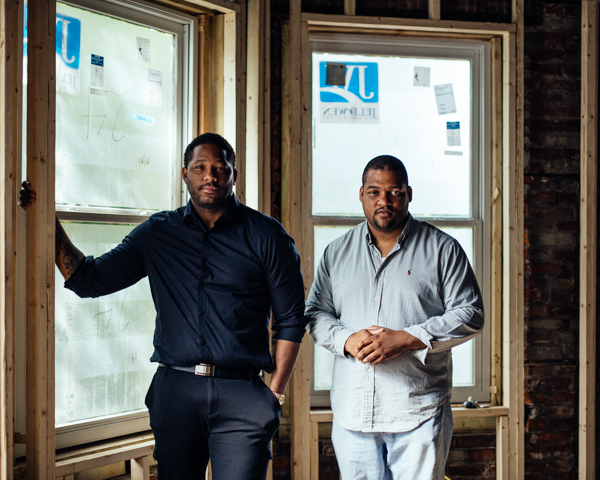
LeRon McCoy & Ryan Sanders. Photo by Dani Fresh.

Never Leaves You

Development that expands opportunity in a traditionally neglected or oppressed community kickstarts change from within, Sanders said. African Americans in development also offer role models for younger generations.

“If we want them to do more, we have to show them more,” Sanders said.

Too often, Black youth see only athletics or entertainment as their way out of inner-city neighborhoods, said Gilliam. Seeing adults succeed in other fields, including real estate and development, presents pathways to the full scope of careers.

Casteel positions his projects to create economic opportunities and to stand as showcases of possibilities.

“People need the opportunity to show what they can do,” he said.

To him, the HUB demonstrated that “African Americans can develop and build a good project and can work together to build their own community,” he said.

Indeed, the city “wants to hear from different people,” said Economic Development Director Nona Watson. Diversity brings people who have experienced discrimination firsthand—something that “never leaves you.”

“You want to give back in a way that will help keep other people from experiencing what you experienced,” she said.

Diversity “creates additional opportunities for individuals who may not have had opportunities to necessarily get into that field,” added city Business Development Director Jamal Jones.

“When you’re working with people who are the decision makers that are from diverse backgrounds, it provides opportunity to other people because there’s a certain level of understanding that there may have been—traditionally, historically—disparity in regard to opportunities. It levels the playing field,” he said.

Tarik Casteel. Photo by Dani Fresh.

From Within

African Americans in Harrisburg development aren’t a novelty, Jones pointed out. Today’s big-project developers are standing on the shoulders of those who have made smaller contributions over the years.

“We should be at a point where this is more of the norm, as opposed to the unicorn,” he said.

When more citizens have access to education and jobs with livable wages, “you’ll see the byproduct in leaps and bounds, from more citizens that can contribute to your tax base, to bringing more people into Harrisburg,” he said.

Barriers remain. Closed doors to the banks and networks that control the money and jobs. Decades of redlining that depress the value of black-owned properties and curtails generational wealth. State contracts awarded to far fewer minority- and women-owned businesses than available, according to the Pennsylvania 2018 Disparity Study.

African-American developers say they are working around and through those obstacles. Casteel has built a strong network of relationships with trusted partners. Sanders’ funding sources include community-impact financial institutions.

“Economic development is one of the building blocks we need to address some of the systematic issues we have,” said Sanders. “I’m always for doing all community first, so you have enough individuals who are looking to do for our own community, and we’ll have the village that is needed to help produce the next generation of leaders.”

Dupree sees stereotypical views of Black men as intimidating or not knowledgeable. But when people realize they are savvy men who know what they want and understand what systematically oppressed people need, “that’s what is meant by ‘by the community, for the community.’”

“We’ve come so far, but we still have a ways to go to be able to have that equal access seat at the table,” he said. “I say it all the time. I’m proud of Harrisburg. When we say that Harrisburg is going to look a lot different in five years, we genuinely mean that.”

Failure to cultivate diversity among developers keeps a city from moving forward and prevents attention from reaching blighted neighborhoods, Watson said.

“Yeah, you have a thriving downtown area, but what happens with the schools, what happens to the neighborhoods?” she said.

At the direction of Mayor Eric Papenfuse, Watson is researching “gap financing” to help developers improve return on investment for less remunerative projects.

In large part, African-American developers “don’t just do development,” said Casteel.

“We do community development,” he said. “We work with the community as a whole. Development isn’t just about building a house. You’ve got to build community.”

Continue Reading

Tough Times, Green Times: Harrisburg Urban Growers helps people discover their inner farmer

If you’ve driven around Harrisburg recently, you may have noticed that, in some places, things appear a bit greener.

Urban gardens have begun blooming all over the city thanks to a local group whose mission is to offer gardening kits to encourage a source of healthy and sustainable food.

Harrisburg Urban Growers, an initiative of Tri-County Community Action, hosts an annual “Seed and Plant Giveaway” each year, offering gardening kits for residents. This year, the organization put social distancing procedures in place, and volunteers safely delivered the kits directly to residents over several weekends.

Donnel Brown, Tri-County’s neighborhood revitalization coordinator, said that they believe that growing natural, healthy and clean fruits and vegetables is empowering and is essential toward a sustainable and local food system in Harrisburg and the surrounding area.

“Although one of our goals is to bring people together in order to increase social cohesion, gardening is usually a meditative and solitary activity, even when it is done in small groups like a family unit or larger groups like volunteers from an organization,” Brown said, noting that they are putting up signage and adhering to PA Department of Agriculture guidelines for community gardens.

Each kit offers a variety of seeds, including lettuce, apples, strawberries, asparagus, peppers, potatoes, mint, basil, figs, raspberries, red berries, blackberries and blueberries. It’s truly a community effort. Stony Creek Valley Farm donated all the plants, the seeds came from various seed companies, and the seed pods came from the Central Pennsylvania Food Bank.

HUG then works to give families access to the tools, skills and space needed to plant a garden. There are 14 community gardens located throughout the greater Harrisburg area.

HUG believes in the creation of an urban agricultural resource hub in Harrisburg to help build social ties, to produce food to distribute to the food insecure and to form a greater sense of community, according to Tri-County Community Action.

Christa Mummau, a HUG volunteer, said that the boxes include a website that gives step-by-step instructions, as well as a postcard for those who don’t have access to the internet.

“We have resources for people and a number for them to call so a volunteer can talk to them through the instructions on implementing the kit,” Mummau said.

There’s also a Facebook page with links to videos, DIY tips and wisdom from some community members who’ve had over 30 years experience in urban gardening.

Not only is gardening good for the body, it’s also good for the mind, Brown said. It’s a way to care for something and gives people a sense of purpose and pride.

“The mental health benefits of gardening are well documented, and for many, it’s unparalleled to other mental health practices,” he said. “Gardening makes us feel good because it is both a physical exercise, which releases endorphins, and a creative outlet that allows us to express ourselves.”

Anita Hall of Uptown Harrisburg said that the kit not only helped her get started with an urban garden, but also provided a new way to socialize with other residents in her apartment complex.

“As a disabled veteran, I’ve had anxiety and PTSD for a long time,” she said. “During the pandemic, I’ve struggled with being so isolated. Receiving the kit and working to create an outdoor space allowed me to connect with my neighbors.”

In the kit, Hall received basil, lettuce, tomatoes, onions, turnips, squash, cherry tomatoes, eggplant, fennel, broccoli, kale, bell peppers in grow pods and much more.

Thrilled that HUG was able to deliver the kit, Hall has created a space to enjoy the labors of her new urban garden in front of the complex.

“Even if I don’t get one tomato, this has helped me with my anxiety and PTSD by allowing me to connect with my neighbors in a way we hadn’t been connecting in the past,” she said.

As a thank you, Hall had something to give back. She offered the volunteers homemade masks that she’s been sewing.

To learn more about Harrisburg Urban Growers, visit their Facebook page: HBG Urban Growers.


Continue Reading

Say Cheese!: Cheddar Paws brings pets from portrait to adoption

Hank’s painted portrait captures his handsome face and gentle spirit. There’s that goofy grin. The bright eyes. The perked-up ears and drooping tongue.

“It’s a good likeness,” said Jason Viscount, new dog-dad to Hank, a 5- or 6-year-old pit bull. “He’s a lot prettier dog than the photos.”

An artist with Cheddar Paws Dog Art painted Hank’s likeness, which Viscount prefers much more than the pictures he saw.

“I don’t think the photos did him justice,” Viscount said. “His head looked so much bigger than his body. It looked like he was going to topple over.”

Members of this unique consortium put brush to canvas, or mouse to monitor, to help find homes for hard-to-place dogs, and the occasional cat. The portraits hang in local businesses, go on fliers distributed by pizza shops, and circulate on social media, reaching potential adopters who might not be looking for a dog until that perfect face finds them.

Cheddar Paws launched in summer 2019 after Karen Spidle and Natahnee Miller, both involved in local animal rescues, discovered their shared interest in art. Miller painted a shelter dog, and they saw a new avenue for promoting adoption.

The two now lead a loose affiliation of eight local artists. Shelters submit photos of those dogs that just can’t find their forever homes. One of the artists will volunteer to turn the photo into a painting or graphic rendering that starts making the rounds.

Shelter dogs “don’t get much choice in life,” said Miller. “We make all the decisions as far as where they end up. If I can help them end up in a better situation or have a better life, I gladly will, because they don’t have the ability to change their own destiny.”

In Awe

To date, Cheddar Paws artists have painted 76 dogs. Spidle, it seems, can name each one. Butterscotch. Coors. Susie. A cat named Leo. If an artist can paint their eyes, she said, “You have captured their soul.”

One sweet pit bull named Tempest lingered in foster care through Pitties Love Peace for more than 18 months. Timid, ill and unsuitable for kids, she received not one adoption application.

Then a Cheddar Paws painting began circulating. Suddenly, 11 applications flooded in, and PLP Vice President Jessica Blouch says there’s “no way” they could all be due to the shutdown-fueled surge in adoptions and fostering.

“This poor dog, she is so sweet, but she hasn’t had any attention, and all of a sudden, she gets more apps than any dog we had during the shutdown,” said Blouch. “Cheddar Paws is a great organization.”

Adoption, Blouch adds, moves a dog from the limbo of foster care or shelter life to “getting to start the rest of their life.”

The artists paint dogs that are lingering “to help give them that little extra push of exposure,” Miller said. “Why is this dog still sitting here? It’s almost like his perfect person or her perfect person is somehow missing them.”

Zella Smith Anderson, founder and executive director of Central PA Animal Alliance, admitted to being  “in awe at the talent of these people and the willingness to help in such a special way.”

“Not everybody’s on Facebook,” said Anderson, whose alliance operates HOPE, the Hounds Of Prison Education program pairing state prison inmates with shelter dogs to train. “Not everybody is going to go to Petfinder or the rescue websites to find these dogs.”

Spidle and Miller cultivated local businesses and shelters where the paintings hang. Two pizza shops distribute fliers. Some businesses created galleries. At the artist-friendly Tiger Eye coffee shop in Paxtang, “the dogs on the wall sure do get a lot of attention,” said owner Makayla Burton.

While customers wait for their coffee, Burton hears them naming the dogs depicted in colorful, imaginative portraits.

“Everyone’s reading about Prince Naveen and Ida and Iggy,” she said.

A painting of an overlooked shelter dog plants thoughts of adoption by making it feel much more personal, she said.

“The dogs are real,” Burton said. “They’re there. People have put time into them already. Why wouldn’t I do that?”

The Cheddar Paws’ social media strategy regularly gives those businesses a shout-out. The portraits, posted to great acclaim, draw from 900 to 1,700 views.

“To me, that’s a lot more than just a regular post on (a shelter) website of a dog,” Spidle said. “It’s shared and shared and shared.”

Love Connections

Spidle doesn’t know for sure if any Cheddar Paws paintings led directly to adoption, but 33 of the dogs painted now have homes.

When the dog is adopted—when Jaxx or Bella finds a home—the new owner gets the painting.

Hank, the sociable gray pit bull, found his home with Viscount, well-known chef and owner of Greystone Public House. From their woodsy enclave in the Boiling Springs area, Hank can sit on the patio for hours, enjoying the breeze and the scents, although he might bolt after the occasional deer.

“He definitely likes to play, but he’s kind of a couch potato,” Viscount said, while Hank sprawled contentedly on the driveway. Hank’s portrait will go to Morgantown with Viscount’s daughter, a West Virginia University senior who bonded with Hank.

The Dogs’ Den has a portrait of Unique hanging at Ted’s Bar in Annville, said Denise Durkay, founder and president of the Grantville-based rescue.

“When you get more than just, quote, ‘dog people’ looking at a picture, sometimes they finally realize, ‘Maybe I can do this. Maybe I can adopt a dog,’” she said. And her adopters are “tickled to death” to learn that their new four-legged family member comes with a portrait.

Spidle wants to keep Cheddar Paws fun, so there are no plans to turn it into anything formal.

“Art, dogs and fun,” she says. “What’s not to love?”

When Miller paints a dog, she sees a beautiful creature whose home is out there somewhere. The right person just isn’t seeing it, she says.

“I guess we just hope we’re making some love connections.”

Follow Cheddar Paws Dog Art on Facebook. Find portraits at Doglicious Spa & Wellness Center, Abrams & Weakley, Keystone K9, Boneshire Brew Works, Pet Authority, Doggie Delights, The Tiger Eye and Ted’s Bar and Grill in Annville.

Continue Reading

A Quiet Gem: “Those Who Remained” is a can’t-miss movie in this year’s virtual Jewish Film Festival

For those looking for a quietly beautiful, thoughtful film to sink their teeth into, you should pay attention to director Barnabás Tóth’s newest feature, “Those Who Remained.”

Set in the late 1940s/early ‘50s in a post-WWII Hungary, the film introduces our protagonists: 42-year old Aldo (Károly Hajduk), a quiet, sensitive man who works as a gynecologist, and 16-year old Klára (Abigél Szõke), a sweet, studious, talkative young woman who begrudgingly lives with her great-aunt Olgi (Mari Nagy).

Both Aldo and Klára have lost their families to the Holocaust (though Klára naively refuses to believe that her parents are not coming back at some point). After a doctor’s appointment with Aldo, the unlikely friendship forms between the childless father and parentless daughter, prompting Olgi to work out a foster-care situation to ensure her niece’s happiness.

With the ever-looming fear of a Communist regime over their heads and the disapproving looks of neighbors who don’t understand the dynamics of their relationship, the two manage to carve out some happiness in recreating their family. The story is logistically a slice of life, piecing together fragments of their lives as Klára grows up, but the heart of the film offers so much more.

The Holocaust is never directly spoken of, yet still harshly present, having an effect on everyone’s lives. Even the way that the characters react to its consequences is fascinating. When Aldo decides to tell Klára about his deceased family, he does it by prompting her in a letter to look through a photo album, but tells her to put the album away before he returns to the apartment, as he is unable to even look at the album himself. In a fairly quiet film, where no one speaks their pain out loud, that pain is deafening.

Hajduk and Szõke are brilliantly endearing together, and even without Tóth’s articulate weaving of the world around them, are worth the watch by themselves. This is a true gem of a film.

“Those Who Remained” is part of the lineup for this year’s Edward S. Finkelstein Harrisburg Jewish Film Festival, which will virtually premiere a new film twice a week throughout the month of July. Check out the website (www.hbgjff.com) for more information and to register for your all-access festival pass.

Continue Reading

Blooming in Midtown: Hershey’s go-to florist opens shop in Harrisburg

Shawn Durborow-Bowersox sat at a Starbucks table across from his boss, Cherylann Wagner, over a pair of coffees in 2014.

Wagner had called for a meeting—one that would hold an agenda her employee wasn’t anticipating.

“It was a two-part meeting,” he said. “One to tell me that I needed to be at work on time because I was always late—she was fun like that—and two she wanted me to buy her business.”

She owned a flower design business in Hershey, with clients as big as the Hershey Lodge and Hershey’s Chocolate World. Each week, Durborow-Bowersox helped his boss cut, water and arrange floral masterpieces for the Hershey enterprises. He enjoyed what he did, but there was one problem: Durborow-Bowersox had never run a business.

“She said, ‘I’ll teach you; we will talk about it later,’” Durborow-Bowersox said.

However, a few months after their meeting, Wagner passed away.

“Later never came,” he said.

Durborow-Bowersox assumed the responsibility of making sure everything floral in Hershey was taken care of for the Christmas season. It was difficult to fill the shoes of his former boss, but he had no choice.

“I basically learned on my own,” he said. “It seemed like everyone supported me. I really had to scratch my head over that because I didn’t realize what I had.”

When Frank Gilbert, Hershey Lodge’s general manager, asked Durborow-Bowersox where he would work next, he didn’t know. He would have to get a job somewhere else now.

“He said, ‘no, you’re going to start your own business,’” Durborow-Bowersox said. “Frank believed in me. I didn’t necessarily believe in myself, but he believed in me.”

Made It Work

In February 2015, with a name inspired by his favorite Nat King Cole song, Paper Moon Flowers and Events was born.

Each week, Durborow-Bowersox left his house in Harrisburg, drove his PT Cruiser to the wholesaler, stuffed it full with flowers and headed to Hershey. A day of changing out floral arrangements can take up to eight hours, and, every other day, he returned to water and maintain everything.

“I was like a little flower peddler,” he said. “I just made it work. All the things Cherylann taught me that I didn’t know she was teaching me came out.”

Not only did Durborow-Bowersox work to create arrangements as beautiful as Wagner’s, but he intentionally sought out relationships and conversations with everyone he came in contact with.

“I believed in talking to everyone, and I still do,” he said. “From the housekeeper to the highest. Everyone’s important, and you have to treat them the same.”

Durborow-Bowersox is the lead florist for the Hershey Lodge and boasts a client list including the Hershey Conservatory, the Hershey Story Museum, the Hershey Country Club and Hershey’s Chocolate World.

With only one employee, he grew his flower business almost singlehandedly.

Now, it was time to open a storefront.

Custom Touch

One rainy afternoon, Durborow-Bowersox was driving home when he passed the same property he always did before turning down the street to his home. This time, there was a lease sign in the window.

In October, the building was his, but it wasn’t until January that Durborow-Bowersox began turning the property—long boarded-up but most recently renovated for an office—into a store. He painted, wallpapered, ordered coolers for the flowers and purchased décor items to sell, some of which he sources from local small businesses.

“I give you a custom touch,” he said. “I give you real foil on your flowers or brown paper around your bouquet.”

Last month, Paper Moon Flowers opened on N. 3rd Street, offering custom flower arrangements, candles, gifts and decorations to the Harrisburg community.

Durborow-Bowersox recognizes the lack of flower shops in Harrisburg and is excited to have a presence in the community.

“I’ve lived here for 20 years, and I can’t buy a birthday card anywhere,” he said. “It drives me crazy. I want people in the community to be able to buy a birthday card or get a little flower arrangement or get a small gift for someone.”

Overall, Durborow-Bowersox wants to bring joy to the neighborhood.

“Flowers make people happy, and they smell good,” he said.

Paper Moon Flowers is located at 916 N. 3rd St., Harrisburg. For more information, visit their Facebook page.

Continue Reading

Voices of Our Community: Yaasmeen Piper

Yaasmeen Piper

Following the death of George Floyd and the nationwide and local Black Lives Matter protests, we asked several members of our Harrisburg community if they would like to share their personal stories.

I’m tired.

I was confused when they let George Zimmerman walk free in 2014.

I was broken when they killed Tamir Rice, who would have been class of 2020, just like me.

I was fuming when they shot and killed Antwon Rose II, who lived just a few hours from Harrisburg.

I was angry when they told us Sandra Bland killed herself.

Now, I’m tired.

Going to the protest on the Capitol steps and down the riverfront showed just how much our community is hurting. There were people shouting from the top of their lungs, declaring that their lives matter. There were kids, the same age as my siblings, holding signs saying, “I Can’t Breathe.” We are grieving the lives of all the Black and Brown people who were killed in the hands of the police, some right in our city.

But it doesn’t just stop there. The Black community is too often forgotten in Harrisburg. We make up over half of the city’s population, yet, far too many of our officials don’t look like us. Far too many of the city’s workers don’t look like us. Some workers even refuse to live in the city out of fear.

We’ve been pushed out of our homes by climbing rent prices. Our barbershops and stores have been replaced by overpriced restaurants and apartments.

Even our news outlets portray us as violent, struggling and broken.

But Harrisburg has an incredibly vibrant community. There are so many Black-owned businesses such as La Cultura and Urban Snob that have given back to their community. Black-owned restaurants like Soul Burrito, Crawdaddy’s and Queen’s BBQ and Southern Cuisine. Even Harris Family Brewery for those who love craft beer.

We are organizing and supporting one another, especially in times like this. Now it’s time for the people in power to do their part. If your hands look like that of the officers that took George Floyd’s life, or 48 of the 49 presidents, its time for you to speak up and help save Black lives. I’m not talking changing street names, marching with protestors for a few minutes for photo-ops, or kneeling in kente cloths. Actually do something that will invoke change. Call your lawmakers, donate to Black organizations, and support Black businesses. Lawmakers, draft and push for bills that will actually help us. If you have power in this country and want change, ask yourself: What am I actually doing for Black lives?

Yaasmeen Piper is a 2020 graduate of East Stroudsburg University, is a contributor and former intern for TheBurg and is currently serving a fellowship with Spotlight PA.


Continue Reading

Goodwill to All: New CEO Rick Hill leads Goodwill Keystone Area through pandemic—and beyond

Rick Hill thought he’d be playing golf every day, enjoying retirement.

“I was incredibly bored, and my wife said, ‘You might as well get another job,’” said Hill. “The stars aligned… I was introduced to Goodwill and its mission, and at that point I knew I didn’t want to do anything else but work for Goodwill the rest of my life.”

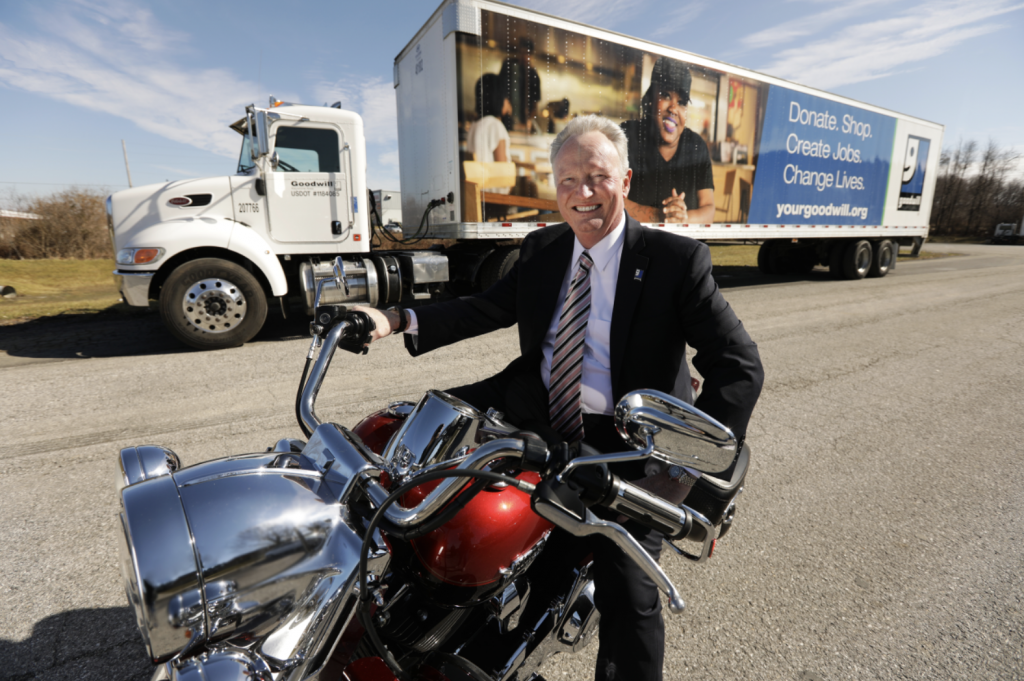
Today, at 58, Hill is at the helm of Goodwill Keystone Area, serving the 22-county region of central and southeastern Pennsylvania, including the Harrisburg area. It’s his third position with the Goodwill organization—that first position was in Frederick, Md. And that’s where he met a young man named Dillon.

“It was my first experience working with someone with a disability,” Hill said. “He would come to work every day smiling, so proud to come to work. Watching him progress with his skillset was like watching him blossom.”

A lot of people are familiar with Goodwill as the nonprofit organization that accepts donated items to stock their thrift stores—but that’s only part of their story.

The proceeds from Goodwill stores fund job-training and employment programs for people with disabilities, like Dillon, and for anyone affected by barriers to employment. Those barriers include anything holding someone back from getting a job—a recent incarceration, homelessness, drug or alcohol rehabilitation.

The 60-day employment program, described by Hill as a “metamorphosis,” is designed to help people acquire job skills matched with an employer.

“It’s the power of changing people’s lives through the dignity of work,” Hill said. “The idea of self-worth is one that resonates with me. We’re not giving a handout—we’re giving a hand up.”

Hill knows something about hard work from the ground up. Hill spent the bulk of his career working for two family businesses—Metropolitan Steel Inc. in Frederick, where he worked his way up to president and CEO—and then Metropolitan Choppers, LLC, a custom chopper motorcycle businesses that he founded.

“I had run these multi-million dollar corporations, so I thought for sure I could manage Frederick’s Goodwill warehouse,” Hill said of his first position with the organization. “What happened was I met the most engaging, hard-working folks I’d ever been around, and I fell in love with the mission.”

When he took over as CEO of Goodwill Keystone Area in December, Hill had big shoes to fill. He replaced John McHenry, who retired after a 47-year career with Goodwill.

Based in Harrisburg, Hill oversees a footprint of 44 retail stores and donation centers staffed by 1,500 employees that serve more than 3 million shoppers and 1 million donors annually. More than 74,000 items are sold online, and the organization recycles 17 million pounds of donated items every year, as well. Last year, the organization helped 4,200 people through their employment services.

But the number that makes Hill the proudest?

“I’ve worked in for-profit businesses my entire life, and we need to run this organization as a business even though it’s a nonprofit,” Hill said. “But the beauty of it is, 92 cents of every dollar we generate goes right back into the mission of creating employment and sustainable job skills. There’s no other job where anybody can say that.”

Hill was three months into his new position when the COVID-19 pandemic struck, shutting down Goodwill stores and donation centers for several months. For an organization that earns more than 80 percent of its revenues from its retail operations, it was a huge hit. Those annual revenues typically total $64 million.

One area of Goodwill’s operations continued through the pandemic, however—contracts to provide custodial services, even more essential during the pandemic, to a number of businesses and government facilities.

“For months, they were our sole source of income for the organization,” Hill said. “And they were dealing with a lot more cleaning requirements, so we’re very proud of our business services side.”

Some of those contracts include Harrisburg’s Federal Building, the Mechanicsburg Navy Yard and Franklin County’s Letterkenny Army Depot.

Meantime, Hill went to bat for Goodwill, with the governor.

“People were out of work and didn’t have an organization like Goodwill where they could buy clothes or household items—they were limited to shopping at big box stores,” Hill said. “So, we petitioned the governor and got permission to reopen donation centers in April. We were very grateful for that.”

All Goodwill stores were expected to reopen by the end of June. Hill predicts they’ll fulfill a great need amid troubled economic times—the need for central Pennsylvanians to be thrifty.

He also predicts that Goodwill will play a critical role in helping the unemployed.

“We’ll meet the challenges ahead of us with massive unemployment, and we’ll will adapt our programs to give people the skillsets they need,” Hill said.

For example, a new job-training program is being developed to help people acquire the skills needed to work in one of central Pennsylvania’s most prevalent industries—the warehousing and transportation sector. The program specifically teaches people how to use warehousing software programs and operate forklifts.

Another new program takes job training on the road via a mobile computer lab, since lack of transportation can be a barrier to attendance at traditional job training sessions.

Hill said that it’s important for Goodwill to “creatively innovate” to meet challenges such as shifting job skills, COVID-19 or anything the future brings.

“Goodwill as an organization started in 1902 and has seen its share of crisis, from the Spanish flu of 1918 to world wars, and every modern-era catastrophe that there is,” Hill said. “Goodwill adapts and changes, and this will be no different.”

For more information, see yourgoodwill.org.


Continue Reading

Summertime Shrimp: Once again, it’s Rosemary vs. her grill

As I write this, the pandemic continues, but it appears that summer has finally arrived.
Except for our Friday night dinner “pick-ups” from our favorite downtown Harrisburg restaurants, I have cooked most evenings for my husband and me. And now that warmer weather is here, I have come face to face again with my gas grill.

Now, this was the summer I was going to consider buying a new gas grill, since I blame the one we have for over-cooking everything. But not wanting to spend any significant time browsing in my favorite hardware store, our current grill has gotten a reprieve. And I found that it did a pretty good job of cooking a favorite shrimp recipe that I have been making in the oven all winter long.

It is called “Spicy Calabrian Shrimp,” which is offered as an appetizer in “Giada’s Italy,” the most recent cookbook from Giada De Laurentiis. This collection of recipes is a chronicle of the past two years she spent in Positano and Florence, Italy, filming her Food Network television show. I have adopted the recipe for an easy dinner and pair it with rice and a green vegetable or salad. I usually make extra to share with son No. 1, as it has become a favorite meal for him, too.

Grilling is a good method of preparing seafood. It avoids the “were you cooking fish in here?” comment I often get from family when they walk in my kitchen after I make seafood. In this recipe, the smokiness imparted by the grill enhances the spicy heat of the Calabrian chili paste. I used a “grill pan” over the grates, which keeps the shrimp or other small items from falling through into the fire. But you can also use aluminum foil, especially the kind made just for grilling. Try to find Calabrian chili paste if you can, but garlic chili sauce found in the Asian section of the supermarket would work, too. I just love this dish!

Spicy Calabrian Shrimp

Ingredients

  • ½ cup freshly grated Parmigiano-Reggiano cheese
  • 2 tablespoons olive oil
  • 2 teaspoons Calabrian chili paste
  • 1 teaspoon grated lemon zest
  • ¼ teaspoon dried oregano
  • ¼ teaspoon kosher salt (optional)
  • 1 pound large shrimp, peeled and de-veined, tails intact
  • 1 tablespoon fresh lemon juice
  • 1 tablespoon chopped fresh basil

Recipe

  • Pre-heat the oven to 425 degrees or pre-heat your outside grill.
  • In a medium bowl, whisk together the Parmigiano cheese, olive oil, chili paste, lemon zest, oregano and salt, if using.
  • Add the shrimp and toss to coat. Allow the shrimp to marinate at room temperature for about 15 to 20 minutes.
  • Spread the shrimp on a baking sheet if using the oven or a grill pan or foil if using your outside grill.
  • Bake in the oven for 8-10 minutes, but cooking time on the grill should be very brief (only about 2 minutes per side). I sprayed PAM on my grill pan because I’m an expert at having foods stick.
  • Sprinkle the lemon juice and the chopped fresh basil over the cooked shrimp and serve. (Don’t skip these last 2 ingredients. They really add a great “kick” to the finished dish.)

As noted above, I make this shrimp dish for dinner, but it does work well as an appetizer, too. Served with a spicy cocktail sauce, it beats the cold, often soggy, version.

I hope you’ve also had some interesting cooking adventures as we’ve traveled through this unusual time. My grill has lived to cook another day. Can good times be far behind?


Continue Reading

Would You Like to Fly?: Cast your worries aside on a hot air balloon ride

If you’ve lived around Harrisburg long enough, you’ve likely driven winding country roads around Hershey, Lancaster, Gettysburg and points in between.

But if you’ve never gazed at the horizon over the basket of a hot air balloon, get thee to your bucket list.

The U.S. Hot Air Balloon Team flies regularly over parts of Pennsylvania, launching from the aforementioned cities, plus other points nationwide.

Hershey launches from the AACA Museum. The Lancaster launch is on Old Philadelphia Pike, Bird-in-Hand. In Gettysburg, the launch is at the Lodges. If you’d like a local road trip, you could float over Chester and Bucks counties.

While every location is unique, south-central Pennsylvania’s landscapes are especially breathtaking.

“Not everywhere is pretty to fly over, but Pennsylvania is,” said Ian Laxton, U.S. Hot Air Balloon Team ground crew member. “You can see farm property lines perfectly marked, with scenic, open fields.”

Jake Frame, general manager and pilot, said that people are also intrigued by the balloon itself.

“It’s exciting to watch, how it flies with hot air expanding,” he said. “Everyone has the same fascination interacting with it.”

A Whoosh

If you take your own hot air balloon flight, you will use all of your senses during the two- to three-hour experience.

One thing you hopefully won’t experience is fear. If the thought of flying in a hot air balloon makes you squeamish, don’t worry. It’s not like regular flying. The balloon moves at wind-speed, so you don’t feel motion inside the basket.

Sam Kopp of Harrisburg took her first flight six years ago at age 8.

“Right before launching, the pilot threw a chip into the air to check wind speed and direction,” she said.

Working on the ground crew literally requires feats of strength—heavy lifting and pulling—plus careful planning to make the flight safe. Pre-flight, the team checks the forecast. This not only includes precipitation, but up-to-the-minute wind speed and direction, pressure and even radar.

Flights only occur during ideal weather conditions. Flights are postponed due to high winds, rain and thunderstorms, Frame said.

“Gentle snow is also a no,” he said.

The three- to four-person crew inspects the equipment for every flight. They test the burners in sequence, the propane tanks and industrial fans. They untangle and hook up the cables, venting lines and fabric. The crew positions the balloon to catch the wind.

“You don’t want the fabric to fight you,” Laxton said.

Initially, the basket lays on its side. The crew boards people into the sections according to their weight. (If you lie about this stat by a pound or 20, the crew is forgiving. Not that I learned this firsthand.) Everyone files in like rows of bunk beds on a submarine on sturdy rattan, reinforced with steel.

When the crew pumps air into the fabric, you will hear an alternating whoosh of gases being lit above your head, followed by quiet. It will feel alternately too cool and then too warm. Along with the cool air, the pilot will be lighting propane directly above your hair, so either go easy on that hair product or forego it altogether. Better yet, wear a hat.

The gases “displace the cooler air with warmer air in the balloon, making it less dense than the air around it, creating 100 to 200 pounds of resistance,” Laxton said. “That’s what creates the lift.” The balloon will rise, with the basket becoming upright.

Heather O’Donnell of Enola rode in a hot air balloon a few years ago, fulfilling a lifelong dream.

“It was amazing,” she said. “It was calming and exciting all at the same time.”

The experience made O’Donnell feel close to her deceased mother, especially when her father serendipitously called his daughter en route.

“It felt like the three of us were together again,” she said.

Daring passengers use the balloon as a proposal spot.

“On one flight, the passenger got down on one knee and dropped the ring over the side,” Laxton said. “His girlfriend yelled at him. Then he pulled out the real ring.”

In the Clouds

Throughout the flight, the ground crew follows the balloon by van. Traditionally, ground crews used eyes, sense of wind direction and walkie-talkies, according to Laxton. There’s now an app for that called Glimpse to help modern crews navigate terrain.

After an hour of flight time, about six to 12 miles, the pilot releases hot air through the vent at the balloon’s apex to start the landing process. When close to touching ground, the passengers crouch in the basket. The pilot maintains just enough heat to allow the basket to hover over a good landing spot while the crew holds it steady to soften the landing. When the fabric deflates, “it looks like a snake,” Laxton said.

“We were up in the clouds, waving at a bunch of Amish kids,” Kopp said. “They chased the balloon, and then they greeted us barefoot when we landed on their farm at sunset.”

Laxton said that this often occurs.

“People in this area greet us when we land,” he said. “Some bring out coffee. Our relationship with the community makes it fun for us.”

Throughout history, not all onlookers were fascinated with the manned floating orbs. During the first flight in France in 1783, local landowners felt afraid because no one had ever flown before. This began the tradition of carrying champagne to appease local landowners and to quell superstitious talk. The U.S. Hot Air Balloon Team brings champagne, light snacks and soda post-flight.

If you prefer to stay on the ground, you can admire the array of colorful balloons during the annual Lancaster Balloon Festival. This year, it is scheduled from July 31 to Aug. 2 in Bird-in-Hand. Fall kicks off the U.S. Hot Air Balloon Team’s busiest season.

“People travel to Pennsylvania just to fly over the fall foliage,” Laxton said. 

The United States Hot Air Balloon Team flies regularly from several locations in central Pennsylvania. For more information, call 717-276-9324 or visit www.ushotairballoon.com.


Continue Reading