Census Week of Action launched to educate, communicate importance of being counted

You may be hearing a knock at the door soon.

As the 2020 census approaches its last two months of counting U.S. citizens, collection that has largely been online will now include in-person methods.

For this reason, Dauphin County’s Complete Count Committee is ramping up efforts to get the word out this week. On Monday, they, along with the county commissioners, started the Census Week of Action. The campaign uses social media to educate people on the importance of being counted.

“We are doing well, but the goal is clearly to exceed how we did in the 2010 census,” said committee Chair Steve Deck.

As of July 30, Pennsylvania had a 65.9% self-response rate, according to the U. S. Census Bureau. In Dauphin County the rate is 64.9%, compared to a 2010 final rate of 71.4%. Harrisburg city lags behind at 44.4%, compared to a final rate of 57.6% in 2010, the bureau reports.

Deck is also the executive director of the Tri-County Regional Planning Commission (TCRPC), which focuses on economic growth and transportation in Cumberland, Dauphin and Perry counties. The organization is one of 62 members of the Complete Count Committee in Dauphin County.

This is the first time that Dauphin County has used Complete Count Committees to aid in conducting the census, Deck said. The goal is for leaders at the county level to communicate Census Bureau information and encourage participation from residents in their communities.

Responding to the census is vitally important in the allocation of federal money to the state and each county, as well as the number of representatives that Pennsylvania has in Congress, Deck said.

He believes that Dauphin County is on track to reach and hopefully surpass its final response rate from the 2010 census.

However, Harrisburg city is currently about 20% below the county’s response rate.

Allison Hill, South Allison Hill and parts of Uptown are the most difficult neighborhoods in the city to count, according to the Census Bureau.

Latino Connection, another member of the Dauphin County Complete Count Committee, has been reaching out to the area’s rapidly growing Latino community.

“I believe Dauphin County will have an undercount of this growing population,” CEO George Fernandez said.

Latino Connection has been funding around 60 digital advertising displays with census information in corner stores, bodegas and small shops in south-central Pennsylvania.

However, Fernandez still believes that fear may keep many Latinos, especially immigrants, from participating. He thinks having more people of color as census workers would help build trust in the Latino community.

“The census committee needs to find more resources to reach communities of color,” Fernandez said. “There needs to be a point of discussion that reaching people of color also has a dollar sign behind it.”

The deadline for completing the 2020 census had been extended to Oct. 31 due to the COVID-19 pandemic. However, just today, the Census Bureau moved up that deadline, as Director Steven Dillingham stated that the bureau now planned to finish its “field data collection” by Sept. 30.

Dauphin County’s Census week of Action runs through Aug. 7. For more information, visit https://www.dauphincounty.org/news_detail_T14_R331.php.


Continue Reading

New Black Lives Matter mural painted in Midtown to encourage solidarity, dialogue

Black Lives Matter mural was painted on the Harrisburg Improv Theatre in Midtown.

Across the nation, cities are finding ways to stand in solidarity with their Black and brown residents, sometimes through art.

Community members in Harrisburg wanted to do the same. This past weekend a Black Lives Matter mural was painted on the side of the Harrisburg Improv Theatre on N. 3rd Street.

Local artist Mike Fitzgerald organized the mural in an effort to encourage dialogue as well as to spotlight the movement.

“This wasn’t about me, it was about all of us in the community,” Fitzgerald said. “It’s also about the social injustices that are plaguing this country.”

Fitzgerald remembered recently seeing “Black Lives Matter” spray-painted on the Harvey Taylor Bridge, before it was quickly painted over. He believed that, if it had said something else, it wouldn’t have triggered the fast response that it did.

That scene had the artist’s wheels turning, wondering how he could use art to share those three words in the city.

But without a wall, there’s no mural. Fitzgerald asked around on Facebook and, within days, the theater offered their wall and a group volunteered to help paint.

Over the course of two weeks, Fitzgerald and a small team came up with a design, primed the wall and painted the mural, which was completed on Saturday.

“I was very impressed working with people in the community,” he said. “It was a way for the community to be involved in a very physical and tangible way.”

To top off the painting, people wrote affirmations on the wall, signed their names in solidarity and added quotes from civil rights activists and authors.

“We won’t stop until justice is served!” “No justice, no peace” and “Our lives matter forever,” read a few of the notes.

Once finished, people driving by circled back around for another look, some stopped to take photos.

“It’s touching people,” Fitzgerald said. “But at the same time, we’ve gotten threats.”

He explained that, within the mural’s short life, people have already threatened to destroy it and have sent the group negative feedback and hateful messages.

According to Fitzgerald, that only gives him energy.

“Buttons have to be pushed,” he said.

The official unveiling of the Black Lives Matter mural is scheduled for Saturday at 11 a.m.

Fitzgerald said that he is looking at the possibility of doing another similar mural in the Allison Hill neighborhood of Harrisburg. However, he is still looking for a location.

For now, he’s just glad that he could complete this one successfully.

“I think in my heart and soul that I’ve done something good for us to open up and start dialogue,” he said.

The Black Lives Matter mural is located at 1633 N. 3rd St., Harrisburg.  

Continue Reading

The Week that Was: News and features around Harrisburg

Movies will be shown in the parking lot of the PA Farm Show Complex.

This past week featured a lot of news and and plenty of announcements, which you can catch up on below. But the best news of all is that the August issue of the magazine came out today! This month’s special section is education. Make sure to pick up a copy at one of our locations or read it online.

“Carpool Cinema” will give families a chance to enjoy a drive-in movie experience in the Farm Show Complex parking lot. Check out our online story to see what movies Midtown Cinema and Friends of Midtown are teaming up to present.

Cheddar Paws creates portraits of animals in need of homes in hopes that they are adopted. Our magazine article tells the story of connections made through the art and the passion behind the paint brushes.

COVID-19 cases continued to rise slightly again this week. The state reported an average of over 900 diagnoses each day. Our weekly reporting on the pandemic has information on developments in each local county.

Goodwill Keystone Area welcomed Rick Hill on board as the new CEO. Our magazine story tells why Hill left retirement to lead the organization and how it has played a critical role in helping the unemployed during the pandemic.

Harlem Globetrotter Chris “Handles” Franklin is hosting his annual “Ultimate Spin Basketball Camp” virtually this year. The first 100 kids can register for free. Our online story reports on what kids can expect and how Franklin hopes to help the youth in his hometown of Harrisburg.

The Harrisburg School District announced its plan for the 2020-21 school year. Our online story provides the details about the two options—a hybrid or virtual model—families can choose from.

Harrisburg streets continue to face updates as part of the city’s “Vision Zero” project. Our reporting tells which streets will see change next and how officials hope to improve pedestrian safety.

Hot air balloons offer a unique way of viewing Pennsylvania’s breathtaking landscapes. Our magazine story describes the experience and the local places you can go to get an aerial view for yourself.

Kipona Festival in Harrisburg is being held this year, but differently than usual. The Labor Day weekend event will include a day of food trucks and fireworks and three days of virtual performances and activities. Our online story has all the information.

Maternal health is the focus of a new report by the Blue Cross Blue Shield Association. Read our magazine story for more on the increasing rate of pregnancy and childbirth complications.

Sara Bozich took a break last week, but is back at it with her Weekend Roundup. For those ready to head out, check out her list of restaurants, events and entertainment.

TheBurg’s editor welcomed readers to our August issue with his monthly editor’s note. Before you dig into the issue, check out the short introduction that tees it all off.

Yaasmeen Piper reflects on the recent deaths of Black men and women at the hands of police and the subsequent Black Lives Matter protests. In her magazine story she talks about the Black community in Harrisburg being forgotten and what the white community can do to help.

Do you receive TheBurg Daily, our daily digest of news and events delivered right to your email inbox? If not, subscribe here!

Would you like to support our journalism and get some great benefits to boot? If so, become a Friend of TheBurg!

Continue Reading

Harrisburg School District announces fall plan with choice of fully virtual or hybrid learning option

Harrisburg School District Acting Superintendent Chris Celmer announces the 2020-21 school year plan on Thursday.

After weeks of waiting, parents in the Harrisburg School District now have an idea of what the 2020-21 school year will bring.

On Thursday, Acting Superintendent Chris Celmer announced the plan that consists of two options for district families—one hybrid model and one virtual.

“This has been a very difficult process in determining what is the best way to begin the 2021 school year,” he said.

The first option is the “Pathway to Classroom Instruction.” Within this option, there are three phases that ultimately lead to students returning to brick-and-mortar schools.

Celmer said that this option will begin as completely online learning and only transition out of that phase when the spread of the virus slows. Once the district believes it is safe to move forward, they will implement a hybrid model with students attending in-person classes two days a week and virtual classes the remaining three days. He explained that there will be two groups of students, one that completes in-person classes Monday and Tuesday, another that goes in Thursday and Friday.

The last phase, a full return to classroom instruction, would only take place if local testing is more widely available and quicker, positive cases are decreased and sustained below the state benchmark of 5%, and treatments/vaccinations are available.

If parents and students are not comfortable with the idea of going back to brick-and-mortar schools in the near future, they can choose the second option—the “Pathway to 100% Online Virtual Instruction.”

“If you’re a parent and you’re not interested in sending your children back to brick-and-mortar until a treatment and/or vaccine is available, then I would strongly consider the Harrisburg Virtual Learning Academy,” Celmer said.

This option, introduced in May, is the district’s alternative to cyber charter schools.

According to Celmer, a majority of families in the district are not ready to send their students back to the classroom. Based on two surveys seeking parent feedback, the data showed that only 18% were comfortable sending their student back to school in the fall. In addition, around 40% said they are looking for a cyber option.

If the cyber option is chosen, Celmer said students must enroll for at least a semester, through January 2021.

A Chromebook or laptop will be provided to each student in the district, Celmer said.

When in-person instruction begins in the district, there will be a new bell schedule to reduce hallway congestion and provide more flexibility for transportation services. High school students will begin at 7:30 a.m. and end at 2:30 p.m. Middle-schoolers will go from 8:10 a.m. to 3:10 p.m. and elementary students will attend from 8:50 a.m. to 3:50 p.m.

In addition, students must wear masks and the building will be thoroughly cleaned at least twice a week.

The first day of school will be Aug. 31.

Celmer said that the district will send out a third survey to parents next week, when they can select either the hybrid model or the cyber school option for the upcoming academic year.

For parents like Jacquelynne Smith, neither of the provided options seem feasible.

“I think this is absolutely crazy,” she said. “They have backed people like me into a corner.”

Smith is a single mother of three children under the age of nine and works at a dental office. Because she isn’t from the Harrisburg area originally, she doesn’t have family or friends to help her with childcare.

“These plans right now will force me to lose my job,” she said. “Why can’t they make accommodations for parents that don’t have any other options?”

Smith is especially concerned about leaving her son who takes daily medication home alone.

According to Celmer, the district will continue to stay up to date on the pandemic and make changes to the plan as necessary.

“We are going to continue to monitor the situation in the city of Harrisburg surrounding the impact of COVID,” Celmer said. “None of us have had to deal with this situation before. It’s complex; it’s unnerving; it’s concerning. But, at the end of the day, health and safety must be the priority.”

For more information about the Harrisburg School District’s 2020-2021 school year plan, visit their website.


Continue Reading

New COVID-19 cases continue modest rise in PA, according to health department data

COVID-19 cases and tests, over time. Source: PA Department of Health

New COVID-19 cases in PA rose modestly again this past week, with the state reporting an average of more than 900 new daily diagnoses over the last seven days.

The average of 925 new cases over the past week is up from an average of 870 new cases per day last week and 800 the week before. The department reports that testing also has increased.

Locally, diagnosed cases have generally risen at a slower pace than in the eastern and western parts of the state over the past week.

  • Adams County: 462 cases (prior Friday, 441)
  • Cumberland County: 1,203 cases (prior Friday, 1,090)
  • Dauphin County: 2,640 cases (prior Friday, 2,499)
  • Franklin County: 1,268 cases (prior Friday, 1,176)
  • Lancaster County: 5,525 cases (prior Friday, 5,228)
  • Lebanon County: 1,563 cases (prior Friday, 1,533)
  • Perry County: 113 cases (prior Friday, 105)
  • York County: 2,269 cases (prior Friday, 2,119)

Today, the department confirmed 970 newly positive cases throughout Pennsylvania for the past 24 hours ending at midnight.

With today’s update, 112,048 Pennsylvanians have now been diagnosed with the coronavirus, an increase of 6,477 over the past week, according to the state Department of Health.

Overall, 9.2 percent of PA residents tested have shown to be positive for the virus.

Much of the recent increase has originated from Allegheny and Philadelphia counties. For instance, over just the past 24 hours, Allegheny reported 244 new cases, while Philadelphia County reported 130.

The health department also reported an additional 88 deaths since last Friday, meaning that 7,189 Pennsylvanians have died from the disease since March.

Around central PA, the COVID-19 fatality data now stands as follows:

  • Adams County: 20 deaths (prior Friday, 17)
  • Cumberland County: 70 deaths (prior Friday, 70)
  • Dauphin County: 155 deaths (prior Friday, 152)
  • Franklin County: 46 deaths (prior Friday, 46)
  • Lancaster County: 406 deaths (prior Friday, 400)
  • Lebanon County: 54 deaths (prior Friday, 54)
  • Perry County: 5 deaths (prior Friday, 5)
  • York County: 86 deaths (prior Friday, 79)

Statewide, Philadelphia County continues to have the most confirmed cases with 25,664 cases, followed by Montgomery County with 9,761 cases. The two counties also have reported the most deaths statewide from the disease: 1,665 and 844, respectively.

“As the state has put in place new mitigation efforts to offset recent case increases, we must renew our commitment to protecting against COVID-19 by wearing a mask, practicing social distancing and following the requirements set forth in the orders for bars and restaurants, gatherings and telework,” health Secretary Rachel Levine said.

Nursing homes and personal care facilities have been particularly hard hit by the virus. Of total deaths, 4,904, or 68.2 percent, have occurred in residents from nursing or personal care facilities, according to the health department.

In nursing and personal care homes, there are 19,484 resident cases of COVID-19, and 3,934 cases among employees, for a total of 23,418 at 850 distinct facilities in 61 counties, according to the health department.

In addition, about 8,214 of total cases in PA are in health care workers.

Statewide, 1,216,872 coronavirus tests have been performed, with 1,104,824 people testing negative, according to the state health department. Last Friday, the state reported that 1,104,948 people had been tested for the virus.

Of the patients who have tested positive to date, the age breakdown is as follows, according to the health department:

  • 1 percent are aged 0-4
  • 1 percent are aged 5-12
  • 3 percent are aged 13-18
  • 9 percent are aged 19-24
  • 37 percent are aged 25-49
  • Nearly 23 percent are aged 50-64
  • Nearly 25 percent are aged 65 or older.

Most of the patients hospitalized are 65 or older, as are most of the reported deaths, according to the state. However, the health department has emphasized that, increasingly, more younger people are being diagnosed with COVID-19.

Levine continued to emphasize that Pennsylvanians should do the following:

  • Wash your hands with soap and water for at least 20 seconds or use hand sanitizer if soap and water are not available.
  • Cover any coughs or sneezes with your elbow, not your hands.
  • Clean surfaces frequently.
  • Stay home to avoid spreading COVID-19, especially if you are unwell.
  • Wear a mask whenever out of your house.

“Pennsylvania has been a model for the country on how to reopen effectively using a careful, measured approach,” Levine said. “However, we know the virus has not gone away as we see cases rise, so we must work together to stop another surge.”

For more information, visit the PA Department of Health’s COVID-19 website.

Currently, we are providing a COVID-19 update weekly, each Friday, or as breaking news warrants.

Continue Reading

Distant Chords: Music instructor Paul Wegmann adapts to pandemic pedagogy

Paul Wegman

While the COVID-19 pandemic has changed all of our lives, musicians who earn their livelihood from playing gigs have been among the most challenged by the restrictions. Bars, restaurants and musical venues across the midstate have stuttered their doors and canceled live music.

So what have gigging musicians been doing over the last few months to sustain themselves and keep their creative juices flowing?

Many have taken to the internet, where a broad range of wonderful online concerts are now available. Musicians have produced concerts using platforms like Facebook and YouTube Live, and arts organizations like the Central Pennsylvania Hall of Fame and the Susquehanna Folk Music Society have held online concerts featuring local musicians. The Blues Society of Central Pennsylvania even hosts a “virtual blues jam” every Thursday night.

Carlisle-based guitarist Paul Wegmann has taken a different path. Although performing is his first love, he is also a skilled guitar teacher. When the pandemic hit and regular gigs with the band John Terlazzo and Voices in the Hall dried up, he put his energy into migrating his large private guitar studio online. Wegmann said that taking an instrument lesson virtually has its challenges, but, by and large, his students were happy to be able to continue.

“I’m pleased with how the lessons are going, but it’s a very different experience because we are not able to play together,” he said. “It’s a little more constrained, and I have to do a lot more explaining since we are not able to interact in the same way musically.”

Wegmann conducts the lessons on Zoom, which has turned out to be a great fit due to the platform’s ability to record both the audio and the visual.

“I can demo the exercise for them, and they can start and stop and create a nice edited series of examples to use for practice,” he said.

He also uses a digital tablet as an aid during the lesson.

“The tablet gives me the ability to write in real time and also screen share,” he said. “After the lesson, I can e-mail them a copy of what we have discussed.”

Wegmann says that he hadn’t fully appreciated the degree to which physical presence is important until it was missing.

“I really look forward to the day that I can get back to in-person teaching,” he said. “But, right now, I’m trying to concentrate on the possibilities of virtual instruction rather than the limits.”

Wegmann broadcasts his lessons from Natural Music Studios, a space that he describes as a “full-service production facility and intimate music workshop.” He founded the studio as a “boutique operation” where instruction is multi-faceted.

“Students basically come to learn from someone who is just in their own laboratory, doing their work,” he said. “They become my apprentice as they go through the process of learning to play their instrument, composing songs and recording.”

Wegmann studied recording engineering and production management at Berklee College of Music in Boston and, since, has worked as a sound engineer, programmer, performer and songwriter in many studios in Boston, New York and New Jersey, doing everything from audio production to theater, museum installations and soundtracks. He has also played in bands performing numerous genres such as rock, jazz, R&B, rap and world music.

He doesn’t follow a predetermined pedagogy but instead tailors his lessons to each student.

“I think of it as a very individualized journey,” he said. “We are just musicians learning and playing music together.”

For more information on Paul Wegmann and Natural Music Studios, visit www.paulwegmann.com.


Continue Reading

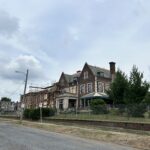
School’s Out: The century-old William Penn High has long sat vacant. Will it ever turn the page?

Capital Rebirth team at the William Penn High School

Mae Sobczak was a relatively quiet student back in her high school days at William Penn High School. She had lots of friends and participated in the orchestra, her high school’s sorority and intramural sports after school. But she wouldn’t have labeled herself “Miss School Spirit.”

Sixty-four years later, however, things are different.

After graduation, Sobczak started organizing class reunions. Every five years, William Penn alumni get together, and, each six months, the class of ’56 catches up. On top of that, Sobczak and a group of women meet for lunch every Friday to reminisce on the old days and chat about the new.

In 2006, the class celebrated its 50th reunion. Sobczak, along with a committee, organized the event, which included a tour of the old William Penn building. The group went there excited to relive old memories, but left feeling like the building they toured was nothing like their beloved alma mater.

“When we came out to get on our bus, we were saying how it was so sad,” Sobczak said.

Over a decade later, it’s even sadder, as William Penn has sat, deteriorating, since. The classrooms, once full of students, are full of old rubble and garbage, and the halls display crude graffiti. Do a quick Google search of the old school, and you’ll find videos posted by thrill seekers, trespassers on the hunt for ghosts or just curious residents.

Over the years, many fires have been set in the building, requiring the Harrisburg Bureau of Fire’s attention.

“Structurally, that building is in phenomenal shape,” Fire Chief Brian Enterline said. “It’s more that the contents inside are burning, not the building itself. The problem is it’s a large, vacant school building. It’s very difficult to secure.”

All the while, William Penn has sat in the hands of the Harrisburg school district—too damaged to hold on to, too big and costly to give up easily.

People have wondered what will come of the grand old campus overlooking Italian Lake, the school that was once Harrisburg’s pride.

In the Day

It’s the early 1920s in Harrisburg. The city isn’t just growing; it’s thriving. Suburbanization hasn’t led to flight out of the city yet. There’s even a trolley car system. But one of the hottest topics in the city is education. People are looking for modern, quality schools.

David Morrison, president of Historic Harrisburg Association, paints the picture.

People were ready to send their kids to school in the city, but the city wasn’t ready for them, he said. Many city schools were built in the post-Civil War years—the 1870s and 1880s. Once the 1920s came roaring around, the school district needed to play catch up.

“By the ‘20s, the educational infrastructure of Harrisburg was pretty obsolete,” Morrison said.

In the early 1900s, Harrisburg Technical High School, located in the building now known as Old City Hall, was built on Walnut Street and served students for many years. But with people hungry for top-notch education, Harrisburg Tech became a government center and a new, larger high school was proposed.

“In those days, the public school systems were so advanced,” Morrison said. “In some cases, people who lived in the suburbs paid to have their children attend Harrisburg schools.”

Urban architect Charles Howard Lloyd, who would later claim fame for the Zembo Shrine, was busy designing schools. Harrisburg Tech and Simon Cameron School (1896) were formed in his signature gothic style. It was only fitting that the district called upon him for the new school they would call Hoffman’s Woods School (later William Penn), Morrison explained.

But Allison Hill families wanted a school of their own that their kids could walk to. So, the district decided on two separate schools—John Harris and William Penn.

William Penn building plans were scaled back to save funds for the second school on the Hill, but the new blueprints were hardly modest.

“They had huge halls,” local historian and William Penn alum Calobe Jackson recalled. “We would start track right after Christmas, and we would run through the halls for practice.”

Jackson graduated from the class of 1948. He remembers an indoor courtyard and a grandiose auditorium with a balcony. It was beautiful and well designed, he said.

In addition, there was a kitchen, cafeteria, housekeeping suite, science and lab rooms and shop spaces for tech courses, amongst other classrooms, according to “Building Harrisburg,” a book by historian Ken Frew.

“Years ago, they used to say William Penn was the largest high school campus in the U.S.,” Jackson said. “It was really a beautiful school.”

Jackson’s class had a little over 300 students, while the full school had about 1,200. Back then, high school lasted three years instead of four.

When William Penn was constructed in 1926, high school enrollment was swelling. Between 1900 and 1920, student enrollment in the United States quadrupled and then nearly quadrupled again by 1940, according to the public policy magazine, City Journal. But it was in that same decade that the school movement ended. City Journal ties that to segregation and racial discrimination, which had Blacks enrolling at lower numbers than whites.

By the mid-1950s, enrollment at William Penn had only declined slightly. Sobczak remembers that her class of ‘56 had about 264 students. Pride for their school was still strong among students, she recalls.

“We were proud to be city school graduates,” she said.

But the 1950s represented the high mark for William Penn. That decade, the city’s industrial companies began closing, and people started leaving Harrisburg for the suburbs. In 1972, John Harris absorbed William Penn students, the building morphing into a technical school before closing entirely.

Moving Forward

For most William Penn graduates, it’s been a long time since they danced at a sock hop or scored a goal in intramural sports. Most are parents, grandparents and even great-grandparents. Many have passed away. Sobczak’s alumni mailing list gets shorter by the year.

Just like many of the students that once walked its halls, William Penn is old. But that doesn’t mean it’s any less grand. The interior may be decrepit, but the building is still the columned mammoth that it was in the 1920s.

For some, that’s enough to see it ripe with potential.

Superintendent Chris Celmer said the school district is currently taking letters of interest and offers for the William Penn building.

“We want them to have local interest in the community, and they’re going to have to have experience,” he said. “It has to come with the ability to finance.”

Local nonprofit Capital Rebirth put in a $2.5 million bid in March and garnered over 7,500 signatures from the community on a petition of support for the plan they’re calling “The Rebirth Project.” The group wants to create a community center, including space for education, entertainment and wellness, explained founder Mikell Simpson.

“William Penn has always been a historic landmark,” he said. “We know what the needs of the community are and how everyone can benefit.”

Included in the building would be an indoor stadium, classrooms, an enclosed track and offices. Simpson estimates that the work would take three to four years and cost up to $175 million.

But others envision the building as something else entirely.

Jackson could see it as a retirement home with outdoor space for rehabilitation services. Morrison thought turning it into condos or apartments would be nice or even having it join forces with Zembo Shrine across the street for a national organization.

“It has the possibility to really enhance that whole part of Uptown Harrisburg if it’s done right, and that’s why we care,” he said.

There have been other successful school building conversion projects in the city, such as the old Simon Cameron School in Olde Uptown and the former Boas Street School at Green and Forster streets, which both are now apartment buildings.

At the beginning of the year, the redevelopment group, The Bridge, started renting the old Bishop McDevitt school with plans to build an eco-friendly community center. It also has put in a bid for William Penn, according to the developers.

So, builders have big plans for other big school properties in the city.

But William Penn isn’t just big—it’s enormous—including a 222,000-square-foot building and 25 surrounding acres of land.

As Superintendent Celmer said, taking on a project like this requires not only a heart for the community, but strong resources backing it.

The district, he said, continues to weigh all viable offers.

The William Penn building is located on the 2000-block of N. 4th St., Harrisburg.

For more information on The Rebirth Project, visit their Facebook page. To learn more about The Bridge, visit www.thebridgeecovillage.com.


Continue Reading

Happenings: Our August Calendar of Events

Due to the coronavirus pandemic, some live events may have been changed or canceled. Please check with the host before attending.

Museum & Art Spaces

AACA Museum
161 Museum Dr., Hershey
717-566-7100; aacamuseum.org

“Highlights of Our Collection,” featuring unique and notable vehicles from the museum’s permanent collection.

“Saluting First Responders and Frontline Workers,” an exhibit highlighting vehicles used to help in times of crisis.

“Yes, We Drive These Cars,” featuring several very early cars, kept in working order by the Horseless Carriage Club of America, plus early signage and artifacts, through Oct. 18.

“Look . . . They Gave Me a Map,” an exhibit of free road maps curated by the Road Map Collectors Association, through Oct. 30.

Carlisle Arts Learning Center
38 W. Pomfret St., Carlisle
717-249-6973; carlislearts.org

“Finding Inspiration,” works by painter and mixed media artist Rebecca Pollard Myers and found object sculptor Jason Lyons, who both look for and find inspiration in their surroundings by seeing things with fresh eyes, Aug. 7-Sept. 19

The Cornerstone Coffeehouse
2133 Market St., Camp Hill
717-737-5026; thecornerstonecoffeehouse.com

Artist of the Month:

Gallery on the Square
Millersburg Area Art Association
226 Union St., Millersburg
Facebook: Gallery on the Square

“A Growing Creative Community,” works by the Susquehanna Valley Chapter of the Pennsylvania Guild of Craftsmen, through Sept. 12

Pennsylvania National Fire Museum
1820 N. 4th St., Harrisburg
717-232-8915; pnfm.org

Exhibits dedicated to Pennsylvania firefighting history

Susquehanna Art Museum
1401 N. 3rd St., Harrisburg
717-233-8668; sqart.org

“Creating Joy—Art Inspired By Music,” through Sept. 20

“Separate and Unequaled: Celebrating the 100th Anniversary of the Negro Leagues,” through Oct. 18

“Picturing the Body,” an exhibition of photographs created as part of a Millersville University course of the same name, through Oct. 25

“Historic Memory,” paintings by Joerg Dressler and Shawn Huckins that address the collective, or historic, memory of Western culture and its influences on contemporary consciousness, through Nov. 8

Wildwood Park
100 Wildwood Way, Harrisburg
717-221-0292; wildwoodlake.org

“Art in the Wild,” nature-inspired trailside art installations created by artists using natural materials, through Sept. 30

Read, Make, Learn

Carlisle Arts Learning Center
38 W. Pomfret St., Carlisle
717-249-6973; carlislearts.org

Aug. 1: Intro to Quick Sketch Portraits, 10 a.m.-4 p.m.
Aug. 8: Experimental Mixed Media 1-Day Workshop, 10 a.m.-2:30 p.m.
Aug. 10-14: Art & Adventure Camp, 9 a.m.-3 p.m.
Aug. 17-21: ZOOM! Camp—Bread Making Magic, 1-4 p.m.
Aug. 18-Sept. 8: Sketching Around Carlisle, Tuesdays, 5-7 p.m.
Aug. 18-Sept. 22: Play with Clay at the End of the Day, 3:30-5 p.m.
Aug. 12: Lovely Lanterns, 6-7:30 p.m.
Aug. 22: Bundle Dye with Flowers and Herbs, 10 a.m.-12:30 p.m.

Dauphin County Library System
dcls.org

Aug. 3: ZOOM—Paws 2 Read, 6-7:30 p.m.
Aug. 3, 10: ZOOM—Born to Read (birth-18 months), 10:30-11 a.m.
Aug. 3, 10: Online Armchair Traveler, 11 a.m.
Aug. 4, 11: Writers Workshop, 10 a.m.
Aug. 4: Virtual Family Paint Party, 10:30-11 a.m.
Aug. 5, 12: ZOOM—Toddler Storytime, 10:30-11:15 a.m.
Aug, 5, 12: ZOOM—Build Your Own Book Club, 4-5:30 p.m.
Aug. 6: Virtual Family Paint Party, 6-6:30 p.m.
Aug. 6: Susan Orlean Spotlight—Oral History Workshop, 7-8 p.m.
Aug. 7, 14: Virtual Preschool Storytime, 10:30-11:15 a.m.
Aug. 7, 14: Mid-Day Get Away on Facebook, 1 p.m.
Aug. 7, 14, 21, 28: Virtual Dungeons and Dragons, 3-5 p.m.
Aug. 8: Virtual Reading the Rainbow Book Club, 1-2 p.m.
Aug. 11: ZOOM—Fairy Tale Yoga for families and kids, 10:30-11 a.m.
Aug. 13: ZOOM—Fairy Tale Yoga for families and kids, 6-7 p.m.
Aug. 19: Virtual Community Café, 6-7 p.m.

Elizabethtown Public Library
10 S. Market St., Elizabethtown
717-367-7467; etownpubliclibrary.org

Aug. 6, 20: Family LEGO Club, 11 a.m.
Aug. 5, 12: Tent Time with Jennifer, 10:30 a.m.
Aug. 11: Ryan the Bug Man, 2 p.m.

Fredricksen Library
100 N. 19th St., Camp Hill
717-761-3900; fredricksenlibrary.org

Aug. 3, 7, 10, 14: Online Story Time with Miss Emily and Roasty the Cat, 3-4 p.m.
Aug. 4: ZOOM—Curl up with the Classics—“Oliver Twist,” 10-11 a.m.
Aug. 5: ZOOM—Moving Forward Book Group w/ Hospice of Central PA, 1-2 p.m.
Aug. 6, 13, 20, 27: ZOOM—Plot Twisters (ages 15-18), 6:30 p.m.
Aug. 10: ZOOM—Meet Someone New Biography Club (ages 7-10), 10-11 a.m.
Aug. 12: ZOOM—Tween Paint Nights, 1-2 p.m.
Aug. 17: ZOOM—Budgeting Basics, 11 a.m. and 6 p.m.
Aug. 24: ZOOM—Fredricksen Reads, 7-8 p.m.
Aug. 26: ZOOM—Write On, 8-9 p.m.

Hershey Public Library
701 Cocoa Ave., Hershey
717-533-6555; hersheylibrary.org

Aug. 2: Art of Truth Creative Non-Fiction online, 2 p.m.
Aug. 4, 11: ZOOM—Marie’s All About Color, 7-8:30 p.m.
Aug. 5: ZOOM—Lightroom Processing, 7 p.m.
Aug. 23: ZOOM—U.S./China Relationship—Heading for War?, 2 p.m.
Aug. 27: Facebook Live—Hamilton Trivia—The Man & the Musical, 7 p.m.

Joseph T. Simpson Public Library
16 N. Walnut St, Mechanicsburg
717-766-0171; simpsonlibrary.org

Aug. 3, 10, 17, 24: Family Story Time, 6:30 p.m.
Aug. 4, 11, 18, 25: Try It Tuesday, 6 p.m.
Aug. 4, 11, 18, 25: Tea & Stitches, 10 a.m.
Aug. 5, 12, 19, 26: ZOOM—Summer Story Time, 1:30
Aug. 6, 13, 20, 27: Mah Jongg, 10 a.m.-1 p.m.
Aug. 12: Mad About Mysteries, 7-8 p.m.
Aug. 26: Apple Users Group, 1-3 p.m.

The LBGT Center of Central PA
1306 N. 3rd St., Harrisburg
717-920-9534; centralpalgbtcenter.org

Aug. 2, 9, 16, 23, 30: Common Roads Young Adult, 4-6 p.m.
Aug. 5, 12, 19, 26: Common Roads Youth, 6-8 p.m.
Aug. 10, 17, 24, 31: Passageways, 2-4 p.m.

Midtown Scholar Bookstore-Café
1302 N. 3rd St., Harrisburg
717-236-1680; midtownscholar.com

Aug. 3: Virtual talk with David Livingstone Smith and Paul Bloom, 7-8 p.m.
Aug. 11: Virtual talk with Rebecca Watson and Miranda Popkey, 7-8 p.m.
Aug. 12: Virtual talk with Adam Rutherford, 6-7 p.m.
Aug. 17: Virtual talk with Aimee Nezhukumatathil and Ross Gay. 7-8 p.m.
Aug. 18: Virtual talk with Sarah Chayes and Jared Yates Sexton, 7-8 p.m.
Aug. 20: Virtual talk with Jill Filipovic and Connie Schultz, 7-8 p.m.

National Civil War Museum
One Lincoln Circle, Harrisburg
717-260-1861; nationalcivilwarmuseum.org

Aug. 8: U.S. Grant, the Meaning of the Civil War, and the Election of 1868, 1-2 p.m.
Aug. 22: From Gettysburg to Little Big Horn: The George Armstrong Custer, Civil War and Indian Wars 2020 Symposium, 8:45 a.m.-5 p.m.

Ned Smith Center for Nature and Art
176 Water Company Rd., Millersburg
717-692-3699; nedsmithcenter.org

Aug. 4-6: Find Your Passion Art Camp
Aug. 11-13: Swirls, Stories & Spirals

Palmyra Public Library
50 Landings Dr., Annville
717-838-1347; palmyra.lclibs.org

Aug. 10: Palmyra Public Library Book Club (email [email protected] for location)

Wildwood Park
100 Wildwood Way, Harrisburg
717-221-0292; wildwoodlake.org

Aug. 1: Natural Tie-Dye, 12-3 p.m.
Aug. 12: Wildwood Wellness Walk, 5:45-7:15 p.m.
Aug. 12: Preschool Storytime—Summer at Wildwood, 10-10:45 a.m.
Aug. 16: Flower Walk—Heat Tolerant Plants, 10:30 a.m.-12 p.m.
Aug. 22; Summer Wreath Workshop, 10 a.m. and 11:30 a.m.
Aug. 27: Wildwood Wellness Walk, 5:45-7:15 p.m.

Live Music

Appell Center for the Performing Arts
50 N. George St., York
717-846-1111; appellcenter.org

Aug. 15: YourVoice Virtual Event

Chameleon Club
223 N. Water St., Lancaster
717-299-9684; chameleonclub.net

Aug. 21: LA Guns, Dylan Scott

Club XL
801 S. 10th St., Harrisburg
717-409-8975; xlhbg.com

Aug. 1: Yam Yam, Shawan and the Wonton
Aug. 7: Brandon “Taz” Niederauer

Gretna Music
gretnamusic.org

Aug. 8: GM4K Storyteller
Aug. 23: Mozart String Trio
Aug. 30: McGill-McHale Duo

House of Music, Arts & Culture (H*MAC)
1110 N. 3rd St., Harrisburg
717-441-7506; harrisburgarts.com

Aug. 14: Escape the Fate
Aug. 22: Bark at the Moon tribute to Ozzy Osbourne

Ned Smith Center for Nature and Art
176 Water Company Rd., Millersburg
717-692-3699; nedsmithcenter.org

Aug. 1: Still Surfin’ – A Beach Boys Tribute
Aug. 8: The Ann Kerstetter Band
Aug. 29: Shotgunn

The Susquehanna Folk Music Society
717-745-6577; sfmsfolk.org

Aug. 9: Virtual Emerging Artist Showcase

The Stage Door

The Belmont Theatre

27 S. Belmont St., York

717-854-3894; thebelmont.org

Aug. 21-30: “The Miracle Worker”

Dutch Apple Dinner Theatre
510 Centerville Rd., Lancaster
717-898-1900; DutchApple.com

Aug. 7-30: “Clue”

Whitaker Center
222 Market St., Harrisburg
717-214-ARTS; whitakercenter.org

Aug. 12: Online Story Slam

Continue Reading

Baby Tech: Innovation key to improving prenatal, postnatal care access


A key issue facing modern healthcare these days is improving access to pre- and postnatal care for expectant and new mothers.

A recent report from the BlueCross BlueShield Association found a greater number of women are entering pregnancy with pre-existing conditions that can harm a baby’s growth and complicate its birth and that rates of post-partum depression are rising.

Those trends are fueled partly by access issues ranging from a simple lack of transportation to a shortage of specialists in some geographic areas, and the result can often be costly medical complications during and well beyond childbirth.

Health insurers have a vested interest in solving the access riddle, and a recent collaboration between Harrisburg-based health insurer Capital BlueCross and York-based provider WellSpan Health is a prime example of how technology is helping to overcome these barriers.

That collaboration gives pregnant women access to a convenient, remote-monitoring application for prenatal care, which can improve outcomes for mothers and babies.

The organizations are offering expectant mothers, who are WellSpan patients and Capital BlueCross members, access to Babyscripts™, a mobile app that allows them to.

The program allows expectant mothers to share health data, such as weight and blood pressure, with doctors and advanced practice providers in real time through internet-connected devices provided to the patient.

Using this service, WellSpan providers can quickly and remotely identify warning signs, such as critical changes in blood pressure, which indicate the mother and the baby may require immediate medical assistance. The mobile app also provides valuable health tips and other services to assist expectant mothers.

The collaboration between Capital BlueCross and WellSpan brings together the payer and the provider by making data that is typically available to a provider also available to the payer—enabling better clinical collaboration of the patient’s care needs.

“This is a terrific way to help WellSpan Health providers use technology to help expectant mothers better connect with their doctors and take care of themselves during pregnancy,” said Dr. Jennifer Chambers, senior vice president and chief medical officer for Capital BlueCross. “When we work together in this way, it means not only better care at this time, but also a better outcome for overall health and a better value for our members’ healthcare dollar.”

“We know from the data that delays in getting care for underlying health conditions can cause problems with the pregnancy, both for mom and baby,” said Michael Seim, M.D., senior vice president and chief quality officer for WellSpan Health. “Our work with Capital BlueCross is aimed at identifying those conditions and developing a care plan early, so that we can have the best possible outcome for these expectant mothers.”

The collaboration is one of several Capital BlueCross and WellSpan have been developing as part of a strategic partnership they announced a year ago. The mutual goal is to improve health and reduce costs for central Pennsylvania employers and healthcare consumers, officials say.

For more information, visit www.capbluecross.com.


Continue Reading

Something Special: New program helps children navigate the foster case system in Dauphin County

Lori Serratelli

Wanda Heise

There are some 400 children in the Dauphin County foster care system. They may find themselves in front of a judge with an attorney they just met and an unfamiliar caseworker, already traumatized in a system that is overwhelmed.

But these children now have a supporter in Court Appointed Special Advocates of Dauphin County (CASA).

“The CASA brings consistency and constancy of commitment,” and stays with a child through their foster care journey, said Lori Serratelli, a former Dauphin County judge now in private practice.

Serratelli made bringing the CASA program to Dauphin County her life’s mission, and in 2019, that dream became a reality. She said that, in this inundated system, “CASA can fill in the cracks.”

Those chinks include maneuvering through the court system, getting school and social services, and meeting with siblings.

“Kids in the system have had school plans and evaluations, but you’d be surprised how hard it is to get those things done,” said Christine Pfau Laney, the former executive director.

CASA volunteers provide a one-on-one relationship with a child or sibling group, work to make sure that their needs are being met and ensure that they receive court-ordered services. They also provide a presence that doesn’t change even as schools, caseworkers and foster families often do.

“The goal is to focus on the child’s needs,” Pfau Laney said.

CASA volunteer Wanda Heise described an advocate’s role in the program as seeing “that all the pieces come together in the puzzle and make the outcome as good as possible for these kids.”

The future tends to be brighter for foster kids who have a CASA volunteer, Serratelli said. They are less likely be to incarcerated and more likely to graduate from high school.

“You have someone cheering you on,” she said.

Forever Home

Encouragement comes in forms that many people take for granted, like stopping in to eat lunch with the child. That’s what Emily Kesler, a Central Dauphin senior, said that her CASA volunteer did for her, among other support.

“With Joy, it wasn’t about the whole caseworker process, like judges and everything,” said Kesler, who began in Cumberland County’s CASA program. “She actually really wanted to make sure I was in the right place and wanted to be here. She focused on me, not the process.”

Kesler, who looked all the part of the lifeguard she is, with long blonde hair and seashell necklace, entered foster care at the age of eight. She described the experience as hectic and crazy. She said that her CASA volunteer would take her out of the courtroom while the adults would hash things out. As she spoke, her eyes held the faraway look of remembering a difficult, confusing time, but also the recognition of the lifeline that CASA offered her.

The goal of foster care is reunification, but, in Kesler’s case, she was adopted by her foster family and credits her CASA volunteer with making that happen in a short period of time.

“I don’t know if I would have found my forever home if it wasn’t for CASA,” she said.

Helping kids in this way is what attracts volunteers to serve as a special advocate.

“The ability to interact one-on-one with kids, who obviously had run into trouble in their lives, not of their own making,” Heise said.

CASA volunteers come from diverse work backgrounds, often having served as nurses, teachers and in social service careers, and many are retired. They receive about 30 hours of training developed specifically for CASA.

Kesler said that anyone looking to help children should consider becoming a CASA volunteer.

“There are so many kids out there who need advocated for,” she said. “If you were going to volunteer for anything, I would think, that would be the one to go for.”

What makes a good CASA volunteer?

“Be curious, not take anything at face value, dig into records, ask probing questions,” Serratelli said.

Volunteers will work with the child or child group until their case is closed, usually about 18 to 24 months, and they will spend 10 to 15 hours a month working with the children, sometimes more.

Another way to help the organization is through financial donations. CASA of Dauphin County is a nonprofit organization, even as Dauphin County courts assign cases.

Pfau Laney said that its association with the courts has caused confusion, as people assume that it’s a county- or state-funded agency.

“This program can only exist if we are financially supported by the community,” she said.

CASA not only can blunt the effects of being in the foster care system for children but can offer them an opportunity to thrive. Kesler shows the evidence of that, as she plans to attend Bloomsburg University in the fall.

With a positive future ahead, she remembered being an 8-year-old in court and in the system. She paused before articulating her heartfelt feelings toward CASA.

“CASA made it all better,” she said.

For more information about Court Appointed Special Advocates (CASA) of Dauphin County, visit www.dauphincountycasa.org.

Photos by Dani Fresh.


Continue Reading