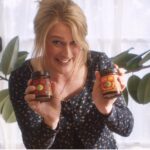
Weekend Roundup with Sara Bozich

Happy Labor Day Weekend! After a tough week here, we’re heading to the PA Wilds for a visit with the in-laws (one of Bo’s favorite places to go due to the racecar, side-by-side, and goat).
  1. September is Takeout Month! (Ya know, because normally it’d be Restaurant Week soon.)
  2. Donate blood (look for drives near you)
  3. Get outside! Explore the Hershey Harrisburg Adventure Trail.
  4. September is also apparently National Self-Care Awareness Month, so we’ll be exploring this and sharing some recommendations.
  5. Enter to win a Bud Light Seltzer Mini Fridge
  6. See what else you missed on the blog
Below are ample options for your weekend, whether you’re laying low (there is no shame in the stay home game!) or venturing out.
Oh hey, are you on the email list? In addition to getting this weekly update loaded with things to do each weekend directly in your inbox, I load it with a bunch of other fresh, original content. Sign-up here. I also recommend following me on IG.

Weekend Recs

  1. Grab some local brews from Boneshire Brew Works, Hemauer Brewing, Appalachian Brewing Co. or Tattered Flag.
  2. Pick up HOLLA Spirits at your local state store — OR, if you’re lazy like me, just order online and have it shipped!
  3. Stock up on grilling needs at R.G. Hummer’s in the Broad Street Market
  4. Order some great takeout, maybe a BBQ feast for the backyard from MoMo’s
  5. Binge episodes of Poured in PA: The Series FREE on YouTube!
  6. Browse some new gems at Meeka Fine Jewelry.
COVID-19 Disclaimer: As always, please click through the links or call ahead to get the most up-to-date information about venues and/or events below. It should also go without saying, but I’ll say it — Mask up, follow the rules, and be nice. And tip extra!

Thursday

Friday

Saturday

Sunday

Labor Day


Resources for to-go/delivery


Continue Reading

Harrisburg council weighs hiring Martin-Roberts as communications consultant

Gloria Martin-Roberts. File photo.

Harrisburg is considering creating a new communications liaison post, a contracted position that would be filled by former City Council president and mayoral candidate Gloria Martin-Roberts.

At a virtual council work session on Tuesday night, Mayor Eric Papenfuse stated that he wanted to hire his 2017 electoral opponent for the role, which would facilitate communications between the administration and City Council, the Dauphin County commissioners and the public.

“Ms. Martin-Roberts is somebody who I have been interested in bringing into the administration for some time,” Papenfuse said.

He said that the opportunity to hire Martin-Roberts arose after council discussed, a few months ago, the need to facilitate communications between the administration and council, especially during emergencies like the COVID-19 pandemic.

That discussion led him to assess the city’s greater communications strategy, he said, broadening the concept to include communications both within the city government and with outside entities like the county and the public.

Papenfuse stated repeatedly that Martin-Roberts, a former council president, was the right person for such a job.

“She brings a wealth of experience, and I hope that she signals to the public a desire on the part of the administration to have a big tent and to work to bring this community together, which I think is more important now arguably more than ever amidst the current crisis that we are going through as a community,” he said.

Under the proposed resolution, the new position would pay $45 an hour, not to exceed $70,000. It would run through Dec. 31, 2021. As a contracted post, it would not include benefits.

The city already has a communications manager, Momin Bhatti. However, according to the resolution, the proposed position would go beyond communications and include public outreach, “strategic policy development and implementation,” and “marketing of city initiatives.”

Several council members had pointed questions about the proposal. Council member Ausha Green, in particular, asked how the position grew from a proposed intra-governmental communications post to one with a much broader scope.

“Some of it incorporates policy consultation,” Green said. “That doesn’t exactly seem like the role of a communications liaison.”

Papenfuse acknowledged that the position had grown beyond the initial discussion with council.

“It definitely expanded beyond what we were originally discussing before break, but that was, in part, due to Ms. Martin-Roberts’ input and communications when I talked to her about the position,” he said.

Several council members asked if any other people were considered for the post. Papenfuse said that no one else was considered because he wanted to hire only Martin-Roberts.

“I’m not prepared to separate the position from the person in that sense,” he said. “I think it was crafted and the position was expanded based on her skill set.”

Council member Westburn Majors asked if consulting contracts typically are awarded without a formal bidding process. City Solicitor Neil Grover stated that the city is not required to have a bidding process for most professional contracts, including this one.

Martin-Roberts was scheduled to participate in the virtual work session, but could not attend due to a family emergency, Papenfuse said. Several council members said that they would like to speak with her before voting on the resolution to enter into the contract.

“I think—this is once council person’s perspective—prior to moving forward on a vote, I definitely would want to have a conversation with Ms. Martin-Roberts,” Majors said.

Continue Reading

Takeout Turnabout: Harrisburg Restaurant Week morphs into “Takeout Month.”

Cafe Fresco is one of the Harrisburg restaurants participating in Harrisburg Takeout Month.

Only in 2020 could “Restaurant Week” involve a month-long celebration of takeout.

Tuesday kicks off “Harrisburg Takeout Month,” organized by the nonprofit Harrisburg Downtown Improvement District (DID). It replaces Harrisburg Restaurant Week, in its 12th year in the capital city.

“Obviously 2020 is a really weird year, so we were thinking about how best to reconfigure Restaurant Week so that restaurants and diners could feel safe both eating and serving,” said Sydney Musser of the DID. “We decided the best and safest way to reach people was through takeout.”

Area residents are encouraged to try new restaurants by ordering takeout from Harrisburg’s eateries. The DID will be highlighting a different city restaurant every day in September via their social media channels, to showcase what Musser calls a “great diversity” in culinary options.

“It’s a brilliant idea by the DID,” said Devan Drabik of Explore HBG. “With the restrictions in place for capacity, I know restaurants are struggling to make ends meet. They desperately need people to order takeout to pay their staff and keep the lights on.”

Pizza, the OG takeout item, is powering Knead Slice Shop through the pandemic.

“We’re about 30% below where we thought we’d be at this point,” said Jennie O’Neill, Knead co-owner. “With no office workers in town for lunch, we’ve had a tremendous amount of support from the neighborhood, and that’s kept us at a good level of business to make it through.”

She’s cooked up a new promotion in conjunction with Takeout Month—a family meal that includes a large order of knots, salad and a large plain pie, for $30. Knead also offers online ordering and curbside pickup.

Some Harrisburg restaurants, including Café Fresco, offer free 15-minute parking for takeout pickup—handy for the morning and afternoon hours. Parking in most of downtown Harrisburg after 5 p.m. is free.

“Everything on the menu can be made to-go—breakfast, lunch and dinner,” said Brian Fertenbaugh of Café Fresco. “Our cashew chicken and broccoli is a popular takeout item that travels well, and our to-go cocktails have also been very popular. Alcohol is normally 40% of our sales, so we’ve had to restructure our business.”

Karaage, Japanese fried chicken appetizer, from Cafe Fresco

Café Fresco’s to-go cocktail menu includes specialty martinis, including an espresso martini. Like Knead, Café Fresco is offering family style meals for the month of September.

Many city restaurants are following suit and taking takeout up a notch.

“We keep evolving to adapt to the changes. We recently became a kosher restaurant, which has brought in a lot of new customers,” said Kristin Messner-Baker of The Vegetable Hunter. “We have been doing cocktails to-go and our boutique brewery’s crowler sales have gone up a lot, because everyone always loves beer whether there’s a pandemic or not.”

During Takeout Month, The Vegetable Hunter is offering weekly vegan specials, plus beer specials. September releases include a pumpkin espresso stout and a cherry Brett. The eatery is also offering dessert specials and recently added delivery partners such as Grub Hub and Uber Eats.

Takeout isn’t everyone’s jam. At Note Bistro and Winebar, owner Ruth Prall said her menu doesn’t translate well “into styrofoam.” And she notes the “excessive” cost of takeout packaging.

“We’ve actually been doing pretty well, weather permitting of course,” Prall said. “We happen to have a pretty sizable outside area, so as long as it doesn’t rain we can manage to make up for the deficit inside. I’m trying not to think or fret too far into the future—I’m confident we will come up with some creative ideas if need be.”

For takeout inspo, Musser and Drabik encourage area residents to explore their organizations’ websites. The DID’s website maps 68 restaurants within the district; Explore HBG’s website features 75 city eateries.

“I would remind people to think about where they’re spending their dollars during this time,” Drabik said. “It’s the mom and pop restaurants, the unique small places that we treasure that we should support.”

For more information, see harrisburgrestaurantweek.com, the DID’s restaurant guide and Explore HBG’s restaurant listing.

Continue Reading

Traveling exhibit recognizes history of LGBTQ+ Cuban refugees in PA

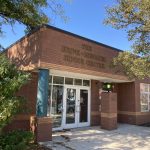
The LGBT Center of Central PA’s new exhibit at the Historic Harrisburg Association Resource Center.

Last year, Barry Loveland saw a history exhibit in Philadelphia that he knew he needed to bring to central Pennsylvania.

On Tuesday, that same exhibit, “With Open Heart and Open Arms: LGBTQ Cuban Refugees and Our Community’s Response to the Mariel Boatlift” debuts at the Historic Harrisburg Association (HHA) Resource Center.

“The exhibit showcases the experience of having a group of refugees coming to this country and needing a place to be welcomed,” said Loveland, project manager for the LGBT Center of Central PA’s exhibit.

In 1980, about 125,000 refugees fled Cuba to come to the United States. Many ended up at a resettlement camp in Fort Indiantown Gap in Lebanon County, Loveland said. Leaving from the Cuban port of Mariel, the event became known as the Mariel Boatlift. Within the group of refugees, Loveland said there were a significant number of LGBTQ+ Cubans.

The traveling exhibit commemorates the 40th anniversary of this event. A series of panels displaying pictures, text, documents and video clips tell the story.

The John J. Wilcox Archives of the William Way LGBT Community Center in Philadelphia originally produced the exhibit, but Loveland said that they were thrilled to let him take it on the road.

After HHA, the exhibit will make its way to other nearby counties, possibly including Lancaster, York and Lebanon.

“It’s a very well done exhibit and we are honored to have it,” HHA Executive Director David Morrison said. “This is a very important story about social justice.”

The exhibit focuses on the personal stories of the LGBTQ+ Cuban refugees. Included are accounts of the unfair treatment many gay men faced under the regime of Fidel Castro, as they were often forced into labor camps, Loveland said.

After fleeing Cuba, refugees found assistance from Pennsylvania churches, resettlement organizations and members of the local LGBTQ+ community, according to information in the exhibit.

“What inspires me the most in the exhibit is the photographs,” Loveland said. “The expression of pure joy on the faces of the refugees—they look like they feel free.”

He said the exhibit is especially relatable today with the national attention on immigration in the United States.

There will be a virtual panel discussion about the exhibit on Sept. 16. John Anderies, curator of the exhibit, Ana Fernandez, one of the Cuban refugees, Patsy Lynch, whose photographs are featured in the exhibit, and journalist Garry Lenton, who broke the story for the Lebanon Daily News, will speak on the panel.

“This is an opportunity for people to think about how we treat LGBTQ+ people and refugees in this country,” Loveland said. “It really will be something that will be an eye-opener for people.”

The “With Open Heart and Open Arms: LGBTQ Cuban Refugees and Our Community’s Response to the Mariel Boatlift” traveling exhibit will be open from Sept. 1 to 25 at the Historic Harrisburg Association Resource Center, 1230 N. 3rd St., Harrisburg. For more information, visit https://centralpalgbtcenter.org/withopenheart. Click here to register for the virtual panel discussion.


Continue Reading

For Healing: For 35 years, Shelley Brooks has given hope to women in crisis at Bethesda Women’s Mission

Shelly Brooks

Shelley Brooks stands with a group of young women around a cake topped with lit candles.

It’s a birthday celebration with all the traditional staples—cake, gifts and a roughly on-key rendition of “Happy Birthday.” It’s a party, but the birthday girl is crying.

The cake, the gifts, the singing, it’s so unfamiliar. It brings warm feelings, but triggers tears.

Brooks hears the birthday girl say, “This is the first time someone said happy birthday to me in 15 years.”

For Brooks, that’s yet another reason why she loves her job.

She Belonged

When Brooks first came to Bethesda Women’s Mission, she knew it was where she was meant to be.

Growing up in the same Allison Hill neighborhood that held the twin school buildings that would eventually become the mission, she saw them go through many transitions.

After a school, they became a barbershop, which she frequented with her brother in hopes of getting a lollipop. Later, Alcoholic Services Inc. took over, and Brooks served there for a little while. But life began to move on as she got married and had children.

Alcoholic Services left, and a new organization moved in, one that was already established in the city as a refuge for those experiencing homelessness, addiction and poverty. All the while, Brooks’ calling stayed the same—she belonged in that building. She especially knew she belonged now that Bethesda Mission’s Women’s Shelter was there.

Brooks walked into the building, as she had when she was a child and a young adult, but this time was different.

“We have been praying for someone to work here,” Brooks remembers the former director saying to her.

She started working part-time as a counselor for about 40 women and children, many with histories of abuse, addiction and homelessness.

It didn’t take long for Brooks to fall in love with her job and to eventually become the director of the shelter.

“This was something I knew I had to do,” she said. “Many of the women have experiences I don’t know how a human could endure. Their histories and stories are so meaningful and the world needs to hear them. My story is really their story.”

Welcome Home

Bethesda Women’s Mission provides long-term and transitional housing for women in crisis. They currently have 25 beds for those in need, but are working on an expansion project that will double their capacity and completely rebuild the mission on its current site.

Each day at Bethesda includes Bible study time, meals, chores, therapy, recovery meetings and free time. The goal is for guests at Bethesda to stay for the full, yearlong program, or longer if needed, in the hope that they make lasting change in their lives.

“I see a lot of pain and trauma, but that ray of hope, when it’s implanted, makes a difference,” Brooks said. “This is a very good place to leave your brokenness.”

Carla lived at Bethesda Women’s Mission for seven months—much longer than she wanted to when she first came to Harrisburg. She had been an addict for 21 years and went through rehabilitation programs before, but they never worked. She kept trying, for herself and her four children, who were waiting for her.

She showed up at Bethesda without much hope that this time would be different, but looking back now, she can’t believe how she has changed.

“I finally felt love—genuine love,” she said. “I never felt the love that I’ve felt from here before. If I went from rehab back to the streets, I would be dead.”

Carla smiled as she recalled how each day when she returned to Bethesda after recovery meetings, Brooks would be waiting with a “welcome home.”

Beach Therapy

Having been at Bethesda for 35 years now, Brooks has mentored countless numbers of women and lived through different times in Harrisburg. In the early 1990s, crack cocaine hit the neighborhood, affecting many of the women Brooks served and splitting up families.

She’s also seen a lack of affordable housing in the area leave those facing economic difficulties searching for a place to stay.

But Brooks has had her own struggles, as well.

Years ago, her marriage ended, leaving her and her children heartbroken.

They needed to get away and decided to go on a road trip, stopping at as many beaches as they could. Brooks had always loved the beach since she was a little girl. With hardly any money in their pockets, the family slept in their car some nights and spent most of their days on the sand. It was simple, but it was how Brooks found healing.

“We’re always talking about that trip,” she said.

Over the years, Brooks has taken many women from Bethesda to the beach. To her, it’s not just a chance for vacation, but for healing. For some women, the field trip is their first experience at a beach. Brooks has seen women stop in their tracks when they first catch sight of the ocean and marvel at its size. Others have broken down crying at the sight of families playing together on the sand.

“One day at the beach is equal to three weeks of counseling,” she said. “That’s what is so surprising to the women.”

Big Dreams

Beach days like those—and all the others full of restoration and renewal at Bethesda—are what help so many women create a new path in life. Bethesda Mission Executive Director Scott Dunwoody said the shelter has a 70% success rate.

“Many people don’t want to come for a yearlong, but then they see stories that all of us have—trials and tribulations,” Brooks said. “They start to see they matter and have a purpose.”

Women like Carla start to see a way out of a toxic life and dream about a future.

Soon, Carla hopes to be reunited with some of her children and has plans to find a home for her family. She also hopes to go back to school.

Another woman, Alicia, whose mother kicked her out of her home, landed on the streets, selling and using drugs. She was in and out of jail, but most recently was given the option to get off probation by completing a recovery program. She chose Bethesda. After about six months, Alicia has already seen change.

“It’s inspiring and motivational,” she said.

Brooks lauded the women for their perseverance through the challenges they’ve faced, giving any credit for assistance to Bethesda or to God, whom she says gives her strength. But it’s hard not to wonder what the mission would look like had she not walked up those old steps 35 years ago. There most likely wouldn’t have been as many beach trips.

Still, Brooks said that she was the one who was blessed and never felt like a day at the mission was a day at work. Over three decades have passed, and it’s still her dream.

“I love my job,” she said. “I get to see someone who hasn’t had someone say ‘happy birthday’ to them in 15 years blow out candles on a cake.”

Bethesda Women’s Mission is located at 818 N. 20th St., Harrisburg. For more information, visit https://www.bethesdamission.org/our-ministries/womens-mission/.


Continue Reading

Rooted in Flavor: Enjoy the tastes of Ecuador at Roots of My Land

Marisol Aviles de Ortiz and Hector Ortiz

The scent of warm, delicately seasoned rice and slow-cooked meat rose from the plate as I tucked into my first taste of churrasco.

This traditional Ecuadorian dish features slow-cooked beef nestled in a savory, tomato-based sauce, aside rice, French fries, fresh vegetables and a fried egg.

I devoured my meal with ease. But the challenges faced by today’s restaurateurs? Not easy at all.

This is certainly part of the story for Marisol Aviles de Ortiz and her husband Hector Ortiz, who opened the doors of their Ecuadorian restaurant, Roots of My Land, in late 2019, only to almost immediately face the pandemic.

“It’s been very hard,” Hector said. “All restaurants have been hit. The question now is for how long? Two months? Three months? Maybe six months? Nobody knows. But we are committed to keep going.”

 Good Dish

The story underlying Roots of My Land started some 20 years ago, when the couple immigrated to Harrisburg from their native Ecuador. Opening a restaurant was a long-time goal for Marisol.

“This restaurant has been a dream of my wife’s,” Hector explained. “We started this family business to present something that you cannot otherwise find in central Pennsylvania and promote the diversity of cultures, experiences and variety of dishes that the Latino Hispanic community offers.”

Years ago, Hector and Marisol helped start the Latino Hispanic American Community Center (LHACC), located in the Allison Hill neighborhood of Harrisburg. They have long demonstrated their belief in working to make their community a vibrant place. This commitment continues today and is evident in the couple’s choice to locate their restaurant just one block away from LHACC.

“The only way to change communities is to support them,” Hector noted. “By contributing to the economy in this community, we help show that this neighborhood is a place that people can do business and believe in.”

When people enter Roots of My Land for the first time, Hector and Marisol encourage them to be adventurous.

“I challenge people to experience the pleasure of life by trying something different, something new—a good taste, a good dish, to take time to enjoy the environment, the food and each other,” Hector explained.

“Believe me, if you don’t like what you try, you don’t pay,” Marisol said, laughing.

But so far, she has yet to find anyone who fails to enjoy her food.

“If they try it, they always like it,” she observed, smiling broadly. “And when you dine here, everything is fresh and made to order. That’s very important to me.”

Three Flags

Hector and Marisol’s enthusiasm for the food of their homeland is irresistible, so I had to sample some of their recommendations.

I tried the arroz jardinero y maduro, which was a mild and comforting rice dish served with savory chicken, and the chaulafan de pollo (seasoned and sautéed rice served with chicken, scrambled eggs and vegetables). But my favorite of the dishes was the aforementioned churrasco. Seriously tasty.

I’m certainly not the only one who thinks so. Patricia Gadsden has dined at Roots of My Land several times since the restaurant opened. She mentioned a number of dishes that she has enjoyed, but particularly called out the restaurant’s preparation of a traditional seafood casserole (cazuela), and the chaulafan de camarón.

“Everything I’ve tried, I’ve enjoyed,” she said. “And I will be back.”

On weekend mornings, the restaurant serves Ecuadorian breakfast specialties, such as egg and cheese empanadas, a cheese and ham omelet and bolón de verde—a hearty treat made from fried green plantains and stuffed with meat and cheese.

“One or two bolón with a cup of coffee makes for an excellent breakfast,” said Hector, grinning and clapping his hands for emphasis.

Last year, when the couple prepared to open Roots of My Land, they painted the dining room walls a vibrant azure and hung artwork from Ecuador. Marisol hand-painted three flags along the front of the main counter: the United States, Ecuador and the City of Harrisburg.

“This is not just about a feeling of pride, but about integrating our culture and food with the culture that is already here,” Hector said.

Marisol shared her vision.

“These three flags represent what’s important to me,” she said. “The Ecuadorian flag shows our culture and heritage, the United States flag is for the way that this country gave us a second opportunity. And the City of Harrisburg flag is because this is the first city that we came to—we have lived here all these years, and I love it. Representing these three flags is very important to me.”

Roots of My Land Family Restaurant is located at 1430 Derry St., Harrisburg. For more information, visit www.rootsofmyland.com or call 717-991-6300.


Continue Reading

If These Walls Could Talk: City program seeks to undo damage from decades of lead paint

Shawn Gillespie and his grandson, Ki’mere.

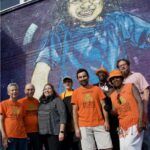
Lead remediation team at work.

Susan Wilson can drive through Harrisburg and point out the poisoned homes.

The chipping paint on the doorframes, windows and railings, it all tells a story. Over time, she has developed a keen eye for diagnosing old city dwellings.

For the past four years, Wilson has been on the lead beat, so to speak. In technical terms, she’s the client outreach and logistics coordinator for Harrisburg’s Department of Building and Housing Development—a mouthful. Fundamentally, her job is to protect kids from the poison their parents may not know exists right in their home. She does this with a small team through the city’s Lead Hazard Reduction Demonstration Program.

Wilson goes door-to-door, warning people that their families could be at risk for lead poisoning. In Harrisburg, like most other cities, this is no small feat.

“I’ve knocked on every door in just about every neighborhood in this community,” Wilson said. “No matter where you are or what the area might look like, we knock on those doors.”

About a year ago, Wilson was in Shawn Gillespie’s neighborhood in Allison Hill when they ran into each other.

Gillespie has lived in Harrisburg for over 50 years. He was born and raised in the city before raising his own kids and now helping with his grandkids. His youngest grandson, Ki’mere, is 18 months old and stays at Gillespie’s home daily.

It never really crossed his mind that his home could be unsafe. At least not until Gillespie had grandchildren in his house. That’s when he started thinking about lead.

He figures that his home was built in the 1960s, not super old, but, when it comes to the possibility of lead paint exposure, it’s old enough.

“Growing up in the ‘70s, it was a big issue,” Gillespie said. “But I didn’t really think about it until my grandkids started coming over.”

When he ran into Wilson, she confirmed that his home most likely had some traces of lead paint in it, which put his grandchildren at risk for poisoning. But, she had a solution.

In Your Blood

In the early 1900s, lead was beginning to find its way into paint cans in the United States. For over 50 years, homes and buildings were coated in the rich, bright paint. As early as the 1920s, health professionals linked lead poisoning to health issues, but the lead industry long downplayed the risks, according to a March 2016 story from National Public Radio entitled “America’s ‘Lead Wars’ Go Beyond Flint, Mich.”

The federal government finally banned lead paint for consumer use in 1978, but homes built before then had a high risk of contamination.

Joyce Ravinskas deals with a lot of families living in older homes in Pennsylvania. She is a registered nurse, but her job is more like a detective’s. The medical cases brought to her desk require investigation. Sometimes, her research involves digging through people’s drawers and medicine cabinets, but often, she can get answers through a simple home inspection.

In fact, most of the time the answer is right on the walls.

“There should be no lead in a child’s system or anyone’s system,” Ravinskas said.

But when she receives clients, there always is.

Ravinskas gets children referred to her from 15 counties in the state. She’s the program manager for UPMC Pinnacle’s Lead Poisoning Prevention and Education Program.

When kids come to her, it’s because they have elevated blood lead levels. This means that, somehow, they’ve come into contact with the substance, most likely through inhaling lead dust or eating paint chips, and now it’s in their system.

A blood lead level of five micrograms per deciliter or higher is considered concerning to the U.S. Centers for Disease Control  (CDC). However, as a parent and grandparent, Ravinskas said she would be concerned if her child’s level was a three.

She’s seen children with blood lead levels as high as 88.

This is where Ravinskas’ sleuthing comes in.

“We don’t give up until we find what the source is,” she said.

Sometimes, lead is found in pots, dishes or other items brought from countries where the metal is less regulated. Most of the time, lead paint on walls, doorframes and windows is the culprit.

The higher the lead level in a child, the more it negatively affects their health, Ravinskas said.

Over the years, poisoned children may experience developmental delays, learning disabilities, lower IQs, hearing damage and behavioral issues, to name a few on the CDC list.

“The higher the level, the sooner we will get out there,” Ravinskas said. “We never turn anyone down.”

Once an inspection is done, a report is sent to the child’s doctor, the family’s landlord and the state health nurse. In Harrisburg, Ravinskas will then refer the family to the city’s Lead Safe Program to get rid of the problem.

Home (Lead) Free

After his run-in with Wilson, Gillespie applied for the city’s lead reduction program.

The inspection found lead around the windows, banister and back door of his home.

Through the program, the city pays for the remediation and for temporarily relocating residents for the days or weeks it may take to rid the house of the problem. Essentially, it’s free to those who qualify.

Applicants must have a child under 6 years old or a pregnant woman living or spending at least six hours per week in the home. In addition, there are location, income and other requirements.

“I’m a lot more relaxed,” Gillespie said, now that his home is lead-safe. “It’s comforting to know I don’t have to worry about it. It was definitely something that needed to be addressed.”

Since 1995, the city’s lead reduction program has made over 800 homes lead-safe. They can do this thanks to federal grants. Most recently, the city received a $5.6 million grant from the federal Department of Housing and Urban Development (HUD). With that money, Wilson’s goal is to make 230 homes lead-safe.

According to the U.S. Census Bureau, in 2012, about 85% of Harrisburg’s homes were built before the 1970s.

“We have such old housing here,” said David Olsen, the lead reduction program manager. “I don’t know how long it’s going to take to address every house in the city, but certainly Harrisburg is set up to continue doing this work for a while.”

Garrett and Kristin Kooiker live in Harrisburg’s Bellevue Park neighborhood.

During a visit with their son Holden’s pediatrician, the doctor suggested a blood lead level test since their home was built in the 1940s. It turned out that he had an elevated level of six micrograms per deciliter—just over the CDC’s baseline for concern.

“We really had no idea about it,” Garrett said. “We were concerned after we found out our son was in danger.”

Wilson and her team sprung to action, finding a high concentration of lead on the exterior of the Kooikers’ home.

Families from all neighborhoods and socioeconomic backgrounds can be affected by lead poisoning. However, communities of color and low-income areas are often the most poisoned.

According to Health Affairs journal, Black children are three times as likely to have elevated blood lead levels than white children.

“It’s important that we touch the community and touch the lives of those who are most affected by this, and they happen to be low-to-moderate income families,” Wilson said.

Why We’re Like This

In 2017, Lancaster passed an ordinance to further reduce lead paint in homes. The new regulation required landlords to certify that their properties were lead-safe or lead-free if they were built before 1978 and if they are renting to a family with a child under 6 years old.

Harrisburg, however, does not have such an ordinance, Olsen said.

HUD does have a lead disclosure rule at the federal level. It requires landlords or sellers to present any known information about lead-based paint hazards to renters or homebuyers.

But this does not require the lead to be abated.

Most lead programs in Pennsylvania right now are very reactive, Ravinskas said.

Often, homes only go through lead reduction programs after children are referred to her with elevated blood lead levels. That’s largely because regulations don’t mandate that all children get tested or that all landlords do pre-emptive remediation.

Therefore Ravinskas is part of a committee advocating for lead testing for all children and for insurance to pay for home lead inspections.

“I’m optimistic that, in less than two years, we will see all kids covered in PA,” she said.

With the COVID-19 crisis, many environmental inequalities were exposed. Racial and ethnic minority groups and those living in tightly packed cities are disproportionately impacted by the virus, according to the CDC. Where people live and their income levels often determine their health.

But lead poisoning has been telling us the same story for years.

Children may not be dying from lead at the rates people have died from coronavirus, but they are suffering consequences.

The Philadelphia-based Education Law Center, which works to ensure quality public education for Pennsylvania children, found that, as a child’s lead exposure increases, his or her classroom performance in school decreases and IQ goes down. Lead has even been linked to adolescent delinquency and adult criminality in males, the center found.

“I was one of those kids in low-income housing,” said Lillie Williams, the interim director for Harrisburg’s building and housing department. “I don’t remember eating paint, but that could’ve been me. I don’t remember, when I was a kid, there being a program like this.”

Olsen said that the Harrisburg team has a joke among themselves to explain their quirks or funny mistakes. Because they grew up during the years that lead was so prevalent, they’ll say, “That’s why I’m like this.”

But Olsen’s smile quickly turned to a straight face.

“But it’s not a joke,” he said. “It’s really serious.”

To learn more about Harrisburg’s Lead Safe Program, visit www.harrisburgpa.gov/leadsafeprogram.  

To learn more about UPMC Pinnacle’s Lead Poisoning Prevention and Education Program, visit www.upmcpinnacle.com.


 

Continue Reading

Restaurant Reset: Harrisburg restaurateurs search for the right recipe to survive to better times

Scenes from Harrisburg’s Saturday Nights in the City outdoor dining event.

Their tacos would arrive soon—fish and el ranchero, served not in carryout containers but on real plates.

While Jerry Morris and Brian Dougherty waited, they recounted the restaurants they have patronized via takeout since March.

“We’ve done Dodge City steakhouse multiple times,” said Morris.

“Freshido,” added Dougherty. “Subway Café. Café Fresco. We’ve done Alvaro’s, because that’s right by our house. The Speakeasy.”

On this pleasant Saturday night, Morris and Dougherty, who live in Midtown Harrisburg, were dining al fresco at the eatery trilogy of Mangia Qui, Rubicon and Suba on North Street.

“So many restaurants are such an asset to the city that, if they close, they’re probably gone for at least several years before somebody comes in to take their place,” Dougherty said. “So, we know that we have to do our part.”

In the secret sauce keeping Harrisburg restaurants afloat during the age of COVID, loyal customers are key ingredients. So are financial reserves, government help and creative ideas connecting food and beverages to hungry patrons.

 Adapting

In this atmosphere, agility is gold.

Steve Weinstock, owner of Stock’s on 2nd, credits a seasoned management team with bright ideas that bring in revenue: add-your-own-liquor signature cocktail cubes; Easter and Passover meals to-go that morphed into kosher Shabbat dinners; a food truck trundling into Harrisburg neighborhoods, so successful that a second is contemplated.

“I never thought in a million years I’d be running a food truck,” Weinstock said.

He admits to skepticism over the chef’s idea for livestreamed cooking demos, using ingredients packaged down to the tablespoon of salt. Now, the sessions have “a huge following” and could continue, post-pandemic, as quarterly events.

Mangia Qui’s partners had little time to “flip the script,” maneuvering through such technicalities as finding eco-friendly takeout containers, combining three restaurants’ menus into one, and developing sanitization procedures, said partner and chef Qui Qui Musarra.

How are they managing?

“We pray a lot,” Musarra said. “We’ve all become avid smokers. You just hope that somehow it all balances out.”

In mid-June, hallelujahs rang out as Dauphin County restaurants reopened at 50-percent capacity. In mid-July, hallelujahs turned to howls when Gov. Tom Wolf’s administration dialed back to 25 percent and required food purchases with alcohol sales.

Weinstock, like restaurateurs and journalists statewide, wants to see the data justifying such restrictions.

“I feel like our industry is getting singled out,” he said. “I don’t think it’s fair.”

Musarra believes that Wolf and Health Secretary Rachel Levine are doing “a tremendous job.” It’s America’s resistance to precautions such as masks that are slowing reopening, she believes.

“Everybody could have been at 50 percent had everybody abided by the rules,” she said.

Up on Allison Hill, it’s a Wednesday at lunchtime, and socially distanced customers wait to order their Caribbean-themed comfort food at Rice & Beans Diner on 17th Street.

Business seems steady, in contrast to the pandemic’s first month, which “was horrible,” said Starlyn Rivera, co-owner with husband Jose Pichardo.

With only five employees, the restaurant’s minuscule federal Paycheck Protection Plan (PPP) loan didn’t go far. And by the time Rivera applied for a city small business grant, the fund had emptied.

The restaurant, which the New Yorkers opened in early 2019, stayed open by trimming hours but not eliminating jobs.

“Our employees, they understand,” said Rivera. “We were open more for them than for even us. We’ll keep trying.”

PPP loans helped restaurants get over the initial plunge in business, but layoffs and hourly cuts remained on the menu. At Stock’s on 2nd, “staying afloat” means limiting hours, said Weinstock.

“Everyone wants us to get through it, so the staff is very understanding,” he said. “Some people are happy to have a few days a week versus six days, just to have something in their pocket.”

 Street Food

Todd and Kathy Vander Woude, having dinner on a Saturday night, discovered a new perspective on 2nd Street’s eclectic architecture. That’s what happens when you’re sitting in the center lane of a street that normally carries thousands of vehicles a day.

The Vander Woudes were enjoying Saturday Nights in the City, when the city barricades streets, and diners order from servers or carry takeout food to tables set up by participating restaurants. Vander Woude, executive director of the Downtown Improvement District, and Harrisburg Mayor Eric Papenfuse came up with the idea, launched in early June.

Saturday Nights in the City helped restaurants close revenue gaps caused by emptied downtown offices during the day and diminished crowds in the evenings. An extra 22 tables outside help Stock’s make up—somewhat—for the diminished capacity inside.

“It’s the one night we can shine and do the amount of sales that we used to do when we were open 100 percent,” said Weinstock.

The Mangia Qui group turned its North Street block into a dream of Paris or Miami, complete with white tablecloths, red patio umbrellas and lights strung overhead. Customers love the getaway and the tableside service.

“It’s a reprieve,” Musarra said. “Even though we are in the street, people feel they’ve been transported someplace else.”

Restaurant owners know that Saturday Nights in the City is weather-dependent. Heat and summer storms dampen turnout. Even if it’s extended into the fall, as some hope, winter is coming.

 Different Paths

Remember date night? Have dinner. Attend a show. Have drinks afterwards.

All a distant memory.

“That’s a hurt,” said Weinstock. “We have a large symphony crowd.”

Restaurants also took a big hit in crowd-based bookings—weddings, political and nonprofit fundraisers, catering. Mangia Qui’s clients are managing work-arounds, perhaps finding larger spaces for socially distanced catered events, or flipping weddings to their own homes.

Delivery services have also become a mainstay.

“If you can’t come to us, we’ll come to you,” said Musarra. “We had people getting takeout and delivery who had never been to the restaurant. They’ve become converts.”

A few restaurateurs have decided to wait it out a bit longer.

Originally, The Millworks reopened in June. Then an employee tested positive for COVID, and owner Josh Kesler announced a temporary shutdown. When test results for other staff were slow to arrive, he suspended operations at The Millworks and his new Watershed Pub in Camp Hill until further notice—not a closure, but a hold.

“The bottom line for me is, I couldn’t ensure my staff’s safety, and if I can’t do that, I’ve got to put the brakes on it,” said Kesler. “We’re just going to take a little time off and get ahead of this experience.”

Fiscal reserves help Kesler pay those bills that keep coming. The Millworks complex of restaurant, brewery and artists’ studios will stay closed until multiple factors—negative test results among staff, sustained low virus numbers in the community, perhaps reliable treatments and vaccines—combine to assure “a more certain environment, health-wise.”

Veteran restaurateurs are survivors. Optimists, too. Kesler, a longtime booster of Midtown Harrisburg as a destination, sees The Millworks and its neighbors bustling again.

“I can’t wait for that to happen,” he said. “Eventually, it’ll be back to what it was before.”

Musarra and her partners don’t fret over how long they can sustain business.

“You have to concentrate on the positive side, because if you predict your own demise, then that’s what you work towards,” she said.

At Rice & Beans Diner, the pandemic has apparently slowed approval of a liquor license, but the hopeful orange notice beckons in the window. Rivera can’t say that business is okay, but she can say with a laugh, “We’re doing better.”

“We’re doing better because our customers, they are great,” she said. “They’re supporting us a lot. They understand. They can go in the restaurant, and if they like our food, then we’re glad the neighborhood is helping us.”

For more information on the restaurants in this story, please visit their websites and social media pages.

Support quality local journalism. Become a Friend of TheBurg!


Continue Reading

Art and a Cup: Young owner Makayla Burton has combined her favorite things at The Tiger Eye Coffee Shop

Coffee shops often look as dark as their freshly roasted stock-in-trade. Brown. Bleak. Minimalist. Industrial-looking.

A new café is breaking that mold, blending color and caffeine into a delicious, coffee-scented concoction.

The fledgling Tiger Eye Coffee Shop in Paxtang is as bold and bright as the rides on the Wildwood boardwalk, exuding homey charm and originality with its eclectic menu and decor.

The sign outside the pastel purple building, adorned with strings of white lights and the American flag, lists the three primary loves of 19-year-old owner Makayla Burton: Coffee. Art. Ice cream.

Chairs and tables are artfully arranged along Derry Street, with seats hand-painted purple, red and black with polka dots. Her father Robert, who is a co-owner, as well as her siblings, contributed their talents to the effort. Brother Jadon works with Makayla part-time.

Inside, Tiger Eye is part coffee shop, part art gallery, part ice cream parlor and all candy for the eyes. Even better, it’s bathed in the aroma of coffee beans and baked goods.

The laid-back hipster vibe is exactly the feel that Burton wanted to create in a site that was once the home of Giordano’s Pastries.

Paintings on the sponge-painted walls are the handiwork of former classmates at the Capital Area School for the Arts (CASA) in Strawberry Square and other local artists. Chic throw rugs hug hardwood floors, and vibrant throw pillows spice up furniture. Each table is a glossy finished tree slab holding a unique lamp.

Glass display cases along the walls hold pottery, unique wooden mugs, craft jewelry and three-dimensional art for sale. A print camelback couch, game table and children’s table are stationed toward the back, and a book, “The Ruminative Soul,” by Drew Dick, is on sale for poetry fans.

The shop has already attracted a loyal following. Parents taking their children to nearby Harrisburg Gymnastics stroll over. Patrons of the nearby Harrisburg Framing and the beach-themed Sea Shop —her dad’s shop—drop by for a jolt of java. Walkers, joggers and cyclists from the nearby Capital Area Greenbelt enter in Lycra, in search of smoothies and cold drinks. Music lovers can try their hand at the acoustic guitar propped up in the front window.

Makayla said that the shop’s specialty is avocado coffee, which is a cup of joe mixed with half an avocado, which takes the place of cream. Tiger Eye is the only place serving that healthy mash-up in the area.

Fit the Feeling

Burton admits that it’s not easy launching a business at 19, especially when you open in December 2019 and a global pandemic pulls the plug on your dreams three months later.

The shop was forced to close for a time then reopened with numerous precautions, including socially distanced tables, plexiglass at the counter, face masks, enhanced cleaning and hand sanitizer. Plans for live entertainment have been put on hold for now.

Through it all, Burton remains optimistic, kind and eager to please her customers. As a film and video major at CASA, she also has an eye for style and a passion for helping her fellow art lovers.

She said that the name of the shop has nothing to do with a boxer named Rocky and the familiar “Eye of the Tiger” theme song.

“I thought it just fit the feeling here,” she said.

She loves the rare tiger eye gemstone, which is the color of coffee, with a silky, yellow-and-brown luster and a reputation for bringing good luck.

After visitors secure their espresso, gluten-free muffin or Hershey’s ice cream, they can stay to sip, spoon, study, socialize and shop.

Burton can’t remember exactly when she decided to open up a coffee and ice cream shop, but she admits she has always loved coffee. She is in good company.

“I love the addition of the Tiger Eye Coffee Shop in the Borough of Paxtang,” said former mayor and current borough manager Keldeen Stambaugh. “It has enhanced our downtown area and is a community favorite, adding to our popular eateries within a few blocks.”

Stambaugh said that, because the municipality is small, most residents walk to downtown hot spots. For those who drive, a municipal parking lot across the street behind the municipal building/firehouse offers free parking.

“The Tiger Eye focuses on creating a warm, friendly environment and a great place to gather with friends and family,” Stambaugh said.  “They offer something for everyone. They sell coffee, tea and ice cream, but also have a big ‘little free library,’ in addition to displaying and selling artwork from a variety of artists.”

Paxtang, so close to splendid Victorian homes, the Harrisburg Mall and the car dealerships on Paxton Street, needed to stir up some creative juices.

“The artist atmosphere that is growing here in Paxtang is a big focus at the Tiger Eye,” Stambaugh said. “We hope this will encourage more artists to move into our borough.”

As a young, new business owner struggling to survive in a world transformed by a single-stranded virus, an art lover, and a coffee aficionado, Burton’s offering of cappuccino crunch ice cream seems especially fitting. Blending coffee and ice cream in artistic swirls, it is, like Tiger Eye, the best of all worlds.

The Tiger Eye Coffee Shop is located at 3418 Derry St., Paxtang. For more information, call 717-853-0974 or visit their Facebook page.

Continue Reading

Band Barn: The Englewood was built for music, but includes food, brews, views

The Englewood

Jeff Sharp and Rick Russell are band members and music fans. They’d been on the lookout for about 10 years for a great community hangout—from a music standpoint.

When Sharp, now co-owner of The Englewood in Hershey, met me in the new lobby, the first question I asked him was, “So, how’d you discover this place?”

Their band, The Hockersville Station, played Americana/alternative country on Thursday nights at the nearby farmers market.

“We’d be jamming with a good view of the farm and the dilapidated barn, look at it and think, ‘Huh,’” Sharp said.

As music fans themselves, they didn’t believe there were enough good places in the Hershey area for music.

“There is so much talent in this area,” Sharp said. “We wanted a listening room as opposed to some club or theater. No dive bar. And if we were gonna have something like that, we wanted a great brewery to go along with it.”

Enter The Englewood.

Dating as far back as 1861, The Englewood was once a strawberry farm, then a dairy farm that provided milk to Milton Hershey for his chocolate. The main building is the old barn, a gloriously red-roofed structure now completely transformed from its origins as a cavernous cattle barn.

The massive renovation project entailed removing cattle shoots, taking down cement walls and generally removing over a century of cow. To preserve as much of the barn as possible, the contractors cob-blasted wood beams, cleaned limestone walls, repurposed barn wood for the bar counters, and installed new windows that mimicked the old ones.

They were three weeks away from finishing construction on the barn when COVID-19 hit. Sharp gave a smile with a shrug.

“The delay allowed us to do a slow rollout,” he said. “The silver lining here is that we got to ease into it without changing the experience for our guests.”

All the Senses

Managed by Tom Scott, former owner of McGrath’s Pub and Scott’s Grille in Harrisburg, The Englewood’s main entrance boasts a welcoming hallway. From there, I entered a cozy tavern on the main level and was told it will serve Pennsylvania wines and spirits. I then stepped onto the outdoor deck, which overlooks the grounds, a patio space with a fire pit, and the lower level brewery.

The Englewood is music-focused, so the two-tier, 650-person event space is the wow factor. It hosts the main level area, including the stage and movie screen, and a mezzanine with couches and plush seating. Lancaster-based Clair Brothers installed the sound systems.

“They’ve got the best performance sound system in the industry, as far as world tours,” said Sharp.

In addition to the sound system, the venue has a spacious green room and plenty of parking.

Chef Matt Miller runs the lower level restaurant’s state-of-the-art kitchen, which brings to life a casual menu. Sharp talked up Miller’s pizzas and the “Barn Burger,” a seasoned short rib, brisket, chuck and bacon combo with cheddar cheese. Housed in what used to be the milking parlor, the restaurant has a brick fireplace and a wood-fire oven with counter seating. Doors lead to the outdoor patio. And let’s not forget the brewery, also on the lower level.

For that, the owners sought out Rubber Soul Brewing co-founder Jesse Prall, who will run the brewery on a seven-barrel system. I asked Prall about the beers he likes and what he plans to offer.

“I get this question a lot, and it’s hard for me to put my finger on the exact beers I like,” he said. “I do prefer to brew more traditional styles and leave out the ‘off the wall’ stuff.”

Prall describes himself as a “seasonal-style drinker.”

“I like the wheat and Belgian beers during the summer, but then in the fall/winter, I get more into the darker beers, like stouts, porters and dubbels,” he said. “And don’t get me wrong—I dig a good IPA. All that being said, I will offer the gambit depending on the season.”

Six core brands are on tap all the time: session IPA, IPA, DIPA, lager, amber and chocolate milk stout. Six other taps will be in rotation.

This is Prall’s 20th year brewing. He got his start cleaning kegs on Sunday evenings at Appalachian Brewing Co. in Harrisburg.

“The electric steam boiler was cheaper to run on Sundays,” Prall said.

He met his brewing mentor at ABC and then eventually took over the position of head brewer. After spending around five years there, he ended up in Delaware, working at Dogfish Head for 10 years as a head cellarman, production planner and brewing manager.

“There is where I learned even more and was ready to take on something of my own,” he said. “Here’s where Rubber Soul happened. Even though it didn’t last long, I still gained something from it. I want to grow The Englewood brand both in-house and outside to the public.”

At that point, my tour was complete, with all bases covered—the music, the food, the beer.

“We wanted a vibe that tapped into all the senses,” Sharp said.

He ticked off all five on his fingers.

“The sound of the music, the smell and taste of the food, the comfortable décor and the scenery,” he said.

Angela Moramarco, marketing and creative director, summed it up with a snappy catchphrase.

“Eats, brews and beats,” she said.

The Englewood is located at 1219 Research Rd., Hummelstown. For more information, visit www.englewoodhershey.com.


Continue Reading