Wheel Keep Spinning: Recycle Bicycle pedals forward, without its founder, on firm footing

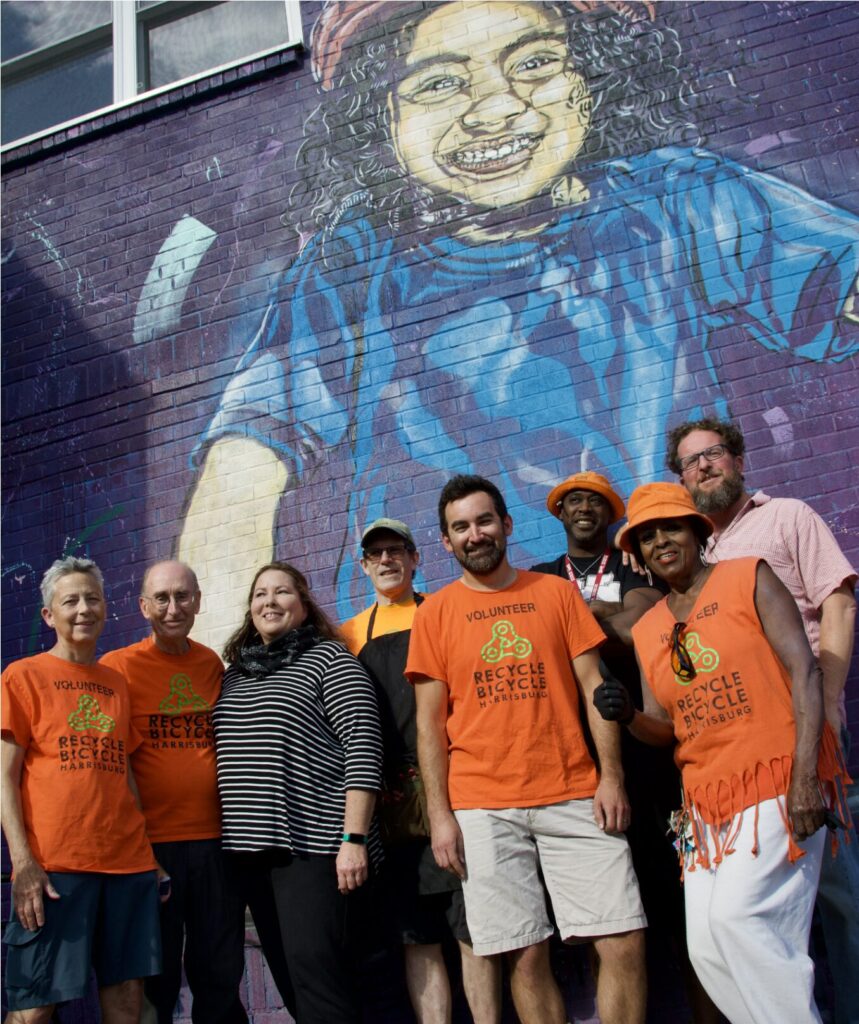
Recycle Bicycle board members and volunteers

On a warm Monday afternoon, 10-year-old Esteven zipped around the parking lot of Recycle Bicycle on his new green and orange bike.

He pointed out how the gear shift works and said he likes to ride fast.

His twin sister Violet picked out a purple bike and said she’d stick to riding safely in the backyard.

The twins’ father, Esteban Paulino, said it was his first time bringing his children to the Allison Hill bike shop on a recommendation from a friend. He was all smiles seeing his kids pick out bikes and work with a volunteer, Bill, to tune them up and get them ready for summer adventures

“They’re doing an excellent job, and they’re willing to help,” he said.

A steady flow of people came into Recycle Bicycle that afternoon, keeping a crew of neon orange-shirted volunteers busy. However, that was considered a slow period. Earlier that day, the shop had been much busier, and Saturdays, well, they’re another beast altogether.

It was one of those Saturdays in May when the news hit the shop—Ross Willard had passed away suddenly and shockingly.

Willard founded Recycle Bicycle in 2001 and has long been synonymous with the organization.

When the news reached the Chestnut Street shop, volunteers paused, gathered in the meeting room to say a prayer, and got back to work.

“We went back out to work fixing bikes, because there was a line of people that needed bikes,” said board President Bob Sutton.

Willard, for so long, was the face of the organization. He was the common thread behind why most of the volunteers got involved as he had a way of drawing people into his orbit.

Willard may have been the reason so many volunteers got involved with Recycle Bicycle, but even without him, they’re staying put. His mission became their own. His way of seeing the world—noticing needs, opportunities to lend a hand—became their own. And everyone shared the same sentiment, that Recycle Bicycle was in great shape to keep rolling. Many said that years of organization, delegating tasks and testing new ways of doing things prepared them for this point.

Sharing the handlebars transformed Recycle Bicycle from one man’s passion project to a tandem ride.

“We carry the mission forward,” Sutton said. “The mission was Ross Willard’s to begin, but he’s passed that mission on—he’s made converts of us.”
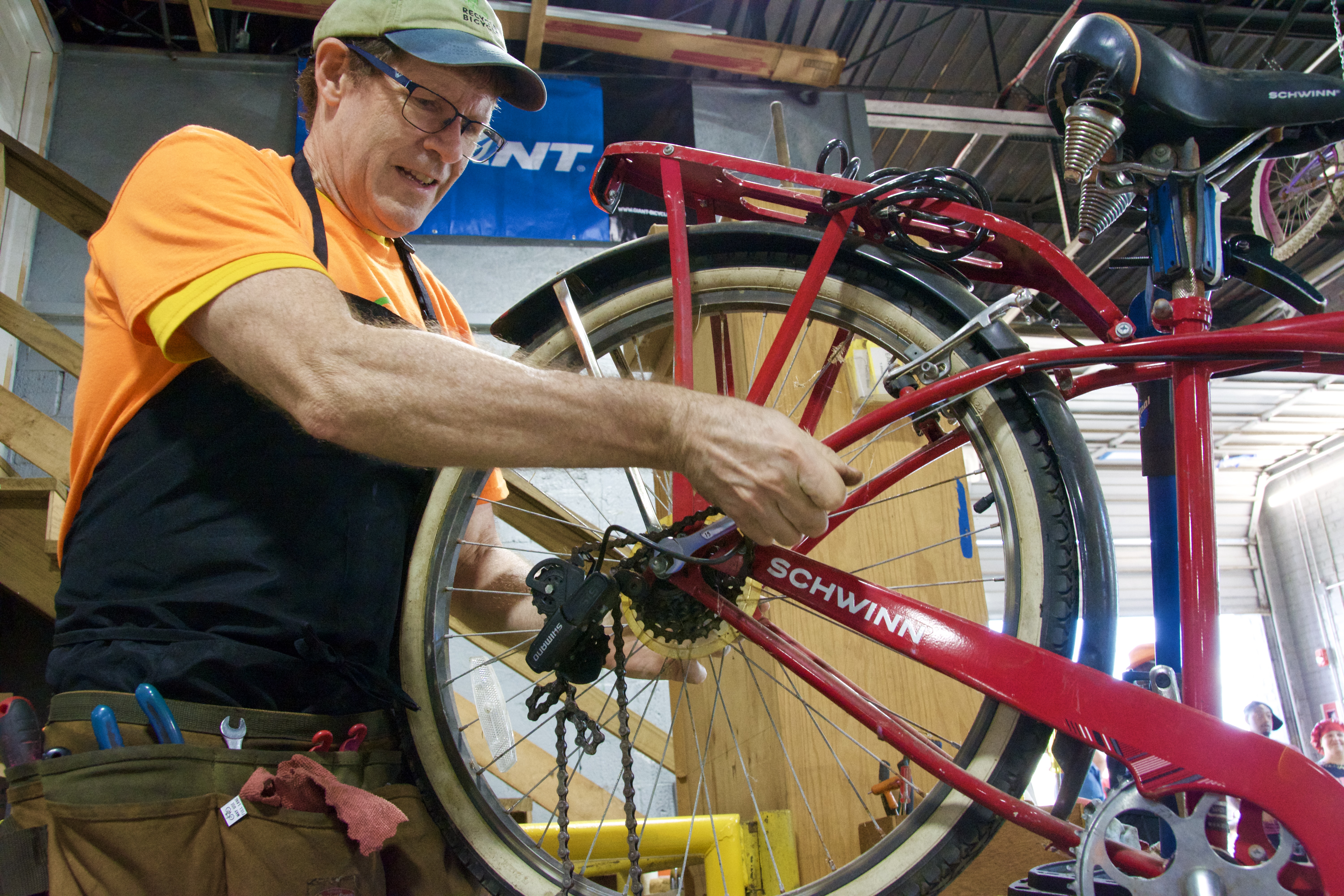
A Recycle Bicycle volunteer changes a chain, greg

A Recycle Bicycle volunteer changes a chain

Finding Stability

Jenifer Donnelly has volunteered with Recycle Bicycle for a decade. She recalled her first days on the job, being “thrown into the fire” by Willard, who put her right to work, but always made sure she was supported and equipped.

When she began, Willard was operating out of a warehouse on Atlas Street in Uptown Harrisburg, a site that was sold in 2019, leaving the organization in search of a new home.

In those last weeks in the Uptown shop, Willard stood next to a mountain of bikes, trying to figure out how to move them all and where to.

“We’ve outlasted a lot of other nonprofits in the area,” Willard told TheBurg at the time. “Now, we need a place that’s going to outlast us.”

He found that place in the Chestnut Street shop, for which Donnelly took on much of the organizational work.
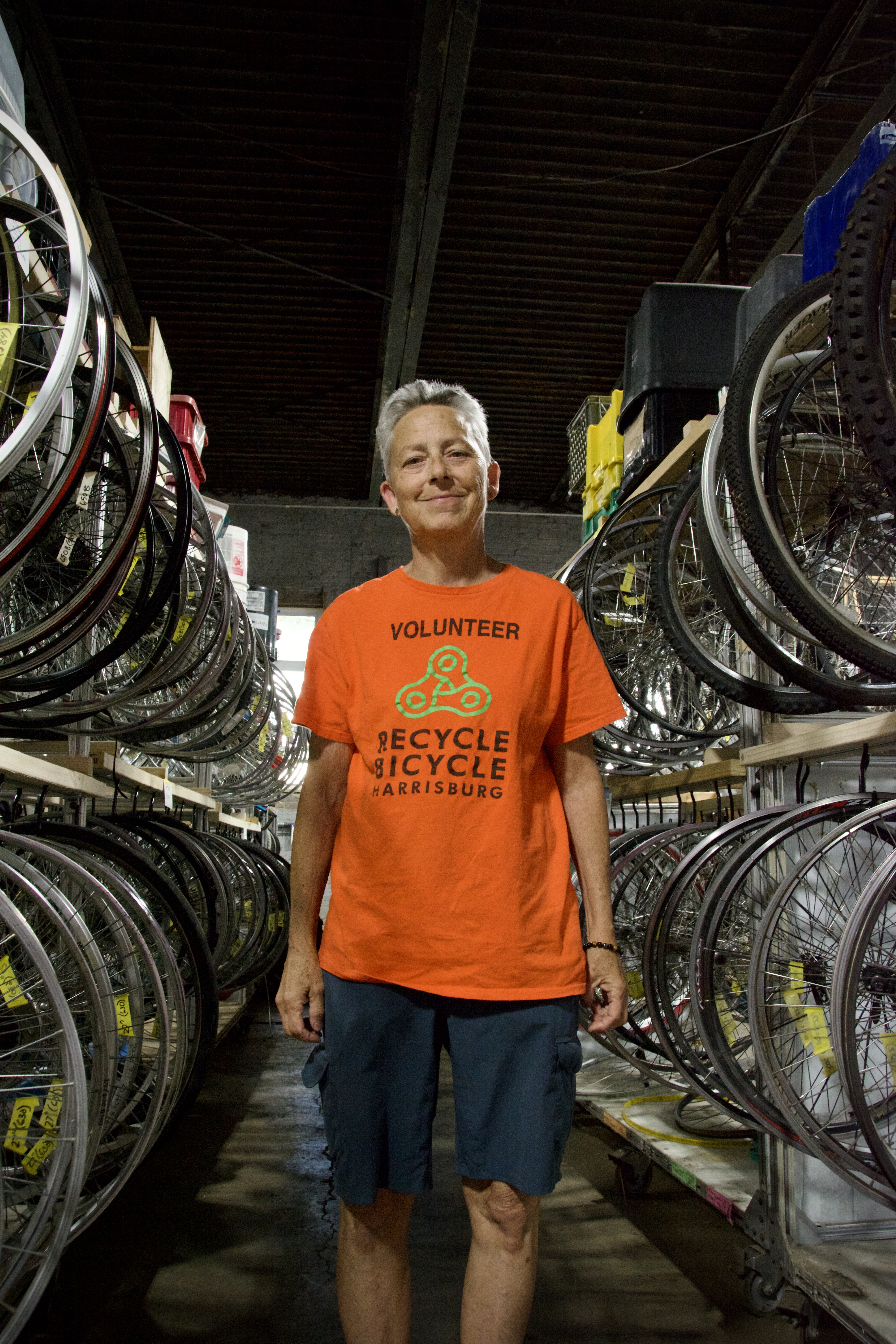
Jenifer Donnelly, volunteer

The shop now has a system. Visitors are greeted by a waiting area with seats where a volunteer like Nannette Swanson signs them in. There’s a bike repair area with workbenches, where bikes are organized by size and style. There are rows of spare wheels and other parts stripped from unsalvageable bikes and recycled.

Donnelly is humble, but Sutton described her as the “backbone” of the organization. She disagreed.

“Ross was always the backbone,” she said.

“Ross was the heart. You’re the backbone. You were keeping the structure,” volunteer Brandon Basom reaffirmed.

Around the time of the move to the new building, Willard began stepping back from day-to-day work at Recycle Bicycle as he recognized it was time for change in the nonprofit. Some of his “old-school” methods of running the shop were due for updates, volunteers said.

The number of people coming to the new shop was like nothing Recycle Bicycle volunteers had seen before. They did their best but often struggled with how to assist people in the most efficient, patient and understanding way.

“I think that took us some time to figure out. That transition was really what [Willard] was struggling with because he did things one way for so long, but, in the end, I think he was really happy,” Donnelly said. “He always said to me, ‘We’ve got to make sure this stays long after we’re gone.’”

He stepped back, but “never stepped away,” Donnelly said, explaining that Willard focused his attention more on bike safety advocacy work and interacting with the public at events like city festivals. He seemed happier, getting to do what he loved most, she said.

“We are kind of moving more from an entrepreneurial organization run out of Ross’s back pocket, so to speak, with his close coterie of friends […] to a more stable, long-term organization,” Sutton said. “But it was tough when Ross pulled back because it created a bit of a vacuum, and we had to see who stepped forward.”
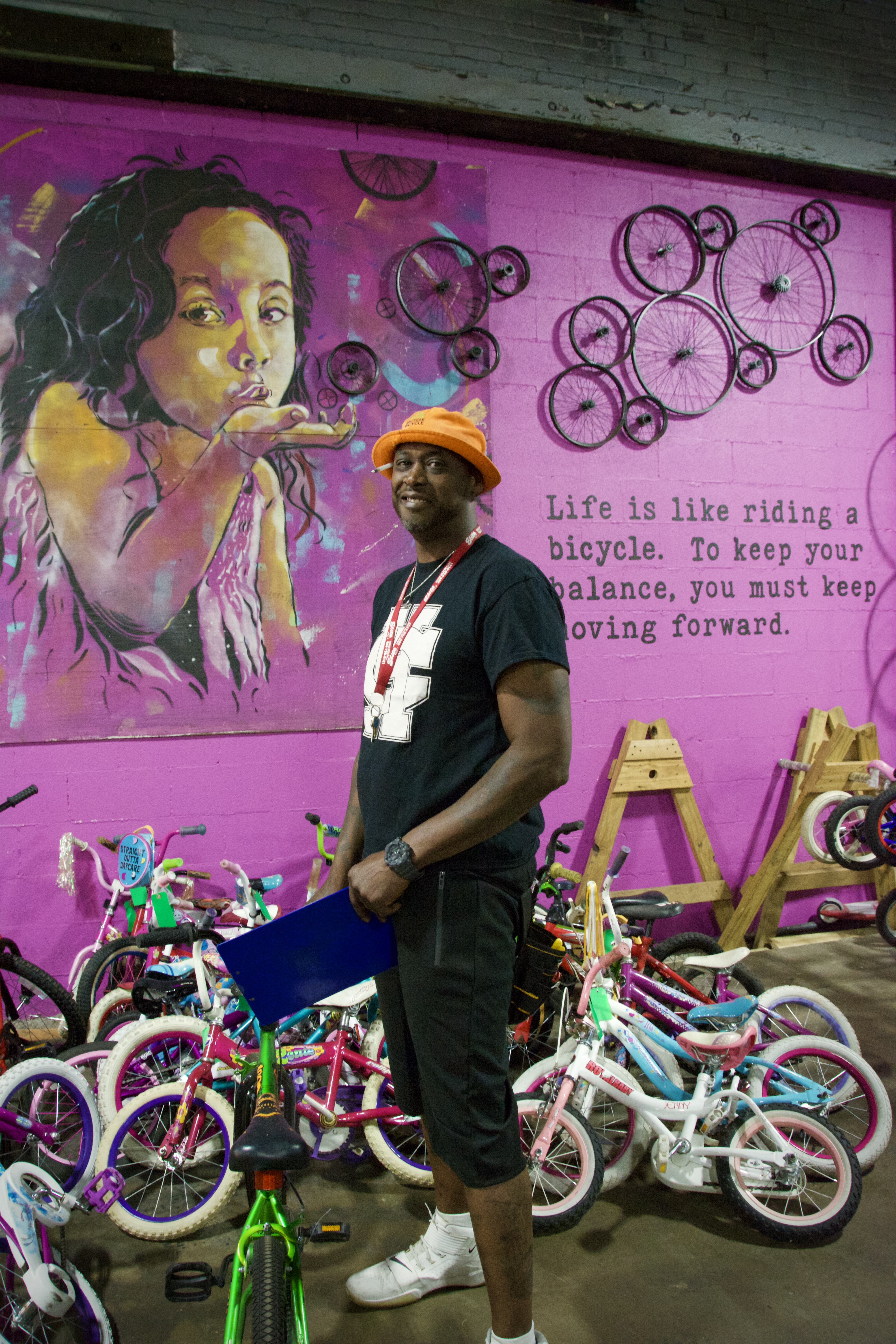
Ricky Morton, volunteer

Toward the Future

Basom is one of Recycle Bicycle’s younger volunteers who has become known, like Willard was, as always willing to help with a bike fix.

“This is problem solving. You get a bike, none of the parts are right for it. But you can make it good enough,” Basom said, chuckling. “The things we do here would make bike shops cringe. I’ve taken a hacksaw to a bike; I’ve taken a hammer to make it work. But we make it work. It makes me uniquely qualified in my neighborhood to help kids with their bikes.”

He’s never without a few tools and spare bike parts, because “you never know.”

Teaching kids, and adults, how to repair their own bikes and involving them in the process has always been part of Recycle Bicycle’s mission, something Willard was adamant about.

That education is still happening, and city youth are finding the shop to be a place they can tinker on their own bikes, learn from older volunteers and even help others.

“They’ll come to you, and then I get to do what Ross used to do, which feels kind of good,” Basom said. “And I’m like, ‘Am I the old man now?’”

Fourteen-year-old Zane worked on his bike with a few friends at the shop. He was quiet, focused on the task at hand, but said he comes in every now and then because he enjoys fixing bikes.

Volunteer Ricky Morton works with teens like Zane on Sundays, teaching them skills.

“That’s the future of this organization—those young people,” Donnelly said.

Recycle Bicycle is urging people to volunteer. They’re doing well financially. There’s no shortage of bikes. But they need more people—to fix bikes, interface with the community and do advocacy work. They depend 100% on volunteers.

And you’d think, after 25 years, that the demand for bikes in the city would be mostly satisfied, but no. Lines are always long, and the need is always great. In 2025, 3,496 bikes were gifted and, as of April this year, 461 have been given out.

On that Tuesday when Esteban and the twins got bikes, Ezekiel Hernandez waited for help fixing the bike he uses to get to work. A mother waited with her young children, visiting on a referral from the transitional housing community where they live. Vijay Varadarajan worked with retired schoolteacher Ron Yerger to modify his bike to his height so he could ride with his son. He enjoyed working with Yerger so much that he said he’s considering volunteering now.
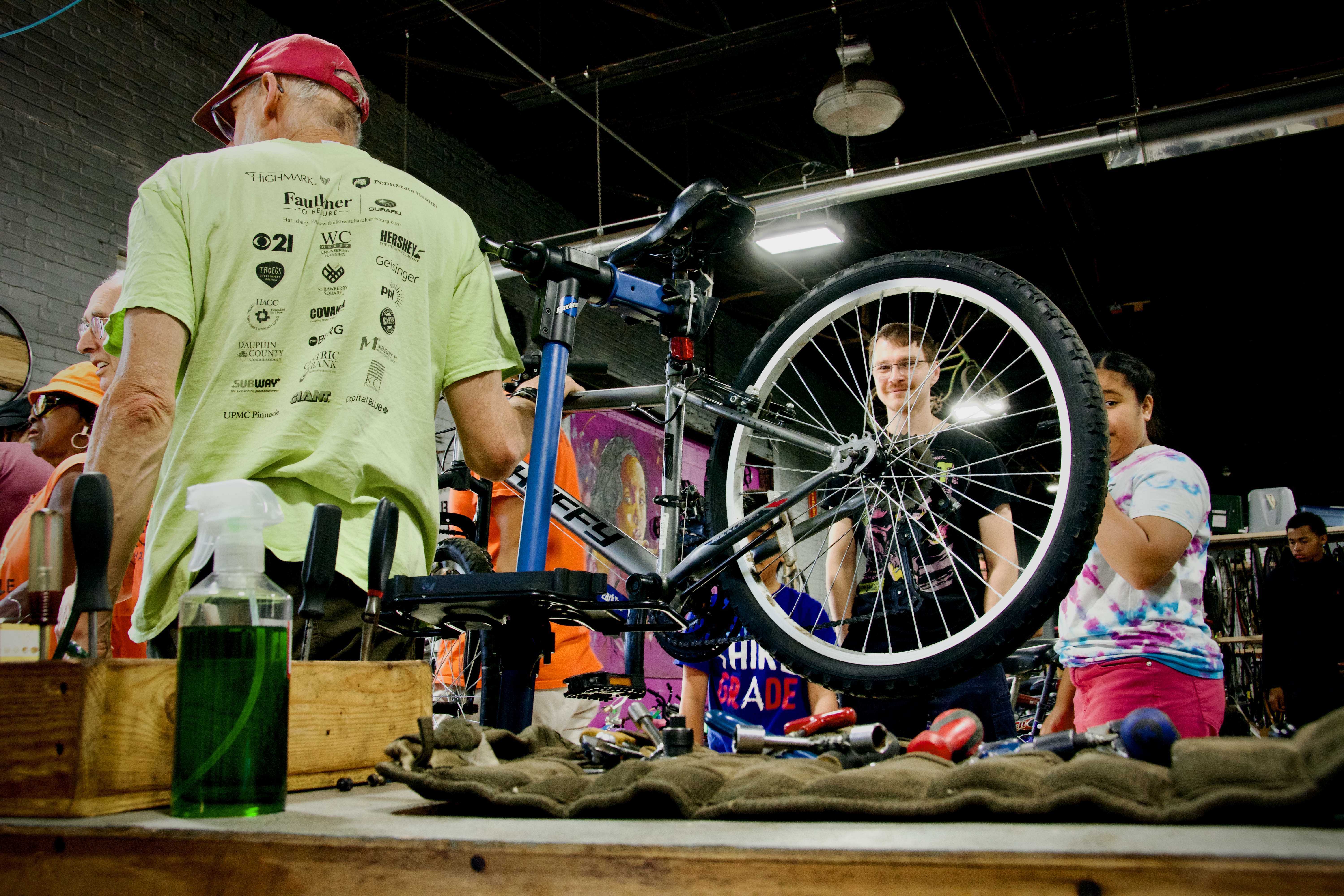
Recycle Bicycle workshop

It’s this community that volunteers like Stephanie Iseman love.

Iseman had a special connection to Willard. He was there for her during mental health struggles and was a close confidant. But beyond Willard, his community at Recycle Bicycle became hers too. The shop is somewhat of a second home to her, and the volunteers are family. Willard’s passing was a shock and devastating to her.

Yet, she sees a bright future for Recycle Bicycle.

Without Ross, everything changes, and nothing changes. Volunteers are heartbroken, but Recycle Bicycle keeps moving forward as usual, continuing a long legacy.

Iseman has full confidence in the team.

“It’s a testament of how one voice can make a whole choir.”

Recycle Bicycle is located at 1722 Chestnut St., Harrisburg. For more information, visit www.rbhburg.org.

If you like what we do, please support our work. Become a Friend of TheBurg!    

Continue Reading

“Check Out” These Tools! Powered by donations and volunteers, Harrisburg’s tool library provides an affordable path for home projects

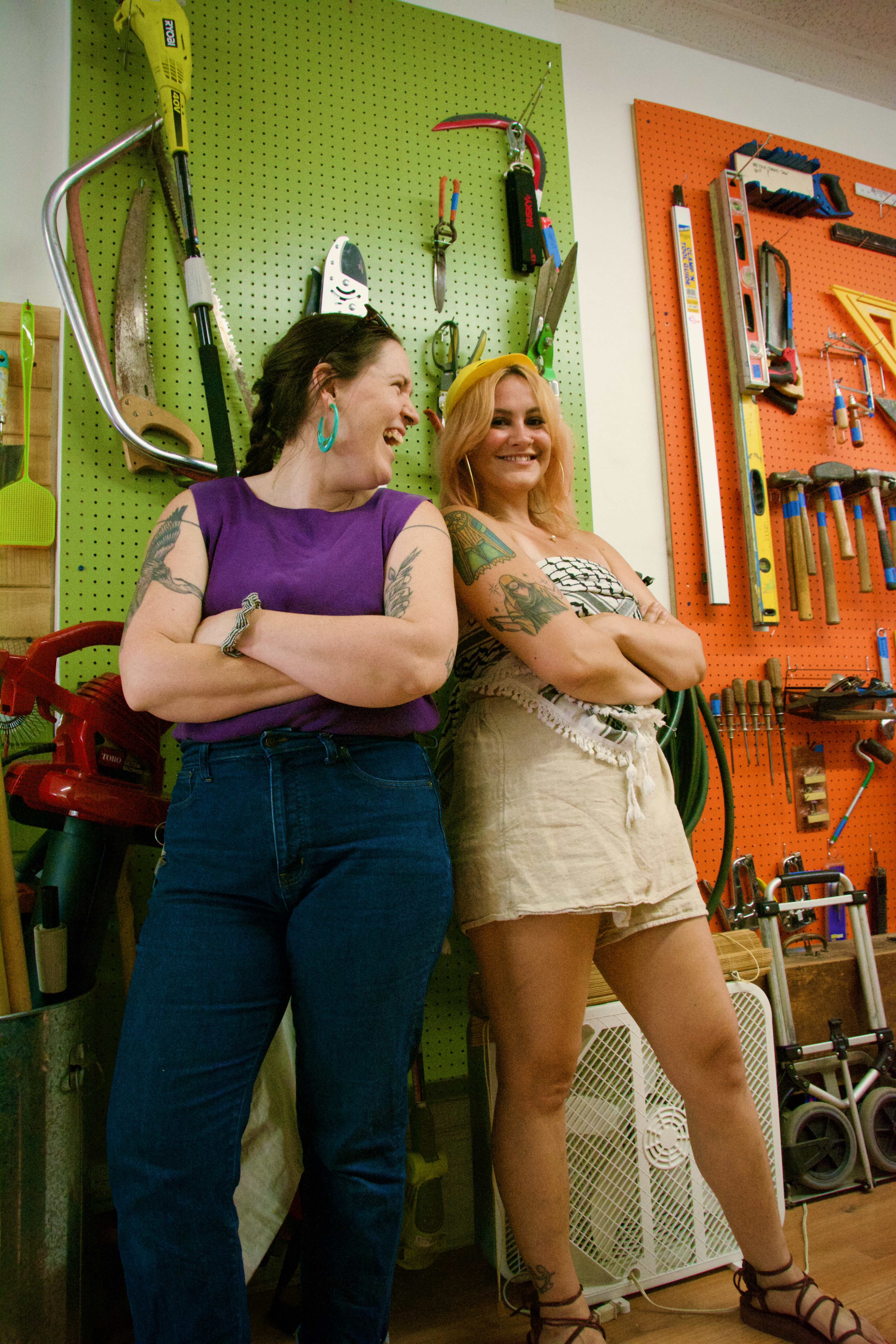
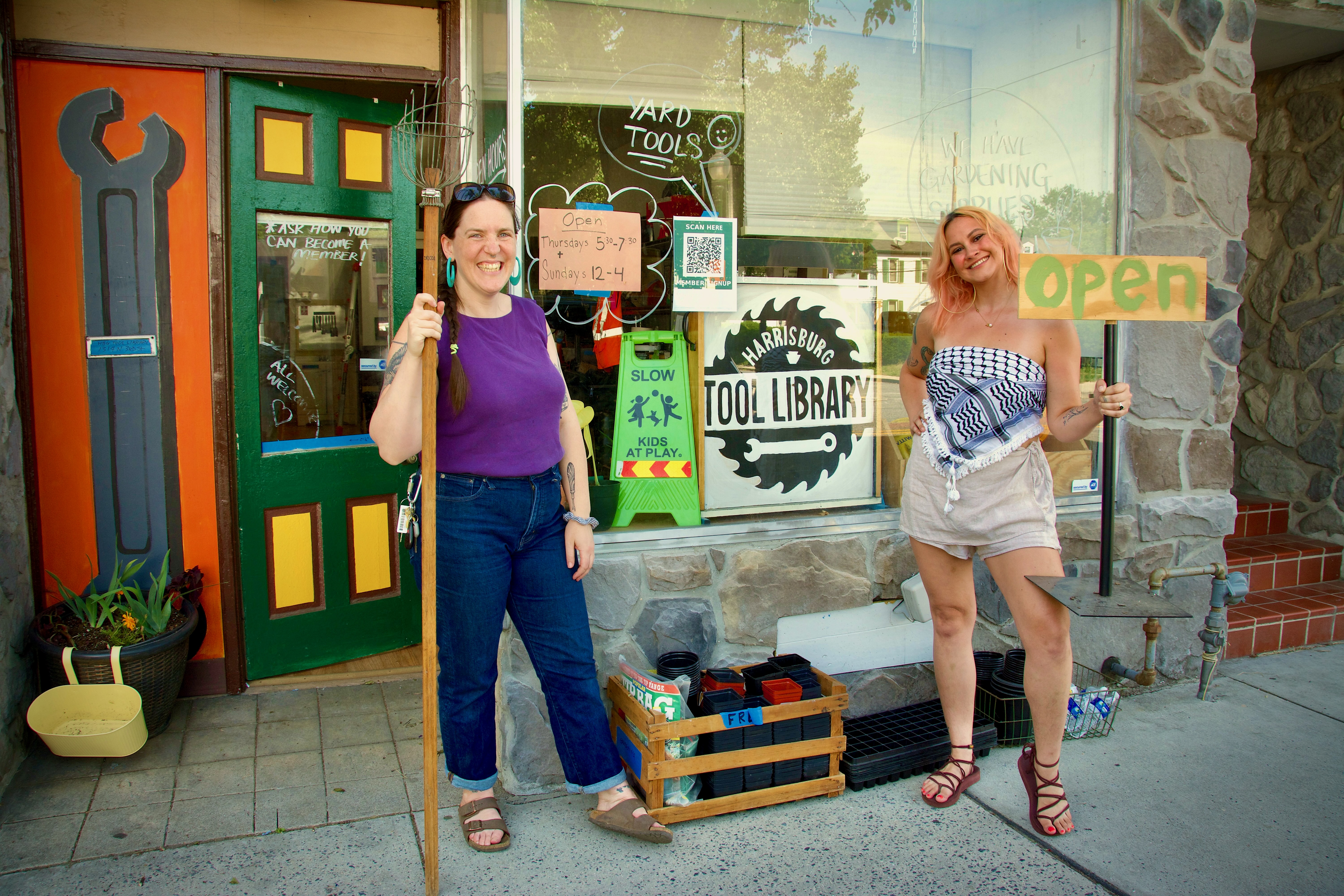
Kate Lally and Veronica Adams, Tool Library president and vice president

Amy Dunshee and her husband pulled up to the Harrisburg Tool Library as soon as it opened at 5:30 p.m. on a Thursday.

After 30 years with a carpentry workshop off Fishing Creek Valley Road, they were giving a truck bed’s worth of tools ahead of an upcoming move, excited to donate supplies that had served them well.

According to Kate Lally and Veronica Adams, the library’s president and vice president, hundreds of tools have been donated like this by dozens of supporters.

Adams said that a flurry of donation drop-offs in the first few minutes after volunteers open the doors has become the norm.

“It’s kind of beautiful to be interacting with someone and just knowing that they chose us and not anywhere that could be easier,” Adams said.

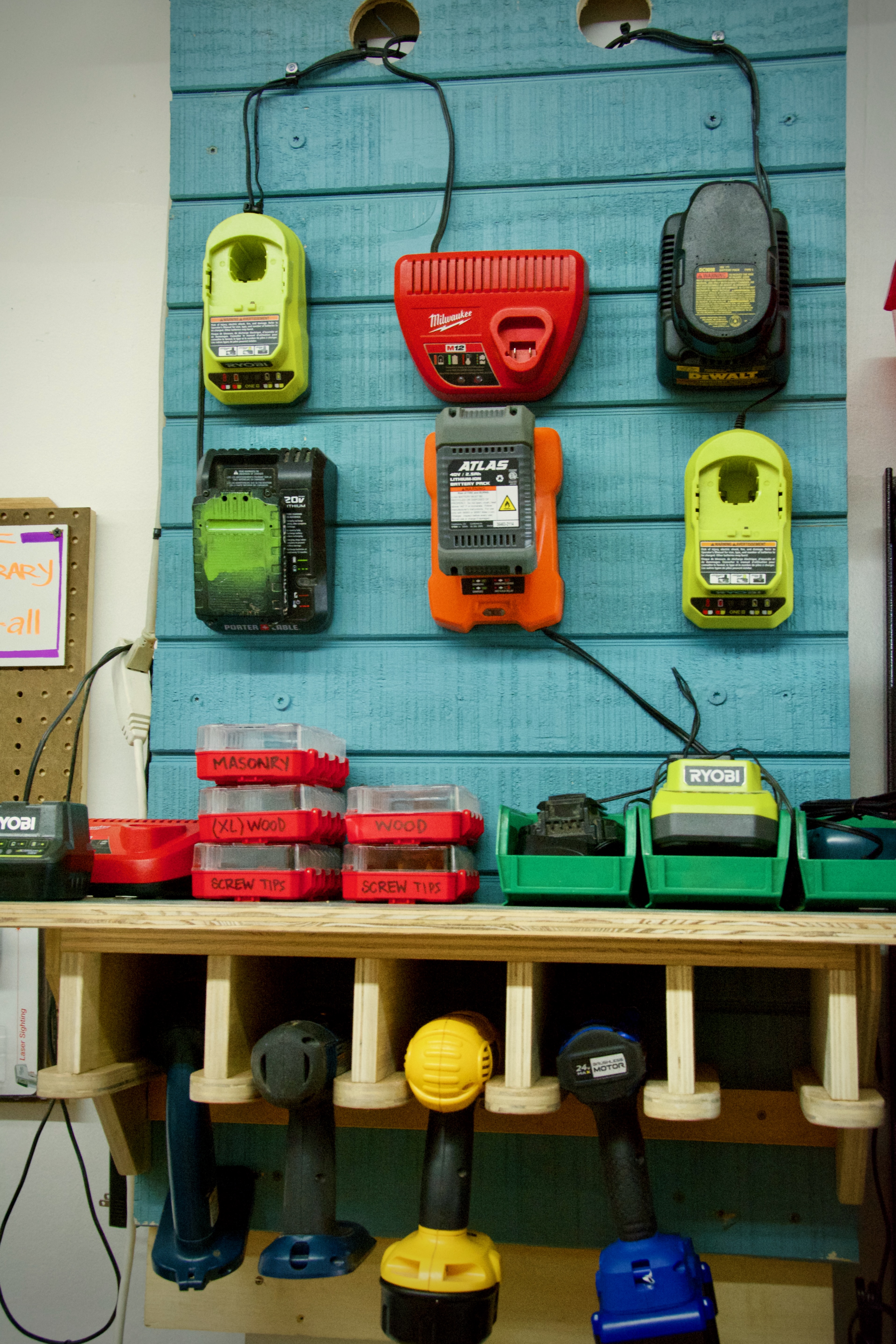
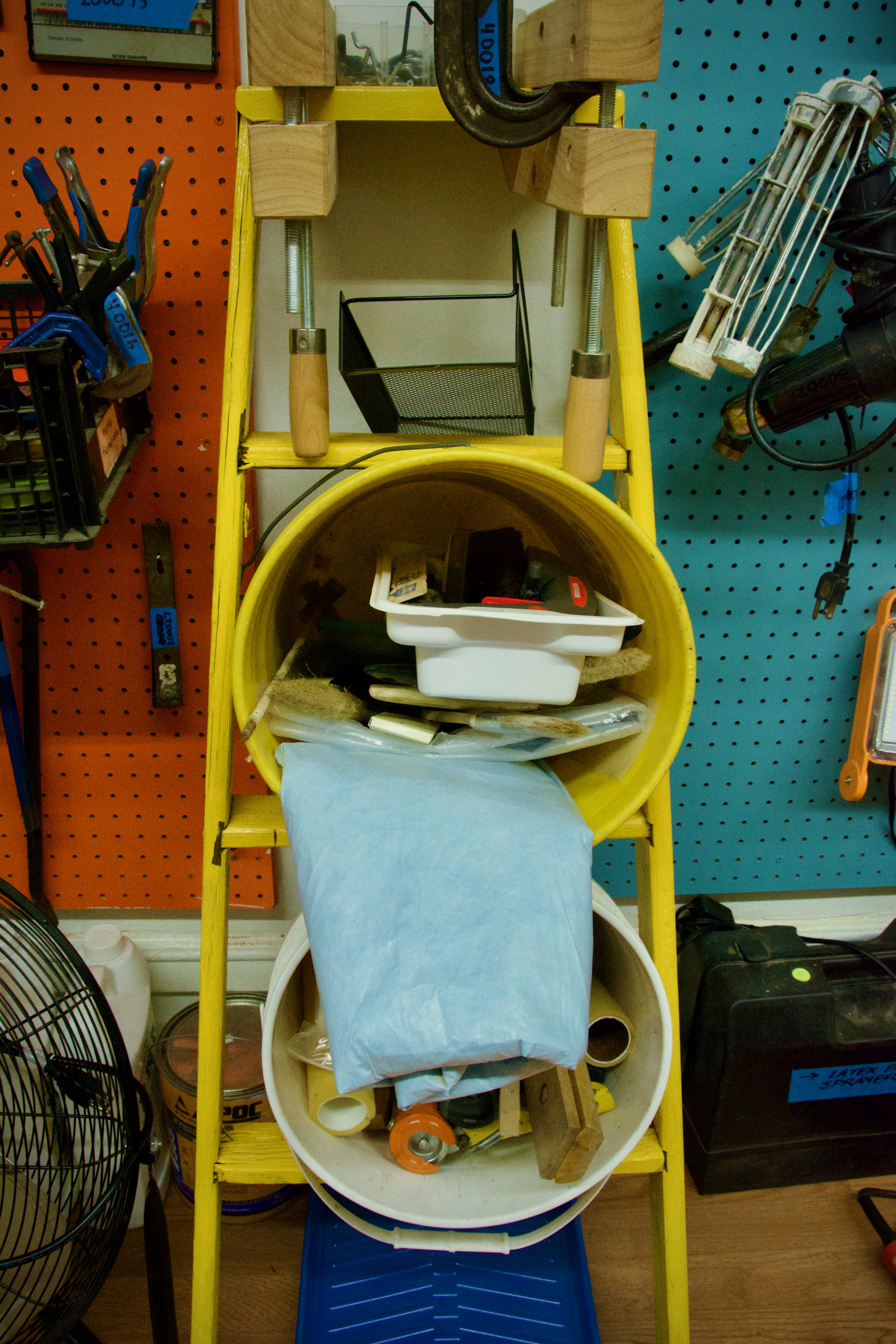
With an army of tools arrayed in its small, 600-square-foot space, the library now takes “Wish List Only” tool donations and has shifted its strategy to seeking monetary donations and memberships—the latter of which currently occupies Lally’s focus.

“We want the resource to exist, and we want people to use it,” she said.

Phil Wells, board director at the Tool Library

Homegrown Idea

The library is the first of its kind in Harrisburg. It began asking for donations (in the form of both money and tools) in October 2025. It opened its doors last January, but its conception began long before, at a 2024 pop-up market by Plant Family.

It was there, by coincidence, Adams overheard Lally, her friend and neighbor, talking about how she wanted to start a tool library for the city.

She jumped into the conversation.

“I turned around, and I was like, ‘Me too!’” Adams remembered. “I was like, ‘I know how to do that. We could do that together.’”

Soon after, they assembled a group of other interested neighbors and had their first meeting around Lally’s kitchen table, building out their vision as an organization.

A field trip to the Carlisle Tool Library then provided a spurt of motivation. Its organizers talked them through available resources in what Lally described as the typical collaborative spirit of tool libraries everywhere.

“People who are doing this nationally and globally only want there to be more tool libraries and are interested in sharing what they’ve learned,” Lally said.

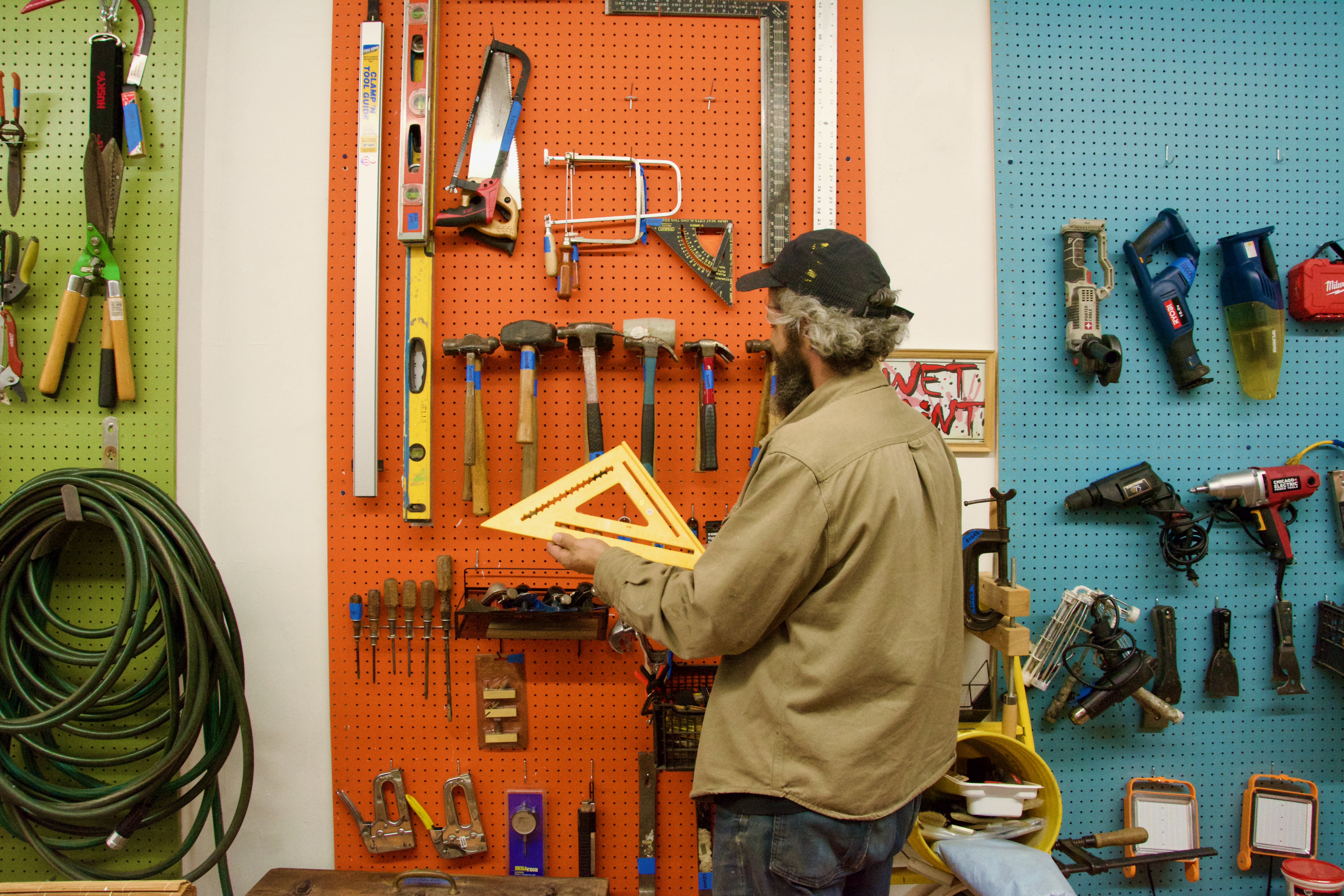
Tool Library power tools

Months later, the Harrisburg Tool Library’s organizers registered as a nonprofit and picked an easily accessible location, leasing a space on N. 3rd Street in Midtown.

“It was a priority for people to be able to access our building physically,” Lally said. “It is accessible for wheelchairs and strollers and also a central location in Harrisburg.”

Connections she made talking with others at her children’s daycare, Little Amps and other local spots helped them not only get the space, but garner funding in the form of a $25,000 state grant.

To Lally, such connections represent the spirit of Harrisburg.

“When you say that something is happening, people tend to say, ‘How can I help?’” she explained. “They want to be involved. They want to be connected. They want to put their mark on something.”

Patrick Frownfelter, tool librarian

Board by Board

The library is run by five board members and “at least two handfuls” of tool librarians, according to Adams.

“Since January, our librarians have been coming every single week we’ve been open,” she said. “They’ve been helping us practice the systems, fail the systems—make it better.”

Patrick Frownfelter is one of these librarians. An actual librarian by training, he has developed a Dewey Decimal “without the decimal” System for categorizing the library’s stock, building out categories for gardening, carpentry, standard hand tools, plumbing, electric and more.

“You go from hand tools to hammer to claw hammer—that kind of thing,” Frownfelter explained.

The Midtown resident said that he loves volunteering because he feels the tool library is something the city needs.

“Who wants to spend $300 for a tool you’re going to use once?” he said.

Tool Library inventory

As of early June, the library had 66 members. According to their data, over half live in Harrisburg or the surrounding east shore. A smaller percentage come from the west shore, including towns like Carlisle, Lemoyne and New Cumberland.

Sliding-scale annual memberships, ranging from $1 to $250 per year, allow people to pay what they can afford to belong. People evaluate for themselves and choose a contribution based on their ability to meet all their basic needs, their job stability and their existing debt. Once a member, they can check out any tools from the library’s catalog at no cost.

Frownfelter himself saved money by checking out a toilet installation kit a few months back.

Lally said that the library doesn’t currently have limitations on how many tools somebody can check out at a time.

“Right now, we’re operating from an abundance perspective,” she said. 

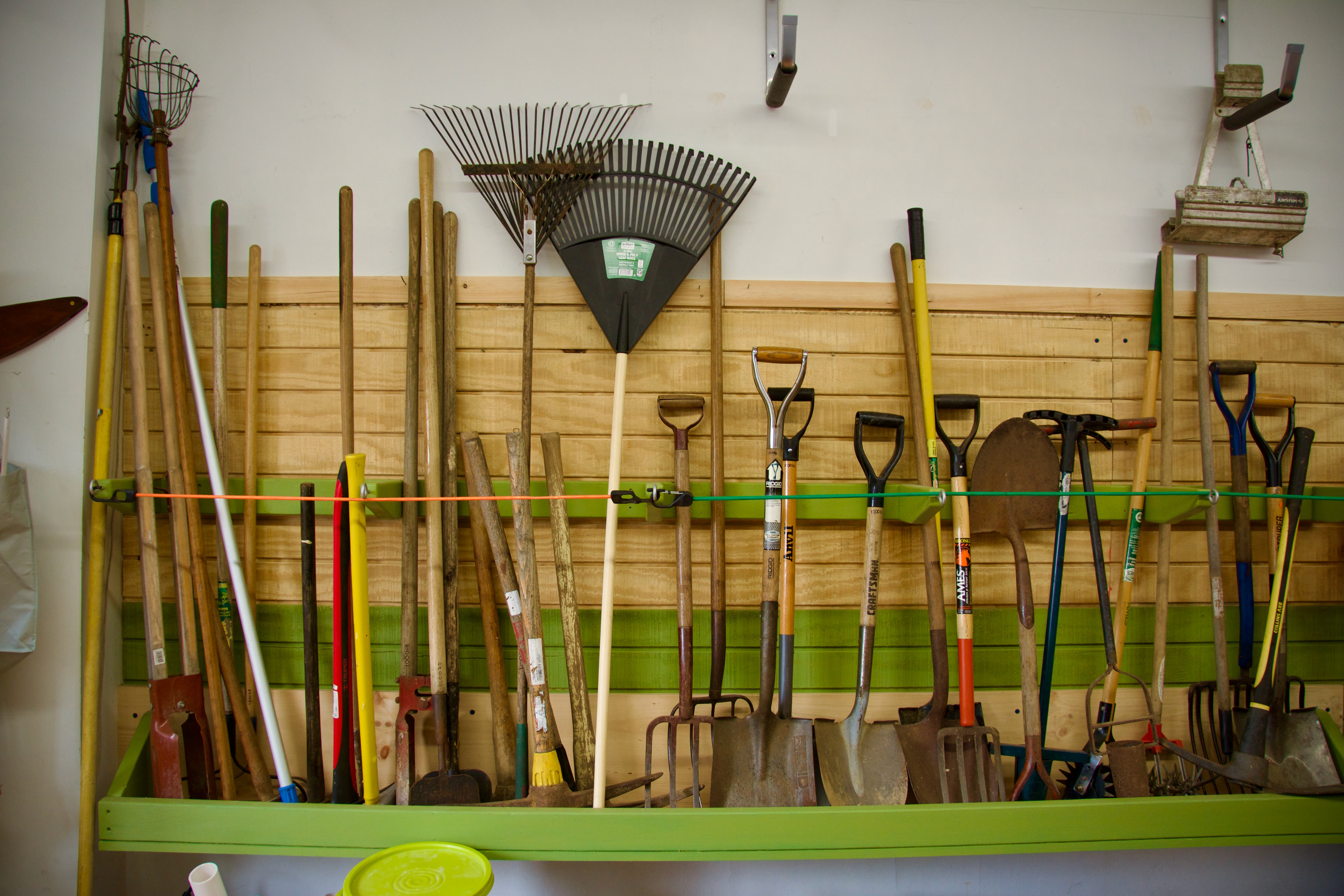
Tool Library gardening tools

Building the Plane

Lally and Adams emphasized that, despite their lead roles in the organization, they don’t necessarily know much about using the tools themselves—it was the mutual aid aspect of tool libraries that lured them in.

They enjoy untraditional offerings in the library’s collection, like fruit pickers and canning pots, while other board members are more tool-informed, they said.

Namely, Lally’s husband, Phil Wells.

“I’ve kind of done it all,” he said. “Handyman stuff, commercial work.”

Wells, who serves as the library’s board director, began working in construction at 16 and has fixed up things all over the city—working at the Broad Street Market, the Millworks and the state Capitol, and on buildouts at both Elementary and Little Amps Coffee locations.

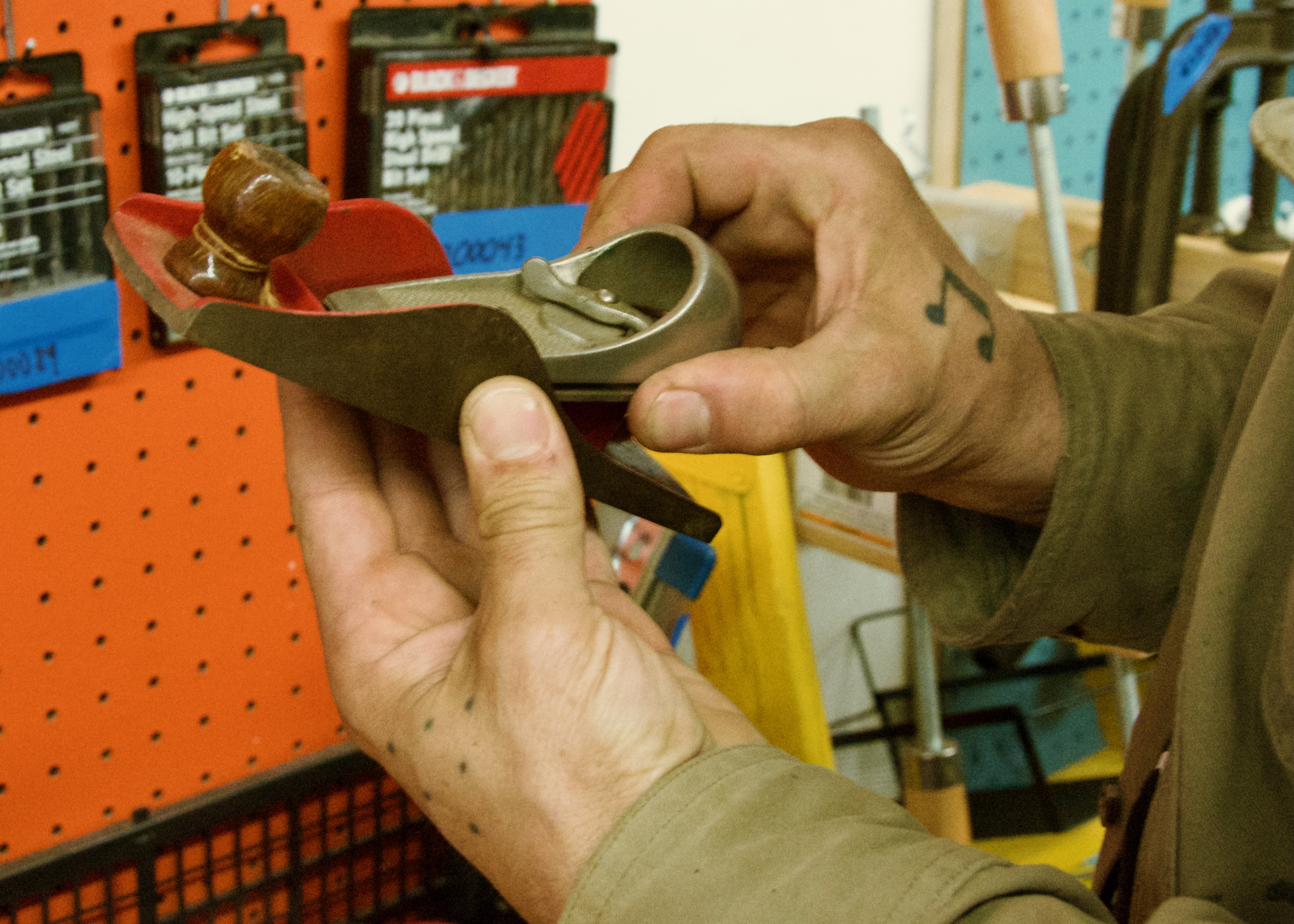
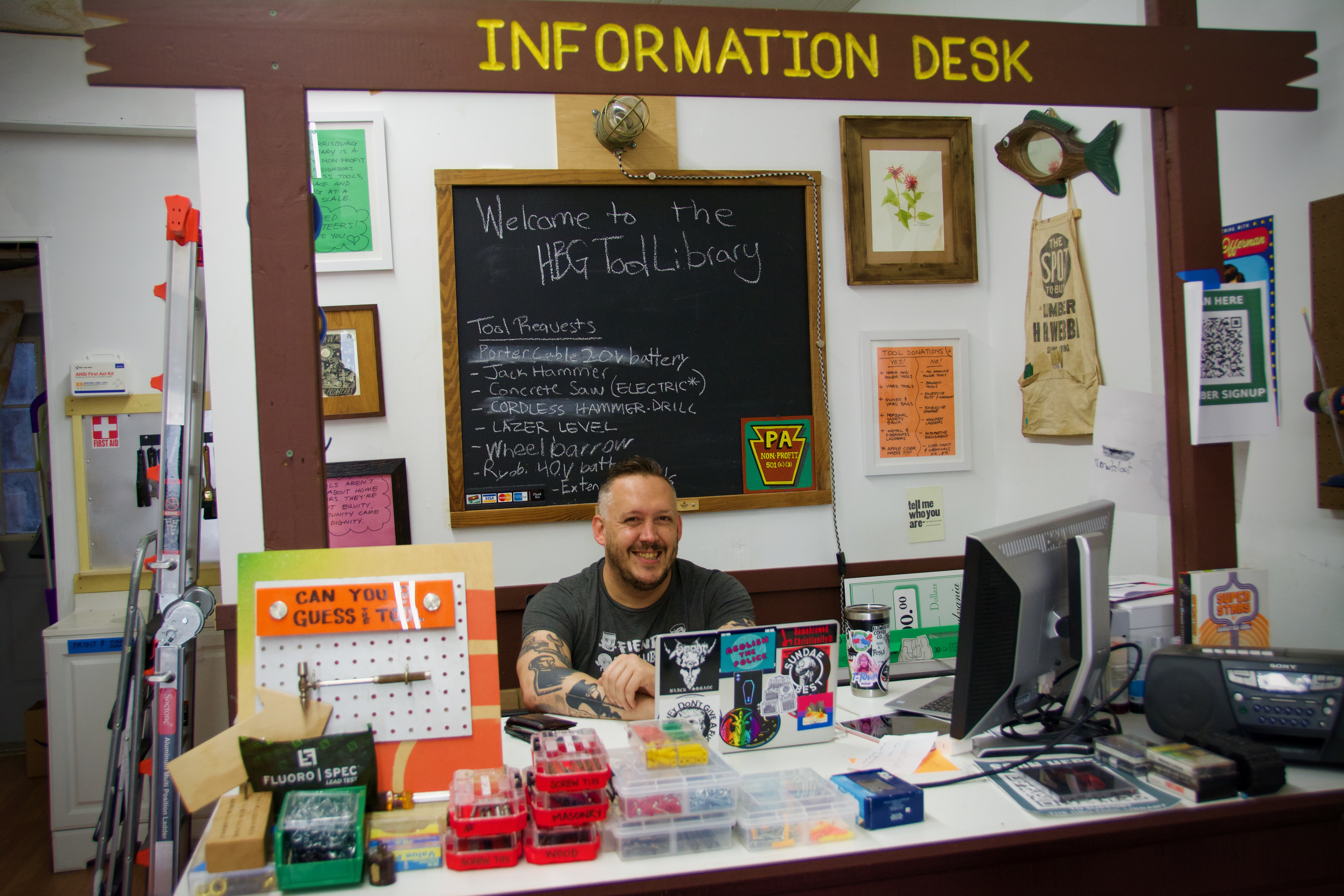
He also built out the library’s space with pegboards, shelving and an information kiosk.

“I’m self-taught in a lot of ways,” Wells noted, including his extensive knowledge of how to use and repair tools.

His construction experience helps him advise members who might be unsure what tools they need for projects when they come in. He’s shared his thoughts, for instance, on the difference between drilling into a brick wall versus drywall and what type of fasteners someone would need for each.

Phil Wells holds a tool

“When I was here last week, we had a woman come in looking for a palm sander and extension cord, and I kind of went through the palm sanders and got her one that is easy to use,” Wells said.

This type of sander can range from $40 to $250 new, but the library has a wide selection available for members. It offers a good example of the utility the tool library can provide for someone who might not use a palm sander regularly. Once a home project is complete, the member takes the tool back to the library for another person to use.

“Our main focus is just helping renters and homeowners fix their homes,” Wells explained. “There’s really very limited resources for specifically Harrisburg city residents to repair their homes.”

Adams explained that most homes people buy in the city are over 100 years old and require regular maintenance.

“The homes that people can afford are homes that are not renovated,” she said. “So, we see this as an opportunity to provide for people who otherwise wouldn’t be able to own a home or people who wouldn’t be able to keep their homes.”

While only 36% of Harrisburg residents own, according to the most recent census data, the roughly 63% of city renters could also benefit from taking out needed supplies.

“Our goals are to keep our neighbors and our community safe through self-sustainability and interdependence,” Lally said.

This year, the Tool Library’s big goal is to add more members and get those who have joined comfortable using it.

“I want tools to be constantly in and out,” Lally said.

While both Adams and Lally had community organizing experience coming into the Tool Library, they emphasized that something like this can be done by just about anyone.

“The biggest issue is just the ability to bring people together and work together strongly as a team,” said Adams, who works professionally as a nonprofit consultant.

“It’s not always easy,” she said. “It’s like you’re laying down the railroad tracks while you’re reading the manual on how to operate the train.”

“Building the plane while you fly it,” offered Lally.

But it can be done.

“With focused and intentional conversations, any neighbors can come together and create something like this,” Adams said.

Kate Lally and Veronica Adams, tool library leadership

The Harrisburg Tool Library is located at 1314 N. 3rd St. in Harrisburg. To learn more or become a member, visit hbgtoollibrary.com.

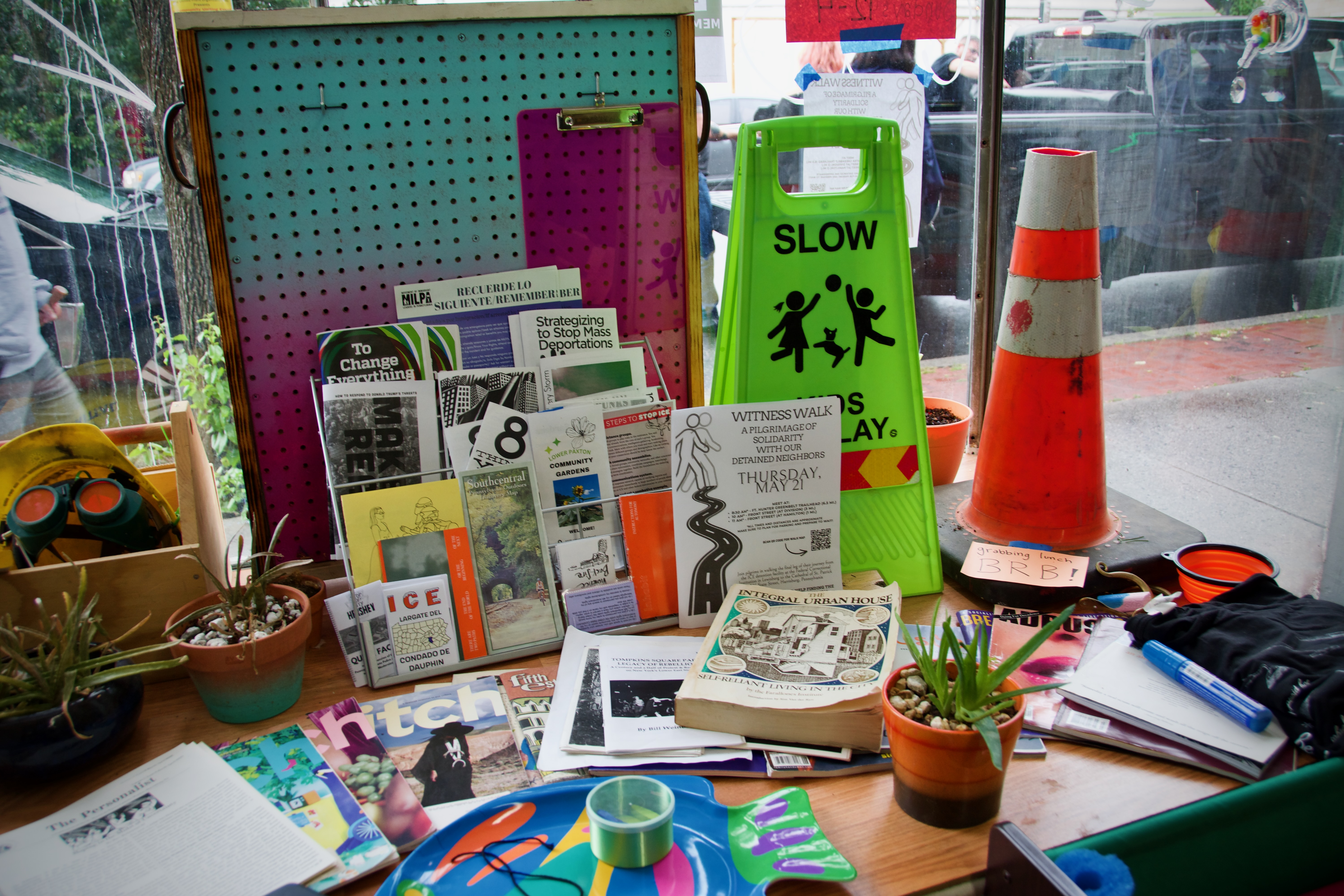
Harrisburg Tool Library reading materials

Tool Time

Hours
The Harrisburg Tool Library is open on Thursdays from 5:30 to 7:30 p.m. and Sundays from noon to 4 p.m. at 1314 N. 3rd St. in Midtown Harrisburg.

Inventory
Only some of its inventory has been catalogued online by its all-volunteer staff. So, the best way to find out if they have something is to show up in person and ask.

Volunteers
The organization is currently looking for more volunteers, particularly those with community organizing or workshop programming experience. Interested parties can fill out a form on its website.

Membership motive
The Tool Library is also interested in hearing from the public about what tools might motivate them to join. To add input, email [email protected].

If you like what we do, please support our work. Become a Friend of TheBurg!      
Continue Reading

Essential Link: M28 Ministry offers stability, housing amidst addiction recovery

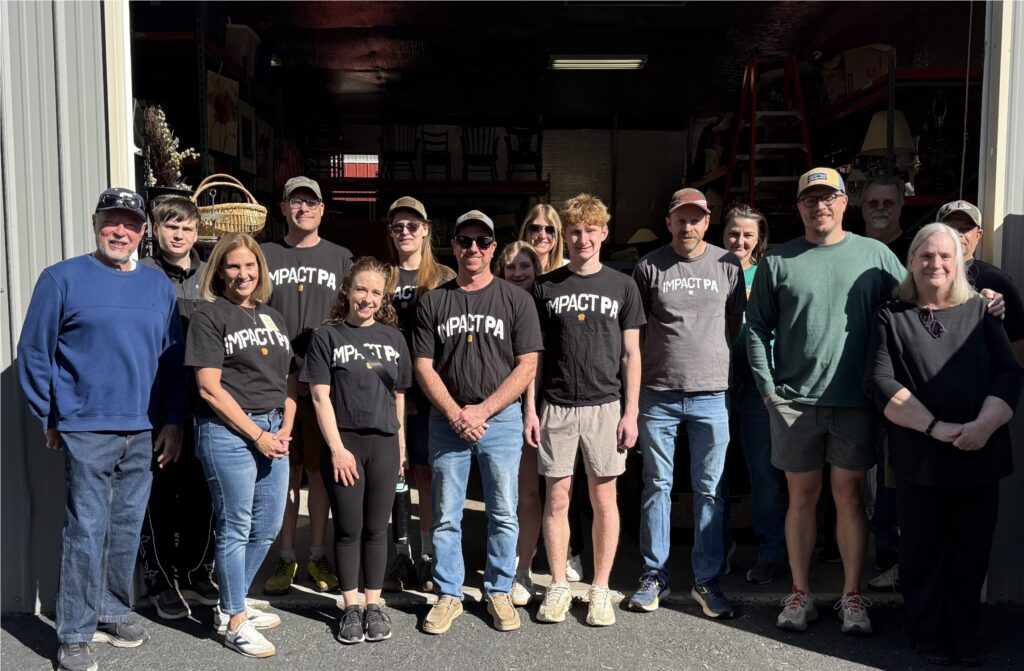
Impact PA Day. Volunteers organized M28’s House2Home warehouse and delivered furniture and goods to people in need.

Jimmy Schambach Jr., executive director of M28 Ministry, witnesses each day how difficult addiction recovery is for his clients.

The 12-month relapse rate for substance use disorders is upwards of 60%, according to worldmetrics.org via the CDC. Of those, around 60% occur during the first three months.

Schambach Jr., 38, of Camp Hill, is determined that an ongoing housing crisis in central Pennsylvania shouldn’t add to recovering individuals’ difficulties.

That’s why M28, a Cumberland County-based nonprofit, has acquired Esther’s House, a four-unit apartment house in Mechanicsburg that will provide “dedicated, stable living for men and women in recovery,” according to Susan Ewing-Rathfon, an M28 board member.

M28 officials note that stable housing serves as an “essential link” to successful addiction recovery. Schambach Jr. said that he expects that M28 will accept its first of four Esther’s House residents “in the next two to three months.”

Esther’s House also complements Gov. Josh Shapiro’s Housing Action Plan, a directive for expanding affordable units and addressing Pennsylvania’s continuing housing shortage.

M28’s acquisition was made possible by a $416,000 grant from the Cumberland County Housing and Redevelopment HOME Funding program, a two-year partnership that supports housing stability and long-term recovery.

With the property’s acquisition, M28 now seeks the community’s help to prepare the four one-bedroom units for occupancy. Work includes fully renovating one unit, with essential repairs and updates for all units, including furnishings.

But really, Esther’s House is only the tip of a proverbial iceberg of all the services M28 provides to the area’s recovery population since its founding 13 years ago by Schambach Jr.’s father, Jim Schambach Sr., the organization’s director emeritus.

Schambach Sr., 74, a former pastor of Christian Life Assembly in Camp Hill, named his ministry after the Bible passage, Matthew 28, which recounts the resurrection of Jesus, saying, “I am with you always, to the end of the age.”

“I believe that God wanted me to be a pastor and take care of his flock. I’ve done it for 45 years,” said Schambach Sr., of Lower Allen Township. “It’s been a joy to be part of their lives and see them change from instability to stability and then to community.”

M28 guides around 80 people per year toward sobriety through its discipleship, coaching and mentorship programs.

“I do a lot of coffeeshops and lunches (with our clients). I have lots of people I consider friends in recovery, and we keep those relationships even after they’re done with the program,” Schambach Jr. noted. “When we first meet with men and women, we tell them that you can’t lie to us, and, also, we’ll be in your life for as long as you want us to be. One of the biggest things in recovery is community.”


Beautiful Thing

About “60% to 65%” of program participants stay sober for more than a year in recovery, far better than national statistics, according to Schambach Jr.

“It’s such a beautiful thing to see when their hope rises and they move forward,” Schambach Sr. stated.

Through its House2Home furniture distribution program, M28 has served more than 1,679 families in central Pennsylvania undergoing life transitions. In addition to guiding those journeying to sobriety, M28 collaborates with other nonprofits in Dauphin and Cumberland counties, such as the Jewish Family Service of Greater Harrisburg, to aid in the resettlement of refugee families.

Schambach Jr. said that 70% of M28’s funding is obtained through individual donations, with further help from various foundations and a Cumberland County Opioid Settlement Funds grant. Since 2022, the county has received settlement funds and will continue to do so through 2028 as part of national agreements with pharmaceutical manufacturers and pharmacy chains to address opioid misuse and overdoses.

Schambach Sr. said that one of M28’s biggest challenges is that the organization doesn’t always have enough funds to meet clients’ requests.

“For example, we don’t always have access to an e-bike,” he noted.

Schambach Jr. stated the organization’s biggest challenge is “society’s general perception of people with addiction.”

“There’s lots of judgment out there,” Schambach Jr. said. “People think it’s a choice, and it’s not. We try to provide education.”

For more information or to donate to M28 Ministry, call 717-610-4645 or visit www.m28.us.

If you like what we do, please support our work. Become a Friend of TheBurg!      
Continue Reading

Kibble Assist: Groups, individuals make sure Fido gets fed

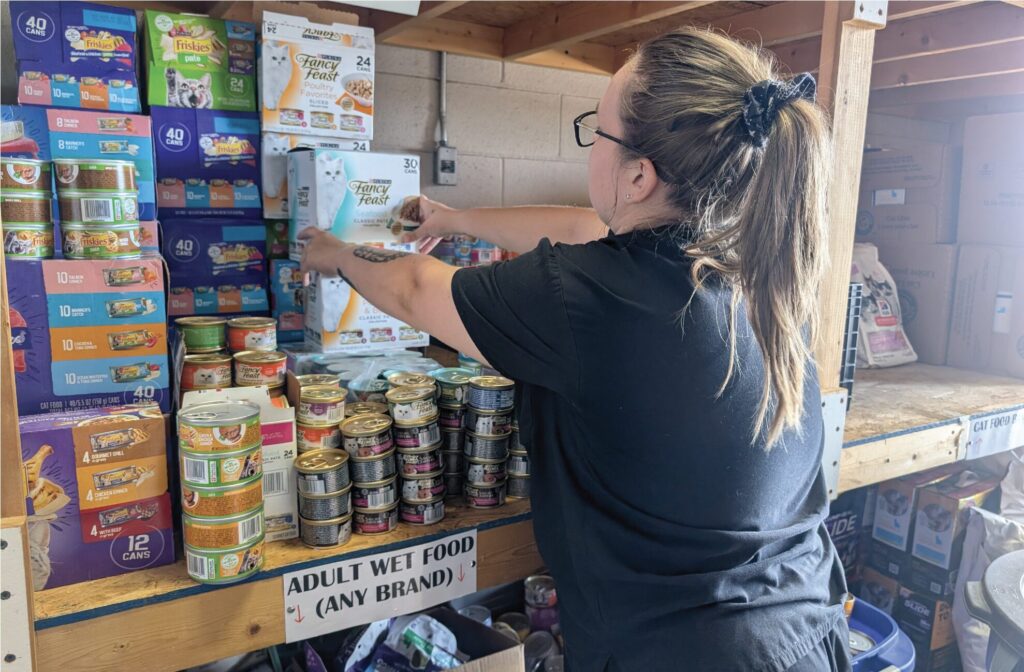
Pantry stocking at Humane Society of Harrisburg Area. Photo courtesy of Humane Society of Harrisburg Area.

On a visit to Harrisburg Area Food Pantry, Wally Nieves of Steelton selected meat, bananas and a bag of dog food that had just been put on the shelf.

The dog food would last her two-pound toy chihuahua, Cleo, quite some time, she said gratefully.

“The way the money’s tight right now, you have to think about what you’re going to buy and what you’re going to eat,” she said. “Healthy food costs a lot.”

In 2025, American pets gobbled up $67.8 billion in food. Well, cats probably sniffed at half of theirs, but nonetheless, pet owners shell out that money—more than $300 per pet per year—even as inflation and soaring gas prices squeeze household budgets. Half of all pet owners struggle with the everyday expenses of food and care, but four out of 10 will choose their pets’ well-being over their own, according to the ASPCA.

In the Harrisburg area, animal rescues, volunteers and food pantries are filling the gap. They provide food that could prevent surrenders and that helps pet owners, including the homeless, care for their fur babies through good times and bad.


A Godsend

Retired Williams Valley School District Superintendent Diane Niederriter was volunteering for two pet rescues when she noticed that people often donated pet food and supplies after their pets died.

The rescues couldn’t use every donation, so “in lieu of throwing it away, I decided there’s got to be an avenue out there to get this into the hands of people who can really use it.”

As Niederriter started gathering donations, word got around to neighbors, friends, businesses, pet stores, nonprofits and rescues.

“I will find a place for it,” she pledged.

By the summer of 2024, she started weekly runs of pet food and treats to the Harrisburg Area Food Pantry, operating from the Harrisburg Area YMCA Camp Curtin branch.

Her Wednesday drop-offs are so eagerly anticipated that some clients choose that day to make their people-food visits. In 2025, Niederriter brought about 10,000 pounds of pet food. She buys some herself, on the grounds that, “I retired seven years ago, and I have enough. I love animals and just make it my thing.”

On a recent Wednesday, the 255-pound delivery filling the ginormous trunk of Niederriter’s car was heavier than usual because some donated canned food made it into the usual supply of dry food.

“It’s only a Ford Fusion, but as long as it holds golf clubs and dog food, I’m good,” she remarked.

When she gets large bags, such as donations of returned dog food from Susquehanna Township pet store Abrams & Weakley, she will repack them into smaller bags. Sometimes, neighbors whose pets snub a new food put the still-good rejects on her porch.

Pantry clients can usually get one bag of dog and cat food. How far it goes depends on the pet’s size, but recipients appreciate the help with the family food budget, said Harrisburg Area Food Pantry Executive Director Deidre Lenker.

“Our model here is to give a small amount to as many as possible,” she said. “This isn’t intended to feed your dog for a month. Have a little, let the next person have a little.”

For documentation purposes, Feeding America calculates a fair-market value of $1.97 per pound of people food distributed by pantries. The Harrisburg Area Food Pantry did its own market sampling and came up with $2.35 per pound of pet food.

“So ironically, pet food is more,” Lenker said.

Few people have the time and vehicles to collect and distribute pet food, said Niederriter. Lenker and the pantry are “a godsend to the people here,” she said. “I bring it, and she hands it out.”

“I’m telling you, it goes fast,” Lenker chimed in. “It never lasts more than four days.”

“I could bring double,” Niederriter added, “and it would be gone.”


Definitely Helpful

About twice a month, Amber Ribera gets a call from Niederriter offering pet food that Ribera can share with the unhoused people of Harrisburg.

Longtime volunteer Ribera, of Hummelstown, can’t put a number on the people she helps every week at Harrisburg’s Miracle Community encampment and around the Dauphin County Courthouse in downtown Harrisburg.

But she believes she could be channeling Niederriter’s offer of food, treats, beds and jackets to some 20 cats and 20 dogs.

“Whatever Diane gives me, I hand out,” she said. “It can vary. I’m thankful for the donations that she does give me. It’s definitely helpful.”

For unhoused people, a pet is “definitely a companion,” Ribera said during an ice run for Miracle Community residents. “In the winter, it’s definitely warmth. Some of our friends were housed and unfortunately lost their room or their apartment and ended up in a tent, and their family member, which is a pet, came with them.”

Area shelters do not allow residents to bring pets, according to Ribera. When she arrives with pet food, “They love it. Some of our friends say, ‘Amber, hold off on dog food right now. I have way too much.’”

Other organizations help weave the fabric of support that keep pet family members with unhoused people, Ribera said, including the Humane Society of Harrisburg area, which helps with spay/neuter, vaccines and licenses.

Ribera tries not to judge the wisdom of unhoused people taking on pets “because I don’t live that life,” but as she works side by side with them, she has never seen a pet mistreated or untended.

“If that’s what gives them company at two in the morning when they can’t sleep, so be it,” she said.


Full Circle

Amanda Brunish was wearing a Humane Society of Harrisburg Area shirt when a man approached her at Walmart.

“I love my dog so much,” he told her.

When all he could afford was hot dogs, that’s what they both ate. He didn’t know what he would have done without the HSHA Pet Food Bank, and now that he was better off financially, he was donating food when he could.

To Brunish, it was a full-circle moment.

“It was so cool to meet someone who used it, was able to keep their dog because of it, and pays it forward now,” said Brunish, the HSHA director of advancement.

In 2025, the HSHA Pet Food Bank distributed about 30,000 pounds of pet food—averaging 2,500 pounds a month, compared to about 3,000 pounds a month so far this year.

“That definitely can be attributed to there being a greater need,” she said, as well as to rising awareness of HSHA services. “With the economy and the way that it is, it’s certainly harder for people to be able to meet the needs of their pets sometimes, so we want to be able to bridge that gap to keep pets in their homes.”

When filling the gas tank consumes big bucks, pet food purchases become a challenge, and HSHA can help those “in an in-between situation with their budgets,” she said.

The food bank and other supports, such as HSHA’s expanding low-cost veterinary services, dovetail with the HSHA mission—not only to shelter and find homes for pets but to help them stay there.

“When people think shelters, they think of adoption, which absolutely they should, but the other part of the coin is, how do we keep animals in the loving homes they already have?” said Brunish. “That’s offering safety net services.”

Pet food suppliers include individual donors, local organizations and Mission Central, said Brunish. HSHA is grateful when businesses hold pet food drives, supplying food destined for shelter animals and, sometimes, the food bank.

“People donate great food,” she said. “It’s definitely an effort to continuously get the food in. The community support helps in so many different ways. When we’re able to keep a pet out of the shelter, that means we can help a pet in need. Everything is tied and connected.”

When someone wonders why Niederriter does her pet food volunteer work or says that people should get a job, she has a response ready.

“Sometimes, it’s their only family,” she said. “If they have a dog and that’s their family, they should keep it. The barrier of trying to feed it—society should help people that are less fortunate.”

Wally Nieves, the Harrisburg Area Food Pantry client, is equally generous with the food she picks up for her tiny Cleo.

“If my neighbor needs some, I’ll pass it on,” she said during her Wednesday morning pantry visit. “People that work, they don’t have this thing to come here to. Since she has puppies, I help.”

For more information on the Harrisburg Area Food Pantry, visit www.hfoodpantry.org.

For more information on the Humane Society of Harrisburg Area, visit www.humanesocietyhbg.org.

If you like what we do, please support our work. Become a Friend of TheBurg!      
Continue Reading

Passing of History: Salutes to the family, the flag mark July 4 weekend in Linglestown

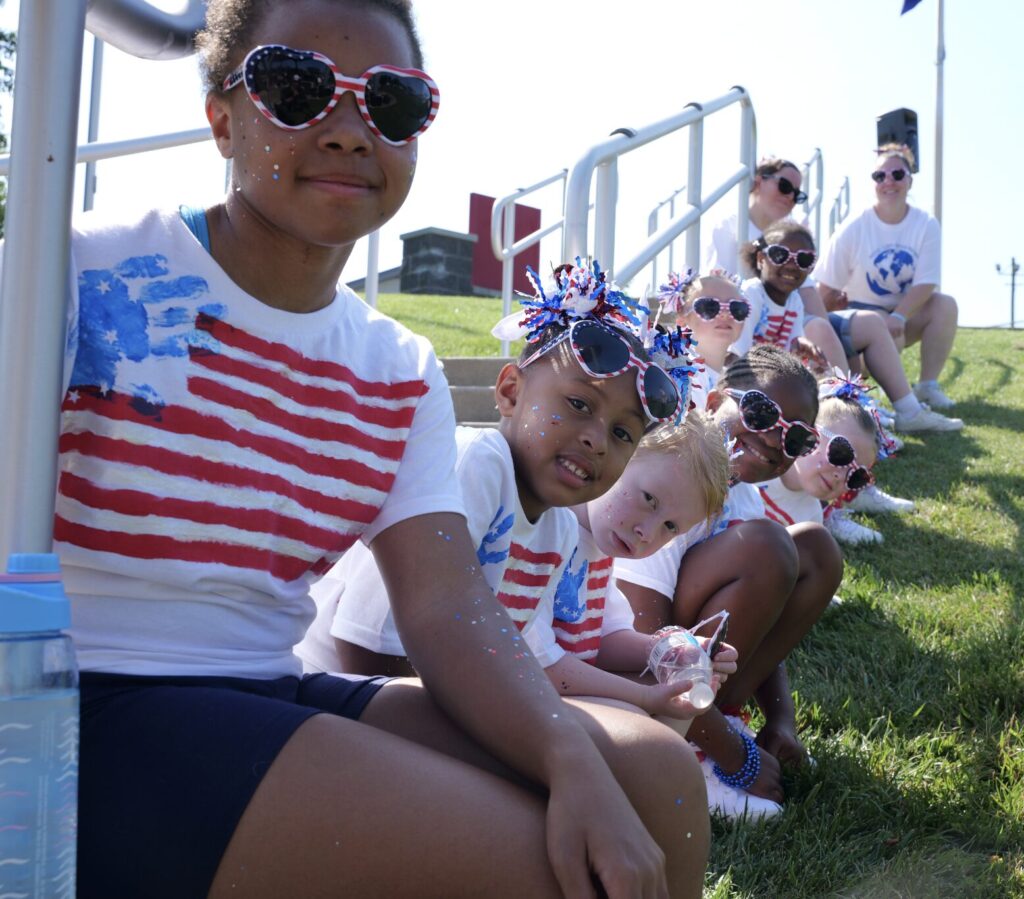
Attendees enjoying ndependence Weekend Family Celebration

For Michelle Zandome, the Independence Weekend Family Celebration is all about “Americanism and children and youth.”

Zandome, a Linglestown American Legion Post 272 trustee, is set to participate in the Lower Paxton Community Foundation’s weekend activities, which include a “Salute to the Flag Celebration” and a “Community Family Festival” on July 4.

Both events are scheduled to take place at Dauphin County Heroes Grove at Brightbill Park in Linglestown.

Of course, this year’s weekend celebration also highlights America’s 250th anniversary. Along with other related observances during the event, Scouts USA and Girl Scouts of the USA each have opportunity to earn an America250 badge.

“I was a kid in 1976 during America’s 200th anniversary. I really loved that celebration,” said John Hanks Jr., a Community Foundation and Independence Weekend committee member. “I love to pass that on to the kids today. It’s the passing of history.”

The celebration weekend sprouts from Linglestown’s 250th anniversary celebration and parade that took place in 2015. Planning for that two-day event began in 2013 with former foundation member Polly Murphy. By 2014, Hanks and Chris Lunden of Make It Happen Events joined the effort, which grew to include more than two dozen local volunteers.

In 2017, the same group took charge of Lower Paxton Township’s 250th anniversary celebration, which led to the formation of the Lower Paxton Community Foundation. The nonprofit organization is “dedicated to fostering a vibrant and connected community by supporting and organizing events, activities and projects” that enrich life in the township, according to the foundation’s website.

In 2019, the foundation launched its annual Christkindlmarkt featuring dozens of vendors around Lingletown’s main square. Meanwhile, this year marks the foundation’s fifth annual Independence Weekend Family Celebration.

This year’s “Salute to the Flag” celebration, on July 4, offers live entertainment by the Enlisted Band, Matthew Dodd Songs & Stories and a reading of the Declaration of Independence by “John Harris, Jr.,” portrayed by Rev. David Biser of the Dauphin County Historical Society.

The event concludes with a ceremony featuring U.S. veterans from each service branch, emergency responders, Girl Scouts and Scouts USA. This year’s “Polly Murphy Spirit of Volunteerism Award” recipients will be announced during the ceremony. The award is given to individuals determined as making “a significant impact” on the quality of life for the Lower Paxton community.

The Community Family Festival is sponsored by MacaroniKID Capital Region with live entertainment by Guitars for Vets of Lebanon, Imaginary Friends Puppet Theater, and a return appearance by Matthew Dodd with Songs and Stories of the Red, White & Blue.

A Kurtz Family Kids Zone midway offers free kids’ crafts and games, Balloon Animals by Steph, a kids’ selfie backdrop, and Whitaker Center’s WOW Van. An onsite “Touch a Truck” program allows children access to fire trucks and emergency vehicles from throughout the greater Harrisburg area.

A “Meet a Vet” event sponsored by American Legion Post 272 is Zandome’s favorite part of the weekend.

“I like getting the kids involved with this,” she said. “The vets will wear identifying stickers, and the kids will look around to get the vets to sign their paper. Prizes are awarded when kids complete and turn in their papers.”

Hanks, president and founder of Make It Happen Events, echoed this.

“We’re concentrating on young families and veterans from all different eras,” he said. “It’s important for children to see these people before they pass on.”

Finally, Hornung’s Ace Hardware sponsors a community picnic with food trucks at the event.

“All of this is free, except for the food trucks,” Hanks said. “It’s really a great way to celebrate America in a fun, family friendly way.”


The Lower Paxton Community Foundation’s 2026 Independence Weekend Family Celebration takes place July 4 at Dauphin County Heroes Grove at Brightbill Park in Linglestown. On Sunday, July 5, at Heroes Grove, Lower Paxton Parks will host a free concert from 4 p.m. to 8 p.m. For more information, visit
www.lopaxfoundation.com.

If you like what we do, please support our work. Become a Friend of TheBurg!      
Continue Reading

Lifts & Licks: French bulldogs mix pets with reps at local fitness center

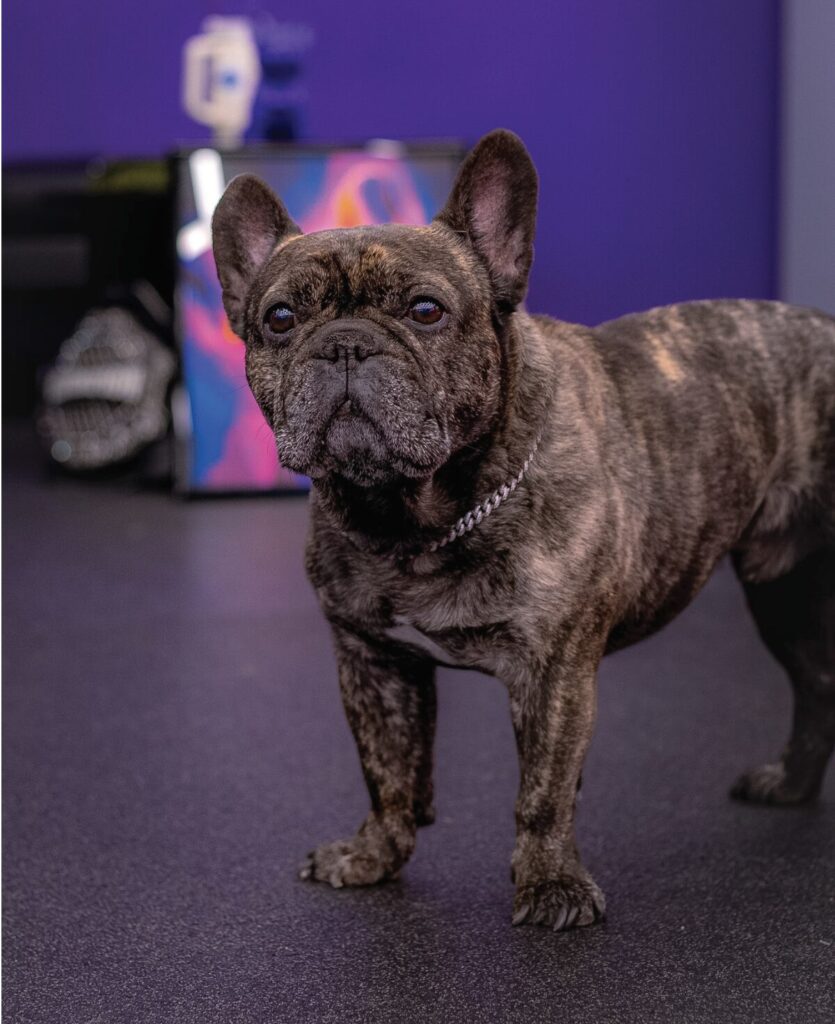
Deebo

Like most college seniors, Noah Parsons didn’t have a lot of money.

Still, he scraped together enough to do something a little impulsive—he bought a dog.

“I got Deebo with all the money I had,” Parsons said. “French bulldogs are known for having extreme separation anxiety, so from that point forward, he was attached to my hip. He goes everywhere with me.”

These days, “everywhere” is Triple P Fitness, a Harrisburg-based business where Parsons is the owner and lead personal trainer. In addition to offerings that include an intense focus on physical health, the gym provides what many clients feel is a boost to their mental health: dog time.

 Through the years, Triple P has earned a reputation for its de facto mascots—three French bulldogs. Besides Deebo, there’s Dream and Dre.

Dream, owned by personal trainer and nutrition coach Lauren Patterson, is what Parsons described as the “nightmare” of the trio—loud, always crazy, always slobbering.

“She is a lot more hyper and charismatic than the other two,” Patterson said. “She keeps the energy up and keeps the other two on their toes. She is a little more aggressive than the other two, but she is also very sweet and protective.”

Dre, meanwhile, is the Parsons-proclaimed, “best dog in the world.”

“He’ll lick your face off,” Parsons said of Dre. “He’s the most upbeat. He just wants to be pet and run around with you.”

The story of Dre’s inclusion is one of Triple P lore.

Tyler Freeman, Parsons’ best friend since eighth grade and a health and physical education professional, was the odd person out when it came to dogs at the gym. In response, Parsons gifted Freeman with Dre as a surprise for his birthday last year.

“I was completely caught off guard because I wasn’t expecting anything at all,” Freeman explained. “They all asked me what my favorite type of cake was. So, when Dre was delivered to me on a Thursday morning in October, he was in a cake box. Once the shock wore off, I was excited because I’ve always enjoyed having dogs around. To be gifted one was one of the best things of my life.”

Different Energy

The presence of the dogs has shaped Triple P’s brand in ways that Parsons never knew were possible. In fact, the dogs’ influence has taken such a hold on the business that its promotional graphics now feature French bulldogs lifting weights.

Knowing that the gym is a place where dogs are not only welcomed but celebrated has done wonders for its popularity.

“Our dogs are a huge part of our brand,” Patterson said. “A lot of our different sale names are named after our dogs. Our equipment is named after them as well.”

Even their new recovery room is French bulldog themed.

“We wouldn’t have it any other way,” Patterson said. “Our clients love our dogs so much, and we feel that makes Triple P Fitness a very welcoming place.”

 While the space welcomes clients who bring their own dogs, Parsons acknowledged that it can be difficult for some pups to mesh in a way that makes everybody comfortable. Even so, a fenced-in area where dogs can hang out has become a calling card of the establishment.

 “People know us as the gym with the dogs,” Parsons said. “As soon as you walk in, all the dogs greet you. It’s part of the experience.”

The marriage of canines and fitness has proven to be an invaluable element to the Triple P practice, in no small part because of what the dogs bring to the equation.

“All the dogs add a different energy to the gym,” Freeman said. “Training can be challenging and demanding, and having dogs around helps create a welcoming and relaxed environment.”

He believes they make the studio feel more like a community rather than just a place to work out.

“No matter what kind of day someone is having, it’s hard not to smile when a dog comes over to say hello,” he said. “They help break the ice, reduce stress, and make the studio feel more inviting.”

Parsons agreed.

 “When we opened, I just thought I’d bring in Deebo with me every day,” he said. “He turned out to be so great and look where we are now. There’s never a dull moment.”

Triple P Fitness is located at 2609 N. Front St., Harrisburg. For more information, visit www.triplepfitness.com.

If you like what we do, please support our work. Become a Friend of TheBurg!      
Continue Reading

Cat Comfort: Mechanicsburg Community Cats offers support, services for area strays

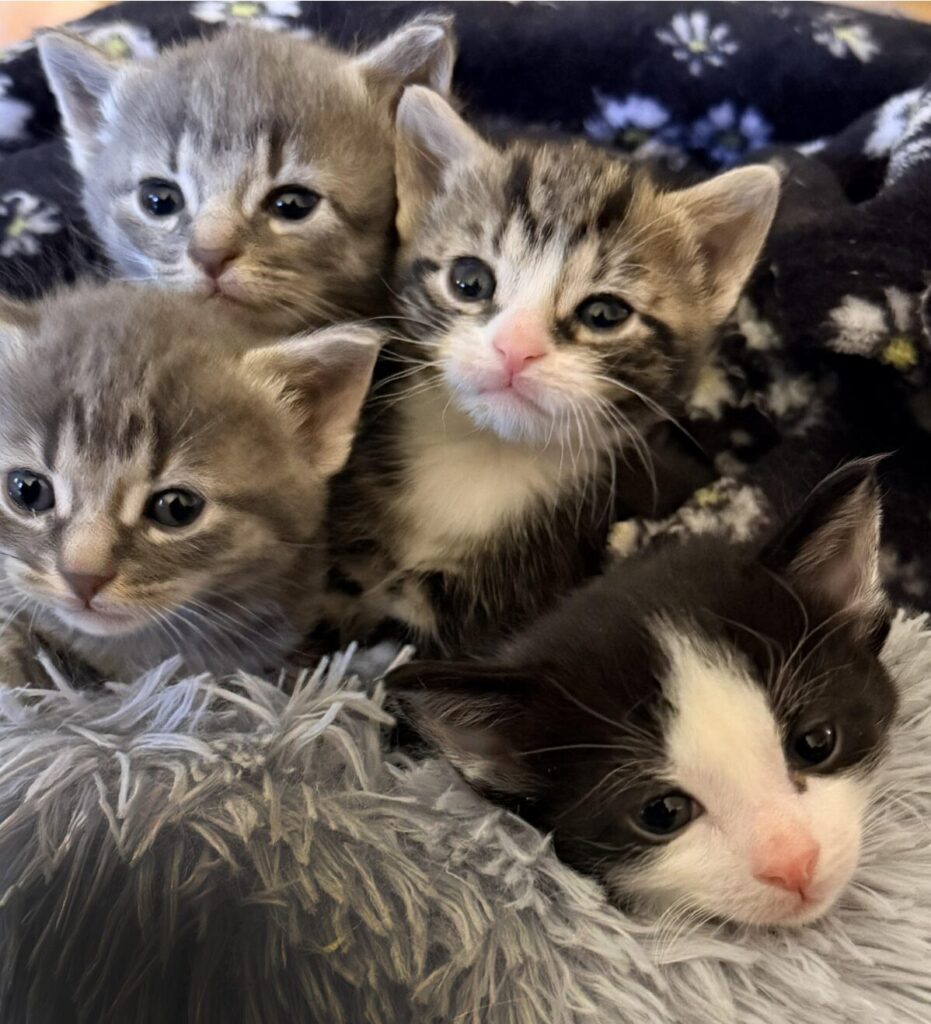
Rescued kittens

Marcy Domen is an animal lover. She had cats as a child growing up in central Pennsylvania, and says they still have a special place in her heart.

When she moved back to the area about 15 years ago, she discovered a litter of kittens in the yard of her Mechanicsburg home. She listed them on Craigslist to try to find them new homes, and another site user reached out asking if she had heard about using the “Trap Neuter Return” (TNR) strategy to help control outdoor cat populations.

Thus began Domen’s work to learn about, promote and educate others about TNR in Mechanicsburg and surrounding communities.

TNR is a comprehensive strategy to humanely address outdoor cat populations and has been adopted by communities across the United States. TNR volunteers capture feral cats so they can be spayed or neutered and vaccinated and then returned outdoors.

The TNR approach prevents suffering among the cats, protects public health, reduces stress on wildlife, and enables communities to redirect desperately needed resources elsewhere,” according to the Nobodys Cats Foundation, which coordinates and implements TNR in 15 southcentral Pennsylvania counties.

Domen volunteers on behalf of Nobody’s Cats as a TNR coordinator and educator, and in 2022, she started a separate Facebook group, Mechanicsburg Community Cats, to help further educate the public about TNR and provide support for local communities. The page has more than 3,500 members and many more regular visitors, she said, showing a high level of interest in the issue.

Cats are by nature domestic animals, Domen said, and they vary in their levels of socialization to humans.

“All cats born outside are lost or abandoned pets or the offspring of them,” she said.

Male cats will travel long distances to find a female in heat, Domen said. The average female cat that hasn’t been spayed has at least two litters of kittens per year, and can have up to four, she said, which means the cat population in a neighborhood can grow quickly.

Domen remembers the first such situation she assisted with in Mechanicsburg.

“I was contacted about a man who lived downtown,” she said. “People were seeing kittens in his yard and being hit in the road.”

She knocked on his door and told him she could help, and the man started to cry. His mother had owned just three cats, he told her, and, within two years, he had 36 living in his yard.

As part of TNR, volunteers feed and provide shelter for the released cats, allowing them to live comfortable lives without producing an uncontrolled number of kittens. This feeding and sheltering piece is important, Domen said.

“If you stop feeding, they will spread out into the community and get into trash,” she said.

Several local townships have recognized the benefits of TNR, and many now even provide vouchers for spay/neuter services. Some municipalities have also changed their ordinances to allow feeding and sheltering of outdoor cats that have been through the TNR process, activities that had previously been prohibited. Domen and Nobody’s Cats continue to work with local municipalities to encourage these types of changes.

Cats that are returned through TNR programs have their left ears clipped and flattened, a universally recognized sign, Domen said.

“Whether you love cats or hate cats, TNR is the best approach,” she said. “It’s healthier for the cats and the community.”

Domen estimates that she has helped trap and return close to 1,000 cats in Mechanicsburg and surrounding townships, and, in the process, assisted hundreds of people.

She said that her ultimate goal is to let people know they don’t have to try to tackle a cat population issue on their own.

“People often feel overwhelmed, but there are resources available,” she said. “Don’t feel like you have to tackle it on your own, there are people who can help. The more we can educate, the better off we are.”

For more information about local Trap Neuter Return resources, visit www.nobodyscats.org.

Mechanicsburg Community Cats is on Facebook.

If you like what we do, please support our work. Become a Friend of TheBurg!      
Continue Reading

Community Comment: Neighboring for Change

There is a wise saying that “it takes a village.”

If you haven’t heard this one before, the gist is that it takes more than one person to do things like raise a child, build a school or change the status quo. Yet, for all the times this adage gets repeated, or however true it may be, we simply can’t assume anymore that people actually feel as though they belong to a neighborhood or that they possess the skills and abilities needed to create one.

The feelings of loneliness, powerlessness and meaninglessness that too many of us experience are a trifecta for a kind of social shipwreck. In 2023, the U.S. surgeon general declared loneliness and isolation a nationwide epidemic in a widely published health advisory. In this report, the lack of social connection was found to increase the risk of premature death as much as smoking 15 cigarettes a day. This shocking finding, however, would have come as no surprise to Mr. Rogers. More than 50 years before the surgeon general sounded the alarm, Fred Rogers was on TV trying to help the nation understand the importance of teaching children how to love their neighbors.

So what can we do to interrupt the powerful forces that are dividing us in our neighborhoods? How can we arrest the invisible systems and structures that create, sustain and perpetuate anxiety and displacement? Here are a few concrete neighboring practices to help us focus locally on what we can do where we are.

First, take a break from consuming headlines that manufacture fear or feature violence. If you can’t quit toxic media cold turkey, try at least not to take the bait by clicking on negative stories that might make you spiral into feeling worse about yourself and others at the start or end of the day. You might reduce some stress if you can create some self-imposed boundaries as to what news stories you choose to read and when.

Second, focus on the work you can get involved in at the local level. At the very least, start by getting to know the names of your neighbors who live right beside you. Share some food to break the ice or simply be intentional about starting a conversation. Little practices like these can go a long way toward strengthening basic social connections within our neighborhoods. Just by knowing the names of those who live around, you can jumpstart the process of transforming a stranger or potential enemy into a neighbor or future friend.

Third, join a group or neighborhood organization that values small and consistent efforts over time to make local neighborhoods safer and more attractive places to live. Activities like planning a block party, picking up trash, or organizing wellness checks on those who are vulnerable won’t usually attract large grants or media attention, but the social connection that comes from working together for the common good can’t be underestimated. These efforts bond social capital that effectively improves the quality of life for everyone while building the connections that neighbors need to feel like they belong and matter in the places they live. Connections like these are vital when tragedy strikes and neighbors become first responders.

Fourth, change the narrative and tell different stories. For example, over 100 employers, community leaders, educators and students gathered in Harrisburg this year for an inaugural “Neighboring Summit.” This event was sponsored in part by the PA Department of Labor & Industry, SCPa Works and C&J Catering. Throughout the day, students and professionals from diverse neighborhoods were introduced to each other. They spent time exploring promising neighboring practices that bring together business and education sectors to address regional workforce challenges, as well as to champion student achievement. Numerous stories of innovative partnership were shared, illustrating how businesses in the Capital Region are neighboring with schools in mutually beneficial and reciprocal ways. New pathways are being created for high school students to earn a living wage ($21 to $25 an hour) after graduation and break generational cycles of poverty as they save to become future homeowners by age 25, if that is a choice they want to make.

If you have an inspiring story of neighboring, consider sharing it with others. These stories can directly confront the destructive myths that are being recycled about our cities and urban neighborhoods—namely that poverty and violence are intractable. Make no mistake: the fights, fires and fatalities in our neighborhoods can’t be glossed over. Tragic shootings are occurring, and poverty both literally and figuratively stunts the growth of our children. However, we can’t be led to believe that these are the defining stories of our people and places. The narrative that our communities are poor and violent and that they will always be poor and violent must be countered by the stories of neighbors who have a prophetic imagination formed by suffering but not defined by it.

Toward that end, we all (regardless of age) are challenged to learn how to become better neighbors. The stakes are too high to fail. If we don’t rise to the occasion, the surgeon general warns that, “we will pay an ever-increasing price in the form of our individual and collective health and well-being. And we will continue to splinter and divide until we can no longer stand as a community or a country. Instead of coming together to take on the great challenges before us, we will further retreat to our corners—angry, sick and alone.”

If you would like to learn more about individual, group or systems level neighboring practices, or if you have a story of how businesses and schools are partnering together to address regional workforce challenges and improve student achievement in your neighborhood, we would love to hear from you. You can contact us online at www.neighboringchallenge.com.

Chad Frey is president and CEO of the Neighboring Academy.

This is sponsored content.

If you like what we do, please support our work. Become a Friend of TheBurg!      
Continue Reading

Peeper, Meet Baby Cakes: Introducing a second cat takes time, technique

“What are we going to do with this cat?” I thought.

The cat in question was a dainty, little tiger-striped female, Baby Cakes, that belonged to my mother-in-law, who had just broken her hip. After surgery and rehab, she would move into assisted living. No cats allowed.

We had no doubt that we would take “Baby” in, but we had plenty of doubt about how our current, not-so-dainty, male, tiger-striped cat, Peeper, would handle this change in his living situation. We knew this much—this introduction would take some time.

Our instincts proved correct.

“Time,” agreed Annika Shoemaker, of Trapped and Tipped cat rescue when asked about the best way to introduce a new cat into a household with a resident cat.

“And that’s the biggest problem,” she said. “People want everyone to, all of a sudden, just be this happy family.”

How much time?

“They need two weeks for their GPS to reset from wherever they’re coming from,” she continued. “So, they’re not only going to have to learn your cat, but they’re going to learn you, your home, your smells, your routine.”

Shoemaker recommends bringing a cat into a “safe room,” a place where the cat can feel secure and begin to learn the home, before they are introduced to the current furry resident.

To begin acclimating the cats to each other, Shoemaker recommends scent swapping. Each cat should have contact with a blanket, then the blankets are switched. This gives each cat a scent introduction before they lay eyes on one another.

With Baby and Peeper, we had one cat on the first floor of our bi-level and the other cat on the second floor, then swapped.

“Let the cat out to kind of get the lay of the land without the other cats,” Shoemaker said. “So, they can get their bearings before my cat is running up to them, because that’s overwhelming.”

Next, allow the cats to meet underneath a door or behind a baby gate. Try and make it a positive experience by playing with or feeding the cats while this is happening.

It’s going well “if they seem curious, they’re not hissing or growling,” said Amanda Shafer, a cat rescue colleague of Shoemaker’s with over 10 years’ experience.

If one of the cats demonstrates a negative behavior, or runs away, they just aren’t ready.

“Then you go back and go slower,” Shoemaker said.

Rule of Threes

Based on Shoemaker and Shafer’s recommendations, I pushed Baby and Peeper’s introduction a bit, allowing them to be face-to-face at about a week. Things went well with no concerning behaviors. Shafer pointed out that some cats will be fine with a quicker introduction.

“Just listen to the cats, because you are still learning the [new] cat’s behaviors,” Shafer said. “I’ve had cats where it looks like they are going to attack, but really they’re just trying to be friends. So, you need to learn the cat too.”

Shoemaker talked about the “threes” rule: three days, three weeks, three months.

“Three days to calm down. Three weeks, they’re starting to look and learning your routine. Then three months is when they feel like they are actually at home and they’re settling,” she said.

If an owner has questions about the new addition, the rescue is a fantastic resource.

“The foster typically knows pretty well how that cat’s going to act, because they’ve already put the time into figuring that out,” Shoemaker said.

If your cat came into the home through someone who found a litter under their porch, or maybe you found the kittens under your porch, the safe room is even more important. The health history of these animals is unknown, and strays can carry an array of harmful diseases that could be transmitted to your current cat, such as ringworm or the deadly feline distemper. Shafer does not advise bringing a stray into a home with another cat in residence, but instead going through a rescue.

Also, it’s not always advisable to add another cat into your home.

“I’ve had people adopt because they want a single cat. That’s all they want,” Shoemaker said. “Then three years later, they would like a second. I’m like, ‘You adopted that particular cat because you wanted one cat. She did not do well with other cats here. Then she’s not going to do it now.’”

And occasionally, the situation just doesn’t succeed.

“Sometimes, it just won’t work. Maybe it’s not in the best interests of that cat to stay in that home,” Shoemaker said. “I would rather that cat come back to me, and I’ll get it in the right place.”

Baby Cakes and Peeper seem to have found the right place. Their introduction produced no cat fights, and they live together harmoniously.

When trying to create a multi-cat household, more time for that feline relationship is better than moving too fast.

“So, you let it [the introduction] go too long, it’s no issue,” Shoemaker said. “But if you try to rush that and there’s a bad interaction, that’s really hard to come back from.”


For more information on Trapped & Tipped, visit Annika Shoemaker’s
Facebook page.

If you like what we do, please support our work. Become a Friend of TheBurg!      
Continue Reading

Fuzzy & Friendly: Go outside, touch grass, meet an alpaca

Diane McCormick

Carey DuRand called for the girl alpacas to be released into the field. Then came the boys.

Santoro, a cream-hued boy with a remarkable resemblance to Sam the Snowman of “Rudolph the Red-Nosed Reindeer,” ambled to the fence, hoping for treats.

 “He’s got a full mustache and beard,” DuRand said. “Cracks me up.”

Looking for a fun and educational summer getaway? One with fuzzy animals with irresistibly soulful eyes?

Try a nearby alpaca farm. Get out in the fresh air. Enjoy the countryside views. Let the kids romp, phone-free. Give a boost to Pennsylvania agriculture, and meet some of the cutest animals on the planet.

“They’re kind of funny looking,” said Karen Nace, president of the Pennsylvania Alpaca Owners & Breeders Association. “They’re furry. People flock to them. Most kids have seen a sheep and a goat and a cow, but they’ve not really seen an alpaca.”


Origin Stories

Alpaca farmers just seem to fall into the business.

Carey DuRand and her family wanted animals suited to their new farm, and they found them at the Pennsylvania Farm Show. After volunteering for nearby Alpacas of York to learn the ropes, they grew a herd of seven—that ballooned to 37, in part, when Alpacas of York asked to board its herd at DuRand’s Shear Heaven Alpaca Farm near Emigsville.

Scott and Cindy Johnston of Starry Night Alpacas, Lewisberry, accompanied a friend to an auction, just to look. When auctioneers led in the adorable Jackson, Scott’s hand went up, “and we bought an alpaca,” said Cindy. Then came the kicker.

“You know they’re pack animals,” someone said, “so you need to have at least two.”

Today, they have two dozen.

Angie Grove, looking for an activity for her daughter, found it on a visit to an alpaca farm. Now a 4-H leader, Grove opened Angie’s Alpaca Paradise in Enola in August 2024. There, I was first greeted by two personable boys, the beautifully spotted Bomber and the sleek black Griffin popping their heads over their stall.

Every week, Grove’s farm hosts 4-H members who tend to assigned alpacas and train for agility competitions.

Tending livestock teaches children how to take responsibility for the health and well-being of animals, including pets, and that there are “good days and bad days, because just like us, animals wake up in a bad mood, and they’re like, ‘No, I’m not doing that today,’” said Grove.

“Kids are our future, whether they want to own a farm in their lifetime or not,” she said. “Working with animals teaches them responsibility. It teaches them that it doesn’t matter what the weather is. They’re coming to the farm. The animals still need fed, and the poop needs cleaned up.”

Alpaca farmers cherish their roles as educators and PA agritourism ambassadors.

“Most of all, I love bringing kids from the city here that don’t really know grass and trees,” said DuRand, whose farm offers stunning views. “The experience and the joy is absolutely what fuels me. It’s even more important now with people being so glued to technology and phones and social media. It’s so important to have opportunities to get people away from that and to be outdoors and see God’s creation.”


What I Learned

Yes, alpacas spit. But usually, only if they’re fighting over food, so don’t get between them.

Don’t walk behind them or touch their rear ends, either. They can kick.

They are native to the Andes Mountains of South America, mostly in Peru, Bolivia and Chile. They came to the U.S. around 1980.

As prey animals, they would naturally shy away from humans, but if you have treats, they’re happy to meet and greet.

They are communal poopers. They do their business in one place in the field, which allows farm visitors to walk around freely, as long as they avoid the restroom areas.

Sure, they’re cute, but they are livestock—living beings that require food, water, shelter, treatments against parasites and annual shearing.

Those googly eyes come from their mountain origins. Grove told me that their three eyelids expand their peripheral vision to spot predators like mountain lions.

Boys and girls have separate quarters because they mate year-round. When DuRand, leading a Shear Heaven tour, shared that female alpacas are pregnant for 11½ months, the women there—a Maryland group that takes excursions around the region—groaned.

Alpaca fleece is hypoallergenic, wicking for year-round comfort and, they say, seven times warmer than wool.

Alpacas come in 16 natural colors, from white and fawns to browns, grays and blacks. At the Johnstons’ Starry Night Alpacas, Rachel has a pronounced underbite but a stunning coat.

“If the sun was shining, you’d see how she was a red-mahogany color,” said Scott as rain pelted the barn roof. “She’s really beautiful.”


Up Close

Like humans and pets, each alpaca has a personality. From his side of the fence, Shear Heaven’s Beau likes to race four-wheelers and visitors.

“He’s Mr. Competitive,” said DuRand.

Some are shy or skittish. Others are friendly. DuRand’s “super-chill” Frodo calmly poses for photos with guests, including a giggling little girl who exclaimed, “He didn’t even bite me!”

Which, actually, is impossible. Alpacas have only bottom teeth. They grind their food with their hard palates.

I learned, however, that I should have clung tightly to Frodo’s neck for my photo. When he bolted from me, DuRand calmly instructed the visitors to form a human fence.

“You guys are all alpaca farmers now,” she said.

At Shear Heaven, Jen and Jon Bosley, recent transplants from Maryland to Red Lion, York County, were at “A” on their A-to-Z list of Pennsylvania experiences. As the tour wrapped up, DuRand recruited them to lead Frodo and Sammy to the barn.

“We’re getting the full alpaca experience,” Jen said. “Then we’re off to Hershey to build a candy bar.”

“There’s so many things to do up here that you don’t realize,” said birthday-boy Jon. “We love Pennsylvania. It’s a different pace of living.”


World Away

Since their introduction to Pennsylvania, alpacas have become agritourism mainstays.

“We’re PA Preferred at the Farm Show, and a lot of our members sell beautiful things made with PAOBA yarn,” said association President Nace. “I don’t think any of us are making a lot of money. Agritourism helps bring in some extra income and keep the farm running.”

Nace hosts alpaca yoga and summer camps at her Crimson Skye Farm, Schwenksville, Montgomery County. DuRand holds Alpaca U classes for adults ready to learn. Farms typically have gift shops, including Starry Night, featuring yarn spun and pieces woven by Cindy Johnston. Grove sells $5 bags of alpaca poop—it’s odorless!—for fertilizer, while her 4-H students raise funds by making alpaca-fleece nesting balls for birds.

“We try and use everything,” Grove said. “We don’t let anything go to waste.”

The alpaca appeal is in the animals themselves, say the Johnstons.

“I just feel comfortable around them,” Scott said. “They’re very relaxing.”

Cindy likes to set a chair in the middle of the pasture “and just sit there.”

“There’s something about them, especially their eyes,” she said. “If you’re depressed, they just have some kind of chemistry that makes you feel good.”

At Angie’s Alpaca Paradise, Grove names the babies after Disney characters. I bonded with Stitch as we walked the barn at an easy pace—until we turned, and he was anxious to run back to his buddies in the pen.

Alpaca visits offer a way to de-stress or give the kids a day out, said Grove. Her fall event, Oct. 4 this year, lets kids walk and feed an alpaca and play alpaca games—all for $5 per child.

Life is expensive, Grove said, “and if we can bring some family time together and still pay our bills, that’s our goal.”

You never know what people are going through, she adds.

“If we keep our costs down to the public, they can come and enjoy, and we can put that smile on somebody’s face,” she said. “That’s, you know, our purpose.”

Alpaca Action

Tours, fees and events differ by alpaca farm. For more information on the farms and resources in this story:

Angie’s Alpaca Paradise, farm and store, 6844 Wertzville Rd., Enola. Open for free walk-in visits Sunday, 1 p.m. to 4 p.m., other tours by appointment. www.angiesalpacaparadise.com

Crimson Skye Farm, 704 Camp Wawa Rd., Schwenksville, www.crimsonskyealpacafarm.com

Shear Heaven Alpaca Farm and Store, 3841 Trout Run Rd., York. Scheduled tours Wednesdays and Sundays, www.shearheavenfarm.com.

Starry Night Alpacas and Store, 653 Observatory Rd., Lewisberry. Tours by appointment, 717-938-6898, [email protected].

Alpaca Fiber Designs, www.alpacafiberdesigns.com

Alpaca farm finder, www.paoba.org

If you like what we do, please support our work. Become a Friend of TheBurg!      
Continue Reading