The Louvre of Lunchmeat: Roll into Palmyra for a taste of Seltzer’s new bologna museum, store

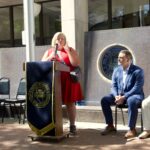
On a recent Thursday morning, dignitaries from Seltzer’s Smokehouse Meats gathered to slice a ceremonial piece of cured beef on the sidewalk in front of the entrance to its new store on North Railroad Street, at what used to be Ray’s Bicycle Shop.

Just like that, one of Palmyra’s oldest businesses had a brand-new venue for offering its century-old products to consumers.

Billed as a museum, it’s more of an outlet store than any sort of hallowed grounds to soak up history. But it still is full of bologna.

Seltzer’s Smokehouse Meats Outlet Store and Museum is first and foremost a tribute to Lebanon bologna, a celebration of the cured beef product that put Lebanon County on the map.

They don’t erect too many museums in these parts, not even ones doubling as retail spaces. But in Lebanon County, there are few institutions more worthy than Lebanon bologna.

“We produce one of the oldest lunch meats in central Pennsylvania and maybe the world,” said Perry Smith, a business and sales consultant for Seltzer’s and perhaps the foremost authority on Lebanon bologna in the world. “The business is still family-owned, which also makes it unique.”

The Seltzer family in Palmyra dates back to 1902, Smith explained.

“At one time, the Seltzers had a drug store, a movie theater and a ball field in town,” he said.

A stone’s throw from the tourist attractions of Hershey, the walls do display a number of memorabilia-type items that spotlight Lebanon bologna’s—and Seltzer’s—storied past. In addition to an expanded product line—beef jerky, bologna chubs, new twists on old favorites—the outlet store offers other central PA delicacies like opera fudge, Lancaster County cheeses and even a few Hershey’s chocolate bars.

“My favorite way to eat it is as a good old sandwich,” said Smith, of Lebanon bologna. “Some people around the holidays will roll it up with cream cheese and horseradish and make it into pinwheels. Some people put peanut butter on it or syrup on it. You can slice it into chunks and eat it with pretzels and cheese while watching a football game. There’s no wrong way to eat Lebanon bologna.”

Smoked Goodness

At one point in the early 20th century, some seven or eight different local manufacturers produced their own distinct versions of Lebanon bologna. Seltzer’s may or may not have been the first, but the Palmyra-based operation certainly is the last—at least in Lebanon County.

Seltzer’s has stood the test of time by staying true to the process, true to its product and true to itself. While times have changed, Lebanon bologna hasn’t.

“It’s a very unique product,” said Auston Wagner, the fourth-generation owner of Seltzer’s Smokehouse Meats. “It’s a regional item. It’s very special to this area. It’s something people in this area really identify with.”

Some 92% of Lebanon bologna is all beef. The other 8% is salt, sugar, spices and smoky goodness.

“Why are we the ones left?” asked Smith. “We stayed with the old traditional way of making Lebanon bologna. The same smokehouses, the same type of wood, the same fire pits. No one makes it that way anymore. That’s why we won out.”

This culinary affection for Lebanon bologna may be an acquired taste, but, once it is obtained, there’s no going back.

“Lebanon bologna has a very tangy taste to it, which comes from the smoking,” said Smith, a 67-year-old resident of North Annville. “Sweet Lebanon bologna is totally different. It has a totally different taste than Lebanon bologna. But both come from the all-smoked goodness, and there is nothing in it that lessens the quality.”

Besides the Smokehouse, Lebanon bologna is readily available in every major grocery store in central Pennsylvania and all up and down the East Coast, from Boston to Florida. And it continues to spread its wings into places like the Midwest, California and Texas.

“Outside of the East Coast, you can find us, but you have to look for us,” Smith said. “The industry calls us a ‘niche item.’ In some areas of the country, we’re hit or miss, but we put Lebanon on the map.”

Marketing research tells Seltzer’s that continued growth hinges on the development of new products to attract a younger customer base. Tradition tells Seltzer’s to keep doing what it’s been doing.

Familiarity creates loyalty. Yet Smith believes that the future of the company and Lebanon bologna is secure because “we make a quality product at a fair price that people love.”

“We’re trying to get Lebanon bologna into a format that a younger generation wants to eat,” said Wagner. “A snackable format like jerky is important to the new generation. There are efforts underway to connect with the younger generation. It’s just sharing what makes us unique.”

Seltzer’s Smokehouse Meats Outlet Store and Museum is located at 209 N. Railroad St., Palmyra. For more information, visit www.seltzerssmokehousemeats.com.


If you like what we do, please support our work. Become a Friend of TheBurg!



Continue Reading

Pick Piccata: This lemony dish will taste like sunshine during gloomy November

Piccata, Marsala and Parmigiana. These preparations are the “Holy Trinity” of Italian cooking.

I love them all. I order eggplant Parmigiano whenever and wherever I can find it. And I make a wonderful chicken Marsala with lots of mushrooms and butter. But my husband, he is in love with veal piccata.

When Carley’s Ristorante opened on Locust Street in Harrisburg, they offered both veal and chicken prepared in the above three ways. Loving traditional Italian cuisine, we were frequent visitors. I tried almost everything there, but, for my husband, it was always the same: “Veal piccata, light on the sauce.” The servers never had to ask.

It is hard to find much information on the piccata style of cooking.  I found information saying that the luscious combination of butter, lemon and spices certainly means that the preparation is Sicilian. But a second source attributes its origins to the northern city of Milan. And most surprising is the theory that preparing food in the “piccata” style began in America.

I make chicken piccata rather than using expensive and, often hard to find, veal. It is very easy to make, but, as always, using the best ingredients results in the best tasting dish. Always use fresh chicken breasts thinly sliced into cutlets, fresh not bottled lemon juice, fresh Italian parsley, real unsalted butter, and don’t omit the capers! When breading any type of meat or chicken, try using Wondra flour. It is fine and light and is less likely to clump and get soggy.

The chicken piccata recipe I have used most often is from Giada De Laurentis in her “Everyday Italian” cookbook. There are piccata recipes online, but they are hard to find elsewhere. No chicken or veal piccata recipes in the “Silver Spoon” cookbook, the bible of Italian cooking. Could it, in fact, have been “born in the USA”?


Chicken Piccata

Ingredients

  • 4 skinless, boneless chicken breasts, pounded until thin—or breasts that have been made into cutlets
  • ½ teaspoon sea salt
  • ½ teaspoon freshly ground black pepper
  • Flour for dredging (try Wondra)
  • 4 tablespoons unsalted butter
  • 2 tablespoons extra virgin olive oil
  • ½ cup reduced sodium chicken broth or dry white wine
  • 1/3 cup fresh lemon juice (from about 2 lemons)
  • ¼ cup drained capers
  • 2 tablespoons chopped Italian (flat leaf) parsley


Directions

  • Sprinkle the chicken with salt and pepper, then dredge it in flour to lightly coat it.
  • In a large sauté pan, melt 2 tablespoons of the butter with 2 tablespoons of the oil over medium high heat.
  • Add the chicken and cook just until brown, about 3 minutes per side. Then use tongs to transfer the cutlets to a plate.
  • Add the broth or wine, lemon juice and capers to the same pan. Bring the mixture to a boil over medium-high heat, scraping up the browned bits from the bottom of the pan.
  • Return the chicken to the pan and simmer until just cooked through, about 5 minutes.
  • Transfer the chicken to a platter.
  • Whisk the remaining 2 tablespoons butter into the sauce. Pour the sauce over the chicken and garnish with chopped parsley.

When you have mastered the “piccata process,” you can try making a variety of meats and even fish this way. Swordfish steaks, cut horizontally into thin slices, can be prepared this way, as can flounder or sole filets. If you want to splurge, look for pale pink veal scallopine to serve for a special dinner for two. Pork and turkey cutlets work, too.

My husband would ask for pasta to accompany his chicken piccata, but I would like garlic mashed potatoes and a green vegetable. Garlic bread and a green salad are nice pairings, too. Don’t forget a crisp white wine.

Maybe you are already planning your Thanksgiving and Christmas menus. But I’m hoping you find time to sneak some chicken piccata into your holiday cooking schedule. Your friends and family will think you are a grand chef!


If you like what we do, please support our work. Become a Friend of TheBurg!

Continue Reading

Fighting Back: Rock Steady Boxing takes a jab at Parkinson’s disease

Sharon Murray

The tattoo on Tom Muller’s arm says, “March 17, 2017.” Five hash marks follow, counting every year since the day he got his Parkinson’s disease diagnosis. He was 47 years old.

“A friend of mine says, ‘Stay up all night. Fast for 24 hours. Throw yourself down a flight of stairs. Stand up, close your eyes, and spin around five times as fast as you can, and then walk a straight line,’” said Muller of West Hanover Township. “That’s what Parkinson’s is like.”

Muller shared his story after a session of Rock Steady Boxing at the Jewish Community Center in Harrisburg. The program, offered at gyms nationwide and around the Harrisburg area, uses non-contact boxing to help Parkinson’s patients punch past their symptoms while they find fellowship and hope.

Parkinson’s disease is a mysterious neurodegenerative disorder that affects the production of dopamine, the substance that transmits messages among nerve cells. While the outside world equates Parkinson’s with tremors, the condition actually comprises a broad and bewildering menu of symptoms attacking mobility, cognition, speech, balance and sleep.

Boxing takes a hit on all the symptoms. Standing with a line of punching bags at the JCC, instructor John Wysocki recently instructed his class members to shout out the classic numbers assigned to boxing punches.

“Throw the right hand, the left hand and two right hooks, so that’s 2-1-4-4,” he said.

The punching begins. The muscles are at work, but so is the cognition needed to remember the sequence and the vocalization that helps maintain vocal cord strength.

“That was an exercise of my brain,” said Sharon Murray of West Hanover Township. “You don’t think it’s hard, but it is. That’s part of what you do. Make your brain work.”

For Parkinson’s patients, 2½ hours of weekly exercise slows decline in quality of life, according to the Parkinson’s Foundation. Exercise of all kinds helps everyone, said Parkinson’s neurologist and researcher Xuemei Huang of Penn State College of Medicine, Hershey. But programs that provide movement, positivity and a sense of community are especially effective in augmenting her patients’ prescription regimen.

“What’s unique for Rock Steady Boxing is that it’s devoted to Parkinson’s patients for their particular challenges,” she said.

In the Harrisburg area, Rock Steady Boxing is offered at the JCC, West Shore YMCA, West Shore Academy of Martial Arts and Central Penn Wellness.

Programs such as Rock Steady Boxing can provide the positivity and socialization that help patients overcome the loneliness of a Parkinson’s diagnosis, Huang said. Younger patients see people 20 years older who are doing well. Older patients see younger peers they can help.

“That community, trying to lift each other up, up, that’s what I’m thinking the Rock Steady Boxing provides, more than that physical part,” she said.


Counting on Me

Murray “felt lost” after her diagnosis in mid-2021. Her journey “started with an anxiety problem.” She researched her options, because “that’s how I heal and handle things,” and found what she likes in Rock Steady Boxing.

“It makes me feel a lot better about the whole thing because I’m not out there alone,” she said as she put on her gloves. “If I have questions, any one of these people will answer it for me and point me in the right direction.”

At the West Shore YMCA, participants dress up for holidays—green for St. Patrick’s Day, costumes for Halloween—and bring seasonal treats. Before a recent session there with instructor Christina Phillips, Alan Williamson recalled his “demoralizing” diagnosis and the counterpunch of motivation that Rock Steady Boxing delivers.

“I can give myself 1,001 excuses for not exercising, but, here, I have a class to look forward to,” he said. “Christina is counting on me to be here, and the other participants are counting on me to be here, and I’m counting on them to be here. It’s camaraderie.”

Research that pinpoints one exercise as better than another is scarce because the control group would have to be sitting on the couch, not a good thing for Parkinson’s patients. But one recent study has shown that higher intensity can make a difference, Huang said.

In fact, Rock Steady Boxing instructors don’t give their students much slack.

At the JCC, Programs Director Terri Travers started her class with a mind-bending, laugh-inducing series of step movements, telling participants to say and do the opposite of what she was saying and doing. In the non-boxing segment of the class, students worked battle ropes and did pushups on a balance trainer.

At the West Shore YMCA, Phillips distributes PVC pipes that her twice-weekly attendants hold while doing rigorous stretches and bends. I was terrified to watch, certain that someone would fall, but they attacked their workouts with vigor. In fact, fall prevention and management are essential elements of Rock Steady Boxing.

“We work on balance, flexibility, mobility, posture control, because in Parkinson’s, people tend to hunch over,” Phillips said. “Sit up nice and tall. Look in my eyes.”

During the “boxing to the beat” segment of Phillips’ ever-changing class, participants threw sequences of air-punches in time with carefully selected tunes, such as “Heartache Tonight” and its catchy drumbeat. When one elderly participant started to slump, Phillips bopped over and shadowboxed with him. He responded by lifting his head and giving her a smile that lit up the room.

YMCA participant Elaine Sweger finds herself mimicking the PVC-pipe stretches in her daily functioning.

“Did you ever try drying your back when you got out of the shower?” she said during a break. “That’s the movement. If I’m trying to get something in the cupboard, I stand on my tiptoes. It keeps you moving. It just keeps you moving.”


Upbeat, Positive

With its focus entirely on Parkinson’s, Rock Steady Boxing is staff-intensive, with only six or so participants per instructor or volunteer. Those volunteers help expand class rosters by serving as spotters, providing one-on-one guidance for walking backwards or maintaining balance.

YMCA volunteer Ron Jones has been boxing since age 12, winning tri-state championships and boxing with the U.S. Army traveling team. Parkinson’s patients “fight this thing every single day of their lives,” he said.

“If we give them three hours a week of help, then I think it’s giving back,” he said. “That’s what I want to do, is to help them. We’ve had people that have passed, and it tears my heart out. Every single person in that class has a very special place in my heart.”

JCC volunteer Mo Caplan called the participants “just great people, good people.”

“Very upbeat, very positive,” he said. “You take away as much as you give, just watching people dealing with some bad luck, making the best of it and controlling what they can control.”

Unlike many people interviewed for news stories, Parkinson’s patients love to tell their ages. Ann Gard is 92, and she loves yoga, water exercise and boxing. Sweger, who is 80, told me that she is donating her brain to Dr. Huang, her neurologist, for research.

Examining a known donor’s brain opens insights into Parkinson’s by comparing the brain’s pathology with the patient’s clinical progression charted in life, Huang said.

“For a doctor, it’s a very sad day when our patient has passed, but afterwards is for learning,” she said. “Nobody will die in vain in our program. They give a final gift to the clinician to learn lessons about what sort of brain pathology caused their problem.”

JCC class member Tom Muller intends to stick with his gym workouts to stay in shape and with Rock Steady Boxing to knock out Parkinson’s.

“I like the fact that everybody in here is working towards a common goal, and that is working your body to fight off the inevitable,” he said. “My neurologist said this is a disease you’re going to live with the rest of your life, so you might as well educate yourself about it. You do what it takes, right? It’s going to get me in the end. I know that, but I’m not going to go down without a fight.”


For more information about Rock Steady Boxing, visit www.rocksteadyboxing.org.


If you like what we do, please support our work. Become a Friend of TheBurg!

Continue Reading

Timeless Ties: History meets modernity in SAM’s simultaneous exhibits

Helen Zughaib

At first glance, the two exhibits that recently opened at the Susquehanna Art Museum may seem a world apart, but a closer look reveals connections that break through the surface.

The first exhibit, “Fleeting Pleasures: Japanese Woodblock Prints,” introduces museum visitors to the rich history of ukiyo-e prints using some of the beloved images in Japanese art history.

Although female figures appear frequently on the woodblock prints, the art form itself is a masculine one. To some degree, it is an older one, with pieces dating from the 1700s to the mid-20th century.

Among the woodblock prints is Toyohara Kunichika’s “Courtesan with Kamuro,” dated from 1865. It depicts a geisha putting on a kimono of red, purple and white and wearing combs and pins in her hair. A young apprentice, or kamuro, assists her.

Torii Kiyonaga’s 1784 multicolor woodblock print, “Women Enjoying Cool Evening by River at Shijo in Kyoto,” demonstrates a style the artist became famous for. The women’s slender figures are emphasized by the gentle sway of their ornately decorated kimonos and by the woodblock’s plain-white background.

“Kiyonaga’s slender, ornately dressed women became associated with an idealized vision of beauty in Edo Japan,” said Lauren Nye, director of exhibitions at SAM.

“Fleeting Pleasures”—its works originating from the Georgia Museum of Art—reflects the cultural traditions of the artists’ times. The woodblock prints are created through an elaborate and highly technical process, inspired by the bustling metropolis of Edo, which was the former name of Japan’s capital, Tokyo.

In contrast, “Deep Roots: Ornamentation and Identity” features five contemporary artists, all female, who are inspired by their personal history, as well as their cultural roots. As opposed to the Japanese artists, they come from diverse places: India, China, Central America, Lebanon and Los Angeles.

But the two exhibits have much in common. The pieces in “Deep Roots” are inspired by traditional patterns and modes of ornamentation, meaning decoration or embellishment.

“The contemporary art complements the shared themes, patterns and aesthetic” of the older art form, Nye said.

“This unique pairing of exhibitions illustrates how ornamentation has been timeless across cultures,” she said.

During the past century, Nye pointed out, embellishment and ornamentation fell out of favor, replaced by minimalism in art and architecture.

“But many contemporary artists are now referencing and re-learning traditional techniques of the past to root themselves in their own cultural identity,” she said. “The artists in ‘Deep Roots’ demonstrate this in their mixed-media pieces, using rich patterns and textures and rooting our contemporary lives to the past.”

In Patton’s “Untitled (Julia)” work from 2020, the floral patterning that appears in many of her paintings acts as personalized ornamentation by the artist.

“In many cultures around the world, flowers denote care and devotion at weddings, funerals and celebrations,” Nye said. “The florals in Patton’s work serve as a memorial to the lives of the figures portrayed. By enlarging the found photographs and adorning them with colors, symbols and patterns, she celebrates the women pictured.”

Zughaib’s piece, entitled “Arab Spring,” reflects a complex background. Her paternal grandparents were from villages in the mountains of Lebanon. However, before the French colonists separated Lebanon and Syria, her family was considered Syrian.

In the Arab world, she was surrounded by the patterns on carpets, tiles, dishes and mosques and was drawn to their flat blocks of color and the way cultural patterns could tell stories and convey messages using symbols rather than figures.

“These patterns and symbols can reach across borders and communicate among cultures,” Nye said.

Alice Anne Schwab, SAM’s executive director, encouraged the spontaneity and creative pairing of the two exhibitions. About once a year, Nye is “allowed to go all out” in curating an exhibition “from scratch,” Schwab explained.

“And this is one of those times,” she said.


“Fleeting Pleasures: Japanese Woodblock Prints” and “Deep Roots: Ornamentation and Identity” run through Jan. 22 at the Susquehanna Art Museum, 1401 N. 3rd St., Harrisburg. For more information, visit www.SusquehannaArtMuseum.org.

The exhibits are accompanied by tours and activities for young people of different ages, coordinated by Bonnie Mae Carrow, education manager of the museum. Featured artist Helen Zughaib will be at the museum Jan. 13 and 14 for an artist’s talk and hands-on workshop.


If you like what we do, please support our work. Become a Friend of TheBurg!

Continue Reading

Noteworthy November: Autumn tunes to tune in to

As the weather chills, we have a tendency to stay in and cozy up with a warm drink. But I suggest venturing out to listen to some quality music. There is an artist this month for nearly any taste and place. Whether you’re into an intimate brewery scene or a large stage, you’ll be content with your choices in November.

Phillip Phillips, 11/17, 7 p.m., H*MAC

If you’re looking for the soundtrack to your new indie movie, this is it. Phillip Phillips won “American Idol” back in 2012, and his single, “Home,” hit the charts. Phillips has a melodic voice that is harmoniously paired with an acoustic guitar that just makes you smile. This is what I classify as “Windows Down Music”—a song just so lively that you have to roll down the car windows and scream the lyrics. Whether you’re jamming to it in your car or jumping along to the beat live, I can say you’ll feel the music in your soul.

Harry Connick, Jr., 11/18, 8 p.m., Hershey Theatre

Get ready for a classic night filled with all your favorites. Like me, you may have memories of being at your grandparents’ house with “It Had To Be You” in the background, playing with toys that pre-dated your existence. Harry Connick, Jr., has a voice smooth as butter, making it perfect for a live performance. For me, there’s no better feeling than the nostalgia of Connick’s music.

Capstan 11/27, 6 p.m., Lovedraft’s Brewing Co.

For this venue, you can cozy up with a cold one. Listening to Capstan’s music brought me back to my glory days of too much eyeliner and flannel. It was like being transported back to high school in the best way possible. Their mix of pop-punk and metalcore sounds, along with meaningful lyrics, make this a show I don’t want to miss. My standard for music is when it can feel like it’s transporting you, and that is exactly what I feel with this band. I imagine I’m back in my moody teenage years, and who doesn’t want to feel like a teenager again?


Mentionables:

  • Jeremy McComb, Nov. 4, H*MAC
  • Kip Moore, Nov. 11, Hershey Theatre
  • Kota the Friend presents “Flight Night,” Nov. 11, H*MAC
  • Trouble No More, Nov. 12, XL Live
  • The Clarks, Nov. 18, The Englewood
  • Turnstile, Nov. 21, XL Live
  • Bone Thugs-N-Harmony, Nov. 26, H*MAC


If you like what we do, please support our work. Become a Friend of TheBurg!

Continue Reading

Gilbert & Sullivan & Gamut: Gamut Theatre makes time for some innocent merriment

Sarah Anne Hughes & David Ramón Zayas

Events at Gamut Theatre often, well, run the gamut—from Popcorn Hat children’s shows to improv performances to Shakespeare (both indoors and at Reservoir Park) to original works to staged readings to Young Acting Company performances of classic stories.

And while there is often music as part of these events, rarely does the music take center stage. That’s about to (key) change from a minor background hum to a modern major musical production.

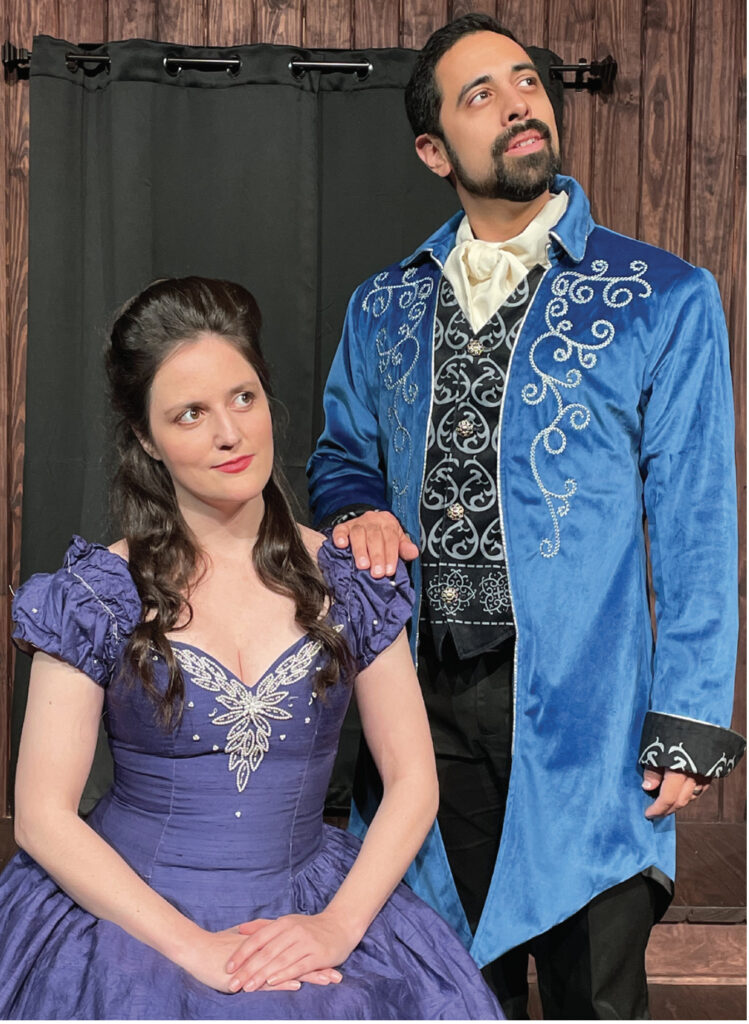
This fall, Gamut’s new core company member and trained opera singer, Benjamin Krumreig, is turning up the volume with “Innocent Merriment; Or, An Evening with Gilbert & Sullivan!” With songs and dialogue from 11 of the 14 operettas composed by the famous duo, “Innocent Merriment” is set to entrance, entertain, engage and enrapture theatergoers of all ages.

“I think audiences will be pleasantly surprised at just how familiar much of the music is,” offers Krumreig.

It’s true—Gilbert and Sullivan tunes and lyrics show up in the most unexpected places, from advertisements to movie soundtracks to “The Simpsons.” Every time someone hums, “Hail, hail! The gang’s all here,” or points out that they have “information animal, vegetable and mineral,” they’re testifying to the enduring impact of this Victorian duo. And that’s in addition to Gilbert and Sullivan’s profound influence on musical theater. Whereas opera is an entirely sung performance, operetta intersperses songs and spoken dialogue, which makes the modern musical a direct descendent of light opera.

When Krumreig first conceived of this project, his vision was for a revue—perhaps two weekends, a few singers, no costumes.

“Originally, I proposed a relatively small show, a gentle way to let actors and audiences alike dip a toe into the Gilbert and Sullivan waters,” Krumreig said, with a knowing grin.

However, as plans for Gamut’s 2022–23 season evolved, so grew the concept for “Innocent Merriment” until it became what is currently in the works: 14 singers, a four-weekend run, full costumes and a lot of very careful rehearsal.

“What mattered to me most going into this project was that the music was done well,” Krumreig explained.

Most of the participants are actors first, singers second. So, to ensure that everyone felt comfortable and confident, Krumreig devoted the first month of the rehearsal period to one-on-one voice training. Only now is he trading his vocal coaching hat for his director’s cap, though he’s got several more jobs to tackle before opening night. That’s because he didn’t just conceive of “Innocent Merriment”—he chose the songs, trimmed the dialogue, and wove those together into a seamless whole. He’s also the director, musical director and choreographer, as well as one of the 14 singers.

Despite juggling all those roles, Krumreig seems filled with energy and excitement.

“We’re creating a show anyone will enjoy, no matter how old, no matter how little or much they know about Gilbert and Sullivan,” he said. “The world is a little taxing right now. That makes this a perfect moment to offer people a bit of lighthearted joy—some innocent merriment.”

With a mischievous gleam in his eye, Krumreig then added, “there’s a rumor that Queen Victoria herself will be putting in an appearance. She was, after all, a huge Gilbert and Sullivan fan.”

In case you’re curious, the words “innocent merriment” come from “The Mikado,” but Krumreig’s favorite bit of Gilbertian wit is “airy persiflage” (also from “The Mikado”), a phrase that roughly translates to “cheerful, witty banter” (which would make “Airy Persiflage” an equally accurate, though more baffling, title for this show).

Something else fun? The two-part title for Gamut’s production is a direct homage to Gilbert and Sullivan’s titles, which also typically came in pairs—for example, “HMS Pinafore; or The Lass That Loved a Sailor” and “The Gondoliers; or, The King of Barataria.”

“Innocent Merriment; or, A Night of Gilbert & Sullivan!” might not, at first glance, seem like a typical Gamut Theatre offering. But, in fact, it’s right at home with a company that has long celebrated classic stories and enduring art. Gilbert and Sullivan’s operettas explore timeless, universal themes—of love conquering all, of the tension between desire and duty, of the triumph of good over the banality of evil—and they do so with clever lyrics set to engaging tunes.

So, as autumn days grow shorter, what a joy that Harrisburg audiences will have some light (opera) to look forward to at Gamut Theatre’s production of “Innocent Merriment.”


“Innocent Merriment; or, A Night of Gilbert & Sullivan!” runs Nov. 5 to 27 at Gamut Theatre, 15 N. 4th St., Harrisburg. For more information and tickets, visit
www.gamuttheatre.org or call 717-238-4111.


UPCOMING EVENTS AT HARRISBURG’S PROFESSIONAL DOWNTOWN THEATERS


At Gamut Theatre
www.gamuttheatre.org
717-238-4111

“Innocent Merriment; or, An Evening with Gilbert & Sullivan”

Nov. 5 to 27


TMI Improv

Nov. 17 at 7:30 p.m.

At Open Stage
www.openstagehbg.com
717-232-6736

EFF Live!

Erotic fan fiction readings
Nov. 4 at 7:30 p.m.


Black NewsBeat with Dr. Kimeka Campbell

Join us in the live studio audience
Nov 9 at 7:30 p.m.


“Who’s Holiday!” 

Cindy Lou is back in this comedic parody
Nov. 26 to Dec. 22


“A Christmas Carol”

Scrooge’s ghostly holiday adventure returns
Dec. 3 to 23

If you like what we do, please support our work. Become a Friend of TheBurg!

Continue Reading

A Light on the Past: “Aftersun” glows with the beauty of memory

Photo courtesy of A24

“When you were 11, what did you think you would be doing now?”

This is the question that 11-year-old Sophie asks her father in the opening of “Aftersun,” Charlotte Wells’ devastatingly beautiful depiction of a father-daughter holiday. The pause from Sophie’s father after she poses the question speaks volumes about the story that follows.

The film weaves together memories that Sophie (Frankie Corio) has of the event—relaxing at the resort, playing pool, going on day tours—with camcorder footage of the trip, viewed by Sophie as an adult (Celia Rowlson-Hall).

Sophie doesn’t normally get the chance to hang out with her father Calum (Paul Mescal) in such long stretches of time as this, and he takes full advantage of their time together, trying to fill in the gaps of fatherhood that he’s missed. He wants to teach her things; he wants her to be good at things; he wants to make sure she can protect herself; and he wants her to have fun. Or at least, what he considers to be fun.

The relationship is heartbreaking and complex. It is clear that they are a loving pair, but the desires that Calum has for his daughter are idealistic and nearing perfectionist—a glimpse, perhaps, of what he wanted for himself and was never able to achieve. But while most fathers want the best for their daughters, Calum might be taking it a tad too far. It is clear that his ideals for Sophie are selfish and not remotely based on what she wants herself.

The two characters play a dance that many parent/child pairs know well. And the fact that we are able to see the camcorder footage alongside Sophie’s memory is brilliant, putting the complexity of the relationship on full display. Both Corio and Mescal have a subtle magic to their performance, and “Aftersun” is worth the watch for their onscreen chemistry. Don’t miss this poignant piece, playing at Midtown Cinema in November.

Midtown Cinema is located at 250 Reily St., Harrisburg. For more information, visit www.midtowncinema.com.


November Events At Midtown Cinema

Saturday Morning Cartoons
Saturday, Nov. 5 at 10 a.m.

National Theatre Live
“Prima Facie”
Sunday, Nov. 6 at 5 p.m.

King Fest
“Carrie” (1976)
Wednesday, Nov. 9 at 7:19 p.m.

Down in Front! Presents
“Maximum Overdrive”
Friday, Nov. 11 at 9:30 p.m.

National Theatre Live
“Jack Absolute Flies Again”
Sunday, Nov. 13 at 5 p.m.

“Twilight” Saga Marathon
Sunday, Nov. 13

King Fest
“Misery” (1990)
Wednesday, Nov. 16 at 7:19 p.m.

3rd in the Burg Movie Night Presents
“Weird Science” (1985)
Friday, Nov. 18 at 9:30 p.m.

Double Feature with Greg Sestero
“Miracle Valley” and “The Room”
Sunday, Nov. 20 at 5 p.m.

National Theatre Live
“Straight Line Crazy”
Sunday, Nov. 20 at 5 p.m.

King Fest
“Stand By Me” (1986)
Sunday, Nov. 20 at 7:19 p.m.

“The Room”
With Greg Sestero
Monday, Nov. 21 at 7:30 p.m.

King Fest
“The Shining” (1980)
Wednesday, Nov. 30 at 7:19 p.m.


If you like what we do, please support our work. Become a Friend of TheBurg!

Continue Reading

The Painted Word: An artist’s master work takes form in “River Spirit”

It is impossible to separate the man from the sculpture.

Fully immersed in an epic project for 22 years of his life, Professor Steven Dolbin has forged a totem of mammoth proportion, “River Spirit.”

The larger-than-life work stands like a modern-day Colossus standing watch over the property near the Cumberland/Franklin county line that he and his wife, Robin, call home. Imagination has been the key component at work for Dolbin as he is accustomed to creating outsized treasures from concrete, stainless steel and found objects. As the former head of the art department at Shippensburg University, Dolbin has forgone teaching summer classes for the past number of years to exclusively devote his time to the completion of “River Spirit.” After two decades, the sculpture has taken on a life of its own.

In creating “River Spirit,” Dolbin was driven onward by ancestry and ideology, providing a historical timeline with its indigenous iconography stemming from all corners of the world. Stepping back to the dawn of time, humans were but one tribe, scattered by the winds, coming to settle and survive in separate subgroups across the globe, continent by continent, region by region, creating distinct nationalities.

“River Spirit” embodies those journeys in size, shape and scope.

Weighing in at about 7,000 pounds, standing 12-feet tall, 37-feet long and 5-feet across, the sculpture’s sheer physical presence is awe-inspiring. Humbled by this magnitude, one realizes that mortal man is but a speck. “River Spirit” defies description as it is of the elements combining earth, wind, fire and water.

Dolbin continues to fine-tune his masterpiece as it moves towards its final home. His wife echoes that goal, having taken the journey with him in every way imaginable. It has been a team effort together on their archetypal quest.

“River Spirit,” originally financed by an art patron from Harrisburg nearly 30 years ago, was to find its way to the City Government Center, championed by then-Mayor Reed to become the gatekeeper of Riverfront Park. Today, Negley Park is an option, as is High Point, part of Native Land Heritage Park in York. As massive as it is, it would be a lasting treasure in the Pennsylvania State Museum for all to share in its beauty. Hand-hammered, forged and hewn by Dolbin, it is a personal vision and dream that needs to be seen by visitors far and wide.

“River Spirit” is a story of all nations and all peoples. The sculpture is part raven, part whale—a shadowing shape-shifter in its malleable form. And like its many parts, the whole is greater than anyone could imagine. Embedded in the stainless steel structure are sacred images of various cultures, tribal wisdom and tributes to original cave paintings.

“There’s no perfection as imperfection illustrates true beauty within and without,” Professor Dolbin shared.

One marvels at the underlying theme of life’s circuitous route. It tells the tale of evolution, permutation and transcendence, triumphant over the obstacles often associated with the journey taken over a lifetime.

In the end, no matter where “River Spirit” finds its home, the question that echoes down through eternity is—what I have made, will it endure? Professor Dolbin can rest assured as “River Spirit” exists outside of time, forever in the firmament amidst great works of art.


Contact the artist via Instagram @stevendolbin or Steve Dolbin on Facebook.


If you like what we do, please support our work. Become a Friend of TheBurg!

Continue Reading

Understanding Your Healthcare Coverage: Who Pays for What … and When?

You visit your doctor and show your insurance card—and they tell you there’s a $25 copay.

You get a prescription filled, and the pharmacist says you owe $30, even with insurance.

You have a medical procedure and receive a bill for $300 after your insurance coverage is factored in.

What’s going on here? If you have health insurance, what exactly are you paying for?

Healthcare coverage, like many other forms of insurance, doesn’t entirely eliminate your costs. It’s a shared responsibility with your insurer, and understanding how it works can be confusing sometimes.

Generally, healthcare costs, when you have insurance, can be sorted into three basic steps:

  • Your costs– With the start of each new plan year, you pay for your healthcare services until you meet your deductible—a pre-determined amount that must be reached before your insurer begins sharing your healthcare costs.
  • Shared costs– Once you’ve reached your deductible amount, your insurer will start to cover a certain percentage of your healthcare costs, called your coinsurance, until you reach the maximum amount that you or your family pay during a benefit period, an amount called your out-of-pocket maximum. You also continue to cover any applicable copays during this period.
  • Insurer costs– Once you’ve reached your out-of-pocket maximum, your insurer pays all covered costs for the rest of the plan year. When the next plan year begins, so does this three-step cycle.

The easiest way to find out what your copay, deductible and out-of-pocket amounts are is to ask your insurer or employer for a summary of benefits and coverage, or SBC. This document shows how you and your insurance plan share costs for covered health care services, and it will list specific amounts related to your coverage.

Once you know which costs you are responsible for, you can take steps to save money by choosing the most affordable healthcare options that suit your preferences and needs.

To help you get the care you need at the most affordable price:

  • Look in your provider network– Insurers typically contract with numerous doctors, hospitals and health systems for more cost-effective services and treatments. These providers are referred to as being “in-network” and typically are less expensive than other, “out-of-network” providers. Capital Blue Cross, for instance, offers an online “find a doctor” tool where members can find in-network doctors by name, location, specialty and more.
  • Research potential costs– There are tools available to help you estimate costs before you seek non-emergency treatment. Again, Capital Blue Cross’ “find a doctor” tool can help. Members can use it to get cost estimates and compare prices for office visits, procedures, surgeries, tests and vaccines, and learn more about other treatment options before deciding where to go.
  • Choose the right place for the care you need now– Emergencies can happen, and in some cases, your nearest emergency room is the right place to go. But using other nonemergency options in some instances can get you faster, more affordable care. Consider these options:

Telehealth – Schedule a virtual visit by smartphone, tablet or computer on your schedule from wherever you are. The Capital Blue Cross VirtualCare app offers members round-the-clock access to doctors for many common healthcare needs, including behavioral health visits with counselors, psychologists and psychiatrists. The service even includes nutrition counseling.

Office Visit – A visit with your doctor can be a good place to start if you prefer in-person care. Your doctor can keep a history of your health and refer you to a specialist or hospital if needed.

Urgent Care – Visiting an urgent care center for nonemergency situations that require in-person treatment is two-to-three times less costly than an emergency room visit.

Emergency Room – In a true emergency, go straight to the nearest hospital ER.

Knowing how to get the right care at the right time can help you save money, while also ensuring that you or your family stay healthy.

For more health and wellness news and information that can benefit you, visit thinkcapitalbluecross.com. This column is sponsored content.


If you like what we do, please support our work. Become a Friend of TheBurg!

Continue Reading

The Week that Was: News and features around Harrisburg

Harrisburg and Dauphin County officials announced Pete Baltimore (far right) as the new environmental enforcement officer for Harrisburg.

Happy Halloween, Harrisburg! Whether you plan to dress up, carve a pumpkin or head to a spooky party, make sure you catch up on this week’s news first.

Focaccia bread is versatile and can be topped with fresh rosemary, black olives, tomatoes and mozzarella. Our food columnist Rosemary has the perfect recipe for you to try making on a fall afternoon.

Harrisburg City Council voted to recognize two former city activists by naming roadways after them, our reporting found. A portion of N. 6th Street will receive a secondary name as Rev. Billy Gray Way and a section of Harris Street as Judith C. Hill Way.

Harrisburg University announced two concerts for early 2023, our online story reported. Elle King will play at XL Live on Feb. 25 and indie band Dawes will return to Harrisburg on March 11 at XL Live.

Illegal dumping is being targeted by Harrisburg and Dauphin County with a new initiative, our online story reported. The city and county have jointly hired Pete Baltimore to be the new environmental enforcement officer in Harrisburg.

Jazzy’s Good Eats opened in August in Kline Village, serving up flavorful soul food, our magazine story reported. Head chef Jasmine “Jazzy” White has spent the past decade perfecting her family’s treasured recipes.

Joy Boudreau opened her event coordinating business, Joy of Events, in Camp Hill after years of experience in the hospitality industry, our magazine story reported. Boudreau also recently won a local competition for entrepreneurs.

Local artist Robin Wheeler discovered her love for pottery while attending school as an adult at HACC, our magazine story reported. In October 2021, she opened her own studio, Wheel of Light, in Halifax.

Parks in Harrisburg are set to receive major upgrades as the city announced that it was awarded a $13 million grant from the Pennsylvania Department of Community and Economic Development. In our online story, find out which parks will see improvements.

Robert Gaynes has spent his 30 years of retirement turning discarded wood into bowls, vases and candleholders, our magazine story reported. He has crafted hundreds of pieces and plans to give his entire collection to the Jewish Federation of Greater Harrisburg.

Sycamore Homes, an affordable housing development planned for Harrisburg, ceremoniously broke ground last week, our online story reported. George Fernandez, CEO of Latino Connection, plans to develop the four-story building.

Sara Bozich has compiled all of this weekend’s spooky events for your perusal. Find them, here.

State Redevelopment Assistance Capital Program (RACP) grant awardees were announced this week, our online story reported. Four Harrisburg projects were funded, including a large-scale apartment building by GreenWorks, restoration work at the King Mansion, renovation of the Harristown Agriculture Building on Market Street and a project to expand Millworks’ brewery.

Yuengling Brewery is the perfect fall day trip from Harrisburg. In our magazine story, read about the tour that the brewery offers and the history of the company.

Do you receive TheBurg Daily, our daily digest of news and events delivered right to your email inbox? If not, sign up here! 

Support quality local journalism. Join Friends of TheBurg today!

Continue Reading