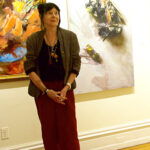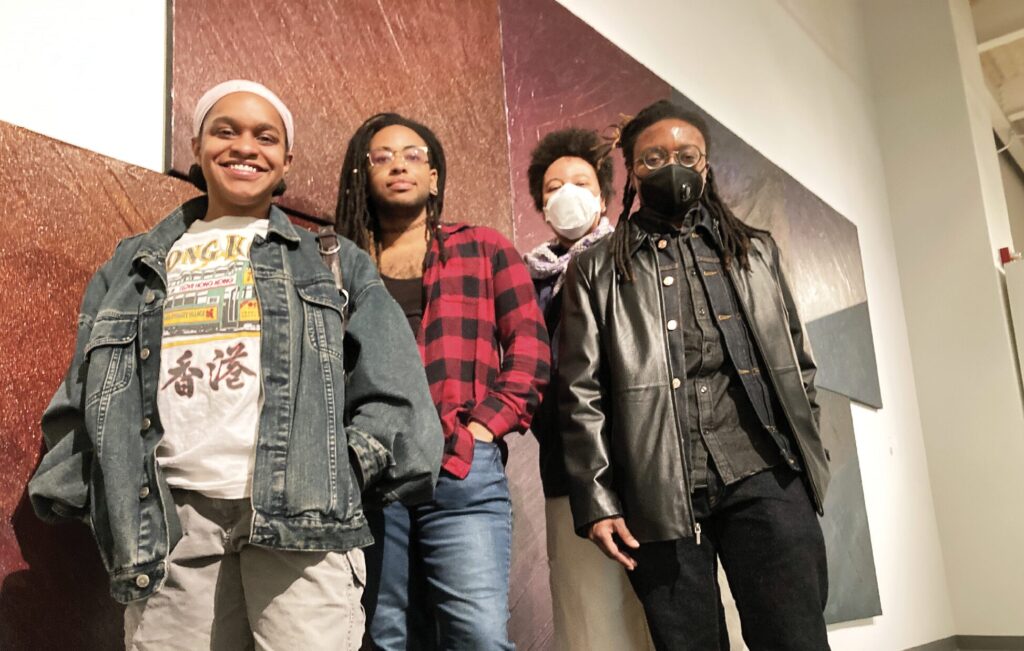
From left: Cyè Jacobs, Mav Atis-Valentine, Meridian and Zaire
When Mav Atis-Valentine showed up for their first QTPOC Collective meetup, they weren’t sure what to expect—they didn’t know anyone there.
But after moving to Harrisburg a few years ago from Bellefonte, they decided to start “getting out there” and finding community with other queer people of color in the area.
“It was scary,” they said. “But that was the first step in creating some connection in my life.”
“One thing about community that’s important is showing up,” they added.
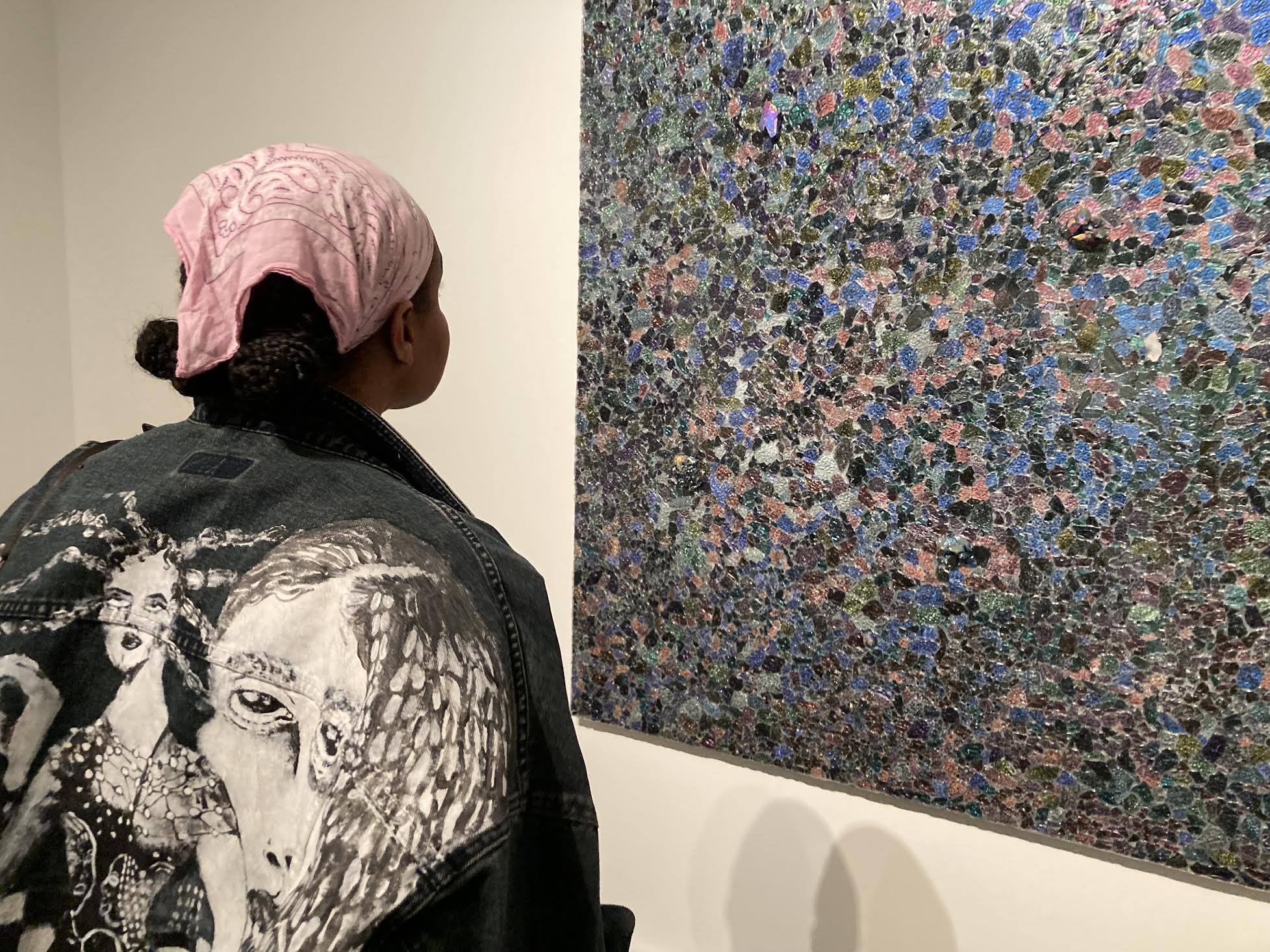
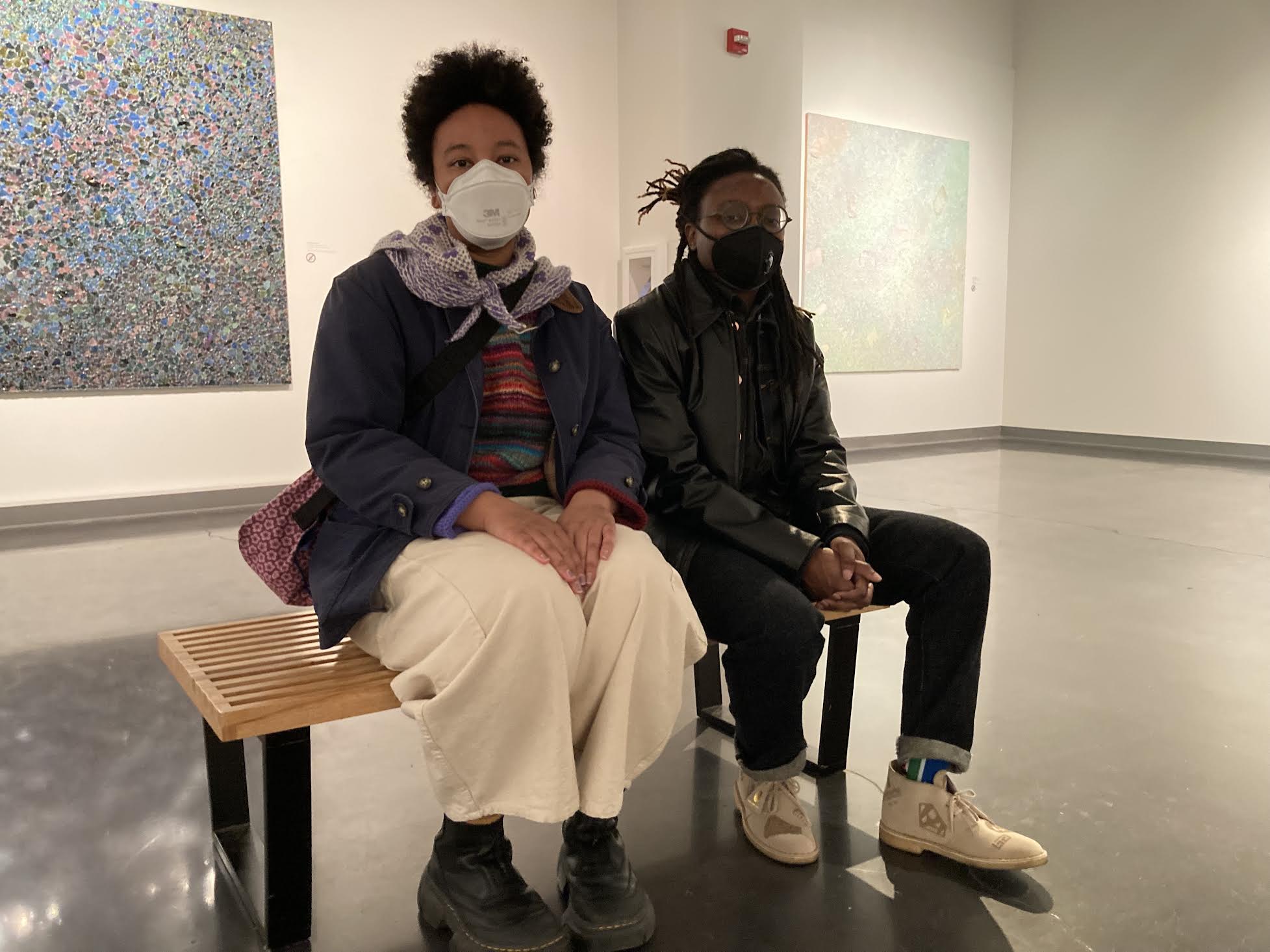
A few months later, at another collective meetup, they stood beside fellow members at the Susquehanna Art Museum, admiring the bright, bold hues on display at an exhibition by Alteronce Gumby.
“It’s definitely giving me an opportunity to do more things in Harrisburg. Make more connections,” Atis-Valentine said.
“Stuff like this,” they added, gesturing to the museum, “getting me out of the house in the middle of a random day? Easy. I’ve never been here before. It’s nice, right?”
Community Connection
The organizer behind the QTPOC’s museum meetup is Cyè Jacobs, QTPOC coordinator at the LGBT Center.
“I have a huge passion for inclusive spaces and providing that essential environment for safety, belonging, healing and empowerment for folks—for the most marginalized people in the LGBT community,” Jacobs explained. “When I’m able to socialize with people, especially with people who are in my age range, I’ve noticed that some people are just looking to be seen and embraced.”
Jacobs said the Black, Harrisburg-born-and-raised artist’s exhibit was a perfect field trip for the group—whose other bi-weekly meetups have taken the form of writing workshops, game nights, movie nights (centering Black, queer films), holiday dinners and clothing swaps. About 10 to 12 people regularly attend.
When she began her role at the center in April 2025, she revived its QTPOC program from pandemic-era dormancy.
With a twist.
While the 2018-founded program originally served as an advisory and resource program for queer and trans people of color aged 25 to 45, Jacobs felt it was important to focus more on providing a space for its community members to connect.
“Sometimes, being a queer and a trans person can be a very lonely and an isolating experience,” explained Jacobs. “That’s why I have taken the more social route.”
When people feel more at home socially, Jacobs said, she and her coworkers noticed they feel more comfortable exploring the center’s resources and advisory offerings. According to Jacobs, some people come into the center who are homeless, lacking immediate family in the area or rebuilding their lives.
As a result of creating a social focus for the collective, she’s observed “a really striking change” on the work that the center is able to do on the advisory and resource side as well.
In addition to running QTPOC Collective meetups, another part of Jacobs’ job involves listening to community members and helping them find needed resources—anything from work, to housing, to HIV testing, to therapy.
“They feel more comfortable asking for help. They feel more comfortable even looking at ways where they can volunteer with the center,” she said.
A Black lesbian who was born and raised in Harrisburg, Jacobs has had firsthand experience with wanting to connect with other queer people of color in her area.
“I learned a lot about my identity at a very young age, but I was met with some barriers and a lot of complicated feelings and relationships about religion,” Jacobs said.
Still, she said, “My mom really encouraged me to not only live a good life but live an honest life. Truth was a huge thing in my house.”
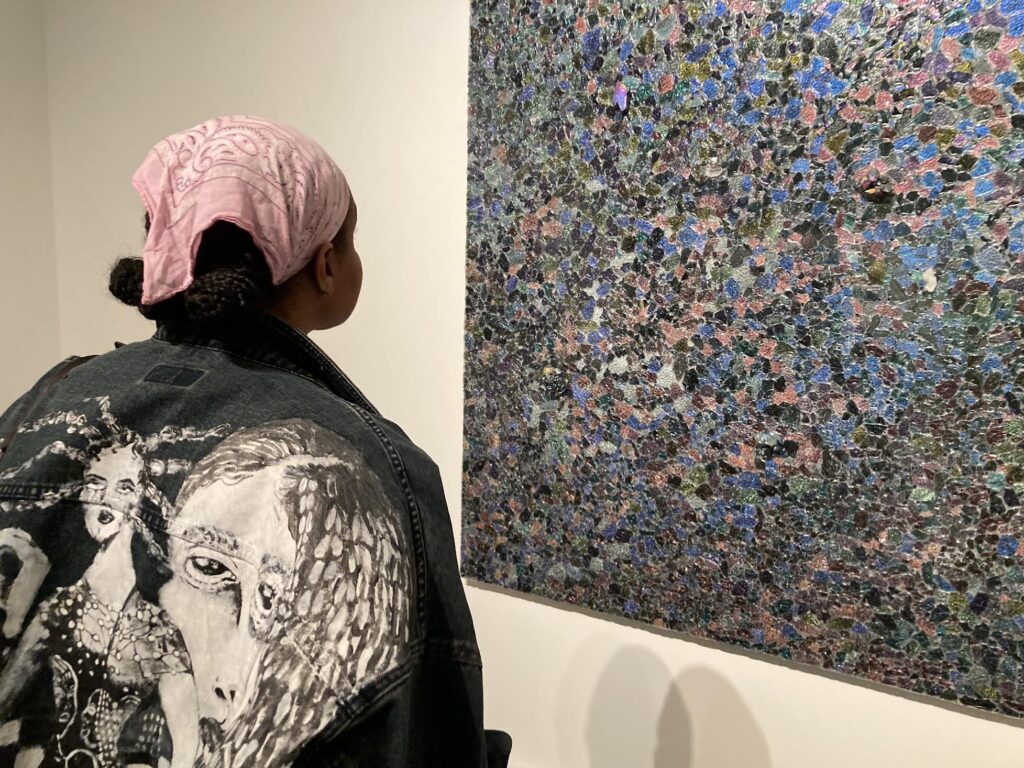
Cyè Jacobs
Bringing Talent Home
Many of Jacobs’ progressive ideas about designing meetups for the collective come from her time studying at Temple University in Philadelphia.
While in the city, she helped found a progressive, creative collective. Called “Bad Apple Commune,” the group provided support and resources and fostered safe artistic spaces for BIPOC (Black, Indigenous and People of Color) individuals.
Working with creatives of color, many of them musicians and artists, taught her the importance of community, chosen family and working with others. But her time in Philadelphia was interrupted. She moved home abruptly to care for her sick grandmother.
“I knew that I was uprooting my life, and I was desperate to still have a connection to queer community,” she said. “Because it was a lot different when I was in Philly. I had built a solid community there with other queer and trans people of color.”
Then, she thought: Just because I’m moving back home doesn’t mean that has to stop.
She started to imagine how she could create similar experiences in her hometown and realized bringing such work here could give her a chance to make an impact.
“I thought that it would be very special to do that where I’m from,” she noted.
“I do want to make a difference, even if it’s incredibly small, because I think that Harrisburg has always had so much potential, and it’s such a culturally rich city and it’s a very Black city,” she added.
As a result, she was very grateful to be connected with the LGBT Center and brought on as a contracted QTPOC coordinator part-time, as she works to finish her college degree.
While Jacobs has done community organizing and mutual-aid work since she was 18—connecting people to housing, groceries and clothing—this marks her first time working for a nonprofit.
“All the work that I did in the past was grassroots,” she said.
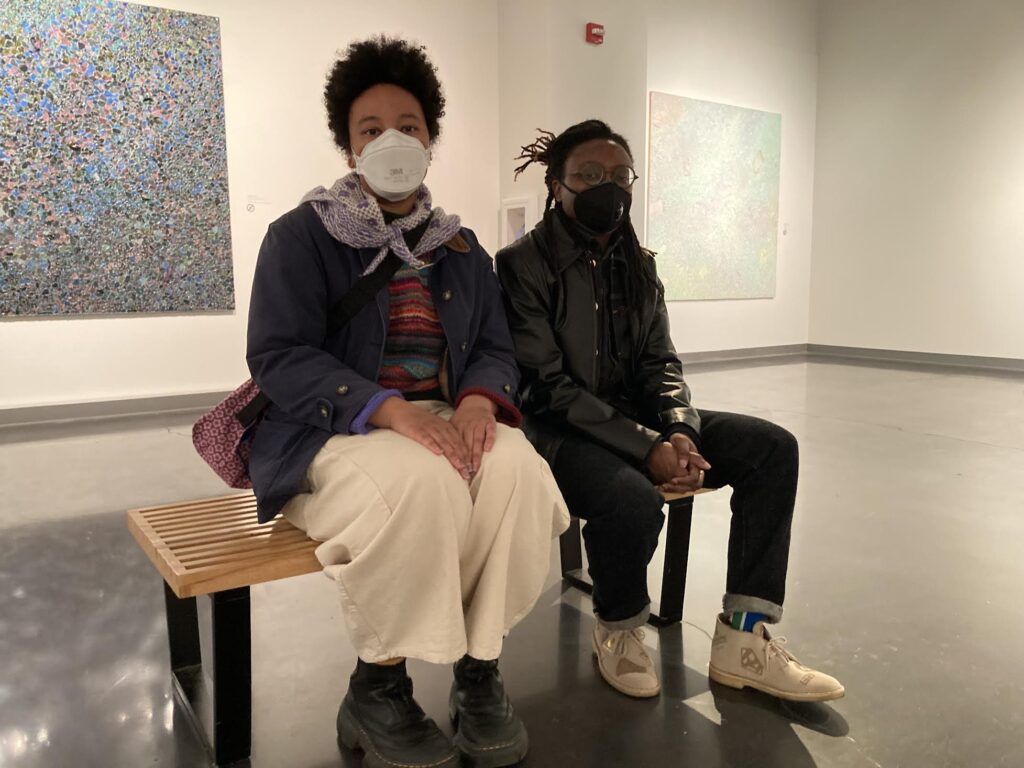
Meridian and Zaire
Small City, Big Impact
Overall, Jacobs views her job as a chance to show up for herself and queer and trans people in Harrisburg.
With her title, she said, she’s been able to learn more about “her people”—and notes that another huge benefit of offering social spaces through collective meetups is that they provide a “sober” meeting space, which can be hard to find in the LGBTQ community.
“Sober spaces are very important,” Jacobs noted, emphasizing that gay bars and clubs have their place, too.
QTPOC members Zaire and Meridian, who asked to be identified only by first names, agreed.
“When you don’t want to go to those places, having a third space like this is very important,” Zaire said.
They both appreciate the group as a social environment outside of home and work for queer and trans people of color in Harrisburg to connect.
“Connecting with people that are actually near to you definitely builds that connection that ‘we exist’ and ‘we’re here,’” Zaire said. “It kind of eliminates the idea of isolation, especially in a smaller city.”
Meridian nodded. “In small cities,” they added, “these spaces are important.”
The LGBT Center of Central PA is located at 1323 N. Front St., Harrisburg. For more information, or to support or donate visit www.centralpalgbtcenter.org.
If you like what we do, please support our work. Become a Friend of TheBurg!