A Cancer Survivor’s Story: Putting off colonoscopy nearly cost him his life

Pat Kehoe was 52 years old in 2020 when he noticed a small amount of blood in his stool. Having no family history of colorectal cancer and no other medical issues, he wasn’t overly concerned, but checked in with his doctor just to be safe.

His doctor immediately scheduled a colonoscopy, something Kehoe had put off even though it is recommended starting at age 50.

“As soon as I wake up from the procedure, my doctor is there and says, ‘I’m 99 percent sure you have rectal cancer,’” Kehoe recalled.

“Hearing that news, I’m just trying to absorb it.”

A biopsy confirmed the doctor’s suspicion: Kehoe had stage 3 rectal cancer – a relatively late stage of cancer that requires more aggressive treatment.

Kehoe’s story is, unfortunately, becoming more common.

American Cancer Society research finds instances of colorectal cancer among adults under 55 increased from 11% in 1995 to 20% in 2019. And more cases of advanced colorectal cancer are being seen among younger age groups, with rates of advanced cancer increasing by about 3% annually in people under 50.

That troubling trend is one reason the U.S. Preventive Services Task Force – a panel of nationally recognized experts in prevention, evidence-based medicine, and primary care – has lowered the recommended age for colorectal cancer screenings from 50 years old to 45. The recommendation applies to those who have no signs or symptoms of colorectal cancer and who are at average risk, meaning they have no family history or other conditions that might make colorectal cancer more likely.

Kehoe sees himself as a cautionary tale for those who might put off getting screened.

After his diagnosis, Kehoe endured what he describes as a “very aggressive treatment” regimen that included three months of chemotherapy, followed by targeted radiation treatments every weekday for roughly two months and concluding with surgery to remove a portion of his rectum and temporarily put in a colostomy bag. It was a brutal process, he said.

“I was so sick between the radiation and the chemo pills,” he recalled. “The thing with the radiation is, even after you’re done with the treatment, it’s still affecting your body.”

He also notes his treatment required multiple CT scans and colonoscopies – an ironic twist considering he put off a routine colonoscopy when he turned 50.

“I try not to be preachy about it, but I do tell people that if I had gone in two years earlier like I should have, I might not have ended up going through all of this these last couple years,” Kehoe said.

Today, Kehoe is cancer free and is making some changes in the hopes of staying that way. He has cut back on red meat and processed foods, and is trying to exercise more and take better care of himself in general. As a preventive measure, he has bloodwork every three months and maintains routine doctor appointments.

He has blunt advice for anyone who might be putting off a colonoscopy because they don’t think it’s important: “Don’t mess around and don’t wait … go get it! If it’s caught earlier, it’s much easier to treat.”

Some common signs of colorectal cancer:

  • A change in bowel habits, such as diarrhea, constipation, or narrowing of the stool that lasts for more than a few days.
  • A feeling that you need to have a bowel movement that is not relieved by doing so.
  • Rectal bleeding.
  • Blood in the stool, which may make it look dark.
  • Cramping or abdominal (belly) pain.
  • Weakness and fatigue.
  • Unintended weight loss.

(Source: American Cancer Society)

THINK (Trusted Health Information, News, and Knowledge) is a community publication of Capital Blue Cross. Our mission is to provide education, resources, and news on the latest health and insurance issues.

Continue Reading

The Week that Was: News and features around Harrisburg

City Forester Ellen Roane explains how to build a spotted lanternfly trap.

Our April issue of the magazine is out! If you’re ready for all things spring, check out this month’s special home and garden section. As always, take time to catch up on this week’s local news, here.

Airbnb in Harrisburg was up for discussion this week as city officials pondered options for regulating listings, our reporting found. Officials weighed options such as registering, taxing and inspecting short-term rentals.

April events are lined up for the coming month in Harrisburg and we’ve featured a few, here. For even more happenings in and around the Harrisburg area, click here.

Capital Blue Cross and Variety, the Children’s Charity joined forces to distribute adaptive bikes and strollers to children with disabilities this week, our online story reported. The ceremony was held in conjunction with Developmental Disabilities Awareness Month.

Hamilton Health Center broke ground on a new healthcare facility in Steelton, our online story reported. The new facility is part of a mixed-use development called The Steel Works Revitalization.

The Harrisburg Housing Authority opened its Section 8 waiting list briefly this week, for the first time in two years, our online story reported. Authority officials shared about the challenges of finding affordable housing and the demand for housing that outweighs the supply.

The LAN Center, an e-sports facility, officially opened in downtown Harrisburg, our online story reported. The center will serve as the home for a Harrisburg-based professional e-sports team and will be available to Harrisburg University’s varsity e-sports team and community groups.

“Lights Out Harrisburg” encourages residents and businesses to turn off lights at night to save migrating birds from colliding with buildings, our reporting found. The initiative asks people to dim exterior and interior lights during the migratory season’s overnight hours, from 12 to 6 a.m.

Our publisher is counting his blessings this April, because this time, a few years ago, he was unsure whether business at TheBurg could continue due to the pandemic. In his publisher’s note, he shares how the magazine has survived and how readers have played an instrumental role.

Risotto may not be as difficult to make as you think. In Rosemary’s column, read about how to cook the rice dish and give it a try for yourself.

Sara Bozich has lots of fun ways to spend the weekend. Find some inspiration, here.

The SoMa Sips Beer, Wine & Spirits Festival will take place on April 22 in downtown Harrisburg, our reporting found. The event will feature Pennsylvania craft producers, food trucks and live music.

Spotted lanternflies are headed back to Harrisburg for the spring and summer. In our magazine story, hear from the city’s forester on how to make traps and prevent them from taking over your trees.

Tory Gates has found success as an author, broadcaster, journalist, producer and musician. In our magazine story, read more about the Harrisburg resident’s recent work.

Tree planting will take place this month in Uptown Harrisburg and the city is calling on volunteers for help, our online story reported. The city plans to plant 75 new trees as part of its community tree planting program.


Do you receive TheBurg Daily, our daily digest of news and events delivered right to your email inbox? If not, sign up here! 

Support quality local journalism. Join Friends of TheBurg today!

Continue Reading

Checking In: Harrisburg officials re-open discussion on how to regulate Airbnb

Harrisburg City Council special session on Wednesday.

It’s been over six years since Airbnb rentals started popping up in Harrisburg, but city officials are still pondering what to do with them.

At a special session on Wednesday night, City Council weighed possible options for regulating, registering and taxing short-term rentals, such as Airbnb.

According to Michael Hughes, Harrisburg’s tax and enforcement administrator, this type of rental currently falls in a “gray, unregulated area” within city code. Because of that, not all rentals pay hotel taxes, sales and mercantile taxes or are officially registered within the city, all standard practices for traditional B&Bs.

The city has hopes to address concerns from residents about certain short-term rentals causing noise complaints, parking and traffic issues and building code violations.

In 2017, Harrisburg held its first meeting on the topic, attracting a full house of local residents who voiced support for and against Airbnbs. However, no new legislation has since come forth.

Now, officials are again considering how to move forward.

“The most important thing to start with is for the council and the mayor to have a clear objective of what they’re trying to accomplish,” said Neil Grover, city solicitor. “Because there are lots of ways to do this.”

As the city weighs this decision, short-term rentals in Harrisburg have only continued to increase.

Currently, there are about 256 short-term rental units operating in the city. That number grew by 33% from last year’s number and is expected to continue to tick up at the same rate, according to research done by Granicus, a software company serving as a consultant to the city.

During the meeting, officials brainstormed options like limiting Airbnbs to certain city zones or geographic locations or requiring that they be owner-occupied. Other options, such as requiring registration with the city, charging permitting fees or mandating yearly inspections, also were discussed.

Unlike the last meeting on short-term rental six years ago, only a handful of residents attended to comment on the topic. Several residents of Harrisburg’s Shipoke neighborhood expressed frustration with the rising number of Airbnbs in their community and the impact on parking, noise and other quality of life issues.

Another resident, Grant Elledge, explained how he recently brought before the Zoning Hearing Board a proposal to establish a short-term rental in his residence.

“As someone who’s hoping to use my space for this, I want to follow all the rules. I want to pay taxes on it,” he said.

However, the proposal was denied because the board could not find any language around the rentals in the zoning code.

Grover believes that means that Elledge can establish his Airbnb, because there’s no code that restricts it.

“These issues are going to keep coming,” he said. “I do think there’s a will between the mayor’s office and council to move forward with something that is functional.”

Council President Danielle Bowers said that the next step will be to establish a task force to develop a plan moving forward.

“We can all come together collectively to ensure that we are drafting an ordinance that really meets the city’s needs,” she said.

If you like what we do, please support our work. Become a Friend of TheBurg! 


Continue Reading

Weekend Roundup with Sara Bozich


Plan your weekend with my weekly list of things to do around Harrisburg and central PA!


What you’ll find:

For something new: How ’bout starting Saturday with some Pilates Yoga Fusion (and a beer) at Zeroday? Worth noting: The Central PA Hall of Fame Awards are tonight at Hershey Theatre; Reeser’s Opening Day is Saturday (iykyk) Things on my agenda this weekend: I’m doing a short bit on the red carpet tonight for the CPMHOFs, then swinging by the Pursuit Coworking anniversary. On Saturday, it’s the HU Gala, and a playdate on Sunday.

For your weekend planning

Below are options for your weekend.

A Look Ahead

  1. Add to calendar: 1st-ever SoMa Beer, Wine, & Spirits Festival is April 22
  2. Save the Date: Greystone Derby Day is May 6
  3. The Best Farmers Markets around Harrisburg
  4. Submit your events for the Weekend Roundup

Thursday

Friday

Saturday

Sunday

If you like what we do, please support our work. Become a Friend of TheBurg!

Continue Reading

A Tale of Two Cities: In central PA, history is destiny

Illustration by Rich Hauck.

By all accounts, David Morrison is an optimistic guy.

His good nature was on full display recently as Historic Harrisburg Association marked its golden anniversary, having formed in 1973 to salvage and save the city’s Victorian-era built environment.

Before a large group assembled in HHA’s home, an 1893-era bank building in the heart of Midtown, a beaming Morrison kicked off a celebration of half-a-century of historic preservation.

“This is an unprecedented turnout,” he told over 100 people, describing the standing-room-only crowd as a “symptom of our success.”

And, indeed, he’s correct. HHA, along with a select group of activists, city officials and enlightened developers, has helped preserve large swaths of Harrisburg, including some of the city’s most historically significant structures. They deserve all the credit and kudos we can offer.

Unlike Morrison, though, I’m not really an optimistic guy. I’m not exactly a hard-bitten pessimist either, but no one would describe me as a ray of sunshine.

So, yes, I see what the preservationists see—a wonderfully restored Shipoke, rejuvenated Midtown and Uptown neighborhoods, seeds of hope in Allison Hill.

But I also can’t shield my eyes from how much has been lost. For all its impressive preservation, Harrisburg still suffers from a plague of empty lots, urban highways, dilapidated buildings and slumlords who just don’t give a damn.

Recently, a friend and his wife took a trip to spend the weekend in Lancaster. They returned with rave reviews for the Red Rose City: the dining, the shopping, the galleries, the crowds, the restored, walkable downtown.

When they told me of their little adventure down Route 283, they didn’t get the response they expected. Instead of curiosity, I gave them sass.

“Don’t talk to me about no freakin’ Lancaster!” I snapped.

I quickly told them that I was only joking—I also like Lancaster. But I explained that they were hardly the first people to sing the city’s praises to me.

They then asked the inevitable follow-up: Why is Lancaster so much more, um, vibrant than Harrisburg?

There’s a lot to unpack there, I responded. Lancaster has had less crippling floods, almost no population loss. Historically, it was less dependent on the doomed steel and railroad industries, and its civic leaders, investors and business class didn’t abandon the city when times got tough.

But, to me, Lancaster’s renaissance (the “Best Small City in America,” according to WalletHub) has been greatly aided by the fact that its Colonial and Victorian-era urban fabric remains largely in tact. This may have not seemed like an asset during the demo-crazed 1970s, but it is one today, as many people are drawn to historic downtowns and neighborhoods—like Lancaster’s—to dine, shop, socialize and settle in.

In contrast, Harrisburg is more like a big smile that’s lost a bunch of its teeth. For every Pancake Row (saved), there’s a Penn Harris Hotel (lost). For every Tracy Mansion (saved), there’s a Telegraph building and State Theatre (lost and lost). Downtown has become such a jumble of styles, periods, surface lots and parking garages that, looking at a postcard from a century ago, I can hardly tell it’s the same city.

Moreover, if I were a Lancaster city father, I would declare every Feb. 21 to be a municipal holiday. For on that day, in 1810, Gov. Simon Snyder signed legislation moving the state capital from Lancaster to Harrisburg.

Imagine, if you can, the heart of historic Lancaster ripped out to build a ring of half-empty office buildings, a huge park no one uses, a bunch of surface lots and garages and a dangerous, six-lane urban highway. That’s what happened in Harrisburg. One of its oldest, densest neighborhoods—29 acres worth—was flattened to expand the Capitol complex, and once-quaint Forster Street was turned into a six-block facsimile of the PA Turnpike.

People have told me that, without the state Capitol, Harrisburg would have nothing. I don’t buy that argument. Certainly, Harrisburg would have developed differently, but it’s impossible to know exactly how. My guess is—smaller, denser, retaining far more of its 19th-century fabric, like Lancaster or York or Carlisle, positioning it better as it emerged from its post-industrial funk.

But I don’t want to give in to too much pessimism. Yes, Harrisburg has lost a lot, but much has been saved, thanks to Historic Harrisburg and others who have dedicated themselves to historic preservation.

Since I’ve been in the city, some 15 years, numerous buildings that seemed headed for the wrecking ball have been restored and put back into use. Heck, I work in one, I get my coffee in another, and buy most of my groceries from a third. For all the damage done, Harrisburg still has a lot going for it and, in fact, hasn’t looked this good in many decades.

During the January gubernatorial inauguration, one out-of-town reporter remarked favorably on her visit to the city. She tweeted, “I was surprised by how charming Harrisburg is.”

Reading her comment, I smiled. I thought of all the work that has gone into saving Harrisburg—and all the work that still needs to be done.

Lawrance Binda is publisher/editor of TheBurg.


If you like what we do, please support our work. Become a Friend of TheBurg! 

Continue Reading

Pioneer, Powerhouse: For 100 years, Hettie Simmons Love has broken barriers, set standards

Hettie Simmons Love. Photo by Dani Fresh.

Michelle Obama. Barack Obama. Ben Crump. Martin Luther King Jr.

Honorees for U.S. Sen. Bob Casey Jr.’s 2023 Black History Month ceremony were naming their most-admired African American activists. Then centenarian Hettie Simmons Love took her turn.

“I don’t really understand how anybody can not be an activist in this time and age, that we all have an opportunity to be who we want to be, to encourage our children to be what they to be, and to provide for them so they can become the people they want to be,” she said to amens and applause.

The life of Hettie Simmons Love has taken her from the segregated South to Philadelphia to Harrisburg. To a growing circle of admirers, she is now known as the first African American to earn an MBA from the University of Pennsylvania’s Wharton School.

To friends and colleagues who gathered last fall for 10 cakes’ worth of 100th birthday celebrations, she is a treasure and an inspiration. Hettie Love was denied opportunities to apply her prodigious skills professionally, but on her own and in partnership with her husband, the late George Love, she enriched the Harrisburg community by contributing her talents to her church, her service sorority and education.

Hettie lives in the same hilltop, mid-century modern home in Swatara Township that she and her husband bought when they came to the Harrisburg area in 1978. She and her daughter, Karen Love, sat down with me and shared her life story.


An Awakening

Hettie grew up in Jacksonville, Fla. Her father’s independent meat market catered to white and Black customers. Her mother bought and renovated houses for renting to Black tenants.

Hettie attended an all-girls’ school, where she was valedictorian. Her brother left to attend the University of Michigan. If he could do it, Hettie thought, so could she.

After graduating from Fisk University in Nashville, she returned home. She worked for an African American life insurance company. Her brother drove her to and from work every day.

It was stifling, but she called that time “an awakening.”

“I’d done a lot of reading, and I felt like the North was the place to be,” she said. “There was nothing to do in my hometown that used what I had. I had no freedom. Back in those days, every job you could get had to be with a Black company because no one else was hiring Black women.”

Wharton accepted her application. The first day on the Penn campus, her brother asked a student for directions. Hettie and that student, George Love, would start keeping company.

Hettie was the only Black person in her class, rarely interacting with her classmates. Three Jewish students befriended her, but they were gone by her second year.

“Having come from the South, it didn’t bother me, because I wasn’t used to talking to white people, anyway,” she said. She found her circle through George and his large Philadelphia family.

“There were all kinds of organizations in the Black community who were glad to accept me,” she said.


Giving Heart

The Loves married in 1948 and raised their son and daughter in Philadelphia. George was the first African American high school teacher in Philadelphia. Hettie did some substitute teaching and co-founded a group of parents who organized family outings.

When the Loves moved to Harrisburg, George made his mark as Pennsylvania Department of Education assistant commissioner, overseeing desegregation efforts. He was also widely admired as a Harrisburg School District teacher and administrator and president of the Harrisburg NAACP chapter.

Hettie became active at St. Paul’s Episcopal Church, where she served as treasurer for 22 years. She connected with the local Epsilon Sigma Omega chapter of Alpha Kappa Alpha—the sorority she joined while at Fisk—when a member knocked on her door.

“That has been a blessing,” said Karen Love, a retired Susquehanna Township School District teacher and partner with Hettie in community engagement. “The church and the sorority were both a way to network into the community.”

Hettie was “overqualified and brilliant” when she worked as a part-time bookkeeper for RSVP, meticulously tending the accounts, said Trudy Gaskins, of Lower Paxton Township. Their friendship continued through church, where Gaskins recalled Hettie leading an effort to help a new bishop set up housekeeping.

Hettie’s “silent power” is listening, seeing a need, and quietly filling it.

“She’s just a gentle soul, and yet, a strong and powerful woman who was able to maintain her dignity through very difficult periods of her life when she was not able to work within her areas of expertise,” Gaskin said. “She never turned away from doing things that weren’t up to her professional capacity. That takes a woman with a deep, deep sense of self. She never lost her personhood or self-awareness.”

Members of AKA are steeped in lifetimes of community service, said Barbara Thompson of Lower Swatara Township. Since Hettie welcomed Thompson into the local chapter in 1985, the two have promoted literacy, packed purses with toiletries for women’s shelters, and organized heart health events.

“She has such a giving heart,” said Thompson. “She never says no. If you want her to do something, she is always willing to do it, and she’s so positive about participating. As a result, you just love being around her.”

Through all this, few knew about Hettie’s place in history. That emerged after 1990 Wharton graduate Lana Woods learned that her AKA sorority sister had graduated from the school in 1947. Woods’ sleuthing found that Hettie was the first African American, female or male, to earn a Wharton MBA.

Woods organized recognitions, and word got around. Philadelphia-area students wrote and illustrated a children’s book, “Hettie Simmons Love: Penn Pioneer.” Wharton’s first Black female dean, Erika H. James, told Hettie, “I would not be here today if it weren’t for someone like you who paved the way.”

Karen rattled off her mom’s explanations for all the fuss. It’s just because she’s old. They don’t have anyone else to honor. They ran out of people.

Hettie chimed in.

“I don’t understand why you’re here, getting information,” she told me.

“Because you have so much history of this town in you, and you’ve done so much for the community,” I said. How do you explain that we cherish the rare opportunity to personally thank someone who has spent her 100 years on this earth quietly serving others?


Inspires Them

Hettie’s 100th birthday kicked off a round of celebrations. Karen described car parades, readings to schoolkids, and parties in Harrisburg, Martha’s Vineyard and an Airbnb for the family.

In the middle of the litany, Hettie looked at me.

“They just use me to have parties, that’s all,” she said.

Hear that sound? That’s me and Karen still laughing uproariously.

American Literacy Corp. Executive Director Floyd Stokes met the Love family through his literacy advocacy. Hettie was 80 then, “actively volunteering and making an impact in the community.”

“And to do it so humbly,” said Stokes. “It blew my mind. Even more, as she crept closer, closer, closer to 100, and to still see her move around the community the way she has—it’s cliché, but I get tired just looking at her.”

Hettie’s expressive readings to students set an example that they will remember, he added.

“It inspires them,” Stokes said. “If she can do it, then reading has to be something important, and something really, really cool.”

Karen Love appreciates the community’s love and the energy her mother draws from it.

“I learned that I have a mother I have to share, because she’s got so many wonderful qualities, and I’m so grateful that people are embracing her and supporting her,” she said. “Just knowing that other people are aware of her accomplishments helps to motivate them to keep moving, but it also motivates her to want to be here and be a part of the community that she really does love.”

As for Hettie, Wharton pioneer and community stalwart, she sums up her century by looking back—and forward.

“I’ve had a good life,” she said. “I haven’t regretted anything so far.”


If you like what we do, please support our work. Become a Friend of TheBurg! 

Continue Reading

“Quite a Life”: Judge Sylvia Rambo reflects on her trailblazing career, as her name tops the new federal courthouse

Judge Sylvia Rambo at the new federal courthouse when it was under construction. Photo courtesy of Sarah McGowan.

If destiny has a voice, Sylvia Rambo heard it loud and clear long ago on the school bus to her elementary school.

She was headed from her home at the U.S. Army Carlisle Barracks, where her stepfather was stationed, to the borough’s former Franklin School. Suddenly, she recalled, a voice told her to become a lawyer.

It was an unusual calling, especially given the times. Women were few and far between in the profession, and Rambo came from a low-income family. If she listened to the voice, she’d become the first in her family to graduate college.

“From that time on, I became a straight-A student,” she said. “That became my drive from that point on.”

Those days on the school bus, and later attending law school, feel like a lifetime ago, reflected Judge Rambo, sitting in her large chambers high up in the downtown Harrisburg Federal Building. She will turn 87 this month.

It has been a lifetime of career success for the U.S. District Court-Middle District of Pennsylvania judge of 24 years. Her career has been noteworthy not only for her own achievements but for women across the state and country, as she blazed trails and made history. And she has done it humbly, rarely taking the time to count her accomplishments, simply continuing forward with the work she has always felt destined to do.

“I just kept on going because there were women behind me,” she said. “I just did what I knew I could do and tried to do that well.”

Last June, state officials held a ceremony to announce that Harrisburg’s new federal courthouse on N. 6th Street would be named in honor of Rambo. The courthouse, which held a ribbon-cutting in December, now bears the name, “The Sylvia H. Rambo United States Courthouse.” It’s the first federal courthouse in the commonwealth to be named after a woman. In fact, Rambo is one of only three living female judges to have a courthouse named after her.

“I still haven’t come to grips with it,” she said. “It’s still unbelievable.”


Underdog

Rambo grew up the daughter of divorced parents, a German immigrant mother and a father who she never saw after the age of 2. Her mother later remarried, and the family moved when her stepfather was posted to the U.S. Army War College at the Carlisle Barracks.

After her school-bus-light-bulb moment, Rambo set her sights on becoming a lawyer. She loved reading about Clarence Darrow, an early 20th-century defense attorney who was known for helping low-income workers and the disadvantaged. Rambo was also passionate about supporting the overlooked and underserved.

“I was always concerned for the underdog,” she said.

Rambo went on to graduate from Dickinson College in Carlisle and later from Dickinson School of Law as the only woman of the class of 1962.

She was a minority in her field, but never let that get in her way. She was fiercely driven and independent, but never scolded men who opened the door for her, as some of her female colleagues did, during her time as a public defender in Cumberland County.

“In no way does that take away from your independence,” she explained.

She became the first woman to hold the title of chief public defender in the county. But that would be only one of many firsts to come. She was soon after appointed the first woman to serve on the Pennsylvania Court of Common Pleas for Cumberland County.

In 1979, Rambo became part of a historic class of federal judges appointed by then-President Jimmy Carter. Rambo, named to the Middle District of Pennsylvania, was one of 23 women appointed that year. For comparison, only 10 women were appointed as U.S. federal judges in the previous 190 years.

She would later serve as the first woman chief judge of the Middle District.

At the same time that Rambo was in the midst of the FBI background investigation process before her appointment, history was being made in another way. She followed the news with her late husband, George Douglas, as the Three Mile Island nuclear plant suffered a partial meltdown.

“I said, ‘I wonder who’s going to get that litigation?’ And he said, ‘I think I’m looking at her,” Rambo recalled.

Douglas was right. Rambo would go on to preside over litigation surrounding the TMI accident for 20 years.

Other cases she handled included mandated special education services for students, the Camp Hill prison riots in 1989, environmental protection issues and sprawling fraud cases.

With each case, she strived to remain as fair as possible, hearing all sides and considering all perspectives.

“I try to treat everyone, no matter who they are, in court, with respect,” she said.


Your Honor

Outside of the courtroom, Rambo loved sports, including basketball and volleyball. She also adored animals and always had German shepherd dogs. Years ago, she owned and rode horses on her property, farmland near Carlisle. She also would cut her own firewood, pointing to a picture in her office of her sawing a log.

Her husband, Douglas, was a trial attorney. And like Rambo, he was always concerned about helping those he interacted with. However, the couple never discussed their cases, unless it was something funny, Rambo added. Her husband was always supportive of her career, and she’s grateful that he didn’t mind that she didn’t take his last name in marriage.

While Rambo said that, for the most part, she was respected as a judge, that wasn’t always the case.

She recalled an occasion when a male lawyer repeatedly responded to her with “yes sir, I mean, ma’am.” She knew it was deliberate and called him to the stand asking, “When you have to respond to a male judge, how do you address him?” He replied that he used the term “your honor.”

“I said, ‘That works perfectly well with me,’” she said. “He got very angry.”

Martin Carlson, magistrate judge for the Middle District of Pennsylvania, has been a colleague of Rambo’s for years and has witnessed the environment of her courtroom.

“She demands and commands absolute respect,” he said. “She really is the model of what a judge should be. She brings to her work not only a great legal mind, but a great heart.”

Even after a life full of career accomplishments and firsts, Rambo was shocked to find out that the new courthouse, a project she helped lead, would bear her name.

“That courthouse ends up being a lasting monument to her life and career and an inspiration to everyone that there are no limits to what you can achieve,” Carlson said. “It’s a remarkable legacy.”

But Rambo admitted that she hasn’t really thought about her legacy. Throughout her life, she just kept pressing forward and now, as she ages and deals with medical issues, she admits that she’s getting tired.

“People will what think what they think of me,” she said confidently.

At the moment, Rambo is focused on packing up her longtime office downtown, as staff at the federal building will make the move to the new courthouse in the coming months. It’s been a lot of work, she said, but she’s excited. At the same time, she’s considering what the next few years may hold, as she knows she’s approaching the end of her career. She’s loved her work and, though there have been challenges, looking back, she’s satisfied.

“It’s been quite a life,” Rambo said. “I wouldn’t give it up.”

The Sylvia H. Rambo United States Courthouse is located at 1501 N. 6th St., Harrisburg.


If you like what we do, please support our work. Become a Friend of TheBurg! 
 

Continue Reading

Park Perch: Susquehanna Riverlands is a new gem of a state park with a bird’s-eye view of the river

It’s a stunning vista overlooking the Susquehanna River.

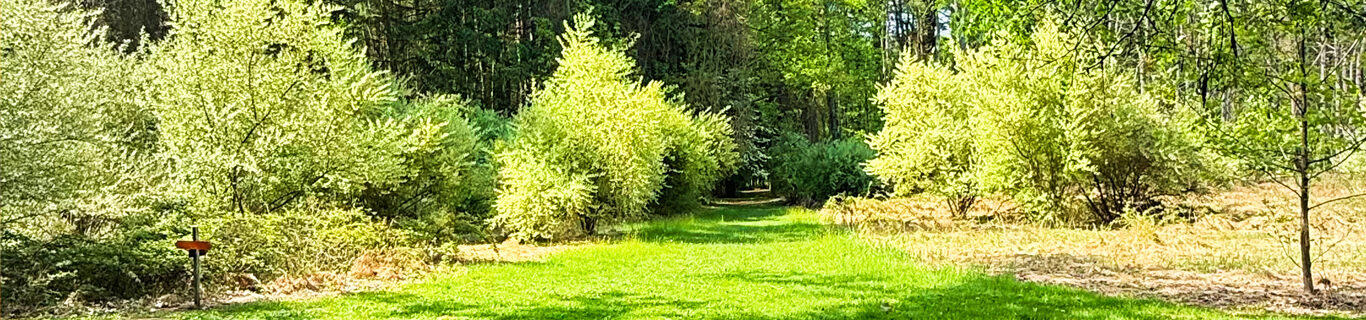
To the north, the river flows and swirls around the pillars of the picturesque Shocks Mills Bridge. If you stay perched on the rocky outcropping long enough, you just might spy a miniature train below, chugging across the bridge.

A patchwork of Lancaster County fields and farmland ripple into the horizon, on the opposite shore. To the south, the river disappears around a bend, lost in the Hellam Hills of York County, upon which you’re standing. It’s hard to believe this panoramic spot, frequented by hawks and bald eagles, is less than 10 miles from downtown York.

Most people would probably describe the scene as “sweeping.” But most people haven’t seen or even had access to this bird’s-eye view, until now.


New Views

“We had 135 people here for a ‘First Day Hike’ on Jan. 1,” said Nathaniel Brown, park manager. “It was quite a big gathering—more than we expected, especially with the way the road is. It doesn’t usually see that type of traffic, being a relatively narrow, gravel road.”

That’s because the 1,044-acre-park was just acquired from the nonprofit Lancaster Conservancy last September. But the Overlook Trail leading to Schull’s Rock was quickly blazed in November, powered by a Harrisburg-based crew from the Pennsylvania Outdoor Corps. Roundtrip, the hike is just under a mile and a half, from the makeshift gravel parking area.

“We worked quickly, to give people access to those views,” said Brown. “We expect usage to increase as people become aware of the park. But it’s a lot to balance at the moment—trying to keep people happy by giving them access to the new property, letting them satisfy their curiosity, while we make improvements where we can.”

Another major hiking trail traverses the new park—nearly three miles of the 200-mile-long Mason-Dixon Trail.

As the name Susquehanna Riverlands suggests, the park includes a mile of riverfront along the Susquehanna. But that’s not the only key waterway. The park includes a one-and-a-half-mile stretch of the Codorus Creek, flowing through a gorge, into the river. And that section of the Codorus not only includes Class I and II rapids—rare for this area—but history along its banks.

“The creek had a lot of historic uses from the [nearby] Codorus Furnace,” Brown said. “There was a canal that ran the length of the creek to York city, and the metal that was produced was shipped to Baltimore or Philadelphia.”

Establishing Susquehanna Riverlands gives the state a foothold, from which it’s hoped that additional nearby historic sites—such as the furnace—could be added.

“We know the geology informed the history of this site,” said Rachel Reese, division chief for the resource management and planning division of the Bureau of State Parks, under the umbrella of the state’s Department of Conservation and Natural Resources (DCNR).


Diamond in the Rough

Environmental experts, starting at rock bottom, are building the park’s master plan—a process that will take at least a year.

“One of the first things we want to do is a complete inventory and assessment of the area—the physical and recreational conditions, if there are sensitive areas like wetlands, or rare species— we want to know all of that,” Reese said. “Once we have that information, the question becomes, ‘How do you connect visitors to those things, without damaging the things that create the desire for visitation?’”

Reese has long been involved in developing new trails and assets within existing state parks. But she’s “wildly overwhelmed” about the development of Susquehanna Riverlands—and two additional new state parks, Vosburg Neck in Wyoming County and Big Elk Creek in Chester County. That boosts Pennsylvania’s number of state parks to 124—one of the largest systems in the country.

Although every state park contains priceless natural wonders, it’s not without actual cost. And there are financial twists in the parks’ funding story. The price tag of three new parks, $45 million, is being underwritten partly by federal American Rescue Plan Act (ARPA) funds, but primarily by the state’s Oil and Gas Leasing Fund. That’s funding, fueled by oil and gas leases on state land, which has significantly swelled with an increase in Marcellus Shale region leases. Tapping into Marcellus Shale is seen as a controversial practice by many environmentalists.

Additionally, some might question how DCNR—with a documented $1.4 billion of backlogged state park maintenance—can add new parks into the mix.

“Our infrastructure needs received a $75 million down payment in the 2022-23 budget through ARPA funding, and Gov. Josh Shapiro has proposed adding another $112 million to address that infrastructure backlog, from the Oil and Gas Leasing Fund in the 2023-24 budget,” said Wesley Robinson, DCNR spokesperson. “All of that is said to note that we are consciously working to be stewards of public lands so that Pennsylvanians have the best recreation options possible. We will continue to push for investments into our public lands and prioritize critical infrastructure projects as we strategically address the backlog.”

As in nature itself, funding and land use are balancing acts. And pandemic trends turned many Pennsylvanians into outdoor enthusiasts, driving a greater need for recreational spaces, sparking the idea of new state parks.

“This is definitely a unique opportunity that hasn’t happened in a long time,” Brown said. “There were a lot of parks developed in the 1950s, ‘60s and ‘70s, but the last park that was built from scratch was Erie Bluffs in 2004. This is a new experience for everyone, from the central office to the field staff here. It’s a lot of work—a pretty heavy lift—but it’s a really cool opportunity to be part of the beginning of a new state park.”


For more information on Susquehanna Riverlands State Park, visit dcnr.pa.gov/StateParks/FindAPark/SusquehannaRiverlandsStatePark.


If you like what we do, please support our work. Become a Friend of TheBurg! 

Continue Reading

Diggin’ It: Earth Day falls on April 22, but the Harrisburg area is down with earthy events all month long

Wetlands Festival at Wildwood Park.
Photo courtesy of Dauphin County Parks and Recreation.

This month, New Cumberland is ground zero for local Earth Day happenings.

“We’re surrounded by natural resources here—the Susquehanna River, the Yellow Breeches Creek—so Earth Day events feel like a natural tie-in,” said Drew Lawrence of the New Cumberland Collective, a community nonprofit planning month-long celebrations.

Events kick off April 1 with a “Repair Fair” at Weist Hardware. Handy community helpers are willing to fix small appliances, make electrical, carpentry and plumbing repairs, and offer bike and car maintenance. Mending and fixing things are sustainable habits, Lawrence said, that reduce landfill volume.


Earth & Arts

The borough’s signature event is the New Cumberland Earth & Arts Festival, April 16, both inside and outside the New Cumberland Library.

“We came up with different ways to include the arts in environmental messages,” Lawrence said.

For example, festival-goers can learn about sustainable fashion through workshops on thrifting and natural dyeing.

“We’ll have live music that’s very natural—songs about trees and a beat-making performance using cool sounds from nature,” Lawrence said.

Food trucks, art vendors and a recyclable art contest will add to the festive atmosphere. Booths, talks and bird walks will be offered by the West Shore Wildlife Center and American Audubon Society.

On Earth Day, April 22, Mayor Thad Eisenhower will exert pedal power, for a “Bike the Borough” ride.


Later, Litter

Over the years, volunteers with the Great Harrisburg Litter Cleanup have found everything but the kitchen sink.

Oh wait—as unlikely as it might sound, they actually have found old kitchen sinks, along with old construction materials, plus plenty of bottles, cans and typical litter. You name it, they’ve probably found and picked it up—all by hand.

It adds up. Hundreds of volunteers have removed a grand total of 380 tons of litter from the city over the past 10 years. Last year alone, volunteers properly disposed of 450 tires.

“It’s kind of mind-boggling,” said Charlie Miller, with event organizer Tri County Community Action. “Unfortunately, there’s a lot of illegal dumping that happens in Harrisburg, and this is a chance for residents to reclaim their neighborhood and to communicate that they want vibrant, safe, clean places to work and play.”

This year’s 11th Annual Great Harrisburg Litter Cleanup is set for Earth Day, April 22. The cleanup operates from three locations—South Allison Hill, Midtown and Uptown. The public is invited to participate by registering online, with free T-shirts for early registrants.

“The event is meant to bring residents and friends of Harrisburg together, as a community, to take on litter and be engaged in their city’s beautification,” Miller said.


Barrels of Fun

Sustainability is on tap, April 15, at the 12th Annual Mechanicsburg Earth Day Festival, where rain barrels are star attractions.

“The highest bidders go home with functional rain barrels that are also works of art,” said Susanna Reppert, festival coordinator.

Like a spring ritual, professional artists and area art students transform the barrels with colorful paint.

Rain barrels help gardeners conserve water and reduce water bills, potentially hundreds of gallons’ worth. The auction has another sustainable feature—profits underwrite the event, planned under the umbrella of the nonprofit Downtown Mechanicsburg Partnership.

The downtown festival typically draws 1,800 people for its earth-friendly vendors, entertainment such as drumming, environmental nonprofits and unique community recycling.

Faded American flags, unused prescription drugs, print cartridges and old eyeglasses will be collected by the American Legion, Mechanicsburg Police, Simpson Library and Mechanicsburg Lions’ Club, respectively. Mechanicsburg fifth-graders with the Green Team Environmental Club are accepting Styrofoam, aluminum cans and old markers. Bicycles in any condition are being collected by Operation Wildcat, an organization that supports Mechanicsburg Area School District’s families in need.

“Since the Earth Day Festival is on Tax Day, April 15, you can even bring and shred all your documents you no longer need,” Reppert said. That’s thanks to a booth run by PSECU.

Reppert, owner of longtime downtown business, Rosemary House, is collecting old crayons for The Crayon Initiative, a nonprofit that creates new crayons distributed to hospitals.

“People like the vibe at our event,” Reppert said. “We have a strong ‘zero-waste’ commitment, so there’s minimal waste and trash. People really appreciate that.”


Celebration of Remediation

MycoSymbiotics, a mushroom research lab, was one of the first businesses to occupy offices to The Bridge Eco-Village.

A $40 million project, The Bridge plans to convert the former Bishop McDevitt High School in Harrisburg into an eco-friendly community hub mixing residential units with co-working spaces and a large event space. The school’s former stadium has been transformed into tiered garden beds.

“The Bridge is really the perfect ecosystem and space to show the world that any land can be remediated for the good of the earth and the people,” said Leslie Avila of MycoSymbiotics, organizer of the 2nd Annual Earth Day Fest at The Bridge, April 22 and 23.

Free festival events include a seed swap, live music and community mural painting. Tickets are required for overnight camping and educational workshops, such as how to develop a solar greenhouse.

“There’s been a new awakening—a shift in our consciousness,” Avila said. “Our ways of doing things, culturally, isn’t really sustainable. The Earth Day Fest offers the opportunity for people to learn how to live more sustainably so the earth can be a healthier place.”


Nature Treasure

Many people developed a newfound appreciation for nature amid the pandemic.

“Our visitation spiked—we had 100,000 visitors in March of 2020, and previously we had 100,000 visitors in a year,” said Savanna Lenker of Dauphin County’s Wildwood Park. “The Wetlands Festival gives them the chance to learn more about what makes Wildwood so special.”

Live animals—including turtles and frogs—science experiments, environmental groups, music and food are planned for the 23rd Annual Wetlands Festival on April 29. The family-friendly event is traditionally one of the park’s two busiest days of the year, attracting some 1,500 people. Guided nature walks will help visitors identify the park’s birds, trees and wildflowers.

Additionally, the 11th annual “Art in the Wild,” an outdoor natural art exhibit, is set to open on April 2.

“Our wetlands are very special,” Lenker said. “The park serves as a huge flood control device for the city of Harrisburg because Wildwood Lake absorbs floodwater and prevents it from making its way downtown.”


Digging Deeper

There’s a lot more to learn about the Earth Day events featured in this story:

All events mentioned are free and open to the public unless otherwise noted.

If you like what we do, please support our work. Become a Friend of TheBurg! 

Continue Reading

April Publisher’s Note

Each April, I count my blessings.

Back in 2020, we were in the thick of finalizing our April issue when the world came to a screeching halt.

With a pandemic crashing down around us, our long-planned feature stories seemed trivial, at best. Our advertisers suddenly cancelled their ads. Our printer wanted to know if we’d even have an April issue.

I’ll never forget that horrible, sinking feeling when the governor issued his stay-at-home order. What would we do? Like everyone else, we winged it.

We quickly held a meeting and decided, as a staff, that we needed to publish an April issue, despite it all. We cut some stories, dropped a lot of ads, and then decided to publish primarily online, as most of our distribution locations had closed.

In short, it was the worst time of my long journalism career, as well as one of the worst times of my life. I honestly didn’t know if we’d be able to continue in business past that point.

Well, we’re still here—stronger than ever. And that’s why, each April, I count my blessings.

A big part of that blessing is you, our community of readers. To try to survive the pandemic, we accelerated the launch of our new membership program—Friends of TheBurg—and, wow, did you respond!

Because of you, we were able to continue to report, continue to write, continue to publish, continue to offer this news service to the greater Harrisburg area and beyond. I cannot express enough gratitude to our incredible readers and supporters.

Yes, April is the third anniversary of Friends of TheBurg. If you’re a friend, we hope you’ll renew your membership and, if you’re not one yet, we hope so much that you’ll join. Last year, we even felt safe enough to throw our first (and long-delayed) Friends of TheBurg “bash.” It was so successful that we plan to hold another one later this year, so please stay tuned for that.

More good news—winter is over (well, what there was of it, anyway), and spring is coming on strong. Happy April, everyone!

Lawrance Binda
Publisher/Editor

Click here to read the digital version of our April issue.

If you like what we do, please support our work. Become a Friend of TheBurg! 

Continue Reading