Refresh & Recharge: History, shopping, art await nearby in Havre de Grace

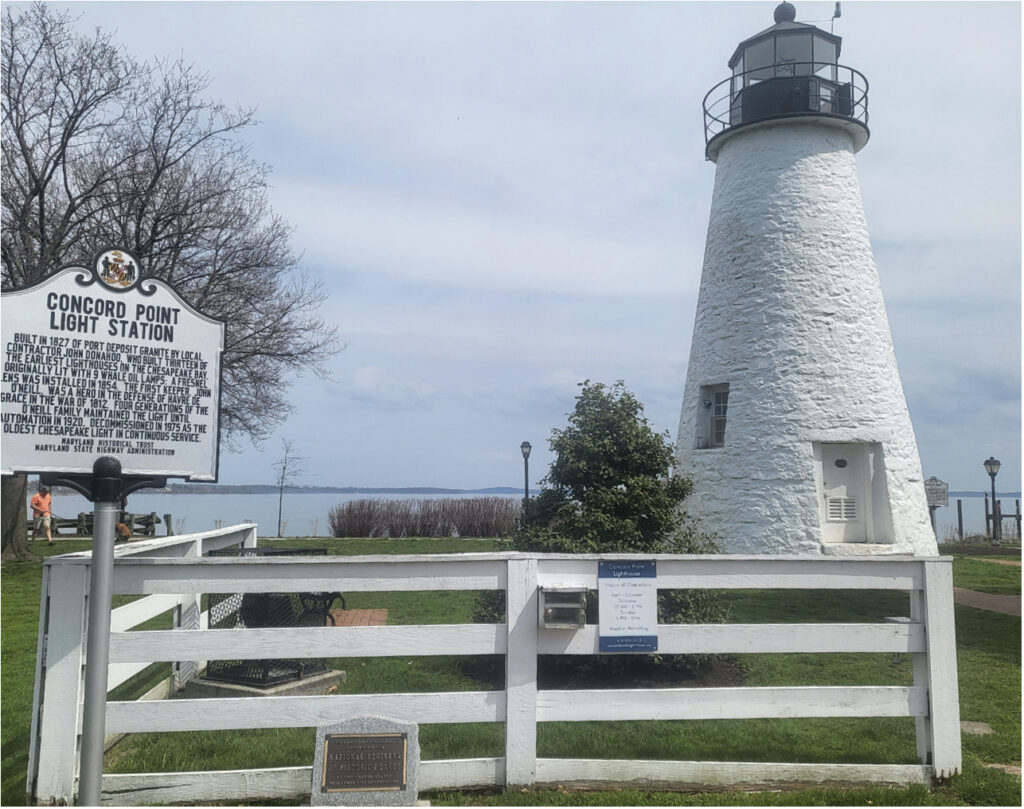
The Concord Point Lighthouse dates back to 1827.

Folks of a certain age may recall when our local weatherman would point out the hottest spot in the region, which, more often than not, turned out to be Havre de Grace. He’d trace his finger along the map and say, “It’s located way down here.”

Why he always included Havre de Grace was a mystery to me then and still is now. Did he have ties to the town? Who knows? What I do know is that my curiosity led me to the area located about 1 hour and 45 minutes from Harrisburg in Harford County, Md., at the confluence of the Susquehanna River and Chesapeake Bay.

Havre de Grace touts a total of eight museums, all of which feature aspects of an area rich in history. If museums aren’t your thing, there are plenty of other places to while away the time. The relatively short drive leads to a quiet town where boutique shops and restaurants line the streets and elegant bed and breakfasts beckon.


Lafayette Trail

A good way to see a nice sampling of what Havre de Grace has to offer is to take a self-guided tour of the Lafayette Trail, which can be accessed at the Visitors Center on Pennington Avenue.

One of the first stops along the trail is the Lock House Museum, where visitors can learn about the importance of canals in facilitating early trade and commerce. The two-story structure overlooking the Susquehanna was built in 1840 and was home to the lock tender and his family. Guests of the museum will learn about the “locks” that were devised to raise and lower canal boats to adjust for the difference in elevation as they passed through the channels.

Along the trail, one of the most popular landmarks is the Concord Point Lighthouse, which looms large as a backdrop in many a selfie. It is known as the oldest continuously operating lighthouse in the country and was once slated for demolition before a concerned citizens group banded together to save it. Guests can learn more about the lighthouse at the nearby museum, which dates back to 1827.

Along those same lines is the Havre de Grace Maritime Museum, which tells the story of the region’s nautical heritage. An exhibit was recently installed in the 10,000-square-foot, three-story building that tells the story of the Underground Railroad in the area.

Quirky Shops

Shoppers who visit the area have plenty of places to window shop, purchase souvenirs or buy that unique gift for someone who has everything. Two unique examples are JoRetro and Washington Street Books & Music, both located on Washington Street.

JoRetro transports customers into the wayback machine to a time when Pyrex was popular. Quite a bit of shelf space is dedicated to the kitchenware. Vintage vinyl, clothing, gifts and jewelry are among the other items that customers can purchase at the quirky, fun shop.

Washington Street Books serves as both a retail shop and a museum. During a recent visit, ABBA blared on the sound system while 20-somethings browsed comic books that lined a wall. Items for sale include crystals, toys, minerals and other curiosities, surrounded by dozens of floor-to-ceiling display cases containing costumes worn by stars in movies. The owner rotates out 250 movie costumes from 75 different movies. When I visited, the display featured costumes from “Hunger Games” and “Respect,” including a gown decorated in hundreds of Swarovski crystals and worn by Jennifer Hudson.

For those who enjoy browsing decor that may have decorated our grandmothers’ houses, there’s the sprawling Seneca Cannery Antiques, where dozens of vendors sell items that have long been forgotten.

After a day of shopping, consider winding down by taking a leisurely walk along the Promenade, a lovely boardwalk that provides a beautiful view of the Susquehanna, where waterfowl frolic and boats traverse the bay. Just off the Promenade, a century-old fieldstone building offers visual interest. Al Capone was said to have stayed there, but the Depression forced the hotel out of business. Today, the structure is home to luxury condominiums.


Beautiful B&Bs

The Vandiver Inn, located on Union Avenue, is home to many “I do’s,” and rightly so. The mansion dates back to 1886 and is named after Murray Vandiver, who served as secretary and treasurer of Maryland and as the mayor of Havre de Grace. Vandiver built the large Victorian “cottage” as a present for his wife.

A short walk away is the Spencer Silver Mansion, built in 1896 and purchased in 1917 by Charles Bartol Silver, a local canning magnate who made it his home, along with his wife, “Fannie” Hopkins Silver. Silver was part owner of the firm Silver, Spencer & Co., reputed to be the largest salt fish packer in the East.

Art & History

On Market Street, an ambitious project is underway called Harmer’s Town Art Center, named after the original settlement at Havre de Grace.

Currently, construction is apace for a 34,000-square-foot indoor facility that soon will debut as a creativity incubator, an art center and an economic driver. The public soon will be able to able to watch artists as they work, much like the Millworks here in Harrisburg.

Located outside of the center will be the Graw Alley Interactive Art Park containing sculptures, outdoor seating and signage, leading visitors on a tour of Havre de Grace history as told through murals and public art installations. Harmer’s Town Art Center is slated to open this summer.

These are just a few highlights of beautiful, quaint and charming Havre de Grace—an area that is ideal for a laidback getaway to refresh and recharge.


If you like what we do, please support our work. Become a Friend of TheBurg!  

 

Continue Reading

River Rhapsody: Mansion Concert series brings intimate, acoustic musical performances to Harrisburg

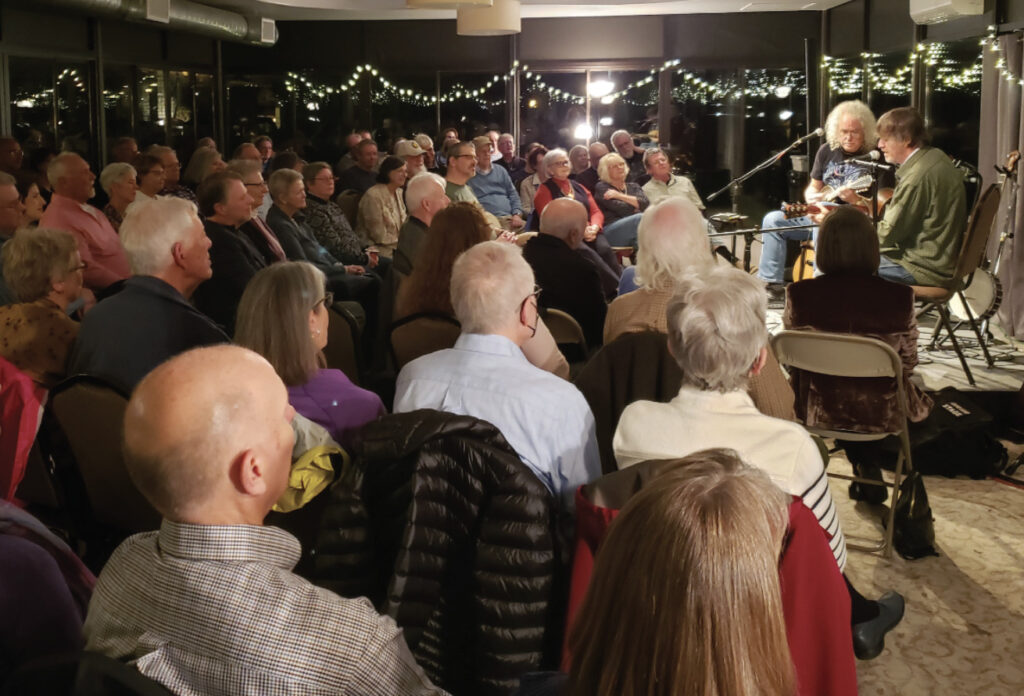
A packed house listens to Steve Baughman and Robin Bullock at a past concert.

Since 2017, Tim Alexander has dedicated his spare time to organizing a series of acoustic musical performances at the Manor on Front, all to bring the house concert culture to Harrisburg.

Alexander, together with his wife Polly, created what he calls a “listening room experience,” which they have dubbed the Mansion Concerts—a play on house concerts, as the events take place inside a historic Front Street mansion.

In the time before sold-out arenas and Ticketmaster resales, people often experienced musical performance in homes and backyards. From Mozart’s house concerts in the 18th century to Harlem buffet flats in the 1930s, the genres and audiences varied, but the intimacy of the setting meant there were no bad seats to be had.

Now, at the Mansion Concert series, which takes place at the Manor on Front’s glass-shrouded River Room, an artist could drop a pick and “somebody might pick it up and hand it to them, they’re that close to the audience,” Alexander said.

Alexander plays guitar and has participated in numerous instructional events, including at the Swannanoa Gathering in North Carolina, where many of the guitar players who have been invited to the Mansion Concerts are instructors.

The Alexanders’ Harrisburg events, which operate under a nonprofit structure, donate all ticket sales, outside of sale platform fees, straight to the artist. The River Room fits 85 people, allowing them to attract artists without sacrificing the intimacy that house concerts are known for.

“At the end of the show, I am shameless in asking my guests to buy a CD,” Alexander said. “Musicians just are not making any money on the streaming of music.”

Mark Bennington, who owns the Manor on Front with his wife Sheri, touts the quality of the acoustics and lighting in the River Room, which contributes to a warm and cozy event space.

“The Mansion Concert series has brought a new level of sophistication to the Harrisburg music scene,” Bennington said.


On the List

Alexander organizes Mansion Concerts on top of his nonprofit day job, so the exclusive shows run only about once every other month.

However, due to the series’ popularity, the schedule is already packed through 2024, with upcoming shows featuring artists like symphonic acoustic guitarist Christie Lenée on Aug. 26, singer-songwriter-poet Johnsmith on Oct. 7, and international acoustic guitarist Peppino D’Agostino on Dec. 10.

In true house concert fashion, Mansion Concert tickets are invite-only, but you just need to sign up for emails on the organization’s website to get on the list.

On a typical show evening, doors open at 6 p.m. while the artist mills around, getting their equipment set up and sound checking. By 7 p.m., the lights go down for two sets, separated by a brief intermission. It’s not a late evening—music is usually finished by 9:30 p.m.—but it can go later if the artist wants to hang around and chat with the audience.

Some folks bring a bottle of wine and charcuterie for afterwards, and Polly’s homemade chocolate chip cookies are always a big hit.

“The music is important, but Polly’s chocolate chip cookies are far more important,” Alexander said.

The Manor on Front typically sells out all of its rooms on show nights, he added. This includes 11 sleeping suites across the two mansions, each with its own private bathroom and a hot breakfast in the morning. At breakfast time, the venue is known for its sourdough French toast.

“Our sourdough bread is made from scratch by Sheri’s 80-year-old mother, Dee Smith, who lives just across the river in Camp Hill,” Bennington said.

Of course, the artist gets to stay overnight and for breakfast, courtesy of Alexander and his team.

“For the whole time you’re in Harrisburg, you have no obligations,” he said. “We’ve got you covered.”

Mansion Concerts are as close-knit as it gets, proving that they take the house concert standard to heart. For people who appreciate acoustic music, it’s an ideal setting, as well as a nice way to cultivate community with likeminded people.

“Some of our best friends now are folks we’ve met through the concerts,” Alexander said.

Mansion Concerts take place at the Manor on Front, 2917 N. Front St., Harrisburg. For more information, visit www.mansionconcert.com. Learn more about the venue at www.themanoronfront.com.


If you like what we do, please support our work. Become a Friend of TheBurg! 
Continue Reading

Jovial June: Starting off a summer to remember

It’s six months into the year, and Harrisburg has welcomed so many spectacular artists to the area. Likewise, this summer is going to be filled with classics and newcomers of all different genres. I think I’ve been to at least five concerts this year so far, and I’m not planning to stop any time soon. There is just something energizing about seeing artists in person. Listening to live music is an experience you don’t want to miss.


Milky Chance, 6/12, XL Live (Harrisburg University Presents)

Milky Chance’s origin is any kid’s dream—two friends from high school making amazing music together. Clemens Rehbein and Philip Dausch formed the group in 2012 and now are joined by Antonio Greger and Sebastian Schmidt. Originating from Germany, they are classified under a few genres, such as reggae, alternative rock, indie and electronic. In 2014, the band played its first show in the United States at the Bowery Ballroom, releasing their music in the U.S. market. Milky Chance’s specific sound aesthetic can be picked out of a crowd, which is why they were added to the music app, Shazam, “Hall of Fame” in 2015. The group’s sound has been described as a cross between the Red Hot Chili Peppers and Bob Marley. This is definitely a band I don’t want to miss. I’ve been following them since their U.S. debut.


Best of the Eagles, 6/17, H*MAC

For some music fans, a “tribute band” may sound like dirty words, conjuring thoughts of second-rate musicians in dingy basement bars. News alert—today, many tribute bands are magnificently talented, not trying to imitate the object of their affection as much as honor their music, their legacy and their devoted fan base. Enter Best of the Eagles, which authentically re-creates the sound and spirit of the beloved 1970s and ‘80s rock band without attempting to impersonate them. These six middle-aged musicians all had long careers in numerous regional and touring bands before joining forces to share the legendary music of Glenn Frey, Don Henley, Joe Walsh and the rest of the fractious, oft-changing gang. How about spending an evening singing along with such hits as “Take It Easy,” “One of These Nights” and “Hotel California?” Yes, please.


Lovelytheband, 6/27, XL Live (Harrisburg University Presents)

Friends Mitchy Collins, Jordan Greenwald and Sam Price started Lovelytheband in California in 2016. Their first single, “Broken,” hit the Billboard charts in 2017 and stayed on top for seven straight weeks. The group formed in Los Angeles, which perfectly captures their west coast sound. They are definitely modern pop artists, but their release, “Heartbreak of America,” combines traditional pop music with social commentary. Their music is reminiscent of the late 2010s style of pop music that reminds me of college. I think anyone in high school or college around that time has a memory with their friends of the song, “Sail Away,” playing on the radio in the car or in the background somewhere. It will be a great band to see to relive those years of my life.


Mentionables

  • The Record Company, XL Live, June 2
  • Bridge City Sinners, June 2, Lovedraft’s Brewing Co.
  • Puddle of Mud, June 3, XL Live
  • Maroon 5, June 9, Hersheypark Stadium
  • The Swemo Experience, June 10, H*MAC
  • Corinna Joy, June 24, Spring Gate Vineyard
  • Diana Ross, June 27, Hershey Theatre


If you like what we do, please support our work. Become a Friend of TheBurg!  

Continue Reading

Collected History: Art and activism connect Mississippi to Harrisburg

Tougaloo College Alumni, Barbara A. Thompson and Sterling S. Thompson, Ph.D. Photo by Eliseo Rosario Jr. MD with Craftsman Photographer, Ruben Mills of Ruben Mills Photography. Illustration by E Catlett, “Danys y Liethis,” 2005

A Harrisburg area couple’s life as civil rights activists in the deep South more than 50 years ago serendipitously connects to a city museum’s upcoming exhibit.

Barbara Garrett Thompson arrived in Jackson, Miss., to attend Tougaloo College in 1963 with years of experience in social activism. The Birmingham, Ala., native knew nothing but segregation. She marched in the now-famous Children’s Crusade, during which fire hoses and angry dogs were unleashed on Blacks seeking equal rights.

Tougaloo College was different.

“It was open, embracing and fun,” Barbara recalled. “You were in an environment where people were studious and wanted to learn.”

The faculty was about 50% white and included Jewish and Polish professors who experienced discrimination on other college campuses.

“It wasn’t that they just came to the college. They circled the world to go away from danger,” she said. “They brought a certain kind of sensibility and understandability about what the community was experiencing.”

She quickly met Sterling S. Thompson. The Memphis native watched the civil unrest in Mississippi from afar during high school and doubted Tougaloo was right for him.

“I just thought Mississippi was a terrible place,” Sterling said.

Despite his apprehensions, a scholarship convinced Sterling to enroll. When civil rights leader Dr. Martin Luther King, Jr. was assassinated in April 1968, the choir that Sterling sang in had been practicing their repertoire for weeks. The conductor changed course to a requiem Mass only two weeks before the performance. Sterling and other choir members were not sure they could deliver a performance that would properly honor the legend, but their conductor struck the right note.

“The chapel was full, people came from everywhere,” Sterling said. “To me, that was the moment I realized it was a great place to be.”

Tougaloo gave students the opportunity to hear activists such as Robert F. Kennedy, Stokely Carmichael and H. Rap Brown speak without fear of police interference.

“It was an experience you couldn’t really buy,” Barbara said.


Strong Ties

Barbara and Sterling graduated, married and moved to Michigan. They relocated to Swatara Township in 1985 when Sterling accepted a position with The Hershey Company as a fellow for global food safety and innovation. Barbara worked for Penn State Harrisburg as director of multicultural recruitment and community affairs.

Their ties to Tougaloo remained strong. They visited often and were each named “Alumnus of the Year.” When Susquehanna Art Museum board member Terrie S. Rouse-Rosario started asking around the Harrisburg area about people who may be connected to Tougaloo in preparation for an upcoming exhibit, “Art and Activism at Tougaloo College,” the Thompsons’ names came up.

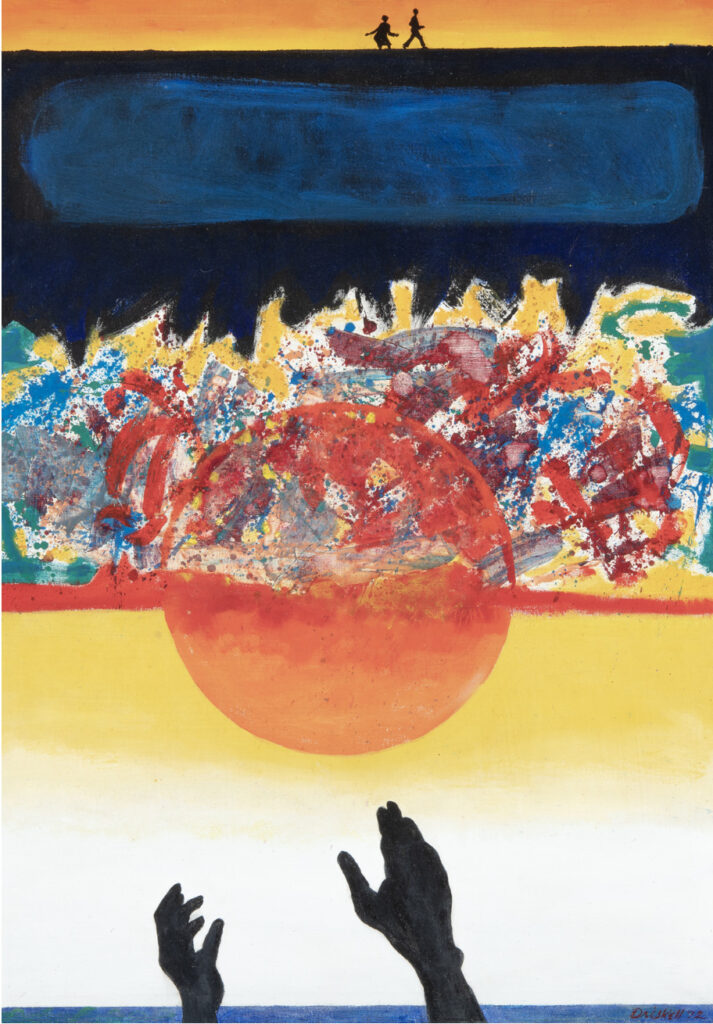
David C. Driskell, “Swing Low, Sweet Chariot,” 1972

The exhibit, which opens on June 10, features pieces that the college has collected over the years, beginning when the Thompsons were students in 1963. Activist Medgar Evers held meetings at the school, and, in May 1963, an integrated group of students and faculty participated in the sit-in at Woolworth’s in downtown Jackson. Faculty and students decided that art was a powerful way to tell the story of injustice. The collection grew over the years, and pieces of it are now lent to galleries such as the Susquehanna Art Museum.

Rouse-Rosario and museum Executive Director Alice Anne Schwab met the Thompsons to discuss the exhibit and how it relates to their time at Tougaloo. They knew there was a connection, but never imagined how strong. Rouse-Rosario handed the Sterlings a brochure that featured a group of students walking across campus.

“I said ‘That’s me,’” Barbara recalled, noticing a young woman on the far left side of the group.

Sterling piped up, “I remember that dress. You made it!”

The exhibit is organized into three sections.

“The Focus and Magnet” surveys the earliest works acquired by Tougaloo, including prints by canonical European modernists such as Pablo Picasso, along with artists of the New York School like Hedda Sterne.

“Toward a Modern World” highlights the relationship between modernist aesthetics and the ideals of social reform, with works by artists such as Robert Motherwell and Fritz Bultman.

As the Black Power movement expanded in the late 1960s and ‘70s, Tougaloo students and faculty argued that the collection should better reflect the Black experience. “A New Vision” details the college’s response to this charge, presenting works by African American artists who engaged with social issues, including Romare Bearden, Jacob Lawrence, David C. Driskell and Elizabeth Catlett.


For Everyone

More than 50 years have passed since the Thompsons earned their Tougaloo diplomas, but the pieces inspired by activists such as themselves are still relevant.

“Let’s not forget, I am not reading this in a history book,” Barbara said. “I lived this experience. It wasn’t so long ago. We are still dealing with some of these same issues.”

The Tougaloo pieces expose humanity, Barbara said.

“You can experience what was happening,” she said.

Sterling is amazed by Tougaloo Professor Ronald Schnell’s vision to start the collection as an arm of the college’s social justice efforts.

“I don’t think he knew how far his idea would go beyond Tougaloo,” Sterling said. “Just the fact he had the idea and someone forced it to grow, and the fact 35 pieces are coming to Harrisburg, is inspiring.”

Rouse-Rosario and Schwab emphasized that “Art and Activism at Tougaloo College” is an exhibit for everyone, not just those who experienced racism. They believe anyone can learn from the struggles the pieces portray.

“It’s so far-sighted,” Schwab said.

The museum is working to expand its reach in the Harrisburg community. Museum leaders encourage groups consisting of art lovers of all ages to view the pieces and participate in other programs that the organization offers.


“Art and Activism at Tougaloo College” runs June 10 to Sept. 10 at the Susquehanna Art Museum, 1401 N. 3rd St., Harrisburg. For more information, visit www.susquehannaartmuseum.org.


If you like what we do, please support our work. Become a Friend of TheBurg! 

Continue Reading

Coffee & Community: Nour is brewing a new status quo

Abigail Krevsky

When Demi Keller isn’t tracking what’s going on in the NFL or dreaming of starting her own business, she works as a barista at Nour, one of her two part-time jobs.

According to a sign above the front door, Nour is a cafe “where everyone’s light shines brighter.” It’s a place that celebrates diversity and creates space for all. That’s in addition to its high-quality bakery treats, healthy lunches and a full range of coffee and tea beverages that keep people coming back.

“I was shocked Kait wanted to do this,” said Keller, referring to the cafe’s owner and founder, Kait Gillis-Hanna.

However, as Gillis-Hanna said during a speech at the cafe’s grand opening event in late March, “There are people of all abilities who are ready, willing and able to work with us.”

Aaliyah and Nour

Gillis-Hanna named the cafe after her daughter, Nour, who has Down’s syndrome. With other models of disability-focused cafés across the country, Gillis-Hanna got to work—but made the Camp Hill-based café all her own. With the closest independent coffee shop located a couple of miles away, Nour also fills a gap in the community.

What makes Nour different? It’s not just the focus on disability empowerment, but the integrated workforce that, to Gillis-Hanna, is “a more realistic example of what life is.”

Then there are the products that come straight from the community, including baked goods from Mysig and coffee from Colina Coffee, the latter of which puts 10% of profits into its mission to help beautify Allison Hill. Gillis-Hanna also works as executive director for Brethren Housing Association in Allison Hill, so that area is close to her heart.

“I never wanted Nour to be kitschy. I don’t want people to come and be like, ‘I’m here to see the people with disabilities,’” Gillis-Hanna said. “I wanted it to be a place where people think—‘they have the best food and coffee in the area, and they’re also benefiting our world in this way.’”


Reading the Room

According to customer Garek Strouse, that’s exactly what Nour is.

While Strouse admits that the concept of Nour is something he’s never seen before, he believes that it’s pretty cool to have in the community. Strouse’s son, Rowen, befriended Nour herself during the bustling grand opening, which was a repeat visit for the father-son duo.

Beyond food and drinks, Gillis-Hanna is working on enhancing the community-building aspect of Nour. This is a big part of the mission because a lot of people with disabilities have trouble connecting with others once high school ends.

“The opportunities to engage with friends really start to dwindle,” she said.

Her hope is to incorporate bingo nights, movie nights, cooking classes and other activities with the intent of creating a fun, after-hours space for people of all abilities to interact and participate. While Nour is a for-profit organization, these activities will be part of a nonprofit corner of the company.

While these activities gain momentum, Nour employees are already making the fun happen. You may find karaoke going on in the café, with the staff singing when the customers are not on work calls or in remote meetings.

“They’re reading the room and getting out there and singing, which is super fun because they’re all really passionate about it,” Gillis-Hanna said.

Even those who aren’t into coffee won’t be left out. Nour is introducing another product line, a plant-based energy drink called Lotus, perfect for those who want an energizing alternative.

Perhaps the most noteworthy part of Nour’s journey so far is, as Gillis-Hanna put it, “the overwhelming quantity of applicants that we have received in a time when most employers are having challenges hiring.”

For her, this says something about the power of inclusion.

“People want to be in a space that is loving and accepting and empowering,” she said, and that includes competitive pay, a focus on mental and physical health, flexibility and managerial support.

Ultimately, while the café’s sleek design and varied menu are foundational, it’s Gillis-Hanna, her family and her employees who make Nour what it is.

“I don’t think I make a day with a dry eye of seeing the different families come in and talk about the impact that even just having this in the community is having on them,” she said.

Nour is located at 101 St. Johns Church Rd., Camp Hill. For more information, visit www.nourcoffee.com.


If you like what we do, please support our work. Become a Friend of TheBurg!  
Continue Reading

Cream of the Season: In June, panna cotta may be the perfect dessert

Julia Childs, the beloved French chef, author and television star, might not have been particularly happy in Italy.

Compared with the elaborate and often rich and creamy desserts for which Julia was famous, Italians prefer simple desserts and very “quiet” endings to a meal. A full-course Italian meal usually includes pasta as a first course, so a lighter dessert is usually welcome.

What do Italians like to eat at the end of a meal? There are some rich Italian desserts for sure, like tiramisu, zuppa Inglese (a rum-soaked cream cake), and a Sicilian Easter pie made with ricotta cheese and dried fruits. And most of us have feasted on cannoli—fried pastry tubes filled with sweetened cheese.

But so many Italian desserts shine in their simplicity and, like other Italian dishes, focus on the season. A simple rice custard cake doused with sweet, dark cherries is lovely in the summer months. In the fall, the lush pear groves, especially in Tuscany, produce fruit that is poached in sweet white wine. In the winter, chestnuts are steeped in grappa, a strong, brandy-like spirit that, as my father would say, “puts hair on your chest!”

You may also just find some beautiful cheeses on the dessert table, like creamy gorgonzola or good Parmesan drizzled with a balsamic glaze and served with table grapes. At our house, we often end our dinners with cups of espresso and small glasses of Sambuca (anise-flavored liquor) or sweet limoncello.

One of my favorite “simple” Italian desserts is panna cotta, which is said to originate from the Piedmont (northwest) region of Italy. The name means “cooked cream,” even though the mixture is barely heated and not really cooked. It is a wonderfully light dessert, and June is the perfect time to make it.

June is strawberry month to me, so the recipe that follows is served with the sliced, sweet, homegrown berries of early summer.


PANNA COTTA

Ingredients

  • 2½ teaspoons (1 packet) unflavored gelatin (They still sell Knox gelatin at the grocery store in the pudding section. Look for the little orange box.)
  • ¼ cup whole milk
  • 2 cups heavy cream
  • ¼ cup sugar
  • ½ vanilla bean
  • A small lemon zest strip
  • 4 cups sliced strawberries (You can sweeten them slightly, if you wish.)


Directions

  • In a large bowl, sprinkle the gelatin over the milk. Let stand for 2 minutes to soften.
  • In a saucepan over medium heat, stir together the cream, sugar, vanilla bean and lemon zest. Cook, stirring occasionally, until small bubbles appear around the edges of the saucepan. Remove from the heat.
  • Remove the vanilla bean and let it cool briefly. Then split the bean open with a sharp knife and scrape the seeds into the cream with the tip of the knife.
  • Slowly add the cream to the gelatin mixture, stirring until completely dissolved. Pour into 4 custard cups or ramekins, dividing equally. Cover and chill for at least 4 hours up to overnight.
  • When ready to serve, run a small knife blade around the inside of each ramekin to loosen the cream. Invert each ramekin onto a dessert plate.
  • Arrange the strawberries around the creams and serve. (Looks so pretty with a little sprig of mint for garnish.)

You can serve a mixture of berries with the panna cotta if you prefer. Blueberries and red raspberries mixed with the strawberries are delicious. If you can’t find whole vanilla beans, you can add a very small “shot” of vanilla extract. Or be daring—try the creams with caramel or warm chocolate sauce. But, somehow, strawberries seem best to me.

Enjoy the beautiful month of June!


If you like what we do, please support our work. Become a Friend of TheBurg!  

Continue Reading

Artistic Policy: In Camp Hill, a new art gallery claims an unlikely space

Jonathan Frazier

In downtown Camp Hill, an Allstate Insurance agency owned by Heather Ebersole houses an uncharacteristic yet charming surprise on its ground level: an art gallery.

“I like to make the joke that we’re the prettiest Allstate,” said Ebersole, who opened Gallo’ry on Market at the end of March—a mere three weeks after she and her employees moved into the new space, occupying the second floor with offices.

Ebersole and her employees had been working out of a building three blocks down the road for the last 2½ years, but knowing that they were quickly outgrowing it, she was on the lookout for a larger place when the Market Street office became available for rent.

At first glance, Ebersole loved the charm and location, but she was having trouble envisioning what purpose its ground level could serve—who would sit in the formal foyer or the spacious rooms it opened to on either side.

Heather Ebersole

“I woke up the next day, and it just came to me,” Ebersole said. “The space called for art.”

Several phone calls to local artists, some fresh wall paint, and a dozen or so early mornings and late nights later, and the stretch of rooms on the first floor—a blank canvas—became a purposeful patchwork of personality and artistry. Serendipitously, this dual-business idea that Ebersole quickly brought into existence has also seamlessly aligned itself with the Downtown Camp Hill Association’s art-forward aspirations.

“When the Downtown Camp Hill Association was created, it was done with a commitment to build a prosperous and diverse business district that supports a walkable, shoppable neighborhood concept—creating a link between businesses and our local communities,” said Ben Augustino, an association member. “One thing that we focus on is called ‘Plein Air Events’ to incorporate art into downtown Camp Hill. And, with Heather bringing the gallery to downtown Camp Hill, it’s a perfect fit, building upon that concept.”

Ebersole also has received a steady stream of support from clients and community members.

“I love hearing everyone’s little oohs and ahhs, whether they’re coming to drop a payment off for Allstate or they were just eating breakfast at Chef de Crêpe, and they walk across the street and stumbled upon the art gallery, not knowing it was a thing,” Ebersole said. “I can’t help but smile when I see people admiring, appreciating and enjoying art—especially art created by local artists.”

Harrisburg-area visual artist Tami Bitner and Ebersole’s father, Paul Gallo, who is a plein air oil painter, were the Gallo’ry’s opening exhibitors, followed by an assemblage of artists whose works served as a stop on the Plein Air Art Walk in May. With the help of Gallo’s connections to artists across neighboring communities, the Gallo’ry has managed to book a full calendar of art exhibits through the end of 2024.

“I’m so grateful for any artist who is willing to put their artwork in here, because I’m not an established gallery or studio. I’m just a lover of art,” Ebersole said. “But my love for art is deep and full, as I grew up with original artworks of my dad around me, and I never took that for granted—the passion, time and talent that goes into creating a piece of art. As I look around at the art on the walls in the Gallo’ry, I get that same sense of appreciation.”

Gallo’ry is a passion project for Ebersole, but at the core, she says it’s really all about the artists.

“I want to promote the value of the arts in our community and give local artists a space they deserve to display their works—hopefully selling several of their pieces in the process so that they have the funds to continue creating,” she said. “If the Gallo’ry helps spread the love of art, that’s all I can hope for.”

Gallo’ry on Market is located at 2010 Market St., Camp Hill.  For more information, visit www.galloryonmarket.com.


If you like what we do, please support our work. Become a Friend of TheBurg!  
Continue Reading

Cinema Celebration: Returning to live format, Jewish Film Fest highlights Israel’s 75th anniversary

“The Galilee Eskimos”

Among the accomplishments of Israel, which turns 75 this spring (on the fifth of Iyar, according to the Hebrew calendar), is an active and vibrant film industry.

With an impact beyond its borders, Israel has been nominated for more Academy Awards for “Best Foreign Language Film” than any other country in the Middle East. Movies are produced in Hebrew but also in Arabic and English and sometimes are co-produced with filmmakers in other countries.

The influence of Israeli cinema is reflected in the high percentage of movies in Harrisburg’s Jewish Film Festivals that were made in Israel. This year’s festival—actually, mini-fest, since it lasts only four days and features just six movies—goes further.

“All but one of our films this year were produced in Israel,” said Julie Sherman, chair of the Edward S. Finkelstein Harrisburg Jewish Film Festival. “We chose each one to illuminate a touchstone in the country’s history and character.”

In both narrative and documentary forms, subjects include the kibbutz (collective settlement) movement, the British Mandate, 1948’s independence and the struggles that followed, and the lives and sacrifices of military families.

“We even have a comedy about modern-day matchmaking,” Sherman said.

In the opening night’s “Reckonings,” presented at the Alexander Grass Campus for Jewish Life, German and Jewish leaders from Israel and 23 international Jewish organizations secretly negotiate for reparations post-Holocaust, which leads to victims of persecution receiving material compensation from the perpetrators. This must-see film is followed by a pre-recorded interview with its award-winning director, Roberta Grossman, and a dessert reception.

When Israel’s Declaration of Independence was drafted in May 1948, every word, comma and concept led to hours of debate—somewhat akin to our own. In “Our Natural Right,” which begins a weekend of five festival films at Midtown Cinema, the grandchildren of the signers return to the hall in Tel Aviv where Israel’s document was signed. There, they reminisce about their grandparents and their stories and share their own feelings—often mixed—of pride and concern over the current state of their nation.

In the comedy, “Matchmaking,” it’s time for Moti Bernstein—a handsome, smart, ultra-Orthodox Ashkenazi from a “good family”—to get married. It would seem to be an easy task, if Moti hadn’t fallen for the one woman he can’t have—his sister’s friend Nechama, whose Moroccan Mizrahi roots make her as unthinkable to Moti’s parents as Juliet was to Romeo’s. Caught between his desire and the taboos of an “intermarriage,” Moti is forced to take drastic action.

“The Little Traitor,” a drama based on Amos Oz’s novel, “Panther in the Basement,” concerns 11-year-old Proffy Liebowitz, who has lived his entire life under the British Mandate. The youngster hates the British and even plots with his friends to terrorize or blow up British troops. Then, one evening, out after curfew, Proffy is seized by one (Alfred Molina), who returns him home rather than arresting him. A cherished friendship ensues, which Proffy must keep secret from his family and friends.

In the comedy-drama, “The Galilee Eskimos,” 12 senior citizen “kibbutzniks” awaken one morning to find themselves abandoned—left to fend for themselves and ward off the creditors who have come to take possession of their deeply indebted collective. But they’re not any old senior citizens; they founded the kibbutz decades before. Despite their age, it takes little to dust off their pioneer spirit to start to rebuild.

“Air Born” tells a fascinating, unexpected story of the children who grew up on Israeli Air Force bases in the 1960s and ‘70s. Director Yoram Ivry recalls a childhood where runways were for bicycling and fighter jets for climbing. He and his peers felt protected, secure and free. Other children from that time, now middle-aged or older, recount a darker reality—what it was like to grow up in the shadow of war, where heroic, larger-than-life, dashing pilot fathers took to the skies and sometimes didn’t come home.

After two years of virtual movie-going during the pandemic and a virtual/live “hybrid” season last May, this year’s mini-fest marks a return to a fully live event with no streaming component.

“We’ll see how it goes,” Sherman said. “My colleagues at other Jewish film festivals are reporting much-better numbers for their live screenings this year. People are beginning to remember how great it is to leave their homes, go to the theater, and share the movie experience.”

The Edward S. Finkelstein Harrisburg Jewish Film Festival takes place June 8 to 11.

Tickets for “Reckonings” are free, but registration is required at www.hbgjff.com. Tickets for the other films are available at www.midtowncinema.com or through the festival website, where trailers and more details can be found.


What’s Playing

At the Alexander Grass Campus for Jewish Life
2986 N. 2nd St., Harrisburg

“Reckonings”
Thursday, June 8, 7 p.m.


At Midtown Cinema
250 Reily St., Harrisburg

“Our Natural Right”
Friday, June 9, 5 p.m.

“Matchmaking”
Saturday, June 10, 9 p.m.

Book Club Event
Sunday, June 11
Bagel Nosh, 9 a.m.
“The Little Traitor,” 10 a.m.
Book discussion led by Dr. Helen Khanzhina, 11:30 a.m.


“The Galilee Eskimos”
Sunday, June 11, 3 p.m.

“Air Born”
Sunday, June 11, 7 p.m.


If you like what we do, please support our work. Become a Friend of TheBurg!   

Continue Reading

Past, as Present: “Blue Jean” depicts the warmth of community, but also shows how little has changed

Image courtesy of Magnolia Pictures

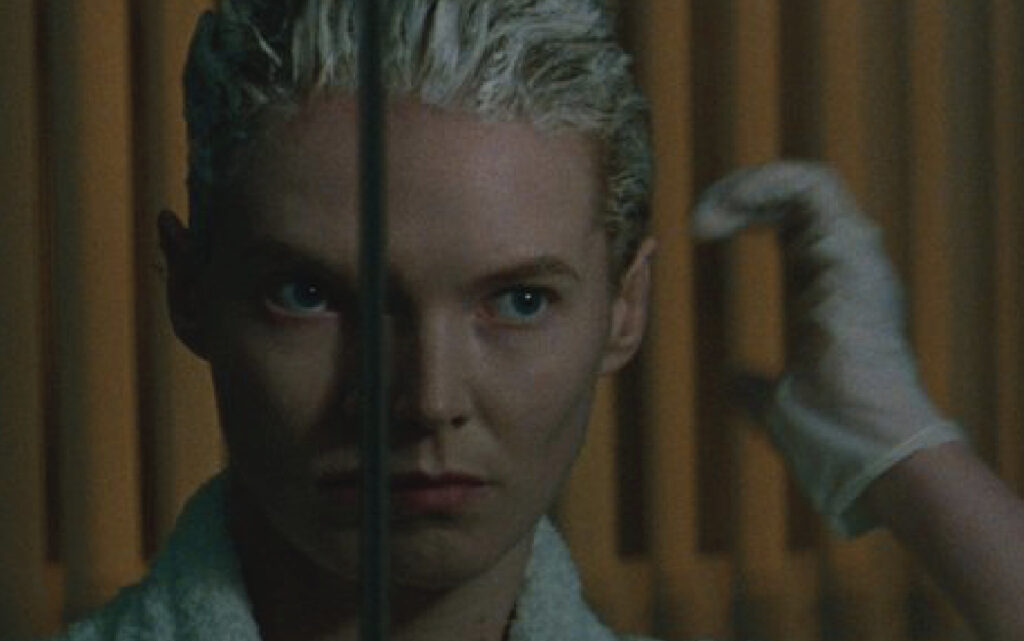
Georgia Oakley’s “Blue Jean” gives us a beautiful portrayal of a woman (and an era) struggling with sexual identity—and it’s not too far off from the struggle that persists today.

Jean (Rosie McEwan), a high school gym teacher who recently ended her heterosexual marriage, has admitted to herself and her friends and family that she is a lesbian—but is not quite ready to admit it to her coworkers. A situation that may seem pretty ordinary at first—keeping your work life and personal life separate—is magnified by the fact that Jean lives in 1980s England, when Margaret Thatcher’s Section 28 has been newly enacted, forbidding the “promotion of homosexuality” and putting anyone throughout the country who has come out as gay under fire. Even Jean’s sister, while giving a lukewarm attempt to be supportive, makes it clear that her sexual identity makes her somehow less trustworthy.

Jean keeps her secret in order to keep her job—something her girlfriend, Viv (Kerrie Hayes), is understanding of, but not entirely patient with. Her circle of friends, all lesbians who meet every night at the local gay bar, are a loving, caring group, but Jean refuses to let them come to the basketball scrimmage games she coaches at the school because she’s worried that people will make assumptions and villainize her as the lesbian gym teacher preying on her students.

The real tension begins when Jean begins to suspect that a new girl, Lois (Lucy Halliday), might also be gay. Jean may not see herself in the new student, but Viv certainly does—it’s that deer in the headlights look, she says. Though, from this viewer’s perspective, Lois’ eyes are full of hope when she shows up at the bar, 15 years old and unabashedly trying to fit into a world of societal misfits, as her classmates have already dismissed her. Jean is not ready to let her two worlds collide (and her private world be risked), but Lois desperately needs a community to engage with, and so the conflict begins to unfold.

McEwan brings such a perfect nervous and melancholy energy to Jean. We are so easily able to follow her in her emotional journey, with every little nuance McEwan gives—and her chemistry with Hayes is fantastic.

The world that Oakley builds is tense, and every aspect of the film seems to highlight why its titular character is blue. And though the story is set in the ‘80s, it feels extremely relevant to current events. If it weren’t for the radio programs talking about Margaret Thatcher, and the British accents, this story easily could have taken place in the modern-day U.S. South. The fact that such history is repeating itself only adds an even tenser layer to the story—something we should fully expect to see popping up more and more in film as LGBTQIA+ rights continue to be called into question.

What makes “Blue Jean” sing is how it focuses on accountability and support. While there is plenty of despair to dole out in every scene, there is also a beautiful depiction of the care and response from the family that the queer community has created.

That’s enough of a reason to see “Blue Jean,” even if you disregard the quietly piercing performances and the complexity of the conflict in the story. Don’t miss a chance to see the film this June at Midtown Cinema.

Midtown Cinema is located at 250 Reily St., Harrisburg. For more information, visit www.midtowncinema.com.


May Events At Midtown Cinema

National Theatre Live presents 

“Othello”
Sunday, June 4, at 5 p.m.
Sunday, June 18, at 5 p.m.


Down in Front! comedy riffing presents 

“Frankenstein Meets the Space Monster” (1965)
Sunday, June 4, at 7:30 p.m.


The Edward S. Finkelstein Harrisburg Jewish Film Festival
June 9 to 11

“The Galilee Eskimos” (2007)
Friday, June 9, at 5 p.m.

“Matchmaking” (2022)
Saturday, June 10 at 9 p.m.


JFF Book Club Brunch presents

“The Little Traitor” (2007)
Sunday, June 11, at 9 a.m.

“Air Born” (2022)
Sunday, June 11, at 7 p.m.


3rd in the Burg Movie Night 

“Star Trek II: The Wrath of Kahn”
Friday, June 16, at 9:30 p.m.


National Theatre Live presents 

“Fleabag”
Sunday, June 25, at 7 p.m.


2023 Outdoor Film Series
Presented by Friends of Midtown
All films start at dusk.

“Labyrinth” (1986)
Saturday, June 10

“Black Panther” (2018)
Saturday, June 24

“Jaws” (1975)
Saturday, July 15

“Cabaret” (1972)
Thursday, July 27

“Inside Out” (2015)
Saturday, Aug. 5

“The Sandlot” (1993)
Saturday, Aug. 19


If you like what we do, please support our work. Become a Friend of TheBurg!   
Continue Reading

Power, Resilience, Villainy: “Richard III” is this year’s Free Shakespeare in the Park

Latreshia Lilly and Tom Weaver. Photo by John Bivins Photography.

One proof of Shakespeare’s enduring influence on our perception of history is the character of Richard III. We all know Richard is a shuffling, hand-wringing hunchback with lanky black hair, a sallow complexion and an ugly sneer.

We are all wrong.

While the historical Richard did have scoliosis, he was not, as an analysis of the remains discovered in 2012 confirmed, a grotesque figure. What made Richard monstrous was not his body but his conscience—more precisely, his lack of one.

Director Jeff Luttermoser has been working on “Richard III” for many years now, first as a high school English teacher and now as theatrical practitioner. As he pointed out, “Richard’s disability is more accurately described as an inability. He seems not just unwilling but unable to sympathize with the feelings of those around him.”

This is, as Luttermoser said, an advantage for a man who is determined to be king despite the four people yet living who stand between him and the throne—his brothers and his nephews.

“It makes me wonder about power and morality,” Luttermoser said. “If you want power—as many characters in the play do—does that mean you have to become amoral (even if not necessarily immoral)? Do you have to set aside your ideas of right and wrong to get what you want?”

That question could be what made this play his students’ favorite year after year—or more likely “it’s all of the murder.” Luttermoser watched his students gleefully construct a “Hunger Games”–style death board to keep track of who was killed and then listened when they demanded to know why “Richard III” isn’t produced more often.

He had already been cutting the play to make it shorter, more comprehensible, less convoluted. He judiciously changed archaic words that obscured meaning, working to highlight the plot, the people and their relationships to one another. His students naturally appreciated this shorter, plot-focused version of “Richard III,” and then Luttermoser, who had come to teaching after many years working in theater, realized that his cut made it an ideal play for Shakespeare in the Park.

What if, he wondered, he could direct an under-two-hour show that was also easily digestible and accessible and enjoyable for the audience? Wouldn’t that make it a perfect park show? Shakespeare’s plays were originally produced in the open air for a hugely diverse audience.

“These plays were meant to be enjoyed by the whole community, not just the chosen few,” Luttermoser said. “The park show should aim to do the same.”

And while there will still be plenty of murder and politics in this production (naturally, inevitably), there is also much beauty and love and joy. “Richard III” is about power and how it impacts those who have it or desire it or live beneath it—and all the things humans do or think or say or feel in regards to power. But it’s also about resilience. England is just coming out of a long and complicated civil war. Some people are looking to take advantage of the lingering unrest, but there are even more people trying to rebuild—not just their country but themselves.

The villainy of Richard is so dramatic and compelling, it’s easy to forget that this is also a play about family and sacrifice and love, a play filled with light and depth and complexity and humanity. The brilliance of Shakespeare is his knack for capturing the universal elements of human nature and ingraining them into his characters and stories. That’s why his plays are still being produced in parks all around the world.

These parks include Harrisburg’s own Reservoir Park. This June, pack a picnic, bring a chair, and as the summer sun sets behind the bandshell, watch as Richard grasps for power as he staggers toward a bloody end.

“Richard III” runs June 2 to June 17 at the bandshell in Reservoir Park, Harrisburg, with shows Wednesday to Saturday at 7:30 p.m.

Shakespeare in the Park is always free, and Gamut recommends that patrons bring a chair or blanket for seating, and come early to claim a great spot. They will also be accepting canned goods for the Bethesda Mission. For more information, visit www.gamuttheatre.org/fsip.


UPCOMING EVENTS

At Gamut Theatre
www.gamuttheatre.org
717-238-4111

Free Shakespeare in the Park
“Richard III”
June 2 to 17


TMI Improv
June 23


At Open Stage
www.openstagehbg.com
717-232-6736


“Poirot Investigates!”
A comedy starring Agatha Christie’s famous detective
Now to June 17


Court Street Cabaret
Comedy Edition
June 9, 10, 16, 17 at 9 p.m.


Black NewsBeat with Dr. Kimeka Campbell
June 14 & 27 at 7:30 p.m.
Join the studio audience for an episode taping.


OSHKids Summer Theatre Camp
“The Wizard of Oz”
June 8 to 30


If you like what we do, please support our work. Become a Friend of TheBurg!  

Continue Reading