Mr. PA Politics: For decades, people have turned to Terry Madonna to understand what’s happening politically in Pennsylvania

Terry Madonna

There are two sides to every story—yours and mine, ours and theirs. The truth can usually be found somewhere in the middle.

Terry Madonna has spent a lifetime seeking the truth; he’s made a career out of it. He’s done it by not taking sides, through impartiality, by favoring facts over emotions.

In Madonna’s field of expertise—politics—that can be a tall task.

“I’m not partisan,” Madonna said. “When one party was shown to win, I pointed out why. I try to talk about the strengths of candidates and campaigns. Overall, I’ve tried to point out factually what’s going on. I try not to be one-sided in my commentary.”

An 82-year-old resident of Lancaster, Madonna is respected as an authority of politics in Pennsylvania. A senior fellow in residence for political affairs at Millersville University, he’s been the host of the weekly statewide news and commentary television show, “Pennsylvania Newsmakers,” for nearly three decades.

He has a deep love for his home state and a high regard for government and elected officials. But what seems to intrigue him most is the interaction of humans.

“Politics is a way of accomplishing an objective,” Madonna said. “It’s about meeting with people and working with programs and making them into laws. Politics is about having goals, defining goals, and working towards adoption. It’s also about fostering relationships and friendships.”

Chris Borick, the director of Muhlenberg College’s Institute of Public Opinion, has known Madonna for 25 years. He counts him as a colleague, a confidante, a friend.

“I continue to look to Terry as a mentor,” Borick said. “I lean on Terry, on his expertise and knowledge. Not surprisingly, the work we have done has brought us together. Anyone who talks to him knows he’s happy to jump in.”


An Educator

From modest beginnings at Lancaster Catholic High School in the late 1950s, Madonna earned his bachelor’s degree in history from then Millersville State College. But it was during his time at Delaware University, while pursuing his master’s degree, that really accelerated his career.

“In the political sense, I’ve had mentors,” Madonna said. “I had politicians, in a sense, mentor me because I followed their careers. I learned a lot in the process about how politics work. I basically learned it from people I interacted with.”

Madonna, who founded the respected political survey Keystone Poll in 1992, has served on the faculty of the University of Delaware, Franklin and Marshall College and, today, Millersville University during a 40-plus-year career.

“I am first and foremost an educator and second a political analyst,” Madonna said. “The political analyst came out of my career as a historian and political scientist. You can’t differentiate them. My basic goal is to help people understand the making of our past, as well as contemporary politics.”

Of all the positions, his role as a teacher may be the one that Madonna takes the greatest pride in. He might have been drawn to politics at a younger age, but deep down he’s always been a people person.

“I characterize my career as a teacher of government and American history,” Madonna said. “I’d like to think I’ve made positive contributions. What I’m most proud of is that I’ve had a positive impact on hundreds, if not thousands, of students. Nothing pleases me more than when I’m out in public and someone comes up to me and says, ‘I had you in class, and I thoroughly enjoyed it.’”

Going Strong

The world of politics is wide and varied. Politics can be found everywhere, on the local, state, national and international levels. Madonna focuses intently on one aspect.

“My whole career has been based on writing and lecturing to people about state politics,” he said. “I decided when I was a relatively young man that Pennsylvania was a big, important state and that I wanted to concentrate on Pennsylvania politics. I wanted to get up every day excited about what I am doing.”

Borick described Madonna’s knowledge of PA politics as “encyclopedic.”

“One of the things about Terry is that he’s a trained historian, and he can reference people and events,” Borick said. “He is someone who has an incredible understanding of Pennsylvania political history.”

Throughout his career, Madonna has seen plenty of change in this state’s politics, but perhaps never more than now.

“Philadelphia used to be a Republican city, and now the cities are highly Democratic,” he said. “The suburbs are going through change. The working-class voters who live in the old mining and mill towns used to be Democrats, and now they’re voting Republican.”

Despite all the wisdom, all the experiences, all the respect, no one gets to a point in a career like Madonna’s without passion. He simply cares about the subject material. Some people might refer to that as “character.”

“He’s a very good man,” Borick said. “Terry’s deeply passionate about it, and he understands the importance of politics. When you’re engaged in influencing in this realm, it carries with it a lot of responsibility. Terry has always approached it that way.”

If Madonna’s scruples haven’t wavered, neither has his love for what he does. It’s very much what keeps him going strong.

“I haven’t thought about retirement,” he said. “I feel fine. I get up, do my job, and everyday is a new challenge. At this point of my career, it’s as much about physical as it is mental.”


If you like what we do, please support our work. Become a Friend of TheBurg!   

Continue Reading

Honoring Nature’s Artist: Marking 30 years, the Ned Smith Center reflects back, peers ahead

Art by Ned Smith.

For Scott Weidensaul, the Ned Smith Center for Nature and Art is more than a venue. It’s about the legacy of the center’s namesake, acclaimed wildlife artist and journalist E. Stanley “Ned” Smith of Millersburg.

Smith has been an inspiration for people like Weidensaul, who began his friendship with Smith as a young adult. Smith died in 1985, and Weidensaul became a founder, research director and long-time volunteer at the center that now bears Smith’s name.

“Ned Smith was my hero. I fell in love with his art as a kid,” said Weidensaul, a Schuylkill County native. “He was such a voracious consumer of natural history and an extremely talented natural history writer and illustrator. He had no formal education but was a lifelong learner. He was one of the premiere nature artists of the 20th century.”

The center is a nonprofit founded in 1993. It was originally located in the Daniel Miller House in Millersburg but relocated in 2004 to its current home off Water Company Road. The 535-acre property offers nine miles of hiking trails and a section of private hunting grounds. Its land runs from the Wiconisco Creek to the summit of Berry Mountain.

Following the relocated center’s opening, it expanded to include three gallery spaces, a gift shop, administrative offices, classrooms, an amphitheater and a natural play area. This year, the center celebrates its 30th anniversary with a gala set for Nov. 10.

Smith began his career in 1939 with a cover painting for Pennsylvania Angler magazine. He then moved to South Carolina for a job illustrating hunting and firearm books for Samworth Publishing. Following that, he returned home to Millersburg and began a longstanding association with the state Game Commission as an illustrator.

In the 1960s, Smith initiated a column, “Gone for the Day,” for the commission’s magazine, using his enormous series of field journals and sketchbooks. The columns were later published in book form, which remains in print today.

In 1983, he was commissioned to create Pennsylvania’s first state duck stamp. He continued to work until his death, having created thousands of wildlife sketches and paintings for books, magazines and other publications, plus dozens of limited-edition prints.

“There were two big masterworks on Ned’s easel when he died,” noted Adam Steppy, Ned Smith Center’s marketing and program director. “He always thought of his last 14 years as a gift after he had heart surgery. He died from a heart attack in his garden.”

In 2011, the center opened the Ned Smith Gallery with assistance from the state Game Commission. The gallery features a rotating, $2.3 million collection of Smith’s original paintings, drawings, field sketches, journal notes and manuscripts, donated by Smith’s wife, Marie.

Until recently, Weidensaul served as the center’s collection curator and coordinator for Project Owlnet and Project SNOWstorm, separate owl-banding projects based at the center. He also is a Pulitzer Prize-nominated author of more than two dozen natural history books and writes for several national publications.

John Laskowski, a founding board director, said that he first met Smith as a child and spent much time outdoors with him in the ensuing years. He also spent hours upon hours reading Smith’s library of works.

“I grew to love Ned and Marie,” said Laskowski, of Carsonville. “The saddest day of my life was when he passed in 1985.”

Laskowski—aka “Mothman”—serves as curator of the center’s mounted collection of 18,941 butterflies and moths that he acquired with the help of friends and that are featured in a small interactive display in the Olewine Gallery. The third exhibit of Faye Arlene and Joseph Kopp’s butterfly and moth collection will host its grand opening on Dec. 3 and will be displayed in the gallery for a limited time.

Steppy said that he realizes that digitized, 21st-century life poses a different set of challenges than when the center opened 30 years ago.

“Evolution is the big thing now,” he said. “How do you make people interested in the center when the people who loved Ned Smith are gone? It’s a tough go. How do you compete with so many museums and activity centers that are around today?”

Future goals for the center include updating its galleries to “better reflect the relevant historical aspects of Ned Smith’s legacy,” as well as continuing to host exhibits, performances and other events.

“Ned Smith was very ahead of his time,” Steppy said. “His words ring truer today than they did in the 1970s about the escalating need for conservation.”


The Ned Smith Center for Nature and Art is located at 176 Water Company Rd., Millersburg. For more information, visit www.nedsmithcenter.org.

The 2023 NSCNA Gala is scheduled for Nov. 10, 6 to 9 p.m., at the Country Club of Harrisburg, 401 Fishing Creek Valley Rd., Middle Paxton Township. For information, call 717-692-3699.

If you like what we do, please support our work. Become a Friend of TheBurg!    
Continue Reading

Liftoff to Learning: Launch your family to Whitaker Center’s interactive space exhibit

Illustration by Clint Bolduc.

Whitaker Center visitors only have to walk down one flight of stairs to be blasted into space.

The arts and science center in downtown Harrisburg is hosting “Space: An Out-of-Gravity Experience” until the end of the year. The exhibit, one of the largest in the center’s 24-year history, allows guests to explore their childhood space fantasies through real-world experiments and artifacts.

“This exhibit allows guests to experience life as an astronaut training on Earth, in the International Space Station and beyond,” said Kristin James, the center’s Science, Technology, Engineering, Arts and Math (STEAM) curriculum manager.

The exhibit includes videos from NASA explorations, featuring commentary from astronauts. Visitors can see artifacts such as the helmet and gloves worn by Neil Armstrong, the first man to walk on the moon. They can take a whiff and experience space station smells or sit on a space shuttle toilet (no smell enhancement included.)

“Encouraging youth to get excited about, and inspired by, space is important,” James said.

The space station section of the exhibit features a full-scale mock-up of the Destiny Laboratory, which was attached to the International Space Station in 2001. Visitors enter a rotating faux lab and experience the sensations astronauts feel every day. The module also features audio and video testimonials from NASA astronauts.

Another interactive exhibit gives guests the opportunity to determine which components of a shuttle should be operating at different times while conserving the equipment’s limited power supply. Guests can slide an arm into an astronaut’s glove and compare their mobility using Earth and space atmospheres.

Other components of Whitaker Center—the PNC Innovation Zone Purposeful Gaming Studio and Select Medical Digital Cinema—also feature special space programs in conjunction with the exhibit.

Whitaker Center hired James two months ago, and the timing of her arrival led to the perfect launch. For the past five years, she has served as a NASA “solar system ambassador.” The program works with volunteers across the country to share the science and excitement of NASA’s space exploration missions and discoveries.

She also spent three summers working at the Lowell Observatory in Flagstaff, Ariz., an astronomical facility that discovered the dwarf planet Pluto in 1930.

“Space is the next frontier,” James said. “There is a lot we don’t know about space and, with stuff we don’t know, there comes a lot of opportunity.”

James and other Whitaker Center officials believe that space holds many untapped resources. Exhibits such as “Space: An Out-of-Gravity Experience” are vital to highlighting NASA’s successes and generating energy for its future.

In the 1960s, NASA astronauts were household names. John Glenn dominated the national news in 1962 when he became the first American to circle the Earth. Americans were glued to their television on July 20, 1969, with the first moon landing.

Sixty years later, those names are still recognizable, much more so than astronaut Frank Rubio, who became the astronaut to spend the most consecutive days in space (371) on Sept. 27, 2023.

James believes Rubio’s accomplishment should not be diminished because he achieved it during a time when the national media are less focused on NASA missions.

People of all ages can learn about space’s past, present and future through “Space: An Out-of-Gravity Experience.” Some interactive exhibits are simplistic, while others are challenging.

“Our educator team spent 20 minutes trying to solve one ourselves, and we ended up dying,” James said. “These are questions we don’t know the answers to without interacting with the exhibit.”


Whitaker Center is located at 222 Market St., Harrisburg. “Space: An Out-of-Gravity Experience” is included with tickets to the Harsco Science Center. For more information, visit
www.whitakercenter.org.


If you like what we do, please support our work. Become a Friend of TheBurg!  
Continue Reading

On the Road to NEPA: Go for the scenery, stay for the food, shopping

Illustration by Stephen Michael Haas.

My knowledge of Pennsylvania is vast, or at least I thought so. That is, until I stumbled upon some information while researching places where the fall foliage display is the most dramatic.

It turns out that the Delaware Water Gap, nestled in Monroe County near the Delaware River, takes the prize as one of the more-striking areas for viewing fiery fall foliage by foot, bike, kayak or, as in my case, trolley. What surprised me the most, however, is that the small borough is also home to the oldest, continuously operating jazz club in the United States.

After touring the Delaware Water Gap, I continued on to downtown Stroudsburg—a funky, friendly place where thrift shops co-exist with boutique shops and street art is intermingled with galleries. The walkable area attracts many a Delaware Water Gap visitor looking to shop, dine and perhaps take in a show.


The Trolley Tour

The easiest way to learn about the Delaware Water Gap and its history is to sign up for a Pocono Historic Trolley Tour offered by the Pocono Daytripper.

When I visited, Pocono Joe regaled riders with tidbits about the area and how it was once the second most popular inland destination in the country. On the tour, Joe also pointed out structures like the Castle Inn. Built in 1906, it once attracted many tourists seeking to escape the heat of the city and was the area’s first resort with running spring water and electricity. The tour also includes a drive through the Shawnee Inn Golf Resort, which was established in the late 1890s when native New Yorker and business owner Charles Campbell Worthington made it his summer home. Over the years, the resort has hosted celebrities like Jackie Gleason and Arnold Palmer.

Riders will also hear how Fred Waring made his mark on the area. Those of a certain age may have heard of Fred Waring & the Pennsylvanians, mostly due to Christmas albums that played in households once a year. Waring, a Penn State grad, also brought to market an invention that helped revolutionize the American kitchen: the Waring blender. According to Pocono Joe, Waring was fond of using it to mix drinks for his musician friends.

Trolley Riders also are able to disembark to take photos of scenic Buttermilk Falls, which flows down a series of rocky ledges and is a favorite spot for photographers, especially as the trees explode in a riot of color during the autumn season.

It’s so rewarding when people tell me they enjoy the tour and our local history,” said Peter Luck, owner of Pocono Daytripper. “It means everything to me.”


All That Jazz

The Deer Head Inn is a Victorian-style building with two stories of sprawling, wraparound porches, perfect for relaxing as the music wafts its way outside. Built between 1853 and 1865, it was originally called the Central House and was renamed The Deer Head Inn in the 1930s.

Jazz enthusiasts have been known to flock to the destination, especially for the annual Jazz Fest that is held the weekend after Labor Day. Those who are interested in staying awhile can choose from among eight rooms and two suites.

Ian Carrig, nephew of owner Dennis Carrig, lists some of the jazz artists who have played at the club, including Stan Getz, Keith Jarrett, Phil Woods, Urbie Green, Nellie McKay and Nicole Glover, to name a few. Carrig works as chef at the establishment and turns out dishes like crab cakes, baked salmon, shrimp scampi, burgers, sandwiches and more.


Funky, Fun and Friendly

If you like getting your shop on, look no further than downtown Stroudsburg, where you’ll find clothing boutiques, thrift shops and galleries tucked among eateries, bars and street art.

Grandpa Joe’s offers friendly service at their candy shop located at 730 Main St. When I visited, they were handing out popcorn-flavored taffy and enjoying people’s reactions. (It was surprisingly good.) Not far from Grandpa’s is Carroll & Carroll Booksellers, an independent bookstore selling new, used and rare books. And for antique lovers, there’s Olde Engine Works. Located at 62 N. Third St., it’s one of the largest antique co-ops in northeast Pennsylvania.

If you work up a thirst while shopping, Stroudsburg is also home to Bovino’s Brewery, Stonehaus Meadery and the Raw Urban Winery and Hard Cidery, all on Main. Just outside downtown there’s the Mountain View Vineyard on Walters Road and the Eagles Rest Cellars at 188 Eagles Rest Lane. And for something a little different, there’s Sango Kura, Pennsylvania’s first and only sake brewery—but you’ll have to return to Delaware Water Gap to indulge in those libations.

You may also want to check out the historic Sherman Theater, also located on Main. The theater dates back to early 1929 and today features comedians like Vic Dibitetto, musicians like Ace Frehley of Kiss fame and various tribute bands, to name a few of the acts that have entertained crowds just this year.

Whether you embark on a day trip, or stay a day or two, these suggestions should keep you busy as you explore eastern Monroe County—an area that offers a diverse array of experiences to cater to a wide range of tastes.


The Great Northeast

For more information on some of the places mentioned in this story, visit the following:

Pocono Daytripper
www.poconodaytripper.com

The Deer Head Inn
www.dearheadinn.com

Grandpa Joe’s Candy Shop
www.grandpajoescandyshop.com

Olde Engine Works
www.oldeengineworks.com

The Sherman Theater
www.shermantheater.com


If you like what we do, please support our work. Become a Friend of TheBurg!  
Continue Reading

Sense of Place: This season, take “buy local” a step further with “made local”

Stay Apparel

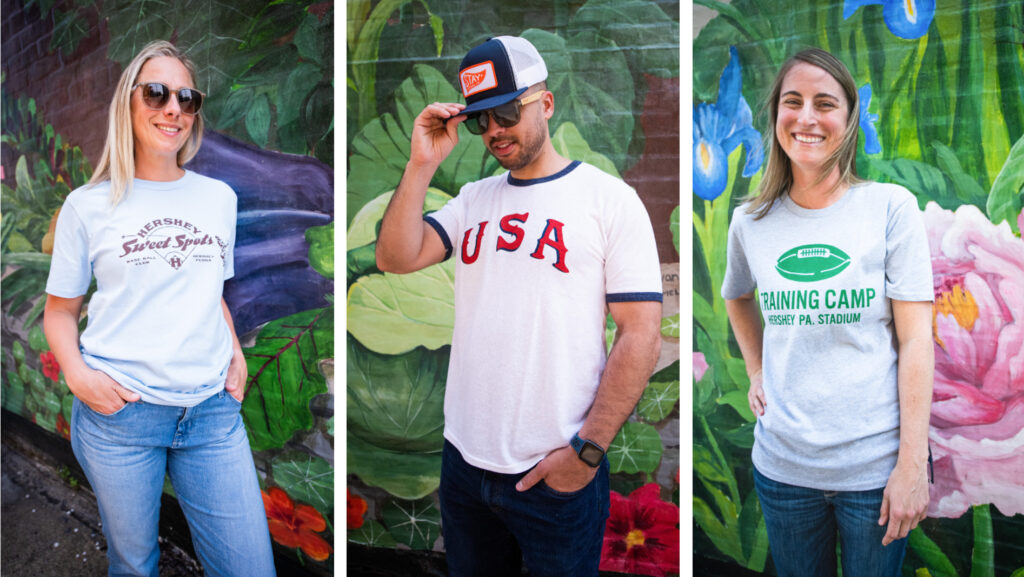
Buy a Stay Apparel made-in-America T-shirt—maybe the one printed with the vintage Helb’s Lager Beer label—and get a bonus “tale of the tee.”

“I can tell customers that Helb’s Beer in York was a pioneer in using electric vehicles in the early 1900s,” said Neal Goulet, founder of Hershey-based Stay Apparel. “I didn’t know that when we started out, but that’s a really cool part of the story. I go to the trouble of researching those old brands and finding a story behind the designs because so much of shopping retail is so antiseptic these days. There’s added value in having a story. People want to engage.”

In a tsunami of fast fashion, locally made apparel is a raindrop, but three area producers agree that local wearables promise durability, unique style, warm fuzzies from supporting a local business, and maybe a really good story.

Goulet is a career journalist and communicator who started diversifying the blog of his PR firm, Goulet Communications, with posts on his passion for buying American-made products. Deciding to put “skin in the game,” he launched Stay Apparel in October 2017. Every item is made in the U.S. and “has a sense of place.”

Stay Apparel’s T-shirts, hats and accessories mix vintage and original designs, from an original “Sas-Q-Valley, Pennsylvania Bigfoot Believers” imprint to the resurrections of long-gone, local bars and breweries, including the former Harrisburg juggernaut Graupner’s.

“I really like local history, especially the businesses,” Goulet said. “I find it kind of heartbreaking when you think of somebody who starts a business, especially a consumer-facing brand that’s successful for decades. Someday it closes, and 10 years later, nobody knows anything about it. They all have cool stories.”

Chantal Nga Eloundou, owner of Nyianga Store in Midtown Harrisburg, was selling her handmade jewelry at Broad Street Market when repeat customers suggested that she add clothing from her native Africa. She scouted events in Philadelphia and Maryland for African clothing and realized she could bring her own design aesthetic to vibrant African fabrics.

Today, she sources substantial cotton textiles from Africa, sewn by Nigerian women into colorful skirts, dresses, head wraps and dashikis.

“It’s a global world,” she said. “My customers want African products. I want them to be on the same page of what’s trending in Africa. I want them on the same page right here in Harrisburg, right here in Pennsylvania, right here in the United States.”

Eloundou’s customers are growing in diversity, as buyers of all ethnicities cotton to her unique looks. When an almost-apologetic white customer said he didn’t feel he belonged in her shop, she told him, “You belong here no less than anybody else.”

“We need to share cultures,” she told TheBurg. “We respect other cultures and share them as a community, as mankind.”

Justin Workman. Photo by Jillian and Ryan McGrath.

Pushing Boundaries

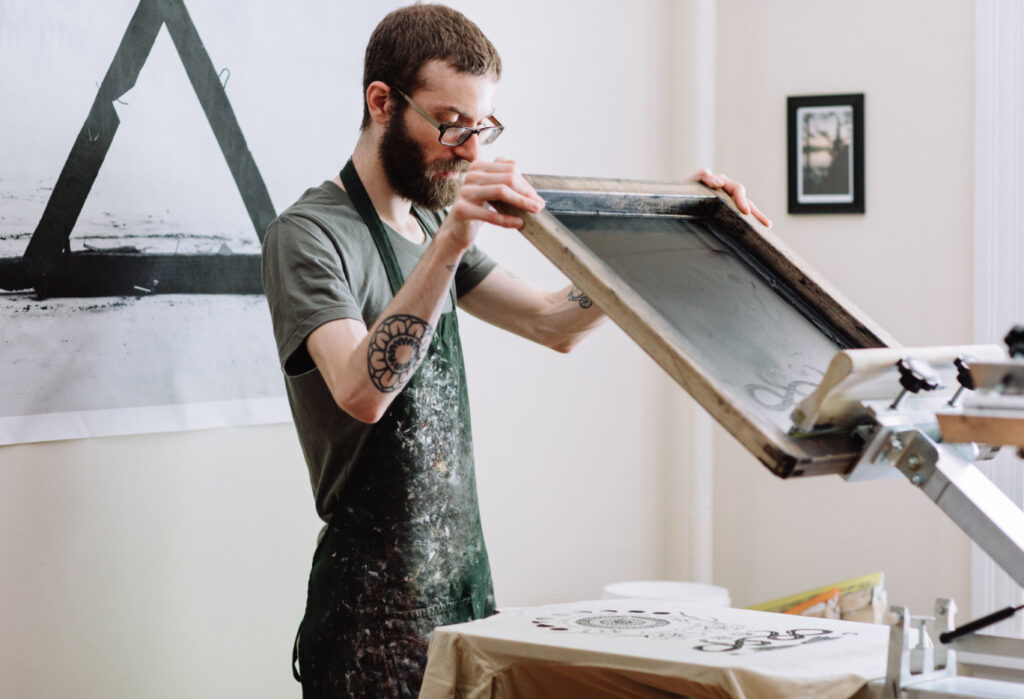
Joelle and Justin Workman, the husband-and-wife team behind Fennec Design, met as musicians. At the time, he was also screen-printing T-shirts for fellow musicians, and she was drawing intricate doodles. They put her designs on his T-shirts and took a supply to a music festival, figuring the sales would help pay for gas.

“We were pleasantly surprised when we got a really positive response,” Justin said. “We thought it was something we could do together.”

Moving from Philadelphia to join friends in Harrisburg brought down their cost of living and connected them with a supportive community. They sell their T-shirts, tanks, hoodies and bottoms online, in boutiques, wholesale and in their Millworks studio in Midtown Harrisburg.

While larger businesses cling to their prefab menus of options, local apparel makers have the leeway to get creative, Justin said. He notes the close relationship they developed with Elementary Coffee owner Andrea Grove to print their own coffee packaging.

“We’re always pushing the boundary of what can we produce ourselves,” he said. “It’s a matter of coming in and getting plugged into the community, making friends with other business owners, and seeing what we can do for each other. It’s not just treating people with, ‘Here’s what I have to sell to you.’ You approach people with a genuine sense of interest in what they’re doing.”

Justin specializes in screen-printing with water-based inks—more complex to handle but also more sustainable and durable than the industry-standard, cracking-prone, petroleum-based inks. Joelle spends weeks studying her subjects before designing what looks like God’s elaborate blueprint of a cicada, rabbit or carnivorous plant. Some customers just like the artwork. Others are experts in their fields—an entomologist, perhaps—fascinated by her take on the subject they have studied for years.

“It allows for these strange, mercurial points of connection you never would have anticipated having,” she said.

Wardrobes once consisted of a few quality items that lasted for years, said the Workmans. That era devolved into today’s “deep undervaluing of fashion as a commodity,” Joelle said. Clothing from a local maker offers a narrative and “better quality for your buck.”

“You are engaging with a more humanizing side of our industry,” she said. “It’s not just some T-shirt you pick up off the rack where you run into 20 other people wearing it. You’re buying something with a greater uniqueness.”


Relationships

Originally, Goulet thought his business would thrive through online sales, but he has learned that makers markets and pop-up shops—in Harrisburg, Hershey, State College, Bucks County, Lewisburg, Lancaster, York—help forge connections with customers and fellow makers and artisans.

The experience prompted Goulet to curate and produce his own holiday artisan shopping experience with The Englewood Makers Market, Dec. 3 at The Englewood in Hershey. None of the 22 vendors are duplicates of another. The 2022 edition went so well that all but one vendor is returning, and several new ones have been added.

From “day one,” he also has forged a partnership with the Hershey History Center—a perfect fit for his vintage vibe. This year, that partnership is blossoming with the Holly Jolly Trolley Stop Pop-Up Shop. It was Goulet’s idea for utilizing the center’s historic trolley stop as a holiday pop-up selling his apparel and curated gift items—all made in America, of course. There will be wooden log toys made in Maine, tin toys from Pittsburgh, and other “cool, classic sort-of heirloom things.”

“It’s about history and honoring the past,” he said.

Yes, Goulet admits, “Nobody needs another T-shirt.” But his shirts are made by Royal Apparel in Long Island, and Lancaster-based Unique Apparel has printed every Stay Apparel shirt.

“I’m sure I could find a cheaper printer, but that’s not what motivates me,” he said. “I like the relationship, and I like the quality.”

Companies that claim it’s impossible to source American-made supplies are “not trying hard enough,” he added.

“There’s an easy way to do it, but we’ve seen a lot of where that gets us when we drive around Pennsylvania or Maine, and you see these hollowed-out towns,” Goulet said. “It’s because people aren’t making things.”

Goulet’s passion has turned him into a disciplined shopper, buying only American-made products when possible.

“A lot of the jadedness people feel today is that they’re not listened to or heard by their public officials,” he said. “Well, you have the power of the purse. It’s one way you can feel empowered. You don’t have to give your money to the chain that’s importing everything. I just like the label, the quiet confidence of knowing that what you’re wearing is American made.”

Chantal Nga Eloundou

Customer support keeps local apparel makers in business, said Eloundou.

“Buying local gives the sense of being useful and being part of the community,” she said. “When we spend in the community, the money stays in the community. That’s how we become stronger. You buy from me, and I go next door to buy something from the grocery store. That’s how we keep it lively.”

For more information on Stay Apparel, visit www.stayapparel.com.

Nyianga Store is located at 1423 N. 3rd St., Harrisburg. For more information, visit their Facebook or Instagram pages.

Fennec Design is located in The Millworks, 340 Verbeke St., Harrisburg. For more information, visit www.fennecdesign.com.


If you like what we do, please support our work. Become a Friend of TheBurg!  

Continue Reading

Owning It: Diverse businesses are setting up shop in downtown Harrisburg, highlighting the city’s culture, expertise

Carmelia Rameau

When Carmelia Rameau walked into the empty Harrisburg storefront, she knew immediately that this was it.

She had been hunting for a location for her new business, C. R. Blooms Wellness Boutique + Facial Room, and felt like she’d found the perfect spot. She was excited to bring her business to Harrisburg.

“There’s not too many self-care, wellness businesses around,” Rameau said. “The niche that I have, which is holistic facials, there’s not much around, so I stand out.”

With around 15 years of experience in the skincare industry, Rameau opened her store in June and started bringing in clients for her signature natural facials. The Miami native loves providing services to her diverse customer base and appreciates the community she’s forming in Harrisburg, she said.

C.R. Blooms is one of around a dozen new businesses that are minority- and/or women-owned that have recently set up shop in downtown Harrisburg. Diverse new boutiques, restaurants, salons and even a theater have opened in the past months.

According to Jason Graves, director of economic development for Harrisburg, the city has seen the highest number of business licenses issued in a dozen years—635. He credits the trend to an “entrepreneurial bug” that people started to catch during the pandemic, given the extra downtime at home, that has persisted, even now.

As more entrepreneurs give it a go and plant their business flags downtown, it can often spur on others to take the chance, he said.

“There’s a feeling of, if they can do it, I can do it too,” Graves said.

Graves has seen an increase, as well, specifically in women- and minority-owned businesses opening downtown. In fact, across the nation, there has been growth in the number of minority business owners in recent years, according to U.S. Census Bureau data.

Graves views this as a great thing for Harrisburg.

“It creates a sense of culture and identity. It creates a sense of ownership,” he said. “If you have a diverse area, it shows the culture and authenticity of the area.”

Talond Luckette

Taking a Chance

On one downtown street alone, 3rd Street, at least eight businesses this year have opened new storefronts, occupying retail space in buildings owned by Harristown Enterprises. Just around the corner on Chestnut Street, there are two more. All of them are women- and/or minority-owned.

Up the street from C.R. Blooms, Harrisburg native Talond Luckette opened Real Elite Buffet in September.

After about 18 years of working his way up in the restaurant industry, he was ready to cook up his own business idea.

“As I moved up the ranks through my career, I realized I could do something,” Luckette said. “I wanted to do something new and different.”

Luckette settled on a Brazilian-style steakhouse idea, serving up slow-cooked, marinated meats like steak, chicken, brisket and fish, along with sides of green beans, mashed potatoes, potato salad and more.

Everything, he said, is made with love.

“Everyone leaves happy, that’s what I like to see,” he said.

And while he also looked at locations for his business outside of Harrisburg, he couldn’t help but land on a spot within his city, serving people in his community.

“I love Harrisburg,” Luckette said. “I think downtown is coming back to life. I want to end up becoming a staple in the community.”

Rameau feels the same way. When she moved to the city from Miami in search of a slower-paced hometown for her son and herself, she fell in love with the peace she found in the outdoors—hiking and walking the Capital Area Greenbelt. She’s also grown to appreciate the community and is happy to see other new businesses also taking a chance downtown.

“Harrisburg is Pennsylvania’s capital. It should be booming. There should be so many diverse businesses here,” Rameau said. “I’m thankful there is a renaissance happening here, and people are taking a chance to open a diverse business.”

Tamara Robinson-Grant

Up & Coming

Tamara Robinson-Grant got the “entrepreneurial bug” several years ago and started dreaming of one day opening her own store.

She’s worked as a CNA at a nursing home for 15 years and loves her job, but she had another passion that she wanted to pursue, as well.

In March, Robinson-Grant opened Tamara Boutique, stocking her storefront with clothing and accessories. The racks and shelves display a rainbow assortment of handbags, dresses, shoes and jewelry.

“I’m a bag lady; I love bags,” she said. “When somebody comes in and buys something and they smile, it’s like, ‘Oh my goodness, I was missing this all along.’”

Already, Robinson-Grant has regular customers, and a few who even come in daily to shop.

Around the corner, another bright, colorful store awaits.

WowDamnFoxy Hair opened in October in a bright pink shop on Chestnut Street. Owner LaToria Byas makes and sells custom and medical wigs, all in hopes of boosting her clients’ confidence.

“At the end of the day, I like to help people,” she said. “I like to make people happy.”

While Byas previously operated out of the Colonial Park Mall, she decided to take a chance on Harrisburg.

“Downtown is developing and changing,” she said. “I’m glad I’m here. It’s up and coming, and I’m glad to be a part of it.”

Other recently opened minority- and women-owned businesses downtown include Found Collab, Fresca Burger & Chicken Shack, ManeClass Salon, Narcisse Theatre Company and Unleashed Grooming Company, among others, also occupying Harristown-owned buildings.

For many of downtown’s new business owners, seeing other entrepreneurs who look like them has been inspirational.

As a Black woman who was typically in the minority in her field of natural, holistic skincare, Rameau understands the importance of representation.

“Because this is the business district of Harrisburg, I feel like I do play an important role, as far as representation goes, of being a Black woman business owner,” she said.

Seeing other women also chasing their dreams and opening businesses has inspired Robinson-Grant, as well, and she hopes to do the same for others.

“It’s like, if she did this, maybe I can do this too,” she said. “It gives you energy.”


Visit New Downtown Businesses

  • C. R. Blooms, 7 N. 3rd St.
  • Real Elite Buffet, 15 N. 3rd St.
  • Tamara Boutique, 17 S. 3rd St.
  • WowDamnFoxy Hair, 308 Chestnut St.
  • Found Collab, 25 S. 3rd St.
  • Fresca Burger and Chicken Shack, 303 Walnut St. (inside Strawberry Square)
  • ManeClass Salon, 5 N. 3rd St.
  • Narcisse Theatre Company, 312 Chestnut St.
  • Unleashed Grooming Company, 3 N. 3rd St.


If you like what we do, please support our work. Become a Friend of TheBurg!  
 

Continue Reading

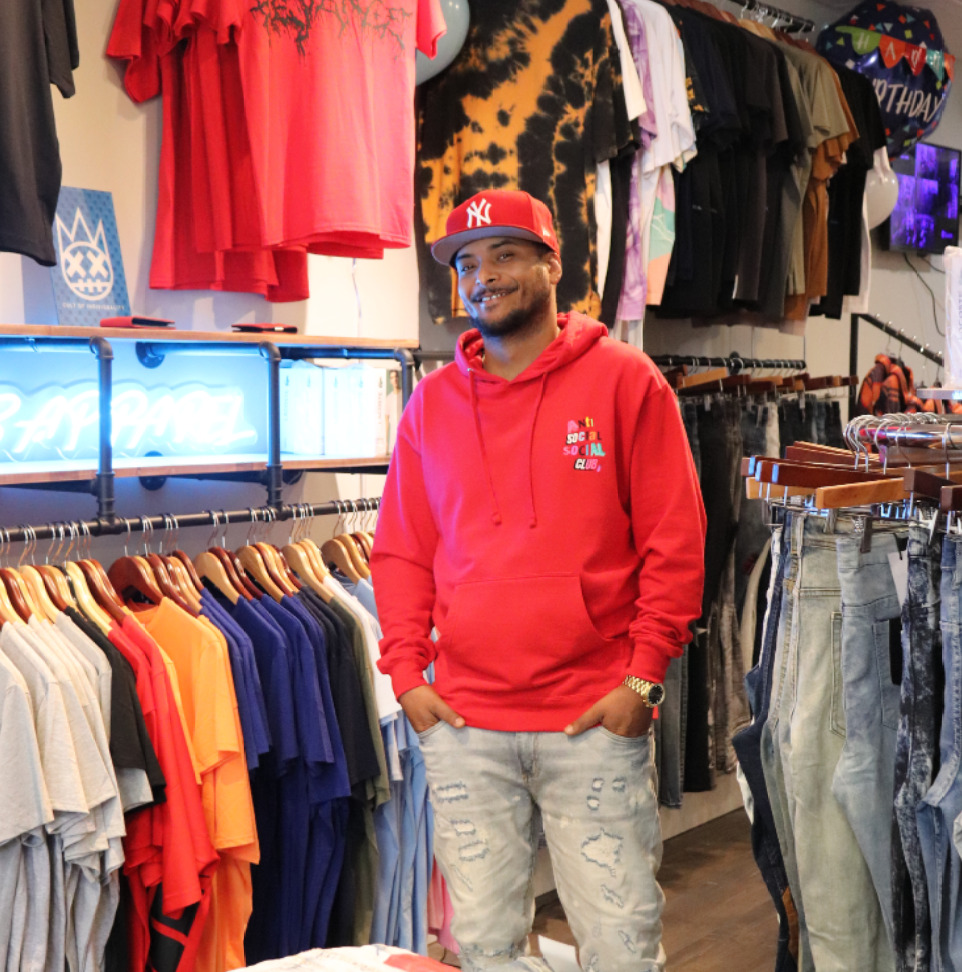
The Best of Pal’s: Following tragedy, Harrisburg menswear store keeps the doors open with the owner’s legacy front and center

Mohammed “Moe” Rammouni and son.

If you scroll through the Instagram feed for Pal’s Apparel, you’ll see mostly pictures of clothes and customers, which characterizes the store well.

In between the rows of photo squares showing off carefully curated outfits are pictures of customers, smiling with a Pal’s branded bag in hand. Others show the flagship downtown Harrisburg storefront through the years, serving as digital evidence of the work put into revamping the store.

With every several swipes through the social media feed, you’ll see the smiling face of owner Mohammed “Moe” Rammouni. Sometimes, he’s posing with a customer. In other pictures, he’s showing off his clothes.

A post dated Feb. 1, 2020, shows Moe in front of his second Pal’s location in the Capital City Mall, which he was just opening. The photo’s captioned, “Working on it—Our 2nd location the #grind continues Big things coming.”

Big things would come for Pal’s, and still are coming, but not without deep tragedy.

In June, Moe, 34, suffered a heart attack. One moment, he was helping a group of regular customers at the shop, and, later that evening, he was gone.

Moe left behind a close-knit family—his wife Dana, a 1-year-old son, friends and a growing business.

“Everybody’s still in shock,” said Rani Rammouni, Moe’s older brother.

But Pal’s didn’t close. Since Moe’s passing, Rani and Rizz, Pal’s longtime store manager, along with the rest of the family, have come together to keep the business, Moe’s passion project, alive.

“I’m doing this for a couple people—not for me,” Rani said. “It’s for his kid, his wife, mom and dad, Rizz and the community. I think it’s fair to say that the community needs this store.”

Rizz

Couldn’t Be Stopped

Rizz remembers his first visit to Pal’s soon after the store opened in 2017. He saw a red carpet lining the sidewalk up to the front door and was instantly intrigued.

Inside, he’d find the streetwear-style clothes he loved, but what he didn’t know was that he’d also find a best friend.

“Immediately, me and Moe clicked,” he said. “We were both like the same soul in different bodies. I’m a happy-go-lucky guy, and so was he.”

Rizz became a regular customer and supporter of the store, even giving Moe money out of his paychecks to help the young business. Several months later, Rizz started working at Pal’s, and the pair became partners in striving for success. In the early days, Rizz had three other jobs while working at Pal’s. He believed in Moe’s vision and would hustle to be a part of it.

“There wasn’t any other store like this in the area. Moe was the first to do it,” Rizz said. “I saw his vision. When we came together, it was like we couldn’t be stopped.”

Early on, the duo would go out daily to hand out flyers and business cards advertising Pal’s. They’d hit the bars to meet potential customers, and Rizz would even hand out flyers during his shifts driving for Uber.

“I was here day in and day out,” Rizz said. “I used to work seven days a week in this place. This was my life. It still is.”

Over the years, Moe would expand Pal’s into the Capital City Mall and even into the Hershey Tanger Outlets. Both stores have since closed, as Moe decided to focus solely on his downtown location. In recent years, Moe had big plans in the works. He wanted to upgrade the Harrisburg shop, stock new clothing brands and planned to again expand to another storefront.

But for Moe, it wasn’t just about getting new patrons in the door. Moe and Rizz were all about building relationships with customers, special ordering items for them, and even occasionally handing out jackets or sweatshirts to homeless community members.

“It’s more than just a store; we show love to our people,” Rizz said. “We like to be here for the community.”

When Moe passed, Rizz stepped up to run the day-to-day operations of the downtown storefront. His best friend’s passing “lit a fire under him” to keep pushing for Pal’s growth. He’s taken on new responsibilities like meeting with clothing brand representatives and going to apparel trade shows.

The responsibilities can be overwhelming, but Rizz never questioned staying at Pal’s.

“I knew I was staying,” he said. “I would never let this close.”

Rani Rammouni

Small Victories

When Pal’s originally opened, Moe’s brother Rani was very involved in the business. Rani, owner of LBR Properties and a consultant for Touch of Color Flooring, owned the building and leased the space to Moe, helping him paint and fit out the space. But eventually, his involvement lessened.

“I didn’t really know what he had until he left,” Rani said. “I underestimated what he had here. He had something really good.”

When Rani talks about Moe, he paints a picture of the always-smiling baby of the family, the loveable one, everyone’s favorite. Moe was smart, driven and kind, he said.

Rani and Moe grew up in Ann Arbor, Mich., the children of Palestinian immigrants. The entrepreneurial spirit ran strong through the family. Their father was a small business owner who taught his sons the value of grit and hard work. Like many in his family, Moe was driven to find success.

“Moe wanted that,” Rani said. “He wanted to defeat the odds and he did.”

Moe’s death has been traumatic for Rani. Losing his younger brother “ripped open old wounds,” as his older brother also passed away 21 years ago.

But for Rani, keeping Pal’s open helps him keep a part of Moe with him.

“It’s like the only lifeline that we have for him, outside of his kid and his wife,” he said. “When you walk in this store, you think of him.”

While Rizz manages the store, Rani handles the business side of Pal’s, with intentions to keep the store not only open, but growing.

In October, Rani and Rizz painted and installed new clothing racks at Pal’s, something Moe had wanted to do. They also stocked up on new apparel and “‘fits,’ or whatever they call them,” Rani said with a chuckle. He’s working on learning the industry lingo and brand names, he admitted.

Rani also plans to add a new upgrade to the store every several months.

“Those are going to be our small victories,” he said. “People underestimate the small victories. There are small victories every day that get you to the big picture.”

Rani hopes that, with each small victory, Pal’s inches closer to his goal for the store: to make it the leading men’s apparel store in the tri-county area. That was Moe’s vision, and now it’s Rani’s.

As Rizz manages the store and interacts with customers, he keeps in mind Moe’s values—whether it’s through warmly welcoming every customer or staying until closing, even on the slow days.

Moe’s lasting presence is also felt by loyal customers.

“I had just talked to him that day,” said Chiun Wallace, a longtime Pal’s patron, of the day Moe passed. “It was a horrible feeling. He was one of the coolest, most genuine people.”

For Moe, Pal’s was never just about selling clothes, but about making people feel good—helping them feel comfortable and confident. Rani has been learning to embrace that. Once a suit-and-tie guy, he’s dressing more casually these days.

“I want to be who I am and be comfortable with how I am,” he said. “And maybe I establish a little more urban apparel in my lifestyle.”

The Pal’s Instagram page is just as active as ever. These days, you’ll see posts from Rizz and Rani. They narrate several videos showing renovation progress, advertising sales and displaying new apparel.

In September, a post showed Rani behind the front counter, smiling, talking to a Pal’s customer of seven years; Rizz is filming.

It’s a new era at Pal’s, and while everyone’s still grieving, they also have a lot of hope and a drive to continue what Moe started.

“I’m proud to be a part of this,” Rani said. 

Pal’s Apparel is located at 306 N. 2nd St., Harrisburg. Find them on Instagram at @palsapparel717.


If you like what we do, please support our work. Become a Friend of TheBurg!  

 

Continue Reading

Gift Shop Goal: Emily Drobnock wanted to open a boutique. She’s now up to three

Emily Drobnock. Portrait courtesy of Emily Drobnock.

Emily Drobnock is living her little girl dream.

From the time she was small and her dad still operated a gift shop in downtown Hershey called Gifts To Go, visions of baubles and knickknacks danced in her dreams, even as she pursued a teaching degree.

She gave it a go as a teacher for a short time, but wasn’t happy. So, she sat down with her parents to have the, “I don’t think this is the right career for me,” conversation. She said she wanted to create a gift shop.

To her surprise, they responded positively, telling her that this was the time to do it—before she had bigger commitments like a mortgage and a family. She dove in.

Knowing she wanted a shop on the main drag of Hershey, Chocolate Avenue, Emily and her dad took a walk and saw the spot. She wrote a letter expressing her interest, and it seemed the heavens intervened. The tenant was moving out and the space was hers.

Shelves from her dad’s store—which closed in the late 1990s when she was 6 years old—still lined the walls of her family’s garage. She and her family repurposed them along with other secondhand gems, and within a month of finding her location, her first shop, Knock Knock Boutique, was open for business with necklaces and bracelets dangling from the walls and shelves, along with earrings, gifts, skincare products and other fanciful delights.

In October, Knock Knock celebrated its ninth birthday. In the meantime, Drobnock bought the building, opened a second Knock Knock in 2016 on Market Street in Elizabethtown, opened the clothing and gift boutique Bella Sera next door to the Hershey Knock Knock in 2019, and, more recently, turned apartments in both the Hershey and Elizabethtown buildings into Airbnbs.

As if running three stores and a handful of Airbnbs weren’t enough, in 2021, Drobnock also joined three partners to buy into another piece of her childhood—the Hershey School of Dance, which had been run by a foundation whose board no longer wanted to operate a dance school. She continues teaching classes there.

Drobnock has help in these ventures. Her husband, Matt Carraher, a former band director at Central Dauphin High School, now works alongside her full-time along with running the indoor percussion team for Hempfield High School.

“It definitely took a while to figure out each other’s strengths,” Drobnock said. “For seven years, I did it by myself, so just being able to give up some control—once you work through that, then it’s OK. Delegating is OK. I’m learning that as time goes on.”

Drobnock and Carraher are also new parents. They have a 20-month-old, David, and a newborn, Alexander.

Who’s minding the stores while these busy young parents are tending to their brood?

Her staff fluctuates between 15 and 25 employees, depending on how many hours each can give each week. She has three employees who work 30 to 40 hours a week and some who work only five hours here and there to fill in gaps. College students help in summers and year-round in Elizabethtown.

Kaitlyn Hartlaub has worked in the shops nearly full-time for five years now.

“She [Drobnock] is a reliable and consistent owner to work for, especially with a growing family now,” Hartlaub said.

She, too, will soon be on a maternity leave, and she takes off in the summers to manage the Palmyra swimming pool and coach the Palmyra Sharks Aquatic Club. She also coaches swimming at Lower Dauphin High School.

“It’s exciting to see all of the loyal customers through the years,” Hartlaub noted. “They love to shop with us because it’s unique.”

Hearts & Souls

Drobnock’s goal was to offer affordable jewelry and gifts.

“I hated going to the outlets or other places and things were so crazy overpriced for costume jewelry,” she said.

Customers can find all kinds of jewelry and gifts for under $20 at her shops. She also likes to offer customers things they can’t find at the malls and outlets.

“We’ve been known for our ‘Hey, look at me pieces,’” she said, adding, “We want to sprinkle in some crazy things.”

Knock Knock’s other specialty is helping customers create individual looks for specific events.

“My favorite is when people are coming in on weekends, and they have events they have to stylize for,” said Nev Puryear, a senior at Lebanon Valley College who works at the stores while also interning in marketing and strategizing with the Hershey Company.

She noted that her favorites are accessorizing customers for Halloween and date nights.

Drobnock also recognizes the power of social media—her staff helps create reels and posts on Facebook and Instagram—and COVID helped push her online presence for shopping, as well. Particularly for the Hershey store, which entertains many tourists in the summer, online shopping has allowed them to remain customers even after they leave town.

If the exotic, 60-plus-year-old plant that her grandparents brought home from their honeymoon—which now reaches to the ceiling in Drobnock’s home—is any indication of the great job she does as a caretaker and a nurturer, her businesses are in great hands.

“My dad and I always say the passion is different,” Drobnock said. “The people who have successful businesses are the ones who really pour their hearts and souls into it.”


Knock Knock Boutiques are located at 110 W. Chocolate Ave., Hershey, and 8 S. Market St., Elizabethtown with Bella Sera Boutique located a door over in Hershey. For more information, visit www.shopknockknock.com and www.shopbellasera.com.


If you like what we do, please support our work. Become a Friend of TheBurg!   

Continue Reading

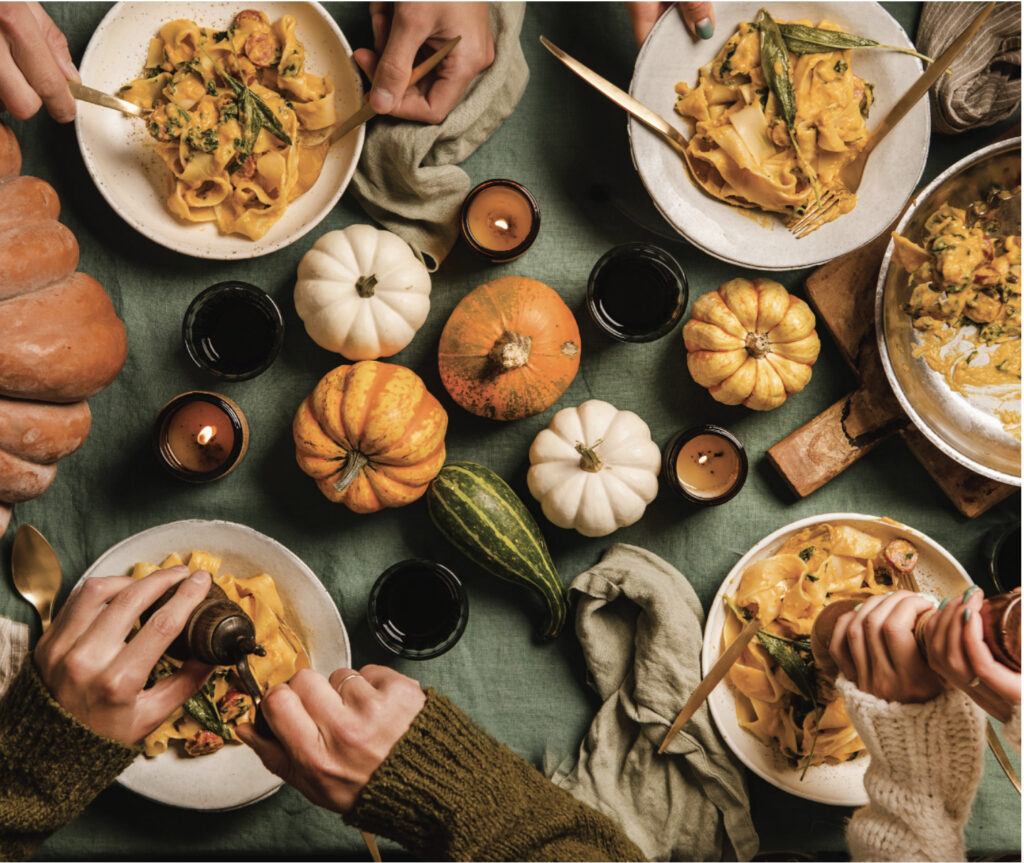
Pasta + Pumpkin: Rosemary learns to love the ubiquitous orange squash

You might have noticed—the onslaught of the pumpkin! It’s happening earlier and earlier.

By the time August arrives, there are Halloween and fall decorations overflowing the shelves at grocery stores and garden centers. Pumpkin drinks at coffee shops. Mums for sale that won’t survive the heat of late summer. T-shirts proclaiming, “It’s fall, y’all” (ugh). And everyone saying that fall is their “favorite season.”

Well, Italian cooking has taken a turn toward loving the pumpkin, as well. You can find pumpkin and its first cousin, butternut squash, incorporated into pastas, risottos or simply roasted for a tasty side dish.

Since pasta with “red sauce” was my mother’s specialty, pumpkin was relegated to a jack o’ lantern on the front stoop at our house. But I have been trying to incorporate this healthy vegetable into many of my fall and winter dishes. And it has become easy because many grocery stores and farmers markets now sell bags of cubed pumpkin and butternut squash that are ready to cook. No need to risk life and limb trying to peel and cut these thick-skinned fall “treasures.”

How about pumpkin and squash pasta? I know there is pumpkin ravioli out there. I went to the “Silver Spoon Cookbook,” as I often do, for some information on authentic Italian recipes. It’s considered the bible of cooking in Italy and a great source for learning about what they are really cooking in Italy.

I learned there is an authentic pumpkin pasta dish that originates from northern Italy. It is called “Maltagliati with Pumpkin.” In Italian, maltagliati means “badly cut,” which refers to the leftover scraps of fresh pasta dough that remain after cutting ribbon pasta like fettuccine or tagliatelle. They look like little squares that I thought resemble the potpie dough I used to make for soup.

I thought some adjustments were in order. The first was to use fresh pasta that is easily available, like pre-packaged gnocchi (De Cecco makes good ones), or tortellini (cheese is best), like those made by Buitoni. Neither of these is as good as homemade, but work well for a weeknight meal. Because cut pumpkin cubes are harder to find than butternut squash, squash is a good substitute.

Like many Italian pasta dishes, the ingredient list is relatively short. That means using real sweet cream butter, freshly grated Parmesan cheese and nutmeg that wasn’t purchased three Thanksgivings ago. This dish is easy to make and doesn’t require dragging out the food processor.


Maltagliati with Pumpkin

Ingredients

  • 3 tablespoons of olive oil
  • ½ cup butter (I always use unsalted)
  • 4 cups diced pumpkin or butternut squash (size should be about ½ inch)
  • 12 to 16 ounces pasta such as gnocchi, tortellini or small ravioli
  • Pinch of freshly grated nutmeg
  • 2/3 cup freshly grated Parmesan cheese
  • Salt and pepper to taste

Directions

  • Heat the oil and 6 tablespoons of the butter in a heavy, deep sauté pan.
  • Add the pumpkin or squash and cook over medium-low heat, stirring occasionally for 5 minutes. The pumpkin should be tender but not breaking apart.
  • Meanwhile, cook the pasta according to package directions in a large pot of salted water until it is “al dente.”
  • Drain the pasta and stir it into the sauté pan with squash or pumpkin.
  • Add the remaining butter, the nutmeg and a little freshly ground pepper (taste for salt but likely not needed because Parmesan cheese can be salty).
  • Add the Parmesan cheese and gently mix everything together.
  • You can serve right from the skillet. A fresh green salad is a good partner.

Some additional tips: Squash and pumpkin go beautifully with sage. So, if you like this herb, chop a few leaves and mix into the pasta or sprinkle on top. Another tasty addition would be some crumbled amaretti cookie on top for some crunch and sweetness (it really is good!). And, finally, if you prefer a creamier pasta dish, add a little heavy cream at the same time as the Parmesan cheese.

This is a comforting late fall pasta dish. And I’ve been trying other recipes with pumpkin and squash. One of my favorites is roasting cubes of squash or pumpkin on a sheet pan, glazed with melted butter and pure maple syrup. It goes so well with baked chicken breasts or pork chops.

Enjoy the waning days of fall. And Happy Thanksgiving, everyone!


If you like what we do, please support our work. Become a Friend of TheBurg! 

Continue Reading

To a Shared Future: Documentarian Bryan Wade set to release the third installment of “Keystones Oral Histories”

Bryan Wade

“There are no limitations other than the limits we place on ourselves,” Bryan Wade, CEO and founder of “Keystones Oral Histories,” often tells others.

He speaks from personal experience. In his quest to overcome a past filled with loss of family, foster homes and health issues, he has worked toward creating an understanding of the people within any given community and how their lives intertwine beyond racial and socioeconomic constructs.

Throughout his life and 20 years of radio, television and documentary production, Wade has striven to create a fair and balanced synopsis of life within our country and how it is experienced by various people.

He was the producer and host of the popular, award-winning television series “Worlds Apart,” which ran from 1997 to 2008 on local television networks and explored the historic legacy of social constructs, myths and stereotypes of race in America.

Then, in 2007, while recovering from knee surgery, he began working on a documentary for the National Civil War Museum in Harrisburg. This documentary has now morphed into “Keystones Oral Histories,” which can be seen on WITF and other PBS member stations around the country.

“Hopefully, if these documentaries resonate and we can do something as a collective—talk to each other without disparagement—there is hope for the people of America and our view of humanity,” he said.

This documentary series began in 2017 with Wade’s longtime realization that many people lacked knowledge of diverse communities and their marginalization in history. This led him to create oral history documentaries highlighting their military and community contributions, which are often scarcely known or talked about.

“We endeavor to create unique regional documentaries, accompanied by companion K-12 grade curriculum, focusing mainly on middle school grades,” Wade said. “It is our desire that all students will have access to our catalogued curriculum system and documentary library.”

The curriculum manual is aligned with Common Core Standards, PA State Core Standards and National History Standards. Currently, this curriculum is available for all local school districts at no cost. Strategically, the goal is to have this type of curriculum and these documentaries available to school districts in all 50 states.

In November, “Keystones,” in conjunction with Ruby Media, will release its third documentary in a 15-part series focusing on the contributions to our society by diverse populations within our region.

This documentary will highlight the history of the Underground Railroad and the abolitionists who assisted throughout south-central Pa. A major focus will be on the collaboration between Quakers, white and Black abolitionists and conductors, who worked together to ensure that enslaved people realized their dream of living in freedom.

“This can easily be thought of as the beginning of a civil rights movement in our country,” Wade said.

For this documentary, Wade enlisted the assistance of numerous regional historians, including George F. Nagle, Cooper H. Wingert, Calobe Jackson Jr., Randy Harris and Scott L. Mingus Sr., in order to deeply research the history of the Underground Railroad in our area.

The first screening of the new documentary will be held at Penn State, York Campus. Additional screenings will be at the National Civil War Museum in Harrisburg, Gettysburg College, Thaddeus Stevens College of Technology in Lancaster, York College and Dickinson College in Carlisle. After the screenings, the documentary will be available on local PBS networks.

In these days of banned books and attempts to discredit the holistic study of American history, the “Keystones Oral Histories” documentaries provide insights into our region and our country by examining the historic perspective shared by many diverse communities. His goal is to assist people in seeing beyond color.

“When we can see our humanity… beyond the constructs of color, along with class division and various ‘isms’ that have been developed in our culture and realize that we are all the same, we can come together as a country,” Wade said.


For more information on “Keystones Oral Histories,” visit www.keystonesoralhistories.com. The TV series, “Worlds Apart,” by Bryan Wade is available on YouTube and TikTok. Photos by Will Masters


If you like what we do, please support our work. Become a Friend of TheBurg! 

 

Continue Reading