Lowdown Countdown: Our editor swipes right on the top Harrisburg news stories of 2023

The lanternflies mostly stayed away, predicted chaos on two-way 2nd Street never materialized, and, for yet another year, the legendary Harrisburg beaver hid from prying eyes. But a lot of stuff did happen in Harrisburg over the past year. In what has become an annual rite (at least for me), I offer my top 10 Harrisburg news stories of 2023.

10. Biz Buzz
Each year, I like to start my top-10 list with some good news before lowering the boom on readers. As a huge fan of small, locally owned business, I love that so many downtown storefronts, empty since the pandemic, found tenants over the course of 2023: shops, restaurants, salons, etc. The trend started with a trickle and then accelerated as the year progressed. Even better: nearly all of these new businesses are Black, brown and/or women-owned. Kudos to the robust entrepreneurial spirit of this city.


9. Finishing Touches
For years, Harrisburg has awaited the completion of three major building projects: the federal courthouse, the state Archives and Harrisburg University’s new academic tower. In 2023, they all opened. As a result, Harrisburg is now home to some 600,000 square feet of brand new office, educational and professional space. Two of these buildings, the courthouse and Archives, are along the rapidly reviving 6th Street corridor, which is slated for several more projects, including the in-progress Catherine Hershey School for Early Learning and several apartment buildings.

8. Petition Issues
It seems to happen every local election cycle—a would-be candidate is tossed off the ballot because of a challenge to his or her nominating petitions. In 2023, that fate befell Autumn Fair in her bid for an open magisterial district justice seat. She then undertook an unsuccessful write-in campaign against Matt Pianka, in the process accusing his family of being behind the disqualification effort. Another challenge was less successful. In July, a challenge was mounted against Harrisburg City Council nominee Lamont Jones, based on two-decade-old criminal convictions. Following a hearing, Jones prevailed in court and, in the November general election, secured his council seat.

7. Roads & Bridges
The PA Department of Transportation long has had an outsized presence in and around the state capital. Last year was no exception. In July, PennDOT announced its latest tweak to its Market Street Bridge rehab plan, adding a bike/ped crossing atop a planned utility bridge. Around the same time, the agency officially dropped its much-criticized proposal to toll the South Bridge as part of a replacement plan. It also kicked off years of construction on the long-anticipated I-83 expansion. I suppose Harrisburg should feel lucky/unlucky to be in PennDOT’s crosshairs, with so many major projects centered on a small stretch of the city’s waterfront and south end.

6. Federal Case
In my past top-10 lists, I’ve often reserved one entry for various development proposals in the city. In 2023, though, the development pipeline largely dried up. And then there was the major exception: a plan to redevelop the former Federal Building into a 162-unit apartment building. The project sailed through the city approval process, which, honestly, was surprising, though certainly welcome for a downtown struggling since COVID. The New Jersey-based developer said he expects to begin construction this year, which, if true, would be good news for a city where many planned projects have come to a screeching halt since interest rates and construction costs began soaring.

5. Debt Ditch
When I came to Harrisburg, I found a city mired in about half-a-billion dollars of debt, the result of failed projects and years of profligate spending. The medicine was tough to swallow: higher taxes, asset sales and the dreaded long-term lease of the city’s parking assets. In March, though, Harrisburg had cause to celebrate, as the Williams administration paid off the last chunk of general obligation bonds, fulfilling a promise to rid the city of enormously high debt loads dating back to the Reed era. Despite the payoff, Harrisburg remained in the state’s Act 47 program for financially distressed cities, due to unresolved litigation between the city and its former financial consultants.

4. Plan Penn-ding
A decade ago, the Harrisburg School District shuttered the much-loved William Penn High School. Unfortunately, as it pondered the building’s fate, it didn’t secure it very well, leaving it vulnerable to the elements, vandals and firebugs. Finally, in June, district receiver Lori Suski announced a “final” solution: the district would demo the building. She then quickly backed off in the face of opposition from alumni, preservationists and activists. Finally, she did what many a savvy official, faced with a tough decision, has done before—she appointed a task force. At press time, the task force was continuing to meet, with a report and recommendations expected this year.

3. Complex Problem
Two years ago, we wrote an award-winning feature story about the tangle of troubles at Governor’s Square, a sprawling, rundown affordable housing development in Uptown Harrisburg. We then closely followed the story into 2023, as much of Governor’s Square was condemned and its owner filed for bankruptcy. A few court dates later, the half-empty, 222-unit complex was put up for bid, a new owner sought. Here’s hoping, for 2024, that a responsible party steps up, one that has pockets deep enough to restore the buildings and offer its residents the quality living space they deserve.
2. Without a Home
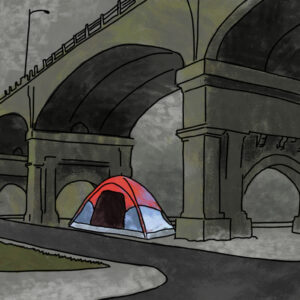
For years, a homeless encampment had grown beneath the Mulberry Street Bridge near Cameron Street. In January, the city ordered the encampment cleared, saying it was a public health hazard. This set in motion a series of events and news stories as the tent camp dwellers moved from one spot to another to another. The net effect has been that the other large homeless encampment, near the PennDOT building in south Harrisburg, has ballooned in size, with tents also popping up in other parts of downtown and Riverfront Park.

1. From the Ashes
The text came in the middle of the night, followed by a shocking photo. No, it couldn’t be true—but it was. The Broad Street Market was on fire. Without question, the fire, which gutted much of the brick building, was the No. 1 Harrisburg news story of the year. Our months-long string of stories covered the fire, the immediate aftermath, the fate of the vendors, the construction of a temporary market and much more. As of this writing, the interim market still hasn’t opened, delays apparently caused by labor and parts issues. Meanwhile, vendors and city residents anxiously wait for work to begin on the actual building restoration, a process that likely will take two or more years.

So, there you have it—my take on the top Harrisburg news stories of 2023. I’d say it was a mixed year. There was some good news, but it was tough to get beyond the drag of the market fire, which, in my book, stained the entire year and bruised the psyche of the city.

Now, we look ahead to 2024. It’s my great hope that, a year from now, I can report 10 solid good news items. My wish list includes the start of the market restoration, a decrease in community violence, an improvement in the homeless situation, a couple of road diets and more new businesses, buildings and residents. A guy can dream, right?

Lawrance Binda is publisher and editor of TheBurg.

Illustrations by Rich Hauck.

If you like what we do, please support our work. Become a Friend of TheBurg! 

Continue Reading

Food Loot: Breadcoin makes change in addressing hunger, helping restaurants


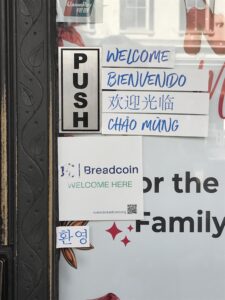
On the door at Taco Amigos in downtown Harrisburg, there’s a little sign that says, “Breadcoin Welcome Here.”

This coin, which now circulates in Harrisburg, feeds the hungry, assists small businesses and connects the community. It was founded in 2016 in Washington, D.C., by economist Scott Borger and consultant Cary Umhau.

“Breadcoin is a food token that ensures everyone is fed with dignity,” Umhau said.

Breadcoin arrived in Harrisburg in February 2022 and now has 15 vendors in the area, including 13 in the city.

Marcel Childs, co-owner of Taco Amigos, is one of those vendors. He and his wife Victoria Valencia often prepare food for the folks experiencing homelessness, whom they regularly encounter.

“It makes a way where they feel welcome to come in during the daytime hours, to get out of the cold and have a hot meal, as well,” Childs said.

Here’s how it works. Individuals or organizations purchase Breadcoin, which each have a value of $2.50. The coins then are given to folks who may not be able to afford a meal. They spend it at one of the participating eateries.

The coins do so much more than feed people.

“Every coin… feeds somebody, connects the community more deeply, resources a nonprofit, and supports local business,” Umhau said.

Breadcoin allows Childs to help the hungry, while supporting his bottom line.

So, why use Breadcoin and not just give someone a few dollars?

“A lot of people don’t like to just hand out money, not knowing where it might go,” Umhau said.

According to Borger, giving Breadcoin says, “I see you, and I want you to be able to have a meal.”

Breadcoin has a hyperlocal economic effect because vendors are specifically located in underserved areas. So, Breadcoin pushes spenders to those neighborhoods with synergistic results. Coins spent in the community support a local small business, its employees, and the community the business serves.

“A lot of community-giving exits the community quickly,” said David Vader, Breadcoin PA regional coordinator. In contrast, Breadcoin helps local small businesses, which adds vibrancy to the community.


Common Table

In addition to purchase by individuals, Breadcoin can be donated to local nonprofits, which then distribute the coins to those they serve.

One of those nonprofits is Tears for Tarina, which assists women fleeing domestic violence with a seven-bed safe house in Harrisburg. When founder Angel Fox first heard about Breadcoin, she almost couldn’t believe it.

“I was like, ‘There’s no way this is a thing,’” she said.

But she headed over to Taco Amigos, where she had never eaten, and presented the coin, and just like that, received her meal. A delicious one at that!

Fox provides Breadcoin to the women at the shelter.

“They love it because it’s usually on their bus route or at a restaurant close to their job,” she said. “So, in between them not being able to afford lunch or purchase lunch, it kind of works for them to be able to have this supplement.”

Fox also owns a laundromat, Fox’s Wash and Go, where she often provides Breadcoin to those who could use a meal.

This feeling of wholeness and being a part of the community is one of the hallmarks of Breadcoin.

“Breadcoin creates an entire economy around the fact that we all benefit from being around a common table,” Borger said. “And if you’re not including the marginalized, you are literally excluding them.”

Fox agrees that Breadcoin has a positive impact on individuals—and not just from the nourishment.

“You are able to go ahead and purchase something with dignity is what’s really great about it,” she said. “Regardless of what you have or what you look like, you can go into a restaurant and get a decent meal.”

Many restaurants have a “Four Coin Meal” special that provides “more bang for your buck,” Childs said. At Taco Amigos, that deal includes two tacos and a drink. Breadcoin, though, can be spent on anything on the menu.

Breadcoin also offers microloans to participating vendors. In fact, after his air conditioning failed during the summer heat wave, Childs was able to take advantage of one of those loans.

Breadcoin would like to become synonymous with food and community connection, here in Harrisburg.

“Basically we’ve created this Starbucks gift card, except that it’s for local mom and pop stores that are community-oriented,” Umhau said.

Childs of Taco Amigos has high hopes for Breadcoin, hoping it spreads nationwide. He also acknowledges the importance of caring for the community.

“It’s very heartwarming to see people not only enjoy your food, but you can be the difference for this person who then may pay it forward some day,” he said.


Find Breadcoin vendors, learn more about the program, and purchase or donate to Breadcoin at
www.breadcoin.org.


If you like what we do, please support our work. Become a Friend of TheBurg! 

Continue Reading

Her Garden Grows: Dovie Thomason uses oral narrative to recover Indigenous lives, histories

Dovie Thomason

Dovie Thomason was shocked. She heard an Estonian storyteller share an origin story of emerging from an egg that mirrored her own, Native American origin story. Suddenly, the world felt “tiny and cozy and friendly.”

“Our common legacies are common,” Thomason said. “Our nature is needing each other. Our nature is interacting. Our nature is to connect, and that’s why we speak. That’s why we write. That’s why we try to create and make art. Storytelling reminds me of that every day.”

Thomason has her own story of origin and growth into a nationally and internationally renowned storyteller. Born in Chicago and relocated to rural Texas. Growing up as “a river fed by many streams,” with her Lakota, Apache and Scottish Traveller ancestry. Award-winning presenter at the Kennedy Center, National Museum of the American Indian, the Smithsonian and countless school auditoriums. Keeping storytelling relevant in the digital age. Known for raising more questions than answers.

And a resident of Lower Paxton Township, where her garden always grows a little extra for the deer, just like her father taught her.


Local Matters

Thomason was born in Chicago but moved to Texas as a child. She is 75 now, so that’s Texas in the 1950s. Her kind was extinct, she was told. Her name wasn’t Christian, so her teacher called her David—until her strapping father, a “blue-eyed thunderstorm of Scottish, Gypsy and Apache,” had a talk with the principal.

“I didn’t like school,” she says in her story, “My Name is Dovie.” “I liked to stay with my grandma.”

Thomason’s grandma Dovie would tell stories over the daily chores of cooking, cleaning, gardening or shelling beans.

“You’re visiting and cooking, and you start telling a story that might have to do with one of the ingredients in the pot and why we have it, or why we cook it this way, or who this was a gift from,” Thomason said. “What the trees thought when they gave us syrup, or how they gave up their leaves to make a home for the creatures, their sacrifice to take care of others. It was always a part of the busyness. It was the soundtrack to the busyness.”

She started as a teacher of refugee and immigrant students in Cleveland during the “rugged, rugged” early 1980s.

“The students came with oral traditions,” Thomason said. “They’d seen lives of disruption that I could imagine and empathize with as a Native person. They deserved so much respect.”

As she told them her stories, she realized that her tales resonated outside the Native American community. Her storytelling spread to other classrooms, assemblies, festivals and colleges. In the 1990s, her passion became her livelihood.

The road to Harrisburg started with meeting Jimmy Little Turtle at a storytelling festival. Little Turtle, the late activist and political insider, built networks centered around the past and present of America’s tribal nations. Her previous research into the Carlisle Indian School had been tinged with academics, but from Little Turtle, she absorbed the oral traditions.

“I like history told by people, not just historians,” she said. “Jimmy knew everything.”

When Little Turtle moved to Florida, he transferred his home in Lower Paxton Township to Thomason. She lives there today, planting urban wildflowers and vegetables.

As her garden grows roots, so does she. In programs for Dauphin County Library System’s celebration of this year’s Native American Heritage month, her stories—told in an amazing vocal range spanning from a grouchy bear’s low growls to a chipmunk’s giggles—explained to children why the chipmunk has stripes. It warms her heart when a child recognizes her in the grocery store as “the story lady.”

“It’s great to be internationally known, but there’s something at this point in my life, this awareness that being local matters,” she says. “Being local is where you’re effective.”


We’re Here

Storytelling puts our lives and histories in context, explains Anthony Buccitelli, Penn State Harrisburg assistant professor of American Studies and director of the Pennsylvania Center for Folklore. It is not a relic of “bygone days,” but a way to educate, share advice and convey a sense of personal or social identity.

“Oral narrative is a fundamental component of human communication,” he said. “It’s something that we do all the time, most of the time not even knowing that we’re doing it. The vast majority of storytelling is done in our day-to-day lives.”

Thomason weaves traditional stories with personal asides, said her friend and Philadelphia-based storyteller Charlotte Blake Alston. For instance, when young Dovie interrupted her grandmother with a question, Grandma would teach patience by starting the story from the beginning.

“It gives the listener a sense of who she—and by ‘she,’ I mean her collective people—is and what matters,” said Alston. “In doing that, she humanizes people. In this culture, we don’t only marginalize people. We almost pretend that they don’t exist and pretend that we don’t have any kind of history that has impacted Indigenous people, but she reminds us, ‘We’re here.’ You get a sense of what American sensibilities and policies have done to Indigenous communities, but she does it without beating people over the head with a sledgehammer.”


My Purpose

Thomason calls herself “a person who stories.”

“It’s like a person who cooks, a person who gardens, a person who shelves,” she said. “I’m a person who stories.”

Pennsylvania is now trying to recover the past through stories with the Indigenous Peoples Cultural and Heritage Initiative, announced in October. The two-year initiative will distribute grants from the Appalachian Regional Commission and the Pennsylvania Tourism Office for experiences giving life to the stories, history and culture of Pennsylvania’s Indigenous heritage.

Currently, Pennsylvania’s Indigenous nations and their rich histories “receive almost no recognition,” Carrie Fischer Lepore, deputy secretary of tourism in the Pennsylvania Department of Community and Economic Development, told TheBurg.

The project can’t undo the atrocities and exile imposed on the nations “that once called Pennsylvania home,” Lepore said, but it will leverage tourism “to make sure that voices and cultures are heard.”

Through the initiative, the Lehigh University Institute for Indigenous Studies is convening descendants of the tribal nations forced out of colonial Pennsylvania to develop a comprehensive plan for allocating the funds. It is, said Lepore, important that those descendants “decide how to tell their stories.”

“They are not our stories,” she said. “They don’t belong to us. It is their history, it is their culture, and we want to make sure that they are the ones to guide us in how they should be presented.”

And, she added, “History is not always kind, but history is critical to awareness.”

Thomason addresses history’s complexity by adding more complexity. Her story, “The Spirit Survives,” tells of the Carlisle Indian School and the U.S. government campaign to forcefully assimilate Native American children. The story doesn’t end with answers but with a reminder that listeners can no longer say, “I didn’t know.”

Her research into the school became a program after she and her daughter were walking the graveyard of Carlisle Indian School (“Why would a school have a graveyard?” she asks.) Her daughter, then about 10, assumed she would learn the history in high school, but Thomason knew better.

“A storyteller has to make us comfortable with things being complex or ambiguous or unresolved or divergent,” Thomas said. “A storyteller insults her listeners and her community if she tries to make things simple.”

Thomason’s riveting, unapologetic storytelling offers a powerful counterpunch to the school boards and politicians “making it a felony to teach my history and to teach Dovie’s history,” said Alston, whose work includes storytelling in the African tradition.

“Dovie talks about buffalo waste, which is smelly and stinky and horrible when it comes out, but eventually, it dries, and you can pick it up and put it in your basket and use it to light your fires and cook your food,” Alston said. “You can touch and revisit the wounds of the past without creating new ones.”

Thomason hopes storytelling remains a service and doesn’t become “the latest streaming fad.”

She thinks about the Indian School survivors she has known, the ones who “need the speaking of it.” Storytelling is “a responsibility and a commitment to acknowledge how you got here and acknowledge the ones who came before you, because you wouldn’t be you without them.”

“I have great teachers who trusted me with some of the things they knew and learned, and now I’ve got to do something with it,” she said. “That’s my job.”

She interrupted herself.

“No, it’s not my job,” she said. “It’s my purpose.”


If you like what we do, please support our work. Become a Friend of TheBurg! 

Continue Reading

Gotta Look Sharp: New menswear store fits perfectly into west shore shopping mecca

Glenna Marino is looking for a few good gentlemen.

Well, maybe more than a few.

In September, Marino opened Sharp in downtown Camp Hill, offering area men a different way of shopping for clothes.

Marino said that it’s often difficult for men to find clothes that fit them. By coming into the store, they’re able to get a custom fit, assuring that they will feel comfortable and look stylish.

“We’re very hands-on with our fittings,” Marino said. “We present an extraordinary experience that every man deserves the privilege to savor.”

Glenna Marino & Lucy

According to Marino, the shop’s commitment to refinement and elegance sets them apart from other men’s stores.

“We believe that clothing is more than fabric—it’s an expression of your individuality and style,” she said. “Each stitch, fold and seam is meticulously attended to, ensuring that the final piece not only fits impeccably but also exudes confidence and sophistication.”

Once fitted, clients have access to 12 different categories of custom clothing. The store offers a distinctive selection of fabrics from globally acclaimed mills, along with limitless customization possibilities, tailored to suit unique preferences, Marino said.

“Your unique, custom-made design is delivered within weeks directly to your home, and we will help with 100% satisfaction,” she said.

Sharp also offers items in-store, including sport coats, vests, socks, tie clips, leather goods, colognes, briefcases, polos, golf wear and soaps.

“We encourage people to stop by or make an appointment and see what items we have in the store,” Marino said.

Marino recently helped a customer who came into the store wearing baggy pants. The man, she said, never would have thought of wearing tighter pants on his own.

“He left the store very happy. He couldn’t get over how much he liked the tighter pants,” she said. “I get a lot of joy out of making people happy. It feels good to know that I’m helping people look better.”

Marino chose to open in the heart of the Camp Hill shopping district for both the building’s visibility, near other stores, and for its aesthetics.

“I’ve had my eye on this location for quite some time,” she said. “I liked the high ceilings. It has a masculine look, which is what I wanted for a men’s clothing store.”

Marino said that, while she hopes to draw much of her business from the west shore, she expects people to come from all over the area.

“We’re not just getting people from Camp Hill,” she said. “We’re getting people from Harrisburg and other places. We hope people from everywhere will be attracted to the clothes we have at our store.”

Marino said that she had always been interested in fashion and design. In fact, she wanted to open her store so badly that she worked in another store for the past year to get a better understanding of the men’s clothing business.

“It’s something I like doing,” she said. “I think I’ve always had an eye for fashion and design, and I like helping people in that way.”

Sharp is located at 2138 Market St., Camp Hill. To make an appointment, call 717-502-2024, visit www.sharpcamphill.com or email [email protected].


If you like what we do, please support our work. Become a Friend of TheBurg! 

Continue Reading

January News Digest

Projects Proposed to Counter Homelessness

There soon may be several new housing options for Harrisburg’s homeless population.

A group of local residents is proposing a tiny home village on six acres along S. Front Street to provide housing for those experiencing homelessness.

Additionally, the city has confirmed that another, separate group has proposed a development for homeless veterans for the same area.

Both of these projects would be located along S. Front Street, near the PennDOT building, and would neighbor Veterans Grove, a tiny home village for homeless veterans under construction.

If approved and built, three housing developments serving the homeless would sit along a short stretch of S. Front Street.

A group of local residents shared that they are purchasing a plot of land just past the PennDOT building. The group has partnered with Missouri-based Eden Village, a nonprofit that has built tiny home communities nationally, for the project.

“What we are excited about is that we are providing what we believe is the ultimate solution, which is permanent housing,” said Jon Bomberger, who is involved with the project.

The village would include 25 to 30 400-square-foot, single occupancy homes and a community center for those experiencing homelessness. Mental health, recovery and other services would be offered on-site.

The group expects to break ground on the $3 to $4 million project in the summer, should it receive the necessary city approvals.

Also proposed for the riverfront, near PennDOT, is a project by the Tunnel to Towers Foundation, which provides support services to homeless veterans and first responders.

The organization is proposing a 50- to 60-unit apartment complex and support service center, along with 15 to 20 comfort homes, on an 8.5-acre parcel.


Utility Rates Rise

Harrisburg utility customers will see their rates rise in 2024, with the average bill increasing by about 5.2%.

In late November, the board of Capital Region Water (CRW) approved new water, sewer and stormwater rates, effective Jan. 1.

Under the new rate structure, the drinking water charge will increase 3%, from $10.34 to $10.65 per 1,000 gallons consumed.

The wastewater charge will rise 8%, from $9.24 to $9.98 per 1,000 gallons used.

The stormwater fee also will rise, the first increase for most residential customers since the fee was first imposed in 2020. It will increase by 10%, from $6.15 to $6.77 per month for the majority of Harrisburg residences.

According to CRW, the average monthly bill for households in Harrisburg will increase a total of $4.56 a month, from $87.75 to $92.31, in 2024. From 2022 to 2023, the average bill increased about $2.60.


County Taxes Steady in 2024 Budget

Dauphin County last month passed a 2024 budget that holds taxes steady.

The general fund budget totals nearly $220.6 million and, for the 19th year in a row, does not include a property tax increase.

“A lot of hard work and careful review has brought us to the point where we can maintain this impressive streak of 19 years without a tax increase,” said Mike Pries, chair of the county’s board of commissioners.

The property tax rate for county services remained at 6.88 mills, with a mill representing $1 for every $1,000 of assessed property value.

The budget is an increase from last year’s budget of $218 million. It includes salary raises for all union contract employees with 2.95% increases for non-union employees.

About 50% of the budget is spent on salaries and benefits for employees, with the other half largely going to areas like service expenses, debt service and grants to organizations.


Crisis Center to Open

In Harrisburg, there will soon be a new place for those with behavioral health issues to receive help.

Dauphin County announced last month its plans to create a Connections Regional Crisis Walk-In Center to provide 24/7 assistance and resources.

The 15,000-square-foot center will be located on the first floor of a building at 1100 S. Cameron Street, which also houses the county’s Case Management Unit.

“We are recognizing that we are not able to meet the needs of our community successfully,” said Annie Strite, mental health/intellectual and developmental disabilities administrator and mental health director for the county. “We want to do an excellent job serving our community.”

According to Strite, the need for the center became evident to the county as the number of people struggling with mental health issues has continued to rise nationally and locally post-COVID.

The new center is a joint project among Dauphin, Cumberland and Perry counties and will serve as a resource for the region. The project will cost $17.5 million and utilizes state and federal funding.

The county expects the center to open by the end of 2024.

The crisis center will function similarly to an emergency room where people can receive immediate assistance in a crisis, but will be dedicated to serving those with mental health and addiction issues. Anyone can walk in to the center at any time, regardless of their insurance status.

The center will offer a new peer counseling program for those struggling with a mental health issue or walking through the recovery process.

“People want to talk to somebody who has walked that walk and has that experience,” said Andrea Kepler, administrator of Dauphin County mental health/autism/developmental programs.

People will also be able to receive emergency medication prescriptions and access psychiatrists, nurse practitioners and case management personnel. The center will be operated by national mental health care provider Connections Health Solutions.


Homes Sales Down, Prices Steady

Harrisburg-area home sales declined but the median price rose slightly in November, according to the latest report on previously owned houses.

For the three-county area, 492 homes sold versus 616 in November 2022, as the median sales price inched up to $259,500 from $255,000, according to the Greater Harrisburg Association of Realtors (GHAR).

In Dauphin County, 250 homes sold, 29 fewer than in the year-ago period as the median sales price rose to $235,000 from $219,000, said GHAR.

Cumberland County tallied 214 home sales versus 295 a year ago, while the median sales price totaled $302,000, compared to $300,000 in the prior November, GHAR stated.

In Perry County, 32 homes sold, a drop of six, as the median price dipped to $205,000 from $239,750 a year ago, according to GHAR.

For the month, the pace of sales slowed somewhat, as the “average days on market” clocked in at 22 days versus 17 in November 2022, GHAR said.


So Noted

Anthony L. Loscalzo, Esq., last month was named Of Counsel for SkarlatosZonarich. Loscalzo brings 40 years of legal experience to the Harrisburg-based firm, joining the Elder Law, Estate Administration and Estate Planning departments.

Daniel Youngs has been named the next chief executive officer for the Lancaster County Solid Waste Management Authority (LCSWMA). Youngs, the current chief financial officer, will replace Robert Zorbaugh, who plans to retire at the end of 2024 after a 35-year career with the authority.

 JoJo’s Barbershop debuted last month at 11 S. 3rd St., one of a string of new businesses to open recently in downtown Harrisburg’s SoMa neighborhood. From the storefront, owner Johanna Martin offers washes and cuts to men, women and children, as well as specialty services including coloring, undercuts and hair design.

Organic Remedies, a Carlisle-based medical marijuana company, has donated $62,250 to the PA Court Appointed Special Advocates for Children (CASA), money raised from its second annual golf tournament. Separately, it raised $20,000 to support the Pennsylvania Breast Cancer Coalition, which serves breast cancer survivors and their families.

Thomas W. Ford is the new owner and supervisor of the Michael J. Shalonis Funeral Home & Cremation Services, located in Marysville. Ford has more than two decades of experience in the industry, having worked as a licensed funeral director and served as a supervisor for funeral homes in York, Lancaster and Dauphin counties.

Ward of Health is opening in downtown Harrisburg, offering plant-based meals at 221 N. 2nd St. Owner Craig Ward began his business with a stand in the Broad Street Market before making the move to the brick-and-mortar location.

William Habacivch last month was named the new executive director of Veterans Outreach of Pennsylvania, which is building a “tiny home village” in south Harrisburg to serve homeless veterans. Habacivch, a U.S. Marine Corps veteran, replaces Jordan Ames, who left the post in August.


Changing Hands

Adrian St., 2471 & 2473: Roman Catholic Diocese of Harrisburg to Picadillis Real Estate LLC, $165,000

Allison St., 1514: L. Moyer to J. Rivas, $175,000

Bigelow Dr., 13: R. Love to J. Stevenson, $105,000

Boas St., 429: B. & A. Malia to R. Beaston, $240,000

Briggs St., 1822: HBG Rents LLC to L. Guzman, $155,000

Briggs St., 1834: BCR-2 Properties LLC to S. & L. Bethea, $156,000

Cumberland St., 119: J. & L. Weigle to J. Michel, $182,700

Curtin St., 539: J. Brito to Tinhel LLC, $52,500

Emerald St., 328: Jhonleo Home Renovations LLC to A. Corporan, $199,900

Harris St., 213: Braxley Renovations LLC to H. Belcher & R. Pegus, $249,900

Herr St., 308: RSB Real Estate LLC to V. Arkoosh, $188,908

Hoffman St., 3234: K. Bateman to T Wy Enterprise LLC, $85,000

Hoffman St., 3242: Hancock Investments Associates LLC to B. Jarkow & R. Reuveni, $81,453

Holly St., 1851: Hoffman Properties LLC to S. de Sosa, $75,000

James St., 1321: PA Deals LLC to B. Meador, $129,950

Kelker St., 218: A. Czopek to T. Finlan & B. Burgos, $240,000

Kelker St., 624: D. Diep to D. Steltzer, $104,900

Kelker St., 628: S. Orr to Pink Dahlia LLC, $95,000

Maclay St., 332: D. Jolley to W. & M. Hyatt, $90,000

Market St., 1639: Evangelical Methodist Church to E. Puente, $68,000

Market St., 1912: SJL Rentals 2 LLC to 1912 Market LLC, $195,000

Market St., 2048: Dreamland Investors LLC to A. Ashraf, $125,000

Market St., 2201: M. Stanisic to Lugos Home Improvements LLC, $179,900

Melrose St., 912: C. Morton to T. Yun, $145,000

North St., 228: The Berlin Group to S. Salaam, $278,000

N. 2nd St., 1518: W. Sturges & M. Gallagher to N. Ngwane, $290,000

N. 2nd St., 2410: M. Richards to R. & D. Zampogna, $260,000

N. 2nd St., 3301: K. & K. Eshenaur to S. Ellison, $315,000

N. 3rd St., 1124: Keaton & Friends LLC to Phoenix North Third LLC, $505,000

N. 3rd St., 2209: J. Alvarado & I. Rodriguez to S. Nelson, J. Brunson & M. Saeed, $235,000

N. 3rd St., 3020: D. & K. Borelli to Calcor Holdings LLC, $139,920

N. 3rd St., 3031: C. Penn to D. Webster, $185,300

N. 4th St., 2249: M. & F Cruz to L. Roman, $110,000

N. 4th St., 3213: G. Erdman & S. Ukodie to C. Shoemaker & K. Anderson, $190,000

N. 6th St., 1520 & 1528 and 1525 N. 5th St. : Buonarroti Trust to Savoy Harrisburg LLC, $350,000

N. 6th St., 2017: Mahalo Mart LLC to 2017 North Sixth Street LLC, $1,700,000

N. 6th St., 2605: R2 Property Group LLC to Sky Resort Rentals LLC, $78,000

N. 6th St., 3211: D. Colardo to NDTPA Properties LLC, $125,000

N. 17th St., 700: J. Andia to O. Quispe, $70,000

N. 18th St., 34: C. Boyer to D. Boyle, $62,500

N. 19th St., 706: L. Murrell to F. Salcedo, $53,500

N. Front St., 2147: First Church of Christ Scientist to Sanctuary on the Susquehanna LLC, $315,000

N. Front St., 2411: NG Properties to 2411 N Front Street LLC, $475,000

Peffer St., 613: A. Oeun to Q. Phillips, $87,500

Penn St., 1422: A. Drotor to R. Nickel, $155,000

Penn St., 2140: J. Gaidos Investments LLC to Asteriaru LLC, $65,000

Radnor St., 100: Kait Brocious Group LLC to V. Bandell & M. Tipton, $235,000

Radnor St., 102: Angdupe2011 LLC to A. Witte, $221,000

Radnor St., 127: C. Bone to A. & A. Stidfole, $355,000

Regina St., 1446: C. McMullen to R. Brown, $150,000

Ross St., 614: JMA Home Renovations LLC to E. Tesfa, $58,700

Rudy Rd., 2302: J. Chen to J. Montgomery, $225,000

Rudy Rd., 2307: J. Klein to C. & M. Freeman, $170,000

Rudy Rd., 2474: C. Tran to S. To, $95,000

S. 20th St., 23: J. & C. Ludwick to E. & C. Thuma, $115,000

S. 23rd St., 1: Lewis Trust & C. Thomas to A. Burris & R. Banai, $285,000

S. Front St., 587: M. Robert to B. & A. Gockley, $259,900

Swatara St., 2319: BDS Property Group LLC to A. McPherson, $224,900

Swatara St., 2245: G. Anochie to BDS Property Group LLC, $105,000

Verbeke St., 114: Silverstone Enterprises LLC to B. Gebhart, $190,000

Walnut St., 1214: R. & D. Requa to J. Perez, $70,000

Walnut St., 1702½: D&F Realty Holdings LP to H. Peguero, $139,900

Wayne St., 1724: MB Hess Realty LLC to T. Middleton, $55,000

Wiconisco St., 411: J. Weale to M. Riley, $106,000

Wiconisco St., 524: S. Orr to H. Davis, $107,000

Wiconisco St., 566: W. Chisolm to M. Lemons & A. Meadath, $159,900

Wyeth St., 1406: PA Deals LLC to D. Morgan & P. Dorofeeva, $185,000

Zarker St., 1420: GBSM Enterprises LLC to Fernandez Landmark Realty LLC, $60,000

Harrisburg property sales, November 2023, greater than $50,000. Source: Dauphin County. Data is assumed to be accurate.


If you like what we do, please support our work. Become a Friend of TheBurg!
Continue Reading

Find My Friends: Harrisburg community members share tips for getting connected as a newbie to the city

Kellen Haile (far right) at a YPOC event

When Kellen Haile moved to Harrisburg from Houston, where he lived for two years, it was a little disorienting.

“Coming from Houston, the fourth largest city, to Harrisburg, which was much, much smaller, was a bit of culture shock,” he said.

He wasn’t a stranger to Pennsylvania, as he had attended Bucknell University in Lewisburg for college. But when a job brought him to Harrisburg in 2021, the city was new to him.

Other than a college friend who lived in Mechanicsburg, Haile had no sense of community here, wasn’t familiar with the city, and didn’t have connections. On top of that, he made the move during the pandemic, which didn’t help him to get plugged in.

It took nearly six months for Haile to really start to feel comfortable in his new city, he said. And there were times during his first winter in Harrisburg that he felt isolated. But fast-forward to this winter, and Haile has a close group of friends, has joined several organizations and social groups, and feels like he belongs in Harrisburg.

Like Haile, lots of people have moved into the city in the past few years, whether for work, for the affordability, or because they just think Harrisburg looks like a great place to live. But moving to a new city can be challenging, and getting connected takes effort. Even for those who’ve lived in Harrisburg for years, making friends as an adult can be a challenge.

And while statistics on loneliness have decreased post-COVID, some reports still show that nearly a quarter of adults around the globe are experiencing loneliness.

The good news is, in Harrisburg, there are plenty of ways to get to know your neighbors, and others, who have already done it, have lots of tips to help out.


Common Goal

For Haile, an engineer at TE Connectivity’s Harrisburg office, one of the first logical places to start plugging in was at work. He joined the company’s young professionals group and the African heritage group for employees, both of which include social gatherings, community service and professional development.

“I knew from my previous job that these type of groups do help you get more connected socially, but also it’s a great place to network,” he said.

Around the same time, he also started attending events held by Young Professionals of Color-Greater Harrisburg (YPOC) and, this past year, became an official member. And if that wasn’t enough, he also connected with Harrisburg Young Professionals (HYP) and participated in their kickball league this past summer.

“Definitely moving here was kind of daunting and especially since it was in the midst of the pandemic,” Haile said. “After I started to meet more people and make more friends, I feel like I’m able to navigate the city better.”

Like Haile, Olivia Edwards-Rindfuss connected with HYP soon after moving to Harrisburg in 2017. She quickly started building relationships that she’s maintained to this day.

“You can spend your time doing just about anything these days, and that’s why I think the plague of loneliness is so stark because we can spend our time on our own,” she said. “But there were so many people at HYP saying, ‘this gave me my start and helped me build friendships.’”

For 2023, she served as the board president of the organization, which has around 450 members and several thousand people who participate in its sports leagues.

One of her favorite aspects of the organization is the way that the members participate in community service and engage in making Harrisburg a better place. Working with others in a service role is also a great way to meet people and bond over a common goal, Edwards-Rindfuss explained.

Over at YPOC, co-founder Dr. Kimeka Campbell recommends starting small—finding one friend who you can do things with, ask questions of, and who can show you the area.

With YPOC, her goal has been to provide a safe place to meet people. The group, like HYP, provides a mix of networking, service and social gatherings catered specifically to Black and brown residents—although everyone is invited.

“We needed to create community in a specific way,” said Campbell of when she and her husband Basir Vincent started the group eight years ago. “We were extremely intentional about serving the Black and brown community.”

Once you find that one person, Campbell said, explore.

“Harrisburg is beautiful,” she said. “The area and the parks are gorgeous.”

Or maybe, check out one of YPOC’s movie nights at Midtown Cinema, which have become very popular and are a low-pressure way to make connections.


Discover Your Interest

Stefanie Bevins has lived in the area for about 11 years, but recently was looking for a way to push herself out of her comfort zone and meet people. She saw that the Harrisburg chapter of Gals That Brunch, a national organization dedicated to helping people make friends over brunch, had an opening for a leader.

“Sometimes as an adult, it is hard to meet people,” Bevins said. “But very rarely, in my experience, have I put myself out there and walked away being totally disappointed.”

Bevins suggested finding somewhere to get plugged in that aligns with an interest, hobby or passion you have, so that you’re more comfortable getting involved.

If brunch is up your alley, she may have just the right group for you. However, Gals That Brunch also hosts outings to do yoga, candle making and facials, among other activities.

Also for the gals is the Harrisburg Babes Walking Group, which Harrisburg-area residents Kristin Kellum-Shearer and Alyssa Shaffer started this past summer.

“Our goal is to empower women to come together and meet new people,” Kellum-Shearer said. “It’s also an opportunity to keep moving.”

The group hosts monthly walks around the city, sometimes ending at a local restaurant for a meal or trivia or at Midtown Cinema for a movie. Ladies of any age are welcome.

If you can’t find a group that fits your interests, maybe do like Jonathan Dunkleburger did and create one.

In 2022, he started the HBG Bike Crew, which holds weekly rides around Harrisburg. Anyone is welcome, no matter their skill level. Trying something new is also a great way to find a new hobby, he added.

“In the beginning, it was just me and one or two other people, but I kept at it,” he said. “I wanted to make sure people knew that I was sticking around. I wanted to build a group of friends for myself, but also create a space for others to do the same.”

Now, Dunkleburger shared, over half of his close friends are people he met through the group.

If you’re not ready to commit to a group, Haile recommends spending time in “third spaces,” coffee shops, bookstores, the gym, an art museum, etc., and be aware of who is around you. Say “hi” to that person you see frequently; start a conversation.

“That third space can be a good social plug,” he said. “Whether you’re extroverted or introverted, I feel like you can find something that fits you.”

For Haile, it took time and work to build the network he has now, but the effort has been worth it.

“I just feel more comfortable and confident in myself in the city,” he said.


Get Social 

If you’re feeling friendly, here are a few places to start:

Young Professionals of Color-Greater Harrisburg
www.ypoc-hbg.org


Harrisburg Young Professionals
www.hyp.org


Gals That Brunch
@galsthatbrunchhbg on Instagram


Harrisburg Babes Walking Group
@hbgbwg on Instagram


HBG Bike Crew
@hbg.bike.crew on Instagram


HBG Sketchers
@hbg_sketchers on Instagram or visit Facebook page


Harrisburg Beer Runners
Visit Facebook page


If you like what we do, please support our work. Become a Friend of TheBurg! 


Continue Reading

January Publisher’s Note

My, how the years fly by.

On a bitter cold night, just before New Year’s 2009, we distributed our very first issue of TheBurg.

As we dropped off copies throughout central Pa., I thought to myself that this might be the dumbest business idea ever. We were launching in the depth of the “Great Recession” and entering an industry that was contracting quickly.

Day one, and we already had two strikes against us.

Well, we’re now in January 2024, which, if my math is right, makes this month our 15th anniversary.

Most small businesses fail within a few years, and the survival rate for local news startups is even worse. But we’ve been able to build a solid business despite a couple of recessions, a horrible pandemic and the worldwide collapse of the newspaper industry.

I’ve often thought about what makes TheBurg so unique, such an exception.

I’d have to start with our staff. I’m blessed with colleagues who are truly world class, who could excel anywhere, but have chosen to live in Harrisburg and work here, for us.

Next, credit goes to our community. We are incredibly fortunate to have support from every segment of greater Harrisburg—from individuals and small businesses to nonprofits and large companies.

Third, we’re locally owned and run, which means that we don’t answer to some distant corporate master. In fact, TheBurg is employee-owned, so we’re able to do what we believe is best, everyday, for our product and our business.

Lastly, we maintain a community-focused approach to local news. We’re not out chasing clicks, but aim to publish meaningful, in-depth stories, packaged beautifully and available freely. That’s made us popular among readers, advertisers and other folks interested in building community.

I’ve sometimes wondered whether our model could be replicated in other towns and cities. The answer is yes, but a conditional yes. Reliable, responsible, professional community news is needed everywhere, but any startup would need a strong team, significant starting capital and continuing community support.

TheBurg is lucky to have all these, even if it took us a few fits and starts to get it right. We’re now headed into our next 15 years, a solid foundation beneath us, with hopes for an even brighter future ahead.

Happy New Year, everyone!

Lawrance Binda
Publisher/Editor

If you like what we do, please support our work. Become a Friend of TheBurg! 

Continue Reading

Feeling Flexible: Local programs bring a growing trend to the area, offering stretching, mobility-focused workouts

Fregm stretches Burn30 co-owner Nate Kresge

A trend has been emerging in the fitness world.

This is not a get-slim-quick method or five-step process to build muscle, but a slow, intentional form of healing and proactive health.

But slower doesn’t always mean easier or necessarily comfortable.

Stretching—it’s the practice everyone knows they should do, but never does enough. At least, I know I don’t.

At the end of a half-hour session with trainer Elijah Fregm at Burn30, I was close to laying my hands flat on the floor in a forward bend. That was an improvement from just being able to touch my fingertips to the ground 30 minutes earlier.

But the big difference was that my hamstrings, hips, calves and almost every other muscle had just been stretched. Not all pulls and bends were necessarily comfortable, but, by the end, I definitely felt more limber and less stiff for the long city council meeting I’d have to sit through that night.

Burn30, a small gym located in Lemoyne, picked up on the stretching trend and recently created Stretch30, which offers assisted stretching sessions, a program I tried for myself.

Fregm works with each client to identify their goals, areas of concern and limitations, then caters the stretching session to their needs.

Personally, my hamstrings tend to be the tightest from exercising and also from sitting for long periods of time at the office.

Fregm helped me through a series of hamstring stretches, using the Proprioceptive Neuromuscular Facilitation (PNF) technique, which involves stretching and contracting the muscle. So, Fregm stretched my hamstring then had me contract and push back against him, so that, as he stretched the muscle again, my brain allowed me to relax the area and stretch deeper.

After both lower and upper body work, I hopped off the treatment table feeling good.

Stretch30 offers one of the only programs dedicated strictly to assisted stretching in the area. However, around the country, this wellness trend has picked up speed as gym chains like Stretch Lab and Stretch Zone have opened locations nationally. A Stretch Lab is even slated to open in the Harrisburg area.

Nate Kresge, who owns Burn30 with wife Alicia Mills, saw the benefit of adding a robust stretching routine to his already active lifestyle, when Fregm introduced and demonstrated the idea to the team.

“Even just getting out of bed in the mornings, I feel so much better than before,” Kresge said.

Anyone can benefit from stretching, Fregm explained. From younger athletes looking to improve sports performance to seniors hoping to increase mobility.

However, getting the community to understand what the program is and how it can benefit them has been a challenge. Since there aren’t many other offerings like this in the area, there’s a lot of education to be done, Kresge explained.

“It’s definitely an uphill battle of trying to educate about stretching because there’s a lack of knowledge about it. It’s not emphasized as much as it should be,” he said. “The people who have tried it have had their eyes opened.”

Kelly Leighton, an avid runner, was struggling with some hip flexor discomfort and hoping to work on proactively preventing injuries. She gave Stretch30 a shot and saw results right away—her hip flexor pain was gone.

“He [Fregm] is really good about getting a deep stretch without pain,” she said. “I just feel better in general.”


More Aware

Out in Lancaster, another program is focused on a similar idea—helping people improve flexibility and mobility.

Inside Opex Fitness’ Lancaster gym, Excelsior Bodywork founder CJ Potter leads weekly dynamic stretching and strengthening classes.

At a Tuesday morning Kinstretch class, I rolled out a mat and joined in with a group of about five other participants, ranging in age.

Unlike Stretch30, I wouldn’t get to lie down and let someone else stretch me out. I’d have to push myself. One of my classmates, Susan Wood, 75, warned me beforehand that I was in for an arduous hour. Admittedly, I wasn’t too phased.

Potter led the class through a series of movements meant to be done slowly, encouraging us to squeeze our muscles tight. We practiced hip CARs (controlled articular rotations), by lying on one side and rotating the top leg, sweeping it back, up and forward within the hip joint. Other movements targeted the spine, shoulders and hamstrings. Like Fregm had me do at Stretch30, we practiced contracting the muscles to build strength while lengthening, Potter explained.

After class, I met back up with Wood and let her know, she was right—the class was definitely no piece of cake.

“It’s rigorous, but it’s doable,” said Wood, who has suffered from back and hip pain. “My flexibility has definitely improved. Bending over is easier, and I’m more aware of how I move.”

That’s music to Potter’s ears, as his whole goal is to help people feel better, be healthier and understand their bodies better.

Kinstretch is a national program, which Potter discovered and started teaching a few years ago. The practice targets the joints and focuses on end-range strength training—stretching as far as you can and then exerting force and contracting the muscle. The goal is to improve mobility and muscle control.

“It’s super beneficial for your body,” Potter said. “You’re training the deepest part of your joints. I don’t know of anything else like this.”

Both Kinstretch and Stretch30 were challenging in very different ways, but also helped me feel a little more flexible and in-tune with my body afterwards. Like some of those who have given the practice a shot, I’ve become more aware of the importance of making stretching a regular part of my fitness routine, not just tacking a few quick stretches onto the end of a workout.

While the sessions may look very different from the Lemoyne to Lancaster gym, both providers hope to normalize getting serious about flexibility and mobility.

“The things we do now set ourselves up for a better way of life down the road, and, I think, stretching is a huge part of that,” Kresge said.


Stretch30 is offered at Burn30, 836 Market St., Lemoyne. For more information, visit
www.burn30.net.

Kinstretch is offered at Excelsior Bodywork, 1809 Olde Homestead Lane, Lancaster. For more information, visit www.excelsiorbodywork.com.


If you like what we do, please support our work. Become a Friend of TheBurg! 


Continue Reading

HAAPI New Year: In 2024, you can stay local to celebrate the Year of the Dragon

Ellen Min, Sten Hartman, and their daughters stand at one of the Chinatown gates.

At the beginning of last year, Ellen Min, her family and fellow members of the Harrisburg Asian American Pacific Islander (HAAPI) community carpooled to Philadelphia to celebrate the Lunar New Year.

While there, they meandered the city’s Chinatown, ate a traditional 10-course Chinese meal, attended a Chinese opera, and waded through hundreds of people parading and dancing throughout the streets—gleefully garbed in vibrant reds, yellows and greens.

“I remember one HAAPI member who was adopted from China actually shared with me that they felt like part of their soul came alive as they experienced and explored parts of their culture for the first time during Lunar New Year,” Min said.

Afterwards, while gathered around the table for dinner, the group asked themselves a question: “Why don’t we have things like this in Harrisburg—events that celebrate our traditions and cultures?” Min said. “And we couldn’t come up with a good answer.”

While the Lunar New Year’s travels remain a fond memory for Min, she returned home with an energized ambition not to have to travel for the Year of the Dragon in 2024. A grant from the Foundation for Enhancing Communities (TFEC) kickstarted her Lunar New Year planning, followed by a generous offer from the downtown Harrisburg theater company, Open Stage, which agreed to open its space for the celebration.

“We’re privileged to be able to have the space and to share it,” said Stuart Landon, Open Stage’s producing artistic director. “I think it’s all of our responsibilities to create space for organizations like HAAPI.”

HAAPI’s inaugural Lunar New Year celebration will take place the evening of Feb. 10, and Min is encouraging guests to try out local AAPI restaurants in the area prior—arriving with full stomachs and open minds.

Staying true to the roots of HAAPI, which Min and a friend founded in 2021 to serve as a safe space for the local AAPI community to convene, promote visibility and combat stereotypes through cross-cultural knowledge sharing, the celebration will be an engaging educational experience.

Attendees will get a glimpse into east and south Asian culture through performances by Harrisburg Acehnese Girls, the Selahart Group, Sunshine Dance Club and individuals from the Chinese Culture & Arts Institute.

“The more we are authentically engaged with each other’s cultures, the more we can raise global citizens who are kind to others who don’t look and live like us,” Min said. “This is especially true for the AAPI population, which is the fastest growing population in the U.S., region and the state of Pennsylvania.”

Starting small-scale for 2024, Min hopes to rally excitement among AAPI community members, local businesses and allies—coming together to create an event in future years that rivals larger cities, in its own way.

“I hope they outgrow us, and I don’t mean that in a negative way,” Landon said. “I mean that in the most positive way possible.”

He means that this event could serve as a springboard for future success so that the group migrates to even larger venues in the coming years.

“The Lunar New Year celebration is going to be a great way to see beautiful cultural performances and learn about the AAPI community that exists in our own backyard in Harrisburg,” Min said.

HAAPI’s Lunar New Year celebration takes place Saturday, Feb. 10, at 7:30 p.m., at Open Stage, 25 N. Court St., Harrisburg. For tickets, visit www.openstagehbg.com/tickets.


If you like what we do, please support our work. Become a Friend of TheBurg!  

Continue Reading

Good & Healthy: Meal prep takes a nutritious turn at Clean Eatz

Photo courtesy of Clean Eatz.

Amidst a barrage of advice, especially on the internet, many people find eating well to be intimidating.

With a location now in Camp Hill, Clean Eatz owner-operators Steve and Tamara Dyer are determined to ease this burden for Harrisburg-area customers while providing a welcoming and nonjudgmental environment.

“Becoming a resource for the community [is] the most important thing for us,” Steve Dyer said. “That’s what kind of drives us on a day-to-day basis.”

Don and Evonne Varady launched Clean Eatz in 2013 with a goal of offering a tailored approach to balanced nutrition. After franchising in 2015, Clean Eatz locations began popping up nationwide.

The Dyers started their journey with Clean Eatz in 2018, with their first location in Lancaster. Through the business, the couple brings a personal approach to health and wellness, helping people pursue their goals and find support, while making healthy options delicious and convenient.

“Regardless of the journey that they’re on, we’re here to help them succeed and hold them accountable for it,” Steve said. “We’re just not another place to grab a bite to eat. We can help them get to where they [want]. We’re a partner in their success.”

Long before the Camp Hill location opened, the couple had begun servicing the local market through remote pickup locations. So, when the expansion conversation came up, a physical location in the Harrisburg area was the logical next step. Located near Trader Joe’s and surrounded by a handful of small businesses, including Nothing Bundt Cakes and Playa Bowls, Clean Eatz is a convenient stop for many shoppers.

“We have all collectively benefited from being the new kids on the block, so to speak,” Steve said.

Clean Eatz serves burgers, wraps, bowls, protein smoothies and more at the dine-in café. However, its weekly meal plan service sets the business apart from other health-forward eateries.

“There really is not an easy, convenient, locally produced meal-prep company,” Steve said. “What makes us so different and unique, number one, it’s all made here in either Lancaster or Camp Hill. It’s that personal touch of who Clean Eatz is. You get an opportunity to actually engage with somebody face to face on a weekly basis when you’re coming to pick up those meals, versus a box sitting at your doorstep.”

Each week, customers can choose from a rotating selection of entrées or opt for something simple, like a combination of brown rice, broccoli and salmon. With no subscription fee and complete control over which meals are incorporated into their weekly cycle, customers’ meal plans can be customized to their specific goals and nutrition needs. Most of the meals through this program are priced under $7 a meal and clock in at roughly 500 calories.

In addition to the pre-planned meal option, Clean Eatz has a “Grab n’ Go” freezer where patrons can select from over 60 frozen entrée options designed to last in the freezer for up to six months. Customers can place an order in advance and pick up their meals at Clean Eatz Harrisburg, with each meal prepared ready to heat and enjoy.

“If we start talking about our customer base, it’s extremely diverse,” Steve said. “It can be that high school student that’s taking frozen meals to lunch to the retiree that doesn’t know how to or want to cook. We kind of see a full gamut of customers come through the door.”

This mix includes competitive bodybuilders and athletes who want to fuel their bodies, busy professionals, parents needing convenient meal solutions, and people with medical conditions, among others. Regardless, Clean Eatz aims to provide nutrient-dense foods that leave people satiated, without sacrificing flavor. The company is careful to keep its food as pure as possible by not adding sodium or sugar to the dishes they prepare and by prioritizing low-calorie and low-fat options.

In addition to the in-house café and meal planning options, Clean Eatz offers catering services that provide healthy meals for local events. Clients can order boxed lunches, wrap platters, salads, bowls and various sides and snacks.

“Regardless of your journey, we’re there to set you up for success,” Steve said.


Clean Eatz Harrisburg is located at 3546 Gettysburg Rd., Camp Hill. For more information, call 717-824-4706 or visit www.cleaneatz.com.


If you like what we do, please support our work. Become a Friend of TheBurg!    


Continue Reading