May News Digest


William Penn

William Penn, February 2026

School Closure Plans Move Forward

The Harrisburg School District held a public hearing last month to solicit input over the proposed closure of two middle schools.

Later this year, the district will formally vote on whether to close Rowland Academy and Marshall Academy, both of which it began phasing out a few years ago. (Marshall Academy is not to be confused with Marshall Math and Science Academy, a separate school that remains open.)

The closures are part of a comprehensive district restructure that began in 2023 under then-superintendent Eric Turman.

Designed to conserve resources, the plan was rolled out with the goal of re-creating neighborhood schools at the elementary level, balancing student populations between school buildings, and simplifying its list of facility improvements.

It tapped Camp Curtin (6-8) to be the “flagship” middle school for the district, to be flanked by two additional options: Marshall Math and Science Academy (6-8) and the blended-learning hybrid Cougar Academy (K-12).

The plan was approved by Pennsylvania’s Department of Education and the district’s former receiver in February 2024.

While the district is still following Turman’s plan, it has since gained new leadership. Superintendent Benjamin Henry joined the district in November 2024 and the school board re-gained back its voting power when the district exited state receivership in June 2025.

Last month, board leaders noted that, while the plans to close Rowland and Marshall are well underway, they had never approved it themselves.

“At the time, we weren’t in position to vote as a board,” said board president Roslyn Copeland. “I had a lot of concerns with the reconfiguration.”

WebFX Receives Grant, Plans Expansion

One of Harrisburg’s biggest tech companies is receiving state support as it continues to expand.

State officials joined WebFX at its Front Street headquarters last month to announce plans for expansion, as well as a nearly $1 million grant.

“It’s a big milestone,” said WebFX founder and CEO Bill Craig.

WebFX was awarded $900,000 in PA First and WEDnet grants for the renovation and expansion into the Tracy Mansion, just up the street at 1829 N. Front St.

The company purchased the building several years ago, but construction was put on hold during the pandemic and as WebFX secured funding, according to Craig. The total estimated cost of construction is over $10 million.

The Tracy Mansion has sat vacant for several years, but previously housed Char’s restaurant in part of it.

The new building, which Craig said is slated to be completed in October, will house additional office space, allowing the company to add over 100 more employees to a total of almost 400 currently.

Craig also confirmed that WebFX has purchased the former Tri-County Association for the Blind building at 1800 N. 2nd St. Craig said that the company’s goal would be to renovate and expand into that building in several years as well.

Tracy Mansion will mark WebFX’s fifth building, adding 23,000 square feet of space to the company’s footprint. Craig emphasized his passion for renovating historic city buildings, rather than building new.

“Sometimes, that takes a little extra dollars and extra muscle and things like that to make it happen, but that’s how we try to live our lives here at WebFX,” Craig said.

Projects Receive Preservation Awards

Two downtown Harrisburg re-development projects will receive 2026 Preservation Awards, it was announced last month.

Historic Harrisburg Association has named Walnut Street Commons and the Lowengard as recipients of the annual award that recognizes historic preservation and adaptive reuse.

Harristown Enterprises last year finished redevelopment of Walnut Street Commons, a four-unit attached complex at 104 to 106 Walnut St. Each unit includes two bedrooms and two bathrooms.

A few blocks away, at 210 N. 3rd St., Chris Dawson, Architect, last year completed work on the Lowengard, a building that once housed the original location of Mary Sachs’ department store. The extensive renovation transformed the dilapidated building into mixed-use commercial/residential space that also houses Dawson’s architectural firm.

“Both of these projects exemplify the increasing focus on revitalizing downtown Harrisburg,” said Historic Harrisburg Executive Director David Morrison.  “In both cases, they are meeting the demand for downtown residential options while demonstrating the importance of historic preservation to the appearance and the economy of the downtown.”

The awards will be presented Thursday, May 14, at Historic Harrisburg’s 2026 Preservation Celebration and Toast, at Whitaker Center for Science and the Arts.
SONY DSC

Donation for Eden Village

A recent donation will help build housing in Harrisburg for the homeless.

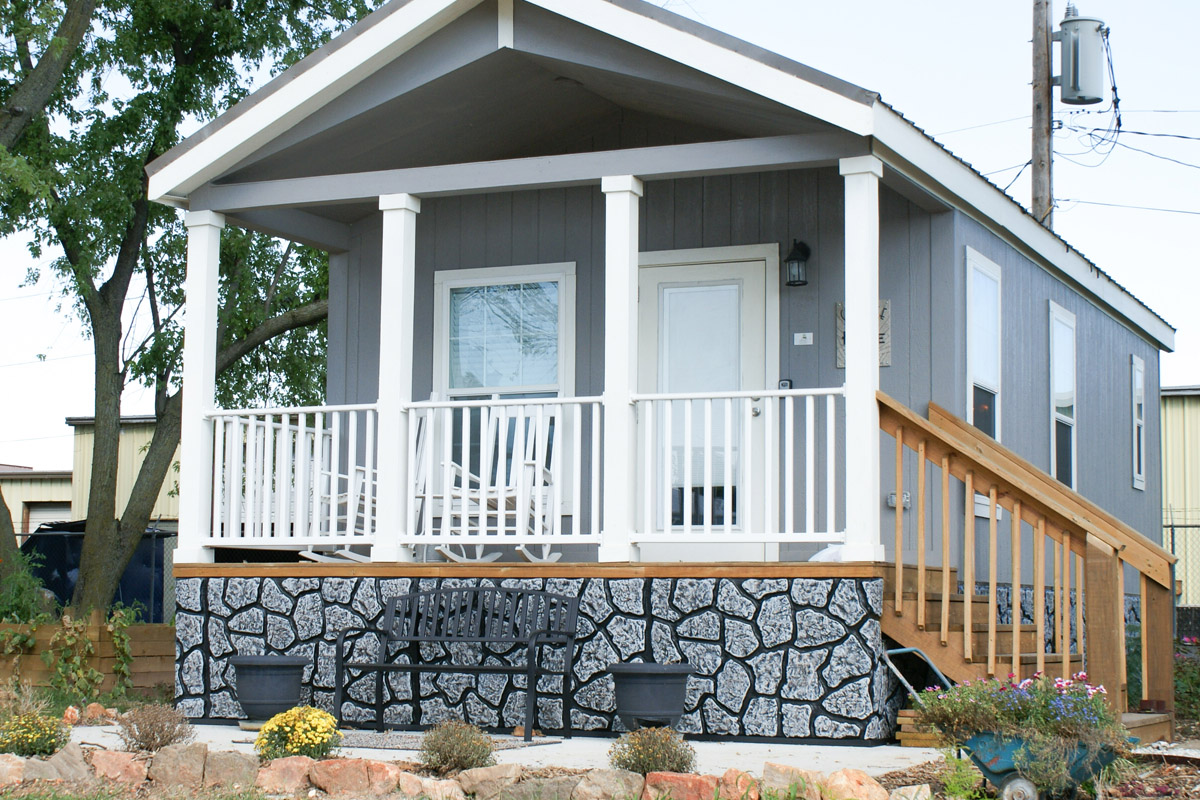
Eden Village Harrisburg announced last month that the Greater Harrisburg Association of Realtors (GHAR) awarded the group $75,000 for its tiny home project planned on S. Front Street.

The money will support the construction of one 400-square-foot tiny home for an unhoused person. The organization plans to build 32 tiny homes and a community room and offer long-term housing with rent at about $300 a month.

“We hope that this is the first of many community organizations that believe in Harrisburg and this mission that we can help the chronically unhoused,” said Wendell Hoover, a local realtor and Eden Village Harrisburg board member.

The nonprofit, an offshoot of Springfield, Missouri-based Eden Village, was organized by a group of Harrisburg area friends, many with ties to housing, who wanted to address homelessness. In March, Harrisburg approved plans for Eden Village to build its tiny home community at 1103 S. Front St., near tiny home community Veteran’s Grove and future housing development Tunnel to Towers, two projects aimed at helping homeless veterans.

According to Hoover, the Eden Village Harrisburg project is in the environmental assessment stage, and so far, things are looking good. If all goes as planned, contractors will begin clearing the land in several months. Eden Village Harrisburg is also still fundraising for its roughly $5.8 million project, though it hopes that volunteer efforts will reduce the cost.

“The GHAR board is proud to be the first organization to make this commitment to Eden Village Harrisburg. Our members were moved by the vital work being done to address unhoused needs in our community, and we are equally excited to partner not only with Eden Village, but with the greater Harrisburg community and our affiliated partners to make this tiny home a reality,” said Kathleen Ludwig, CEO of GHAR.
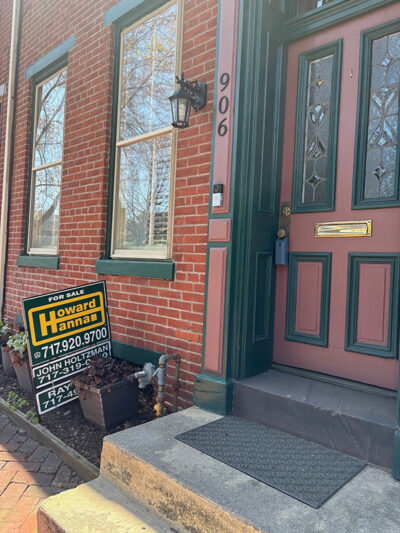
Home Sales, Prices Hold Steady

The greater Harrisburg housing market held mostly steady in March, according to the latest report on previously owned homes.

For the three-county region, 446 homes sold compared to 442 in March 2025, as the median sales price climbed to $285,000 versus $275,300, stated the Greater Harrisburg Association of Realtors (GHAR).

In Dauphin County, 220 houses changed hands in March, a drop from 237 in the year-ago period, while the median sales price increased to $265,000 from $240,000, GHAR said.

Cumberland County had 186 home sales compared to 179 the prior March, as the median sales price was unchanged at $322,250, GHAR stated.

In Perry County, 36 homes sold versus 19 in March 2025, as the median sales price remained unchanged at $234,500, according to GHAR.

The pace of sales slowed in March, as “average days on market” increased to 37 days in March compared to 32 days in March 2025, said GHAR.


So Noted

Antonio Megna last month was hired as Harrisburg’s new business administrator. By a vote of 6-1, City Council approved Megna for the position, which had been vacant for several months following a dispute between council and the administration over the prior officeholder, Sam Sulkosky.

Daniel W. Lufkin last month was named president of HACC, effective June 3. Lufkin most recently served as president of the south campus of Tarrant County College in Fort Worth, Texas. He will replace long-time president, John “Ski” Sygielski, who is retiring after nearly 15 years at the Harrisburg-based college.

Jon Stuckey has been named the ninth president of Messiah University, according to the Mechanicsburg-based college. Stuckey has served as interim president since last July and has been with Messiah since 2000 in a variety of administrator and educator roles.

Madam Rochéle’s Apothecary, a new cocktail-forward lounge, is expected to open this month in downtown Harrisburg at N. 2nd and Locust streets. Owner Justin Browning, who runs several other businesses on the block, said the cocktail bar also will offer small plates, mocktails and Sunday tea.

PA Steam Academy, a Harrisburg charter school, has had its five-year charter renewed by the city school board. PA Steam, located at N. 3rd and Reily streets, opened in 2021 as a K-2 school and now serves students up to the sixth grade.

Rabbittransit this summer plans to roll out a new fare collection system for its Harrisburg fleet, offering users the ability to pay for rides with either physical “RabbitPay” cards or their phone, via a new mobile app. Riders will be able to tap either at orange terminals—located at the fare station just inside buses—to pay.

Shalawn James last month was named the inaugural executive director of the Latino Connection Foundation, bringing more than a decade of nonprofit leadership experience. The Harrisburg-based foundation works to remove barriers and expand opportunities for underserved communities.


Changing Hands

Bailey St., 1251: G. Wicks to Breneman Properties LLC, $73,500

Berryhill St., 1323: R. & T. White to Louis Group LLC, $68,000

Berryhill St., 2106: P. & A. Bates to Gedem LLC, $125,000

Boas St., 233: Integrity First Home Buyers LLC to DKH Homes LLC, $120,000

Brookwood St., 2117: Puzzle Properties LLC to T. Sawyers, $170,000

Carnation St., 1712: H. Casado to Dominium Holdings LLC, $66,000

Chestnut St., 1209: J. Fuentes & S. Figueroa to Sky Nova Properties LLC, $60,000

Chestnut St., 1846: Dreams2Reality Services LLC to Dreamland Envision Properties LLC, $130,000

Croyden Rd., 2886: R. & P. Fickes to A. Hare, $120,000

Cumberland St., 109: L. Beyer & C. Affeldt to C. & J. Askin, $170,000

Cumberland St., 1719: S. & S. Lalic to S. Ndlovu, $199,900

Derry St., 1153: H. Watarai to Premium Property Investing Corp., $116,500

Emerald St., 409: J. Tribue to JK Realty & Home Repair LLC, $140,000

Grand St., 924: N. McClure to M. O’Meara, $171,000

Green St., 1316: Harrisburg Dream Homes LLC to J. Lapkowicz, $135,000

Green St., 1525: First Choice Home Buyers LLC to E. Shelly, $130,000

Green St., 2013: C. Palmer to B. & L. Bonnema, $309,900

Green St., 2232: Blue Trust Investments LLC to Rosaruth Properties LLC, $91,000

James St., 1315: S., J. & N. Kindler to R. Schlenker, $155,000

Jefferson St., 2651: R. & D. Requa to Breneman Properties LLC, $95,000

Liberty St., 1401: J. Vasquez & Y. Ledesma to O. Fana, $150,000

Logan St., 2037: NMC Investments LLC to PA Investment by ADM LLC, $165,000

Maclay St., 320: T. Griese to Vivaanu Spaces LLC, $170,000

Market St., 1248: C. Munoz to ARG Realty Solutions LLC, $135,000

Melrose St., 700: B. Messina to F. Mendez, $113,500

Muench St., 215: T. & S. Wisyanski to M. Soondar, $214,900

Naudain St., 1617: Sunrise River Investments LLC to B. Uppal, $132,000

Naudain St., 1619: Goods Creekside Properties LLC to J. Hans, $136,000

N. 2nd St., 401: Harrisburg Heritage Coworking LLC to Halden Horizons Group LLC, $588,000

N. 2nd St., 1617: A. Bartlett to Capital Key Properties LLC, $300,000

N. 2nd St., 1800: Shree Krishna Foundation to Harrisburg Development Group LLC, $1,030,000

N. 2nd St., 2447: M. DePhilip & J. Reed to B. Peoples, $230,000

N. 3rd St., 1312: Qui Zhen LLC to Silverstone Enterprises LLC, $285,000

N. 4th St., 1326: DKH Homes LLC to W. Rogers, $205,000

N. 4th St., 2254: A. Jackson to Grace Home Fixers LLC, $52,850

N. 5th St., 2234: Maco Properties LLC to Skyzoom LLC, $115,000

N. 5th St., 2236: D&F Realty Holdings LP to R. Sanchez, $81,334

N. 6th St., 1412: N. Smeal & R. Strella to J. Fry, $210,000

N. 6th St., 1720: 1720 N 6th St PA LLC to T. Smith, $225,000

N. 13th St., 115: Harrisburg Home Investment LLC to A&O Burgos Realty Investments LLC, $151,500

N. 15th St., 1403: Triple S Real Estate LLC to 1403 North 15th LLC, $140,000

N. 16th St., 1115: Y. Green to Grid Investments LLC, $57,000

N. 18th St., 84: A. Lantz to Clearsky Property Rentals LLC, $150,000

N. 18th St., 86: J. Lapp to MJ Property Rentals LLC, $140,000

N. 18th St., 802: B. Nevid to Breneman Properties LLC, $105,000

N. 19th St., 43: 3J Homes Living to A. Castillo, $80,000

Park St., 1616: C. Geary to M. Ovalles & G. de Espinal, $175,000

Parkside Lane, 2924: Top Cash Paid LLC to Sunrise River Investments Inc., $185,000

Penn St., 1702: T. Todd to R. DiMaulo, $230,000

Penn St., 1914: S. & J. Sturgis to J. Reichwein & J. Harris, $222,000

Pine St., 210, Unit 5A: Bell Atlantic of Pennsylvania Inc. to AT&T Enterprises LLC, $1,450,000

Reel St., 2414: C. Woods to J. Monegro & B. Casilla, $168,500

Regina St., 1505: Leos Property Care LLC to Northern Cardinalland Company LLC, $125,000

Regina St., 1600: Sky Resort Rentals LLC to 716 Walnut LLC, $540,000

Rolleston St., 1218: A. Grant to UVI Real Estate LLC, $137,000

Rudy Rd., 1951: J. Shaulis to VisionLoop Realty LLC, $50,000

Rudy Rd., 2488: 2020 Real Estate Ventures LLC to G. Rosado, $160,000

Seneca St., 652: M. Perez to UVI Real Estate LLC, $150,000

S. 13th St., 1530: First Choice Home Buyers LLC to P. Campbell, $160,000

S. 15th St., 24: W. White to R. Mata, $144,000

S. 15th St., 545: D. Miller to D. Fisher, $130,000

S. 16th St., 544: J. Shaulis to VisionLoop Realty LLC, $50,000

S. 18th St., 1149: P. Spagnolo to E. Nugra & I. Morocho, $170,000

S. 19th St., 229: M. Reyes to J. Hans, $135,000

S. 23rd St., 519: L. & P. Gurung to S. Ubiera, $235,000

S. Cameron St., 443: F. & D. Miller to Golden Trail LLC, $335,000

Spencer St., 1820: JKC Properties LLC to J Sang Storage LLC, $84,000

State St., 1923: HBG Rents LLC to Pichardos Realty LLC, $250,000

Susquehanna St., 2136: Embass Investments Pennsylvania LLC to P. Zuniga, $167,500

Swatara St., 1939: M. Florentino to D. Pimentel, $145,000

Swatara St., 2031: S. & A. Flores to E. Ayala & N. Vogt, $127,000

Vernon St., 1353: R. Blust to Manning Holdings LLC, $125,000

Yale St., 224: D. Juggins to C. Sanchez & J. De Alcantara, $125,900

Harrisburg property sales, March 2026, greater than $50,000. Source: Dauphin County. Data is assumed to be accurate.

If you like what we do, please support our work. Become a Friend of TheBurg!    
Continue Reading

One Battle after Another: Why is Harrisburg constantly in crisis?

Illustration by Rich Hauck

I co-founded TheBurg back in 2008, at the start of the worldwide financial crisis.

At the time, I described to a friend my less-than-ideal timing.

“I feel like I’m starting a company in 1929,” I said, referring to the stock market crash and start of the Great Depression.

As it turned out, the “Great Recession” wasn’t quite as terrible as that earlier economic calamity, and we were able to muddle through, though not without considerable challenges and sacrifices.

The thing I didn’t see coming was the precarious situation in Harrisburg, that the city where I would start my business was about to enter its own financial crisis apart from the national one. In fact, since my arrival, I feel that Harrisburg has veered from one crisis to the next. Just as one ends, another seems to take its place.

As a resident, as a homeowner, as a business owner, as a stakeholder, as someone who cares deeply about this place, I’ve felt knocked about for much of the past 18 years.

To me, the question is—why? Why is this little city—seemingly so blessed by its setting on a magnificent river and by its status as a state capital—in a constant state of crisis?

To me, the answer is twofold. The first part is beyond our control. The second part is very much within our control.

Since the 1950s, Harrisburg has been buffeted by misfortune. The steel industry collapsed. The railroads died out. Floods devastated neighborhoods. All these caused large and small businesses to close, people to leave and investment to wither.

By the 1980s, Harrisburg’s population had been halved, downtown was a ghost town after dark, and large swaths of neighborhoods were boarded up or razed in the name of slum clearance.

More recently, the city has been walloped again by forces beyond its control. This time, it’s taken the form of COVID, of remote office work, of the heartbreaking fire at the Broad Street Market.

The head swims.

But Harrisburg’s lowly state isn’t just because of exogenous forces or “acts of God,” as the insurance people like to say. It’s also been a matter of leaders’ flawed responses to these crises, which, in my opinion, constitutes the second part of the equation.

I know that, in Harrisburg, many people are tired of the nagging comparison with Lancaster, which, yes, is overstated. But bear with me, because this part is apt.

Lancaster also suffered from such problems as the collapse of heavy industry, aging infrastructure, and the rise of the suburbs. But the people of Lancaster, as a whole, never forsook their city. Key stakeholders stayed, the population remained stable, and business and government combined forces to find creative solutions to tough problems, including making and financing long-range plans.

Contrast that to Harrisburg.

Here, people abandoned their city. Harrisburg-born companies, some very successful, moved out, taking their workforces and money with them. Investment dried up; residents fled. The city got caught in a vicious downward spiral, left to the predations of arsonists, slumlords and profiteers.

Into this vacuum stepped the city’s self-styled savior, seven-term Mayor Steve Reed. Reed legitimately wanted to help Harrisburg, but his ambitions vastly overwhelmed his wallet. He built the city’s rebirth on a quicksand of massive debt, resulting in short-term gain but long-term pain.

In addition, Reed set a terrible precedent. His leadership style could be described as self-important and high-handed, the first in a string of such mayors. In my view, this shared trait has led to many unforced errors, as the city’s leaders often have chosen control, command and conflict over modesty, cooperation and pragmatism.

The state government’s approach to its capital city hasn’t helped either.

For much of history, the commonwealth largely ignored Harrisburg, except when it wanted something from it, like ever-more land. When it did intervene, in 2011, it was to ban the city from declaring municipal bankruptcy and then imposing its own heavy-handed solution, which caused the city to lose control of its valuable parking system. The state then looked the other way as its chosen parking manager ran amok, repeatedly raising rates until people stopped coming downtown. Its lenient work-from-home policy was another nail in the coffin.

The commonwealth now is promising to work with city stakeholders to help revive the downtown. We’ll have to see if their current pledges work out any better than their past ones. I, for one, will wait and see.

Honestly, it’s exhausting. Since I’ve been in Harrisburg, it’s been one battle after another, to crib from the recent Oscar-winning film.

Unfortunately, Harrisburg can’t do much about the external forces that seem to bedevil it. One day, for instance, there will be another flood. But it can do something about its response to these crises, as well as to the routine challenges that bubble up each day.

Harrisburg needs leadership that puts pragmatism before politics, caring over conceit. It needs hard-working people in government who will cast their egos aside and selflessly serve others. It needs leaders who understand how to set priorities, collaborate, motivate and efficiently get things done for the common good.

The best government works in the background, humming along, delivering services as quietly and responsibly as possible. It doesn’t create problems; it solves them. It places the long-term welfare of people over the short-lived allure of self-interested power.

Lawrance Binda is editor and publisher of TheBurg.

If you like what we do, please support our work. Become a Friend of TheBurg!    
Continue Reading

Fit for a King: This year, Harrisburg’s majestic King Mansion turns 100—and has never looked better

Photos courtesy of King Mansion

The King Mansion was a welcoming family home long before it blossomed into a breathtaking venue.

Grandma leapt from balcony to balcony so she could scare the kids by hopping through their bedroom window. Family slept on the balcony to catch summertime breezes. Guests danced at the foot of the grand staircase while the band played on the landing.

“You could really make an entrance coming down those stairs,” said Will King, grandson of Horace King, the attorney who built the masterpiece for his musician wife and six kids.

This year, the King Mansion celebrates its centennial as a remarkably preserved testament to Harrisburg’s 1926 City Beautiful-inspired renaissance. If all goes well for the next 100 years, it will help lead the city’s post-pandemic revitalization and continue standing as a premier destination for weddings, events and a taste of Jazz Age opulence.

“This place,” said current owner Marc Kurowski, “was absolutely made to entertain.”


Home for the Kids

Horace and Rose King wanted a family home at Front and Woodbine streets, facing the Susquehanna River.

The tax attorney commissioned Harrisburg’s trending architect, Frank Gordon Fahnestock Jr., for a massive, Mediterranean-style, Indiana limestone house that “practically set a new standard for living on the riverfront,” wrote Ken Frew, research librarian for the Historical Society of Dauphin County, in “Building Harrisburg,” his seminal review of city architecture.

At a time when the average working American earned $2,000 a year, the stately home cost nearly $135,000 to complete.

Horace King had “big ideas” to occupy the kids, and Fahnestock accommodated. Gymnasium on the third floor. Swimming pool, billiard room and bowling alley in the basement. For guests, accomplished musician Rose King—“she had an amazing voice,” said Will King—played the grand piano and sang.

King called his grandfather “a very creative, pioneering man” who organized Loyal Order of Moose lodges nationwide. The former minor league baseball player played one-base baseball with his kids on the mansion grounds.

We can also thank Horace for preventing the city from building Hoffman Street straight through the William Penn High School campus—a case he took to the state Supreme Court and won.

“I’m glad we were able to do something to save the campus, do something for the school children,” King told the Harrisburg Telegraph at the time.

After Horace’s death in 1938, Rose sold the house to a rest home, beginning its transformation to business use. From 1947 to 2003, it was headquarters of the Merchants & Business Men’s Mutual Insurance Co.

In the 1950s, Will King was growing up north of Harrisburg, and his family sometimes got tours of his father’s childhood home. The bowling alley, King told TheBurg, was converted to a shooting range because the humidity from the pool had warped the lanes.

The elegant mansion has “always been an inspiration” for King, who has built and renovated homes. Attorneys have “a sense of style and architecture,” he said. “It’s such a work of art, so well-proportioned and balanced and beautifully done.”

Owners have taken meticulous care of the building over the decades, he added, and Kurowski’s group is “doing the best job of all of them, in my opinion.”

Red Land High School sweethearts Paige and Cole Wagner were attending the University of Georgia and looking for a wedding venue when their mothers toured King Mansion. Fifteen minutes on FaceTime clinched the deal.

“Yep, that’s our wedding venue,” Paige said.

Then they experienced the mansion and its riverfront idyll in person.

“This is as stunning as it gets,” Cole said. “When you walk up to the front of the mansion, it’s absolutely breathtaking. The memories are going to last a lifetime, but the photos you get are what you keep coming back to.”

Even the July weather didn’t upset the proceedings. The outdoor ceremony went off smoothly after a 15-minute storm delay. The cocktail hour was intended to be partly on the long porch, but the heat sent everyone inside, and no one was cramped.

“It’s awesome with the rooms because there’s seating everywhere,” Paige said, a feature appreciated by grandparents and older guests. 

Marc Kurowski

Falling in Love

Several years ago, Kurowski wanted a city site for his business, K&W Engineers. His real estate agent connected him with Josh Gray, who was moving the company, Webclients.net, out of King Mansion.

“He wanted somebody who would be a steward of the building,” Kurowski said.

He was intrigued by Gray’s offhand comment that he got married there. Others occasionally asked about using the space for weddings, Gray told him.

JDK Catering—today, one of the mansion’s exclusive caterers—liked the venue idea, and Kurowski decided on a test drive. During COVID, he “dived in with both feet” with renovations. The first “for-real, full-time wedding” was held in March 2021.

The ballroom gallery that hosts up to 160 guests was gutted to the concrete floor, now polished to a gleam, and stripped of decades of HVAC components. Columns on the wall that look original were actually built to conceal utility chases.

“They look like they’ve been here,” Kurowski said. “Those guys did a hell of a job.”

Italian newspapers found tucked in upstairs walls attest to the original builders and the “old-world craftsmanship from the 1920s,” he added. “The bones are phenomenal. It’s held up because of the way it was built.”

In late 2024, Kurowski added luxury, river view suites on the third floor, where the King kids played basketball. Almost inevitably, wedding parties rent them.

“It’s such a fun idea for couples to escape upstairs after your wedding,” said Venue Manager Courtney Cerjanic.

Cerjanic “fell in love with the mansion” when she was hired in late 2023.

“It’s like a little piece of Europe in Harrisburg,” she said.

Wedding couples—97 weddings are booked for 2026—come from the midstate and the Mid-Atlantic. Businesses host meetings, and nonprofits stage galas (including—shameless plug alert—TheBurg’s Friends of the TheBurg Bash every September).

“We want folks to come here to experience the King Mansion,” Kurowski said.

It is a venue for celebrations but also, he hopes, a place “to share ideas, whether that is political or community-minded folks having a place to connect and informally talk about the business of the city.”

Nathan Imboden, CEO of Boden Wealth in Lemoyne, regularly attended an informal gathering of area businesspeople as the mansion was converting to event space, and he realized he found the ideal setting for client appreciation dinners.

Guests are greeted with champagne. Before dinner, they mingle in the foyer, parlor, bar and sitting room. They take photos with the “gorgeous fireplace background.”

“I see people in pockets of different areas,” he said. “They’re laughing and engaged. All this stuff happens naturally.”

The venue reflects and continues to uphold its business heritage, Imboden said.

“You hear of places tearing down these old structures and putting up something new or an apartment complex,” he said. “The fact that a building that has such a rich history and is now still used for some form of business helps to continue that legacy.”

Ahead for the mansion are more accommodations, “other fun stuff” like signage and landscaping, and at some point, upgrades for the basement, where the pool and its bathhouses remain, Kurowski said.

King Mansion attracts about 20,000 visitors a year who dine, stay in hotels, and support the local economy, he added. As Cerjanic put it, “We’re helping make central PA more of a destination for people, especially Harrisburg but also Hershey. People turn it into a long weekend.”

The mansion hits the trifecta of historic preservation, said Historic Harrisburg Association Executive Director David Morrison: an exterior in “tiptop condition,” nearly original Roaring ‘20s interior, and use by thousands of people yearly.

King Mansion’s preservation supports Front Street’s “world-class streetscape” that tourists are eager to experience.

“It was built for entertaining,” Morrison said. “It’s living its best new life.”

In a moment of serendipity for the Wagners, guests watched from the mansion lawn as the Harrisburg Senators set off their Friday night fireworks.

Cole called it the “cherry on top” of a wedding that guests called one of the best ever.

King Mansion allowed them to relax, said Paige, and Cole has “no doubt at all” that the space launched their marriage on a great note.

“If we had the chance to do it all over again, we wouldn’t have changed a thing,” he said. “That was exactly where we wanted to be.”

Will King “can’t tell you how thrilled I am” to see the mansion’s rejuvenation. His grandfather “made such a statement with a house that is still there, and we’re still talking about it and still talking about him,” he said. “It really is inspirational that this is the way to leave your mark, to leave something that endures.”


The King Mansion is located at 2201 N. Front St., Harrisburg. For more information, visit
www.kingmansionpa.com.

If you like what we do, please support our work. Become a Friend of TheBurg!    

Continue Reading

Taking the Wheel: Daryl Shepherd drives on his father’s legacy

Not that long ago, Daryl Shepherd found himself in a hotel room. Divorced and homeless, he was in search of something—anything—to help guide him back to stability.

He had worked as both a barber and an instructor for his father Donald’s driving school, Shepherd’s Driver Consulting, but his earnings weren’t making ends meet.

Sitting on the hotel room bed, he took time to assess himself.

“I never panicked,” he recalled. “I had faith in God, and because I came from a harsh community, those things groomed me for the mentality I needed in order to deal with what I was going through. But when you’re homeless, you’re like, ‘Yo, where am I going to live? I can’t afford anything.’”

Reminiscing on his time in the U.S. Army, Shepherd decided to look into programs for homeless veterans and found a hotline. He called it and spoke with a woman who encouraged him to call Veterans Affairs, which he did to learn about how veterans are eligible for vouchers to help pay rent. It was Shepherd’s first step towards redemption.

And he hasn’t looked back.

  “I wasn’t going to go down without a fight,” the Harrisburg native said. “I knew I had to be committed to something until it had results.”

That something turned out to be taking ownership of his father’s driving school business. Stepping into that role inspired Shepherd to expand not only the company, but his profile as a professional. He began a YouTube channel, “Driven to Drive,” which chronicles his work. He also hit the speaker circuit, finding his confidence as a motivator and learning to be unashamed to share his story.

By his own admission, his growth is tied directly to Shepherd’s Driver Consulting. Founded in the 1990s, the school was the first Black-owned driving school in central Pennsylvania, as Daryl’s father built it from the ground up as a retirement project. Daryl, for his part, became a certified instructor at a young age at the encouragement of his father, despite not believing it would ultimately be his career path.

These days, Donald enjoys the retired life, having stepped away from the business in 2012. With his father now 90 years old, Daryl was quick to point out how important it is for him to carry on Donald’s legacy, explaining that his professional mission has become a personal one, too.

“My dad is a great man and a great leader, and I wanted to support him,” Daryl noted. “So, I was like, ‘Yeah, Dad, I’ll do whatever you want.’ After I got back to Harrisburg after five years in the military, I shadowed him as he was going through the training process, and one day my opportunity came. I picked a student, and the rest is history.”

Young or Old

The school offers four courses—Basic, Basic Plus, Accelerated and Accelerated Plus, with the “plus” options including an extra hour of instruction. According to Daryl, the most popular program is the Basic curriculum, which runs $550 and includes seven hours of behind the wheel driver training.

The seventh hour, he explained, is the moment the student attempts to pass the driver’s license exam at PennDOT. Students use the business’s car to take the test and, if they pass, they receive a certificate that allows them to receive a discount on a car insurance policy.

Through the years, Daryl has become passionate about his driving school work, falling in love with it more than he believed he could. The process of teaching someone—young or old—how to drive and seeing the effect it has on them has become a source of inspiration for the business owner.

“When I first saw a person get a driver’s license, it was an epiphany,” he admitted. “Seeing how they were independent and didn’t have to depend on someone else for transportation, it made me a better person.

 “It’s not a glamorous business,” he added. “I have to work three times as hard as my competitors, and they charge double what I charge. But I have to ignore that and say, ‘What does God have for me?’ I stay committed to that every day.”

As for the future, the 54-year-old is optimistic about his ability to grow the business his father began—and even reimagine it in a modern light.

“I want to spread my story and hopefully inspire some people with it,” he said. “It wasn’t overnight and it wasn’t a piece of cake. I’ve been through everything, but this business now is battle-tested.”

“I want to leave a legacy,” he concluded. “I’m thankful and blessed and fortunate to be able to do what I do.”

For more information on Shepherd’s Driver Consulting, visit  www.shepherdsdriverconsulting.com or call 717-503-9344.

If you like what we do, please support our work. Become a Friend of TheBurg!    
Continue Reading

Treat Yourself: In Harrisburg, bakeries seem to flourish while other businesses struggle. We wondered why

Tammy Worthy-Jones

It’s the morning of the first-ever Harrisburg Bakery Crawl, and pastry fiends are buzzing up and down N. 3rd Street.

“Honestly, I had no clue what I signed up for, but I am excited to see what different baked goods there are,” said Brooke Wimberly, whose Midtown-based sister, Camryn, invited her into the city from Mechanicsburg for the March event.

The sisters were among at least 100 customers who paid $25 to spend their Saturday hopping between six of the city’s locally owned bakeries, collecting a treat at every stop.

As they made the three-mile round trip, desserts stacked up in their plastic bags.

On the menu were miniature poundcakes, Ube croissants (bright purple inside), mini crème brûlée cheesecakes, chocolate black-tie mousse cake, iced lemon-blueberry rolls and cannolis.

In addition to baked goods, many of the crawlers had ventured out looking to try more sweets from across the city—like Lisa and Randy Berrier, retirees from Penbrook, regular customers at Alvaro Bread & Pastry Shoppe.

Rita, a regular at Salted Butter Bakery, said that, until this event, she “didn’t know there were so many bakeries in Harrisburg in such close proximity.”

There were even a cluster of bakery lovers who had missed the crawl’s ticket cutoff but came out anyway—intent to see what the hype was about and buy off the shelf.

According to Riley and Zach Madar, owners of Anna Rose Bakery & Coffee Shop, at least as many people showed up to their store without tickets as those who’d bought them.

Friends Maddie Lamarca and Allie Prim had seen the event on social media and were going to walk half of it after driving in from the Mechanicsburg area.

William, a Midtown resident, was enjoying the walk from one spot to the next.

“I’m doing my own,” he shrugged.

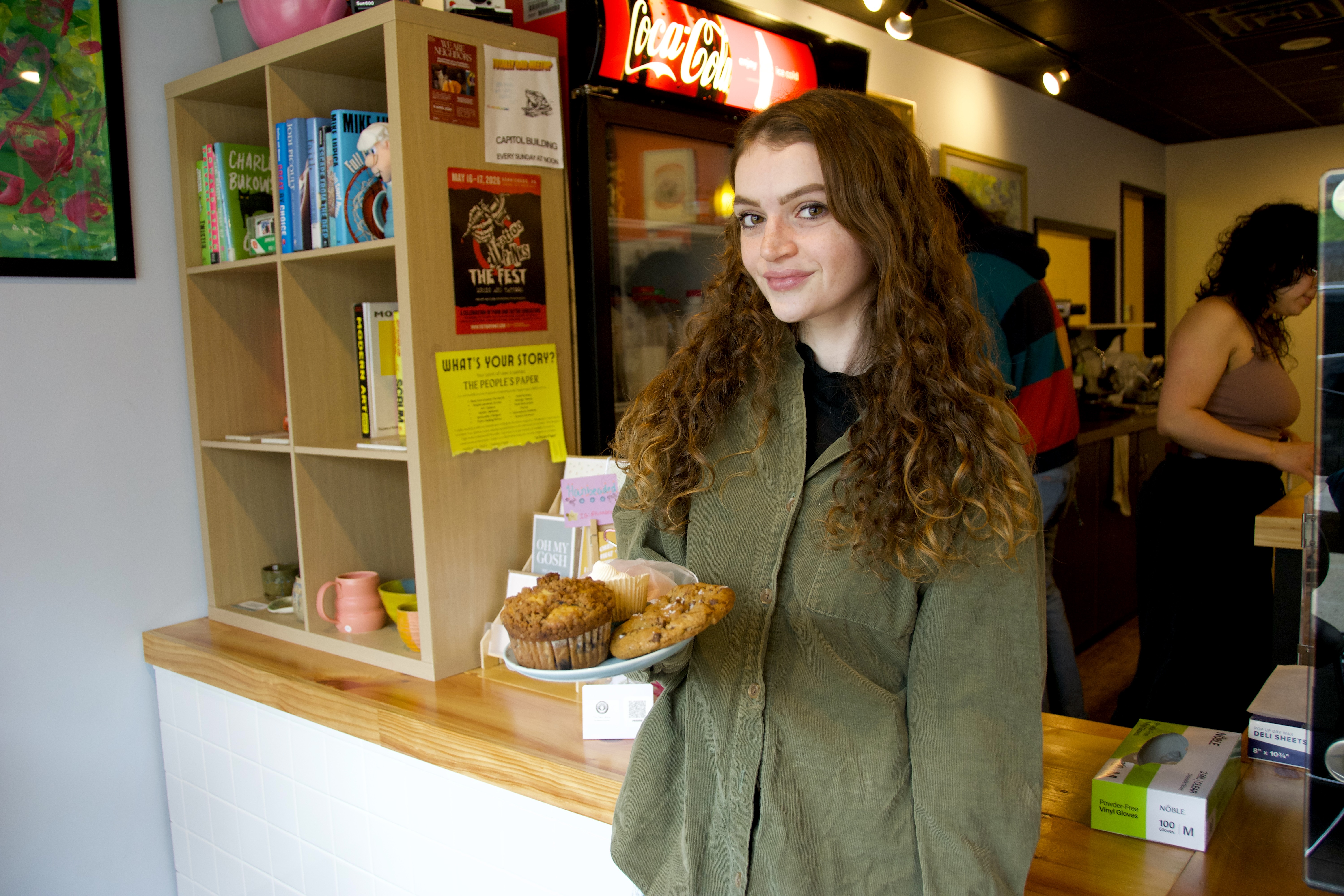
Anna Rose baked goods


A Little Different

While bakeries have always been an urban stronghold, the Bakery Crawl highlighted the success of the business model in a city otherwise struggling with commercial vacancies.

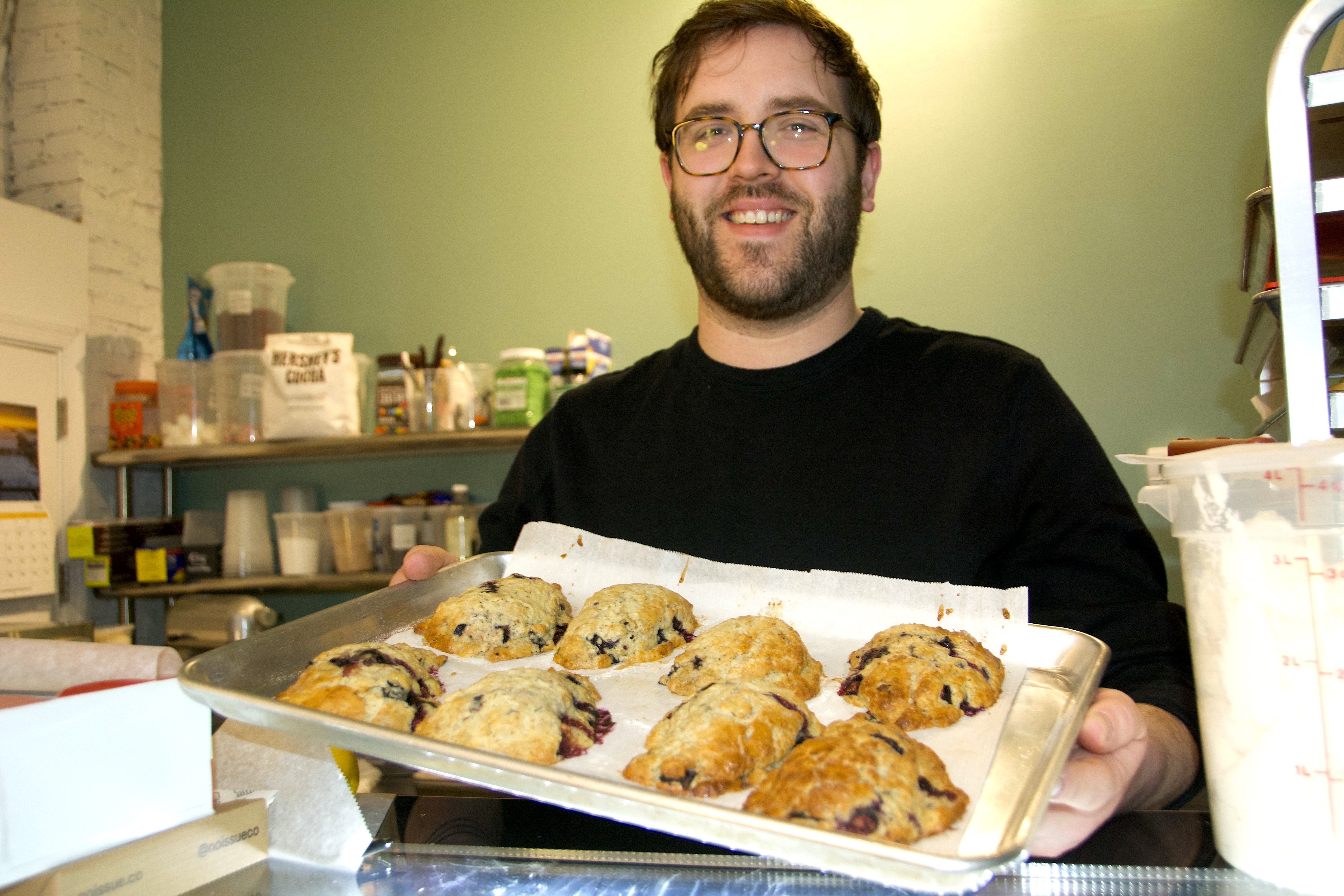
Salted Butter owner Alec Johnson, organizer of the crawl, started floating the idea last fall.

One of the biggest motivators was that he and his fellow Harrisburg bakers have seemed to naturally share a portion of their customers—although they all have slightly different focuses.

Vincenzo Alvaro, manager at the longest-serving bakery of the group, Alvaro Bread & Pastry Shoppe, indicated there are more bakeries in Harrisburg now than there have been in the two decades they’ve been open. His family-run business specializes in traditional Italian pastries, fresh breads, breakfast and lunch. Its Midtown location opened in 2005.

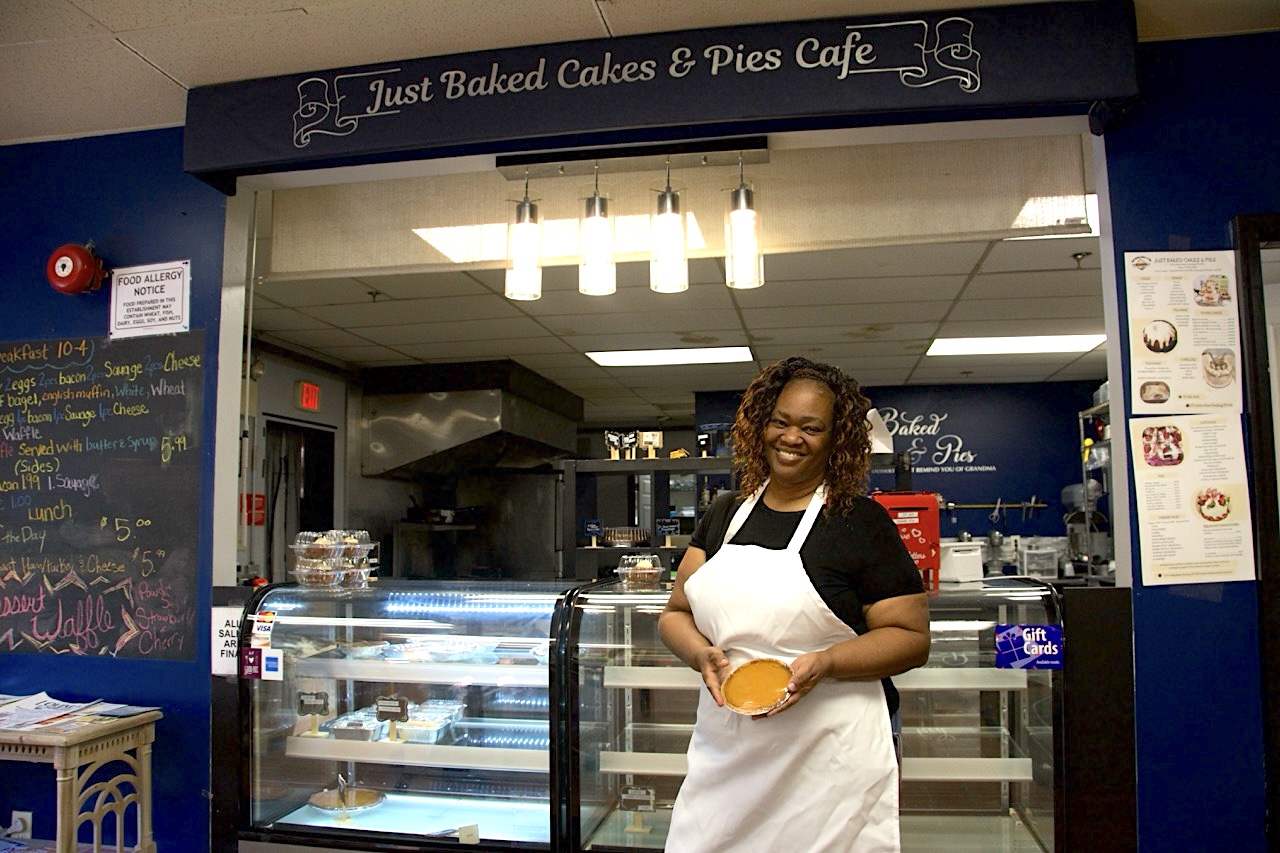
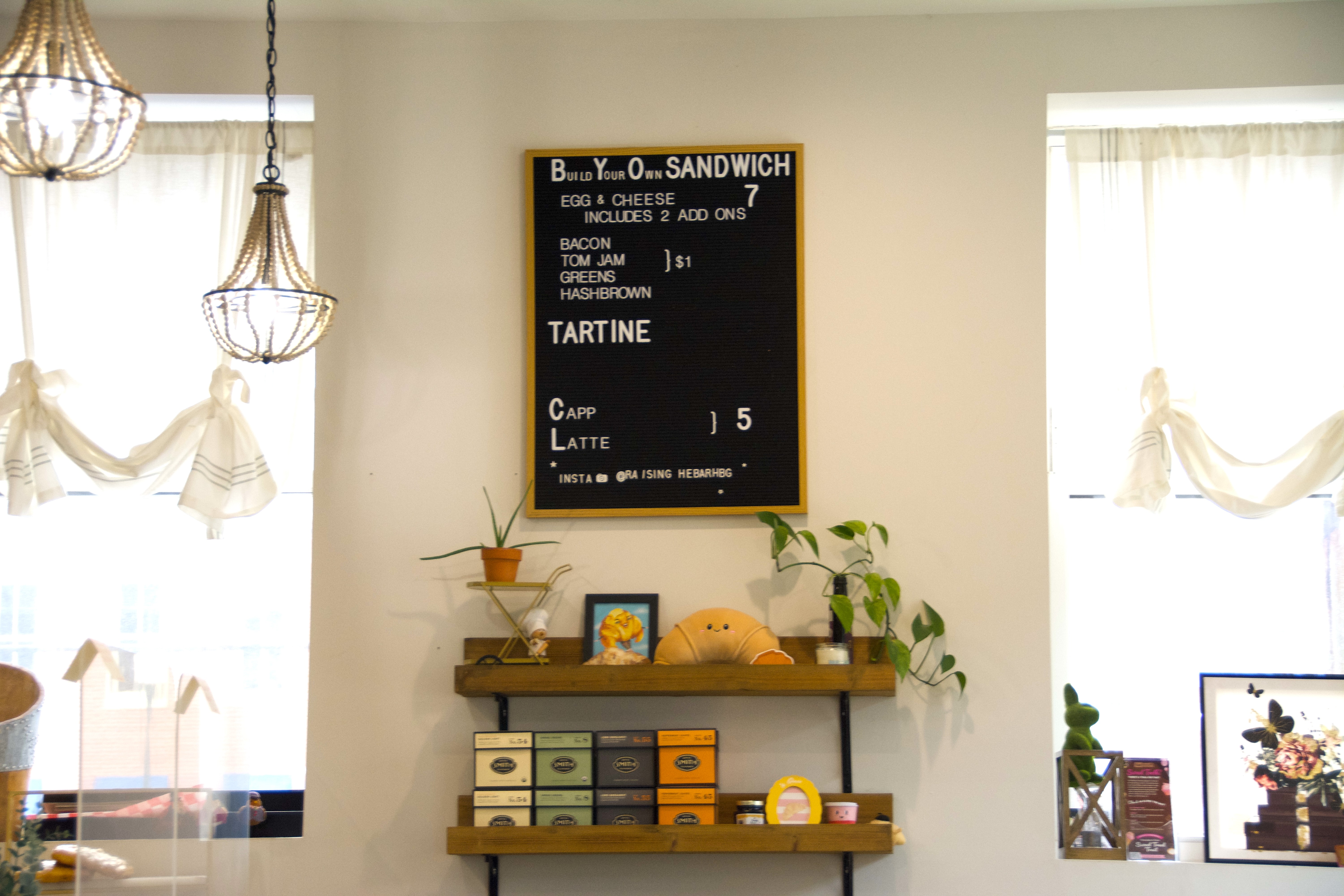
Also in Midtown, Salted Butter sells custom cakes and fun treats like sandwich cookies, cinnamon rolls and M&M brownies. Raising the Bar offers homemade croissants and fresh breads, while Just Baked Cakes and Pies, inside Midtown Scholar Bookstore, leans into sweet potato pie and pound cake.

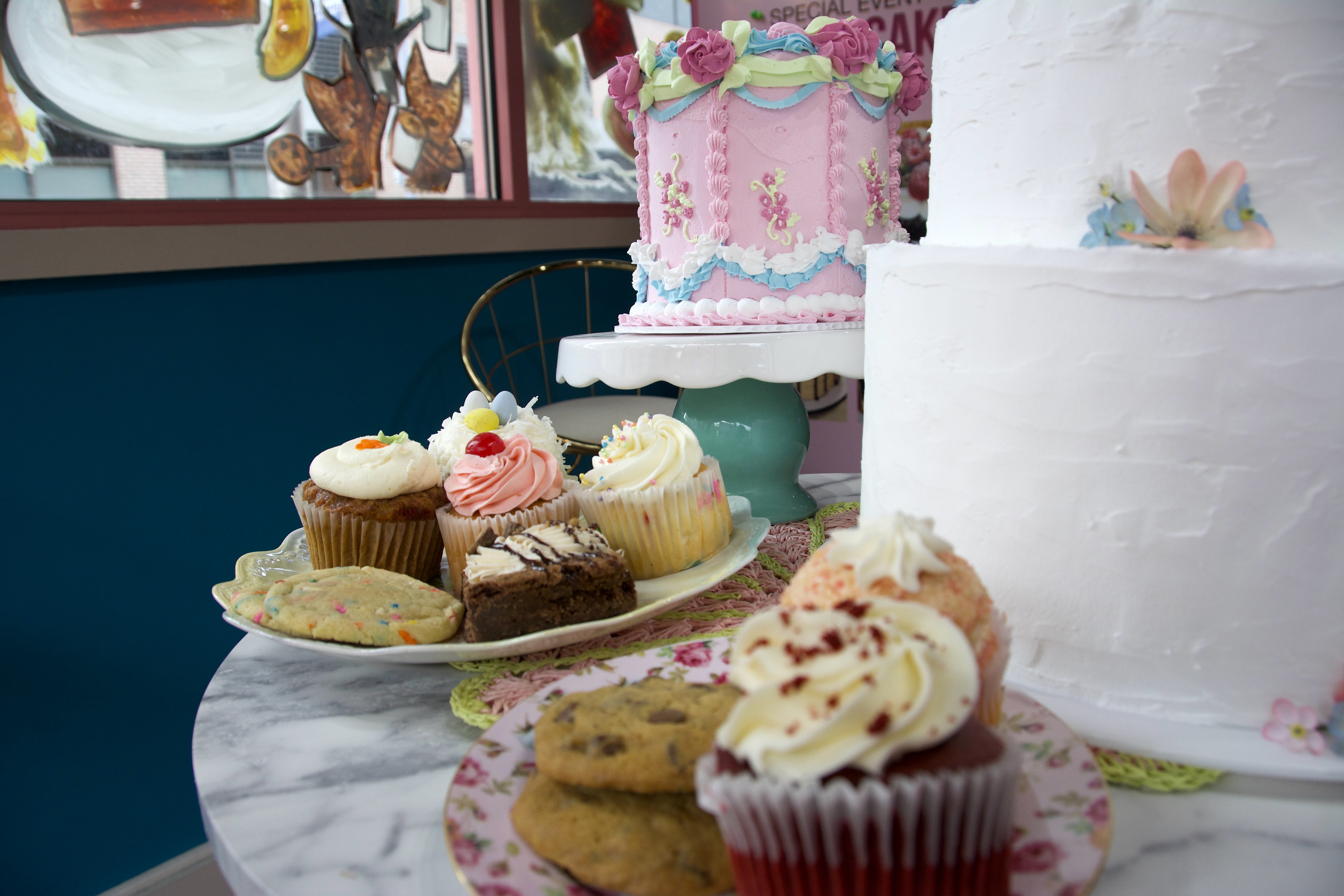
Downtown, Wake and Bake Café’s big sellers include muffins and banana pudding. Anna Rose has become known for its pecan bars and intricately iced cupcakes.

On top of it all, most offer cookies and cakes; some offer breakfast food or sandwiches; others double as coffee shops or cafés.

“We’re all a little different,” Riley said. “We’re all the same.”

Holding the event in the spring seemed like a good way to put bakeries back at the top of customers’ minds after the busy holiday season and New Year’s lull. The crawl would give people a reason to come out and sample from each.

Loyal customers of one bakery might find others they like—ultimately driving up business for all as well as boosting Harrisburg’s reputation as a place for fancy treats.

“It’s good for the customer,” Johnson said. “It’s good for us.”

Raising the Bar cafe

Sweet & Dense

Just Baked Cakes and Pies owner Tammy Worthy-Jones has been inside the Scholar since February 2020. When asked why so many bakeries seem to be popping up in Harrisburg lately, she laughed, “I don’t have a clue.”

“It just seems like everybody just said, ‘You know what? Let’s open a bakery on 3rd Street,’” the pastry chef, originally from New York, joked.

Four of the crawl’s six bakeries—including Worthy-Jones’—were along that corridor.

Raising the Bar found a home on the first floor of the “Carpets and Draperies” building in 2022, choosing to stay close to their established customer base after years inside the Broad Street Market.

Salted Butter snagged a storefront across the street from the market last year.

Coming off pop-ups and event vending, Wake and Bake, located across from the state Capitol Complex, joined the lineup in July 2025.

You might wonder: How does such a small area support them all?

Elle Daniels

With just 12 blocks in between Wake and Bake and Raising the Bar, it might seem at first like an over-saturated bakery market—but the city’s residential density within this grid means that a certain number of people who live nearby will stop in.

Except for Anna Rose, all the bakery owners estimated that most of their customers are Harrisburg residents living within a few blocks of their storefronts.

“Just talking to my customers, if I had to put a number on it, like 85% of them live really close by,” Johnson, of Salted Butter, said. “We’re not necessarily the bakery that’s getting a lot of people from outside the city.”

Parking can be a challenge, all the bakery owners agreed—and sometimes a hurdle for potential suburban customers, who don’t want to pay $8 total for a cookie once a $3-to-$4 per hour parking fee is factored in.

“For that reason, I would say the majority, nine out of 10 of our customers, are just walking past and popping in versus making it a special trip,” Johnson added.

He simplified Salted Butter’s customer base into two camps: the regular who spends $3 or $4 every couple of days for a mood boost and the once-a-month customer who buys $100 worth of treats for their office or family gathering.

There are hyper-local differences between bakeries too.

Wake and Bake sees more business from the Capitol Complex and workers downtown. Salted Butter has increased foot traffic on market days. And Raising the Bar gets regulars from PA STEAM Academy drop offs and pickups across the street.

For Just Baked Cakes and Pies, many customers come from inside the Scholar—other regulars travel in from Lower Paxton Township and Uptown Harrisburg. Alvaro gets some traffic from nearby fire and police stations.

Meanwhile, along the N. 2nd Street corridor, Anna Rose owners said that state workers make up most of their clientele, followed by other office workers, convention goers, travelers and tourists.

“It’s a very commuter-focused downtown area,” Zach said.

One unifier for customers that Johnson has picked up on—a lot of his regular customers like the local aspect of the business.

“They want someone to know their name,” he said. “They want someone to know their order, and you don’t get those types of things with chains, necessarily.”

Vincenzo Alvaro agreed.

“He comes three or four times a week and gets a breakfast sandwich,” he said, pointing to a man walking into his shop. “I know him by name. I know what he gets. When you do that with people, it makes them feel good about themselves.”

Alec Johnson

$5 Goes Far

While bakeries offer food, they don’t quite operate like a restaurant.

That may be a good thing now, since full-service restaurants have struggled lately (a national trend) due to high operating costs, labor shortages and consumers’ tightening pocketbooks.

By contrast, the bakery scene in Harrisburg is booming. This may be because—compared to restaurants—a few dollars can go a long way.

Johnson worked at a Dairy Queen decorating ice cream cakes four years ago. He said the franchise’s 25-year owner often repeated a specific philosophy.

“She always said that, when there was almost a recession, Dairy Queen sales went up. Because if people are struggling to pay their bills or to make ends meet, they can at least spare $5 to get themselves something to make themselves feel better,” he said.

Even when money’s tight, all the owners said, people still want to treat themselves on a rough day.

“I know a lot of people are struggling right now, and so I feel like that’s maybe why there’s so many bakeries that are doing so well,” Johnson said.

Raising the Bar owners Casey Callahan and Timishia Goodson described baked goods as an affordable luxury.

Raising the Bar

“It’s more affordable for people. It’s not a $30 entree,” Callahan said. “People on the everyday can afford [baked goods] a little bit more than they can going out to a full-scale dinner.”

Goodson pointed out that a bakery’s costs are different than a restaurant because of a different mix of perishables. While they can keep flour a little longer than other ingredients, bakers must be mindful of the shelf life and fluctuating prices of dairy products and eggs.

“Sometimes for a while, that will completely change our menu,” Goodson said.

At one point, for example, cream cheese jumped from $3 a pound to $9 a pound, forcing them to take cream cheese items off the menu.

Overall, Zach Madar pointed out that bakeries often work more like a retail store than a restaurant. They also keep the staffing light, with only four workers, including the two owners, at Anna Rose.

“We have the people that get the product ready and the person that checks people out for the product,” he said. “We don’t need waiters and waitresses.”

Callahan noted that restaurants have a lot higher labor cost due to waitstaff.

“Notoriously, I think even successful restaurants struggle,” she said. “Not that we don’t struggle and bakeries don’t struggle, but when you have a smaller staff, if you keep it tight, you can get through the leaner times a little easier—whereas, I think for a restaurant, especially the larger you get, it’s a lot more difficult.”

Wake and Bake co-owner Elle Daniels added social media is a major pro for bakery owners in business.

“One thing I’ve noticed recently is people love to watch other people eat,” she said.

She often capitalizes on the Capitol view from her bakery storefront’s window. Videos are big for the bakery, too. Especially process videos, coffee-making videos, often filmed by one of their baristas.

Daniels does most of her baking in the afternoons, after the store closes. She’ll mix cookie dough, setting it aside for the café’s chef to bake in the morning—so customers smell the aroma the next morning when they walk in.

Daniels said that she’s been known to pull the prettiest baked goods from a batch just for social shots for Wake and Bake’s more than 1,600 Instagram followers.

“It’s like, ‘OK, I’m saving this one for a picture.’ Like, ‘Nobody touch this one,’” she joked.

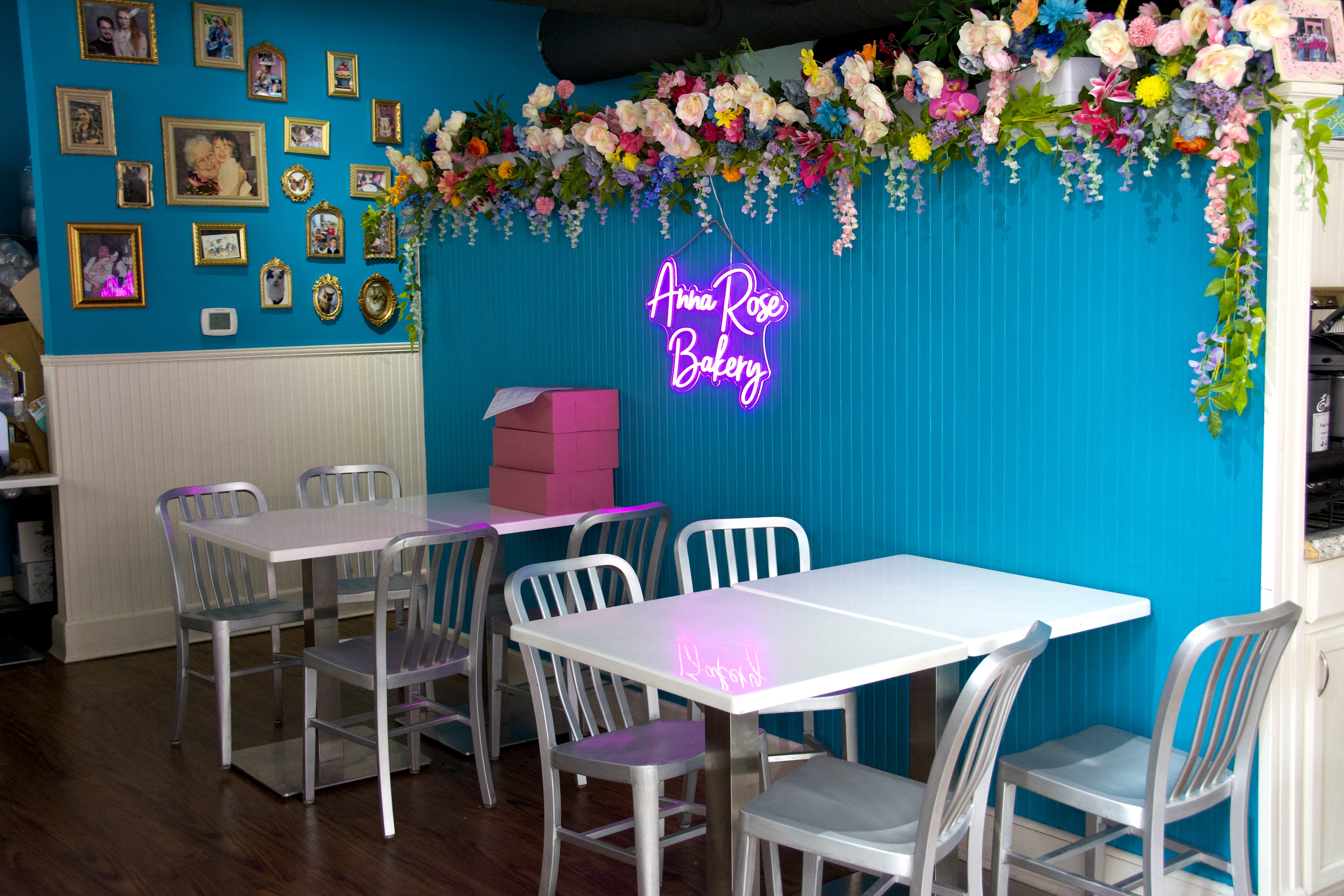
Anna Rose Bakery

Sense of Belonging

While the Bakery Crawl lasted only a day, many participants emphasized that Harrisburg’s bakeries are fixtures in their daily lives—and the reverse is true for bakery owners, too.

At Alvaro, for instance, Vincenzo said that he treats his regulars like family.

“I’m telling you, just a little conversation, a human to another human, is what this world needs a little bit more of,” he said.

Beyond the daily routine, owning a bakery also means being a part of major milestones in people’s lives.

“Our cakes are meant for everyone’s most important day,” said Zach at Anna Rose, from birthdays to baby showers to weddings. Riley added that they also see a lot of first dates—and sometimes it works out. A couple who ended up getting married, she said, even came back for a visit.

“It made me cry a lot,” she said with a smile.

Ultimately, whether customers are coming in for a quick bite or a big event, the draw remains the same: a sense of belonging.

Bakery crawler William put it best: “The welcoming atmosphere makes you want to come back to every one.”


Something Sweet

If you have a craving, the bakeries mentioned in this story can be found at the following:

Alvaro Bread & Pastry Shoppe
236 Peffer St., Harrisburg
4715 N. Front St., Harrisburg
www.alvarobread.com

Anna Rose Bakery & Coffee Shop
100 N. 2nd St., Harrisburg
www.annarosebakery.com

Just Baked Cakes and Pies
270 Verbeke St., Harrisburg
Facebook page

Raising the Bar
1507 N. 3rd St., Harrisburg
Facebook page

Salted Butter Bakery
1224 N. 3rd St., Harrisburg
Facebook page

Wake and Bake Café
240 N. 3rd St., Harrisburg
Facebook page

If you like what we do, please support our work. Become a Friend of TheBurg!    
Continue Reading

Roast with the Most: In Harrisburg, a short distance separates the craft from your cup

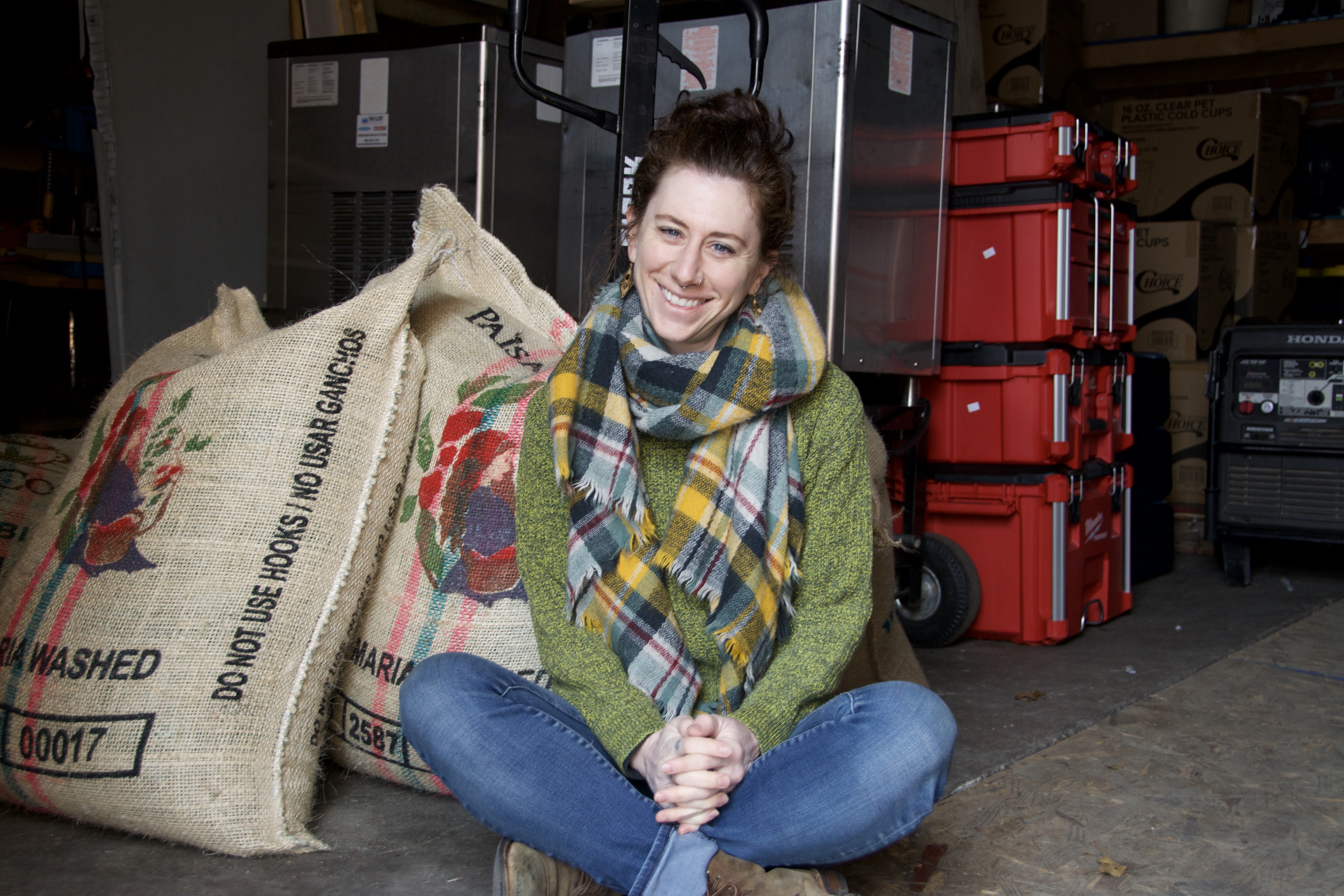
Whitney Riegel

The First Crack

There’s an entire world of coffee before it’s in front of you.

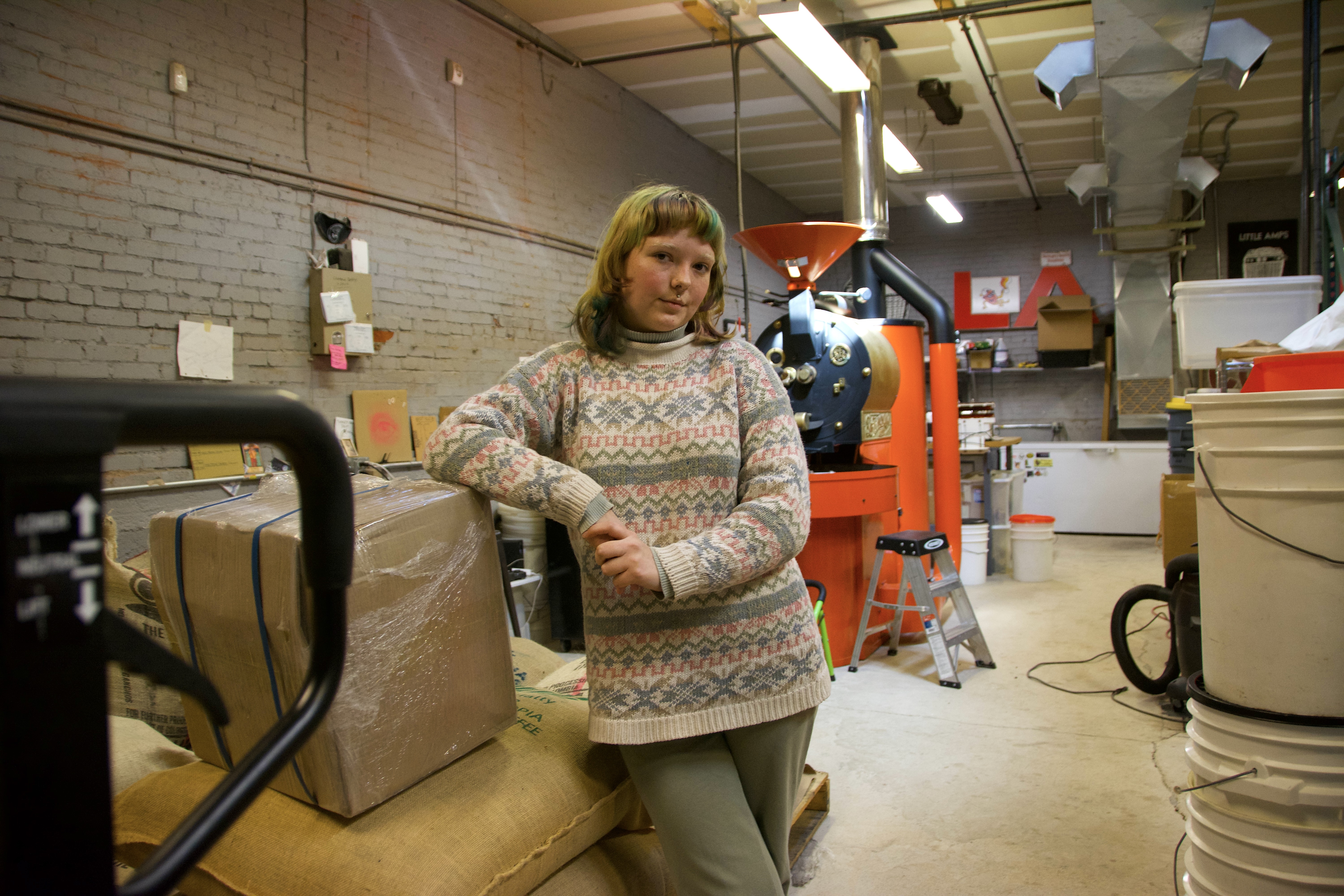
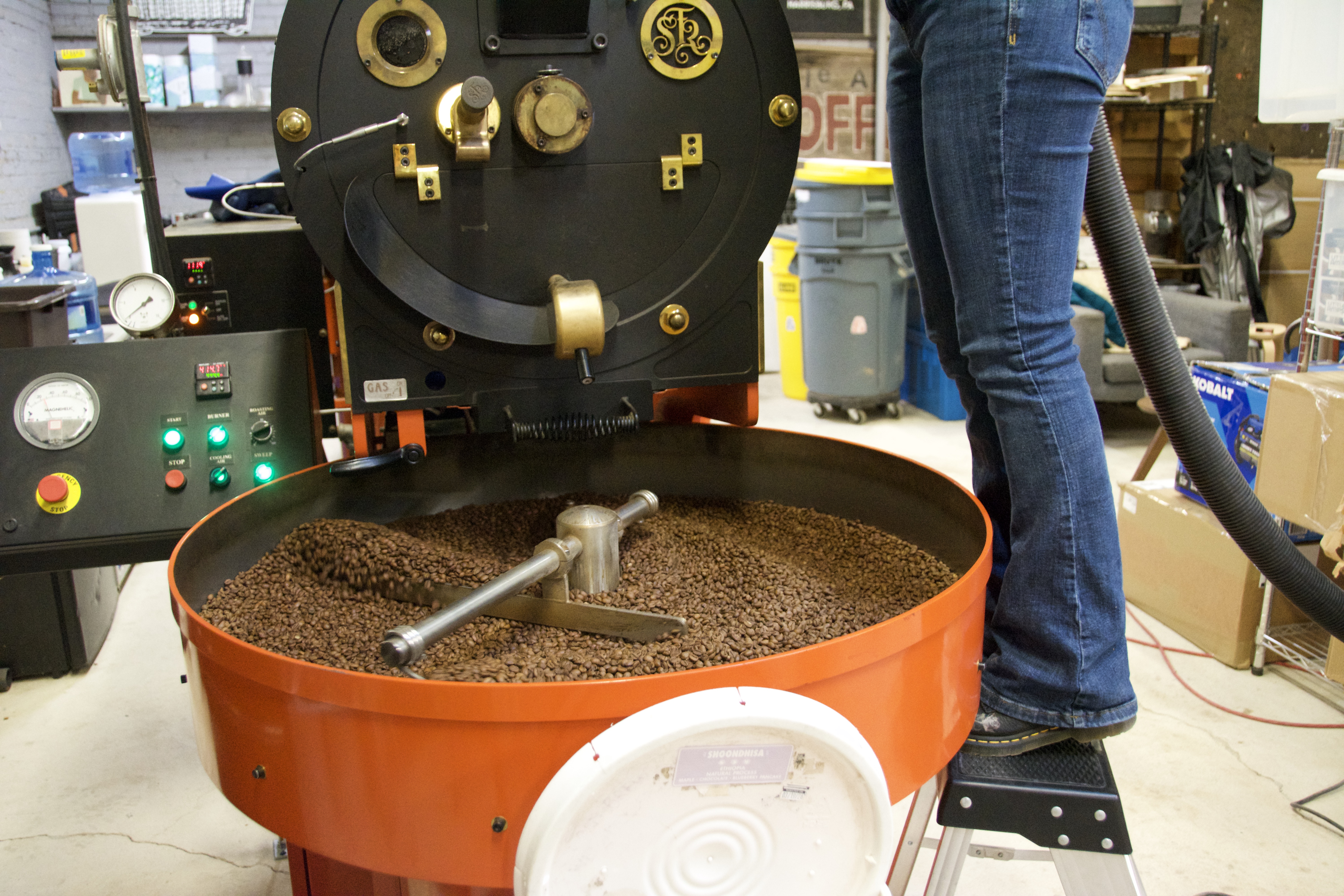
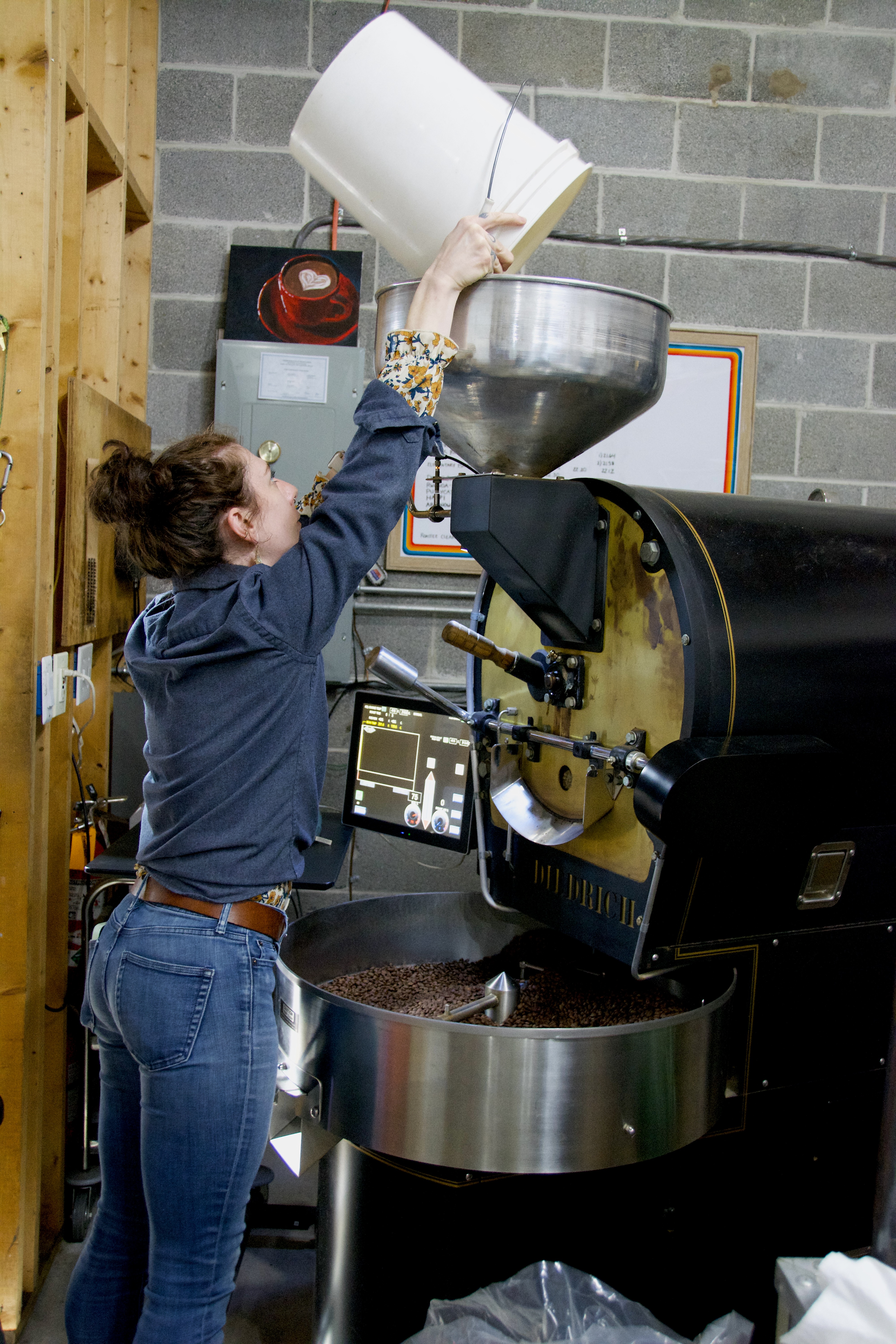
In an inconspicuous garage in Midtown Harrisburg, Whitney Riegel climbed a small step stool with a white, seven-gallon bucket of green coffee beans propped on her shoulder.

The beans clinked as she emptied them into a funnel atop a bright orange coffee roaster.

Moments later, they were circulating in the drum of the machine.

Riegel, Little Amps’ director of coffee, eyed the beans through a small circular viewing window.

“It’s slowly starting to turn,” she said. “Here, in a couple of minutes or so, they’ll become more of a well-developed brown.”

In her role, she leads a team that does roughly 50 roasts a week (over the course of three days) for the company. She has held her current position for a little under a year.

Riegel started at Little Amps in 2023 as a barista—hired after moving to Harrisburg just to work with the company, which has been a staple in the Harrisburg coffee scene for 15 years.

“Little Amps was the very first specialty roaster in the city,” explained Peter Leonard, the CEO and head of business development. “And the first specialty shop to open in the city.”

Roasting has always been an important part of its operations. At the time of the Green Street location’s opening, in 2011, Little Amps founder Aaron Carlson told TheBurg that he tried to “roast perfectly” to respect all the stages (such as growing, processing and selecting) that have already taken place in the process.

Little Amps’ roaster

“I want to get the right roast for the right bean so that it tastes like its origins,” he said.

In the years since, Little Amps has expanded downtown, operating a second shop within view of the state Capitol Complex.

Its roastery is just around the corner from its Green Street location, dotted with burlap bags of coffee, a bagging station, and, Riegel said, a space where they can do “cuppings” to taste how batches of beans have roasted.

Taste-wise, she said, they’re always making sure that they’re bringing out wanted elements from the coffee beans. If it doesn’t seem quite right, they can alter things accordingly.

“Like this Bumba,” she said, of a coffee bean imported from Burundi, a country in Africa just south of the Equator. “We were originally tasting it not as bright as we wanted. We thought that maybe the flavor was a little bit muted, so I extended the development time to pull out more flavor and to further roast it a little bit more.”

Based on where the coffee beans being roasted originate from, and the flavor profile Little Amps wants, they choose different profile graphs (guiding recipes) to follow, explained Riegel.

“We will take a profile that we’ve used in the past of a coffee from a similar origin, or of the same origin—or a similar area—and use that as a reference to kind of determine how the coffee will roast,” Riegel said. “From there, numbers-wise, it can be meticulous.”

Little Amps’ coffee bagging station

She pays careful attention to the temperature of the beans, through software on her laptop, that shows her the extent to which they’ve been heated or cooled.

Riegel first fell in love with coffee at 16 years old, working at a Starbucks. She’s been exploring the field ever since.

“I love learning about the back end of coffee,” she said.

In addition to roasting, her days now are spent working closely with importers, evaluating coffee samples and making projections about how much of each bean the company might need for the coming year. She also still works as a barista at Little Amps on Sundays, keeping her coffee brewing skills sharp.

“It’s been a lot of fun,” she said. “It’s a lot of new things—a lot of new connections.”

Little Amps roasting

Another Jolt

A few years after Little Amps burst onto Harrisburg’s coffee scene, Andrea Grove opened her company, Elementary Coffee Co., in 2014.

She began vending inside the Broad Street Market with three years of coffee trade knowledge and two years of roasting under her belt.

At the time, she had her doubts about whether the city would be able to support a second specialty coffee shop—but customers quickly proved her wrong.

“It is really cool to see a city that doesn’t have a ton of resources at its disposal support such good coffee,” she said.

Andrea Grove

For the first two years, Grove roasted Elementary’s beans after hours at the Linglestown-based St. Thomas Roasters, whose owner originally taught her how to roast.

“He and I are still really good friends,” she said. “Anytime his roaster breaks, he comes and roasts here. My roaster, the drum stopped spinning one time, and I was waiting for a part to come in, and I was able to go roast there.”

By 2016, she’d purchased her own roaster for Elementary. She installed it, initially, inside the market, so the shop’s patrons could watch the process unfold. It all took place in the stall beside Elementary’s current stand in the stone building.

“We’re right beside where we used to be,” Grove said. “The stack that the pizza place uses? We put that into the market. That was our smokestack.”

Plans to move the roaster to Elementary’s North Street location, which opened in 2019, fell through due to the building’s low ceilings.

“We ended up having to kind of hustle and find another place for it. We were already leaving the market. And so, we found this place,” Grove said, gesturing around her, standing inside a small Uptown garage that Elementary splits with the pop-up milkshake vendor, Milkshakes!

“We’ve been here for five years,” she said.

Elementary beans

In addition to owning and running Elementary, delivering beans and filling shifts as a barista when needed, Grove is the company’s sole coffee roaster. She spends three days roasting per week.

Her roaster, like Little Amps’, is gravity-fed. Beans go in the top moments after Grove scoops them out and weighs them.

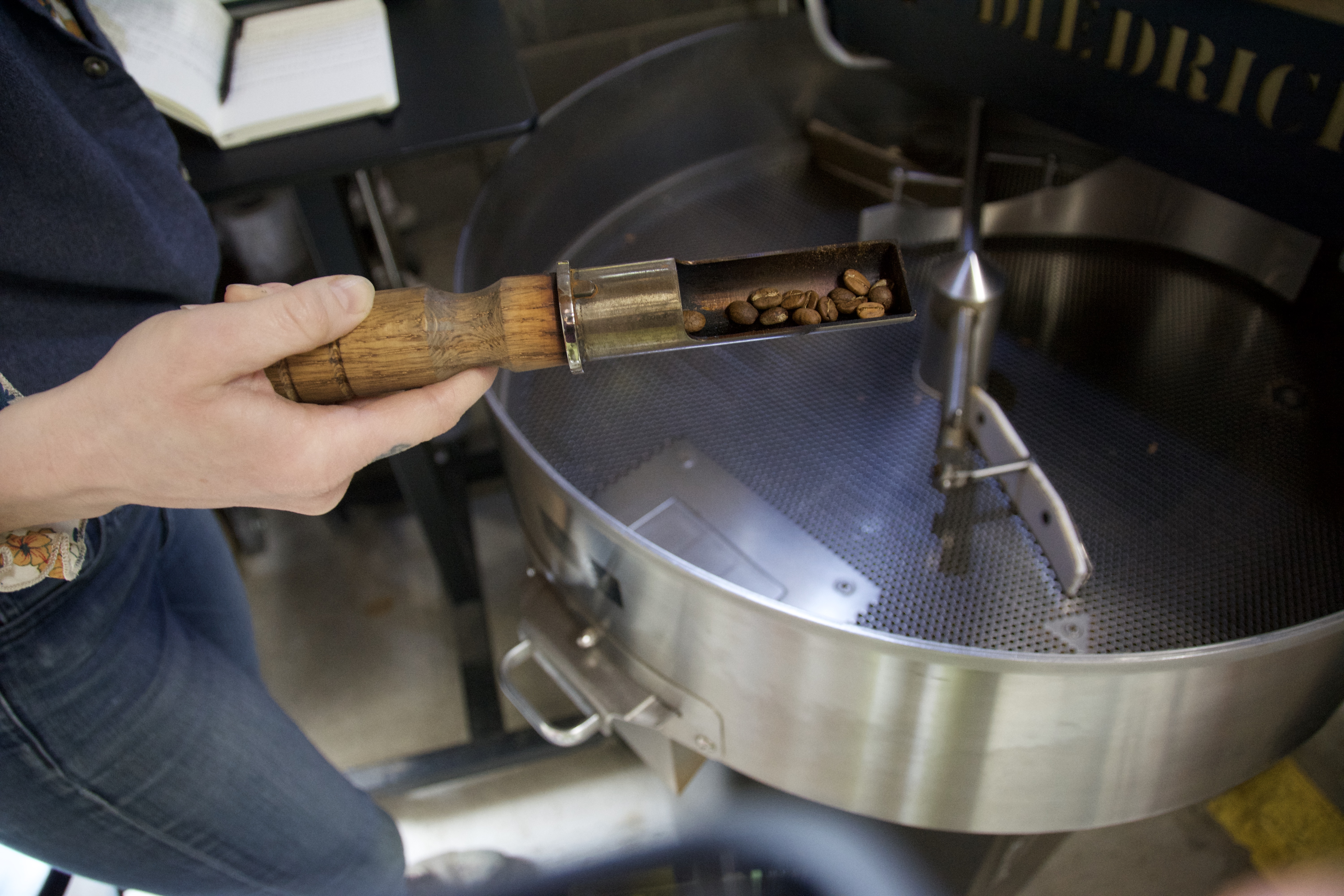
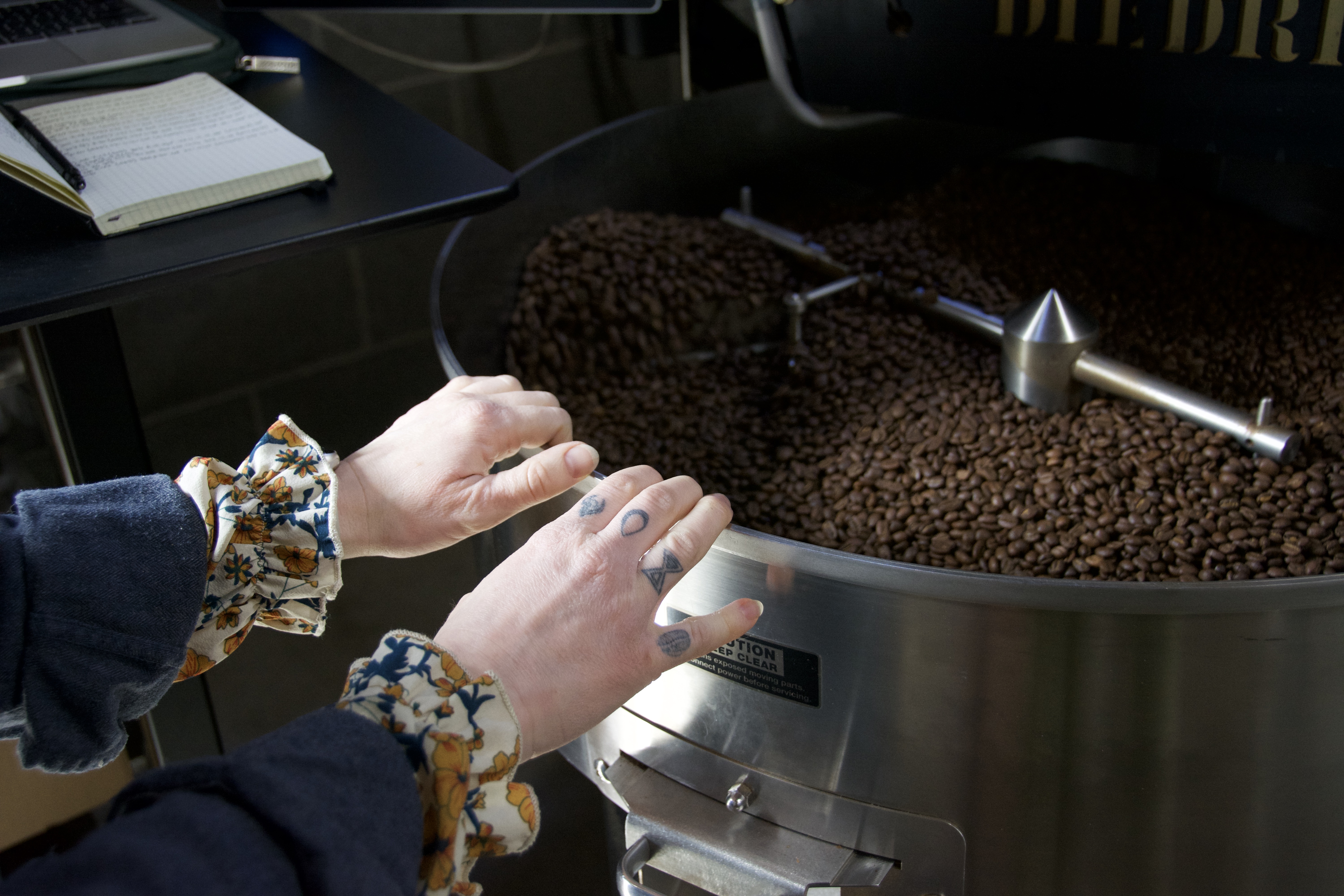
While they circulate in the drum, she occasionally pulls out a long-handled spoon stationed inside the drum, allowing her to better smell the development of the beans mid-roast.

She perks up when she hears the coffee start its “rolling crack.”

“This is when the coffee starts creating its own heat,” she said. “You have to really watch the temperature because it wants to spike—and you don’t want to burn your coffee. Or have your coffee taste burnt.”

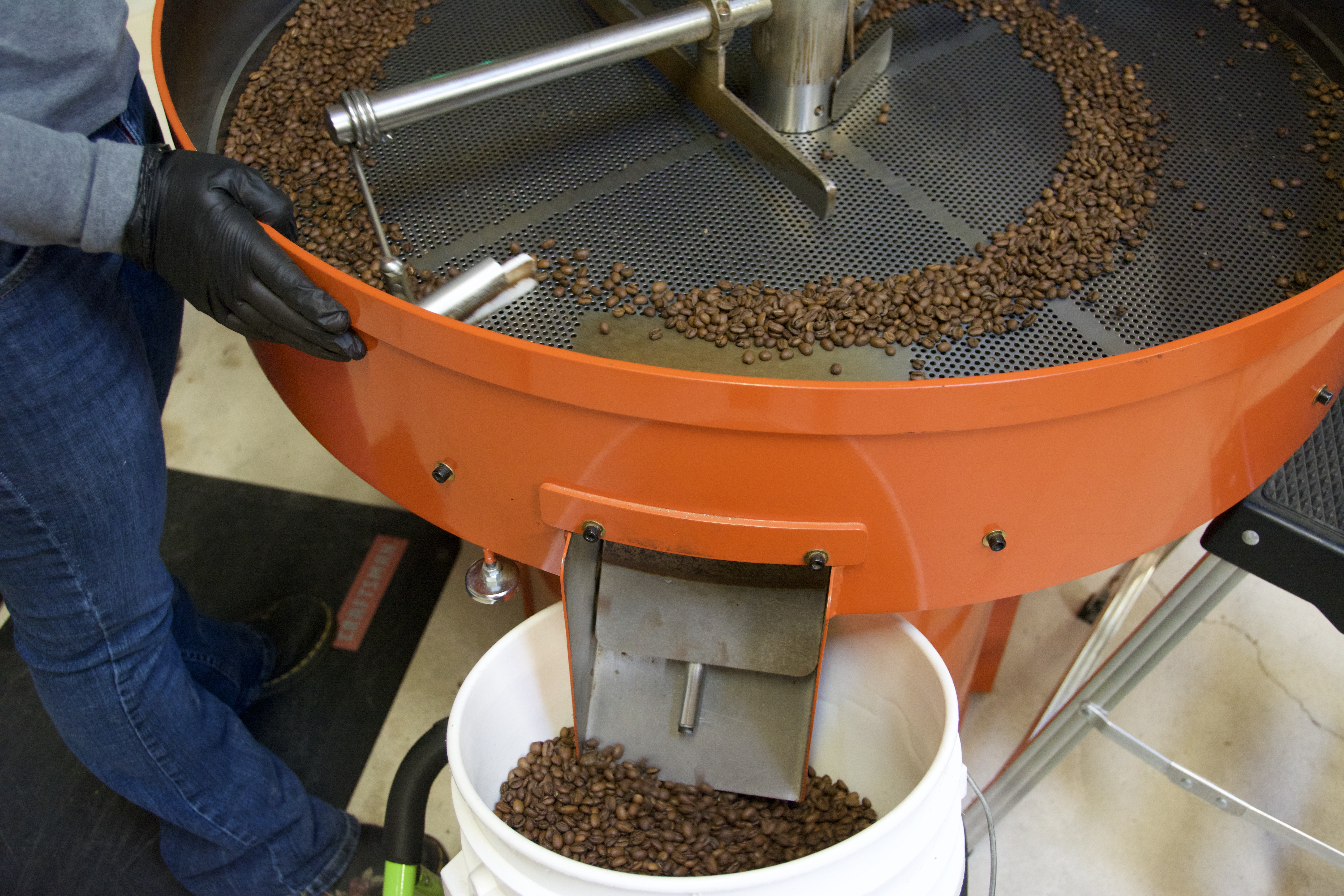
She opens a door on the roaster’s barrel, and the beans toppled out onto the cooling tray. As they do, she takes time to scribble in a journal the details of the batch—bean blends, roasting temperatures and more.

Andrea Grove

“After it cools, it goes into a bucket,” she explained. “I start the next roast, and it’s a nice continuous process.”

Grove said that she likes to roast for up to four hours at a time. She estimates the process of taking a bean from green to brown is half science, half creativity.

“You have to sort of understand what’s going on in the roast, and that just takes time to build up,” she said.

Depending on what else is happening, she said, the beans—bagged at a table nearby the machine—could be over at one of Elementary’s stores by later that day.

“It is a pretty quick back-to-back,” Grove said.

Elementary roasting


Specialty Central

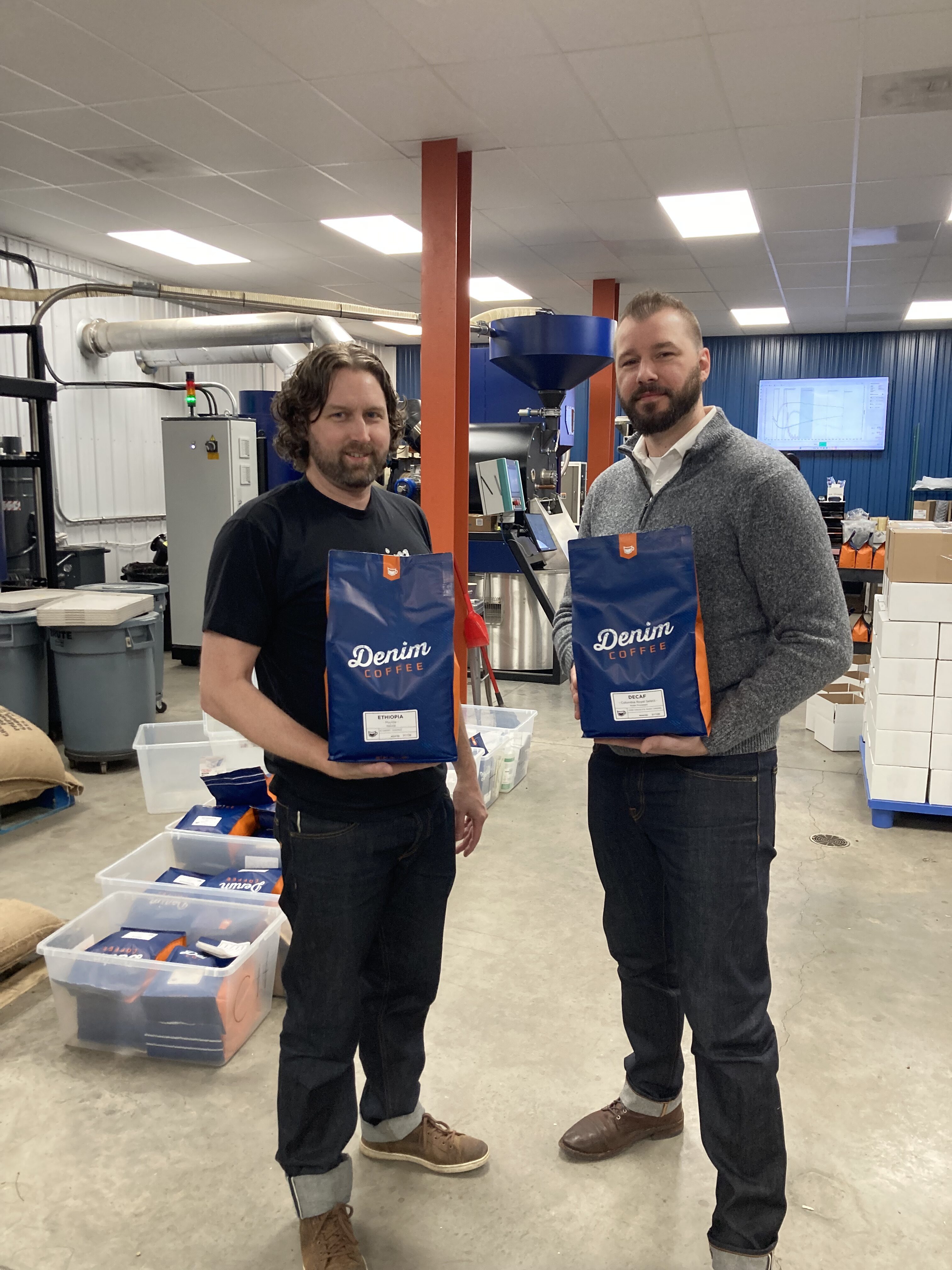
Harrisburg’s specialty coffee scene expanded further in 2021 after Tony Diehl, an owner of the Denim Coffee, secured a Walnut Street retail spot he’d had his eye on in Harrisburg.

Prior to going full-time at Denim, Diehl was in the city for work—and hungry for lunch.

“I turned the corner at the Capitol to get a cheesesteak—one of the highest-rated cheesesteak places—and I stopped immediately when I saw the space at 401 Walnut St.,” he remembered.

Tony Diehl and Matt Ramsay

At the time, it was half-vacant and rundown. Inside the window sat used furniture—with different things up for sale via a sign on the window with a phone-number that said, “If you see anything you like, call.”

“I called the number, and I said, ‘Hey, I like the space. Get everything else out of there,’” Diehl said. “‘I want to make this a coffee shop.’ And he said, ‘No.’ He said, ‘Go away.’”

But later, Diehl found out that the owner of the space, the voice on the other end of the phone, was also running his favorite cheesesteak restaurant.

“I made it a regular part of my routine to stop at our Carlisle shop and get ice lattes and baked goods when I had to be in the office at my other job in Harrisburg, and I would drop those off in the morning for them,” Deihl said. “I did that for about a year. Essentially, just wore him down to the point where he said, ‘OK, just take the space. Make it a coffee shop.’”

At the time, this marked Diehl’s, and fellow owners Matt and Kristin Ramsay’s, third retail space for Denim.

In addition to the company’s flagship Carlisle location, they had opened a store in Chambersburg, the borough where they now roast their beans. The company’s Chambersburg headquarters was previously an ice factory—originally built as a nuclear fallout shelter—in 2024.

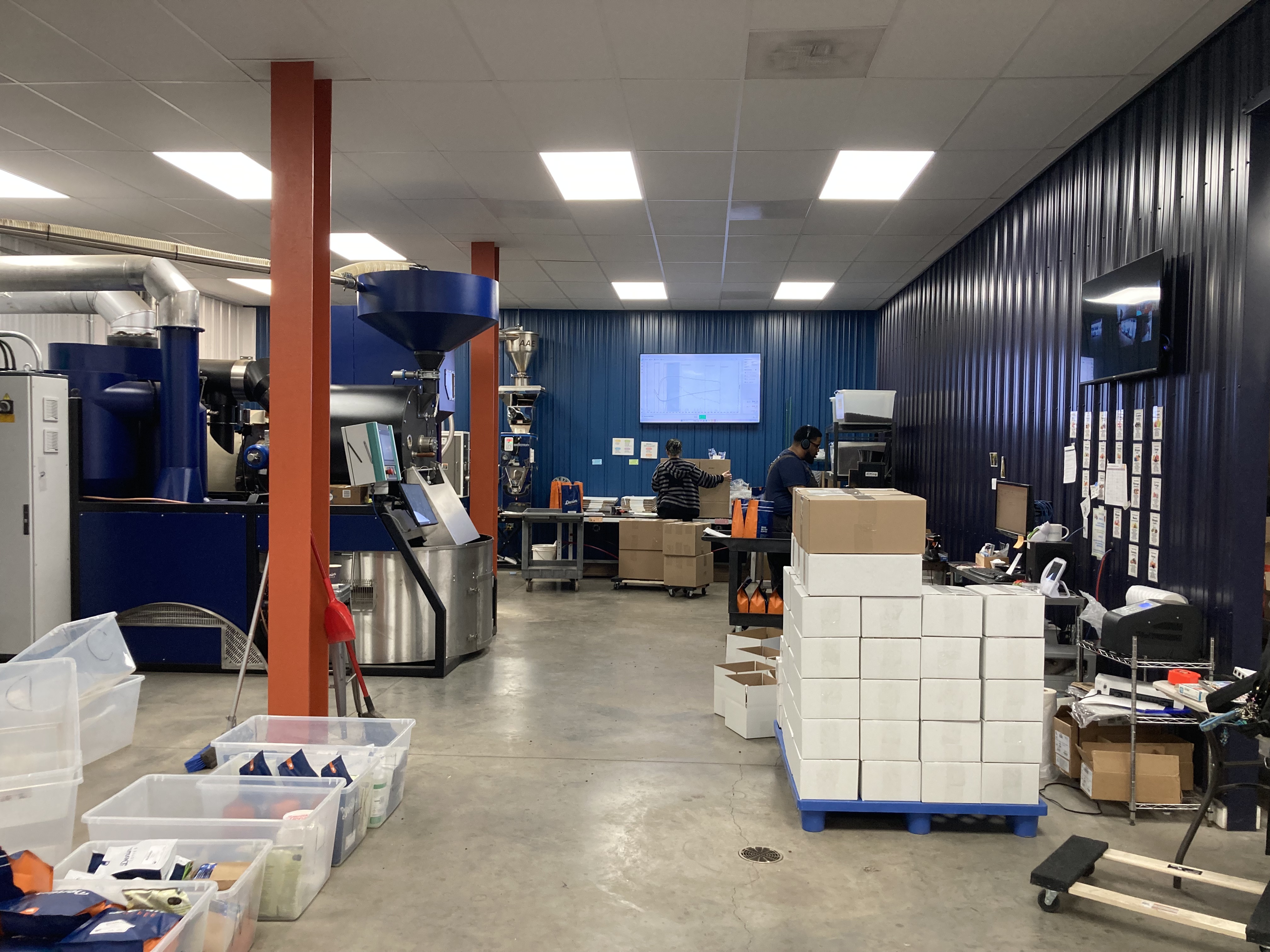
The roastery inside boasts a large recirculation roaster with six attached silos that can hold near 2,200 pounds of green coffee a piece.

Matt Ramsay said that they bought the machine at the same time they bought the new building—an upgrade from a smaller roaster that sat at the front of the building.

According to Ramsay, Denim technically doubled the batch size of its old roaster but tripled its production.

“Even though the batch size only doubled, we can go through it faster,” Ramsay explained.

It also has highly precise heat controls that Ramsay compares to driving a Ferrari.

“I want 900? Boom, 900,” he said.  “875? Boom, 875.”

Curtis Davidson

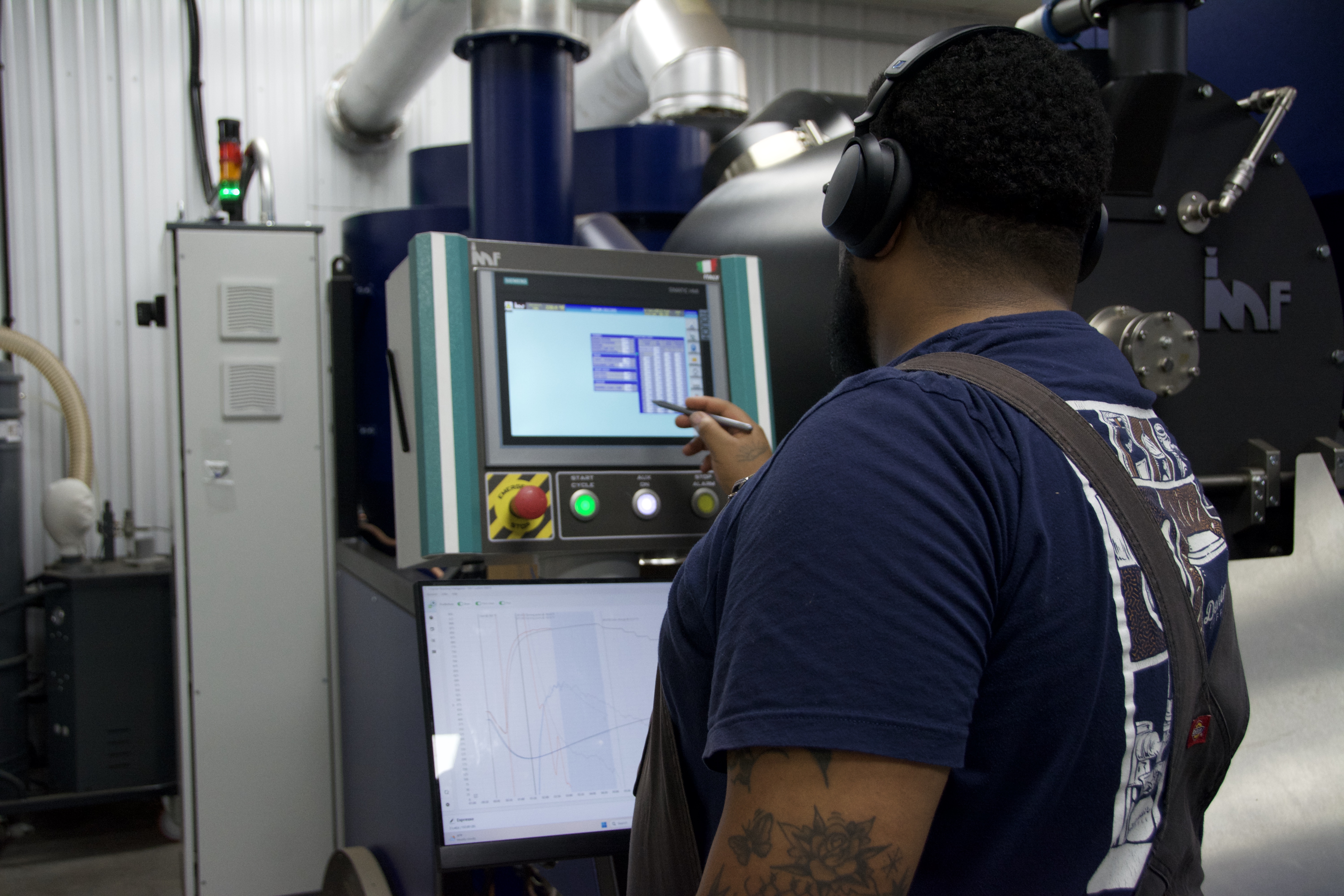
Denim’s head roaster, Curtis Davidson, mans the machine, controlling batches via a touchscreen computer.

From Denim’s silos, beans are sucked up through tubes into a hopper, where they wait to be roasted. The machine then streamlines much of the roasting process.

“For the most part, you know, everything is automated,” Ramsay explained. “Once we dial the recipe in, the roaster will do a lot of the work for us.”

Based on its settings, the machine controls heat, airflow and drum speed.

Among the highlights of the machine for a roaster? The chaff of the coffee bean (like a skin) comes out the back, into a trashcan. Any stones that may have gotten into the batch, instead of being picked out by hand as they would be at a smaller roastery, are automatically sorted by weight. An airstream chamber pushes the lighter coffee beans to the top while everything else falls.

Still, Ramsay said, the roaster has to make a lot of decisions about end temperatures, development times and more.

“It combines having to do something intuitively and tracking it with numbers and recipes and all that other kind of stuff,” said Davidson, who moved from the Bay Area to come work for Denim. “It works both sides of my brain.”

The variables in terms of resulting coffee flavor profiles are infinite.

“One of the reasons I got into coffee is because you will never reach the end of it,” Ramsay said.

Denim now has two locations in downtown Harrisburg (its second, a kiosk in Strawberry Square) and is slated to soon open a third downtown location on the ground floor of the Menaker apartments.

The new location will be their eighth overall—a big step toward the company’s goalpost of 10 shops. That would allow them a large enough purchasing quantity to buy directly from coffee farmers and cut out the middleman, Ramsay explained.

Ramsay fell in love with coffee and the community it offers while a student at Shippensburg University.

“All communities benefit from these third spaces,” he said.

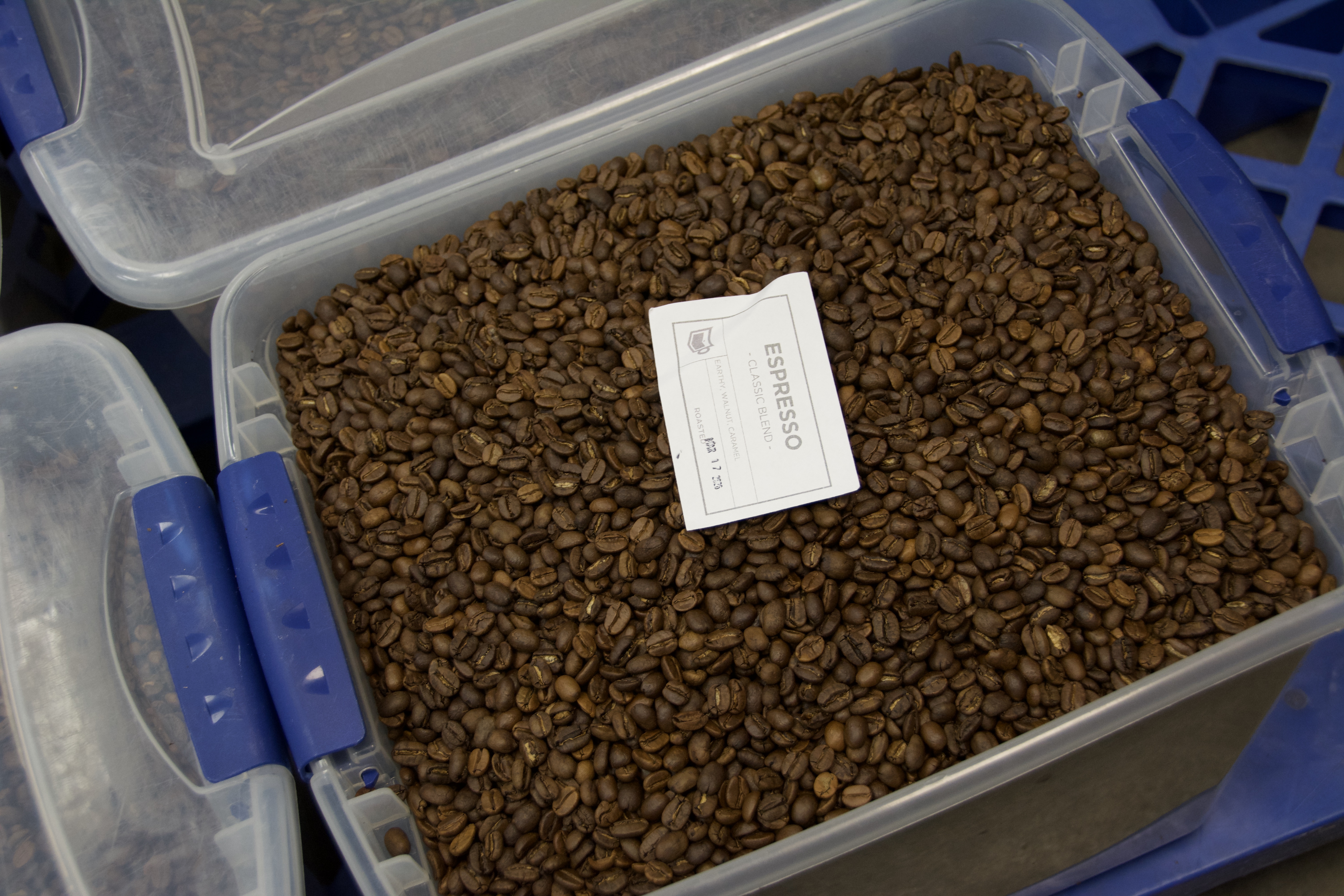
Denim beans

The new space will have tables and a meeting room, allowing it to have more gathering space than Denim’s snug Walnut Street shop.

Diehl added that they’re excited to expand in Harrisburg because of its already impressive coffee scene, tilting his hat to Little Amps and Elementary.

“Anybody I’m telling to come out and see our Harrisburg shop, I say, ‘While you’re in town, walk over and see their gorgeous spaces. See what they’re doing in specialty coffee. Try it all,’” he said. “It’s a unique thing to have that level of specialty coffee exist within that close, tight footprint.”

Denim roastery

Check out the Roast
Coffee shops mentioned in this story can be found in Harrisburg at the following:

Denim Coffee
401 Walnut St., Harrisburg
320 Market St., Harrisburg (Strawberry Square)
17 S. 2nd St., Harrisburg (opening soon)
www.denimcoffeecompany.com

Elementary Coffee Co.
256 North St., Harrisburg
1233 N. 3rd St., Harrisburg (Broad Street Market)
www.elementarycoffee.co

Little Amps Coffee Roasters
1836 Green St., Harrisburg
133 State St., Harrisburg
www.littleampscoffee.com

If you like what we do, please support our work. Become a Friend of TheBurg!    
Continue Reading

The Reel Life: Longtime Broad Street Market vendor Tito Tep steadily serves up fish to lines of customers and volunteers hours to the market community

Tito Tep

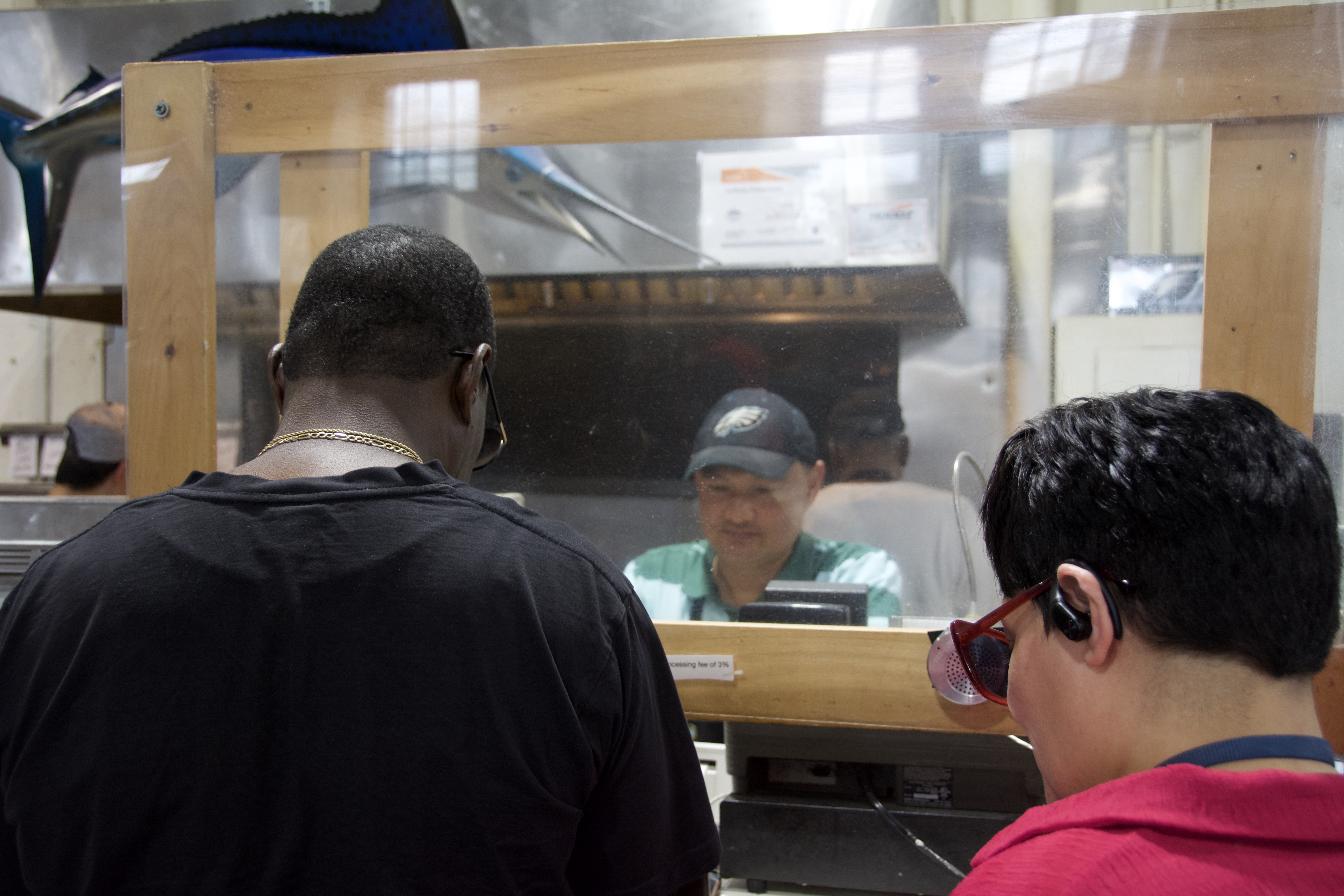
For 30 years, Tito Tep has spent most of his days sourcing, cutting and frying fish.

On Tuesdays, he purchases his fish and dry goods, seasons fillets and makes tartar sauce. Wednesdays are for scaling and cutting whole fish. Thursdays through Saturdays, he’s at his Broad Street Market stand at 5 a.m., ready for three full days of frying fish and serving hungry customers.

Tep has a system, finely tuned over the years.

But while the rhythms of running his seafood business have become routine, Tep’s life has been an interesting journey with big moves and career path twists, all leading to the life he’s made now.

From ages 6 to 9, Tep’s routine was formed by the daily requirements of a child living in a forced-labor concentration camp in his native Cambodia. Following the Vietnam War, the Khmer Rouge communist regime took control of the country, executing mass genocide and forcing many families, like Tep’s, into work.

His routine became—wake up at sunrise, work in the rice fields until sundown, eat the one meal of the day (always broth), sleep, repeat. When torrential rains came, Tep and his sister, three years his junior, would hunt for snails and frogs in the puddles and ponds to boil.

As the Vietnamese fought and overthrew the Khmer Rouge, Tep’s family escaped Cambodia, walking only at night for almost two weeks to the Red Cross refugee camp in Thailand. There, they met Dr. Daniel Batton who eventually sponsored the family to move to the United States and into his Hershey home, where they lived before finding their own place.

Tep’s parents went right to work in their new country, his mom getting a job as a maid at the Hershey Lodge and his father as a dishwasher at Hotel Hershey. On Saturdays, the family cleaned churches.

“When I say my parents worked, they worked,” he said. “Their focus was no handouts. That’s where I learned my work ethic.”

Tito Tep

While Tep eventually got a soccer scholarship and took college nursing courses, his professional path diverged when his uncle, who sold poultry at the old Kline Village Farmers Market in Allison Hill, urged him to consider starting his own business. There was a need for a fish vendor to round out the offerings at the market, which also housed Hummer’s Meats in its early days.

“I went in there and I saw the spot, and I said, ‘I know nothing about fish. I don’t know where to get it. I don’t know how to cut fish or nothing.’”

Still, his uncle was successful at the market, and he decided to give it a shot. However, tight-lipped industry peers wouldn’t help, and Tep had no clue where to source fresh fish. It wasn’t until a trip to the National Aquarium in Baltimore, when Tep’s wife Pam asked a seal trainer where they purchased their fish, that he unlocked a list to Maryland fish suppliers and markets.

He opened in 1997, but business lagged as he navigated a whole new world.

“I bought the wrong fish—all catfish, like whole catfish. Who does that?” Tep said. “But I’m thinking, ‘I’m from Cambodia, this is what we eat.’ No one bought it.”

Then, he started talking to customers.

One of those customers was city resident Lucy Hudson, who would accompany her mom on trips to Tep’s. Lucy recalled how her mother would give Tep “little tips” on seasonings to use.

“She would tell him how southern people like it,” Hudson said with a chuckle.

Tep took the suggestions seriously, switching up what he bought and beginning to fry fish two years into his business.

“It was never like, ‘I’m going to be a millionaire,’” he said. “It was just like, ‘I see it’s going to be a long haul. This could go really good.’ I saw Hummer’s, who had lines, so I saw there was a market for this.”

Thirty years later and the Hudsons are still regular customers at Tep’s, now at the Broad Street Market, where he’s been since 2001.

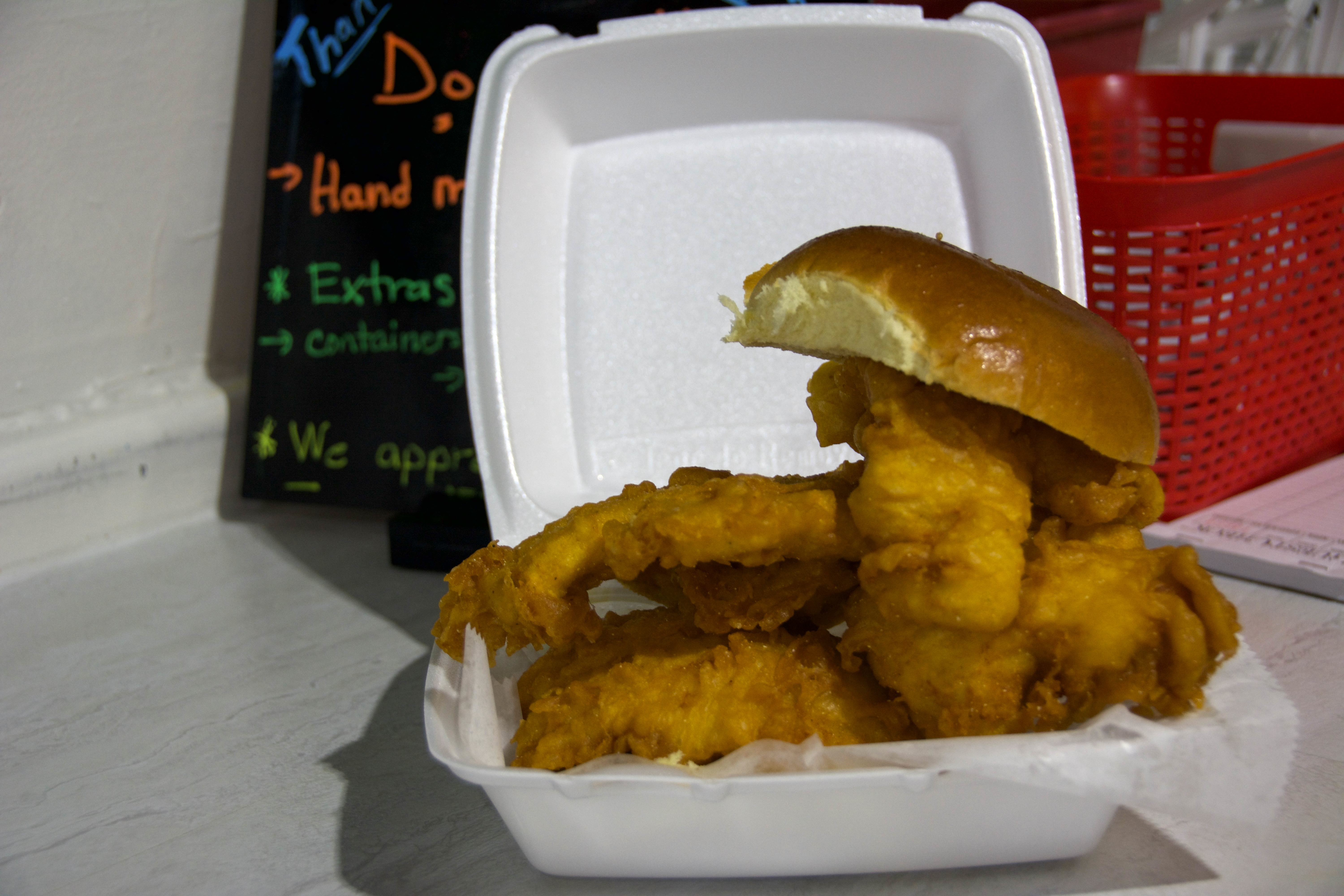
Hudson usually opts for the oyster trout, her husband gets the haddock, and her brother goes for whiting, although they rotate those occasionally. And when she says she’s a regular, she really is. Hudson typically ventures to the market twice a week, getting to Tep’s early in the morning to avoid the long lines come lunchtime.

Tep’s Fresh Seafood sign

On top of his food, Tep is known for his superb customer service, always greeting customers with a smile.

“If I go there tomorrow, he’ll go, ‘Hi Miss Lucy, what would you like?’” Hudson said.


To the Fullest

Steelton resident Tia Taylor is another customer who has been with Tep since she was a kid, coming to get fish with her mom and grandmother. As Taylor herself has become an adult, she’s also watched Tep’s own kids, who would sometimes help behind the counter, grow up.

His wife and kids have all pitched in over the years, especially holding down the business when Tep was diagnosed and sick with leukemia 13 years ago.

“My biggest asset is my family,” he said.

The Broad Street Market community has also become family to Tep, and the vendors have grown even closer bonds since the 2023 brick building fire.

Pre-fire, Tep said that vendors from the brick and stone buildings were separated, physically and relationally. After the fire, some displaced brick building vendors temporarily moved into the stone building before the tent was constructed. Lil’s Pretzels was one of them.

While Jesse Ebersole, owner of Lil’s, said that the transition was difficult, he did feel the vendors start to cross divides.

“I think a lot of good came out of it,” he said. “At the end of the day, we came together.”

Ebersole and Tep now sit on the Broad Street Market Alliance board, helping to bring the vendors’ voice to the governing body that oversees market operations and finances. They both joined after the fire, showing their care and concern for the market.

The pair sat next to each other at a recent meeting, throwing little jokes and quips at each other after the meeting ended. Before the fire, the two didn’t know each other, despite the fact that their tenures in the market overlapped by about a decade.

Now, they interacted like old pals.

Tep attributes some of the change to an earned mutual respect. Knowing how the Amish community values hard work, Tep felt he gained their respect when they saw him arriving to the market even earlier than they did and witnessed the hours he put in.

“We are so close now, because I think we have the same goal—to serve the community, make money and do the right thing,” Tep said.

After the big storm this past winter, Tep shoveled snow at the entrances to the market tent. His business isn’t in the tent, but he still wanted to help out.

Tep said that, soon after, Ebersole traveled an hour home from the market to retrieve his skid steer loader to help.

The vendors also hold meetings now to discuss concerns and comments, although Tep said that those have been less attended lately—a good sign, he said, as things stabilize and leadership improves.

Ebersole agreed.

Fried fish sandwich

“There’s a lot of positivity going on,” Ebersole said. “I feel more positive about the Broad Street Market than I ever have.”

And if you’re looking for a cheerleader, it’s Tep. He doesn’t sugarcoat the challenges the market has faced, as he’s been through many—a market with only three vendors at one point, a pandemic, corrupt leadership and the fire—but he’s also unapologetic in his love for the market community.

He’s recruited several current vendors and is helping mentor one of the newest, Damien’s Fried Chicken. Damien Randell reminds Tep of himself—a family man starting without business or commercial cooking experience, just a hope that he could find the success of other vendors.

He’s given him advice on the importance of consistency, dedication and customer service. It’s a concern that he wished other business owners would’ve had for him starting out, assistance that maybe would’ve stopped him short of having to seek help from an aquarium trainer.

Tep advises other vendors that the only competition they should worry about is themselves.

“It’s like, one stick, you can break it,” Tep said. “But if you have a whole bunch of us, that’s where our power is.”

Tep sees his future as entwined with the market. It’s where he wants to retire and where he thinks his legacy rests. He’s not concerned with expanding or opening additional stores, but just continuing to dutifully fill takeaway boxes for customers like Hudson and Taylor, serving each with a smile as he chips away at the inevitable long line that’ll form.

“It’s my life; it’s my community,” he said. “My legacy would be, I’ve served the community to the fullest.”

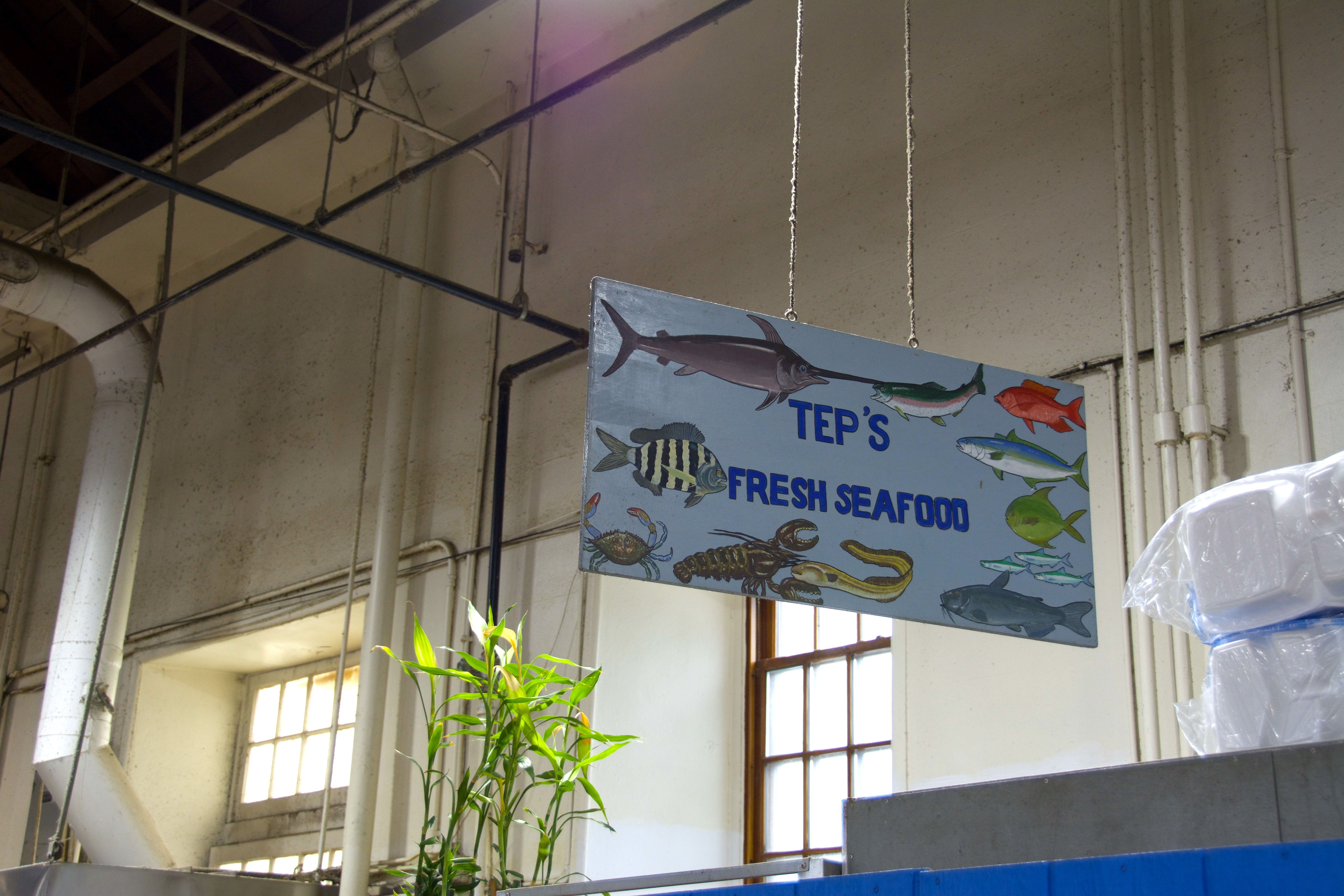
Tep’s Fresh Seafood is located inside the stone building of the Broad Street Market in Harrisburg.

If you like what we do, please support our work. Become a Friend of TheBurg!    

Continue Reading

Joy through Food: At Kahaani, the owners want you to come hungry, leave happy

Abhishek Masih

Camp Hill’s newest Indian restaurant isn’t just another option for the popular cuisine.

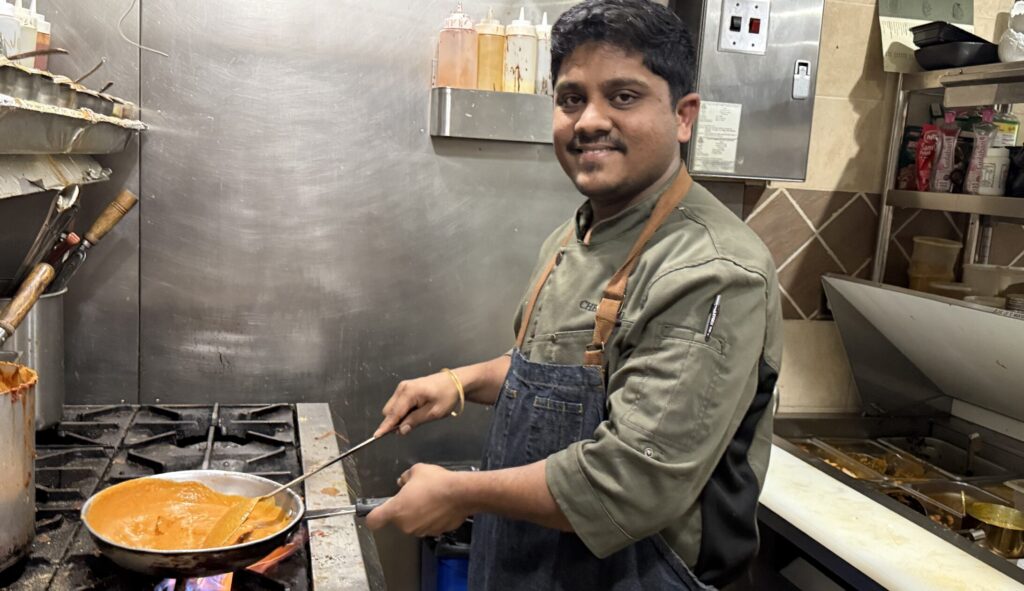
Abhishek Masih, chef/owner of Kahaani, takes pride in creating a special bridge between his homeland and his new community.

“We want to bring something different to Camp Hill,” Masih said. “It has to be attractive. The cutlery, the glasses—it all matters.”

Masih’s journey began as a young man in Bhopal, India. His family was known for hosting large gatherings, so he spent many hours in the kitchen helping his mother and grandmother.

Those gatherings filled people’s stomachs and spirits, so Masih decided to devote his life to bringing people joy through food.

He attended the Institute of Hotel Management in Bhopal and then worked in five-star hotels in India and Thailand. He came to Camp Hill in the early 2010s to work at a nearby restaurant and later moved to New Jersey.

As he honed his culinary skills, he formed friendships with fellow chefs Sachin Mewaba and Nani Gobal Roi and was drawn back to central Pennsylvania by the people’s kindness and appreciation for Indian food, he said. Twelve years after their introduction, the trio is the main ingredient in Kahaani’s early success.

Masih, Mewaba and Roi opened Kahaani’s doors last November. Masih describes their dishes as “modern Indian food,” and adds that each one is unique. Kahaani’s chefs believe that high-quality ingredients, freshly ground spices, and carefully crafted curries, biryanis and breads are an important foundation for their creations.

Options such as mini cheese bombs—crispy bites of naan bread filled with cheese—are likely to appeal to diners who may steer clear of traditional dishes like butter chicken, chicken tikka masala or curry.

“The bread, Indians like,” Misah said. “The cheese, Americans like.”

For those who like dinner and a show, Patarka Gosht is the perfect choice. The goat-based dish is served on a marble slab with smoking charcoal. When the server presents the meal at the table, they remove the dome for a smoky presentation, revealing tender goat meat infused with a deep, earthy aroma. It is a sensory experience designed to be shared—and likely photographed.

The Indo-Chinese section of the menu blends wok-tossed goodness with bold Indian flavors through dishes such as chicken fried rice, chili shrimp and chicken Manchurian.

How a dish looks is just as important as how it tastes, Misah said. The chefs take pride in individually plating each meal and serving it on carefully selected dinnerware. Long, golden cutlery brings a special shine to the dining room. Indian food can be messy, so servers often change tablecloths between seatings, so every experience is refined.

Such attention to detail is at the heart of Kahaani’s name, which means “story” in Hindi. The chefs pride themselves on mixing tradition with innovation, which leaves customers sharing their experiences with others. Misah is grateful for the many diners who have visited the restaurant several times since its opening.

Kahaani recently expanded its offerings by adding breakfast hours daily from 7:30 a.m. to 11:30 a.m. Indian versions of pancake, flatbread and egg dishes can be paired with morning desserts such as Rasmalai, a soft, spongy cheese dumpling.

Catering is also available for private and corporate events so the Kahaani menu can be enjoyed beyond their Market Street restaurant.


Kahaani is located at 1509 Market St., Camp Hill. More information and links to online ordering can be found at
www.kahaanicamphill.com.

If you like what we do, please support our work. Become a Friend of TheBurg!    

Continue Reading

Twisted Story: The Pretzel Company goes from small retail store to Oprah mention

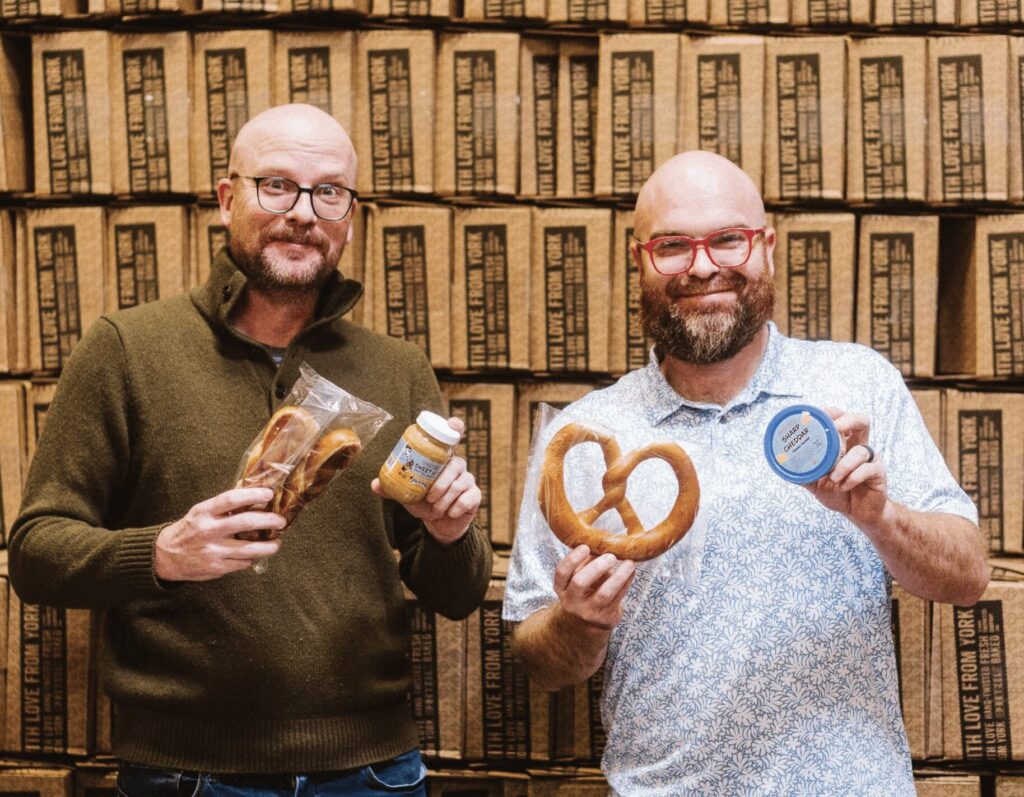
Andy and Philip Given, brothers and co-founders of The Pretzel Company

Making it to “Oprah’s Favorite Things” list is no small feat.

Products must first be discovered by Oprah Winfrey’s internal team, then evaluated for quality, originality, usefulness and emotional resonance before being passed along to the celebrity herself, who makes the final decisions.

Philip Given, co-founder of The Pretzel Company, was thrilled when he heard the news.

“When we started out, all we hoped for was to share a truly authentic, bakery-fresh product with our neighbors,” he said. “To have our pretzels recognized on the 2025 ‘Oprah’s Favorite Things’ list felt like the ultimate ‘pinch me’ moment for our entire team.”


Major Pivot

The Pretzel Company began in downtown York as a small bakery.

“Our goal was to create a great retail store downtown and sell wholesale to bars and restaurants,” Given said.

With a background in baking, hospitality, food service, small business marketing and commercial photography, he was able to handle much of the heavy lifting himself, at least in the beginning.

“We started out with seven employees and now we have 30,” he said.

As the company grew, so did its output. Shipments increased from 10 to 20 boxes a day, to as many as 11 pallets daily. Outside marketing and PR agencies now assist with brand awareness and national exposure.

The company was a logical fit for the area, which is often recognized as the center of the snack food ecosystem. As word spread, sales climbed—until COVID forced a major pivot.

 “It was 2021 when we converted the retail space to a shipping area,” Given said.

A strategic partnership with White Rose Ventures—a venture capital firm that invests in early-stage, tech-enabled, high-growth companies—accelerated that growth. The company soon outgrew its original space and relocated to an 11,000-square-foot warehouse in Emigsville.

“The space was easily converted into a bakery, is on a bus route, and it’s just an eight-minute drive from our other location, making it convenient for our staff,” Given said.


Good Bump

Given said their authenticity sets them apart.

 “While another brand may be covered in butter, ours is lye-dipped, like an authentic Bavarian pretzel—it’s akin to a really good bread,” Given said.

The recipe itself is simple: flour, water, yeast, baking soda, oil and salt—with dehydrated vinegar to preserve shelf life.

The company has steadily built visibility, appearing on QVC several times a month and even on “Sherri,” a nationally syndicated American daytime talk show hosted by actress, comedian and television personality Sherri Shepherd.

Making it to the “Oprah’s Favorite Things” list delivered what Given called “a good bump,” but careful planning ensured that the team didn’t get overwhelmed.

“We heard from Oprah’s team in early July, while they were considering thousands of products,” he said. “At that point, we knew we were on their radar as a small, family-owned business making niche-specialty products that you can’t find just anywhere.”

The company received official confirmation in October.

 “It then became a sprint to make sure we had enough ingredients, packaging and that our website was ready for the Nov. 15 launch,” Given said.

On OprahDaily, Oprah described the pretzels as:

“‘Knot’ to Be Missed. An excellent hostess gift, these hand-twisted Bavarian soft pretzels come from Pennsylvania. You just brush them with butter, sprinkle the salt and warm in the oven. Then dunk in original or sweet hot honey mustard. So good.”

Explore York views the mention as reinforcing the region’s reputation as the “Snack Food Capital of the World.”

“Pretzels and York County go hand in hand, and The Pretzel Company is one shining example of this tradition,” said Melissa Beaverson, vice president of marketing and communications for Explore York, the county’s tourist promotion agency. “It’s a point of pride to share these delicious, York-made treats with friends and family across the country.”

The company has been growing 50%, year over year, according to Given. Still, there’s more to come.

“We’re expanding our portfolio to include chocolate-stuffed and pepperoni-stuffed pretzels,” Given said.

Ultimately, the recognition belongs to those behind the scenes.

“Being selected gave a wave of encouragement to every single person on our team, from our bakers who start the dough at 5 a.m. to our packaging team sealing the boxes,” Given said. “This honor belongs to them and it belongs to our customers, who supported us every step of the way.”

For more information on The Pretzel Company, visit www.thepretzelcompany.com.

If you like what we do, please support our work. Become a Friend of TheBurg!      
Continue Reading

The Art of Early Eats: In Hershey, dining doesn’t have to mean dinner

Bob & Jana MacGinnes at Savory Café

Usually, my writing focus is on fine art, but inspiration strikes at the most unexpected times.

For TheBurg’s dining issue, we felt it important to feature the people responsible for our meals as much as the food itself. After all, they make the magic happen. No insider trade secrets will be revealed for those surprises may be the best part of your journey. Who knows, getting out of the routine of the “same old” could be the best prescription for inspiration. It works for us every time. Our fun dining-out itinerary read breakfast, lunch, then brunch—just not all in the same day.

For us, the sweetest place on earth just got even sweeter. Hershey is so close to home that you too can explore our trifecta of winners. As the art writer for TheBurg, it was high time to cover the “art” of breakfast and lunch, with a Hershey focus.


Breakfast

First stop: First Watch. When we visited in late March, it was sunny and bright but still a bit chilly for their outdoor seating. We welcomed the warm ambiance within. The term, “first watch,” comes from nautical terminology denoting the first shift of duty-standing watch, starting in the early-morning hours. It also stands for a chain of 630 restaurants, coast to coast, that specialize in “daytime dining,” serving breakfast, brunch and lunch. Our destination was in the very heart of the downtown drag, a-bustle with shops, restaurants, bistros, salons and saloons, jewelers and gifts galore. Look for cow crossing signs at the intersection of Chocolate and Cocoa avenues on the First Watch mural on the wall with “HERSHEY” emblazoned in its background. Their special seasonal menu reflects choices for winter and spring, ending right before the influx of the summer tourist swarm.

For adult starters, choose from “organic” or “boozy”—way too early in the day for us. For me, the Colombian drip was a real eye opener, with rich, robust flavor. Their big menu boasts two sides, one for breakfast and one for lunch with a smorgasbord of choices, so much that it created a diverse dish discourse as to which choice to make. My wife Jana opted for the “Breakfast Power Bowl.” She felt transported to a new land with exotic ingredients blended with a lemon white balsamic dressing. As a creature of habit, I ordered “The Traditional, 2 eggs” straight up. The best part was the artisanal toast with real butter and roasted potatoes seasoned to a crisp.

First Watch has their tried-and-true formula down to a science. No bells or whistles, just solid breakfast and lunch fare. The setting is open kitchen with prompt refills, quick orders and an attentive wait staff. Speaking of which, in the rapid turnover world of servers, a dedicated and reliable wait staff is worth their weight in gold. It spoke volumes when we were greeted by our regular server from three years ago, Brianna Davis, who has a memory like a true maritime maven. She sets the bar high with above-and-beyond service and a generous helping of customer satisfaction. This farm-to-table restaurant is as large as a good-sized barn with wraparound windows. As a flaneur in good standing in the summer months, I like to sit at the very front outside, observing life close up and listening to the conversations of the passersby as I quietly sing to myself, “Good morning Mr. Sunshine, you brighten up my day,” as I end my first watch.

First Watch is located at 151 W. Chocolate Ave., Hershey. Visit www.firstwatch.com/locations/hershey.


Lunch

Make no mistake about it, Savory Café’s owner/proprietress, Heather Anderson, is one of the following: the butcher, the baker, the candlestick maker. If you chose the middle one, she is a baker of renown with a capital “B.” When you walk into Savory, the loaves of baked breads beckon you as do pies and the sweet treats, all laid out on a table up front. Located behind Tanger Outlets and just across the street from a Hersheypark rollercoaster, you can do your shopping and have a great meal.

“After a corporate career with State Farm, I was ready to start my own business, and I always loved to bake so catering was a natural choice,” Anderson said, sharing how she originally started Savory Occasions Catering. “I briefly had a storefront in Palmyra right before COVID hit. It was the catering end that kept me going and paying the bills. Now, here we are years later, serving a full menu of farm-to-table fare.”

Savory is cozy and yet covers a lot of bases from café to bistro, restaurant to boutique, with a little bit of everything going on under one roof. Outdoor seating is a plus with the seasonal change when weather permits. The help-yourself coffee bar is one of the first things you’ll notice when you’re seated. A favorite is Brody’s Blend from One Good Woman in Camp Hill, an intriguing mix of caramel, hazelnut and chocolate truffle providing notes of flavor. Fresh ingredients are the calling card at Savory, with menu choices ranging from quiches to tomato bisque to gourmet grilled cheese to a hearty patty melt, all crowd pleasers. I chose the triple-decker Rachel loaded with sliced turkey, Swiss cheese and coleslaw, with a special dressing toasted to perfection on rye bread. Jana was delighted to see a Waldorf salad on the menu. It was far more than she could eat, along with hand-cut chips, her guilty pleasure. No surprise, we needed to take half our lunches home.

“Savory is not a diner, and our prices reflect that,” Anderson said. “We pride ourselves on delighting the customer with food that delivers what it promises.”

There are components to Savory that are unexpected in a quirky way, like the photo opportunity that awaits. At the rear of the café is a brightly lit neon sign spelling out, “Savory Café,” surrounded by a border of beautiful flowers. Two suspended wooden swings just need friends to sit and swing as part of their movie set. Pair that with the big-screen TV mounted on the front wall playing Sixpence None the Richer’s, “Kiss Me,” sweetly singing “swing, swing, swing the spinning step . . . so kiss me.” As we took our seats on the swings, we “Savored” the moment.

Savory Café is located at 565 Park Ave., Hershey. Visit their Facebook page.


Brunch

Next stop, brunch at Stacks, which operates inside the Hershey Lodge. The restaurant is named after the two yellow smokestacks built in 1905 and 1924 to power the chocolate factory. Inside, the modern-day decor adds to an ambiance of a hip, yet chill vibe with plenty of tables and bar seating.

Before you even get seated, you’ll meet Stacks’ five-star manager, Ashlyn Farkas, who welcomes you with a slight “Southern charm” accent and a big, beautiful smile. Just in case duty calls elsewhere, concierge Dan will make sure you feel right at home. Attentive servers like Annah and John are accommodating without any over-the-top antics. What sets Stacks apart is all the young, fresh faces, reminiscent of Pop’s Diner from Riverdale, serving pancakes and donuts instead of burgers and malts. From superb chocolate dishes as in French toast bites, my personal favorite, to cocktails and mocktails, cocoa flights, and the surprise kid’s menu, a family can’t go wrong. On our three visits, travelers ambled over from the hotel, with couples, families and solos, many enjoying a gourmet coffee or regular cup of Joe, sitting on a stool or at a booth.

On our most recent visit, I ordered their “signature breakfast sandwich” of two fried eggs, American cheese, bacon, lettuce and tomato on wheat toast with hashbrowns that filled me to “overflow” on the dining dial. Jana’s vegetable scramble covered the plate and then some, featuring three eggs with spinach, tomato, exotic mushrooms, onion and fresh-cut herbs served with sourdough toast, topped with whipped chive cream cheese. It’s nothing short of a miracle that we didn’t lapse into a food coma. We flipped a coin as to who had to stay awake for the drive home. I lost. Fifteen minutes later, our driveway appeared right on cue. Stacks is like going to your best small-town diner, perfect for all-size appetites and tastes.

Stacks is located inside The Hershey Lodge, 325 University Dr., Hershey. Visit www.hersheylodge.com/dining/stacks.php.

P.S. Let’s face it—one can eat out anywhere. To become a crowd favorite, there needs to be a reason or two to keep going back. Whether it’s the people, the food, the overall dining experience, it all adds up to a sensory journey encompassing cultural exploration, emotional fulfillment and social connection—in other words, experiential dining.

Photos courtesy of Jana MacGinnes

If you like what we do, please support our work. Become a Friend of TheBurg!  
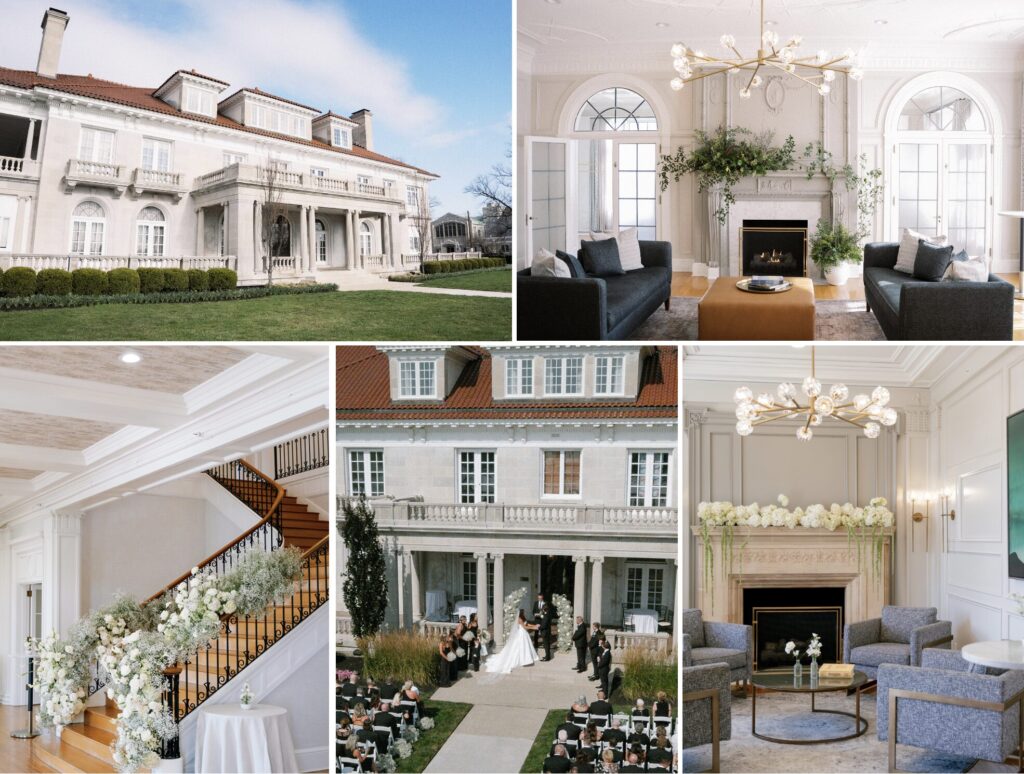
Continue Reading