
Illustration by Rich Hauck.
In June, during 3rd in the Burg, I attended something called a PechaKucha, which is kind of a stripped-down, image-heavy TED talk.
PechaKucha presenters wrap their talks around 20 images, each shown for 20 seconds. The idea is to keep the flow moving and the audience interested. So, even if one speaker is especially dull or unlikeable, no sweat—he’s gone in about 10 minutes.
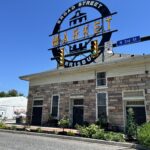
This PechaKucha was, I believe, the third held in Harrisburg. On that night, about eight presenters climbed on to H*MAC’s Herr Street Stage to talk about such diverse local issues as City Beautiful 2.0, the city’s emerging Comprehensive Plan, the Susquehanna Art Museum and chalk-writing on sidewalks.
Many of the presentations seemed to live at the intersection of art and urbanism, which also is where Jeff Copus focused.
Around town, Copus wears several hats, but, on this evening, he was chatting about Sprocket Mural Works, a group formed last year to transform some of Harrisburg’s drab exterior walls into colorful works of art.
As he described the role of Sprocket and of urban murals in general, he told the audience that Harrisburg had a choice. Through action, the city and its people could tell a story of beauty and progress or, through neglect, they could tell a story of blight and ugliness.
Either way, a story would be told.






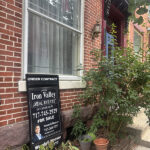
“Whether it is a blighted building, a blank wall, or a beautiful mural, our visual surroundings tell a story, for better or worse,” he said. “It might not be an accurate story or the story we want told; that is why we need to take control of our surroundings.”
For years, I’ve written about Harrisburg, its struggles and the built environment around us. Not once before had I heard the city’s challenge described so perfectly.
But how can we achieve this? How can we turn Harrisburg’s story from the deeply ingrained one of bleakness and despair to one of promise, a place that attracts people to visit and stay?
Certainly, the city government has a role to play and, due to the financial recovery plan and more responsible leadership, things look somewhat better in that area—from the wholesale replacement of streetlights to planned repaving projects.
But the city can’t do it alone. This effort must extend to the private sector, as most of the city’s property—much of it forlorn—is in private hands.
So, to the city’s property-owners, I say this: It’s time for you to take action to make Harrisburg better.
You bought the dilapidated building. You have title to the boarded-up wreck. You operate a business out of a rundown mess. You own one or maybe 20 empty lots.
When you took ownership, you took on responsibility. Yes, land and buildings may be investments, but they require upkeep and an immediate, realistic plan for use. If you want something that requires no care, buy a few shares of stock, not real estate.
And it’s not the fault of the poor, who are mostly renters. Given a choice, many would leave for a something better or at least force their landlords to fix up the buildings where they live.


Nor is it only the fault of out-of-town slumlords, as awful as they are. Developers, business-owners, wealthy individuals, corporations, investors and prominent citizens—all local to Harrisburg—are some of the worst offenders.
Often, I walk down a street and wonder what the owners of these impaired, underused properties are thinking. I see an empty lot in an outstanding location, but it’s been undeveloped as long as anyone remembers. I see a boarded-up building, perpetually for rent, decaying and losing value with each passing year. I see unkempt and dilapidated buildings that are owned by people of means.
When I ask these owners about their properties, I often hear excuses. It’s a lousy market environment, they say, or now isn’t the right time or they’re acquiring a block of land or they’re waiting for the feds or the state or the city to give them money or a tax break.
As they refuse to take responsibility for their own inaction, they readily point fingers at others (neglectful bar owners, for instance) for problems on the blocks or in the neighborhoods where they own property.
Harrisburg is changing for the better, but it’s a grinding, building-by-building, block-by-block transformation, led by a few honorable, risk-tolerant people who have decided to step up. Meanwhile, people with deep pockets and deep roots here perpetuate the status quo—old slum Harrisburg—despite the puzzle that, as major property-and business-owners, they would benefit most if the city were to substantially improve.
Copus is right. Every junk property and empty lot—just as much as every beautiful mural—tells a story of Harrisburg.
What story do you want your city to tell?
Lawrance Binda is editor-in-chief of TheBurg.