






It’s that time of year again.
Every June, millions of dollars of federal funds are allocated to various organizations, projects and purposes with the intent of reviving the City of Harrisburg’s most impoverished people and places.
The money comes from the U.S. Department of Housing and Urban Development (HUD). HUD awards Harrisburg yearly grants, which are to be used to rehabilitate devitalized neighborhoods, reduce blight, improve the housing stock and support community and economic development specifically for low-income residents and communities in the city.
Those are the general parameters HUD outlines. The particulars are up to the city.
That responsibility falls to Harrisburg’s Bureau of Housing. In fact, HUD even furnishes funds for the bureau to hire staff to help with this process of establishing program and funding priorities. Every five years, the city is required to assess itself and analyze its needs in order to develop a Consolidated Plan that institutes revitalization intentions and presents strategies for accomplishment. Once that blueprint is in place, an Annual Plan is put forth each year to fulfill it.
Right now, the city is in the midst of its 2010 to 2015 plan and attempting to meet the following goals:
- Increase homeownership
- Create affordable housing
- Decrease blight
- Create jobs
- Support services for homelessness
The current Consolidated Plan was established during the Reed Administration and is now being implemented by the Thompson Administration.
Unfortunately, the change in administrations resulted in a loss of prominent staff and, subsequently, institutional knowledge. As a result, over the past few years, the annual HUD process has been wrought with challenges and delays.
[sub]Most Discretionary
In recent years, the Community Development Block Grant (CDBG) program has been particularly fraught with problems.
A portion of CDBG funds are granted to non-profits that demonstrate projects and services that align not only with the broad objectives of HUD but also with the more specific goals of the city’s plan. Some examples of the way CDBG funds may be used include, but aren’t limited to, the purchasing of real estate; repairing and rehabbing properties; demolition; and certain public services, such as job training programs, housing guidance and addiction counseling.
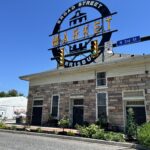
In the past, CDBG monies have helped renovate the McFarland Press Building, maintained the Mayor’s Office of Economic Development Revolving Loan Fund and partially financed the Broad Street Market’s new HVAC system, to name a few of the more notable uses of the grants.
The CDBG category of funds is the most discretionary of the city’s HUD funds. Any viable project is welcome to apply, and the city holds public sessions on how to do so. Upon receiving and reviewing the applications, the Bureau of Housing makes recommendations, the mayor evaluates them and directs changes, then City Council holds public hearings making further adjustments before finally voting on the funding allocations.
Despite a timely application, interview and legislative process, awardees for both 2010 and 2011 funds had to endure almost year-long holdups to access their funds because of the administration’s confusion with the HUD CDBG program. Director of Building and Housing Jack Robinson cited a lack of staff, misunderstandings and too many responsibilities as reasons his department had a difficult time meeting HUD requirements and distributing the funds accordingly.
The delays caused many groups, such as the Heinz-Menaker Senior Center and the Central Allison Hill Community Center, to put off their projects until the city sorted out its problems.
[sub]An Issue of Competence
Another area that has caused controversy is the CDBG funds for demolition.
In June of 2012, much to Mayor Linda Thompson’s chagrin, the Harrisburg City Council cut back the city’s Emergency Demolition from $400,000 to $200,000. During the public hearings on these matters, City Councilors were very clear why they lessened Emergency Demolition—the Administration had not used any of its funds from the year before. In May 2012, Housing Director Robinson stated that no demolitions had taken place in 2011. So, council diminished the funds and allocated the money to other CDBG projects. In 2012, about a dozen properties were demolished; however, only one has been taken down so far this year. The administration has blamed the lack of demolition on an insufficient workforce, more than anything else.
HUD representatives have expressed extreme patience with Harrisburg. Last year, several awardees were concerned about losing their funds because of the delays, and, while there are federal guidelines in place about using CDBG money in a timely manner, HUD alleviated those worries by working with city officials to put the program on track. As one HUD representative stated, “Recapturing the funds is a measure of last resort.”
Harrisburg’s hassles with CDBG allocations are not an issue of misuse or abuse. It’s more or less an issue of competence and knowledge of the paperwork involved. The city does not hold the funds. HUD does, and grants aren’t released until all the proper documentation is received.
While there was still some delay in doling out the 2012 grants, the Bureau of Housing seems to be righting its management of the HUD programs.
This year, Harrisburg’s Annual Plan proposes $210,000 funds in public service activities, $287,739 in housing and community development activities and $150,000 in Emergency Demolition.
The particulars of the plan can be found on the city’s website. On June 5 at 5:30 p.m., the Bureau of Housing will formally present its proposals to the Harrisburg City Council. Not only is public input encouraged, it is a mandated aspect of HUD’s overall policy. Any decisions the city makes are to be reasonably influenced by citizen participation and feedback.
HUD funds are incredibly important with a great emphasis on the CDBG program. It’s the CDBG grants that come the most directly and discretionally to the community. If allocated keenly and governed skillfully, there can be a significant burst of activity in the form of dependable projects that serve to better the City of Harrisburg.
This process is indeed something the public should pay attention to.
Tara Leo Auchey is creator and editor of todays the day Harrisburg. todaysthedayhbg.com