Author Archives: Maddie Conley

Wanda Williams sworn in for second term as Harrisburg mayor; council, mayor argue on who is to blame for fired city officials

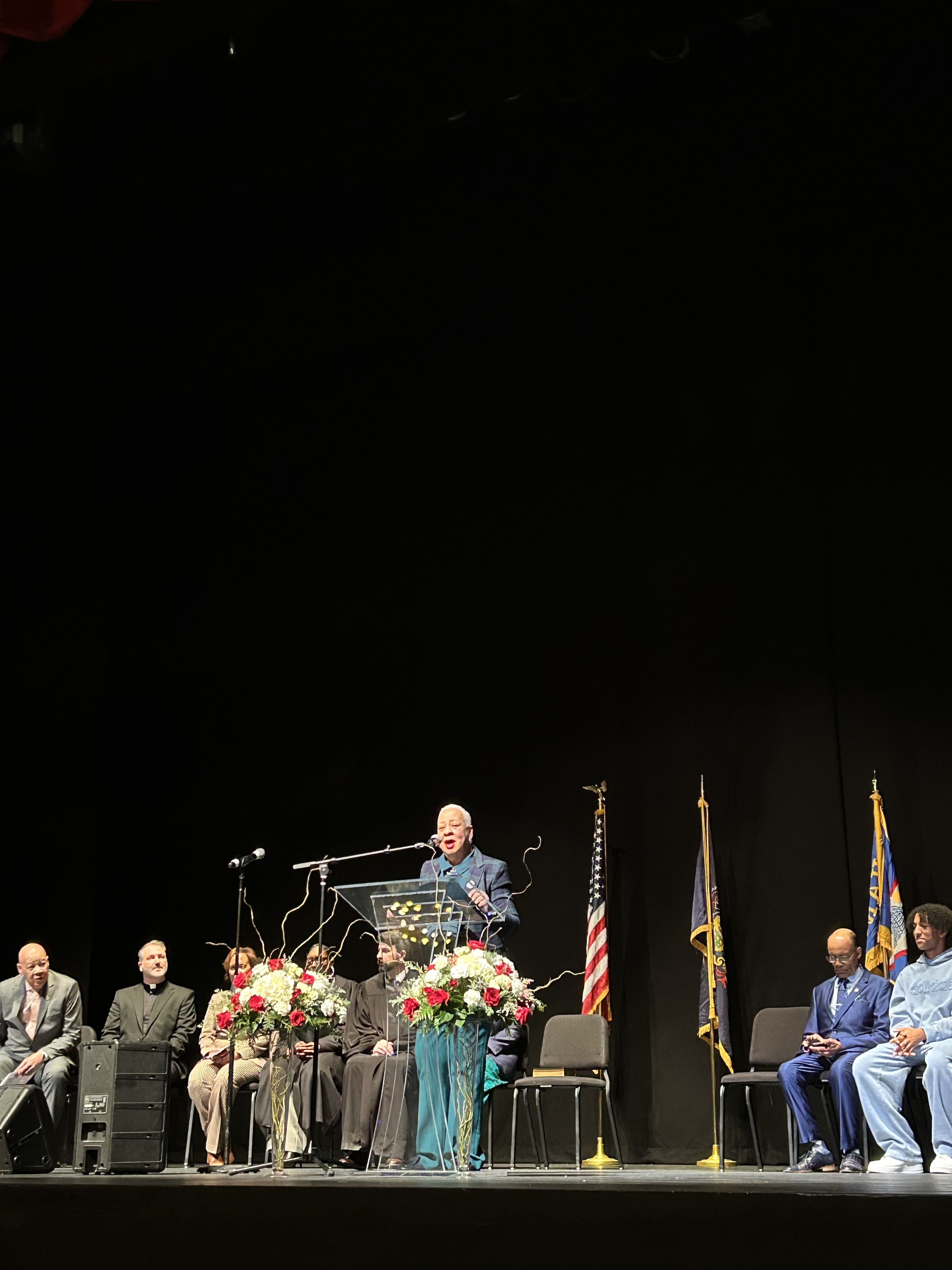
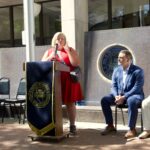
Mayor Wanda Williams spoke during her swearing-in ceremony on Monday at Whitaker Center.

Harrisburg Mayor Wanda Williams has begun her second term in office, pledging “discipline, direction and renewed commitment to infrastructure.”

At a ceremony on Monday morning, Williams issued a call for unity among city officials, following Magisterial District Judge Marian Urrutia swearing her into office for another four-year term.

“My administration has a vision for the next four years,” Williams said on stage at Whitaker Center on Monday. “Harrisburg is ready for a new era of responsible growth, a new era of stability and a new era of long-term planning—an era where our children inherit a city that is stronger than the one we inherited.”

Williams won the mayoral election in November, beating her opponent Dan Miller, a Democrat who received the Republican nomination during the primary election, by  5,096 to 3,837 votes.

Williams’ speech, which included her priorities for the new term, spoke to mutual respect between City Council and her administration. The sentiments come at a time when the mayor has been meeting with outside legal counsel to potentially sue council over its 2026 budget amendments, which slashed salaries for several top city positions.

“We will stand firm against the disrespect, misinformation and unnecessary conflict,” Williams said. “Our residents deserve a government that behaves with maturity and professionalism. They deserve decisions that are rooted in facts and certainly not theatrics.”

During her speech, Williams repeatedly praised her staff for their hard work in the city.

When asked by TheBurg, Williams said that, due to council’s budget cuts, three higher-level employees were terminated last week because there was no longer money allocated for their salaries. Those positions include Harrisburg’s business administrator, project director for business administration/LERTA and the police bureau’s director of community engagement and relations. Council also zeroed out the city’s portion of funding for the interim director of building and housing development, which supplements the portion of the salary funded through the U.S. Department of Housing and Urban Development. Gloria Martin-Roberts, the interim director, is still serving in this role.

During Williams’ swearing-in ceremony, TheBurg received an email from council president Danielle Hill with a statement about council’s budget changes. Council put the blame for the staff firings on the mayor, saying that council only removed the positions’ funding.

“Harrisburg City Council did not fire anyone. Mayor Williams fired the interim business director, project director for business development and LERTA administrator, and the director of community engagement and relations,” council’s statement said.

Council initially passed the 2026 budget in mid-December, with Williams vetoing council’s budget amendments soon after. At a special legislative session last week, council overrode the veto.

“If you defunded them, you’re firing them. There’s no money there to have them in place so they’re lying,” Williams told TheBurg in response to council’s statement.

Williams said that she intends to bring a lawsuit against city council over all the budget items that she vetoed, which included the defunded salaries.

“I’m available. There’s no excuse for them,” Williams said. “If they want to sit down and try to work things out, I’m willing. I’ve always been willing.”

In addition to her Monday morning comments about unity in city hall, Williams stressed that infrastructure would be one of her top priorities during her next term in office. She also said that promoting homeownership, battling blight and encouraging workforce development were important to her.

Williams said that her administration has a vision for the city and that her lifelong residence and service in the city make her fit to do the job.

“Progress is not accidental. Progress is built through hard choices, honest conversations and a willingness to see beyond short-term interests to a future that all our children deserve,” Williams said.

If you like what we do, please support our work. Become a Friend of TheBurg!          

Continue Reading

Harrisburg officials say fallen Broad Street Market wall will be rebuilt; others being stabilized

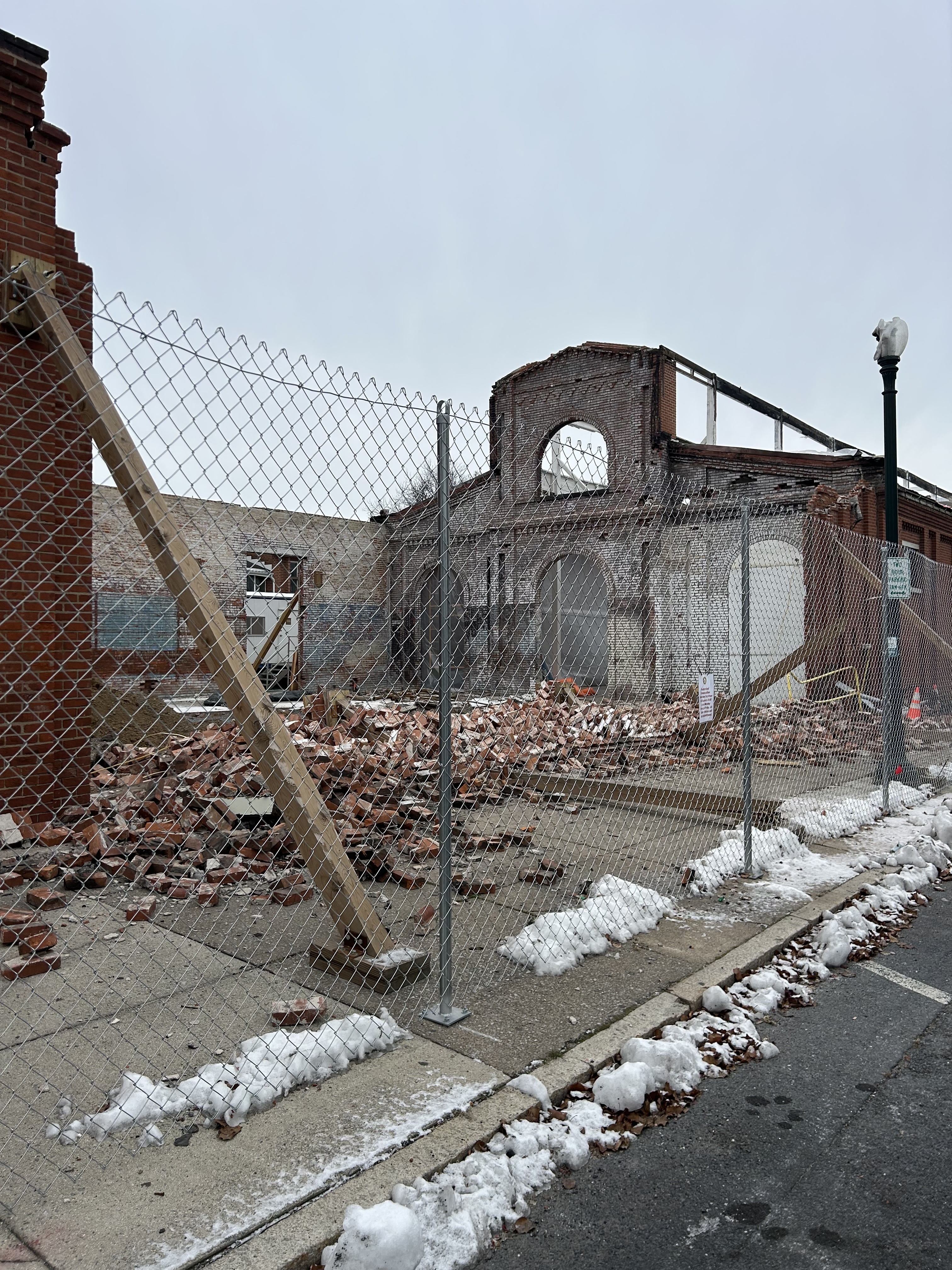
A portion of the Broad Street Market’s brick building (near the Millworks) collapsed this month.

Harrisburg’s spokeswoman said that the city would rebuild a portion of the Broad Street Market’s brick building that recently collapsed during construction.

A brick wall of the fire-damaged building fell on Dec. 15 during construction, but Communications Director Mischelle Moyer said the city would rebuild and is securing the other walls.

Moyer told TheBurg that architects and engineers are finalizing a soil stabilization plan for the building and that there will be “noticeable progress in the near future.”

“That being said, work has never stopped in other areas of the building,” Moyer added. “Our large-scale infrastructure items have been ordered and construction crews are on site each day.”

Construction to rebuild the brick building began this fall and is expected to last through spring 2027. The building sustained significant damage during a July 2023 electrical fire.

Earlier this month, Gov. Josh Shapiro urged local officials to “get moving” on the market rebuild.

If you like what we do, please support our work. Become a Friend of TheBurg!          

Continue Reading

Harrisburg mayor fires back at council after budget veto override, exploring legal challenge

(From left) City Communications Director Mischelle Moyer, Mayor Wanda Williams and Interim Business Administrator Sam Sulkosky during a press conference at city hall.

Harrisburg Mayor Wanda Williams may bring a lawsuit against City Council after it passed a 2026 budget with changes that she called “short-sighted and foolish.”

At a press conference on Tuesday, Williams addressed council’s decision to override her vetoes on several amendments to the budget, all of which zeroed out salaries for top city staff.

“City Council has now crossed into territory that does not belong to them. Hiring, firing and personnel management are executive functions,” Williams said.

Council passed Harrisburg’s 2026 general fund budget earlier this month after making amendments to remove funding for the city’s interim business administrator, project director for business administration/LERTA and the police bureau’s director of community engagement and relations. Council also zeroed out the city’s portion of the salary for the interim director of building and housing development, which supplements the portion of the salary funded through the U.S. Department of Housing and Urban Development.

Last week, Williams vetoed those changes, saying that council gave no financial explanation for cutting salaries. However, at a special legislative session on Monday, council overrode Williams’ veto.

Williams said that she would meet with outside legal counsel today at noon to weigh the legality of the funding cuts and next steps, which could include a lawsuit.

“I will pursue every lawful option available to protect the proper function of the government,” Williams said.

In the meantime, Williams said that the city will likely need to lay off employees in the defunded positions.

When it comes to the business administrator position, Williams said that officials aren’t sure if council is legally allowed to defund it, and she stressed the importance of the role in the government.

“It’s a statutory position under city code and ordinances. It is not optional. It is not symbolic. It is required for the lawful operation of city government.”

Without a business administrator, who oversees daily operations of the city, Williams said the work will fall to her.

Council explained its decision to zero out funding for the interim business administrator and interim director of building and housing development as a concern with the length of time that the officials had served without approval. Interim Business Administrator Sam Sulkosky was hired in October 2024, but council denied confirming his position in February. He has since moved into an “interim” role. Interim Director of Building and Housing Development Gloria Martin-Roberts was appointed on a temporary basis in June 2024. “Acting” directors in city hall are allowed a 120-day period before council must approve their role, however, the city code lacks clarification on the length of time that “interim” directors may serve.

For the project director for business administration/LERTA, council members expressed dissatisfaction with director Jason Graves’ work, and for the police bureau’s director of community engagement and relations, members said the role was redundant.

However, Williams said that she felt council’s moves were personal.

“This is personal, and more importantly, this is harmful to the residents of Harrisburg,” she said. “Harrisburg deserves better than grandstanding. It deserves competence and respect for the rule of the law.”

During council meetings, council President Danielle Hill and others said that communication with Williams has been largely nonexistent, but placed the blame on Williams. Several members said they believed the mayor had blocked their cell phone numbers.

On Tuesday, Williams fired back.

“No one has ever called me, and that’s been in two and a half years,” she said. “You go in the elevator and don’t say a word. In the parking lot, they walk right past me and don’t say a word. I’m there and I’m always available. I haven’t intentionally blocked anybody.”

If you like what we do, please support our work. Become a Friend of TheBurg!          

Continue Reading

Food Grade: Grocers, shoppers weigh the city’s options, needs, hurdles

Ramon Contreras

The habits of three Harrisburg residents just might tell you most of what you need to know about grocery shopping in the city.

The three customers milled about the C-Town market on N. 6th Street on a Monday afternoon, all for different reasons.

Sandra Chandler—the regular—shops for groceries at the store around three times a week. Some of the staff know her. She picks up items she needs for cooking meals, restocks throughout the week and buys cat food, which she was filling her basket with that Monday. Chandler doesn’t have a car but can easily walk from her Uptown home to C-Town.

James Wright—the returner—stops into C-Town once in a while for small items and quick pickups. He also lives in Uptown, near the store, but most of the time travels to Middletown’s Sharp Shopper for its affordable products.

Willie Linder—the newbie—had a plastic container of cut fruit in hand. It was his first time at C-Town. He was impressed by the expansive selection of fresh food and said he’d be back. Linder typically shops at Giant in Kline Village or at the corner store near his house in South Harrisburg.

Access to groceries and shopping habits in Harrisburg depend on factors like those exemplified by Chandler, Wright and Linder—transportation and location, affordability, preference and ease.

Discussion on food availability in Harrisburg has recently resurfaced on social media, although it has been a topic city officials and community members have chewed on often over the years. Is Harrisburg a food desert? Are city residents well served by grocery stores? In all neighborhoods? Is a car necessary to get fresh food? Should people have to travel across or outside of the city to get it?

In an attempt to take inventory of Harrisburg’s grocery store options and to find out if people think they’re enough, TheBurg spoke to business owners, customers, officials and others, who shared their experiences.


Aisle 1—Running Low

“We need new ideas and new passion,” said Ash Zimmerman, a Shipoke resident and downtown business owner.

Zimmerman wants a grocery store downtown. She wants one so badly that she’s been calling grocery chains herself, trying to reel one in.

“I’m very passionate about this grocery store,” she said.

Outside of a few convenience stores, there is no grocery store downtown. For Zimmerman, this is a challenge. Due to a disability, driving isn’t easy for her. She mostly walks to her shop outside Strawberry Square. Food delivery services like DoorDash aren’t affordable long-term either.

She’s also talked to Harrisburg University students who’ve told her they don’t have a meal plan and struggle to access food close by.

“I think it would make such a significant difference in the quality of life downtown,” she said.

Zimmerman thinks she has a lead on an East Coast grocery chain that may consider opening in Harrisburg if it can find a big enough location, with parking and easy access for delivery trucks. She’s working with local realtors and city and county officials, and even started a weekly group for community members to discuss ideas.

“It could be possible. It just depends on the right partner,” said Harrisburg’s Business Development Director Jason Graves.

Graves said that he would love to see several new grocery stores throughout the city, but that so far, he hasn’t had any luck getting stores to bite.

“The answer has always been ‘no,’” he said.

Outside of downtown, most other sections of the city have at least one grocery store within their bounds, including Allison Hill, Uptown and Midtown. But, if you live around Maclay Street, for example, you’re over a half mile from the closest stores in Uptown and Midtown. The same goes for many sections of Harrisburg where, if you don’t have a car, you may be lugging your gallon of milk for blocks.

According to data from the U.S. Department of Agriculture, most of Harrisburg is considered low-income/low-access, the updated term for a “food desert.” Only a section of Midtown and a section of Allison Hill are not included in the designation. The most recent data is pulled from the 2019 census and only includes large supermarkets, most likely knocking several of Harrisburg’s smaller stores out of the running. In most of the low-income/low-access areas, residents may be a half mile to a mile away from a store and many are limited by access to transportation.

“If I didn’t have this place, I’d have to get on a bus,” explained Chandler, the regular at C-Town.


Aisle 2—Stocked Up

Ramon Contreras, a Harrisburg area resident originally from the Dominican Republic, opened C-Town, also called Market Fresh, in Uptown in 2021, having seen no other options in the neighborhood. Since then, he’s established his store as an organized and clean shop with a vast selection of products and friendly staff. He makes sure their displays are stocked with tomatoes, squash, bananas, apples—plenty of fruit, veggies, meat and dry goods—and trains his staff heavily on customer service.

“We always say, ‘Good morning,’ ‘Hello,’” he said. “My father taught me. If you make them happy, the customers will come back.”

And if they don’t have something that a customer is looking for, Contreras will special order it.

Rafael Bernal Jr., who runs Derry Family Supermarket in Allison Hill with his father and family members, will do the same for customers.

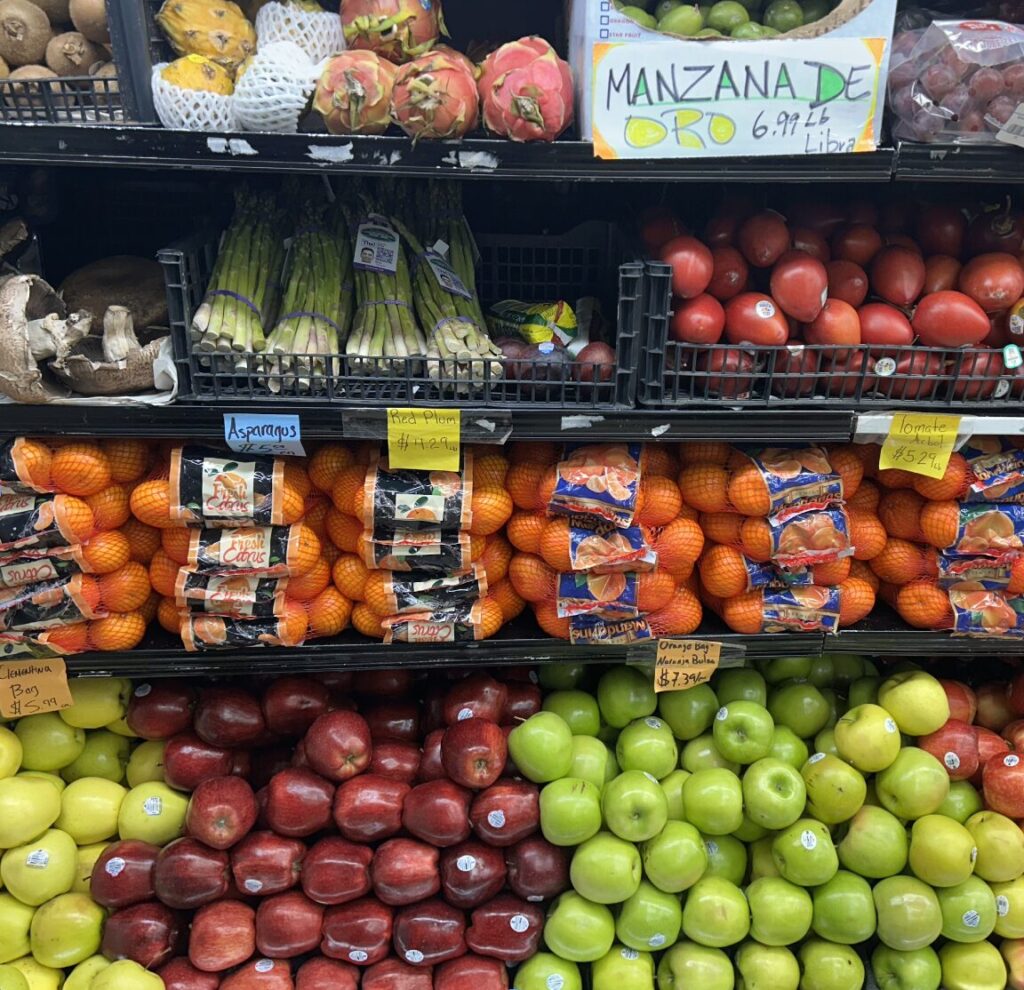
The family-run store has around a dozen aisles, a fresh meat counter and produce section with food from a wide range of cultures.

Bernal said that the demand for a variety of cultural cuisines has only continued to rise as the community becomes more and more diverse, especially in the Latino and African communities.

“We always try to have what they need,” he said.

That effort includes working with over 20 vendors, receiving meat deliveries four times a week and sometimes stocking non-name brand items to keep costs down.

Bernal said that their prices are mostly on par with other grocery stores, but making the numbers work is a challenge for many small, independent grocers.

While stores like C-Town and Derry Family do well with the international community, they also have plenty of “American” products.

But Bernal thinks that people forget that even brands that are Spanish, such as Goya, often carry the same products as others. For example: a can of Goya corn.

“It’s the same corn inside,” Bernal said with a chuckle.

Harrisburg is relatively well off with diverse, cultural food shopping options, although many of the snug bodegas, corner stores and tight markets wouldn’t make the USDA’s list.

In Allison Hill, there’s the sprawling Asia Mall, which boasts aisles and aisles of noodles, rice, seafood, sauces, greens and much more. There’s Eniola African Store on Derry Street with yams, cassava flour, goat meat and lots of Nigerian products. Los Tres Hermanos on Cameron Street has a grocery section in back of its restaurant stocked with Mexican items.


Aisle 3—Price Check

In Midtown, husband and wife team Sang and Yeon Kwak have operated Deardorff Grocery corner store for 28 years on the corner of Green and Hamilton streets. The shop is more of a quick pick-up spot, with a small selection of cooking and baking items, frozen foods, dairy products like eggs and milk, and a counter with lunchmeat and cheese. Neighbors often pop in for a refill of something, a snack or supplement for a meal.

When they first opened, they were among nearly two dozen Korean-owned stores, Yeon said. Now they’re just one of a few left, Yeon believes, explaining that she thinks people have retired. In fact, that may not be long down the road for this couple, who are in their 60s and think they have maybe five years of business ownership left in them.

Yeon, who spoke using a translation app, wasn’t shy about saying how tired she is from the day-in and day-out grind. The little, reliable store is only closed three days out of the year. And Yeon is worried.

Profit margins have been shrinking significantly as prices of goods have risen and as more people are driving to bigger stores rather than walking around the corner. But the couple also can’t afford to pass the burden onto shoppers.

Finances have become very tight, and it’s been hard.

“It’s going to get harder and harder,” she said.

This is a common issue for many small, independent stores, as both Deardorff and Derry Family owners explained. Unlike supermarkets, they don’t receive the big buying discounts and have to pay much higher prices for goods. That often then results in the stores needing to increase prices for customers, and, in a lower-income city like Harrisburg, that can drive people away, literally, as they head to suburban options—that is, if they have a car to do so.
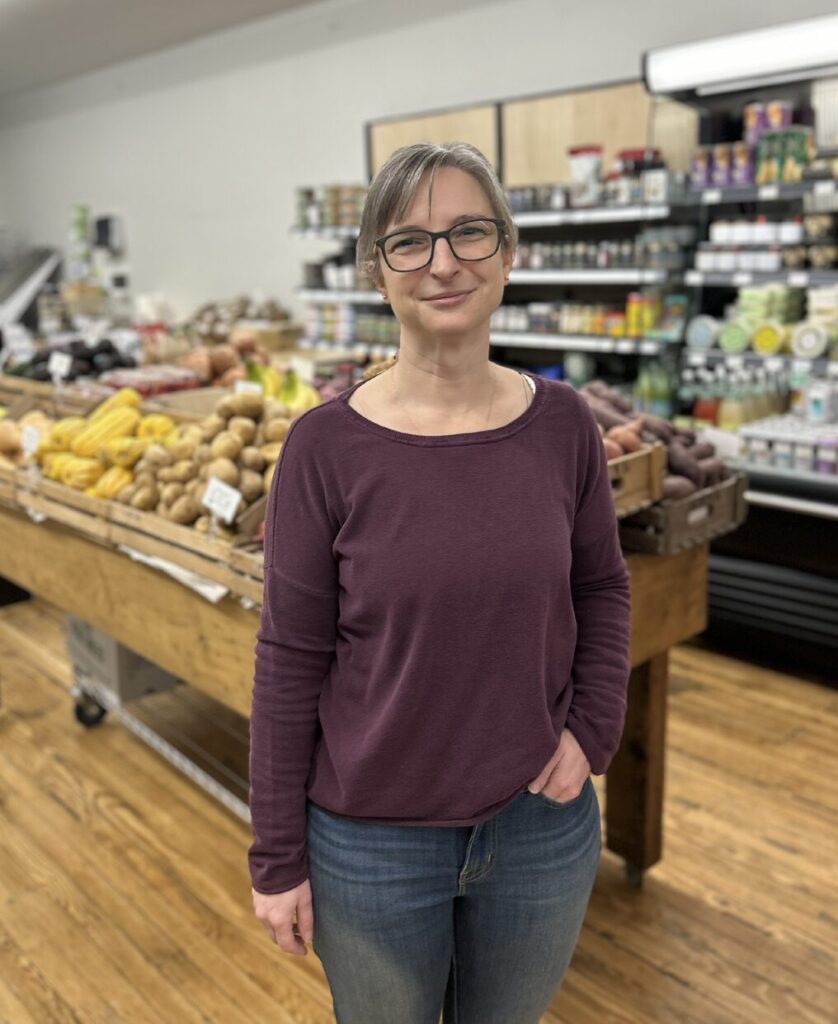
Julia James

Radish & Rye Food Hub on N. 3rd Street knows the challenges of independent food stores well.

“The grocery industry is not friendly to small, independent operators,” said Julia James, co-owner of Radish & Rye. “Grocery is always an extremely low margin business for everybody, including the big guys. But if you’re serving a low-income area as an independent operator, you’re going to have a really hard time competing on price in a way that is accessible to your neighborhood.”

Radish & Rye is different from most Harrisburg grocery stores—its focus is on local and organic foods. It began in the Broad Street Market, yet another Harrisburg location for fresh and prepared food.

With the organic angle, Radish & Rye found a way to work around some of the price troubles small stores face. They recently joined the INFRA Natural Food Retailers co-op, which connects them to a network of other independent stores and gives them joint buying power and a voice.

But not all stores have that option, and for some, urban store ownership is just too hard.

While many dream of a downtown grocer now, Harrisburg resident Adam Porter put that dream to action in 2017, when he and a partner opened Provisions, a bulk-model store inside Strawberry Square. The store, which had customers bag and weigh spices and dry goods, and where they could purchase a single banana instead of a bunch, lasted until 2020, closing just before the pandemic. The bulk model’s aim was sustainability, Porter explained, but ultimately he felt it may have been too ahead of its time for Harrisburg.

Porter said that, while people were coming in the door, purchases were too small, as they steadily drew in the downtown lunch crowd for snacks, while having trouble getting residents to change their shopping habits to fit with their progressive model.

However, Porter did learn that the demand for a grocer is there. He frankly doesn’t foresee a large chain grocer setting its sights on downtown, as they look for things like large physical space and higher average household incomes. But an independent store could have a chance, he thinks.

“They would have to […] commit to it and only it full time. That’s the only way it works when you’re a small independent,” he said. “We could help them not make some of the same mistakes that we did.”

Porter also thinks that the city government could do more to incentivize business growth, like eliminating the Business Privilege and Mercantile Taxes for grocers, who already have thin margins.

“That one thing wouldn’t be a silver bullet, but I think it would go a long way,” he said.
Derry Family Supermarket

Aisle 4—Meal Planning

While most of Harrisburg is a food desert by definition, people have mixed feelings about whether or not the city is well served by grocers.

Many think there aren’t enough—like Porter and James who purposely opened their own stores to fill that need.

“I think one of the reasons that people live in cities is to have a walkable lifestyle and so then not having a grocery store is a pretty big missing amenity from city life,” James said.

Many of her customers are walkers. In fact, she even has to take that into consideration when choosing what she stocks in the store—smaller bottles of mayo and salad dressings sell better because they’re lighter to carry home.

Some of the interviewed customers confirmed James’ sentiment, saying how, without key stores in their neighborhoods, they’d be forced to walk far distances or wait for buses. Some likely already have to do that, especially if stores nearby aren’t in their price range.

Porter has seen the struggle many carless residents face firsthand, when he drove briefly for the rideshare platform Lyft.

“The amount of ride requests to the Kline Plaza Giant would blow your mind,” he said.

Some store owners like Contreras at C-Town feel somewhat overlooked by those who may not think Harrisburg has options. When asked if he thought Harrisburg was a food desert, he said “no”, that those who say it is must “not be coming to my store.”

James, while not completely in agreement, does take issue with some of the methodology of the USDA low income/low access data, which excludes counting small stores, which often encompasses international grocers.

“USDA’s definition doesn’t feel to me like a complete one. It feels very white-centric,” she said.

Then there are others who fall somewhere in between, like Bernal at Derry Family Supermarket.

“It’s hard to say,” he said. “To a certain degree, I kind of agree that there are not enough. But it’s not like there’s nothing.”

Meanwhile, a few customers and shop owners interviewed weren’t overly familiar with the term food desert or hadn’t thought much about it before. Because to most, grocery shopping isn’t a part of some urban planning term or concept, but just a part of daily life. Whether that daily reality is a challenge or something of ease, is the result of a complex web of factors.

In the meantime, the businesses that are invested in keeping Harrisburg fed plan to keep their doors open and their fridges stocked.

“We definitely owe our thanks to the community,” Bernal said. “They help us. We help them.”

C-Town/Market Fresh is located at 2446 N. 6th St., Harrisburg.

Derry Family Supermarket is located at 345 Carlisle St. (off Derry Street), Harrisburg.

Deardorff Grocery is located at 224 Hamilton St., Harrisburg.

Radish & Rye Food Hub is located at 1308 N. 3rd St., Harrisburg.

If you like what we do, please support our work. Become a Friend of TheBurg!          

Continue Reading

Harrisburg City Council overrides mayor’s budget vetoes; several top positions to lose funding

Harrisburg City Council on Monday

The future of several of Harrisburg’s top administrative positions is unknown, as council has slashed salaries.

At a special meeting on Monday, City Council voted to override Mayor Wanda Williams’ vetoes on several of council’s 2026 budget amendments. Council’s vote reconfirmed its changes to the budget, which zeroed out salaries for several top officials.

Williams last week vetoed several amendments that council had previously made to the 2026 budget, which council passed earlier this month.

Most notably, council zeroed out salaries for the city’s interim business administrator, project director for business administration/LERTA and the police bureau’s director of community engagement and relations. Council also defunded the city’s portion of the salary for the interim director of building and housing development, which supplements the portion of the salary funded through the U.S. Department of Housing and Urban Development.

Council’s veto override means that their changes will be restored.

“The mayor is absolutely livid,” said Mischelle Moyer, the city’s communications director, following the meeting.

Each of the four overrides to the vetoes received votes of 5-2 in favor of the measure. For the funding changes to the housing director, business administrator and project director for business administration/LERTA, council members Crystal Davis and Ausha Green voted against overriding Williams’ veto. For the funding cut to the police bureau’s director of community engagement and relations, council members Davis and Shamaine Daniels voted no.

The future of the defunded positions is unknown. At a previous council meeting, City Solicitor Neil Grover said that he wasn’t sure where things would go from here.

If you like what we do, please support our work. Become a Friend of TheBurg!          

Continue Reading

Harrisburg mayor vetoes council’s changes to 2026 budget; council to weigh overriding vetoes

Harrisburg Mayor Wanda Williams (right) and Communications Director Mischelle Moyer (file photo).

Harrisburg’s 2026 budget is in flux as officials disagree on salaries for several top city positions.

Mayor Wanda Williams last week vetoed several changes City Council made to the general fund budget before passing it earlier this month. She stamped vetoes on council’s amendments that zeroed out or significantly reduced salaries for the city’s business, economic development and housing directors.

Council since announced that it would hold a special legislative session on Monday evening, with the budget back on the agenda. Council has the power to override Williams’ vetoes.

On Dec. 15, council passed the 2026 budget for the city, making amendments to zero salaries for the city’s interim business administrator, project director for business administration/LERTA and the police bureau’s director of community engagement and relations. Council also zeroed out the city’s portion of the salary for the interim director of building and housing development, which supplements the portion of the salary funded through the U.S. Department of Housing and Urban Development.

During the meeting, council members expressed concern over the length of time that “interim” directors had been in their posts without council approval, and said they were dissatisfied with the performance of others.

Williams has line-item vetoed all of those changes.

Council does not have the ability to fire city employees, but, as council noted during budget meetings, does have the power of the purse.

However, Williams protested the way council exercised that power.

In her “veto statement” attached to her budget vetoes, Williams said that, for at least two of the positions, council failed to “cite any financial basis for eliminating this funding, which is the limit of the council’s authority.” She also said, under her justification for vetoing one of the zeroed positions, that “the action effectively terminates an existing employee, which is an executive power exclusively vested in the mayor.”

Williams also repeatedly stated that council’s amendments would harm the city and taxpayers, stressing the importance of the roles and the reorganization that would need to take place in city hall if the positions were unable to be filled.

Council attempted to make similar changes to last year’s budget, eliminating the city’s portion of funding for the housing director’s role, removing funding for the police bureau’s community engagement director, and lowering proposed raises for other staff. However, Williams vetoed those amendments near the end of the year. Council had no meeting scheduled in time to consider an override.

The city’s budget process again highlighted the deep divide between Williams and council. Council said that many of the issues came down to communication and placed the blame on Williams’ shoulders. However, members of Williams’ administration said that she was open to communicating with council.

For council to overturn the mayor’s veto on Monday, they would need a vote of five or more.

As for what would happen next if council successfully yanks funds from several city positions, officials have said that remains to be seen.

If you like what we do, please support our work. Become a Friend of TheBurg!          
Continue Reading

Sober Ride Home program to offer free Uber vouchers over the New Year’s Eve holiday

Officials launched Sober Ride Home in 2024.

A local organization will help people ring in the new year safely.

Tri-County Regional Planning Commission will bring back its Sober Ride Home program for New Year’s Eve, offering Uber vouchers to bar and restaurant patrons.

The organization on Monday announced the restart of the initiative in hopes of deterring drunk driving. Tri-County runs Sober Ride home with a grant from the Federal Highway Administration and the Safe Streets and Roads for All (SS4A) program, and in partnership with Uber and Commute PA.

The program will operate from 7 p.m. on Wednesday, Dec. 31 to 3:30 a.m. on Thursday, Jan. 1 in Cumberland, Dauphin and Perry counties.

Bar and restaurant patrons who have consumed alcohol can visit the Sober Ride home website to scan a QR code for a one-time Uber voucher for $20. Vouchers are available while supplies last. To access a voucher, users must have an active Uber account with a credit card on file.

Sober Ride Home launched in 2024 and has offered vouchers over many holiday weekends.

For more information, visit their website.

If you like what we do, please support our work. Become a Friend of TheBurg!          
Continue Reading

Governor says Harrisburg has “got to get moving” on Broad Street Market rebuild

Gov. Josh Shapiro spoke during a press conference at Harrisburg’s Fire Station 1 on Tuesday.

Pennsylvania’s governor has weighed in on the reconstruction of the Broad Street Market.

During a press conference in Uptown Harrisburg on Tuesday afternoon, Gov. Josh Shapiro said that local officials needed to “get their act together” and rebuild the market.

Shapiro’s statements were in response to a reporter’s question about the progress at the market, during a press conference highlighting increased state funding for the fire bureau.

“The local folks need to get their act together and rebuild this thing already,” he said. “We’re committed to putting real resources in from a capital perspective. I frankly have been frustrated by how long it’s taken. We’ve let local leaders know that.”

Construction on the brick building, severely damaged in a July 2023 fire, began this fall. On Monday, the city confirmed that a section of the building’s wall, near the Millworks, had collapsed. City officials said that they were meeting to evaluate the damage and make a plan for moving forward.

Shapiro said he had heard about the collapse.

“This is a critically important place for the community, symbolically and also just where people go to get their fresh groceries and gather as a community,” he said. “I want to see them rebuild it and we’re committed to pulling real capital dollars in. They’ve got to get moving here already.”

The state awarded the Broad Street Market $500,000 in May for improvements to the stone market building, a second market house that mostly includes prepared food vendors and was not damaged in the blaze. The fire-ravaged brick building housed mostly fresh food vendors, some of whom have moved temporarily to a tent across the street.

Harrisburg Mayor Wanda Williams was in attendance at Monday’s press conference, but had left before Shapiro’s comments on the market.

If you like what we do, please support our work. Become a Friend of TheBurg!          

Continue Reading

Gov. Shapiro recognizes Harrisburg Fire Bureau, highlights $2 million boost to city funding

Gov. Josh Shapiro joined members of the Harrisburg Fire Bureau and local officials on Tuesday for a press conference at Fire Station 1 on N. 6th Street.

Gov. Josh Shapiro visited the Harrisburg Fire Bureau to recognize their critical role in the arson fire at his home, while presenting a multi-million-dollar boost to city funding.

Shapiro joined local officials at a press conference on Tuesday to celebrate the significantly increased state fire protection allocation to the city, in the wake of the arson attack on the Governor’s Residence in April.

As part of the 2025-2026 state budget, Harrisburg was awarded $7 million for its fire protection fund, a $2 million jump from the previous year’s allotment.

According to Enterline, the city had not received an increase in this funding in 10 years.

Shapiro said that Enterline had been pushing for the funding hike.

“My interactions with the chief dated back to July of 2023,” Shapiro said. “He put me in the cherry picker, and we went up […] the chief kept going higher and higher and higher and he had me in this little cage about 10 billion feet up in the air and he said, ‘Hey while I have you gov, let me talk to you a little bit about the funding needs we have.’”

However, Shapiro said that, after his family’s experience with the bureau during the April arson fire at their residence in Uptown Harrisburg, the funding need became more urgent to him.

“I knew that Harrisburg had a unique need, as the chief told me when we were up in the cherry picker, and I think the attack on our family just kind of crystallized the need of urgency to get it done now,” he said.

Enterline said the extra money, which is included in Harrisburg’s 2026 budget that passed on Monday, will help with both short-term financial needs and long-term planning.

“This additional funding is crucial, preliminarily helping to defray the persistent inflationary costs that affect our bureau every year,” Enterline said. “More strategically, this investment positions us to initiate critical long-term initiatives.”

Shapiro said the raise represents a new funding floor for the city’s fire bureau to bolster the department’s efforts.

“Today would not be possible had it not been for the bipartisan support of the House, the Senate, the governor and his great team,” Enterline said. “This public demands and deserves a well-staffed, well-equipped fire department that is ready to respond to any emergency at any time, at a moment’s notice.”

If you like what we do, please support our work. Become a Friend of TheBurg!          

Continue Reading

Council passes 2026 budget, but denies raises for elected officials and defunds top positions

Harrisburg City Council on Monday night

Harrisburg City Council approved a 2026 city budget while zeroing out top officials’ salaries, denying raises and highlighting the deep divide between council and the mayor.

At a meeting Monday night, council passed the $88 million general fund budget, rejecting a proposal by Mayor Wanda Williams to raise her and other elected officials’ salaries and eliminating other staff’s salaries.

The budget does not include a property tax increase.

Most of the budget discussions and changes on Monday centered around salaries and council’s dissatisfaction with the work of several staff and elected officials.

Previously, the administration proposed a $20,000 raise to the mayor’s current $80,000 salary, along with raises for council, controller and treasurer. Each would have received a raise at the start of their next term, a legal requirement. However, council voted against the raises by a vote of 5-2, with council members Crystal Davis and Ausha Green voting in favor.

“I can count the number of times Mayor Williams called this council incompetent under my leadership, and she wants a raise? No,” said council President Danielle Hill. “I feel very strongly that instead of a raise, the mayor, her administration and Harrisburg City Council should focus their energy on the number of issues present within our city.”

Additional council members said that they voted ‘no’ based on input from residents and a desire to see the money go to what they believed were more pressing needs.

The other major changes to the budget included council completely eliminating salaries for the city’s interim business administrator, project director for business administration/LERTA and the police bureau’s director of community engagement and relations. Council also zeroed out the city’s portion of the salary for the interim director of building and housing development, which supplements the portion of the salary funded through the U.S. Department of Housing and Urban Development.

Council members decided to defund the business administrator, Sam Sulkosky, and director of building and housing, Gloria Martin-Roberts, mainly because they had been serving in interim positions without council approval.

Sulkosky was appointed in October 2024, but council voted against approving him in his role in February, citing concerns with his employment history. Since then, he has continued serving, now as an interim director.

Martin-Roberts was appointed by the mayor in 2024 as an interim director after the previous building and housing director left.

“The process isn’t fair,” council member Lamont Jones said. “This is personal that our residents get what they deserve. When you’re in a position of leadership you have to be held accountable.”

Council removed funding for the project director for business administration/LERTA, explaining that they were unhappy with the lack of work being done, specifically around an economic development plan for the city. When it came to the police position, council members said they believed the position was redundant.

Council also made a motion to remove funds for the director of equity and compliance, citing dissatisfaction with the role, but the motion failed.

“I’m not quite sure where it would go from there because then it starts pulling apart the city code, for example, with the business administrator, what do you do because they have statutory duties,” said City Solicitor Neil Grover. “By defunding it, you are basically eliminating the position. But frankly, I don’t know why anybody’s going to apply to my office or any other office if the city of Harrisburg and the council defunds positions of existing employees.”

Sulkosky shared his reaction to the decision with TheBurg as well.

“I just think it was a short-sighted effort for council, not the entire council, but a small majority to micromanage what the mayor does, which I think is highly inappropriate,” Sulkosky said. “It does not help the city of Harrisburg at all.”

When speaking with TheBurg, Hill stressed that the position had been defunded, not eliminated, but was unsure what that would mean for the role moving forward.

“I don’t know the mechanics of it. We are not involved in the hiring process so I can’t speak to that,” she said. ”I really can’t speak to what happens next.”

Council passed the 2026 budget with a vote of 6-1, with council member Shamaine Daniels voting no.

The total proposed budget, including the capital projects fund, state liquid fuels fund and neighborhood services fund, among others, is $127.3 million.

City Accounting Manager Brian McCutcheon also shared the projected end of year cash fund balance, which would likely be $21 million in the general fund reserves and $5.5 million in the neighborhood services fund reserves by the end of this month.

According to council’s clerks, the mayor has 10 days to return council a signed budget, making the deadline Dec. 26. Williams does have the power to veto the budget or specific line items. Council would likely then return for a session on Dec. 30 or 31 to reconsider the budget, the assistant clerk said. A vote of five or more council members would be needed to overturn the mayor’s veto.

The meeting showcased the divide between council and the mayor. Three council members revealed that they believed their cell phones were blocked by Williams, meaning that she could call them, but they were automatically sent to voicemail.

They also said that department directors and staff had been banned from communicating with them.

“It is not us,” Hill said. “We are here. We try to communicate. But if you’re blocked on someone’s phone and that’s the method of communication, what do you do?”

Sulkosky said that the mayor has an open-door policy and has invited the council president to meet her.

“She’s blaming the mayor for not communicating, but I would say that’s a two-way street,” he said.

Also on Monday, council approved a land development plan by Harristown Development Corp. to renovate 333 Market Street, a 22-story building downtown that previously housed state government offices. Harristown will renovate floors 11 through 19 and create 81 one- and two-bedroom apartments, which it intends to use for senior housing. The company is currently in search of an organization to master lease the apartments.

At a previous meeting, council voted the plan down in a tied vote, before deciding to bring the resolution back up for reconsideration and tabling it.

Council ended up passing the development plan with a vote of 5-2. Council President Danielle Hill and council member Crystal Davis voted ‘no.’

“My concern lies with the lack of information regarding the third party that will be involved,” Hill said.

Council on Monday also voted to extend the city’s lease agreement with the Broad Street Market Alliance for another year. The city and market have been operating on a month-to-month lease since its current lease expired in 2021. The approved extension was initiated because the market is required to have an up-to-date lease for state funding it was awarded.

In other news, council voted to extend the city’s LERTA program, which provides tax break incentives to developers. City officials have said that they drafted a new, updated LERTA bill, but are waiting for the Harrisburg School District to review it.

If you like what we do, please support our work. Become a Friend of TheBurg!       

Continue Reading