Cooling centers open in Dauphin County as extreme heat expected this week

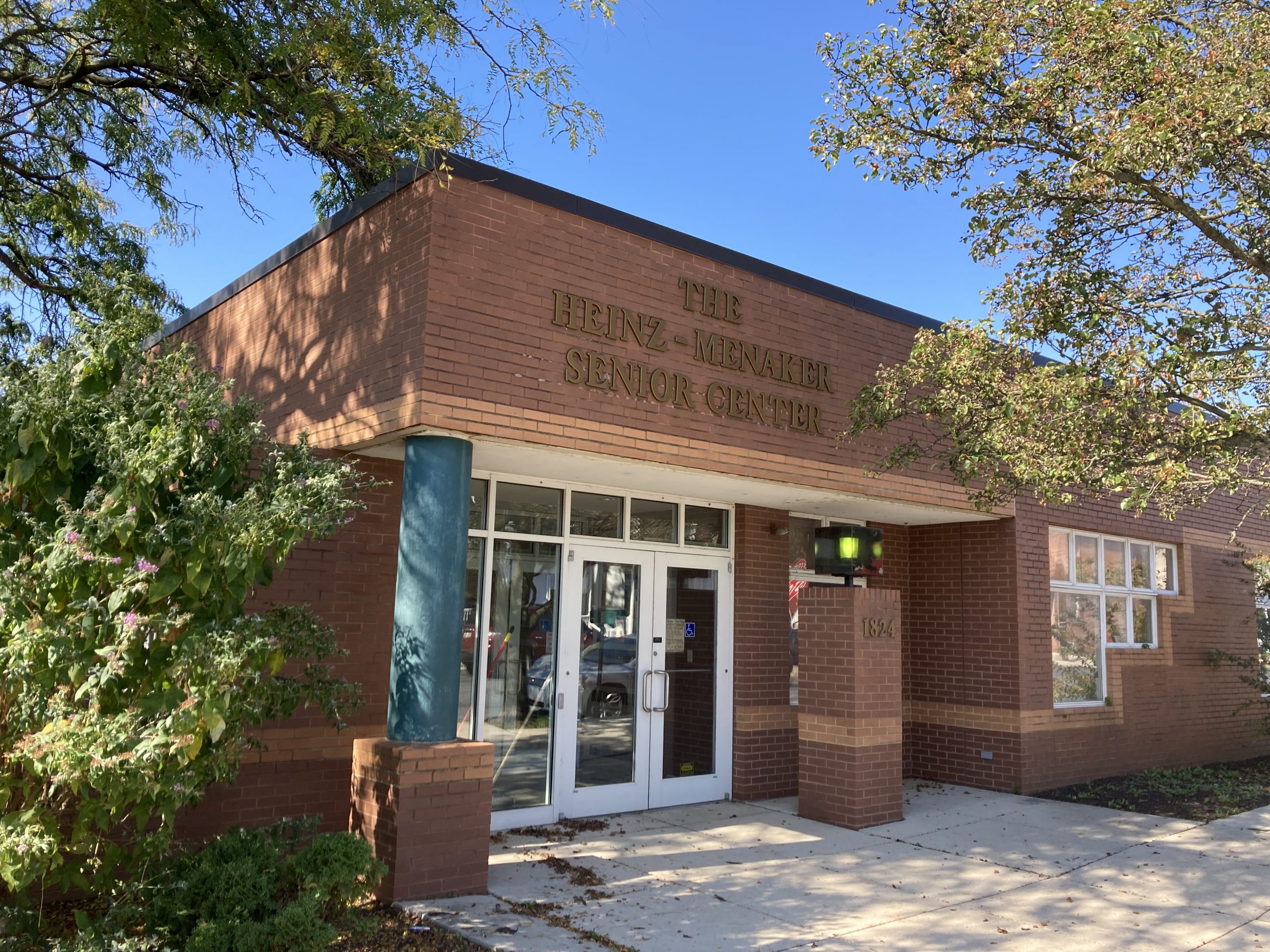
The Heinz-Menaker Senior Center, one of the cooling stations, at 1824 N. 4th St., Harrisburg

Major heat is forecast for this week, prompting Dauphin County to urge residents to take advantage of area cooling stations.

On Monday, the county stated that six organizations would open their doors to residents, especially older residents, who may not have access to air-conditioned spaces.

“We encourage anyone in need of relief from the extreme heat to visit one of six community center locations, all of which are welcoming non-members during periods of high temperatures,” according to a county press release.

The locations are:

B’nai B’rith Senior Center
130 S. 3rd St., Harrisburg
717-232-7516
Hours: Monday to Friday, 9 a.m. to 4 p.m.

Heinz-Menaker Senior Center
1824 N. 4th St., Harrisburg
717-238-7860
Hours: Tuesday to Friday, 8:30 a.m. to 1 p.m.

Friendship Senior Center
5000 Commons Dr., Harrisburg
717-657-1547
Hours: Monday to Friday, 9 a.m. to 3:30 p.m.

Lykens Ballroom Senior Center
200 W. Main St., Lykens
717-453-8350
Hours: Monday and Friday, 8 a.m. to 1 p.m.

Millersburg Senior Center
109 Edward Dr., Millersburg
717-692-2657
Hours: Monday to Friday, 8 a.m. to 3 p.m.

Leader Center for Active Life
605 Cocoa Ave., Hershey
717-533-2002
Hours: Monday to Thursday, 12 p.m. to 3:30 p.m.
Friday, 8 a.m. to 2 p.m.

In the Harrisburg area, temperatures are forecast to approach or exceed 100 degrees Fahrenheit from Wednesday through Saturday.

Benjamin D. Knox, administrator of the Dauphin County Area Agency on Aging, also asks residents to check in on older adults during this time, especially those with underlying medical conditions.

“We encourage residents to take a moment to ensure that family members, friends and neighbors have access to a cool, safe place to stay,” he said.

For more information, contact the agency at 717-780-6130.

Continue Reading

Harrisburg soccer club to travel to China for international competition

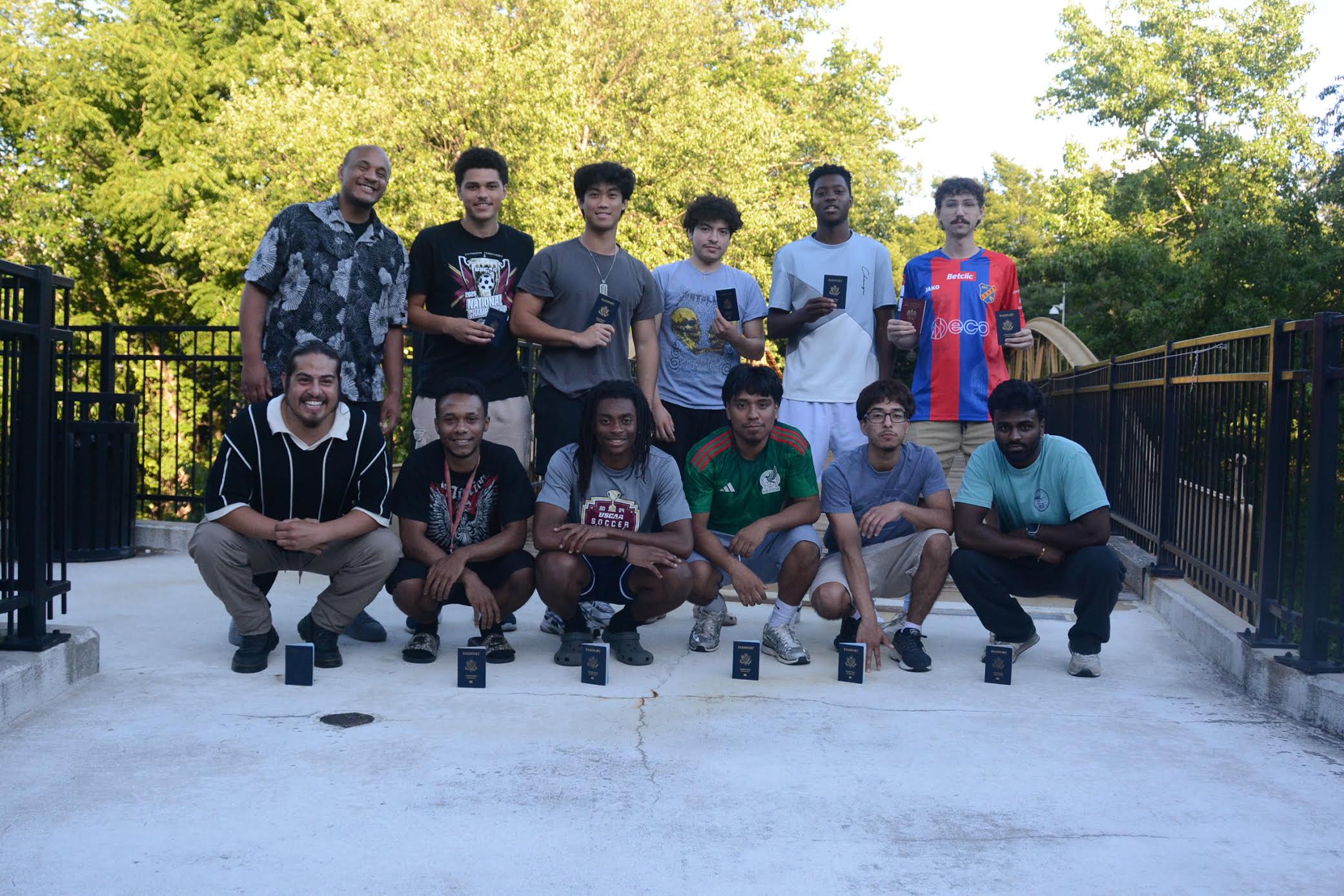
Cole Goodman (top left) and Journey FC team members display their passports for upcoming trip to China

The next goal for a local soccer club will take the team across the globe.

Journey FC, a recently established soccer team from Harrisburg, will fly to China in August for an international soccer tournament and cultural engagement.

The trip is planned in collaboration with DENO International, a Chinese organization that supports worldwide cultural and educational exchange initiatives, and the World Affairs Council of Harrisburg.

The roster is made up of local athletes from a range of backgrounds, including former players from Harrisburg Area Community College, Central Penn College, John Harris High School, and individually recruited players from across the Harrisburg area.

Over the course of 10 days, the 18-player team will participate in cultural and educational experiences in addition to playing three games against local opponents.

Cole Goodman, the founder and head coach of Journey FC, emphasized the significance of the opportunity, both for the players and the local soccer community.

“As a coach, being able to see the team compete internationally and see the fruits of our hard work pay off is an honor,” Goodman said. “I want to make sure that Harrisburg and Pennsylvania are put on the map and showcase the talent we have here.”

Goodman brings several years of soccer experience to the role, having played college soccer and previously coached at HACC and John Harris High School before becoming the head coach of Journey FC.

“I hope this trip can change the lives of these young men forever,” Goodman said. “They’ll grow through experiencing different cultures and participating in this cultural exchange program, while also competing on the field and showing the talent, professionalism, joy and happiness that comes from the young people of Harrisburg.”

Players Mark Haye, Darwin Lopez and Rotman Saltos expressed their enthusiasm and voiced how their team has collaborated over the months.

“It’s really exciting working with so many people from different places,” said Lopez, the team’s goalie. “We all have different backgrounds, but we all share our love for soccer and that’s what brings us together.”

Haye, a Jamaican native and the team’s midfielder, expressed how grateful he was for the opportunity presented to him.

“If you would’ve told me as a kid that I was going to be playing internationally by age 20, I probably wouldn’t have believed you,” he said.

Lastly, Saltos, born in Ecuador, and the team’s striker, highlighted the perseverance that defines Harrisburg.

“Journey FC is ready to represent the city’s hard work, resilience, and the ‘never give up’ mentality. That’s what it means to grow up in Harrisburg,” said Saltos.

If you like what we do, please support our work. Become a Friend of TheBurg!

Continue Reading

Easter Eggs: Can you spot all the good stuff happening in Harrisburg?

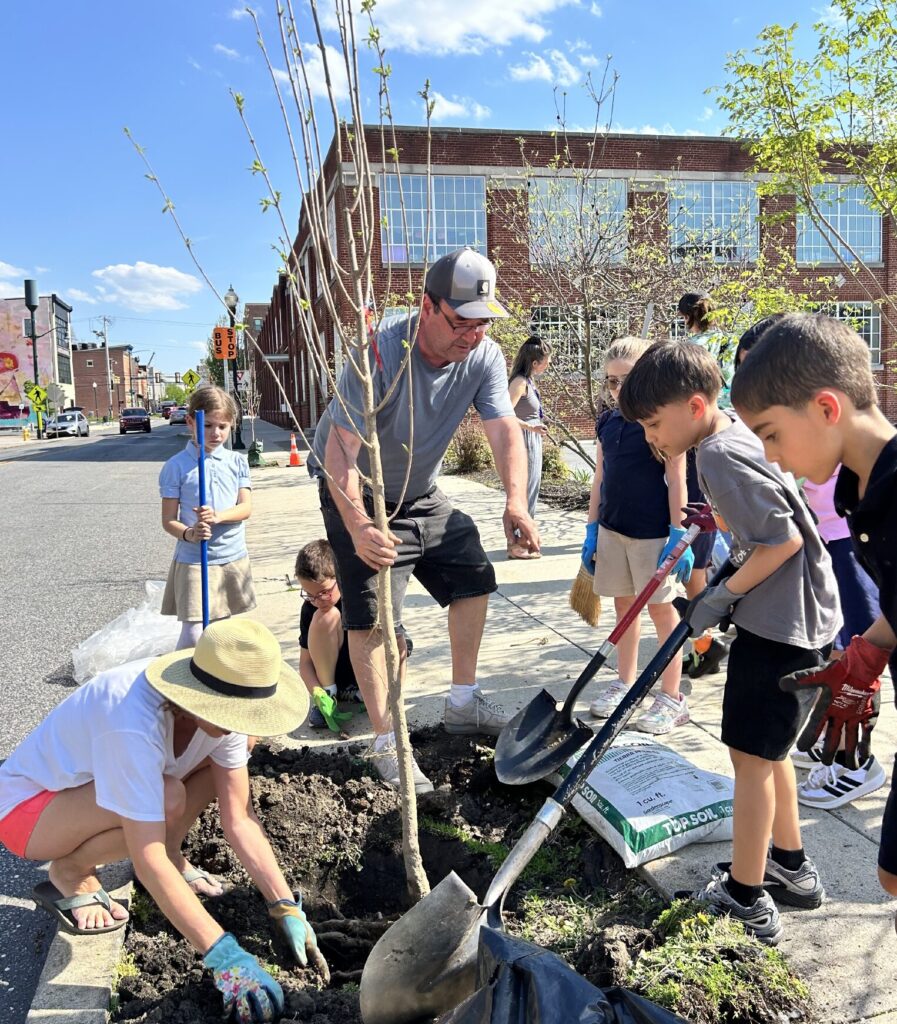
Friends of Midtown volunteer Ed Jaroch plants a tree with Pennsylvania STEAM Academy students.

Looking from my desk out TheBurg’s office window, I have a straight vantage point to the front of a commercial space across the street.

The building used to house Zeroday Brewing Co. before they sadly closed late last year.

In early June, I noticed paper go up in the windows of the space, signifying to me that work was taking place, and maybe, just maybe, a new business was moving in.

Periodically, glancing out the window at the door across the street became part of my new routine, as I hoped to catch a glimpse of signs of life or maybe even a familiar face carrying in boxes.

I have high hopes.

That same morning that I noticed changes across the street, I attended a sneak preview of Denim Coffee’s new downtown shop. The café, which recently opened, is the business’s biggest yet, and third location downtown. It’s bright, modern, and I already foresee it being a great remote work and meeting spot. I ordered an iced chai and enjoyed (several) samples of baked goods, including my favorite scones.

While there, my co-workers and I talked to co-owner Matt Ramsay, who said he sees good things on the horizon in Harrisburg. He wouldn’t have invested so much into building his business in the city if he didn’t. That makes sense.

His genuine excitement and positivity got me feeling optimistic too. Good things are happening in Harrisburg.

My tip for finding them: Stay off Facebook, which is not representative of our city, and get out into the real community.

In early June, I went to Friends of Midtown’s annual yard sale. I bopped around, found a few things, chatted with some neighbors. On Kelker Street, I came upon Bruce and Eva Burchfield, who were selling Eva’s homemade donuts, reminiscent of her days operating her Evanilla donut stand in the Broad Street Market. Of course, I got one.

I also got a fun glimpse into city history, with bins full of Harrisburg Senators memorabilia, another with “Greetings from Harrisburg” postcards, and one person was selling a Harrisburg-themed Monopoly game.

I just happened to stumble upon the HBG Flea, set up in the Midtown Cinema parking lot that day, which was packed with browsers.

A few weeks before that, I attended a friend’s gathering on the cinema’s patio, which included bevs from Zeroday’s Outpost and getting to know new people.

All of that said, it’s been a great couple of weeks in Harrisburg.

It’s easy to get discouraged about the state of our city. I report on city government, follow issues like crime and blight. So, I definitely have moments of frustration and sadness when I see businesses closing, officials quarreling, or families being affected by violence—the bad stuff.

Still, I see so much good.

For another story in this issue, I visited Recycle Bicycle in Allison Hill. You can’t go there and leave feeling bad about the city. They have some of the kindest volunteers, the friendliest visitors, and seeing a smiling little girl pick out her new bike transported me back to childhood. Even after the tragic passing of its founder, Recycle Bicycle is doing great and planning for its future, one that volunteers believe will be long.

On Facebook, you might miss these things (unless you’re on TheBurg’s page) amidst the fighting in comment sections and constant verbal beating Harrisburg takes, often from people who don’t live in or visit the city at all.

In real life, you may just see little Easter eggs of hope all around.

New signs are going up in previously vacant store windows. Events are popping up every weekend. Kind people are planting trees, picking up trash and volunteering.

You shouldn’t stick your head in the sand or stop advocating for an even better city—there are plenty of real concerns and challenges. But there’s also so much to be excited about and (one of the best parts about a small city) so much room for you to get involved.

Maddie Gittens is managing editor of TheBurg.

If you like what we do, please support our work. Become a Friend of TheBurg!          

Continue Reading

July News Digest: Downtown Survey Results Shared, Tree Inventory Begins, HACC to Sell or Lease Buildings

Downtown Survey Results Shared

The results of a recent survey show that community members are ready and excited for a downtown Harrisburg renaissance, officials say.

The Pennsylvania Downtown Center, in partnership with the Capital Region Economic Development Corporation (CREDC), last month announced the results of a survey that garnered thousands of responses and showed support for revitalizing downtown.

“What came back was both encouraging and clear-eyed: strong pride in the city’s architecture, riverfront and cultural assets, alongside real frustrations around parking, everyday retail, safety and business climate,” according to the Revitalize Downtown Harrisburg website.

According to survey responses from over 4,000 people, five strong themes emerged.

One of the top findings of the survey was that people are interested in making downtown a place for everyday life, with a grocery store, pharmacy and places to meet basic needs.

Other themes included overcoming the barrier of parking downtown, improving perceptions of safety and cleanliness, supporting business development, and creating energy through more housing, events and activities.

About half of the respondents were city residents, 45% worked downtown, and 43% said they support downtown restaurants on a weekly or monthly basis. Additionally, 20% said they wanted to be involved in the downtown revitalization project.
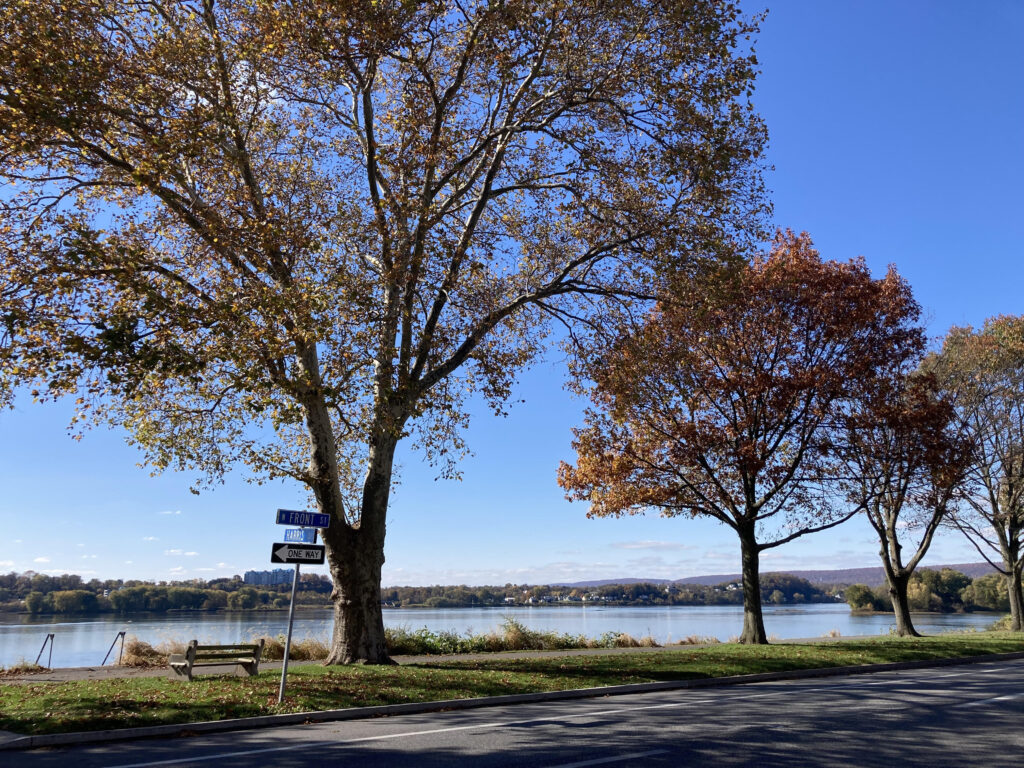
trees harrisburg riverfront

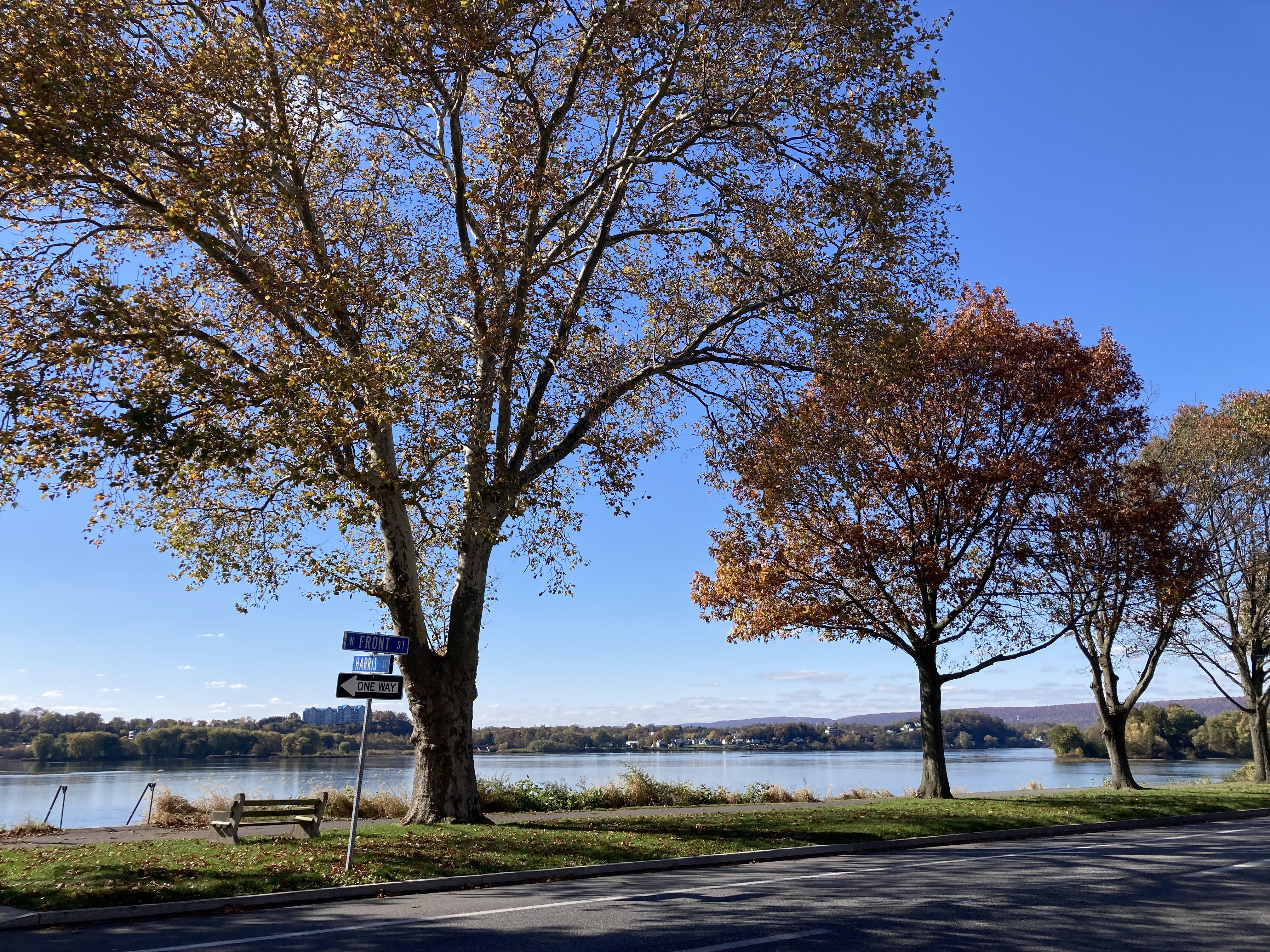
Trees along the Susquehanna Riverfront

 Tree Inventory Begins

Harrisburg has begun its first citywide tree inventory in at least a decade.

An urban forestry management company with certified arborists last month started conducting a census of trees across the city, according to Harrisburg forester Cody Legge.

After the inventory is complete this month, the city will identify where tree maintenance—including removing, pruning or planting— must be completed.

“They’ll do all the streets first, and then double back to do our parks,” said Legge, noting the contractors will work their way across the city at their discretion.

The work is funded through a $2 million federal “TreeVestment” grant through the U.S. Department of Agriculture Forest Service. The grant is designed to bolster urban tree canopies.

Most of the money has been set aside for tree work, said Legge, which, between maintenance, removal and plantings, can be costly to perform.

Legge said he expects that most city trees may need to be pruned, either to remove routine deadwood or to resolve clearance issues. This would include city trees between sidewalks and curbs that are technically in the public “right of way.”

“There’s quite a bit of conflicting issues with tree limbs being just a little too low on the streets or the sidewalks,” Legge said.

He added that a handful of “risky” trees may need to be removed, but the grant dictates that anywhere the city removes a tree, a new tree must be planted in its place. He has also advised the contractor to take note of stumps or divots in the ground where the city could replant a tree where one clearly was in the past.

Legge estimated that the last tree inventory for Harrisburg was conducted around 2016.

HACC to Sell, Lease Buildings

HACC’s board of trustees last month approved a resolution that gives the institution permission to sell or lease seven buildings it owns across central PA.

Facing a $63 million debt obligation and more than $163 million in deferred maintenance, the board approved the sale or lease of Harrisburg’s Midtown 1 building (located at 4th and Reily streets) as well as its Ted Lick and John N. Hall buildings on its main Harrisburg campus. The resolution also included two buildings in York, as well as buildings in Lancaster and Gettysburg.

“We’re not closing the campuses, none of them, but we’re just looking at our space utilization in Harrisburg,” said John Sygielski, on his last day as HACC president and CEO, just before the new president, Daniel Lufkin, started.

Sygielski said that, while HACC could use more state funding, 2026-27 will be its third year in a row without an increase in operating funds. Downsizing its building portfolio will hence help it meet its debt obligations, he said.

Sygielski said HACC plans to move operations at Midtown 1 to HACC’s main campus and is in talks with other organizations about its Lick and Hall buildings.

According to Sygielski, overall consolidation of the buildings may take one or two years.
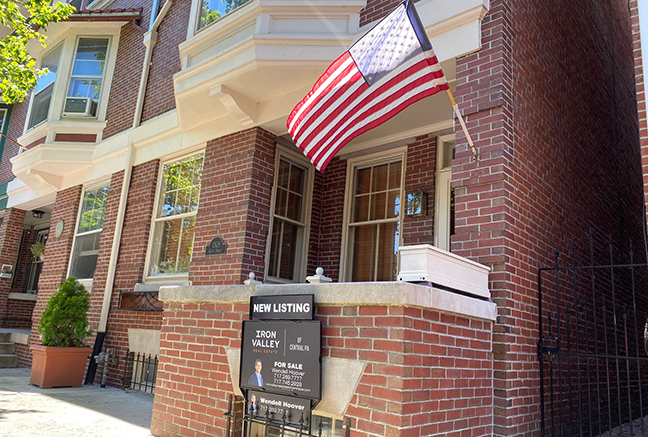
Home Sales Dip, Prices Rise

Harrisburg-area home sales dipped in May, though prices powered higher, according to the latest report on previously owned houses.

For the three-county area, 561 homes sold in May compared to 599 in the year-ago period, as the median sales price increased to $305,000 from $290,000, according to data from the Greater Harrisburg Association of Realtors (GHAR).

In Dauphin County, 263 houses changed hands, versus 290 in May 2025, while the median sales price jumped to $295,000 from $250,000, GHAR said.

Cumberland County tallied 259 home sales in May, a drop from 273 a year earlier, as the median sales price fell slightly to $322,000 from $324,900, according to GHAR.

In Perry County, 32 homes sold, compared to 35 the prior May, as the median sales price rose to $322,500 from $257,500, GHAR said.

The pace of home sales slowed a bit, as “average days on market” increased to 27 days in May versus 24 days in May 2025, stated GHAR.
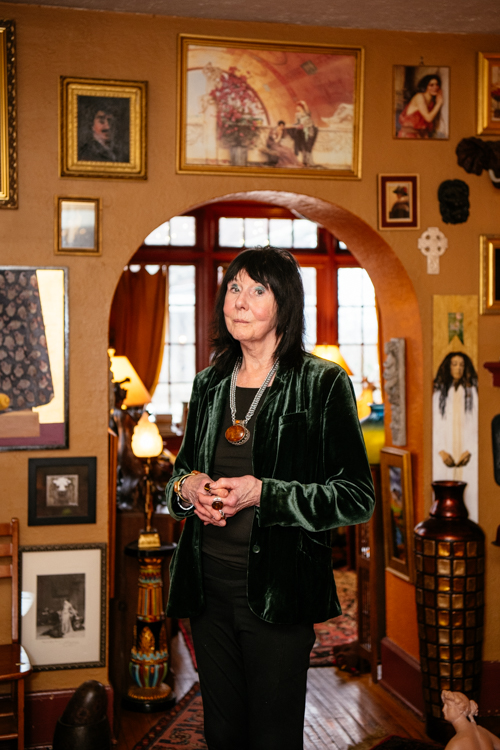
Carrie Wissler-Thomas

So Noted

Carlyn Krall last month was named the new marketing and social media manager for Visit Lebanon Valley. In this role, she will oversee social media platforms, marketing campaigns, digital content and promotional initiatives, according to the organization.

Carrie Wissler-Thomas will retire in September after four decades leading the Art Association of Harrisburg, the association announced last month. The board named Debbie Smith, owner of the Smith Gallery and Fine Custom Framing, to succeed Wissler-Thomas as executive director and president.

Denim Coffee last month opened its third shop in downtown Harrisburg, its largest location, at 17 S. 2nd St. on the ground floor of the Menaker Apartments. The new space seats more than 50 and has a conference room available for meeting reservations, designed to offer gathering space for the community.

Harrisburg Fringe Festival will return this month, from July 16 to 19, showcasing visual, performance and musical art at venues throughout the city. As part of the festival, filmmakers Wallace McKelvey and Paul Hood will screen another installment of “River City Stories,” a lineup of original films inspired by life in the city, at Midtown Cinema. Visit www.hbgfringe.com.

Market Square Concerts this month will present its Summermusic series with a special emphasis on American musical contributions for the country’s 250th birthday. The concerts, at Market Square Presbyterian Church in downtown Harrisburg, will take place July 12, 15 and 19. For more information, visit www.marketsquareconcerts.org.

The Exchange, an “active adult” living community in downtown Harrisburg, cut the ribbon last month on its building at 112 Market St. New Holland-based Garden Spot Communities, along with Harristown Enterprises and Select Capital Commercial Properties, re-developed the long-time office building into a 55-plus community consisting of 39 one- and two-bedroom apartments.

Visit Hershey & Harrisburg last month added several new stops to the Harrisburg Arts District map to include monuments along the Susquehanna riverfront and recently opened venues like Capital City Music Hall and Coronet Park. The district is made up of more than 50 murals and monuments and more than 20 theaters, performance venues, museums and art galleries. For more information on the map and audio tour, visit the VHH website.
 

Changing Hands

Bailey St., 1218: R2 Investors LLC to TYHequities LLC, $82,000

Berryhill St., 2436: J. Charlton to V. Wisman, $140,000

Boas St., 412: E. Buda to M. Fox & A. Ringler, $215,000

Briggs St., 1612: M. & M. Stewart to W. Jenkins, $80,000

Brookwood St., 2168 & 2168 Gettys Alley: JTA Consulting Group LLC to A. & M. von der Linden, $165,900

Catherine St., 1505: S. Samuel to S. & L. Lapp, $122,500

Chestnut St., 1943: Northline Properties LLC to Breneman Properties LLC, $62,500

Cumberland St., 218: D. MacGregor to Z. & L. Ordo, $230,000

Derry St., 1523: H. Cotignola & J. Pickens to 2020 Real Estate Ventures LLC, $70,000

Derry St., 2335: L. Thompson to J. & D. Florentino, $250,000

Edgewood Rd., 2301: New Holland Enterprise Management LP to C. & C. Ortiz, $348,000

Edgewood Rd., 2315: E. Shaner to M. & M. Cuzco, $338,000

Evergreen St., 25: Golden Triangle Investment LLC to O. Rodriguez, $155,000

Forster St., 212: N&R Group LLC to Arm 1209 Green PA LLC, $395,000

Forster St., 1814: N. Burrell to J. Santana, $160,000

Geary St., 619: T. Rodriguez to J. Diaz, $130,000

Geary St., 626: EJB Rentals LLC to Ardoise Investments LLC, $80,000

Graham St., 118: D. Kyle & D. Holland to D. Page & J. Cavey, $411,400

Green St., 2008: M. & M. Akins to I. Inchausti, $295,000

Greenwood St., 2714: P. Smith to A. Davis, $155,000

Hoerner St., 116: PPS Realty Inc. to SNB Real Estate Solutions LLC, $82,000

Hunter St., 1623: J. Monegro to U. Sheikh, $85,000

Kelker St., 206: JMW Property Group LLC to 206 Kelker LLC, $337,500

Lewis St., 228: J. & C. Bisel to A. Berkowitz & N. Gordon, $294,500

Logan St., 2232: L. Folks to JRHeller Com LLC, $53,750

Market St., 1209: Avila Estate Investment LLC to J. Nonsent, $145,000

Market St., 1913: Widespread Properties LLC to Kingfisher Properties LLC, $310,000

Melrose St., 716: Rivas Property Investments LLC to A. Cepeda, $141,880

Muench St., 427: D. Glick to A. Esh, $112,000

Naudain St., 1634: I. Colon to U. Velez, $92,700

North St., 1502: D&F Realty Holdings LP to D. Meran, $117,890

North St., 1717: JDP 2014 LLC to D. Arias & J. Bautista, $160,000

North St., 2012: Salah el Din LLC to C. Smith, $145,000

N. 2nd St., 315: Breneman Properties LLC to 315 N 2nd Owner LLC, $293,474

N. 2nd St., 1113: Doyle Assets LLC to PACC HBG2 LLC, $120,000

N. 2nd St., 1333: R. Adams & K. Rasmus to M. Zimmerman, $187,000

N. 2nd St., 3028: D. Bradley & E. Berry to Z. & A. Martin, $266,000

N. 3rd St., 3132: M. Dunbar to J. & A. Hurtado, $230,000

N. 4th St., 19: Joseph Kowalczyk to 4th & Walnut Street Owner LLC, $475,000

N. 4th St., 21: Joseph Kowalczyk to 4th & Walnut Street Owner LLC, $450,000

N. 5th St., 2727: Integrity First Home Buyers to Alexs Rentals LLC, $120,000

N. 6th St., 1500, Unit 502: L. Grossberg to P. Zhou, $585,000

N. 6th St., 2605: Sky Resort Rentals LLC to Stoltzfus Real Estate Holdings LLC, $180,000

N. 6th St., 2631: City Limits Foundation to J. & D. Negron, $90,000

N. 6th St., 2939: R. Stewart, M. Silliker & N. Li to M. Elbayoumy, $70,000

N. 6th St., 3119: K. Clemons to Rosebud Capital LLC, $150,000

N. 14th St., 211: Dreams2Reality Services LLC to G&K Best Homes LLC, $127,000

N. 15th St., 1503: A. Laboy to N. Navarro, $115,000

N. 15th St., 1603: R. & D. Requa to A. Ochoa & E. Hernandez, $155,000

N. 16th St., 1103: A. Sandino to C. de Jesus, $172,500

N. 16th St., 1204: J. Mancero to C. Burgos & R. de Reyes, $177,000

N. Front St., 321: 321 N Front St LLC to Blue Valley Leasing, $84,352

N. Front St., 1109: JMW Property Group LLC to J. Parrish, $257,000

N. Front St., 1525, Unit 213: Selenite Real Estate LLC to H. Shearer, $155,000

Reel St., 2470: D&F Realty Holdings LP to W. Mercado, $61,843

Rose St., 933: GKX LLC to Rotewort Enterprises LLC, $435,000

Royal Terr., 109: E. Camones to D. Whitted, $189,000

Sassafras St., 133 & 114 Herr St.: Sassafras Court Partners LP to Alex Manning Enterprises LLC, $800,000

S. 13th St., 951, 1000: From the Heart Church & Ministries of HBG Inc. to Rock City Building Support Inc., $1,150,000

S. 13th St., 1449: DKH Homes LLC to SkyZoom LLC, $160,000

S. 14th St., 447: B. & A. Muzirwa to Luperon Properties LLC, $115,000

S. 15th St., 523: Willow LLC to S. Cheam, $50,000

S. 17th St., 22: A. Taveras to D. Paulino, $145,000

S. 17th St., 435: G. Oden to J. Pauta, $200,000

S. 19th St., 409: Bridger Investments LLC to H. Everett, $141,000

S. 19th St., 549: D. & D. Letterlough to Alis Repair Shop LLC, $120,000

S. 23rd St., 649: Two Three Two Investments LLC to A. Ranjan, $140,000

S. 29th St., 630: T. Anderson to O. & O. Balogun, $250,000

S. Cameron Terr., 1511: CSL Investments LLC to Easy Home Offer LLC, $104,000

State St., 1828: Visionary Investments RE LLC to A. Velazquez, $125,000

Susquehanna St., 1330: Green Scapes Investments LLC to J. Dubina, $190,000

Swatara St., 2005: S. Mejia & W. Guzman to G. Chalas, $175,000

Valley Rd., 2301A: S. Thornsley to M. Thompson, $367,000

Walnut St., 401: J. Kowalczyk to 4th & Walnut Street Owner LLC, $375,000

Walnut St., 411: J. Kowalczyk to 4th & Walnut Street Owner LLC, $900,000

Walnut St., 1732: A. Bouhach to E. Buckley, $128,000

Zarker St., 1937: J. Belai to T. Kea, $125,000

Harrisburg property sales, May 2026, greater than $50,000. Source: Dauphin County. Data is assumed to be accurate.

If you like what we do, please support our work. Become a Friend of TheBurg!

Continue Reading

Neighborly Advice: Want to make a difference in your community? Join a neighborhood group

Illustration by Rich Hauck

In early May, I gave a short presentation to Strong Towns Harrisburg, the local affiliate of the national urbanist group.

At first, I chatted about TheBurg and our community-building endeavors then took audience questions, which ranged widely from infrastructure to city government to the tough local news biz.

Someone raised their hand and asked what the average resident could do to help the city. My response: shop locally, join a board or commission, volunteer with a nonprofit—heck, run for office if you’re so inclined.

An excellent, easy place to start, I said, was to join a local community group, which exist in neighborhoods throughout the city.

As volunteer organizations, some groups are more active than others. Over my time in Harrisburg, I’ve seen groups flourish then die out then sprout up again, depending on factors like leadership, issues and energy.

But, when they have their act together, these groups can make a big difference in the community. I’ve seen it happen in my own neighborhood.

For over a year, Capitol Area Neighbors had been sounding the alarm on the decrepit state of two buildings on the 500-block of N. 2nd Street.

These two small, attached buildings, over a century old, had a rough life over the past 30 or so years. A suburban attorney owned them for decades, letting them deteriorate to the point that they were boarded up and left to rot. In 2020, his family sold them to a west shore developer, who said he planned to raze them and construct a new, modern-style apartment building.

But that never happened. Instead, the buildings continued to fall apart, to the extent that I purposely walked on the other side of the street for fear that they might tumble onto my head as I passed by. They were a public danger and their condition—façade flaking off, interiors collapsed—blighted the neighborhood.

Over several meetings, the group discussed what to do, and our president arranged to meet with Mayor Wanda Williams. He found out that the city, after years of trying to get the owner to demolish the buildings, planned to raze them itself. During the meeting, the mayor—to her credit—said she’d fast-track the demo and, two weeks later, they were gone, this longstanding, dangerous problem finally disappeared.

Similarly, the group has been active addressing other pressing neighborhood issues, such as streetlight outages (a big problem downtown), parking and encampments. Then there’s the social aspect, which includes a yard sale and an annual block party.

Across Forster Street, Friends of Midtown volunteers regularly perform cleanups, graffiti removal and tree plantings. Since last year, the revived business committee has organized monthly meetings of Midtown’s small businesses to discuss shared problems and goals. They even created a map of neighborhood businesses, which attendees identified as a number one priority.

Down in Shipoke, their association is famous for its annual riverfront flea market and its social events, which includes the weekly “Wine on Wednesdays” happy hour.

Despite these successes, I’ve also seen the opposite—once-vibrant groups that go dormant for extended periods or even fall apart. The most successful groups seem to have several traits in common:

They meet regularly.
Regular meetings are a must. These meetings should have a written agenda, stay focused and be as short as possible (keeping it to one hour is a great goal). Many groups fail to meet even this basic condition, with meetings that get constantly cancelled or, when they are held, quickly spin out of control.

They have good communication.
Group leaders need to find a reliable way to communicate with members outside of meetings—and this communication should be two-way.

They’re targeted.
Many neighborhoods have one or two truly pressing issues, which should be the focus of the group’s time and attention. Groups shouldn’t let themselves get distracted by the inevitable laundry list of lesser problems. If a group is large enough, members may want to form subcommittees that can focus on second-tier issues and concerns.

They’re social.
Neighborhood groups shouldn’t take themselves too seriously. Successful ones wrap lots of fun around all the grim discussion of litter, crime and parking. Social events also help turn neighbors into friends.

They’re selfless.
Too often, neighborhood groups devolve into personality clashes or petty power grabs. This is deadly for effective action, as the group itself becomes a problem. The most successful groups have members who can put their egos aside and cooperate for the common good.

They have a deep(ish) bench.
Neighborhood groups can be tough to sustain. Folks come and go, and, since volunteers aren’t paid, commitment to the cause can be spotty. A group, then, should seek to have more than one or two active members in case someone moves or stops contributing.

Neighborhood groups face many potential obstacles to effective, sustainable action. Despite this, some Harrisburg groups have proven adept at setting goals, getting important work done and having fun in the process. They can be an excellent way of making a difference right in your community, without needing to launch a second career as a local politician.

Lawrance Binda is publisher and editor of TheBurg.

If you like what we do, please support our work. Become a Friend of TheBurg! 

Continue Reading

July Publisher’s Note: Good, bad and in between

Like most news outlets, we follow our social media feeds closely.

We like to know which stories people are commenting on and what they’re saying. For better or worse (probably worse), these comments have taken the place of old-fashioned “letters to the editor,” which once served as the main link between newspapers and readers.

Most comment sections, you may have noticed, skew negative, and, sure, we also get our share of pessimistic, unhelpful and even harmful comments. But I’m happy to report that we seem to receive fewer than other media companies, which likely reflects our community-based approach to news.

For instance, last month, we posted a picture of Tito Tep, the owner of Tep’s Fresh Seafood in the Broad Street Market. Our reporter noticed all the new greenery in the large planter in front of the market and inquired about it. It turned out that Tito, in coordination with Capital Region Water, had taken it upon himself to acquire and install the plants and flowers.

This post received the most comments, “likes,” and shares of nearly any post in recent memory. The comments were overwhelmingly positive and supportive. “Fabulous,” “amazing” and “awesome” just scratched the surface of the praise for Tito and his volunteer work. We’ve received similar reactions recently when sharing photos of residents planting trees, removing graffiti, doing cleanups, etc.

At TheBurg, we don’t shy away from the negative, but we also don’t shy away from the positive. You’ll see this reflected in our social feeds, and you’ll also see it reflected in our daily news coverage and our monthly print magazine. In this very issue, within these pages, you’ll discover many stories that reflect the wonderful, complex fabric of life here, as we endeavor to represent it as accurately and honestly as possible.

Lawrance Binda
Publisher/Editor

If you like what we do, please support our work. Become a Friend of TheBurg!          
Continue Reading

Wheel Keep Spinning: Recycle Bicycle pedals forward, without its founder, on firm footing

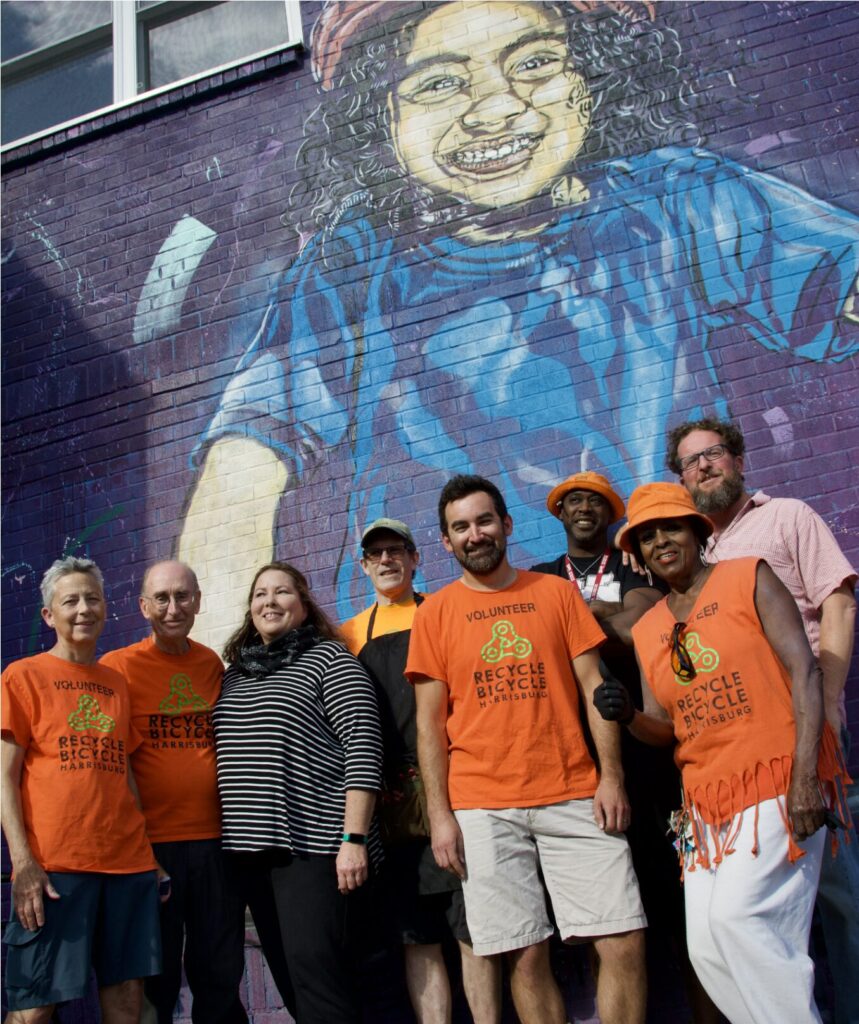
Recycle Bicycle board members and volunteers

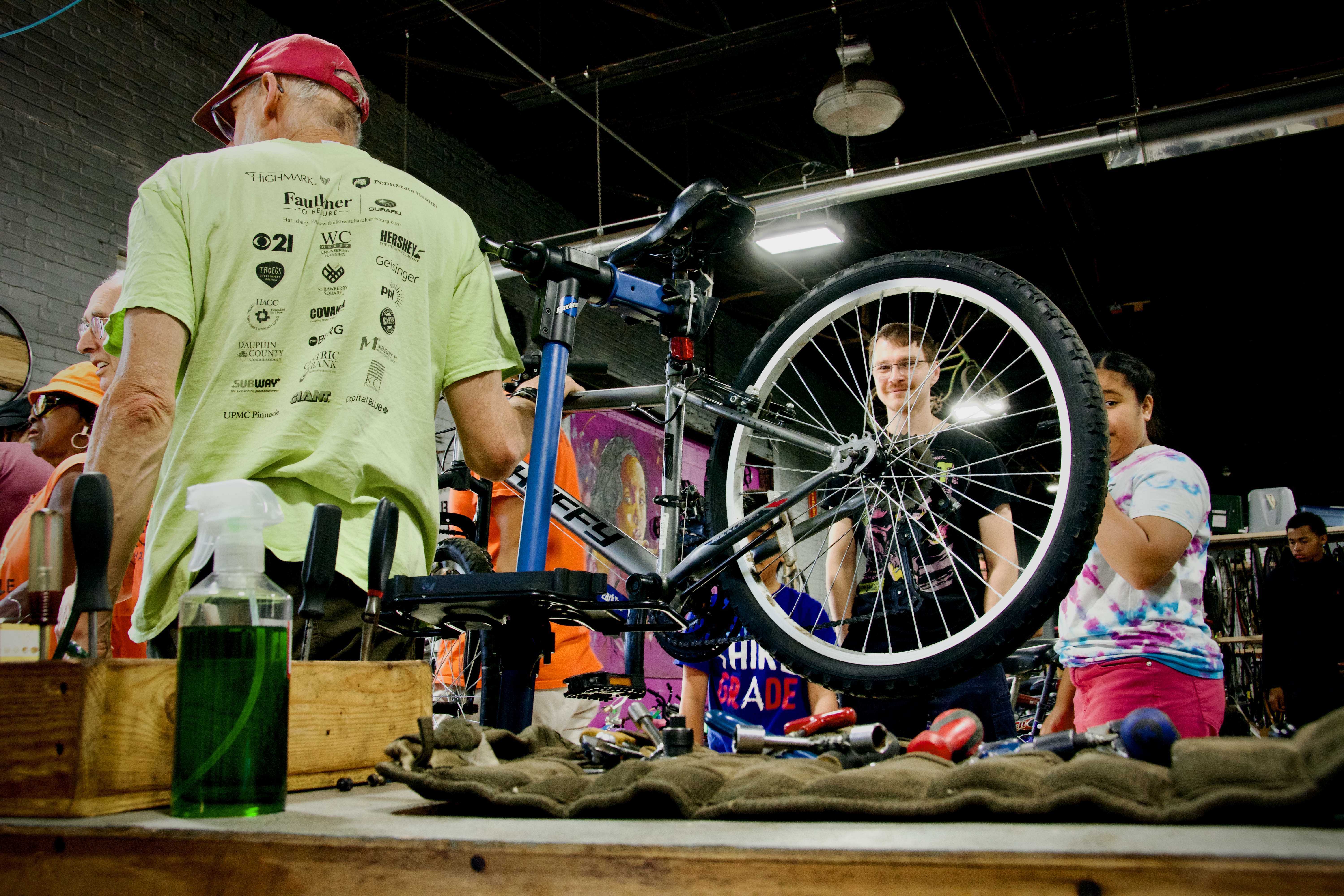
On a warm Monday afternoon, 10-year-old Esteven zipped around the parking lot of Recycle Bicycle on his new green and orange bike.

He pointed out how the gear shift works and said he likes to ride fast.

His twin sister Violet picked out a purple bike and said she’d stick to riding safely in the backyard.

The twins’ father, Esteban Paulino, said it was his first time bringing his children to the Allison Hill bike shop on a recommendation from a friend. He was all smiles seeing his kids pick out bikes and work with a volunteer, Bill, to tune them up and get them ready for summer adventures

“They’re doing an excellent job, and they’re willing to help,” he said.

A steady flow of people came into Recycle Bicycle that afternoon, keeping a crew of neon orange-shirted volunteers busy. However, that was considered a slow period. Earlier that day, the shop had been much busier, and Saturdays, well, they’re another beast altogether.

It was one of those Saturdays in May when the news hit the shop—Ross Willard had passed away suddenly and shockingly.

Willard founded Recycle Bicycle in 2001 and has long been synonymous with the organization.

When the news reached the Chestnut Street shop, volunteers paused, gathered in the meeting room to say a prayer, and got back to work.

“We went back out to work fixing bikes, because there was a line of people that needed bikes,” said board President Bob Sutton.

Willard, for so long, was the face of the organization. He was the common thread behind why most of the volunteers got involved as he had a way of drawing people into his orbit.

Willard may have been the reason so many volunteers got involved with Recycle Bicycle, but even without him, they’re staying put. His mission became their own. His way of seeing the world—noticing needs, opportunities to lend a hand—became their own. And everyone shared the same sentiment, that Recycle Bicycle was in great shape to keep rolling. Many said that years of organization, delegating tasks and testing new ways of doing things prepared them for this point.

Sharing the handlebars transformed Recycle Bicycle from one man’s passion project to a tandem ride.

“We carry the mission forward,” Sutton said. “The mission was Ross Willard’s to begin, but he’s passed that mission on—he’s made converts of us.”

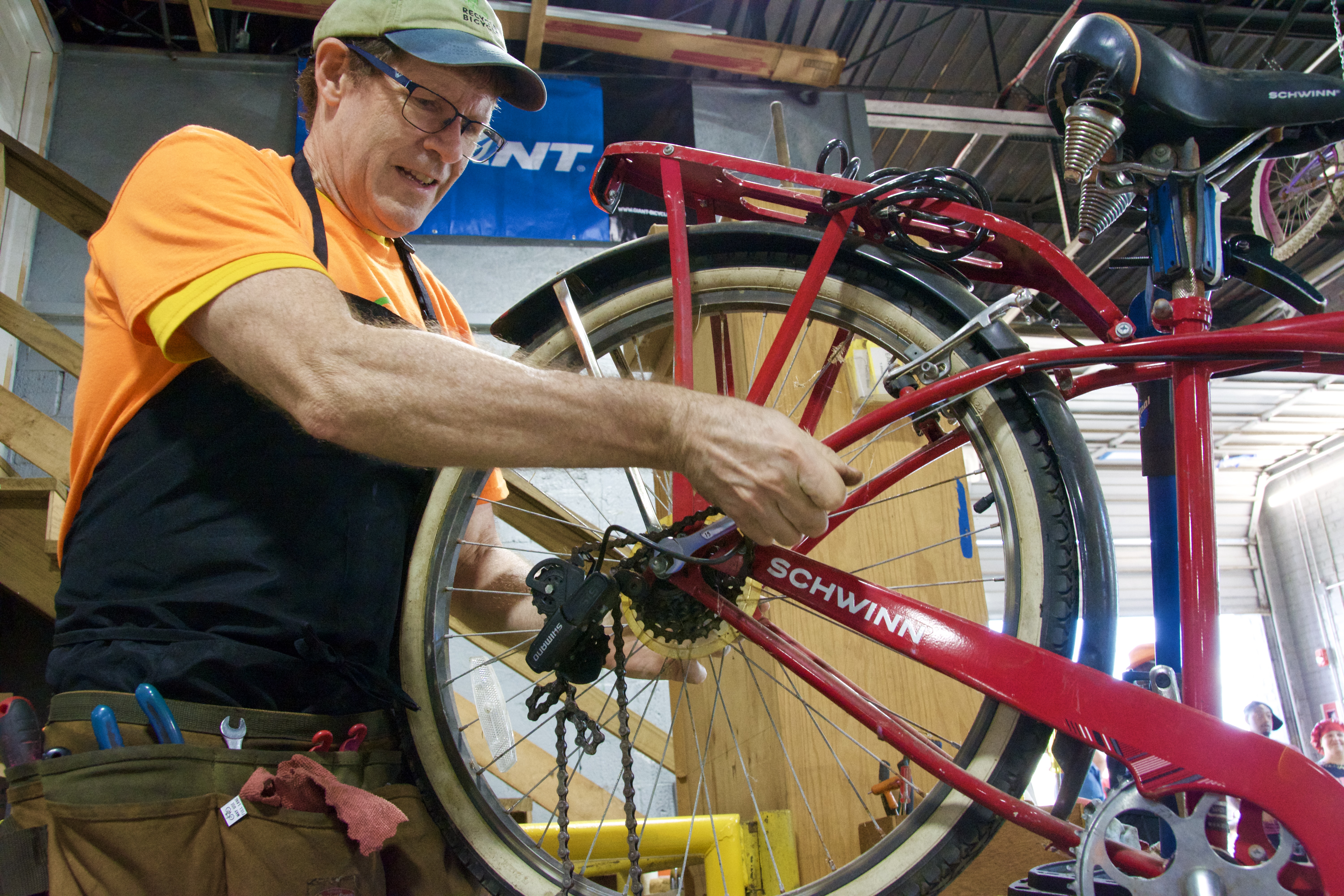
A Recycle Bicycle volunteer changes a chain, greg

A Recycle Bicycle volunteer changes a chain

Finding Stability

Jenifer Donnelly has volunteered with Recycle Bicycle for a decade. She recalled her first days on the job, being “thrown into the fire” by Willard, who put her right to work, but always made sure she was supported and equipped.

When she began, Willard was operating out of a warehouse on Atlas Street in Uptown Harrisburg, a site that was sold in 2019, leaving the organization in search of a new home.

In those last weeks in the Uptown shop, Willard stood next to a mountain of bikes, trying to figure out how to move them all and where to.

“We’ve outlasted a lot of other nonprofits in the area,” Willard told TheBurg at the time. “Now, we need a place that’s going to outlast us.”

He found that place in the Chestnut Street shop, for which Donnelly took on much of the organizational work.

Jenifer Donnelly, volunteer

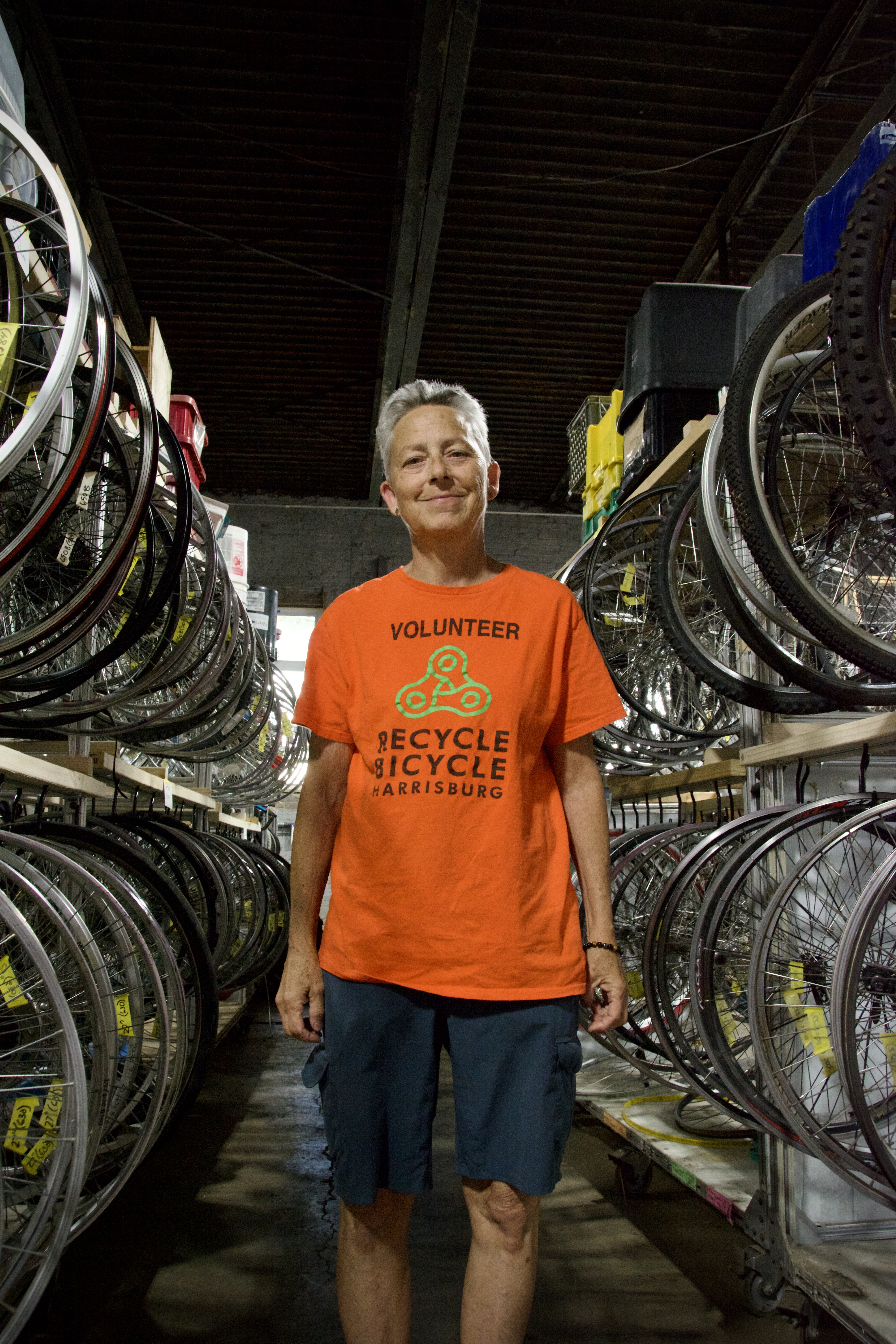
The shop now has a system. Visitors are greeted by a waiting area with seats where a volunteer like Nannette Swanson signs them in. There’s a bike repair area with workbenches, where bikes are organized by size and style. There are rows of spare wheels and other parts stripped from unsalvageable bikes and recycled.

Donnelly is humble, but Sutton described her as the “backbone” of the organization. She disagreed.

“Ross was always the backbone,” she said.

“Ross was the heart. You’re the backbone. You were keeping the structure,” volunteer Brandon Basom reaffirmed.

Around the time of the move to the new building, Willard began stepping back from day-to-day work at Recycle Bicycle as he recognized it was time for change in the nonprofit. Some of his “old-school” methods of running the shop were due for updates, volunteers said.

The number of people coming to the new shop was like nothing Recycle Bicycle volunteers had seen before. They did their best but often struggled with how to assist people in the most efficient, patient and understanding way.

“I think that took us some time to figure out. That transition was really what [Willard] was struggling with because he did things one way for so long, but, in the end, I think he was really happy,” Donnelly said. “He always said to me, ‘We’ve got to make sure this stays long after we’re gone.’”

He stepped back, but “never stepped away,” Donnelly said, explaining that Willard focused his attention more on bike safety advocacy work and interacting with the public at events like city festivals. He seemed happier, getting to do what he loved most, she said.

“We are kind of moving more from an entrepreneurial organization run out of Ross’s back pocket, so to speak, with his close coterie of friends […] to a more stable, long-term organization,” Sutton said. “But it was tough when Ross pulled back because it created a bit of a vacuum, and we had to see who stepped forward.”

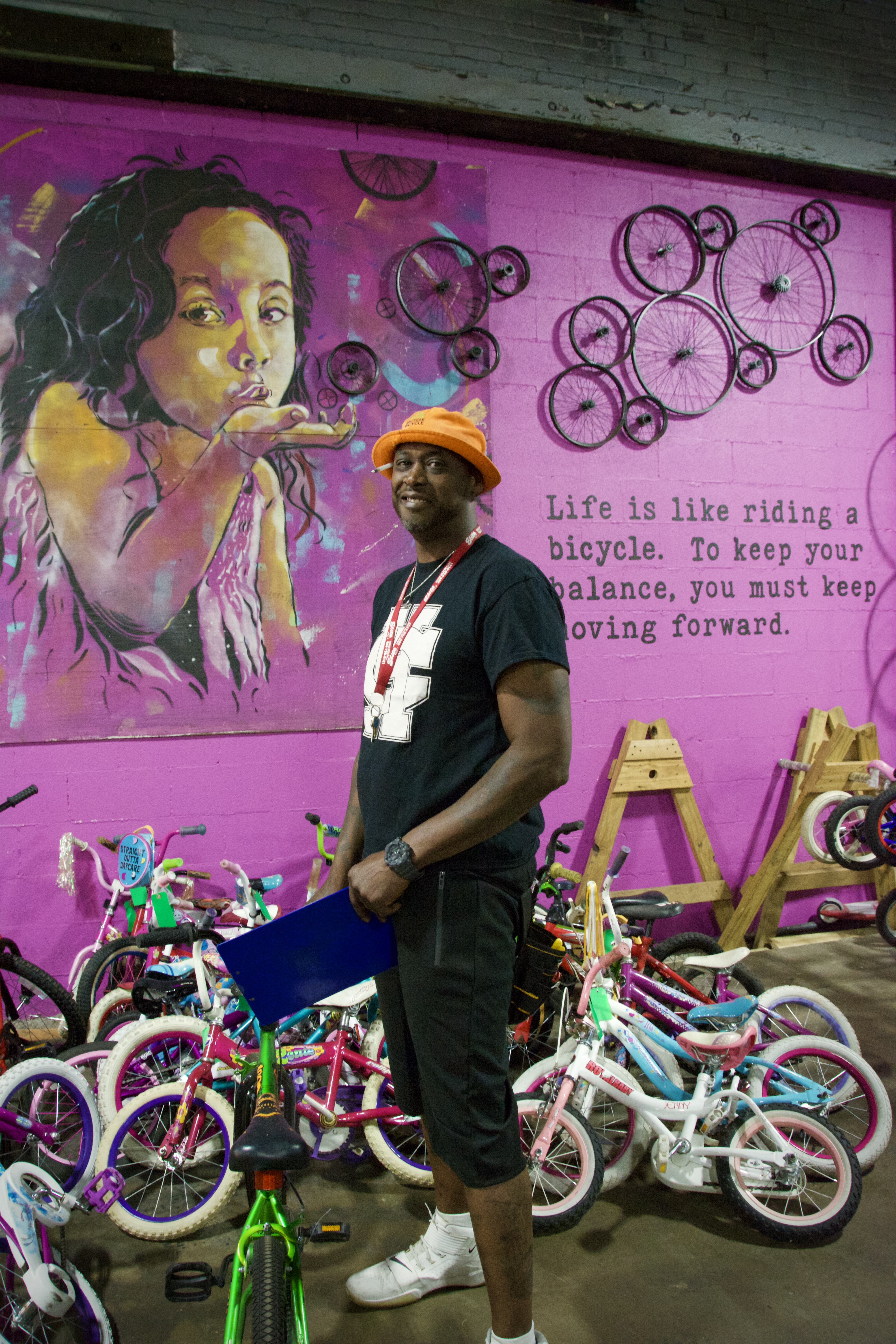
Ricky Morton, volunteer

Toward the Future

Basom is one of Recycle Bicycle’s younger volunteers who has become known, like Willard was, as always willing to help with a bike fix.

“This is problem solving. You get a bike, none of the parts are right for it. But you can make it good enough,” Basom said, chuckling. “The things we do here would make bike shops cringe. I’ve taken a hacksaw to a bike; I’ve taken a hammer to make it work. But we make it work. It makes me uniquely qualified in my neighborhood to help kids with their bikes.”

He’s never without a few tools and spare bike parts, because “you never know.”

Teaching kids, and adults, how to repair their own bikes and involving them in the process has always been part of Recycle Bicycle’s mission, something Willard was adamant about.

That education is still happening, and city youth are finding the shop to be a place they can tinker on their own bikes, learn from older volunteers and even help others.

“They’ll come to you, and then I get to do what Ross used to do, which feels kind of good,” Basom said. “And I’m like, ‘Am I the old man now?’”

Fourteen-year-old Zane worked on his bike with a few friends at the shop. He was quiet, focused on the task at hand, but said he comes in every now and then because he enjoys fixing bikes.

Volunteer Ricky Morton works with teens like Zane on Sundays, teaching them skills.

“That’s the future of this organization—those young people,” Donnelly said.

Recycle Bicycle is urging people to volunteer. They’re doing well financially. There’s no shortage of bikes. But they need more people—to fix bikes, interface with the community and do advocacy work. They depend 100% on volunteers.

And you’d think, after 25 years, that the demand for bikes in the city would be mostly satisfied, but no. Lines are always long, and the need is always great. In 2025, 3,496 bikes were gifted and, as of April this year, 461 have been given out.

On that Tuesday when Esteban and the twins got bikes, Ezekiel Hernandez waited for help fixing the bike he uses to get to work. A mother waited with her young children, visiting on a referral from the transitional housing community where they live. Vijay Varadarajan worked with retired schoolteacher Ron Yerger to modify his bike to his height so he could ride with his son. He enjoyed working with Yerger so much that he said he’s considering volunteering now.

Recycle Bicycle workshop

It’s this community that volunteers like Stephanie Iseman love.

Iseman had a special connection to Willard. He was there for her during mental health struggles and was a close confidant. But beyond Willard, his community at Recycle Bicycle became hers too. The shop is somewhat of a second home to her, and the volunteers are family. Willard’s passing was a shock and devastating to her.

Yet, she sees a bright future for Recycle Bicycle.

Without Ross, everything changes, and nothing changes. Volunteers are heartbroken, but Recycle Bicycle keeps moving forward as usual, continuing a long legacy.

Iseman has full confidence in the team.

“It’s a testament of how one voice can make a whole choir.”

Recycle Bicycle is located at 1722 Chestnut St., Harrisburg. For more information, visit www.rbhburg.org.

If you like what we do, please support our work. Become a Friend of TheBurg!    
Continue Reading

“Check Out” These Tools! Powered by donations and volunteers, Harrisburg’s tool library provides an affordable path for home projects

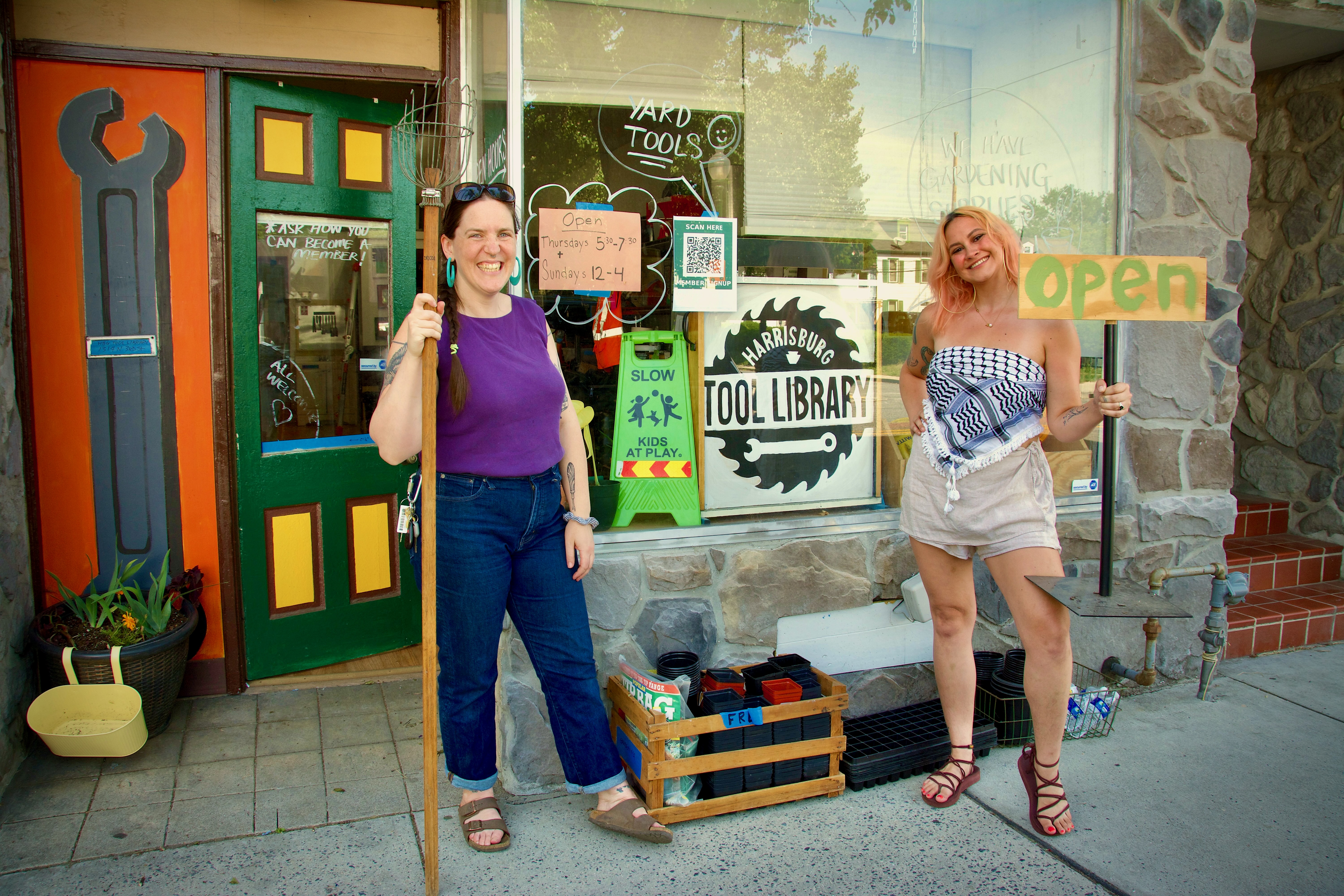
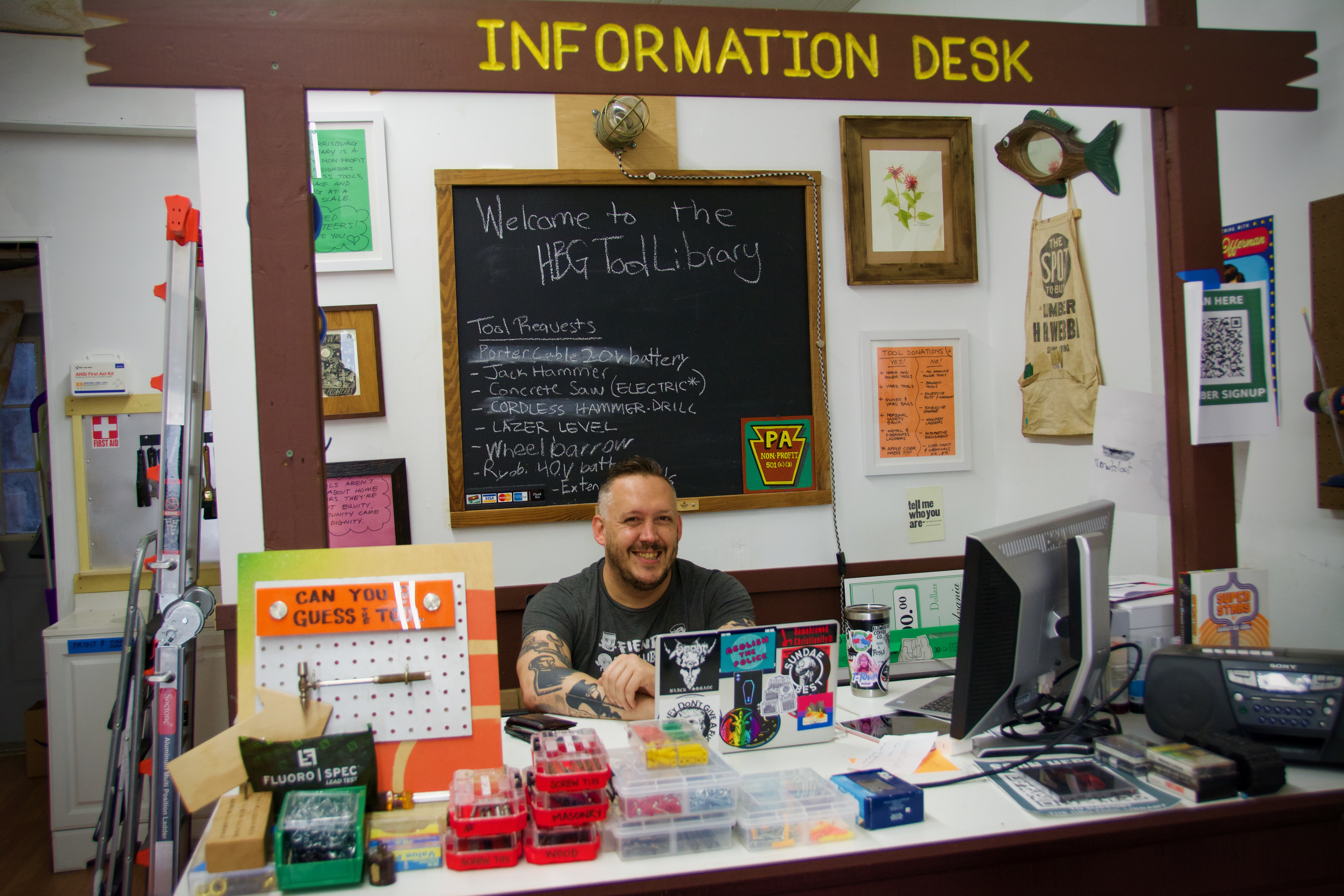
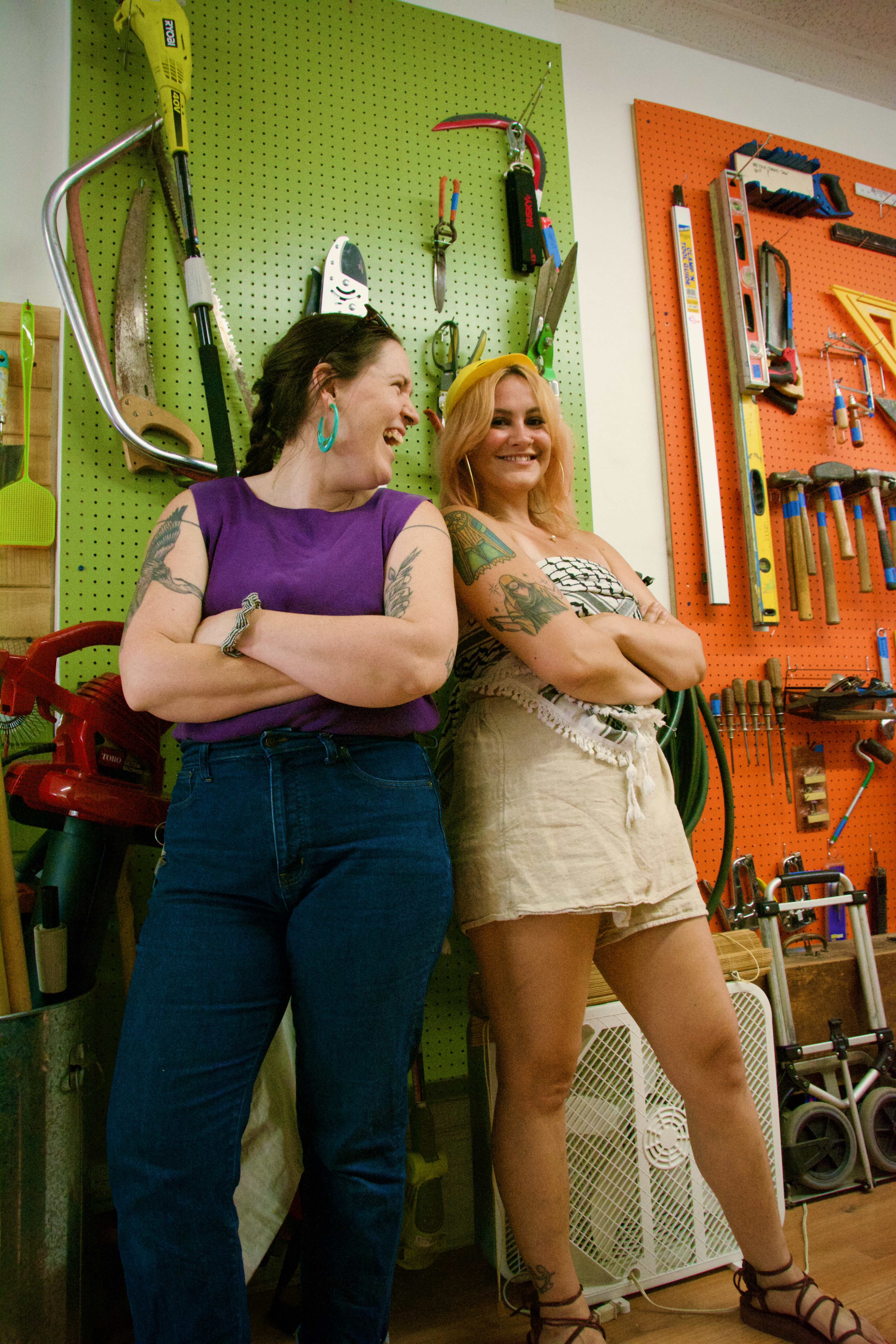
Kate Lally and Veronica Adams, Tool Library president and vice president

Amy Dunshee and her husband pulled up to the Harrisburg Tool Library as soon as it opened at 5:30 p.m. on a Thursday.

After 30 years with a carpentry workshop off Fishing Creek Valley Road, they were giving a truck bed’s worth of tools ahead of an upcoming move, excited to donate supplies that had served them well.

According to Kate Lally and Veronica Adams, the library’s president and vice president, hundreds of tools have been donated like this by dozens of supporters.

Adams said that a flurry of donation drop-offs in the first few minutes after volunteers open the doors has become the norm.

“It’s kind of beautiful to be interacting with someone and just knowing that they chose us and not anywhere that could be easier,” Adams said.

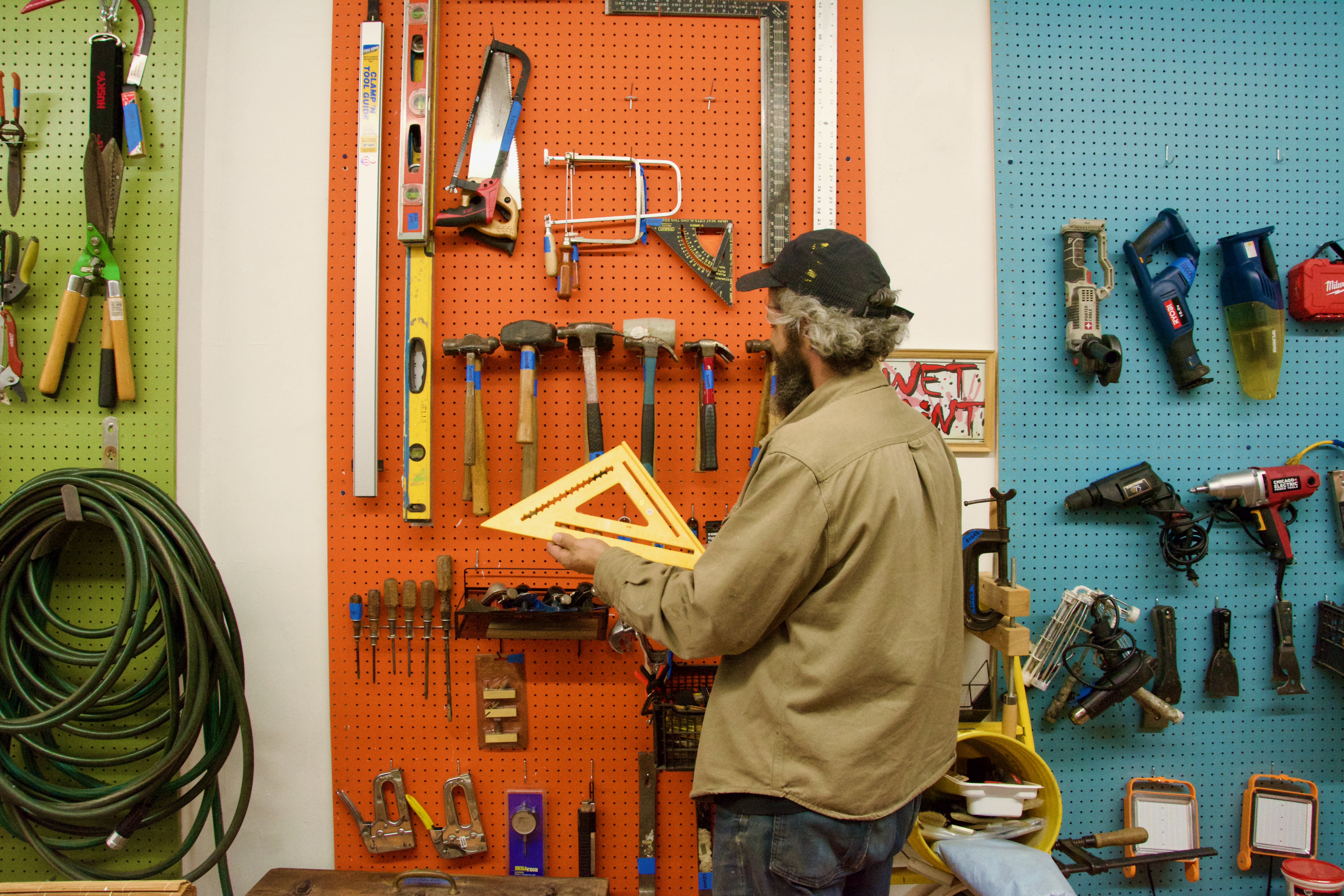
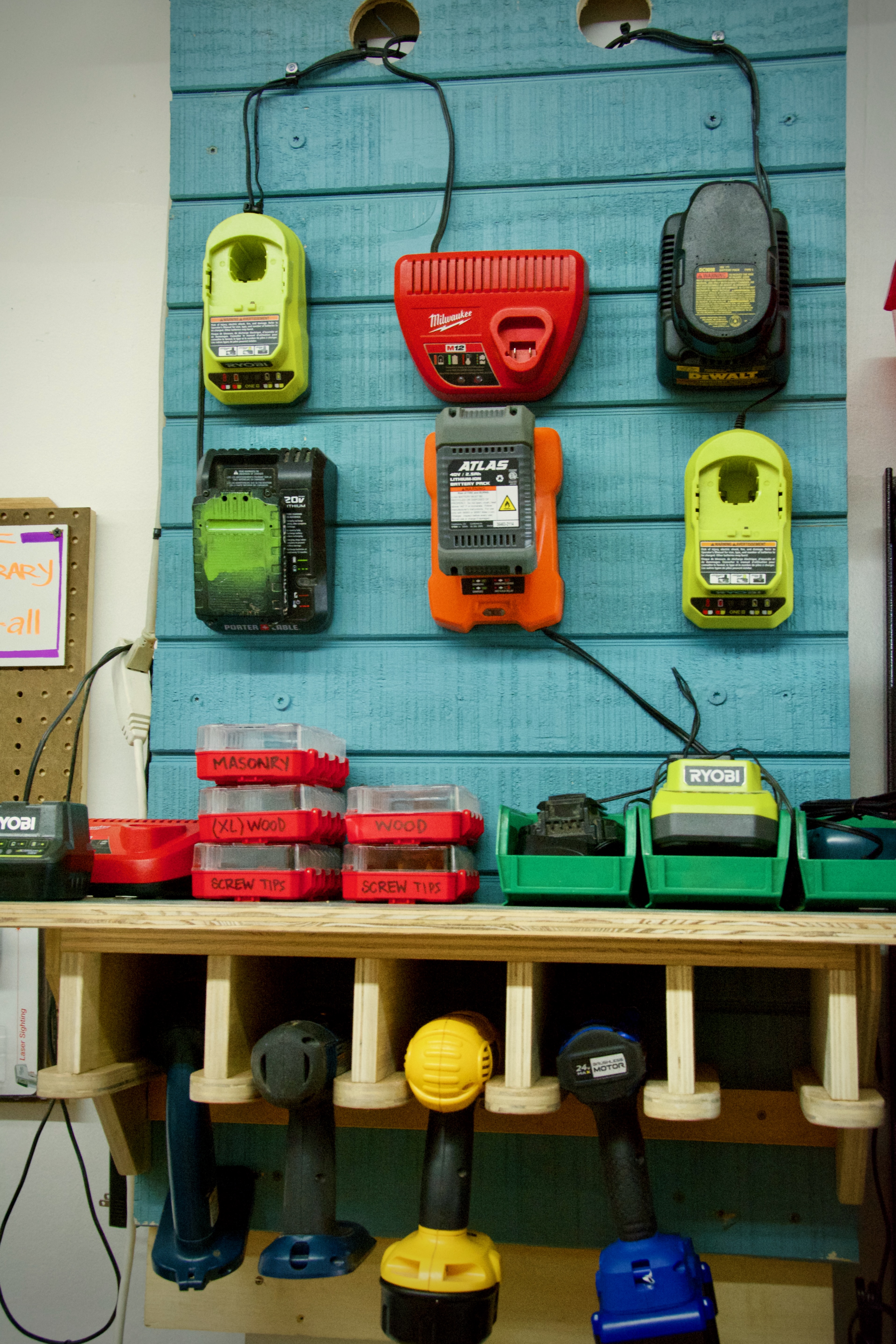
With an army of tools arrayed in its small, 600-square-foot space, the library now takes “Wish List Only” tool donations and has shifted its strategy to seeking monetary donations and memberships—the latter of which currently occupies Lally’s focus.

“We want the resource to exist, and we want people to use it,” she said.

Phil Wells, board director at the Tool Library

Homegrown Idea

The library is the first of its kind in Harrisburg. It began asking for donations (in the form of both money and tools) in October 2025. It opened its doors last January, but its conception began long before, at a 2024 pop-up market by Plant Family.

It was there, by coincidence, Adams overheard Lally, her friend and neighbor, talking about how she wanted to start a tool library for the city.

She jumped into the conversation.

“I turned around, and I was like, ‘Me too!’” Adams remembered. “I was like, ‘I know how to do that. We could do that together.’”

Soon after, they assembled a group of other interested neighbors and had their first meeting around Lally’s kitchen table, building out their vision as an organization.

A field trip to the Carlisle Tool Library then provided a spurt of motivation. Its organizers talked them through available resources in what Lally described as the typical collaborative spirit of tool libraries everywhere.

“People who are doing this nationally and globally only want there to be more tool libraries and are interested in sharing what they’ve learned,” Lally said.

Tool Library power tools

Months later, the Harrisburg Tool Library’s organizers registered as a nonprofit and picked an easily accessible location, leasing a space on N. 3rd Street in Midtown.

“It was a priority for people to be able to access our building physically,” Lally said. “It is accessible for wheelchairs and strollers and also a central location in Harrisburg.”

Connections she made talking with others at her children’s daycare, Little Amps and other local spots helped them not only get the space, but garner funding in the form of a $25,000 state grant.

To Lally, such connections represent the spirit of Harrisburg.

“When you say that something is happening, people tend to say, ‘How can I help?’” she explained. “They want to be involved. They want to be connected. They want to put their mark on something.”

Patrick Frownfelter, tool librarian

Board by Board

The library is run by five board members and “at least two handfuls” of tool librarians, according to Adams.

“Since January, our librarians have been coming every single week we’ve been open,” she said. “They’ve been helping us practice the systems, fail the systems—make it better.”

Patrick Frownfelter is one of these librarians. An actual librarian by training, he has developed a Dewey Decimal “without the decimal” System for categorizing the library’s stock, building out categories for gardening, carpentry, standard hand tools, plumbing, electric and more.

“You go from hand tools to hammer to claw hammer—that kind of thing,” Frownfelter explained.

The Midtown resident said that he loves volunteering because he feels the tool library is something the city needs.

“Who wants to spend $300 for a tool you’re going to use once?” he said.

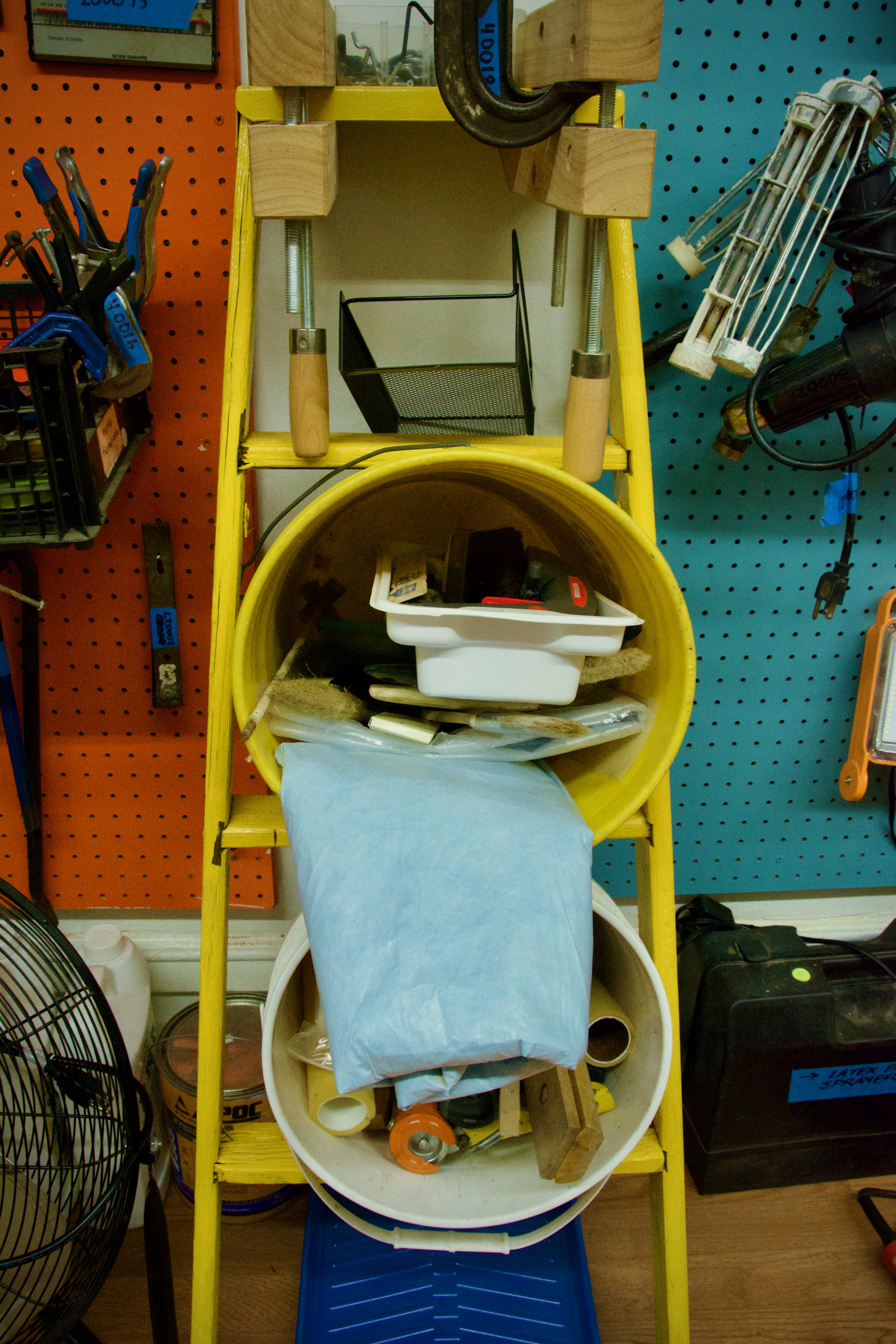
Tool Library inventory

As of early June, the library had 66 members. According to their data, over half live in Harrisburg or the surrounding east shore. A smaller percentage come from the west shore, including towns like Carlisle, Lemoyne and New Cumberland.

Sliding-scale annual memberships, ranging from $1 to $250 per year, allow people to pay what they can afford to belong. People evaluate for themselves and choose a contribution based on their ability to meet all their basic needs, their job stability and their existing debt. Once a member, they can check out any tools from the library’s catalog at no cost.

Frownfelter himself saved money by checking out a toilet installation kit a few months back.

Lally said that the library doesn’t currently have limitations on how many tools somebody can check out at a time.

“Right now, we’re operating from an abundance perspective,” she said. 

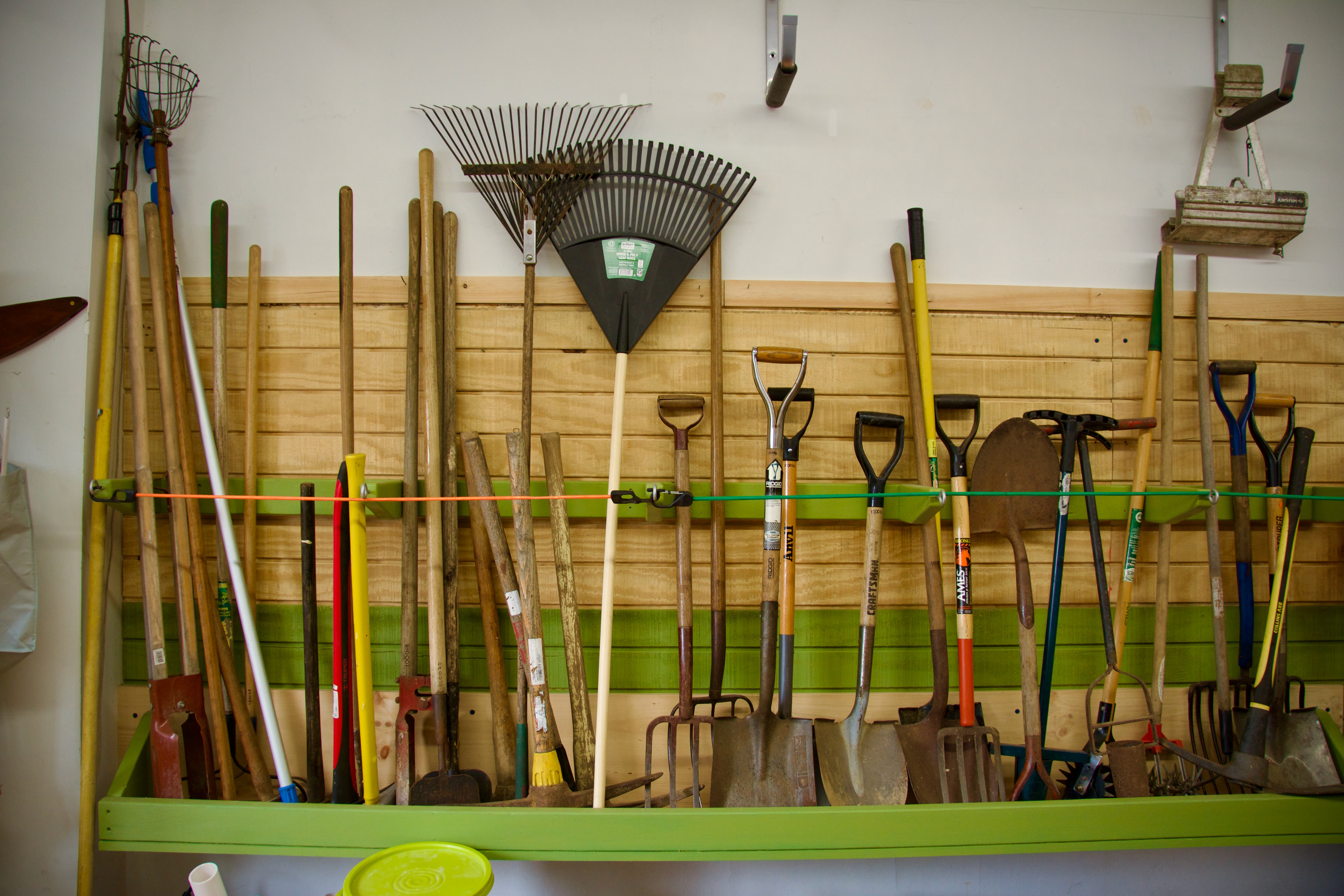
Tool Library gardening tools

Building the Plane

Lally and Adams emphasized that, despite their lead roles in the organization, they don’t necessarily know much about using the tools themselves—it was the mutual aid aspect of tool libraries that lured them in.

They enjoy untraditional offerings in the library’s collection, like fruit pickers and canning pots, while other board members are more tool-informed, they said.

Namely, Lally’s husband, Phil Wells.

“I’ve kind of done it all,” he said. “Handyman stuff, commercial work.”

Wells, who serves as the library’s board director, began working in construction at 16 and has fixed up things all over the city—working at the Broad Street Market, the Millworks and the state Capitol, and on buildouts at both Elementary and Little Amps Coffee locations.

He also built out the library’s space with pegboards, shelving and an information kiosk.

“I’m self-taught in a lot of ways,” Wells noted, including his extensive knowledge of how to use and repair tools.

His construction experience helps him advise members who might be unsure what tools they need for projects when they come in. He’s shared his thoughts, for instance, on the difference between drilling into a brick wall versus drywall and what type of fasteners someone would need for each.

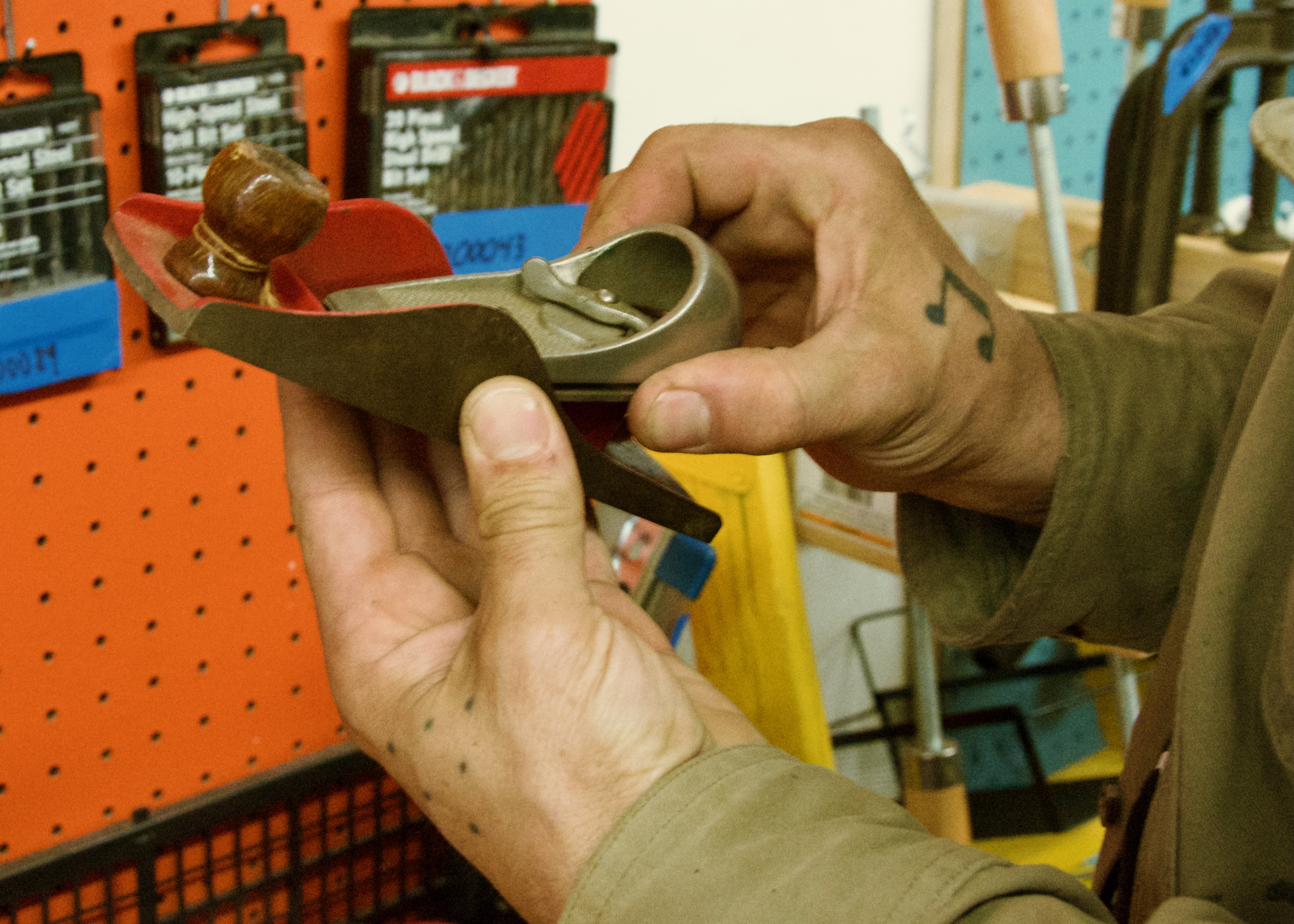
Phil Wells holds a tool

“When I was here last week, we had a woman come in looking for a palm sander and extension cord, and I kind of went through the palm sanders and got her one that is easy to use,” Wells said.

This type of sander can range from $40 to $250 new, but the library has a wide selection available for members. It offers a good example of the utility the tool library can provide for someone who might not use a palm sander regularly. Once a home project is complete, the member takes the tool back to the library for another person to use.

“Our main focus is just helping renters and homeowners fix their homes,” Wells explained. “There’s really very limited resources for specifically Harrisburg city residents to repair their homes.”

Adams explained that most homes people buy in the city are over 100 years old and require regular maintenance.

“The homes that people can afford are homes that are not renovated,” she said. “So, we see this as an opportunity to provide for people who otherwise wouldn’t be able to own a home or people who wouldn’t be able to keep their homes.”

While only 36% of Harrisburg residents own, according to the most recent census data, the roughly 63% of city renters could also benefit from taking out needed supplies.

“Our goals are to keep our neighbors and our community safe through self-sustainability and interdependence,” Lally said.

This year, the Tool Library’s big goal is to add more members and get those who have joined comfortable using it.

“I want tools to be constantly in and out,” Lally said.

While both Adams and Lally had community organizing experience coming into the Tool Library, they emphasized that something like this can be done by just about anyone.

“The biggest issue is just the ability to bring people together and work together strongly as a team,” said Adams, who works professionally as a nonprofit consultant.

“It’s not always easy,” she said. “It’s like you’re laying down the railroad tracks while you’re reading the manual on how to operate the train.”

“Building the plane while you fly it,” offered Lally.

But it can be done.

“With focused and intentional conversations, any neighbors can come together and create something like this,” Adams said.

Kate Lally and Veronica Adams, tool library leadership

The Harrisburg Tool Library is located at 1314 N. 3rd St. in Harrisburg. To learn more or become a member, visit hbgtoollibrary.com.

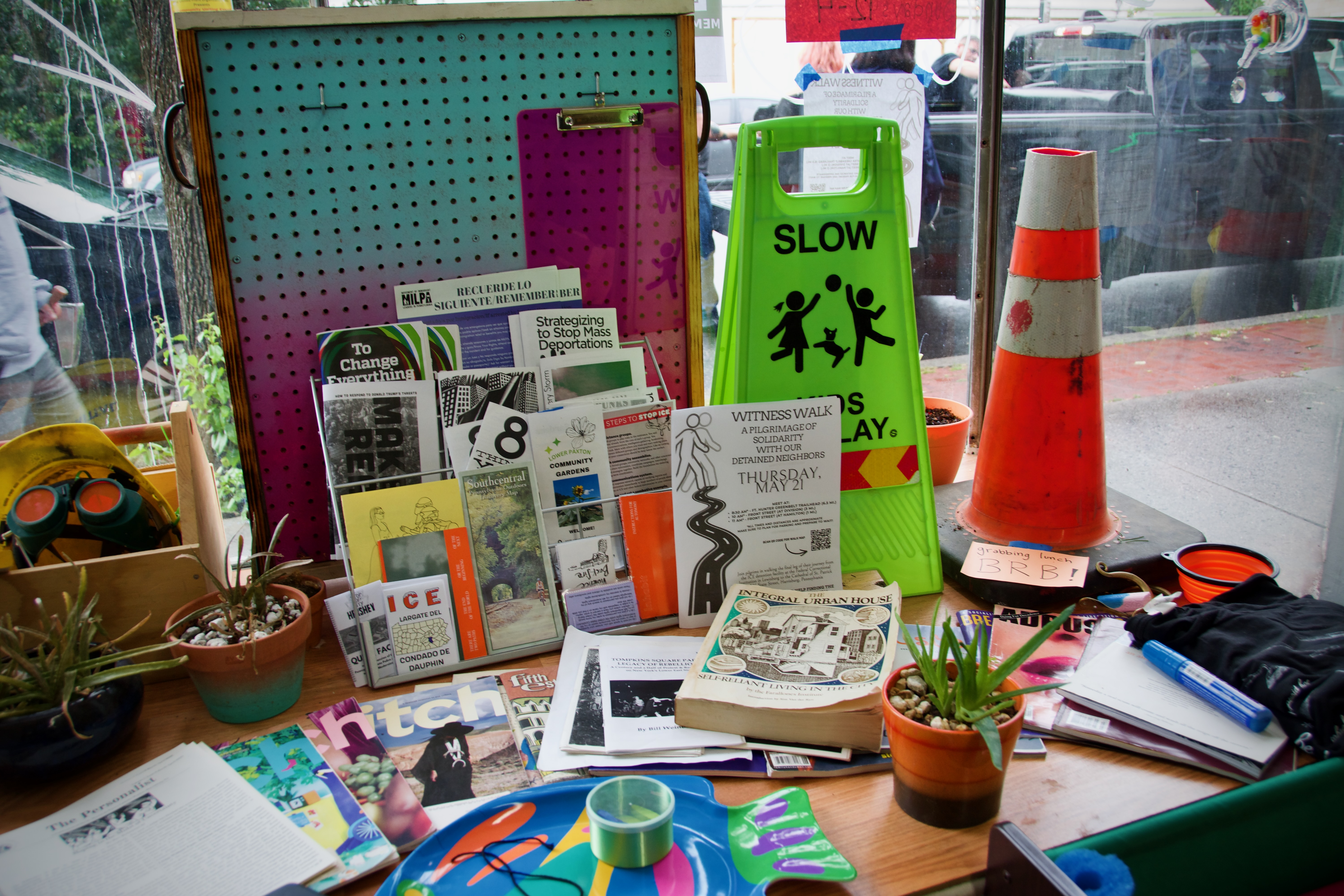
Harrisburg Tool Library reading materials

Tool Time

Hours
The Harrisburg Tool Library is open on Thursdays from 5:30 to 7:30 p.m. and Sundays from noon to 4 p.m. at 1314 N. 3rd St. in Midtown Harrisburg.

Inventory
Only some of its inventory has been catalogued online by its all-volunteer staff. So, the best way to find out if they have something is to show up in person and ask.

Volunteers
The organization is currently looking for more volunteers, particularly those with community organizing or workshop programming experience. Interested parties can fill out a form on its website.

Membership motive
The Tool Library is also interested in hearing from the public about what tools might motivate them to join. To add input, email [email protected].

If you like what we do, please support our work. Become a Friend of TheBurg!      

Continue Reading

Essential Link: M28 Ministry offers stability, housing amidst addiction recovery

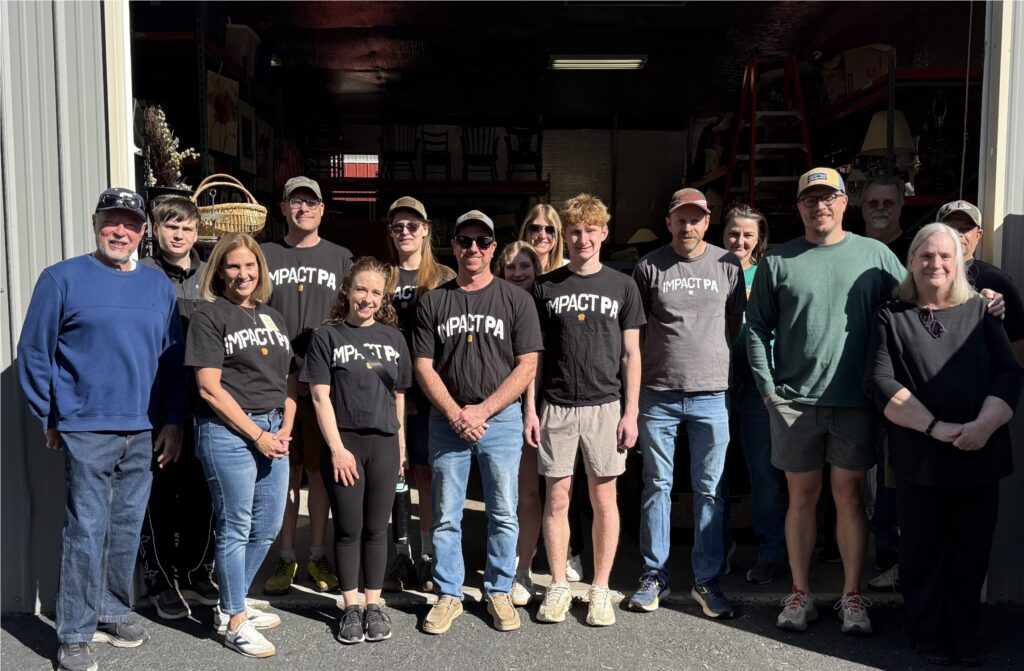
Impact PA Day. Volunteers organized M28’s House2Home warehouse and delivered furniture and goods to people in need.

Jimmy Schambach Jr., executive director of M28 Ministry, witnesses each day how difficult addiction recovery is for his clients.

The 12-month relapse rate for substance use disorders is upwards of 60%, according to worldmetrics.org via the CDC. Of those, around 60% occur during the first three months.

Schambach Jr., 38, of Camp Hill, is determined that an ongoing housing crisis in central Pennsylvania shouldn’t add to recovering individuals’ difficulties.

That’s why M28, a Cumberland County-based nonprofit, has acquired Esther’s House, a four-unit apartment house in Mechanicsburg that will provide “dedicated, stable living for men and women in recovery,” according to Susan Ewing-Rathfon, an M28 board member.

M28 officials note that stable housing serves as an “essential link” to successful addiction recovery. Schambach Jr. said that he expects that M28 will accept its first of four Esther’s House residents “in the next two to three months.”

Esther’s House also complements Gov. Josh Shapiro’s Housing Action Plan, a directive for expanding affordable units and addressing Pennsylvania’s continuing housing shortage.

M28’s acquisition was made possible by a $416,000 grant from the Cumberland County Housing and Redevelopment HOME Funding program, a two-year partnership that supports housing stability and long-term recovery.

With the property’s acquisition, M28 now seeks the community’s help to prepare the four one-bedroom units for occupancy. Work includes fully renovating one unit, with essential repairs and updates for all units, including furnishings.

But really, Esther’s House is only the tip of a proverbial iceberg of all the services M28 provides to the area’s recovery population since its founding 13 years ago by Schambach Jr.’s father, Jim Schambach Sr., the organization’s director emeritus.

Schambach Sr., 74, a former pastor of Christian Life Assembly in Camp Hill, named his ministry after the Bible passage, Matthew 28, which recounts the resurrection of Jesus, saying, “I am with you always, to the end of the age.”

“I believe that God wanted me to be a pastor and take care of his flock. I’ve done it for 45 years,” said Schambach Sr., of Lower Allen Township. “It’s been a joy to be part of their lives and see them change from instability to stability and then to community.”

M28 guides around 80 people per year toward sobriety through its discipleship, coaching and mentorship programs.

“I do a lot of coffeeshops and lunches (with our clients). I have lots of people I consider friends in recovery, and we keep those relationships even after they’re done with the program,” Schambach Jr. noted. “When we first meet with men and women, we tell them that you can’t lie to us, and, also, we’ll be in your life for as long as you want us to be. One of the biggest things in recovery is community.”


Beautiful Thing

About “60% to 65%” of program participants stay sober for more than a year in recovery, far better than national statistics, according to Schambach Jr.

“It’s such a beautiful thing to see when their hope rises and they move forward,” Schambach Sr. stated.

Through its House2Home furniture distribution program, M28 has served more than 1,679 families in central Pennsylvania undergoing life transitions. In addition to guiding those journeying to sobriety, M28 collaborates with other nonprofits in Dauphin and Cumberland counties, such as the Jewish Family Service of Greater Harrisburg, to aid in the resettlement of refugee families.

Schambach Jr. said that 70% of M28’s funding is obtained through individual donations, with further help from various foundations and a Cumberland County Opioid Settlement Funds grant. Since 2022, the county has received settlement funds and will continue to do so through 2028 as part of national agreements with pharmaceutical manufacturers and pharmacy chains to address opioid misuse and overdoses.

Schambach Sr. said that one of M28’s biggest challenges is that the organization doesn’t always have enough funds to meet clients’ requests.

“For example, we don’t always have access to an e-bike,” he noted.

Schambach Jr. stated the organization’s biggest challenge is “society’s general perception of people with addiction.”

“There’s lots of judgment out there,” Schambach Jr. said. “People think it’s a choice, and it’s not. We try to provide education.”

For more information or to donate to M28 Ministry, call 717-610-4645 or visit www.m28.us.

If you like what we do, please support our work. Become a Friend of TheBurg!      
Continue Reading

Kibble Assist: Groups, individuals make sure Fido gets fed

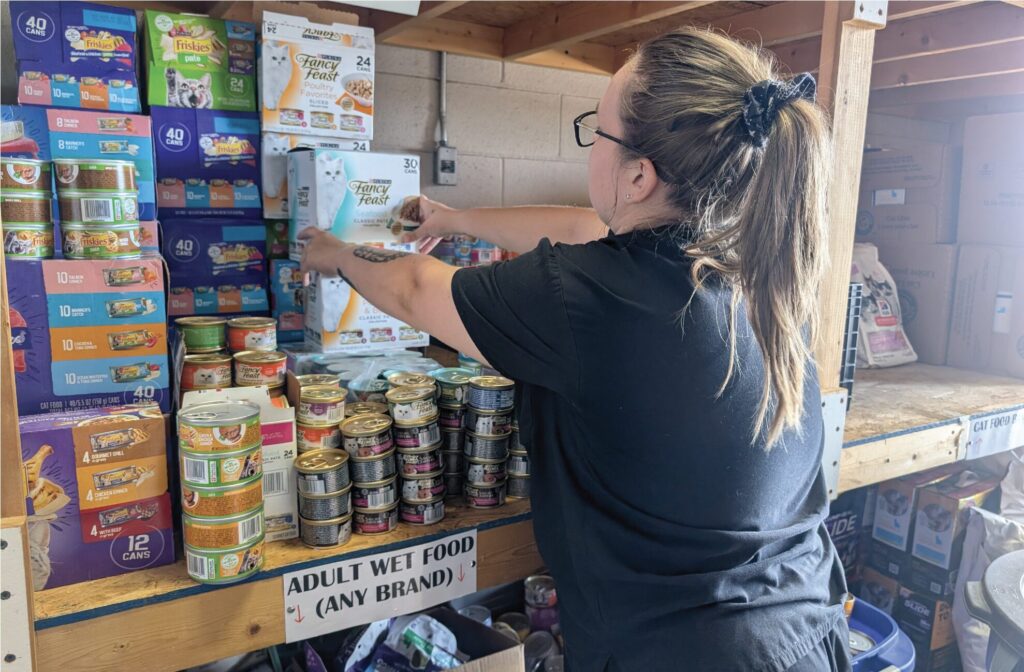
Pantry stocking at Humane Society of Harrisburg Area. Photo courtesy of Humane Society of Harrisburg Area.

On a visit to Harrisburg Area Food Pantry, Wally Nieves of Steelton selected meat, bananas and a bag of dog food that had just been put on the shelf.

The dog food would last her two-pound toy chihuahua, Cleo, quite some time, she said gratefully.

“The way the money’s tight right now, you have to think about what you’re going to buy and what you’re going to eat,” she said. “Healthy food costs a lot.”

In 2025, American pets gobbled up $67.8 billion in food. Well, cats probably sniffed at half of theirs, but nonetheless, pet owners shell out that money—more than $300 per pet per year—even as inflation and soaring gas prices squeeze household budgets. Half of all pet owners struggle with the everyday expenses of food and care, but four out of 10 will choose their pets’ well-being over their own, according to the ASPCA.

In the Harrisburg area, animal rescues, volunteers and food pantries are filling the gap. They provide food that could prevent surrenders and that helps pet owners, including the homeless, care for their fur babies through good times and bad.


A Godsend

Retired Williams Valley School District Superintendent Diane Niederriter was volunteering for two pet rescues when she noticed that people often donated pet food and supplies after their pets died.

The rescues couldn’t use every donation, so “in lieu of throwing it away, I decided there’s got to be an avenue out there to get this into the hands of people who can really use it.”

As Niederriter started gathering donations, word got around to neighbors, friends, businesses, pet stores, nonprofits and rescues.

“I will find a place for it,” she pledged.

By the summer of 2024, she started weekly runs of pet food and treats to the Harrisburg Area Food Pantry, operating from the Harrisburg Area YMCA Camp Curtin branch.

Her Wednesday drop-offs are so eagerly anticipated that some clients choose that day to make their people-food visits. In 2025, Niederriter brought about 10,000 pounds of pet food. She buys some herself, on the grounds that, “I retired seven years ago, and I have enough. I love animals and just make it my thing.”

On a recent Wednesday, the 255-pound delivery filling the ginormous trunk of Niederriter’s car was heavier than usual because some donated canned food made it into the usual supply of dry food.

“It’s only a Ford Fusion, but as long as it holds golf clubs and dog food, I’m good,” she remarked.

When she gets large bags, such as donations of returned dog food from Susquehanna Township pet store Abrams & Weakley, she will repack them into smaller bags. Sometimes, neighbors whose pets snub a new food put the still-good rejects on her porch.

Pantry clients can usually get one bag of dog and cat food. How far it goes depends on the pet’s size, but recipients appreciate the help with the family food budget, said Harrisburg Area Food Pantry Executive Director Deidre Lenker.

“Our model here is to give a small amount to as many as possible,” she said. “This isn’t intended to feed your dog for a month. Have a little, let the next person have a little.”

For documentation purposes, Feeding America calculates a fair-market value of $1.97 per pound of people food distributed by pantries. The Harrisburg Area Food Pantry did its own market sampling and came up with $2.35 per pound of pet food.

“So ironically, pet food is more,” Lenker said.

Few people have the time and vehicles to collect and distribute pet food, said Niederriter. Lenker and the pantry are “a godsend to the people here,” she said. “I bring it, and she hands it out.”

“I’m telling you, it goes fast,” Lenker chimed in. “It never lasts more than four days.”

“I could bring double,” Niederriter added, “and it would be gone.”


Definitely Helpful

About twice a month, Amber Ribera gets a call from Niederriter offering pet food that Ribera can share with the unhoused people of Harrisburg.

Longtime volunteer Ribera, of Hummelstown, can’t put a number on the people she helps every week at Harrisburg’s Miracle Community encampment and around the Dauphin County Courthouse in downtown Harrisburg.

But she believes she could be channeling Niederriter’s offer of food, treats, beds and jackets to some 20 cats and 20 dogs.

“Whatever Diane gives me, I hand out,” she said. “It can vary. I’m thankful for the donations that she does give me. It’s definitely helpful.”

For unhoused people, a pet is “definitely a companion,” Ribera said during an ice run for Miracle Community residents. “In the winter, it’s definitely warmth. Some of our friends were housed and unfortunately lost their room or their apartment and ended up in a tent, and their family member, which is a pet, came with them.”

Area shelters do not allow residents to bring pets, according to Ribera. When she arrives with pet food, “They love it. Some of our friends say, ‘Amber, hold off on dog food right now. I have way too much.’”

Other organizations help weave the fabric of support that keep pet family members with unhoused people, Ribera said, including the Humane Society of Harrisburg area, which helps with spay/neuter, vaccines and licenses.

Ribera tries not to judge the wisdom of unhoused people taking on pets “because I don’t live that life,” but as she works side by side with them, she has never seen a pet mistreated or untended.

“If that’s what gives them company at two in the morning when they can’t sleep, so be it,” she said.


Full Circle

Amanda Brunish was wearing a Humane Society of Harrisburg Area shirt when a man approached her at Walmart.

“I love my dog so much,” he told her.

When all he could afford was hot dogs, that’s what they both ate. He didn’t know what he would have done without the HSHA Pet Food Bank, and now that he was better off financially, he was donating food when he could.

To Brunish, it was a full-circle moment.

“It was so cool to meet someone who used it, was able to keep their dog because of it, and pays it forward now,” said Brunish, the HSHA director of advancement.

In 2025, the HSHA Pet Food Bank distributed about 30,000 pounds of pet food—averaging 2,500 pounds a month, compared to about 3,000 pounds a month so far this year.

“That definitely can be attributed to there being a greater need,” she said, as well as to rising awareness of HSHA services. “With the economy and the way that it is, it’s certainly harder for people to be able to meet the needs of their pets sometimes, so we want to be able to bridge that gap to keep pets in their homes.”

When filling the gas tank consumes big bucks, pet food purchases become a challenge, and HSHA can help those “in an in-between situation with their budgets,” she said.

The food bank and other supports, such as HSHA’s expanding low-cost veterinary services, dovetail with the HSHA mission—not only to shelter and find homes for pets but to help them stay there.

“When people think shelters, they think of adoption, which absolutely they should, but the other part of the coin is, how do we keep animals in the loving homes they already have?” said Brunish. “That’s offering safety net services.”

Pet food suppliers include individual donors, local organizations and Mission Central, said Brunish. HSHA is grateful when businesses hold pet food drives, supplying food destined for shelter animals and, sometimes, the food bank.

“People donate great food,” she said. “It’s definitely an effort to continuously get the food in. The community support helps in so many different ways. When we’re able to keep a pet out of the shelter, that means we can help a pet in need. Everything is tied and connected.”

When someone wonders why Niederriter does her pet food volunteer work or says that people should get a job, she has a response ready.

“Sometimes, it’s their only family,” she said. “If they have a dog and that’s their family, they should keep it. The barrier of trying to feed it—society should help people that are less fortunate.”

Wally Nieves, the Harrisburg Area Food Pantry client, is equally generous with the food she picks up for her tiny Cleo.

“If my neighbor needs some, I’ll pass it on,” she said during her Wednesday morning pantry visit. “People that work, they don’t have this thing to come here to. Since she has puppies, I help.”

For more information on the Harrisburg Area Food Pantry, visit www.hfoodpantry.org.

For more information on the Humane Society of Harrisburg Area, visit www.humanesocietyhbg.org.

If you like what we do, please support our work. Become a Friend of TheBurg!      
Continue Reading