Tag Archives: Qui Qui Musarra

Two Words–No Plastics: Harrisburg-area businesses have joined the movement to eliminate plastic straws.

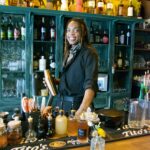
Seasonal cocktails at Rubicon using eco-friendly straws.

Perhaps it was the photos of sea turtles and waterfowl dying after ingesting plastics. Maybe pictures of the great Pacific garbage patch did it.

Locally, you only need venture down to the Susquehanna River to see plastic bottles bobbing in the water and plastic wrappers caught in clumps along the riverbank.

Whatever the motivation, over the past year, many people and organizations have decided to curb their use of single-use plastics, and that includes Harrisburg-area restaurants and businesses.

Earlier this year, Qui Qui Musarra announced that all three of her restaurants—Mangia Qui, Rubicon and Suba—had eliminated plastic straws. The restaurants now offer only paper straws by request. Each restaurant also offers recyclable beverage napkins, in addition to the eco-friendly takeout containers and bags that they have offered since opening.

Co-owner Staci Basore said that the drive towards plastic-free products came from reflection about the massive environmental problem we face with plastics consuming our landfills and oceans.

“People are spending more time eating out than eating in—often with food coming in plastic or throwaway containers,” she said. “Moreover, [a large majority] of all plastic ends up in landfills or the natural world. We have a plastic problem which produces obvious environmental and health impacts.”

Over at the Broad Street Market, Fudgeolutely has also rolled out paper straws, as well as recycled-paper, compostable cups printed with the catchy phrase: “May your cup runneth over with KARMA.” Owner Jessica Kost said that the decision to pull back from plastic use at her confectionary started with thoughts about her own plastic consumption.

“The more I read and learned about the dangers of plastic pollution, the more I felt pulled to take action against it,” she said. “This journey began with the purchase of a reusable, stainless-steel straw for personal use, so I can say, ‘No straw, please,’ when dining out. This prompted a lot of conversation on the topic and, ultimately, propelled me to take the next level of action with my business.”

Kost has also implemented glass-jar packaging for her newer treats, like toffee and nonpareils, and continues to hunt for plastic alternatives for her fudge packaging.

Fudgeolutely’s across-the-street neighbor, The Millworks, also has taken strides recently to ditch plastic. The inspiration for Chef Lance Smith came from loyal customers and staff, who provided him with feedback about the environmental ramifications of consuming single-use plastic.

“We then researched the subject and determined there is no reason we need to serve a straw with every single drink,” he said. “And, when requested, we would provide eco-friendly straws.”
Start Somewhere

Indeed, the spotlight has been on plastic straws this year. But will the movement make enough of a difference in the broader plastic consumption issue?

Basore believes it is a great first step.

“It may seem as though the quarter-of-an-inch diameter straw is the least of our worries, but the fight has got to start somewhere,” she said.

Perry Wheeler, global seafood communications and outreach manager at Greenpeace USA, agreed that the small act of cutting back plastic straw pollution will have a trickle-down effect.

“The hope is that these bans and actions on straws make people think more critically about all of the plastic in their lives,” he said. “It’s important that corporations don’t stop taking action after addressing plastic straws, because it’s not enough on its own. It’s our hope that this movement continues to gain momentum and secures significant victories on phasing out all types of throwaway plastics.”

But what about people who need to use plastic straws? Many with disabilities, especially with limited jaw control, depend on them to stay properly hydrated and nourished, and paper straws and biodegradable options tend to fall apart.

Wheeler said that, while the plastic-free movement effectively highlights how pointless single-use plastic straws can be, it overlooks a segment of the population for which they are necessary.

“Early straw bans ignored this and did not bring all impacted communities to the table to think through solutions to the issue and what sort of viable alternatives currently exist or not,” he said. “That is really critical for bans on single-use plastics moving forward. We feel strongly that the corporations that churn out single-use plastics that pollute our environment for lifetimes or more should be at the forefront of investing in potential alternatives to single-use plastics.”

A realistic approach could bridge the gap between where we are now and where we want to be environmentally. Businesses may want to consider stocking a small number of plastic straws for those with specific needs, until more eco-friendly options are available. But, the major point here is addressing excessive and unnecessary plastic use.

“Overall, companies realize that they can’t just maintain the status quo with single-use plastics and remain viable,” Wheeler said. “Consumers are applying pressure like never before, and corporations are forced to respond.”

Smith said that limiting single-use plastic turned out to be a pretty easy decision for The Millworks, as sustainability is a core value that the farm-to-table restaurant was founded on.

“It makes sense for us do our part in any way we can,” he said. “Almost all of our to-go food packaging is biodegradable or eco-friendly, and we are working to have all of these materials eco-friendly within the next couple of months.”

Stories on environmental topics are proudly sponsored by LCSWMA.

Continue Reading

Nick Laus honored by HBG restaurant community; funeral arrangements announced

Nick Laus in front of one of his restaurants, Cork & Fork. Photo by Waxman Photography.

An artist. A visionary. A risk-taker.

Those were among the words used today to describe Harrisburg restaurateur Nick Laus, who died suddenly early Saturday.

Brian Fertenbaugh met Laus 10 years ago, becoming general manager of Level 2, a nightclub that Laus had opened. Fertenbaugh then became manager of Café Fresco Center City, later buying both establishments.

“He was a mentor and a friend,” he said. “He had the vision and the ability to execute, which not many people in our industry have.”

Harrisburg’s tight-knit food community has been in mourning since Saturday, when word began to spread that Laus, 59, had died unexpectedly. An innovative, serial entrepreneur, he started restaurants as varied as Café Fresco, Home 231, Cork & Fork and Burger Yum, in addition to the nightclub, Level 2.

A viewing, funeral Mass and burial will take place on Friday just outside of Harrisburg city (see below for the full obituary).

Fertenbaugh said the news of Laus’ passing shocked those who had worked for him, and many gathered on Saturday night at Café Fresco to share stories and toast the man who had helped so many start and advance their careers.

Laus, Fertenbaugh said, brought a new type of dining to Harrisburg, a more upscale, yet still accessible and affordable product, along with an obsession with customer service and the overall dining experience. He often went on scouting trips to larger cities like Philadelphia, Baltimore and Washington, D.C., to learn about trends he could bring back to Harrisburg.

“Nick saw things in a different way,” he said. “He had the ability to put together the total package, where you have great food, atmosphere and a style that’s popular.”

Food photographer Ali Waxman worked with Laus for the last seven years. He said that Laus spared no effort or expense to ensure that his food looked as good in pictures as it tasted in his restaurants.

“He was such a talent, a visionary,” said Waxman. “He wasn’t afraid to take risks with ideas or concepts.”

He also wasn’t afraid to take risks with people, Waxman said. Laus was able to spot talent in a bartender or server, elevating them and even preparing them to own their own establishments.

“He saw talent in people that others couldn’t see,” Waxman said. “And he gave them opportunities to become managers and even owners.”

Restaurateur Qui Qui Musarra was one of the first to honor Laus on Saturday, sharing her grief with the online community soon after learning of his death.

Today, Musarra and her partners, Staci Basore and Elide Hower, released a statement expressing their sense of loss.

“We here at Mangia Qui, Suba and Rubicon tip our hats to the generosity of spirit he has shared with us,” they said. “He will be greatly missed.”

They added that, often, the public doesn’t witness all the hard work and even anguish that goes into making a restaurant a success.

“The public perception of people involved in the restaurant industry, especially owners, is typically of success and contentment–many times belies the private truths of one’s life,” they said. “So it was with Nick Laus–a professional, a colleague and a comrade-in-arms.”

David La Torre of the Cork & Fork investor group emphasized the impact that Laus had on dining in the Harrisburg area.

“He was more than a restaurateur,” La Torre said, in a statement. “He was an artist who has left an indelible mark on the central Pennsylvania restaurant scene.”

In fact, several restaurateurs emphasized Laus’ influence and impact.

“Once he decided to open downtown, Harrisburg was never the same,” Fertenbaugh said.

Laus’ greatest legacy, said several restaurateurs, was his eagerness to help to others. That sentiment is reflected in his family’s wish that, to best honor his memory, people should not send flowers, but perform “a random act of kindness.”


Obituary for Nick Laus

Nicholas “Nick” Joseph Laus, age 59, died on June 9, 2018 in his home. He was born in Lima, Peru, and immigrated to the United States at a young age, where he became a U.S. citizen. Nick graduated from Bishop McDevitt High School in 1978. He is the son of Doris Soce and brother to Anita (Laus) Chilmaza, her husband Armando Chilmaza, and his brother John Laus.

Nick leaves behind his beloved daughter, Chanelle Laus, who he cherished, and a loving family of nieces, nephews, aunts, cousins and godchildren. He loved his dogs, Rocco and Bruno; they were his constant companions and could often be found patrolling tables at his many restaurants.

For more than three decades, Nick developed a reputation as a visionary in the central Pennsylvania restaurant industry, creating some of the most well-known and popular eateries. His many creations include Cork & Fork, Café Fresco and Home 231, which are still amongst the most frequented dining establishments in the Harrisburg area.

Perhaps an even greater legacy than his business accomplishments is how Nick treated people in his life. He mentored and touched many — believed in them. He often paid it forward and thought nothing of buying the groceries for everyone in line ahead of him. That was Nick. He cared so much for so many. As Chanelle has said: “He was extraordinary, loyal, and strong. He was stern but always kind. He was funny, loved hard and expected little in return. To those who he loved — he gave everything.”

Funeral services will be held on June 15, 2018 with family greeting friends for a viewing at Neill Funeral Home, 3501 Derry St., Harrisburg, from 9 a.m. to noon. A Mass of Christian Burial will be celebrated at 12:30 p.m. by Father Neil Sullivan at St. Catherine Laboure Church, 4000 Derry St., Harrisburg. Burial will follow at Resurrection Cemetery, 116 South Oak Grove Rd., Harrisburg.

In lieu of flowers, Nick’s family asks that his friends pay it forward by performing a random act of kindness. Through such acts, Nick’s legacy will live on.

Continue Reading

Cooking with Qui: Rosemary teams up with Harrisburg’s dean of Italian cuisine—and the result is a springtime delight.

Burg in Focus: Cooking with Qui from GK Visual on Vimeo.

When TheBurg suggested I get together and cook with Qui Qui Musarra, chef/owner of three premier Harrisburg restaurants (Mangia Qui, Suba and Rubicon), I had a few moments of apprehension.  

I knew she was extraordinarily busy. And while food is my passion and favorite “pastime,” I am a home cook. I read cookbooks like novels and try to learn as much as I can about Italian food, the cuisine of my heritage. But I am an amateur. I couldn’t imagine Qui would want to make time for something like this, or even had the time.

But, after speaking with her one evening at Rubicon, I sensed she was eager to do it.  And, for me, I knew it would be a wonderful adventure and that the resulting column would be a unique addition to the annual food issue of TheBurg.

I was honored for the opportunity to cook with Qui. So, we discussed possible dishes and decided on one that would celebrate spring and all of its bright green vegetables that are with us so briefly. I told her I’d always wanted to cook with fresh fava beans, a broad bean popular in Italian cooking, but have never been able to find them. I also love artichokes and freshly shelled peas and suggested that we might use them, too.

Qui suggested a dish called Roman vignarola, which is a mix of spring vegetables cooked together into a savory stew that can be a meal in itself. In Rome, locally grown artichokes serve as stars of this dish, but I learned that many other combinations of vegetables can be used according to personal preference and availability. We included little Yukon Gold potatoes, which I love, and that added more substance to the dish.

Photo by Dani Fresh

I was a little nervous putting my cooking skills on display, but Qui very kindly gave me some pointers on slicing and chopping and grasping a sharp knife properly. She showed me how to use a mandolin, which is used for making thin and uniform vegetable slices (only one close-to-finger-slicing encounter!). I had many questions for Qui as we began to put the vignarola together:

  • How do you shell fresh fava beans? (The outer pods and inner skins must be removed.)
  • Can you substitute baby lima beans if fresh favas are unavailable? (Yes, as favas are hard for the home cook to find.)
  • What kind of onions should be used, and what is the easiest way to slice them? (Qui used yellow cooking onions, while I usually cook with Vidalia or another sweet onion.)
  • Do you use any special olive oil? (She used regular extra virgin.)
  • What type of sauté pan are you using? (Qui used an aluminum skillet but any good, heavy piece of cookware will do.)
  • Is a mandolin necessary to slice the little potatoes? (Regular slicing with a sharp knife is fine.)
  • Why do you add water to cook the potatoes instead of just olive oil? (The potatoes absorb the water and oil mixture to become creamy and soft.)

Since we didn’t have artichokes to accompany the potatoes that day, we used fava beans, fresh pod peas, yellow cooking onions, garlic, sliced Italian green beans (my mother called them Roma beans), and lots of chopped fresh herbs. We didn’t measure our ingredients but, in the directions below, I have tried to approximate the amounts we used.

Ingredients

  • 2 medium, yellow cooking onions, cut in half and then sliced into half-moons
  • 1 pound of small Yukon Gold potatoes, unpeeled, and cut into thin slices (either by hand or by using a mandolin)
  • Several fresh garlic cloves, peeled and minced
  • 1 cup of water and about ¾ cup extra virgin olive oil (or more if needed)
  • About 2 cups shelled, fresh fava beans or frozen baby lima beans
  • 1 to 2 cups of shelled fresh pod peas
  • 1 cup of fresh Italian green beans, sliced into 1-inch pieces
  • Fresh oregano and chives, chopped
  • Freshly grated Parmesan Reggiano cheese
  • Salt and pepper to taste

Directions

  • Gently sauté the onions and garlic in the olive oil until softened and golden in color.
  • Add the sliced potatoes, additional olive oil, water, salt and pepper and cook over medium-low heat until the potatoes are tender.
  • Add the fava beans, Roma beans and peas, and cook gently until tender and most of the liquid has evaporated. (Do not cover the pan or the vegetables will lose their bright green color.)
  • Mound the vignarola on an oval platter and shower it with a handful of chopped oregano and chives and freshly grated Parmesan. (Dried herbs will not do!)

Our finished dish was wonderful. Topped with some edible flowers, it seemed like a real celebration of spring (I kept sneaking little spoonfuls hoping no one would notice). How lovely it would be to serve vignarola for a simple lunch with some crusty bread and a cold white wine. It could be part of dinner, too, along with grilled chicken or pan-fried flounder or sole. Qui told us vignarola may soon be making an appearance at one of her restaurants paired with some tender spring lamb.

As my special afternoon with Qui at Rubicon came to an end, I studied the beautiful still life she had set up for TheBurg photographers: the platter of vignarola, a big wedge of Parmesan, a sauce boat of green olive oil, a cheese grater that resembled a witch’s hat and several of the raw ingredients we had used.

The afternoon sun was streaming through the front windows of the lovely bistro that is Rubicon, and I thought how lucky our little city is to have this talented and unique chef in Qui Qui Musarra. Our editor at TheBurg, Larry Binda, once wrote that Harrisburg “needs to do small city well.” Qui certainly does, but I think she could do big city, too.

Author: Rosemary Ruggieri Baer

Continue Reading

A Place at the Table: The faces behind Harrisburg’s women-owned food businesses

Photo by Hartman Benzon Media

They’re newbies, seasoned veterans and family members continuing a culinary legacy. These women happily find themselves part of a boom of female-owned food businesses in Harrisburg.

For a long time, Harrisburg didn’t have much of a dining scene.

Then, in the early 2000s, a few pioneers took a risk, mostly downtown, and, over the past few years, another wave of restaurants opened. But one thing was different this time around—many, perhaps most, were owned and operated by women.

A few women said they entered the business to continue a family legacy. Others said they wanted to work for themselves. Then there are those who, like many business owners before them, simply had a dream to do it.

They pull long workweeks, doing everything from preparing meals to washing the dishes to managing the finances.

“I’m under the sink with a wrench,” said Kristin Messner-Baker of the Vegetable Hunter, a vegetarian restaurant downtown. “It’s not glamorous.”

Some said they’ve encountered sexism on the job, from customers or in a business setting.

“I go into a place, and I have to spend the first 15 minutes to half hour convincing people that I’m worth listening to,” said Andrea Grove of Elementary Coffee, adding that customers sometimes think her male employees run her popular stand in the Broad Street Market.

Though their jobs are stressful, challenging and risky, these owners and co-owners said they wouldn’t have it any other way. In the following pages, we briefly introduce several of the women shaking up Harrisburg’s food scene.

Staci Basore, Elide Hower and Qui Qui Musarra: Rubicon, Mangia Qui and Suba

Though in charge of five menus, four kitchens and three restaurants, the owners of Mangia Qui, Rubicon and Suba still find time for afternoon adventures.

“We like to go biking, kayaking, play golf,” Staci Basore said. “If we can squeeze an hour in between lunch and dinner service, we’ll do that and come back.”   

These seasoned restaurateurs thrive in the freedom that comes with self-employment.

“We answer to each other,” Qui Qui Musarra said.

They chuckle at romanticized visions of running a restaurant. Each woman clocks in 60 to 70 hours per week. Plus, working weekends “comes with the territory,” Basore said.

The trio opened Mangia Qui nearly two decades ago. They credit consistency in a quality product for sustaining a supportive customer base, “vital members to our families,” Basore said.

Each woman came to Harrisburg with professional restaurant experience from across the country and world. Their three restaurants’ internationally inspired menus and drinks reflect this.  

They stay abreast of food trends, adapting as needed. Unceasingly, they stay true to themselves.

“It has to come from within,” Musarra said. “What Staci does, what I do, what Elide does—it’s all based on who we are.”

And that’s another reward to running an independent restaurant.

Andrea Grove: Elementary Coffee

Running a lemonade stand with her brother at 8 years old taught Andrea Grove her first business lesson.

“You can’t drink the lemonade because that’s drinking profits,” she said.

Since starting Elementary Coffee at the Broad Street Market in 2014, the former English major has learned a few more.  

“When it comes to how to run a successful business, it comes down to meeting people and connecting with them,” she said.

Her shop partners with local businesses such as Calicutts Spice Co. in Lemoyne and Frederic Loraschi Chocolate in Colonial Park. These relationships extend internationally, too. Grove is developing a partnership to bring in ethically sourced coffee from Ugandan farmers.

She wants her specialty coffee shop to connect with all members of the community.

“Coffee shouldn’t exclude anyone,” she said. “You can almost leave people behind, based on price point or … based on atmosphere,” she said.

A small cup of specialty coffee costs $2, with creative espresso drinks a buck or two more. The market location attracts folks from all walks of life.

Though she initially hesitated to open in the Broad Street Market, seen as risky before its remarkable renaissance, the community has embraced Elementary Coffee, she said.

“I feel like this is such a self-supporting community,” she said. “I feel like, in general, people are warm and really willing to help.”

Leena Shenoy: Passage to India

Leena Shenoy likes to share a story that shows just how much Passage to India has become an essential part of the Harrisburg community.

For decades, one special guest celebrated his birthday at the Shipoke restaurant. Ten years ago, after marking his 90th, he told Shenoy, “I don’t know if I’ll see you next year.”

This past April, the day of his 100th birthday, he said the same thing after Shenoy brought his favorite dishes to a birthday celebration at his senior living facility.   

“He was so happy to see us,” she said. “To do something like that was the best thing I’ve ever felt in my life.”

Over the course of the restaurant’s 24 years, she’s met some guests as newborns, and, now, they’re married. The restaurant has also hosted countless Indian wedding ceremonies with “nothing less than 300 people,” she said. Meeting guests and learning their stories keep the restaurant business fun.

“That’s what puts me back into my shoes,” she said.

Her husband, Vishnu, ran the business until his sudden passing in 2011. She said he emphasized treating guests as if they were royalty. Now, as the owner, she carries forward this vision.

“Every guest is like god, and you have to treat them like a god,” she said. “That’s what we believe in our customs. That’s what I believe.”

That’s what keeps customers coming back.

Nora Proctor: P&R Bakery

Nora Proctor’s mother always prepared her southern sweet potato pie from memory, never considering this dessert to be special. But to Proctor, her husband Ed and customers at P&R Bakery, the pie was an instant favorite.  

Eager to replicate the dessert, she watched her mother closely. Then, she spent a whole day in the kitchen figuring out the recipe. “I think I got it!” she told Ed when he came home that evening.

“He blew my bubble,” she said, smiling. “He said, ‘You don’t know if you got it until I taste it.’”

He confirmed it. She had discovered her mother’s recipe.

Since then, this recipe has been a mainstay in their decades of selling homemade pies, cookies and other baked goods.

P&R Bakery sustains her mother’s legacy in more ways than just the pie. After her mother passed away, the couple took a “leap of faith,” as Ed called it. In 2006, they opened in the Broad Street Market. Six years later, they moved to Midtown Scholar Bookstore.

The consistent quality keeps customers coming back, she said.

“We use the old-fashioned ingredients,” she said. “Real butter, eggs.”

Plus, the sweet potato pie hasn’t changed significantly since the moment Proctor put the recipe to paper.

Elodia and Ana Saenz: Mexico Lindo

To sisters Ana and Elodia Saenz, preparing tacos from authentic recipes keeps family traditions alive.  

The co-owners of Mexico Lindo, the taco truck parked at 15th and Market streets, serve cuisine derived from the region their father Eloy calls home. After two decades of serving the people of Harrisburg, he retired to his native Michoacán four years ago.

That’s when the sisters stepped up to run the family business.

They use fresh ingredients to prepare tacos from scratch, “because that is the Latino way,” Elodia said.

Customers appreciate the authenticity. Many find the truck through word of mouth. Some have eaten Saenz family tacos since 1990, when Eloy opened shop.

“They’re like part of the family,” Elodia said.

Knowing they’re continuing a family business motivates the sisters to each work about 70 hours per week. Ana’s daughter and Elodia’s son work weekends to “make some money and eat,” Elodia said.

A third generation may take over the shop. Elodia’s son studies hospitality management at Penn State, after being inspired by his grandfather and the family business.

“Because my father began this, I don’t want this to die,” Elodia said. “I can pass it on to my family.”

Mihye Pak: Yami Korean Food

Mihye Pak runs her stand at the Broad Street Market “the hard way,” she said.

She starts each week driving to Baltimore to purchase ingredients at a Korean market. Then she and her four employees hand-cut all the vegetables (because there’s more crunch and flavor than machine-cut, she said) and prepare fresh sauces (“So I know what’s in there.”).

She does all this work so that, when the market is open, Thursday to Saturday, she is able to serve authentic, home-style Korean food.

“When you make things the easy way, you’re not going to last long,” she said. “Customers, they know.”

She’s owned Yami for four years, after the previous owner reached out to her. Though scared, she said she would try it.

When Pak took over the shop, she swapped the old recipes—prepared with shortcuts and unhealthy MSG—with a new menu of dishes cooked as the customer ordered it.  

She’s picky, she said. Her employees know this, too.

“I tell employees, ‘If you don’t want to eat it, don’t give it to the customers,’” she said.

Though, she admitted, if she cut corners, she could work less.

“I’m the last one to leave [the market’s stone building],” she said. “I never shut down unless the market shuts down.”

Kristin Messner-Baker: The Vegetable Hunter

Adaptability serves Kristin Messner-Baker well.

She studied creative writing, practiced law and entered motherhood, all while nurturing a dream to open a café.

Then, in June 2014, she and her husband John seized an opportunity to open a vegetarian restaurant called Crave & Co. on N. 2nd Street.

As the co-owner, she does everything from manage employees to fix what needs fixing.

Most importantly, she stays flexible.

Over time, the café evolved into the Vegetable Hunter, the name better reflecting its focus on vegetarian and vegan dishes. It even recently started selling its own craft beer. Messner-Baker plans to roll out a new menu, too.

“If you are stubborn and stick to one vision, and it doesn’t work, you are out of business,” she said.

Crave & Co., she believes, sounded too generic. The new name positions the businesses well for its future, she said.

The Vegetable Hunter feeds a hungry niche of veggie lovers in the Harrisburg area. Throughout the changes, the friendly atmosphere and quality food have remained the same.

“I love creating this atmosphere of a happy home,” she said. “[I love] meeting different people. Everyone’s friendly.”

Author: Danielle Roth

Continue Reading

Abroad, at Home: International eats are as close as, well, down the block.

It wasn’t long ago that the corner pizza joint passed for Harrisburg’s best idea in “international cuisine.” No longer. In recent years, numerous restaurants have opened catering to a wide variety of worldly tastes—from Asian to Latin to African food and beyond.

So, take a trip around the world with us, far away from Pennsylvania’s standard meat and potatoes. And you won’t even have to get your passport stamped.

Pho Kim’s 

They say your first love stays with you. It’s true with food, too. Vietnamese cuisine was one of my first food adventures. Ever since, it’s my favorite.

Many people have heard of phở (pronounced “fuh”) as it becomes more popular across the United States. Phở is a beef-based soup with distinct flavors of cloves, star anise and cardamom. Accoutrements such as bean sprouts, fresh basil, cilantro and lime wedges make it extra special.

If you’re not in the mood for phở, try one of my favorites—vermicelli noodles. This dish comes in a bowl of noodles, veggies, meat (usually pork) and cut up egg rolls. Then you mix it all together. It’s served with fish sauce, and I also like to add Sriracha and hoisin sauce.

Phở, bánh mì, bún bò huế and vermicelli noodles are just a few of the delicious items on the menu at Pho Kim’s. If it’s your first time, don’t be intimidated by the menu. The Vietnamese names come with descriptions in English. If you’re nervous, try ordering phở ga (basically chicken soup) and some egg rolls to start. The next time you can try something a little bit different. Make it an adventure—food should be fun!

Pho Kim’s is located at 5490 Derry St., Harrisburg. For more information, visit www.phokimharrisburg.com.

Suba Tapas Bar

Suba welcomes you to a taste of Spain with this staple of Latin gastronomy—tapas.

Also known as small plates, tapas are sharable dishes meant for a group to enjoy. Along the way, they’ve turned into appetizers or snacks, but they have Spanish origin. 

“Food represents who we are, where we come from and what happened to us along the way,” said co-owner Staci Basore. “Food allows us to maintain our cultural identity and, more importantly, to share that identity.”

Located above Mangia Qui and owned by Basore, Rosemarie (Qui Qui) Musarra, and Elide Hower, the colorful space upstairs is intimate and inviting.

And the food, which pulls inspiration from Latin American cuisine, is delicious. In addition to the extensive tapas menu, Suba offers four types of specialty tacos, which are to die for. If you’ve never had homemade, stoneground corn tortillas, you must try them. They’ll make you forget all about Old El Paso.

Suba also has made its way into many hearts by mixing up some of the best craft cocktails around. Be sure to try the Caipirinha, the national drink of Brazil (Hower’s homeland), the mojito, a favorite of TheBurg’s editor-in-chief, or one of the many creative seasonal drinks.

Suba is located at 272 North St., Harrisburg. For more information, visit www.mangiaqui.com/suba.

Korealicious

The next stop on our map isn’t technically in Harrisburg, but it’s close enough. Lemoyne’s Korealicious offers a fusion menu of Korean burgers, tacos and burritos, as well as the traditional bimimbap (rice bowl), bulgogi (slices of beef or pork) and japchae (sweet potato noodles).

Bibimbap translates to “mixed rice.” The dish usually comes with meat and an egg on top, finished with red chili sauce. It’s served with another must-try item, kimchi, a type of fermented cabbage like sauerkraut.

The server brought my bibimbap out in a sizzling hot stone pot. This enticed all five of my senses. There were three little bowls next to the main dish: kimchi, radishes and cucumbers. Using my chopsticks, I mixed the bowl together and dove in. I loved the combination of flavors, and each bite offered me something new. Originally spicy, bibimbap can be adjusted for any level of heat tolerance.

Korealicious is located at 829 State St., Lemoyne. For more information, visit www.korealiciousfusion.com.

Los Tres Cubanos

Los Tres Cubanos could be translated to mean “The Three Cubans,” but the owners’ motto is probably a better version: “Three times the Cubans means three times the flavor and fun!”

Owned by three physicians of Cuban descent, this restaurant in historic Shipoke features classic Cuban fare. The tostones rellenos appetizer, picadillo (ground beef and tomato stew) in a shell made of plantains, is a must-get. For the main course, I suggest the classic dish of lechon asado (roast pork) with moros y cristianos (rice cooked with beans). The succulent pork and beans will melt in your mouth. To finish, you can’t go wrong with the pastelito (puff pastry filled with guava and cream cheese), which will have you asking for más!

This quaint eatery has a classic décor of wood and brick that creates the perfect ambiance for a romantic evening out or a night on the town with good friends. They are only open for dinner (4 p.m. to 10 p.m. Monday to Saturday), and reservations are encouraged—which is a good thing because space is limited.

Los Tres Cubanos is located at 540 Race St., Harrisburg. For more information, visit lostrescubanos.com.

2nd St. Shawarma 

I always experiment when looking for lunch spots, which led me inside the bright, green walls of 2nd St. Shawarma.

The garlic hummus was the best hummus I’ve ever had—no joke. Maybe that’s because this Mediterranean restaurant prepares everything from scratch.

“The freshest ingredients make the best food,” said owner Mustafa Thabata.

My go-to lunch meal is the mixed grill plate. This time, I ordered it with a skewer of shish kabob, shish kafta (charbroiled ground meat) and shish tawook (charbroiled chicken breast) served over rice and vegetables. The meat was tender. The ginger on the rice and veggies gave a nice contrast to the meat’s seasonings.

As a side, I tried baba ghannouj, which had a nice, smoky flavor. The pealed eggplant dish had a consistency that reminded me of hummus.

Thabata encouraged me in my hunt for international eats.

“Everyone should diversify themselves in every way possible, especially pertaining to food,” he said.

I couldn’t agree more.

2nd St. Shawarma is located at 316 N. 2nd St., Harrisburg. For more information, visit the Facebook page. 

The Broad Street Market


Our international culinary tour wouldn’t be complete without the Broad Street Market, where you can travel around the world going from stand to stand. The market offers Indian, Greek, Korean, Jamaican, Polish and West African food—and that’s just in the stone building.

One loop around the stone building is a near circle around the globe in cuisine,” said Market Manager Beth Taylor.

With so many options, I suggest bringing family and friends along to share the best of each vendor. Grab some Puerto Rican beef-stuffed plantains at Ougi’s Cocina, pick up Jamaican oxtail and coconut bread from Porter’s House and round it off with Greek handmade pork souvlaki wrapped in pita bread at Phyllo. There’s plenty of tables and chairs inside, or take your delicious food outside to the courtyard.

Though its regional offerings hit closer to home, the brick building is another must-visit on your trip to one of the oldest indoor farmers market in the country.

“The Broad Street Market is special for so many reasons,” Taylor said. “The most beautiful thing to me is all those people come together every week and cook for one another, support one another and break bread together.”  

The Broad Street Market is located at 1233 N. 3rd St., Harrisburg. For more information, visit www.broadstreetmarket.org.

Author: Carissa Bannister Kauwell

Continue Reading

Steve and the City: A final assessment of Harrisburg’s “Mayor for Life.”

Illustration by Rich Hauck.

It’s complicated. Very complicated.

That may best describe Harrisburg’s relationship status with its former mayor for life and now-convicted felon, Stephen R. Reed.

Following Reed’s recent plea deal on 20 counts of theft-related charges, the conversation began once again about the legacy of the man who served for nearly three decades as the city’s chief executive.

Reed’s judge, the Hon. Kevin Hess, didn’t hesitate to share his personal opinion with the courtroom.

“He revitalized the city of Harrisburg in ways clearly visible to anyone who bothered to look out the windows of this courthouse,” said Hess, paying tribute to an admitted felon who he was about to sentence for his crimes.

So, was Reed a mayor of great vision who singlehandedly revived Pennsylvania’s dying capital city? Or was he a financially reckless dictator who drove Harrisburg headlong into a ditch?

Personally, I tend toward the second explanation because, as I stated once in another column, leaving a city you ran for 28 years in grave financial distress, essentially bankrupt, forced into receivership, is pretty much the definition of failure. To me, that ends the argument.

However, even I can’t ignore the physical legacy that Reed left behind: Harrisburg University, Whitaker Center, the Civil War Museum, the Hilton, restaurant row. These happened on his watch—several were basically his ideas—and there’s no denying that.

That said—what marks a successful project? Is it the initial idea? The launch? Or is it the ability for that project to carry on year after year, to grow, to become institutionalized in a community?

For an example, let me discuss a project that’s especially close to my heart—TheBurg.

About a decade ago, two guys had an idea, and, well, everyone has some crazy idea for a business, right? Maybe it’s a community magazine, but maybe it’s a restaurant or a shop or a new school. I can tell you that the idea is the easy part, the most fun part.

Next come the plan and the financing. That’s harder, but, if you’re determined, you can probably jump those hurdles, too. We used our own cash—and seriously underestimated how much capital we needed to make TheBurg sustainable. Reed used everyone else’s—and, likewise, severely underestimated how much capital he needed.

So, in January 2009, after much planning and our own money at stake, we launched TheBurg with three strikes already against us. We began a print publication as print was declining (strike one); as the Great Recession reached its frightening depth (strike two); and in a city itself in financial free fall (you’re out!). At that time, “shorting” TheBurg (betting against us) would have been the smart move.

However, we’ve succeeded far beyond my expectations. Sure, there were major hiccups along the way, but we were able to make our project work with continual hard work, a talented staff, solid leadership, community involvement, a bit more capital and maybe some good luck.

To me, this is what gets lost when someone credits Steve Reed for what downtown Harrisburg has become. He may have set the wheels in motion in some cases, but the truly hard, day-to-day work fell to people like Eric Darr, Michael Hanes, Brad Jones, Tom Scott, Steve Weinstock, Juan Garcia, Nick Laus, Qui Qui Musarra, Staci Basore and many others. They’re the ones who deserve the real credit for making downtown successful.

Along the journey, they’ve had their own version of TheBurg’s “three strikes,” including the city’s financial crisis, skyrocketing parking rates and years of skewed, harmful press coverage. In several cases, Reed’s crazy financial schemes proved themselves to be major burdens. Imagine starting a project under such a load of debt that it’s hard to understand your obligations, much less pay them—yet still succeeding. Now, that’s leadership!

So, looking at Reed’s legacy, I don’t want to dismiss his contributions out of hand. He had some successes. Of course, to make an honest assessment, you also have to examine the opportunity costs involved (how many roads could have been paved and pipes laid for some $18 million spent on artifacts?), as well as his many failures (everything from three abandoned museum projects to the never-built city gateways to the Verizon Tower bond insanity). And then, my God, there’s the broken-down, leveraged-up city incinerator. Talk about an unmitigated disaster.

In the end, I simply can’t get beyond Reed’s financial destruction of the city and the school district, which both needed state intervention to survive. Is that success? In defending my position to Reed supporters, I’ve often asked them what they could have done with the essentially blank check that Reed had, with the $1 billion or so in debt that he and his cohorts piled on the city and the school district. For that money, shouldn’t tiny Harrisburg be in far better shape than it is, with solid roads, sewer, safety and schools?

There’s an old saying—I’m sure you know it—that a hungry person may order too much because his eyes are too big for his stomach. That’s rather how I feel about Steve Reed. He had a raging desire to impose his solutions on Harrisburg, remaking the city in his image and indulging his own appetites in the process. However, he had very limited financial ability to make it happen. Unfortunately, that didn’t stop him.

Lawrance Binda is editor-in-chief of TheBurg.

Continue Reading

A Harrisburg Valentine’s: On this special day, Rosemary dines out–and finds much to recommend.

Duck breast with blood orange gastrique, note.

For such a long time in Harrisburg, there was little to celebrate.

In the early ‘70s, the floodwaters from Tropical Storm Agnes all but decimated the city. Continuing into the ‘80s, as many residents left for the suburbs, the city was a ghost town after 5 p.m. There were a few bright spots, such as Strawberry Square, but it, too, became deserted when the state workers left for home. Two tiny restaurants, Caruso’s and Au Jour La Jour, lured patrons back to the city for a time. They were wonderful places, but were just not around long enough.

So here we are in 2016, and it’s almost Valentine’s Day. I am happy when I think of how far our little city has come. Often, we take a few steps back, but, in the restaurant department, we seem to keep adding more terrific places as each year goes by. This month, I would like to share with readers some of my favorite places to go for Valentine’s Day and some of my favorite dishes offered by each place. If you don’t normally come to the city to dine, you might be surprised.

Qui Qui Musarra, Mangia Qui.

Qui Qui Musarra, Mangia Qui.

Mangia Qui. Located on North Street, Mangia Qui is one of three restaurants co-owned by expert chef Qui Qui Musarra. It is the most formal of the three. The others are Suba (a Spanish tapas bar upstairs at the same location) and the French-inspired Rubicon right next door. Mangia Qui’s theme is Italian and Mediterranean, and the quality of the food is superb. Qui will often serve dishes that are rarely found elsewhere in the region, such as true Dover sole, whole branzino and dry-aged, hand-cut, Tuscan rib-eye steak.

Here are my recommendations for a Mangia Qui Valentine dinner started with a glass of cold Prosecco.

  • Musticanza: a salad of baby greens with gorgonzola crostini and marinated tomatoes dressed with a fig balsamic vinaigrette.
  • Gnocchi all’Amatriciana: homemade gnocchi that are light as a feather tossed with a sauce of San Marzano tomatoes, onions, guanciale and pepperoncini (nice to split or request a half-order).
  • Anatra: a grilled duck breast and stone fruits served with polenta and a balsamic drizzle.

Desserts change with the day, but I would hope for a lemon tart back there in the kitchen. The espresso is excellent, with many different types to choose from.

Note. Bistro and Wine Bar. This little gem of a restaurant is located at the corner of N. 2nd and Harris streets and is relatively new. It is a warm and friendly place anchored by a small but lively bar offering some of the best cocktails in town. Wine choices, usually from Italy or France, can be found on a large chalkboard that occupies an entire wall at the back of the restaurant. At note., I would order:

  • Caesar Salad: hearts of Romaine lettuce, Caesar dressing (on the side), focaccia croutons and shaved Grano Padano cheese.
  • Berkshire Pork Chop: Pork chop served with butternut squash, risotto, pancetta, pearl onions, thyme and caramelized brussel sprouts, all topped with a maple Bourbon glaze.
  • For dessert, some homemade gelato and note’s excellent French press coffee.

Carley’s Ristorante and Piano Bar. We have gone to Carley’s for many years so, for us, it always seems like we’re going to the legendary Cheers, “where everybody knows your name.” Carley’s makes very good veal, and that’s what we usually get there. So, to end my Valentine’s Day culinary tour, I would order:

  • Baby Arugula Salad: a salad served with Gorgonzola cheese, candied walnuts and pears tossed with mustard vinaigrette.
  • Veal Marsala: tender veal cutlets sautéed in butter with mushrooms, garlic and shallots in a hearty Marsala wine. (This dish can also be prepared with chicken, if you prefer.)
  • Peanut Butter Pie: Carley’s (and its sister restaurant Stock’s on 2nd’s) signature dessert. It is very rich and can easily be shared with your Valentine’s Day partner.

The pianist at Carley’s will keep things lively, but you can always request a slow romantic tune.

If you are out and about in Harrisburg on Valentine’s Day, there are other choices. I also recommend Pastorante on N. 3rd Street, a casual and inexpensive choice for homemade pasta, Café Fresco for wonderful Asian-inspired dishes like salmon with black rice, and Home 231, which serves farm-to-table food that is unique and delicious.

Brighten your Valentine’s Day and the waning days of winter with a visit to one of these special Harrisburg eateries. They are truly something to celebrate.


Continue Reading

Cross the Rubicon–Then Have a Drink, a Nosh: The ladies of Mangia Qui are about to bring fine bar culture to Harrisburg.

Screenshot 2013-10-30 20.47.37At 10 p.m. on a Tuesday evening in late August, a lone party of eight is finishing up their meal at Mangia Qui, waiting for their limo to show up. They won an auction gift that was an in-kind donation from the owners, Staci Basore, Elide Hower and Qui Qui Musarra, who sit around me, eager to chew the fat about their new restaurant, Rubicon.

Musarra keeps using the atmospheric buzzword “convivial” to describe their endeavor. Staci Basore, front of the house manager and co-owner, keeps coming back to the horseshoe bar, a 20-person showcase piece that will define the space. Elide Hower, baker extraordinaire and co-owner, provides input on Rubicon’s proposed hours.

Still short on details, the main thing we know about Rubicon is that the restaurant being constructed next door to Mangia Qui/Suba will be a “proper bar.” Or, in the words of Qui, “bar culture fortified by good food.” A couple of other firm points: a menu mainstay will be French onion soup, and Ashlyn Hawkins, long-time Suba employee, will be tapped as the restaurant’s maître d’. Everything else is up to your imagination until they open in the next few months.

What is certain is that, if the test kitchens are any indication of the creativity and care the ladies of Mangia Qui are putting into this place, Rubicon is sure to live up to their vision par excellence.

On a beautiful June night, a selection of Harrisburg’s own was invited to serve as glorified guinea pigs in Qui’s backyard patio garden. We were de facto food and drink testers, business concept judges and community supporters, offering up our “mmm’s” and nonverbal cues (mostly thumbs up) when eating the battered frog legs (that could have been chicken wings), slurping the French onion soup and dipping crackers into the paté.

The design of a test kitchen is simply this: It’s a way to engross select community members in lively conversation to solicit feedback about the epicurean delights and overall strategy of an incoming restaurant.

While the test kitchen has been selective, Rebecca Miller, former employee of Mangia Qui, has augmented Rubicon’s social engagement with the community through a robust Facebook, Twitter and Instagram campaign.

She says, “Our goal is to engage the community via an image-based media campaign.” Photos by Anela Bence-Selkowitz, owner of Studio A and a local photographer, have been popping up on Facebook since late June, providing glimpses of the construction, the drink concepts. Some posts have asked for opinions from the larger community on matters ranging from preferred libations to the kind of sustainable flooring that should be installed. Call it community input.

And this is because Rubicon, as Basore notes, is all about accessibility.

When asked about the demographic most likely to patronize Rubicon, the three owners are unanimous in saying, “all ages.” Whereas Suba is geared toward a young professional/higher-end drinking crowd, and Mangia Qui to a wealthier strata with a mixture of locals and tourists, Rubicon is a destination designed to attract a wider spectrum of people: those wanting a classic drink at a reasonable price, the best hamburger in town, seasonal dishes or charcuterie.

As the planning gears up, JEM Group continues its work on a total rehabilitation of the former Neptune Lounge, which closed two years ago.

As of this writing, workers had completely gutted the inside, making way for the grand bar with tables that will encircle the main dining area. A staircase will take you to the second floor landing, where you can sip drinks and look down on the goings-on below. Above, you will look into the rafters, where a yet-to-be-purchased light fixture will dangle its way down the three floors and ultimately hang above the bar. The bar’s expansiveness will be a horizontal and vertical feature, and the intended vibe is to evoke an era gone by and now being resurrected here in Harrisburg.

Hawkins, however, says it plainly: “The ladies of Mangia Qui are opening a bar.”

Sold.

Rubicon will be located at 268 North St., Harrisburg. 

Continue Reading