Tag Archives: National Civil War Museum

War of the Worlds: Harrisburg’s mayor and Civil War Museum supporters not only disagree–they don’t even exist in the same reality.

Screenshot 2015-08-25 23.58.14A year ago, Harrisburg Mayor Eric Papenfuse asked Dauphin County to stop giving a portion of the city’s hotel tax money to the National Civil War Museum.

Then in July, following the arrest of former Mayor Steve Reed, he called on the museum to shut down entirely, saying it was a “monument to corruption.”

“That’s classic Papenfuse,” joked my colleague Paul Barker during an episode of TheBurg Podcast. “When you don’t get what you want—ask for more.”

Indeed, escalation does seem to be one of the mayor’s go-to strategies when faced with a setback. But, for me, Papenfuse’s desire to starve the museum of money, even close it, begs the question—what exactly is his motivation?

A lot of folks in Harrisburg seem to think that Papenfuse’s crusade against the museum is part of his war against Reed—what I call the de-Reedification of Harrisburg.

There’s something to that, given that Papenfuse waged a decade-long battle against the alleged wrongdoing and profligacy of the Reed administration, and the museum, arguably, was Reed’s signature project.

The fight over the Civil War Museum, though, is more than that. It’s as much a clash of worldviews and priorities as it is a tussle over a disgraced former mayor and his legacy.

Simply put, Papenfuse lives in the unforgiving world of being the mayor of a poor, under-populated city that struggles to balance its books and deliver decent services to its people. The museum’s board and its allies live in another world entirely—the museum world—in which Harrisburg (Harrisburg!) has one of the best collections of Civil War artifacts on the planet.

So who has the better argument?

If you’re the mayor, you might reasonably see the museum as a source of funds, as the collection, owned but not controlled by the city, is estimated to be valued north of $10 million.

In his world, that money buys a lot of street repairs, light poles, police patrols, trash pickup and other basic services that the city needs but can barely afford. Liquidating the museum’s assets would allow Harrisburg to better provide for its people, which should be the first priority of any mayor. It’s a this-or-that world in which you can fix your streets, maintain your parks and protect your people—or you can have a sparsely attended, pretty museum on a hill.

Papenfuse also sees the museum as an enormous potential financial liability as the city is on the hook for maintaining the building, which it also owns. Meanwhile, it receives just $1 a year in rent, while $300,000 in city hotel tax money goes directly to the museum. From this viewpoint, the city gets all the downside from the museum and little, if any, of the upside.

Then there’s the museum world.

The museum world does not have to deal with an anemic tax base, sinkholes, bumpy roads or crime. It mostly needs to keep the lights on in a single building.

In the museum world, Harrisburg receives tremendous prestige from having a world-class museum, housed in a stunning building, within its borders. Many of the museum’s board members and allies live in the even smaller world of history and Civil War buffs, collectors and experts.

The museum world is not without its economic case, as the board claims the facility contributes $5.7 million to the regional economy a year. The city disputes that figure and, in any case, says much of the benefit falls to suburban hotels, restaurants and attractions.

But that’s another thing about the museum world. It exists mostly as a suburban phenomenon—its leaders well-educated professionals who largely live outside the city, its chief defenders the Dauphin County commissioners.

Two different worlds, two different sets of priorities.

So, that’s where we are today, caught in a no man’s land between the mayor and the board, the city and the suburbs, one man’s past museum fixation and another man’s present budget fixation.

How should this end? While I respect both sides, as a Harrisburg resident, I find myself more in agreement with the mayor. Likewise, your opinion probably depends upon which world more closely resembles yours.

Lawrance Binda is editor-in-chief of TheBurg.


Continue Reading

A Cemetery Swing: The region’s historic graveyards offer a fascinating take on the past.

Screenshot 2015-06-01 08.25.46Search the web for things to do in Harrisburg and you will find the typical list of “Harrisburg-y” possibilities: tour the Capitol, visit the National Civil War Museum, ride the Pride. However, No. 24 on the list of 30 offers an unexpected option— visit Harrisburg Cemetery.

A cemetery as a tourist attraction? I couldn’t resist.

Cemeteries meet the interests of a number of groups, especially history buffs. With a cemetery visit, you get the collective history of those buried there, the history of art used to commemorate their lives, and the history of wars or struggles in which they participated.

“So many interesting stories, that’s the way it is, though—all the old cemeteries, they have a story to tell,” said Barbara Barksdale, co-chairwoman of the Pennsylvania Hallowed Grounds Project and president of Friends of Midland, a non-profit that cares for the predominantly African-American Midland Cemetery in Steelton. “The history is just crazy in cemeteries around here.”

Some of those stories are individual, such as Herbert “Rap” Dixon, who, in 1930, became the first black man to hit a home run in Yankee Stadium. Then there’s Lemuel Butler, born in Harrisburg in 1844, a teamster who served with the U.S. Colored Troops during the Civil War.

Other stories are broader. Looking at the dates on the stones, it’s clear that some of those buried in Midland were slaves or freed slaves who mostly likely worked on the farm where the cemetery now sits. Midland is also the resting place of veterans of numerous storied African-American military groups, including the Buffalo Soldiers, the U.S. Colored Troops, Montford Point Marines and the Tuskegee Airmen.

“I want people to go away with—it’s more than a headstone,” said Barksdale, who gives tours of the cemetery.

Local Notables

Screenshot 2015-06-01 08.25.35Harrisburg Cemetery, listed in the National Registry of Historic Places, holds local and national history, as well.

In the walking tour, David Via, superintendent of the cemetery, pointed out the governors, soldiers and local people of interest buried there. Names like Berryhill, Calder, Cameron and Kelker, among many others, read like the street signs of Harrisburg.

“The Walking Tour Guide of Harrisburg Cemetery,” available at the caretaker’s house at the entrance to the cemetery, provides information on those buried there, as well as other intriguing aspects of the place.

Via said that 155 Civil War soldiers are buried in the cemetery and pointed out that the simple, white tombstones differ. The monuments for the Union soldiers have rounded tops, while the Confederate soldiers have pointed tops.

“Supposedly, so the damn Yankees couldn’t sit on them,” Via said of the Confederate stones.

Veterans of the American Revolution, the War of 1812, the Mexican War and the Civil War are all represented in the cemetery.

Down the highway a bit, the Old Public Graveyard in Carlisle holds the remains of 53 Revolutionary War soldiers, including Molly Pitcher, the famous female fighter and heroine. Her monument is one of the larger ones in the graveyard.

A guide mentions that the oldest marker is from 1757 and that the cemetery is the final resting place of a Civil War drummer boy and of Judge Frederick Watts, president of the Cumberland Valley Railroad, a U.S. Commissioner of Agriculture and a person “instrumental in the founding of Penn State.”

Manmade, Natural Beauty

While civic and war history engage many, the art history in cemeteries also should be noticed. Cemeteries large and small typically contain a gate, sometimes simple, sometimes ornate, which signifies the separation between the everyday world and the cemetery space.

A 30-foot-tall obelisk, representing eternal life from the Haldeman family plot, greets visitors to Harrisburg Cemetery. Tombstones on the grounds hold symbolic art. Anchors represent hope, ferns sorrow and lambs innocence.

The Old Public Graveyard contains many family plots with iron gates, some with intricate scrollwork, conveying a sense of privacy for the deceased.

Examples of white bronzes exist in both Harrisburg Cemetery and the Old Public Graveyard. These gray headstones, made of a combination of copper, tin and zinc, show little weathering even after a century of exposure.

The natural beauty of cemeteries is another draw. Quiet places, they provide a serene environment to walk, write, read or explore. Harrisburg Cemetery, in particular, has a wonderful array of plant life. In appreciation of its many flowering trees, the cemetery held a tree walk in April.

Trees include the well-known flowering dogwood, the crabapple and the northern red oak, as well as the less-recognized Kentucky coffee tree with its unusual pods, the English hawthorn lined with thorns and the Japanese pagoda tree, which sports bumpy, string bean-type seeds.

Via pointed out ivy growing on a stone that originated from a trimming from Martin Luther’s grave. Similar to English ivy but smaller in size, he calls it “Martin Luther’s ivy.”

Before visiting a cemetery, do a little research. Often, online, printable guides will direct visitors to points of interest within the cemetery and to any special artistic and planting features.

Visitors should follow posted rules, which often vary from cemetery to cemetery. While they provide a park-like atmosphere, with lots of space, grass and trees, cemeteries are not playgrounds. Stones are heavy and often old and could seriously injure someone standing or leaning on them. Groundhogs, which frequent cemeteries, burrow under stones, leaving large holes. Tread carefully.

Cemeteries serve as the burial ground for the dead, but offer much to the living. Those looking for a way to spend a summer day may want to consider a visit. Even the skeptical should try it once, as they may have a similar reaction to students who spent time in Midland Cemetery. As Barksdale put it, “Once I got them, they were hooked.”

For more information on the cemeteries mentioned:

  • Hallowed Grounds tour: https://centralpahallowedgrounds.blogspot.com
  • Harrisburg Cemetery: https://sites.google.com/site/harrisburgcemetery
  • Midland Cemetery: Friends of Midland Cemetery on Facebook
  • Old Public Graveyard, Carlisle: https://www.visitcumberlandvalley.com
Continue Reading

Not Our Fault? In Harrisburg, there’s plenty of blame to go around.

Screenshot 2015-06-01 08.14.19I don’t often get into screaming matches, much less in public places.

But, a pint or two in at my favorite new Harrisburg brewery, a friend and I began raising our voices over something we actually agree about—that we’re both angry, really angry, at John Campbell.

For sure, we’re not alone. The disgraced former Harrisburg treasurer upset plenty of people who had trusted him with their confidence and their money.

Heck, two months before Campbell’s arrest on theft charges, TheBurg helped host a party in his honor as he departed Historic Harrisburg Association, where he had been executive director. And my friend and I both were members of organizations where Campbell has been accused of taking money.

So, I guess we needed to vent, which we did, loudly, in contrast to the sounds of folks happily enjoying their La Dolce Vita drafts and their mutual company and the din of the jukebox at Zeroday Brewing.

We vocally debated Harrisburg’s version of “he who must not be named,” but, in the process, disagreed about something fundamental.

I hold many of us at least partially responsible for the phenomenon that was John Campbell; my friend doesn’t.

“He was a con man,” my friend said. “How could anyone have known that?”

Con man, no doubt. But I insisted that Campbell never should have had such positions of authority in the first place.

“He was a 21-year-old kid still in college when he was hired,” I countered, insisting (without success) that Campbell should have been flagged as too young and too inexperienced to serve as director or treasurer of anything important.

A person, I believe, is responsible for his own actions. However, that also pertains to the supporting actors, those who played lesser parts in a situation that goes spectacularly wrong.

I feel largely the same way about the city’s financial collapse.

Former Mayor Steve Reed, without question, tops the list of people responsible for Harrisburg’s fiscal chaos. However, in a flow chart of blame, you could list, in descending order, Reed’s direct underlings; the professionals who advised him; the Harrisburg Authority; members of City Council; the Dauphin County commissioners; numerous state officials; the supine media; and the voters.

Not that anybody has accepted this blame. A few years back, during a state Senate committee hearing on the city’s massive incinerator debt, every witness called upon, including Reed himself, denied responsibility. Evidently, Harrisburg’s near-bankruptcy happened without anyone causing it.

In fact, during the Reed administration, signals abounded that his consolidation of power was troubling and that the city’s finances were increasingly out-of-whack. Some residents tried to sound the alarm, but they invariably were shouted down, mocked or ignored.

You could make a long list of the ill-advised projects that the Reed administration championed, often financing them through strange, convoluted deals. For the sake of this column, I’ll limit my focus to what might be the most surreal—Reed’s attempt to build not one, but “five nationally scaled museums” (his words) in a poor, tiny city in central Pennsylvania.

New museums typically are born in one of two ways. In the first, a group (usually a non-profit board) tries to raise money for a building and/or its contents. In the second, a wealthy patron donates items—and sometimes foots the bill for the building, as well.

Harrisburg didn’t follow either path. The museum idea originated in the mind of a single man, Steve Reed, without any of the detailed preparation and painstaking planning needed to embark on a massive venture like starting a world-class museum (much less five of them).

In a nutshell, Reed got hold of public money and began buying stuff because he wanted to—and because he could.

Over a decade, he packed an enormous warehouse (and several other buildings) full of thousands of items from his sprees, spending untold millions on things that ranged from the genuine and valuable to junk and fakes. Lacking expertise, he vacuumed up lot after lot, often overpaying for the good and the bad.

The majority of objects were for an Old West museum he wanted to build, but some were for an African-American heritage museum he proposed and others for a Sports Hall of Fame he hoped to construct on City Island. There also were artifacts that didn’t seem to fit into any category—wood from a Colonial-era ship, transcripts from the Nuremberg trials.

Eventually, he got one “nationally scaled” museum built, the National Civil War Museum, but only because he learned that former Gov. Tom Ridge was a Civil War buff. So, according to project architect Vern McKissick, Reed quickly carved out a Civil War collection from his vast Old West stash and, though luck and salesmanship, got the state to foot the bill for the building.

This is local government gone completely off the rails. I half-laugh, half-cringe when I imagine Reed and his surrogates darting around the country attending auctions, sweeping up inventory, packing it all up, shipping it to Harrisburg, unpacking it and storing it in whatever dusty corner they could find for future museums that had no realistic path to ever existing.

But that’s what happened, and a lot of people knew about it—officials and politicians, consultants, city workers, the media, some in the general public. Yet year after year after year, it went on.

Typically, I’m not big on assigning blame, as I find resolving a problem more important than determining who’s at fault. However, in the case of Campbell and Reed, I believe it’s important to examine if we, as individuals, are in some way responsible. By understanding our own roles, we lessen the chance of a future rogue mayor, thieving treasurer or whoever might try to scam us next.

We all know the cliché that it takes a village to accomplish something good. Well, sometimes, it also takes a village to screw up royally.


Lawrance Binda is editor-in-chief of TheBurg.

Continue Reading

Treasured Island: Many people have high hopes for the future of Harrisburg’s City Island. But can its players paddle in the same direction?

Screenshot 2015-06-01 08.41.10One evening in March 1986, Mike Trephan was at the reception for his own wedding, at Catalano’s bar and lounge in Wormleysburg, when he got a call from then-Mayor Steve Reed.

“He says, ‘Michael, the river’s coming up,’” Trephan recalled. “‘You’ve got to move—’” Trephan knew what Reed was talking about: the hull of what was to become the Pride of the Susquehanna riverboat, a hulking metal frame that was perched on a City Island beach, unmoored. For the past year, Trephan and a group of local businessmen had been working to build an old-fashioned passenger boat to augment the city’s riverfront attractions. Trephan, who had recollections of taking a ferry to City Island as a child, called it “an old memory becoming a new dream.” He got off the phone and, along with his wife, headed for the island.

Rising waters had imperiled the project once already. Months before the wedding, the river had torn the boat from where it was docked on the west shore, wedging it against a pier of the Market Street Bridge. The disaster prompted a Patriot-News reporter to liken the riverboat to the Titanic—a display of hubris that was doomed to failure. But the hull was rescued and relocated to the island, and Trephan, after coaxing more positive coverage from the paper, kept the project and its capital campaign alive. On his wedding night, he got to the boat before the swelling river did. “And who shows up and helped us? Mayor Reed,” Trephan said. “We were all dressed up, but we got the boat tied up. I think he’s the one that brought ropes over, if I’m not mistaken.” The boat stayed anchored to the island.

The riverboat was just one piece of City Island’s transformation under Reed. For nearly a century, the island had been a recreational site for city dwellers, following the 1890 construction of the Walnut Street Bridge. According to Eric V. Fasick’s “Harrisburg and the Susquehanna River,” a collection of images of the river published earlier this year, the newly granted access led the city to develop bathing beaches, playgrounds and baseball diamonds there. By the time Reed took office, however, in 1981, the island had fallen out of use and acquired a reputation for prostitution and cruising. Trephan called it “disheveled,” though, he hastened to add, it “wasn’t as bad as people say it was. It just wasn’t developed.”

All that changed under Reed. In 2010, giving an interview for a local history project, Reed recounted his search for an enterprise that would have a “catalytic effect on changing the image and perception of the city.” “You needed something that had universal appeal,” he said. Waterfront investments, he went on, were “almost no-brainer types of developments. Once you do them, people will come. You build it, they will come.”

Trephan got involved after talking to the mayor during Kipona, the city’s riverfront festival over Labor Day weekend. Trephan had charted helicopters for the festival, and, as he and the mayor observed the long line of people waiting for a ride, Reed asked about other ways to improve the riverfront. Trephan ventured a suggestion for a ferry. That idea blossomed into the campaign for the riverboat, which Trephan spearheaded, along with other acquisitions—a railroad circuit and steam train, purchased from a bankrupt Vermont millionaire; an antique carousel. The crowning achievement was the construction of a new ballpark and the acquisition of a minor-league franchise.

Trephan, now in his seventies, looks back on the redevelopment of City Island as an emblem of Reed’s vision and follow-through. “He was a doer,” he said. “People knew that if he said he’d get something done, he would.” More than that, though, he recalls it as a story of political and geographical unity. The mayor “didn’t give a shit what your political party was,” he said. In the case of the Pride of the Susquehanna, he “probably got that done with 80 percent Republican help.” Trephan wanted the boat to be a project of both shores, and, when it came time to incorporate a nonprofit to manage it, he lobbied for the name to include “Harrisburg Area,” as opposed to just “Harrisburg.” (In a history of the riverboat, which Trephan put together in 2007, he wrote that it “might have been the first time that the east and west shores ever came together on a community project.”)

The renaissance on the island has largely endured. The Senators still play ball in the stadium, now dubbed Metro Bank Park. The Pride of the Susquehanna is paddling into its 27th year. But in recent months, both the private sector and local officials have begun looking to improve its offerings. Much as it did in 1986, when its mayor showed up to save a stranded boat, the city is considering what sort of businesses can flourish there, and how the government should help.


Last November, a group of land-use experts met over two days in downtown Harrisburg to contemplate City Island’s future. The Urban Land Institute, a global nonprofit, had convened them to tackle a question: was the island was being used to its full potential?

Urban Land Institute panels are meant to provide planning advice, as the institute puts it, “in an atmosphere free of politics or preconceptions.” Susan Baltake, the executive director of its Philadelphia council, which oversaw the City Island panel, told me the institute “gives cover to elected officials, who don’t want to be the ones telling constituents what to do.” The panel, which included lawyers, engineers, designers and real estate and construction professionals, among others, toured the island and interviewed 51 “stakeholders” representing the various constituencies with interests there. The result was a report that George Asimos, a local real estate attorney for the law firm Saul Ewing, and the panel’s co-chair, said he hoped would be “an informed, open-minded, no-agenda catalyst for action.”

The report affirmed the island’s present recreational use, while highlighting its immense potential. It called for a form of centralized management and urged the city to develop a long-term master plan. Among other ideas, it recommended pursuing additional programming at the island’s sports facilities and exploring winter activities and a year-round restaurant. It strongly urged the city to work with the City Islanders, a professional soccer team, to improve their stadium, which is underwhelming, despite the view of the Harrisburg skyline from its bleachers. The report also included a few of what Asimos called “blue-sky ideas,” including a “Museum of the Susquehanna” to celebrate the river’s ecology.

“City Island is a well-loved place,” Asimos told me. “It is unique and tremendous in its location, and in the fact that you can walk and drive to it.” But, he noted, the island’s amenities are “not planned in a uniform way.” The island didn’t have a consistent signage system, and the natural resources were integrated haphazardly. “It’s crying out for a unified master plan,” he said. Brad Jones, the president of the downtown development nonprofit Harristown, which led the request for the Urban Land Institute study, said the panel learned that vendors shared more or less the same wish list. They wanted the island to be “clean, safe and beautiful,” and they would like “maybe a little more marketing.”

Where does city government fit into these objectives? In 1984, before the rapid development of the island under Reed, the city petitioned the Urban Land Institute for a similar report. This time, the request came not from the city but from Harristown, with the backing of the Dauphin County commissioners and the regional tourism bureau. The difference is small, but it may say something about a divergence in priorities. Since Mayor Eric Papenfuse took office, he has clashed with these entities over spending on development and tourism. Though he was interviewed for the report, he took little interest in it. “I don’t think it told us anything we didn’t already know,” he told me, describing it as “one of those things the county likes to spend money on.” (Dauphin County paid $15,000 for the study.)

More to the point, Papenfuse has begun his own examination of the island, focusing less on potential for future development and more on the status quo. The city recently engaged a contract lawyer to go through the city’s permits with island vendors. The Urban Land Institute report recommended giving vendors longer permits, to encourage investment—yet the city recently notified vendors that their permits would be extended provisionally, for one year only. Jackie Parker, director of the city’s Department of Community and Economic Development, which encompasses the parks division, said she expected ultimately to renew them. But, she added, “We’re taking a look, because they’ve been on the books for a very long time, so we felt, and so did the vendors, that there were some things in there that they’d like to discuss and, you know, make some changes.”

Opening the permits may simply be about ironing out wrinkles; most of them date back a decade or more. But it may also reflect a deeper reconsideration of the vendor-city relationship. Under some permits, the city pays the vendor’s electric bill. Many contain a profit-sharing provision—if the vendor earns above a certain figure in a given year, a percentage of those profits goes to the city. But the city has rarely, and perhaps never, collected money under the provision. (One city official suggested such profit-sharing was never meant to be enforced, but rather was a way of making permits for private use of city-owned land more politically palatable.) Vendors, meanwhile, have found the one-year term puzzling. “As a business owner, how do you take a one-year permit to the bank to get a loan?” one vendor asked me.

These concerns are especially prevalent in the case of the asset that dominates the island—the minor-league baseball stadium. The city renovated the ballpark in 2007, matching an $18 million state grant with $18 million in borrowed money. (Around the same time, Reed sold the Senators to a private investor for $13 million, representing quite a coup, as the city had paid less than $7 million for the team a decade before.) Reed claimed that, under the deal, the city should expect ongoing revenues from the ballpark of $500,000 per year. In fact, the city now loses money on the stadium, largely because annual debt payments on it exceed the year’s rent and tax revenues by around $200,000. One city official described the arrangement as a “naked put—the city has all the downside.”

More worrying to Papenfuse, the stadium permit requires the city to pay for facility upgrades, potentially at very high cost to taxpayers. “You have a major scoreboard outage, you have an elevator go down, and you could suddenly have a million dollars in a year that the city’s on the hook for,” he told me. The Senators are supposed to pay the city a portion of parking revenues and stadium naming rights, but the city hasn’t received the money for about a year now, because it’s been siphoned off to pay for repairs. Papenfuse has been meeting with Mark Butler, a local businessman who bought the team earlier this year, and said he feels optimistic about the negotiations. He called the team “good partners” and pointed to its nearly $400,000 annual lease payment, which he acknowledged was costly. “From their perspective, they have the highest lease payments of any team in the league,” he said. “But from our perspective it doesn’t work, and the city can’t fill the gap.” (Butler did not respond to requests for an interview.)

The Urban Land Institute aspires to apolitical advice, but it is difficult to sever political considerations from the use of public land. Asimos, though he said the mayor’s task force didn’t come up during the panel, said the “fact that City Island is still costly to the city” did. In the fall, absent a renegotiated ballpark permit, Papenfuse will go before City Council and ask members to budget for the stadium’s capital repairs—and thus balance the city’s island subsidy against other spending priorities. I asked him what his long-term goal was for the island. “I’m not sure we can achieve it, but the goal is to get it to be—it doesn’t need to make any money for the city, but it shouldn’t be a financial liability to the city,” he said. “And right now, it’s a huge financial liability, with a sort of question mark for how high it can go.”


On a Thursday in early May, around noon, three men in red T-shirts and matching pants left a small, gray shed on the island, near the Walnut Street Bridge, and climbed into a Department of Corrections van. An escort drove them past the stadium towards the beach at the northern end. There, behind the putting greens of a miniature golf course, they spread out at a picnic table for lunch.

Jeff Palkovic opened Water Golf in 1990, making him one of the island’s longest-running attractions. A few years ago, when the city was nearly bankrupt, Mike Trephan organized Palkovic and several other businessmen into a loose committee to help take care of the city’s parks, including the island. A fellow board member of Trephan’s worked in corrections, and she connected the group with a community work program at the Camp Hill prison. Since then, Palkovic said, he has spent hundreds of hours working with the prisoners to maintain the island—cutting back overgrowth, painting facilities, even clearing a walking trail on the west shore.

These efforts raise the question of what the proper relationship is between city government and private businesses, particularly private businesses that rely for their livelihood on public land. The island is a city park, and it falls to the city to maintain the public areas. When the city can’t afford the maintenance, how far should businesses go to keep up appearances on their own? Trephan, who approached former Mayor Linda Thompson with the offer to help early in her term, said she initially seemed suspicious of his motives. Trephan told her he wanted to help because the parks were “what our forefathers left us, and it’s up to us to keep them going.” “All of a sudden, she completely changed her demeanor,” he recalled. “I only had 10 minutes with her—we sat there for an hour, hour-and-a-half talking.” After their meeting, he said, Thompson “helped me anywhere she could.”

Vendors have more recently taken the initiative in marketing and promoting the island. For the past year, they have held monthly meetings to discuss issues ranging from the island’s appearance to branding, signage and security. They meet either on the riverboat or at a ballpark conference room and are typically joined by the city’s parks and recreation director, at least for part of the time. Jackie Parker compared it to a downtown merchant’s association—“they really are starting to work together as a group, which is cool,” she told me. But the businesses also seem to want to ensure their insights and experience are respected. “I want to work as partners with the city,” Steve Oliphant, who owns Susquehanna Outfitters, which rents watercraft and offers river tours, told me. At the same time, he added, the parks administrators were newcomers, while most of the vendors had been on the island for 10 years or more. “They should be coming to the businesses that exist and working as partners. We want to help, too. Have input. Not feel like decisions are made in our absence, and they’ll tell us how that works out.”

“I think the city and the mayor are so overwhelmed with trying to fix things,” Palkovic told me. “There’s a hundred things to do and they can do 10 things.” Still, he reminisced about an earlier era of cohesion, when the island, under aggressive city management, seemed to pick up momentum. Each new vendor drew visitors to the island, and, as a result, everyone’s business improved. Tina Manoogian-King, the longstanding parks and recreation director under Reed, “ran it with an ironclad fist,” he said. “But you know what? You knew what to expect and you knew it was gonna be really, really good.” She was especially ardent about vendors cleaning up trash. To this day, after fireworks displays on the island, Palkovic goes around with a blower to clean up fallen debris. “And I have no problem with that,” he said. “Because I want the island looking good, so when you come, you’re impressed.”

Speaking to vendors and city officials, I wondered how much Papenfuse’s approach to the island was informed by his views on Reed’s legacy. His approach to the National Civil War Museum set one kind of precedent. When he asked the county to cut its funding, he described the museum as a financial waste that should never have been constructed. What Reed saw as a worthy investment, Papenfuse now saw as a crippling obligation. I asked him—did he feel the same way about the stadium and the Senators? “I think it’s distinct,” he told me. “Because there’s no question the Senators bring a benefit, and that perhaps at one time you could make an argument that a city or municipality could subsidize a sports team.” When it came to City Island, it wasn’t that he didn’t see the value of the investment. It was that he believed he had a more pressing obligation to the bottom line. “When we have debt that we absolutely have to pay, and we’re hundreds of thousands of dollars short on a yearly basis,” he said, “we don’t have the luxury of looking at the soft economic impact of that. We have to come up with real numbers.”

Last month, on a nearly perfect spring night, I went to a Senators game. I was early, and while I waited for my wife and our friends, I stood near the gates and watched a crowd stream in from the parking lots and over the bridge. The first time I’d seen the Senators play, before I moved here, I found the experience charming—the kids’ contests between innings, the ads for local businesses on the Jumbotron, the lights strung up on the Walnut Street Bridge. Now, though, it struck me as an emblem of a much more complex legacy.

I thought of something Mike Trephan told me. We’d been talking about the uniqueness of Harrisburg’s riverfront, and the beauty of the island, but had gotten sidetracked on his estimation of the Reed years. He was aware of the incinerator and related borrowings that, late in Reed’s tenure, wrecked the city’s finances. He would entertain the suggestion of bad governance, but he didn’t doubt for a second the mayor’s motives. “Everything he did, he did for the city,” Trephan said. He paused a moment, then set these thoughts aside. “Ah, it’s a great place, City Island,” he said, as if it was all that mattered.


Continue Reading

The Rebuilders: A Q&A with Vern McKissick

Vern McKissick

Vern McKissick

This month, TheBurg introduces “The Rebuilders,” an occasional series of interviews with people who have contributed to the reconstruction of the city.

Our first interview is with Vern McKissick, founder of McKissick Associates Architects. McKissick has designed several important buildings in Harrisburg, including the National Civil War Museum and, more recently, the Capitol View Commerce Center. We sat down to talk in the building where he works and lives at 317 N. Front St. The complete interview follows.


TheBurg: Tell me a bit about your background.

My wife and I moved here in ’93. Interestingly enough, we tried to buy this building. I was with an architecture firm that was two doors up the street. They had purchased the old Lawrie and Green. Lawrie and Green locally had done the State Museum, the YWCA, the courthouse, Strawberry Square, you name it.

So, it was kind of intriguing. We were in the State College area, moved down. When we decided to move, we expected to be dead in six months.


TheBurg: Why was that?

My earliest memories—my father was a school superintendent and, in those days, before computers, they would have them all come down here every month or two months for meetings at the Department of Ed. And, sometimes, we’d come down with my mother, and one of my earliest memories was being hunkered down on what I now know to be 2nd Street outside of what was then the Harris Savings Bank while the cops were leaning over the back of the car during a bank robbery. So, this was my sense of Harrisburg (laughs). This was in the ‘70s. So, I thought, well, OK, we’ll go down there and be dead in six months.


TheBurg: A lot of people still think that, and I continually write about how ridiculous this is.

That’s like my mother-in-law because when we first moved down, our home sale fell through at the last minute in Boalsburg. They wanted me down here at the office, so we took the caretaker’s place two doors up the street for about five months downtown. And her mother was convinced we would be dead. She begged me not to do this. So, that was my introduction to Front Street.


TheBurg: You didn’t die, as it turned out.

Apparently not.

We tried to buy this building. It was abandoned at the time. The homeless were living in it. It was placarded for demolition. We tried to buy it, and they turned down our offer. So, we went up to Bellevue Park and bought a place up there and lived there for awhile.


TheBurg: You tried to buy it as your home?

Yes, we tried to buy it as our home back then. My office was two doors up the street, so I watched it. And I saw the fires that happened here and all the things. So, it was kind of disappointing for years and years and, finally, in ’99, [former Lieut. Gov.] Mark Singel bought this place and started renovating it. So, when we had a chance in 2003, we met him, we said, “Hey, I’ll finish it. Let me take it over from you.” But it took us years to get here.

We’ve been on Front Street . . . my office was there when we started the new practice. We were with Hayes Large Architects. I was one of five partners. We were eight offices and 180 people and an airplane and all the rest of that jazz—very high corporate, tightly wound kind of a place. We wanted to do something different.

My wife is an architect by training. We met at Penn State. She left the firm. When she wanted to become a partner, they said, “Oh, well you shouldn’t be a wife or kin.” So, she stated a small graphics company and ended up morphing into a commitment where she was the initial webmaster for MapQuest down in Lancaster. So, when MapQuest in ’99, when AOL bought them out for $1 billion, we cashed the stock options and said, “You know, I really don’t need all this headache. Let’s do something on our own.” So, we walked down the street and leased an office in a historic building of St. Stephen’s. So, we’re back down on Front Street. My mother-in-law still expected us to be dead in six months. I’ve had 20 years on Front Street at this point.

It’s the greatest place to be in the world. There’s no place better I’ve been—the view and the park and the activities and the fireworks. And I can walk to a hardware store, and I can walk to the bank, and I walk to my accountant. It’s just bizarre. It’s like a small town, but it isn’t. So, we see a lot of things being down here. I probably have one of the most prolific numbers on 9-1-1. Other people just look past it, but I call. They say, “Oh, it’s you again. What is it this time?” But we have a responsibility, and I try to live up to it.”

But we’ve never had a problem in all the years. You just live smart. You don’t do stupid stuff—stagger around drunk at 2 in the morning. I don’t care if you’re in State College or Boston, you’re going to have a problem.

I’ve become a real big booster on Harrisburg. Once you get off the beltway and see that there’s actually an old city underneath, it’s got a lot of charm and a lot of potential. We’re both from small towns. So, we found that actually Harrisburg, once you get into it, is a lot like that. There’s only—there’s a small group of very active people, and you can get to know who they are. And it’s very transient because people do come into the area, it’s not like going to Pittsburgh, where, if you’re not a Mellon or a five-generation family, you can’t get involved or do things.

We do a lot of work out of the area because there’s just not much happening in Harrisburg per se. We’re out in Johnstown and Erie and Pittsburgh, and we have an office and home down in Winston-Salem, N.C., which is interesting for us because it’s the same size metropolitan area. It had the same kind of challenge because RJR shut down. But their response to it is a $1 billion in infrastructure improvement, and they now have a biotechnology center, a medical school downtown, 10,000 new residents and loft apartments that have been converted from the old warehouses and things. And it’s just interesting to see how two different communities dealt with adversity. If the state left [Harrisburg] tomorrow, I don’t know what we’d do. I just can’t imagine anyone having the vision to do anything with it. But, along the way, I had the chance to do the Civil War Museum with [former mayor] Steve Reed, back in the day, and that was very interesting. View from the inside-out.


TheBurg: I bet it was.

We reopened Pennsylvania Place when it was abandoned. We worked with that one. We did St. Stephen’s, converted the old parking garage into the first LEED-rated religious school in the country, which is kind of neat, taking an 1845 mansion and a 1922 parking garage and saying we’ll make a school out of it. There have been some challenges. But, like I say, we mostly work in small towns: Wellsboro and Williamsport and Sunbury and Milton and Selinsgrove and Bedford.


TheBurg: What was your first significant project in Harrisburg?

Our first significant project in the city was the Civil War Museum. We moved here in ’93, still did a lot of work in New York and Virginia. But that was interesting. It was a design competition, and we were short-listed as one of three, and Steve Reed had very definite ideas on what he thought the solution should be.


TheBurg: That’s not surprising.

It was his solution, and, basically, it was a small building down by the amphitheater. We came up with some illuminated, like kind of tents. It looked like an encampment type of thing. I didn’t like it. So, we had a model about half the size of this table. I said, “You know, I’m going to win this thing.” So, we built the model so that the top lifted up. It was the whole Reservoir Park. At the time, there was a circle at the top of the hill, where everyone used to go to drain their motor oil. People were upset because we took away the drains where they had drained their oil into. It was a great mix with the reservoirs being up there.

When we got down, I said, “Do you have five more minutes?” He said, “Yeah, all right.” I had staged four people in the next room, and I had them come in. They came in and lifted the top of the model off, walked out of the room, brought in a model to put the building on top of the hill, used the circumference of the old drive as the circle for the atrium. Reed took a look at it and said, “That doesn’t match anything I asked you for. I love it.” It goes back to the fact that nobody knows what they want until they see it sometimes.

So, we got to work on that project over the years. It was interesting because when we first started working on it, we had a budget of $6 million. He said, “That’s not big enough. How big do you want it?” He said, “What if I give you another $1 million?” He came back. “That’s still not big enough. What if I gave you $2 more million?” It finally got big enough at like 16. I said, “OK.”

The most amazing thing with that project was the day I had to tell him it was in Susquehanna Township. Everyone in the city had thought, until that time, that Reservoir Park was in the city. Actually, two-thirds of it is in Susquehanna Township. So, Steve got a little worked up and had a bit of a panic attack. We started to look at other sites, like down at where the post office is here. We were moving the museum there. I took it upon myself to call the supervisor of Susquehanna Township and said, “Can I come and meet with you?” I’m not authorized to do this. I went into them and talked and explained what we were doing. At the end of the day, they said, “You know what: as long as you redirect all the water into the city, the storm water into the city, you close all the roads that connect to our township coming out of the park, we’ll waive all of our land development rights and give everything back to the city, and you do whatever you want.”

So, I walked back to Steve Reed and said, “Guess what I just figured out?” He said, “You did what? Oh, I guess we could do that.” But, until then, the project was cancelled. It couldn’t be there because it was in the township. So that was a fun project. Then we documented the construction and did the brochures when it opened. They hadn’t thought about the fact they needed printed material and so on and so forth when they opened. So, we found a printer a week before it was due to open. We picked up the brochures wet from the printer, folded them in the back of car in my tux and her gown, just so there would be something in there when it opened. It went on. We did the business plan. We did all the curatorial stuff. So, I touched everything that was in it.

And I could have told you that two-thirds of the stuff was Western, because he was doing a Western museum until he found out that [former Gov.] Ridge liked Civil War. So, [Reed] just said, “I’ll just take this chunk of my history, which together was 1800 to 1890 or whatever, and I’ll make that a separate museum.”

So, we brought in the folks from the Tennessee State Museum, their director. We brought in grad students in curatorial studies to separate everything out, and we set up this big room at the sewage treatment plant, of all places, about the size of a gymnasium. And we put a rope down the middle, and then we started bringing in all this stuff from all the rooms, all over the city, because all we had was a list. We had no idea what we had. So, you’d open the boxes. By the time we were done, we had pushed the aisle all the way over here, because we had this much Civil War and this much Western stuff. So, it was just an amazing view for me on the inside of all of that.


TheBurg: His original plan was the Wild West Museum?

That was his passion. The Civil War was just a breakout. And one of the frustrating things with the Civil War Museum was—and I appreciate what Eric is trying to do over here—but when the first reaction was, “Well, we’re not getting our money’s worth out of the museum,” the reality was the state paid for the entire museum. Even though it was a $34 million project, the other $17 million was all pledged value of the park. The Parking Authority actually built all the roads and the parking lot. So, there is no cash value to the city in the building. So, the city is not paying. It’s not out anything.


TheBurg: It’s on the hook to maintain the building.

But my sense, mostly they’ve been doing their own maintenance. I mean, the city never really stepped up.


TheBurg: They want to bill the city for some of their maintenance.

And that was the original agreement. What was interesting was we did the financial analysis, and what actually happened was exactly what was predicted. We had to go into the governor’s office, and we presented all the data. We predicted it would be, I think, 119,000 visitors and it would drop to 80 and 69, and it would stabilize to around 43,000 over time. We’ve actually stabilized a couple thousand higher than that, which is exactly what we thought.

The whole thing was designed as an event location. That’s why so much focus was on the ballroom and all the rest of it, because we knew it would never do more than 25 percent of its money from gate receipts.

We had good people [working on the museum]. We had Avi Decter help us with the exhibit design. He had just finished the Holocaust Museum in DC. We brought in Ueland Junker Nicholson out of Philly. They did they Constitution Center as our equipment and our space and museum planners. So, we had good people.

They [the Reed administration] kept talking about, “We have this $3.5 million.” We have this great deal that John Levenda had put together with Coca-Cola, a big sponsorship. And that’s why I was folding brochures on the day it opened, because it turned out it wasn’t $3.5 million in cash. It was $3.5 million with pictures of the Civil War Museum on the side of soda cans. It was equivalent advertising, but it wasn’t the cash that everyone thought we were getting to open. So, they’ve always been missing a chunk of money. It was never there when it opened. I think that’s the single greatest downfall.


TheBurg: That seems to be a very significant misunderstanding.

Yeah. It’s a shame, but I think the building is solid. We built it to last forever. I don’t know if people know it, but it was one of the first uses of underground ice for cooling. We have ice tanks under the outside parking lots. We make ice during the night and melt it during the day. We had the Smithsonian Institution help us design the exhibit spaces.

One of the things they did, though, and I’m getting is off-topic: After I left and went to the new practice, they came back and chopped up the display space. It was designed exactly to Smithsonian standards for rotating exhibits. They chopped up the first floor and put in a little gallery and a coatroom. And now it was no longer large enough to get the rotating exhibits.

My wife and I have been active. We’ve been 20 years in the city. She was on the HARB board for about 14 or 15 years. She was the chair for a number of years. I’m still on the planning commission, now 18 years, I guess. I’m on the steering committee we’re getting our comprehensive plan consultant selected and getting that all moving, after that debacle. So, it’s good to see it circle back and trying to do it right. At least we have a new zoning code. We brought that to completion three different times. With all the good input, we made it the best it could be, given the resources we had available to us. It always got blocked by real estate people in town, and they would lobby against it. The fact that Eric was able to slide it through at the particular time he was, because we were dealing with a 50-year-old zoning code. So, at least, I feel we did something.

We were trying to find a decent compromise. The goal behind a zoning code is both to protect, but also to encourage future development. And one of the big things that I was very involved in with pushing for was for the riverfront zoning to change. This was all SPD before, and it was very restrictive. Now, opening it up a little bit. We don’t want a bunch of McDonald’s up here, because you can look further up Front Street and see what happened before we had a zoning back in the ‘50s and ‘60s. But we’re starting to see some investment and some things starting to happen on Front Street.

This building is a challenge. We live here, and it’s our office. It’s 26-feet wide. It’s almost 10,000 square feet, but you can’t rent space above the second floor without an elevator. In the historic mode, every floor staggers. So, we can put an elevator in for $300,000, but there’s just not a return. So, we found the sweet spot. I pay my $26,000 a year in property tax and smile. I kind of expect I should have—the racers at least get their decal on the car—Pennzoil and the like. I’d like to see some city people with my logo on them or something. But it’s worked for us, but it’s a strange existence. People look at us and say, “You do what?” Well, yes, we do.


TheBurg: So, you fought for this new zoning code for all these years, what do you think that brings to the city?

I think it brings a new place to start the discussion. The old one was so outmoded, it didn’t even represent the society that we have today. At least we have a new basis. At the next planning commission meeting, we have five or six adjustments that people have requested already coming in. At least we can evaluate them based on something that’s remotely valuable. The thing for developers: they have to know what the ground rules are. It just didn’t represent anything that anybody could really get their arms around. The biggest challenge we have right now is this whole parking thing because the way it’s been interpreted and the way it works, it actually gives them the ability to supersede the zoning code. If somebody wanted to come into town at this point, like another Pennsylvania National, these guys have to agree to let you do it even if you want to build your own parking lot. That crosses so many lines. I’m not sure it’s legal, and I think there will be some great challenges some day. But, right now, it’s just another nail in the coffin of development in the city, on a major scale. I don’t think it affects the little guy terribly. But it’s just an erosion; it crosses so many lines. I don’t think that dust has settled.

The thing is: with that whole incinerator deal—there’s not been any discussion over what really went wrong, which is that they had a lawyer’s opinion that said you don’t need bonding. And the company failed at what they did and went bankrupt. I’ve never had a public project that I’ve never had bonding required on, even quasi-public, because you want that insurance. Sure, you pay 2 percent or 3 percent more, but, golly, that would have been the best 3 percent the city ever spent back in the day. And it all just came apart from there.

Steve Reed was a genius—he and Milt Lopus—when they came up with the scheme to do the hydro-dam out here, and then get the Sierra Club to fight them in court for 20 years. And, by the way, it was early enough that you could arbitrage the interest, which you can’t do. They changed the laws after that. That spun off all the money he used to start developing the city: the money for City Island and the money this and that. The stuff he did, even the Hilton—that was that little mayor’s special…. That all really wasn’t city money. It was all creative financing because of the hydro-dam that never went through. People miss that kind of genius, and we need that kind of genius if we’re going to dig out of this hole. That punitive: “You guys are from Harrisburg, you should be punished approach to what we’ve been hit with.”


TheBurg: It seems to me that Steve Reed became a bit too confident in his ability to do things.

I think he ran out of energy, became 50 years old. He was 50 years old when the museum opened. It just seemed like, after that, there just wasn’t the drive there had been. If you were here during the ‘90s, before we moved down here, you’d read about Steve Reed atop of the fire truck. He even had an unmarked police car and started doing his own arrests, traffic stops.


TheBurg: He seemed to have no distance anymore between Harrisburg and himself and Harrisburg and taxpayer money and himself.

The methods you can argue with. There was a line, and he was always standing on it. The goal, I think, was desirable. I don’t think we’ve ever found any offshore accounts with Steve Reed’s money in it, not like Chicago or some other places around the country. He just had a vision that he wanted to see manifested.


TheBurg: It’s fine to have a vision, but you have to be able to afford that vision. You just can’t constantly think, “Oh, I’m going to have some money going in from somewhere” and then start scheming over how to bring that money in.

I thought the recovery plan might have made more sense had we had looked at dissolving the school district and assigning different parts of the city to adjacent school districts like Wilmington did. There’s no Wilmington city school district in Delaware because you reach a point where you can’t deliver when you’ve concentrated things. Of course, that was white flight and everything, long before I was born, they built the Brittany White Bridge to Camp Hill, and that was the end of it.

It’s a weird area because I can see out the window, half the population. But because of that, we have one small Wegman’s. We don’t have one big Wegman’s. We have three Home Depots. You have to duplicate everything because the market is so fragmented. We don’t have any of the more upscale things or more variety like a Trader Joe’s, that kind of stuff. I look at Winston-Salem again: same size town, same demographic. But it’s a county system. You see it down south. Once once you get sewer, once you get water and you want fire protection or whatever it is, they annex you. You become part of the city. So, you can’t move far enough out to not be part of the solution. You have to stay engaged. Here, you drive a mile, you’re in your own world, and we’re left to our own devices on the East Shore.

If I walk out my front door, there are 26 municipalities in a five-mile radius, maybe 24 now that Fairview went away. Pennsylvania is just so fractionalized, and I see that everyplace we go, whether it’s Altoona or Johnstown. We’re doing a lot of work up there with school systems. People, you’ve got limited resources. You need to cooperate. And we don’t have that, and I don’t know how to force it.


TheBurg: I don’t know how you do that, because it’s the system is just built that way. Everyone is invested in the status quo, and no one wants to give up what they have.

We see that everywhere we go, all these communities we deal with. It’s frustrating. There’s a great life to be had here, but we have to get out of our own way. I think we’re in a kind of caretaker situation right now with regard to governance. I was never more disappointed to see Council fall back into its old ways, with Eric’s first budget. If he wants a sustainability director, and he can cut three positions and move the money around, why not? What the hell is it going to hurt?

I was in Portland, Ore., spent two weeks there. Trolley cars everywhere and development and people and mixed income levels. You go there, and it’s an architect’s dream. It’s what our zoning codes and all the green design standards and everything—they’re doing it. So, it can be done. If you look at pictures of there in the ‘70s, it was a pretty decrepit place. They had fallen on their face because they lost industry and transportation had changed because they used to barge up the river, and nobody was doing that anymore.


TheBurg: They totally remade themselves.

So, it can be done. I even look at Winston with its problems, Winston-Salem. They lost 18,000 jobs with RJR, which basically ran their town. Then, with the tobacco settlement, they said, “We’ll show you. We’re going to make ourselves efficient enough to be able to pay off that big multi-billion-dollar settlement. How do we do that? We ship everything overseas to produce it.” So they fired all the American people and left a hole in the middle of the city.


TheBurg: I’ve found, in many cases, the council asserts power because it can.

A plan executed is better than no plan at all because you can always adjust the course. But to sit there doing nothing because it might be the wrong thing or might not be as perfect as some other idea.

From a development standpoint, we tried to make developments work for many different projects in this city. Once LERTA went away, we couldn’t make the numbers work. I looked actually at Stokes Millworks. We had that under contract at one point. But I was looking at $48,000 in taxes the first year it was done. Really? So, now I’m down in Chambersburg. We bought the old Central Junior High School down there, 120,000 square feet, and I have a five-year tax abatement. It’s not great, but it’s something. It’s an historic structure, which is where they put their tax abatement. So, they weren’t talking about building new stuff. But, down there, they’ve been tremendous to work with. It’s a world of difference.


TheBurg: What else in Harrisburg have you been involved with?

We did St. Stephen’s, which was one of the first green projects in the area and the region. It won a number of awards. We’ve done some smaller redevelopment things like the AFL headquarters down here next to the Firehouse (restaurant). They cut the budget halfway through, and we had to cancel the new windows. We had them under production. What a shame. The history to that building is just phenomenal. We’ve done things with Volunteers of America. The city was just a very insular culture, and there wasn’t much that happened here. You can look at the list of really what’s happened, other than what WCI has been able to do. Dan Deitchman did some things, but he’s picked up his marbles now and kind of headed to State College. Harrisburg University—we did some very early conception planning for that. We were going to put it in the post office before they decided to go $60 million in the air.


TheBurg: Let’s talk about the Capitol View Commerce Center.

I never thought I’d see that. I’d reached the point where I expected to see demolition.


TheBurg: I didn’t even know it would be savable, since it was exposed to the elements for years.

If you can buy $9 million of the infrastructure for $250,000, it’s an amazingly cheap deal. I looked at it for a number of different folks, but the problem was you had to have a deep-pocketed person to do it, because no bank was going to finance you. And John [Moran] has millions of square feet of logistics space at 80 and 15 in Berwick and that whole zone.

But, yeah, that was one of the more exciting projects for us because it was a chance to remake 3,200 feet of Cameron Street. That was a brownfield, Harrisburg Steel. The things we had to solve to make it work: poor soils, contamination on the site. There was a nasty treatment plant that we had to rebuild it brand new, which we did, down near the stream. We had to blow the old one up, build a new one, do the EPA and all that fun stuff. Then, of course, they shut down anyhow.

When David Dodd first came up with the idea of the project, it was very entrancing because his model was that he had a printing operation that he had started in the city, moved out to Penbrook and grew it up to 100 employees. It was a pretty good business. So, he wanted a facility expanded, too. We designed it with a rooftop play yard for daycare. It was to be provided on site. The main part of the building was actually a building that was designed by John Vartan. He had actually made the pieces before he died. They were sitting out where Giant is on Linglestown Road. That was his pre-casting plant, and he had a big supply store, Vartan Supply. So, when he died, about the time we were doing this, we knew that nobody was picking up the casting yard or anything like that. But he had built this building to go up near where his son built the facility there. It was to fill a whole block. It was a four-story building with two stories of parking underneath.


TheBurg: At 6th Street?

Yeah. So, the pieces in here were actually for the other building. So, we directed David to talk to him and see if we could pick these up on a whim. At the time, they were worried about what to do with all of this pre-cast because they were going to build Giant and the mall in there. So, he paid pennies on the dollar to get it. So, we designed it around these pre-cast T’s, what had been a building that was to be elsewhere in the city. Then David’s concept, and I think it was still valid: What is Harrisburg missing that every other northeastern city has? Old industrial lofts. There just was no incubator space. Well, there are a few trashy little buildings. And there were more, but they all burned down up in Allison Hill in a huge, like 12-alarm fire back in the late ‘70s. We lost a lot of it. So, the idea was to design space that easily could be incubator, very industrial lofty, which is what the high-rise building was. So, that sat over top of over the first floor, and that first floor, where there’s a little bit of a notch, like a porch, was going to be like retail showrooms, like furniture showrooms, because there are 30,000 cars a day that park there. Lit up at night, looking in those windows, you could sell cars, you could sell furniture, do whatever. All the parking was going to be below grade. That’s how we dealt with flood plain.

Now, it’s a little different than what we had visualized. We got a grant from Chesapeake Bay Foundation to do a riparian buffer along the whole length of the site. We were going to restore the stream edge and all that. There was a lot of good stuff happening. David was just always looking for another way to do it, a cheaper way, and the reality was that the building had an 800-pounds-per-square-foot floor load because of these paper rolls for printing, and they were being stacked stories high. And we had muck on the site down to about 17 feet. So, we played around with all kinds of densification systems. We said: Just put the piles in and be done with it. And, after a year, that’s what he did. Had he gone ahead and not fooled around, the building would have been done before the real estate crunch, and I think it would have been a successful project. He got himself in a hole and then started playing cute games with it.

We originally started with a construction manager, and they somehow had a falling out. So, he decided to take on one fellow who was qualified. That guy came down with cancer and was down at Johns Hopkins. So, they said: I’ve got this good guy who runs my printing line. I’m going to put him in charge. And I’ve got this other great idea: I’m just going to hire workers off of the union bench. I’m not going to have contractors anymore. That’s when he started getting into a whole world of trouble. I was actually sitting in a meeting. We were on site once a month to try to answer some questions, and he was late. The sprinkler guy was there; the window guy was there; the HVAC guy was there. And I was $75,000 in the hole because he hadn’t paid me. He came up with all these excuses, like the city wasn’t processing the paperwork and da-da-da-da-da-da. And one guy started talking, and they all realized they were getting the same story, and the whole job shut down the next day. The lights went on. I was right there when the light bulbs went on.

Then we came back and tried to bring the project back to life. There was a developer, White Acres Equities. He was actually one of the people who was vying at one point to privatize the parking system. It was basically money from Hong Kong. It was Jacob Frydman. So, we redesigned the whole thing as an upscale retail and office complex. So, he had been promised a lease from the state. They had a lease out for a major block of space. We had prepared new renderings and reworked the whole thing. All of a sudden, one day, he calls and says, “We’re done.” I said, “Why’s that?” He said that the county commissioners got involved, and they had the lease yanked and assigned to Forum Place. They were upside-down on Forum Place because they had paid like $30 million for a building they should have paid $5 million for.

So, whenever anybody looks at David Dodd and this project, there were some other hands involved in bringing it to where it was. It wasn’t just him. But that never gets talked about.


TheBurg: How did your firm get involved to be the architect of this?

We actually knew the surveyor. Dodd had said, “I want to maybe put up a metal building to build a printing plant.” This fellow thought maybe he wanted to do something green, and he knew we had done St. Stephen’s. So, the surveyor called and said, “Do you want to sit down and maybe do some sketches? This guy thinks he wants to do something green.” So, we ended up, one thing led to another, and David spun this story with 13 funding sources from HUD, the state, the feds. He had everyone under the sun. It sounded great. He was a hell of a salesman. I just never visualized that that pre-cast that we helped him buy, he was selling back to himself at full value and putting the money in his pocket. We thought the money was being used to cover a shortfall because it was bad soil, the foundations. We knew it was an expensive building, etc., and it all made sense. We actually had gone to open bid to keep it all legal and open. We had done a full-bid package for the pre-cast. It went out. At the time, the pre-cast was running a 24- to 30-month delay. This was gangbusters in 2006. So, we bid it once and didn’t get any bids. We bid it a second time, we got one bid at like $8 million or some, and it should have been $4 million. We knew that David had the chance to buy this pre-cast, and he got a ruling from the city solicitor. He said, well, if you bid it twice and can’t get anybody to supply on it, then you can self-supply. OK, that makes sense. He paid $1 million for all this pre-cast, and it was worth $4 million. This works. Never thought anything about it. Then I find out there ‘s a shoebox in his closet. But I donated $75,000 to make it a prettier intersection. That’s how I look at it. For me, it was frustrating. For a number of years, I was chair of the DGS Selection Committee. I was appointed by Rendell to select architects and designers. I had to go by there. I reached a point that I would drive out of my way. I just couldn’t look at it.

The thing was—they were so close. They had the roof on, but they had the roof membrane laid over the outside with timbers weighing it down because they figured they’d be back the next day to finish. It was one of those things where they had all the doors in but one. The elevator was sitting there in a crate. Most of the building that they hadn’t put up was lying there in boxes. They got so close. But the other thing that screwed them was the bank at the time. The bank got bought and got bought and got bought about the time this went south, and no one was managing the portfolio. As a result, they should have invested about $350,000 to seal the building, the perimeter, finish the membranes. But, because they didn’t, water got inside. We had mold growth through everything.

Even a year after the building was abandoned, we went in with a couple of people who wanted to look at possibly buying it. We walked through it. And I said, “Wow. Nobody’s touched this.” The lights were on. Nobody had turned the light switch off. But, one day, the bank got this brilliant idea. He had all this printing equipment he had purchased and all this paint and barrels of spackle, machines, etc. “We’re going to have an auction.” Let’s bring the community in, and we’re going to get some money back. So, they brought everybody in and had an auction. They raised something, but not much. So, I’m back three months later with another tenant, and, by then, someone had gone through with chainsaws. Whole floors were covered with confetti. That was when they had gone through the building and stripped all the insulation off the copper wire. There was a $500,000 chiller plant sitting up on the roof. They went in and tore off all of the insides, probably got $100 worth of copper. But they broke open walls to take the plumbing piping out. It had been destroyed. I estimate they destroyed $4 to $5 million worth of value. The bank just had to put a night watchman on for what $50,000 a year for two years. That’s what took it to the really abandoned condition. We had the heat pumps installed throughout the building. All the plumbing was installed, thinking it was going to be done in four months.

You want to talk about anatomy of a disaster? The thing just never wanted to happen. First you get started with it, and David does it to himself with fooling around with the foundations, and it slides into a bad economy. Then you get another developer with pockets to join him—Frydman—and the county commissioners get involved and fool around with the state lease that was available. Then it’s still salvageable, and the bank gets this brilliant idea to have an auction. And they say: “Hey, by the way, why doesn’t everybody in town come in and see what you can steal, because this place is wide open?” Then it just sat there and sat there and sat there. So, when John bought it, we had a model. I called him up, and we gave him the model.

They followed our design to a tee. When I saw it, I said, “Wow.” I’m happy because it’s 230,000 square feet of mixed-use, flexible space. He’s bringing jobs into the city, which it was intended to be. But I don’t know he has much tenancy for the upper buildings. His model was to complete the outside and then wait because it worked financially just to get the warehouses up for what he paid for it.

It’s a design from 10 years ago. I was looking at my files, and the design is from November 2004. It’s like you’re seeing something from the past. Ten years is a long time in design.


TheBurg: I was surprised when I found out they could use what had been already constructed. I assumed it would not be savable.

The saving grace for us is that we had those pre-cast T-s, because those same pre-cast T-s are what’s used to build bridges. Bridges sit out in the environment. The Susquehanna River will have eaten the whole city of Harrisburg, and that thing will be standing in the middle in 500 year or 1,000 years, and people will say, “What the hell was that?” It’s just that well anchored and that heavily designed. It’s built. It was just a freak. In normal conditions, it would have been torn down. I’m waiting to see the first helicopter.


TheBurg: Some of these projects, like this one and The Millworks, are dependent upon people with very deep pockets to come in and save these buildings.

It’s like the patrons of old, like the Medicis in Florence.


TheBurg: In some way, they’re making an uneconomic decision. Sure, they hope for a return, but this is almost a decision outside of sheer economics. It needs people who have another mission that’s not always the bottom line.

And, once upon a time, in our communities in Pennsylvania, banks would support it because they were local. But how many banks now are headquartered in Harrisburg? They’re all part of someone else. There’s nobody here. So, who has the local interest? In some small towns, there are still some small local banks, but not many around the state. Those are the people sitting around saying, “You know, it may not make sense to lend money to that department store. You know, I’ll probably break even on it. But at least I’ll have a department store, and the three buildings on either side of it won’t go empty because it’s there.” Those kinds of decision are lacking because we don’t have locally vested people. You have to have someone who is locally motivated. Then the only person left is government.


 

Continue Reading

A Year of Change: In 2014, you had to sift through the pastors, treasurers and gun-packing lawmakers to get to the most important news.

At TheBurg, we’re not much into new media stuff.

Link bait, user-generated content, seeding. Yuck.

In recent months, I’ve had several news people defend aggregation to me, the practice of taking content produced by others and liberally repurposing it for one’s own use.

“We used to call that plagiarism,” I’ve snapped back, stunned that reporters are now being told to do things that used to get them fired.

Then there’s the listicle.

Using lists to convey information has been around for a long time.

For years, one of my favorite features in the Washington Post was the annual “What’s Out and In” list that appeared every New Year’s Day. I had no idea how the contributors determined what would be hot or not over the coming year (why, a few years back, were “cancer memoirs” out and “grief memoirs” in? Beats me), but I relished sitting down with a big cup of coffee and poring over the lengthy, whimsical list every Jan. 1.

In part, I enjoyed the feature because of its novelty. Presenting information as a list was an exception, not the rule, or a crutch, as it’s become for many media outlets today.

For the past few years, I’ve created my own list each January: the Top 10 Harrisburg news stories of the past year.

So, enjoy the list for what it is: a highly subjective summation and ranking, with my own spin on the year’s news. Feel free to nod, argue or curse me out. And I promise not to make a habit of it. This will be my one and only listicle of 2015.

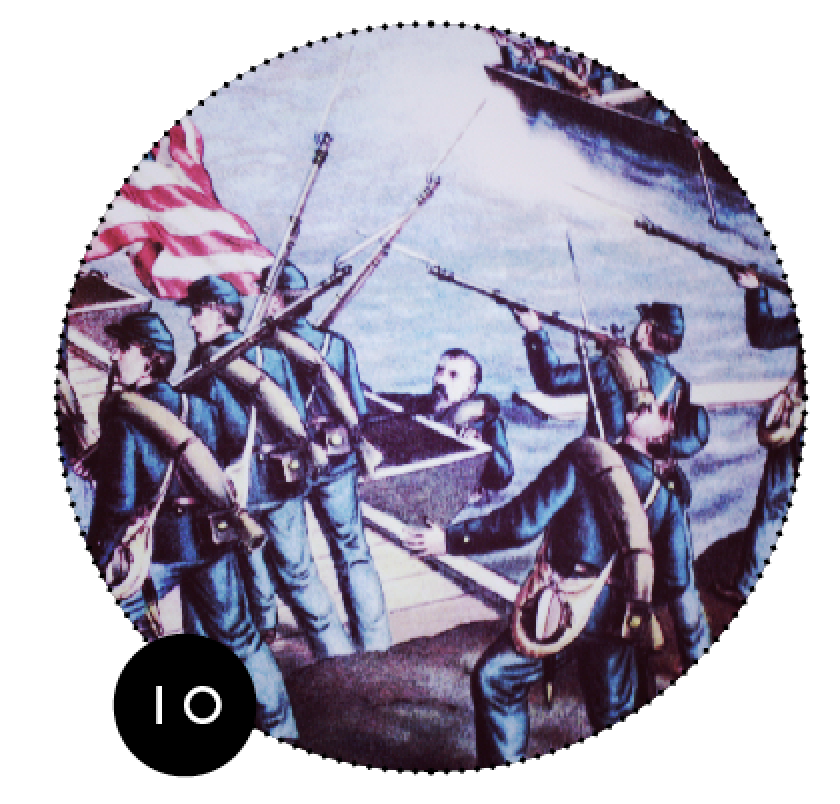
Screenshot 2014-12-29 10.44.4010. Civil War War: Sometimes, big stories seem to pop up from nowhere, and the scuffle over funding for the Civil War Museum fit into that category. Without notice, Harrisburg Mayor Eric Papenfuse appeared at a Dauphin County commissioners session to mount a case for negating an agreement that set aside about $300,000 a year in hotel tax money for the museum. Over the ensuing months, the city and county revived issues that hadn’t been discussed much in years: the purpose of the museum, its viability, its funding and how Harrisburg should use its limited funds to market itself. It also re-engaged the always-simmering battle over the legacy of former Mayor Stephen Reed.

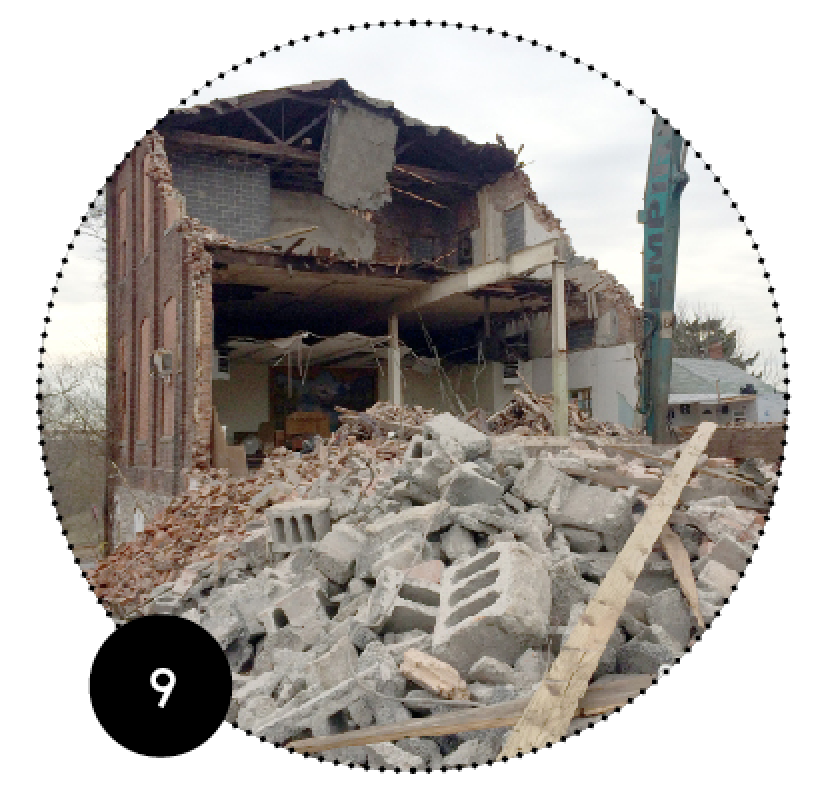
Screenshot 2014-12-29 10.44.509. Pastor Arrested: Upon taking office, Papenfuse declared an all-out war on blight, targeting slumlords, deploying codes officers and even formulating a new Housing Court. That sounded fine to most people until the first person arrested under the get-tough policy was one of the city’s most prominent pastors, Bishop A.E. Sullivan, Jr., whose blighted church began to crumble down on its neighbors. For some, the arrest was an early test of Papenfuse’s resolve. For others, it signaled the re-emergence of racial tensions that always seem to lie just beneath the surface in Harrisburg.

Screenshot 2014-12-29 10.44.588. Grand Jury Convened: What happens when you open a closet and a room full of secrets pours out? In the case of Harrisburg, a grand jury is empaneled. At press time, months after official-looking guys in official-looking jackets hauled away box-loads of potential evidence to Pittsburgh, the investigation continued into the myriad twisted, dubious deals that led to Harrisburg’s financial collapse.

Screenshot 2014-12-29 10.45.087. Primetime Crime: If it bleeds, it leads, right? The media continued to have a field day (or year—or years) over the issue of crime in Harrisburg. Not that there wasn’t ample material to draw from. A continuing high homicide rate largely negated the good news that some other types of crime fell. Meanwhile, a few high-profile stories (the tragic case of Jared Tutko, Jr., a brief exchange of gunfire between a state legislator and a teenage mugger) led to predictable bouts of media hysteria. We’ll have to see if a few more cops and, as has been proposed, the revival of the school resource officer program make any difference for 2015.

Screenshot 2014-12-29 10.45.216. Treasurer Trouble: Sometimes, it seems like Harrisburg just can’t catch a break. In August, trouble arose from an unexpected corner when city Treasurer John Campbell—a young man with a seemingly boundless future—was arrested on charges of taking money from several organizations where he also served as treasurer. These allegations involved no city business, and the treasurer’s office operates largely independently from the administration. Nonetheless, Campbell’s arrest was yet another reason for people to dump on Harrisburg, as was the withdrawal, two months later, of his appointed successor, Timothy East, after a personal bankruptcy came to light.

Screenshot 2014-12-29 10.45.445. Receivership Ends: It came in with a bang and ended with a whimper. No, I’m not talking about the month of March, but about Harrisburg’s state-imposed receivership. In November 2011, bond attorney David Unkovic rode into the office amid tremendous skepticism over his intentions. In just a few months, he allayed those worries so that, when he suddenly resigned, many people feared the city had lost its best friend. In stormed Air Force Maj. Gen. William Lynch, who completed what Unkovic had started: selling the incinerator, privatizing the parking system and trying to straighten out and normalize Harrisburg’s calamitous finances. Count me among the surprised that the receivership ended so quickly after the major elements of the financial recovery plan were put into place. Today, the state retains some supervision over city finances as Harrisburg remains in Act 47. However, the receivership was never as strong-armed as many thought it would be, and, instead of fading away, it just went away.

Screenshot 2014-12-29 10.45.534. Parking, Parking and More Parking: Besides crime, parking became the media’s go-to story of the year. Sleepy news day? Go find some suburbanites and restaurateurs pissed off about the rising cost of parking. Beneath the hype, there was a real story. As part of the city’s financial recovery agreement, parking rates doubled and metered parking expanded, which did negatively impact some businesses. In addition, the rollout of the new digital meters was bumpy, and Standard Parking was (how shall I put this?) god-awful in communicating with the public. But, by the end of the year, people seemed to be adjusting, and the new regimen even had some pluses, such as a new source of revenue for the city, the ability to use credit cards and much higher turnover of street spaces. Also, while some weak businesses shut down (though not all due to parking, believe it or not), several others opened.

Screenshot 2014-12-29 10.46.053. Front Street Makeover: Sometimes, events are deemed important because they follow an accepted standard of what constitutes news—a political scandal or a high-profile crime, for instance. Other times, the importance is less certain, and only later do people realize the significance of a piece of news. I put the state’s announcement that, starting this spring, it will reconstruct Front Street, into the second category. Moreover, the state is studying improvements to Forster Street and to making much of N. 2nd Street two-way. It also plans to re-open the dormant rail bridge to pedestrians and maybe transit. In other words, the state seems to want to reverse the damage wrought almost six decades ago, when much of Harrisburg was turned into either a freeway or a traffic island, with devastating results. A more welcome, livable city could be a game-changer for Harrisburg.

Screenshot 2014-12-29 10.46.152. Papenfuse Takes Over: In January 2014, Eric Papenfuse took the oath of office as mayor of Harrisburg. In so doing, he promised to be both an effective administrator and an inspirational leader. A year later, I’m not sure about “inspirational,” but he has shown competence both in identifying what needs to be done and then taking steps to get those things done. From finances to blight to streetlights to schools, Papenfuse took on a full plate of issues, most very difficult, many controversial. My fellow columnist, Tara Leo Auchey, has described Harrisburg as being in a state of “reconstruction” following decades of misrule. The administration’s first year has been to try to stabilize a government in shambles and then plant the seeds of that reconstruction.

Screenshot 2014-12-29 10.46.561. Balanced Budget: This may seem like an odd choice for the #1 news story in Harrisburg. Yawn, right? Yes, in most cities, a balanced budget indeed would be a non-event. In Harrisburg, however, this was (or should have been) major news, as it was the city’s first truly balanced budget in—God knows—20, 30 years? Papenfuse even insisted on including items that had been kept off-budget for decades, as Reed was a genius at tucking inconvenient expenses into places where they couldn’t be found, then masking the overage with borrowing. This is an achievement that should not be understated. Going forward, it should allow the city to build an honest foundation and move forward from there.

So, there you have it—my Top 10 stories of 2014. Looking at the year in whole, I consider 2014 to have been a transition year: a transition from state to local control; a transition from perpetual crisis to some level of normalcy; and, I hope, a transition from dishonest and incompetent government to one that conscientiously serves the people of Harrisburg.

Lawrance Binda is editor-in-chief of TheBurg.

Continue Reading

Like Her Successor, Mayor Linda Thompson Targeted Museum Finances, Too

Former Harrisburg Mayor Linda Thompson.

Former Harrisburg Mayor Linda Thompson.

Nearly 18 months before Mayor Eric Papenfuse asked the Dauphin County commissioners to suspend payments to the National Civil War Museum, his predecessor, Linda Thompson, took up the issue herself.

In a letter dated Feb. 4, 2013, Thompson asked museum officials to renegotiate the museum’s $1 annual rent payment for the building and artifacts it leases from the city.

The letter was recently made available to TheBurg in response to a right-to-know request.

Thompson’s letter, addressed to museum CEO Wayne Motts, notes that the city “extends its sincerest appreciation and respect to the National Civil War Museum for keeping the history of the Civil War alive in Harrisburg.”

It goes on to explain that, under the terms of the museum’s lease, it was expected the museum would eventually negotiate the payment of “more than a nominal rent” to the city. The letter then cites a section of the lease in which the museum consents to renegotiate rent upon request from the city or City Council after five years, “but only based on its ability to pay.”

The lease was originally signed by former Mayor Steve Reed in April 2001. It is not indicated in Thompson’s letter whether the city tried to initiate rent negotiations on a prior occasion.

The letter ends with a request that the museum contact a senior assistant to the mayor to set up a meeting. “Please be prepared with the necessary financial records, so that the City may assess your ‘ability to pay’ an appropriate rental payment,” it concludes. Thompson’s signature follows.

In its response to TheBurg’s right-to-know request, the city also provided the museum’s reply to Thompson, in a letter from Motts dated March 28, 2013.

“Unfortunately, the Museum is not in a position to pay any additional rent for the foreseeable future,” Motts writes in his reply. He refers to an enclosed audited financial statement for the fiscal year ended June 30, 2012, which he says “clearly reveals the inability of the Museum to pay additional rent at this time.”

Motts apologizes for the late reply, explaining that museum officials were waiting for the 2012 financial statement to be completed.

Motts then goes on to request a payment from the city for capital expenses totaling $106,652, which he claims the city is obligated to pay under the lease. “Accordingly, and considering the Museum’s financial condition, we ask that you please expedite the approval and payment of these items as promptly as possible,” he writes.

Thompson, who was elected mayor in 2009, was defeated by Papenfuse in the 2013 Democratic mayoral primary. She is currently running for a seat in the U.S. House of Representatives against incumbent Scott Perry.

The dispute between Mayor Papenfuse and museum officials over the museum’s rent payments and ongoing tax subsidies were the subject of a September feature in TheBurg. Copies of the exchange between Thompson and Motts can be downloaded here.

Continue Reading

Some Very Good Numbers

The National Civil War Museum in Reservoir Park.

The National Civil War Museum in Reservoir Park.

In a report before the Dauphin County commissioners Wednesday morning, representatives of Harrisburg’s National Civil War Museum made a detailed case for the museum’s continued receipt of a county subsidy that has funded between one-quarter and one-third of its budget for the past six years.

CEO Wayne Motts, reciting what he referred to at one point as “some very good numbers,” told the commissioners that museum visitors spent an estimated $5.7 million in the region last year, representing a nearly 2,000-percent return on the museum’s $296,000 share of county tax dollars.

Where did these numbers come from? It’s a well-worn truth that numbers, manipulated in just the right way, can tell whatever story you want them to. As the British Prime Minister Benjamin Disraeli is supposed to have said (he was quoted, quite possibly apocryphally, by Mark Twain), “There are three kinds of lies: lies, damned lies, and statistics.”

The statistics in the museum’s report this week are not lies, but they aren’t the whole truth, either. They were obtained by a series of simple calculations, performed on a relatively small set of figures from three main sources.

The first two sources come from the museum itself. One is the museum’s annual visitor tally, which clocked in at 38,688 in 2013-14. (The museum reports figures corresponding with its fiscal year, which runs from July 1 to June 30.) Of these, 4,664 were school-age visitors who came in groups, and another 472 were people who self-reported as having come from Harrisburg zip codes.

The second source is survey data collected and tabulated by the museum from a subset of visitors. Last year, according to Motts, 601 visitors responded to the museum survey; over the past four years, there have been a total of 2,099 respondents. Of last year’s 601 respondents, 39 percent said they had stayed in a hotel, which matches pretty closely the figure for respondents who stayed in hotels over the past four years (36 percent).

In its report, the museum filters these visitation numbers through a third source, provided by an outside party—the most recent “Economic Impact of Travel and Tourism in Pennsylvania” study, performed by the consulting company Tourism Economics. The study, which is commissioned each year by the Pennsylvania Tourism Office, aims to give a detailed picture of how tourism impacts the state economy. Last year’s study, released in December, analyzes data from 2012.

Using these sources, the museum calculates what is meant to be its “direct economic impact” on the region. Here’s how it works. The museum subtracts school-age visitors and Harrisburg residents from the raw visitor total, arriving at an estimated number of tourist visitors of 33,552. Then, using the percentages from its in-house surveys, the museum sorts these visitors into “day-trip leisure” visitors (20,326) and “overnight leisure” visitors who stayed in a hotel (13,226). Finally, the report multiplies each of these subgroups by average spending data from the Tourism Economics study, which is conveniently already sorted along the same lines ($111 per day-tripper, and $265 per overnight visitor per trip).

Based on these calculations, the report arrives at a “direct economic impact” for the museum of $5,761,076: the sum of the $3,504,890 and $2,256,186 spent by overnight visitors and day-trippers, respectively, in 2013-14. The visitors spend their money, the Tourism Economics study tells us, on lodging, food and beverages, retail, entertainment and transportation.

How reliable are these figures? Christopher Pike, the director of impact studies at Tourism Economics, told me that, for the most part, the museum’s calculations were reasonable. He noted that the museum used average spending figures from 2012, which, preliminary research shows, were likely 1 to 3 percent lower than the corresponding figures for 2013. Combined with the decision to exclude school-age visitors, this meant the museum’s estimates “maintained some conservative-ness,” Pike said.

On the other hand, the museum’s calculations assume that the museum—and not other regional attractions—is the primary draw for tourists who walk through its doors. “If you wanted to be an academic stickler, you’d want to break out visitors they attracted to Harrisburg,” as opposed to people for whom the museum was merely a side attraction, Pike said.

Nonetheless, it was Pike’s conclusion that the museum’s report presented, on balance, a respectable analysis. “It’s much more detailed than what I’ve seen from a lot of other places,” he said. Given that museum staff did the calculations themselves, “they’ve not done a bad job.”

There is one notable exception, however. That is the museum’s purported rate of “return on investment,” which the report tabulates at an eye-catching 1,942 percent. The museum arrived at this figure by dividing the $5.7 million it says it generated last year by the $296,646 in hotel taxes it received. (These taxes come out of the $500,000-or-so portion of hotel taxes designated for marketing the city—which, speaking of numbers, is not “one-quarter of one percent” of hotel tax revenues, as is often cited elsewhere, but one-quarter of about one-fifth of them, or about 5 percent.)

Returns on investment, or ROIs, “can be calculated in many, many ways,” Pike said. He declined to give an opinion on the “right” method, though he did laugh when the museum’s reported figure was quoted. Another way to come up with the museum’s ROI would be to compare the hotel taxes it receives with the hotel taxes it generates—which, if you follow the assumptions of its other calculations, comes out to around $36,801. That leads to the rather dismal return of 12 cents for every tax dollar received, meaning the museum cost the county nearly $260,000 last year.

On Thursday, Motts responded to the suggestion of this less flattering figure by saying the museum had followed the ROI-calculation method of the Hershey Harrisburg Regional Visitors Bureau, the county tourism promotion agency which serves as a pass-through for the museum’s tax funding and to which the museum reports on its marketing activities each year. The museum should be “held to the same standard” as other regional tourist draws, which calculate their impact the same way, he said. (Motts also reiterated Pike’s points about the comparatively high level of detail in the museum’s visitor data and the conservative nature of its estimates.)

But there are yet other ways to measure return on investment—ways that have less to do with tourism money today, and more to do with history. The museum began receiving its dedicated share of hotel taxes from the county in 2008, when its annual visitor base was nearly 44,000. The money was to be spent on marketing and promotions, which the museum says it is, although Harrisburg Mayor Eric Papenfuse, who catapulted the museum’s tax funding into headlines by asking the county to freeze it, has challenged this. In any case, despite the boost to marketing, the museum’s visitor total this year represents a decline of 5,000 people—and that’s in a year that included the sesquicentennial of the battle of Gettysburg.

Or what about another measure of return on investment, which would compare the city’s share of the costs of the museum’s creation with the city’s share of its rewards? The building itself, as museum leadership likes to point out, was paid for with $16.2 million in state money. But the state money required a city match, which was supplied by at least as many millions in Civil War artifacts acquired on the city’s dime. The museum now leases those artifacts—and the building, whose fair market rental value is estimated at $633,000 per year—at an annual rate of $1.

There are other numbers to consider, too. Seven, for instance, which is the number of City Council members (that is to say, all of them) who voted last month to back Papenfuse’s request to cut the museum’s funding. Or 25, which is the number of years on the museum’s lease, extended by former Mayor Stephen Reed in the last two months of his 28-year reign. Or how about 1.2 million—the number of dollars the city has paid the museum directly since 2000, for employee benefits and construction costs and any number of other things.

These numbers, not surprisingly, were not part of the museum’s presentation to the county commissioners this week. Yet they tell an important part of the story, too. It’s for the commissioners—and for city residents, in assessing whose interests the commissioners represent—to decide how many of the numbers to listen to. Will it be some of them, or all of them, or none?

An earlier version of this article referred incorrectly to the museum’s proportion of hotel taxes. The figure “about 5 percent” refers to the portion of county hotel tax revenue designated for marketing the city, not only the portion spent on the museum.

Continue Reading

Mayor Again Presses County to Cut Civil War Museum Funding

Harrisburg's National Civil War Museum in Reservoir Park.

Harrisburg’s National Civil War Museum in Reservoir Park.

Harrisburg Mayor Eric Papenfuse took another shot at the National Civil War Museum’s tax subsidy late Friday afternoon, suggesting that the Dauphin County commissioners were taking an excessively long time to conduct a legal review of his request that they freeze the museum’s funding.

In a press release, Papenfuse is quoted as saying that the commissioners have clear authority under a county tax ordinance to withdraw their approval of the museum’s estimated $300,000 subsidy per year.

“This is not a complicated legal question that requires weeks of review,” the mayor is quoted as saying. “It is fully within the commissioners’ authority to stop the National Civil War Museum’s misuse of hotel tax dollars on salaries and general expenses.”

Dauphin County Chief Clerk Chad Saylor, however, said by phone Friday that lawyers for the county “basically don’t share that view.”

“He raises an important issue, and we’re taking it seriously,” Saylor said of the mayor’s request. “But we’re going through our process.”

Saylor added that the current funding arrangement, which involves a combination of state hotel tax law, county ordinance, and separate contractual agreements between various parties involved, is more complicated than the mayor suggests.

Saylor also said that the mayor should not expect a decision from the county until the commissioners have heard from museum representatives at one of their public hearings. Such a presentation by the museum is not yet scheduled, he said.

Friday’s press release is just the latest in the mayor’s sustained efforts to reclaim the museum’s portion of county tourism dollars for city use. He first raised the issue at a county commissioners’ hearing July 30, at which time he also critiqued the museum’s $1 annual rent for the use of millions of dollars worth of city artifacts and a facility whose fair market value is estimated at $633,000 per year.

The press release, with its reference to spending on “salaries and general expenses,” follows a line of argument that the mayor’s office advanced on Wednesday, when it released a report from the National Civil War Museum regarding the museum’s use of hotel tax funds.

According to that report, which only covered the museum’s 2010-11 fiscal year, the museum spent 66 percent of its $270,696 in county tourism dollars on salaries and another 18 percent on utilities.

Only 15 percent was spent on marketing, although the report also identifies the salaries as being for “3 full-time sales and marketing staff.”

The mayor’s office did not provide any reports on the museum’s marketing expenditures in more recent years.

Friday’s press release also draws a distinction between the museum’s share of hotel taxes and the city’s, noting that the county ordinance permits a broader variety of uses for the portion the city receives directly each year.

Among those permitted uses for the city is payment of debt service on bonds issued for the construction of tourism-related facilities, which the mayor’s office says more than consumes the city’s portion—around $750,000—of hotel taxes each year.

“The money the city receives directly from commissioners for tourism is less than the annual debt payments on bonds that helped originally construct the National Civil War Museum and other tourism related facilities,” the mayor is quoted as saying. “I don’t think the public is aware that the city is still paying off debt for this venture.”

In a phone call placed shortly after the press release was issued, the mayor’s spokeswoman, Joyce Davis, was unable to clarify which bond issues the release referred to. But Neil Grover, the city solicitor, said in a subsequent phone interview that they comprised general obligation bonds that were partly used to fund tourism projects, which the city is still paying off.

These bonds include a 1997 series that indirectly financed the Civil War Museum through projects related to Camp Curtin and improvements in Reservoir Park, Grover said. An additional portion of general obligation debt went to finance the construction of the stadium on City Island, which Grover said fits the description of a tourism-related facility.

Saylor, the Dauphin County chief clerk, said Friday that the county would also like to review these expenditures by the city out of its share of hotel tax funds. “Did the mayor mention the 2.5 million?” Saylor said, referring to an estimated $2.5 million the city has received in direct revenue from the tax since 2011. He said the county would like to get information from Harrisburg on how that money was spent, though he acknowledged the county had not yet made any formal request for that information.

Friday’s press release was the mayor’s third substantive action against the museum this week, his first back from a two-week vacation. In addition to the report on marketing expenditures, Papenfuse brought a resolution to City Council Tuesday night asking for its support of his request to county commissioners, which council passed unanimously.

A phone call to Wayne Motts, the National Civil War Museum’s CEO, was not immediately returned Friday afternoon.

This story has been updated to include comments from the Dauphin County chief clerk.

Continue Reading

Charity for All: Over the years, Harrisburg has invested millions of dollars in the National Civil War Museum. The city’s new mayor now asks if the price is worth it.

Screenshot 2014-08-29 09.27.41Every Wednesday morning at 10 a.m., three men who control a $230 million annual budget meet on the fourth floor of a brick building downtown, across Market Street from city hall. Their meeting room is circular, with wood paneling and brown-and-khaki carpet, and a peculiar assembly of light fixtures hanging from the ceiling. The men sit at one end of this room on a dais, in high-backed, maroon leather chairs, and listen as people take turns approaching a table below.

Often, the petitioners are there to massage their relationships with these men, the Dauphin County commissioners—either to thank them for past support or to ask for future money. But, on the morning of July 30, Harrisburg’s new mayor, Eric Papenfuse, attended the commissioner’s meeting with a different sort of request. Six years prior, in 2008, the commissioners had increased a tax on visitors who stay in Dauphin County hotels. Under the ordinance, a portion of the new revenues from the hike was designated for promoting tourism in Harrisburg. But, under a set of separate agreements signed by the city (Papenfuse, speaking to press after the hearing, called them “quiet, secret deals”), most of the money, for years, had been going to one place: the National Civil War Museum.

Opened in 2001, the Civil War Museum is the crown jewel of former Mayor Stephen Reed’s campaign to draw visitors and renown to Harrisburg by way of a network of cultural institutions. Perched atop a hill in Reservoir Park, the museum commands a view of the city and, to the north, the valley cutting through the mountains. It houses a massive collection of period artifacts, most of them city-owned, among them a gauntlet that had been worn by the Confederate General George Pickett and a Bible owned by Robert E. Lee.

Despite the quality of its collection, and despite its relative proximity to Gettysburg, the museum has struggled to grow the visitor base that was envisioned at the time of its creation. According to figures provided by the museum, annual attendance has never surpassed its first-year peak, of more than 96,000. The total fell every year for the next eight years and has hovered between 38,000 and 41,000 for the past five. (Gettysburg, by contrast, draws 3 million people per year.)

Seated at the table in front of the commissioners, Papenfuse, in characteristically breathless fashion, asked them to freeze the museum’s hotel tax funding. The museum, he argued, was absorbing money that was meant for marketing the city as a whole. Furthermore, the museum only paid the city $1 of rent per year, on a property with a fair market rental value of $633,000, to say nothing of the value of the artifacts on loan inside. The agreements that allowed the museum to do these things, Papenfuse said, had been undemocratically extended in the final months of the Reed administration—one of them all the way out to 2039.

“I think it is time that we recognize that we have spent millions and millions of taxpayer dollars to subsidize this museum,” he said. “We’re not only talking about the costs of building the museum and, you know, the subsidy here for tourism, but we’re talking about moneys we’ve paid to subsidize the health care of the employees over time, staffing, operational expenses. Every time we put money in a parking meter, the public should understand that we are essentially paying back the debt that was incurred for the creation of that museum.”

Outside the hearing, however, Papenfuse went further. “It’s outrageous,” he told the reporter James Roxbury, who had asked about the long-term agreements. “And I think that it’s time we end what is essentially a failed experiment and begin to move towards a redeployment of those assets. If something else moved into that building and were able to contribute rent to the city of Harrisburg, we could use those funds to fix potholes and do all the things that we’d like to do in the city of Harrisburg. If we sold the artifacts, that would be millions more dollars that the city could have to be able to invest wisely.

“I don’t think the public supports the museum, I don’t think the museum caters to the city,” Papenfuse went on. “I think, from its advertising materials alone, you can see that it could be located anywhere in the country. It doesn’t promote Harrisburg in any way.”


“The idea was to have five nationally scaled museums,” Reed said.

He was speaking to David Morrison of the Historic Harrisburg Association, who was interviewing him as part of an oral history project in 2010. The project, sponsored by Highmark Blue Shield, was created to help celebrate the 150th anniversary of Harrisburg’s incorporation. But it also happened that the city’s sesquicentennial coincided with Reed’s departure from office, after a reign of 28 years.

In the interview, video of which is still available online, Reed conveys an air of bemused resignation. Only two of his museums ever came to be, and his opportunity to realize the others had passed. Nonetheless, he waves aside critics of, for example, the National Museum of the Old West, “who were empowered by the Internet and constantly blogged and bad-mouthed it.” Then he lays out the scope of his vision—to have the museums commemorate what were, in his view, “the three most significant events in American history, aside from the American Revolution itself”: the Civil War, Westward expansion and World War II.

“If Harrisburg, Pa., was a place to go in the golden triangle region of tourism in the east coast, east of the Mississippi, where you can learn about all those things, can you imagine how many people that would attract, and the economic benefits that would accrue to the local community and the jobs it would create? That’s what this was all about,” he concludes, sweeping his arms wide. “And some laughably dismissed it.”

By then, though, the vision had been more than laughably dismissed. Two of the museum concepts had ended in ignominy, with the waste of millions in public money. One of the concepts, for a National Sports Hall of Fame, languished without any apparent progress for years, until a 2008 investigation by CBS 21 reporter Jason Bristol exposed, among other things, that its director had no idea a similar museum had already opened in New York City. The museum commemorating the Old West, meanwhile, collapsed after City Council, facing a budget crisis, ordered the sale of millions of dollars worth of artifacts that Reed had quietly acquired over many years.

The means by which Reed purchased most of the Western artifacts was an account known as the City Special Projects Reserve Fund. Reed outlined his request for the fund in a memo dated Christmas Eve, 1990. It was addressed to the board of the Harrisburg Authority, the city’s sewer authority, which had earlier that year modified its charter to become a pass-through vehicle for bond financing. The fund would be filled with fees charged for administering the bonds and would be available for drawing upon at the discretion of the mayor. For two-and-a-half years, the Authority filled the fund with fees from a handful of clients: a few thousand here, a few thousand there, until, by September 1993, the fund held nearly $150,000.

At first, the mayor drew money from the account only rarely. In the summer of 1993, he approved an expense of $5,700, to reimburse the Authority for a full-page ad it had bought in an “Economic Profile” magazine. (The profile was published by the city, through the mayor’s Office of Economic Development.) Another $2,000 was sent to the city treasurer as a contribution towards a city open house.

Then, beginning in the spring of 1994, as funds kept rolling into the account, the city started to ramp up its withdrawals. In March, the mayor requisitioned $160,000 from the fund for deposit in a city account for capital projects. In September, the city withdrew another $20,000—$10,000 of it for Penn State, for consulting on the formation of an “alternative academy,” and another $10,000 for Big Brothers/Big Sisters of Harrisburg, for developing a mentorship program. In October, Reed committed $30,000 to the Center City News, newly re-launched as Harrisburg Magazine; unable to find all the money in the city budget, which he described in a personal letter as “seriously constrained,” he provided $15,000 out of the special fund.

Screenshot 2014-08-29 09.27.18The first mention of Reed’s museum vision in the special projects account occurred in December 1996, when Reed requested $30,000 from the fund for “professional services for the Sports Hall of Fame and War Museum.” Then, early in 1997, the artifact purchases began to be itemized. January 8: “1 Flintlock Mountain Man Pistol w/Map and 1 1896 Sheriff’s Pistol w/Holster,” $2,535. January 15: “one Walnut and Mahogany Veneered case 8-day Regulator Timepiece,” $8,500. The items evidently covered a wider range than the Civil War period, although, curiously, a May 1997 memo collects them under the heading “Civil War Museum.” Between January and May, the mayor spent $28,283 out of the fund on such itemized purchases.

In the summer of 1997, the spending took off. The checkbook register records purchases every few days: a major general’s kepi, a “fur-era trade pistol,” a Conestoga wagon. Between December 1998 and August 2002, the city withdrew more than $9 million from the fund, almost entirely for the purchase of artifacts. At times, especially in later years, Reed would ask the Authority to advance the fund cash from its other accounts, to cover additional artifact invoices until another bond issue closed and its fees could be collected.

The Civil War Museum’s collection is not exclusively bound up in the history of the special projects fund. By 1997, the city already had purchased most of the artifacts that would wind up filling the museum, and many of the purchases after 1998 were connected to the Old West. But the acquisitions for the Civil War Museum, like the others, had the same basic feature. They were purchased with public funds at the discretion of the mayor, who had set no apparent scope or limit on what he was acquiring.

There were people, though, who did speak up about the mayor’s use of the funds. One of them, in 2007, managed to get appointed to the Harrisburg Authority board, where he tried to pry open the records of the special projects account and hold them up for public scrutiny. His name was Eric Papenfuse.


Eric Papenfuse is a man of many personas. One of them, which became more developed in his mayoral campaign, is the sunny city cheerleader—the man with the toothy grin on the city website, who will bring a raft of volunteers to a press conference and will show up to a “brown bag” poetry reading in city hall with a sack lunch in tow. The other is the painstaking policy man, whose facility with budgets, contracts and legislation can lend his press conferences a classroom air.

But there’s another quality to Papenfuse that is less often seen from the podium. He can be fiercely, even stubbornly, adversarial. In April, a month after an unhappy meeting with the school district’s state-appointed recovery officer, he publicly called for the officer’s replacement. The state education secretary stood by the officer, who remained in his position. Nonetheless, three weeks later, Papenfuse raised the issue again, this time in an open letter to the secretary that accused the officer of having “watered down” the district’s academic standards.

Nothing seems to invite Papenfuse’s censure quite like the legacy of Mayor Reed. I learned of one example of this in June, after a former colleague at TheBurg, Dan Webster, published a lengthy article about Reed in his periodical, Local Quarterly. The article, which was based on an interview with the now-reclusive former mayor, included a claim that Reed’s manipulation of certain bond proceeds was “completely legal.” Papenfuse’s Midtown Scholar bookstore refused to carry the magazine. Papenfuse’s wife Catherine Lawrence, who is overseeing the bookstore in his absence, said later that the magazine was pulled from the shelves as a result of the store’s policy not to carry paid periodicals. But Webster and his photographer got a different impression when they met with the mayor at the store. According to the photographer, Papenfuse “repeated over and over, ‘I cannot allow the people of Harrisburg to think that what Reed did was legal.’”

In 2007, a faction within City Council overrode a veto by Mayor Reed, granting itself the power to nominate board members of the Harrisburg Authority. One of their nominees was Papenfuse, who, according to an affidavit that accompanied a lawsuit later filed by the administration, went directly to the Authority offices to demand copies of documents. What documents he requested, the affidavit doesn’t say, but it’s not hard to guess what he was after. In a video clip from October of that year, which is still available on Roxbury News, Papenfuse runs through Authority records of travel expenses reimbursed out of the special projects fund. They were incurred by a city employee, John Levenda, in connection with the pickup and delivery of artifacts. (Levenda, as it happens, was also the subject of Bristol’s 2008 investigation for CBS 21; he was the director of the non-profit Sports Hall of Fame Foundation, where he collected hundreds of thousands of dollars in salary and reimbursed travel expenses over the course of several years.)

In his public comments since his appeal to the county commissioners, Papenfuse has mostly focused on the best use of hotel tax dollars for the city. But it’s hard not to see his efforts as a kind of culmination of the path he started on years before his mayoral campaign. As a critic and a gadfly, he tried to call attention to what he saw as an illegitimate and abusive use of public money. As mayor, he seems to be going a step further—trying to actually undo it.


Two weeks after the mayor’s petition to the county commissioners, I met with Wayne Motts, the National Civil War Museum’s CEO, in his office above the gift shop on the museum’s second floor. Joining us were two board members—Rick Seitz, the current chair and the president of Alexander Building Construction, and Gene Barr, a past chair and the president of the Pennsylvania Chamber of Business and Industry, a business lobbying group.

Motts is a longtime museum man. His father, Warren, founded the Motts Military Museum in Groveport, Ohio. Wayne majored in military history and took a master’s in American history, and he has been a licensed battlefield guide, as he puts it, for “over a quarter century.” He most recently spent eight years as the executive director of the Adams County Historical Society. “There has never been a time, ever, that I haven’t been interested in the American Civil War,” he told me. His father used to read him excerpts from a Civil War diary, which he relates to the function of a museum—teaching history through contact with historical things. “My main interest is because I had a connection with the real artifact, which is what we’re doing here.”

Motts joined the museum board in 2009 and was named CEO in 2012. His predecessor, David Patterson, a former management consultant for the national YMCA, had hoped to bring his business experience to bear on the museum’s declining visitor base. But, when he left, in 2011, the dues were flat and annual attendance had dropped by several thousand. Motts, it was hoped, would improve on that record, combining museum experience with a manifest enthusiasm for Civil War history. “I don’t think there’s a better person for that position,” one Civil War artifact dealer told me.

Motts spends much of his time traveling the country, spreading the word about the museum at conferences and Civil War roundtables. He is an emphatic speaker, with a wide repertoire of punctuating gestures and a rural-flavored voice that breaks on occasion. Earlier in July, he gave a speech at the Gettysburg Foundation’s Sacred Trust Talks, where he spoke about the importance of preservation, highlighting several objects from the museum’s collection. “What if Ford’s Theatre was a Target store? Let’s talk about it. Our understanding of the war would be greatly diminished. Our empathy for it, our connection to it, would be reduced if we did not have those things.”

In his talks, Motts relies only scarcely on notes, but, when we met, he brought along a couple of pages of talking points about the museum’s position in recent years. He cited the attendance figures—around 40,000 per year for the past five years, which he described as a “very even keel.” Mayor Papenfuse, in his statements about the museum, suggested that the opportunity for growth had come and gone. The recent sesquicentennial of the battle of Gettysburg, which brought a renewed focus to the Civil War, appears to have only won the museum a few thousand additional visitors. Motts was sensitive to this. “Everybody always asks, are we satisfied with that? And the answer is no!” he said. “Every day, we’re thinking about, ‘Well, what can we do to maybe get more folks in there?’”

One of the central questions in the museum debate is whether the museum provides enough of an economic benefit to justify the public support it receives. The hotel tax is meant to create a virtuous cycle—money from tourists goes to sustain the things that will attract more tourists. Accordingly, Motts and his staff have conducted their own analysis and come up with a ballpark figure for the museum’s economic impact on the region. Relying on data they collect from visitors, and using a formula from an annual impact study commissioned by the state, they determined that the museum produces $5.7 million of spending in the region each year.

It’s a problematic figure. Motts, who said he removed student visitors from the calculation, suggested it was a conservative estimate. But he also acknowledged that the data he collects doesn’t distinguish between money tourists spend within the city and money they spend in neighboring municipalities. It may seem a small point, but it’s really the crux of the issue, because the museum’s hotel taxes come from what is designated by the county as the city’s share. It’s the share that gets spent on things like this year’s “Summer in the City” campaign. Papenfuse would like to spend more money on these sorts of campaigns, but he can’t—under the long-term contracts, nearly $300,000 of the city’s portion goes directly to the museum.

If the museum provided a regional economic benefit, didn’t it stand to reason that it should draw on the regional, rather than the city, portion? When I asked Motts and the board members about this, though, they objected to the notion that the city had any claim on the money. “It’s not the city’s pool,” Motts and Barr said in unison. “The city has their own funds,” Motts added.

Motts and the board went to some lengths to establish that, even though the funding is countywide, the museum provides an unquestionable benefit to the city. Papenfuse, in the course of his critique of the museum, had suggested that it had no meaningful impact on city tourism at all—he provided a map showing that the building was not even located in the city, but in Susquehanna Township. But Motts said the link between museum and city was beyond doubt. He produced the most recent issue of the Civil War Monitor, a seasonal magazine, in which the museum had taken out a full-page ad. “You can see what’s here,” he said. He pointed to two words in the advertisement: “Harrisburg, Pa.”

There is also a case to be made for the museum that transcends economics. At one point, Barr, who has worked on transportation issues, compared museums to mass transit. “A lot of people say, ‘Don’t fund mass transit, because it’s not self-sufficient.’ And in reality, there’s not a single mass transit system in this country that is self-sufficient. But people believe it’s important because it’s part of the fabric of the community.” In a similar fashion, places like the National Civil War Museum were “part of the culture of a community.”

The museum may be part of the city’s fabric, and it may also draw at least some of the outside interest and prestige that Reed had envisioned. But it’s difficult to assess whether the benefits really merit the price—especially because neither the museum nor the public seems to have ever completely reckoned with what that price was. Motts provided me with a 2012 article by the president of the American Association of Museums, which details the breakdown of revenue streams for museums in the United States. The average American museum, according to the article, receives 25 percent of its funding from the government.

That’s not terribly far from the museum’s current proportion of government support. Last year, the hotel taxes it received under the city agreements represented around 26 percent of its $1,109,128 in revenues (although, if you count other grant support, the amount climbs closer to 40 percent). The trouble is that the museum has required such support from the beginning, and, in the early years, the proportion was even higher. According to its 2003 federal tax form, for example, revenues identified as “government grants” accounted for 58 percent of its budget. In 2005, the figure was 64 percent.

I asked Motts and the board members if they knew where these funds had come from, since the tax forms don’t disclose the government sources. It had happened before their time, they said, and they didn’t know. (I subsequently requested the museum’s audited financial statements, but the museum declined to provide them.) I also showed them a printout, provided by the city’s budget office, detailing payments directly from the city to the museum between 2000 and 2008. They included several large grants, a few short-term loans, and regular monthly advances, ranging between $5,000 and $10,000, out of the city’s direct share of hotel tax funds. They added up to more than $1.2 million.

Again, Barr and Seitz didn’t know the full details of the payments, though Barr believed several of them were the city’s contribution to health insurance for museum employees, a practice that had since ended. “Look,” Barr said finally. “The reality is Steve Reed wanted to create this. I mean, yeah, we’ve had all those debates. Steve Reed wanted, I think as he termed it, a critical mass of museums to get more and more people here. That’s what Steve Reed wanted to do. Steve Reed has been gone now for quite a while. And the rest of us are left here, pushing along, trying to make sure that we make this the best possible facility we can.”


A few days after his announcement to the commissioners, Papenfuse went on a two-and-a-half week vacation. In his absence, people speculated on exactly what he wanted to achieve. His comments to the media had suggested he would like to see the museum closed, its artifacts sold off to provide the city with cash. He had even floated the idea that the building might be a suitable site for city hall. The dispute began to take on an all-or-nothing quality—either the county would let the museum continue with the status quo or the mayor would liquidate it completely.

But the extremes left some wondering if there might be a middle road. I spoke with Jeb Stuart, a former board secretary at the museum who has worked on tourism and development in the region for the better part of 30 years. Through the last decade of the Reed administration, he was a full-time consultant to the city, overseeing projects like the directional signs and placards that identify heritage sites across Harrisburg.

Stuart was pushed out of the museum board in 2008, at a time when new leadership, responding to the Western artifact fiasco, sought to put some distance between the museum and city employees. But he has maintained an active interest in the city’s Civil War heritage, and he still believes the museum could serve as a vital link in the region’s offerings. Several years back, the state launched a “Civil War Trails” initiative, mapping out road trips that visitors could take from one heritage site to the next. (The Papenfuse administration’s tourism director, Lenwood Sloan, worked closely on the project.) Harrisburg, Stuart said, formed a perfect bookend for one such trail, running north from Gettysburg and culminating at the museum. “The Civil War Museum has always kind of been the anchor,” he said.

He asked me to open Google Earth on my computer. We zoomed into Harrisburg, where a 3-D model of the museum can be viewed (and virtually entered, in the form of a panorama image that Stuart helped photograph). Zoom out, and you see an entire field of icons spread across the city. Many are linked to other sites related to the Civil War. He held up photocopies of the covers of two recent books about Harrisburg’s role in the Civil War. One is about the Confederate advance towards Harrisburg; the other is called “Civil War City.”

“What we’re trying to do is to show that Harrisburg should be branded as a Civil War destination, which can emanate to other destinations within the city, whether it be the state Capitol, whether it be City Island, to pull folks from Gettysburg to Harrisburg as part of the linkage,” he said. He wondered if perhaps the mayor’s comments stemmed from a sense that the museum had failed to integrate itself with the city’s other assets. “There are all sorts of things that can happen here,” he said. “But the museum has not stepped up. And that’s where Eric, I think, has viewed that as being a, quote, ‘failed experiment.’”

When he got back from vacation, Papenfuse seemed to have retreated from some of his statements, or at least to have refocused his message. Responding to questions by email—he had begged off a planned interview, citing a busy schedule—his spokeswoman, Joyce Davis, wrote that the mayor had “never proposed closing the museum.” Rather, she said, he objected to having “such a large amount” of hotel taxes go “exclusively to the Civil War Museum.” If the administration had access to its entire share of hotel taxes, she wrote, it could work with the visitors bureau to “develop a strategic marketing plan that would effectively promote Harrisburg and stimulate economic development and tourism in the coming years.”

She also contested the museum board’s account of their meetings with the mayor. In our interview, Barr had said the board’s efforts to negotiate had been “flat-out rejected” because Papenfuse was unwilling to entertain the idea of forwarding the museum reimbursements for capital repairs. (The museum cited a figure of $150,000, owed for renovations the city is supposed to cover under the lease.) But Davis instead put the onus on the board, saying that Papenfuse had tried to negotiate a step-down of hotel tax subsidies over the next three years. “The goal was to get to zero so that the museum would stop being a drain on the city,” she wrote. “The museum representatives were unwilling to negotiate and unwilling to entertain the idea of ending dependence on city resources.”

The museum, meanwhile, has tried to move forward with improving its exhibits and growing its base of supporters. During our interview, Motts mentioned a $45,000 matching grant, recently awarded by the Kline Foundation, to fund a labeling project that will allow the museum to display more of its artifacts, many of which have been tucked away in storage since its opening. Because it is a matching grant, the museum must come up with an equal amount in donations by November in order to receive the money. Motts and the board also point to their efforts to keep the museum’s costs down. Citing figures from their tax forms, he noted in an email that the line for salaries and wages, which was listed at $1,435,745 in 2002, was reduced to $381,161 by 2013.

The question about the museum’s reliance on city support, both past and present, is really about two possibilities. One is that the museum is a Reed-era white elephant—never appropriately vetted, lavished with public money without public scrutiny, and unlikely to escape the legacy of its founder’s bizarre ambition. The other is that the museum, however it came to be, really could be a first-class institution, if only it could be integrated with the city’s offerings as a whole.

Earlier in August, I reached Al Hillman, whose company produced the museum’s audio-visual exhibits. Their work included a sequence of video segments, playing on loop throughout the museum, which followed the lives of fictional Americans from the beginning to the end of the war. During a visit, I had found the sequence to be one of the museum’s most compelling features, offering a full range of perspectives on the conflict—from a freed slave to a small-time slave-owner to a trio of brothers split by their separate loyalties.

“We got actors who could really fall in love with what they were doing,” Hillman said. “Some of them did some really fine work, there.” It was odd to think that, less than 15 years after being created, the exhibits stood at risk of being shuttered as a waste of money and time.

He hoped that, regardless of the museum’s past, people would slow down and really consider what they wanted its future to be. “It’s way too important to just allow to crumple,” he said.

Continue Reading