Tag Archives: Mayor Eric Papenfuse

State grants medical marijuana permits to two new Harrisburg dispensaries.

Harvest of SouthCentral PA LLC was granted a permit to open a medical marijuana dispensary at 2500 N. 6th Street in Uptown Harrisburg, the site of the historic Camp Curtin fire station. (Image courtesy of Creative Commons.)

Two medical marijuana facilities have been approved to open their doors in Harrisburg in 2019, thanks to permits granted today by the state Department of Health.

Harvest of South Central PA, LLC and Local Dispensaries, LLC received permits to operate sales facilities in uptown Harrisburg and South Allison Hill, according to a press release issued by Gov. Tom Wolf’s office this morning.

In all, the state granted 23 permits to dispensaries across the state as part of the second phase of its medical marijuana program, which was signed into law in April 2016. The new facilities will bring the total number of dispensaries in Pennsylvania to 79.

Once they’re fully operational, the dispensaries can sell state-approved products to card-carrying medical marijuana patients. Pennsylvania dispensaries are currently allowed to stock marijuana oils, pills, topical creams and tinctures, as well dried flower and other plant forms that patients can smoke or vaporize.

The Arizona-based Harvest listed the address of its new dispensary as 2500-2504 N. 6th Street in Uptown Harrisburg, the site of the historic Camp Curtin fire station.

That property is currently occupied by Camp Curtin BBQ. The restaurant’s owners could not be reached for comment today.

Ben Kimbro, director of public and strategic affairs for Harvest LLC, could not confirm any real estate transactions taking place ahead of the dispensary’s arrival.

Kimbro said his company must consider local zoning and permitting regulations when evaluating sites for their dispensaries, as well as proximity to potential patients.

He said the facility will open in 2019, once Harvest has obtained local permits and completed site design plans, and could create up to 20 new jobs.

Harvest employees manage product inventory and consult with patients, Kimbro said. All “patient specialists” receive an intensive education in physiology and marijuana terminology so they can help patients find the best products for their ailments.

Harvest was also granted permits for facilities in Reading, Scranton, Shamokin, Johnstown and New Castle, Pa.

“We see Pennsylvania writ large as a great market,” Kimbro said. “Its population centers, the ages of its population and the patients Pennsylvania has chosen for the program — all of it appeals to us a lot.”

The Lehigh Valley-based Local Dispensaries LLC proposed a location at 137 S. 17th Street in South Allison Hill, an undeveloped lot across from the Hamilton Health Center.

Harrisburg mayor Eric Papenfuse said that city officials have met with representatives from both organizations, and welcomed the news that they would open for business in underdeveloped corners of Harrisburg.

“Their business plans are solid, and both projects will create much-needed jobs while spurring economic development in corridors of the city that need it,” Papenfuse said.

Local Dispensaries could be immediately reached for comment today.

A third applicant from the south-central region, GTI Pennsylvania LLC, was also granted a permit for a new facility in Mechanicsburg.

GTI currently operates RISE Steelton, the closest dispensary to Harrisburg. Dispensaries in Enola and Carlisle opened last year under Phase I of the medical marijuana rollout.

“The permitting of these locations as part of Phase II of the medical marijuana program will ensure more people have access to medical marijuana close to home,” Secretary of Health Dr. Rachel Levine said today. “This step continues the growth of our scientific, medically-based medical marijuana program.”

The Department of Health received 180 applications for its Phase II permits, which it evaluated using a scorecard with more than a dozen criteria.

In addition to business and facility plans, dispensary permit applicants must explain how they will transport, store and secure their product inventory. They must also submit diversity plans and show that their facility will have a positive impact on its community.

Applicants must also pay a non-refundable application fee of $5,000, as well as $30,000 permitting fee and proof of $150,000 in start-up capital.

Pennsylvania’s medical marijuana program allows patients suffering from 21 serious medical conditions – including glaucoma, HIV/AIDS, Huntington’s disease, Crohn’s disease and multiple sclerosis – to purchase marijuana products at licensed dispensaries.

Patients must obtain a medical marijuana identification card from one of 945 approved physicians. About 66,000 Pennsylvanians have active identification cards, according to the Department of Health.

This story was updated at 5 p.m. on Tuesday, Dec. 18 to include comments from Ben Kimbro.

Continue Reading

Retail Therapy: More people are choosing to live, work and play in Harrisburg. Could a retail revival be next?

Boutiques and department stores brought shoppers to downtown Harrisburg in droves through the 1960s. This undated photo from the Dauphin County Historical Society shows a bustling scene outside Bowman’s Department Store on Market Street, which is now part of Strawberry Square.

It was close to 3:30 p.m. on a gray Monday afternoon when I found Moe Rammouni ringing up customers at Pal’s Apparel, his high-end streetwear boutique in downtown Harrisburg.

His clientele—two local guys, Rammouni said, who probably found Pal’s on Facebook or Instagram—came in seeking tracksuits and puffy parkas. It was Rammouni’s first sale of the day.

“Business is great now, but there’ve been some growing pains,” Rammouni said. “And there still are. You gotta have a lot of patience to do this.”

Rammouni has been in his storefront at 306 N. 2nd St.for just over a year. But he can already tell you what more seasoned merchants have been saying for decades: retail isa tough business. E-commerce has created a market where prices are low, consumer information abounds, and free, two-day shipping reigns supreme. Those conditions have devastated national chain retailers. In the past year alone, legacy brands like Sears and Bon-Ton have closed stores and liquidated inventory. Suburban malls are going dark as a result.

If not even the biggest brands can compete with online retail giants, where does that leave mom-and-pop shops?

These independent merchants have historically congregated in American cities, where dense populations and compact storefronts offered a symbiotic shopping experience. But the migration of people and businesses to the suburbs have decimated urban retail centers across the country. Harrisburg is no exception. The downtown boutiques, grocers and department stores that once animated the city’s streets are long gone. Their storefronts found second lives as offices and eateries, if they’ve been filled at all.

“To my left and my right, there’s vacant, commercial class-A space that could be turned into something magnificent,” said Rammouni. “I’d love to see more retail on 2nd Street.”

Even as they watch big-name competitors fold, merchants in Harrisburg think it’s a good time to start a small business. They say that the hardships rocking national chains highlight the power of independent retailers, which can offer superior expertise and customer service.

But if current businesses are going to flourish, their owners say, Harrisburg needs to fill its vacant storefronts.

“Don’t get me wrong—I love Harrisburg,” said Anela Bence Selkowitz, one of the city’s newest storefront retailers. “But there’s nowhere to shop.”

Bence recently opened Stash Vintage, a clothing and accessories store, in a shared storefront at 11 S. 3rd St. She’s near the restaurants El Sol and Bricco in the downtown SoMa neighborhood.

“I’d like to see three or four more boutiques on this block,” she said. “If this neighborhood was a destination where people could spend a whole afternoon, it would be a much better situation for us.”

Landlords agree that independent businesses have the best shot at success when they’re part of a dense network of stores. The good news is that Harrisburg’s commercial corridors are emerging from a long period of stagnation. Strawberry Square, the downtown mall that subsumed some of Harrisburg’s old storefronts in the 1970s, had a 40-percent vacancy rate just five years ago, according to Harristown CEO Brad Jones. It’s now at 5 percent.

“There’s been a lot of momentum, but retail is still a very tough sector for us, as it is for everyone else,” Jones said. “I don’t think we’ll ever get back to the way it was… But we are growing our density, and every year, it’s getting better.”

Rise and Fall

If you set out to do your Christmas shopping in Harrisburg in 1950, you wouldn’t have to travel far from 3rd and Market streets. Like most cities, Harrisburg’s central business district boasted everything from small specialty shops to multi-level department stores. Whether you wanted a custom hat, a tailored suit, a new armoire or the latest records, you could buy it in a downtown storefront.

Ken Frew, a librarian for the Dauphin County Historical Society, grew up on Derry Street, where he could pay 5 cents to take the bus to shop in downtown. “You could find anything you wanted down there, and you didn’t need a car to get it,” he said. “You had big anchor stores, sure, but you also had lots of other shops really keeping the place together.”

As a historian who has lived his whole life in Harrisburg, Frew has watched the city’s downtown evolve for decades. Its first major change came in the 1940s, he said, when customers started to favor their personal vehicles over public transportation. The shift carved the first cavities into Harrisburg’s downtown streetscape, as property owners began razing buildings to pave surface parking lots.

But the rise of the personal automobile dealt an even deadlier blow to cities. It facilitated movement to suburban communities, where residents could retreat after a day’s work in a downtown office. Segregationist housing policies and discriminatory lending practices accelerated the exodus. Urban planners played their part, too. Starting in the 1950s, cities including Harrisburg began to reroute major city streets with one-way traffic patterns. Under the guidance of Mayor Nolan Ziegler, Harrisburg officials reduced parking lanes and converted 2nd and Front streets to one-way, multilane mini- highways in 1956. “We are interested only if proper ingress and egress is assured,” Ziegler said at the time.

Ziegler and his engineering team got what they wanted. Following the 2nd and Front street conversions, it became easier than ever for commuters to zoom through Harrisburg as they came and went from work. The city’s small businesses became an unintended casualty.

“The one-way streets made it difficult to maneuver, and it was the end of downtown,” Frew said. “When people got off work, they went out of the city and stopped shopping. My dad was always grousing that it slowed business.”

Harrisburg’s population was close to 90,000 in 1950; by 1980, it had dipped to 53,000. As white, middle-class customers flocked to the suburbs, retailers followed suit. Harrisburg got its first suburban-style shopping center in 1951, when Kline Plaza opened on S. 25th Street. That, according to Frew, was “the first sign that retail was starting to plummet” downtown. The Harrisburg East Mall followed in in 1969. Some local business owners, like the men’s clothing retailer Allan Stuart, tried their luck opening satellite branches in suburban malls. But most found that their storefront model didn’t translate to the new setting. Others couldn’t match the prices of their chain competitors.

The erosion of the downtown merchant base was gradual, according to Stuart’s son, Jeb Stuart. But by his account, “the bottom fell out of downtown by the 1970s.”

Jeb Stuart recently curated an exhibit for the Historic Harrisburg Association that chronicles downtown retail during the city’s “urban golden age,” from 1918 to 1960. Walking through the exhibit, it becomes clear how much of the city’s retail space has been ceded to other industries. When retailers started to evacuate downtown Harrisburg in the 1950s, developers snatched up vacant storefronts and adapted them to other uses. Today, the Market Street property that once housed S.S. Kresge’s Co, a discount retailer, has become Whitaker Center. SciTech High School now occupies the space once held by G.C Murphy department store.

Many downtown retail spaces were acquired by Harristown Development, which the city created in the 1970s to spearhead urban revitalization projects. Chief among them was the development, in 1978, of Strawberry Square, a downtown mall with 1.4 million square feet of mixed-use office and retail space. Jeb Stuart worked as a leasing agent in Strawberry Square in the 1980s. He and his business partner tried to court national chains to fill first-floor retail spaces. When that didn’t pan out, they focused their efforts on small, mom-and-pop shops that catered to the downtown workforce.

“It was a challenge,” Stuart said. “But there will always be a downtown worker population in Harrisburg, so there will always be a need for some form of retail. But what you need now is retail that’s convenient, that fills a need or that offers a niche—because cool things can become destinations in themselves.”

Support System

The same malls that killed downtown retail in the 1960s and ‘70s are today facing a sea change of their own, thanks to the ascendency of e-commerce.

But does the newest disruption in retail represent a potential resurgence for urban storefronts?

“We all think we’re poised for a comeback,” said Isaac Mishkin, owner of The Plum, a women’s clothing boutique. “I see it inching forward. People are getting smarter and spending more time analyzing what people buy.”

Mishkin, who’s run The Plum from the same brick storefront on Locust Street for 50 years, is one of the lone legacy retailers in Harrisburg. To survive today, he believes that storefront merchants have to offer one thing that e-commerce companies can’t—attentive, experience-driven customer service.

“I learned how to sell the old-fashioned way,” Mishkin said. “We know how to dress customers when they come in. It’s not like department stores today where nobody waits on you.”

As accessories designer Amma Johnson put it, a customer’s most valuable commodity today isn’t money—it’s time. One reason customers have flocked to online retailers is because they can peruse goods and complete a transaction in minutes, eliminating the onerous task of driving to a mall to shop. To compete with that convenience, storefront retailers have to make a customer’s visit worth their while, she said. At her Amma Jo showroom in Strawberry Square, that means offering a pleasant shopping experience that puts the customer first. She’s also branched out into events, hosting networking happy hours and, more recently, a women’s empowerment and entrepreneurship panel. Johnson said that these events do generate sales. But she also sees them as an extension of her brand — the larger, more nebulous “feeling,” Johnson said, that people associate with her name and product. And that feeling can’t be conjured with pixels alone. She pointed out that even online companies are experimenting with brick and mortar retail models.

“A good brand is a good feeling,” Johnson said. “And even as powerful as a brand like Amazon is, they’re doing things like pop-up stores because it’s very hard to build a brand exclusively online.”

Andrew Kintzi, who run the men’s vintage store Midtown Dandy in a storefront he shares with Bence on 3rd Street, echoed what Johnson, Mishkin and other merchants said about running a storefront today.

“In terms of competing with other businesses, it comes down to the customer’s experience,” Kintzi said. “It’s being able to walk in the door, be greeted, trying something on and feeling materials. I want you to come in here, find something you love, and remember buying it here.”

Bence has a different take than her business partner. As she sees it, a good landlord can make or break a

retailer. And she says they’re hard to find in Harrisburg. She and Kintzi tried to set up shop on 3rd Street north of Forster, but were stymied by a paltry inventory of storefronts. Landlords wanted to charge exorbitant rents for sub-par spaces, she said, and wouldn’t accommodate requests to enhance them.

“You need a good deal with a good landlord who will work with you,” Bence said. “Landlords are really awful around here. They want way too much for empty shells.”

She contrasted that with her experience leasing from Harristown, which painted walls and constructed a small build-out in their storefront on S. 3rd Street. They’ll also include Stash and Midtown Dandy in their advertising and promotional materials.

“There’s a support system here, so it doesn’t feel like we’re just being thrown into a space,” Bence said. “It feels more like a partnership with the people who own the building.”

The final thing that retailers say they need is increased density in the downtown retail district. Johnson said that she chose her storefront in Strawberry Square because it offered the best chance to gain organic foot traffic—passersby who might not seek out her store on their own, but encounter her brand while going about their daily business. More than 6,000 people walk through the shopping center each day to shop, eat, work or attend events, according to Jones, making it one of the busiest commercial corridors in the city.

But the workforce population disappears on the weekend, creating wild variations in the pace of customers throughout the week. Retailers say the same is true elsewhere in the city. Chantal Eloundou, who opened Nyianga, a boutique selling African crafts and fabrics on N. 3rd Street, said business is best on days when the Broad Street Market is open, since it draws people down 3rd Street from state office buildings downtown. But the rest of the week can be a challenge.

“More retail would draw in more customers,” she said. “So, I say, the more the better.”

Critical Mass

Building a bigger retail landscape in Harrisburg would do more than just create a shopping destination.

Even though the industry can be precarious, experts say that locally owned businesses remain an essential part of any city’s community and economic development strategy. Besides creating jobs and building wealth for entrepreneurs, a diverse array of shops affords consumers more choice and competitive prices. It also drives tourism. Visitors who have enough reason to shop, eat and pass time in a city just might decide to move in.

“Having businesses, whether it’s retail or restaurants or services, really is a key component in making a thriving city where people want to live and shop and do business,” said Ken Hammaker, vice president at the Community First Fund, which loans to entrepreneurs in low-income communities across the state. “You need that component just as much as you need clean, affordable housing and good quality schools.”

Nobody understands that dynamic better than Harrisburg Mayor Eric Papenfuse, who touted his experience as a storefront business owner in both of his mayoral campaigns. Papenfuse and his wife, Catherine Lawrence, opened the Midtown Scholar Bookstore in 2003. In 2009, they moved the store to its current location at Verbeke and N. 3rd streets, into what used to be a movie theater and then a department store.

According to Lawrence, many of the nearby storefronts were underutilized when they moved in.

She and her husband convinced some recalcitrant property owners to sell them their neighboring buildings. County property records show their acquisitions began in 2008, the same year they purchased the two parcels that house the current Midtown Scholar, and continued through November 2013, the same month that Papenfuse won his first term as mayor.

Since he took office, these property holdings have opened Papenfuse to criticism that he prioritizes projects on 3rd Street to his own benefit. He said that it was always part of a greater strategy to build a community-oriented commercial corridor.

“We came in 15 years ago as young retailers interested in generating more foot traffic on this corridor,” Papenfuse said. “We looked at the market, at Midtown Cinema, and saw the potential for more of a critical mass more than just a single anchor store.”

Lawrence and Papenfuse are sympathetic to the challenges facing local retailers today. They know it takes a long time to build a customer base, develop a marketing strategy, and finance an inventory. Speaking as a city official, Papenfuse said that Harrisburg must provide the public services—smooth roads, inviting streets and a public safety presence—that enhance the city’s built environment and encourage tourism. It can also provide practical resources, such as business development programs, through the office of Community and Economic Development.

But speaking as a business owner, he said much of the responsibility for building a retail corridor lies with landlords and merchants who have a shared, community-oriented vision. Like Bence, he reserved special criticism for local landlords, who he says have been historically disinterested in maintaining their properties and identifying good tenants.

According to leaders in Lancaster, good landlords have made all the difference in their downtown business district, which has added more than 100 shops, restaurants and entertainment venues in the past half-decade.

“Historically, we’ve been fortunate that we’ve had a great number of local investors and property owners that are responsible for the fact that we still have this core area of retail downtown,” said Marshall Snively, president of the Lancaster City Alliance, a nonprofit community and economic development group. “They were patient at a time when other cities were leasing to anyone that would lease and very intentional in making sure it was lively retail that would add to the character of the city.”

It’s no coincidence that the evaporation of retail in Harrisburg coincided with the depths of its financial distress, a condition that began brewing in the 1970s and intensified through the 2000s. Today, local officials say that Harrisburg’s long-term recovery depends on whether or not the city can increase its population. But turning daytime workers into full-time, taxpaying residents will take more than new housing and better roads.

The urban theorist Jane Jacobs famously said that the hallmark of a healthy city is the “sidewalk ballet” of people darting between work, errands, meals and entertainment in a humming urban core. Plenty of people in Harrisburg participate in this “ballet” during the week, when almost 50,000 commuters flood the city. But boutiques, bars and restaurants, cultural and entertainment spaces convince them to stick around after hours. And it’s the coexistence of all these elements— apartments, workplaces, businesses and public spaces— that distinguish an urban ecosystem from a suburban office park or housing development. As Hammaker put it, all of these elements are all connected, and no one sector will flourish as long as the others falter.

And that includes retail. At a macro level, the realities of the industry may seem bleak. Dying malls and empty big-box stores have left unsightly cement husks in America’s suburbs. Amazon is colonizing private spaces with smart speaker robots as its CEO controls an ever-growing share of the world’s wealth. But locally, small retail businesses remain an integral component of vibrant, self-reliant cities. They create jobs, animate streets and offer a shopping experience that’s more than just transactional. One need only visit Stuart’s exhibit at the Historic Harrisburg Association to be reminded that retail is an indelible part of Harrisburg’s past. If the city is going to thrive, the same will have to be true in the future.


Continue Reading

Mayor proposes 2019 budget with no tax hikes, slight spending decrease from current year.

Harrisburg’s mayor tonight presented a proposed 2019 budget that calls for slightly less spending and no tax increases in the new year.

Mayor Eric Papenfuse appeared before city council tonight to propose a balanced budget with $70.8 million in expenditures and revenues, including $6.8 million in capital improvement projects.

The budget does not radically alter any city programs, but does propose the reorganization of personnel into a new departmental structure.

Capital spending is down by $500,000 from the 2018 budget, and the $64 million operating budget decreased by almost $700,000.

That brings total spending down by a total of $1.2 million from 2018, but it won’t require the city to cut any programs or staff.

The decrease is also a far cry from the $12 million in cuts Papenfuse feared he would have to make back in June, when the state legislature denied Harrisburg a special provision allowing it to keep its current tax rates.

The legislature ultimately passed a similar measure for Harrisburg in October, which will allow the city to exit the Act 47 oversight program for distressed municipalities. Officials expect the exit will be complete this spring.

The legislation will let Harrisburg to retain its current local services tax and earned income tax rates, which both brought in more revenue in 2018 than in the previous year. Indeed, all revenue sources except for property taxes showed marginal year-to-year growth since 2017, Papenfuse said.

Local services tax and earned income tax revenues are projected to increase again in 2019, thanks to a growing workforce and wage gains.

Parking revenues have also been steady, and Papenfuse said he received assurances from parking officials that they will not increase meter rates in 2019.

Capital projects

The mayor’s proposed capital improvement budget calls for $4.8 million in spending from the Neighborhood Services fund, including:

  • $2.5 million for the acquisition of a new public works building
  • $250,000 to outsource the demolition of abandoned buildings
  • $2 million in new equipment for parks maintenance.

Papenfuse said that the city has spent more than $1 million enhancing its parks this year, with hopes for more projects in the future. New equipment will help maintain the park investments for years to come, he said.

An additional $2.5 million in proposed spending will allow the city to finance its share of grant-funded transportation projects. Among them are:

  • $517,000 to construct new sheltered bike lanes and a traffic circle on N. 7th Street
  • $345,000 to repave two miles of Riverfront Park’s lower riverwalk, a segment stretching from Maclay Street to Shipoke.
  • $270,000 for landscaping and construction to complete the MulDer Square revitalization project.
  • $250,000 to complete the 3rd Street repaving project, which was delayed this year by heavy summer rains.

Papenfuse also proposed dipping into Harrisburg’s general fund to cover new equipment in other city departments. Those expenditures include $700,000 for the IT department to replace aging infrastructure and purchase off-site data storage.

The police bureau will also receive $150,000 for the purchase of body cameras, a figure that includes $70,000 in unspent funds for the same purpose in this year’s budget.

Papenfuse said the city can expect to see body cameras in 2019, despite initial promises they would be rolled out this year. Police said this fall that it took longer than expected to identify what kind of equipment they wanted. 

Operating expenditures and reorganization

As always, the city’s largest operating expenditure — $32.7 million — will be on personnel. Debt service and healthcare will eat up $9.8 million and $11 million from the operating budget, respectively.

Even though personnel expenses increased by $500,000 from 2018, Papenfuse said a priority for the 2019 budget is to maintain Harrisburg’s current staff capacity, which his administration has rebuilt after years of austerity.

“We’ve done a lot of growing in the past year, but we’ve gotten to a point where we have a critical mass,” Papenfuse said.

Rather than add new personnel in 2019, the mayor proposes reorganizing the city’s departments to more closely align with the city council committee structure.

A new organizational chart calls for creating seven city departments to correspond with the seven council committees. The chart would dissolve the current Department of Community of Economic Development and replace it with the Department of Engineering and Development.

The reorganization was due in part to the resignation of Community and Economic Development Jackie Parker, who left the city in September for a new job in the private sector.

The reorganization would eliminate Parker’s old position, which has not been filled since she left. Instead, city engineer Wayne Martin would oversee the department of Engineering and Development.

The reorganization would also make the bureau of housing and development its own department, led by the bureau’s current director Franchon Beeks.

The reorganization also calls for the elimination of some obsolete, currently vacant positions and the creation of new ones, mostly at the management level.

Next steps

Council members will discuss the budget at two public hearings on Dec. 11 and 12, slated for 5:30 p.m. in council chambers.

They did not have detailed questions for the mayor tonight, but president Wanda Williams and Public Works chair Westburn Majors expressed concern about the absence of a community and economic development director in the mayor’s proposed reorganization. 

Council is scheduled to vote on the budget at its Dec. 18 legislative session. As in past years, the budget will need final approval from Harrisburg’s state-appointed Act 47 coordinator.

The 2019 budget will also be the first step in a five-year financial plan for the city, which will be adopted by a newly created, five-member intergovernmental cooperation authority (ICA) in the new year.

Members of the state legislature are expected to make their appointments to the ICA by the end of the month.

Continue Reading

TheBurg Podcast: “Gut and Replace” Edition.

This Friday, there’s a chill in the air and a new episode of TheBurg Podcast ready for your ears.

City government is lying in wait as an Act 47 bill lingers in the statehouse. This week, Lizzy and Larry talk about amendments to that bill, which would let Harrisburg exit Act 47 – but, as always, there’s a catch. They also discuss the recent appointment of a new city council member, as well as a report analyzing the Third Street corridor.

Fruit enthusiasts, stay tuned ’til the end for an update on Lizzy’s hunt for Pawpaws.

Listen to the episode here, or subscribe to TheBurg Podcast in the Apple or Android podcast apps:

Read more about the topics discussed in this week’s episode:

House committee passes bill that would let Harrisburg exit Act 47, retain current tax levels for 5 years

Legislative staffer appointed as newest member of Harrisburg City Council.

ULI Report: Harrisburg’s 3rd Street corridor good, but could be great.

TheBurg Podcast is released semi-monthly by TheBurg Magazine. It is recorded in the offices of Startup Harrisburg and produced by Lizzy Hardison. Special thanks to Paul Coolley, who wrote our theme music.

Continue Reading

House committee passes bill that would let Harrisburg exit Act 47, retain current tax levels for 5 years

Members of the House Local Government Committee met today to vote on HB2557.

A House committee today passed a bill that would terminate Harrisburg’s Act 47 status, letting the city retain its current, enhanced taxing authority for the next five years.

An amended version of House Bill 2557, which would let Harrisburg exit Act 47, the state oversight program for distressed cities, and keep its current tax rates through 2023, was passed 24-1 by the House Local Government Committee.

The bill can now up for a vote before the House, and then the Senate.

The original legislation introduced by Rep. Greg Rothman, R-Cumberland County called for Harrisburg to retain its current taxing authority in perpetuity. Under Act 47, Harrisburg has levied a local services tax (LST) and earned income tax (EIT) that are higher than what is allowed under state law.

But the bill that the committee approved this afternoon was amended over the weekend to include two new provisions: one to retire the special taxing provisions for Harrisburg in five years, and another convening a special oversight committee to monitor the city’s finances.

Rep. Patty Kim, who represents Harrisburg and parts of Dauphin County, said the bill Rothman wrote “was what Harrisburg wanted and needed. But in order for us to gain enough support… we made a lot of concessions.”

One of those concessions is submitting to an Intergovernmental Cooperation Authority (ICA) — an oversight committee governed by five voting members, all appointed by state lawmakers. The Harrisburg City Controller will sit on the board but may not vote.

The ICA will receive a $100,000 annual operating budget from the general assembly. Kim said its duties and operations are so far vague, but would be modeled after an ICA convened for Pittsburgh, which exited Act 47 earlier this year.

“This is the best we can do, and this is what a compromise looks like,” Kim said.

Speaking to reporters after the meeting, however, Kim called the amendments a “gut and replace” tactic.

Committee members approved the amendment unanimously before voting on the bill, which only garnered one dissenting vote — from Rep. Gary Day, R-Berks County.

“Cities that have spent years managing themselves into Act 47 should work within the Act 47 framework,” Day said. “I think to be able to come out of Act 47 but maintain the enhanced taxing authorities sets a dangerous precedent for all municipalities.”

Harrisburg’s enhanced taxes bring in a combined $11.8 million for the city each year. Mayor Eric Papenfuse testified at a joint committee hearing last month that Harrisburg cannot fund basic services without them.

The local services tax, which takes $156 a year from every person who works in the city, has allowed Harrisburg to shift some of its tax burden from its 48,000 residents to the 50,000 commuters who enter the city each day for work. Papenfuse has said that the daytime population of the city stresses its infrastructure and emergency services, which are otherwise funded by Harrisburg’s small, largely impoverished tax base.

The mayor was restrained in his comments about the amendment at a city council meeting tonight.

“We’ll wait and see what happens,” Papenfuse said. “I don’t think it should pass in its current form, but we’ll wait and see.”

If the General Assembly does not pass the bill before its session days conclude next week, Harrisburg must adopt an Act 47 exit plan. That state-sponsored document will dictate Harrisburg’s budget until 2021, when its Act 47 status expires.

The latest draft of Harrisburg’s Act 47 exit plan called for massive property tax increases in two years to replace the revenue that would be lost without the LST and EIT. Residents, elected officials, and business leaders have called that proposal unworkable.

Kim said that the bill’s easy passage in committee bodes well for a final vote by the House.

“I was told my colleagues would vote for this [amended bill],” she said.

This post was updated on Tuesday night to include comments from Mayor Eric Papenfuse.

Continue Reading

TheBurg Podcast: Plunder and Pawpaw Edition.

It’s the end of October, which can only mean one thing: it’s Pawpaw season in Central Pennsylvania!

Oh, and there’s a new issue of TheBurg Magazine, which hits newsstands today. And the deadline is nearing for Harrisburg to pass an Act 47 exit plan. There’s no shortage of news to keep up with this week, but TheBurg’s editor in chief Larry Binda and city reporter Lizzy Hardison recap it all in the newest episode of TheBurg podcast.

We start by discussing the recent house committee hearing on Harrisburg’s tax bill, which would let the city exit Act 47 once and for all. Is it doomed to die on the House floor? We also place bets on the upcoming appointment of a new member of Harrisburg City Council. Stay tuned until the end for a spirited discussion of Pawpaws, America’s forgotten fruit!

Listen to the episode here, or subscribe to TheBurg Podcast in the Apple or Android podcast apps:

Learn more about the topics in this week’s episode at TheBurgNews.com:

State & The City: Harrisburg mayor makes case to retain tax rates, exit Act 47.
House bill would prohibit commuter tax, extend current taxing authority for Harrisburg
Leaving Act 47: The private sector has revitalized Harrisburg in the past. It can do so again.
Former mayoral candidate among 17 seeking seat on Harrisburg City Council
HBG FAQ: Welcome to Harrisburg. Now read this.

TheBurg Podcast is released semi-monthly by TheBurg Magazine. It is recorded in the offices of Startup Harrisburg and produced by Lizzy Hardison. Special thanks to Paul Coolley, who wrote our theme music.

Continue Reading

Harrisburg re-launches Environmental Advisory Council.

Volunteers plant a rain garden at the Cloverly Heights playground in Harrisburg. Stormwater management projects are one area that the city’s new Environmental Advisory Council will study.

After more than two years of dormancy, Harrisburg’s Environmental Advocacy Council is back in action.

City Council repopulated the all-volunteer body on Tuesday night when it voted unanimously to approve five appointees nominated by council members and the city’s administration. One appointee, Rafiyqa Muhammad, is a holdover from the former EAC that dissolved in 2016.

She’s joined by new members Tanya Dierolf, Christine Proctor, Molly Cheatum and Melanie Cook.

Council nominated two members of the new EAC, and the city’s administration offered three.

The five-member body will advise the mayor and other city officials on matters related to the environment and sustainability. As an advisory group, it does not have the power to manage or disburse money, but it will make recommendations on how to spend the money collected by Harrisburg’s “host fee.”

Harrisburg collects more than $250,000 a year in fees for hosting a regional incinerator, which is owned by the Lancaster County Solid Waste Management Authority (LCSWMA.) State law allows cities with regional waste sites to assess a $1 per ton fee on the waste processed there. That money must then be used to make environmental improvements in the city.

Christopher Nafe, the city’s new sustainability coordinator, will manage the EAC and attend all of its meetings, Mayor Eric Papenfuse said.

Papenfuse hopes that having a designated city hall staff member will help the EAC avoid the dysfunction that felled it in 2016, when three of its five members resigned in a joint letter to the mayor.

“The atmosphere of the EAC has become so dysfunctional that it is not possible to accomplish business in a professional manner,” the March 24, 2016 letter reads. “Too much time has been taken up by disagreements and disrespect for fellow EAC members.”

With the resignations, the remaining two members of the EAC – Muhammad and Bill Cluck – did not have a quorum and could not conduct business. Cluck resigned a month later, according to a PennLive report, leaving Muhammad as the only remaining member.

Nafe hopes that the new EAC will advise the city on existing and new initiatives. Those include working with the Tree Advisory Council, which monitors the city’s tree population, and developing educational programs at the city’s new composting facility in Susquehanna Township.

Harrisburg has also invested heavily in its parks and public spaces in the past year, which creates ample opportunity for the EAC to recommend new projects or amenities, Papenfuse said.

In addition to the ongoing renovations at five city playgrounds, Harrisburg is also re-opening its greenhouse in Reservoir Park. Volunteer labor and in-kind donations have allowed the Public Works Department to bring the greenhouse back from years of neglect. Papenfuse hopes the facility will be functional by the end of the year.

“There are a lot of ways a good committee can advise the mayor on policy,” Papenfuse said. “I think this is a good thing for the city.”

Continue Reading

TheBurg Podcast: “The Show Goes On” Edition.

TheBurg Podcast is back following a summer hiatus.

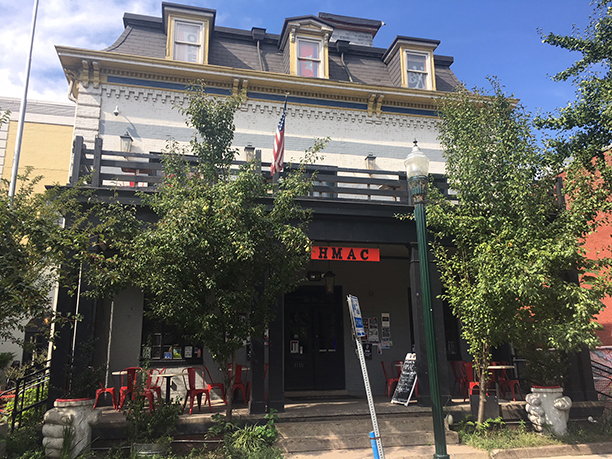
This week, we recap the latest developments in Harrisburg’s Act 47 saga, including an effort to lobby the state legislature and the impending deadline to adopt a state-approved Act 47 exit plan. We also discuss HMAC’s recent bankruptcy filing and what the business means to midtown Harrisburg.

Stream the episode here, or subscribe to TheBurg Podcast on iTunes.

Read more about the topics covered in today’s Burg Podcast at TheBurgNews.com.

City Council to consider home rule ordinance as Act 47 deadline nears.

Papenfuse eyes three-year commuter tax as Harrisburg prepares for Act 47 exit.

Following online outrage and revenue hit, HMAC files chapter 11 bankruptcy as a prelude to sale

State grant earmarked for HMAC could be jeopardized by bankruptcy filing, CREDC president says.

TheBurg Podcast is released semi-monthly by TheBurg Magazine. It is recorded in the offices of Startup Harrisburg and produced by Lizzy Hardison. Special thanks to Paul Coolley, who wrote our theme music.

Continue Reading

Mayor “strongly against” AutoZone store coming to vacant lot on Maclay.

AutoZone will purchase the vacant lot at 645 Maclay Street from Harrisburg-area developer The Vartan Group, pending approval of its proposals by the city.

A national auto-parts chain is poised to build a new location on a vacant lot in Uptown Harrisburg, much to the chagrin of Mayor Eric Papenfuse.

Memphis-based retailer AutoZone is in the final stages of purchasing a 1-acre lot at 7th and Maclay streets from the Buonarroti Trust, a subsidiary of the Vartan Group development company, confirmed Nicole Conway, Vartan executive vice president and general counsel, on Thursday.

AutoZone plans to build a full-service retail location on the lot, which has been vacant since the 1970s.

AutoZone already operates franchises in the Harrisburg suburbs, including in Lemoyne and Swatara Township. A new location in Harrisburg would make it the city’s first national retailer for car parts and accessories.

The sale of the lot at 645 Maclay St. is pending the approval of project proposals, Conway said. She did not disclose a price.

AutoZone has already petitioned the city to vacate unnamed alleys on the property. Eliminating these “paper streets” – so called because they exist only on maps and not actually on the site — would consolidate two tax parcels into one, developable tract.

The measure could come before City Council by the end of the month.

AutoZone must also submit a land use development proposal for approval by the Harrisburg Planning Commission and council.

The project would give new life to a long-vacant property and bring jobs to the city. But Mayor Eric Papenfuse stands strongly against it.

“It’s inappropriate, in my opinion, for the gateway to Harrisburg,” Papenfuse said.

The city’s “Northern Gateway” encompasses the area east of Midtown Harrisburg, close to the interchanges to I-81 and state route 22. Its proximity to major highways lends the area high visibility from motorists travelling in and out of the city.

Vartan founder John Vartan began buying property in the area in the 1980s, hopeful that it would become a prime target for development. Today, however, much of the corridor remains either empty or blighted.

“Unfortunately, there has not been much interest in development on that corridor,” Conway said.

The most recent developments in the Northern Gateway area have been government projects closer to Midtown – the federal courthouse at 6th and Reily and the state archives building at 6th and Harris. The Vartan Group also developed the mixed-use 1500 Condominium project on 6th Street in 2012.

Conway said she was “confused and a little disappointed” by the mayor’s opposition to the AutoZone project. She disagreed with his claim that an auto parts retailer was a poor fit for the location, where neighboring businesses include gas stations and industrial properties.

She also said that AutoZone would be the first national retailer to undertake new construction in Harrisburg since the 1970s.

“The fact that a national retailer wants to come in and build new is big,” Conway said. “It says to another retailer that [Harrisburg] is a good place to locate, and we hope it will bring additional business into the area.”

Conway added that the project would not use any public subsidies, such as local tax abatement or state grants.

“This is straightforward, market-rate construction with no giveaways from the city,” she said.

AutoZone approached Vartan about the property in late 2017, Conway said. It was the first serious inquiry about the lot that the developer had received in years.

Even if the mayor opposes the project, there’s not much he can do to stop it. The project would conform with the “commercial general” zoning designation, and Conway said that AutoZone has complied with the city’s planning process.

The mayor could theoretically veto any land use development proposal that council passes. But, since if the proposal complies with city zoning code, it would be subject to a costly legal appeal.

AutoZone did not respond to requests for comment for this story.

Mayor Eric Papenfuse submitted the following comment after this article was published: “The city of Harrisburg is most assuredly open for business. I support all responsible development projects. This is a gateway corridor for the City and deserves something extraordinary that will help spur the adaptive re-use of the nearby abandoned Hudson Building. This particular design is much better suited for a suburban strip mall than a growing, progressive City looking to emphasize neighborhoods and safe streets over cars and commuters.”

Continue Reading

Vote by state legislature today could allow Harrisburg to exit Act 47; shed status as “financially distressed” city.

Mayor Eric Papenfuse was joined outside of City Hall this morning by members of the city’s police and fire bureaus, whose jobs would be endangered if the city entered receivership.

Today could be a historic day for Harrisburg.

The state legislature is scheduled to vote on a measure that would enable the city to exit Act 47, the oversight program for financially distressed cities. A proposed change to the state fiscal code would allow Harrisburg to preserve the augmented taxing authority it gained under Act 47 and spare it from entering receivership for the second time in its history.

If the measure passes, the city will be able to maintain its current revenue streams, preserve its staff and services, and avoid raising taxes indefinitely.

“We are averting a financial catastrophe,” said Mayor Eric Papenfuse. “If the legislature does not act today, we would lose $12 million in revenue that is absolutely necessary to our city.”

Papenfuse was referring to the $12 million of revenue generated by the city’s earned income tax and local services tax, both of which more than doubled when the city entered Act 47. The oversight program allows distressed cities to pass tax hikes beyond what is allowed under state tax code.

If the legislature does not approve the measure, the city would enter receivership and adopt a new financial recovery plan. That would bring an astronomical property tax increase for Harrisburg residents, since the new plan would not necessarily preserve the city’s current EIT and LST rates, Papenfuse explained.

Papenfuse believes there is enough support for the vote to pass.

Last night, Papenfuse reported that he had entered unsuccessful discussions with House Speaker Mike Turzai, who urged the city to reduce its spending or enter receivership. Papenfuse said that he made little headway convincing the Republican that the city has already taken every possible measure to cut costs and privatize assets.

Under its first financial recovery plan, Harrisburg leased its parking assets and sold its trash incinerator. Residents still pay dearly for those services – Papenfuse said today that the city’s trash and parking rates are higher than any neighboring municipality. It also pays high water rates to Capital Region Water, the public authority that controls its water and sewage system.

“The citizens of Harrisburg are taxed enough,” Papenfuse said. “There is nothing left to privatize.”

But in the past 12 hours, Papenfuse said, discussions with House and Senate leadership improved, resulting in a promise to call the measure up for a vote today, the last day before the legislature adjourns summer recess.

Once the acrimony dissolved, Papenfuse cancelled plans for city officials to march to Turzai’s office in the state Capitol complex. The mayor appeared instead in front of city hall with members of the city’s fire and police bureaus, whose jobs would be threatened by the potential $12 million revenue loss.

The mayor wore a tie stamped with coiled rattlesnakes, the insignia of the Revolution-era “Don’t tread on me” flag, to mark the occasion.

The legislative action marks the culmination of a months-long lobbying effort by the city. In January, the administration entered a 12-month, $60,000 contract with Maverick Strategies, a local lobbying firm with ties to Republican leadership. Papenfuse said that he has logged more than 40 meetings in the Capitol to educate lawmakers about Harrisburg’s unique financial plight.

Half of Harrisburg’s property is tax-exempt because it is owned by state agencies or non-profits. Most of the city’s population lives at or below the poverty line, and its median home value sits at $44,000.

Those factors make it difficult for the city to maintain local services and infrastructure that serve more than 40,000 commuters each day.

Turzai could not be immediately reached for comment.

Continue Reading