Tag Archives: harrisburg

Blameless in Harrisburg: Fiscal calamity has no owners.

Harrisburg is a poster child for fiscal disaster.

It has more debt per capita than any city in the country. It’s been taken over by the state, which is forcing it to sell its most valuable assets to pay down creditors. Few doubt it eventually will have to file for bankruptcy.

So, who’s responsible for this complete train wreck?

Evidently, no one.

Not Stephen Reed, the mayor who controlled the city for 28 years.

Not Fred Clark, Reed’s principal ally on the Harrisburg Authority.

Not Dan Lispi, who oversaw the incinerator retrofit, the main cause of Harrisburg’s fiscal nightmare.

Not officials with the state Department of Community and Economic Development, which signed off on a long series of incinerator financings over many years.

Just ask them.

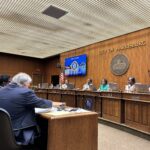
Last month, a state Senate committee did exactly that, giving the public a rare chance to hear from the players who originated, managed and plowed through one scheme after another to salvage a foundering trash burner.

That incinerator now has the city, which backed most of its debt, in hoc for some $340 million, more than twice what the facility is worth.

Indeed, it was a galling spectacle to witness the people who led the charge into Harrisburg’s financial crater dodge responsibility for it.

Adding to the surrealism of the event–Reed spent much of his appearance schooling senators on how to change state law to provide greater oversight of municipal bond issues.

He had a multi-point plan to strengthen the weak oversight that allowed his administration to drown Harrisburg in debt.

And he’d be happy to write it all up and act as an adviser, as well, he cheerfully told the Senate committee.

So, in the world of Steve Reed, who was to blame?

Well, the former mayor and his people got some really bad advice from people they trusted.

Numerous engineering reviews of the proposed design by Barlow Projects Inc. supported its ultimately flawed technology, Reed said.

Numerous reviews of the project’s finances by certified professionals affirmed that project costs were solid and that the incinerator’s revenues would pay for its debt, testified the former mayor.

Sure, Barlow never secured a performance bond to back the quality of its work, but nobody realized that at the time. If his administration had any flaws, it was to be too trusting, Reed implied.

And how about the many damning allegations in the Harrisburg Authority’s forensic audit of the incinerator mess?

Charges that numbers were cooked so debt would appear self-liquidating; bonds were issued so that fees could plug holes in the city budget; fees were diverted to buy artifacts; political allies were rewarded financially; City Council was lured into supporting more debt.

None of that happened–or it happened without the key players knowing. In some cases, important issues weren’t addressed at all, as Reed and his allies artfully dodged several of the senators’ tougher questions.

At the tail end of October, the Senate committee was slated to reconvene, with a new group of witnesses testifying.

Maybe they’re to blame.
Continue Reading

Uptown Featured in Candlelight Tour

This year’s 39th annual Candlelight House Tour, organized by Historic Harrisburg Association and scheduled for Sunday, Dec. 9, includes 14 historic residences and public properties in the Academy Manor neighborhood.

The tour, “Academy Manor: Degrees of Design,” offers an exclusive look into properties in the northern tier of Harrisburg, where tour-goers will find amazing historic architecture and beauty as they explore the decades of design throughout Academy Manor and Italian Lake.

A stunning display of city residences along the 2nd Street corridor will showcase the homeowner’s personal style and character. Sponsored by Mid Penn Bank, the annual tour highlights the best-of-the-best properties in Harrisburg, all decorated for the holiday and winter seasons.

“You can stop by home of John Reitz and Jo Anne Ross and the McCormick House, which today serves as the Chancellor’s Home for Dixon Univeristy,” said John Campbell, executive director of HHA. “Also the Zembo Shine will be sure to amaze attendees with its Moroccan motifs and stately architecture.”

While not official stops on the tour, the Harris Tower and John Harris Simon Cameron Mansion will be open for visitors to explore. This is a self-guided walking tour and may require individual transportation

The tour is 1 p.m. to 6 p.m., Sunday, Dec. 9. Tickets are $15 in advance and $20 the day of the event at the Historic Harrisburg Resource Center, 1230 N. 3rd St. Purchase tickets online at www.historicharrisburg.com or at various locations throughout Harrisburg. For additional ticket and tour information, call 717-233-4646 or visit www.historicharrisburg.com.

Continue Reading

A Matter of Justice: Will Harrisburg ever see its day?

Will the people of Harrisburg ever see justice done?

Last month, a group of panelists convened at Midtown Scholar Bookstore to discuss the issue, with their answers widely ranging from “doubtful” to “highly likely.”

At the Harrisburg Hope forum, Neil Grover, founder of the taxpayer group Debt Watch Harrisburg, said he is encouraged after last month’s state Senate committee hearing on the city’s incinerator fiasco.

“We’re moving towards justice on a lot of parallel tracks,” said Grover. “I sat through that whole hearing, and I am optimistic about what I heard, partly because there were two very different stories, and they are compelled to go forward and find out who’s telling the truth.”

Tara Leo Auchey, editor of Today’s the Day Harrisburg, agreed that recent events are reason for optimism.

“The Senate Local Government Committee hearings have me very encouraged,” she said. “As Neil said, we’re starting to hear public contradictions.”

Nearly 200 people packed Midtown Scholar to hear from the panel, which included Bishop A.E. Sullivan Jr., the president of Harrisburg’s Interdenominational Ministers Conference, firefighter union leader Eric Jenkins and mayoral spokesman Robert Philbin.

Of the group, Jenkins was arguably the most pessimistic.

He said that the receiver’s office has barely communicated with his union since March, which is troubling as re-negotiation of union contracts is a key element of Harrisburg’s financial recovery plan.

In addition, he is suspicious of the state’s role in driving the recovery process, as it played a key part in allowing Harrisburg to amass such a large debt level to begin with.

“I find it difficult to believe that justice will be achieved when the people who are conducting the task and responsibility of getting justice are the very same people who are culpable for the problem to begin with,” he said.

If nothing else, the forum has showed how far the issue of “justice” has advanced recently.

A year ago, few thought that anyone connected with the incinerator disaster ever would have to answer for their actions.

But, in January, the Harrisburg Authority set the stage for a discussion of responsibility with the release of its forensic audit, a damning analysis of how the incinerator was upgraded and financed.

Both City Council and former receiver David Unkovic then sent letters asking for federal and state investigations and, last month, the state Senate began hearings on the matter.

Grover applied some historical context to Harrisburg’s problems, saying that public malfeasance and corruption date back practically to the founding of the city.

“The cloud over Harrisburg and honesty has been here for a long time,” he said. “I don’t think we’re going to alter that culture.”

In addition, Grover said that the Reed administration constantly wanted to spend more money than the city took in. Therefore, it took irresponsible actions to plug recurrent budget gaps such as diverting utility and bond fees to the general fund.

“Harrisburg was living beyond its means for 30 years,” he said.

Philbin also expressed optimism that, in the long run, Harrisburg would see some type of justice, whether that will take the form of creditor concessions, restitution, or criminal indictments.

In the shorter run, he said that the financial recovery plan, which currently is being implemented, is the first step towards getting the city healthy again.

“At some point down the road, there may be penalties, fines, etc., but we’re talking about a multi-year process to get to that point,” he said. “In the meantime, I think it’s great that we have this [recovery plan] process in place.”

Both Grover and Auchey said they held out hope that those responsible eventually may be forced to make financial restitution to the city or may even see jail time. They further agreed that “justice” most likely would take the form of concessions from creditors–either via negotiations or as part of a bankruptcy process.

“Concessions from creditors are going to happen either voluntarily or by force only because, if you step back and look at the overall picture, there’s not enough money to pay them” said Grover. “There’s just not enough money to put on the table to pay them everything they demand, and you couldn’t tax your way out of this if you tried.”

Auchey added that she hopes for yet another form of justice for Harrisburg–political justice.

“I also have a little “j” justice in my mind in terms of the justice as citizens of this city feeling that we have leadership that we can count on,” she said. “That we feel that we have people in place who will have our best interest in mind–and not just power for power’s sake.”

Continue Reading

People, Bridges, Traffic–Hunting?: Susquehanna River: Where city bustle meets country sport.

“Here they come. They’re banking around that building.”

From his skiff, Chris Price sees the familiar V-shape of a flock of Canada geese heading for their overnight grounds shortly before dusk on a warm, late summer evening.

The flock never gets close enough for a shot by Price, who is joined in the boat by friend James Eirkson and Price’s golden retriever, Pearl.

Instead, the young men look on with disappointment as the geese fly past, high above City Island, with the state Capitol in the background, toward the shore in Shipoke.

Yes, City Island, the Capitol, Shipoke.

The friends are not hunting out in the country or in some remote swamp, but in the busy, densely populated city of Harrisburg.

From the boat in the middle of the Susquehanna River, one can see streams of traffic on Front Street, joggers along the river walk. Pleasure craft drift close by.

And it’s all completely legal.

To the surprise of many newcomers on both the east and west shores, the state allows waterfowl hunting in these Harrisburg waters, as long as hunters don’t shoot into the safety zone, defined as 150 yards from occupied structures on shore.

This situation is perfect for local hunters, as geese and ducks both flock to the numerous little islands and grassy patches that span the mile-wide river. In addition, the stretch of river is easy to navigate and, with numerous boat launches, convenient to reach.

Price and Eirkson, for instance, both live in Riverview Manor, the condominium on Front Street in Midtown Harrisburg. So they can put in practically from their front door.

Some people who live near the river, however, have a different take. The waterfowl season is long. In the Harrisburg area, a three-week resident Canada goose season began Sept. 1, and geese can be hunted throughout much of the fall and winter until Feb. 28.

The even more popular duck season runs Oct. 13 to 20, then again Nov. 15 to Jan. 15.

Therefore, for about six months, volleys of gunfire often start at dawn, startling hard-working people who would rather not be jolted awake at 6 a.m. on a Saturday.

“It’s an annoyance,” said one Midtown resident who asked not to be named. “People who don’t like to be woken up in the morning consider it an annoyance.”

In addition, over the years, some people new to the area have called 9-1-1 with reports of gunshots.

Just last year, one Olde Uptown resident put in a frantic call to police and then reported on Facebook that an all-out gun battle had broken out in her neighborhood.

In a way, this story is an old one, as hunters and homeowners long have had disputes about noise and safety on and near hunting grounds.

However, the situation here is unique, as the sheer density of the population on both sides of the river makes this truly an urban hunting experience–with its own set of benefits and challenges.

Even hunters Price and Eirkson expressed surprise that they’re able to hunt within eyeshot of downtown Harrisburg, with traffic streaming over the bridges that span the river.

“The first time I was out here, I was almost waiting for a police officer to come out because it just didn’t seem right,” said Eirkson. “You have the Capitol and the governor’s mansion and people walking around.”

Other than some noise complaints, there have been few problems between hunters and residents over the years, said Jerry Feaser, spokesman for the Pennsylvania Game Commission.

He believes that the far majority of hunters know and respect the law–that they don’t shoot into the safety zone, don’t shoot when it’s dark out, keep off of privately owned islands and respect bag limits.

To enforce the law, conservation officers patrol the river and cite hunters for unlawful practices, he said.

“You always have somebody who is going to go against the rules,” he added.

Kermit Henning, an avid local outdoors-man, offered some perspective.

He said that waterfowl hunting in Harrisburg goes back a long time, but has become more popular recently due to the decline in the area’s pheasant population, once a preferred prey, and because the river north of Harrisburg can be difficult to access.

“Hunting has really grown here,” he said. “Almost every island now has a hunter on it.”

In addition, in the 1960s and ’70s, Harrisburg police often chased hunters from the river, but the state intervened to stop the practice.

With the increased popularity of the sport, some problems have arisen, Henning said, including shotgun pellets that have fallen on cars and bridges. He said he personally has witnessed conservation officers arresting hunters charged with rules violations.

But, for the most part, the lengthy season proceeds without much incident. Even residents who, at first, are surprised–even shocked–that hunting is allowed in this congested area eventually seem to accept the loud wake-up calls at dawn as just another inconvenience of living in this always-challenging capital city.

“It’s strange that this presumably rural activity is allowed here,” said a Midtown resident. “But, given the menu of problems involved with living in this city, it probably doesn’t rise to the level of major concern.”

Continue Reading

Coming to HBG: Great music, all month long.

In Harrisburg, the music scene starts out strong this month with three days of bands on three stages at the annual Kipona Festival, Sept. 1 to 3–then only picks up steam with the Dauphin County Jazz Festival the following weekend.

However, it’s not until closer to the end of the month that things really reach a peak.

On Sept. 21, Harrisburg’s own Jet City Vega touches down in HMAC’s Stage on Herr, delivering its style of finely polished guitar-and-vocals rock.

Jet City Vega deftly combines influences both old and new, as can be clearly heard on such tracks as “This One Kid” and “Only Human.” From song to song, one can detect more than 30 years of evolving sounds that range from arena rock to metal to grunge.

In fact, it’s that respect for the history of rock, in addition to rhythm and blues, that propels the quartet, formed just last year from members of other local bands. These guys are clearly students, as well as masters of the genre, something often difficult to find on today’s scene.

If nothing else, one should attend a Jet City Vega show to check out the guitar-playing of Brandon Reece, whose style and skill recall some of the legends of the instrument from the 1970s.

Across town, on Sept. 26, Arrested Development makes a stop into the Abbey Bar at Appalachian Brewing Co., bringing their brand of socially conscious hip-hop and R&B that today seems so lost–and is so needed.

Yes, my young friends, there was a time when rap meant more than scoring bling, bucks and booty–and exacting revenge on those who prevented the acquisition.

Two decades ago, Arrested Development arrived on the scene in dramatic fashion, winning a Grammy Award for Best New Artist and being named Band of the Year by Rolling Stone.

Since then, the group has seen its ups and downs, even breaking up for a time. However, these serious musicians could never leave the world of composing songs and performing together. Experience beloved oldies such as “Mr. Wendal,” “People Everyday” and “Tennessee,” as well as the band’s newer material.

Just two days later, on Sept. 28, the local scene switches course with the alt-folk duo, Over the Rhine, which checks in at Midtown Scholar Bookstore.

The husband-and-wife team of Linford Detweiler and Karin Bergquist has opened for such folk giants as Bob Dylan, Ani DiFranco and John Prine, but the couple’s 20+-year career in music is best appreciated in longer form and in an intimate venue like Midtown Scholar.

Over the Rhine is not your typical folk group, with deeply felt, finely composed songs based just as often on Detweiler’s piano as Bergquist’s guitar, as heard in a song such as “I Want You to Be My Love.” Bergquist’s sweet soprano adds a measure of beauty even to difficult compositions and dark subjects, like in the song “She.”

Does your musical taste lean to the strong vocal-and-piano style of Sarah McLachlen, sometimes mixed with the lighter touch of Cowboy Junkies? Then buy your ticket immediately.

Continue Reading

State of a State Promise: Gov. Corbett and his pledge to Harrisburg.

Last October, the state of Pennsylvania made a promise to the city of Harrisburg.

In signing the “Declaration of Fiscal Emergency,” Gov. Tom Corbett declared that it was necessary to intervene in city affairs “pursuant to the Commonwealth’s paramount right and duty to maintain law and order and protect and preserve the health, safety and welfare of its citizens.”

At the time, I wondered whether Corbett took his pledge seriously.

Having stated its responsibility, would the state really act to protect the “health, safety and welfare” of the people of Harrisburg?

Would Corbett make investments and deploy resources into his capital city to help ensure safe, clean streets, a functioning infrastructure and respectable schools–the things I believe are necessary for a healthy, safe, and productive society?

Or if it was just a pro forma declaration he signed, a legal formality, a hoop he had to jump through so that the state could do with Harrisburg what it wanted?

The verdict is now clear: pro forma, legal formality, hoop.

A year is plenty of time to see there are no more police on our streets (in fact, there are so few that nearby towns last month had to send in cops to bolster the city’s depleted force), no more workers to fix our crumbling roads, no attempt to address the many problems in the city and schools.

In sum, there has been little investment or effort by Corbett to ensure the health, safety and welfare of the city’s people.

That’s not to say that the state hasn’t coughed up any money–it has. A million or so has been spent on lawyers, consultants and bureaucrats to do what the architects of the state takeover always had in mind–force the people of Harrisburg to sit down and take their medicine.

Property taxes have been raised. The city’s most valuable assets are being sold. The state last month went to court to force the City Council to raise the earned income tax on residents. Municipal bankruptcy has been taken off the table–twice.

The state won’t even throw in for several new positions, such as chief operating officer and communications director, that it is forcing upon the city. These jobs may or may not be necessary, but, regardless, they are state-mandated burdens placed solely upon already stressed city taxpayers.

Harrisburg residents always knew we’d have to accept a share of pain to help retire the incinerator debt, now estimated to be somewhere north of $320 million.

Maybe that’s our punishment for naively trusting the people we elected to act in our best interest, along with their advisers and hangers-on. We accept that.

However, there has been no corresponding responsibility from the state and, with the exception of District Attorney Ed Marsico, little help from Dauphin County, which is neck-deep in the incinerator debacle.

Instead, the state and the county have worked tirelessly to ensure that the complicit creditors get paid in full solely by the people of Harrisburg.

Going forward, that obeisance to Wall Street will further strip the city’s ability to serve its people.

By selling assets, making the city a more expensive place to live and insisting creditors are made whole, less money will be available to police our streets, fix our roads, invest in infrastructure, educate our children.

And, assuming that past is prologue, I expect little future help from higher levels of government.

Almost a year ago, Gov. Corbett pledged, in writing, to protect the health, safety and welfare of the people of Harrisburg. Since then, he has done little more than watch the city continue to flounder and struggle. In fact, the situation may be worse today, as some of our best firefighters, police and municipal employees, tired of the dysfunction and fearing the future, have fled.

It’s now obvious that the statement signed by the governor was just a banality. It was a way to rationalize asset sales, tax hikes and the transfer of money to speculators who, years earlier, knowingly made a very risky bet–and lost.

Continue Reading

A Hop Around Harrisburg: New website helps you navigate the city, its amenities.

From across the Susquehanna River, Harrisburg can seem dense and intimidating.

The streets, the neighborhoods, the buildings–where does a person with little knowledge of the city begin to explore the shops, the restaurants, the sights?

Adam Brackbill felt just that way. He grew up nearby, in Mechanicsburg, but, to him, Harrisburg seemed like an alien place.

“When I first came into the city, I didn’t even know where to get a cup of coffee,” he said.

The 22-year-old Brackbill had made the trek across the river to locate his Web design company, Render Innovations, a business he had started while still a student at Messiah College.

He wanted to be in Harrisburg because the city was busy and vibrant commercially, with so many small and mid-sized businesses he hoped to turn into clients. However, he had no idea where to start exploring.

Then inspiration hit.

If he wondered how to navigate Harrisburg, then others might too. So, he began working on a new online portal to Harrisburg called Hop in The Burg, which he launched last month.

“It started out as a personal project because I didn’t know where to go,” he said. “But it evolved into a place where people can always find out something new about Harrisburg.”

Currently, Hop in The Burg focuses on businesses and services.

Are you downtown and want to know where to get a sandwich? Uptown and need to have some dry cleaning done? Maybe you need some gas or would like to meet friends for a burger and beer?

With a quick search, you’ll find all the options in town, along with a very helpful map and directions to tell you exactly where to go.

Going forward, as more people discover the site, you’ll find reviews, comments, photos and other helpful information, said Brackbill, who also hopes to add an events section.

There are also articles and blog posts with useful and interesting tidbits about Harrisburg. For instance, a recent article tracks former Harrisburg Senators players who are making an impact in the Major Leagues. Another story features a profile of Midtown Scholar Bookstore and another pictorial timeline of the history of Harrisburg.

Brackbill said he doesn’t see Hop in The Burg as a moneymaker. Most of all, he’d like to provide a service to the city, to its residents and visitors, with just enough advertising and sponsorships to support the site.

“The purpose is mostly just to provide a service, to help people,” he said.

Well, he does have one other objective, which he’s not shy about stating.

He’d like to entice his fellow West Shore-ites to make that often daunting, mile-long journey over a bridge that seems to separate cultures as much as it does bodies of land.

Since coming to Harrisburg, Brackbill said he’s been astounded at the city’s vibrancy and variety, as well as its sense of community.

He loves walking the streets of Olde Uptown, where his office is located, getting lunch at Alvaro’s or coffee at Little Amps.

In Midtown, he’s watched the river flow by while sitting on the porch of City House Bed & Breakfast, where his cousin, Bruce Burchfield, is the innkeeper.

So, he wants to do his part to dispel the notion, shamelessly promoted by local media and believed by many, that Harrisburg is little more than crime and bankruptcy.

“I want people to find out something new about Harrisburg,” he said. “I’d like them to understand that there’s a tight community here with things to do that people just don’t realize.”

Hop in The Burg is at www.hopintheburg.com. Adam Brackbill and Render Innovations can be reached at 888-594-0446 or www.renderinnovations.com.

Continue Reading

Day at the Trolley Museum: Transport back to the midstate’s past.

The Rockhill Trolley Museum, a cultural resource of central Pennsylvania since 1960, is located in Huntingdon County, about 90 minutes west of Harrisburg. Among its collections and exhibits is a rare find – the former Harrisburg Railways Company trolley car #710.

Built in Philadelphia by J.G. Brill Company in 1913, it served Harrisburg until the end of trolley car service on July 15, 1939. The car was then stripped of its wheel assemblies, known as trucks, and nearly all of its other running gear and sold to become a summer home near Mount Holly Springs. It remained there until 1986 when it was acquired by the museum and, after removal of the structure built around it, moved to the museum shortly before it would have been lost forever.

Since its acquisition, the museum has ensured the car is kept protected from the elements and has actively searched for the components necessary to restore the car, an effort which continues today.

The car will require a tremendous amount of effort to return to running condition again but is in the museum’s long range plans. An individual or corporate entity interested in sponsoring the restoration of this historic car would help accelerate the restoration process. Car #710 is the only former Harrisburg trolley car preserved anywhere in Pennsylvania.

The trolley museum is also home to two other unique and historic central Pennsylvania trolleys; former York Railways car #163 and former Valley Railways car #12. York #163 was built in 1924 and after streetcar service ended in York in 1939, spent 33 years as a summer cottage before the museum restored the car over a 17 year period. Beautifully restored, the car has regularly carried visitors since 1989.

Also in the museum collection is former Valley Railways car #12, which served in the Carlisle area. This car was also used as a home after 1923 and was acquired in 1985. Built in 1895, it is the oldest car in the museum collection and, like the Harrisburg car, components are actively being collected for its eventual restoration to running condition.

For rail enthusiasts or the genuinely interested, the trolley museum is a good day trip from Harrisburg.

Matthew W. Nawn is First Vice President of the Rockhill Trolley Museum, 430 Meadow St., Rockhill Furnace, Pa. For more information on the museum, visit www.rockhilltrolley.org.

Continue Reading

Community Spirit: New magazine sets out to look for America.

Daniel Webster is a tall, angular young man who exudes a sense of purpose. One afternoon in his studio apartment along Front Street, he described a publication that he’s been raising money to produce this fall.

“Journalism isn’t my profession,” the 25-year-old said, relaxing on his sofa. “It’s always been a sincere interest.”

Sincere enough that this Messiah College graduate – where he earned a degree in English followed by a graduate degree in creative writing at Vermont’s Bennington College – pursed an idea, a journal capturing the people of the land where he lives.

His pursuit brought him in 2011 to create “Local: A Quarterly of People and Places.” The pitch on its website – www.localmag.org – is: “Local is seeking out the overlooked American narrative, chronicling one town per issue.”

It follows in the tradition of such periodicals as the Utne Reader. Webster explained, “We do everything a traditional magazine does – investigative reporting, humor columns, features, etcetera – just from the vantage point of a single place.”

In June, Webster and his editorial team raised more than $20,000 on Kickstarter, a web-based campaign program to help fund creative projects. With the money, Webster hopes to launch the first of four issues per year in October.

Eventually, said Webster, “We’d like enough advertising to support us.”

The issues also include a special section called Annexed, which looks at the state and region Local is reporting from. Webster said the initial coverage area is Philadelphia, Williamsport, and Harrisburg, but the aspirations are national.

The first issue will feature Pennsylvania’s Jersey Shore, a misnomer of name for a town nestled in the mountains of the Keystone State. Webster said the town has a history of rich characters such a Prince Farrington, a popular bootlegger in the 1920s.

“They said he was one of the best whiskey makers on the East Coast,” Webster said, chuckling.

As with all places Local will feature, Webster said, the Jersey Shore story delves deeper; how the community began, what life is truly like there, its relevance to American culture. “To show there’s a lot going on, you got to dig a little bit,” he said.

Local is a collaborative effort done voluntarily.

The editorial team, 10 friends and associates, come from varied backgrounds: Webster, the editor-in-chief, is sustainability projects coordinator at Dickinson College, while Allison Davis, the managing editor, is an editorial assistant at Elle Magazine.

As a new journal in search of America, Local’s mission statement, here in part, is simple: “We will explore why Main Street still matters, communicate curiosities without cynicism, and report on serious, germane issues, preserving heritage where it’s dying and thriving.”

Visit Local at www.localmag.org.

Continue Reading

A Day of Art: Gallery Walk adapts as the city, art scene changes.

Like the ebb and flow of the Susquehanna River, caused by weather and seasonal change, the art in Harrisburg’s annual Gallery Walk, as well as the event itself, often reflects the changing times in the city.

When the Art Association of Harrisburg conducted the first walk 24 years ago, there were 15 galleries participating. The number has fluctuated over time, only a few years ago it reached as high as 31 galleries. This year, there are 19.

“This has been the way it’s always been, some come and some go,” said Carrie Wissler-Thomas, president of the Art Association.

Economic headwinds and last year’s flood, which postponed the event for the first time in its history, have taken a toll on gallery owners. The latest, Hodge Podgery, a Midtown shop that was to feature its artists’ Funky Fiber Art, recently closed its doors.

Yet, for a few galleries that have closed, “there are a few new ones that have opened,” Wissler-Thomas said. “It’s a treat for me, and gratifying, to hear the galleries talk each year about who they will be featuring.”

This year’s Gallery Walk – patrons can walk, drive or hire a bike taxi to visit the galleries scattered across the city – is Sept. 9. Patrons can fine plein air artists at their easels in the gardens at the Governor’s Residence and the hit-and-run street band, No Last Call, appearing at any given corner, performing a variety of tunes.

“We’re mostly playing rock covers and funk,” said Ted Reese, a trumpeter who works for the Harrisburg Symphony Orchestra. “We’ll probably have between 15 and 20 people playing.”

It’s a pleasant way to spend a Sunday afternoon, and has drawn people from as far as Allentown, State College, Reading and York. The walk begins at the Art Association, but patrons can choose whichever galleries they want to visit.

One of the galleries is the lobby, designed to exhibit art, at Penn National Insurance on Market Square. It will feature oil paintings by Hershey’s John Davis. Another is Historic Harrisburg Resource Centre, 1230 N. 3rd St., featuring art and architecture.

At the State Museum, 300 North St., patrons have a last chance to view the annual “Art of the State” exhibition before it closes. A tour by select featured artists is scheduled at 2 p.m. that afternoon.

The farthest gallery is Mitrani at Home, just north of the city at 3535 Walnut St., where local, national and international artists’ renderings of their favorite animals are featured. Proceeds from sales of pet toys and furniture benefit the Humane Society of Central PA.

The Art Association, 21 N. Front St., premiers its fall membership exhibition, “Out of the Blue,” following last year’s color-themed exhibit, “Red Hot.” The Melina Blackwell Acoustic Duo will provide music, including some blues, all day.

“We’re sort of on a color kick,” Wissler-Thomas said.

Patrons to Gallery Walk will see exhibited art and photography by hundreds of artists as they step into each gallery. The event is free, designed more to promote artists’ works than make sales, although art is for sale, Wissler-Thomas said.

“It’s just a way to get people to realize how much art there is,” she said.

The 24th Annual Harrisburg Gallery Walk is 11 a.m. to 6 p.m., Sunday, Sept. 9. The event is free. For more information, visit www.artassocofhbg.com/GalleryWalk or call 717-236-1432.

Continue Reading