Tag Archives: harrisburg

Eat, Play, Live: Despite its troubles, Harrisburg’s convenience, vibrancy continues to attract families.

Genevieve Fitzgibbon picks up her kindergartner from the Londonderry School in Harrisburg early on a Friday. The two then decide to walk from their home to the Yellow Bird Café in Midtown to share a mother/daughter lunch on this special half-day off from school and from Genevieve’s job as director of grants and special projects at Keystone Human Services.

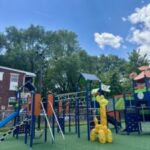
Here, 6-year-old Lilia sees a friend from school, and the two giggle over homemade pastries while their moms chat over coffee. Afterwards, they stroll through the State Museum, then walk together to the playground at Sayford and Penn streets. Eventually, they return to Genevieve and Lilia’s Green Street home, where the moms linger on the front stoop and the girls jump rope until it’s time to come in for dinner.

Later, Genevieve and her husband, Chris Wonders, director of the Institute for Public Service at Shippensburg University, take their daughter over to Riverfront Park – which the family jokingly calls the “front yard.” Lilia rides her bike as her parents walk their dog and watch the sunset from the banks of the Susquehanna.

“I know it sounds so rosy, but I really do feel an amazing sense of joy walking around Harrisburg with my daughter,” said Genevieve, who grew up in Trenton, N.J., a city she says is similar to Harrisburg in many ways – from its geographic size, to the historic homes, ethnic makeup of its citizens, capital city status and even a bordering river.

“On my block growing up, we knew all our neighbors,” Genevieve continued. “We socialized on our front stoops; we had block parties; we looked out for each other. I am happy that we have found a similar community in Harrisburg in which to raise our daughter. And I am proud that Lilia will always have this vibrant urban environment as her touchstone.”

But Genevieve explained that Harrisburg and her hometown of Trenton also share some similar problems, including poor-performing public schools and neighborhoods that struggle with blighted properties and crime. Parents who choose to raise their families in Harrisburg must come to terms with these issues.

“I recognize there are challenges to raising children here,” she said. “Many of our neighbors with children have chosen to move out of the city before their kids reached school age. Though this makes me sad,”

Genevieve said she respects their decision.

“I don’t begrudge them for their choices,” she said. “We are fortunate to be able to afford to send our daughter to a private school, but, I’ll admit, it does sting a bit when you’re already paying school taxes and you don’t have a viable public school option.”

That, however, is a tradeoff Genevieve and her husband are willing to make for the benefits of city life. Genevieve says Lilia’s weeks are filled with the cultural activities. She joins her parents at the symphony, large and small theater performances, gallery openings, festivals and fun restaurants. She’s taken art classes at the Art Association of Harrisburg on Front Street, and she is beginning piano lessons this summer at the State Street Academy of Music.

“We love that we can walk to all these offerings and so easily take advantage of them,” said Genevieve. “But even more than that, we love that these places are just a normal part of Lilia’s childhood neighborhood. We don’t have to make a special trip into the city for these programs and events. It’s all just a part of where we live.

Honest Living

Genevieve, Chris and Lilia also enjoy the regular happenstance of seeing friends out and getting to socialize without having to make plans. One weekend, the three of them dined at The Sturges Speakeasy on Forster Street on the eve of a fundraiser for the Susquehanna Art Museum. There, they ran into another Midtown couple raising a family in the city.

Brandon and Shannon Williams have a 7-year-old daughter, Anna, who attends St. Stephen’s Episcopal School on Front Street. Anna and Lilia met each other at a dinner party hosted by neighbors and have continued getting to know each other during Saturday mornings spent at “The Little Scholar” in the Midtown Scholar Bookstore.

Brandon, an attorney in Camp Hill, said his family thrives on the energy and familiarity of his Midtown Harrisburg neighborhood. He relishes the idea of his daughter hopping the fence behind his row home to play with the neighbor kids and enjoys seeing the same faces over and over on weekend errands. Shannon serves as executive director of the Harrisburg Authority – a short commute to work.

Anna walks with her father to the Broad Street Market on weekends. Brandon buys their meat from Hummers and his poultry from an Amish stand where he enjoys chatting about the kind of cut he wants to cook in a specific dish. He said the vendors often remember his choices the next time he visits, and they discuss cooking methods.

Brandon grew up in a rural area outside of Altoona, Pa. He could view only two neighbors’ houses from his own. If someone was going to visit his family there, they had plenty of time to straighten everything up in the house and prepare refreshments.

“Where we live now, people stop by casually. The kids naturally play together. You talk when you are out shoveling the sidewalk. There’s an honesty that comes with living so close,” he says. “They even see you taking your garbage out in your pajamas,” he laughed.

Just before buying their home in Harrisburg, Brandon and Shannon rented a New Cumberland townhouse with an attached garage. Brandon said the couple would arrive home in the evenings, park in their garage and go inside, as did all of the neighbors. “We lived there for three years, and I could not tell you if my next door neighbor was a retired couple, college students or a family with a baby.”

When it came time to buy a house, Brandon and Shannon compared prices of suburban houses with those in Midtown Harrisburg. They found a three-story Harrisburg home with 14-foot ceilings, exposed brick walls and hardwood floors. They fell in love with the house and the price – half of what surrounding suburban homes were listed.

Although they pay tuition for their daughter’s private school education, the lower mortgage cost evens it out, said Brandon. His heating bill is also manageable in the family’s row home. “You have 16 feet of insulation on either side – it’s called neighbors.”

Best of all? “No garage,” he said.

Pleasant Surprises

Floyd Stokes, a local children’s book author best known for his SuperReader program, serves as executive director of the American Literary Corp. He and his wife LaShana have two children at home. The couple’s 4-year-old daughter, Olivia, attends the Londonderry School, while their 8-year-old daughter, Madison, participates in the Pennsylvania Cyber Charter School.

LaShana teaches at Harrisburg Area Community College and spends time with the couple’s daughters, exposing them to the wealth of cultural resources in and around the city. “We love the fact that we have the Whitaker Center for Science and the Arts, the State Museum and the State Libraries, all within a walk from our Midtown home,” said Floyd.

“While we have hundreds of books at home, we are constantly making trips to the local libraries to see what’s new. I don’t know how my family keeps all of the books separated, but they do!” he said.

Spring and summer bring vibrant annual festivals to the riverfront and region, and Floyd and LaShana enjoy taking their kids to experience all that the events have to offer.

Floyd echoes the sentiments of many Harrisburg community members. “It seems like you are always in for a pleasant surprise when you are out and about in Harrisburg. It is small enough that you really get to know the people in your neighborhood, and your kids enjoy seeing friendly faces at local events.”

Stop and Chat

For Genevieve and Chris, one of the greatest benefits of the city is the diversity of people they interact with on a regular basis: the mix and mingle of the Broad Street Market, community forums at the Midtown Scholar Bookstore, picking up a weekly share of produce from the Joshua Farm urban garden up at 18th and Holly streets and friends from a broad variety of backgrounds.

“Democrats and Republicans, gay and straight, young and old, religious and atheist, single and married, kids or not, and all shades of skin color,” said Genevieve. “These are our Harrisburg friends and community, and the people Lilia is growing up knowing.”

In turn, Lilia teaches her parents.

“Every time we go somewhere new, she notices something that could have slipped by us. Our daily experience is broadened by her perspective,” said Genevieve.

She then uses the experience of rearing her child in an urban area as a teaching tool for her daughter. As with any child, Lilia asks about aspects of her environment that catch her attention.

“Are there some not-so-nice people? Do you see trash on the street? Are there times when you need to be extra careful? Yes, yes and yes. We are not preparing our daughter to live in Utopia. But the beauty is that she asks us, and we talk about it. We experience the good together, and we also have a chance to witness some of the bad together. That gives us the opportunity to discuss how to react to the bits that aren’t so wonderful and to figure if there’s something we can do about it. We talk to Lilia a lot about our role in the community and what it means to be a good neighbor and a good citizen.”

A unique aspect of Harrisburg is its location on the Susquehanna River. The river is a tremendous amenity, but it comes with its own set of added responsibilities.

“We live in a river city” said Genevieve. “We can’t let trash and pollution get washed downstream from us, just as we don’t want it from upstream. Lilia is conscious of that, and she is aware of how she wants her local playground and parks to be fresh and somewhere that she can go to play. It’s our city, and we have a role in making it what we want it to be. Lilia is starting to recognize how her own actions make a difference, for better or for worse.”

Genevieve moved to Harrisburg about a decade ago after living in Chicago. At the time, she worried she might feel cramped and bored in Harrisburg, longing for a larger city. But her experience has surprised her.

“Every time I turn around, I learn about something new that’s happening here. Harrisburg has a strong community base and a large number of loyal, dedicated residents. When there is a need for something to be done, residents have a chance to be a part of it, even take the lead, and help make it what they want it to be.”

These sorts of hands-on opportunities can be harder to come by in big cities where many things are already designed and pre-packaged, she said.

“It is in part because of our city’s smaller size, and also because of our current challenges, that Harrisburg affords many opportunities for rolling up your sleeves and making something happen. And this is a wonderful environment for teaching children about activism and creativity and how you can have a real impact on your community.”

Another benefit that Genevieve says her family experiences is that the city is small enough that you truly get a sense of belonging to a community without having to do much to make this happen.

“You start to see the same faces again and again, so you really get to know your neighbors and local community members,” she said.

Some of the most authentic experiences of getting to know your neighbors come from just sitting on your front stoop.

“If we’re out front on a nice day, we’ll end up saying hello to at least a dozen neighbors from our block and the few surrounding blocks,” she said. “And most will stop to sit and chat for a while.”


Continue Reading

May News Digest


Receiver Provides Update

Harrisburg is inching closer to resolving its financial crisis, even as the city’s red ink continues to flow, says receiver William Lynch.

In his court-mandated quarterly update, Lynch states that:

  • “Active negotiations” continue “towards a closing” of the sale of the city’s troubled incinerator to the Lancaster County Solid Waste Management Authority and the long-term lease of the city’s parking facilities to Harrisburg First, an entity of financial services giant Guggenheim Partners.
  • The receiver has changed course on the proposal to hire professional managers for the city’s water and sewer system. The plan now is to create a regional operating authority for Harrisburg and surrounding jurisdictions. Part of this proposal “involves a resolution with the suburban municipalities on the overcharges for sewer system operation.”
  • Contract negotiations continue with the city’s three unions with the hope that agreements will be reached “as early in 2013 as possible.” In the meantime, Lynch has directed the city not to implement salary increases that were part of contract extensions.
  • The hiring last year of Chief Operating Officer Ricardo Mendez-Saldivia has “greatly strengthened the city’s administrative capacity” and helped it complete its 2010 audit. The 2011 audit should be finalized in mid-May.
  • The city’s financial picture remains troubled. Harrisburg ended 2012 with a two-year cumulative deficit of $13 million, most from two missed general obligation bond payments. In March, Lynch ordered the city to skip another $5.2 million general obligation payment. In all, Harrisburg expects revenue this year of $51.4 million and expenses of $58.4 million.

Lynch’s next quarterly update is slated for June 30.

Private Trash Collection on Tap

Come next year, Harrisburg residents may have their trash picked up by a private hauler.

The city has issued a request for proposals to privatize its trash and recyclable collections, which long has been the duty of the city’s Public Works Department.

Turning over trash collection to the private sector is part of the receiver’s financial recovery plan to cut the cost and improve the service of trash removal in the city.

Interested haulers have until June 14 to submit their proposals to the city, which would award the contract on July 12. Under the plan, private collection would begin Jan. 1.

Harrisburg collects trash and recyclables from about 15,330 residences and about 1,400 commercial sites.

The full request for proposal is available at the city’s website, www.harrisburgpa.gov.

New Uptown Garden for GUI

Green Urban Initiative last month took the first steps towards creating a new community garden in Uptown Harrisburg.

Volunteers cleared debris, constructed gardening beds and tilled soil to prepare the ground for planting at 2257 Atlas St. Previously, the property was overgrown and blighted, filled with litter and debris.

GUI plans 15 gardening beds, providing participating residents with the opportunity to grow healthy, local food.

Last year, GUI planted an Uptown garden nearby at N. 6th and Curtin streets. However, that garden was bulldozed by the city at the direction of City Council President Wanda Williams, who said she had received complaints that the garden had attracted illicit activities.

Millworks to Host Restaurant, Art Space

Chalk up another renovation for Harrisburg, as the dilapidated Stokes Millworks building is set to become a farm-to-plate restaurant and artist studios.

City businessman Joshua Kesler announced last month that he purchased the historic, Art Deco-style building on the 300 block of Verbeke Street across from the Broad Street Market.

Part of the 15,720-square-foot building will house a full-service restaurant featuring locally sourced goods, including items bought directly from vendors at the Broad Street Market, said Kesler. The restaurant’s interior will be faithful to the building’s original form and function with brick-and-timber construction. It will be open Tuesday to Sunday.

The studio space will give local artists a “low-cost production center,” said Kesler, a former partial owner of Savannah’s on Hanna.

The conversion of Stokes Millworks, which has sat empty for years, will require an extensive renovation, which should be complete in late 2014, said Kesler. The project’s architect is David McIlnay.

“Other development projects in the area, happening in spite of a sluggish economy, have inspired me to take on the project and are convincing me that the Midtown resurgence is underway,” Kesler said in a press release.  “The Susquehanna Art Museum’s new project will be the centerpiece and could be, in my opinion, the most important cultural development in the city in a generation.”

Stokes Millworks was constructed in 1938 and once housed a plant that manufactured a variety of wood products. Owner Robert Stokes sold it in 1995, after which it passed through several different owners.

Homegrown Market Coming to Harrisburg

The MakeSpace, the burgeoning artist community in Olde Uptown, is making more space for a venture called Homegrown Market.

Run out of the first floor of 1423 N. 3rd St. (which also houses the Papenfuse for Mayor campaign headquarters on the second floor), the market will take place every Saturday from 10 a.m. to 5 p.m. through the end of November. Its opening will coincide with the Friends of Midtown Community Yard Sale on May 11.

Liz Laribee, director of The MakeSpace, said the market will feature local vendors and artisans, with a capacity for 15 sellers. The cost of a booth is $20 per week.

To create a sustaining presence throughout the week, Laribee hopes to highlight start-up ventures and their products in a display window—what she calls a rotational storefront. This is to create positive awareness about entrepreneurs in Harrisburg and provide small businesses with the opportunity to sell from physical space.

You can find out more information by visiting homegrown-market.com or e-mailing [email protected].

Who’s Riding the Bus?

The typical Harrisburg-area commuter bus rider is a Caucasian female, college educated, 45 to 54 years old, with Internet access and an income of $50,000 or more, according to a survey released last month by Capital Area Transit (CAT).

“There’s a popular misconception that many bus riders are at or below poverty income levels,” said Robert Philbin, CAT marketing and communications officer. “But this survey found that 37.5 percent of CAT commuter riders earn $23,000 to $50,000 annually and 25 percent earn from $50 to 75,000; while a surprising 29.3 percent of CAT commuters earn more than $75,000 per year.”

About 8.2 percent of respondents reported income levels below $23,000 per year, stated CAT’s first in-house Commuter Demographic Survey.

The survey further found that more than 46 percent had college degrees, 14.3 percent reported post-graduate degrees and 23 percent had some college education. Only 2.2 percent said they had less than a high school diploma or GED.

“Another surprise, at least for me, is that almost 50 percent of commuter riders use Ride and Park locations around the region to access a CAT bus versus 46.6 percent who walk from home to their bus stop,” said Philbin.

Of respondents, 65.1 percent were female, versus 35 percent male. About 97 percent reported speaking fluent English. A similar number said they have Internet access, not a surprise since the survey was conducted electronically.

Separately, CAT also announced it had purchased 10 new ADA-complaint paratransit buses to serve elderly and disabled riders.

Harrisburg Restaurant Roundup

A large 1,700-square-foot Subway sandwich shop opened last month on the ground floor of the new Market View Place apartments at S. 3rd and Market streets, Harrisburg. In addition to the restaurant, developer Brickbox Enterprises has renovated the former Kunkel Building into a residence hall for Harrisburg University students. The building most recently housed the Susquehanna Art Museum, which will relocate to a new facility in Midtown.

BullBQ’s Burger Café debuted last month at the back of the stone building in the Broad Street Market in Harrisburg. Owner Greg Troup offers Angus beef burgers, pork barbecue, gourmet fries and sodas made the old-fashioned way, with real cane sugar. The eatery is open during regular Market hours.

Ciervo’s reopened last month after a complete renovation of the interior. The Midtown pizza, pasta and sandwich shop is located at N. 2nd and Reily streets in Harrisburg.

Café di Luna shut its Midtown location last month after relocating to downtown New Cumberland. The coffee house began in downtown Harrisburg before moving to 1004 N. 3rd St. more than three years ago.

Changing Hands

March Property Sales

Berryhill St., 2406: J. Lukas & L. Nuraini to R. Alonso, $80,000

Boyd St., 640: J. Taylor to U.S. GSA, $99,000

Cumberland St., 257: J. Pearl Solutions LLC to 717 Properties LLC, $105,000

Cumberland St., 259: J. Pearl Solutions LLC to 717 Properties LLC, $105,000

Duke St., 2432: D. Smith to L. Peiffer, $65,000

Dunkle St., 637: PA Deals LLC to J. Vergis, $59,000

Forster St., 1840: J. & C. Cook to M. Escalante, $60,000

Forster St., 2025: PA Deals LLC to Laurel Associates LLC, $64,900

Green St., 706: J. Fritts to J. Choi & J. Crumbly, $140,000

Green St., 2003: J. Lisko to S. Biray, $210,000

Hale Ave., 431: D. Duong & K. Le to I. Yolov, $53,000

Herr St., 260: K. White to D. Leaman, $47,000

Herr St., 1724: W. Morrison to A. Horne Sr., $55,000

Market St., 1216: B. Lewis to D. Lewis, $60,000

North St., 1852: C. Fields to B&W Corner Store Inc., $120,000

N. 2nd St., 107: CNR Property Management LLC to Shree Bhavani Infra Space, $411,000

N. 2nd St., 1317: A. Petsinis & D. Parson Jr. to 717 Properties LLC, $99,000

N. 5th St., 1736: J. & N. Chambers to A. & K. Abraham, $142,000

N. 6th St., 1501, 1505, 1507, 1509, 1511: Bethesda Mission of Harrisburg to U.S. GSA, $325,000

N. 13th St., 114: C. Castegneto to W. Pina, $35,000

S. 25th St., 450: B. & D. Yingst to J. & M. Grant, $107,000

N. Front St., 1525, Unit 312: J. Rados to P. Lafferty, $164,000

Pennwood Rd., 3220: K. Fansler to K. Udit, $60,000

Rudy Rd., 1930: T. Pham to N. Pham, $48,000

S. Cameron St., 819: V. & L. Worona & American Quick Print to Boas Street LLC, $240,000

Continue Reading

Resolution Awaits: Harrisburg’s receiver is expected to unveil a solution soon to the financial crisis—but will all parties accept it?

Sometime this spring, if events proceed as planned, receiver Gen. William Lynch, we all hope, will announce a comprehensive resolution to the ongoing municipal debt crisis in Harrisburg.  There has been much public and private speculation about the details, but the broad outlines are well known.

Each of the major stakeholders will be called upon to make sacrifices as part of a settlement: the City of Harrisburg and its taxpayers; city employees and their unions; and Dauphin County and the bondholders (and particularly the insurer of the bonds).

Participants and observers have noted that there are four broad categories to tap for any resolution: the sale of city assets including the parking garages and incinerator; changes to city employee union contracts to more closely reflect the city’s ability to pay; Dauphin County participation as guarantor of the bonds; and debt concessions by the bondholders. In theory, at least, if the required sacrifice is shared relatively evenly among the stakeholders, a negotiated resolution can be reached.

While it is clearly impossible to comment on details prior to a settlement being completed and released, it’s equally clear that everyone in the greater Harrisburg community has a tremendous stake in seeing (and supporting) a resolution. Any resolution will require great courage among our elected officials as it is never easy to tell employees that they will be paid less, taxpayers that they will pay more and bondholders/insurance companies that they will receive less. But that is the action they must take, for the sake of all of us.

Nearly any settlement that combines a roughly equal measure of sacrifice from all the parties will be, by definition, difficult for those parties to swallow. But they must. For, in absence of such a resolution, the prospect of bankruptcy looms large and ominously over the city and region—and over the bondholders, as well.

As Gen. Lynch has said repeatedly, the prospect of bankruptcy is a lose-lose-lose for all involved. Municipal bankruptcy is a very uncertain area of the law. No one can predict how it will turn out, who will benefit and who will hurt. Municipal bankruptcy is also inherently undemocratic as a bankruptcy judge has final authority with the potential to sweep aside local elected officials and others—such as the receiver—who have been put in place by elected state officials.

The most important reason to avoid bankruptcy, however, is the time it would take to reach a resolution and the continued uncertainty throughout that period.  Harrisburg can begin its recovery, but only after we know the path forward.  Delaying this day of reckoning for several years or more—as bankruptcy would no doubt require—will only make things worse for all of us. If we delay, the overall debt that must be overcome only gets larger, making all parties collectively worse off and the eventual resolution that much more harmful. Only a naïve party under a mistaken belief that its faction will gain at the expense of the other parties would selfishly wish to go down such a path, perhaps ironically to their own detriment. Imagine what would happen if a judge ordered the burden to fall completely on Harrisburg taxpayers, causing already high tax rates to skyrocket, to get a feel for the “scary” side of bankruptcy. Fortunately, all the other parties have equally scary scenarios to contemplate as they consider compromise.

If and when the settlement does happen, we can all get back to the good work of building and improving our capital city (and reporting all of those great stories to our readers) instead of waiting for what “might” happen.

I happen to believe that the receiver is providing the leadership necessary to pull together a settlement that, while difficult for all, will allow our city and region to move forward on much more solid financial footing. If and when he does, we will all owe him—and the many folks who worked with him to craft a solution—a large debt of gratitude, for helping us put our collective debt, and some of our darker fiscal days, mostly behind us.

J. Alex Hartzler is publisher of TheBurg.

Continue Reading

Coming to HBG: April is the coolest month.

The month of April is chock-full of genre-busting, sing-a-long, symphonic goodness. It’s hard to contain our recommendations to a few bands. So, we’ve put together an alphabetized guide to your best bets over the next 30 days.

Appalachian Brewing Company

March 4th Marching Band, April 10

Think Village People meets local marching band meets Kiss. Dressed in kitschy band attire, this music carnival contains a section of horns, drums, electric guitarists, flag and fire dancers, stilt walkers and acrobats. The adult Barnum & Bailey has arrived. Their motto is “A Date. A Command. A Band.” Don’t forget it.

Mentionables: Start Making Sense on April 6, and The Dirty Sweet on April 13

FedLive

Brown Bird, April 10

Hailing from Portland, Maine, this 3-person-band fronted by Dave Lamb will bring out all the instrumental stops: fiddle, cello, ukulele, lap steel guitar, upright bass and a dobro. Don’t know what a dobro is? Come out and view this Americana trio that will treat you to blues, swing, country and folk tunes.

Mentionables: Wayne “The Train” Hancock on April 1, and Jenny Owens Young on April 20

HMAC Stage on Herr

The Woggles, April 25

The Woggles (not the Wiggles although they parodied them on “30 Rock” last year) draw their inspiration from rockabilly, a marriage of rock, country and rhythm and blues. If you like uptempo garage rock, and respect the following bands they’ve shared the stage with—Johnny Cash, the Strokes and the New York Dolls—then opt for The Woggles (again, not The Wiggles).

Mentionables: Tartufi w/ You You Dark Forest on April 2, and The Greatest Funeral Ever on April 20

TheMakeSpace

Barren Girls, April 25

The four-piece, all-female punk garage band was recently signed to the near-legendary indie label, Merge Records this winter. This high-energy, sweat-inducing show will justify this band’s rising profile in the music industry. Put on your boots for this one.

Mentionables: Jake Lewis/Widad on April 27, and Jack Grelle/The Johnson Family on April 30

Whitaker Center/The Forum

B.B. King, April 19

Does the 87-year-old virtuoso need an introduction? The blues master who made his start in the ‘60s, due to Sinatra’s backing, makes the word “tour de force” sound like a simple jog. He’s playing 18 shows in April alone from Michigan to Mississippi. You want to hear that one-note vibrato that defines this icon.

Mentionables: 2CELLOS on April 2, and Dave Mason Acoustic Duo on April 12 (both at Whitaker Center)

Continue Reading

Energy and Intimacy: Stephen Michael Haas: the art and the individual.

Unlike other 21 year olds, instead of merely calling himself an artist, Stephen Michael Haas is showing his India ink and watercolor paper series, “Universal Folklore,” all over Harrisburg.

Haas started to show his work last August after a short, but productive, time at the Maryland Institute College of Art. After leaving school, Haas said, “For about a year, I found myself unable to make artwork because I couldn’t make anything I felt had any sort of value to it. Once I realized that my work wasn’t at all about fitting into any preconceived notion of how an ‘artist’ should create, this burden keeping me from doing anything was lifted.”

Now Haas has produced a body of work that has earned him the respect of Harrisburg’s artistic community.

He debuted Universal Folklore at Harrisburg’s Studio A Gallery in August after showing his sketchbook to owner Anela Bence-Selkowitz. “I’m always nervous about looking at artwork in front of the artist, but I was floored by the sharpie prints he showed me,” said Bence-Selkowitz. “I immediately offered him a solo show.”

Not expecting such a positive reception, Haas created the majority of the work shown in under a month, before the exhibit opened for August’s 3rd in The Burg.

Lisa Bennett met Haas through Art Kaleidoscope, a monthly community art event she organizes at the Midtown Scholar Bookstore where artists give presentations of their work.

“I thought Stephen had great ideas about making artwork,” said Bennett, who also curates the Midtown Scholar’s Yellow Wall Gallery, where “Universal Folklore” was on exhibit from January to February 2013. “The work is definitely a representation of his own exploration. He’s so passionate about his work, and he has really wholesome, solid ideas about art. He’s focused on his ideas and the art that he’s going to make right now, in this moment. It’s refreshing and inspiring.”

Haas’ work has a board game quality about it that illustrates the process of adult discovery and is representative of the journey “to find the meeting place where the notion of ‘artist’ and the individual self come together,” said Bennett.

On his art, Haas said, “My aim is to immerse audiences in a world…as beautiful and vivid as childhood.”

Liz Laribee, director of the Olde Uptown-based arts initiative The MakeSpace, recognizes this quality in Haas’ work. “His work is genuine and unique and evokes a nostalgia that seems almost universal,” she said. “Seeing him at work in the community is energizing.”

Haas is a purveyor of energy and intimacy not only in his art, but also with his popular local band Flower Garden. Haas does not distinguish between projects; the goals of both Flower Garden and his visual body of work are the same—one of immersion.

Laribee met Haas when Flower Garden played for her art opening at Little Amps Coffee Roasters in the summer of 2012. Laribee said, “Before that, I knew him as a seemingly ubiquitous fixture at cultural events, wearing a huge smile and swim trunks. I invited him to paint a mural in the kitchen of The MakeSpace, which is one of my favorite features of the whole facility. The whole time he was painting…we kept a shouting conversation going about the nature of Harrisburg and what we hope to see develop here.”

Haas travels back and forth from Baltimore and Harrisburg working on an official Flower Garden recording that he aims to press on vinyl and take national later this year. April is Haas’ self-imposed deadline on album tracking. After the album is mastered, spring will see a return to live performances by Flower Garden and a new stage of Haas’ career for Harrisburg to enjoy.

Continue Reading

How Strange: Is bankrupt Harrisburg about to start lending money to private businesses? Yes, it is.

Over the years, I’ve sat through innumerable City Council meetings and watched many ordinances and resolutions get passed—some smart, some not-so.

Smart: Insisting that the Harrisburg Authority have competent, independent people on its board and as its executive director.

Not-So: Hiring attorney Mark Schwartz in about 10 minutes, without several council members ever even hearing of the man before that night.

However, I don’t think I’ve been so troubled as I was during one recent meeting, when the council, unanimously, confirmed three mayoral appointments to the Harrisburg Economic Development Loan Committee, thereby getting Harrisburg back into the banking business.

Yes, this city, some $350 million in the hole for its troubled incinerator, under state receivership and in default on its general obligation bonds—constantly on the brink of not making payroll and not being able to pay vendors—is now lending money to other people.

How did we drop down this rabbit hole?

Last year, Harrisburg sold the historic McFarland Press Building at the foot of Allison Hill to an out-of-area investment group calling itself McFarland LP. The Thompson administration then earmarked the windfall for a number of projects, including reviving the Economic Development Loan fund.

Therefore, city businesses now can apply to the newly appointed committee for a chunk of money from an initial pot of $163,735.

Mayor Thompson and several council members have assured me that their program will not meet the same fate as the notorious revolving loan fund run by former Mayor Steve Reed, who doled out millions of dollars in loans to city businesses, many of which never paid them back. There will be checks and balances and oversight and responsible decision-making over who gets loans and for how much, they’ve told me.

Unfortunately, I’m sure that, given enough time, this program also will become troubled. Politicians simply cannot resist playing with all the toys in their toy boxes. Right now, however, that is not my greatest concern.

The greatest concern is this: the City of Harrisburg should NOT be acting as a bank. Period.

Harrisburg is a city government, not a bank. It is supposed to police streets, collect trash, fight fires and maintain infrastructure, jobs already often beyond its stretched resources. Does Harrisburg have the ability to expand its reach of services to include lending money to restaurants, coffee houses and shoe stores? No, it does not.

I don’t question that the new appointees to the Economic Development Loan Committee will do the best they can. But how can a handful of part-time volunteers perform the due diligence required to lend money? And what will they do when they begin to get pressure from this or that politician to make a loan to a relative, friend or supporter? It will happen.

Then, after loans are made, does the city want to spend its precious time and staff resources servicing loans, chasing down payments and filing court complaints for delinquency? I have no confidence that a city government, which filed its 2009 audit more than two years late because, it said, its finance department was short-staffed, has the capability to do any of this. Banks have entire departments of experienced, full-time people who do nothing all day but judge, process and service loans.

So then why did this program get revived at all?

Unfortunately, the sale of the McFarland building became Christmas morning for the city’s politicians. The sudden flush of cash, which totaled about $1.3 million, was spread around to have maximum political impact during this election year. So, a piece of it went to fund improvements to private homes, another piece to encourage private homeownership and another piece to lend money to private businesses.

I’m not fond of any of these uses, as they all dole out public money to select individuals, not to the community as a whole. When I questioned one city councilman about his “yes” vote for the loan fund committee, he responded that—well, it’s only about $160,000—what else could Harrisburg do with such a limited pot of money when its needs and debt are so great?

Here’s what: stripe 2nd and 3rd streets; pave a few roads; beef up the city’s depleted planning and codes staffs; re-lay a stretch of the decrepit river walk; fix streetlights and poles. These ideas, which benefit all city residents, not the chosen few, are far more pressing to public safety and welfare than propping up a handful of failing, unproven or well-connected businesses.

Last year, I wrote that Harrisburg is a city moving in two directions at once, with a failing government but an increasingly dynamic and diverse private sector. Since then, the contrast has only become starker. Government has become more indebted and desperate. Meanwhile, new businesses and the rehabilitation of long-neglected historic buildings are adding vibrancy to city life that Harrisburg has not seen in many decades.

So, to sum it up, the bankrupt public sector now will lend money to the far healthier and more financially stable private sector. How strange. How political.

Lawrance Binda is editor-in-chief of TheBurg.

Continue Reading

In a Tight Spot: Urban gardening: short on space, long on creativity.

It’s spring, and, for many people, thoughts begin to turn to gardening.

Even if you’re within city limits with limited space, there’s no reason not to grow vegetables or flowers.

“It’s often overlooked how important gardening is to people in the city,” said Ray Davis, an avid gardener and agent with RE/MAX Realty. “A lot of us have gardens behind fences and barriers.”

His garden is an “outdoor space” with patio furniture, where he (and dog Bella) relaxes as often as possible. Davis planted everything there except the Japanese maple tree.

“I enjoy watching the ostrich ferns grow, and I have flower beds,” he said.

Ruth Consoli, a freelance landscape designer who often collaborates with Jeff Deitrick of EarthTone Hardscapes in New Cumberland, noted that the lack of urban space can be countered by vertical gardening—such as trellises for climbing plants, or hanging pots.

Products called wooley pockets can be used to hang plants on walls or other structures. You can also do terracing with planter boxes on a small paved area, Deitrick said.

“I had a customer with a small patio who built little beds around the edges and a fence around it,” Consoli added.

A little illusion doesn’t hurt either when you have height but little width. Selecting flowers of paler, pastel-y, colors—white, purple and soft green—make a garden look more spacious, as opposed to a “hot” color like red or orange.

Imagination is key. “Regardless of the space or lack of it, you can make an interesting garden,” said Consoli.

The first thing to decide is whether you want edibles, flowers or plants—or a combination. Seth Maurer, of Seth Maurer Landscaping in Harrisburg, said that even a small space can be a “self-sustaining grocery store” of vegetables and herbs.

Within that spectrum, you’ll have to choose between in-the-ground planting and container gardening. Each has its advantages and disadvantages. For example, the earth tends to retain more water and give a plant more room to grow, but some gardeners like the ability afforded by container gardening to pick up plants and move them around, like “rearranging a room every season,” as Davis put it.

“The choice depends on the site,” Maurer said. “My brother’s girlfriend has a 15-by-15-foot patio covered with pavers. There’s room for a fire pit or grill, tables and chairs, but none to plant in the ground. Container gardening is the way to go.”

One aficionado of container gardening is Bob Deibler, owner of the Bare Wall Gallery. “I do all container gardening, almost all in terra cotta. But they don’t winter well. The new, cheaper plastic containers are wonderful, and now I’ve gone to Styrofoam; they’re compressed and sturdy and light to carry.”

Recently he planted arbor vitae, an evergreen shrub that doesn’t need a lot of light and is doing well. “We don’t get a lot of sun in the space behind the store, so we can’t raise marigolds or petunias.”

Deibler takes joy in the fact that a few plants can make a garden seem lush and full. “If something’s not doing well, we can put it in the back, and put nice big plants in the front. We can showcase something in particular,” Deibler said.

Ann Rosenberg, a city resident who grew up in another urban environment, recalls her middle son, Geoffrey, wanting, as a child, to plant vegetables. Her initial response was that it would “take a lot of ground,” which the family didn’t have.

“But we got hanging planters and shepherd hooks and planted vegetables upside down 4 feet off the ground,” said Rosenberg. “We used plants rather than seeds to plant from, because seeds would have taken too long.”

The family chose cherry tomatoes instead of big ones, as well as hot peppers and bell peppers. “It was like a little side garden, not deeper than a big air conditioner condenser unit,” she laughed.

One regret is when her elder son, Ruby, wanted an apple tree, she told him there would be no room. “We could have done it,” she realized later. “We could have grown dwarf fruit in pots.”

It’s self-evident to select the right plants for the area—in terms of moisture, drainage and sunlight. A general caution is not to “overplant,” if you don’t want “overgrown,” Maurer advised. “For example, people may buy four gold mop cypresses, which are 6-by-6 inches (each), and plant four in a row. The following year, the plant will be 4-feet-by-4-feet, and, a few years later, 12-by-12.“

You have to choose plants that can weather the winter and container materials such as fiberglass or plastic, for the same reason.

New to gardening? Start small and simple. If you tend to forget to water plants, consider a drip irrigation system and set a timer or use rainwater harvesting.

“The key is low maintenance,” suggested Deitrick.

Gardening is as much work as you want to make it. “I put in a few hours every week,” said Davis. “It’s therapeutic. “

It’s easy these days to get good advice—the Internet, commercial garden centers or freelancers like Consoli. Get a ticket to the HYP Annual Home Tour in May, visit the Pennsylvania Garden Expo or Hershey Gardens, or try one of Dauphin County’s Community Gardens. They’re all great places to get ideas for your tight urban plot.

Continue Reading

Springtime is for Lovers: There’s no need to search far for the perfect romantic weekend.

Who says a romantic getaway has to be far away?

Between fine dining and a cozy place to stay, Harrisburg can kindle romance this spring, the season when a person’s fancy turns to love.

In fact, with the weather beginning to warm, it’s a perfect time to celebrate your love not just for 24 hours but also for a long weekend.

Where to stay? The capital city has hotels and motels, but what could be more romantic than a bed and breakfast, near tourist attractions and the Susquehanna?

“We get out of-towners but also locals,” says Erica Bryce, proprietor of City House Bed & Breakfast on Front Street.

Norah and Jeff Johnson, who live within short walking distance of the bed and breakfast, are among them.

“We both have very busy schedules, and this offers us a little respite, when we can’t physically go away,” said Norah. “It has a nice, relaxing feel.”

The couple also appreciates the little touches, like big showers and cable TV. Built in 1925, City House has Spanish-style architecture. Additions in 2010 have turned it into a blend of old-world charm and modern amenities, including gated parking and keyless entry.

The bed and breakfast offers a private bath in every room, and three of its four rooms have fireplaces with candles. You can watch on-demand movies on 40-inch flat-screen TVs or play music from your iPod or iPad on an iHome. Each room has its own distinct view of the river—direct, or not quite.

After checking in, start the weekend “officially” with cocktails and dinner nearby at Home 231, a comfortable, yet stylish restaurant with an American home-style cuisine.

As the weather warms up, you’ll be able to enjoy the outside patio, booked on a first-come, first-served basis.

You can follow dinner with a moonlit (hopefully) stroll along the river or past the magnificent state Capitol. Or maybe take a horse-drawn ride, courtesy of Harrisburg Carriage Company on City Island.

Sleep in, then partake of the fresh-baked cookies and coffee served right outside your room at the bed and breakfast.

Wide awake? Eat lunch (or Sunday brunch) at Mangia Qui, a restaurant that takes you on a culinary trip to Sicily, Piedmont, Trentino and Campania.

“If you’ve never traveled to Italy, our food is as authentic as it gets, true to the region it came from,” said Staci Basore, owner and partner.

Even with its Italian flavor, Mangia Qui buys fresh, locally grown, farm-raised produce and meats whenever possible. Fresh fish is selected daily. The restaurant also emphasizes environmental concerns.

Basore describes Mangia Qui as “very warm, cozy, small and intimate.” For those who prefer a livelier environment, there’s Suba upstairs, with its casual and “louder” lounge atmosphere and specialty of Spanish tapas. No reservations are required at Suba.

For an enchanted Saturday evening, sample dinner at the brand-new Char’s Tracy Mansion. Veteran restaurateur Char Magaro opened the elegant, classic French cuisine eatery in October in the historic residence, which dates back to 1913 and went through several transformations before she bought it.

“We like to think patrons feel somewhere special, with ambiance that is rich, warm and inviting,” she said.

Char’s offers, in the owner’s words, “several opportunities to experience food and beverage.” You can start with drinks, served daily beginning at 4 p.m. in the Lounge/Library, which has the warmth and charm of a family den.

The establishment encompasses a long bar, the Gallery—for private events—and an intimate corner with a high top and two stools that you might prefer for an evening focused on romance.

Then there’s the elegant dining room, with a beautiful view of the river all along one wall, particularly breathtaking during a midday Sunday brunch. Throughout, glass sculptures by Magaro’s daughter, Ona, lend a special feel.

Don’t wait too long before celebrating the arrival of spring, the most romantic of seasons, as the heat of summer is not far away. Fortunately, some of your best options are close to home.

So where should you start for a romantic weekend in Harrisburg? Try these places mentioned in our story.

Char’s Tracy Mansion, 1829 N. Front St.; 213-4002; wwwcharsrestaurant.com

City House Bed & Breakfast, 915 N. Front St.; 903-2489; www.cityhousebb.com

Home 231, 231 North St.; 232-4663; www.home231.com

Mangia Qui, 272 North St.; 233-7358; www.mangiaqui.com

Continue Reading

School Day Dream: New City School wants to give Harrisburg children an educational alternative—but first it needs a lift off the ground.

What is the answer to Harrisburg’s deeply indebted and low-performing schools?

Some groups have proposed charter schools, which mostly have been rejected by the school board. Other parents send their children to a host of private schools. Yet others stick with city schools and hope for the best.

One church-affiliated group wants to give city residents another choice and, in the process, help Harrisburg’s revitalization. It plans to start a Midtown school devoted to classical education, one open to impoverished families.

New City School could open in fall 2013 or 2014, depending on financing. It would start with younger grades, possibly pre-kindergarten through second, and add a grade in each following year. Based in space owned by historic Second City Church, Green and Verbeke streets, the Christian-based school would be open to students of all faiths.

Jedidiah Slaboda, pastor of Second City Church, called the pending school a “catalyst for renewal,” meant to educate “future stewards of Harrisburg.”

Congregants developed the idea to meet city needs without duplicating existing schools. The effort isn’t meant to detract from city schools—saddled with low achievement rates and a deficit of $12 million and climbing—but provide a quality option for families at all income levels, Slaboda said.

“I think it’s going to take a long time to address the problems (of city schools),” he said. “So do we wait until those problems are addressed, or do we find other sources of income to educate the children of the city?”

New City School would offer a classical, liberal arts education emphasizing literacy and character development. By-laws require that 60 percent of students come from families in poverty.

Classical schools instill values and language skills that help students succeed in careers and as community leaders, said Christopher Perrin, Camp Hill, a classical education consultant and New City School board member. Classical schools have started nationwide, but many charge tuition that low-income families can’t afford, he said.

New City School would finance scholarships through state earned income tax credits, which allow businesses to divert tax payments to education. The school is modeled after the urban-based Logos Academy in York and the Oaks Academy in Indianapolis.

“If it is a really great education for some, why wouldn’t we try to make it available for everybody?” said Perrin, who was the first head of school for Covenant Christian Academy in Susquehanna Township.

Second City Church’s Verbeke Street complex includes a former school that still houses an after-school program but is otherwise vacant.

“How can we give this space back to the community?” Slaboda said. “We certainly don’t need it as a congregation, but even if we did, there’s certainly enough to share.”

Organizers can open the doors when they’ve raised about $100,000, said Perrin. EITC dollars can finance scholarships, but there are renovations to make and teachers to hire. So far, they’ve raised $6,000 and “have a lot of people interested,” he said. Fulton Bank stepped up with a substantial commitment, Slaboda said.

“We’re willing to start with a couple of grades and grow,” said Perrin.

Education would be tailored to city families, with a participatory school community of families, students, teachers and administrators.

“This would be a school in the city, for the city,” said Slaboda. “Hopefully, partnering with what’s good going on in the city and filling in a need where there’s a lack in the city.”

For more information, including donor opportunities, visit https://newcityschoolharrisburg.org.

Continue Reading

On the Wall: Harrisburg-area Artists

During TheBurg’s winter hiatus, we missed covering several spectacular art events in and around Harrisburg. Fortunately, we still have time to tell you about two great exhibits at the State Museum.

The first, “A Tribute to Nicholas Ruggieri,” displays a selection of watercolors by a man practically synonymous with Harrisburg art. Ruggieri was the long-time art director of the Patriot-News. In the early 1970s, to mark the nation’s bicentennial, the newspaper sent him on a five-year mission to paint an iconic scene in each one of Pennsylvania’s 67 counties. Last year, the Patriot donated these paintings to the State Museum, which now has several of his scenes from central Pennsylvania on display.

Just across the hall, please indulge yourself in “Where There Is Light,” a multi-disciplinary exhibit featuring photographs by Kevyn Bashore, sculpture and painting by Freiman Stoltzfus and glass sculptures by Through the Fire Glass Studio, Aspen Glass Studio and Katherman Glass Studio. Linger over Bashore’s photographic journey of a calendar year, in which he chronicles his daily life through images taken only with his iPhone camera, along with his insightful narratives.

“Where There Is Light” was originally scheduled to run only through mid-February, but was extended through the end of April, when the Ruggieri exhibit also will end. Hurry over so you don’t miss seeing the works of these gifted midstate artists.

Continue Reading