Tag Archives: harrisburg

On Hipsters and Harrisburg: Can beards & vinyl coexist with church socials and civic engagement?

Screenshot 2015-01-27 23.43.03In the city of Harrisburg, there is an ongoing battle about who’s who. Historically, it’s consisted of skirmishes based on politics, socioeconomics and race.

However, in the past two years or so, those typical lines of division have been marked by the arrival of new participants—hipsters.

A figure of controversy and confusion, the hipster embodies many of the issues the city has been fighting about for a long while, yet not until recently was there such a particular character to point to who symbolizes the conflict.

The hipster is commonly defined as a 20-something, white, suburban, middle-class person who transplants to a city to live a Bohemian life free of conventional impositions.

The term is a throwback to the 1940s, but its modern usage was coined in the 1990s and, since then, has become a common term, sufficiently overused and not well understood. Urban areas across the nation deliberate on who the hipster is and what it means to be one.

In fact, the idea that hipsters have arrived in Harrisburg actually signifies that this is a real city.

While almost every other city has been debating hipsterness for the past decade (this is central PA after all…things seem to land here long after other places have been there, done that), Harrisburg’s debate has really revved up in the past year.

Like the word gentrification, it’s been increasingly thrown around—not always appropriately—especially in discussions on the capital city’s economic development. To many born and raised, long-lived here Harrisburgians, “hipsters” are the token menaces of their society.

Before the perceived Harrisburg hipster invasion, the fights of progress were rooted in issues of entrenched politics and struggles for power. For some, former Mayor Stephen Reed was a man of vision. For others, he was a neglectful ruler. Under Linda Thompson, the bouts became more overtly about race and money. Always, it’s been about insiders and outsiders.

Knowing this, I’ve become more and more concerned about hearing the word “hipster” in Harrisburg. Simple research shows that anywhere the word is used, it tends to invoke disdain. It’s often used pejoratively, referring to someone identified as young, white and well off, with a “too cool for school” gait bedecked in skinny jeans and witty T-shirts. It’s a stereotype, and, like all stereotypes, it’s unfair. Yet at the same time, there’s always some truth to it.

I’ve been worried that in our small, fragile city, the hipster would be the scapegoat for the growing pains of Harrisburg’s reconstruction. I’ve also been worried that the hipsters are ignorant of this city’s history, politics and true troubles.

The battlegrounds of Midtown, the Broad Street Market and ballots are being riddled with the word. Hipster. The “us” and “them” are no longer loaded yet ambiguous terms of this city’s war. Now, the hipster has sufficiently become the “them” to those looking for someone to blame for the discomfort of change.

What is a hipster of Harrisburg? Are they the ones hanging out in the coffee shops and walking the streets during 3rd in The Burg? Are they those people with beards and oversized glasses who love craft beer? Does this mean anyone who fits that description is one of “them?”

That seems to be what’s unjustly happening in Harrisburg.

Unjust as it may be, that doesn’t mean the “hipster” doesn’t exist around here.

In a thought-provoking 2012 essay in the New York Times entitled “How to Live Without Irony,” Christy Wampole builds off of the general definition of hipster as the white millennial subculture group migrating to America’s cities. She defines “the hipster” as someone who lives in an irony that is characteristic of a life of comfort and one of choices. The hipster can be ironically clever because a life of relative privilege has permitted such contemplation. This becomes apparent not just in attitude but in aesthetic, as well.

In juxtaposition to those who live in irony are those who don’t. She writes that those who live non-ironically—the opposite of the hipster—are “very young children, elderly people, deeply religious people, people with severe mental or physical disabilities, people who have suffered, and those from economically or politically challenged places where seriousness is the governing state of mind.”

This highlights what, I think, is the ultimate tension of having the hipster in Harrisburg—this place is almost too complicated for such irony as the hipster embodies.

Harrisburg is the quintessential place of economic and political challenge. It is where people have suffered for generations.

The fact, though, is the hipster—or any influx of youth, energy and culture—can help boost this city.

Yet problems arise when anyone, whether hipster or other fleeting label, arrives in Harrisburg and neglects to acquaint themselves with the trials and tribulations of this place.

If people who live here don’t make themselves familiar with Harrisburg’s past and potential, then its problems will remain.

Ultimately, in order to quit the battles, we have to agree that anyone, no matter who they are, is welcome to fit into the Harrisburg community as long as they don’t think they are solely the community.

Tara Leo Auchey is creator and editor of today’s the day Harrisburg. www.todaysthedayhbg.com.
Continue Reading

January News Digest

LERTA Hung Up

The Harrisburg City Council last month quashed an effort to revive a city tax abatement proposal, the second time in a month the administration failed to pass this economic development initiative.

At council’s first legislative session of the year, Councilman Jeffrey Baltimore tried to bring the bill forward for reconsideration, but his effort failed after a split council denied the motion.

The Papenfuse administration had hoped to pass a 10-year abatement for residential properties in the city under the Local Economic Revitalization Tax Assistance (LERTA) program. Under this bill, owners would not be taxed on the value of their property improvements for a full 10 years.

Two weeks earlier, Councilman Brad Koplinski successfully forced the proposal onto the council’s agenda over the objection of council President Wanda Williams. Council then tacked on 10 separate amendments to the Papenfuse administration’s original bill.

The administration balked at some of those amendments, particularly those that would make the LERTA graduated, so that the tax burden on property improvements would increase by 10 percent each year over 10 years.

After the bill was amended, the administration asked that it be withdrawn, citing a need to conduct a legal review.

By January, Koplinski appeared to have changed his position on the proposal, casting one of the three votes, along with Williams and Councilwoman Shamaine Daniels, which defeated the motion to reconsider the bill.

Mayor Eric Papenfuse vowed to try again to pass his proposal, which he regards as essential to revitalizing the city, which is full of vacant land and dilapidated buildings. If the council does pass a tax abatement bill, it also would have to be approved by Dauphin County and the Harrisburg school board.


Budget Shows Surplus

Harrisburg ended last year with a $5.3 million budget surplus, which it has carried over into 2015.

Finance Director Bruce Weber credited the surprise surplus to an administration directive that city departments spend less than they were authorized to spend. In addition to the surplus, the city paid down nearly all of the $4 million in outstanding 2013 payables that it inherited from the previous administration.

Moreover, the city met all its general obligation bond payments for the first time in three years.

In late December, the City Council approved a balanced 2015 municipal budget that did not raise property taxes but added several key positions. Fourteen more public safety personnel were funded under the $59.4 million budget, which also included a $2 million investment in the city’s sanitation program.

The 2015 budget also included hundreds of thousands of dollars in discretionary departmental accounts, which previously had been kept off-book. They were brought into the regular budget process for the first time in many years.


City Weighs TRAN

Harrisburg City Council last month considered authorizing a $4.5 million tax and revenue anticipation note (TRAN).

A TRAN is a form of short-term borrowing that municipalities often issue to cover lean revenue periods, allowing the city to pay its bills in the event of a cash shortfall until property taxes and revenues begin to roll in. In Harrisburg, for instance, cash flow often is weak until late March, when people begin to pay their city property taxes.

Three lenders bid on the city’s request for a TRAN, according to the Papenfuse administration. The TRAN is expected to cost the city a $1,500 legal fee and no commitment fee.

Last year, the council authorized a $2 million TRAN with a $10,000 commitment fee and a $5,000 legal fee. Ultimately, the city did not draw on the TRAN at all.


Distillery Rejected

The Harrisburg Zoning Hearing Board has rejected a proposal by two city residents to build a distillery in the heart of Midtown Harrisburg.

The board unanimously denied a variance to Alan Kennedy-Shaffer and Stanley Gruen, who wanted to locate a micro-distillery, Kennedy Spirits LLC, in the historic “Carpets and Draperies” building at 1507 N. 3rd St.

After two hearings, the board was unsatisfied with the evidence presented for the variance, which is needed because the area is not zoned for this use. The board urged the applicants to return with additional witnesses who could speak on behalf of their project at its next meeting this month.

The applicants, however, said a delay would jeopardize their financing. When asked if they wanted to continue the case to the February meeting, the applicants did not respond, and the board voted down the variance request.


Solicitors Confirmed

Harrisburg’s understaffed legal department received a boost last month, as City Council confirmed two new hires.

City Council unanimously approved the appointment of Douglas L. Walmer as deputy city solicitor and Marta Rifin as assistant city solicitor.

Walmer has worked for the city in an acting capacity since July and Rifin since August. They report to city Solicitor Neil Grover.


Equipment Purchased

Harrisburg last month acquired several pieces of heavy equipment to assist with sanitation and firefighting.

City Council approved the purchase of a used 2005 International Recycling Truck from the Borough of Shippensburg, Pa., for $15,400. The truck will assist in the city’s recycling program.

Council also directed the administration to purchase a used 2001 International Rear Loader Trash Truck from the Borough of Conshohocken, Pa., for $22,500. This truck will be deployed for trash collection.

Finally, the city agreed to acquire a 1996 Sutphen Tower Truck from Union Grove, Ala.-based Brindlee Mountain Fire Apparatus in exchange for four used fire trucks and $38,000.


Changing Hands

Bellevue Rd., 2301: D. & D. Dwyer to J. & D. Schroeder, $139,000

Berryhill St., 2247: S. Burner to PA Deals LLC, $56,000

Berryhill St., 2247: PA Deals LLC to MidAtlantic IRA LLC, $62,000

Calder St., 270: C. Martin & D. Zimmerman to JLS Rentals LLC, $30,650

Derry St., 2423: J. Green to E. Gmys, $62,900

Fulton St., 1726: PA Deals LLC to R. & K. Lloyd, $104,900

Green St., 1918: M. Kirk to J. Leahan, $147,000

Green St., 1934: WCI Partners LP to B. & J. Lentes, $201,000

Harris St., 213: 8219 Ventures LLC to Braxley Property Management LLC, $60,000

Kensington St., 2143: B. Ramper et al to P. Luna, $65,000

Kensington St., 2302: J. & K. Flynn to X. Weng & C. Yang, $41,000

Kensington St., 2412: L. Batista to J. Na, $54,000

Midland Rd., 2406: R. & A. Kurtz to S. Peterson, $123,500

Muench St., 315: S. Jusufovic to K. Mullen & T. Hawbaker Jr., $76,000

N. 2nd St., 1110: W. Moyer to MC Investment Properties LLC, $117,000

N. 2nd St., 1805: Members 1st Federal Credit Union to T. Pham & T. Nguyen, $32,000

N. 2nd St., 2410: T. Keyes to C. Bennet, $133,000

N. 2nd St., 2417: R. Hunsicker to Z. & J. Kashatus, $125,000

N. 2nd St., 3106: C. Hawk to M. Kaschock & S. Bryant, $46,500

N. 2nd St., 3305: J. William to J. England, $96,500

N. 3rd St., 3015: A. Montalvo to M. St. Vil, $75,500

N. 5th St., 3128: S. & D. Creek to S. Jawhar, $35,000

N. 7th St., 3116, 3120; & 630 Antoine St.: OLINC Limited Partnership to LNW, $247,500

Pennwood Rd., 3205: C. Lebo to T. & A. Wolfe, $96,000

Royal Terr., 145; 2716 Reel St.; 524 Radnor St.: Harlie Investments LLC to S. Maurer, $54,000

Rumson Dr., 281: S. Zimmerman to G. Burdsal, $65,500

S. 17th St., 248: Harrisburg School District to Pennsylvania Counseling Services, Inc., $680,000

S. Cameron St., 1201: W. Dealtrey & R. Bennett to H. Tran, $355,000

S. Front St., 331: I. & T. Heikel to L. Brice & P. Cappetta, $85,000

S. Front St., 575: W. & L. Renz to N. Hiltz, $165,000

State St., 200: WCI Partners LP to 200 State Street LLC, $580,000

State St., 231, Unit 301: LUX 1 LP to D. Scott, $149,900

State St., 231, Unit 404: LUX 1 LP to M. & K. Lastrina, $119,000

Swatara St., 2400: E. Johnson to G. Washington, $115,000

Verbeke St., 258: River Front Development Group LLC to J. Boyd & V. Brandler, $132,500

Wisconisco St., 630; 2605A N. 6th St; 2603 N. 6th St.; 2611 Reel St.: Aydel Investments LLC to S. Maurer, $72,000

Zarker St., 1942: Mussani & Co. LP to Next Generation Trust Services, $35,000

Harrisburg property sales for December 2014, greater than $30,000. Source Dauphin County. Data is assumed to be accurate.

Continue Reading

TheBurg Podcast: Year-in-Review Edition

Welcome to TheBurg Podcast, a weekly roundup of news in and around Harrisburg.

Dec. 31, 2014: Larry and Paul look back at the year that was. From parking and crime to street planning and fiscal sanity, they discuss stories ranging from the overplayed to the overlooked.

Special thanks to Paul Cooley, who wrote our theme music and whose own podcast, the PRC Show, is available on SoundCloud and in the iTunes store.

TheBurg Podcast can be downloaded by clicking on the date above or by visiting the iTunes store. You can also access the podcast via its host page, here.

Continue Reading

Dispirited: Zoning Board Denies Distillery Plan

Two Harrisburg residents hope to transform this dilapidated building into the city's first distillery.

Two Harrisburg residents had hoped to turn this building into a distillery.

The plan to locate a craft distillery in Midtown Harrisburg suffered a major setback last night, as the city’s Zoning Hearing Board denied a variance for the project.

The board unanimously turned down the variance request, which would have allowed Kennedy Spirits LLC to locate in the so-called Carpets and Draperies building at 1507 N. 3rd St. The proposal previously had been approved by the city’s Planning Commission.

The two-hour hearing was at times marked by heated exchanges between the applicants, Alan Kennedy-Shaffer and Stanley Gruen, and members of the board. The two parties seemed to have widely differing opinions over the level of documentation and detail necessary to approve the variance, which is needed because the area is not zoned to permit a distillery to operate there.

“We have endeavored to answer all of your questions,” said Kennedy-Shaffer, near the end of the hearing. “We believe we have met our burden under the law.”

The board, however, did not believe the information provided was sufficient to warrant approval.

“We don’t have the information required upon which to base a decision,” said board Chairwoman Marian Frankston. “We are disappointed with your presentation.”

The hearing was the second one in two weeks for the project, which proposed a tasting room and a bar, in addition to a manufacturing facility to produce about 500 gallons a week of such liquors as vodka, gin, whiskey and rye. During the first hearing, the board requested more information, documents and plans, necessitating last night’s special hearing.

Kennedy-Shaffer and Gruen presented some of the requested information, including a signed sales agreement for the dilapidated, three-story building, which was built in 1922 to house a home furnishings retailer called the Gerber Department Store, later renamed the Keystone Furniture Co. They also addressed questions about the building’s condition, customer parking, supply deliveries, storage and the distillation process.

Board members, however, felt their answers were not thorough enough. They wanted greater detail, such as floor plans and architectural renderings, as well as testimony from experts in the distillation of spirits, the waste it produces, safety issues and if that particular building is suited to serve as a distillery. Neither Kennedy-Shaffer nor Gruen is a distiller.

“We review real plans that are submitted to us,” said Frankston. “You submitted your dream.”

For their part, the partners were upset that the board did not let their distillery consultant, who is based in New Hampshire, testify over the telephone. They also felt that the information they provided should have been sufficient to grant the variance and that the level of detail and documentation the board wanted was onerous and costly.

The board gave the business partners the option to continue the hearing to its next meeting, slated for late February. However, Kennedy-Shaffer and Gruen said that a two-month delay could cause them to lose investors for the distillery, which they estimate will cost $1.2 million.

“I think this project will be dead in the water if we wait until February,” said Kennedy-Shaffer, who refused to agree to a continuance, leading the board to cast a negative vote.

Following the meeting, Gruen and Kennedy-Shaffer said they would have to assess their next step.

“We’re going to move forward,” said Gruen. “The question is where.”

Continue Reading

The Secret Is Out: Uptown Chicago Grill may seem like an unimposing little neighborhood eatery. But. Oh. The food.

Screenshot 2014-12-29 09.04.53On a busy corner in Midtown Harrisburg, catty-corner to the Governor’s Residence, the smell of home-cooked goodness entices a passerby.

Peering in the glass door, black-and-white photos of cityscapes hang on crisp yellow walls, and small lamps shed light onto each table. You can hear chatter within—at tables, among tables, between customers and staff, as everyone seems to know everyone else.

Walk inside. You’ll be glad you accepted the invitation.

“Thanks for stopping in,” says the guy behind the counter, who makes time for a reporter while cooking up generous portions of grilled meats and seafood and simultaneously chatting with patrons whom he knows by name.

That man is Fred Baskin, the owner of Uptown Chicago Grill, a family-style, neighborhood restaurant that has been serving Harrisburg for six years.

In a nutshell, the Chicago Grill is a classic neighborhood joint, one of those places cherished by locals, but a mystery to many outsiders, who may know of it only by seeing its sign as they speed through the light at the corner of N. 2nd and Maclay during their daily rush out of the city.

“We depend on a lot of regulars,” said Baskin, who often identifies checks not by table number, but by scribbling the first names of his customers on them. “We get a lot of the Midtown folks coming over for Saturday brunch. It’s all the same faces. Saturday is a lot of fun for us.”

Baskin knows how to keep it good, simple and inexpensive. With an expansive menu of baby back ribs, fish, pasta, steak, burgers, pulled-pork barbeque, traditional grilled chicken and big entrée salads, there’s something for every kind of food mood. And it won’t break your wallet either.

“You can’t fool the customer,” he said. “You try to cut costs wherever you can without raising prices. Keep your quality, save expenses otherwise.”

A Good Choice

Baskin knows a thing or two about running a restaurant. He took his first food service job soon after graduating from Texas Tech University in Lubbock, Texas.

“I went to work for a restaurant chain called Black-Eyed Pea,” he said. “I met with their recruiter my senior year and went to work with them right out of college.”

In 2000, he moved to the area to operate an independent restaurant in Mechanicsburg. After eight years working there, he took over the Chicago Grill.

So, why Harrisburg?

“The opportunity that was presented to me was in Harrisburg. Business was here, so we came to Harrisburg. I wasn’t looking anywhere else.”

And it seems that the city was a good choice to call home.

Screenshot 2014-12-29 09.05.03“Midtown is really exploding,” he said. “There’s a lot of new folks. Younger professionals seem to flock to Midtown. With the excitement of Midtown’s growth, we’re just going to hope to ride that wave. And as it keeps growing and coming around, we want to grow with it.”

Let’s Sample

Shortly after I arrived on a recent visit, I cozied up to a feast.

I first tried a grilled, juicy steak, which sat beside a colorful pasta blend of feta, spinach and tomato pasta bathed in aioli sauce. I then sampled the grilled salmon—tender and moist—topped off by a helping of freshly homemade seafood bisque.

Ice clinked in my fresh Arnold Palmer iced tea, a perfectly cool refreshment after a long day. The banana pudding was a unique and light dessert, providing closure to a delicious meal.

“Our menu is grilled to order,” Baskin said. “Our biggest seller is the baby back ribs. They are outstanding. And the voodoo salmon. Our entree salads are pretty big, as well.”

Baskin said that the menu, though large, changes often to cater to customer tastes.

“As seasons change, we tweak the menu with specials and seasonal items,” he said.

Booth or table? For here or to go? It’s up to you.

“To-go orders are a big part of our business,” Baskin explained. “We are a family-operated business. We appreciate our guests and regulars. We try to provide everything they like.”

Can’t decide between the ribs and the steak? Simple. “We can do half and half too if you can’t decide between two meals.”

The restaurant also offers self-catering.

“We provide everything, and you pick it up. We give you all the equipment: warmers, chafers, paper products. Then you set it up and bring it back. It eliminates all of those catering charges you would normally have. It also eliminates us having to keep a staff for that, as well.”

The staff at Uptown Chicago Grill is exceptional, knowledgeable and friendly. “All of our employees are long term,” Baskin said with a smile. “They’re all cross-trained, so everybody can chip in anywhere. Since they are long term, they all work well together.”

With its huge, affordable menu, family-friendly atmosphere and prime location, Uptown Chicago Grill may someday lose its reputation as the best “hidden spot” in Harrisburg. Regardless, the emphasis will always be on the neighborhood and the regulars.

“Working as an owner/operator, you are able to be more hands on and really cater to what local folks want,” said Baskin.

Uptown Chicago Grill is located at 2101 N. 2nd St., Harrisburg. Hours are Tuesday to Thursday, 7 a.m. to 3 p.m.; Friday, 7 a.m. to 8 p.m.; and Saturday, 7 a.m. to 1 p.m. and 4 to 8 p.m. More information is at www.uptownchicagogrill.com or 717-233-7487.

Continue Reading

So What? Writer Jack Veasey has spent a lifetime answering a simple, two-word question.

Screenshot 2014-12-29 09.11.41Poet Jack Veasey writes stories—hard, nitty-gritty, ironic, heartfelt stories. And, after he’s finished with each one, he thinks about the advice he received years ago from a poet/novelist friend in Philadelphia. Writers, the friend said, must ask the question, “So what?”

“He was the person who taught me the most important lesson ever—how to give myself the ‘so what’ test,” Veasey says. “If, after you’ve written something, you read it and ask yourself, ‘So what?’—there better be a good answer.”

Veasey has come up with hundreds of good answers in his years of living the creative life, and they’re apparent in his dozen or so published poetry collections, his music and his plays. The Philadelphia native, who has lived in Hummelstown for the past 20-plus years, is a force in the Harrisburg poetry scene. Say the name “Jack Veasey,” and the first word that comes to mind is “poetry” and the group, the Almost Uptown Poetry Cartel, where he is an active member. Despite the image many have of the solitary writer chained to a desk while tapping at the keys, Veasey explains that poets need the camaraderie and support of other poets to continue to be inspired and to keep the art form alive.

“Throughout the history of the form, we’ve tended to clump together like cat litter,” he says. “You need to see what’s happening with and to the art form and to share your work with other poets. It’s the same reason painters establish art galleries and musicians form orchestras.”

Many of Veasey’s poems exhibit his struggles of growing up gay in the tough Fishtown neighborhood in Philadelphia, where Archie Bunker-types ruled and where the nuns in his Catholic school were tougher than old meat. It also didn’t help that Veasey had the attitudes and values of a hippie and that being gay in this place and at this time “was about the most despised thing you could be.”

“I had plenty to struggle against in Fishtown, and the neighborhood’s old atmosphere still pervades a lot of my work,” Veasey says. “I was a target for bullies, and that gave me an outsider’s perspective and made me identify with the underdog, which I still do. That colors a lot of my choices of subjects, and the viewpoints from which I write, even when they aren’t my own.”

Two poems from Veasey’s soon-to-be-published book, “The Dance That Begins And Begins,” illustrate that point. One poem is titled “Mr. Martin,” who was Veasey’s high school typing teacher and whom Veasey describes as the first man he ever loved. This narrative poem relays that yearning, the “pangs,” the loss after the teacher marries. Despite the pain, it offered Veasey evidence of being alive.

Another poem in this collection, “And Then Came The Plague Of Frogs,” tells the Catholic school story of Veasey freeing frogs that were about to undergo dissection in his biology lab. His action resulted in a suspension, a punishment he considers worth it. He writes:

“I may never have been/Popular, but, for a few years later/I’d be/Legendary.”

Legendary, indeed.

Veasey called his prior poetry collection “Shapely,” an autobiography in verse that sections his work by a particular form, such as sonnets and the Japanese 17-syllable forms of haiku and senryu.

“Some poets claim that writing poems in forms are limiting, but I found they enabled me to write about a much broader range of subjects, including some that had been too big to tackle or even to face,” he explains. “It pulled insights out of me. Sometimes, I’d articulate something in a form and then realize, ‘My God, I never knew I saw it that way.'”

Veasey has a lot more “So what’s?” to answer. Despite now being disabled with back issues resulting from spina bifida, he’s examining his entire body of work—from 1973 to the present—to see what remains to be brought out. And, of course, he’s always writing, always exploring. There’s possibly a collection of stories on the way, a murder mystery about Catholic priests, a full-length musical with new songs he’s composed.

Ah, but poetry.

“Poetry is my life,” Veasey muses. “I continue to write for pretty much the same reason as I continue to breathe. I need to. It’s how I make sense of being in the world.”

You can catch Jack Veasey and the Almost Uptown Poetry Cartel every Thursday, 7 to 9 p.m., at Midtown Scholar Bookstore, 1302 N. 3rd St., Harrisburg. His next book, “The Dance That Begins And Begins,” published by the Poet’s Press, is slated for release this year. All of his books are available at www.amazon.com.

Continue Reading

Chasing Paper: When it comes to unearthing what happened, documents usually trump memories.

Screenshot 2014-12-29 08.54.35A few months ago, I heard a kind of wild story.

I was talking to Keith Myers, a maintenance supervisor with the Harrisburg Housing Authority, in the parking lot between the Jackson Lick apartment towers and the public swimming pool that bears the same name.

Myers, a garrulous Harrisburg old-timer, was dishing out every anecdote he could think of about the pool, the subject of an article I was working on at the time. At some point, he coughed up a memory of an annual tradition under former Mayor Steve Reed, which involved the city dumping hundreds of striped bass in the pool for a kids’ fishing competition at the close of each summer.

Myers wasn’t sure when the tradition ended, but he thought it was only a few years ago. By that point, I’d been reporting on the city long enough to know that people’s recollections of the Reed years could be a bit hazy. I’ll occasionally come across old Reed memos which, if it weren’t for a date in the upper corner and some giveaway proper nouns, could have been written at any time since 1982. The courtly, typewritten prose, the mayor-for-life swagger, is present in every year.

But hundreds of fish in a public pool? If it had happened only a few years ago, I was sure I’d have heard about it already. I wanted the anecdote in my piece, but I didn’t trust Myers’ recall. Instead, I had to undertake my favorite task in reporting. I had to go find a record.

The Philadelphia Inquirer’s James Steele and Donald Barlett are supposed to have talked about an investigative reporter’s “documents state of mind.” Unless you believe that officials will tell you the truth simply because you ask nicely, you had better know how to find a piece of paper that can substantiate (or challenge) their claims.

For example, there was a puzzling story last month about a few mounds of backfill that had been dumped on a vacant lot. The city said it was storing them there, which would seem to imply permission from the presumed landowner, the Harrisburg Redevelopment Authority. But the HRA director thought the land was owned by an L. J. Walker. A search through online property records cleared things up quickly. The lot comprised four parcels, with the mounds strewn across them, like a miniature mountain range. Walker did own one parcel—but HRA owned the other three.

From the vantage point of someone looking to tell a story, court documents are often the most valuable records. Civil complaints will methodically lay out the who, what, when and where of each local travesty—though you should always keep in mind whose interest the claims are serving. I tend to rely on court records for their attachments more than the complaints themselves.

Last fall, working on a story about the eviction of a nuisance business by an out-of-town landlord, I obtained a copy of the eviction complaint from the district court. It contained several interesting items, including a letter from neighbors fed up with the store and some time-stamped emails and notices tracing the landlord’s (rather sluggish) decision to evict. Later, when the landlord tried to distance himself from the story, I relied on business filings at two state departments to confirm he was bluffing: the “general partner” he said controlled the building was a Nevada corporation, registered under his name.

Building records are another treasure trove, although you have to tread carefully. The county has two online property records databases, and they don’t always agree. They also use different search functions. Your best bet, once you have a name, is the website of the county Recorder of Deeds, where you can pull up facsimiles of the original deeds and mortgages. These are authoritative when it comes to dates and names, although they only go back to 1979.

You can get older records at the courthouse, but for the really old stuff, I tend to seek expert advice. One source for which I am always grateful is the Dauphin County Historical Society, and particularly its librarian, Ken Frew. Membership in the society is very affordable ($35 a year) and grants access to invaluable resources. Earlier this year, I was one of several reporters following the story of a church collapse in south Harrisburg. The county database said the church had been built in 1900, but a visit to Frew quickly set me straight—lots of old buildings were supposedly “built” in that year, because past county assessors, lacking actual records, would simply write “1900” as a best guess.

Frew patiently led me through some old maps and newspapers, which suggested the building had been around since the 1870s. We never did find an exact date, but if the only product of a day’s record-mining is to substitute informed ignorance for uninformed certitude, it will have been worth the while.

An obsession with records can make a man aware of the paper he leaves behind. I once asked the city to send me its list of dog licenses. Not realizing dog names would be a part of it, I was amused to learn that counted among the local canine population are a William Wallace, a Cookie, a Cutter, a Merlin, a Zeus Ellington, and an Oliver Fernando.

One key to an effective use of records is to remember what they can never do as well as people, which is tell a story. My search for the pool fish wound up being brief—it only took a few tries with key words in Google to produce a city press release from 2006. The release had some useful figures, but the real gold was the name of the local fishing club that had co-sponsored the event. I found a phone number and eventually wound up speaking with the club’s president, who was able to provide me with firsthand recollections. Sometimes what you really want is a quote on the record, but you often need a record to get it.

Continue Reading

A Year of Change: In 2014, you had to sift through the pastors, treasurers and gun-packing lawmakers to get to the most important news.

At TheBurg, we’re not much into new media stuff.

Link bait, user-generated content, seeding. Yuck.

In recent months, I’ve had several news people defend aggregation to me, the practice of taking content produced by others and liberally repurposing it for one’s own use.

“We used to call that plagiarism,” I’ve snapped back, stunned that reporters are now being told to do things that used to get them fired.

Then there’s the listicle.

Using lists to convey information has been around for a long time.

For years, one of my favorite features in the Washington Post was the annual “What’s Out and In” list that appeared every New Year’s Day. I had no idea how the contributors determined what would be hot or not over the coming year (why, a few years back, were “cancer memoirs” out and “grief memoirs” in? Beats me), but I relished sitting down with a big cup of coffee and poring over the lengthy, whimsical list every Jan. 1.

In part, I enjoyed the feature because of its novelty. Presenting information as a list was an exception, not the rule, or a crutch, as it’s become for many media outlets today.

For the past few years, I’ve created my own list each January: the Top 10 Harrisburg news stories of the past year.

So, enjoy the list for what it is: a highly subjective summation and ranking, with my own spin on the year’s news. Feel free to nod, argue or curse me out. And I promise not to make a habit of it. This will be my one and only listicle of 2015.

Screenshot 2014-12-29 10.44.4010. Civil War War: Sometimes, big stories seem to pop up from nowhere, and the scuffle over funding for the Civil War Museum fit into that category. Without notice, Harrisburg Mayor Eric Papenfuse appeared at a Dauphin County commissioners session to mount a case for negating an agreement that set aside about $300,000 a year in hotel tax money for the museum. Over the ensuing months, the city and county revived issues that hadn’t been discussed much in years: the purpose of the museum, its viability, its funding and how Harrisburg should use its limited funds to market itself. It also re-engaged the always-simmering battle over the legacy of former Mayor Stephen Reed.

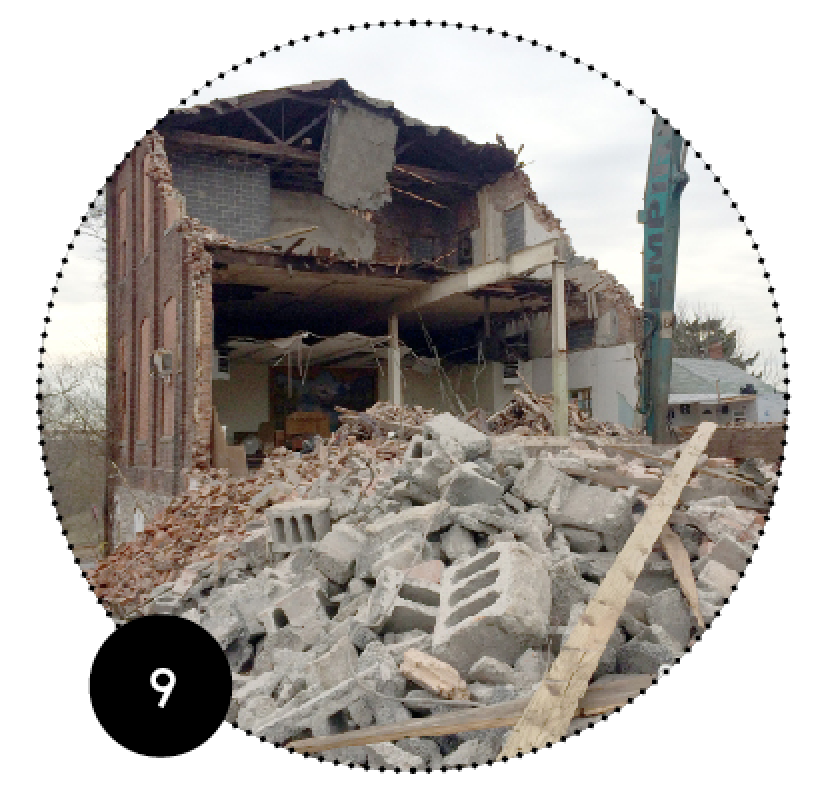
Screenshot 2014-12-29 10.44.509. Pastor Arrested: Upon taking office, Papenfuse declared an all-out war on blight, targeting slumlords, deploying codes officers and even formulating a new Housing Court. That sounded fine to most people until the first person arrested under the get-tough policy was one of the city’s most prominent pastors, Bishop A.E. Sullivan, Jr., whose blighted church began to crumble down on its neighbors. For some, the arrest was an early test of Papenfuse’s resolve. For others, it signaled the re-emergence of racial tensions that always seem to lie just beneath the surface in Harrisburg.

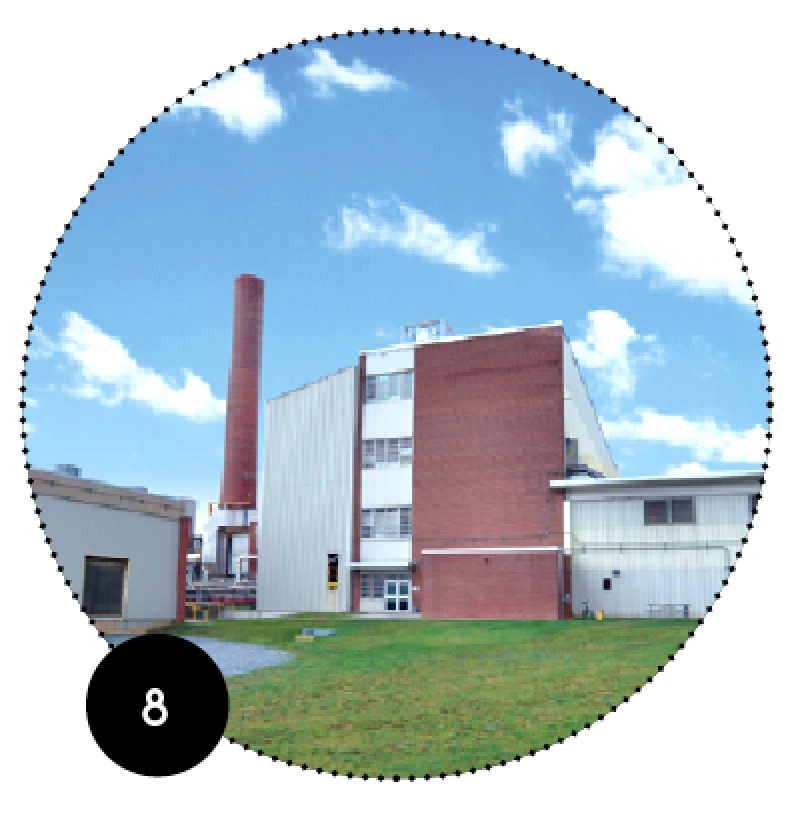
Screenshot 2014-12-29 10.44.588. Grand Jury Convened: What happens when you open a closet and a room full of secrets pours out? In the case of Harrisburg, a grand jury is empaneled. At press time, months after official-looking guys in official-looking jackets hauled away box-loads of potential evidence to Pittsburgh, the investigation continued into the myriad twisted, dubious deals that led to Harrisburg’s financial collapse.

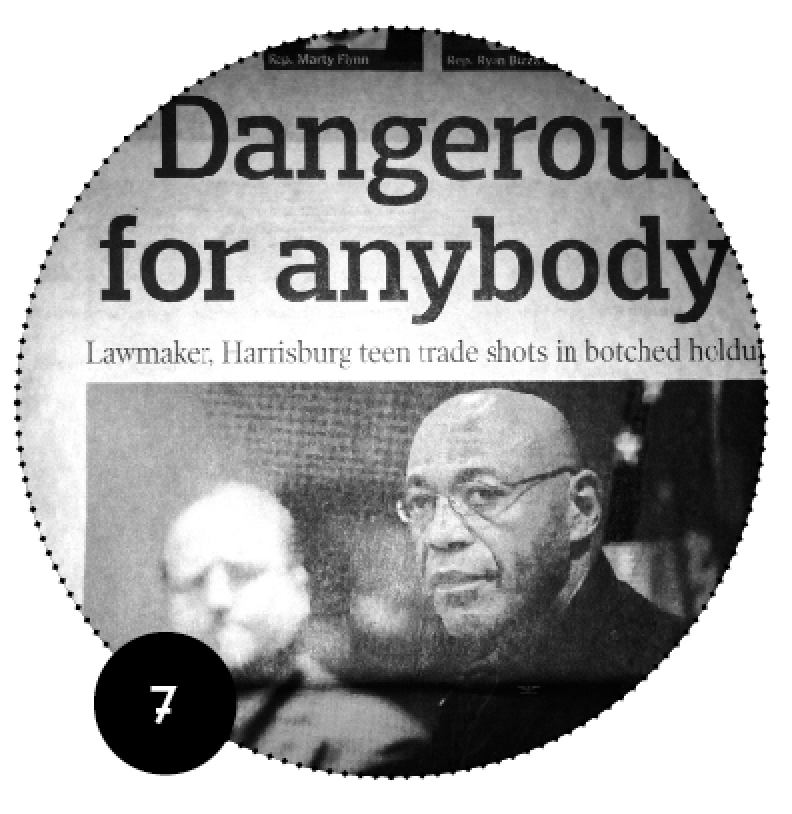
Screenshot 2014-12-29 10.45.087. Primetime Crime: If it bleeds, it leads, right? The media continued to have a field day (or year—or years) over the issue of crime in Harrisburg. Not that there wasn’t ample material to draw from. A continuing high homicide rate largely negated the good news that some other types of crime fell. Meanwhile, a few high-profile stories (the tragic case of Jared Tutko, Jr., a brief exchange of gunfire between a state legislator and a teenage mugger) led to predictable bouts of media hysteria. We’ll have to see if a few more cops and, as has been proposed, the revival of the school resource officer program make any difference for 2015.

Screenshot 2014-12-29 10.45.216. Treasurer Trouble: Sometimes, it seems like Harrisburg just can’t catch a break. In August, trouble arose from an unexpected corner when city Treasurer John Campbell—a young man with a seemingly boundless future—was arrested on charges of taking money from several organizations where he also served as treasurer. These allegations involved no city business, and the treasurer’s office operates largely independently from the administration. Nonetheless, Campbell’s arrest was yet another reason for people to dump on Harrisburg, as was the withdrawal, two months later, of his appointed successor, Timothy East, after a personal bankruptcy came to light.

Screenshot 2014-12-29 10.45.445. Receivership Ends: It came in with a bang and ended with a whimper. No, I’m not talking about the month of March, but about Harrisburg’s state-imposed receivership. In November 2011, bond attorney David Unkovic rode into the office amid tremendous skepticism over his intentions. In just a few months, he allayed those worries so that, when he suddenly resigned, many people feared the city had lost its best friend. In stormed Air Force Maj. Gen. William Lynch, who completed what Unkovic had started: selling the incinerator, privatizing the parking system and trying to straighten out and normalize Harrisburg’s calamitous finances. Count me among the surprised that the receivership ended so quickly after the major elements of the financial recovery plan were put into place. Today, the state retains some supervision over city finances as Harrisburg remains in Act 47. However, the receivership was never as strong-armed as many thought it would be, and, instead of fading away, it just went away.

Screenshot 2014-12-29 10.45.534. Parking, Parking and More Parking: Besides crime, parking became the media’s go-to story of the year. Sleepy news day? Go find some suburbanites and restaurateurs pissed off about the rising cost of parking. Beneath the hype, there was a real story. As part of the city’s financial recovery agreement, parking rates doubled and metered parking expanded, which did negatively impact some businesses. In addition, the rollout of the new digital meters was bumpy, and Standard Parking was (how shall I put this?) god-awful in communicating with the public. But, by the end of the year, people seemed to be adjusting, and the new regimen even had some pluses, such as a new source of revenue for the city, the ability to use credit cards and much higher turnover of street spaces. Also, while some weak businesses shut down (though not all due to parking, believe it or not), several others opened.

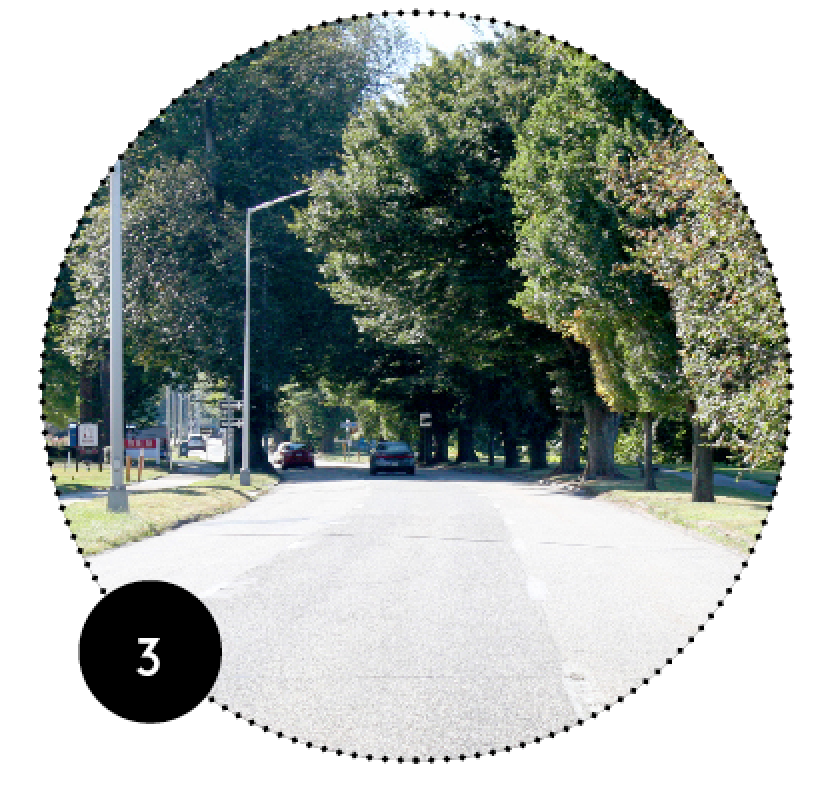
Screenshot 2014-12-29 10.46.053. Front Street Makeover: Sometimes, events are deemed important because they follow an accepted standard of what constitutes news—a political scandal or a high-profile crime, for instance. Other times, the importance is less certain, and only later do people realize the significance of a piece of news. I put the state’s announcement that, starting this spring, it will reconstruct Front Street, into the second category. Moreover, the state is studying improvements to Forster Street and to making much of N. 2nd Street two-way. It also plans to re-open the dormant rail bridge to pedestrians and maybe transit. In other words, the state seems to want to reverse the damage wrought almost six decades ago, when much of Harrisburg was turned into either a freeway or a traffic island, with devastating results. A more welcome, livable city could be a game-changer for Harrisburg.

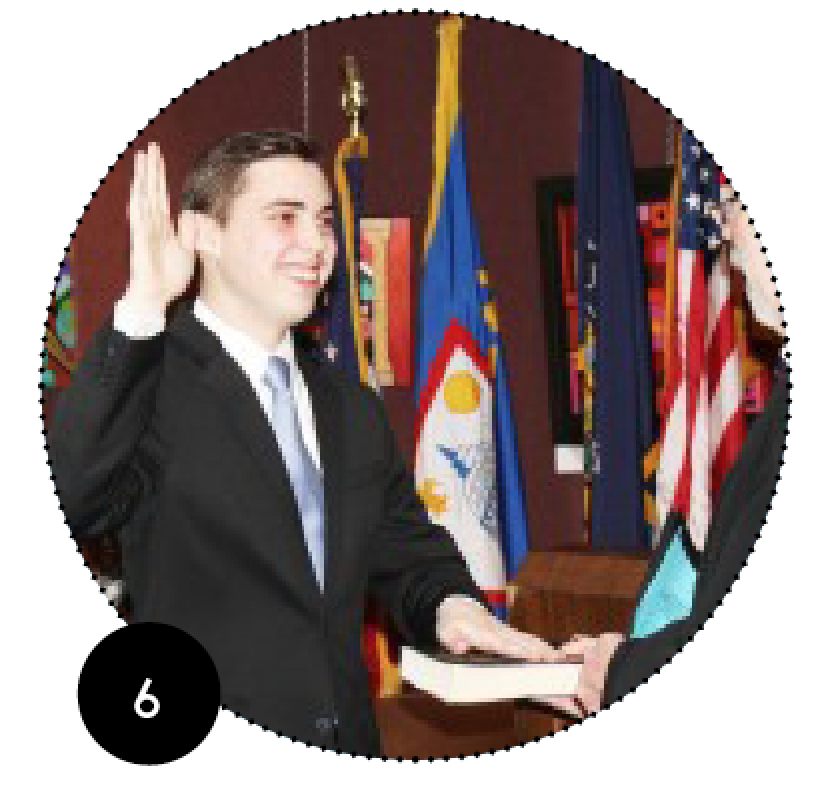
Screenshot 2014-12-29 10.46.152. Papenfuse Takes Over: In January 2014, Eric Papenfuse took the oath of office as mayor of Harrisburg. In so doing, he promised to be both an effective administrator and an inspirational leader. A year later, I’m not sure about “inspirational,” but he has shown competence both in identifying what needs to be done and then taking steps to get those things done. From finances to blight to streetlights to schools, Papenfuse took on a full plate of issues, most very difficult, many controversial. My fellow columnist, Tara Leo Auchey, has described Harrisburg as being in a state of “reconstruction” following decades of misrule. The administration’s first year has been to try to stabilize a government in shambles and then plant the seeds of that reconstruction.

Screenshot 2014-12-29 10.46.561. Balanced Budget: This may seem like an odd choice for the #1 news story in Harrisburg. Yawn, right? Yes, in most cities, a balanced budget indeed would be a non-event. In Harrisburg, however, this was (or should have been) major news, as it was the city’s first truly balanced budget in—God knows—20, 30 years? Papenfuse even insisted on including items that had been kept off-budget for decades, as Reed was a genius at tucking inconvenient expenses into places where they couldn’t be found, then masking the overage with borrowing. This is an achievement that should not be understated. Going forward, it should allow the city to build an honest foundation and move forward from there.

So, there you have it—my Top 10 stories of 2014. Looking at the year in whole, I consider 2014 to have been a transition year: a transition from state to local control; a transition from perpetual crisis to some level of normalcy; and, I hope, a transition from dishonest and incompetent government to one that conscientiously serves the people of Harrisburg.

Lawrance Binda is editor-in-chief of TheBurg.

Continue Reading

Relax, Rejuvenate, Renew: Need to de-stress? Reiki may be just the ticket.

Screenshot 2014-12-29 09.04.08Ask any Reiki practitioner to explain the practice, and you’ll quickly learn that it doesn’t fit neatly into one descriptive little box.

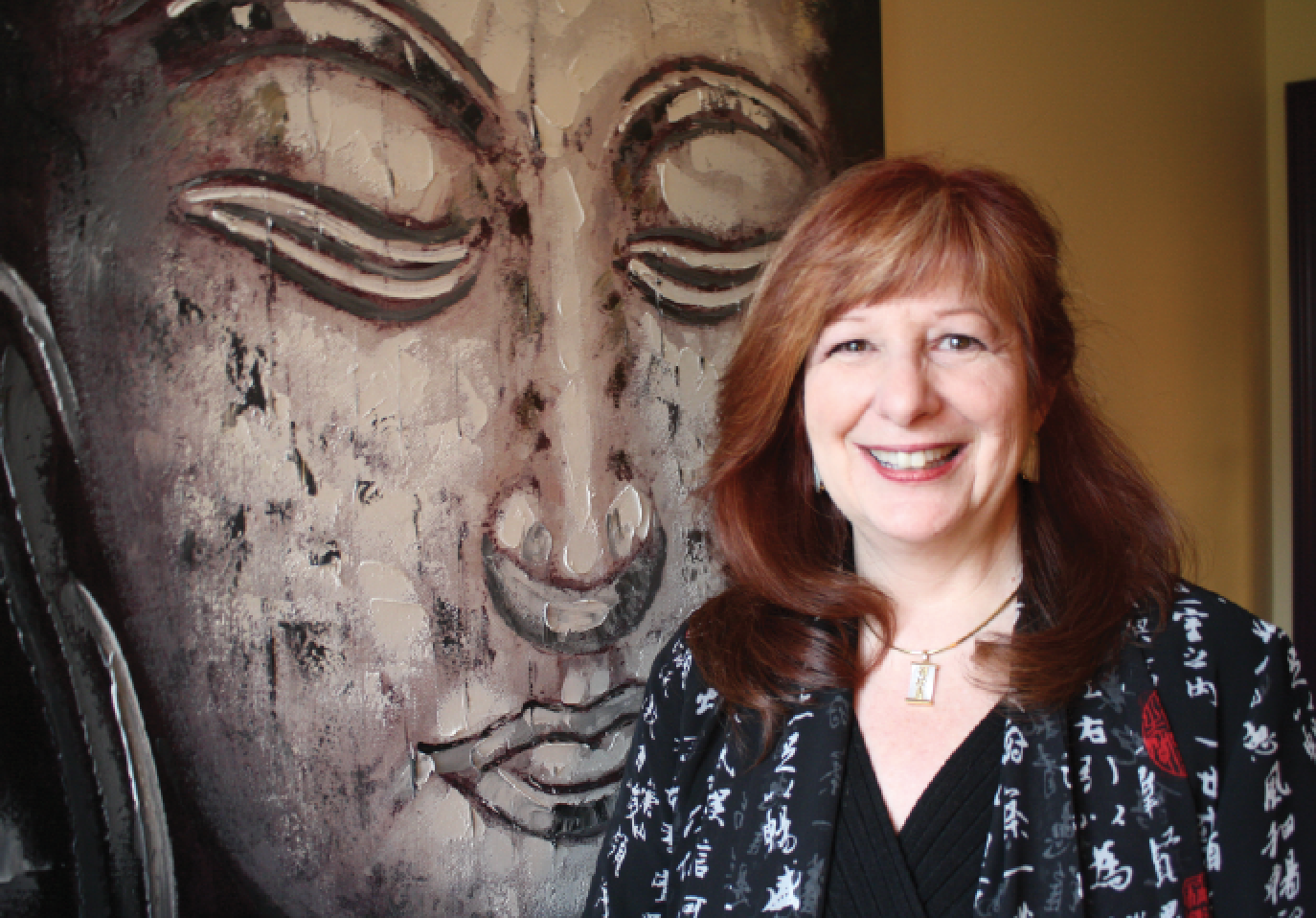
The non-invasive, benign healing technique, is, in my opinion, a bit ethereal in nature, which is why categorizing it is as difficult as clutching a cloud. What I can tell you is that I walked into Rickie Freedman’s office recently in my “wound-too-tight” default mode and sat up from the table an hour later, relaxed, rejuvenated and ready to take on the day.

I even kept my cool when someone cut me off as I was pulling out of the parking lot after my session. For me, that’s progress.

To better understand the relaxing practice known as Reiki, it’s helpful to know that the word is actually composed of two Japanese words—Rei and Ki. Rei can be defined as a higher intelligence, while Ki is the non-physical energy that animates all living things.

According to Reiki practitioners, negative feelings have an adverse effect on our health since they block the Ki that flows through and around us. While Western medicine doesn’t necessarily embrace Reiki, doctors do concede that there is a mind/body/health connection. During sessions, Reiki practitioners use a light touch to restore balance to the body and mind of those who seek its healing properties.

A Call

Rickie Freedman was born and raised in the Philadelphia area and faced unique challenges due to her name throughout her youth.

Every year, she was enrolled in boy’s gym and choir and, as a teen, received mail from the Army and Navy. Later in life, she ended up thanking her parents for the appellation. “I believed it was a call to my purpose,” she said.

Freedman’s interest always gravitated towards the healing arts.

“One of my teachers tried to talk me into going into med school at one point,” she said.

As a person with a nurturing, caregiving personality, Rickie eventually decided upon physical therapy, practicing at a nursing home in Lewisburg. In the mid ‘90s, friends introduced Freedman to Reiki.

“They took a class, and, when they came home, they practiced on me,” she said. “I had been going through a challenging, stressful time and had a big detoxification release afterwards, so I began studying it for my own emotional healing.”

She later would pay it forward by sharing the practice with others.

“I helped employees at the nursing home cope with the stresses of that kind of work and began incorporating the technique into my physical therapy,” she said.

Several years later, Freedman received a Reiki table as a gift. She offered her services to friends and word spread, so, when one co-worker opened up a wellness center, she asked Rickie to join her.

“I felt like it was an opportunity, so I gave it a try, and what I learned is that, when you believe in something with every fiber of your being, it radiates,” she said. “People feel that and are attracted to it. In a short amount of time, more people were coming there for Reiki than anything else.”

Eventually, this led to her decision to practice Reiki full time. In 2008, Freedman moved to Harrisburg, where she worked at establishing her expertise and reputation in the area. By 2013, she was ready to create her own space.

Swears By It

Freedman’s current base of operations, located off Linglestown Road, is comprised of an office, two healing rooms, a comfortable waiting room and an event area.

The new space has enabled her to expand her practice to offer more services like Indian head massage, chakra foot massage and the popular REIKIssage—a blend of Reiki and therapeutic massage.

Classes and workshops are held throughout the year and include topics like meditation, stress management and aromatherapy, to name just a few.

Tessa Shaffer travels from Liverpool to benefit from Freedman’s services.

“I met Rickie at an event she was doing and signed up for a 15-minute mini session and, in that short time, it alleviated a headache and some of my back pain,” she said adding that she was so intrigued that she decided to study the practice herself after contracting Lyme disease.

Thanks to Freedman’s instruction, Shaffer is now a practitioner.

“There are three levels, and Rickie holds monthly classes for the different levels,” said Shaffer. “Anyone can do it, and it has aided in improving my energy and managing my pain. It’s amazing, and you don’t really need to understand how it works for it to work.”

Kris Shulenberger has been undergoing Reiki sessions for about a year and swears by it.

“I have more energy and vitality,” said the Carlisle resident. “The first thing I noticed is that I didn’t have the winter doldrums last year, and the other thing I noticed is that I have a different level of energy in dealing with issues and problems. It’s a deep form of relaxation, and you come out energized and feeling better.”

For those considering Reiki, Freedman recommends scheduling the first three sessions a week apart.

“They work together in a series to get you to a better place of balance,” she said. “By the end of the third session, clients have a better sense of the good it does.”

In choosing this line of work, Freedman said she has found the “perfect peace,” which she lives to share with others.

“Every single day is awesome because I get to witness people’s transformations as they come into the fullness of who they are and are able to let their light shine so they can go out into the world and bring that to others,” she said. “That’s awesome, with the emphasis on the awe. I love my work, every single day. I love teaching, and I love sharing this.”

Reiki by Rickie|ReikiSpace & Learning Place is at 2793 Old Post Rd., #10, Harrisburg. Call 717-599-2299 or visit www.reikibyrickie.com.

Continue Reading

Student Scribes: A Palace of Bygone Days

Screenshot 2014-12-29 09.09.49“How a state chooses to represent itself, artistically and architecturally, speaks volumes about how its citizenry wishes to perceive itself at the particular moment of a capitol building’s creation.” – Ingrid Steffensen

The day the security guard handed me my “key to the kingdom” in the form of a swipe card, I decided to take time every day during my internship with the House of Representatives to explore the Pennsylvania Capitol, a building that is a haven in a broken and battered city. But I soon realized that I needed to step outside the Capitol too, to see a different reality of the city.

I cannot remember a time I did not find myself intrigued with the beautiful craftsmanship of previous generations; whether it is simply a doorknob, or a huge plantation manor, every aspect of its history draws me in. Perhaps that is why I am so fascinated with the Pennsylvania State Capitol. The emerald tiles of the dome set against an azure sky dotted with fluffy clouds always makes me smile.

The Capitol, standing in downtown Harrisburg two blocks from the Susquehanna River, is the third building that Pennsylvanians have had the pleasure to call theirs, and unarguably it is the most impressive. In 1902, Joseph Miller Houston designed the current Capitol in a contest set on replacing the brick “Cobb” Capitol. The Cobb was plain, unadorned and could easily have blended in with the smokestacks of any manufacturing town. But the building standing today eventually won the contest and outdid anything Pennsylvanians had ever seen before. The building still houses all three branches of the state’s government under one roof, but, for most, it is better known as being a masterpiece of immense proportion. All 600-plus rooms exude awe and artistry.

The plans created by Houston brought together the best Pennsylvania artisans, people like George Grey Barnard, Violet Oakley, Henry Chapman Mercer and Edwin Austin Abbey, who incorporated stained glass, paintings and sculptures. Designed in the Beaux Arts style, the Capitol’s halls also boast elements of Renaissance design. In fact, scholars claim that Houston introduced well-known European architecture to the people of Pennsylvania.

The room that most consider the greatest display of the arts is the main rotunda. The wide Vermont marble staircase matches the Grand Staircase at the Paris Opera House. The terra cotta dome, visible from all over the city, resembles St. Peter’s Basilica in Rome. This rotunda is the axis of all activity in the Capitol. People from every reach of government mix with the curious tourists and school tours.

When I was in fourth grade, my class took one of those school tours. I can remember standing in the middle of the rotunda floor and staring up into the paintings and gold-gilded heights. I remember feeling like I was going to fall backwards as I lost my sense of balance and reality. It was beautiful, the most beautiful thing I had ever seen, like a glimpse into heaven with its gold streets. Perhaps, if that were true, my school chorus and I were the angels praising the glory of it all from the staircase.

On the few lucky instances where I have found myself in the rotunda alone, I have felt the weight of history and the lost decorum of times past, and it is humbling. I can almost see President Roosevelt there on Oct. 4, 1906 during the dedication, declaring it the “handsomest building I ever saw,” a moment immortalized by a carved tile marking the place where he stood. His tile is just one of 400 tiles picturing the history, animals, industries, occupations and transportation of Pennsylvania in a grand canvas of folk art.

Another subtle detail that intrigues me is the bronze doors standing sentinel. In the rush to get through security and into the large, open space of the 272-foot-high ceiling, the 17-foot doors are easy to miss since they are always open and pushed to the side. The doors are carved with the three-dimensional heads of individuals who helped design and construct the building, according to the brochure available a few steps inside. The head of Huston lifts to reveal the keyhole to unlock the Capitol.

This place stands as a memorial to the Pennsylvanians who helped develop this commonwealth and their determination to maintain a strong government run by and appreciated by citizens. While the building was valued at $13 million at the time of its creation, it is deemed priceless in today’s economy. While the building is one of the few truly beautiful and valuable pieces of history left to the state, it isn’t far from the Capitol that I have encountered other realities of the capital city’s people.

I first was introduced to the reality of the city during the first month of my internship with the public relations department. About a block from the Capitol building is a parking garage full of Mercedes and BMWs mixed with more moderately priced vehicles. I was shocked to find that in the block between this parking garage and the Capitol is a very busy soup kitchen. When you drive down the alley to the garage, you pass the homeless and down-on-their-luck people waiting at the doors for their breakfast. I noticed that these people watch the constant stream of cars pass them by and couldn’t help but wonder if they feel neglected and forgotten in the midst of the bustle of downtown.

The second time I was struck by the reality of the city was toward the end of my internship. I came down the alley and saw a young man who had taken shelter under a dirty blanket he had pinned to the brick wall. He was cold, wrapped in blankets and huddled under the blanket tent. I was sad to see that this man had only a blanket to buffer him from the cold rain coming down, when there was a building less than a block away that boasts gold leafing and Italian marble. This is a story echoed down every street and alley of the city of Harrisburg.

If you step out two blocks from the Capitol to Front Street along the river, there are stately old mansions that are now housing different interest groups and associations. These homes are well maintained and historically stunning. The riverfront park is well-kept, and men in suits and joggers spend sunny afternoons enjoying the view. One night, as I walked to the Market Street Bridge, I heard a man’s tone rise and ebb against the arches and echo back down to the river’s water beneath. His song of worship to God lent an air of awe to the sunset over City Island. There was a woman walking on the sidewalk beside a furry white rabbit who would hop off the path to inspect a bush. “He makes a better husband than my real one when he won’t leave his video games,” she told me, motioning to the rabbit. They are the people of Pennsylvania.

Not far from this bridge, under an overpass to I-83, is where several of the city’s homeless have created their own little drifter camp. Their tents are braced against the support columns of the interstate, covered in tarps with trash bags surrounding them to keep their few belongings from the weather. The camp is easy to miss, and the only reason I saw it one day was when I caught a glimpse of a man stumbling toward the ramp with an empty water bottle. He looked tired and disheveled. I wondered where he had come from and was shocked when I looked back under the interstate and saw the answer. Just like the man under the bridge, and the woman and her pet rabbit, he too is one of the people of Pennsylvania.

This city, full of beauty, eccentrics and dishevelment is our state capital, a place of both wealth and poverty. The people who make up Pennsylvania can see the beauty, and yet, there are those who have also seen the very worst of what the commonwealth has to offer. But there is one great treasure that all of these people can call their own. It stands as a testament to better days, to past and present glories. Its emerald dome stands as a beacon of hope above the city skyline; it is a Palace of Bygone Days.

Ashley Sheaffer is a senior English major at Penn State Harrisburg. She continues to work for the Pennsylvania House of Representatives.

Continue Reading