Tag Archives: harrisburg

Holiday Hoopla: Harrisburg’s Annual Parade Set for Tomorrow

ParadeWeb

Put on your Santa hat and grab a hot cocoa–it’s almost time for Harrisburg’s annual holiday parade.

The 2016 parade, with a theme of “Making the Season Bright,” steps off tomorrow at noon from City Island with a long line of bands, floats, balloons, vintage cars and, of course, Santa. Participants will march up Market Street, turn on 2nd Street, make another turn on North Street, then follow Front Street back.

“This year’s parade will be very exciting,” said Mayor Eric Papenfuse. “We are anticipating a large crowd to join us along the parade route for this year’s holiday parade.”

Besides the marchers, food trucks will set up on Market Street between Front and 2nd streets.

Free parking will be available at the Market Square garage  from 9 a.m. to 8 p.m., which is sponsored by PSECU. In addition to free parking in the garage, parade attendees can utilize the Pango App and get up to 4 hours of free street parking using the “LUVHBG” code.

The Market Street Bridge will close at 8:15 a.m. on Saturday. Parade participants will be able to enter City Island from the West Shore. N. Front Street will close at 10 a.m. from Forster to Market streets. 2nd Street from Chestnut to North streets will be closed from 10 a.m. to 3:30 p.m. Traffic will detour east on Forster Street to N. 7th Street, south on 7th Street to Walnut Street, west on Walnut Street to N. 3rd Street, south on 3rd Street to Chestnut Street back to Front Street.

After the parade, the festivities move to Strawberry Square for hot chocolate and the awards ceremony. Trophies will be awarded to the top dance, step and drill team units, and cash prizes will be given to the top high school marching bands.

“I would like to especially thank our title sponsor, the Hershey Harrisburg Regional Visitors Bureau and our gold sponsor, PSECU.” Papenfuse said. “Without their support, we would not be able to put together this wonderful event.”

Author: Lawrance Binda

Continue Reading

Enemy of My Enemy

GMRWeb

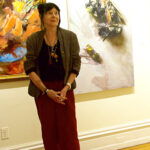
City Council President Wanda Williams (back, center) looks on as Gloria Martin-Roberts announces her candidacy for Harrisburg mayor.

In the long, storied run of “The Simpsons,” one of the most famous episodes is a hilarious parody entitled “Who Shot Mr. Burns?”

In this two-part episode, police question the resentful citizens of Springfield as they search for a suspect in the shooting of nuclear power mogul C. Montgomery Burns. It turns out that nearly everyone in town is a suspect because they all feel wronged by him.

That episode strangely came to my mind yesterday as I watched former City Council President Gloria Martin-Roberts announce her candidacy for Harrisburg mayor. To my knowledge, Martin-Roberts has never had a personal falling out with Mayor Eric Papenfuse. However, those gathered around her—her supporters—were a veritable who’s who of people who might find reason for targeting (politically, that is) the often-combative first-term mayor, who has not yet declared for reelection.

City Treasurer Dan Miller sat quietly in the audience. He lost to Papenfuse twice in the last mayoral race.

Current Council President Wanda Williams held high a “Gloria Roberts for Mayor” sign. She’s called Papenfuse a liar and much worse.

The owners of the Third Street Café stopped by to applaud and offer support. Papenfuse has tenaciously tried to put them out of business.

There was vocal critic/former school board President Jennifer Smallwood, former political rival Nate Curtis, one-time Broad Street Market Manager Rafiyqa Muhammad and several old supporters of Steve Reed, whose legacy the mayor has tried to dismantle piece by piece. And, speaking of which, the event was held at the National Civil War Museum, which Papenfuse has famously tried to shut down, making it perhaps the most delicious setting in the city for his enemies to gather together.

I didn’t spot any of the county commissioners, nor anyone from the Harrisburg Chamber, DCED or the regional visitor’s bureau, who all have done battle with Papenfuse. However, PennLive—which Papenfuse is boycotting—was represented, if just by the website’s ubiquitous city reporter doing her job.

Now, most politicians, if they stay in office long enough, accumulate a pile of critics, naysayers and downright haters. It’s the nature of the job. However, Papenfuse has managed to tick off, at one time or another, members of nearly every power center in the region outside of his own administration.

It will be fascinating to watch how this plays out in next year’s election. In my opinion, Papenfuse has done a good job in his core duties as mayor: the budget, finances, service delivery, economic development, management—the things I care most about. He’s also a passionate advocate for the city and can be almost amusingly jovial at public events. But, in doing his job, he’s stepped on a lot of toes and vociferously criticized a host of the important and self-important.

Papenfuse has told me that he’s taken often-controversial positions out of principle and believes his strong, vocal tactics were correct and defensible. However, what he calls justified, others have seen as unnecessary in substance and pompous in style.

Interestingly, Martin-Roberts didn’t speak Papenfuse’s name at all, allowing her criticisms to be implicit. For more than a half-hour, she took her rapt audience on a nostalgia trip of old Harrisburg, naming store after store that made up a part of her childhood (Martha’s Turntable, anyone?). She also said she would seek to unite the entire city.

“I don’t favor an individual neighborhood,” she said, in a clear dig at Papenfuse.

Martin-Roberts even complimented Steve Reed, with whom she often battled, for helping to revitalize downtown, even though Reed was frequently criticized for paying too much attention to white, wealthy downtown, a similar criticism now directed at Papenfuse and Midtown.

Perhaps Martin-Roberts’ appeals to nostalgia and unity will have some takers—and certainly there remains a contingent resentful that Dan Miller did not become mayor three years ago.

But, in the end, most reelection bids are a referendum on the incumbent. Therefore, I expect this campaign to hinge on how folks feel about Eric Papenfuse, especially his strong personality and his governing style. Given his administration’s success in returning a degree of normalcy to the city’s fiscal funhouse, he may have had a pretty easy path to reelection. However, due, at least in part, to his confrontational manner, he’s cracked open a window for his enemies, who now have banded together behind a genial, formidable opponent.

Author: Lawrance Binda

Continue Reading

Sewer Replacement Project Set to Start

Gene Truck Web

Capital Region Water will kick off a $1.3 million sewer replacement project on Monday that will include some temporary road closures and other inconveniences.

The project will replace and renew aging sewer infrastructure at 10 locations to protect against sinkholes and ensure reliable wastewater service, according to Andrew Bliss, CRW community outreach manager.

“This project is just one example of our commitment to investing in our community from raindrop to river,” said CRW CEO Shannon Williams. “We appreciate everyone’s patience while these improvements are made.”

Complete replacement of sewer pipe at the following locations will require street excavation: 

Project Location

Estimated Timeline

Notes

Green Street between Boas St and Forster St

Nov. 14 – Beginning of December

277 feet of new sewer

Green Street between Clinton St and Harris St

Nov. 14 – Beginning of December

247 feet of new sewer

North 4th Street between Maclay St and Geiger St

End of November – Beginning of December

Repairing 20 feet of sewer

Oxford Street between 7th St and Jefferson St

End of November – End of December

359 feet of new sewer

Crescent Street between Mulberry St and Haehnlen St

Beginning of December – End of December

131 feet of new sewer

Baily Street between 13th St and 12th St

Mid December – End of February

868 feet of new sewer

Parkway Drive between Briggs St and Poplar St

Mid December – End of December

37 feet of new sewer

Potential impacts of the construction include street closures, parking restrictions, construction noise and temporary sewer service interruptions, Bliss said. When pipe replacement is complete, the road will be temporarily patched until repaving next spring, he said.

In addition, cured-in-place pipe lining will be used to renew three sewer mains on Crescent Street, Maclay Street and Parkway Drive and will not require street excavation. Potential impacts from this work include temporary traffic disturbance and temporary sewer service interruption, said Bliss.

Construction hours will be 7 a.m. to 5 p.m., Monday through Friday. This project will not require access to customers’ homes, but Bliss said that CRW will conduct door-to-door outreach for any affected property owner. CRW also will have a representative on site during construction working hours, Bliss said.

Customers with questions can contact Capital Region Water by phone at 888-510-0606 or by email at [email protected].

Author: Lawrance Binda

Continue Reading

A Tale of 2 Bars: Third Street Cafe Owners Buy Former Taproom

BarsWeb

The owners of the Third Street Cafe have bought the bar next door.

The owners of an embattled Midtown bar have bought the bar next door, adding another wrinkle to their long conflict with the city.

Last Friday, the owners of the Third Street Café, Tony Paliometros and Frank Karnouskos, closed on the purchase of the former Taproom, according to the Dauphin County Recorder of Deeds. The bars are located directly next to each other along the 1400-block of N. 3rd Street in Harrisburg.

Chris Wilson, attorney for the Third Street Café, characterized the purchase as an opportunistic investment. He said that his clients’ plans are not yet firm, but, at some point, they hope to knock down the interior wall separating the buildings to expand their business.

Wilson added that Paliometros and Karnouskos would like to make substantial improvements to the former Taproom as part of the expansion.

“My clients are interested in investing and making the property better and the business nicer,” he said.

The Third Street Café has been locked in conflict with the Papenfuse administration since March 2015, when the owners received notification that the city was revoking their business license. The city then refused to issue the bar a 2016 business license.

The bar owners appealed both the license revocation and the denial to the Dauphin County court. Several months ago, Judge Andrew Dowling rejected the city’s argument that the bar was a magnet for trouble. He also said that state laws trump local regulations for establishments that hold liquor licenses. He then ordered the city to issue the Third Street Café a business license, a decision the city has appealed to the Commonwealth Court.

Coincidentally, the city also revoked the Taproom’s business license last year. Owner Dave Larche did not appeal and closed down his business at the end of 2015. Several months ago, he put the property on the market for $129,000, eventually selling it to Paliometros and Karnouskos for $92,000.

Wilson said that the building’s new owners hope to work with the city as they go about renovating the property. He acknowledged that the long-dilapidated block is undergoing rapid redevelopment, which may lead his clients to rethink their business model, possibly expanding food and drink options.

Last year, the sleek, new Susquehanna Art Museum opened directly across the street and, this year, ModernRugs.com began renovating two large, long-blighted buildings on the block—the former home of the local Volunteers of America and of Midtown Paint & Hardware. Just yesterday, Mayor Eric Papenfuse received permission from the Harrisburg Architectural Review Board to begin façade improvements to the properties that he owns on that block at 1421-23 N. 3rd St.

Papenfuse declined comment for this story.

Author: Lawrance Binda

Continue Reading

Weekend Roundup with Sara Bozich

article headerThis will be a relatively low-key weekend for me. No plans tonight or tomorrow (though who knows?).

On Saturday, I’ll do my usual weekend trip to the gym and the market, but by afternoon we’re State College-bound. I’m excited to finally visit Elk Creek Cafe & Ale Works and maybe something else ahead of the PSU-Iowa game.

Sunday is for Steelers football, but you already know that.

WR1103-blog

Meanwhile, while you’re relaxing, don’t forget to pick up your Holiday Pop-Up Party tickets! Early Bird pricing was extended through Monday, Nov. 7 only!

What are you doing this weekend?

 Thursday

Friday

Saturday

Sunday

Rather have this via email each week?


Don’t see your event listed? Post it in the comments below. Want to be featured in the future? Submit your events here. 

Continue Reading

Price of Progress: With development come growing pains

Illustration by Rich Hauck.

Illustration by Rich Hauck.

A short while ago, after (another) grueling workout at Next Step Performance in Midtown Harrisburg, I tried to cross the street and—blammo—almost ended up as part of the pavement.

An SUV had turned west onto Herr Street, the second wrong-way driver on that road I had seen in about 10 minutes, both needing to throw it into reverse, say a prayer and back up into a busy 3rd Street. Five minutes later, as I drove home, another SUV almost hit me head-on driving the wrong way up Verbeke Street near the Broad Street Market.

Clearly, something was going on.

As it turned out, both HMAC and the Millworks had events that night, which had brought in folks who were not familiar with the neighborhood and its narrow, poorly marked one-way streets.

My reaction—terrific!

It wasn’t long ago that you could drive a tractor down 3rd Street after 5 o’clock and hit nothing but air and maybe a surprised squirrel. To me, the near misses were signs of progress, a quirky indication that this once desolate, forlorn commercial strip was coming back.

But I don’t think everyone feels this way.

Lately, I’ve heard long-time residents gripe about a lack of parking (especially of the free variety), confused motorists and plain-old congestion. Saturdays can be so busy in the heart of Midtown—cars, pedestrians, baby strollers, bikers, skateboarders—that it resembles one of those “shoot don’t shoot” tests that police trainees take.

I once wrote a column titled, “Harrisburg Needs People.” It told of my first long walk, a few years earlier, soon after my arrival here, through downtown and Midtown in the middle of a weekday afternoon. To my great dismay, I encountered almost no one on the streets, excepting a few guys trying to bum cigarettes off of me. Those days (thankfully) seem to be coming to a close.

In that column, I compared Harrisburg to my former home of Washington, D.C., where I watched entire blocks—then neighborhoods—transformed from blighted to bustling over a period of maybe 20 years. The process began slowly when some intrepid developer (typically a starry-eyed novice) took a huge risk, borrowing tons of money then throwing it into some forlorn old building in a tough location. When that project didn’t flop, someone else improved another nearby property—then another. Those buildings soon housed quirky little shops or the hottest new restaurants—proving demand—and a virtuous cycle began. The same thing now seems to be happening in parts of Harrisburg.

Everything, though, even progress, has a downside. In Washington, residents had to get used to two things, and I believe the same applies here. First, they had to deal with the small inconveniences brought by an improving city—harder parking, longer waits, lost visitors. In other words, what has become your average Saturday afternoon in Midtown Harrisburg.

Secondly, they had to get used to the rule of law. In Washington, a type of anarchy had long reigned in many parts of the city where you could park (or double-park) wherever you wanted, lazily stroll across the middle of a street, litter at will and neglect your rundown property without embarrassment or sanction. In a depressed, depopulated city, no one much objects because, well, everyone seems to do it (or not do it, as the case may be), and there are few, if any, consequences for breaking small rules.

When I arrived here, Harrisburg seemed like a haven for scofflaws. You could park downtown all day for free because the city didn’t enforce its own parking rules. State workers parked on almost any street in Midtown, all day long, for the same reason. Empty lots were virtual invitations to dump trash, and once grand, historic buildings had been crumbling for so long that everyone just ignored them.

When a city redevelops, though, the situation changes. Slowly, slowly, people come back. They want to see the places that had been hidden for so long beyond fences and behind boards, newly restored and open again. They want to visit for nice meal, a drink, a show. Small offices open, often occupied by young, creative companies looking for an urban location. Increasingly, people also want to live there.

In other words, a place recently desolate teems again with life. That, however, may create problems for people accustomed to the old ways. There are more rules to follow, and they’re enforced more rigorously. There are inconveniences. There are new ways of doing things. There are some new faces. There are growing pains.

All of these things happened in my old neighborhood in Washington. About 15 years ago, a guy who owned the long-defunct Capitol Hill Hospital wanted to turn his almost empty building into condos. Some neighbors objected, worried what would happen to their easy street parking. They actually went to court, delaying the project for so long that the owner went bankrupt. As a result, an entire city block sat unused—desolate and dangerous—to preserve the parking privileges of a handful of entitled residents. Ten more years would pass before that prime urban land was redeveloped.

Like D.C. of two decades ago, Harrisburg is starting to change, and that change is accelerating, as one project feeds another. For the most part, this is fantastic news. You can see parts of the city coming back, wakening from a very long slumber. Along with growth, though, come problems. Traffic is tougher, parking more difficult, lines longer. Sometimes, out-of-towners drive the wrong way up Verbeke Street. Progress has finally come, but not without a small cost.

Lawrance Binda is editor-in-chief of TheBurg.

Continue Reading

Lights, Camera, Tandoori: Mumbai meets the midstate at Bollywood Bar & Grille

Photo by Waxman Photography.

Photo by Waxman Photography.

Lavish sets. Melodrama. Elaborate song and dance.

That’s what comes to my mind when I hear the word, “Bollywood.”

Downtown Harrisburg? Not so much.

Yet, there I was, in the middle of 2nd Street, opening the door to downtown’s newest restaurant, Bollywood Bar and Grille.

When I entered, a server immediately welcomed me, guiding me to a small table then telling me to help myself to the buffet.

Immediately, I noted how different the space looked from the prior occupant, the Italian-themed Zia’s Red Door—or from any other Indian restaurant I’d been in.

The custom-made chairs were plush and inviting, the atmosphere relaxing. I looked around at the large Bollywood movie poster collages located next to the bar and on one of the walls in the main dining room. As I sat and took everything in, I found it hard to believe that this expression of India was in Harrisburg.

Owner Dinesh Purohit stood behind the bar ringing guests out and welcoming them to come back soon. Talking to him, you immediately sensed how proud he was of his creation.

“I hope to make a name as the best restaurant in the town or region,” Purohit said. “For me, the food has always come first, money second.”

Breaking Boundaries

Purohit started in the restaurant business through good sense and savvy.

Living in Wyomissing, a town outside of Reading, he owned a cigar shop. The closest Indian restaurant was miles away, he said. Seeing an opportunity, he opened Laxmi’s Indian Grille with the help of a friend. When his family recently moved to the Harrisburg area, he brought his restaurant expertise to the capital region.

“This location was exactly the way I like it,” he said. “And we needed a name that we could build the restaurant around.”

“Bollywood” fit the bill, the theme now visible throughout the restaurant, from the décor to the menu—riddled with Bollywood trivia—to the cocktails, named for famous Bollywood movies.

Though the restaurant has been open just a few months, Venkat Radhakrishna is already a regular. A contractor for the state Department of Health, he got excited when he heard that a restaurant specializing in northern Indian cuisine would open just two blocks from his job. Now, he can be found there at least once a week enjoying his favorite “comfort foods.”  

“This restaurant has done a good job of breaking the stereotype of Indian food and just breaking boundaries,” said Radhakrishna, whose patronage is so dedicated that it inspired Purohit to create a loyalty card for frequent guests.

You can thank head chef Prem K.C. for the magic in the kitchen. He has worked in the food industry for 20 years, including as a chef for 17 years. Purohit met him through a mutual friend and, once he tried his cooking, knew he wanted to work with him.

“His food speaks for itself,” Purohit said. “Go online and read the reviews, and you will see for yourself.”

Over the course of a day, Bollywood Bar and Grille changes pace to meet the needs of diners. For lunch, the affordable buffet takes center stage, featuring numerous Indian staples, some with flavorful twists on classic dishes. At dinner, it becomes a sit-down restaurant, with creative takes on chicken, lamb, seafood and vegetarian dishes.

“The food is non-traditional, but has amazing taste,” Purohit said. “Dinnertime, we turn into an upscale restaurant that people expect when they go for dinner.”

If you stick around long enough, you may witness the restaurant again changing form. Late night, you might find yourself amidst a Bhangra dance party with a DJ spinning Bollywood remixes. There are also two separate rooms for private parties, and a hookah is available upon request.

Purohit even has an answer for the parking-obsessed. Present your parking receipt, and it will be taken care of on your bill. He may be a recent transplant to Harrisburg, but Purohit clearly understands this place he now calls home.

Bollywood Bar & Grille is located at 110 N. 2nd St., Harrisburg. For more information, including a menu, visit www.bollywoodbarandgrille.com or call 717-972-0708.

Author: Courtney Gontz

Continue Reading

It’s Not All That Bad: A response to the column, “Printing Pressure”

Illustration by Rich Hauck.

Illustration by Rich Hauck.

In the October 2016 edition of TheBurg, Editor Larry Binda bemoaned the decline of the newspaper business and the projected end to some publications.

He decried the woes of the local daily (turned three days a week), The Patriot-News, and its something-to-be-desired online product, PennLive, version of the news.

I couldn’t agree with him more, but please don’t tar the entire newspaper industry with one brush.

Reason? Here at The Sun, which covers Hershey, Hummelstown, Palmyra and the surrounding townships, things are just fine. How fine? In 2007, when wife Rosemary and I sold The Sun, then covering Hershey, Hummelstown and Lower Dauphin County, we had just experienced the best year of the 37 years we owned the paper. This was in spite of the fact that The Patriot-News was more than 10 times larger than us and still had full-time reporters covering our coverage area.

Today, The Patriot-News’ circulation is less than half of what it was in 2007, and The Sun’s circulation has increased by 44 percent, with advertising revenue at record levels.

Why? Because we never forgot our mission. I had a standard phrase when we owned, and I edited The Sun—nobody gave a damn what I thought about Red China. They wanted to know what I thought about the Derry Township supervisors (the governing body that runs Hershey).

We recognized that no one bought The Sun to get their national, international or even state news. They wanted to know what was happening right around here and about their neighbors. You know—the mom and pop stuff—local government, school news, church news, local high school and Little League sports, police news, who bought and sold their house, etc. Also, lots of really good pictures and, oh yes, four-color availability throughout the paper. In other words, all the news they couldn’t get anywhere else.

We sit right in the middle between The Patriot-News and the Lebanon Daily News, and both papers left us with lots of local news they didn’t cover.

The dailies just didn’t get it. They continue to fill their front pages with national and international news, which most readers got last night on the television 11 o’clock news and pushed state, county and local news back further and further in their product with less and less detailed coverage.

Take The Patriot-News, for example. They are sitting right here in the seat of state government and should be the authority on what is happening on the Hill in all branches of state government. Yet that title belongs to the Philadelphia Inquirer and Daily News. That, plus the fact they seemingly haven’t yet realized half the population of Harrisburg city is black, but you’d never know it except in the police and crime reporting. African-American social news? What’s that?

To the east of The Sun, our circulation now exceeds that of the Lebanon Daily News, which is suffering some of the same maladies as The Patriot-News.

Yes, The Sun is fortunate. We only have three school districts and the Milton Hershey School to cover, while The Patriot-News probably has 10 times that many. We also have the Penn State M.S. Hershey Medical Center (now the area’s largest employer) and the Hershey Company, Hershey Entertainment & Resorts and Hershey Trust (now No. 2 employer), while The Patriot-News and Lebanon Daily News try to cover those and many more businesses, hospitals, etc. But we work with them—most have a PR person—and give them good, if not always to their liking, coverage.

Yet, for example, The Patriot-News continues to cut staff, even some of their best. Guess what? Some are now writing for The Sun. Not full-time, mind you, but part-time or as stringers. We also continue the program I started many years ago of utilizing budding young high school journalists, who get their first taste of the business with us and get some good clippings in the process for those college entrance interviews.

So, Editor Larry, it’s not all that bad. You point to the demise of your competition, Fly and Mode, as major competitors. And why? Because you’ve obviously done some market research and are producing a better product, especially under new Publisher J. Alex Hartzler. Your competitors, and ours, are just pumping out the same old product.

William S. Jackson is the former owner/editor of the Sun.

Editor’s Note: Editor Larry agrees with much of the author’s argument that some newspapers have made a critical mistake, both to their missions and their businesses, by dialing back local coverage. Like The Sun, TheBurg’s circulation and revenue figures will hit record highs this year. 

Continue Reading

End of the Lane: The last owner of A. Lane shares his memories, as one of Harrisburg’s oldest stores prepares to close.

A. LaneWeb

Editor’s Note: A Harrisburg institution, A. Lane Used Furniture will close next weekend after 90 years in business. In this essay, the last owner reflects on the long-time family business and its place in the history of commerce in Harrisburg.

A. Lane Used Furniture store had been in business since 1926, operated by four generations of family members. I was the last proprietor and, by all objective standards, not very good at selling furniture.

The anchor of the store was Gene Fievish. Known as Lane, Gene was a Harrisburg institution and the last vestige of the Eastern European Jewish merchants that once populated Market Street.

Most people never knew his name was Eugene Allen Fievish. During his adult life, he was referred to as: Gene, Gino, Lane, “Moonie,” Mr. Lane, “Popcorn,” Unc, “that old man” or Uncle Gene.

Mr. Fievish co-founded the Lemoyne Sleeper Company and was beloved by the employees. He remained modest and was never officially acknowledged for developing the concept of factory-direct bedding.

Gene worked six days a week at “the store,” did not vacation, but closed the store for the Jewish high holidays. He was a devout Philadelphia sports fan and a loyal patron of the Colonnade and Nick’s 914, as well as local diners too numerous to name. He was a lifelong Philadelphia sports fan and never got tired of telling the story of when Chuck Bednarik almost killed Frank Gifford.

His main pursuit in life was purchasing furniture, selling furniture and attending auctions and estate sales.

A lot of people have paid tribute, shared memories and asked for a discount since my uncle passed on Oct. 31, 2015. Unlike my uncle, I actually spoke to people, and my responses never ended with Lancaster Brand tobacco juice bouncing off of the cement.

GeneWeb

Gene Fievish inside A. Lane

The era of the merchant, peddler and small businessman in the patch of Market Street that stretched from the Patriot News to the Cameron Cut-rate all died with Gene. Sadly, there has been no recent concerted effort—absent the New Baldwin Corridor Coalition—to save what was once one of Harrisburg’s major economic arteries.

There was a time when small businessmen and women populated and built lives for their families on Market Street: five & dimes, clothiers, grocery stores, jewelry stores, locksmiths, record shops, warehouses, used furniture stores and retail shops.

Big box stores, cultural atrophy and the suburbs gave us faceless prefabricated buildings framed with tax breaks, free parking and faceless owners.

The truth of the matter is the store was Uncle Gene’s life. He was the store, but Clyde Ferguson kept A. Lane’s running for the last 15 years.

We withstood the 1936, the 1972 and the 1977 floods as well as a nuclear meltdown. In fact, employees came to work and delivered a kitchenette to Highspire on Saturday, March 31, 1979, during the Three Mile Island core meltdown. And, no, I did not participate in the delivery.

The store then fell prey to arson and was eventually moved to Chestnut Street before moving back home to a “dead zone.”

We were no match for assimilation, the internet, compressed particle board, parking meters six days a week including Saturdays, dim street lighting, unrepaired sinkholes, federal flood insurance, and, most recently, unannounced water and sewage “construction,” which cut off access to the store, but provided decibel-crushing noise and savory sewer vapors.

We contracted and subcontracted with artisans, carpenters, glass-makers, piano men, radio repairers, theater directors, upholsterers, trash haulers and folks on work release or in just need of money for bus fare or a meal.

The 10-mile, free delivery zone was a staple of the store for 90 years. We never accepted credit cards and always used rotary phones. Gene never negotiated. Unc told people, “I ain’t running a charity,” or “The price is the same price I would charge my rabbi.”

On Oct. 29, we will shut the doors for good, and Kerry Pae Auctioneers will conduct an absolute auction. We will bury a culture, bury a store, bury a way of life and bury one of Harrisburg’s true icons. Gene’s passing and the store’s demise mark the end of an era and a 50-year strategy of never negotiating price but always delivering for free.

StorefrontWeb


A. Lane Furniture is located at 1025 Market St., Harrisburg. For more information, call 717-232-8612 and read our story from earlier this year.

Author: Eric Epstein

Continue Reading

Creative Thinking

FloridaWeb3

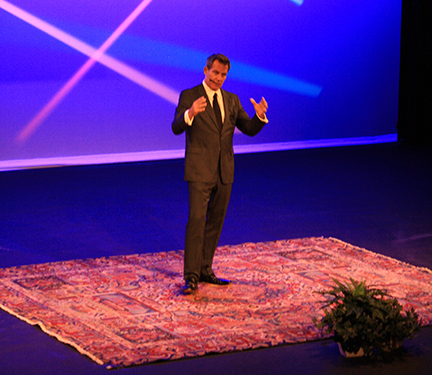
Urbanist Richard Florida speaks at Penn State Harrisburg.

Postindustrial cities like Detroit, Pittsburgh and Harrisburg have had an uphill economic climb since the glory days of cars, steel and railroad. But bringing industry and manufacturing jobs back into cities may not be the solution to grow urban areas and draw in the next generation of workers.

So says renowned urbanist and author Richard Florida, who spoke last week at the “PNC Thought Lecture Series” held in Penn State Harrisburg’s new Student Enrichment Center.

On a stage straight out of “TED Talks,” Florida outlined his theory on urban renewal. It’s based not on looking back at our manufacturing past, but in looking forward to our creative future and what he describes as the ”creative class.”

In his book “The Rise of the Creative Class,” Florida defines the group to include “people in science and engineering, architecture and design, education, arts, music and entertainment whose economic function is to create new ideas, new technology and new creative content.”

“We [once] used physical labor and natural resources to create wealth,” said Florida, who serves as the director of cities at the Martin Prosperity Institute at the University of Toronto. “[Today], the human mind is the means of production.”

Florida asserted that people like artists, musicians, entrepreneurs and technology professionals add to the vibrancy of an area. It’s this vibrancy—not necessarily jobs per se—that attract young people to a city.


Quality of Place

Florida said that he began to question the basic economic model of “if you have good jobs, the people will come” as a professor at Carnegie Mellon, when he asked his class if they would stay to work in the Pittsburgh area. The answer, he said, was a resounding “no.”

“They wanted to go to San Francisco, New York City or Seattle because these places had energy and excitement, places they could fit in,” he said.

“Quality of place” is what draws people to a city, Florida said. This quality includes natural features, open space, a diverse feel and a variety of activities such as symphonies, operas, ballet, cafes and restaurants.

Another part of city renewal is the presence of gay and lesbian communities, but not necessarily because of the individuals themselves. Florida asserted that communities that welcome gays and lesbians also embrace diverse ways of thinking. He said that great cities invest in the three “T’s”: talent, technology and tolerance.

One of these creatives is Jessica Bacon, creative director of design at Smile Spinners, a fabric and sewing boutique in Marysville. She attended the Florida speech at Penn State Harrisburg.

“I wanted a creative opportunity,” she said, explaining why she came to the Harrisburg area. “I want to build something.”

Karl Singleton, senior advisor to Mayor Eric Papenfuse, was also in the crowd. He advocated, “capturing local talent to enliven the school system,” hence encouraging the kind of creativity that Florida says is necessary to revitalize cities.

Rob Shoaff and Shaina Carter, two Maker Fellows from the Foundry Makerspace, are on board with that idea. In their jobs, they bring STEAM (Science, Technology, Engineering, Arts, Mathematics) into the classrooms of Harrisburg schools. Carter, who fellows at Downey Elementary, said that the program is “bridging the gap between community and school, bringing in community partners and bringing in technology.”

The quality of schools is vital because, as Florida said, young people often stay in a city until their children are of school age—then move out for a better school district.


Innovation and Growth

According to Florida, the numbers for the Harrisburg area shake out like this: 93,000 creative class workers, 67,000 working class workers and about 151,000 service class workers, who typically have the lowest paying jobs.

In some cities, creative class workers are moving into lower-income areas, pushing up property values and displacing long-time residents. So, how does a city bring everyone into the fold as neighborhoods change? Florida’s conclusion is to increase the pay of lower-income service jobs.

He likened this idea to the state of factory jobs prior to World War II and used his father as an example. He stated that, before the war, nine members of his father’s family needed to work in factories and other jobs just to keep the family afloat. Post-war, however, factory jobs paid better, allowing parents to own homes, purchase cars and send their children to college.

“We decided, as a society, led by Franklin Roosevelt and Henry Ford, that, in order to grow the economy so that working people could buy clothes and buy cars and buy air conditioners, we needed to pay them enough,” he said.

We can, he said, do the same thing for service workers today.

“We can give them higher pay, make their jobs better and involve them in innovation,” he said.

This, he said, would help invest all workers in their communities and foster the collaboration needed for a city to grow.

“When people get together in communities, we are more productive, we are more than the sum of its parts,” he said. “We create great, powerful communities that create innovation and growth.”

Author: Susan Ryder

Continue Reading