Tag Archives: harrisburg

Cat Thyme: Buy a plant, save a kitty.

 There’s something so grassroots about volunteers fundraising on the front lawn, especially a sale featuring plants and baked goods as the main draw.

This isn’t a yard sale to clean out the family crawlspace or to put used cribs and strollers on the lawn. This sale has gone to the cats. All proceeds raised during the “Great American Plant and Bake Sale” are donated to local cat welfare charities: The Nobody’s Cats Foundation, Loving Care Cat Rescue and Castaway Critters.

A long-time volunteer for Castaway Critters, Will Forgy has hosted the event at his Uptown Harrisburg residence for eight years.

“I was fairly new to Castaway Critters and was thinking of ways that I could raise funds,” he said. “I have an extensive garden and like to grow flowers. So, the idea of having a plant sale popped into my head.”

Though this year’s attendance suffered from a few spring showers in May, the day’s sale still brought in about $4,500. Then the volunteers opened again for business on Sunday, raising another $1,000 just through word-of-mouth advertising. Other sales have pushed the total to more than $6,100.

All told, the sales have raised some $28,000 since 2010. Not bad for an unofficial group of volunteers.

Forgy’s residential yard sale boasted a garden selection comparable to a home improvement super-center. All homegrown flowers. All hand-assembled baskets. All home-baked goodies. All to benefit local cat welfare charities. The spring sale is both timed and geared for gifts for Mother’s Day.

Even with shelving units loaded precariously with flower baskets, these feline-loving volunteers welcome owners and their pets. The animals have their own tent, complete with catnip planted just for them. Sale attendees can visit the tent to meet adoptable pets that they might be charmed into taking home, um, fur-ever.

“I have found, over the years, that animal-lovers are most generous and kind-hearted,” said Connie Elias, who volunteers actively for all three charities receiving the proceeds.

She is also one of Forgy’s dedicated helpers.

“The yard sale has quite a good following, and it grows a little bit each year,” she said. “People are always asking when the next sale will be.”

Elias felt that the “Great American Plant and Bake Sale” is important in giving exposure to pet welfare organizations, companion pet and free-roaming community cats spay/neuter programs, as well as for promoting pet adoptions and responsible pet ownership. It also bonds community members together in backing a common cause.

Local small businesses and food stores supported the yard sale with donated raffle items and free printing services.

“Local veterinarians in the area were amazing sponsors,” Elias said.

The volunteers and sponsors chose to help certain animal charities because they admire the work they do. Nobody’s Cats Foundation runs a trap/neuter/return program to help stabilize the population of free-roaming community cats. Loving Care Cat Rescue rescues cats. Castaway Critters rescues both cats and dogs, placing them in a network of foster homes until they can be adopted.

In between all the fundraising they do for cat-related charities, these volunteers are hands-on with felines. Forgy manages adoption events for Castaway Critters. Elias fosters kittens in her home until they are adopted. Both have even adopted their own special felines through these rescues.

“The idea is to get them adopted out,” said Elias. “I have been very fortunate to have had wonderful veterinarians to help with care for these babies. I am so grateful for the loving people who welcome them into their loving hearts and homes as their lifelong companions.”

Future fundraising plans include a fall sale—the second annual mum sale.

“I would like to see that event grow a bit this year,” Elias said.

The Fall Mum & Bake Sale takes place Sept. 23, starting at 8 a.m., at 3407 N. 2nd St., Harrisburg. For more information on the group’s events, visit the Facebook page: The Great American Plant and Bake Sale.

Author: Gina Napoli
Continue Reading

Money Chase: Harrisburg hears pleas for federal housing dollars.

Les Ford, executive director of the Heinz-Menaker Senior Center, made a plea tonight for CDBG funds.

Funding for Harrisburg’s only senior center remained up in the air tonight, as City Council reviewed applications for federal housing dollars.

Les Ford, executive director of the Heinz-Menaker Senior Center, made his case for funds as the city decides how to apportion $1.9 million in Community Development Block Grant (CDBG) money, a program of the federal Department of Housing and Urban Development.

“The Heinz Center is the single most active senior center in Dauphin County, and I think Harrisburg ought to support that effort,” Ford told council during the nearly four-hour committee meeting.

Council members, though, seemed uncertain. Council President Wanda Williams, for one, criticized Ford’s approach, saying that she believes he depends too much on annual grants from the city and Dauphin County to run the center.

“There are hundreds of grants out there for aging, and you need to take advantage of that,” she said.

The Papenfuse administration already turned down funding for the center, leaving Ford to appeal directly to council.

Ford replied that the center has a long list of infrastructure and other needs and that, as its only full-time employee, he’s often too busy with other projects to hunt down and apply for many other grants. He should find out if the center will receive any CDBG money during the next legislative session on July 6.

Otherwise, most of the service agencies that applied for funds showed up tonight to make their cases. The administration already has agreed to offer most of them some money, though often at lesser amounts than requested.

Proposed recipients include:

  • City Housing Rehabilitation Programs: $330,000
  • Tri-County HDC: $150,000
  • City Emergency Demolition: $120,000
  • Habitat for Humanity Greater Harrisburg Area: $30,000
  • Rebuilding Together: $15,000
  • Green Space Clean Up: $53,110
  • Christian Aftercare Recovery Ministries: $25,000
  • A Miracle 4 Sure: $25,000
  • Latino Hispanic American Community Center: $25,000
  • Fair Housing Council: $25,000
  • Mid Penn Legal Services: $15,000
  • Neighborhood Dispute Settlement: $3,900

The administration had rejected a funding request from a relatively new group in Harrisburg called Breaking the Chains, which focuses on helping at-risk youth. After a presentation, however, council members seemed inclined to offer some funding to the group, which tonight asked for $5,000 to $10,000.

At the meeting, city fire and police officials also spoke, as each department is requesting CDBG money. The Fire Bureau wants $51,686, primarily for new lockers for both its fire stations. The Police Bureau is requesting $105,000 for a new community policing van and a police cadet program. Moreover, the city’s Department of Community and Economic Development is requesting $53,000 to cover unreimbursed costs related to the sinkhole project on S. 14th Street, including money for fencing.

Like last year, the city is using much of its CDBG money—$562,248—to pay off federal loans incurred during the Reed administration. This includes a loan that the city backed for the disastrous Capitol View Commerce Center project.

Mayor Eric Papenfuse has warned that, while the city is undertaking the annual process of distributing CDBG money, funding for the 2017-18 federal fiscal year is not assured as the Trump administration has threatened to end the program.

Author: Lawrance Binda

Continue Reading

Burg View: Retain the proper, historic name of the Market Street Bridge.

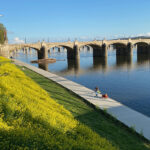
Harrisburg’s historic Market Street Bridge

In Harrisburg, there once was a guy named Harvey Taylor.

Old Harve, as he was generally known, rose up from a rough childhood in Shipoke (back when the neighborhood was known for steelworkers guzzling rotgut, not lobbyists sipping mojitos) to become a leader of the state Senate and a formidable Republican power broker.

And he got a major bridge named for himself.

Back in the 1940s and ‘50s, Taylor and his minions often ran roughshod over the people of Harrisburg, pushing through unwise and unpopular legislation that favored state workers over city residents.

That’s how once-quaint Front, 2nd and Forster streets turned into dangerous, auto-choked atrocities. And that’s how Taylor ended up with his namesake bridge, one that dumps multiple lanes of high-speed traffic into the heart of Harrisburg.

Taylor’s “gift” to his people arguably did more damage to his native city than all the floods of the 20th century combined. Much of Harrisburg was suddenly unlivable, and it became far easier to flee to the suburbs, where you could cross the street without the risk of death.

Those were the bad old days, right?

Yes, they were. But an unfortunate reminder emerged this week as the state Senate voted to insert language into a bill that would change the name of the historic Market Street Bridge, which runs almost exclusively through Harrisburg, adding the name of the late state Sen. Harold Mowery.

Now, Mowery was, by all accounts, a conscientious civil servant, and, in today’s hyper-partisan environment, the state legislature could use more like him, a man known for putting the public ahead of his party.

However, that’s not the point.

The state Senate took its 49-1 vote without bothering to ask the people of Harrisburg if they wanted the name of the bridge changed. Yes, it’s state-owned, but it’s also a beloved, historic and beautiful structure that is an essential part of the city, sharing a name with one its key thoroughfares. The picturesque, century-old stone span bridge—and its name—is as much a part of the city’s historic fabric as St. Patrick’s Cathedral or the Broad Street Market, and, in fact, is on the National Register of Historic Places. It’s a staple of Harrisburg postcards, photos and, now, Instagram pics.

Yet the Senate, led by Cumberland County Sen. Mike Regan, pushed through the bill without any apparent regard for this history or the people who live here. In fact, the lone “no” vote came from Harrisburg’s own state Sen. John DiSanto, influenced by opposition from his constituents.

Harrisburg residents, I’m sure, don’t have a problem with a bridge being named for the late Sen. Mowery. I’m equally certain that there are plenty of deserving spans in sprawling, watery Cumberland County, which Mowery represented for 30 years, which could bear his name. But this isn’t Cumberland County, and it isn’t the senator’s hometown of Camp Hill. It’s Dauphin County, and it’s Harrisburg.

The Senate vote smacks of the type of high-handedness that we hoped we’d left behind years ago. It’s a return to the bad old days when the state enacted unwanted and counterproductive policies without the participation, much less the consent, of the people most directly affected.

We urge the legislature to strip this language, which would change the given name of the historic Market Street Bridge, from its final bill.

Author: Lawrance Binda

Continue Reading

Weekend Roundup with Sara Bozich

Hello from slower lower Delaware!

Apologies on a semi-brief Weekend Roundup.

What are you doing this weekend?

(more…)

Continue Reading

If You Pave It: Multiple projects still up the road for Harrisburg.

Warn, patched pavement is a hallmark of Harrisburg’s 3rd Street, where a major, delayed road project should begin shortly.

For those wondering about some big road projects promised this year in Harrisburg, city officials have this message—your wait is almost over.

City Engineer Wayne Martin said yesterday that residents should remain braced for widespread roadwork, especially along the important 3rd Street corridor.

“[Construction work] is about a month behind, but will be ready to go out for bid this week,” Martin said.

He said that the 3rd Street project has been delayed because the city needed to coordinate with Capital Region Water, which is installing new drainage pipes, before contractors can begin the milling, paving and intersection improvements. He expects roadwork to start in late August at multiple locations along 3rd Street from Chestnut Street downtown to Muench Street in Midtown and then, Uptown, from Maclay to Seneca streets.

The project will continue throughout much of 2018, he said. Paving will cease once the weather gets cold, from November through March. However, concrete work—new curbs, walks and ramps at each intersection—will pause only for the worst winter months of January and February.

The 3rd Street project also will include 165 ADA-compliant ramps, green infrastructure elements, safety improvements, traffic signal upgrades and select streetlight pole replacements, Martin said. It’s funded with a $6 million grant from Impact Harrisburg, along with a matching $10 million PennDOT grant.

Also in the fall, work is set to begin on the repaving of Industrial Road from Cameron Street to Linglestown Road. The $3.9 million, federally funded project will lay new asphalt over the existing surface, though some milling will occur on bridges, which cannot handle the weight of additional pavement, Martin said.

Smaller projects, which have already started, include maintenance efforts on Reily Street in Midtown, Market Street downtown and Hanover Street and S. 13th streets in South Harrisburg. This roadwork mostly includes patching and selective paving, Martin said. Line-painting also will commence soon along several major thoroughfares, including Maclay Street, S. 13th Street, S. 17th Street and Rudy Road.

In yet another initiative, Mechanicsburg-based Delta Development is conducting a “Bus Stop Optimization” study, Martin said. This could lead to changes where some bus stops are located.

And what about the eagerly anticipated project that will allow N. 2nd Street to return to two-way traffic? It continues to creep forward, Martin said. The city right now is soliciting “letters of interest” from qualified design firms.

“There are so many moving parts to this,” he said. “We need to select a design professional who can move the project forward.”

Besides redesigning 2nd Street north of Forster Street, the project would make significant improvements to Forster, N. 7th and Division streets. Martin explained that this work, which may include everything from lane changes and additional traffic signals to safety improvements and new roundabouts, will require significant coordination over several years.

Another major project on the books is not for a street, but a sidewalk. Earlier this year, the city received a $1 million federal grant to repave the badly damaged river walk along the Susquehanna River. This project includes replacing the concrete for the walk and the top step.

According to Martin, the river walk will be a 2018 project, as the city needs to obtain a clearance from Norfolk Southern Railway and undergo a permitting process with the state Department of Environmental Protection.

Author: Lawrance Binda

Continue Reading

Event Central: Harrisburg’s new community calendar offers one-stop event shopping.

Events like art exhibits, such as this one advertised outside of Historic Harrisburg Association, now can be listed on the city’s community calendar.

Do you need to tell the world about your group’s next fundraiser?

Or maybe you’re in charge of promoting a community concert, a neighborhood yard sale or a church bake sale?

If so, Harrisburg has a new resource to help spread the word about whatever community event you need to advertise. A few months ago, the city launched its new community calendar, hoping to turn it into a one-stop shop for events.

Located under the events tab on the city’s website, the calendar lets visitors browse by month and date. If an event is scheduled, a full description and location will pop up.

The calendar is user driven, meaning that it’s up to organizers to go to the website, fill out a form with the details of their function and then send the information to the city by hitting the “submit an event” button.

“We were having a communications meeting and discussing what we can do to get more information to people,” said calendar creator Janelle Walker, Harrisburg’s social media and website content manager. “Then came the calendar for local events and things that don’t always get out to everyone.”

Launched in late January, the calendar is still building an audience.

That’s where Leslie Avila enters the picture. Avila and other students of the Martin Luther King Leadership Development Institute decided to take on the community calendar as part of their final project.

“The problem was that people were finding out about events after they had already occurred or the day-of when they live in another city,” Avila said. “Or event coordinators saw a drop in their attendance because there were other events that same day.”

Avila and her group contacted Walker and other publications and organizations to promote the calendar.

“[The calendar] not only brings the community together to have a fun time, but it also helps the community itself,” Avila said. “It helps people become better community leaders and more involved with the community.”

Avila’s primary target is young people.

“When I was in high school, everyone talked down on their city,” she said. “It wasn’t their fault. They just didn’t know what awesome opportunities were going on. It’s about getting the people of Harrisburg to see the great opportunities Harrisburg has for them. So, we have to make that available for them.”

Avila plans to graduate from the leadership program later this month and continue her work with the city government as an independent project.

“Eventually, I want to see about a Facebook page, especially with social media becoming such a great thing,” Avila said. “We hope that this becomes the ‘go-to’ calendar and all the events in Harrisburg receive better attendance and better advertisements.”

Click here to access the Harrisburg community calendar.

Author: Yaasmeen Piper 

Continue Reading

Food Trucks & Fireworks: Harrisburg announces July 4 celebration.

Outside of city hall, Mayor Eric Papenfuse today enjoyed a Farm Show milkshake, which will be one of the many items available on July 4 during Harrisburg’s “Taste of Independence” food truck festival.

Fourth of July revelers will get a “Taste of Independence” this year, as Harrisburg’s second annual food truck festival pulls up to Riverfront Park.

The festival will feature 40 food trucks serving everything from slow-roasted beef and fish tacos to favorites like kettle corn, fried Oreos and Farm Show milkshakes, city officials said today.

“You will not go home hungry,” Mayor Eric Papenfuse said at a city hall press conference.

The festival attracted more than 25,000 people last year, despite a day of drenching rain. So, Papenfuse said he expects an even larger turnout this year.

In addition to the food trucks, the event will feature family-friendly entertainment with local artists playing at a stage near Market Street and in an “acoustic tent” near Pine Street. Face-painting, caricatures, balloon art and a bounce house all will be offered free of charge.

This event, which runs from 3 p.m. to 9 p.m., is sponsored by the Hershey Harrisburg Regional Visitor’s Bureau, which spent $15,000 on marketing alone, according to Communications and PR Director Rick Dunlap.

The festival will conclude with two fireworks displays beginning at dusk. The first will be a fireworks show following the conclusion of the night’s Harrisburg Senators baseball game. A nearly 20-minute, 1,000-shell Independence Day fireworks show will follow at 9:15 p.m., put on by Ashland, Pa.-based Bixler Pyrotechnics and sponsored by the Pennsylvania Housing Finance Agency.

“I believe Harrisburg has the best fireworks display in PA,” Papenfuse said.

On the same evening, the Harrisburg Symphony Orchestra will host a free outdoor concert at the Reservoir Park band shell at 7:45 p.m.

Papenfuse encouraged visitors to get to the city early. Metered parking throughout Harrisburg will be free on July 4. Parking on City Island will cost $4, and the Market Street Garage will offer an all-day parking pass for $10.

After the press conference today, some attendees ventured outside, where a few trucks offered “just a little taste of what is going to be a wonderful Fourth of July celebration,” said Papenfuse, who went for a Farm Show milkshake.

At the press conference, Papenfuse also honored Arden Emerick, who received the Mayor’s Award of Distinguished Service for 16 years on the job as he retires as a commercial codes inspector for the city at the end of the month.

“A Taste of Independence” food truck festival runs 3 p.m. to 9 p.m. on July 4 in Riverfront Park, Harrisburg, followed by two fireworks celebrations.

Author: Allison Moody

Continue Reading

A House Divided: Battle begins for housing funds in Harrisburg.

Seniors raised their hands tonight at the Harrisburg City Council meeting to show their support for funding the Heinz-Menaker Senior Center.

The annual tug of war over federal housing dollars began tonight in Harrisburg, as City Council introduced an ordinance to fund a handful of social service groups.

Immediately, several residents criticized the administration’s proposed allocation of Community Development Block Grant (CDBG) funds, as it does not include any money for the Heinz-Menaker Senior Center in Midtown.

“We went over this same ground last year and the year before that and the year before that,” center Director Les Ford told council, referencing past heated battles to help fund the center through CDBG, a U.S. Department of Housing and Urban Development grant program.

Senior citizens packed the meeting in a show of force to demonstrate support for the center. They’ll have at least two more opportunities to make their case. A committee hearing on the proposal is slated for June 20, and a final vote will follow at a subsequent legislative session.

“I’m asking council to look at this proposal,” Ford said. “We will be back. We are vigilant.”

Following the meeting, Mayor Eric Papenfuse explained that his administration made its recommendations based upon a scoring system that ranked funding applications. Heinz-Menaker’s application, he said, did not make the cut.

“Heinz-Menaker was not funded because its ranking is lower than the ones that were funded,” he said.

The agencies that made the funding cut include:

  • Green Space Clean Up: $53,110
  • Christian Aftercare Recovery Ministries: $25,000
  • A Miracle 4 Sure: $25,000
  • Latino Hispanic American Community Center: $25,000
  • Fair Housing Council: $25,000
  • Mid Penn Legal Services: $15,000
  • Neighborhood Dispute Settlement: $3,900

Like last year, the largest sum is earmarked for debt service to repay a federal loan that the city backed during the tenure of former Mayor Steve Reed for the failed Capitol View Commerce Center, as well to repay another community development loan. These obligations, which total $562,248 this year, prevent the city from offering more money to social service groups, Papenfuse said.

Last year, the administration proposed eliminating funding entirely for service groups due to these debt obligations and to fund the city’s own needs. This year, however, the city refinanced its debt service, saving $80,000, which is helping to fund the groups, Papenfuse said.

In addition to funding these nonprofits, the administration is proposing $381,504 for CDBG administration and $105,000 for the city’s Police Bureau for a police cadet program and a community policing van. Other proposed funding includes:

  • City Housing Rehabilitation Programs: $330,000
  • Tri-County HDC: $150,000
  • City Emergency Demolition: $120,000
  • City Bureau of Fire: $51,686
  • Habitat for Humanity Greater Harrisburg Area: $30,000
  • Rebuilding Together: $15,000

Papenfuse added that he expects HUD to fund the CDBG program for the federal fiscal year that starts in October. However, the Trump administration has proposed eliminating the program after that.

“All of our CDBG funding is in jeopardy for next year,” he said.

Author: Lawrance Binda

Continue Reading

City Swap: Had enough of Washington? Hear me out.

Hey, you, down there.

Yeah, you.

The guy stuck in traffic on the Washington Beltway. The woman staring up at the electronic sign, waiting, waiting for a Metro train. The couple thinking that half-a- million might be a fair price for a nothing-special apartment.

Look up here.

Sure, I understand. Perhaps you have a regular job where face time is important. Maybe you can’t imagine leaving your neighborhood or friends or just enjoy the buzz of a big metropolis, despite the aggravations.

I lived in Washington for about 25 years and loved most of my time there—with certain exceptions for the traffic, the tourists and the time I got mugged.

But it’s also possible you don’t really love it there or just want to do something crazy like afford a decent house. Maybe you freelance or telecommute or can switch your federal job for a state job. This option isn’t for everyone, but maybe it’s for 10 or 15 percent of you. To you, I say, consider coming north, due north.

I did. And so did Zachary and Devin and Ivan and Teresa and Shana and lots of others. It’s a long list. We have a little D.C. ex-pat community going on here in Harrisburg.

If you’re even a smidge interested, you’ll want to know about this place you’ve probably never thought of before, much less visited. It’s a small, complicated city, much more complex than its size would indicate. So, here are a few starting points in your research, before you begin greedily scanning Trulia for that cheap, historic townhouse of your dreams.

Harrisburg will remind you of Washington, only smaller. We have a huge Capitol building, a beautiful river, Victorian-era neighborhoods, legislators, lobbyists, corruption, nonprofits, Washington Nationals players and a longstanding feud between our local and state governments. Sound familiar? We’ve even had a turn with insolvency and receivership. And, sorry, Eastern Market, I love you, but the Broad Street Market is somewhere between five and 100 times better.

The cost of housing will make your eyes pop out. This may be the single-most compelling reason to decamp for old HBG. A renovated, 100-year-old rowhouse in a nice, historic neighborhood for under $200,000? How many do you want?

You’ll be surprised by the divisions. Washington has its deep divisions, but you usually can hide from them if you want. You can’t do that in a small city like Harrisburg, where they’re right in your face. City vs. suburbs, racial, economic, political, natives vs. newcomers, even generational, as young people begin to migrate into the city. It can get pretty tense at times. Similarly, you’ll find that even a small city like Harrisburg has problems with schools, poverty and crime, things that you’d like to leave behind in D.C.

You’ll be surprised by the sense of community: For all its divisions, Harrisburg has a strong sense of community, assuming, of course, that you choose to be part of it. Depending on your liking, you might find your people in a neighborhood group, a church, a coffee shop, a bar, an arts organization. And everyone goes to the Broad Street Market.

You’ll be surprised by the quality of the food—and the prices. Harrisburg is thick with restaurants, excellent ones. On the other hand, if you think you’re going to get a bargain, think again, as prices are not that different from D.C.—that is outside of a few old diners that may have last updated their menus in the Eisenhower administration.

Want to start a business? Give it a go. That’s why I moved here. In fact, I’m often surprised at the rate of success for small businesses, especially restaurants. The economy is much thinner than in D.C., which is challenging. However, your startup costs, especially for real estate, probably will be much lower. And you just may find a niche that needs to be filled.

Want to be somebody? Harrisburg needs smart, hard-working, creative, talented and caring people. And that applies to almost every aspect of life, from politics to business to the arts to the community. If you want, you can make an impact almost immediately. Sure, you could be a big fish in a small pond in a thousand other places, but there are two things that give this city an edge. First, it’s close enough to D.C., Baltimore and Philly that you’re still in the same general neighborhood. Secondly, assuming you like city life, you can slip right in. Your neighborhood coffee roaster is now Little Amps or Elementary; your favorite bistro is now Note or Home 231; your craft brewery is now Zeroday or the Millworks; your funky arts venue is H*MAC; your indie bookstore is Midtown Scholar. And I think I’ve already expressed my feelings about the Broad Street Market. One unique thing about Harrisburg is its nearness to other wonderful little places like Lancaster, York, Carlisle, Elizabethtown and Hershey, as well as the legendary PA Dutch/Amish countryside.

Well, I could go on and on, but I think you get the idea: cheap real estate, great amenities, terrific location, comparatively little traffic. And some problems. It’s a nice place, but it’s certainly not nirvana.

But maybe it’s for you. Do some research. Email me. I’ll fill you in.

Lawrance Binda is editor-in-chief of TheBurg.

Continue Reading

Your Pocket or Mine? Who will pay for PA’s budget deficit?

Pennsylvanians are looking at a tax increase. The only question is who is going to pay and how much.

Will the taxes be imposed on businesses at the state level, or will counties and other local governments be forced to increase their taxes, including property taxes?

It is a question that is particularly critical in the Harrisburg area.

Every budget is a political statement. Each year, pursuant to the state Constitution, Pennsylvania’s political leadership must agree to a budget that is balanced by the June 30 deadline.

That mandate becomes more difficult by the year. For many budget cycles now, the Pennsylvania legislature has engaged in its own form of creative financing. In order to deal with an ever-growing budget deficit, they have passed—and governors have signed—a series of smoke-and-mirror budgets. Projected revenue from new programs is wildly exaggerated, special funds are raided, and the costs are passed on to local governments.

And now the chickens are roosting. The failure to provide real funding for critical programs and a sputtering economy have left the commonwealth with a structural deficit that is estimated at $3 billion or more.

And nobody seems to know where the money will come from.

Oh, there have been proposals. Gov. Tom Wolf introduced a budget that increases state expenditures by 1.8 percent and proposes to pay for it with, among other things, consolidations of state agencies, a prison closure, limiting the use of state police in uncovered municipalities, privatizing the State Farm Show Arena, the institution of a severance tax on natural gas drilling, limiting corporations’ ability to shift tax responsibilities to more tax-friendly states, and a variety of other business taxes and revenue enhancements that include an internet lottery and liquor “modernization.”  

The House Republicans responded by passing their own budget that emphasized cuts in state funding for many state/local programs.

And that is where the question of who pays the taxes comes into play. It’s not that these programs will be eliminated—many are mandated under state law—but where the financing will come from.

In many of these cases, there will be no choice but for the money to come from local governments, particularly the counties. The proposed cuts for health, human services and criminal justice funding would be so severe that there will be little choice left for the counties but to increase their own property taxes.

And then there is the elephant in the room—what to do with the state pension systems. Decades of state underfunding, poor investment decisions and excessive fee schedules have left the state’s two big retirement funds in a fiscal quandary. This is a statewide problem, of course, but in central Pennsylvania, it is a crisis.

For the counties in this area, pensions are economic generators. In 2016, the county whose retirees received the largest pension payments was, by far, Dauphin County at $304 billion. Second place? You won’t be surprised to learn that it was Cumberland County at $195 million.

So, when you hear that various legislators are proposing plans to slash pension benefits for state workers, ponder for a second what it will mean to area restaurants, grocery stores and whatever shopping mall retailers manage to stay in existence.

There is one more reason for Harrisburg residents to pay particularly close attention to what happens with this budget. It is the fate of the $5 million that is annually given to the city by the state for “fire protection.” For decades, this budget appropriation has been a way for the commonwealth to soften the loss of revenue for the many state-owned properties within the city limits.

The Republican House-passed appropriations bill eliminates the $5 million funding. The loss of this money would be devastating for the city’s public safety programs and would have egregious consequences for the city’s effort to achieve fiscal recovery under the “Strong” plan.

It is easy to understand why eyes glaze over when the state’s budget problems are reported. The failure to pass the budget in a timely fashion has become a staple of yearly Harrisburg springtime news, like the falcons in the Rachel Carson Building or the high school proms.

And who can keep track of these budget numbers or possibly understand what’s real and and what’s alarmist rhetoric?

And, yes, this budget fight is still in the first half of what will probably be an overtime game. The Senate has not had its shot yet, and Republican leadership there has expressed its unease with such a heavy reliance on enhanced gambling and liquor revenue.

But everyone in this area needs to understand the stakes as the real budget negotiations begin in June. And the biggest question will be this: Will the structural deficit result in state-level business taxes as proposed by Gov. Wolf or in local tax increases as will inevitably be the result of the House Republican proposal?

Mike McCarthy and Joseph Powers are veteran observers who between them have nearly eight decades in and around state government.

Continue Reading