Tag Archives: harrisburg

November News Digest

2-Way 2nd Street Debated

More than 100 residents attended a public meeting last month to learn how a proposal to return N. 2nd Street to two-way traffic will affect infrastructure and traffic flow across the city.

The $6 million project already has grant funding from Impact Harrisburg and PennDOT. Preliminary plans call for changing traffic flow over a two-mile stretch of 2nd Street north of Forster Street, leaving its three northbound lanes in downtown Harrisburg intact.

As residents learned at the meeting, 2nd Street was originally built as a two-way road. Harrisburg officials converted it to a one-way, three-lane mini-highway in the 1950s to accommodate commuter traffic.

The meeting addressed two major questions:

  • Where will displaced commuter traffic go after the conversion?
  • What’s the best use for the extra space that will result from eliminating a traffic lane?

Planners and engineers expect much of the evening commuter traffic on 2nd Street to flow north on 3rd Street instead, said Adam Vest, associate engineer at the planning firm Kittelson & Associates. Other cars will go to 6th and 7th streets.

Overall, engineers expect that 70 percent of traffic between 4 and 5 p.m. on weekdays will be diverted to other roads. About 1,400 cars travel down 2nd Street during rush hour each day.

Outside of those five hours each week, however, the traffic volume on 2nd Street is usually low enough to travel in a single lane northbound lane without much displacement, Vest said.

Mike Hughes, who lives on the 2200 block of N. 2nd Street, wasn’t too worried about displacing commuter traffic.

“Ultimately, commuters are going to have to change routes, but they don’t live here or pay taxes here,” Hughes said.

Like many other residents at the meeting, Hughes was more concerned about reducing vehicle speeds along 2nd Street.

Traffic study data show that vehicle speeds on N. 2nd Street increase as cars travel north out of the city. Cars approaching Verbeke Street travel an average of 33 miles per hour—already well over the 25-mile per hour speed limit. That speed rises to 35 miles per hour as cars approach Maclay Street and hits 38 miles per hour just south of Schuykill Street.

Over the course of the two-week study, 93 percent of drivers exceeded the 25-mile per hour speed limit, Vest said.

“With those speeds, nobody wants to be on 2nd Street,” he said. “We’re trying to make a street people want to be on.”

During an hour-long breakout session, residents debated the merits of bike lanes, angled parking, traffic circles and sidewalk expansions—all options on the table for a two-way 2nd Street.

Trimicka Crump-Joseph runs an after-school theater program for youth at 2nd and Reily streets. She said that vehicle speeds endanger children walking or being dropped off at class.

“I need traffic to slow down because right now, I’m only zoned for 10 children,” Crump-Joseph said. “I could have more, but want it to be safe for kids to walk or get dropped off.”


New Pavilion at Italian Lake

Last summer, inclement weather forced the cancellation of numerous outdoor concerts at Italian Lake.

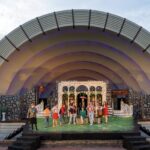
City officials and local activists expect a better outcome in 2019, as last month they unveiled a new pavilion that shields the park’s stage from the elements.

“This is a tremendous improvement to the value of Italian Lake,” said Jeb Stuart, a board member of the Harrisburg Parks Foundation. “Now, we’ll be able to make more events happen here.”

The foundation was one of several groups to contribute money for the $36,800 project. First National Bank (FNB) donated the bulk, with a $25,000 contribution. The foundation, the city and a group of business people led by activist Mike Trephan filled in the remaining funding gap. Kennett Square-based Recreation Resource USA built the pavilion.

The 90-year-old, 9.5-acre manicured park in Uptown Harrisburg has experienced something of a renaissance in recent years.

Several years ago, the ornate fountains were restored, and the community group Friends of Italian Lake introduced several swans into the lake during the warm weather. In 2015, Harrisburg Young Professionals spearheaded a renewed summer concert series, which had been suspended for several years.

Community activist Peggy Grove said that Friends of Italian Lake would like to raise another $5,000 to finish the project, which would include an overhead fan, an improved sound system and the refinishing of the concrete stage.

“I’m just so glad that this pavilion has been built,” she said. “Now, people can perform despite the rain.”

Mayor Eric Papenfuse said that the city would like to see additional improvements to the park, such as the rehabilitation of the bench seating and the restoration and reopening of the restrooms.

“This is just the beginning of what we hope will be a greater upgrade of the park,” he said.


HU Buys Land for High-Rise

Harrisburg University has completed the purchase of four parcels of land in downtown Harrisburg, bringing it a step closer to starting construction of a new academic tower and hotel.

In mid-October, HU bought 24, 26 and 28 S. 3rd St., as well as 222 Chestnut St., for a total of almost $3.2 million, according to Dauphin County property records. As the new landowner, the university soon will begin going through the city’s planning and zoning processes, said HU President Eric Darr.

If all goes according to schedule, HU expects to begin clearing the site, which includes demolishing three small, 19th-century-era buildings, in late spring, and initiate actual construction in the early summer.

Darr said that he expects a two-year construction timeframe for the building, now projected to be 19 stories tall, with completion expected in the summer of 2021. Originally, the university had planned for the building to rise more than 30 stories, but the size was scaled back due to higher-than-anticipated costs.

“The cost of the project exceeded what we felt comfortable with,” Darr said.

As now envisioned, the 280,000-square-foot building will have two main components. An academic portion will house HU’s health sciences programs, as well as several other disciplines, including advanced manufacturing and interactive media. An on-site boutique hotel will include 190 rooms, Darr said.

HU, Darr said, is currently “in negotiation” with its hotel partner, which will operate the hotel privately. He added that he’s confident that Harrisburg easily can absorb a new hotel, as, already, the university attracts a large population of visiting students, who often must stay in hotels outside the city.

The original project plan included space for student housing, which, Darr said, remains a critical need. However, HU now expects to convert some underused downtown buildings to housing, which would be a less expensive alternative.

“We’re evaluating other properties close to us to retrofit for student housing,” Darr said.

The revised plan also eliminated parking from the project, which, Darr said, shouldn’t be an issue as the site is near several parking garages. The plan also calls for a first-floor restaurant.


Demotion Affirmed

The Harrisburg school board voted unanimously last month to affirm a previous decision to demote a former business manager, months after a county judge ordered it to reconsider its action.

At a special meeting, board members voted 7-0 to approve an adjudication document defending the district’s demotion of Kenneth Medina, a business manager who was reassigned with a pay cut following allegations of professional misconduct.

The document adds greater detail to the charges and evidence brought against Medina last year, according to district Solicitor Samuel Cooper, and satisfies an August order from a Common Pleas judge that the district reconsider his case.

Medina was hired as the district’s business manager in April 2016 at a salary of $120,000. He was reassigned to a grants manager role at a salary of $60,000 last year, after Harrisburg Superintendent Sybil Knight-Burney placed him on administrative leave due to allegations of professional misconduct.

According to Knight-Burney, Medina had failed to notify the district of a vehicle loss, submitted budgets to the Pennsylvania Department of Education (PDE) with incorrect figures, failed to schedule building inspections at John Harris High School, and failed to make arrangements for mail service at district properties.

Medina denied those allegations. He said that his reassignment came after he started raising questions about consultant contracts and other practices in the district’s long-troubled business office.

But when the district held a due process hearing in August 2017, a hearing examiner prepared a report concluding that the allegations against Medina were credible. The board voted to adopt the examiner’s recommendations, leading to Medina’s reassignment and salary cut.

Medina filed a complaint with the Court of Common Pleas, leading Judge John Cherry to order the school board to hear Medina’s case.

Last month, Cooper said the district fulfilled the court’s mandate by preparing a more detailed written decision justifying Medina’s reassignment.

The district has shared that adjudication with board members, who reviewed it before the vote. According to Cooper, a vote to approve the document “ratifies the actions the board had previously taken.”


Project Planned for Steelton

A major mixed-use development has been announced for Steelton, a project that envisions a restaurant, a grocery and apartments.

Wormleysburg-based Integrated Development Partners announced last month “The Steel Works,” which would include a brewpub, a 20,000-square-foot supermarket and more than 75 apartments. Five buildings would span 102-230 N. Front St., in the heart of the borough.

IDP bought the land earlier this year for $375,000 from the Steelton Economic Development Corp. after a prior developer failed to get financing for its project.

IDP expects to break ground in late 2019 or early 2020, with construction expected to take 24 to 36 months. 


So Noted

Friends of Midtown Community Dog Park
officially opened in late October, marking the first public dog park in Harrisburg. The park, at N. 7th and Granite streets, will operate for at least two years under an agreement with the landowner, Vartan Group.

Harrisburg University last month unveiled new training and competition space for its e-sports team, The Storm, inside Whitaker Center. When combined with Whitaker Center’s two theaters, HU now has the largest e-sports campus in North America, according to the university.

Jackson Hotel, a historic Harrisburg property, last month got a new owner, who vowed to restore the dilapidated, circa-1884 building. Developer Matt Long purchased the N. 6th Street building, which once served as a rooming house and a hotel for African-American patrons denied service in the city’s whites-only hotels.

Michael Knill was named last month as the new athletic director for Central Penn College. A graduate of the college’s physical therapist assistant program, Knill previously served as athletic director of the Susquehanna Township school district and as an assistant football coach for Red Land High School.

Rep. Patty Kim last month won re-election to the state Assembly representing Pennsylvania’s 103rd legislative district, defeating Republican challenger Anthony Harrell by a margin of 15,393 to 2,933 votes, respectively. In the closely watched race for the 10th congressional district, Republican incumbent Scott Perry beat back a tough challenge from Democrat George Scott by a margin of 148,790 to 140,956 votes, respectively.


Changing Hands

Adrian St., 2435: S. Padrilla & M. Serrano to I. & K. Mita, $54,000

Adrian St., 2459: B. Rotta to A. Sloane, $70,000

Barkley Lane, 2511: K. Clement to R. & B. Martinez, $76,000

Boas St., 256: First Evangelical United to C. & R. Herr, $50,000

Briggs St., 1942: Jeremiah Property Holdings LLC to S. Dolph, $122,500

Brookwood St., 2408: Citizens Bank NA to M. Cedeno, $53,000

Brookwood St., 2466: PA Deal LLC to V. Sanghani, $65,900

Capitol St., 1220: C. Sullivan to M. Olds, $137,500

Chestnut St., 222: Musalair Trust to Harrisburg University of Science and Technology & D. Maun, $2,450,000

Derry St., 1252, 1254, 1312, 1330, 1629, 1631, 1633; 1333 Vernon St.: McFarland LP to A. Himalaya PA Properties LLC, $561,428

Derry St., 2401: M. Wijaya & I. Lim to S. & M. Mejia, $30,000

Derry St., 2514: H. Alcantara to Portal Enterprises Inc., $50,000

Green St., 1104: N. Hench to W. Eltringham, $203,171

Green St., 1310: M. Corbett to Panda Real Estate LLC, $76,000

Green St., 1324: W. Davis to A. Miller, $115,000

Green St., 1523: CJ MF Invest 1 LLC to Fratelli Property Investments LLC, $110,000

Green St., 2338: Pennsylvania Housing Finance Agency to E. Chattah, $32,000

Greenwood St., 2124: G. Leo to A. Dascani & D. Colbert, $30,000

Greenwood St., 2600: Q. Long to A. Beck, $84,000

Hale Ave., 412: T. Tran to G. Romain, $69,900

Hale Ave., 435: E. Pereira to I. Yolov, $57,000

Herr St., 131: S. McGovern to J. Noonan, $122,000

Hudson St., 1131: A. Stephens to R9 Holdings LLC, $47,350

Hudson St., 1216: N. Brofee to R. Mesariac, $99,900

Industrial Rd., 4050, 4100: 283 Associates to Sygma Network Inc., $4,025,500

Kelker St., 222: J. & J. Corey to B. & A. Ennist, $154,000

Kensington St., 2417: P. & D. Bang to L. Upshur, $67,000

Kensington St., 2431: T. Dieu to K. McClaire, $67,500

Maclay St., 423: L. Ware Jr. to Tyrone Peoples, $80,000

Maclay St., 427: S. & T. House to S. Kelly, $60,000

Market St., 1847: 1847 Market St. to Harrisburg Homes Investment LLC, $45,000

Market St., 1845, 1849: Nish Properties LLC to Harrisburg Homes Investment LLC, $85,000

Muench St., 234: WCI Partners LP to A. Fortune, $115,000

North St., 208: Pennsylvania Heritage Foundation to K. MacNett, $112,000

N. 2nd St., 618: Chattah Family Trust to Qiu Zhen 618 LLC, $313,000

N. 2nd St., 3218: D. Henry to K. Prestia, $114,900

N. 3rd St., 1700: PA Deals LLC to E. Shelly, $126,900

N. 3rd St., 2014: R. Heath to S. & C. Payson, $213,550

N. 3rd St., 2200: J. & M. Cross to D. McCoy, $70,000

N. 4th St., 1320: Sapanvi LLC to Harrisburg Home Investment LLC, $30,000

N. 4th St., 3229: E. & K. Mundy to Willowscott Investments LLC, $46,000

N. 5th St., 2743: Investment Specialists LLC to S. Salleb & M. Aziz, $52,000

N. 6th St., 2400: Resting Place to Sent Ones Inc., $39,000

N. 6th St., 2401: Investment Specialists LLC to Marl Investments LLC, $175,000

N. 6th St., 2937: S. Driscoll to KMM Development LLC, $59,000

N. 6th St., 3113: S. Householder to F. Pizzoli, $54,100

N. 6th St., 3149: Asset Management Services LLC to A. Salame, $32,000

N. 14th St., 1330: D. Lopes & J. Wright to T. Stokes, #137,000

N. 18th St., 57: MSP Associates Inc. to KS Homes of PA LLC, $50,000

N. Cameron St., 10, 22: K. & I. Newkam to Great Scott Productions LLC, $470,000

N. Cameron St., 1217: San Pef Inc. & P. Peffley to CDG United Investments LLC, $1,065,000

N. Front St., 1525, Unit 612: J. Eirkson to M. & N. Hameed, $181,000

Penn St., 1502: H. Lord to A. Fortune, $110,000

Penn St., 1724: T. Howarth to K. Mohn, $108,000

Penn St., 1802: G. Link to M. & C. Freeman, $74,000

Penn St., 1935: WCI Partners to R. Solano, $134,900

Pennwood Rd., 3139: L. Ciambotti to A. & M. Burnett, $126,900

Pennwood Rd., 3143: T. Marhon to E. Cortes & E. Roman, $117,000

Regina St., 1611: J. & F. Burgos to I. Bakare, $35,000

Reily St., 213: P. Donahue & P. Chaves to E. Brantner, $111,000

Reily St., 253: R. & A. Gallagher to R. Wodele, $112,500

Rolleston St., 1020: E Street Properties LLC to DHS Team LLC, $49,900

Rudy Rd., 2245: M. Saluhdin & P. Williams to E. Brown, $155,000

Rudy Rd., 2258: K. Hoffman to M. Brossman, $151,350

Schuylkill St., 664: MSP Associates Inc. to KS Homes of PA LLC, $32,500

Showers St., 608: D. Wiedemer to R. & W. Fellinger, $155,000

Shoop St., 1443: S. Khan to K. Nashed & R. Mahrous, $40,000

S. 3rd St., 24, 26, 28: Dauphin Land Co. to Harrisburg University of Science and Technology & D. Maun, $730,062

S. 13th St., 225, 229; 1408 Vernon St.; 1627 Derry St.: Woodlayne Court LP to A. Himalaya PA Properties LLC, $1,110,000

S. 14th St., 1449: B. Price Jr. to City of Harrisburg, $54,500

S. 17th St., 424: Yovany LLC & Rivas Property Investments LLC to R. Feliz, $49,500

S. 17th St., 831: Crist Holdings LLC to S&P Property Holdings LLC, $140,000

S. 18th St., 1100: J. Edrington to S. Savage, $85,000

S. 25th St., 604: M. Clea to I. Yolov, $57,000

S. 25th St., 620: D. Staub to C. Grant & M. Rinaldi, $55,000

State St., 1510: TW Property Management & Rentals LLC to J. Ansell, $43,500

State St., 2007: Deuce & Mike Properties LLC to Ephraim Slaughter American Legion Post 733, $585,000

Susquehanna St., 3115: K. & M. Baum to A. & J. Mazer, $109,000

Swatara St., 2006: K. & F. Yocum to A. Shah, $38,000

Swatara St., 2040: Crist Holdings LLC to J. Crawford, $47,000

Zarker St., 1917: DC Investments LLC to C. & N. Carr, $39,900


Harrisburg property sales for October 2018, greater than $30,000. Source: Dauphin County. Data is assumed to be accurate.
Continue Reading

Here Comes Santa: Harrisburg unveils details of Saturday’s holiday parade

Officials from both Harrisburg and Christmas announced the details of Saturday’s holiday parade today.

Food trucks, marching bands and live reindeer will flood the streets of downtown Harrisburg this weekend for the city’s annual holiday parade, which will take place rain or shine on Saturday.

Mayor Eric Papenfuse announced details of the parade at a press conference this morning in city hall, where he was joined by performers and corporate sponsors.

“Events like this bring people to the city in droves,” Papenfuse said. “The city has improved so much in the past few years, and this is an opportunity to come together and celebrate the holiday.”

The $20,000 event budget was funded entirely by sponsorships, Papenfuse said.

The parade will begin at the Market Street Bridge at noon, traveling its customary route up 2nd Street to North Street, before continuing to Front Street and concluding on City Island.

This year’s theme is “A Storybook Season,” Papenfuse said. More than 90 parade entrants will provide entertainment, including marching bands, local celebrities, vintage and classic cars and costumed performers.

The procession will also feature giant inflatables, including a gingerbread man that requires 24 handlers, Papenfuse said.

Event highlights this year include a photo station with two live reindeer at State and 2nd streets.

Free carnival games will be stationed on Market Street between Front and 2nd streets for the duration of the parade, along with 10 food trucks offering everything from Brazilian cuisine to crab cakes.

A food guide with a complete list of menu items is available on www.harrisburgpa.gov.

The afternoon’s festivities also will be broadcast on Channel 20. Residents who don’t want to brave the cold can join the after-party at Strawberry Square beginning at 3 p.m.

There, revelers can take photos with Santa, enjoy complimentary cookies and hot chocolate, and watch encore performances from step teams, drill teams and marching bands.

The best teams as picked by a panel of judges will receive cash prizes, which range up to $500 and help performing groups purchase uniforms and instruments, Papenfuse said.

A new prize for the “best in theme” parade entry will also be awarded this year.

The Market Square garage will offer a $10 flat rate special for parade day. Motorists can also redeem four hours of free parking by using the promo code LUVHBG on the ParkMobile app.

The forecast is looking good for Saturday, Papenfuse said, currently calling for sunny skies and temperatures in the mid-40s.

Continue Reading

Harrisburg lifts hiring freeze, acts to extend lobbying effort as it prepares for Act 47 exit

Harrisburg city hall

After a brief period of austerity, Harrisburg is hiring again.

Mayor Eric Papenfuse said today that he lifted a five-month hiring and spending freeze on Oct. 24, the same day that Gov. Tom Wolf signed a bill designed to release Harrisburg from state financial oversight.

Papenfuse declared a moratorium on hiring and non-essential city spending in June. At the time, he said that the freezes would prepare Harrisburg for the eventual loss of $12 million in tax revenue, which would accompany its Act 47 exit in 2021 unless state lawmakers intervened.

The hiring freeze affected 14 unfilled positions in city hall, half of which were represented by bargaining units.

As of Monday, the city was advertising six vacant positions on its website. Papenfuse expects the other unfilled positions to be posted in batches.

The non-essential city spending freeze was also rescinded in October, Papenfuse said today. It did not interrupt any grant funded capital improvement projects, but did lead city officials to re-evaluate in-house spending.

Papenfuse declined to say in June which programs, if any, were curtailed by the freeze.

The bill that Wolf signed in October, House Bill 2557, will temporarily spare Harrisburg the revenue losses that normally occur when a city exits Act 47, as it surrenders the augmented taxing power it exercised under state oversight.

Harrisburg officials have long said that the city cannot survive without its current local services and earned income tax rates, which were both increased under Act 47.

At a House committee hearing in September, Papenfuse testified that the city’s commuter population creates an irreparable structural deficit for the city, since the demands on its infrastructure and emergency services are too great for its small, largely impoverished residential tax base to afford.

House Bill 2557 let Harrisburg retain its current taxing authority for five years under the guidance of a five-member governing board. City officials expect to exit Act 47 in the spring, once the board adopts an agreement with the city granting it oversight powers.

House Bill 2557 won’t allow Harrisburg to keep its current taxing authority in perpetuity, as city leaders initially wanted. But they hope Harrisburg can push for even greater reforms in the future.

Papenfuse also is asking City Council to extend Harrisburg’s contract with the lobbying firm Maverick Strategies, which worked throughout the year to make the city’s case in the statehouse.

The current contract with Maverick was set to expire in December at the end of a one-year, $60,000 term. Papenfuse said today that he hopes to retain their lobbying and intelligence gathering services for at least another year.

City Council will consider a motion to re-hire Maverick at its legislative session tomorrow, which begins at 6 p.m. in city hall.

Continue Reading

Dissimilar City: None of these things are like the others.

Illustration by Rich Hauck

How similar is Harrisburg to other cities in Pennsylvania?

For instance, how similar is Harrisburg to places like Oil City, Shamokin and Cory?

I ask because this issue arose repeatedly during the state legislature’s joint hearing in late September on whether to allow Harrisburg to retain the special taxing privileges it enjoys under Act 47, the state’s program for financially distressed municipalities.

For some state Assembly members, the subtext was this: What makes Harrisburg so darn special? Why should it have rights not extended to the commonwealth’s other small cities?

I felt that this line of questioning was crafted to be critical, posed by legislators reluctant to allow the city to retain its current, elevated local services tax (LST) after it departs Act 47. Nonetheless, it’s a good question.

So, then, is Harrisburg different from the other 55 or so cities in Pennsylvania? Yes, it is. Very.

Harrisburg is the state capital. Its small population doubles every day, meaning that it needs to provide—and pay for—services well beyond those needed by its own residents. Moreover, about half of its property can’t be taxed due to state and nonprofit-owned land. It has a large service economy and a high poverty rate.

Those are just a few of the many ways that Harrisburg is different.

But Harrisburg hardly stands alone in its uniqueness. Take a trip across this vast state. Travel from artsy Lancaster to struggling Carbondale to woodsy Bradford. Go from touristy Bethlehem to rapidly changing Hazleton to tiny Arnold.

You may enjoy your journey; you may not. But you certainly won’t come away thinking, “Wow, these cities in Pennsylvania are so alike.”

Truly, there’s just one thing that ties together these extremely different places. They share the most superficial of links—a definitional one—what the state terms a “city.”

Now, it wasn’t always like this. For a long time, the state’s small cities did share a set of commonalities.

In the early 19th century, they were largely county seats and market towns, centers of population and commerce surrounded by vast acres of farmland. Many later became industrial boomtowns—oil for Bradford and Oil City; coal for Shamokin and Carbondale; steel and railroads for Harrisburg and many others.

Many similarly shared a fate on the back end of the boom—depopulation, disinvestment, financial distress. People and wealth once concentrated in these places migrated out to the surrounding townships, spurred on by state and federal housing, road and transit policies that favored new, dispersed suburbs over old, dense cities.

Most cities became shells of their former selves and many ended up, like Harrisburg, in Act 47.

Fast-forward to today, and cities like Harrisburg, Farrell, McKeesport, Monessen, Lock Haven and Easton have virtually nothing in common with one another. Over the past 50 or so years, Pennsylvania’s smaller cities have become delinked. Some are doing relatively well, others aren’t. Some have become service-oriented, while others remain largely industrial. Each is trying to find its own way forward based on its distinct location, history and situation. It’s therefore illogical to force them to abide by the same set of fiscal rules.

In “Communities in Crisis,” a report released last year, the Pennsylvania Economy League, a nonprofit policy organization, described an alarming “fiscal decay” among the commonwealth’s cities and urged the legislature to take action.

“The fiscal situation on average in cities has deteriorated, and many are likely experiencing distress regardless of whether they are in the state’s Act 47 program,” the report stated.

The report advocated a wholesale re-examination of the rules governing local government in Pennsylvania, possibly including greater taxing flexibility.

As stated above, Harrisburg is an especially unique case. Here, a small, largely poor population pays to provide services to a huge number of mostly better-off, suburban commuters—who often work in buildings that also cannot be taxed.

Under state code, Harrisburg can charge these workers an LST of just $1 per week each. However, because it’s been in Act 47, Harrisburg has been able to tax them a bit more—$3 per week. This small financial boost has worked. Service levels are returning, and the city is experiencing an economic revival as it’s set to emerge from a historic financial crisis.

While that solution worked for Harrisburg, I don’t presume to know what works best for Beaver Falls, Hermitage, New Castle, Sunbury or Wilkes-Barre, small cities vastly different from one another. But I do know this. The leaders of those cities understand the needs of their communities better than distantly domiciled state legislators, much less the Stetson- and Oxford-clad gentlemen of another time who promulgated the current code, who never could have imagined the dire future of the state’s small cities.

Harrisburg, Altoona, Butler, Connellsville, York, Washington, Williamsport—they are all unique places, despite the shared designation of “city.” The commonwealth should allow them maximum flexibility in setting their own rules and guiding their own futures.

Lawrance Binda is editor-in-chief of TheBurg.

Continue Reading

Fun in the Burg: Over 9 years, a small arts event has grown into a celebration of city, community.

Broad Street Market during 3rd in the Burg.

Friday at 5 p.m. is the workweek’s golden hour.

You’ve endured the rigors of the grind, running on caffeine and stress, and then… freedom. TGIF.

In the capital city, there’s a double shot of thanks on tap on the third Friday of every month.

That’s when Harrisburg rolls out its greatest hits reel: new gallery openings, hot new bands, custom cocktails, novel exhibits, gourmet specials, door-buster sales. The lights stay on longer in venues throughout the city, the crowds descend, and businesses put their best foot forward.

Akin to First Friday celebrations, “3rd in the Burg” runs year-round and allows folks to dial down the breakneck pace of the work week and stroll through the streets of the capital city, relax with a fine cocktail and gourmet dinner and mingle with friends, artists and musicians.

Nine years after 3rd in the Burg debuted, it’s getting an exciting refresh: a new logo, a new brochure with a map, a litany of new sponsors, a revamped website and a stronger social media presence.

“3rd in the Burg has operated rather quietly, like clockwork, for years,” said Larry Binda, editor-in-chief of TheBurg, which organizes the monthly event. “We want to raise its profile a bit and emphasize its association with TheBurg, since few people seem aware that we lead it.”


Opens Your Eyes

In recent years, the Broad Street Market has arguably become the heart of the action during 3rd in the Burg. However, the celebration extends broadly throughout Midtown and downtown, and typical participants include The Millworks, the Susquehanna Art Museum, Midtown Cinema, Home 231, Midtown Scholar, Zeroday Brewing Co., Right on Reily, Cork & Fork, Mangia Qui and the Vegetable Hunter.

Nor is it just for young hipsters, millennial professionals, state workers or the uber-artsy.

“There’s something for everyone,” said Kelsey Tatge, the 3rd in the Burg coordinator who often attends with her “West Shore mom” for dinner at Café 1500, Pastorante or Cork & Fork.

It’s family-friendly, dog-friendly and safe, too, she emphasized. And, after 5 p.m., parking is free in much of downtown.

To see the rapidly growing list of sponsors, just turn this magazine over. The ad for 3rd in the Burg was first placed on the back page nine years ago, and it has remained in that coveted spot since.

Devan Drabik, director of Explore HBG—a new sponsor—said it is “a celebration of not only the arts, but of the creative minds in the city, including the adaptive re-use” of so many buildings, including The Millworks and the Historic Harrisburg Association’s ongoing renovation of its bank building.

“Having TheBurg involved has been a tremendous blessing to 3rd in the Burg and the businesses involved,” Drabik said. “Since they took leadership of 3rd in the Burg, there has been a continuity of anchor businesses participating and an outpouring of new venues wanting to be involved.”

When Binda brought his friends from the nation’s capital to the state capital’s citywide art walk and bash, they were pleasantly surprised by the culture here. Their one challenge: Binda saw so many people he knew, they never ventured far from the Broad Street Market and Little Amps. His friends started calling him “mayor.”


Lots to Do

The reunion of old friends and the attraction of new tourists is part of the beauty of Harrisburg’s signature cultural event, as energy reaches critical mass.

Sydney Musser, of the Harrisburg Downtown Improvement District, said they timed their “Art in the Box” event, featuring artists painting 14 utility boxes, with 3rd in the Burg.

“3rd in the Burg is great because we can highlight all parts of Harrisburg,” Musser said. “Harrisburg is a small city, but it still has lots to do and check out, and this opens your eyes to that fact. It makes Harrisburg shine for those living here and those visiting.”

Tara Chickey, art director at The Millworks, said that the restaurant/brewery/art venue is often elbow-to-elbow during 3rd in the Burg as they schedule show openings with the event. An added draw is that “95 percent” of their artists are in their studios that evening, so patrons can meet them and chat.

“Harrisburg is a walkable city,” Chickey said. “This lets us connect the downtown with Midtown and Uptown.”

It also supports the “buy local” movement, she said.

Vivian Sterste said her fine arts gallery, Vivi on Verbeke, has been participating for several years. Located a stone’s throw from the Broad Street Market, she opens her cozy studio/gallery free of charge every month for a dose of unique pottery, vibrant paintings and more.

“We bring a warmth and camaraderie to our community on 3rd in the Burg,” Sterste said.

Even the downtown McCormick Riverfront Library is joining the party this year. Marketing Assistant Christina Zeiders said that, on Nov. 16, from 6 to 8 p.m., the library will hold “Date Night.” Attendees can bring their significant other or friends for food and crafts. They can choose either a pint glass or wine glass to decorate, at no cost to participants.

“Last summer, we began opening Saturdays as well as two evenings a week,” said Lisa Howald, new branch manager. Starting in September, they opened their doors late for 3rd in the Burg.

“We kicked off with ‘Bad Art Night,’” she said. “Participants had a great time making the worst art they possibly could in competition for a terrible trophy.”

In October, they hosted “Escape the Library,” an escape-room-style challenge. And, in the coming months, they plan to have live music, book bingo, mini-golf, snacks and more.


About Community

3rd in the Burg started in late 2009 when several local gallery owners wanted to launch a First Friday-type event to attract art-lovers to their venues. They approached TheBurg to be a founding member and media sponsor.

In the beginning, businesses and galleries had to pay a fee, which limited participation. After the original galleries closed, a steering committee asked TheBurg to take the reins completely. The first change made by TheBurg: eliminating the participant fee and attracting sponsors to offset the cost of the prominent, back-cover ad.

“The fee, although modest, was a huge barrier to participation,” Binda said. “After we eliminated it, everyone wanted to be part of 3rd in the Burg.”

Venue participation immediately jumped and, most months, 40 to 50 galleries, museums, restaurants, bars and other places now join in.

Binda noted that 3rd in the Burg receives no public funds, which distinguishes it from many First Friday-type events in other cities, nor is it a moneymaker for TheBurg.

“We basically donate staff time to it,” he said. “But we like providing this service. It’s become important to the fabric of Harrisburg.”

Importantly, it both brings people into Harrisburg for the evening and, for residents, acts as a community gathering, as locals use the night to congregate, chat and share a meal.

“It’s not just for tourists. The people who live here participate,” Binda said. “It’s a communal gathering. You see neighbors talking to neighbors.”

Tatge agreed.

“Everyone says ‘hi’ to each other,” she said. “It makes you feel like you are a part of something. I’m proud of it.”

In the end, 3rd in TheBurg is a natural extension of TheBurg’s mission, Binda said.

“We want to serve and foster community,” he said. “The Harrisburg area can be a contentious place, and we like to think that 3rd in the Burg is when the entire community can come together.”

So if it’s the third Friday, and the crowds throughout the city are big and happy, this must be Harrisburg.


3rd in the Burg takes place the third Friday of each month throughout downtown and Midtown Harrisburg. This month, 3rd in the Burg is on Nov. 16. For more information, see the brochure in this month’s issue, go to
www.thirdintheburg.org or visit the Facebook page.

Continue Reading

To Benefit Harrisburg: Bi-partisan cooperation leads to continued city success.

Just a few weeks ago, the residents of our city and region were witness to a remarkable display of bi-partisan cooperation and compromise among local and state officials. It was an example of putting aside the destructive politics of personal grievances and ideological commitments in the service of crafting a solution that makes a real difference to the people and the place our officials were elected to represent. It was an example of politics at its best—so often missing at the national level—that has made the residents of our city and region much better off.

Led by the bi-partisan efforts of state Reps. Greg Rothman (R), Patty Kim (D) and Tom Mehaffie (R), as well as state Sens. John DiSanto (R) and Jake Corman (R), and bolstered by the tireless advocacy of Mayor Eric Papenfuse (D), the state House and Senate passed, with overwhelming support, legislation that allows the city of Harrisburg to exit its distressed municipal status (known as “Act 47”) and retain its expanded taxing authority of a 2-percent earned income tax (EIT) and a $156 annual local services tax (LST) for five more years. Gov. Tom Wolf (D) also supported the effort and indicated he would immediately sign the legislation.

Combined, these two taxes provide about $12 million a year in annual operating revenues to the city’s budget (nearly 20 percent) and are crucial to enabling it to continue on a path of fiscal sustainability. Without the continued LST and EIT in place, the city would have been forced to exit Act 47 within three years and face the prospect of drastically cutting services, spending down its surplus reserves, canceling capital improvement projects, and raising property taxes by nearly 100 percent, as proposed by the original Act 47 Exit Plan.

Needless to say, such dire fiscal circumstances would have had devastating effects on residents and businesses—not just within the city but within our entire region. Thankfully, our local and state officials—urban and suburban, liberal and conservative, Democrat and Republican alike—recognized that what happens here in the city doesn’t stay here, and that our region and state are stronger and more prosperous when our capital city is stronger and more prosperous, as well.

This is the logic behind the local services tax. It broadens the tax base while the keeping the burden low (to just 43 cents a day) on a wide swath of users who enjoy the benefits and value that our capital creates every day for the region and state. In many ways, the LST is the embodiment of what economists refer to as an “efficient” (read “ideal”) tax that delivers large, important benefits such as fire and police protection and funds for infrastructure maintenance, while imposing a relatively small burden on a large population that benefits directly from those services.

This is why a large coalition of civic and business leaders, including the Harrisburg Regional Chamber and CREDC, the Greater Harrisburg Association of Realtors and the Downtown Improvement District (DID), stood together in support of the Rothman-Kim bill. They recognize that all residents, business owners and political and civic leaders throughout the region have a deep, vested interest in maintaining a vibrant and fiscally strong capital city.

There has been a lot of good news recently in Harrisburg, as readers of TheBurg know well. The city has made great strides in attracting many new residents and businesses, and it is poised to receive large amounts of new investment (upwards of $750 million, according to estimates) from various private and public projects over the next several years. By supporting and passing this legislation, our local and state officials have enabled the city to harness these positive trends and continue on a strong upward trajectory.

To be sure, much more work needs to be done in building the city’s tax base and shoring up its finances over the coming years, particularly with more permanent sources of revenue. This is why, as part of the legislation, an Intergovernmental Cooperation Authority (ICA) was created. Its five-member, bi-partisan-appointed board and executive director will assist the city in managing its budget and building long-term solutions for continued fiscal success.

With this legislation passed and the ICA in place, we can be confident that our local and state officials will continue to work together across the partisan divide to achieve long-term solutions for the city in the same cooperative spirit that got us to this point. Thanks to their efforts so far, the city will continue to grow and prosper, serve as a beacon of urban recovery and further strengthen our region and state.

Alex Hartzler is publisher of TheBurg.
Dave Butcher is president of WCI Partners LP.

Continue Reading

October News Digest

Harrisburg to Leave Act 47

A bill passed by the state legislature last month allows Harrisburg to preserve its current tax rates and exit Act 47, a state oversight program for financially distressed municipalities.

The House and Senate both voted overwhelmingly to pass House Bill 2557, which allows Harrisburg to maintain its current local services tax (LST) and earned income tax (EIT) for five years after it exits state oversight. The bill also prohibits the city from enacting a commuter tax and convenes a five-member Intergovernmental Cooperation Authority (ICA) to monitor Harrisburg’s finances.

After the vote took place, Harrisburg Mayor Eric Papenfuse thanked the lawmakers who supported its passage, including its sponsor, Rep. Greg Rothman, R-Cumberland County, and Harrisburg’s lawmakers in the House and Senate, Rep. Patty Kim and Sen. John DiSanto.

“While I wish we had been able to achieve a permanent solution for the city and the region, Harrisburg’s immediate fiscal crisis has lifted,” Papenfuse said. “I look forward to working with the new members of the Intergovernmental Cooperation Authority—as it’s time to roll up our sleeves and continue to work for the long-term success of Harrisburg and the capital region.”

The bill is the culmination of a 10-month lobbying effort by Harrisburg officials, who have long said the city needs stronger taxing powers to support the capital city. It will allow Harrisburg to preserve about $12 million in annual revenue that would have been lost in a traditional Act 47 exit.

Act 47 allows Harrisburg to levy a 2 percent EIT on all residents and a $156 LST, even though state law caps EIT rates at 1 percent and LST at $56 per year. Without HB 2557, Harrisburg would have been forced to cut its EIT in half and slash its LST by two-thirds when it exits state oversight.

Local officials say those rates are untenable in Harrisburg, which supports large swaths of tax-exempt properties and a daily population of some 50,000 commuters. Mayor Eric Papenfuse had told lawmakers that the city’s emergency services and infrastructure would be in jeopardy if the city had to cut its taxes.

With HB 2557 in place, Harrisburg will also be spared high property tax increases that were prescribed in a proposed three-year Act 47 exit plan.

The city did make one significant sacrifice in the final bill, which was amended in October to put a five-year time limit on the enhanced taxing power.

The original legislation only required Harrisburg to retire its tax rates once its surpluses partially funded a post-retirement benefit fund for its employees. Projections estimated that could take up to 20 years.

Rep. Kim called it “the best we can do” in a Republican-controlled legislature. She hopes that the five-year timeframe will still give Harrisburg enough time to increase its tax base.


Bowers Named to City Council

Danielle Bowers, a lifelong Harrisburg resident and state government staffer, is the newest member of Harrisburg City Council.

Last month, Bowers beat out 14 other candidates, including one past council president, to take the seat formerly held by council member Cornelius Johnson.

Bowers works as an executive director for the Pennsylvania House of Representatives Tourism and Recreational Development Committee. She previously held researcher roles with the Democratic Policy Office and Legislative Black Caucus and holds a master’s degree in public administration from Pennsylvania State University.

Her appointment to council creates a vacancy on the Zoning Hearing Board, where she has served for the past three years.

Fifteen candidates appeared before council last month to share their qualifications and ask for a chance to serve on the city’s legislative branch. But only four were invited to participate in the interview phase, where sitting council members asked candidates about their skills and goals for public service.

During her interview, Bowers touted her legislative experience and her knowledge of the city’s finances. She said she would like to pass legislation to bolster public safety and hopes to see the city’s Police Bureau return to its full complement.

Candidates Josiah Yonker, an IT professional, Gloria Martin-Roberts, a former council president and mayoral candidate, and Airis Smallwood, a healthcare administrator and musician, also received nominations and sat for interviews.


City Releases Housing Study

The results of Harrisburg’s first citywide housing study are in, and they predict a shortfall of more than 200 rental units at all price points over the next three years.

Representatives from the consulting firm that prepared the study presented their main findings to City Council last month. The authors said demand for rental housing in Harrisburg will outpace supply through 2020, even as development projects put new units on the market.

As a result, Harrisburg will face a shortage of about 244 rental units across the city—a figure that accounts for the city’s existing housing stock, new units coming onto the market and old units becoming uninhabitable.

The study also considers population projections, which anticipate that Harrisburg will gain 300 households in the next three years, mostly in the Allison Hill and Uptown neighborhoods.

The study didn’t offer any policy recommendations, but city hall officials intend to use its findings to develop long-term development strategies and housing policy proposals.


3rd Street Study Released

Harrisburg’s 3rd Street corridor is headed in a positive direction, though it remains a work in progress in terms of redevelopment, economic activity and walkability.

That’s the general conclusion of a study by the Washington, D.C.-based Urban Land Institute (ULI), a nonprofit research and educational organization that recently examined the corridor from Reily Street in Midtown to Chestnut Street downtown.

“The 3rd Street corridor possesses a great deal of momentum and potential for continued development,” stated the report, titled “TLC for Harrisburg’s Third Street Corridor.” “Strategically bridging the gap between the downtown and Midtown neighborhoods can put Harrisburg on the map as a vibrant capital city with a strong urban core.”

ULI visited Harrisburg for two days in April, walking the two-mile stretch then interviewing stakeholders who live, work and own businesses there. Their analysis and report were sponsored by Harristown Development, which owns Strawberry Square.

The 14-page report lauds the recent redevelopment and adaptive reuse that has occurred along the stretch. However, it states that much work still needs to be done so that the corridor can achieve a fuller potential. It cites three specific challenges:

  • “Dead Zones”: Many buildings have been restored, but many have not. There is still too much blight and too many empty storefronts.
  • Forster Street: Forster Street is too wide, busy and inhospitable, cutting off downtown from Midtown and deterring pedestrian activity.
  • Aesthetics: Aesthetics are inconsistent. Some areas appear pleasant, while others do not, both in terms of streetscape and the condition of structures.

The study then offers a variety of recommendations, such as incentivizing homeownership, encouraging pop-ups in empty storefronts, increasing police visibility, enforcing maintenance codes, improving the streetscape and better connecting downtown and Midtown.

Two suggestions stood out as especially ambitious.

The first recommended improving the intersection of N. 3rd and Forster streets by employing traffic-calming measures, making it more pedestrian-friendly and possibly reducing the number of lanes. The second proposed forming a “Third Street Coalition,” which would help promote, brand and advocate for the corridor.


Environmental Council Reconstituted

After more than two years of dormancy, Harrisburg’s Environmental Advocacy Council is back in action.

City Council repopulated the all-volunteer body recently when it voted unanimously to approve five appointees nominated by council members and the city administration. One appointee, Rafiyqa Muhammad, is a holdover from the former EAC that dissolved in 2016.

She’s joined by new members Tanya Dierolf, Christine Proctor, Molly Cheatum and Melanie Cook.

The five-member body will advise the mayor and other city officials on matters related to the environment and sustainability. As an advisory group, it does not have the power to manage or disburse money, but it will make recommendations on how to spend the money collected by Harrisburg’s “host fee.”

Harrisburg collects more than $250,000 a year in fees for hosting a regional incinerator, which is owned by the Lancaster County Solid Waste Management Authority (LCSWMA). State law allows cities with regional waste sites to assess a $1 per ton fee on the waste processed there. That money must be used to make environmental improvements in the city.

Christopher Nafe, the city’s new sustainability coordinator, will manage the EAC and attend all of its meetings, Mayor Eric Papenfuse said.

Papenfuse hopes that having a designated city hall staff member will help the EAC avoid the dysfunction that felled it in 2016, when most of its five members resigned.

Nafe hopes that the new EAC will advise the city on existing and new initiatives. Those include working with the Tree Advisory Council, which monitors the city’s tree population, and developing educational programs at the city’s new composting facility in Susquehanna Township.


New CRO for Harrisburg Schools

A retired Philadelphia-area superintendent will serve as the new state oversight officer for the Harrisburg School District.

The Pennsylvania Department of Education appointed Dr. Janet Samuels as the district’s new chief recovery officer in October.

She will oversee the implementation of a new, long-term recovery plan aimed at raising the district’s academic performance and financial health.

PDE put the school district under a financial recovery designation in 2012. State law requires every district in recovery to have a state-appointed recovery officer.

Samuels replaces Audrey Utley, who retired in June after serving as Harrisburg’s CRO for three years.

Her salary is capped at $144,000 annually and will be paid by PDE.

Last June, Samuels retired as the superintendent of Norristown Area School District, where she oversaw a $150 million annual budget and nine schools enrolling 7,400 students. She previously served as a regional superintendent for the Philadelphia Area School District. Her career in public education spans 35 years and includes experience as a principal and classroom teacher.


So Noted

Donald E. Schell has been named the new chair of the Homeland Center’s board of trustees. Schell, who has served on the board since 2001, takes over from Morton Spector, who will continue to serve on the board as immediate past chair.

Jeanne Troy is the new development director for Tri County Community Action, it was announced last month. In the newly created position, Troy is responsible for advancing the mission of TCCA by developing donor strategies and increasing fundraising opportunities.

Justin Roth has been named marketing manager for Capital City Mall, leading the marketing efforts for the Camp Hill shopping center. He previously served as the marketing and communications manager for the Harrisburg Regional Chamber & CREDC.

Minuteman Press is relocating to larger space next door to its current location on the first block of S. 3rd Street in Harrisburg. Franchise owner Charlotte Todd recently purchased the Original Copy Shop, which had operated for 32 years, and converted it to a Minuteman shop.

Robert W. Morris & Co. last month celebrated the grand opening of its new office at 510 N. Front St., Wormleysburg. This is the second location for the CPA firm, which also has offices in New Bloomfield, Pa.

Three Little Birds Boutique opened a second location last month at the new Hershey Towne Square. The shop, which specializes in women’s clothing, shoes and accessories, joins businesses like Iron Hill Brewpub, Starbucks and several other restaurants and shops at the mixed-use retail and office project in downtown Hershey.
Changing Hands

Bigelow Dr., 22: E. Johnson to T. Henry, $55,000

Briggs St., 214: X. Chen to Around the Corner LLC, $135,000

Capital St., 909: M. Dietz to J. Canamucio & J. Block, $130,000

Chestnut St., 1836: G. Norman to A. Nebbou, $30,000

Crescent St., 219: Anpat LLC to J. Le, $47,000

Croyden Rd., 2926: S. McDougal to A. Guerrero, $74,900

Cumberland St., 260: J. Bane to M. Mueller, $122,250

Delaware St., 266: WCI Partners to D. Taylor, $124,900

Fillmore St., 622: J. Hoch to KAB Rental Properties LLC, $40,000

Fulton St., 1729: J. Tanjung & W. Leyu to M. Gleason, $112,500

Grand St., 924: L. Searles to N. McClure, $79,900

Green St., 1818: J. Lightner to Fratelli Property Investments LLC, $110,000

Greenwood St., 2151: Alliance of Automotive Service Providers of PA Inc. to Edwin L. Heim Co., $320,000

Holly St., 1811: Wells Fargo Bank NA to R. Murphy, $32,500

Holly St., 2009: PA Deals LLC to E. Shelly, $65,900

Hunter St., 1535: P. & F. Kehler to S. Costa, $35,000

Kelker St., 231: Cartus Financial Corp. to E. Bliman & H. Hamilton, $180,000

Kelker St., 332 & 1821 N. 3rd St.: Harrisburg Redevelopment Authority to Pennsylvania National Fire Museum, $125,000

Kensington St., 2302: X. Weng & C. Yang to Fowler Investments LLC, $39,500

Kensington St., 2348: M. Hardison to N. Terry, $66,000

Kent Lane, 198: Neidlinger Enterprises to F. Manzanillo & S. Rodriguez, $75,000

Lenox St., 1910: RTD Properties and Management to R. Do, $40,000

Lewis St., 321: D. Licciardello to R. Neely, $114,900

Luce St., 2354 & 2356: L. Salcedo to C. Santiago, $102,000

Market St., 1829: D. & S. Parikh to G. Allen, $69,000

Market St., 2211: G. Dunn to S., J. & M. Buckham, $84,400

Muench St., 402: M. Huynh to SA Home Solutions LLC, $30,000

Mulberry St., 1842: A. Woolridge to A. Faican & E. Sumbra, $49,900

North St., 1609: W. Davis to R. Cantave, $120,000

N. 2nd St., 901 & 903: W. & J. Hobbie to B. Golper & WG PA Holdings LLC, $365,000

N. 2nd St., 907: D. Pong to R. Anspach Jr., 173,900

N. 3rd St., 1636: MJ Trust Properties LLC & C. Jurasits to Fratelli Property Investment LLC, $110,000

N. 4th St., 2443: T. & K. Malesic to W. Lawrence, $80,000

N. 5th St., 2605: Harrisburg Homes Investment LLC to NGDGR Company Inc., $48,000

N. 6th St., 2605: A. & P. Ashenberg to R2 Property Group LLC, $43,000

N. 7th St., 2400: J. Holmes & BAS Tax Services Corp. to DAP 7 Curtin LP, $270,000

N. 7th St., 2640: Q. Higgs to Riley Residential Real Estate LLC, $35,000

N. 15th St., 1121: Golden Lover Realty LLC to B. Shephard & N. Cook, $39,000

N. 15th St., 1415: J. & O. Hearn to E. Mantilla, $43,500

Peffer St., 613: K. Timmons to J. Santiago, $46,000

Penn St., 1336: H. & L. Roberts to J. O’Neill, $36,100

Penn St., 2105: G. Hanslovan to T. Hage, $45,000

Penn St., 2139: PA Capital Area Investments LLC to DHS Team LLC, $30,000

Reily St., 333: Dobson Family Partnership to ADS Investments LLC, $89,900

Seneca St., 241: J. Williamson to CR Property Group, $32,500

S. 13th St., 1403: M. Stewart to B. Price Jr., $38,000

S. 14th St., 916: 916 S. 14th Street Partnership to Harrisburg Housing Authority, $1,150,000

S. 14th St., 1435 & 1400 Randolph St.: A. Ingram Jr. & W. Blankenship to City of Harrisburg, $43,000

S. 20th St., 1100: Paxton Street Home Benevolent Society Inc. to Paxton Place I LP, $250,000

S. 21st St., 922: A. Mariluz Jr. to D. Ramos, $68,000

State St., 231, Unit 304: P. Brommer to BCRA Realty LLC, $102,000

Susquehanna St., 1805: HBG Rents LLC to V. & C. Vergara, $61,000

Sycamore St., 1711: Leonard J. Dobson Family LP to H. Yunis, $70,000

Valley Rd., 2305: J. Dunn & A. Meyers to J. Alpert, $179,900

Verbeke St., 233: D. Varno & C. Johnson to E. Herrmann & L. Hall, $126,900

Walnut St., 1232: Valley Real Estate Holdings LLC to C. & C. Hinckley, $33,000

Wayne St., 1517: J. Alvarado to A. Sweet Sr., $120,000

Continue Reading

HBG FAQ: Welcome to Harrisburg. Now read this.

Illustration by Rich Hauck.

Recently, I got an early tour of Harrisburg’s newest boutique apartment building.

At the Bogg on Cranberry, the units are fresh and beautiful, but, sure, I understand the kneejerk response among locals when you mention the location—the heart of downtown’s entertainment district.

Who would want to live there, with a birds-eye view of whatever’s going down along 2nd Street late on a Saturday night?

It turns out—a lot of people.

When I was there, the place was buzzing with construction, swarms of workers measuring, hammering and sawing throughout the building’s 11,000 square feet of space. The 12 units had already been leased, well before the building was done. The first tenants were just weeks away from moving in, so the rush was on.

But who were these people and where were they coming from?

“From outside Harrisburg mostly,” said tour guide Brad Jones, CEO of Harristown Development, which owns the Bogg. “They’re newcomers.”

And, after this apartment building was done, Harristown had two more in the pipeline, larger projects on Pine Street, which will add another 69 units to the neighborhood.

That’s great, I thought—new blood, new spending money, a few extra bucks in the city’s pockets. But then I had another reaction, one that can best be described as, “Uh-oh.”

It was a selfish thought, but one born of experience. More new people meant more questions—or, actually, the same questions asked over and over and over again: What is this? Why is this? How do I?

Indeed, Harrisburg is a quirky place with numerous rules and customs you likely have never encountered coming from, say, D.C. or Pittsburgh or another similarly civilized city.

So, as a public service, I thought I’d dedicate this column to answering some of the questions that I’m most frequently asked. And welcome, newcomers, to the often endearing, sometimes perplexing little city that is now your home.

Why is the city called Harrisburg?
The Harris family, natch. You can visit where they lived, then, risking your life, cross the street and see where they’re dead. If you’re new to town, a visit to the Harris Mansion is a must.

Why is such a tiny city the capital of such a large state?
Geography, politics, free land. But buck up. I’ve been to Jefferson City, Mo.

Is Harvey Taylor more than a bridge?
Back in the 1940s and ‘50s, Harvey Taylor was a powerful state lawmaker and powerbroker. But, today, yes, he’s basically a bridge.

So, what, um, happened to Harrisburg?
Depression, deindustrialization, suburbanization, flood, flood, flood. Every city has an off century now and again. So, yes, Harrisburg remains a work in progress. But, trust me, it’s a zillion times better than a decade or two ago.


Who’s this Steve Reed guy I keep hearing about?
Steve Reed was Harrisburg’s mayor for 28 years and, to mangle a phrase from Homer J. Simpson, he was either the cause of—or the solution to—all of Harrisburg’s problems.

I hear that Harrisburg went through some kind of financial crisis. How’d that happen?
Do you know that old cliché about your eyes being bigger than your belly? It’s like that, but, instead of food, the city ate an incinerator, a bunch of museums, parking garages, a university, a baseball stadium and a hundred other things. Essentially, one little city ordered everything on the menu then couldn’t pay its bill.

Is Harrisburg now out of the woods financially?
Maybe.

Why is there a Civil War museum in Harrisburg?
The phony answer is because the war almost reached the city. The real answer is because Steve Reed wanted one here. Just be glad that you’re not asking, “Why is there a Wild West museum in Harrisburg?”

OMG, I heard a gun battle at 7 o’clock this morning!
Those are just duck hunters, because that’s allowed in the middle of a densely populated city, for some reason. Unless it was a gun battle. But it probably was duck hunters.

OMG, I heard explosions at 10 o’clock tonight!
Those were just fireworks. Unless they were explosions. But they probably were just fireworks, to the great distress of every dog in the city.

Speaking of dogs, is it true that Harrisburg is about to get its first public dog park?
It is true, thanks to the good people at Friends of Midtown. For such a small city, Harrisburg is full of wonderful civic and church groups trying to move us in the right direction. Find one that interests you. Become part of the solution.

Will the 3rd Street repaving project ever get done?
That’s what they tell me. Ditto the two-way 2nd Street conversion and the river walk rehab.


Dammit, I’m really mad about schools, parking and street cleaning. I’m gonna give the city a piece of my mind!
You’re not actually mad at the city government, but you are mad at the Harrisburg school district, Park Harrisburg and Capital Region Water, respectively. You’ll need to go complain to them.

I almost got hit crossing Front/Forster/State streets. I’m gonna march right down to city hall . . .
Stop. Also not controlled by the city. They’re state roads. So, you’re gonna have to march right down to PennDOT for satisfaction. And good luck with that. I’ve been trying for years.

What’s the deal with all the bugs?
Yes, the annual outbreak of mayflies is pretty gross, but that’s the small price you pay for living along a wide, gorgeous river.

What’s the deal with all the spiders?
When you have billions of mayflies, you get millions of spiders.

Why does this tiny city have so many fantastic restaurants?
Lawmakers, lawyers and lobbyists like to eat, and we’re the lucky beneficiaries. So, we can all eat and drink ourselves silly thinking about all the land we can’t tax.

What, pray tell, is the Harrisburg beaver?
My new friend, the elusive Harrisburg beaver is a mysterious beast, as deep as the river, as fleet as the freeway and as pleasant as a mid-February day.

Harrisburg’s a weird little place, isn’t it?
Yup. How great is that?

Continue Reading

Revolution in Care: Harrisburg native pens book on founding father, Benjamin Rush.

Illustration by Ryan Spahr.

From supermodels to rabbis, the subjects of award-winning investigative journalist Stephen Fried’s six books have been nothing if not diverse.

Now, with “Rush: Revolution, Madness and the Visionary Doctor Who Became a Founding Father,” this Harrisburg native has entered the territory of writers like David McCullough to produce a comprehensive biography of Benjamin Rush, a major figure in American history whose legacy has slipped, unfairly, into the shadows.

Signer of the Declaration of Independence, member of the Constitutional Convention, pioneer in the humane treatment of mental illness, vigorous advocate for racial, religious and gender equality and founder of Dickinson College, lifelong Philadelphian Rush had a unique vantage point from which to observe the birth of the American nation and the growing pains of its early years.

In an interview from his Philadelphia home, “down the street from the American Revolution,” as he describes it, Fried, who teaches journalism at both the University of Pennsylvania and the Columbia University Graduate School of Journalism, explained that he was drawn to Rush as a subject because the story allowed him to marry his interest in the problem of mental illness (he co-authored a 2015 book on the subject with former Rep. Patrick Kennedy) to an account of the American Revolution.

Rush, who was born in 1745 and died in 1813, offered the added benefit to a historian of a life that spanned a profoundly significant era. He was a “very political doctor trying to do important work in Philadelphia, who’s a wide-eyed revolutionary when the big guys come to town and, within two years, he’s one of them,” Fried remarked.

Rush had been engaged prominently in political activity as far back as 1773, when he co-wrote the anti-tax broadside that led to the Boston Tea Party and helped usher Thomas Paine’s pamphlet “Common Sense” into print.

Returning to Philadelphia after his participation in the Revolutionary War, in which he served as surgeon general to Washington’s troops in some of the bleakest days of the conflict, Rush resumed his medical practice, and by the mid-1780s, entered into a period of intense public engagement that included a major address to the American Philosophical Society in 1786. In that talk, Fried explained, Rush “lays down the framework for seeing addiction and mental illness as diseases and not failures of will or religious faith, which is how they were viewed at the time.”

Along with Benjamin Franklin, Rush worked to revive the Pennsylvania Abolition Society. A man of strong Christian faith (in contrast to many of the Deist founders), Rush was someone who, as Fried described it, “believed that religious liberty was bigger than organized religion,” opposing a religious test for public office in the proposed Pennsylvania constitution, as merely one illustration of his broadminded views.

Rush carried on an extensive correspondence with John Adams and was responsible for reconciling Adams and Thomas Jefferson a dozen years after the bitter election battle of 1800. The desire of Rush’s family and these ex-presidents to suppress this intensely personal correspondence, Fried argues, was one of the reasons he’s fallen into relative obscurity.

In letters like these, and a profusion of other writings, from which Fried quotes extensively in his book, Rush passionately articulated, in eloquent, but accessible prose, his vision of equality and liberty for the nascent American society.

“What I love about Rush,” Fried said, his enthusiasm for his subject evident in his voice, “is that the minute there is America, he starts realizing what the challenges will be. He doesn’t write about them as if he’s fixing them or that they will be easily fixed. He lays down the challenges: the challenge between science and religion; the challenge between liberty and good government.”

Central to Rush’s importance, he continued, is “how correctly he identified the main friction points dividing America and how reasonable his approaches to these things are. They still have great value today because he wrestles with them; he’s candid about the need to wrestle with them. The American experiment is that we’re going to wrestle with this. It’s always the best we can do. We wrestle with them and we ask: ‘How is America going to be different than other countries?’”

Fried is excited about returning to his hometown to discuss his book.

“Harrisburg is the greatest place to be from in the world,” he said, noting his many friendships here and the warm support he’s received from the local community for his previous work.

Asked to offer some final thoughts on Rush’s legacy and its contemporary relevance, Fried was emphatic about his enduring importance in American history.

“The message Rush spent most of his career trying to convince people of—of equality, of racial, religious, gender equality—I wish we could say that we had made more progress in these areas, but we haven’t made enough. Rush would probably say he didn’t expect us to, but that he always expected the challenge would be one that we would be open about and try to do better. We didn’t invent a country to have a perfect union. We invented a country to have an increasingly more perfect union. Rush really understood that.”

Stephen Fried will be at Beth El Temple, 2637 N. Front St., Harrisburg, on Oct. 21, at 7 p.m. for a presentation and book signing. General admission tickets are $25 ($20 for students) and include a dessert reception. For more information, email [email protected] or call the office at 717-232-0556. To learn more about Fried and his work, visit stephenfried.com.

Continue Reading

Leaving Act 47: The private sector has revitalized Harrisburg in the past. It can do so again.

Rep. Greg Rothman and Harrisburg Mayor Eric Papenfuse.

The Overlook Mansion on North Front Street stands after 117 years as if it is frozen in time in 1901.

William Reynolds Fleming, a mechanical engineer, built the home for himself and his wife next to the city waterworks. When Virginia Hammond Fleming passed away, she left the property to the Civic Club of Harrisburg, which was founded in 1898 with the mission of beautifying the city and improving civic engagement.

The Civic Club oversaw several citywide improvement projects, including maintaining the public water supply and the upkeep of the local jail. The Civic Club survived through two world wars, when the mansion was used as a supply site for the Red Cross. It remains active to this day.

The organization has been an outlet for generations of private citizens who care deeply about their city and invest their own time, energy and money to ensure their fellow citizens have pristine living conditions.

Almost a century after the Civic Club was founded, five of my colleagues joined me in creating a similar organization. Together we founded the Harrisburg Young Professionals in 1998. This year, we are celebrating the 20th anniversary of HYP and are proud to have watched it grow into a thriving organization.

After we returned home from college, my friends and I noticed that the city we once knew for its popular bars and restaurants was becoming run down. The YMCA, the local Presbyterian Church, the Gazebo Room, Lombardo’s and Harry’s Bar, which had been staples of the community, were barely recognizable.

To combat this, as president of HYP in 1999, I focused our group on encouraging hundreds of people to move back into the city and create jobs. Mayor Stephen Reed called for all hands on deck to help bring Harrisburg back to life, and the business community heard the call.

As a real estate broker, I was determined to revitalize the real estate in the city. RSR Realtors was involved in the expansion of Restaurant Row, Market Square Plaza and Capitol Heights residential.

This private-sector stimulus, combined with the signing of legislation by Gov. Tom Ridge in 2000 for the city rescue of the schools and the later implementation of Act 47, catapulted the city onto a healthy pace of economic growth.

Act 47 required Harrisburg to comply with certain recommendations issued by the Intergovernmental Cooperation Authority, which allowed the ICA to withhold all or part of the city’s revenue if these were not met. It also put a taxing authority in place for an enhanced earned income tax (EIT) and local services tax (LST).

This fall, the General Assembly will be voting on whether the city will be allowed to exit Act 47 while keeping the taxing authority.

Since stepping down as president of RSR Realtors and becoming a state representative for the 87th district, I have continued my work to help the city of Harrisburg come back to life. Although I represent the suburbs of Cumberland County, many of my constituents commute into the capital for work. They are only a portion of the more than 40,000 commuters who work in Harrisburg. I also understand the impact that a capital has on its surrounding neighborhoods in terms of crime rates and real estate value, among other factors.

I want the city of Harrisburg to succeed in the long term. My bill, House Bill 2557, would allow the city to continue its taxing authority while being free of Act 47. This would ensure that no job-killing tax hikes, such as the proposed 100-percent property tax increase and 2-percent commuter tax, would be necessary. Harrisburg would also be more attractive for businesses and investors because it would no longer be an Act 47 municipality once under state receivership.

The city has sold the troubled incinerator and its parking system, and the Harrisburg Water Authority was transferred to Capital Region Water. It has worked to renegotiate union contracts with police officers, firefighters and AFSCME.

While these solutions have aided in ridding the city of its debt, residents have been facing tax increases, especially from the Harrisburg School District.

This is detrimental to a city when 50 percent of the real estate is tax exempt, mostly due to state ownership, and when one-third of its population has salaries less than $30,000. With half of the city’s population near or below the poverty line, we must eliminate the current harsh climate for economic opportunity.

My bill would ensure that the city’s credit rating would improve and that residents, businesses and commuters would be given tax relief.

Scranton and Pittsburgh were able to diversify their tax structures when they were in an economic crisis, and, as a result, have attracted new industries to their communities, including natural gas.

For over a century, the residents and neighbors of Harrisburg worked hard to grow the city. To finish the work of revitalizing it, we must allow the private sector to develop free from heavy regulations and taxes.

As a member of the General Assembly, I have partnered with state Rep. Patty Kim of the 103rd district in helping the city. I have long admired Rep. Kim’s passion for Harrisburg. She has been a crucial advocate for the city and believes that our bill is key to its future prosperity.

The capital of Pennsylvania should be its shining city on a hill, overflowing with commerce and visitors. It has the potential to be an inspiration to the rest of the commonwealth for how to attract businesses and working families.

It is time to let the city be free to focus on how to ease the burdens facing business and property owners. There is no time to waste.

Let’s work together to make Harrisburg fruitful and inspiring again. We did it before and we can do it again, but this time, for good.


Rep. Greg Rothman represents Pennsylvania’s 87th legislative district.

Continue Reading