Tag Archives: Harrisburg School District

Harrisburg School District weighs closing, reopening school buildings as part of reconfiguration

Steele Elementary School is currently under renovation and is slated to open for the 2024-25 school year.

Which schools Harrisburg students attend next year may be changing.

The Harrisburg School District on Tuesday discussed several options to reconfigure its grade level and building structures, including closing schools and moving students to new buildings.

At a board meeting, Superintendent Eric Turman presented three options that the district is currently weighing, which could include closing schools, renovating buildings and moving students around.

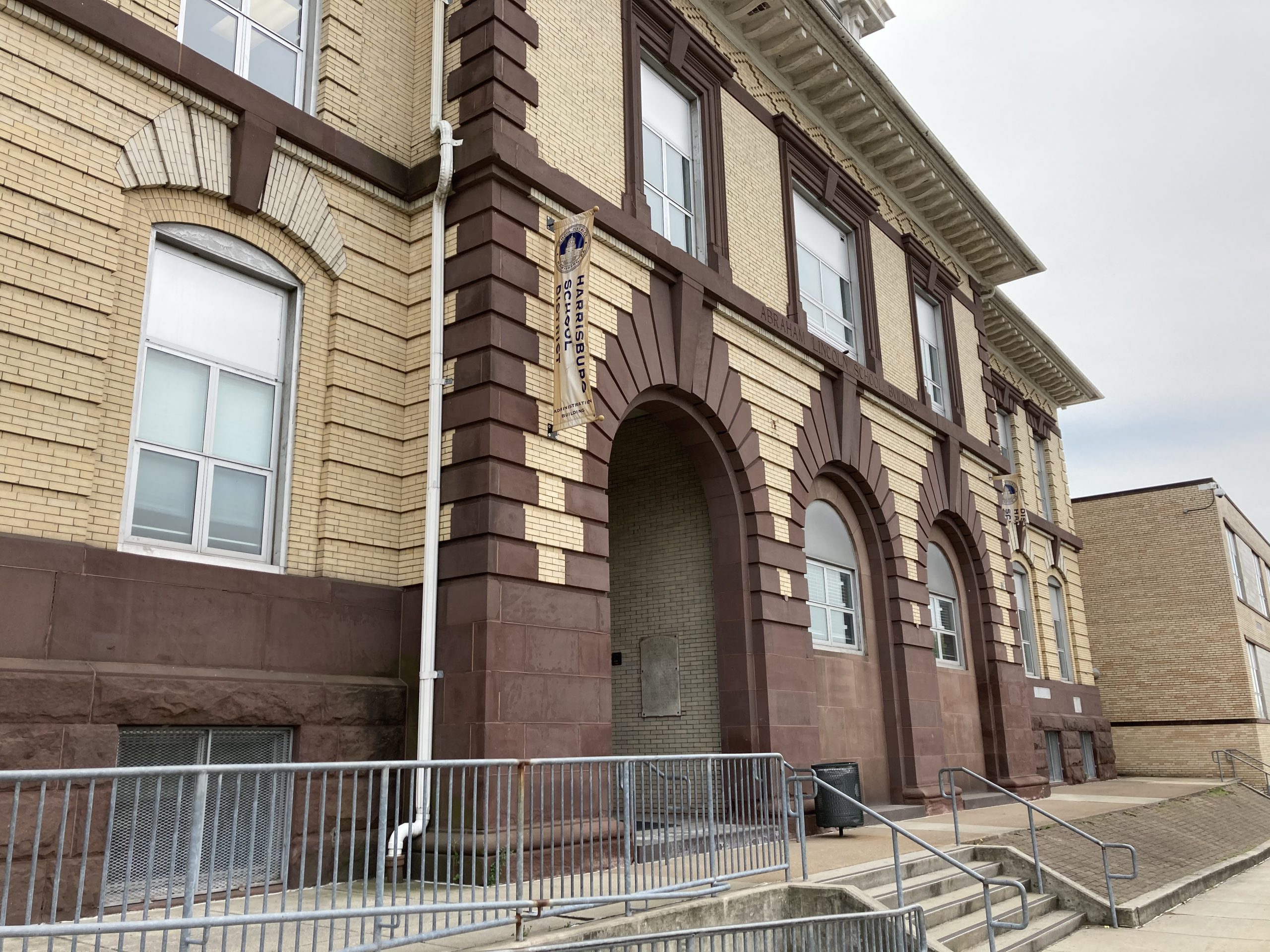
The most significant of the three options would take students out of Scott Elementary School on Derry Street and begin to use the district’s Lincoln Administration Building, on State Street, as an elementary school. The proposal also includes phasing out Rowland Intermediate School over three years and moving those students to Camp Curtin Middle School.

Additionally, in this scenario, Marshall Math Science Academy would move from enrolling 5th through 8th grade to only 6th through 8th grade students. Cougar Academy, which is currently housed in the Lincoln building, would move to the Hamilton building on N. 6th Street, replacing the Specialized Services Education, Inc. program, which would move to Scott temporarily.

According to Turman, this new configuration would help balance student body sizes at each building, create neighborhood schools on the elementary level, and allow the district to prioritize facility improvements at certain buildings.

“If there’s one thing I’ve heard from the community is how they loved and enjoyed neighborhood schools,” Turman said.

This proposal would, however, cause about half of elementary students to change schools.

Notably, the district is already implementing a significant change.

In May, the district broke ground on its project to renovate and re-open Steele Elementary School on the 2500 block of N. 5th St., which closed in 2011. Work on that building, which will house K to 5th grade students, is slated to be completed by August 2024.

Overall, Turman believes a bigger change is needed to create more “effective and efficient schools” and to take students out of Scott and Rowland, two schools that were previously office buildings.

“We had an option,” he said. “We could just say we are going to leave it at Steele and we are going to move forward, or are we going to swing for the fences?”

The district also has identified over $100 million worth of repairs, renovations and maintenance needed at its buildings in the coming years, which could include $23 million for renovations of Scott and Rowland, Turman said.

According to Turman, the district is also beginning to recover from enrollment loss due to COVID, which makes weighing reconfiguration important.

The two other options on the table are scaled-back versions of the most far-reaching plan. Option one would simply open Steele and eliminate 5th grade from Marshall Math Science Academy, and option two would include everything besides closing Rowland.

No matter which option is chosen, student redistricting would then need to take place, as Steele is slated to open for the coming school year.

In the coming weeks, the district will seek community input on the proposals before likely bringing forth a final proposal to Receiver Dr. Lori Suski in February.

“I want to make sure that when we pull this all together we know that this is exactly the direction we need to go,” Turman said.

For more information, visit the Harrisburg School District’s website.


If you like what we do, please support our work. Become a Friend of TheBurg! 

Continue Reading

William Penn task force meets, weighs alternative to demolition

The William Penn task force met on Thursday

A big group of people have come together to make a big decision about Harrisburg’s William Penn school building.

The Harrisburg School District on Thursday brought together residents and local officials for a meeting on the future of the long vacant, blighted building.

Receiver Dr. Lori Suski appointed the task force in September, in an effort to let the community explore alternatives to demolishing William Penn.

In June, Suski approved the demolition of the building, but then halted that plan in August, stating that she wanted to take a step back and allow the community to weigh in.

“If the administration had to go back and do things over again, we would have definitely done things differently,” said Superintendent Eric Turman at Thursday’s meeting. “But do understand that the administration at this time has taken several steps back to be able to process and listen.”

At the meeting, a majority of the members of a task force of about 26 people met to discuss possible options for the building.

According to district officials, all options are on the table, which could include demolishing the building and keeping the land, selling all or a portion of the property,  or keeping the building for future use, among other alternatives.

Task force member and the city’s Chief Equity and Compliance Officer, Karl Singleton, shared that he would like to see the district keep the building and possibly renovate it in phases, rather than all at once.

According to John Reedy, district chief of operations, the district has received estimates that a complete renovation of William Penn could total $85 to $100 million.

The district currently has $25.9 million in its capital reserves. Based on a recent 10-year feasibility study, the district determined that, in that time period, its existing, operating buildings will need over $100 million in maintenance and upgrades, not including possible new renovation projects.

According to officials, the district is also paying $19 million yearly in bond debt obligations and wouldn’t be able to borrow money from the bank until 2035 at the earliest.

“If there is going to be any project at all with William Penn, on the district’s side, it is going to require some sort of creative financing,” Suski said.

At the meeting, district and task force officials discussed possible alternative funding sources.

Task force members also weighed the option of using the building for a possible new vo-tech school or space for adult education.

Thursday’s meeting was the second of six task force meetings. Additional meetings are open to the public and will take place on the following dates:

  • Nov. 2
  • Nov. 16
  • Dec. 7
  • Dec. 21

All meetings will be held in the district’s Lincoln Administration Building, 1601 State St., Harrisburg.

According to Suski, at the end of all the meetings, the task force will present a plan, which she will need to approve.

“Our hope is that the conversation will start to come together around a cohesive idea,” she said.


If you like what we do, please support our work. Become a Friend of TheBurg!  


Continue Reading

Community Comment: It’s time to make State Street better, safer

In 2018, State Street was the most dangerous street in the nation. That’s not an exaggeration – that’s statistics. That’s a death rate of 88.64 deaths per 100 million vehicle miles traveled, nearly four times as many as New York City’s infamous “Boulevard of Death” in the 1990s.


State Street: as it is

The reasons for State Street’s dangerous nature are no mystery to those familiar with road safety. In fact, for those familiar with Strong Towns’ philosophy, State Street is a classic example of a “stroad” – a hybridization of a street and a road which fails to accomplish the primary purpose of either, resulting in an inefficient, expensive and incredibly dangerous thoroughfare.

For those unfamiliar with Strong Towns’ body of work, the term “stroad” may be confusing, as well as what we mean by distinguishing “street” and “road” as separate terms. In a nutshell: a road is a connection between destinations, something a step down from a highway. It has wide lanes, high speeds, and, most importantly, few “points of conflict” where a driver may have to stop unexpectedly. It does not have businesses alongside it, or housing, or parallel parking spaces where cars may pull in and out constantly, or foot traffic where pedestrians will routinely cross. It certainly does not have school zones.

These points of interest are the provinces of streets, which are low-speed places with narrow lanes, narrow streets, and destinations on either side. Streets are places where people are meant to live, work and play. They are lined with on-street parking, residences, businesses, shops, libraries, parks, and other attractions. Pedestrians cross regularly, cyclists intermix with the traffic, and children go to schools and playgrounds without fear of cars.

Stroads combine the worst of these attributes. They have wide, highway-style lanes which encourage highway-style speeds. They have a large number of lanes, frequently without so much as a pedestrian median, forcing pedestrians to walk – or often sprint – long distances in order to cross from one side or another. (This is, incidentally, particularly difficult for people with limited mobility, such as elderly individuals, wheelchair and cane users, and so on.) But they also have a number of reasons for pedestrians to cross, because they are lined with parking spaces, parking lots and destinations.

In addition to issues for those outside a car, stroads involve a lot of conflict between vehicles, with frequent intersections, parking spaces and lots (again), and so on. All of this causes vehicles to potentially stop frequently. This results in a nightmare scenario where drivers, driving the speed for the road that ‘feels safe’ without checking their speedometer, reach high speeds due to the wide lanes, only to have to come to a screeching halt because a child ran out into the street. For cars, this is dangerous. For vulnerable road users like pedestrians and cyclists, this is deadly.

State Street is a very clear example of a stroad in action. As you can see above, it has four 12-foot travel lanes, a 12-foot center turn lane, and two 8-foot parking lanes. There is no pedestrian median. There are few pedestrian lights. There are homes, businesses and two school zones on either side. And as a result, there are far too many deaths on State Street each year. And it’s time to do something. It’s time to make State Street a real street. And that means making some changes.

State Street: our proposed redesign.


The first and most crucial change necessary to make State Street truly safe is to narrow the lanes. There is an old school of thought amongst road designers which says that wider lanes are safer. It seems intuitive. Wider lanes keep cars further apart, making collisions less likely and allowing more room for error. And when driving along roads, it certainly feels intuitive, doesn’t it? You feel safer driving in wider lanes than narrower lanes. It’s less stressful. You don’t have to pay as much attention. You can speed up.

Of course, inattentiveness and speed are not combinations that tend to increase road safety. Which is the factor that the “bigger is better” line of thinking tends to forget — that highway-sized lanes result in highway-sized speeds. On a highway, that’s well and good. On a seven-lane residential road running through two school zones, it’s not. The evidence supports this — as per the WRI Ross Center for Sustainable Cities Health and Road Safety, city roads with lanes wider than 11.8 feet result in much higher fatalities than narrower ones. No number of speed limit signs can fix this. People will drive the speed that the road allows, and no signs or paint will compete with simple physics.

How can we do better? Well, if lanes wider than 11.8 feet are dangerous, what about narrower ones? Our friends at the WRI have data on this, too — specifically, they show that city streets with lanes between 10 and 10.5 feet have the lowest fatality rates. Your widest SUVs in the US tend towards around 7 feet wide. A fire truck is around 8 feet wide. Ten-foot lanes leave plenty of room for even wide vehicles to travel at safe distances, but little room to reach unsafe speeds. This is exactly what State Street needs.

Narrowing State Street’s lanes alone would do a lot to help make it safer. And the extra 10 feet made available by narrowing State Street’s travel and turn lane could easily be used for other improvements, such as a bike lane, a bus lane, or wider sidewalks, all things we’d love to see. But does State Street actually even need to have five (non-parking) lanes in the first place? The analysis of renowned city planner Jeff Speck would conclude that it doesn’t. Granting State Street a generous figure of 12,000 cars per day, more than PennDOT’s estimates for actual traffic volume on State Street, there is no need for more than three travel lanes to handle the volume of traffic: one lane each way and a turn lane. Other cities with comparable roads have done it, with no significant change in commute times. And by removing these two lanes, we dramatically reduce the distance pedestrians have to cross in order to cross State Street – making it substantially safer.

And combining both of these improvements would result in no less than 30 feet of now free space on State Street to do, well, anything else. This is a tremendous amount of room. This is enough room to put a parking-protected two-way bike lane on each side of State Street, with a three-foot curb between the bike lane and parking, an additional three-foot door buffer for parked cars, and still have a full two feet left over to widen the gutter or sidewalk, or to make each parking lane 9 feet instead of 8 (as pictured). That’s enough room to have a one-way parking-protected bike lane on each side with the same other amenities and widen the sidewalks by two feet. That’s enough room to keep the parking the same (plus a three-foot door buffer), add a two-way bike lane on each side, and widen the sidewalk by one foot on each side. That’s enough room to… well, you get the idea. There’s a lot which could be done with the space these changes would free up, and we’d probably support most of them, because as long as State Street is made narrower, it will be made safer.

But we are big fans of bike lanes around here, so we’ll take a moment here to argue for their inclusion in at least some form. At the core of our reasoning is that we like bikes because they’re accessible to a lot of people who cars don’t work for. They’re cheaper to buy and maintain (in fact, local charity Recycle Bicycle, for which several of our members volunteer, helps provide Harrisburg residents with bicycles and bicycle maintenance free of charge.) Even the most luxurious of high-end e-bikes usually cost less than the cheapest of cars.

Bike lanes also benefit many people with disabilities as well, despite the common misconception to the contrary. While some disabilities are best accommodated by car usage, there are a number of disabilities which interfere with driving but permit cycling, including partial vision impairments, epilepsy, sensory processing issues, and so on. Meanwhile, many mobility issues still permit cycling; for example, a Transport for London survey found in 2019 that 70% of disabled individuals living in London were able to cycle. Furthermore, as people age, cycling often remains an option long past the point where reflexes and vision have deteriorated sufficiently to make driving a car, at best, a truly terrible idea; indeed, robust cycling infrastructure often permits people to remain active later in life and to age in place with more independence. (Wheelchairs and mobility scooters, incidentally, can also use bike lanes freely, something which is often sadly needed where sidewalk maintenance is lacking.)

Age can also be a limiting factor in driving in other ways, too; namely, for those under the age of 16. Kids in car-dependent areas often rely on their parents to get them to and from places, something which can stifle the social lives of children whose parents aren’t available to do so and eat into the busy schedules of working parents who can. But even more than that, it’s worth remembering that State Street is the location of two schools, including Cougar Academy, and that Harrisburg School District is unfortunately known to have attendance issues. And one of the main causes of those issues? Unreliable transportation. The ability for a student to cycle themself to school can make a real difference.

All of this is without even getting into the environmental and health benefits of cycling, which are well known enough we hardly need to get into them here. And all of this makes bikes an excellent transportation option for anyone who lives within cycling range of most of their destination, a radius of 10 to 15 miles. (At its widest, Harrisburg is about 6 miles in diameter.) 

Due to its location, State Street is a prime location for bicycle commuters, but its dangerous nature keeps many of those who have alternate options from cycling along it. Those who choose to cycle along State Street anyway – or who don’t have the luxury not to – are at a very real risk of becoming another State Street statistic. We know these people exist. We’ve met them. Some of our members are them. It’s simply not true that no one cycles along State Street, though it is true that far fewer people cycle along State Street now than likely would if a bike lane were added, just as more people tend to cross a river when there is a bridge than when they have to swim across it.

All of which is to say: a bike lane is not strictly necessary to make State Street safe. But the essential safety improvements to State Street will make room for one anyway, so we think it would be a very good idea.

Ultimately, we will support any changes which make State Street into a true street, one which truly prioritizes the safety of its residents and vulnerable road users. And now that Harrisburg finally has a City Engineer again, we strongly believe it’s time to act. Time is wasting, and lives are at stake.

Strong HBG is a chapter of Strong Towns, strongtowns.org.

 

Continue Reading

The Week that Was: News and features around Harrisburg

Sprocket Mural Works and Harrisburg Young Professionals officials, among others, cut the ribbon on the newest city mural.

It’s been a dreary, rainy week here in Harrisburg, but a bright spot came yesterday as the October issue of the magazine hit the stands! Make sure you grab a copy this weekend and check out all the fun fall stories we have featured for the month. First, catch up on this week’s news, below.

Dauphin County released a survey about substance use, in hopes of better understanding the issue locally, our online story reported. Officials said that the results will help drive their prevention and educational efforts.

General election mail-in and absentee ballots have been sent out to 15,775 Dauphin County residents. In our story, find more voting information and updates from the county.

Harrisburg presented a mid-year financial report to City Council, in which they stated that Harrisburg is in solid fiscal shape, our reporting found.

The Harrisburg School District appointed a task force to help decide the future of the district’s long-vacant and blighted William Penn building, our online story reported. The group consists of residents, local officials and community members, who will meet for the next three months.

Karen Cullings is retiring as executive director of the Dauphin County Library System after over 30 years with the organization, our online story reported. Under her leadership, the library worked to eliminate barriers to reading, renovate its riverfront location and navigate the pandemic.

Latino Connection announced this year’s winners for its annual Lo Mejor de lo Mejor (“Best of the Best”) awards, our online story reported. Click here, to find out which recipients will be honored at the 10th annual Latino Ball.

Mayor Wanda Williams shared a positive outlook for Harrisburg at the Harrisburg Regional Chamber & CREDC’s annual “State of the City” address this week, our reporting found. Williams shared recent financial, infrastructure and safety improvements, among other city accomplishments.

The Pennsylvania Gourd Society uses a variety of gourds to make different types of art, including pyrography, painting, carving, jewelry making and more, our magazine story reported. Every year, about 1,940 members come together at the PA Gourd Fest in June.

Our publisher thanks readers for loyally picking up TheBurg and reading online, but encourages them to stay away from accessing news through social media. Lately, he said in his publisher’s note, using social media as a news source has become increasingly unpredictable.

Sara Bozich’s Weekend Roundup includes live music, theater, fall festivals and food. Find all of this weekend’s events, here.

Sprocket Mural Works cut the ribbon on its newest mural, in Midtown Harrisburg, our online story reported. The mural is inspired by artist Suzanne Rende’s own garden and depicts flowers, butterflies and bees.

“The State of Downtown Harrisburg: 2023/2024” was just released and highlights the many businesses, projects and activities in and around the downtown, our online story reported. Within the publication, readers can see all the shops, restaurants and venues that the city has to offer.

Whitaker Center announced that Mary Oliveira will become the new president and CEO on Nov. 6, our online story reported. Oliveira will oversee strategic planning, financial stewardship and community engagement.


Do you receive TheBurg Daily, our daily digest of news and events delivered right to your email inbox? If not, sign up here! 

Support quality local journalism. Join Friends of TheBurg today!


Continue Reading

Harrisburg School District appoints task force to help plan future of William Penn

William Penn

The Harrisburg School District is employing the help of the community to come up with a plan for its historic William Penn School building.

At a school board meeting on Tuesday, Receiver Dr. Lori Suski appointed a task force of residents and city and county officials to discuss what to do with the long-vacant and blighted school building at risk of demolition.

In June, Suski approved the demolition of William Penn, citing the financial burden it has become. However, in late August, Suski announced that she would halt demo plans, give the community another chance to share input on the future of the building and consider alternative proposals.

“We clearly heard that there is a sentiment out there that before we move to demolish a building, that we look at other options. This is our due diligence, good-faith effort,” she said on Tuesday.

The newly appointed task force includes two paid facilitators, Sheila Dow Ford, executive director of nonprofit Impact Harrisburg, and Elan Drennon, an attorney based near Philadelphia, Suski explained.

There will be 27 members of the task force including Danielle Bowers, City Council president, Gloria Merrick, director of Harrisburg’s Latino Hispanic American Community Center (LHACC), David Morrison, director of the Historic Harrisburg Association and Dauphin County Commissioner Mike Pries, among many other officials and residents. Two Harrisburg High School students, one from the John Harris campus and one from the SciTech campus, will be included, as well as two school board members.

Additionally, five district officials, including Suski, will serve as ex officio members.

According to Suski, the group will discuss various options for the future of William Penn. At a previous press conference, she said that plans could possibly include only preserving the façade of the building, keeping the building and eventually using it for a vo-tech school or job training facility or proceeding with a full demo, among other options.

The task force will meet on Thursday nights from 6 to 8 p.m., twice in October, November and December. Dates have yet to be announced. Meetings will be open to the public, but will not include a public comment period.

Suski expects that the task force will have a final recommendation to present to the district at their first board meeting in January.

For more information, visit the Harrisburg School District’s website.


If you like what we do, please support our work. Become a Friend of TheBurg!   

Continue Reading

William Penn demolition halted, Harrisburg School District to weigh other options

William Penn High School

Demolition plans for the William Penn school building in Harrisburg will come to a halt for now.

Harrisburg School District Receiver Dr. Lori Suski announced at a press conference on Wednesday that she would reconsider alternatives to demolishing the long-vacant high school building.

In late June, Suski approved a $6.8 million proposal from the Gordian Group to demolish the building, built in 1926. At the board meeting, she explained that the building was increasingly being vandalized and causing financial strain on the district. The district also was having trouble obtaining property insurance for the building.

However, in front of William Penn, located next to Italian Lake Park, Suski told members of the press that she was “not personally comfortable with moving forward” with demolition at this time.

“I really took a step back and asked myself, ‘Is this the right decision for the Harrisburg community and the Harrisburg School District?’” Suski said. “As a result of that, I wanted to put a pause on the situation.”

Suski said that, in recent weeks, many community members have met with her and shared their opinions and desires to preserve the building. She has taken that input into consideration and wants to grant the community additional time to weigh in, she explained.

“I feel that it’s important to weigh the thoughts of the community, to weigh the thoughts of different experts, and I believe that there is a lot of information that the administration has yet to bring forward,” she said.

At the district’s Aug. 22 board meeting, Suski charged Superintendent Eric Turman, along with other district officials, with bringing forth a full proposal for the future of the property, including how a portion of it may be preserved and what the district would do with the large, empty 27.75 acres of land, should the building be demolished.

At that meeting, slated for Sept. 12, Suski said that community members will have a chance to ask questions about the proposal and share feedback, which could influence a change in plans.

Receiver Dr. Lori Suski speaks to the press in front of William Penn.

“There was no opportunity given to the public to share their ideas, their thoughts, their opinions about this monumental decision to destroy this majestic facility,” she said. “I believe that opportunity needs to be provided.”

In the meantime, the district will not move forward yet with executing the contract to demolish and, instead, explore all possible options for the future of William Penn.

That future could include selling the building, keeping it and securing it, or possibly partnering with an organization to open a vo-tech school or job training facility, Suski explained.

Demolition is still on the table, Suski shared, but before making a decision, she would like to hear a more robust plan on how the façade of the building may be preserved as well as the artifacts inside the building, should she decide to demo.

“In the end, I’m the only one right now who would be able to make that decision, and I can tell you right now that my gut is telling me to take a step back and really re-evaluate and reconsider all options before going in that direction,” she said.

Suski also stated that she gets the sense that many of the school board members do not support the halt to the demolition. At the June board meeting, several board directors expressed their support for demolition, despite their regret that the building had fallen into such disrepair.

However, Suski holds the sole vote while the district is under state receivership. School board directors hold no voting power, besides a vote on the district’s property tax levy.

Reached by phone, school board member Jim Thompson said that he thinks the board’s opinions on demolition are mixed.

While Thompson doesn’t see the need for more classroom space for the district at this time, he said that the building could be useful in the future. However, he’s also open to the idea of shuttering and securing it or demolishing it. Overall, he is willing to hear alternatives for William Penn, but a non-negotiable for him is keeping the land.

“Tear it down, keep it, adaptively reuse it, just don’t sell the land,” he said.

Suski estimates that it may take two or three months for the district to weigh alternatives. She hopes that the district will be able to obtain property insurance to buy them some additional time, as well.

“After you demo a building, you can’t go back,” she said.


The Sept. 12 board meeting will take place at 6 p.m. in the Lincoln Administration Building, 1601 State St., Harrisburg. For more information about the Harrisburg School District, visit their website.

If you like what we do, please support our work. Become a Friend of TheBurg!

Continue Reading

The Week that Was: News and features around Harrisburg

Local officials and project partners ceremonially broke ground on Bethel Village, affordable housing for seniors, on Tuesday.

It has been a full week of news in Harrisburg. From ground breakings to school board meetings, we’ve covered it all. In case you missed anything, all of our reporting is listed and linked, below.

Bethel Village, an affordable housing development for seniors, broke ground on N. 6th Street in Harrisburg, our online story reported. The 46,000-square-foot building will include 49 one- and two-bedroom affordable units. 

Cedar Crest High School boasts a unique feature—a planetarium. In our magazine story, read about how the school uses the teaching tool as a visual aid for astronomy education.

Danielle Martin has always recognized the importance of education in her life and it’s something she’s sought to instill in her daughters. In our magazine story, read about how the single mother has recently received her doctorate, with her daughters also taking the next step in their educational journeys.

Gun violence victims are memorialized in a display outside of the Harrisburg Quaker Meeting House on N. 6th Street, our online story reported. The memorial features about 50 T-shirts with the names of Harrisburg area residents whose lives were lost to gun violence.

Harrisburg School District officials, at a board meeting, amended their 2023-24 budget and approved the hiring of several new principals, our online story reported. Receiver Dr. Lori Suski also announced that the district will discuss its decision to demolish the vacant William Penn High School and accept public comments, at their Sept. 12 board meeting.

Impact Harrisburg awarded the Harrisburg Chamber of Commerce & CREDC with a grant to help increase contracting opportunities for diverse businesses, our online story reported. The grant will help the organization implement recommendations from a disparity study the city completed.

Kate Browne, an international artist, has been working in Steelton on the seventh installment of her “Cocoon” art series, our online story reported. The art installation will include residents’ memorabilia and audio from interviews with residents and local historians.

The Little Miss Black US of A pageant celebrates and empowers young Black girls around the country. This year, two Harrisburg girls are representing the commonwealth in the competition, our magazine story reported.

Our publisher, in a blog post, reflects on how much the Broad Street Market has meant to him since he first moved to Harrisburg. He also shares his optimism for the future of the market.

Sara Bozich has something for everyone to enjoy this weekend in Harrisburg. Find all of her suggestions, here.

The Susquehanna Art Museum’s art auction to raise funds for the Broad Street Market exceeded its goal, our online story reported. The auction included plein air paintings and drawings by 14 local artists.

Uptown Partners, the owner of the Residences at Governor’s Square, will seek to change the status of their bankruptcy filing, our reporting found. The change from Chapter 7 to Chapter 11 bankruptcy should give them additional time to attempt to sell the beleaguered affordable housing development in Harrisburg.


Do you receive TheBurg Daily, our daily digest of news and events delivered right to your email inbox? If not, sign up here! 

Support quality local journalism. Join Friends of TheBurg today!


Continue Reading

Harrisburg School District amends budget, hires several new principals

Harrisburg School District Lincoln Administration Building

The Harrisburg School has adjusted its budget to reflect recently announced state funding allocations.

At a school board meeting on Tuesday, district receiver Dr. Lori Suski approved an amended 2023-24 budget of $222.8 million.

The amended budget is about $4 million more than the initially approved spending plan of $218.5 million. The revised budget incorporates revenue that the district will receive from basic education and special education funding from the commonwealth.

When Suski originally approved the budget in June, the state had not yet passed its 2023-24 budget, which includes education funding, forcing district officials to estimate the amount they’d be receiving. Gov. Josh Shapiro signed the commonwealth’s budget on Aug. 3.

The additional funds in the budget will support consulting services, contracting, technology upgrades, and building maintenance, among other items.

Also on Tuesday, Suski approved the hiring of several new principals at district schools.

Laquan Magruder will serve as the new principal of Harrisburg High School-John Harris Campus, effective on Aug. 1, at a salary of $120,152. Magruder replaces the previous principal, Michelle Felton, who transferred to the role of supervisor of professional development for the district in July.

Additionally, Suski approved James Snyder as the new principal of Ben Franklin Elementary School at a salary of $114,812, effective Aug. 7.

Also, Jason Rawls will serve as the new principal of Scott Elementary School at a salary of $115,000, as approved by Suski. Rawls’ start date will be effective upon release from his current employer.

In other news, Suski approved a plan for the district to partner with Big Brothers Big Sisters of the Capital Region, L.O.O.P BOYZ AND GIRLZ and the Boys & Girls Club of Harrisburg to provide after-school programming for district students. In February, Suski approved a 2023-24 academic calendar that includes two-hour early dismissals on every Wednesday of the school year, explaining that it would allow time for professional development for staff. According to district officials, the partnerships with the local organizations will help provide care for students on the early dismissal days.

At the board meeting, Suski also shared that district officials will make a presentation at the Sept. 12 board meeting on the district’s decision to demolish the long-vacant William Penn High School building. At that meeting, officials will share information on the history of the building, why the district is demolishing it, and how the history of the building can be preserved.

Suski encouraged concerned residents to attend the meeting, ask questions and share comments.


If you like what we do, please support our work. Become a Friend of TheBurg!  


Continue Reading

The Week that Was: News and features around Harrisburg

Harrisburg City Council candidate Lamont Jones spoke to supporters outside the Dauphin County Courthouse following his hearing on Tuesday.

Another week of news in Harrisburg has come to a close, and we have covered it all. In case you missed any of our reporting, look no further. All of our stories are listed and linked, below.

“Battle of the Bands” will bring bands from historically Black colleges and universities (HBCUs) to Harrisburg High School-John Harris Campus, our online story reported. The event organizer, HBCU Band Program Committee, hopes to inspire students to consider attending an HBCU.

The Broad Street Market received a $10,000 donation from PSECU to support rebuilding efforts, following a fire in July, our online story reported. The funds will also go towards supplies for vendors who plan to move to the city’s temporary market structure, which will likely open in September.

Eniola African Food Store in Harrisburg gave out 100 bags of groceries to local families in need this week, our online story reported. Shop owner Eniola Iruaregbon said that she hoped to assist African families who often have trouble finding foods from their cultures.

Harrisburg City Council voted on Tuesday to proceed with a plan to provide a temporary home for displaced Broad Street Market vendors, our online story reported. Harrisburg can now move forward with renting a temporary structure to be constructed on a lot across the street from the market.

The Harrisburg School District weighed the hiring of several new principals at the high school and elementary school levels during a school board meeting, our online story reported. Among the potential new hires is Laquan Magruder, who would serve as the new principal of Harrisburg High School-John Harris Campus.

Home sales in the Harrisburg area decreased, while prices increased slightly, our online story reported. For the three-county region, sales totaled 517 homes compared to 675 sales in July 2022, as the median price rose to $264,900 versus $255,000 last year.

Lamont Jones, a Harrisburg City Council candidate, will stay on the November general election ballot, after a lawsuit attempting to remove him failed, our reporting found. A Dauphin County Court of Common Pleas judge ruled in Jones’ favor and against the plaintiffs who argued that because of Jones’ past criminal convictions, he should be kicked off the ballot.

Rosemary has a great recipe for you to try this month. In her column, find out how to make sausage stuffed zucchini.

Sara Bozich has a list of weekend activities, including fun for everyone in the family, here.

The State Museum of Pennsylvania has a new executive director, our magazine story reported. Angelica Docog was appointed in March and has plans to transform the museum into a more inclusive and engaging institution.

Trees are vital to Harrisburg and provide numerous benefits to the city, including combating global warming. In our magazine story, learn from local officials about how they are working to increase canopy coverage and how residents can get involved.

Do you receive TheBurg Daily, our daily digest of news and events delivered right to your email inbox? If not, sign up here! 

Support quality local journalism. Join Friends of TheBurg today!

Continue Reading

Harrisburg School District weighs hiring several new principals, partners with city for crossing guards

Harrisburg School District’s Lincoln Administration Building

The Harrisburg School District soon may have new officials leading day-to-day operations inside several of its buildings.

At a school board meeting on Tuesday, the district weighed the hiring of several new principals at the high school and elementary school levels.

The district announced the potential hiring of Laquan Magruder as the new principal of Harrisburg High School-John Harris Campus.

District Receiver Dr. Lori Suski still must officially approve the hiring at the board’s Aug. 22 meeting. If approved, Magruder’s employment would be effective on Aug. 1, at a salary of $120,152.

Magruder would replace former principal Michelle Felton, who transferred to the role of supervisor of professional development for the district in July.

Also on Tuesday’s agenda was a request to appoint James Snyder as the principal of Ben Franklin Elementary School at a salary of $114,812. If approved, Snyder’s employment would be effective Aug. 7. Snyder replaces Nicole Snook, who transferred to assistant principal of Foose Elementary School in July.

Additionally, Suski will consider approving the appointment of Jason Rawls as the new principal of Scott Elementary School at a salary of $115,000. Rawls’ start date would be effective upon release from his current employer. The hire would fill a long-time vacancy in the position.

At a June 27 board meeting, Suski also approved the transfer of former Rowland Intermediate School assistant principal Darnell Montgomery to principal of Camp Curtin School at a salary of $103,920.

According to Suski, the district is encouraged to see hiring outweighing resignations to start the upcoming 2023-24 academic year.

“This year, we see far more names listed under new staff for employment than we do for resignations,” she said at Tuesday’s meeting. “So, that is really a positive trajectory for the district.”

Also at the board meeting, Suski approved entering into an agreement with the city to employ 12 part-time school crossing guards. The pilot program will run for the upcoming academic year, with the city funding 40% of the cost of their salaries and the district supporting 60%.

Harrisburg City Council approved the agreement with the district at its Tuesday legislative session.

Finally, Suski approved reinstating a contract with Harrisburg-based Wildheart Ministries for the operation of the district’s Joshua Farm property. At a June 27 board meeting, Suski terminated the contract, which was originally instated in May, explaining then that the district had concerns with the way the organization used the property, located at 213 S. 18th St.

However, on Tuesday, Suski said that the district had learned that Wildheart Ministries had received a federal grant for use at Joshua Farm.

“As with any decision in life, when new information is brought to you, you reconsider that information and reevaluate,” Suski said.

The agreement with Wildheart will extend through December 2024.


If you like what we do, please support our work. Become a Friend of TheBurg!  


Continue Reading