Tag Archives: Harrisburg High School

Hoops & Hopes: Coach Smallwood leads with basketball, follows with life.

Screenshot 2016-07-27 19.34.00For Harrisburg Coach Kirk Smallwood, basketball is the “carrot” that leads city youth to his mentorship.

Smallwood, a 1973 Harrisburg High School graduate, is considered a legend in the school district. He served 16 years as the district’s athletic director and has coached basketball there for as long as anyone remembers.

“I love this school district, and I’m willing to do anything to help the kids here,” Smallwood proudly noted. “I was in the second class to graduate from Harrisburg High School.”

To the hundreds of young people that Smallwood has mentored over the years, he is far more than a basketball coach.

“Coach Smallwood is like a father figure to me,” said Tony James, 16, an incoming 11th-grader at Harrisburg’s SciTech High School and a third-year player on the Smallwood Summer League. “He always helps us out and always has our back.”

The Smallwood Summer League is a Harrisburg youth basketball team that Smallwood has run for seven weeks every summer since 1991, in addition to serving as the high school’s basketball coach during the regular school year. The league competes against 34 school districts from throughout the state, including Williamsport, Hazleton and Shamokin.

“Coach Smallwood is a great coach,” said Elijah Barrett, 18, an incoming Harrisburg High senior and a second-year Smallwood Summer League player. “He teaches us to become great men.”


Coach of the Year

Smallwood, of Susquehanna Township, began his coaching career in 1978 as an assistant coach at Harrisburg High. It was the same year he started working as a substitute teacher in the school district—just two days after receiving a bachelor’s degree in elementary education from Kutztown University. He was hired full-time later that year, continuing as a “general teacher” in the district until 1989, when he left for the Central Dauphin School District.

Smallwood taught alternative education at Central Dauphin East High School in Lower Paxton Township for four years while serving as CD East’s head basketball coach. In 1993, he returned home to Harrisburg High School as a teacher and coach. In 1999, he was appointed the high school’s athletic director, a position he maintained until retiring at the end of the 2014-15 school year.

“I just felt it was time to retire,” he explained. “I was dealing with some health issues that deserved a lot more attention than I was giving them. It helped me to better monitor my sleep and eating patterns.”

Smallwood didn’t entirely retire, however. He’s still Harrisburg’s head varsity basketball coach and runs the summer basketball league. He also heads a free Kirk Smallwood Skills Clinic at the Camp Curtin YMCA in June and July for boys in grades 8 to 11.

During his school coaching tenure, Smallwood has overseen 19 Mid Penn Championships, nine District Championships and two State Championships. He was also awarded the 1998 and 2002 AP Big School Coach of the Year.


The Carrot

Mentoring youth carries no trophies, but Smallwood finds this as rewarding as winning any championship.

“Today’s kids are different than when I went to school here,” he said. “They need more help and assistance to succeed. There’s less parental involvement. They need assistance from many other entities. Sometimes, kids get distracted. They’re not being attended to as much.”

Smallwood said he builds relationships with his players through honesty and caring. The biggest challenge, he noted, “is that they just need so much of you.”

“We may walk across the street together for a burger or I may visit their homes,” he said. “Basketball is the carrot. Every kid is different. You never know what baggage they’re carrying.”

Wes Bair, Harrisburg’s assistant basketball coach for 20 years, said it’s not only kids who respect and admire Smallwood. Adults feel the same way.

“Coach Smallwood is very knowledgeable, well respected and very fair,” he said. “He gives his staff a lot of freedom to operate within the system. He doesn’t micromanage and welcomes suggestions from others.”

Bair added that, over the years, he’s seen Smallwood “help hundreds of kids get into college or get jobs.”

So what does Smallwood hope that young people will take away from his basketball court?

“I hope they know that I work hard every day,” he said. “I’m consistent. I try to give my all every day.”

Author: Phyllis Zimmerman

Save

Continue Reading

A Legacy of Learning: Artist Oliver LaGrone devoted his life to teaching others. A scholarship in his name ensures that his work continues.

Screenshot 2014-07-30 21.24.35Oliver LaGrone, noted poet, sculptor, educator and humanitarian, believed in educating through generosity. He wanted to make education possible and dreams come true.

In 1974, LaGrone inspired members of the Unitarian Church of Harrisburg (UCH) to establish a scholarship in his name. He wanted to help graduates of the Harrisburg School District attend college so they could lead more productive, successful lives.

This past June, that dream came true for one Harrisburg grad, Merced Ramirez, now a sophomore at Messiah College. He was awarded $5,500 as the 2014 recipient of the Oliver LaGrone Scholarship.

“The LaGrone Scholarship helped me stay at Messiah,” he said. “I thought of transferring to another college that offered a full scholarship. But my professors at Messiah helped me work through my financial challenges, and, with the LaGrone Scholarship, I found a way to continue at Messiah.”

LaGrone, a committed Unitarian Universalist, was not a Pennsylvania native. He found his way here in 1970 after accepting a position teaching art education and African-American history at Penn State. He also was artist-in-residence at Penn State Harrisburg and held a similar position with the Hershey Foundation and Boas Center of Learning for the Harrisburg School District.

Several of his sculptures are prominently displayed in the UCH. In fact, proceeds from the sale of his sculpture, “The Dancer,” helped provide initial funding for the scholarship. His sculptures also can be seen in the LaGrone Cultural Arts Center at Penn State Harrisburg.

Dedicated, Driven

Meeting Ramirez at Cornerstone Coffeehouse in Camp Hill, I was introduced to a bright, articulate and witty young man. Graduating in the top 5 percent of his class from Harrisburg SciTech High, mathematics and languages were his favorite subjects.

While in high school, he was a member of the National Honor Society, Youth and Government Club, varsity soccer team and track and field team. He also participated with the Joshua Group, an at-risk youth mentoring organization in Harrisburg. That experience inspired his strong commitment to helping others and serving his community. Dedicated and driven, Ramirez now is majoring in international business with a minor in Chinese.

He does his best to make ends meet. He has a job at UPS this summer and hopes to be a residential advisor during his junior year. After graduation, he plans to work abroad collaborating with professionals from many backgrounds and careers.

When asked how he will give back to his alma mater, Ramirez said he wants to help students who struggle financially, providing secure pathways, allowing them to stay at Messiah and finish their education.

“My message is don’t let hard times destroy the possibility of a great future,” he said. “Don’t let disadvantages set you back. Make the hardest times the best times. Use them to grow and overcome adversity.”

Strong Foundation

In May of 1992, at the age of 84, LaGrone journeyed back to Harrisburg to celebrate the revitalized scholarship. Redefined to suit more diverse needs, the scholarship now may be used for any legitimate cost connected with schooling, such as tuition, books, room and board, transportation and childcare.

Margaret Carrow, chairwoman of the selection panel for the Oliver LaGrone Scholarship program, believes that a strong educational foundation can help people make a difference in the world.

“I grew up in Brooklyn, N.Y., and was fortunate to attend Clark University in Worcester, Mass.,” she said. “By chairing this committee, I am assuring that students have their chance to go to college and make a difference in the communities in which they live.”

The scholarship is given based on motivation to completion of one’s education despite obstacles, as well as financial need and knowledge and skills gained from life.

A unique feature of the scholarship is its mentoring component. A member of the UCH is matched with the scholarship recipient to provide personal support and encouragement throughout his or her education.

“My mentor understands me and the adversity that I have overcome,” said Ramirez, pausing before summarizing what the scholarship is really all about. “This is a great opportunity.”

Continue Reading

Verse across Cultures: In his work, Poet Laureate Rick Kearns reveals his passions, his whimsy.

Rick Kearns

Rick Kearns

Last month, Mayor Eric Papenfuse named Harrisburg native Rick Kearns as the city’s new poet laureate, the first Latino to be so honored. Amidst his busy schedule, Kearns, a professor and tutor at HACC, made some time to tell us about his craft, his culture and his new position.

TheBurg: How did you get involved in writing poetry and where did you initially find success doing it?

Kearns: I was drawn to poetry when I was still very young. I was a kid, maybe 8, 9 years old. I enjoyed what I heard because of the music in the language. That was the first thing that attracted me. The second thing was the ideas. But the format attracted me, and I was always attracted to music. I’ve been a part-time jammer since I was a little kid. So, that was where it began, and I was writing off and on from maybe age 12 to forever from that point on.

As I grew older and came to know a bit more about the Puerto Rican side of my family and the situation of Puerto Ricans here, it sort of politicized me. I began to see poetry as a way of telling that story. For instance, when I was, remember now, I’m 56, so in the late ‘60s, early ‘70s, as I was coming of age, the only Puerto Ricans I saw on movies or TV or anything, they were either criminals or just foolish, negative characters. And I wasn’t seeing any of the people I was relating to on the screen. That’s how I got to know about racism in general, and I got to know about racism against other people of color because a bunch of my friends were African American. So, I was sort of politicized, and I was using poetry to express myself in that direction.

For instance, my mother was a professor. She spoke six languages. My grandfather was a hardware salesman who loved his job so much that we had to fight with him to get him to stop working when he was in his mid-70s. I didn’t see that reflected in the media, and I rarely see it today. It’s not as bad as it was, but it was pretty bad.

So, that was part of what drew me in. But, as I got to know the art form more, I began to study it more, and I was influenced by all of the great U.S. poets as well as some of the English poets. When I started to study Spanish, I began learning about the Spanish poets and Puerto Rican poets and then poets of color in this country, meaning African American, Native American and Puerto Rican and Latino. So, all of that stuff together was influencing me, and I think it’s been reflected in my work.

TheBurg: What language do you primarily write in?

Kearns: I write in English. I was raised in English in an English-speaking household, but I grew up knowing Spanish. But I didn’t have to write it, and I didn’t have to speak it that often. So, when I got to college, I decided to study it so that I could read about, for instance, Puerto Rican history, Puerto Rican literature, in Spanish, because the only place you could find any information was in texts in Spanish. So, it was through studying Spanish that I got to know that world better. I became fluent enough that I’ve been able to do some basic translating and interpreting. And, along the way, I learned some French and Italian, and I’m married to a Brazilian, so I’ve learned some Portuguese.

So, I love language, and I really have enjoyed learning these other languages. And I’ve also found that it’s given me a better appreciation of the relationship between language and meaning and feeling, in that I can tell you that I’ve read certain poems in Spanish, then seen translations of them, and I know the translations are missing something—and vice versa. I’ve read, for instance, American poets translated into Spanish, and I can see some things missing there. So, that was another thing that emphasized to me that power of language. And it’s been fun; I’ve really enjoyed it. And I’ve also found that the poetry that I’ve been writing has been somewhat educational to various folks who’ve heard my work. So, I’ve read my poems in rural settings, where nobody has seen hardly any people of color. Or I’ve read in some suburban settings, too, where the folks haven’t been exposed to or know about Puerto Rican writers, for instance. And, like I said before, things are a bit better now, but, in other ways, we’re having similar battles right now. There are a whole lot of Latino kids going to school in Harrisburg High School. There’s little or nothing in their literature courses talking about writers of Puerto Rican or Dominican or Mexican heritage writing in this country or writing from their countries. So, the battle isn’t over. These are some of the things that I’ve been engaged with, aside from just trying to be a better writer, trying to develop my craft and pay attention to that.

TheBurg: What do you find yourself writing about frequently?

Kearns: If I were to generalize, I would say it’s just people’s stories, stories of the lives of not-so-famous people. I found myself, aside from writing about famous situations or people, writing a number of stories about people who are on the margins, or who just aren’t famous, just so-called regular folks. I think, if I was to generalize, that’s what I’d say. I write about everybody, and I’m drawn to stories, personal stories. And, every once in awhile, I go off on these little themes. In the last three years, I’ve written maybe 10 or 11 poems that all involve crows. So, I’ve written about crows, also using crows as a symbol of other things. I’ve also written pieces that are sort of dedicated to certain people. I wrote a poem to my mom, which was really a very emotional thing. She was an amazing person. It was about nine or 10 years ago when I wrote it. It was around the time that these friends of hers had put together a little testimonial dinner for her. So, I wrote a poem for her. But, before that, I already had written a poem for my grandfather. I had written a poem to certain famous people, where I just sort of addressed them and tried to ask them questions. For instance, this guy, who was fairly famous in Puerto Rico a long time ago was a guy named Pedro (something) Campos. I wrote a poem to him that got published in a few places. The poem that the mayor read was a poem that I wrote to Dr. Martin Luther King. I was addressing him, in a sense. So, some of the poems I write are sort of dedicated or directed. So, those are some of the different themes.

TheBurg: How did it come about that you were named poet laureate of Harrisburg by Mayor Papenfuse?

Kearns: I got to know Joyce Davis [Papenfuse’s communications director] a few years ago. I met Joyce, and she was telling me about her organization—the World Affairs Council. Eventually, she told me that the upcoming Martin Luther King Day celebration involved the winners of a poetry contest, and would I like to read a poem there? And that was last year, in 2013. And I said, “You know what, Joyce, I’ve been meaning to write a poem to Dr. King, so yeah, I’m going to do that.”

So I wrote a poem for that event, and I came and I read that poem, and I read the mom poem. I read the poem for my mom. At that point, she was very ill, and it was this past year that she passed. I was also grieving at the time. So, I read those poems. They were very well-received by Joyce and those folks. And then it was a couple months ago, maybe a month or so ago, that Joyce wrote to me and was telling me about the inaugural and that there would be a poet laureate and that she wanted to nominate me. And I said, “Well, thanks, Joyce.” I had no idea what my chances were or anything like that. And, honestly, I really didn’t think it was going to happen. But she said, “OK, send me your information and send me a poem.” So, I sent her this thing that’s like a poet’s CV, it’s called a literary bio. I sent her my bio, and I sent her the King poem. And, a few weeks after that, I got an email from her saying, “OK, tomorrow, I’m sending you the letter signed by Mayor Papenfuse, saying you’re going to be announced.” Apparently, he really liked that poem. And I had no idea—I mean no idea—that he would want to read it. At the event, as he’s about to introduce me, he looks and says, “Rick, by the way, could I read this poem?” I said, “Of course.” You know what, he did a really good job. He did a fine job. So, it was a very nice surprise. I didn’t expect the honor, and I especially did not expect that the mayor would like the poem enough that he was going to read it. So, yeah, it was very nice, and I got a lot of reaction from a variety of friends, people in school and other writer-friends of mine in various parts of the country.

TheBurg: So, what types of responsibilities come with that title?

Kearns: Well, I was kind of hoping for a cape, but there’s no cape [laughs].

No, it’s very vague. I was told that I would be asked to represent the city at some literary events. And sometime in the future, at some arts-related events, I will probably be asked to participate. But, at that ceremony where the mayor handed me the proclamation and so forth, I did say that I would like to help develop creative writing or poetry workshops in the barrio and in city neighborhoods. So, one of the things I’m hoping to do with this new platform is to promote the idea of creative writing and other arts programming for kids in this city. And I have done some of that in the past, but unfortunately keeping arts programming going almost anywhere is tricky, especially in poor neighborhoods. Funding and everything else is very iffy. But I taught at least four writing workshops in the Latino neighborhood and one or two others in other parts of the city in the early ‘90s. And, as a result of those experiences, I know that they can have a really good effect, a long-term effect, on the kids who participate and, to a certain degree, their families. And I’ve also taught creative writing at the college level. I’ve taught at HACC. I taught many years ago at the Pennsylvania School of Art and Design in Lancaster. And I taught a really neat seminar course at Rutgers, back in the mid-‘90s. And it’s a wonderful job when you can get it, to teach creative writing. But, right now, a lot of people are looking at this time in the city as a time where, OK, let’s start over, let’s try something new. And I think, in that environment, it’s going to be easier, in a sense, to get people’s attention, at least, to the idea of this arts-focused programming. So, I’m hoping that, aside from maybe reading at events in the next four years, I can get one or two of these workshops going. That’s what I really would want to do.

TheBurg: What do think of the state of the writing arts in Harrisburg? What do you think we might need?

Kearns: Starting in the early ‘90s, and up until today, there have been reading series and poetry in the city almost continuously. And, right now, there are one or two others right on the West Shore. So, I’d say that the state of poetry in the city, in that sense, is healthy. It’s very healthy. There’s a nice scene here, and there has been a nice scene. Some talented folks have come and gone, and some are staying. So, that part of it is really good.

But the problem is that the art of poetry, in general, has not been supported financially. This is the old story of the arts, that very talented people can go throughout a whole career without getting compensated or recognized. And that problem still exists. It’s getting funding for arts; it’s getting funding for poetry, for music, for dance. On the one hand, there is a vibrant scene, but it’s still very tenuous because of getting funding to develop a series to pay writers, to perform, to cultivate their art. That’s what’s missing. There a saying we used to have back in the day, which I still throw around a lot, which is $2 and a great poem will buy you a small order of fries. It’s basically still true, but, I think, with myself promoting the arts when I can, and more folks hearing about these reading series and about these local poets, I have some hope that that will result in encouraging political leaders to reinvest in the arts because, without going into too much detail, this has always been a problem in this country, especially around poetry. But, starting with the mid-to-late ‘80s, there was an attack on arts funding at the federal level. Federal funding took a huge hit. It was replaced in part in the 1990s, but then it got chewed away again. I think, for instance, the NEA budget was something like $80 or $90 million. The city of Paris spends $1 billion. The city of Paris spends $1 billion on the arts. The United States total has a federal allotment of $90 million. The city of Munich spends close to $1 billion. And they know the results. The arts bring in tourists. It generates income. It helps other businesses. And it’s healthy for the culture. It’s healthy for the intellectual life of the country. And I guess I’m hoping that that message gets through, that the arts are good in and of themselves, but that they have these other benefits. If we can get enough people to understand that, things will improve, at least a little bit.


The Moon Rides a Black Horse  (for Lorca)

The moon is

riding along

the shore

thinking violins

and howling wolves,

the moon is

riding a black horse,

looking for a widow

who sings

the deep song

llanto of

the unforgiving sea,

buleria of

smokestacks and

isotopes.

The moon

wants a good

red wine

and a woman

who can dance.


Crow Dish TV

Crow is speaking to me

but I can’t understand what he’s saying.


Crow sits on top of

chain-link fence of

my back yard he’s

flown down from

neighbor’s roof where

he and 10 more large

pitch black crows sit on and

around Mr. Moody’s

6-foot diameter TV dish.

Hitchcock would love this

but it’s making me nervous.


Crow is screeching now, louder

and I’m getting the idea that

he’s found a way to

intercept TV waves he’s

pissed off at what we’ve done

to, well, everything and so

he and his family are

addling us through the eyes

lucky for them, doesn’t take much

to make us stupid

but Crow

is still pissed off

he wants more of a challenge

this is too damn easy

is what I think

he’s saying now

or maybe he’s telling me

something else that will

re-appear in one of my

animal dreams

again


I ask him to please

do something other than

Reality TV and he screeches

And flies off, back to the

gang by the dish, they

commence to caw in a

raucous fashion

I’m guessing they’re

laughing at me

again.


I go inside

turn on the box.

Nothing has changed.

I say out loud

to no one in particular

‘Damn, we’re screwed.’


Crow’s Midtown Battalion

They swoop in from the south.

Targeting the cars of

state workers and

apartment dwellers

on a side street

near the capitol.

Multi-colored splatter.


Crow has a new hobby


He and his

Midtown Battalion

align themselves on the

telephone wire that runs

just above the unlucky vehicles.

At the same time of day

just before dusk and

maybe there’s another pattern.

It does happen in sequence


probably follows a melody.

No one interested in

transcribing this one.


Crow has a new hobby


He’s tired of banking.


People in Small Rooms

 “5. Something that you feel will find its own form”  J. Kerouac


I knew it was there

Connection

Kid wearing tie and fancy shirt

normally dressed in jeans

I asked,

“Court date?”

He looked at me blankly.

You smiled and said

“Wow, haven’t heard that one

  for a long, long time.”

We were

the only ones laughing at this

and became friends

allies from a place

where ties used to mean

Police

DA’s

Bikers in court

people in tight places

and small rooms.


Missing You, As Usual, In the Wintertime

Hidden in the trunk of the Ausubo

floating through the house in Las Lomas

riding the blood blossoms of

the flamboyan inside the

guitar

Boricua

Puerto Rican

Latino

Hisss-panic


All these words

don’t catch the smell

or spark or the

goose bump charge volt

rumbling up my spine

and through my head

when I think of you

Borinquen,

Puerto Rico

and I think of you

Puerto Rico


As I sit in front of

this computer screen

wrestling articles out

of actions, statistics

subtle assaults and the

sulfurous vapor coming

out of politicians’ mouths,

I dream of you

my beautiful

brilliant

deranged country.

I make do

trying to

help my young

cousins deal with

the language of

industrial consonants

the language of

Shakespeare, Updike

and of Espada and Soto,

of Martin Luther King

and of

English-only paranoia


the language of lynching.


I remember sea breezes

when I shop the bodega

for cafe puro, bacalao

candles with San Lazaro

and enormous plastic dolls

wrapped in clear sheets

enormous Indian chief

figures designed as if

there were still Tainos in

Puerto Rico

and the secret is,

there are.

There in Vega’s

“Spanish American Grocery”

There in my

mother’s house

There on the

street in front of

the church on Market St.


Inside the yautia

in the air above the

cinammon colored girls

laughing in the doorway,

in the roar of the

engines gunning down

Derry Street,

I see you

Borinquen.


I cry for you

and my blood that

has returned to

your earth Puerto Rico

I cry for Abuelo

my Mom

for Tio Raul

for the people

and the things not

here not now not

within

reach

Puerto Rico

I’ll be looking for you

again

tonight.

 

Continue Reading

Great Jump Forward: From a single program, Jump Street has become a connecting point for the arts.

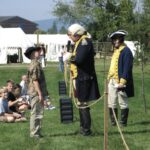
Shailen Vines, Xavier Farrow & Ayat Muhammad in period costume after training to become docents for the Bethel Trail.

Shailen Vines, Xavier Farrow & Ayat Muhammad in period costume after training to become docents for the Bethel Trail.

Bob Welsh, Jump Street’s impressive executive director, wasn’t always at the helm of a top-notch non-profit that provides creative opportunities for youth and adults. Back in the day, he was just an ordinary city resident who was unhappy about what he saw happening in the city school’s music programs.

“Music education was really in terrible shape,” he said. “Not that the teachers weren’t great, there were just not many resources.”

Wanting to do something about it, he came up with the idea of starting an instrument donation program.

“I went to Mayor Reed to see what he thought, and he basically told me I have lots of energy and good ideas but no clue how to execute. He told me that I needed to go out and find some agencies that do this kind of work and find out how this work gets done. It was the best advice I ever got.”

Welsh found a kindred spirit in Metro Arts, where he was able to learn about non-profit management and how to write grants. One of the grants that he got allowed him to start the fledgling “Gift of Music Program.” Welsh served as a volunteer, a board member and then was hired as executive director of Metro Arts. A year later, in 2000, the organization changed its name to Jump Street.

Now, Jump Street is a thriving organization providing multiple programs for youth, teens and the community at large. It operates a facility on N. Cameron Street that includes the Thrive Art and Fitness Center for Seniors, teaching and rehearsal space, arts business incubator/office space, gallery space and administrative offices.

The following is a spotlight on three of Jump Street’s programs.

The Gift of Music

The Gift of Music is Jump Street’s oldest program. Through the program, band and orchestral instruments are collected, restored and distributed to students interested in learning to play an instrument. It’s not the first time that organizations have collected instruments, but Welsh has come up with some ideas that have streamlined the process.

“We decided not to get involved with trying to determine if individuals qualify for an instrument,” Welsh said. “Instead, we qualify programs.”

Accordingly, Jump Street works with 40 or 50 schools, community organizations or churches.

“They let us know what they need, and then they take responsibility for determining which students should get the instruments,” he said.

Repair of the instruments is done in local repair shops and typically costs about $100.

“In a former life, I repaired instruments, so that helps,” said Welsh. “So that’s one place that we have a leg up because I can identify what will probably get out into the field.”

Welsh says that he has a rule of thumb that, if the repair is more than one-third of the value of the instrument, check with him. If it doesn’t, the shop can just go ahead. “That saves time and cost,” he said.

During the 12 years of the program, Jump Street has refurbished and distributed around 500 instruments in the Harrisburg region, but the program expanded several years ago and now operates in four other cities. “All across the state, we’re probably pushing towards a distribution of 5,000,” Welsh said.

Jump Street accepts instrument donations at its offices in Harrisburg or at any area Classic Cleaners.

AND Magazine

One of Jump Street’s major literary projects is the publication of a magazine for teens written exclusively by teenaged journalists.

AND Magazine (which stands for “A New Diversion”) has been in publication for seven years and, since its inception, has had about 150,000 readers. The magazine was conceived as a way to provide opportunities for regional teens to participate in all phases of the magazine publishing process, including writing, editing, graphic design, photograph and marketing.

“Most magazines [geared towards teens] are people our age writing what we think and what wisdom we can offer to teens,” said Welsh. “It occurred to me that it might be more interesting to mentor young writers or just be with them to facilitate their own process.”

So far, the project has involved around 100 dedicated writers and about 100 more who may have contributed one or two stories, poems or photographs. One of the magazine’s most famous graduates, and its first editor, is Annie Stone, who is now editor of teen books with Harlequin. Many other students also have benefited from working on the magazine by being able to include stories they have written in their college portfolios. Welsh notes that the literary work of AND Magazine writers has helped them to net scholarships to many prestigious schools, such as Point Park University in Pittsburgh, Temple University, the University of Pennsylvania and Shippensburg University.

Every year, the project attracts a core of roughly half-a-dozen students from local school districts, many of whom travel to Jump Street’s offices on a daily basis as part of their school’s senior project programs, during a free period or after school. Working together as a team gives these students an opportunity to learn to work with people who have different backgrounds and skills.

“We may have a Harrisburg High School student sitting next to a Boiling Springs student so, for the first week or two, they may as well be from different galaxies,” said Welsh. “They won’t know very much about where each other is living, but it’s personally been a joy for me to watch those barriers dissolve—and they almost always do.”

Jump Street staff also goes out to schools to work with groups of students, tasking them to create pieces around a particular editorial thread, such as young people’s attitude towards voting during election time. Teens also can contribute work remotely on their own or through their teacher, counselor, community organizations or probation officer.

“Some of the most interesting work in one issue was from a kid in lock-up,” said Welsh. “He actually received a small scholarship from what he submitted to AND Magazine while incarcerated.”

The Speak Team

Besides its regular staff, Jump Street pulls in other professionals to help develop and facilitate creative projects for area teens.

Currently Lenwood Sloan, an actor, playwright, director and self-described “catalytic agent,” is the lead resident artist. Under the direction of Jump Street, he spent this past school year heading up an intensive theater lab program at Susquehanna Township High School, where students learned everything from basic acting skills to set design, lighting and make-up. The theater lab is part of the high school’s new School of the Performing Arts, which also focuses on the visual arts and fashion.

When some of the students asked to continue working with Sloan during the summer months, Welsh created a program that trained the students to be historical actors and docents in Harrisburg. Modeled after a decade-old tourism model called the “Past Players,” the young members of the “Speak Team” were trained to portray civilians and military personnel from the 19th century and went out as an ensemble to the city’s historical places such as the train station, the Capitol building and the Broad Street Market. There, they engaged tourists and school groups with renditions of period stories, poetry, dances and songs.

“They were scheduled on Tuesdays and Thursdays to appear in different places,” said Welsh. “They would start at the market and stroll through a scripted batch of locations while another Past Player might be going in the opposite direction. The two teams might meet up in the Capitol, one heading north and one heading south. It was very, very well received.“

At times, group members portrayed composite or generic people of the era, but, more often, they reenacted actual Pennsylvanians that they had studied. The message was mostly focused on African American history, which is where Sloan’s professional experience lies.  In a typical day, passersby would be able to hear stories of the Underground Railroad and African American life during war and Jim Crow. The goal was to get history to come out of the books and celebrate the lives of people in Pennsylvania who made a change, one person at a time, one neighborhood at a time.

During the inaugural year of the “Speak Team,” members of the ensemble received more than 100 hours of training. In addition to learning historic songs, stories, poetry and dances, they took elocution lessons and received tips on how to adopt mid-19th century postures.

“The cool thing for the kids is that they are working with a total pro,” said Welsh. “Lenwood Sloan is a treasure. We are lucky he hangs out with us.”

Moving forward, Jump Street is looking towards continuing to serve the community.

“Much of our success has been based on assessing needs in our sector,” says Welsh. “Then we train up our staff in certain responsive skill sets and take reasonable risks to grow toward the opportunities. “

Welsh says that he’s sure that Jump Street can meet any challenge that the community throws at them. “I have one of the best non-profit staffs around,” he said.

To learn more about Jump Street, visit www.jumpstreet.org.

Continue Reading