Tag Archives: Harrisburg City Council

January News Digest

AutoZone Veto Overturned

Harrisburg City Council last month rejected the wishes of the city’s mayor, unanimously overturning a veto that will allow an auto parts store to proceed with plans to locate in Harrisburg.

By a vote of 7-0, council affirmed its December vote to let AutoZone, a Memphis-based car parts store, advance in the city planning process as it seeks to build a store at N. 7th and Maclay streets.

Their vote vacated several unused “paper streets” on the lot owned by Susquehanna Township-based Vartan Group, which wants to sell the property to AutoZone.

Mayor Eric Papenfuse vetoed the measure, arguing that the city could use its discretion in approving street vacations to ask developers to abide by community standards, including the creation of affordable housing and job opportunities for minority and women laborers.

For example, council could withhold approval for a street vacation until a developer agrees to set aside affordable units in a housing project or employ local laborers—particularly minorities—on job sites.

“I think there is an opportunity for City Council to establish a review criteria for street vacations linked to the land development process that will help the city achieve some of its goals with regard to contracting and affordable housing,” Papenfuse said.

Council members, though, bristled at what they said was a new rationale for controlling a development project.

“The mayor has not sent down any legislation to address affordable housing or [minority business] participation,” Councilwoman Shamaine Daniels said. “So, I really I find this administration’s position just to be really artifice and not anything of much substance.”


Budget Dispute Resolved

Harrisburg City Council and the administration agreed to resolve a 2019 budget dispute without changing the original spending plan.

The approved, $70.8 million municipal budget contained flat spending compared to the prior year and no tax increases.

After a one-week delay, council members did not amend the mayor’s proposed budget, but they did attach two conditions to their approval. First, the mayor must provide written justification for awarding salary increases greater than 5 percent, and, secondly, must provide council with quarterly reports of unused salary funds.

Council also amended the 2019 budget to re-institute the director of community and economic development position, a role that was omitted from the city’s organizational chart as part of Mayor Eric Papenfuse’s proposed reorganization of city departments.

The amendment does not carry any new funding, so the city’s 2019 spending plan is unchanged. Councilman Ben Allatt said that the council will seek grants in the new year to pay the salary for a new director.

As always, the city’s largest operating expenditure in 2019 — $32.7 million — will be for personnel. Debt service and healthcare will eat up $9.8 million and $11 million from the operating budget, respectively. The budget also allocates $6.8 million in capital improvement spending.

Even though personnel expenses increased by $500,000 from 2018, Papenfuse said a priority for the 2019 budget is to maintain Harrisburg’s current staff capacity, which his administration has rebuilt after years of austerity.

Rather than add new personnel in 2019, the mayor proposed reorganizing the city’s departments to more closely align with the city council committee structure.

The city’s new organizational chart creates seven city departments to correspond with the seven council committees. The chart dissolves the Department of Community of Economic Development and replaces it with the Department of Engineering and Development.


Body Camera RFP Issued

The Harrisburg Police Bureau is eyeing a late spring launch for its department-wide body camera program, according to city hall documents.

The police bureau last month issued a request for proposals (RFP) to potential vendors, inviting them to submit cost estimates and specifications for 100 body-worn police cameras and a video storage system.

Bidders must provide detailed descriptions of their camera equipment and IT services, as well as a budget narrative that includes a unit price for cameras and accessories, a price for cloud-based video storage, and a fixed yearly rate for maintenance and support.

The RFP does not state a budget for the new program. The bureau was given $150,000 in Harrisburg’s 2019 budget to purchase body camera equipment, a figure that included $80,000 in unspent funds from 2018.

City officials announced in September 2017 that they would equip the city’s uniformed patrol officers with body cameras the following year.

The program was delayed, however, as police officials tried to determine which specifications they needed in recording and video storage equipment.


Kline Plaza Sells

Harrisburg’s Kline Plaza has sold to a New York-based realty company, which hopes to bring new life to the aging shopping center.

Nassimi Realty LLC, based in Manhattan, bought the mid-20th century, low-slung retail and office complex for $8.7 million on Dec. 24, according to Dauphin County property records.

Kevin Nassimi, vice president of leasing, said that the family-run company was interested in the property because “this is what we do.”

“The agent for the seller brought us the opportunity, and it made sense for us,” he said.

The company specializes in multi-unit retail and currently owns 25 million square feet of shopping center space in the eastern United States, including four other properties in Pennsylvania, Nassimi said.

Kline Village, located near the city line with Penbrook, is anchored by Giant Food, which recently signed a 10-year lease extension, and includes a Fine Wine and Good Spirits store, a Rent-a-Center and a Family Dollar, in addition to several other stores, a gas station and a state Department of Health walk-in location.

Nassimi purchased the property for about half the price of the last sale. According to Dauphin County, KOP Kline Plaza LLC, another New York-based realty investment group, bought the complex for $17.3 million in 2004.

Kevin Nassimi attributed the much lower sales price to 10 current vacancies in the 240,000-square-foot complex, including two office tenants that recently left.

“That’s a big hit financially,” he said. “That’s a tall task.”


Commissioners Seek Re-Election

Long-time incumbents Jeff Haste, Mike Pries and George Hartwick last month announced their intention to run for re-election for four-year terms as Dauphin County commissioners.

Republicans Haste and Pries have served on the three-member board since 2002 and 2010, respectively. Hartwick, a Democrat, was first elected in 2003.

In their re-election announcements, all three incumbents cited 14 years without a county property tax increase as a significant accomplishment.

Diane Bowman, a former Susquehanna Township commissioner, will join Hartwick as his running mate on the Democratic side.

This year, the primary election is slated for May 21, with the general election on Nov. 5.

So Noted

Barley Snyder last month announced that attorney Sarah C. Yerger had joined its Harrisburg office as part of the law firm’s employment practice group. Yerger worked for more than 13 years in the Pennsylvania attorney general’s office, moving to the private sector in 2013.

Elementary Coffee Co. announced last month plans to open a new roastery and coffee shop at 256 North St., Harrisburg. Owner Andrea Grove said that she expects to open this spring inside the newly renovated building, but will retain her stand in the Broad Street Market.

Harrisburg Regional Chamber and CREDC boards of directors last month named Barb Bowker of PSECU as chair of the chamber and Jeannine Peterson of Hamilton Health Center as chair of CREDC for 2019. Other Chamber officers for 2019 include Tom Sposito of S&T Bank, Merone Yemane of Morgan Stanley Wealth Management, Greg Gunn of Gunn-Mowery, Karen Gunnison of Capital Blue Cross and Zachary Khuri of First National Bank. Other CREDC officers for 2019 include Ben Dunlap of Nauman Smith, Mayur Patel of Laughner Patel Developers, Mike Funck of Wohlsen Construction, Casey Khuri of NAI CIR and Wade Becker of RKL.

PSECU last month named George Rudolph as its new president. Rudolph will join PSECU in April to succeed the retiring Greg Smith, who has served as PSECU’s president for the past 28 years.

S&T Bank last month promoted Jordan Space to executive vice president, market president for the central Pennsylvania region. Space, who joined S&T in 2015, also was recently appointed to the Penn Medicine Lancaster General Health’s board of trustees. In addition, he is a member of the Lancaster City Alliance executive leadership team.

UPMC Pinnacle plans to add several floors to its West Shore Hospital in Hampden Township to accommodate the growing needs of area residents. Plans call for adding floors above the emergency department to provide 58 more beds. The Ortenzio Cancer Center at UPMC Pinnacle is also expanding its cancer programs to include infusion treatment for thoracic, gastrointestinal, genitourinary, head and neck and other cancers.

Urban Churn announced last month that it would open an ice cream production and retail space at 1004 N. 3rd St. in Harrisburg. Owner Adam Brackbill expects the craft creamery and scoop shop to open in early spring. Urban Churn also has a stand inside the Broad Street Market, which Brackbill plans to retain.

Changing Hands

Adrian St., 2245: S. Nolan to A. Kusery, $69,000

Adrian St., 2253: D. Rivera to E. Rivera Jr., $70,000

Antoine St., 500: L. Benzie to R. & P. Kotz, $165,000

Benton St., 620: PA Deals LLC to E. Shenk, $65,900

Benton St., 632: LMK Properties LLC to R. & B. Lomax, $30,000

Berryhill St., 2419: D. Seng to PT Capital Properties LLC, $55,000

Boas St., 414: A. Antoun to Berlin Group LLC, $75,000

Boas St., 420: M. Cohen to PA Deals LLC, $55,000

Calder St., 209: D. Weaver to M. Packard & C. DeAngelis, $143,500

Cumberland St., 121: J. & K. Bowser to J. Gurreri, $124,900

Delaware St., 263: Secretary of Veterans Affairs to R. & C. Steele, $67,000

Delaware St., 267: J. Renue to H. St. Phard, $127,500

Duke St., 2441: T. Nguyen & D. Thu to A. & R. Clark, $60,000

Fillmore St., 622: KAB Rental Properties LLC to S. Pierce, $68,500

Forster St., 2007: J. Claiborn to S. & M. Simpson, $55,000

Green St., 1319: K. Umbenhauer to V. Bajpai & J. Pierce, $109,900

Green St., 1712: S. Heredia to S. Jusufovic, $35,000

Green St., 1904: S. Watkins to R. & A. Gonsar, $195,000

Greenwood St., 2031: M. & M. Kochenour to S. Thomas, $82,000

Hillside Rd., 210: P. & M. Walsh to C. Rockwell, $107,000

Hoffman St., 3102: J. & A. Edwards to E. Mishler, $129,900

Holly St., 2002: Skye Holdings LLC to J. Elias Holdings LLC, $32,000

Hunter St., 1535: S. Costa to Delmax Properties LLC, $35,000

Kensington St., 1918 & 1920: Rohrer Rentals and B., C. & K. Rohrer to J. Willingham, $45,500

Lewis St., 320: B. Williams to Wyco Investments LLC, $53,500

Magnolia Dr., 2402: J. Hamburg to R. Gatling, $170,900

Manada St., 1918: 2013 Central PA Real Estate LLC to 1918 Manada Street LLC, $64,900

Market St., 1152, 1152½ & 1154: S. Peart to 1152 1154 Market St. LLC, $135,000

Market St., 1842: Adonis Real Estate LLC to A. & R. Clark, $92,000

Market St., 1916: C. Centeno to J. Alvarado, $41,500

Muench St., 607: N. Clouser to Buonarroti Trust, $35,000

North St., 1842: SRJ Realty to Sunshine ABQ Real Estate Investment LLC, $34,250

N. 2nd St., 110, 112 & 115; 211 Locust St.; 206 Walnut St.: Sandton Fund II Holdings LLC & NAI CIR to Second & Locust Investors LLC, $1,850,000

N. 2nd St., 515: Candlelight Properties Inc. to E. & H. Harbilas, $525,000

N. 2nd St., 1001: Tang & Perkins LLC to AON LLC, $212,000

N. 2nd St., 1319: A. Pruett to A. Black, $95,000

N. 2nd St., 1909: S. Jusufovic to S. Catanese, $167,000

N. 2nd St., 2432: M. & R. England to B. Eisner, $60,501

N. 2nd St., 2443: M. Myers to M. & R. Row, $112,500

N. 2nd St., 2735: K. & H. Thornton to B. Eisner, $123,201

N. 2nd St., 2841: W. & W. Miller to Michael Barrett Market Street LLC, $200,000

N. 2nd St., 2846: G. Harke & B. Voss to C. Souchek, $126,500

N. 3rd St., 1211: T. & E. Chance to C. & L. Eby, $145,000

N. 3rd St., 2211: D. Chen to J. & A. Sanderson & B. Sheaffer, $92,500

N. 3rd St., 3020: PA Deals LLC to D. & K. Borelli, $99,900

N. 4th St., 1630: Leahy Family Trust to J. Parfitt, $91,500

N. 5th St., 1619: RMAC Trust & Rushmore Loan Management Services LLC to R. Par, $67,500

N. 5th St., 3009: N. Acharya to T. Fenderson, $119,900

N. 5th St., 3108: J. Charlton to P. Stawski, $74,000

N. 6th St., 2526: G. Neff to L. & N. Perry, $34,000

N. 10th St., 23 & 27: Equity Trust Co. FBO Robert Clay IRA to 812 Market Inc. & Property Management Inc., $100,000

N. 10th St., 31: R. & B. Clay to 812 Market Inc. Property Management, $250,000

N. 19th St., 26: A. & S. Ali to D. Paulino, $70,000

N. Front St., 1525, Unit 307: PA Housing Finance Agency & U.S. Bank National Association Trustee to K. Russell, $85,900

N. Front St., 1605: M. Sibrava to AON LLC, $595,000

Paxton St., 1638: CNC Realty Group LLC & C. Brown Sr. to AUM Investments LP, $36,000

Paxton St., 1726: Kirsch & Burns LLC to L. Dinh & T. Truong, $48,000

Peffer St., 232: E. Horn to S. Leister, $119,900

Regina St., 1813: Atlantic North Star Properties LLC to Sunshine ABQ Real Estate Investment LLC, $30,000

Reily St., 309: L. Fickes & J. Heath to M. & A. Manning, $95,275

Rumson Dr., 2639: J. & C. Renninger to R. Asplen, $87,500

Rumson Dr., 2856: Zelda Marilyn Rosenbaum Trust to S. Aiken, $76,000

Sassafras St., 203: R. Sohmer to W. & E. Branter, $85,000

Seneca St., 217: D. & V. Fry to M. Hoffman, $140,000

Seneca St., 239: A. Manderino to J. Payne, $72,000

Seneca St., 323: A. Otwell to M. & R. Khan, $35,000

Showers St., 577: C. Mulkey to M. Koerner & A. Koch, $104,900

Showers St., 607: C. & R. Haigh to E. Moffet, $143,000

Showers St., 716: N. & R. Godfrey to L. Kraynak, $134,000

S. 13th St., 1531: J. Beebe to Fruition Holdings LLC, $61,500

S. 15th St., 351: M. Gray to R. Levasseur & R. Similien, $30,000

S. 18th St., 916: Crist Holdings LLC to 916 S. 18th LLC, $325,000

S. 19th St., 232: S. & K. Sanderson to B. Dessalegn, $30,000

S. 25th St., 101 & 101 Rear S. 25th St.: KOP Kline Plaza LLC & Ryan LLC Tax Compliance to Kline Plaza LLC & Nassimi Realty LLC, $8,700,000

S. Front St., 315: S. Eicher to K. Campbell, $144,000

State St., 231, Unit 101: LUX 1 LP to Commonwealth Entrepreneurs LLC, $362,500

State St.,. 1720: Vista Properties LLC to J. Virbitsky, $82,300

State St., 1812: R. Burnett to R. Burnett Sr., $55,000

State St., 1934: D. Schneider to Wilton Hampshire LLC, $85,000

Swatara St., 1914: P. Miller Sr. to A. Padua, $31,000

Swatara St., 2144: D. Selvey to K. & F. Pichardo, $94,000

Woodbine St., 420: T. Griese to J. Cheatham, $51,500
Harrisburg property sales for December 2018, greater than $30,000. Source: Dauphin County. Data is assumed to be accurate.
Continue Reading

A Very Good Year? Yes, assuming you like infrastructure and hate Act 47.

The days tick by and, before you know it, another year has passed us in the city of Harrisburg.

As I normally do for my January column, I’m reliving the recent past by reviewing the top news stories of the last 365 days.

I would say that it was an up-and-down year for Harrisburg, but I feel like I say that every year. In any case, buckle in for a trip down memory lane, assuming, that is, that your memories, like mine, mostly consist of taxes, housing and roadwork.

10. When the Rains Came
In journalism, the weather story may be the last refuge of the uninspired, and, accordingly, we don’t write a lot them. But even we take notice when the relentless rains start to affect people’s everyday lives. In 2018, the deluge began early, took a snow break for a late March blizzard, then continued for much of the year, obliterating outdoor events, delaying road projects and closing City Island briefly in July. In its history, Harrisburg has suffered much worse floods, but that was small comfort to the Pride of the Susquehanna riverboat, which lost weeks of sailing due to high water, leading to financial setbacks and appeals for donations.

9. New District, Same Result
The year started off on a hopeful note for area Democrats, as the state’s long-gerrymandered congressional districts were redrawn. The new 10th district, now centered around the Harrisburg area, still had Republicans in the majority, but their partisan advantage had narrowed. A snoozer of a Democratic primary led to the nomination of George Scott, a likeable, mild-mannered minister who, in the general election, raised a lot of money and fielded a large, enthusiastic team of volunteers. However, in the end, he could not dislodge the entrenched Republican incumbent, Scott Perry, who beat back the challenger by nearly three points.

8. Go Downtown
Harrisburg has suffered from decades of disinvestment. So, you might think that city officials would enthusiastically embrace multi-million-dollar redevelopment projects. Some, however, showed little love for a plan to convert two large, underused office buildings on Pine Street to apartments. City Council President Wanda Williams, claiming a lack of affordable units, objected to the projects. Harristown Development countered that some of the proposed units did meet the definition of “affordable” and, in any case, that the city as a whole, and downtown, in particular, would benefit greatly by an influx of new residents and their money. In the end, Williams’ objection could not derail the projects, which satisfied all other conditions set by a city that lacks a formal affordable housing policy.

7. Empty Spaces
During Harrisburg’s golden age, the Market/Cameron street corridor buzzed with activity from factory workers, auto salesmen, postal clerks and ink-stained wretches. But that was long ago. Today, it’s largely a no man’s land, stuck between hope and despair. On the despair side, it lost one of its few remaining structures—the century-old Schell seed building. But the circle of urban life continues, and, in March, the commonwealth released two promising reports. The first set forth renovation plans for the nearby, historic train station, and the second outlined a long-term vision to restore the Paxton Creek watershed, which would add acres of green space to the blighted area and reduce the risk of flooding. Mayor Eric Papenfuse has called the Paxton Creek project potentially transformational, but that transformation remains many years and many more millions of dollars away.

6. House of Controversy
Every year, a story pops up seemingly from nowhere and then surprises me in its public interest. For 2018, that story was the ongoing saga at the House of Music, Arts & Culture—otherwise known as HMAC. The summertime drama started after a patron said that she was assaulted after leaving the venue. The police soon cleared HMAC of culpability, but not before Facebook exploded in an onslaught of online invective. Soon after, TheBurg reported that HMAC had filed for Chapter 11 bankruptcy and that its owners planned to sell the sprawling art space and restaurant. If HMAC does get new owners, 2019 could be a pivotal year for a place that has come a long way over a decade, when it was a blighted shell, but that, by its co-owner’s own admission, could use fresh leadership.

5. Park & Dine
Last January, I wrapped up my annual year-in-review column by stating that, for the first time in years, my top-10 list excluded the single-most persistent issue in Harrisburg—parking. Well, it’s back! In April, the city, Dauphin County, the Downtown Improvement District and Standard Parking inked a deal to provide free street parking after 5 p.m. throughout much of downtown. The early reviews were positive, with restaurant owners saying that business had picked up once patrons realized they could snag a drink or dinner without risking a $30 ticket. The one-year deal expires soon, so we’ll have to see what City Council and other stakeholders think of their “one-year experiment.”

4. Plan Jam
Second only to parking, the unfinished comprehensive plan is the city’s most evergreen story—with us year in, year out. It may now seem like a distant memory, but the city held a public meeting last January on the draft plan. That public hearing garnered many comments from residents, even as Mayor Papenfuse denounced the draft document as “unworkable” and “unsalvageable.” Papenfuse later threatened to replace the entire Planning Commission, even if it took years, to get a plan more to his liking. Nonetheless, the commission stuck with its draft and, in November, requested $50,000 to finish it up. So, could this be the year that Harrisburg finally gets a new comprehensive plan? Maybe, but I’m already reserving an entry for it on my 2019 list.

3. Drama Class
Generally speaking, Harrisburg is a much less dramatic place than it was a few years ago, during the height of the city’s financial crisis. I now will carve out a great, big exception for the school district, which has taken over as the center of city spectacle and dysfunction. Every month of 2018 seemed to feature some new problem—budget shortfalls, a tax hike, poor academic performance, a controversial grading policy, school board resignations, personnel issues, principal reshuffling and a battle over whether to re-appoint the superintendent, among other issues. I’ll go out on a limb and say that, with control of the school board at stake during upcoming municipal elections, city residents should expect more of the same this year.

2. All Roads Lead to (and from) Harrisburg
This past year, the long-awaited 3rd Street corridor project finally began digging, cutting and drilling. Then it stopped. Then it started again. City officials now say that the streetscape and paving project will conclude this year. But 3rd Street wasn’t the only stretch of road on the minds of city residents in 2018. The city kicked off its “Vision Zero” campaign with a public meeting in June, as it strives for zero pedestrian deaths, an ambitious goal considering the shockingly high rate of road fatalities. The year in infrastructure ended on a more hopeful note. In November, residents packed a public meeting on the city’s plan to convert much of N. 2nd Street to two-way traffic. Suburban commuters may have a different opinion, but the crowd that attended the meeting seemed to support the concept overwhelmingly.

1. The Long Good-Bye
In city life, an issue may arise under one set of assumptions, only to take numerous twists and turns before resolution. Such was the case with Harrisburg’s plan to leave Act 47, the state program for distressed municipalities. We began the year assuming the city would roll into a three-year wind-down of its involvement. That assumption was thrown into doubt after the state proposed doubling the city property tax as a condition for leaving. Appalled, Harrisburg officials asked the state legislature to allow the city to retain the extra taxing authority it has had under Act 47. That bill passed in October, though in a highly modified form that offers just five more years of enhanced taxing power. With that compromise, Harrisburg plans soon to exit Act 47 in 2019, allowing it, after many years, to shed the moniker, “distressed city.”

As I typically do, I will wrap up the January column with the disclaimer that, while these are my choices for the top Harrisburg news items of 2018, they may not be yours. You easily could make a case that I should have included the tragic deaths of a mother and son at the Dock Street Dam, the death of a U.S. marshal during a raid on a house in Allison Hill and the death of restaurateur Nick Laus, which was our single most-read online story of the year.

Here’s hoping that 2019 brings the people of Harrisburg nothing but good news, which I will happily recap a year from now. And more free parking.

Lawrance Binda is editor-in-chief of TheBurg.

Continue Reading

December News Digest

Harrisburg Weighs 2019 Budget

Harrisburg City Council last month delayed a vote on the 2019 municipal budget, citing unresolved disputes with the mayor’s office over spending proposals.

The seven-member council voted unanimously to table the budget bill proposed by Mayor Eric Papenfuse in November.

The mayor’s $70.8 million balanced budget called for slightly less spending than last year, flat tax rates, and more than $7 million in capital improvement projects.

The budget was the subject of almost eight hours of public hearings in December, when council members raised questions about proposed salary increases and the reorganization of city hall departments.

Council budget and finance chair Ben Allatt said on Dec. 18 that the administration would not budge on those proposals, or grant council’s requests to amend capital spending plans.

The mayor’s original capital spending plan called for $4.8 million in spending from the Neighborhood Services fund, including:

  • $2.5 million for the acquisition of a new public works building
  • $250,000 to outsource the demolition of abandoned buildings
  • $2 million in new equipment for parks maintenance

An additional $2.5 million in the proposed budget would allow the city to finance its share of grant-funded transportation projects. Among them are:

  • $517,000 to construct new sheltered bike lanes and a traffic circle on N. 7th Street.
  • $345,000 to repave two miles of Riverfront Park’s lower river walk, a segment stretching from Maclay Street to Shipoke.
  • $270,000 for landscaping and construction to complete the MulDer Square revitalization project.
  • $250,000 to complete the 3rd Street repaving project, which was delayed last year by heavy summer rains.

As of press time, the council budget vote was scheduled for Dec. 27. Allatt declined to describe the specific changes council sought.
Recycling Fee Hits Harrisburg

Harrisburg will start paying a new fee for single-stream recycling in 2019, but ratepayers won’t see any changes to their municipal waste bills.

Beginning in January, Harrisburg will pay trash collector Penn Waste $40 for each ton of recycled paper and plastic taken to its materials recovery facility, where refuse is sorted, baled and prepared for export.

Harrisburg has used Penn Waste’s recycling facility since 2014 but did not previously pay for recycling.

Due to recent federal trade disputes with China, however, consumers across the country are now paying for a service that waste management companies traditionally offered for free.

As the world’s largest importer of recycled goods, China took the American waste industry by surprise earlier last year when it announced a temporary ban on all American imports, claiming that they contained too many contaminants—non-recyclable plastics and food waste that made their way into recycling bins.

The country later imposed new contaminant standards that all but disqualified American recyclables from import.

The announcement led to a meltdown in the American recycling industry, as waste companies began hemorrhaging money on a previously profitable service.


Higher Water, Sewer Rates in 2019

Water and sewer rates will rise this year for many people in the Harrisburg area, as Capital Region Water set its new rates for 2019.

Under the 2019 budget, CRW’s drinking water customers will pay $9.65 for 1,000 gallons, an increase of 19 cents, or 2 percent, over the 2018 rates. These customers also pay a $7.62 “ready to serve” charge.

Wastewater rates will go up more substantially. For 2019, these customers will pay $7.65 for 1,000 gallons, an increase of 66 cents, or 9.4 percent, over the 2018 rates.

An average, full-service residential customer who uses 4,500 gallons of water monthly will pay an extra $3.98 per month, according to CRW.

CRW stated that the rate increases were necessary, in part, to fund ongoing capital improvements in its service area. The company has committed to some $40 million in capital projects to repair and replace its aging infrastructure.

For 2019, CRW’s water projects include lining a major water main on Cameron Street, replacing several aging water mains, and evaluating the DeHart Dam spillway. Wastewater capital improvements include updating treatment systems at the wastewater treatment facility and repairing major interceptor sewers along Paxton Creek and the Susquehanna River, according to the company.

CRW has increased its water and sewer rates for several years in a row. For 2018, drinking water rates went up by 7.5 percent and wastewater rates by 7.1 percent.


Charter School Proposed

A new elementary charter school could open its doors in Midtown Harrisburg next year, if it gets the approval it seeks from the Harrisburg school board.

The Pennsylvania STEAM (Science, Technology, Engineering, Arts and Math) Academy last month presented a charter application to the school board at a public hearing in the district’s Lincoln Administration Building.

Only three board members attended the hearing, which was recessed after 90 minutes and will reconvene in January.

The presentation was led by former Pennsylvania Secretary of Education Carolyn Dumaresq, a founding board member of the PA STEAM Academy. Dumaresq explained that the school would offer small classes and a rigorous curriculum in STEM fields, as well as a deep emphasis on language arts and literacy.

If Harrisburg grants the five-year charter application, the STEAM Academy would open at the HACC Midtown 2 Academic Building, 1500 N. 3rd St., in fall 2019 for grades K-2. The school would add a grade of instruction every year, allowing the incoming cohort of 2nd-graders to progress through 6th grade by the time the charter expires in 2024.

If their charter is granted and then renewed, they hope to expand to 8th grade.

HACC currently occupies Midtown 2, but the 15-year lease on the building expires in June 2022, and HACC announced in March that it would not renew it. The college plans to start moving some programs out of the building as early as this year.

As a public charter school, enrollment at PA STEAM Academy would be free for students, paid for by contributions from its students’ school districts. Harrisburg students would have first priority for the 120 enrollment slots. If the school received applications for more students than it could serve, it would select students through a lottery system.

Enrollment would only be open to students from other districts if the school could not fill its seats from within Harrisburg.

The school would also have a research component, Dumaresq said, serving as a testing ground for innovative curriculum programs that could raise student achievement across all of the Harrisburg school district.

“We would be able to look at our programs, look at student achievement, and say ‘this works’ and take the model [to other schools],” Dumaresq said. “A school district the size of Harrisburg can’t implement things this big all at once.” 


UMC Churches to Close

Ten Harrisburg-area United Methodist churches are slated to close as their congregations consolidate, it was announced last month.

The Susquehanna United Methodist Conference cited declining membership and the high cost of building maintenance in its decision to shutter and sell the churches. Several churches are historic structures that date back more than a century.

The churches set to close are:

  • First Harrisburg UMC, 260 Boas St.
  • Riverside UMC, 3200 N. 3rd St.
  • Rockville UMC, 4386 N. 6th St.
  • Mark’s UMC, 3985 N. 2nd St.
  • Camp Curtin Memorial Mitchell UMC, 2221 N. 6th St.
  • Grace Harrisburg UMC, 216 State St.
  • Derry Street UMC, 1508 Derry St.
  • Twenty Ninth Street UMC, 750 S. 29th St.
  • Grace Penbrook UMC, 25 S. 28th St., Penbrook
  • Trinity Penbrook UMC, Canby and N. 25th St.

The conference stated that the congregations will consolidate into a smaller number of newly constructed campuses. Sites in Harrisburg and Penbrook are being considered as locations for the new campuses.


County Tax Unchanged

Dauphin County last month passed a 2019 budget that will keep the county’s portion of the property tax unchanged.

The $247 million budget retains the county rate of 6.87 mills, plus a .35 mills library tax.

This marks the 14th straight year that the county tax will not increase.

Additionally, the budget includes $11 million for the county’s municipal bridge project. Under the program, Dauphin County will use state transportation-related funds to cover 40 percent of a municipality’s cost to repair or replace a bridge. The rest of the money can be borrowed via low-interest loans from the Dauphin County Infrastructure Bank.

County officials said they are working with municipalities to determine an initial list of bridges.

“Without this program, township and boroughs would be forced to either close or weight-restrict bridges or raise local taxes to fix them,’’ said Commissioner Mike Pries. “We’re looking at long-term solutions and working with our municipal partners to improve the quality of life in the county.”


Robinson Regains Board Presidency

Danielle Robinson returned to her post as president of the Harrisburg school board last month, ousting incumbent Judd Pittman in a 6-3 vote at an annual reorganization meeting.

Lola Lawson, a board veteran who was appointed to a temporary seat in August, will serve as vice president.

A member of the school board since 2012, Robinson served as its president from 2015 to 2017, when she lost her leadership role to Pittman. She was subsequently elected vice president for the 2018 calendar year.

Robinson and Pittman found themselves in opposite factions throughout most of 2018, as the board decided whether to retain Superintendent Sybil Knight-Burney or conduct a nationwide search for her replacement. The board frequently split along slim margins on questions related to Knight-Burney’s tenure and administration, with the majority supporting her.

In other school board news, board member Melvin Wilson died suddenly last month. The board now must appoint a replacement by mid-January.


Study: Dauphin County Most Like “Middle America”

A research firm last month named Dauphin County the most typical county in the nation.

Alexandria, Va.-based Echelon Insights released the results of its “Middle America Project,” which ranked Dauphin County as, statistically, the “closest to resembling America as a whole.”

The firm used a variety of demographic and other data, including income, employment, church attendance and voting tendencies, to compile a “Middle America score” and rank more than 3,000 counties.

Another Pennsylvania county—Lehigh—took second place nationwide, with Scott County, Iowa, Shawnee County, Kansas, and Peoria County, Ill., rounding out the top five spots. Webster County, W.Va., was ranked as least resembling the nation as a whole.

Locally, Lancaster County came in at No. 51, Cumberland County at 109, York County at 318, Lebanon County at 533, Adams County at 633 and Perry County at 2,024.


So Noted

Adam Porter was named last month as president of the executive board of Harrisburg Young Professionals for 2019. Porter is co-owner of both the st@rtup Harrisburg co-working space and Provisions, a downtown grocery. In addition, HYP named Jeremy Scheibelhut and Brandon Boring as vice presidents, Sydney Kyler as treasurer and Mary Kate Grimes as secretary.

AutoZone passed its first significant hurdle last month, as Harrisburg City Council voted to void several “paper” alleys on the proposed site at N. 7th and Maclay streets. Before the auto parts company can build a retail store on the Vartan-owned parcel, the city still must approve its land use plan.

Beth Taylor resigned last month after more than three years as manager of the Broad Street Market in Harrisburg. At press time, the market board had not yet named a replacement.

Harrisburg City Council last month unanimously passed a resolution opposing “conversion therapy,” a controversial treatment that claims to be able to change one’s sexual orientation or gender identity. Council passed the measure, which contains no sanctions, as a public statement of opposition.

Harrisburg University has been named U.S. STEM University of the Year by United Kingdom-based Corporate LiveWire. Corporate LiveWire is a networking platform that allows individuals and organizations to find other professionals in the corporate finance and business community.

Lindsay Helsel has been named vice president of Team Pennsylvania, a nonprofit dedicated to innovation and entrepreneurship in the commonwealth. Helsel previously served as the group’s director of international initiatives.

Patrice Merzanis will serve as the new executive director of the Dauphin County Bar Association effective Jan. 1. Merzanis, who most recently served as a consultant with the Pennsylvania Association of Realtors, replaces Elizabeth Simcox, who served in the position for seven years.

Radish & Rye Food Hub plans to open a second location this summer on the 1300-block of N. 3rd Street in Harrisburg. Owners Dusty and Julia James will open a seven-day-a-week grocery store, complementing their Broad Street Market stand, focused on local, organic and prepared foods. Radish & Rye has received a three-year, $333,410 federal grant to help fund the expansion.
Changing Hands

Berryhill St., 2163: G. Garmin & D. Hart to International Union of Elevator Constructors Local Union #59, $140,000

Boas St., 223: Clionsky & Keys LLC to C. & K. Kelley, $142,800

Boas St., 257: F. & J. Beskind to R. Lowery, $116,900

Boas St., 261 & 263: C. & M. Frater to Alex Manning Enterprises LLC, $194,000

Boas St., 1816: D. Schultz to Harrisburg Properties LLC, $39,000

Cumberland St., 224: A. Karns to A. & A. Chaplin, $114,000

Derry St., 2423: E. Gmys to S. Bello, $78,000

Duke St., 2438: M. & K. Morris to K. Morris, $30,000

Fulton St., 1722: PA Deals LLC to Pedavelis Properties LLC, $109,000

Green St., 1102: LHRE LLC to W. Hoover & Heinly Homes LLC, $50,000

Green St., 1820: C. Edwards to Jhonleo Home Renovations LLC, $45,000

Green St., 2212: T. Treece to E. Villavicencio, $55,000

Harris St., 226: P. & T. Davis to V. Parades, $74,500

Herr St., 1611 & 703 N. 18th St.: WK Rentals LLC to Henry & Sons Property 2 LLC, $119,800

Locust St., 115 & 117 N. River St.: Allis Revocable Trust to M. & D. Williams, $287,000

Locust St., 119: D. Shatto, S. Shatto & A. Rhoads to G. Rhoads & M. Beamer, $95,000

Market St., 1827: 2103 Central PA Real Estate Fund LLC to Henry & Sons Property 2 LLC, $79,900

N. 2nd St., 2131: J. & R. Miller to BCRA Realty LLC, $84,500

N. 2nd St., 2140: M. Price to G. & K. Raser, $140,000

N. 2nd St., 2313: G. Mineur to D. Lehman, $36,700

N. 3rd St., 1614: P. Eusi to D. McCord, $144,500

N. 3rd St., 1800: R. Valentine & C. Frater to 1800 N. 3rd LLC, $174,500

N. 3rd St., 1818: C. Frater to Heinly Homes LLC, $100,000

N. 3rd St., 1724: Y. Farzana to J. Montone, $132,000

N. 3rd St., 1937: C. Frater to Heinly Homes LLC, $130,000

N. 4th St., 3230: D. Garman to C. Sitterly, $132,000

N. 5th St., 2648: R. Walker to R. & O. Hicks, $44,000

N. 13th St., 113: Adonis Real Estate LLC to 77 Estate LLC, $37,500

N. 15th St., 183 & 185: S. Fenton, D. Fenton & Harrisburg Property Management Group to T. Casteel, $58,000

N. 15th St., 1308: Harrisburg Rentals LLC to Henry & Sons Property 2 LLC, $59,900

N. Front St., 1525, Unit 210: N. & D. Burke to R. & L. Mack, $105,000

N. Front St., 2949: Fraternal Order of Police to Vinculum Inc., $285,000

Penn St., 1717: J. Armstrong to N. Houle, $109,900

Pennwood Rd., 3100: C. Pensyl to K. Zuber, $96,000

Reel St., 2433: A. Wood to C. & M. Gentry, $31,000

Reily St., 204: R. & E. Davis to B. Davis, $80,000

Rolleston St., 1235: L. & E. Saunders to ECS Holdings LLC, $170,000

Rumson Dr., 2786: PA Deals LLC to B. & C. George, $79,500

Seneca St., 241: CR Property Group to L. Graham, $71,500

S. 14th St., 1403: J. & F. Scott to City of Harrisburg, $41,000

S. 17th St., 205: J. Tyson, M. Tyson & W. Hill to 205 S. 17th Street LLC, $137,500

S. 23rd St., 605: 2014 LIMG Real Estate Investment Fund LLC to Henry & Sons Property 2 LLC, $64,900

S. 24th St., 705 & 711: C. Dellmuth to R. Hendrix, $95,800

S. 26th St., 655: Twenty Ninth Street United Methodist Church to F. & R. Rivera, $109,900

S. Chestnut St., 100: Dauphin County General Authority to Chestnut 100 LLC, $1,600,000

S. Market Sq.: Skarlatos & Zonarich Real Estate LP to South Second Associates LLC, $1,800,000

State St., 1310: Skye Holdings LLC to M. Maniari & Z. Er Roudi, $30,000

Sylvan Terr., 127 & 134: C. McGraw to Enterprise O LLC, $65,000

Verbeke St., 1418: A. & D. Cruz to J. Reid, $63,900

Yale St., 227: J. & C. Nuhfer to A. De Camacho, $42,000

Yale St., 228: C. Jones to NGDR Company Inc., $45,000

Continue Reading

Lack of parking at new federal courthouse has local officials worried.

A rendering of the federal courthouse at 6th and Reily streets in Midtown Harrisburg.

As the construction of a long-awaited federal courthouse in Midtown Harrisburg inches forward, there remains one vital question that project managers haven’t resolved.

Where are patrons going to park?

Final land development plans for the $192 million project at 6th and Reily do not include proposals for any new parking structures. According to Mayor Eric Papenfuse, that’s a big problem.

The U.S. General Services Administration estimates that as many as 800 employees, jurors and other patrons will visit the courthouse on a given day.

They’re certain to strain nearby street parking, which is already in high demand among residents and some commuters.

What’s more, the construction of the courthouse will eliminate 60 existing parking spots in a surface lot, located on a parcel that was subsumed into the new building site.

The dilemma came up at a City Council work session tonight, where council members warned GSA representatives that the new courthouse could wreak chaos on Midtown’s parking supply.

Construction on the courthouse began in June and is expected to wrap in 2021.

Papenfuse explained that GSA won’t build new structures because federal agencies don’t guarantee parking for their employees. Instead, they rely on private developers or parking authorities to meet demand.

That works in most cities, Papenfuse said, but not necessarily in Harrisburg.

“The city’s in no position to float bonds to run a parking garage, and nobody is guaranteeing any revenue suitable for a private developer to build a garage,” he said. “We really don’t have a plan.”

Unlike their federal counterparts, state agencies often do reserve employee parking by leasing out blocs of parking spaces.

Those leases are a boon for parking operators, who can count on reliable income for large chunks of their real estate. They’re also used to secure financing for the construction of new infrastructure.

Without a similar guarantee for the 200 staffers at the federal courthouse, or more economic activity near the site, developers may see the construction of new parking infrastructure nearby as a risky investment.

The average cost of each space in a new parking garage is $25,000, according to parking industry experts. Then there are annual operating costs.

“They’re not going to build a garage without a long-term commitment that meets the overhead,” city Solicitor Neil Grover said. “But the courthouse is a long-term thing, and eventually there will be enough things going on that a developer will be interested at some point.”

Since Harrisburg was shut out of the bond market during its financial crisis, the city has no choice but to sit and wait for a developer to emerge.

“If we had a credit rating, we would build a parking structure,” Papenfuse said. “We would assume that risk was safe. But we looked at the numbers, and there’s no possible way anyone will loan us the money.”

A developer who did want to build new parking would have limited options for real estate. Much of the neighborhood is zoned for residential use, which precludes the construction of parking garages.

Unless Harrisburg granted a zoning variance, a new garage would have to go the nearby commercial or industrial zones, which are both in walking distance to the site, Grover said.

Papenfuse said the construction of new parking infrastructure near the courthouse would not violate the city’s contract with its private parking operator.

Standard Parking leased Harrisburg’s parking assets under a 40-year deal in 2013, but that agreement did not preclude the construction of new infrastructure to meet increased demand in the city, Papenfuse said.

Council members tonight were adamant that GSA and the city address the problem before it stressed an already-tight parking supply.

Council member Westburn Majors also expressed a preference for a multi-level parking garage. The anticipated demand for parking would require a vast expanse of real estate for a surface lot, he said, which could displace existing properties.

Project managers said that they continue to study options for off-site parking. Garages south of the courthouse, including ones in downtown Harrisburg, could be feasible sites if there was a shuttle service, according a representative from Dawood Engineering.

They could become feasible options if GSA provided shuttles to the courthouse.

City planning director Geoffrey Knight said Harrisburg could also help by building new bus stops and bike-share stations near the courthouse.

Council is slated to vote on the final land development proposal at its Dec. 18 legislative session.

Continue Reading

City Council Update: Traffic police on the move, roadwork planned for South Harrisburg

Harrisburg City Council at tonight’s legislative session

Harrisburg’s traffic police are moving their home base to Paxton Street.

City Council tonight approved a one-year, $1 lease with UPMC Pinnacle to rent office space in a UPMC-owned property at 1000 Paxton St.

The new space will allow officers in the city’s traffic safety unit to store damaged cars for inspection following traffic safety incidents.

Officers currently store vehicles involved in investigations in a downtown garage, which is cramped and not entirely protected from the outdoors, according to police officials.

The deal also provides 140 square feet of office space where officers can store equipment and complete paperwork. Only one or two officers will ever be in the office at a given time, council public safety chair Ausha Green said tonight.

UPMC will furnish the office with desks, a credenza and a refrigerator, and the Harrisburg Police Bureau will provide furniture from its existing inventory as needed.

The agreement will not permit the bureau to increase the size of its traffic safety unit, which currently comprises six officers who are called to traffic assignments in between other duties.

Council also voted tonight to reaffirm the terms of a $2 million loan to finance street improvements in South Harrisburg.

A resolution that council passed in April authorized the city to enter into the loan agreement with the Pennsylvania Infrastructure Bank, to be repaid over a 10-year period at a 2.5 percent interest rate. A resolution passed tonight ratifies the same terms with “more robust language,” according to Deputy Solicitor Tiffanie Baldock.

The $2 million loan will allow the city to repave 38,000 square feet of roads and install ADA-compliant wheelchair ramps and crosswalk signals at six deteriorating intersections in South Harrisburg.

The goal of the project is to create a safer pedestrian environment, according to council legislation, which does not identify the streets targeted for improvements. The project is expected to begin next year.

City Council also considered legislation tonight to ratify a new collective bargaining agreement with city employees represented by the Local 521 chapter of AFSCME. It would extend the current contract for two years, providing a 1-percent annual raise and a $1,000 bonus for members of the bargaining unit, effective at the start of the new fiscal year.

The contract agreement was sent to council’s administration committee, which will meet during the next work session on Tuesday, Nov. 20.

Continue Reading

Harrisburg lifts hiring freeze, acts to extend lobbying effort as it prepares for Act 47 exit

Harrisburg city hall

After a brief period of austerity, Harrisburg is hiring again.

Mayor Eric Papenfuse said today that he lifted a five-month hiring and spending freeze on Oct. 24, the same day that Gov. Tom Wolf signed a bill designed to release Harrisburg from state financial oversight.

Papenfuse declared a moratorium on hiring and non-essential city spending in June. At the time, he said that the freezes would prepare Harrisburg for the eventual loss of $12 million in tax revenue, which would accompany its Act 47 exit in 2021 unless state lawmakers intervened.

The hiring freeze affected 14 unfilled positions in city hall, half of which were represented by bargaining units.

As of Monday, the city was advertising six vacant positions on its website. Papenfuse expects the other unfilled positions to be posted in batches.

The non-essential city spending freeze was also rescinded in October, Papenfuse said today. It did not interrupt any grant funded capital improvement projects, but did lead city officials to re-evaluate in-house spending.

Papenfuse declined to say in June which programs, if any, were curtailed by the freeze.

The bill that Wolf signed in October, House Bill 2557, will temporarily spare Harrisburg the revenue losses that normally occur when a city exits Act 47, as it surrenders the augmented taxing power it exercised under state oversight.

Harrisburg officials have long said that the city cannot survive without its current local services and earned income tax rates, which were both increased under Act 47.

At a House committee hearing in September, Papenfuse testified that the city’s commuter population creates an irreparable structural deficit for the city, since the demands on its infrastructure and emergency services are too great for its small, largely impoverished residential tax base to afford.

House Bill 2557 let Harrisburg retain its current taxing authority for five years under the guidance of a five-member governing board. City officials expect to exit Act 47 in the spring, once the board adopts an agreement with the city granting it oversight powers.

House Bill 2557 won’t allow Harrisburg to keep its current taxing authority in perpetuity, as city leaders initially wanted. But they hope Harrisburg can push for even greater reforms in the future.

Papenfuse also is asking City Council to extend Harrisburg’s contract with the lobbying firm Maverick Strategies, which worked throughout the year to make the city’s case in the statehouse.

The current contract with Maverick was set to expire in December at the end of a one-year, $60,000 term. Papenfuse said today that he hopes to retain their lobbying and intelligence gathering services for at least another year.

City Council will consider a motion to re-hire Maverick at its legislative session tomorrow, which begins at 6 p.m. in city hall.

Continue Reading

Second Chance: Public meeting slated as Harrisburg moves forward with 2nd Street conversion plan.

N. 2nd Street in Midtown Harrisburg

Harrisburg’s plan to return much of N. 2nd Street to two-way traffic is picking up speed, as the city has scheduled a public meeting next week on the proposed project.

The Nov. 7 meeting will give residents background on the project, present the results of a traffic study and ask for public input.

“The traffic study is done and has shown that [the project] is feasible,” said city Engineer Wayne Martin. “We now want to see what’s important to the corridor and to the neighborhood.”

The meeting will take place at St@rtup Harrisburg, starting at 6 p.m.

The study by Kittelson & Associates, a transportation and engineering firm, demonstrated that 2nd Street could feasibly be returned to two lanes—one northbound and one southbound—between Forster and Division streets, affirmed Mayor Eric Papenfuse.

“The traffic study has come back showing us that we can do it,” he said. “Now, we have the data to move forward.”

The study, Martin said, showed that motorists would have a “slight reduction” in convenience from the change, but that there would be significant improvements in walkability and in neighborhood safety.

Historically, 2nd Street was designed as a wide boulevard, with two, one-way streets. To accommodate commuter traffic, Harrisburg, in 1956, converted the local street into a three-lane roadway heading north. At the same time, it converted Front Street into a three-lane roadway heading south.

The changes, some have argued, turned Harrisburg from a place to live in to a place to quickly drive through, as the wide, busy streets created unsafe conditions, degraded property values and detrimentally affected quality of life.

Over the past few years, Harrisburg has been awarded grants both from the nonprofit Impact Harrisburg and from PennDOT to study the issue and begin the project. If the current timetable holds, design work would be completed next year, with actual construction taking place in 2020-21, Martin said.

The project would include many elements, including numerous new traffic signals, signage, striping and road work, which also would include changes and improvements to certain intersections along Forster and N. 7th streets, roads that would absorb some of the displaced traffic.

Papenfuse said that, at the public meeting, the city will seek input for features and amenities—such as bike lanes or a median—that could be incorporated into the final road design.

“This is going to be a major quality-of-life upgrade for the city,” Papenfuse said.

Papenfuse also offered updates on the many other infrastructure projects planned and in progress around the city:

  • After many delays, largely due to inclement weather, the 3rd Street corridor project is getting back on track, he said. Expect work to continue through next year.
  • Next year, the city will begin a two-year, $2 million project to repave many of the roads in South Harrisburg. Next month, City Council is expected to pass an ordinance that would authorize a revenue note for the project.
  • The city expects to announce its “rapid response” improvements to State Street, as per its Vision Zero initiative. These changes may include lane reductions and a sheltered bike lane, with work expected next year, Papenfuse said.
  • Harrisburg will begin work repaving the lower river walk following the Harrisburg Marathon, which takes place Nov. 11. However, most of the extensive repaving project will take place in 2019, which will limit access to the popular walking, biking and running path next summer.

The public meeting on returning 2nd Street, between Forster and Division streets, to two-way traffic will take place on Wednesday, Nov. 7, 6 to 8 p.m., at St@rtup Harrisburg, 922 N. 3rd St., Harrisburg.

Continue Reading

October News Digest

Harrisburg to Leave Act 47

A bill passed by the state legislature last month allows Harrisburg to preserve its current tax rates and exit Act 47, a state oversight program for financially distressed municipalities.

The House and Senate both voted overwhelmingly to pass House Bill 2557, which allows Harrisburg to maintain its current local services tax (LST) and earned income tax (EIT) for five years after it exits state oversight. The bill also prohibits the city from enacting a commuter tax and convenes a five-member Intergovernmental Cooperation Authority (ICA) to monitor Harrisburg’s finances.

After the vote took place, Harrisburg Mayor Eric Papenfuse thanked the lawmakers who supported its passage, including its sponsor, Rep. Greg Rothman, R-Cumberland County, and Harrisburg’s lawmakers in the House and Senate, Rep. Patty Kim and Sen. John DiSanto.

“While I wish we had been able to achieve a permanent solution for the city and the region, Harrisburg’s immediate fiscal crisis has lifted,” Papenfuse said. “I look forward to working with the new members of the Intergovernmental Cooperation Authority—as it’s time to roll up our sleeves and continue to work for the long-term success of Harrisburg and the capital region.”

The bill is the culmination of a 10-month lobbying effort by Harrisburg officials, who have long said the city needs stronger taxing powers to support the capital city. It will allow Harrisburg to preserve about $12 million in annual revenue that would have been lost in a traditional Act 47 exit.

Act 47 allows Harrisburg to levy a 2 percent EIT on all residents and a $156 LST, even though state law caps EIT rates at 1 percent and LST at $56 per year. Without HB 2557, Harrisburg would have been forced to cut its EIT in half and slash its LST by two-thirds when it exits state oversight.

Local officials say those rates are untenable in Harrisburg, which supports large swaths of tax-exempt properties and a daily population of some 50,000 commuters. Mayor Eric Papenfuse had told lawmakers that the city’s emergency services and infrastructure would be in jeopardy if the city had to cut its taxes.

With HB 2557 in place, Harrisburg will also be spared high property tax increases that were prescribed in a proposed three-year Act 47 exit plan.

The city did make one significant sacrifice in the final bill, which was amended in October to put a five-year time limit on the enhanced taxing power.

The original legislation only required Harrisburg to retire its tax rates once its surpluses partially funded a post-retirement benefit fund for its employees. Projections estimated that could take up to 20 years.

Rep. Kim called it “the best we can do” in a Republican-controlled legislature. She hopes that the five-year timeframe will still give Harrisburg enough time to increase its tax base.


Bowers Named to City Council

Danielle Bowers, a lifelong Harrisburg resident and state government staffer, is the newest member of Harrisburg City Council.

Last month, Bowers beat out 14 other candidates, including one past council president, to take the seat formerly held by council member Cornelius Johnson.

Bowers works as an executive director for the Pennsylvania House of Representatives Tourism and Recreational Development Committee. She previously held researcher roles with the Democratic Policy Office and Legislative Black Caucus and holds a master’s degree in public administration from Pennsylvania State University.

Her appointment to council creates a vacancy on the Zoning Hearing Board, where she has served for the past three years.

Fifteen candidates appeared before council last month to share their qualifications and ask for a chance to serve on the city’s legislative branch. But only four were invited to participate in the interview phase, where sitting council members asked candidates about their skills and goals for public service.

During her interview, Bowers touted her legislative experience and her knowledge of the city’s finances. She said she would like to pass legislation to bolster public safety and hopes to see the city’s Police Bureau return to its full complement.

Candidates Josiah Yonker, an IT professional, Gloria Martin-Roberts, a former council president and mayoral candidate, and Airis Smallwood, a healthcare administrator and musician, also received nominations and sat for interviews.


City Releases Housing Study

The results of Harrisburg’s first citywide housing study are in, and they predict a shortfall of more than 200 rental units at all price points over the next three years.

Representatives from the consulting firm that prepared the study presented their main findings to City Council last month. The authors said demand for rental housing in Harrisburg will outpace supply through 2020, even as development projects put new units on the market.

As a result, Harrisburg will face a shortage of about 244 rental units across the city—a figure that accounts for the city’s existing housing stock, new units coming onto the market and old units becoming uninhabitable.

The study also considers population projections, which anticipate that Harrisburg will gain 300 households in the next three years, mostly in the Allison Hill and Uptown neighborhoods.

The study didn’t offer any policy recommendations, but city hall officials intend to use its findings to develop long-term development strategies and housing policy proposals.


3rd Street Study Released

Harrisburg’s 3rd Street corridor is headed in a positive direction, though it remains a work in progress in terms of redevelopment, economic activity and walkability.

That’s the general conclusion of a study by the Washington, D.C.-based Urban Land Institute (ULI), a nonprofit research and educational organization that recently examined the corridor from Reily Street in Midtown to Chestnut Street downtown.

“The 3rd Street corridor possesses a great deal of momentum and potential for continued development,” stated the report, titled “TLC for Harrisburg’s Third Street Corridor.” “Strategically bridging the gap between the downtown and Midtown neighborhoods can put Harrisburg on the map as a vibrant capital city with a strong urban core.”

ULI visited Harrisburg for two days in April, walking the two-mile stretch then interviewing stakeholders who live, work and own businesses there. Their analysis and report were sponsored by Harristown Development, which owns Strawberry Square.

The 14-page report lauds the recent redevelopment and adaptive reuse that has occurred along the stretch. However, it states that much work still needs to be done so that the corridor can achieve a fuller potential. It cites three specific challenges:

  • “Dead Zones”: Many buildings have been restored, but many have not. There is still too much blight and too many empty storefronts.
  • Forster Street: Forster Street is too wide, busy and inhospitable, cutting off downtown from Midtown and deterring pedestrian activity.
  • Aesthetics: Aesthetics are inconsistent. Some areas appear pleasant, while others do not, both in terms of streetscape and the condition of structures.

The study then offers a variety of recommendations, such as incentivizing homeownership, encouraging pop-ups in empty storefronts, increasing police visibility, enforcing maintenance codes, improving the streetscape and better connecting downtown and Midtown.

Two suggestions stood out as especially ambitious.

The first recommended improving the intersection of N. 3rd and Forster streets by employing traffic-calming measures, making it more pedestrian-friendly and possibly reducing the number of lanes. The second proposed forming a “Third Street Coalition,” which would help promote, brand and advocate for the corridor.


Environmental Council Reconstituted

After more than two years of dormancy, Harrisburg’s Environmental Advocacy Council is back in action.

City Council repopulated the all-volunteer body recently when it voted unanimously to approve five appointees nominated by council members and the city administration. One appointee, Rafiyqa Muhammad, is a holdover from the former EAC that dissolved in 2016.

She’s joined by new members Tanya Dierolf, Christine Proctor, Molly Cheatum and Melanie Cook.

The five-member body will advise the mayor and other city officials on matters related to the environment and sustainability. As an advisory group, it does not have the power to manage or disburse money, but it will make recommendations on how to spend the money collected by Harrisburg’s “host fee.”

Harrisburg collects more than $250,000 a year in fees for hosting a regional incinerator, which is owned by the Lancaster County Solid Waste Management Authority (LCSWMA). State law allows cities with regional waste sites to assess a $1 per ton fee on the waste processed there. That money must be used to make environmental improvements in the city.

Christopher Nafe, the city’s new sustainability coordinator, will manage the EAC and attend all of its meetings, Mayor Eric Papenfuse said.

Papenfuse hopes that having a designated city hall staff member will help the EAC avoid the dysfunction that felled it in 2016, when most of its five members resigned.

Nafe hopes that the new EAC will advise the city on existing and new initiatives. Those include working with the Tree Advisory Council, which monitors the city’s tree population, and developing educational programs at the city’s new composting facility in Susquehanna Township.


New CRO for Harrisburg Schools

A retired Philadelphia-area superintendent will serve as the new state oversight officer for the Harrisburg School District.

The Pennsylvania Department of Education appointed Dr. Janet Samuels as the district’s new chief recovery officer in October.

She will oversee the implementation of a new, long-term recovery plan aimed at raising the district’s academic performance and financial health.

PDE put the school district under a financial recovery designation in 2012. State law requires every district in recovery to have a state-appointed recovery officer.

Samuels replaces Audrey Utley, who retired in June after serving as Harrisburg’s CRO for three years.

Her salary is capped at $144,000 annually and will be paid by PDE.

Last June, Samuels retired as the superintendent of Norristown Area School District, where she oversaw a $150 million annual budget and nine schools enrolling 7,400 students. She previously served as a regional superintendent for the Philadelphia Area School District. Her career in public education spans 35 years and includes experience as a principal and classroom teacher.


So Noted

Donald E. Schell has been named the new chair of the Homeland Center’s board of trustees. Schell, who has served on the board since 2001, takes over from Morton Spector, who will continue to serve on the board as immediate past chair.

Jeanne Troy is the new development director for Tri County Community Action, it was announced last month. In the newly created position, Troy is responsible for advancing the mission of TCCA by developing donor strategies and increasing fundraising opportunities.

Justin Roth has been named marketing manager for Capital City Mall, leading the marketing efforts for the Camp Hill shopping center. He previously served as the marketing and communications manager for the Harrisburg Regional Chamber & CREDC.

Minuteman Press is relocating to larger space next door to its current location on the first block of S. 3rd Street in Harrisburg. Franchise owner Charlotte Todd recently purchased the Original Copy Shop, which had operated for 32 years, and converted it to a Minuteman shop.

Robert W. Morris & Co. last month celebrated the grand opening of its new office at 510 N. Front St., Wormleysburg. This is the second location for the CPA firm, which also has offices in New Bloomfield, Pa.

Three Little Birds Boutique opened a second location last month at the new Hershey Towne Square. The shop, which specializes in women’s clothing, shoes and accessories, joins businesses like Iron Hill Brewpub, Starbucks and several other restaurants and shops at the mixed-use retail and office project in downtown Hershey.
Changing Hands

Bigelow Dr., 22: E. Johnson to T. Henry, $55,000

Briggs St., 214: X. Chen to Around the Corner LLC, $135,000

Capital St., 909: M. Dietz to J. Canamucio & J. Block, $130,000

Chestnut St., 1836: G. Norman to A. Nebbou, $30,000

Crescent St., 219: Anpat LLC to J. Le, $47,000

Croyden Rd., 2926: S. McDougal to A. Guerrero, $74,900

Cumberland St., 260: J. Bane to M. Mueller, $122,250

Delaware St., 266: WCI Partners to D. Taylor, $124,900

Fillmore St., 622: J. Hoch to KAB Rental Properties LLC, $40,000

Fulton St., 1729: J. Tanjung & W. Leyu to M. Gleason, $112,500

Grand St., 924: L. Searles to N. McClure, $79,900

Green St., 1818: J. Lightner to Fratelli Property Investments LLC, $110,000

Greenwood St., 2151: Alliance of Automotive Service Providers of PA Inc. to Edwin L. Heim Co., $320,000

Holly St., 1811: Wells Fargo Bank NA to R. Murphy, $32,500

Holly St., 2009: PA Deals LLC to E. Shelly, $65,900

Hunter St., 1535: P. & F. Kehler to S. Costa, $35,000

Kelker St., 231: Cartus Financial Corp. to E. Bliman & H. Hamilton, $180,000

Kelker St., 332 & 1821 N. 3rd St.: Harrisburg Redevelopment Authority to Pennsylvania National Fire Museum, $125,000

Kensington St., 2302: X. Weng & C. Yang to Fowler Investments LLC, $39,500

Kensington St., 2348: M. Hardison to N. Terry, $66,000

Kent Lane, 198: Neidlinger Enterprises to F. Manzanillo & S. Rodriguez, $75,000

Lenox St., 1910: RTD Properties and Management to R. Do, $40,000

Lewis St., 321: D. Licciardello to R. Neely, $114,900

Luce St., 2354 & 2356: L. Salcedo to C. Santiago, $102,000

Market St., 1829: D. & S. Parikh to G. Allen, $69,000

Market St., 2211: G. Dunn to S., J. & M. Buckham, $84,400

Muench St., 402: M. Huynh to SA Home Solutions LLC, $30,000

Mulberry St., 1842: A. Woolridge to A. Faican & E. Sumbra, $49,900

North St., 1609: W. Davis to R. Cantave, $120,000

N. 2nd St., 901 & 903: W. & J. Hobbie to B. Golper & WG PA Holdings LLC, $365,000

N. 2nd St., 907: D. Pong to R. Anspach Jr., 173,900

N. 3rd St., 1636: MJ Trust Properties LLC & C. Jurasits to Fratelli Property Investment LLC, $110,000

N. 4th St., 2443: T. & K. Malesic to W. Lawrence, $80,000

N. 5th St., 2605: Harrisburg Homes Investment LLC to NGDGR Company Inc., $48,000

N. 6th St., 2605: A. & P. Ashenberg to R2 Property Group LLC, $43,000

N. 7th St., 2400: J. Holmes & BAS Tax Services Corp. to DAP 7 Curtin LP, $270,000

N. 7th St., 2640: Q. Higgs to Riley Residential Real Estate LLC, $35,000

N. 15th St., 1121: Golden Lover Realty LLC to B. Shephard & N. Cook, $39,000

N. 15th St., 1415: J. & O. Hearn to E. Mantilla, $43,500

Peffer St., 613: K. Timmons to J. Santiago, $46,000

Penn St., 1336: H. & L. Roberts to J. O’Neill, $36,100

Penn St., 2105: G. Hanslovan to T. Hage, $45,000

Penn St., 2139: PA Capital Area Investments LLC to DHS Team LLC, $30,000

Reily St., 333: Dobson Family Partnership to ADS Investments LLC, $89,900

Seneca St., 241: J. Williamson to CR Property Group, $32,500

S. 13th St., 1403: M. Stewart to B. Price Jr., $38,000

S. 14th St., 916: 916 S. 14th Street Partnership to Harrisburg Housing Authority, $1,150,000

S. 14th St., 1435 & 1400 Randolph St.: A. Ingram Jr. & W. Blankenship to City of Harrisburg, $43,000

S. 20th St., 1100: Paxton Street Home Benevolent Society Inc. to Paxton Place I LP, $250,000

S. 21st St., 922: A. Mariluz Jr. to D. Ramos, $68,000

State St., 231, Unit 304: P. Brommer to BCRA Realty LLC, $102,000

Susquehanna St., 1805: HBG Rents LLC to V. & C. Vergara, $61,000

Sycamore St., 1711: Leonard J. Dobson Family LP to H. Yunis, $70,000

Valley Rd., 2305: J. Dunn & A. Meyers to J. Alpert, $179,900

Verbeke St., 233: D. Varno & C. Johnson to E. Herrmann & L. Hall, $126,900

Walnut St., 1232: Valley Real Estate Holdings LLC to C. & C. Hinckley, $33,000

Wayne St., 1517: J. Alvarado to A. Sweet Sr., $120,000

Continue Reading

Housing Study: Harrisburg faces shortage of rental housing now, expected to get worse

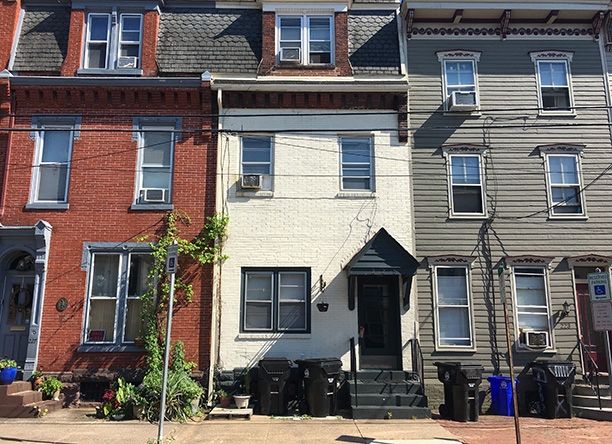
A set of typical Harrisburg rowhomes

The results of Harrisburg’s first citywide housing study are in, and they predict a shortfall of more than 200 rental units at all price points over the next three years.

Representatives from the consulting firm that prepared the study presented their main findings to City Council tonight. The authors said demand for rental housing in Harrisburg will outpace supply through 2020, even as development projects put new units on the market.

As a result, Harrisburg will face a shortage of approximately 244 rental units across the city – a figure that accounts for the city’s existing housing stock, new units coming onto the market and old units becoming uninhabitable. The study also considers population projections, which anticipate that Harrisburg will gain 300 households in the next three years, mostly in Allison Hill and Uptown Harrisburg.

The study didn’t offer any policy recommendations, but city hall officials intend to use its findings to develop long-term development strategies and housing policy proposals. Here are five of the main takeaways from the 100-page study:


Affordable housing and subsidized housing aren’t the same thing.

Developers and policymakers use three standard terms to describe different types of rental housing. Market rate properties are those where tenants pay rent in full, without any public subsidies or rental assistance. Rent is set by a landlord based on location, amenities and demand in the local market.

If a property has restricted rents, or is only open to renters making a certain income, it’s an affordable property. Some affordable housing properties are owned by local governments or nonprofits, but cities can also put zoning restrictions on private projects to make them affordable.

The final category, subsidized properties, offer rental assistance programs based on a renter’s income. This category includes public housing projects, such as Harrisburg’s Hall Manor.


Harrisburg is a low-rent city, but it’s also a low-income city.

The average apartment rents for $831 in Harrisburg. That’s low compared to other parts of Dauphin County, but it’s high for most Harrisburg residents. Nearly half of renter households in Harrisburg have incomes under $25,000. The median renter income is just $22,000 a year.

Housing affordability isn’t defined by the market value of rent, but by how much housing costs consume a person’s overall income. Affordability guidelines, which are set by the federal Department of Housing and Urban Development, say no household should spend more than 30 percent of its income on rent. By that standard, 40 percent of renter households in Harrisburg are cost-burdened. Data show a need for more rental units in the “very low” and “extremely low” income bands.


Demand for rental units will be highest in the Allison Hill and Uptown neighborhoods.

Population growth in Allison Hill and Uptown is expected to exceed other neighborhoods in the city over the next three years. But there’s only one apartment project planned in Allison Hill, which will add 48 units, and there are no upcoming projects slated for Uptown.

Without new housing supply, the scarcity of affordable units in those neighborhoods is expected to worsen. Only one-third of families in Allison Hill who qualify for affordable housing assistance currently receive it, the study says. Demand is even higher in Uptown Harrisburg, where 22 percent of income-qualified rental households get assistance.

“There’s great opportunity for development in both neighborhoods, not just for affordable housing but all rental housing,” said Robert Lenfeld of Real Property Research Group, the Columbia, Md.-based firm that authored the study.


The rental market is tight across Harrisburg, but particularly in Allison Hill.

Harrisburg has more than 4,000 vacant houses and commercial buildings. Abandoned, blighted buildings create eyesores and pose public safety risks, but when it comes to rental units – those that are part of the active housing market – some vacancy is a good thing, said Lenfeld. Fewer than 3 percent of Harrisburg’s rental units are currently vacant. Any figure below 5 percent indicates a tight housing market where renters have limited housing choice and landlords hold a large share of power.

“You want to have some vacancy in a market to ensure elasticity so people can move around and landlords don’t increase rents,” Lenfeld said.

Vacancy rates across the city range from .5 percent in Allison Hill to 4.3 percent in Midtown. South Harrisburg had no vacant units, but it also has the city’s largest share of subsidized rentals. Those rentals aren’t included in vacancy figures, Lenfeld said, since “you never run out of demand for subsidized units.”


Harrisburg’s rental population is aging.

The city’s population of senior citizens is expected to increase 2.4 percent each year through 2020. Seniors can choose to live in any rental unit on the market, but many elect to live in age-restricted properties that offer elevators, common spaces and other amenities that meet their needs. Not all age-restricted properties are affordable—in Harrisburg, only 165 units meet both classifications.

In Harrisburg, the distribution of age-restricted properties limits the housing choice of senior citizens. There are no age-restricted properties in South Harrisburg, whereas downtown has two high-rise towers that contain all of the city’s affordable, age-restricted housing stock. The Paxton Place development will add 37 new, affordable apartments for senior citizens when it’s completed next year. That’s good news for seniors in Allison Hill, but those who wish to find affordable housing in Midtown, Uptown or South Harrisburg will have to keep waiting.

Continue Reading

Legislative staffer appointed as newest member of Harrisburg City Council

Harrisburg City Council. Top row, left to right: Shamaine Daniels, Westburn Majors, Ben Allatt, and Dave Madsen. Bottom row: Ausha Green, Wanda Williams, and newcomer Danielle Bowers.

Danielle Bowers, a lifelong Harrisburg resident and state government staffer, is the newest member of Harrisburg City Council.

Bowers beat out 14 other candidates, including one past council president, to take the seat formerly held by council member Cornelius Johnson. She was appointed at a special council session tonight and will take her seat on Oct. 9.

Bowers currently works as an executive director for the Pennsylvania House of Representatives Tourism and Recreational Development Committee. She previously held researcher roles with the Democratic Policy Office and Legislative Black Caucus, and holds a master’s degree in public administration from Pennsylvania State University.

Her appointment to council creates a vacancy on the Zoning Hearing Board, where she has served for the past three years.

President Wanda Williams said that the board is one of the most prestigious volunteer bodies in the city and that Bowers distinguished herself as a dedicated, meticulous member during her service.

“She’s very precise and does her homework,” Williams said. “She did a yeoman’s job on the zoning board.”

Seventeen candidates applied for the vacant council seat in September — an unusually high number, according to council members. One was eliminated during vetting by the city’s human resources department and another did not appear at tonight’s selection meeting.

The remaining 15 candidates appeared before council tonight to share their qualifications and ask for a chance to serve on the city’s legislative branch. But only four were invited to participate in the interview phase, where sitting council members asked candidates about their skills and goals for public service.

During her interview, Bowers touted her legislative experience and her knowledge of the city’s finances. She said she would like to pass legislation to bolster public safety and hopes to see the city’s Police Bureau return to its full complement of officers.

Bowers entered the interview phase with three nominations from council members – an early show of consensus that Mayor Eric Papenfuse said was unprecedented in council appointments. Council members made their nominations anonymously.

Candidates Josiah Yonker, an IT professional, Gloria Martin-Roberts, a former council president and mayoral candidate, and Airis Smallwood, a healthcare administrator and musician, also received nominations and sat for interviews.

During the voting round, council members Ben Allatt, Shamaine Daniels, Westburn Majors, and Ausha Greene cast votes for Bowers. Dave Madsen and council President Wanda Williams voted for Martin-Roberts.

Papenfuse said that council member appointments usually entail multiple rounds of voting or a tie-breaking vote from the mayor.

“This is the fastest it’s ever happened,” Papenfuse said.

The mayor also praised Bowers’ record on the Zoning Hearing Board and applauded her appointment to city council.

Continue Reading