Tag Archives: Gabriel Olivera

February News Digest

Delay in School Board Appointment

It may be months before Harrisburg residents learn who will be the newest member of the district’s school board, as a court hearing in the matter isn’t slated to take place until late April.

Court of Common Pleas Judge John McNally has scheduled an April 23 court date to hear a citizen’s group response to a petition supporting Ralph Rodriguez, a city resident who wants to fill the vacant seat.

The group known as Concerned about the Children of Harrisburg (CATCH) responded to the petition filed on Jan. 24 on behalf of Rodriguez. As part of its response, CATCH asked the court to appoint its own preferred candidate, Cornelius Chachere.

This petition response appears to have triggered a series of events that will take several months to resolve.

The parties now have until mid-March to finish their discovery processes, followed by the April 23 court hearing.

Jayne Buchwach, a member of CATCH, said that her group opted to respond to Rodriguez’s petition, as opposed to filing an original petition in support of Chachere, after they saw that Rodriguez’s supporters had filed first.

“The response states our objections,” she said. “It also tells the court—this is who we think should be on it.”

The response touts Chachere’s qualifications and, like an original petition would, asks the court to appoint him.

To add further complexity to this issue, former school board Director James Thompson also has filed a petition with the court for the seat. Technically, this makes four candidates for the seat: Rodriguez, Chachere, Thompson and Marva Brown. In their petition, Rodriguez’s supporters mention that appointing Brown also would be acceptable to them.

The board seat became empty following the Dec. 16 death of school board Director Melvin Wilson. The remaining board members, split between Rodriguez and Chachere, failed to muster a majority of five votes to replace Wilson within a 30-day time period, throwing the matter to the court.

Buchwach said that she wasn’t concerned about having only eight members on the board for an extended period.

“The board is contentious,” she said. “So, having eight there or nine there—it really doesn’t matter.”

Meanwhile, five of the nine school board seats will be up this election year. CATCH has vowed to put up its own slate of candidates for the board seats.


Fetterman Starts Listening Tour

A packed room and dozens of speakers greeted Lt. Gov. John Fetterman in Harrisburg last month, as he kicked off a statewide listening tour on the proposed legalization of recreational marijuana.

Some 300 people filed into the auditorium of the Harrisburg Jewish Community Center for the first of 67 such events, as Fetterman began to wind his way through every county in the commonwealth.

For about two hours, Fetterman listened patiently and respectfully as speaker after speaker rose either in support of or in opposition to the proposal, often sharing with him emotional stories from their lives.

One young man named Darryl said that he was arrested and jailed for possession of marijuana and possession of drug paraphernalia and now can’t find a full-time job because of those convictions.

“That’s why I’m struggling so badly, because of a stupid possession charge,” he said. “It’s time to end this.”

To that end, a few speakers recommended not only legalization but expungement of criminal records for those previously convicted.

Les Stark, executive director of Reading-based Keystone Cannabis Coalition, a pro-legalization advocacy group, said that, in Pennsylvania, about 25,000 people a year are arrested for marijuana possession.

“How many lives have been ruined in Harrisburg alone?” he asked. “Over the next 10 years, will we ruin the lives of 250,000 more Pennsylvania citizens?”

Several speakers identified themselves as users of medical marijuana, which is legal, and testified to the effectiveness of cannabis for treating their conditions.

While most attendees spoke in favor of legalization, some did not.

Several speakers said they feared that legalizing recreational marijuana would lead to greater threats to public safety—from the potential of more car accidents to the possible greater use of harsher drugs.

“My main concern is that I have a grandchild turning 16,” said one man. “My concern is that I believe recreational marijuana is a mind-controlling substance. I’m afraid for her to be driving out on the highway when some other driver’s mind is being controlled by marijuana.”

Other speakers accused the state of wanting to legalize recreational marijuana as a revenue-raising tool.

“I’m not against medical marijuana, but I am against use of recreational marijuana,” said one man. “I believe the administration just wants to create a new revenue source to tax and spend.”

Throughout the lengthy event, Fetterman said little from his seat on the stage, listening attentively as people spoke their minds.

At one point, he asked would-be speakers to allow a woman, who was holding an infant, to move to the front of the long line. The woman, who said she drove in from Hummelstown, offered a moving story about surviving AIDS then, relatively late in life, giving birth to her baby.

“Medical cannabis helped me survive by the skin of my teeth,” she said. “It can’t be denied to others.”


Illegal Guns Seized

Harrisburg police have seized hundreds of firearms over the past few years, following a department-wide push to take illegal guns off of city streets.

At a press conference last month, police lined three long tables with handguns, rifles and shotguns, which they said was a small sample of the 646 illegal weapons confiscated from 2016-18.

Capt. Gabriel Olivera said that, in 2016, city police Commissioner Thomas Carter instructed officers to focus on the epidemic of illegal weapons in the city.

“All these guns were seized mostly without officers engaging these individuals with gunfire,” Olivera said. “Our officers have shown great restraint.”

According to Olivera, 196 guns were seized in 2016, 252 in 2017, and 198 in 2018. The far majority of these weapons have been handguns.

Carter said that, even before 2016, his officers routinely seized illegal firearms. But he wanted them to be more mindful of illegally owned guns, most of which have been stolen, as they patrolled and made arrests.

“I work with these amazing men and women on a day-in and day-out basis, and I know their capabilities,” he said, referring to his officers. “It’s something the entire agency bought into.”

Olivera mentioned that, for 2018, Harrisburg had about a 10-percent drop in “Part 1” offenses, which include the most serious crimes like murder, robbery and aggravated assault, compared to 2017. He also cited a 5- to 6-percent reduction in “Part 2” crimes, such as simple assault, disorderly conduct and most drug possession offenses, which are generally considered to be less serious.

“I can’t tell you that the number of guns has reduced the homicide rate,” Carter said. “But I can tell you that it has reduced violent crime.”

Olivera said that, after police seize a stolen gun, officers try to determine the rightful owner, so it can be returned. If no owner is identified, the gun eventually is destroyed, he said.


ICA Board Complete

A Harrisburg resident and former media executive has secured the final seat on Harrisburg’s new financial oversight board.

David Schankweiler, former publisher of the Central Penn Business Journal, was appointed to the five-member Intergovernmental Cooperation Authority (ICA) by state Senate Pro Tempore Joe Scarnati.

Schankweiler joins UPMC Pinnacle executive Tina Nixon, nonprofit professional Audry Carter, attorney Kathy Speaker-MacNett, and property developer Ralph Vartan on the newly created ICA, which will oversee Harrisburg’s finances for five years.

Until 2016, Schankweiler was the CEO and owner of Journal Multimedia, which published the Central Penn Business Journal and other publications. Since his retirement from the publishing industry, he has served on numerous nonprofit boards.

The board met for the first time last month for an organizational meeting.


New Police Gear

Harrisburg police last month showed off a pile of new protective gear, equipment it purchased with a grant from UPMC Pinnacle.

At a press conference, the city’s police bureau shared samples of new vests, helmets and steel plates, part of about 120 pieces of protective gear that will help protect officers from lethal, high-caliber weapons, according to police Commissioner Thomas Carter.

In total, UPMC Pinnacle donated more than $40,000 for the equipment purchase. That figure includes about $20,000 raised last June from the “3.2 to Protect the Blue” race, which was organized by UPMC Pinnacle emergency room nurses, with the UPMC Pinnacle Foundation donating much of the remainder.

“I had no idea of the dedication and love that these people showed our officers,” said Carter, flanked by UPMC nurses and Harrisburg police officers.

The new gear includes 60 helmets, 40 “body armor level 3 ballistic” protective vests with steel plates and 20 additional steel plates. The vendor, Royersford, Pa.-based Body Armor Megastore, contributed another 10 armor body vest sets.

Carter said that the need for the equipment arose last year following the death of U.S. Deputy Marshal Christopher Hill during a raid on a house in Allison Hill. The bureau realized that its helmets and vests were not adequate to protect against today’s powerful firearms, he said.

Deputy Police Chief Deric Moody said that his officers will not wear the equipment regularly, but will keep it nearby in case it’s needed.

After the press conference, Mayor Eric Papenfuse stressed that the equipment was not the full body armor “riot gear” that the bureau requested in 2017 after high-profile clashes throughout the city between “anti-Sharia” protestors and “antifa” counter-protestors. That gear was already purchased following a $68,000 allocation from City Council, he said.


Teachers Protest Pay

A sea of teachers dressed in red and carried homemade signs at a Harrisburg school board meeting last month, protesting what they perceive as unfair pay.

Hundreds of teachers flanked the standing-room-only gymnasium and wore “Red for Ed,” demanding to know why the school board denied a grievance settlement that would have raised the pay of veteran teachers.

In response, the district claimed that the pay raises would be prohibitively expensive for the struggling district, saying, in a prepared statement that “the settlement costs would run into the millions of dollars because of its continuing impact on salary costs in the district.”

At the heart of this fight is a set of intersecting problems: the Harrisburg school district’s budget issues, complaints of low pay and high teacher turnover rate. Veteran teachers demand that their pay reflect the time they’ve invested in Harrisburg schools, but the district asserts that veteran teachers are already being paid competitive wages.

“The more veteran the teacher is at Harrisburg, the more competitively they are paid under the negotiated salary schedule,” the statement read. “The board also believes that if the [Harrisburg Education] association was so concerned about the turnover problem in the district, it would have recommended that this be addressed in our ongoing labor contract negotiations where the teachers have refused to make a salary proposal after 14 months of negotiations.”

“We haven’t refused anything,” Barksdale responded. “We have to settle this before we agree on anything.”

The events culminating in the protest began in August when the Harrisburg Education Association filed a grievance against the board, claiming that veteran teachers were underpaid.

In it, they stated that the district had hired new teachers at rates higher than veteran teachers with equivalent experience, violating their contract. In January, the union reached a verbal agreement to raise the salaries of some of the lowest paid veteran teachers, but the board voted down that contract.


2019 Arts Awards Announced

Theatre Harrisburg has announced the recipients of the 2019 Awards for Distinguished Service to the Arts in the Capital Region (“Arts Awards”).

Ronnie Waters, a jazz musician, arranger, composer and educator, will receive the “Award to an Individual,” and The State Museum of Pennsylvania will receive the “Award to an Organization, Company or Group.”

The awards will be presented on Sunday, June 2, in a theatrical gala at Whitaker Center in downtown Harrisburg. The event is open to the public, and proceeds benefit Theatre Harrisburg.

For more information about the awards, including banquet reservations, visit www.theatreharrisbug.com/artsawards.


Mural Fest Returns

The Harrisburg Mural Festival is returning for another round, as Sprocket Mural Works last month announced a 2019 festival.

Co-organizer Megan Caruso said that Sprocket will oversee the creation of 10 murals over 10 days, from Aug. 30 to Sept. 8. The purpose, she said, is to add density to Harrisburg’s existing “mural trail,” which runs mostly along 3rd Street in downtown and Midtown.

“We want Harrisburg to be a mural-dense city,” she said. “So, they have to be concentrated.”

Sprocket also plans to mount a mural in Allison Hill, Caruso said. The organization created 18 murals during its first mural festival, which was held in 2017.
 

Lobbying Contract on Hold

Maverick Strategies will need to wait until mid-month to find out if its lobbying contract with Harrisburg will be renewed.

City Council was expected to vote on a one-year, $60,000 contract with the city-based lobbying shop last month, but pulled the resolution at the start of a council legislative session.

Earlier, council had asked Maverick for detailed billing statements for their prior contract, which ended Dec. 31. That information was received just before February’s legislative session, and council needed time to review the bills, said President Wanda Williams.

“We need clarification on these invoices,” Williams said. “City Council has additional questions they want to ask.”

Williams said that they’ll request that Maverick appear at the next council work session, which is slated for March 5, with a contract vote likely at the following legislative session on March 12.

So Noted

Brooks R. Foland of Marshall Dennehey Warner Coleman and Goggin has been named president of the Dauphin County Bar Association for 2019. The rest of the 2019 executive committee includes Lisa M. Benzie of Navitsky, Olson & Wisneski LLP; Paula J. McDermott of Post & Shell P.C.; Scott B. Cooper of Schmidt Kramer Harrisburg; and Thomas P. Gacki of Eckert Seamans.

D&H Distributing plans to move its headquarters from Harrisburg to Lower Paxton Township later this year, it was announced last month. The century-old company will relocate from the 2500-block of N. 7th Street to a 50-acre campus near I-81.

Harrisburg University has named former professional player Alex Chu to coach its “League of Legends” e-sports team. Chu joined Giuseppe Gramano and Chad Smeltz to round out the e-sports coaching staff at the university.

Joyce Davis has left her position as Harrisburg’s communications director to take a post as the new opinion editor at PennLive. At press time, her replacement in the city had not been named.

National Association of Collegiate Esports last month announced that it had selected Harrisburg for its 2019 annual conference. The July 17-19 convention will attract 300 to 400 attendees, with most events taking place at Harrisburg University and Whitaker Center.

Wildheart Ministries is seeking skilled artists to do small art installations for its third annual Summer Project in Allison Hill, June 9 to Aug. 3. For more information, contact Serena Viera at [email protected].


Changing Hands

Berryhill St., 2156: M. & J. Rider to V. Marsico, $42,500

Bigelow Dr., 37: BSR Rental Trust to L. Pate, $67,500

Briggs St., 2018: D. Patterson to Cohen Altman Properties LLC, $40,000

Brookwood St., 2202: D. McCahan to Z. Hess, $80,000

Calder St., 517: R. Godshall to PA Deals LLC, $80,000

Crescent St., 332: Dynaspek Holdings to K. Stoute, $55,000

Croyden Rd., 2963: M. Thomas to D. Jamison, $49,900

Emerald Ct., 2450: S. Manly & J. Ebenezer to J. Gilliam, $80,000

Emerald St., 235: R. Valentine & C. Frater to R. Liddick, $35,000

Green St., 1022: Dilks Properaties of Harrisburg LLC to S. & J. Toole, $100,000

Green St., 1605: C. Frater to Fratelli Property Investments LLC, $110,000

Green St., 1609: C. Frater to Fratelli Property Investments LLC, $110,000

Green St., 2035: G. Neff & City Limits Realty to Heinly Homes LLC & W. Hoover, $55,000

Green St., 2037: WCI Partners LP to D. Ranson, $219,000

Green St., 3224: Wilmington Savings Fund Society FSB & Selene Finance LP to C. Wise, $51,500

Greenwood St., 2516: W. & C. Davenport to R9 Holdings LLC, $33,000

Hoffman St., 3010: Innovative Devices Inc. to R. Wiley, $122,000

Hummel St., 250: Y. Martinus to M. Fragoso, $150,000

Kensington St., 2135: A. Segin to L. Scott, $61,000

Lenox St., 2011: R. Volcy to N. Burrell, $162,000

Logan St., 2303: M. Arnold to S. & S. Stridiron, $30,000

North St., 251: Peleton Investments to Trip Aces 251 LLC, $135,000

N. 2nd St., 719: J&S Estate LLC to Hasan Properties LLC, $265,000

N. 2nd St., 1937: M. Horgan to B. & A. Klinger, $201,000

N. 2nd St., 2449: L. Lee to J. Reed & M. DePhilip, $120,000

N. 2nd St., 2739: S. Staub & E. Adler to K. Werner & D. Neyman, $242,000

N. 2nd St., 2953: PI Capital LLC to V. Edwards, $272,000

N. 3rd St., 1931 & 1933: C. Frater & R. Valentine to GMG Harrisburg A LLC, $350,000

N. 4th St., 1729: J. & E. Lonon to C. & E. Little, $142,000

N. 4th St., 1924: Equity Trust Co. Custodian Julie Burns IRA to C. Williams, $117,500

N. 4th St., 2030: I. Alderton to B. Russ, $87,000

N. 4th St., 2448: A. Barber to S. Lewis, $84,000

N. 6th St., 1002: A. Antoun to N&R Group LLC, $31,000

N. 6th St., 2933: C. Wise to J. Ryan, $134,900

N. 6th St., 3105: M&T Bank to K. Kissam, $52,000

N. 18th St., 59, 61& 63: MSP Associates Inc. to Shutter Real Estate LLC, $85,000

N. Front St., 1525, Unit 314: D. Forney to A. Winch, $90,000

Paxton St., 1626: S. Reed to D. & B. Chisolm, $55,000

Penn St., 1933: D. Ranson to J. Hunter, $149,900

Race St., 600: D. Korlewitz to K. Douglas, $135,000

Randolph St., 1416: A. Campbell to N. Tran, $74,000

Reel St., 2742: L. Polite to W. Edgerton, $58,900

S. 13th St., 401: N. & A. James to C., A., F. & S. Weaver, $59,000

S. 17th St., 1112: Wells Fargo National Association to HT Properties LLC, $35,920

S. 18th St., 1039: Secretary of Housing and Urban Development to T. Bilbo & J. Seay, $42,200

S. 19th St., 1141: Z. Robinson to PA Deals LLC, $42,000

S. 20th St., 512: GKT Enterprises LLC to Equity Trust Co., $34,000

S. 25th St., 448: J. & J. Nuhfer to K. & M. Stone, $100,000

S. 26th St., 737: S. Wedemeyer to W. Quezada, $33,000

S. 27th St., 728: E. Patterson to H. Alcantara, $33,621

S. Front St., 577: M. Kuhns to E. Stover, $138,000

State St., 1816: M. Ochoa to H. Plaza, $50,000

State St., 1900 , 1902 & 1904: D. Kapp & W. Cupp to Cassiano Properties LLC, $175,000

Wiconisco St., 523: N. McCoy & M. Gordon to Equity Trust Co., $42,000

Wiconisco St., 623: V. Rivas to L. Cruz & I. Perez, $55,000

Wyeth St., 1405: J. & M. Reis to L. Stamm, $115,000

Harrisburg property sales for January 2019, greater than $30,000. Source: Dauphin County. Data is assumed to be accurate.
Continue Reading

Harrisburg police tout progress in removing illegal weapons from city streets

Flanked by seized firearms, Harrisburg police Commissioner Thomas Carter today explained his bureau’s progress in taking illegal weapons off the streets.

Harrisburg police have seized hundreds of firearms over the past few years, following a department-wide push to take illegal guns off of city streets, officials announced today.

At a press conference, police lined three long tables with handguns, rifles and shotguns, which they said was a small sample of the 646 illegal weapons confiscated from 2016-18.

Capt. Gabriel Olivera said that, in 2016, city police Commissioner Thomas Carter instructed officers to focus on the epidemic of illegal weapons in the city.

“All these guns were seized mostly without officers engaging these individuals with gunfire,” Olivera said. “Our officers have shown great restraint.”

According to Olivera, 196 guns were seized in 2016, 252 in 2017, and 198 in 2018. The far majority of these weapons have been handguns.

Carter said that, even before 2016, his officers routinely seized illegal firearms. But he wanted them to be more mindful of illegally owned guns, most of which have been stolen, as they patrolled and made arrests.

“I work with these amazing men and women on a day-in and day-out basis, and I know their capabilities,” he said, referring to his officers. “It’s something the entire agency bought into.”

Olivera mentioned that, for 2018, Harrisburg had about a 10-percent drop in “Part 1” offenses, which include the most serious crimes like murder, robbery and aggravated assault, compared to 2017. He also cited a 5- to 6-percent reduction in “Part 2” crimes, such as simple assault, disorderly conduct and most drug possession offenses, which are generally considered to be less serious. Detailed crime data for Harrisburg should be publicly available next month, he said.

“I can’t tell you that the number of guns have reduced the homicide rate,” Carter said. “But I can tell you that it has reduced violent crime.”

Olivera said that, after police seize a stolen gun, officers try to determine the rightful owner, so it can be returned. If no owner is identified, the gun eventually is destroyed, he said.

While Carter praised the work of his department, he admitted that the three-year seizure tally represented only a fraction of the illegal weapons in the city.

“This doesn’t even shake the basket of what’s out there,” he said. “We’re just going to do everything we need to do to be able to make sure elderly people and young people can walk down the street without fear of being mugged or robbed or something like that.”

Continue Reading

Harrisburg Police offer new timeline for body camera deployment.

Cpl. Josh Hammer demonstrates body camera equipment at a Sept. 2017 press conference. Police officials say that body cameras won’t hit the streets in Harrisburg until 2019.

The Harrisburg Police Bureau is eyeing a late spring launch for its department-wide body camera program, according to city hall documents released this week.

The police bureau issued a Request for Proposals (RFP) to potential vendors on Wednesday, inviting them to submit cost estimates and specifications for 100 body-worn police cameras and a video storage system.

Bidders must provide detailed descriptions of their camera equipment and IT services, as well as a budget narrative that includes a unit price for cameras and accessories, a price for cloud-based video storage, and a fixed yearly rate for maintenance and support.

The RFP does not state a budget for the new program. The bureau was given $150,000 in Harrisburg’s 2019 budget to purchase body camera equipment, a figure that included $80,000 in unspent funds from 2018.

City officials announced in September 2017 that they would equip the city’s uniformed patrol officers with body cameras the following year.

The program was delayed, however, as police officials tried to determine which specifications they needed in recording and video storage equipment.

Eight officers spent two months in 2017 and 2018 testing prototype equipment in a short-term pilot phase. Police Capt. Gabriel Olivera said in September that no single model suited all the department’s needs.

As a result, Olivera said, it took longer than anticipated to draft an RFP describing equipment specifications.

The resulting RFP outlines dozens of technical characteristics the police will use to evaluate potential equipment—from camera size, weight and portability to options for storage and video playback.

According to the bidding documents, city officials are seeking a storage system that will index footage by officer name, date and time of recording, and type of crime. The cameras must also have built-in audio and video redaction capabilities.

The RFP has already been shared on the city website and be posted in the legal notice section of local newspapers next week, mayor Eric Papenfuse said. Bids are due on Feb. 8.

Proposals will be evaluated by a panel of city representatives, who will select a “short list” of qualified vendors to be invited to city hall for an in-person interview and equipment demonstration.

The panel will evaluate equipment based on ease of use, cost and the vendor’s ability to provide training and technical support.

Vendors that meet the evaluation criteria will be invited to participate in a 30-day testing period starting on Feb. 18.

The city intends to approve a final vendor on March 22 and award a full contract by May 10.

Most public contracts are guaranteed to the lowest responsible bidder, or the reliable vendor who can perform the service on the lowest budget. That won’t be the case for this contract, Papenfuse said.

Legal language in the RFP will allow the city to award contract to the firm of their choice, regardless of cost.

Before the city can deploy the equipment, however, it must hammer out a deal with the Fraternal Order of Police (FOP) that codifies its standards for using cameras and releasing footage.

Papenfuse said that Harrisburg has not formally entered negotiations with FOP but has engaged the union in informal conversations. Those talks will continue as the city develops a new five-year financial plan with its Intergovernmental Cooperation Authority, a five-member oversight board that will be populated this year.

Any agreement with FOP must comply with Act 22, a statute passed by the state legislature in 2017 dictating the times when officers must activate and deactivate their cameras.

Act 22 allows police to record conversations in private residences – something civilians can’t do under the state wiretap law. However, footage recorded under Act 22 is not subject to Right to Know laws.

Police departments have final say over what camera footage will be made public.

Continue Reading

Harrisburg Police: Crime is down, helicopters are up, and body cameras are on hold until 2019.

Cpl. Josh Hammer demonstrates body camera equipment at a Sept. 2017 press conference. Police officials say that body cameras won’t hit the streets in Harrisburg until 2019.

Aggregate crime rates in Harrisburg are lower than they were at this point last year, according to law enforcement officials.

Capt. Gabriel Olivera credits the slight crime drop to a number of new strategies in the Harrisburg Police Bureau, including a partnership with the Pennsylvania State Police that allows a helicopter to aid Harrisburg police in street crimes missions.

The Harrisburg Police Bureau entered the partnership with PSP last fall under a three-month pilot period. They extended the partnership through 2018, and most recently deployed the helicopter for an hours-long patrol in Uptown Harrisburg on Tuesday night.

The patrols aren’t announced ahead of time, and some Harrisburg residents say they’re weary of the noise, light and perception of surveillance that the aircraft generates.

Olivera acknowledges the public’s concerns but insists that the helicopter is a valuable law enforcement tool.

“One thing we’re tasked with is public safety, and we’re trying to balance that with inconvenience,” Olivera said. “We’re trying to make sure city and citizens are safe by using every tool at our disposal.”

He also dismissed claims that the helicopter was being used for active surveillance. Pilots only aid the Harrisburg police on targeted missions, he said, and don’t rove the sky indiscriminately looking for criminals.

When the helicopter began aiding Harrisburg police last fall, officers said that aerial patrols helped officers apprehend criminals and seize illegal drugs and firearms.

Harrisburg Mayor Eric Papenfuse said recent missions have been similarly effective. Tuesday’s patrol resulted in two guns being pulled from the streets, he said.

Olivera says the helicopter patrols are “one of many” strategies that HPB has deployed in the last year to bring down crime. He declined to say what the other initiatives were.

“I’d would rather not get into details,” Olivera said. “We want to keep criminals guessing.”

He was also hesitant to offer any firm crime statistics, such as rates for property crime versus violent crime, or the magnitude by which crime has dropped since last year.

“Crime is overall lower,” Olivera said. “But I can’t say by how much… We still have a couple months left in this year, and next month things could change.”

The police bureau has encountered one significant setback this year, however, as the deployment of its city-wide police body camera program has been pushed back into 2019.

It’s been one year since police officials held a press conference to announce a body camera pilot program and an intent to equip all officers with the technology in 2018.

The city set aside $80,000 in this year’s budget to purchase equipment and software. Eight officers spent two months trying out prototype equipment, but Olivera said that they didn’t find a single model that suited all the department’s needs.

Before it can purchase any equipment, the department must issue a request for proposal (RFP) to solicit bids from vendors. That process has been slow, Olivera said, since the department is cobbling together its own specifications for recording equipment and software.

“We want to see if we can get everything we want out of the program, [but] it’s taken a lot longer than we thought it would,” Olivera said.

The department has hired a consultant to help it draft an RFP. Once they finalize it, they must send it out to bid and wait 60 days to receive proposals.

Olivera said they entered the consulting contract before Papenfuse enacted a spending freeze, which stopped non-essential spending in all city departments.

Papenfuse said that police are not exempt from the freeze, but he doesn’t expect them to spend any money on cameras until 2019. The freeze could be lifted by then, since Harrisburg will either exit Act 47, the state oversight program for financially distressed municipalities, or adopt a new Act 47 exit plan.

The police are in the process of acquiring three new motorcycles, according to a RFP posted to PennBid, the statewide bidding market place. Papenfuse said that purchase will be covered by a Dauphin County Gaming Grant.

Continue Reading

Lessons in Blue: What I learned at the Harrisburg Citizen’s Police Academy.

If you grew up watching “Starsky and Hutch,” “Die Hard,” “Beverly Hill Cop,” “Law & Order” or “CSI,” you probably think law enforcement looks pretty cool—dangerous at times, but glamorous and exciting.

Now, thanks to the Harrisburg Bureau of Police Citizen’s Police Academy, a group of city residents knows the truth. Law enforcement isn’t like the movies or TV, but it’s still pretty cool.

The academy was established to build stronger community bonds between the Harrisburg Bureau of Police and the people who live here. Led by Capt. Gabriel Olivera and Cpl. Joshua Hammer, the 10- week course covers topics such as traffic stops, the history of policing, crime scene investigation, the coroner’s office and the legal system. The program is free to applicants who are Harrisburg residents and can pass a background check.

I met both of those criteria, so became one of about 20 students in the 2018 class.

Over 2½ months, we heard from leaders and key players in law enforcement, and we were treated to tours—the Dauphin County Prison, the coroner’s office, the county call center and the courthouse. The class was enlightening, and we all learned a great deal about our police and the legal system.

Here are the top 10 things I learned as a student of the Citizen’s Police Academy.

1. Law enforcement isn’t very glamorous. More often, it’s grueling, stressful and, yes, even boring. For example, TV makes 9-11 call centers look like exciting hubs of drama and action. In truth, the operators sit in cubicles for hours, often answering calls that are non-emergency complaints, false alarms or even bids for attention by lonely people. Nonetheless, their training and knowledge prepare them for when there is a real emergency or disaster.


2. I have a morbid curiosity…about the morbid. I especially enjoyed visiting the coroner’s office. While we didn’t see an autopsy, we did see some death scene photos and learned about how the team performs investigations. It’s fascinating how much they can tell about things like time and cause of death before the autopsy even starts. Speaking of which, we got a tour of an autopsy room, where we saw cabinets filled with containers of eyeballs, brains and other evidence to be used in ongoing and unsolved cases.


3. Not all prison inmates wear orange jumpsuits. In fact, at the Dauphin County Prison, inmates don’t wear jumpsuits at all. Their attire is more like hospital scrubs, and they are color-coded—orange for male general population, green for male trustees who have jobs in the prison, red for male treatment inmates and so on. Female inmates in the general population wear beige “scrubs.” As someone who loves fashion and color, that would be punishment enough for me.


4. Prison inmates can be incredibly creative and resourceful. We were treated to a display of “contraband,” forbidden items that have been confiscated from inmates. There were drawings on both paper and cloth (mostly pillowcases) that could pass for professional illustrations and artwork. There was a Monopoly-type game (“Jailopoly”) someone had made out of paper and cardboard, compete with play money and dice (likely made from water-soaked paper pressed into squares and inked with pens or pencils). Perhaps most inventive was a small cage—designed to catch rats or mice—made from plastic cutlery that was crudely fused together. MacGyver would be proud. I went to summer camp when I was a teenager, and all I ever made was a birdhouse out of popsicle sticks.


5. Police have to know math and physics. There is a whole team of specially trained police officers whose job it is to analyze and determine the cause of traffic accidents. They use algorithms that involve both math and physics to assess things such as how fast the cars involved were going, the precise point of impact, and whether the driver attempted to slow down or stop before the collision. The discussion about this was very technical and complex, but it did make me want to slow down and be extra careful on the road.


6. Not all police dogs (K-9 officers) look alike. Whenever you see police dogs on TV, it seems like they’re always German shepherds. I guess this dates back to the 1950s and the TV show, “The Adventures of Rin Tin Tin.” However, the Harrisburg K-9 unit includes other breeds of herding dogs, including the Dutch shepherd and the Belgian malinois, known for their protective instincts, high intelligence, eagerness to serve/work and endurance. We met with Officer Don Bender and his dog, Zoe, a Dutch shepherd. She demonstrated her ability as a substance-sniffing dog, and it was clear that she enjoyed showing off. The dogs, which are considered officers and have actual badges with official badge numbers, live with their human partners and their families. As a dog lover, I had to resist the urge to hug Zoe and smother her with kisses and baby talk. I suspect she was grateful for that.


7. I have some mad acting skills. We role-played police officers delivering bad news to a family, and I got volunteered to play the mother of a young woman who died from a drug overdose. Police Chaplin Gary Lathrop played my husband. He instructed me to react how someone might do so in such a situation. So, I started with denial (“No, you’ve made a mistake. We just had dinner with her. She is at work.”), then moved to anger and sorrow. I really got into the part and went full DeNiro (never go full DeNiro) and let loose with some R-rated language. Nonetheless, everyone said how convincing I was in the role. I’m thinking of having head shots made up and getting an agent.


8. Courtroom legal cases aren’t nearly as exciting as on “Perry Mason.” The judges and lawyers are simply capable, knowledgeable and hardworking professionals who work together to carry out the law, not colorful personalities verbally sparring and in constant conflict. While every good TV/movie courtroom drama features a jury, the vast majority of cases in Dauphin County are resolved without 12 angry (or not-so-angry) men (and women). The judges have sentencing guidelines they use to ensure a fair and reasonable sentence for offenses and offenders, and they seldom bang the gavel and scream, “Order in the court.”


9. Police are people. I’ve always been a little intimidated by the police—the spotless uniforms, the business-like attitudes. But all of the officers we interacted with were nice, courteous and enthusiastic. They answered even our stupidest questions without judgment. They laughed and chatted with us and shared their stories with candor. I felt like I came away with some new friends who love the city like I do. However, I was a bit disappointed that none of the officers was a dead ringer for Chris Pine or Idris Elba. Clearly, I need to watch less Netflix.


10. I made the right career choice. I admit that, when I was a kid, I thought it would be fun to be one of Charlie’s angels or like Heather Locklear on “T.J. Hooker.” But the crazy hours, the uniforms (I really like my heels and matching purse), the stress of knowing that your work often is a matter of life and death, and the discipline and rigorous training just aren’t for me. I’m better off writing. In the meantime, it’s nice to know that there are people like Capt. Olivera and Cpl. Hammer to do the job others won’t or can’t.

The Harrisburg police are planning to offer another Citizen’s Police Academy program in September. Watch for an announcement at www.hbgpd.com.

Continue Reading

The New Urban Guardians: How ordinary people played a role in the great crime decline.

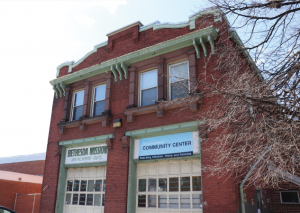
The Bethesda Mission Youth center has provided after school tutoring and other enrichment activities for children and teens since 1990. They’ll soon expand to another building to double their 75-student enrollment capacity.

On Dec. 28, 1990, in the final days of one of the most violent years in the 20th century, the Harrisburg Patriot-News ran an editorial mourning the American city. “Urban life in America is in the throes of a social meltdown,” it read. “The symptoms of decay are everywhere. Violence has become an epidemic, and many major cities will set record rates of homicides this year.”

The image of an urban dystopia proliferated in the 1980s and 1990s, as American cities—abandoned by manufacturers, forgotten by policymakers and besieged by poverty—battled unprecedented levels of violent crime.

At the turn of the 21st century, though, almost as quickly as crime rose, it began to fall. Violent crime has plummeted in almost every American city since 1990, with some cities, including Harrisburg, cutting their violent crime rates almost in half. Harrisburg recorded a violent crime rate of 2,191 incidences per 100,000 people in 1990; in 2014, it had fallen to 1,113. With the exception of homicides, almost every category of violent crime—robbery, burglary, assault, property crimes and motor vehicle thefts—has fallen by a similar magnitude.

But why? Mayors, police chiefs and other students of crime data can say with certainty that cities have gotten safer since the great crime wave of the 1980s and 1990s. How it happened is a subject of more intense debate. Increased policing, prosecution and incarceration have contributed at least partially to the decline in crime. Researchers have pointed to other, non-intuitive societal shifts that could have curbed violent behavior, including increased access to abortion and decreased exposure to lead, and changes in the economy.

Patrick Sharkey, a sociologist and crime researcher at New York University, acknowledges these influences but also offers a more encouraging, hopeful thesis for why urban spaces have gotten safer. As the criminal justice system expanded and became more punitive, Sharkey says, another force began to coalesce in America’s parks, streets and neighborhood centers. The people responsible weren’t police officers or prosecutors, but ordinary residents.

In his latest book, “Uneasy Peace,” Sharkey calls these people the “new urban guardians.” He says that local nonprofit groups successfully fought crime by building playgrounds, opening youth centers, organizing neighborhood watch groups and picking up trash. As they slowly reclaimed their neighborhoods, working long hours with little to no pay or recognition, these citizens made a crucial, but often overlooked, contribution to safety in American cities.

“The changes that took place weren’t just about the expansion of the prison system and the increasing aggressiveness of police,” Sharkey said during a recent conversation at Midtown Scholar Bookstore, where reporters interviewed him about his research. “It was also a mobilization among the residents and organizations in the communities hit hardest by violence. That has been completely left out of discussions about why violence fell, but I think it’s a crucial part that deserves much greater credit.”

Sharkey explained that, since the 1990s, the nonprofit sector exploded as residents in neighborhoods mobilized against violence. New groups focusing on youth mentorship and neighborhood enrichment proliferated. This trend was partly a direct response to rising crime rates, but was also enabled by a separate expansion in private, philanthropic wealth, possibly due to strong gains in the national economy in the 1980s.

With the help of a research assistant, Sharkey tried to quantify the effects of neighborhood nonprofits on crime reduction. Drawing on data from the National Center for Charitable Statistics, the pair determined that, in a given city with 100,000 people, every new organization formed to confront violence or build stronger neighborhoods led to about a 1-percent drop in violent crime.

“These organizations were designed to take back city streets, not through law enforcement but by building stronger communities, and they were extremely effective,” Sharkey said.

Someone to Trust
As Emily Badger writes in the New York Times, Sharkey’s findings validate what community leaders across the country know to be true about the relationship between neighborhood development and violent crime. While many of the active nonprofit organizations in Harrisburg aren’t explicitly involved in violence prevention, their leaders recognize that, by providing essential services to their community—including mentorship, education and beautification—they’ve become participants in the fight against crime.

“Nurturing relationships and building community is an absolute prerequisite to keep violence from occurring,” said Scott Dunwoody, executive director of Bethesda Mission. “We’re reaching out into the community one man, woman and child at a time.”

Founded in 1914 as a men’s ministry and homeless shelter, Bethesda Mission began to expand its programs in Harrisburg at the same time as crime rates climbed. In 1983, it opened a women and children’s shelter on S. 18th Street; in 1990, it started a youth center in an old fire station on Herr Street. Whereas its shelters offer residential programs, Bethesda Mission’s youth center bleeds into the community surrounding it. Today, more than 75 kids from the 1st through 12th grades attend programs there after school, on weekends and throughout the summer. Volunteers help students with homework, teach cooking classes and supervise sessions in the gym or computer lab. These services are so in demand that Bethesda Mission has made plans to expand its youth center into an adjacent building next year, which will allow it to double its programming capacity.

Both Dunwoody and Serina Brown, director of the Youth Center, say they’re in the business of building relationships and strengthening families, not policing the behavior of kids and their parents. But Brown said she wasn’t surprised to hear about the causal relationship between community nonprofits and violent crime rates. While tutoring sessions and leadership classes may not look like violence prevention techniques, they do offer kids attractive alternatives to criminal activity.

“When you’re with someone through the good and the bad in life, it would make sense that it would prevent crimes because you have someone to trust,” Brown said. “Imagine if every family in the city had that.”

When asked how the center measures its efficacy, Dunwoody cites a fact about graduation rates. Over the course of five years, 86 percent of the students who participated in Bethesda Mission’s youth programs graduated from high school—much higher than the city’s district-wide rate of 55 percent. He also points to the North Allison Hill neighborhood where the center is located. Quiet, leafy and well maintained, North Allison Hill has less visible blight and fewer incidences of violent crime than the South Allison Hill neighborhood close by.

“We don’t want to brag and say we’re the reason why this neighborhood is stable, but we are a big part of it,” Dunwoody said. “Centers like this can have an immense role in giving life to a community. It’s the heartbeat.”

Common Sense

Some neighborhoods have anchoring institutions and physical spaces like the Bethesda Mission Youth Center where residents can meet and build relationships. Others have anchoring organizations for citizens to address their shared challenges. These groups, many of which rely on volunteers, are responsible for countless cosmetic and institutional enhancements across Harrisburg.

In 2008, residents in Camp Curtin formed Camp Curtin Neighbors United to address problems of blight and trash, crime and economic development in their Uptown neighborhood. The all-volunteer organization held beautification days, mapped blighted buildings and drafted a strategic plan to outline short-term and long-term neighborhood objectives. They opened a tool co-op on the grounds of Wesley Union AME Zion Church and later started a grant-funded pre-school in the church’s basement. It currently employs two teachers who care for 15 children five days a week.

Jean Cutler, a founding member and former president of CCNU, said that the neighborhood organization has become an organized, effective forum for citizens to voice their needs and find recourse. By investing in education and beautifying the neighborhood through tree plantings and trash cleanups, Cutler and the other members of CCNU hope that Camp Curtin will shed its reputation as one of Harrisburg’s most distressed, crime-ridden neighborhoods.

“Making the environment around you better is a huge part of trying to stop the crime,” Cutler said. “People will be more respectful of the neighborhood, and we will have lower tolerance for outliers. I’m not a criminologist, but most of this is common sense.”

According to Sharkey, that’s sound logic. He explained that having more eyes and ears in public spaces reduces the opportunities for criminal activity and signals to would-be criminals that a neighborhood isn’t theirs for the taking. Essentially, residents must respond to crime the same way they might regard at an unsightly building project or waste site: by saying, “Not in my back yard.”

“Violence doesn’t come out of nowhere; it comes when a place is abandoned,” Sharkey said. “It comes when a place empties out, when there are not strong institutions, when the community isn’t organized, and it’s left on its own.”

Just ask Jeannine and Jeremy Domenico, who literally have eyes on the street from their residence in South Allison Hill. The Domenicos moved into their rowhome on South Summit Street, a narrow one-way that connects the busy thoroughfares of Derry and Mulberry streets, just before Christmas 2013. When they first bought their home, Jeremy (who goes by Jay) wouldn’t let the couple sit in the living room that looks out onto the street. They watched TV and took visitors in another room on the first floor, which was set back from the main entranceway, closer to the backyard. That way, Jay said, any stray bullets would travel farther to hit them.

“There were gunshots every night,” he said. “Our main concern was drive-bys, and we figured, if we were in the back room, there would be four walls for bullets to go through.”

The Domenicos may not have landed in a neighborhood of choice in 2013, but the neighborhood was theirs—and they wanted people to know they were there to stay. By their account, they spent the better part of the next year trying to build a community. They hosted their first block party, which is now an annual event. They led trash cleanups and gained local fame for the elaborate decorations they put on their doors for every holiday – as well as for the four security cameras that keep watch over the front of the street and the alley behind their home.

Over time, they say, the space around them transformed. They no longer had to lead trash pickups—neighbors were doing it themselves. Gunshots sounded less frequently, and drug dealing no longer took place on their street. Cars still speed down the street the wrong way, but the activity that drove them inside their homes has dramatically fallen.

“It’s easy to go inside and shut your door when you see bad behavior,” Jay said. “It seems like, if you live in a bad area, you get terrorized into staying in your house. But, when we’re outside working, we messed up people’s game plans.”

Repaying a Debt

The idea that social cohesion can inoculate neighborhoods against crime isn’t lost on law enforcement officials.

Capt. Gabriel Olivera, chief information officer for the Harrisburg Police Bureau, said that line of thinking is “absolutely” consistent with trends he’s seen in the city over the past two decades. He pointed to Harrisburg’s Midtown neighborhood as one example. In the 1990s and early 2000s, he said, the intersection of Green and Muench streets was known among police officers as “Green and Murder.” Over time, as residents bought homes, beautified streets and formed a neighborhood watch association, the police bureau received fewer calls to the area.

The progress that’s been made against urban crime has relied, in part, on vast amounts of unpaid labor by volunteer residents. If crime across the country is going to continue its downward trajectory, Sharkey said, the people who fight it at every level ought to be compensated.

“The people who volunteer time to make communities safe are doing work on behalf of their city,” Sharkey said. “When they’re given respect and that role is valued, it makes a huge difference.”

Mayor Eric Papenfuse said that he finds that argument compelling, and paying the work of community organizers is something that the city can consider in the future.

“It’s an intriguing concept, and one that warrants thoughtful consideration,” he said. “There are some serious questions surrounding implementation, but I’m willing to explore them and possibly put forth some funding in next year’s budget.”

But not all of Harrisburg’s urban guardians agree that they should be paid for their work.

Claude Phipps, a community organizer who lives in Bellevue Park, has seen local institutions wax and wane in Harrisburg his whole life. Growing up at 6th and Peffer streets, he watched the city reel from the devastation of Hurricane Agnes in 1972 and from financial hardship that followed. He reckons that the city hit “rock bottom” in the early 2000s and made a turn for the better in 2010.

Today, Phipps said he’s happy to volunteer his time as a neighborhood watch coordinator and conflict mediator. He sees it as “repaying a debt” to the long-ago neighbors who guarded over him as a child.

Cutler, the Camp Curtin advocate, said that citizens ought to have “sweat equity” in their neighborhoods.

“When you fund salaries, there’s no money left for projects,” she said. “There needs to be some volunteerism, because, bottom line, you’ll need money to do these projects.”

I posed the question of pay to a coalition of faith-based community leaders, who were meeting in the chilly basement of Derry Street United Methodist Church to plan a summer camp for children. They stressed that the diminishing funds in a crowded nonprofit sector made it hard to ensure programming year to year.

Bill Jamison, a leader of the Allison Hill Ministry, which provides after-school mentoring, outdoor education and field trips for students, said that he earns $17,000 a year while working 60 hours a week. Some years, his program receives more funding; other years, it gets less. He wouldn’t object to more funding for his volunteers, but he also knows his work is too essential to cease over money disputes.

“If we take these services away, that’s where crime comes from,” Jamison said.

But Nashon Walker, CEO of Hoodrise Global, a mentorship program that works in Harrisburg city schools, thinks that community leaders and mentors should demand more pay for their work.

“Inner-city outreach has been underfunded and undervalued,” Walker said. “I don’t have a poverty mentality.”

Walker also pointed to an irony that has led politicians and researchers across the political spectrum to call for criminal justice reform. America’s incarceration spree, effective though it may have been in curbing criminal activity, has borne immense social and economic costs.

“This country pays billions to incarcerate,” Walker said. “Why can’t we pay now to set people free?”

When presenting his research, Sharkey is careful to note that America’s progress against crime is tenuous. Many cities across the country are seeing upticks in violent crime after years of decline. This crossroads, he said, should force American lawmakers to trade in the country’s punitive criminal justice policies for programs that focus on reinvestment and economic development in cities. The good news is that these programs could look a lot like what is already in place in cities like Harrisburg, where neighborhoods self-police by tending to their public spaces, their children and their shared social bonds.

“This is how violence is confronted in a sustainable way without the collateral costs of locking up half the community’s population,” Sharkey said. “It’s an alternative model, and it should be the model.”

Continue Reading

Critical Condition: Harrisburg’s first responders toil as their building decays around them.

Drippy ceiling tiles, crumbling cement and a faint pong of marijuana—all are part of a day’s work at the Harrisburg Public Safety Building.

The space housing the police and fire bureaus, located on the first block of Walnut Street downtown, has reached the end of its natural lifespan, according to Mayor Eric Papenfuse. The city recently decided not to invest more money in the building and is actively scouting relocation sites.

But until the city identifies an alternative location for almost 200 employees, its first responders—and the administrative staff that supports them—will continue to work in what Papenfuse calls “substandard” conditions.

The vast majority of the building’s employees are police officers and parking enforcement agents who spend their days off site, said Joni Willingham, Harrisburg’s human resources director. Almost 30 administrators, including police and fire chiefs, work there full time.

What’s it like to report for duty every day?

“It’s the equivalent of going on vacation and coming home to a dirty house,” Capt. Gabriel Olivera, the Police Bureau’s public information officer, said during a recent tour of the building.

Small Investments

Mattea Macri has watched the building deteriorate during the 33 years that she’s worked for the bureau.

“It’s dirty,” she said. “There’s problems everywhere—leaks, one room is hot and another is cold.”

The leaks, which manifest as brown rings and waterlogged blisters in the acoustic ceiling tiles, are most numerous in the detective offices on the building’s third floor. Gaps in the ceiling mark where tiles were removed for water damage, and employees use everything from trash cans to coffee cups to catch the runoff.

Olivera says that leaks in the third-floor forensics lab and second-floor records office have never compromised police procedures. Harrisburg police only use their forensics space to run fingerprints and send all other lab work to a state-run facility. And Olivera said that the police department has never lost paper records to water damage.

What’s more hazardous, he said, is the ceiling in the basement parking garage, where crumbling cement and drywall has fallen and damaged personal vehicles.

The building also circulates heat poorly, leaving some rooms uncomfortably hot and others frigid. In the winter, some offices have recorded temperatures as low as 63 degrees, Olivera said.

Ventilation also partially accounts for the faint odor of marijuana in the first and second floors. Olivera said it’s a product of seized drugs stored in the first-floor evidence room. Officers staffing that room recently had standing fans directing the stench outside.

Though the city has decided not to make capital improvements to the building, it still will make small investments in repairs and maintenance, according to city Engineer Wayne Martin.

Olivera identified some areas that have seen recent upgrades, including a hallway where carpet was replaced after the previous carpet became “dangerous.”

But many of the recent enhancements were completed with donated goods and labor. A local Eagle Scout refinished an interview room on the third floor. Down the hall, volunteers from the Rotary Club renovated and furnished a family waiting room.

In some cases, officers take maintenance into their own hands. Olivera pointed out two offices on the first floor where sergeants replaced flooring, applied fresh paint and installed donated desks.

“They just got tired of how it looked,” he said.

When asked if he thought that the workspace conditions affected officer morale, Olivera answered with a definitive “yes.” But he declined to elaborate and insisted that officers would not allow their work quarters to affect public safety.

“In spite of all this, our officers come in every day to do the work they signed up to do,” Olivera said.

Too Big

Olivera hopes that the Police Bureau will downsize its offices in its next move. He said that the force employed close to 200 officers when it moved into the building in 1981. Today, the full-complement rank is limited by Act 47, a state statute that governs financially distressed municipalities. The police force has a capacity of 157 officers but currently operates with 142.

Put simply, the building is too big for the current force, Olivera said. He thinks smaller quarters would alleviate the burden of upkeep and repairs, especially since the city has reduced its maintenance staff under Act 47, he said.

Papenfuse attributed the current condition of the building to years of neglect under former Mayor Steve Reed’s administration. The city decided in 2015 that it would no longer make capital improvements to the building.

Martin, the city engineer, defined a capital improvement as a repair, such as a roof replacement, that would extend the life of the structure.

Once the city relocates its public safety employees, it will likely seek out a lease agreement with a private sector company, Papenfuse said.

Under that agreement, a private company would bear the cost of renovations in exchange for a nominal rent fee from the city.

City Council recently rejected a similar proposal with Eastern University, a Christian college that wished to renovate and rent space in the City Government Center’s unfinished basement.

Papenfuse is skeptical that the city will find many bidders for the basement, but thinks it will have more success fielding proposals for the Public Safety Building. Since it’s a complete, free-standing structure, companies will have more options for how to renovate and use it, he said.

That’s good news to Fire Bureau Chief Brian Enterline.

“This is probably the best building in the city, to be repurposed into something else,” Enterline said.

Continue Reading

Eye in the Sky: Harrisburg police brief council on helicopter patrols.

Tonight, Harrisburg City Council heard from city police about recent helicopter patrols.

A helicopter hovering over the city last week helped law enforcement officers capture weapons, seize drugs and deter shootings, Harrisburg police officials said tonight.

Police also said that residents should expect additional flyovers in the future.

A helicopter patrolling Harrisburg late Wednesday and Thursday last week drew questions and complaints from many residents. In a tweet, Capt. Gabriel Olivera called it a “proactive policing” technique but offered no other details.

Tonight, police appeared at a City Council meeting to defend so-called “Operation Helicopter” as a means of supporting street crimes officers on the ground.

Police Chief Thomas Carter said that the bureau deployed the helicopter after a spate of shootings in the city, many involving juveniles or shots fired into homes. He said that helicopters can help deter crime and assist ground officers tracking down suspects.

Carter told council that the outcome of the helicopter patrol was “very good.” No shots were fired on streets or into residences on either night of the patrol, and the police were able to seize cash, heroin and firearms from criminals, he said.

He conceded that residents complained about the noise and light the helicopter generated, but said that the outcomes of the operation make it worth repeating.

“Citizens deserve to be policed in the best way possible,” Carter said. “We will see more flyovers.”

Only Harrisburg police, the state police and the mayor knew about last week’s operation in advance, since, according to Carter, announcing patrols makes them less effective.

“We didn’t want to show our hand,” he said.

Mayor Eric Papenfuse explained that the patrols were part of an ongoing partnership with the Pennsylvania State Police, which started a three-month collaboration with Harrisburg’s street crimes unit in September. Papenfuse said that residents can expect to see one or two more patrols before the partnership ends next month.

Olivera said that the helicopter bore no extra cost to Harrisburg or the state police. The fuel costs and wages for last week’s patrols were already included in the state police budget, he said. He did not say how often helicopter patrols will take place in the future.

Olivera also insisted that the aircraft was not actively surveilling activity on the ground. Instead, its pilots responded to calls from ground officers and offered them backup as they investigated incidents.

“It was constantly moving in response to calls,” Olivera said.

Residents were surprised and even frightened to see the helicopter roaming the night skies last week.

At tonight’s council meeting, Uptown resident Kim Jones called the patrols “a nightmare.” She said that the spotlights illuminated the inside of her house until midnight, keeping her infant daughter awake.

Even so, she said she’ll tolerate the patrols if they help to keep the city safe – and if the helicopter moves across different neighborhoods.

“They need a better plan,” Jones said about the helicopter’s flight path. “Don’t have it camped out in one spot. Spread it out.”

On the Nextdoor social media site, which creates neighborhood-specific chat rooms, one Uptown resident said the aircraft made her feel “uneasy,” and others complained about the noise and light.

Papenfuse said that the city has heard from many citizens who want greater police presence in their neighborhoods. He claimed that he got 20 such complaints last week alone, but received no negative correspondence about the helicopter patrols.

“I recognize that this might seem bold or dramatic, but I hope people understand it’s to make the streets safer,” Papenfuse said.

Continue Reading

Brooklyn to the ‘Burg: Gabriel Olivera has risen through the ranks to become the city’s first Latino police captain.

Screenshot 2016-08-24 20.53.15On a late Tuesday afternoon on 2nd Street, Thank Blue, this past July’s event to recognize Harrisburg’s police, was coming to an end. The music and radio DJs rumbled in the distance from where I sat in Café Fresco, waiting for Harrisburg Bureau of Police Capt. Gabriel Olivera.

 As he arrived, he stopped for brief, friendly chats with staff at the restaurant. Looking polished in a stylish and modern suit, you’d never know he was a police officer if you passed him on the street.

Olivera came to Harrisburg from Brooklyn in the early ‘90s to provide his three then-young children with an upbringing free of the violence and crime in his lifelong home in New York. His neighborhood was the birthplace of the crack epidemic on the East Coast and saw 300 homicides per year, Olivera said.

 “I got to see a lot of violence growing up, either personally or indirectly,” he said. “You learned how to survive.”

 When his daughter, in second grade at the time, came home one day and told him one of her classmates’ brothers was killed as though it was no big deal—she’d told him of similar incidents in the past—he knew it was the final straw.

 Olivera’s mother had moved to central PA earlier, settling in Selinsgrove, and, although he wanted to be closer to her, he still wanted to be in a city, albeit one very different from the Big Apple.

 “To this day, I am still amazed at what’s not available on weekend or late nights or holidays,” Olivera said, traces of a New York accent still in his voice.

Olivera was a plumber in New York, so he applied for similar jobs in this area. He received a letter about taking the police entrance exam but didn’t think anything of it until the incident with his daughter’s classmate. 

“I decided that I wanted to do something to make [things] safe for my kids,” Olivera said.

In 1994, he began on the force where all officers do—uniform patrol. For about seven years, he patrolled the streets during the night shift and spent time with his kids during the day when they weren’t in school. 

“It was kind of funny because my kids weren’t sure what I did,” he said. “They knew I was a police officer, but I was always home. They would go to sleep at nine in the evening, and I would leave at 10 o’clock at night, and when they got home, I would be there.”

Olivera moved around the force after leaving patrol, first to auto theft investigations. Next, he worked as a school resource officer, where, after four years, he was promoted to corporal to supervise that unit. 

Coming full circle, he went back to supervise both the uniform patrol and auto theft units. He moved around to supervise other units and helped start the county gang task force in the early 2000s. Surpassing his career goal of becoming a lieutenant, he was named acting captain in September 2015 and promoted to full rank in January.

Olivera has also been a Dauphin County crisis negotiator since 2004, crediting his brains-over-brawn upbringing and bilingualism (he’s Latino and speaks Spanish) for his success in that position in talking to individuals and getting them to safely surrender. 

Over the course of his career, Olivera has evolved with Harrisburg, prioritizing his community-focused approach to try to make it a better place, acknowledging gentrification in some neighborhoods and decline in others.

“You have all the issues—and dynamics of a large urban city but in a big town setting,” Olivera said. “There’s enough happening here that you become a very experienced officer very quickly.”

In light of last month’s police-involved shooting of Earl Pinckney in Harrisburg and other racially charged tensions with police nationally, Olivera emphasized the importance of being involved in the community to address these issues. He also pointed out that the media sometimes presents a generalized picture of police.

“The reality is that our officers have a really good relationship with the community,” he said. 

Dealing with fewer personnel—down to 128 people from 186 when he started—and loss of resources, Olivera works closely with his colleagues and friends Chief Thomas Carter and Capt. Deric Moody to continually improve the force.

Keeping his staff informed and motivated is key, especially during times of heightened stress and particularly demanding work. Olivera still goes out on search warrants and gets in uniform from time to time to maintain perspective for what his staff is going through. 

Plus, as the first Latino captain in the department, his role as community liaison is more important than ever.

“I think a lot of times the Hispanic community feels that they don’t have a voice,” Olivera said.  

He recalled the lasting connections he made with community members when working on Allison Hill and how humbled he felt at the Latino presence during his swearing in as captain.

The presence of community dialogue has been vital in recent weeks for Olivera as the bureau has handled the investigation of Pinckney’s death. 

“I think, unlike many other places where they’ve had violence, I think we’ve created room for dialogue,” he said. “I think everyone’s on the same page where we want to see if we can address things. We want to improve things.”

Author: Rebecca Oken

Continue Reading

February News Digest

Budget Passed Again

For a second time, Harrisburg has passed a 2016 budget, which was largely unchanged from the version approved last year.

By a 6-1 vote, City Council last month OK’d a $60.4 million spending plan that adds 36 new positions, most in a newly created Neighborhood Services division. Councilwoman Shamaine Daniels was the sole member to vote no, stating that she believed the budget total was too high.

Council passed a budget in December, but reopened it a month later after three new council members took their seats. The new version is almost identical to the original, but it does give raises to a handful of city workers pending a study of pay equity in city hall.

The budget factors in about $3 million from a planned tripling of the local services tax (LST) to $156 per year for each person who works in Harrisburg and earns more than $24,418 annually. At press time, council still needed to approve the LST increase.

Commonwealth Court Judge Bonnie Leadbetter, who must approve changes to the city’s financial recovery plan, already has signed off on the tax hike.

Harrisburg Mayor Eric Papenfuse regards the LST increase as a way for commuters to contribute more to the city’s financial stability and to fund improved services, particularly for sanitation and road maintenance.


Stolen Firearms

Three antique guns were stolen from the National Civil War Museum in Reservoir Park last month, taken from an NRA-sponsored exhibit there.

A pair of Colt revolvers, dating to 1860 and 1861, was owned by the city, while an engraved Henry rifle from 1861 was on loan from a private donor, according to museum CEO Wayne Motts.

All three firearms were claimed to have once belonged to Simon Cameron, a Harrisburg native who served as President Abraham Lincoln’s secretary of war at the beginning of the Civil War. They were on display together as part of a “Guns & Lace” exhibit that was sponsored by a $25,000 grant from the National Rifle Association.

Police Capt. Gabriel Olivera confirmed that the thief made entry by breaking through a window and then breaking into the display case to remove the guns. The theft was not detected until hours later due to an apparent failure in the museum’s alarm system. Olivera added that the precise nature of the security lapse was not yet clear.

Olivera said surveillance footage captured images of a male thief, but that the images are not clear and that police are not yet releasing them because they “would not be of any use.” Police have not ruled out the possibility of an inside job, Olivera said.

The city released the following information identifying the weapons:

  • A .44 caliber M1860 Colt Army Revolver with serial number 11708.
  • A .36 caliber Colt M1861 Navy Revolver with serial number 1825.
  • An M1860 Henry Repeating Rifle with serial number 115, manufactured by the New Haven Arms Company and engraved with the word “Cameron” on the receiver.


Council Rethinks Pot Penalties

Harrisburg’s marijuana laws may soon change as City Council last month introduced a bill to reduce penalties for possession of the drug.

The city administration’s proposal would change possession from a misdemeanor to a less-serious summary offense and ease penalties to $100 for a first conviction and $200 for a second. After a third offense, possession again would be considered a misdemeanor crime.

Mayor Eric Papenfuse supports the change, saying too much city police time is occupied by low-level drug cases. He said he also doesn’t believe the change would encourage drug use, a charge leveled by some opponents.

At press time, a council committee was slated to consider the issue for further action.


Serious Crime Declines

The rate of serious crime in Harrisburg fell significantly last year, the Police Bureau said last month.

“Part 1” crimes declined by 17 percent in 2015 compared to 2014, the police said. These crimes include murder, rape, assault, burglary, theft and arson.

Of these, robbery fell from 283 to 228 reported incidents; assault decreased from 1,328 to 1,233 reported incidents; and theft dropped from 1,235 to 875 incidents.

Harrisburg tallied 19 homicides in 2015, the same as in 2014. However, three of those murders were categorized as self-defense, meaning that criminal homicides actually went down.


New Home for City Islanders 

The Harrisburg City Islanders will make FNB Field (formerly Metro Bank Park) their home stadium for the 2016 season.

The city-based soccer team will play 10 home matches at the City Island ballpark, which also is the home stadium for the Harrisburg Senators. Another five home matches will be played at Clipper Magazine Stadium in Lancaster.

For the past two years, the Islanders have been looking to move out of the Skyline Sports complex, also on City Island, because the team considered it too small and lacking in basic amenities, such as bathrooms.

Mayor Eric Papenfuse said that the city, which owns the stadium, may benefit financially through increased ticket, sales and parking fees, especially if the move leads to greater attendance at Islanders’ matches.

Separately, First National Bank last month announced the stadium would be renamed FNB Field, as F.N.B. Corp. recently merged with Metro Bank’s parent company, Metro Bancorp.


Housing Sales Improve

The Harrisburg area continued to see improvements in housing sales, the Greater Harrisburg Association of Realtors (GHAR) reported last month.

Region-wide, sales totaled 557 units in January, compared to 501 in January 2015 and 448 in January 2014. The median price increased to $152,000, $4,000 more than in the year-ago period.

In January, Dauphin County tallied 185 sales at a median price of $134,000, compared to 177 units and a $132,000 median price in January 2015.

In Cumberland County, 201 units sold for a median price of $174,000 against 179 units at a price of $160,800 in January 2015, GHAR said. Perry County sales were also up, totaling 27 units for a median price of $147,000 versus 18 units at a price of $144,950 for the year-ago period, according to GHAR.


So Noted

Bricco, a downtown Harrisburg restaurant, plans a series of events and specials to celebrate its 10-year anniversary. These include special pricing, dining events and a new menu. For all the details, visit www.briccopa.com.


Changing Hands

Berryhill St., 1249: R. Eisner et al to E. Graves, $37,000

Berryhill St., 2116: Secretary of Housing & Urban Development to M. Wijaya, $31,000

Cumberland St., 1322: E. Brinkman to D. Brotz, $114,900

Derry St., 2416: S. Moose to I. Class & Y. Aguayo, $45,000

Derry St., 2513: L. Parker to R. Tortorelli, $59,900

Edgewood Rd., 2300: B. & C. Mark to T. Paradise, $195,000

Green St., 1425: M. Araujo to J. Miller, $95,000

Green St., 1701A: R. Myers to J. & V. Wills, $180,000

Green St., 2959: D. Jamieson to D. & V. Moore, $202,900

Hoffman St., 3214: M. Angelo to J. Gantt & H. Mahmood, $109,900

Hunter St., 1609: T. Vo to D. Vo, $160,000

Kelker St., 422 & 434, 1821 Fulton St. and 1820 N. 5th St.: Hamilton Health Center to Christian Recovery Aftercare Ministry, $250,000

N. 2nd St., 321 & 209 South St.: B. Hattingh to VMV Smart Solutions LLC, $425,000

N. 2nd St., 1509: J. Tang to Vortex Properties, $105,000

N. 3rd St., 3205: Secretary of Veterans Affairs to H. Pontius, $42,000

N. 4th St., 3211: J. Kardisco to D. Cameron, $89,000

N. 17th St., 1001: Miracle Group Inc. to E. Price, $80,000

Parkside Lane, 2906: R. & V. Eaton to R. & K. Riley, $210,000

Penn St., 1522: S. Faridi to M. Lindsay, $133,000

Regina St., 1414 & 2139 N. 4th St.: SNL Realty Holdings & Touch of Color to NJR Group LLC, $71,500

Rudy Rd., 1916: R. Wagner to J. Burno, $53,000

Rudy Rd., 2413: J. Boutselis to PA Deals LLC, $55,000

Rumson Dr., 2586: PA Deals LLC to J. Tucker, $80,000

S. 19th St., 14: C. Butler to M. Martinez, $45,000

S. 25th St., 729: R. Wylie Jr. to 729 25th Street LLC, $170,000

S. 26th St., 733: T. Navas to E. Lowe & S. Fuentes, $72,000

State St., 213: Douglas, Hassler & McKillop to Legion Premier Properties LLC, $247,000

Susquehanna St., 1725: M. Gojmerac & C. Roma to B. & K. Martin, $94,000

Verbeke St., 309: S. Rosso to R. Green & D. Govender, $113,000

Wyeth St., 1406: A. Van Dyke to PA Deals LLC, $82,000


Harrisburg property sales for January 2016, greater than $30,000. Source: Dauphin County. Data is assumed to be accurate.

Continue Reading