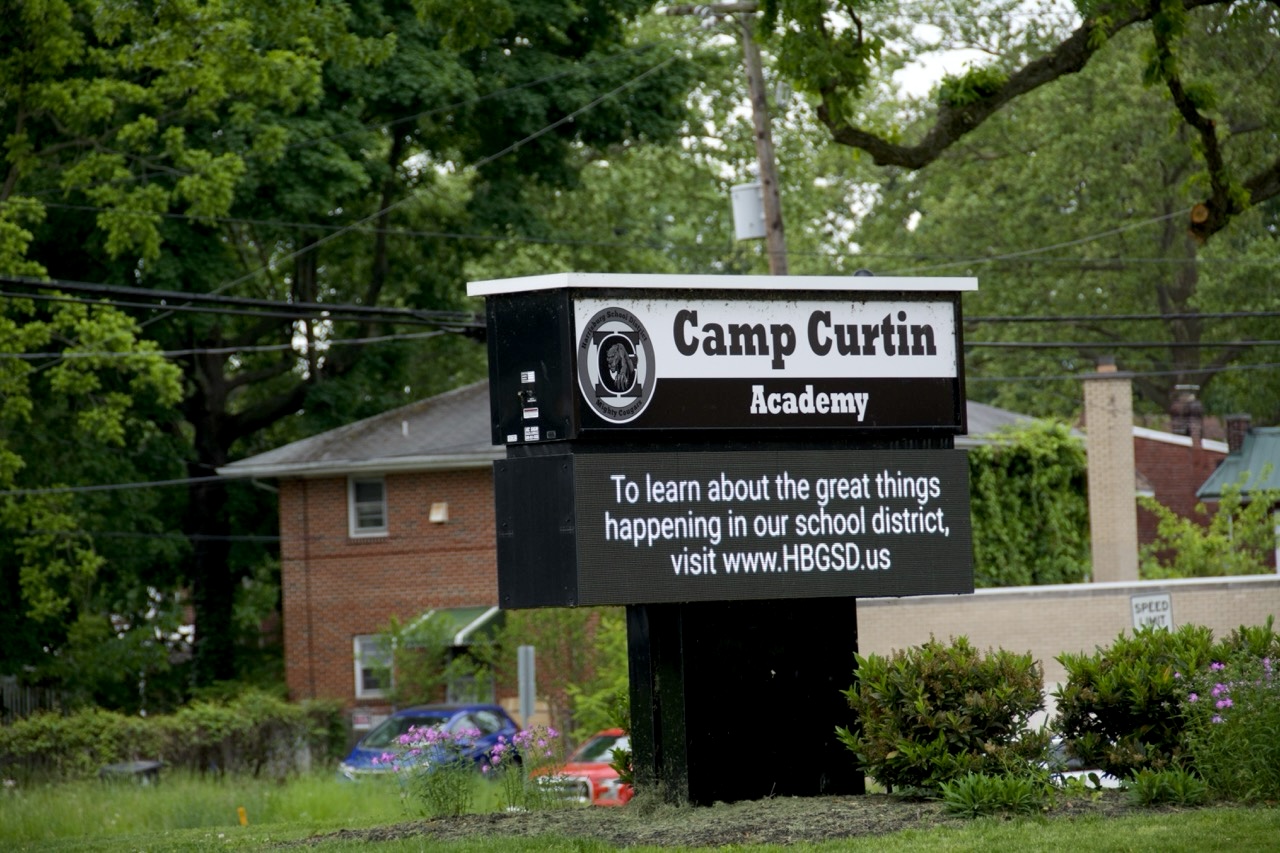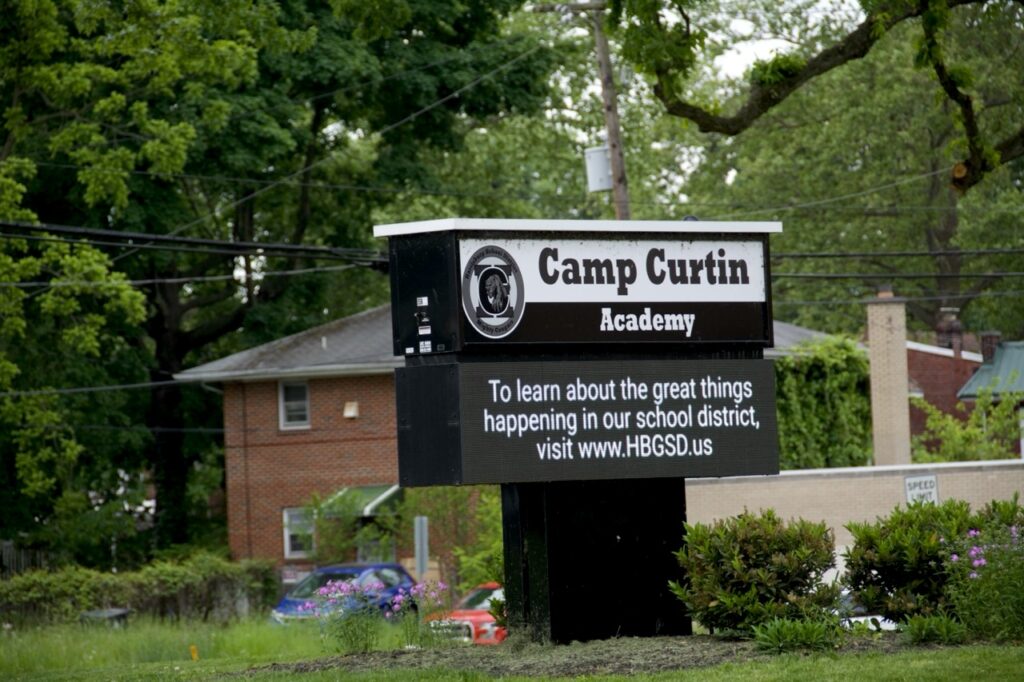
Camp Curtin Middle School sign
The Harrisburg School District has a hired a new principal for its flagship middle school campus.
Ryan Jones, formerly the principal at Marshall Math and Science Academy, will lead Camp Curtin next school year, following a 7-1 vote to approve his hire at a school board meeting Tuesday night.
“We have to have strong leaders to lead our children, and I think he’s done a great job at Marshall Math and Science,” said board president Rosyln Copeland.
Jones will begin his role effective July 1 with a salary of $131,648. He replaces Darnell Montgomery, Camp Curtin’s principal since 2023, who was tapped to serve as assistant principal at John Harris last month under new principal Roma Benjamin.
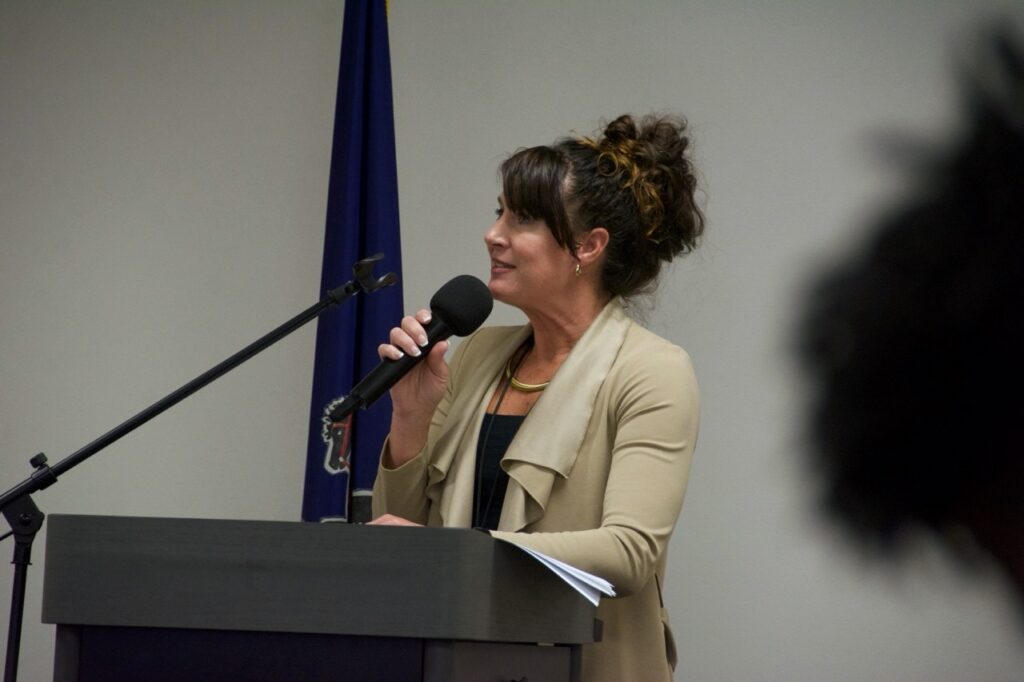
Chief Financial Officer Marcia Stokes
At the meeting, Chief Financial Officer Marcia Stokes presented an early draft of the district’s expected budget for the 2026-2027 school year in the amount of $227.7 million—not a final number as the draft uses estimates.
Stokes said that the district’s budget priorities include more support for special education and autistic support program instruction, math intervention, school clubs and tutoring programs.
The board will vote to approve the budget at a meeting later this month. The proposed budget will then be subject to a public comment period before it is ultimately adopted in June.
Stokes has recommended a 3% property tax increase this year. The district would generate roughly $37.7 million in property tax revenue with such an increase, roughly on par with the $37 million it generated in 2025-2026, per Stokes’ presentation.
“I don’t want to overtax, but I also want to make sure the board has solid financial footing,” Stokes said, noting the district’s assessed property values have been declining.
With a 3% hike, Stokes said that those with homes assessed around $54,000 (the median assessment in Harrisburg) would see an increase of approximately $31 on their property tax bills. For $100,000 assessed homes, owners would see an increase of about $73.
“Looking at whether we absolutely need it today might not be the question to ask,” Stokes said. “Do we need it five years out? Do we need it three years out? What is the cumulative impact of not doing it today?”
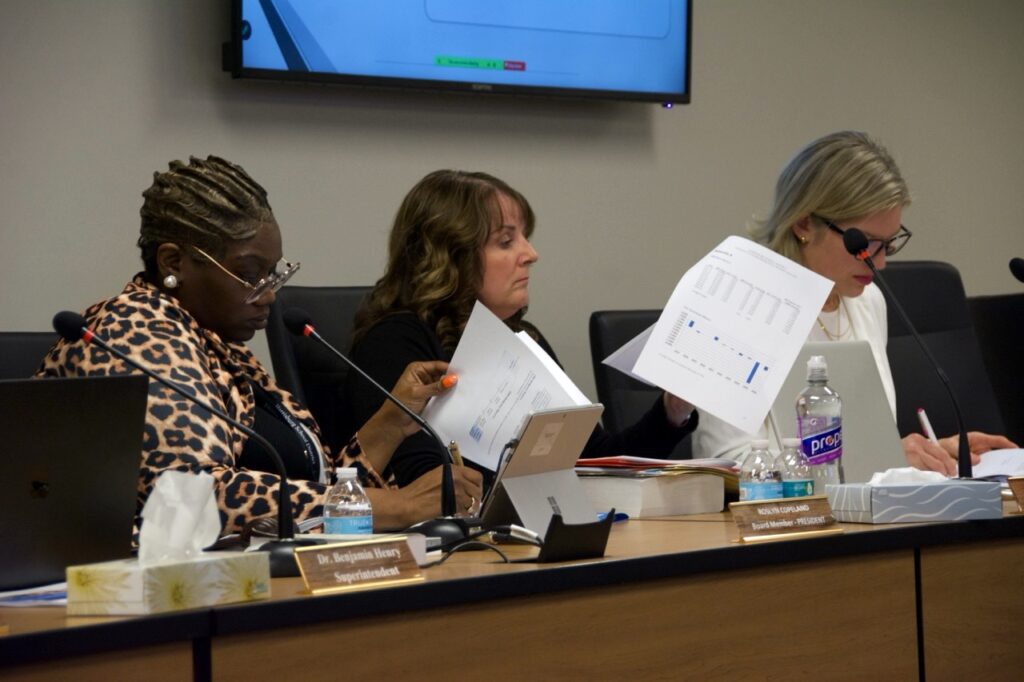
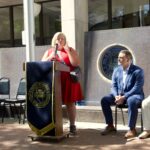
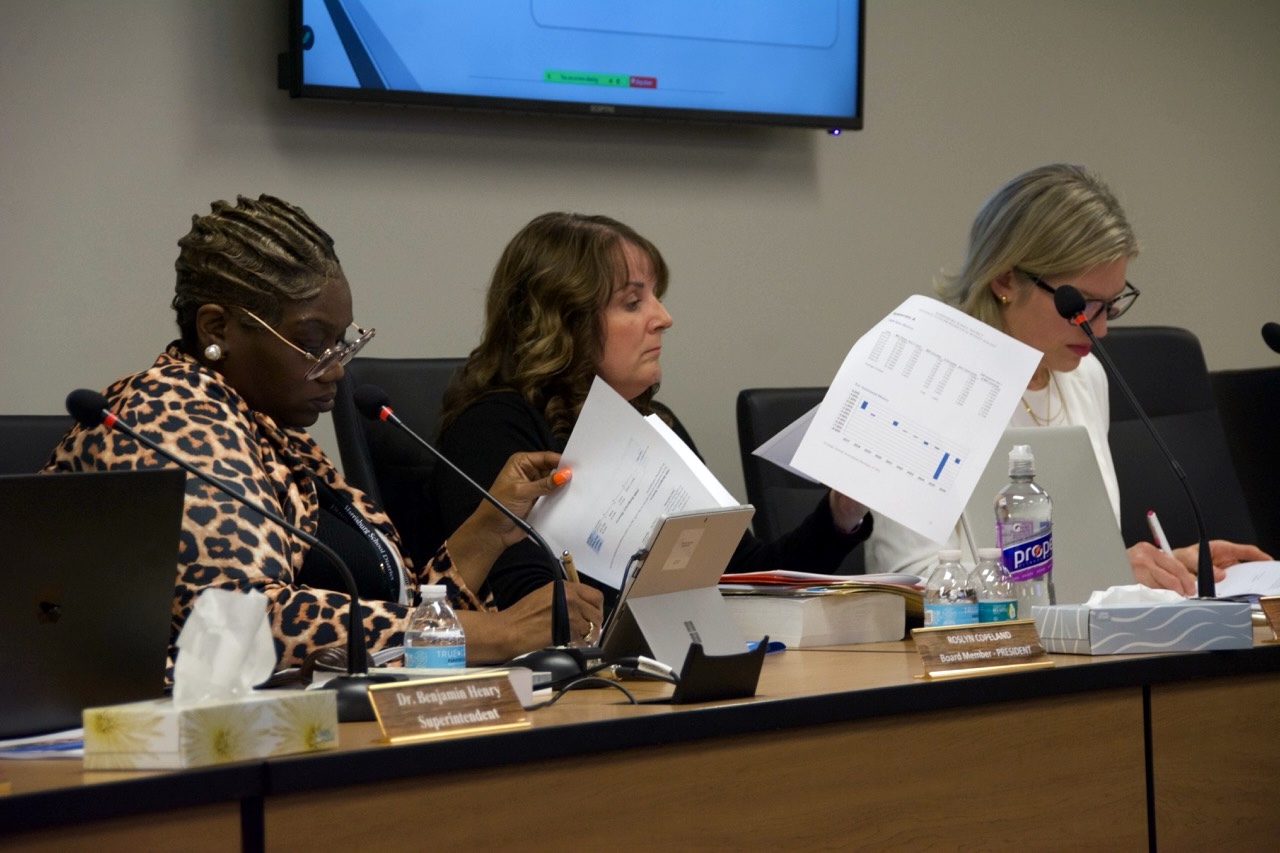
Harrisburg School Board hears budget presentation.
Board Vice President Autumn Anderson noted that raising local property taxes “crunches” the city’s limited tax pool, as 52% of properties in the city are tax-exempt. Just 48% of the city’s property owners pay property taxes, largely due to the massive impact of non-taxable state and nonprofit property holdings.
Over the last 10 years, the district has raised property taxes five times.
“As a school district, when we’re deciding whether or not to raise taxes, it’s difficult because we need to have a consistent source of revenue, which could be local taxes, but in doing that, we’re also putting more of a tax burden on our local residents,” Anderson said.
Board member Brian Carter joined the board in 2017, a year the district declined to raise taxes to not burden residents.
“We had accumulated a $20 million surplus, so we thought that we were a good standing where we didn’t have to raise taxes,” Carter told his fellow board members. “But here in 2018-2019, we were in the burden of possibly filing for bankruptcy.”
The district entered state receivership in June 2019. It exited state control last year, becoming the first district in the state to ever do so.
Stokes said that, if the district wants to increase student achievement and attendance, it must account for programs to do so in its budget.
“What do we need in place to be able to actually meet those goals?” she said.
Copeland noted that the district’s students are underfunded, and it affects their learning and their education.
More than two-thirds of the district’s budget (67%) typically comes from the state of Pennsylvania, as a result of Harrisburg’s high volume of tax-exempt government property and its high student poverty rates. While the state’s budget is officially due by June 30, it has been late in recent years. Last year, the state passed its budget in November.
The remaining third of the district’s money comes from local (27%) and federal (6%) sources.
Board member Danielle Robinson was absent from the meeting.
If you like what we do, please support our work. Become a Friend of TheBurg!