In Service: Zonta offers support for local women in need.

The poet Maya Angelou once said, “As you grow older, you will find you have two hands: one for helping yourself, the other for helping others.”

That quote summarizes well the guiding principles of Zonta International, which aims to empower women through service and advocacy.

Derived from the Sioux language, Zonta means “honest and trustworthy.” The group was founded in 1919 in Buffalo, N.Y., and today touts more than 30,000 members in 67 countries.

The Zonta Club of Hershey-Harrisburg was chartered in 1980 and meets monthly to strategize ways to achieve its goals, both at home and abroad.

Members participate in fundraising projects throughout the year, with 70 percent of the proceeds benefiting local organizations like the PA Coalition against Domestic Violence, New Hope Ministries, the YWCA and Harrisburg’s Shalom House. The other 30 percent goes to help women worldwide and provide funds to help with natural disasters.

Karen Shirey, a long-time member of the Zonta Club of Harrisburg-Hershey, describes it as a group of professionals dedicated to giving back to the community.

“Our members include retirees, educators, business owners, government employees, former military, with ages that range from 30 to 80,” she said.

Modern society hasn’t been kind to service organizations, most of which have been steadily losing members for decades. Yet the Zonta Club of Harrisburg-Hershey has managed to maintain its numbers, said Shirey. That doesn’t mean that she’s satisfied with the status quo. She’d be delighted to witness a growth spurt, especially among younger women.

“We want the energy,” she said, with a laugh.

Recently, the group hosted Aiyana Ehrman and Michelle Kime of Lancaster-based “Imagine Goods” to learn more about the business of helping female artisans create items in exchange for fair wages. During the meeting, the entrepreneurs shared a PowerPoint presentation on human trafficking. In the United States alone, it is estimated that 100,000 youth are forcefully engaged in prostitution or pornography and that one in three runaways are lured into prostitution after just 48 hours on the streets.

Zonta is also focused on violence prevention.

“Violence is a worldwide pandemic that crosses every social and economic class, every religion, race and ethnicity, with one out of every three women worldwide experiencing violence during their lifetime,” Zonta International President Sonja Honig Schough said. “We in Zonta cannot accept this.”

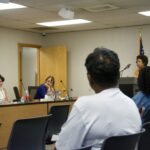
In December, the local Zonta chapter gathered on the steps of the state Capitol as part of their, “Say No to Violence Against Women” campaign, an effort to spread awareness about the issue and work with legislators to combat the problem.

Nancy Fodor, president of the Harrisburg-Hershey club, said that she became involved because she is committed to helping women who are marginalized, lack advantages or may be involved in abusive relationships.

Her goal is to provide members with monthly meetings that are enlightening, informative and interesting, while supporting causes to advance Zonta’s mission.

Denise Britton, executive director of Shalom House, described Zonta as a “blessing.”

“They raise money, contribute dollars to scholarships to young women going into business and help us with access to trainers and professional life coaches and occupational therapists who work with us for personal discipline,” she said.

Club members also help the shelter by donating their time through personal mentoring and by buying Christmas presents each year for the women and children housed at the shelter.

“They are able to break down preconceived ideas and barriers by sharing how they’ve overcome obstacles in their lives, which provides encouragement for our women,” said Britton.

Working for such worthy causes is heartwarming, but there’s also an important camaraderie among Zonta members, said Shirey.

“We’ve watched each other’s kids and grandkids grow up, and we’ve developed close bonds as a result of our commitment,” she said.

As for Fodor, she’s glad that she has been given the opportunity to serve as president and leader to such a dedicated group of women.

“What I like most about it is how hard everyone works to accomplish what we accomplish,” she said. “It takes time and commitment and everyone in the club participates. They really give it their all.”

For more information about the Zonta Club of Harrisburg-Hershey, visit www.zonta-harrisburghershey.org or their Facebook page.
Continue Reading

Think Global, Live Local: Students from around the world take up residence at International House.

Burg in Focus: International House Harrisburg from GK Visual on Vimeo.

On a cold, mid-winter evening, a small group of strangers were warming up to each other at Harrisburg’s International House.

Sharing names, occupations and smiles, they sloughed off their winter layers and piled around a table. Plates of vindaloo, naan and basmati rice sat before them. It was time for the “Signature Series,” a free event, open to the public, featuring a speaker from a different country each month. On this particular Thursday, Darahas Sontyana took the stage to discuss his native country of India.

Sontyana, a junior at the University of Pittsburgh, immigrated to the United States with his parents in 1999. He showed the audience a PowerPoint and talked about India’s culture and traditions, but much of his talk was about his bi-cultural experience growing up.

“At home, I was Indian, but everywhere else, I was American,” he explained to the room.

Sontyana’s story is representative of the venue where his talk took place.

I-House, as it’s commonly called, is where cultures can’t help but intermingle. It’s where a Chinese student and a Danish student can live right next door to one another or an American student and a Korean student can become friends playing ping pong. It’s where college students from all over the world participate together in local sporting events, festivals and museum visits.

“I can experience cultures from all around the world without having to take a plane,” said Verley Valérius, a 24-year-old Haitian student who’s a junior at Penn State Harrisburg.

A project of Harristown Development Co., I-House is one in a family of 17 institutions across the globe that operate under the same name and mission. All are independent nonprofits that provide long- and short-term living accommodations for students in a fun and friendly intercultural environment.

Since its 2002 conception, the Harrisburg location has hosted students from 94 nations, going through two major expansions across three complexes downtown. Its accommodation numbers have multiplied by a factor of more than 10, climbing from 14 to 150 beds.

“And all you have to be to live at the I-House is a student,” said manager Kevin Markey.

Americans are welcome, too, he said. In fact, when he lived and worked at the house as a resident assistant, he made friends across the globe, two of whom were in his wedding party.

As manager, Markey now hosts the events that helped him meet these friends — dinners, movie nights, ice cream socials. He also helps residents check items off their traveling bucket lists, like visiting New York City and seeing Niagara Falls. His colleague, Agata Czopek, director of international programs, estimates that I-House has hosted around 9,000 students over its 15 years.

Each year, Czopek travels to more than a dozen countries, recruiting students to stay at the house for a seasonal work program with local employers. She also helps the students transition to American life. She herself came to America from Poland at age 24, speaking very little English and dealing with everything from homesickness and stress to communication issues.

The connections built during programs last a lifetime, Czopek said. So, next year, she wants to expand the impact of I-House beyond the immediate neighborhood. She hopes to start up a dinner club with American families.

Ultimately, Czopek is motivated, she said, by the experiences students have in Harrisburg, which can change their perceptions of Americans and Americans’ perceptions of them.

“It makes you realize there is so much more that we have in common than could divide us,” she said.

For more information about International House and its programs, visit www.I-Househbg.org or call 717-724-2846.

Continue Reading

College ABCs: Preparing for higher education at Bethel AME.

Life hasn’t always been easy for Stephen Ampersand.

Still, he was eager to share his experiences with teens and parents attending this year’s Bethel AME Church College Prep Workshop in Harrisburg.

Today, Ampersand is vice president of student affairs and enrollment management at HACC, but, as he told it, it was an uphill journey. Growing up, he spent a year living in a car with his family after his mother lost her job and, subsequently, their home. Following that, they lived in homeless shelters. The family moved around so much that Ampersand attended four different middle schools.

Life’s hardships only fueled his determination to work hard in school and overcome his life circumstances. He went on to earn degrees from Pierce College and Wilmington University before starting a career in education services management in 2004.

“If you study and work hard, you can go to college,” Ampersand said. “You can change not only your life, but your own family tree.”

One-Stop Shop
Since 2016, Bethel AME Church has hosted a college prep workshop geared toward students in grades 9 to 12 and their parents. This year’s event, held in January, attracted 75 attendees, said Myra Blackwell, chair of Bethel AME’s scholarship committee.

“This is not your typical college prep workshop,” Blackwell stressed. “Facilitators from HACC come in and give an overview of steps one must take to prepare for college. HACC also does a panel discussion.”

Half of the facilitators from HACC are part of the president’s cabinet, she said.

“It’s not that often you find people who are in senior-level positions participating in a college prep workshop,” Blackwell said.

HACC speakers kicked off the first half of the three-hour workshop, followed by representatives of the Pennsylvania Higher Education Assistance Agency, who discussed financing options.

“This workshop really is a one-stop shop for both students and parents,” Blackwell stated.

The workshop is the brainstorm of Bethel AME’s four-member scholarship committee, chaired by Blackwell. Blackwell said she got the idea while watching a HACC facilitator speak to students at her cousin’s church in Allentown.

“I thought, if they can do it, we can do here,” Blackwell recalled. “I want young people to learn their options. I want them to know that they can go to college or they can learn a trade. I know all of this can be stressful for a young person, and we want to make a little bit easier for them.”

In fact, a small contingent from Allentown’s Union Baptist Church travelled to Harrisburg to attend this year’s workshop.

“We wanted them to get familiarized with the college process,” said Asia Rozier, a youth ministry assistant in Allentown.

Keep Pushing
Ryanna Hendricks, a ninth-grader at Central Dauphin East High School, came to the workshop with her sister Serena, a CD East 11th-grader.

“I came here to learn more about HACC, scholarships and financial aid,” she explained.

Ryanna said she’d like to earn a four-year college degree and become an endodontist, a dental disease specialist. Serena plans to become a college business major and eventually open up her own business, she said.

Reshon Ross, an 11th-grader at Dauphin County Technical School, attended the workshop with sister Ayanna and their mother, Monika Ross.

“I’m here just to get some experience, to see what I can get out of college and see what I can be,” said Reshon, who is in the small engine equipment technology program at DC Tech.

“I’ve gotten some good information here today,” Monika Ross noted.

The HACC portion of the workshop closed with alumni sharing stories. Like Ampersand, none of the graduates who spoke appeared to have a straight, easy path to success, but they made it despite the odds.

Johnny Birch, Jr., is a 2011 HACC graduate who studied business, hospitality and tourism. Today, he is owner and operator of Carlisle Tae Kwon Do & Fitness Academy.

“I came from a single-parent home, barely had anything,” Birch recalled. “I was really mad and beat things up. I was a bully.”

Birch’s mother and guidance counselor sent him to martial arts classes as a way to channel his aggression in a more positive manner. The strategy worked, and he later became a martial arts state champion.

After that, Birch joined the military.

“For six years, I was a first-class athlete,” he said. “Then my body started to give out, and I didn’t know what to do.”

After a brief stint as a musician, Birch decided to open a business, but, he said, “didn’t know the right people.” Then he enrolled in HACC and, soon after, 50 people filled his martial arts studio.

Hagir Elsheikh graduated from HACC in 2011 with a degree in health careers. Today, she is founder and CEO of HSE Staffing Agency, LLC, a health care staffing firm.

“HACC changed my life,” Elsheikh told the workshop crowd. “We’re not here to set your destination, we’re just here to share our experiences. Regardless of what you go through, you can keep pushing. It is you who can decide what you want your future to be.”

Bethel AME Church is located at 1721 N. 5th St., Harrisburg. For more information about the church, visit their Facebook page: I Go to Bethel.

Continue Reading

Student Scribes: “The Boyhood of Raleigh (1870)”

The children, pale and gangly
At the blossom of their boyhood
Scamper down the sandy slope
Toward the rocky shore
Where their tiny boats pitch against the tides.

There, they see a man
Tossing a net into the green water,
Crabs scuttling around his ankles.

To the boys, his tanned and wrinkled face
Is the likeness of a tuna.
Even his eyes are hollow and watery.

They are afraid of him
But when he beckons, they come
Curiously.

The old sailor regards them with a coolness.
His raspy voice grinds
Like the ocean tides against craggy stones.
He smells of salt and sun-burned skin.

The old fisherman speaks slowly
As they sit on the warm sand
And the cold stones.
He has the brittle drawl of working men
That spend their days on the sea
In creaking, moaning fishing boats
Tossed by waves and wind.

He says to the boys,

“In the deepest, coldest swirlin’ black,
Beneath a ceiling of shivering blue,
Kelp twist in the churnin’ of the waves
Disturbed by a shift in the waters.

Nearby, pale fish—alien and beady-eyed—
Twist and flap their fins sluggishly.
Beads of bioluminescence—
Haunting cerulean and acid green—
Thread their spiny wings.

Suddenly

The fish go still, sensing something else
That’s in the ocean with them.

Twisting slippery, transparent bodies,
They scramble away into the dark
As the shadow drags by below.

It is longer than the ships that pass miles overhead.
But no narrower.

No one has ever seen the creature,
Except for an unlucky sailor or two.
It rises out of the depths too fast,
Waves pouring off its shiny, black scales.
Its face is like an eel, only
A thousand times larger.
With teeth like swords and eyes!
Eyes like flat, onyx saucers
The size of wagon wheels!”

The old fisherman points,
His leathery finger aimed at the sea.

“Remember, its favorite snack is people,”
He reminds the children quietly.
“So, mind yourselves when you go boating
Else the Leviathan might get the better of you.”

Leisa Kilby is an honors student majoring in communications at Penn State Harrisburg.

Continue Reading

Student Scribes: “Night Witches”

They call me a night witch, but I am not one.

I haunt their dreams as I do the raven black sky, lighting it up in a glaze of red and yellow. I don’t conjure magic. I grab the throttle of my plane and float through the air, the tail my broom and gun my magic.

I let my navigator get us to our location. Adrenaline pounds through my body, trepidation that we could be shot down. Bullets could pierce through the canvas of our planes and into our oversized uniforms. We fly so low we don’t carry parachutes but no amount of armor can save us if we’re captured.

The other two planes go off to divert the attention of our enemies. We’re on our sixth mission of the night, our plane refilled with another set of bombs. My navigator tells me we’re close, so I pull our small plane down, diving even closer than we already were to the encampment while cutting our engine. We hiss through the air, deadly quiet so our enemies realize too late that their nightmares have arose. I guess we are night witches.

They aren’t ever ready for us. War sings a song across my heart, interweaving and grasping at it until it turned black. The zone. To win and return. Re-arm and repeat.

We’re so close that I can see a man light a match for his cigarette. They still shoot at us, or try to. Some say we’re given treatments so we have night vision. But it’s a ridiculous idea. Instead of magic, we’re a group of gutsy determined girls.

If they shoot down a night witch plane. they are awarded an Iron Medal.

If we don’t win, then death will come. It’ll take me as I crash into earth or as a glorified prize in the face of my enemies. I’ll be forgotten in history while they get to tell my story. History is a fable as Bonaparte said, and mine wouldn’t tell the tale of a girl in the sky. It’d tell of a monster that needed shut down, instead of a girl fighting for her country.

The other two planes meet us as we start our flight home.

Kristian Beverly is a senior English major at Penn State Harrisburg.

Continue Reading

Student Scribes: “Naked”

I thought when my shirt came off
my stomach would be gone,
That it had moved to my chest.
It didn’t move.
I change clothes every day,
but this time taking them off
felt bizarre and weird.
You clothed me
in kisses.
Your eyes dressed me
in warmth.
Sounds were made
But none of them were words.

Julia Slezak is a sophomore communications major at Penn State Harrisburg.

Continue Reading

New Books Cometh: How about a good read in 2018?

We book-lovers are an expectant lot, eagerly anticipating each year what the publishing gods will send our way. Fortunately, our wait is over. Below are a handful of 2018 selections that are generating buzz, some already released and others waiting just in the wings.

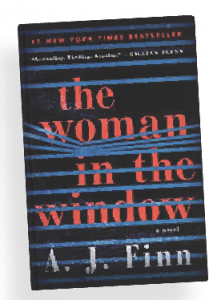
“Woman in the Window” by A.J. Finn (Jan. 2)

Maybe you’ve heard the blurbs—from Gillian Flynn and Stephen King to Louise Penny and Ruth Ware—masters of the thriller genre who have come out to praise A.J. Finn’s “The Woman in the Window.” The term Hitchcockian shouldn’t be thrown around lightly, but in this case, Finn delivers a “Rear Window”-esque noir that packs enough twists and turns for any fan of Hitchcock’s most thrilling films. With a nod to those mid-century classics, Finn is diabolical in taking the reader where he wants them to go—and who he wants them to trust. Already set for translation into 36 languages, Finn’s thrilling, suspenseful, edge-of-your-seat page-turner will delight those looking for the next book-to-film blockbuster in the vein of “Gone Girl” and “The Girl on the Train.”

“Feel Free: Essays” by Zadie Smith (Feb. 6)
New Zadie Smith is always a cause for celebration, and her latest essay collection, “Feel Free,” does not disappoint. Taking on the modern world with an insightful, critical eye, Smith tackles music, film, pop culture, politics, literature and everything in-between. About Facebook, Smith writes, “It’s a cruel portrait of us: 500 million sentient people entrapped in the recent careless thoughts of a Harvard sophomore.” With wit, humor and that razor-edge intellect that’s made her one of the most beloved international authors working today, Smith delivers a superb literary collection to add her to growing oeuvre.

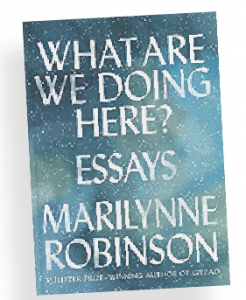
“What Are We Doing Here?: Essays” By Marilynne Robinson (Feb. 20)
A new essay collection from Marilynne Robinson? Sign us up. The award-winning novelist takes on an array of contemporary issues—political, theological, philosophical—to give us this timely collection when we need it most. “What do we lose when we ignore early American history, and, to the extent that we notice it, mischaracterize it?” Robinson writes in the essay, “What is Freedom of Conscience.” With unrivaled prose and boundless insights, “What Are We Doing Here?” proves that Robinson is at the top of her game, offering us clarity and wisdom in an age of misinformation.

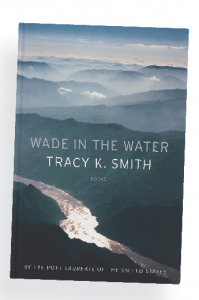
“Wade in the Water” by Tracy K. Smith (April 3)

In her first publication since being named U.S. poet laureate last fall, Tracy K. Smith delivers a powerful and hypnotizing new collection in “Wade in the Water.” Ranging from themes of politics and religion to erasure poems based on correspondence between African-American slaves during the Civil War, Smith is in full command—offering us a necessary, profound and unsettling poetry collection. “I ache most/to be confronted by the real,” Smith writes in “Annunciation,” a profound-yet-personal critique of modernity, one of many poems circling our nation’s history and the notion of progress. In “Wade in the Water,” the former Pulitzer Prize-winning poet proves once again why she’s one of the leading ambassadors of poetry in the world.

“The Recovering” by Leslie Jamison (April 3)

In this autobiographical study of alcoholism, acclaimed essayist Leslie Jamison transcends genre in her new book, “The Recovering: Intoxication and Its Aftermath.” Part memoir and part historical study, Jamison recounts her own personal struggles with alcoholism while profiling famed writers such as Raymond Carver, John Berryman and David Foster Wallace. Jamison’s talent as a writer is evident, and her ability to evoke humor and pathos from such a serious topic is a testament to her ability as an essayist. The author of “The Empathy Exams” scores again—look for this one.

“The Road to Unfreedom: Russia, Europe, America” by Timothy Snyder (April 3)

From the acclaimed, bestselling author of “On Tyranny,” Yale Professor Timothy Snyder has been a vocal and spirited critic of contemporary totalitarianism across the globe. In “The Road to Unfreedom,” Snyder expands his lens to Russia, Europe and yes—America—in this in-depth-yet-accessible research of contemporary history. In a turbulent and uncertain global period, Snyder examines these threats to democracy, the global rise of populism, and the choices we face going forward.

“The Lost Empress” by Sergio De La Pava (May 8)
This time around, self-published literary darling Sergio De La Pava has opted for the more traditional publishing route. After publishing his now-acclaimed, postmodern romp of a novel, “A Naked Singularity,” De La Pava became a cult favorite among those who admire the works of David Foster Wallace, William Gaddis and Thomas Pynchon. In his new, traditionally published novel, “The Lost Empress,” De La Pava takes on America’s most popular sport, the criminal justice system, and topics ranging from theoretical physics and immigration to lonely pastors and religion. De La Pava, who is a New York public defender, writes with a mesmerizing, maximalist style reminiscent of the aforementioned novelists, and his new novel all but guarantees he won’t have to self-publish again.

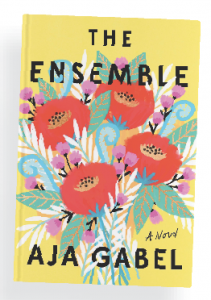
“The Ensemble” by Aja Gabel (May 15)

I know next-to-nothing about classical music, quartets and the cutthroat world of professional musicians, but that didn’t stop me from loving Aja Gable’s debut novel, “The Ensemble.” Set in this high-stakes world where every concert matters, we watch as four members of the Van Ness String Quartet—Jana, Henry, Daniel and Brit—experience love, betrayal, triumph and loss. Featuring rich, fully fleshed-out characters that jump off the page, “The Ensemble” is one of the most endearing and worthwhile explorations of friendship I’ve ever read. With intoxicating prose and complex-yet-likeable characters, this debut is well worth the read. Set for release in May, it’s an astounding debut for Aja Gabel and another hit for Riverhead Books.

“American Sonnets for My Past and Future Assassin” by Terrence Hayes (June 19)

From one of the preeminent poets writing today, Terrence Hayes’ latest collection wins the award for best title of the year. Featuring 70 different poems bearing the same title, “American Sonnets for My Past and Future Assassin” presents an ode to the sonnet form while exploring race, identity in America, love and the meaning of “assassin.” Written during the first 200 hundred days of the Trump presidency, Hayes’ collection is a haunting journey into America’s past and future—dreams and nightmares.

Alex Brubaker is manager of Midtown Scholar Bookstore, 1302 N. 3rd St., Harrisburg. For more information, visit www.midtownscholar.com.

Continue Reading

Harrisburg Council confirms CRW appointments, delays action on financial advisor, downtown parking

Harrisburg City Council tonight

Harrisburg City Council approved four of the mayor’s board appointments tonight but bucked his will on two other pieces of legislation, including one that would bring free evening parking to the city’s downtown business district.

The city’s legislative body appointed Garvey Pressley, Crystal Skotedis, Alisa Harris and Andrew Enders to serve on the board of Capital Region Water. Skotedis and Pressley are current board members. Enders and Harris are newcomers, replacing vice chair William Cluck and board director Daryl Walters.

CRW’s board approves all contracts, budgets and strategic plans for the city’s water/sewer authority. All of the board appointees were nominated by Mayor Eric Papenfuse and endorsed by current board chairman Marc Kurowski.

Council also confirmed the appointment of Shannon Gority, a former CRW executive director who stepped down last year, as a member of the city’s Zoning Hearing Board.

In other action, council sparred with the mayor over a resolution to hire a financial planner for the city, which would allow it to enter into negotiations with one of its creditors and potentially secure a lower interest rate on loan payments.

Papenfuse said that Ambac Insurance Corp., which the city agreed to pay $125 million over a 20-year period as part of its 2013 debt deal, has expressed interest in re-negotiating the terms of the city’s debt payments. Due to requirements under the federal Dodd-Frank financial reform bill, however, the city can’t enter those negotiations without a financial advisor.

Last year, the city issued an RFP and convened a selection committee to choose an advisor. The selection committee unanimously picked Fairmont Capital, which was recently restructured as Marathon Strategic Advisors LLC. The firm, based in New Jersey, is not yet incorporated in Pennsylvania.

Papenfuse explained that Marathon’s senior advisor was favorably recommended by Marita Kelley, the city’s Act 47 financial oversight coordinator. But Kelley’s word alone wasn’t enough for council members, who said tonight that they would not approve the contract with Marathon until they were able to consult two additional references.

Papenfuse warned council that delaying the vote would delay the negotiations with Ambac, which could, in turn, jeopardize favorable interest rates.

“Interest rates will continue to go up,” he said. “This is time sensitive, and to delay even a few more weeks could end up costing the city in the long run.”

Council members rejected the allegation that they were delaying a potential loan restructuring. They claimed that they were applying the same level of due diligence as they would for any city contract.

“We’ve been burned by consultants before,” said Councilwoman Shamaine Daniels.

Council also delayed voting on a deal that would eliminate parking enforcement in Harrisburg’s downtown business district from 5 to 7 p.m. The deal calls for Harrisburg, the Dauphin County commissioners and the Harrisburg Downtown Improvement District to pay a combined $270,000 a year to Park Harrisburg, the private company that manages Harrisburg’s parking assets.

The agreement originally called for a three-year term, but council proposed adopting it as a one-year trial period. Council President Wanda Williams recommended delaying the final vote until the county commissioners could discuss and agree to the single-year term.

Continue Reading

A Living Downtown: Harristown plans another residential conversion.

Harristown hopes to convert this downtown office building to apartments.

More apartments appear headed for downtown Harrisburg, though it may be awhile before you’ll be able to move into one.

The city’s Zoning Hearing Board tonight approved a variance that would allow Harristown Enterprises to convert a circa-1952 office building to a 25-unit apartment building with commercial space on the first floor.

The building, at 124 Pine St., currently houses Keystone Human Services, which would seek new space following a sale, said Harristown CEO Brad Jones.

“We believe it is a good place for some very nice apartments,” Jones told the board. “It fits in with our goal to revitalize downtown Harrisburg.”

Keystone currently has the six-story, 30,000-square-foot building on the market for $1.5 million.

Over the past few years, Harristown has converted several downtown office buildings to higher-end apartments. In fact, the company just started work today on another project, the conversion of a small, empty office building at the corner of N. 2nd and Cranberry streets into 12 apartment units. That building, Jones said, has been renamed “The Bogg on Cranberry.”

The Pine Street project, he said, would consist of 18 one-bedroom and seven two-bedroom units that would range from about 700 to 850 square feet in size. A variance was needed because current zoning code restricts new housing units to a size of at least 1,200 square feet.

Jones said that he expects rents to be about $1,095 to $1,395 a month. The project includes 19 off-street parking spaces, which would be rented separately.

Harristown still must get the approval of City Council before it can proceed with the project. If that happens, the company hopes to close on a building purchase in May. Jones, however, expects that Keystone will then lease the building back until it can find a new home, meaning that renovation work probably won’t begin until early 2019.

At tonight’s meeting, the Zoning Hearing Board also was slated to hear a variance application to establish a vehicle storage and repair business in a series of garages at 1408 Susquehanna St., as well as a commercial parking facility across the street in a small parking lot at 1418 Susquehanna St.

However, in a letter to the board, the company’s lawyers said they were withdrawing the application for the 1408 Susquehanna St. property. The board was unsure of the company’s intentions for 1418 Susquehanna St. Because the applicant did not attend the meeting, the board granted a continuance for that part of the application pending clarification.

Continue Reading

A Step Closer: Site preparation set to start for federal courthouse project.

The site of the proposed federal courthouse in Harrisburg (file photo)

Pre-construction activity should begin in months on the site of the new U.S. courthouse in Harrisburg, according to a federal government spokesman.

Nick Smith, spokesman for the General Services Administration (GSA), District 3, said today that his agency anticipates “some site work preparation starting this summer.”

Site preparation typically involves the demolition and clearing of existing structures, as well as ground leveling and drainage work.

A GSA document obtained by TheBurg states that the agency anticipates actual construction of the building to begin next year, during fiscal year 2019. Smith, however, said that GSA isn’t able to set a firm start date until Congress appropriates the money for construction.

GSA needs about $137.2 million for the project’s construction and post-construction phases. That money is contained in the proposed 2018 federal budget. However, Congress has yet to pass a final spending bill for the fiscal year, which began last Oct. 1.

Smith added that GSA expects to conclude the project’s multi-year design phase, which precedes construction, in December. Once construction starts, the project should take about three years to complete, according to GSA.

The federal government began searching for a new home for the courthouse in Harrisburg some 15 years ago, after deeming that the current structure downtown, built in 1966, did not meet design and security standards.

In 2010, the government finally settled on a 4-acre site at N. 6th and Reily streets. However, the project has moved along slowly, given a boost only in the last two years after the area’s congressional delegation made it a priority.

The 243,000-square-foot courthouse will provide eight courtrooms, 11 chambers and 42 interior parking spaces. Congress has appropriated about $55.5 million for the project so far, bringing its total expected cost to $194.1 million.

Notably, GSA plans to dispose of the current, 12-story federal building at N. 3rd and Walnut streets once the new courthouse is in use. It expects to move remaining workers from other federal agencies into leased space, according to the document obtained by TheBurg.

“The existing Ronald Reagan Federal Building will be transferred out of the federally owned inventory upon occupancy of the new courthouse,” states the GSA document titled, “Fact Sheet—Construction of New U.S. Courthouse, Harrisburg, Pa.” “GSA intends to proceed with established disposal processes to transfer the property after the remaining federal tenants are relocated from the building into leased space.”

That building also houses a U.S. post office.

Once built, the new federal courthouse would join a new Pennsylvania State Archives building along the 6th Street corridor.

In November, the state completed the demolition and clearing phase for the Archives project at N. 6th, Harris and Hamilton streets, said Howard Pollman, director of external affairs for the Pennsylvania Historical and Museum Commission.

The $24 million project’s next phase, installation of the utility infrastructure, is set to begin in July, with the building phase following in February or March 2019, Pollman said. A two-year construction phase is expected, he said.

The state Archives needs a new home after running out of space in its iconic, mid-1960s-era tower at Forster and Capital streets, Pollman has said.

Continue Reading