The Show that Never Ends: New Cumberland rallies to save, revive the historic West Shore Theatre.

When the West Shore Theatre’s marquee went dark, one thing was for sure. It wasn’t going to stay dark for long.

The community rallied, making it known that they wanted the show to go on at this New Cumberland landmark.

The historic movie theater has been a community mainstay since opening its doors in 1939. Nearly everyone you talk to in New Cumberland has a story about a fun time, a first date or a favorite movie they saw at there. Over the years, as movie-going habits changed, the theater’s lineup, hours and audiences dwindled.


Every Idea

The Art Deco-style theater, designed by Pennsylvania architect William H. Lee, was put up for sale by former owner Fred Bollen in December 2015. This past March, the father-son pair of Joe and Ben Kowalczyk bought it for $122,000 at a bankruptcy auction.

The Kowalczyks, aware of community interest in the theater’s revival, negotiated a lease that will allow the grassroots group, Friends of the West Shore Theatre, to outright own the old movie palace within five years, according to Doug Morrow, New Cumberland’s mayor and a Friends board member.

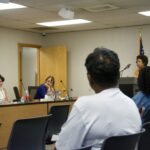
This public got a firsthand accounting of developments in May during a packed, standing-room-only, community meeting at the New Cumberland Fire Department’s social hall. Philip Horn, retired executive director of the Pennsylvania Council on the Arts—also a New Cumberland resident and Friends board member—led the community in a visioning session.

“What are the best uses of the West Shore Theatre for the benefit of the community?” Horn asked. “We want to squeeze every idea out of you.”

Nearly 150 community members brainstormed in small groups, presenting their ideas on notepad sheets that eventually filled the room’s front wall. Attendees envisioned the theater being used for everything from open mic nights to gallery space, corporate trainings to homeschool events. But one prevalent theme emerged—the community wanted movies to return to the big screen.

“My mom would tell me stories about she and her girlfriends going to the movies,” said Steve Parthemore, co-owner of the town’s Parthemore Funeral Home and a lifelong New Cumberland resident. “They would sit in every other seat so that, when the boys came in, they would fill in the seats.”

As business owner, Parthemore said that he sees the Bridge Street building as the centerpiece to a healthy downtown district.

“It’s wonderful that the community is coming together and there’s such interest in the theater,” he said. “I hope to see the theater reinvented but still retain its nostalgia.”

Horn recalled his own hometown movie theater in Los Angeles being torn down. He said that, locally, there are only a few classic theaters still operating, including the Carlisle Theatre and Gettysburg’s Majestic Theater.

“I’ve been in every county in Pennsylvania and have seen these kinds of things happen all over the state,” he said. “They don’t build theaters of this kind anymore.”


Without Asking

Moving forward, various directions and issues are being considered, according to Friends board member and New Cumberland resident Jennifer Zaborney.

First, the group is comparing bids and plans to improve the concessions area and remove the first few rows of the theater’s 450 seats to construct a small stage. A few minor repairs are also needed. Otherwise, the building has been deemed sound.

“A lot of thought is being put into the space and making it multipurpose,” said Zaborney, who notes that she and her husband had their first date at the West Shore Theatre.

Financially, Zaborney and Morrow said that the group is studying sustainability models, which would include revenue from movie ticket sales, venue rental fees, fundraisers, donations and corporate sponsorships.

To date, the group has received about $12,000 in community donations—“without really even asking,” Morrow said. Profits from an August fundraiser added another $15,000.

Morrow said the group, operating under the nonprofit financial umbrella of the Harrisburg-based Foundation for Enhancing Communities, may seek its own nonprofit status at a later date. They need to raise roughly $44,000 in operating costs annually, which would cover taxes, utilities and rent, he said. The group has identified potential donors to underwrite new projection equipment, estimated at $80,000.

The outpouring of community support, including knowledgeable volunteers, has helped contain costs, Morrow said. In addition to Horn’s volunteer consulting, an architect is donating services for the theater’s improvements. Retired founding director of the Whitaker Center, Tom Stone, is lending a hand, along with many others.


Community Connection

What’s going to happen as a result of all this community support, fact-finding and planning?

Morrow said that the theater will begin showing films this holiday season, with evening movies available on a regular basis in 2019. The Friends group envisions implementing community ideas for classic movies, film series, independent movies, family-friendly films, student-produced films and more. Eventually, the group hopes to hire someone to manage the theater’s calendar and bookings.

Morrow said that memories are motivating him on.

“In 1948, my father [who is now 82] went door to door delivering lists of movies that would play that evening,” he said. “He got paid by receiving free tickets to the matinees. He remembers going to the theater during World War II and the Korean War to watch war clips. The theater was the community’s connection to the war.”

It still holds the key to community connection, he said.

“When I was mayor of Camp Hill, nearly every meeting began with someone [lamenting] the loss of the downtown theater [the former Hill Theatre],” Morrow said. “I don’t want that same thing to happen to New Cumberland.”

The West Shore Theatre is located at 317 Bridge St., New Cumberland. To volunteer, donate or stay in the loop, join the Facebook group, “Friends of the West Shore Theatre.”
Continue Reading

And the Walls Fell Down: Harrisburg needs people to love it, not blight it.

Illustration by Rich Hauck.

Within a span of about two blocks, two very different stories are unfolding in downtown Harrisburg.

At first glance, they don’t seem so different.

On one street, a pair of dilapidated, century-old buildings barely stands, empty, graffiti-ridden, forsaken. On the other street, there’s another pair of attached buildings, also long-abandoned, marred and falling down.

The difference?

One pair should be with us for another century; the other is about to be wiped off the map.

Until recently, you would have been wise to bet against any of these buildings surviving.

Near the state Capitol, most people probably had already lost hope for the two small, mid-19th century clapboard-and-brick buildings at the corner of North and Susquehanna streets. They had been empty, boarded-up, for some 30 years, even while the block revived around them.

The Harrisburg Redevelopment Authority took possession of the buildings back in 2007, sparking some thought that they might be saved. However, it was a false hope. No redevelopment followed. Eventually, the roofs caved in, and even the ever-optimistic community group, Capitol Area Neighbors, beseeched the authority to do something about its mess—even if it meant demolishing the buildings, which seemed beyond saving.

But, in fact, they could be saved.

In 2014, an attorney named Matt Krupp moved in just across the alley and, for the next four years, walked past these buildings every day. Finally, fed up living across the street from blight, he approached the Redevelopment Authority and, with a partner, made an offer of $34,300 for the wrecks—which was about $34,299 more than they were worth.

“I just got tired of looking at them,” Krupp told me.

This autumn, about six months after buying the pair, Krupp expects to finish the restoration and rebuild, turning the buildings into several apartments and a snug commercial space.

He doesn’t expect to make much money off of the project, but he doesn’t think he’ll lose any either, as he plans to hold for the long-term. The real benefit, he said, has been the elimination of an eyesore and vermin and squatters and the dangers posed by a tumbledown building, along with the ability to improve his neighborhood and return these two historic structures to Harrisburg’s built environment.

The six-month restoration begs the question of why these buildings were left to rot in the first place. Why did the prior owner board up and abandon them—and why did the Redevelopment Authority, the owner for 11 years, similarly do nothing, letting them deteriorate to the point of near collapse?

The North Street project also brings into sharp relief the second half of my story. Just two blocks away, at N. 2nd and Liberty streets, a rather similar situation has been unfolding, but one headed for a very different ending.

At that corner, there’s another pair of small, attached buildings. An attorney from Hershey, now retired, bought them some 35 years ago and, for many years, rented out a few apartments and some shop space there. According to neighbors, they’ve been boarded up for more than a decade.

They’re not quite as old or as decrepit as the North Street properties, but they’re still in bad shape, with broken windows, boarded-up back ends and a distinct lean.

Recently, the owner’s son, representing his elderly father, asked the Harrisburg Architectural Review Board to allow him to raze the buildings. HARB members were clearly upset and torn, but, in the end, voted to permit the demolition.

Since that meeting, I’ve thought often about these two situations, which are so similar yet are ending so differently. Why was one pair of buildings saved, yet the other was not? To me, the juxtaposition is striking.

In the end, the North Street properties found a person who cared. It took the better part of three decades but someone finally stepped forward to save them. Krupp is invested in his community, even serving the thankless role of president of Capitol Area Neighbors. Also, living literally across the street, he had a strong motivation to take on the project and then the ability, teaming up with a business partner, to make it happen.

In contrast, the 2nd Street properties lacked an advocate. The owner’s son told me that his dad was well intentioned, but, well, time just passed. He stopped coming into Harrisburg for work, and the buildings’ condition grew worse and worse. Eventually, even simple maintenance, like snow removal, wasn’t done.

Neighbors said that people repeatedly made offers to buy the increasingly decrepit buildings, but their overtures were rebuffed. The owner’s son said he didn’t understand why his dad held onto the properties, but that now he wants them taken down.

Harrisburg hasn’t yet reached the point of attracting much outside investment. Building inventory remains high, and property appreciation is anemic. So, there’s little to entice developers to come into the city to fix the historic housing stock or build new based solely on return on investment—which is the logical standard for a for-profit developer.

Therefore, the city needs caretakers. It needs people who will buy a house, fix it up and live in it, knowing it may take awhile to recover their investment. It needs investors who will renovate, rent and hold, as it may take years to turn a profit. It needs people who care about Harrisburg to step up boldly.

Here’s what Harrisburg does not need: flippers, slumlords and neglectful owners—all of which are in plentiful supply. (Note to would-be flippers: think twice and then think again—in Harrisburg, this is where the dumb money goes.)

Several local developers have told me that, despite common “wisdom,” it’s very tough to make money in real estate in Harrisburg. I’ve found that to be true—decent renovations of historic properties are expensive and resale prices, plus fees, often don’t cover those costs.

One day, perhaps, the economics will improve enough so that outside developers with deep pockets will be attracted into the city. That’s when we’ll see Harrisburg undergo more widespread redevelopment. Until then, it’s up to people like you and me who care about this place, are already invested it and are in it for more than the lure of a quick buck.

Lawrance Binda is editor-in-chief of TheBurg.

Continue Reading

Color My World: In downtown Harrisburg, the banal becomes the beautiful.

Wild birds. An octopus stretching his tentacles within a claw machine. A Capitol dome replica filled with red, blue, and gold, among other lively designs.

You may have noticed recently that downtown Harrisburg appears more vibrant, more cheerful, certainly more colorful.

For that, you can thank the Harrisburg Downtown Improvement District (DID) and Sprocket Mural Works, the outfit perhaps best known for mounting the 2017 Harrisburg Mural Festival.

Over the summer, 14 artists, including the two founders of Sprocket, painted traffic light electrical boxes throughout the downtown in “Art Outside the Box,” a project sponsored by the DID.

Before, most of the boxes were a dull gray, covered in graffiti, peeling paint and leftover stickers. Todd Vander Woude, DID’s executive director, saw the boxes as an opportunity to brighten the city.

“We can really make the corners look more colorful and really use artists through Sprocket Mural Works,” he said.


Different Way

DID matched each piece with a location that they thought would best represent the message of the art.

So, a box painted with a bag full of groceries was placed outside of Provisions, the new grocery store inside of Strawberry Square. The Capitol painting sits on 2nd and State streets, just down the block from the big, green dome itself.

Though there was no overall theme, most of the artists took this project as an opportunity to show what Harrisburg meant to them.

“The feedback we received has been really positive,” said Sydney Musser, DID’s social media coordinator. “People notice these boxes now. You kind of saw them before, but they were covered in grime and different things. And now you notice them in a different way.”

Sprocket announced their call to artists through social media earlier in the year. Artists then submitted drafts and sketches of their vision for the boxes. Sprocket founders Jeff Copus and Megan Caruso filtered through the submissions and chose the pieces that represent the community and DID’s desire to highlight the great things in the city.

“For projects like this, we think it gives an opportunity for new voices to be heard,” said Copus. “We don’t want all of these projects to be about us, but about the people in the community.”


So Cool

On the first day of working on her box, artist Jessica Singer painted in the blazing sun for five hours straight. This is the first public art project for the elementary art teacher and Harrisburg native, and she couldn’t wait to get started.

Her design, at N. 2nd and Pine streets, is based around the words she felt represented Harrisburg. There are words like “community,” “entertainment,” “capital” and “love,” interlaced with bright blues, yellows, reds and greens with white outlines and shapes. She even had some onlookers add a few words.

“I had the time of my life,” she said. “I enjoyed having people, as I was working on it, talking to me about it. I got to meet a lot of different people who work in the city everyday and live in the city, and I thought that was so cool.”

Singer was so excited about her piece that she brought the kids she nannies over the summer to see her work and take a tour of the other boxes downtown. Now that school has started, she plans to take her elementary students on a little box tour.

“I’m just very proud and honored to have a piece of artwork that is going to be there,” Singer said. “I teach so many little kids. I feel like they can look up to me and I say ‘Look! This is something you can aspire to. If art is your passion, follow it. You can do something like this.’”

Painter Shane Gallup is no novice to the Harrisburg art scene. Gallup has participated in gallery showings and body-paint exhibitions through his nonprofit, Artcan. Last year, he was involved in the mural festival, painting two hands reaching out for each other under the pedestrian underpass at Strawberry Square.

In a similar style of patchwork colors, Gallup created a painting of two kids: a girl holding tomatoes over her head and a boy grinning while eating a watermelon. According to Gallup, the piece was created to strike a conversation over what children put into their bodies.

“I wanted to encourage dialogue about what kind of foods are accessible to kids and their perceptions around them,” he said. “I think it’s a conversation that people have been having for awhile, and I think my piece adds something to it.”

These conversations are some of Gallup’s favorite things about creating public art. While painting his box, people came up to him asking questions about the project, his piece and what it meant. Though not all conversations were pleasant, they all started a dialogue, which was what he hoped for.

“It’s been great doing the boxes because it’s inviting,” he said. “There’s so much walking traffic downtown that I got a lot of engagement.”

This was not the first collaboration between Sprocket and DID. The two worked together on the duck sculptures that invaded downtown last year, the painted planters back in 2016 and the mural festival.

“With any of these public art projects, I think it gives people a reason to come into the city,” said Copus. “Whether people are already coming in for a baseball game or coming in for dinner, it gives them a reason to explore the city and just leave with a really good feeling of what they saw.”

For more information the Harrisburg Downtown Improvement District, visit www.harrisburgdid.com. Follow Sprocket Mural Works on Facebook, Twitter and Instagram @sprocketmuralworks and visit their website at www.sprocketmuralworks.com.

Continue Reading

Rollin’, Rollin’: After 30 years, the big wheel keeps on turning.

Burg in Focus: The Pride of the Susquehanna from GK Visual on Vimeo.

It’s a boat. It’s a stage. It’s … a floating candy cane?

That term of endearment has been bestowed upon the Pride of the Susquehanna Riverboat by Executive Director Jason Meckes, who is helping to steer the celebration of the red-and-white vessel’s 30th anniversary.

The path to the big 3-0 has been anything but smooth, as the boat has sputtered through funding woes, repeated flooding, structural issues, bad press and an array of other unforeseen shoals.

To celebrate a life that has seen a million passengers transported on the authentic paddlewheel-driven boat since 1988, a gala is planned for Sept. 22 at the state Capitol.

Meckes, with a youthful energy and smooth, velvety voice, said the gala will have a “Choose Your Own Adventure” format.

For a $75 ticket price, guests will enjoy great food, cocktails, historical photographs, a silent auction, contests, picture-taking and an awards presentation. Jack Brubaker, author of a well-received book about the Susquehanna River, will be the keynote speaker.

Meckes said the nonprofit Harrisburg Area Riverboat Society, which built and now manages the local treasure, only holds a gala about once every five years, so the time is now to help paddle the beloved vessel into a secure future.

Just Adorable

Around Harrisburg, the launch of the riverboat in late April has come to represent the unofficial start of the outdoors season.

From its dock on City Island, the Pride begins its schedule of daily cruises, slotting in a variety of specialty events, including murder-mystery cruises, elegant dinner cruises, brews cruises, blues cruises, fundraisers, weddings and even pirate-and-princess cruises for the little tikes. The 60 seats fill up fast. The boat is largely funded through ticket sales, with donations and grants to buoy up the finances.

Meckes said that pirate cruises are an especially popular new offering. Kids come on board dressed as pirates, armed with squirt guns. After a fill of pizza, soda and ice cream, an announcement rings out that pirates have been spotted in the water. An oncoming boat (usually carrying riverboat board members) and plumes of smoke on the water are seen, and the little Jack Sparrows have a chance to fend off the oncoming menace with squirt guns and water balloons. Meckes said the county’s 911 center has even received calls from concerned citizens, reporting pirate activity on the Susquehanna.

Princess rides are also held, attracting a pageant of Elsas and Ariels who walk majestically down the red carpet as they hear their names announced. The princesses sing, do crafts, get temporary tattoos and are made to feel extra-special, Meckes said.

“It’s just adorable,” he said. “Though it does take us some time to get the glitter out of the boat.”

As a graduate of Millersburg University with a degree in elementary education, Meckes still loves to teach. The Pride has hosted students of the Harrisburg school district for free, as well as many Susquehanna River School outings.

The Pride is especially popular with sightseers. Meckes estimates that 60 percent of riders are local, while 40 percent hail from outside the “717.” Forty thousand riders took the Pride last year, with 16 countries represented.

Visitors, he said, are attracted not just by the scenery and the parties, but by the old-timey technology of propellers and rudders.

“The river is so placid that we can get away with historic propulsion,” Meckes said.

He has his own personal and professional pride in the one-of-a-kind mahogany and brass interior, with its antique brass rails and stained glass on the ceiling. The boat is filled with historical artifacts, such as the Queen Mary’s cabin doors.

Riders may not see Tom Sawyer and Huck Finn on the banks of the river, but you feel like you could.

“I find the entire concept (of a riverboat) to be fascinating,” Meckes said. “It is a picture into nautical history.”


Paddles On

The now 91-year-old Jack Dillman is among the men at the heart of the boat’s history and is its training coordinator. He once captained the Millersburg Ferry, north of Harrisburg.

“There is no one, living or dead, who knows more about this river than Jack Dillman,” Meckes said.

Another local legend is Mike Trephan, who helped get the boat built and remains a rock star in the riverboat’s colorful history.

“We wanted the boat to serve the community when we built it,” Meckes said. “It represents the creativity of Harrisburg.”

The season goes full throttle through the summer and usually ends around the second week of November. Any longer, and the river could be frozen. At that time, the National Guard moves the boat out of the river, using their tank removal crews in a training exercise that is beneficial for both parties.

But all is not smooth sailing. Through the three decades, it has cost more and more to maintain the boat, both during the on- and off-season.

Meckes noted that the Pride is 30 years old, but the average life span of a boat is 25 years, meaning that constant maintenance is required. Moreover, the heavy rains and flash floods of July and August damaged both the boat and dock.

“There is no guarantee we will come back every year,” Meckes said somberly. “We are more reliant on grants, donations and the good will of the community than ever.”

Nonetheless, he hopes for a safe, placid future for the city’s beloved “candy cane.” After 30 years, people still come, and, each season, the riverboat paddles on.


The Harrisburg Area Riverboat Society Anniversary Gala will be held Sept. 22 inside the state Capitol. For more information, visit www.riverboatgala.com or www.harrisburgriverboat.com.

Continue Reading

Showbiz Kids: Gamut completes theater build-out with Education Center, Second Stage.

Pictured, above: Jeff Lutter Moser, dean of Gamut Theatre Summer Academy, speaks at the debut of the Alexander Grass Second Stage.

According to an old saying, good things come to those who wait.

For Gamut Theatre Group, the wait has been long, but the good things are here, and they’re in abundance.

After five years of planning, fundraising and construction, Gamut last month officially opened the Gamut Theatre Education Center, featuring the Alexander Grass Second Stage. The center is part of the final phase of the theater’s renovation of its downtown home, fully converting the historic building on N. 4th Street that was originally constructed as the First Church of God.

Purchased in 2013, the building’s initial renovations focused on the main stage, lobby, classrooms and support spaces for costumes, sets and props. After the mainstage opened in November 2015, the focus shifted to additional fundraising for the Education Center. The Alexander Grass Foundation sponsored the Second Stage during the initial renovations, but additional fundraising was necessary to complete important facility upgrades.

An official ribbon cutting was held last month at the side door to the theater, which is the new entrance to the Education Center.

In addition to the Second Stage, the 10,000-square-foot Education Center includes a new, ADA-compliant entrance, an elevator, classroom improvements, a digital projector and screen, and learning areas for costumes, sets, lighting and sound.

“We wanted the Education Center to be a teaching/learning space for students,” said Executive Director Melissa Nicholson. “This is a very simple, hard-to-mess-up space. Students will be able to design lights with an iPad and plug in their own devices for sound. There are some things they can learn about sound equalizing and lighting design, but it’s much simpler and easier to use than traditional equipment.”

Long-time Gamut colleague Lynne Kay Porter from Fairfield University designed the space, while local artist Jacintha Clark, through Sprocket Mural Works, painted a floor-to-ceiling wall mural.

“The mural invokes the feeling of being inside a storybook, but not necessarily a children’s storybook,” Nicholson said. “Audience members feel like a part of the story, with sunshine behind you that turns into a dark night to focus in on the stage.”

Even the ceiling has been considered and is filled with a sky full of stars.

The Second Stage enables Gamut to be more flexible in its use of the space. Popcorn Hat Players, Gamut’s children’s theater, will primarily use the Second Stage, as will the more informal, educational “Stage Door Series” and some classes. Last month, the first show to use the Second Stage was the innovative “Choose Your Own Play: Hijacked!”

“Prior to the availability of the Second Stage, smaller performances were held in the Gamut lobby,” Nicholson said. “The new space seats about 75 people. It holds more than the reception lobby but less than main stage.”

Nicholson also hopes the Education Center will be another space that smaller community groups will be able to use.

“A lot of people come to us wanting to use the main stage, and it’s difficult because of the programming,” she said. “This space doesn’t have as much nighttime usage. It can also be cost prohibitive to use large spaces downtown. It’s part of our mission in serving the community to offer something more reasonable for smaller groups that may need a space.”

One partnership has already developed between Gamut and The Capital Area School for the Arts (CASA). This summer, Gamut used some CASA classrooms for its summer programs. Next year, CASA will hold its midyear performances at Gamut. There are also plans in progress for internships for students and other ways to partner.

Some exterior work remains on the agenda. But, now that the internal renovations are complete, Gamut staff is able to focus completely on their core mission.

“What’s really attractive about reaching this finish line is we’re not finishing growing,” said Artistic Director Clark Nicholson. “We are now able to focus on programming and what we do here. We’ve been focused on modifying the physical space for years.”

To that end, Gamut staff has been working with its board on short- and long-term strategic planning.

“In many ways, the opening is just the beginning,” said Melissa Nicholson. “It’s nice to turn our excitement to what we’re meant to do—our programming.”

Gamut Theatre is located at 15 N. 4th St., Harrisburg. For more information, visit www.gamuttheatre.org.

Photograph courtesy of the Harrisburg Regional Chamber & CREDC.

Continue Reading

Get Bach: Market Square Concerts revs up a season ranging from Baroque to modern masters.

According to Peter Sirotin, artistic director of Market Square Concerts, music is more than a group of notes strung together on a page. On the contrary, it speaks volumes about the times in which it was written.

“I believe that music has the power to connect us to the particular culture, historical period and our personal experiences on a deep level, sometimes almost immediately,” he said.

Market Square Concerts’ upcoming season is a testament to all that Sirotin tells us. For instance, the opening concert on Oct. 9 features all six Brandenburg Concertos by J.S. Bach, allowing the listener to “experience the atmosphere of 18th-century royal festivities and village merriment, personal longing and joy,” Sirotin said.

All in fewer than two hours.

The energy of these pieces forces audiences to sit up, take notice and, perhaps, view the Baroque era as something other than fussy and “old.” Indeed, Sirotin said, the Brandenburg Concertos have tremendous vitality and imagination and are central to the history of western classical music composed between 1717 and 1720. Some pieces use as few as three instruments, others as many as 17.

Market Square Concerts will collaborate on this program with the Harrisburg Symphony Orchestra featuring its principal players, as well as celebrated harpsichordist Arthur Haas. Jeff Woodruff, the HSO’s executive director, will give a pre-concert talk about the Brandenburg Concertos on the evening of the performance.

“I have loved these works since childhood and performed most of them on occasion,” Sirotin said. “But I always wanted to present them in one evening, in all of their splendor.”

More splendor follows on Nov. 10 when Market Square Concerts presents the Brown-Urioste-Canellakis Trio, three talented, young musicians who have already amassed impressive awards. Pianist Michael Brown, also a composer, will regale the audience with his piano trio, “Reflections,” written for his friends and fellow musicians, violinist Elena Urioste and cellist Nicholas Canellakis, and in honor of Sharing Notes, an organization that brings interactive classical music performances to Chicago-area hospitals.

On Jan. 9, young Spanish violin virtuoso, Francisco Fullana, winner of the Avery Fisher Career Grand, together with Chinese pianist, Jiayi Shi, will perform a program of music by Beethoven, Enescu, Debussy and Bartok. Fullana comes to Harrisburg thanks to “Partners in Performance,” a grant awarded to Market Square Concerts to promote high quality performing arts in small communities.

“This is a wonderful opportunity for us, particularly because Mr. Fullana will also visit Cumberland Valley, Mechanicsburg and Hershey middle and high schools for special educational presentations as part of our educational outreach program ‘Soundscape,’” Sirotin said.

Another unique aspect of this performance is that Fullana will play on the 1735 “Mary Portman” ex-Kreisler Guarneri del Gesu violin on loan through the Stradivari Society of Chicago.

“This is one of the 10 or so best violins in the world,” Sirotin said. “And, in the hands of Mr. Fullana in the wonderful acoustics of the Market Square Presbyterian Church, it should make for a memorable experience.”

While the church will be the location of the first three performances, the next one, on Feb. 20, will take place at Temple Ohev Sholom on Front Street in Harrisburg and will feature a return visit by the award-wining Doric Quartet from the United Kingdom.

The group’s program will offer listeners a chance to closely follow the evolution of the string quartet through the lighthearted music of Joseph Haydn, an exuberant piece by Felix Mendelssohn and, finally, to Bartok’s Fifth String Quartet, reflecting the turbulence of the 20th century and considered a “pinnacle of Modernism,” according to Sirotin.

Market Square Concerts returns to the church in Harrisburg for its final two performances. On March 24, Grammy award winner and 2009 Musical America’s Ensemble of the Year, the Pacifica Quartet, will perform three string quartets by Dmitri Shostakovich.

“The program will feature his String Quartets number 1, 7 and 3, which are my personal favorites because they so vividly communicate many aspects of life in the USSR as I remember it growing up,” Sirotin said. “From always speaking in hushed tones to multilayered, absurdist sense of humor, to the obvious farce of government propaganda and to the quiet intensity of daily life under the watchful gaze of the secret police apparatus.”

The season will conclude on April 24 with the Rolston String Quartet, a young Canadian group, which will perform works by Haydn, Ligeti and Brahms.

Music tells us stories and digs into our souls. The 2018-19 Market Square Concerts season allows audiences to experience all of that through the creativity of today’s most brilliant performers.

For more information on Market Square Concerts, visit www.marketsquareconcerts.org.

Continue Reading

The Damage Done: This month, WITF focuses on the tragedy, the hope arising from the opioid crisis in central PA.

Caeli Donaldson began using heroin when she was about 17 years old.  Before beginning the methadone program she continues today, she went through about 15 rehab facilities, recovery houses and detox programs.

Caeli Donaldson had what she refers to as a beautiful childhood.

It wasn’t until she was about 14 that she began to experiment with alcohol. She quickly moved on to other drugs, and, by the time she was 17, she had tried heroin.

At that point, there was no turning back.

As much as she loved her parents, she would lie to them if it meant feeding her addiction. She would steal from her younger brother. The person Caeli was while addicted to heroin was completely the opposite of what she was prior to her addiction. She knew the risk of using and was prepared, more than once, that it may be her last time. She still couldn’t stop.

Similar stories play out every day in families across the country. The opioid epidemic is a public health emergency. According to the U.S. Department of Health and Human Services, 116 people died every day in 2016 from opioid-related drug overdoses. Another 170,000 used heroin for the first time.

Opioid addiction doesn’t just affect the user. Through coverage of the opioid crisis over the past five years, WITF has learned that the ripple effect from opioid addiction touches parents, first responders, teachers and children.

Vickie Glatfelter lost her son, Bob, to a fentanyl overdose in April 2014. She is now among the growing number of grandparents raising grandchildren. Glatfelter shared her story on “HealthSmart: Drugs and Young People” in 2015. She, like so many others that have been impacted, feel that sharing is the only way to increase knowledge and reduce stigma within our communities.

After first telling her story in 2015, Caeli Donaldson shared her continuing journey with opioid addiction in 2017 on “HealthSmart: The Opioid Epidemic.” Caeli allowed WITF to come with her on her daily trip to the methadone clinic. She says methadone, although controversial, is her path to a healthy life.

Stacy Zeigler knows that controversy well. In 2018, WITF introduced listeners to Zeigler in a “Transforming Health” radio feature that shows the stigma former heroin users face even as they attempt to stay clean. Like many people, Zeigler’s drug addiction began when a doctor prescribed her an opioid for pain. When she couldn’t get pills, she made the jump to heroin. As her addiction spiraled out of control, Zeigler lost her job, custody of her children, and almost lost her life to an overdose. She wanted to get clean, and, when she enrolled in a medication-assisted-treatment program, she got off heroin and never relapsed. Zeigler chose to share her story to fight stigma around these treatments, which rely on regulated opioids like methadone and buprenorphine, as well as regular counseling sessions.


Impacted Most

First responders are on the front line of the opioid epidemic and have witnessed the devastation firsthand. Pennsylvania invested $5 million to arm first responders with naloxone, the opioid overdose reversal drug. That money provided police, EMTs and other first responders with more than 60,000 naloxone kits.

In 2018, “HealthSmart: Front Line of the Opioid Crisis” introduced viewers to Joseph Stevens, the chief of York Regional Emergency Medical Services. Stevens recalled finding a parent who had overdosed in a car with their 2-year old in the backseat. Stevens expressed his unwavering desire to save lives with naloxone, but also his frustration with saving the same lives multiple times.

Schools and teachers have also been impacted by the opioid epidemic. In homes where opioid abuse is present, school may be the only place that is free from chaos for a child. But, just because you remove a child from that environment during the day doesn’t mean they can escape it mentally.

In 2018, WITF introduced viewers to Eric Schlosser, the guidance counselor for four schools in the York City School District. He is the only guidance counselor for roughly 2,500 students. He says many of those students deal with a lot of stress at home and, instead of worrying about their education, they worry about parents at home abusing opioids.

In fact, out of all of those affected by the opioid epidemic, it may be children who are impacted the most.

In 2018, WITF introduced listeners to 12-year-old Jarryn Myers, who talks about losing his father to a heroin overdose—and helping police to identify the man who sold his father the fatal dose. Myers also testified in court to help prosecute the drug seller. The man was charged with drug delivery resulting in death, a charge that district attorneys are using to stanch the flow of heroin in communities. Critics say the strategy doesn’t work and unfairly targets minorities. However, for some who have lost loved ones to addiction, the charge is one way to get justice and closure.

Isabella Nye, was born addicted to opioids. She spent weeks in the NICU with Neonatal Abstinence Syndrome (NAS) before she could leave the hospital with her mother, Lisa. Isabella is among the growing number of babies born with NAS today. In fact, it’s estimated that a baby is born every 25 minutes suffering from opioid withdrawal. Lisa used heroin until she found out she was pregnant with Isabella and then she began a methadone maintenance program, which she continues today. Lisa chose to share her story because she knows that there are other pregnant women out there afraid to come forward with their addiction.

Over the past five years, countless community members have shared their struggles with opioid addiction through WITF. The faces, ages, genders, races and income levels of these people have all been different, but they all shared a desire to tell their stories to help reduce the stigma tied to this disease and to change the path for someone else.


WITF features a week of special programming the week of Sept. 24 on WITF TV. The week will include the WITF Original Production, “HealthSmart,” with episodes in prime time focusing on the opioid epidemic. Five episodes will air across the week including a new episode at 9 p.m. on Sept. 26 when “HealthSmart” takes a look at the children impacted by the opioid epidemic. Thursday night also includes a statewide broadcast. “Battling Opioids: A Project of Pennsylvania Public Media Part 1” is a collaborative effort among all the PBS stations across Pennsylvania. This 90-minute program, which airs Sept. 27 at 8 p.m., will focus on stigma, prevention and treatment. 


Keira McGuire
 is the producer and host of “HealthSmart.”

Brett Sholtis is WITF’s “Transforming Health” reporter.

WITF is a community publisher for TheBurg.


Continue Reading

She’s Making Movies (On Location): At 11 years old, Lily Compton is already a veteran of short films.

Lily Compton stars in her short film, “Picochi.”

At 9 years old, most of us were just trying to avoid our homework and get home before the streetlights came on.

At 9 years old, Lily Compton had submitted her first film into Vidjam, an annual, 48-hour filmmaking frenzy, becoming the organization’s youngest filmmaker to date.

Now 11, Compton already has 20 short films under her belt, with more to come.

“At Vidjam, someone came up to me, and they’re like, ‘Oh my gosh, when you’re an adult you’re going to be so great,’ and I’m like, ‘Yeah, cool…when I’m an adult…” she said. “That’s really been pushing me.”

Since her first Vidjam, Compton has submitted a short film every year for the Harrisburg-based competition. Her films feature an array of elaborate costumes, makeup and props created from scraps, things people lend her and items from her parents “Free Store” in back of the Harrisburg Improv Theatre.

Her latest film, “Mental,” which was submitted to the Vidjam competition in June, stars Compton as a psychiatric patient who believes she’s being visited by people of her past life. The film begins with Compton’s character in the hospital before being transported into a grassy field, surrounded by strangers in all-white clothing. They run around, splashing in the creek and holding hands before the strangers become sinister, their makeup resembling skull faces, their clothes black, and they chase Compton, revealing who they are.

“I changed my style up with ‘Mental,’ and you could hear people in the crowd crying,” Compton said. “People came up to me and congratulated me, even days after.”

Even at age 8, Compton was comfortable behind the lens. She ran around her house and her neighborhood with her mother’s Sony Handycam, creating what she called “documentaries.”

She roped friends into starring in her films, which they either loved or quickly grew tired of.

Compton’s mother Somers, co-owner of the Harrisburg Improv Theatre with her husband Jacob, met the founder of Vidjam, Sam Miller, years ago, before he started the film group. As Vidjam grew, Miller developed a relationship with the Comptons and the theater. The Comptons helped Sam with props and costumes and supported him any way they could. Somers then encouraged Lily to take a stab at the Vidjam competition.

“My mom, who really supports me and my filmmaking, was like, ‘Lily, there’s this film contest, and you should join it,’” she said. “I was like, ‘Oh, okay,’ and just got a team together for it.”

Lily’s team consisted of her friend and fellow filmmaker, Ben Hill, and a couple of actors she found after scouting the streets and asking, “Do you want to be in a film?” In 48 hours, she helped write and direct their first Vidjam short film. But she missed having full control over her films.

“I thought that I wanted to be more part of my films,” she said. “The next film I wanted to break free of that and try editing on my own because, during that time, I had been experimenting with different editing softwares. So, the next one that I did was the ‘Picochi.’”

“Picochi” is an ugly duckling-type tale starring Lily as a ginormous bird, Picochi. After the bird is born, it begins searching for a companion, but everyone who comes in contact with Picochi scurries off or is an inanimate object. Then finally, Picochi finds a human friend. The humorous, touching film was submitted into the 2017 Vidjam competition.

“There is heart in her films,” Miller said. “It’s a sort of heart, sentimentality and awareness that I think a lot of us as older filmmakers and writers may be scared or hesitant to tap into.”

Aside from being a quadruple threat in filmmaking—writing, acting, editing and filming—Lily loves to dance, sing, write her own songs and draw. She is also involved with the Harrisburg Improv Theatre’s Kidprov, which her father runs.

Even though she has many different talents, her passion lies with filmmaking and acting. In the years to come, she plans to keep submitting to Vidjam and continue working on her acting and filmmaking future.

“I just think you’re never too young to pursue your dreams,” she said. “I don’t feel like people have to wait until their older to pursue what they love.”

To view Lily Compton’s films, visit vidjam.org or their YouTube @Vidjam.

Continue Reading

The Loud Sound of Silence: “Deej” takes viewers deep into a busy, unheard life.

The first thing we see is a visual depiction of sensory overload.

Extreme close ups of painted imagery flit across the screen with an abundance of color, whisking past the screen just as quickly as they come into frame, narrated by words of poetry.

These words, it turns out, are written by DJ Savarese, a non-speaking autistic man in Illinois—and the titular subject of director Robert Rooy’s documentary, “Deej.”

DJ did not have the means to communicate for several years, until his adoptive parents began encouraging him to learn to read and write. Now, DJ speaks by typing into a computer, from which an automated voice speaks for him.

“Reading and writing are rarely taught to non-speaking autistics,” DJ commiserates, noting that most people assume if someone can’t speak, they also can’t think or feel.

“Will you free my people?” he asks Rooy.

By this, he means—will this documentary help other kids with autism have meaningful lives, will it help break through the stigma that many have of autism? And that is what is most present in DJ’s mind. What is the benefit of following me around? Will it help those who need it?

DJ’s poetry continues throughout the film, interspersed with his day-to-day activities. DJ pinpoints the feelings he has about the contrast of sensory input he receives.

“Most of the time, I don’t feel my body,” he states. “Most of what I do are coping mechanisms to overcome that.”

Often, these coping mechanisms consist of jerking movements with his arms or various noises, to bring him back into his own body.

“You may have lost your body,” his mother states at one point, trying to get him to focus.

The documentary presents a thorough depiction of DJ’s life as he graduates high school and prepares for college. Viewers may have the question of how much privacy DJ is allowed throughout the filming process, but even that question is addressed in the film. Overall, Rooy offers a unique perspective into the life of an autistic person.

DJ’s journey is one that many don’t ever experience firsthand—a journey that is now available to tap into, thanks to “Deej.”

“Deej” will play for a special screening on Sept. 30 at Midtown Cinema.


September Events
at Midtown Cinema


National Theatre Live

“Julius Caesar”
Monday, Sept. 10, 7 p.m.

“Follies”
Monday, Sept. 17, 7 p.m.

“Cat on a Hot Tin Roof”
Monday, Sept. 24, 7 p.m.


Down in Front!

“Untamed Youth”
Friday, Sept. 14, 9:30 p.m.


3rd in the Burg $3 Movie

“The Last Unicorn”
Friday, Sept. 21, 9:30 p.m.


“Bad Reputation”

A Joan Jett Documentary
Wednesday, Sept. 26, 7:30 p.m.


Manhattan Short Film Festival
Sept. 28-Oct. 4


“Deej”
Sunday, Sept. 30, 7 p.m.

Continue Reading

Pain, Go Away: What you should know about trigeminal neuralgia.

If you have ever experienced nerve pain, you know how debilitating it can be.

Trigeminal neuralgia is a type of nerve pain that affects your face, typically in your jaw or cheek. The pain can be sharp or feel like a burning sensation. It can be so severe that you have difficulty eating or drinking.

Most flare-ups begin with tingling or numbness in your face, and the pain can come and go. During a flare-up, the bursts of pain are more frequent and almost never stop. The intensity of the pain can make your day-to-day activities unbearable, but the condition itself is not life threatening.

So, what causes trigeminal neuralgia?

The most common cause of trigeminal neuralgia is a blood vessel pressing against your trigeminal nerve. Rare causes include multiple sclerosis or tumors. This nerve condition is most common in people over 50 years old and is more common in women than men.

There are multiple symptoms of trigeminal neuralgia, including:

  • Pain in the cheek or jaw (typically comes and goes and is mostly one-sided)
  • Absence of pain between flare-ups
  • Pain that feels like electric shocks or stabbing
  • Pain triggered by touching, eating, brushing your teeth or other factors like wind
  • Anxiety from the thought of the pain returning

Then how is trigeminal neuralgia diagnosed?

Trigeminal neuralgia can be diagnosed by your primary care provider based on your description of your pain. This diagnosis is based on three different factors:

  • Type of pain: Pain related to trigeminal neuralgia is sudden, shock-like and brief.
  • Location of pain: The pain is mostly in your jaw or cheek.
  • Triggers of pain: It usually occurs after stimulation of your cheeks from things like eating, talking or brushing your teeth.

If necessary, your provider can order additional tests, which may include a neurological exam or an MRI.

Please know that facial pain could be caused by a number of different conditions, so accurate diagnosis is important.


Learn more about trigeminal neuralgia and how it is treated in a blog post at UPMCPinnac.com/TrigeminalNeuralgia.

Dr. Chikezie Eseonu is a neurosurgeon at UPMC Pinnacle.


Continue Reading