Dissimilar City: None of these things are like the others.

Illustration by Rich Hauck

How similar is Harrisburg to other cities in Pennsylvania?

For instance, how similar is Harrisburg to places like Oil City, Shamokin and Cory?

I ask because this issue arose repeatedly during the state legislature’s joint hearing in late September on whether to allow Harrisburg to retain the special taxing privileges it enjoys under Act 47, the state’s program for financially distressed municipalities.

For some state Assembly members, the subtext was this: What makes Harrisburg so darn special? Why should it have rights not extended to the commonwealth’s other small cities?

I felt that this line of questioning was crafted to be critical, posed by legislators reluctant to allow the city to retain its current, elevated local services tax (LST) after it departs Act 47. Nonetheless, it’s a good question.

So, then, is Harrisburg different from the other 55 or so cities in Pennsylvania? Yes, it is. Very.

Harrisburg is the state capital. Its small population doubles every day, meaning that it needs to provide—and pay for—services well beyond those needed by its own residents. Moreover, about half of its property can’t be taxed due to state and nonprofit-owned land. It has a large service economy and a high poverty rate.

Those are just a few of the many ways that Harrisburg is different.

But Harrisburg hardly stands alone in its uniqueness. Take a trip across this vast state. Travel from artsy Lancaster to struggling Carbondale to woodsy Bradford. Go from touristy Bethlehem to rapidly changing Hazleton to tiny Arnold.

You may enjoy your journey; you may not. But you certainly won’t come away thinking, “Wow, these cities in Pennsylvania are so alike.”

Truly, there’s just one thing that ties together these extremely different places. They share the most superficial of links—a definitional one—what the state terms a “city.”

Now, it wasn’t always like this. For a long time, the state’s small cities did share a set of commonalities.

In the early 19th century, they were largely county seats and market towns, centers of population and commerce surrounded by vast acres of farmland. Many later became industrial boomtowns—oil for Bradford and Oil City; coal for Shamokin and Carbondale; steel and railroads for Harrisburg and many others.

Many similarly shared a fate on the back end of the boom—depopulation, disinvestment, financial distress. People and wealth once concentrated in these places migrated out to the surrounding townships, spurred on by state and federal housing, road and transit policies that favored new, dispersed suburbs over old, dense cities.

Most cities became shells of their former selves and many ended up, like Harrisburg, in Act 47.

Fast-forward to today, and cities like Harrisburg, Farrell, McKeesport, Monessen, Lock Haven and Easton have virtually nothing in common with one another. Over the past 50 or so years, Pennsylvania’s smaller cities have become delinked. Some are doing relatively well, others aren’t. Some have become service-oriented, while others remain largely industrial. Each is trying to find its own way forward based on its distinct location, history and situation. It’s therefore illogical to force them to abide by the same set of fiscal rules.

In “Communities in Crisis,” a report released last year, the Pennsylvania Economy League, a nonprofit policy organization, described an alarming “fiscal decay” among the commonwealth’s cities and urged the legislature to take action.

“The fiscal situation on average in cities has deteriorated, and many are likely experiencing distress regardless of whether they are in the state’s Act 47 program,” the report stated.

The report advocated a wholesale re-examination of the rules governing local government in Pennsylvania, possibly including greater taxing flexibility.

As stated above, Harrisburg is an especially unique case. Here, a small, largely poor population pays to provide services to a huge number of mostly better-off, suburban commuters—who often work in buildings that also cannot be taxed.

Under state code, Harrisburg can charge these workers an LST of just $1 per week each. However, because it’s been in Act 47, Harrisburg has been able to tax them a bit more—$3 per week. This small financial boost has worked. Service levels are returning, and the city is experiencing an economic revival as it’s set to emerge from a historic financial crisis.

While that solution worked for Harrisburg, I don’t presume to know what works best for Beaver Falls, Hermitage, New Castle, Sunbury or Wilkes-Barre, small cities vastly different from one another. But I do know this. The leaders of those cities understand the needs of their communities better than distantly domiciled state legislators, much less the Stetson- and Oxford-clad gentlemen of another time who promulgated the current code, who never could have imagined the dire future of the state’s small cities.

Harrisburg, Altoona, Butler, Connellsville, York, Washington, Williamsport—they are all unique places, despite the shared designation of “city.” The commonwealth should allow them maximum flexibility in setting their own rules and guiding their own futures.

Lawrance Binda is editor-in-chief of TheBurg.

Continue Reading

Through Choppy Waters: Catamaran helps guide startups to safe harbor.

Burg in Focus: Catamaran from GK Visual on Vimeo.

Plant guilt. It’s a thing. Drop a plant in the ground. Watch it wither. Bear the shame.

Enter Gnomesy, a startup in development to “take the time and guesswork out of planning and maintaining a customized green space through regular deliveries of plants and related products.”

“We’re creating a safe space of sorts, so that maybe a plant only lives for three months, but that’s OK,” said Gnomesy co-founder Joella Gamon. “You learn something, and we’ve got you. There’s a new plant coming, and you don’t have to look at the Latin name on Google and figure out all that information.”

Gamon is in the second cohort of Catamaran, Harrisburg-based Andculture’s early-stage startup accelerator that helps new entrepreneurs set sail, offering them mentorship and a host of supporting services.

Gnomesy co-founder Joella Gamon

Andculture’s 20 years of experience on the art of startup survival is a differentiator, said Lauren McAteer, director of innovation transfer acceleration. Another is the partnerships that Catamaran builds with entrepreneurs, who emerge not just with “a business plan or an idea on the back of a napkin,” but a minimally viable product, or MVP, that’s ready to roll.

In Catamaran, failure is an option. Actually, some failure is kind of expected.

Take Mark Wieder, best known for his Popped Culture social enterprise. Wieder entered Catamaran’s first cohort with the idea of offering mentorship for budding entrepreneurs. Pushed by Catamaran’s consultants, he researched the idea and found a bunch of big-name players already in the space.

“It’s one of those really down moments,” he said. “I find those down moments are followed by some of the highest breakthrough moments. If it does exist, what doesn’t exist?”

Founders get customized help from Andculture designers, engineers and strategy consultants. Business partners also provide mentorship—Gift CPAs on finances, Nell McCormack Abom Communications on strategic communications and media relations, Penwell Bowman + Curran for legal guidance and Sandler Training on sales and productivity improvement.

Wieder created his “doesn’t exist” product, called POPrietor, with a “creative space for a professional showcase in a way that spoke to youth.”

“Who you are and what you do doesn’t make sense on just a piece of paper anymore,” Wieder said. “You have social media across the web. If you can put that all in one place, somebody can get a good sense of you and what you’re all about.”

Within Catamaran, Wieder’s developing concept received resistance “from time to time. They weren’t afraid to push back when you needed it and support you when you needed lifting up.”

Or as McAteer put it, “No one tells you your baby is ugly.”


Eye-Opener

New cohort member Dana Willard admits to being “the type of person who just shoots and aims later.”

She took the leap from financial industry professional to self-employed consultant, helping clients through the complex paperwork associated with a loved one’s death. But after three years, she needed to scale up and provide more solutions.

The first weeks of Catamaran were “a real eye-opener,” Willard said. Catamaran-driven research into her startup, Cope Mosaic, revealed “needs in the community that I didn’t even think were there—maybe with the preplanning phase or things I never even thought I could help people with.”

Andculture, hoping to create new cohorts biannually, has “learned a ton” about the needs of entrepreneurs, said McAteer. Lesson number one: “It’s really hard to go it alone.” So, meet the new cohort—two spousal duos and a team of brothers.

“We are calling it the family cohort,” said Gnomesy founder Gamon.

With her technical lead, husband Tom Gamon, she is developing a service that she couldn’t find in the overwhelming world of gardening.

The minds of Catamaran are helping Gamon narrow her entrance point. It seems to be young professionals, the ones who “start paging through Instagram and then you go to a garden store and say, ‘I want this,’ and they say, ‘That won’t grow,’ and you say, ‘But it looks good on Instagram.’ We’re looking to solve all those problems.”

“Entrepreneurs are seeing this as a place where they can live and work and grow their businesses,” said McAteer.


Small Steps

Ben Lewis approached Catamaran with a single ask: “I’m a construction guy trying to build an app. Help me.”

“That was my question,” he said. “It was almost a statement.”

Lewis and his brothers grew up in construction and, like their industry counterparts, struggle to find subcontractors. Their SubX app will connect contractors with quality subcontractors.

“Catamaran is helping us talk to our target customers to determine if this really is a great product, because we operate in our own bubble,” Lewis said.

Ben’s brother, Will, is the technical lead, while older brother, Andrew, came up with the idea. Other sites bridging the divide operate on a project basis, said Ben.

“But this is connecting people with people,” he said. “That’s a big difference.”

Cohort members pay no upfront costs. As a Pennsylvania benefit corporation, Catamaran applies its profits for community benefit. Participants pledge 3 percent of their equity to Catamaran, which acts as a holding company. If a member has an event, such as a company sale or equity offering, that 3 percent is distributed to all the Catamaran participants.

“There’s not a winner and a loser,” said McAteer. “They’re all helping each other. If you do well, I do well.”

Two initiatives underway—a venture capital fund and an incubator for post-startup tech companies—are intended to support the accelerator’s community work, she said.

Another lesson that Andculture learned from the first round—how to “hone in on proving the concept,” McAteer said. “What’s going to take you to the next level and not get distracted by features that aren’t going to add a lot of value?”

Willard, of Cope Mosaic, sees Catamaran providing forward momentum for her and her technical lead, husband Travis Willard. She advises clients to break down their processes into small steps. It took Catamaran to make her follow her own advice.

“So many different avenues and so many different doors have opened along the way,” she said. “I’m trying to focus on just one. What door am I going in right now and address those other doors later?”
Andculture is located at 200 Locust St., Harrisburg, with plans to move soon to the Old Waterworks building in Harrisburg. For more information, visit www.andculture.com. For more information about Catamaran, visit www.catamaran.cc.

Continue Reading

A Rebel Walks into a Bar: Rum, revolt in Pennsylvania history.

Editor’s Note: Midtown Scholar Bookstore will host “An Afternoon with Diane McCormick” this Saturday, Feb. 2, 4 to 6 p.m. Therefore, we’re re-featuring our interview with Diane from our November issue. Drop by to hear Diane speak about the rich history of rebellious behavior in Pennsylvania bars and taverns. Midtown Scholar is located at 1302 N. 3rd St., Harrisburg.

Good plots are often hatched in bars.

Those plots may be of the subversive type, or they may be of the book type.

Harrisburg author Diane McCormick discovered both in a tour of some of Pennsylvania’s most notorious watering holes, a journey she relates in her new book, “Well Behaved Taverns Seldom Make History: Pennsylvania Pubs Where Rabble-Rousers and Rum Runners Stirred up Revolutions.”

I recently sat down with McCormick, who told me how history often has been made when a dose of grievance met a dose of alcohol.


TheBurg: What was the origin of your idea?

McCormick: It came to me at Jean Bonnet Tavern in Bedford, Pa. My husband has family up there. So, we frequently travel up there and always make the stop at the Jean Bonnet, which has Whiskey Rebellion ties. Probably 2½ years ago, I was sitting there one day in this awesome tavern at the bar drinking a Sly Fox O’Reilly’s Stout and eating a grilled ham-and-cheese thing. I looked around, and I thought, “You know, a lot of pubs probably have rebellious ties. A lot of rebellions have pubs at their heart.” I just thought about it for quite some time, kept it to myself. Then, in the summer of 2017, around May, I started looking at my schedule, and I thought, “I might have some time to put into this, this summer.” I carefully walked up to my husband. He’s an excellent judge of topics and content. I said, “Well, what do you think of this idea?” He said, “I love it. It’s great. It could work.”


TheBurg: The topic of this book suits Pennsylvania very well. We’re pretty much synonymous with revolution and rebellion and drinking.

McCormick: Exactly. I said—Pennsylvania has pubs. Pennsylvania is famous for rebellions. You bring people with gripes to a public gathering place. You have some rum or beer or Madeira or applejack, and the flame torch is lit. So, people grab a pitchfork and go marching.

When I sat down and thought about my criteria, it came down to any sort of era in American history where people defied authority in some sort of way. So, yes, you had the American Revolution, but I also kind of skipped through eras. The last one I had was Prohibition because what’s more iconoclastic than a speakeasy? So, I ended up with the American Revolution, Whiskey Rebellion, a rebellion called Fries’s Rebellion, which is an absolute hoot, the canal-building era, the Battle of Gettysburg, the Molly Maguires and Prohibition. There are 12 pubs total. So, it was any time that Americans said, “We don’t like this law. So, we’re either going to ignore it or we’re going to defy it.”


TheBurg: So, you cut it off before the Harrisburg incinerator forensic audit?

McCormick: Yeah, that’ll be next [laughter]. If I could find a bar related to it.

TheBurg: I think all the planning went on in McGrath’s [laughter].

McCormick: I tried as much as I could to go with places where the ties are authentic. For instance, there is a bar called the Molly Maguires in Jim Thorpe. But it’s a tribute bar. So, I tried to avoid that. I went to places that definitely had clear ties to these events.

For instance, the Dobbin House in Gettysburg. It’s very hard to prove underground railroad tales, but the gentleman who built the Dobbin House as his home in 1776 was a minister. They were very abolitionist. His son was a known abolitionist. When the son became an elderly gentleman, he passed on the mantle of the underground railroad to a young man, who then wrote in 1911 his recollections. So, that’s pretty good documentary evidence. It’s not proof, but he did build a second floor with a space about 3½ feet high between them with a sliding panel. Why else would you do that? So, yes, I tried to go with places that have a direct connection and have that authentic piece of history involved.


TheBurg: What did you consider to be the most interesting place you visited?

McCormick: There were different aspects to each that were fascinating. City Tavern in Philly, even though it is a re-creation because the original was torn down in 1850-something, it is as meticulous a reproduction as the National Park Service could create, even down to the fact that City Tavern had this marvelous bell system that was very technologically advanced for its day, which was just bells with wires going through walls. If you were in the basement, and Gen. Washington’s oyster stew was ready, you would ring the bell and somebody would come down. The bell would be on the second floor, and it would ring up there, and they’d come down and get it. Plus, the food was tremendous there. I also loved the speakeasies. They were fun just because there was so much lurking underneath the surface.


TheBurg: Where were they?

McCormick: The Horse Inn in Lancaster. That is a must-go place. It actually has been in operation since it was a speakeasy. It’s called the Horse Inn because it was a loft to a horse stable.

In Easton, a speakeasy is now Two Rivers Brewing Co. That’s only been around a few years, but they bought this decrepit building at sheriff’s sale. The owner had to break into his own building. But the bar is still there that was put in during the ‘20s. Like in the middle of Prohibition, people just ordered bars from Sears and put in the bar. Easton was sin city. It was famous because people leaving the fights at Madison Square Garden would hear barkers say, “Going to Easton. Going to Easton.” And you would get in a car or a bus and go to Easton—and prostitution, gambling, booze, anything you wanted. There’s this whole alley that was nothing but brothels.


TheBurg: It makes it seem like we live in very tame times.

McCormick: Exactly. I think that, sometimes, we think of the past as this upright time of probity, and everyone was so genteel and dancing the minuet. George Washington chose his table at City Tavern so that he could see anyone coming into the room or into the building. An assassin could come after him at any time. So, he sat where he could see anything.


TheBurg: So much of civic life used to happen in taverns. People even voted in taverns.

McCormick: Taverns were the public gathering places—taverns and churches. In churches, you weren’t going to patronize prostitutes or drink or fight someone or debate politics. So, you went to your local pub for that. Pubs were also places of trials. With Jean Bonnet, I get into that. At the Jean Bonnet, there’s a longstanding story about a hanging right inside the tavern. It was a place where there were trials. There are several versions of that story, but one I heard was that a man burst into the tavern. He’s a white man, a local. He says, “The Indians are after me.” Of course, all the patrons are up in arms. They’re ready to fight. The Native Americans arrive and they say, “Yeah, we’re chasing the guy. He stole our horses!” So, they held a trial right there—guilty. Hanged from the stairwell.


TheBurg: Swift and unfair.

McCormick: Yes. There also was a legend that a body was found in the basement with a bullet hole in the head at the Jean Bonnet. Yeah, they were gathering places, and, sure, the fact that there was liquor there would make people get even more heated up about whatever their gripes might be.

Now Fries’s Rebellion was a doozy. At the time, there was a house tax imposed by the federal government to pay for defense. And these Pennsylvania German farmers who had fought in the Revolution said, “Wait, I thought we were fighting against unjust taxes.” So, they started protesting. Things reached a point where these guys one day just got totally drunk, took several of the tax collectors hostage.

First, they were at a pub called McCoole’s in Quakertown that I was in. Then they went into another pub, where they found out that some of their compatriots were being held at a pub in Bethlehem. That’s only about 15 miles away. So, totally drunk, they started marching toward Bethlehem. Well, lo and behold, it’s the Sun Inn, which is a famous inn with revolutionary ties, because all the founding fathers stopped there, because it was basically the only nice inn between Philadelphia and New York.

So, this drunken mob—100 people, 400 people, accounts differ—were on the march, but the marshal holding the place only had 15 or so men. So, he didn’t have much choice. My favorite part was when this mob was marching into Bethlehem. They got to a toll bridge, and the marshal told them, “Stop right there. We’re not gonna let you come in.” They said, “We’re coming in. We’re gonna take our friends. We’re gonna take these prisoners away from you, no matter what.” So, he paid the toll and crossed the bridge into the inn. So, I read that and said to myself, “He paid the toll?” But that made sense. That was a tax that made sense. It paid for the road that you used—a road farmers used to take their goods to market. So, they paid the toll to get across the bridge to continue the rebellion.

It was important to me to find standing taverns, standing bars. I didn’t want this to be a guide to places you could drive past and go, “Oh, that happened there.” So, I wanted to be sure that you could go there, eat the burger, drink the beer, drink the special drinks. So, I get into that in each chapter, as well. I talk about what they might specialize in, what their specialty drinks are and tell people what I tried. At Two Rivers Brewing Co., I had a peanut butter bacon cheeseburger. They said, “Best in the Valley.” And, sure enough, Lehigh Valley Live voted it their best burger, and it was the type that you had to hold the whole time with both hands, and it’s just dripping down your hands. They had an awesome burger. The Horse Inn in Lancaster had an awesome burger. The food everywhere I went was just great.


TheBurg: What was the most distant place you went to from here?

McCormick: Probably the Black Bass Hotel. That was one with ties to the canal-building era. It was a morgue for dead canal workers. They were dying, dropping like flies, mostly Irish, keeling over from malaria and typhoid and such. They needed a nice, cool, stone-walled building to keep the bodies. So, that’s literally on the Delaware River looking out over New Jersey on the other side. That was a fun place because I got into the canal era, the reputations of the canal-builders, a lot of workers’ rights issues came up, the exploitation of these workers. And they had a reputation for being such rowdy, dirty drunks. But they worked from sunup to sundown. There was a saying that went, “It’s easy to build a canal. All you need is a pick, a shovel, a wheelbarrow and an Irishman.”


TheBurg: And I’m sure the owners valued the pick and the shovel more than the Irishman.

McCormick: Very likely. There’s one thing I want to bring up, and it came up quite clearly at the Black Bass. The manager who showed me around, a Scottish man named Grant Ross, was very careful to make it clear that there is legend and there’s more legend. And he was not about to prove or disprove anything. I tried in the writing of this to make clear when I knew something was fact and something was legend.


TheBurg: But legends are fun, especially if you’re in a bar.

McCormick: What else are bars for, except to give birth to legends? So, I just tried to make it clear when I was getting into legendary territory, but those were the fun stories to tell. Sometimes, the factual story wasn’t as fun. But I would share that, OK, here’s what some people say really happened, but here’s the legend, because it’s a lot of fun.


“Well Behaved Taverns Seldom Make History: Pennsylvania Pubs Where Rabble-Rousers and Rum Runners Stirred Up Revolutions,” by M. Diane McCormick (Sunbury Press) can be found online and in select bookstores.

This interview was edited for length and clarity.

Disclosure: Diane McCormick is a freelance writer for TheBurg.

Continue Reading

Help Wanted: Unemployment rates in the Harrisburg region are at their lowest in decades, but it’s not all good news.

Are you hiring in Harrisburg? Join the club.

Ten years after the Great Recession, the capital region has jobs than it does people to fill them.

Harrisburg’s metro area logged a 3.8 percent unemployment rate in August, signaling its ascent to full employment—that economic idyll where every willing, able job seeker can find work, at a living wage to boot.

But it’s not just the employment rate that’s booming. Other indicators suggest the regional economy is at its strongest point in a decade. Data show that the region’s workforce is slowly growing, as people who gave up on finding jobs once again begin to seek work. College graduates report high confidence in their employment prospects, and business owners feel increasingly optimistic about the economic climate.

Many of these same trends are true across the United States, where unemployment hit 3.7 percent in October—a 50-year low. But even as Harrisburg keeps pace with the national economy, it out-performs other parts of Pennsylvania. In a report published earlier this year, researchers at Penn State found that diverging economic fortunes are creating “two Pennsylvanias”—one with sluggish job growth that incentivizes out-migration; the other with a fast economy that draws in new residents with the promise of jobs. Harrisburg, aided by the fast-growing economies in Lancaster and Philadelphia, is part of the latter.

“Honestly, south-central Pennsylvania is a good place to be right now,” said Jesse McCree, executive director of South Central PA Works, a workforce development organization. “We’ve heard from more employers in last 12 to 24 months who cannot find people to fill jobs… and we’re seeing a lot of employers who want to improve job quality and invest in their workers as an asset.”

A “tight” labor market—one where jobs outnumber job seekers—tends to tip the scales of power towards workers, who can hop jobs or bargain with managers to secure better pay and benefits. Employers, on the other hand, say they can’t hire fast enough. Kathryn Sandoe, chief communications officer for the Lancaster County Solid Waste Management Authority (LCSWMA), said a months-long worker shortage has created a crisis in the waste industry.

“We’re operating at a high vacancy right now,” Sandoe said. “We have more waste to move than ever before, but quality truck drivers and equipment operators are at a premium.”

Other employers agree that the worker shortage is dampening productivity, especially in the building trades professions, where a growing construction market stresses a shrinking labor pipeline.

“We have work scheduled four, six months out almost all the time now,” said Seth Maurer, who owns a hardscaping and outdoor contracting company based in Susquehanna Township. “We have to turn a lot of jobs down.”

The competition bodes well for job seekers, who businesses want to woo with new incentives and job perks. Maurer’s company has increased its average starting wage to $16—$3 above the regional industry average, he said. They’ve also added healthcare benefits and one week of paid vacation. LCSWMA raised its entry-level wages this summer and is touting its comprehensive benefits package in ads and interviews.

Employers also find themselves investing more resources in branding and recruitment. Gone are the days when newspaper and job site ads yielded a robust field of applicants; recruiters say they’re now buying targeted online advertisements and billboard spots. But since job seekers can afford to be choosy, getting a candidate in for an interview is only half the battle.

“When previously did you have to worry about branding yourself as an employer?” Sandoe said. “Before, if you were hungry for a job, you would try to sell yourself hard as a candidate. Now, as an organization, we have to sell ourselves hard just as the candidate does.”

As demand for workers increases, those who previously left the workforce, or who were pushed to its margins, are dipping their toes back in. This particularly benefits job seekers who would be overlooked in a more crowded hiring field. This includes applicants with disabilities (federal data show the number of workers claiming disability insurance is plummeting) and those with criminal backgrounds.

“Employers are giving a second look to previously untapped labor markets,” McCree said. “When you look at specific populations, like people who were incarcerated, we are seeing workforce participation levels creeping up in a significant way.”

In all, economists agree that it’s better to be a worker now than at any point in the last decade. As employers scramble for staff, employees have their pick of jobs and can afford to leave lousy ones. Wage increases and newfound bargaining power are putting more money in some workers’ pockets. These combined forces should, theoretically, improve quality of life in and out of the workplace. As economist Stephen Herzenberg of the Keystone Research Center explained, “A tight labor market is a friend of high productivity, which is a friend of faster income growth and better living standards.”

But a tight market only reveals so much about an economy’s overall health. Even though the unemployment rate is one of the most frequently cited economic indicators, experts say it can mask more troubling, insidious trends. These trends—such as yawning income inequality and shrinking gains in social mobility—reveal themselves in conversations with job seekers, who describe a labor market much harsher than the one touted by politicians. They’re evident in local poverty rates, which have risen every year since the Great Recession. And they’re worrying the people who provide food, housing and other services to low-income residents, who say that full employment hasn’t translated into widespread self-sufficiency.

“I think we all kind of thought that once unemployment started to drop we would see a more significant reduction in need for services. But it didn’t quite happen—it spiked up,” said Joe Arthur, executive director of the Central Pennsylvania Food Bank. “Folks aren’t showing up on unemployment rolls, but we have a lot of families who are struggling towards the end of the month. That’s a big change over time. It wasn’t really like that when I started here 10 years ago.”

As Susan Wokulich of the United Way of the Capitol Region put it, people struggled during the recession because they couldn’t find jobs. Now, she says, “People are getting jobs but still need assistance. I would guess that problem existed [a decade ago,] but maybe not to as great a measure as it does now.”

On this surface, the coincidence of worker shortages and stubbornly low wages seems to defy basic supply and demand principles. But economists say it’s the result of years of policy failures that, even in a booming economy, could take years more to repair.


WHAT GIVES?

Even though the region is adding jobs, that growth isn’t uniform across all sectors of the economy. Data show that the industries that added the most jobs in the Harrisburg metro area in 2016 and 2017 were both low-wage ones. What’s more, wage growth remains sluggish. While some employers have increased pay in response to worker shortages, economists say one surge of raises won’t reverse long-term stagnation. The economy would need to stay at full employment for a long time to yield meaningful wages gains across all sectors.

“Tight labor markets can help a little bit, but by themselves are not likely to end four decades of wage stagnation and income stagnation for many families,” Herzenberg said. “We need policies that increase wages and give workers more bargaining power.”

Many researchers are quick to point to Pennsylvania’s minimum wage as one factor depressing pay across the state. There’s widespread support among Democrats in the state legislature to raise it to $12 an hour—the same rate that Gov. Tom Wolf instituted for all state workers in 2017. But lawmakers haven’t increased the $7.25 wage floor since 2009.

Service providers say that minimum wage jobs are becoming scarce, but many jobs in the region still don’t pay enough to live on, Wokulich said. And she doesn’t think that wages at the level Wolf proposed are any more viable.

“When you’re getting $11.50 or $12.50 an hour and you have a family, that’s not a living wage,” she said.

The Harrisburg region has low housing costs compared to large East Coast metropolises, or even to neighboring cities like Lancaster and Hershey. But a low wage still only goes so far. The costs of food, transportation healthcare and childcare burden many workers’ incomes, Wokulich said. And while welfare benefits can subsidize these expenses, experts say that current policies are wildly uncalibrated, trapping upwardly mobile workers in low-wage jobs.

Take the Child Care Network, which awards subsidies for daycare based on a sliding scale. The more you earn, the smaller your subsidy—and, at a certain income, the benefit disappears entirely. The graduated benefit plan was designed to lead families to self-sufficiency. But more often than not, the result is a net-loss of household resources.

“Everyone wants to see salary increases, but when subsidies start to drop off and you have less spending power for basic needs, one disaster—a flat tire or a sick child—can throw you off,” Wokulich said.

Policymakers call this phenomenon the “benefit cliff”: the point at which subsidies dissipate, leaving a worker who transcends the welfare system poorer than when she was on it. These cliffs also ensnare families receiving SNAP, a federal food assistance voucher, and those in public housing.

Arthur, the food bank director, thinks these cliffs could explain why some well-paying, mid-skilled jobs are going unfilled. Even with a salary raise, losing a benefit “can be the difference between staying afloat and not staying afloat,” he said. “It creates unintended obstacles for folks, because it basically does lower their household resources and possibly [disqualify] a job they otherwise would take.”

That’s certainly the case for Araija Robinson, a 21-year-old single mother who works part-time at the Harrisburg branch of CareerLink, an employment agency. Robinson’s current job pays her $8.75 an hour—barely enough to support her and her two children in a subsidized apartment in public housing.

Robinson was recently offered a job at UPS that would pay $20 an hour. She wants to take it, but she’s conflicted. Robinson fears she won’t be eligible to stay in her apartment if she makes that much money, but says she’s not ready to move out, especially once she starts paying for daycare.

“I think it will be worth it, but it’s just going to make things hard,” Robinson said. “The job is definitely ideal for me, but I know once I start it, I’ll have to move. And can I make $20 an hour and move into a nice apartment in the suburbs? No – not with two kids. I would have to find something dirt cheap that’s just like living in the projects.”

Experts say that good jobs, ones that offer living wages, benefits and a path to self-sufficiency, are out there—Pennsylvania just isn’t cultivating a workforce that can fill them. Data from South Central PA Works show a glut of workers in low-paying industries, such food preparation and retail sales. Meanwhile, mid-skilled occupations in the healthcare and IT fields see perennial worker shortages.

“There is still a mismatch in what Pennsylvania’s educational institutions produce and what our employers require,” said Sue Mukherjee, a former labor and industry analyst who now works for the state higher education system. Experts expect this “skills gap” will widen over the next decade, requiring governments, employers and schools to double down on workforce development and training.

“In this market, you would think anyone with any skills would look for a job,” Mukherjee said. “But there are many Pennsylvanians whose skills may have hemorrhaged a bit because of industry disruption, and there’s no infrastructure in place that is looking into educating and training the working poor and the working class.”

Some of that infrastructure is under development. In mid-October, Wolf announced a new building trades apprenticeship program in the Harrisburg area, which could add dozens more carpenters, electricians and plumbers to the local workforce in the coming years. As demand for workers increases across sectors, employers have started responding themselves, said John Shelton, a program manager at CareerLink’s office in Harrisburg. Shelton pointed to a local nursing home that’s tired of losing and replacing nurses. The company launched a mentorship and training program and now pays for some employees to get nursing certifications.

“I’ve never seen a nursing home facility do something like that, but they want keep people on board,” Shelton said. “There’s a feeling that companies are trying to make things better to keep people and help them advance.”

Shelton hopes that the current labor market will force companies to make work more meaningful and sustainable for their employees. If low unemployment rates persist, turning whispers of labor shortages into full on shouts, wage gains and job quality improvements could accelerate for workers across the board. But what remains to be seen is who will take the lead: the private sector, local and state government, schools or workers themselves.

Correction: A previous version of this article misidentified a United Way employee due to a transcription error. Her name is Susan Wokulich, not Susan Coolidge.

Continue Reading

York State of Mind: Discover food, beer and fashion in the historic, revitalized city center.

The way Silas Chamberlin describes it, there’s the big three—Harrisburg, Lancaster and York.

That’s how the Downtown Inc CEO plays up the strengths of the region and pitches downtown York as a destination for business owners.

“The idea that you can explore communities in your backyard is becoming more and more tempting to people,” Chamberlin said.

York is a 30-minute trip down I-83 from Harrisburg. The city’s revitalization efforts have branded it a craft beer destination, a shopping oasis along Beaver Street and a place for businesses to collaborate.

In the past three years, Chamberlin said, 130 new businesses have opened in downtown York. That includes service-oriented companies such as law and engineering firms, but many new restaurants and retail spaces have popped up, as well.

There are both big names and new faces. The Yorktowne Hotel, under the Hilton flag, is a $30 million-plus redevelopment project, according to Chamberlin. It’ll be done in early 2020. A new restaurant specializing in pizza and whiskey recently opened called Fig and Barrel, and Chamberlin said that S. Beaver Street is now a destination during the city’s popular First Fridays event.

“The more variety we have and the more business growth, the better it is for everyone,” Chamberlin said.

This shopping season, you might want to day-trip down to the historic, revitalizing White Rose City for everything from clothes and accessories to dinner and drinks.


Elizabeth & West
44 W. Philadelphia St.
 

The quaint boutique right next to Central Market boasts a side entrance straight from the market and into the second room of the shop. Rebecca Wattenschaidt, the face behind the popular “Mommy in Heels” blog and Instagram account, started the store in December 2013 as an e-commerce endeavor.

She looked for a part-time job at Downtown Inc while waiting for the online store to turn a profit. The same minute she sent the email, she received another one from Downtown Inc asking if she was interested in some retail space downtown.

“The idea of having an actual storefront put the whole part-time job search on hold,” Wattenschaidt said.

She moved to her current location on W. Philadelphia Street 2½ years ago, expanding from an online shop to an actual storefront. Her goal for the store is to provide affordable pieces, while catering to a broad demographic.

The clothes focus on fun patterns and chunky knit sweaters for the season. Wattenschaidt even does “try on” videos on Instagram so women can see what near arrivals look like on an actual person.

“It’s me. It’s very personal,” Wattenschaidt said. “Your experience is very personal. In all my online orders, I always include a handwritten thank-you note, as well, which I really pride myself on.”


Hamir’s Indian Fusion
24 S. George St.

A little over five years ago, Hamir Patel was a general manager at Wendy’s when his friend Denise was diagnosed with breast cancer. A month later, his sister-in-law was also diagnosed.

It brought a passion for cooking to the forefront. Patel asked Denise what he could do to help, and she told him to cook for a good cause. Denise invited friends over to her home. Patel cooked, and a dream began.

He slowly started creating more recipes, combining the traditional flavors of Indian food with other cultural dishes such as Thai, Creole and Mediterranean. Denise and her friends are still his loyal taste testers.

“Once I get a green light from all of them, then it becomes a recipe,” Patel said.

He turned cooking into a home-based business and then auditioned at Taste Test York before opening a space on S. George Street. The restaurant is tucked away from the bustle of the market district, while simultaneously offering a homey vibe and a nice dinner spot for two. The décor on the walls is even donated by the women who helped him get his start.

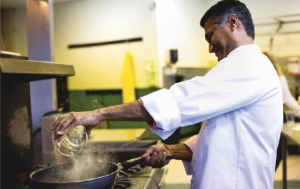
That’s what it’s all about to Patel, who alternates between the chef who prepares your meals and the restaurant owner who tries to visit every table to talk to his guests. Meanwhile, plates of coconut curry chicken, Indo-Thai shrimp and many others make their way to tables.

“Food is something that brings people together,” Patel said. “It should be that way. You should have a good experience surrounded by your friends, colleagues, spouse.”


My Girlfriend’s Wardrobe
38 N. Beaver St.

This consignment shop traces its roots back to Harrisburg University, when owner Alexandria Keener-Hammond was looking for a meaningful internship. Her mother had always wanted to open a boutique, and, with a house full of clothes, it seemed like a good idea. Keener-Hammond, a web design major, went to her advisor and asked to start an online consignment business.

“It just kind of all came together one day with needing an internship and not knowing what to do and having all of these really great pieces in our closet that we were going to get rid of,” Keener-Hammond said.

Now, she owns My Girlfriend’s Wardrobe with her mom and runs the business full-time. They’ve been operating for six years and moved to their Beaver Street location this past May.

Stepping inside is like going to a friend’s house. There are exposed beams, a fireplace and exposed brick walls that make it feel more like a stumbled-upon gem. Items are typically priced at a third of what they originally sold for, and they carry brands from Chanel to American Eagle.

Keener-Hammond said that it’s not just the coveted Beaver Street location that makes My Girlfriend’s Wardrobe a destination. She’s noticed that more foot traffic downtown means her business grows every year.

“More and more people every day are realizing that downtown York is a really great place to come down and grab lunch and hang out with friends, or bring their kids on First Fridays and just have a really good time.”


Collusion Tap Works
105 S. Howard St.

There are now six breweries within a half-mile of each other in downtown York, according to Collusion Tap Works owner Jared Barnes. He called it “quite overwhelming” but is happy to see so many new restaurants, and even breweries, opening up that bring people downtown and give them options.

Collusion Tap Works opened in 2016 after Barnes worked for multiple breweries up and down the East Coast. The York Suburban grad lived a full life before he started making beer. He joined the military at age 18, came back to go to school for engineering and then started making beer in the basement of a place he worked at in Columbia, Pa.

The basement beer turned into a full-time gig. Barnes went to school to learn brewing in Chicago and then Germany. Eventually, he came back to York to work for himself.

Collusion is located in the trendy Royal Square area near Taste Test York and numerous art galleries. There’s plenty of parking, which is in demand in other downtown locations. The building itself is small but comfortable, with eclectic decorations that remind you fondly of your college dorm.

Barnes said they have 21 to 24 beers on tap depending on the day. Homunculus and the Fuzzy Scrumpit IPA are two of the most popular options, but there’s also a mix of sours and stouts.

“We don’t just brew one or two styles of beer,” Barnes said. “We’ve done 430-something different beers now since we’ve been open for two years. You’re going to have something new every time that you come to Collusion.”


Gusa by Victoria
252 W. Philadelphia St.

“I got married into the area, and when I came here there was absolutely nothing—or so it seemed—for me to do,” Victoria Kageni-Woodard said about her arrival in York.

Kageni-Woodard, originally from Kenya, started working in the construction industry to provide for her family. However, it was a passion for creating clothes that drew her to the United States in the first place.

She attended Savannah College of Art and Design to hone her sewing and fashion skills. After a few years of renting a space in Royal Square, she ended up on W. Philadelphia Street.

While her core product is sewing and fashion design, there’s no limit to the experiences at Gusa by Victoria. The clothes, all of which she makes herself, are bright and vibrant, reminiscent of many of the patterns in African fashion. However, Kageni-Woodard doesn’t stop there. She teaches sewing workshops and Swahili to kids and adults, hosts jazz nights outside of the shop and created the Gusa World Music Festival.

“I’m always trying to figure out other things to make it more lively,” she explained.

Kageni-Woodard also offers a dining experience called Gusa Dining Excursion. Every quarter, she picks a country from Africa and has a celebration, including native food, traditional dancers and even a class about the people and the culture. Next summer, she’s hoping to launch “Gusa Goes to Kenya” to bring a group of people, including her children, back to her home in Kenya.


Day Trip: York

In recent years, downtown York has become a haven for boutique browsers and shoppers. Here are a few more places to stop during your trip to the historic city center.


Central Market
34 W. Philadelphia St.

The arguable hub of downtown York, Central Market has a stand for everyone. Whether it’s a burrito or flavors of Africa, you will find it in the large building.


Cherie Anne
48 W. Philadelphia St.

Unique gifts and personal service are the hallmarks of Cherie Anne, a boutique featuring everything from hand-knitted clothes to gourmet food to locally made, artisanal products. Cherie Anne and daughter Amanda will steer you through their carefully curated, eclectic selection of handmade creations.


HIVE artspace
126 E. King St.

HIVE is an arts collective that features both local and national artists. It’s free and open to the public.


i-ron-ic
256 W. Philadelphia St.

This coffee shop also functions as an art and thrift boutique. Stop by the store in the WeCo neighborhood or check out the window downtown with a drive-thru menu for coffee.


Molly’s Courtyard Cafe
46 W. Philadelphia St.

The former Cherie Anne’s Courtyard Café recently changed names and moved right next door to a bigger space. The courtyard is still magical, especially on a nice night.


Redeux Vintage
113 S. Duke St.

Get your upcycling on at this secondhand marketplace, which features curated vintage goods from apparel and antiques to handmade jewelry.


Timeline Arcade
54 W. Market St.

Check out classic arcade games and new gaming consoles in both downtown York and Hanover.

York City Pretzel Co.
39 W. Market St.

These hand-twisted pretzels are made right downtown. Purchase them for your next party or stop in for a pretzel sandwich while you’re walking around.


Continue Reading

Great Writing Lives Here: Authors speak, collaborate and stay awhile at Bowers Writers House.

In Elizabethtown, there is a low-slung brick house that you might breeze right by without a second glance.

It’s pleasant-looking enough, tucked behind some trees, similar to other houses on the leafy streets around Elizabethtown College.

Inside, however, the house is special indeed, especially if you’re a fan of writing and literature.

It’s Bowers Writers House, a just-off-campus building that has been hosting writers and authors since 2010, when Director Jesse Waters launched this mecca for thinking, writing and creative collaboration.

“My plan was to set up an environment where a person from one discipline—perhaps a chemist—can partner with one from another discipline—maybe a poet—and the two can learn from each other,” Waters said. “This is the perfect answer for a liberal arts college. I want our workshops to leave the academics at the door and bring in a passion for learning.”

Waters may be the perfect person to foster such an inter-disciplinary collaboration, given his own diverse background, which includes stints as an executive chef, rock musician and clam farmer. He also brings impressive writing credentials, as his fiction, poetry and nonfiction have appeared in publications nationally and internationally, receiving numerous prestigious nominations and awards.

After Elizabethtown College asked Waters to launch Bowers Writers House, he traveled to other schools to determine what made their houses successful. Franklin and Marshall College and the University of Pennsylvania had programs he liked, he said.

“I believe it’s critical to make the Bowers Writers House a location of the campus, but not on the campus,” he said. “The goal is to create a tone of quiet excellence in learning for the students and other attendees in a comfortable and relaxed environment.”

A dozen or so public events take place each semester at Bowers Writers House, named for college alumni and philanthropists Ken and Rosalie Bowers. For each event, one or two visiting instructors set up programs there and stay overnight in the cozy four-bedroom, three-bath house.

The craft portion of a workshop usually runs in the late afternoon then workshop members are hosted at a dinner, where they meet with the presenter in an informal setting. After dinner, the presenter reads from his or her works and answers questions without needing to hurry.

Over the years, Bowers Writers House has become known both for the diversity of its programming and its collaboration among disciplines, which together have helped recruit many “A-list” authors and speakers to the small-town college campus in central Pennsylvania.

Examples include the nationally known author and scholar, Haroon Moghul, who spoke about his book, “How to Be a Muslim: An American Story;” Peter Mehlman, co-executive producer and lead writer for “Seinfeld;” and “Hoop Dreams” star and educator Arthur Agee, Jr.

“We have usually between 12 to 15 presentations each academic semester, from dramatic readings to musical performances to interactive panels,” Waters said. “Our programs offer a dynamic variety of enjoyable and formative experiences and are open to the public.”

I personally had the pleasure of attending an afternoon workshop by Matt Tullis, an assistant professor at Fairfield University. His memoir, “Running with Ghosts,” highlights how he survived cancer as a teen, while many of his fellow patients, whom he befriended, did not live. In later years, he became a runner and visited with the families of those patients. Sometimes, he said, he could feel the ghosts of those children running with him.

“For the future, I hope to enhance student involvement in the various workshops,” Waters said. “For example, if we are presenting an art workshop, I want to take advantage of this beautiful house and set up easels on the lawn so students can actually practice what they are learning.”


Bowers Writers House is located at 840 College Hill Lane, Elizabethtown. For more information call 717-361-1000 or visit www.etown.edu/centers/writershouse.


Continue Reading

Fun in the Burg: Over 9 years, a small arts event has grown into a celebration of city, community.

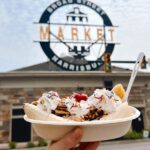
Broad Street Market during 3rd in the Burg.

Friday at 5 p.m. is the workweek’s golden hour.

You’ve endured the rigors of the grind, running on caffeine and stress, and then… freedom. TGIF.

In the capital city, there’s a double shot of thanks on tap on the third Friday of every month.

That’s when Harrisburg rolls out its greatest hits reel: new gallery openings, hot new bands, custom cocktails, novel exhibits, gourmet specials, door-buster sales. The lights stay on longer in venues throughout the city, the crowds descend, and businesses put their best foot forward.

Akin to First Friday celebrations, “3rd in the Burg” runs year-round and allows folks to dial down the breakneck pace of the work week and stroll through the streets of the capital city, relax with a fine cocktail and gourmet dinner and mingle with friends, artists and musicians.

Nine years after 3rd in the Burg debuted, it’s getting an exciting refresh: a new logo, a new brochure with a map, a litany of new sponsors, a revamped website and a stronger social media presence.

“3rd in the Burg has operated rather quietly, like clockwork, for years,” said Larry Binda, editor-in-chief of TheBurg, which organizes the monthly event. “We want to raise its profile a bit and emphasize its association with TheBurg, since few people seem aware that we lead it.”


Opens Your Eyes

In recent years, the Broad Street Market has arguably become the heart of the action during 3rd in the Burg. However, the celebration extends broadly throughout Midtown and downtown, and typical participants include The Millworks, the Susquehanna Art Museum, Midtown Cinema, Home 231, Midtown Scholar, Zeroday Brewing Co., Right on Reily, Cork & Fork, Mangia Qui and the Vegetable Hunter.

Nor is it just for young hipsters, millennial professionals, state workers or the uber-artsy.

“There’s something for everyone,” said Kelsey Tatge, the 3rd in the Burg coordinator who often attends with her “West Shore mom” for dinner at Café 1500, Pastorante or Cork & Fork.

It’s family-friendly, dog-friendly and safe, too, she emphasized. And, after 5 p.m., parking is free in much of downtown.

To see the rapidly growing list of sponsors, just turn this magazine over. The ad for 3rd in the Burg was first placed on the back page nine years ago, and it has remained in that coveted spot since.

Devan Drabik, director of Explore HBG—a new sponsor—said it is “a celebration of not only the arts, but of the creative minds in the city, including the adaptive re-use” of so many buildings, including The Millworks and the Historic Harrisburg Association’s ongoing renovation of its bank building.

“Having TheBurg involved has been a tremendous blessing to 3rd in the Burg and the businesses involved,” Drabik said. “Since they took leadership of 3rd in the Burg, there has been a continuity of anchor businesses participating and an outpouring of new venues wanting to be involved.”

When Binda brought his friends from the nation’s capital to the state capital’s citywide art walk and bash, they were pleasantly surprised by the culture here. Their one challenge: Binda saw so many people he knew, they never ventured far from the Broad Street Market and Little Amps. His friends started calling him “mayor.”


Lots to Do

The reunion of old friends and the attraction of new tourists is part of the beauty of Harrisburg’s signature cultural event, as energy reaches critical mass.

Sydney Musser, of the Harrisburg Downtown Improvement District, said they timed their “Art in the Box” event, featuring artists painting 14 utility boxes, with 3rd in the Burg.

“3rd in the Burg is great because we can highlight all parts of Harrisburg,” Musser said. “Harrisburg is a small city, but it still has lots to do and check out, and this opens your eyes to that fact. It makes Harrisburg shine for those living here and those visiting.”

Tara Chickey, art director at The Millworks, said that the restaurant/brewery/art venue is often elbow-to-elbow during 3rd in the Burg as they schedule show openings with the event. An added draw is that “95 percent” of their artists are in their studios that evening, so patrons can meet them and chat.

“Harrisburg is a walkable city,” Chickey said. “This lets us connect the downtown with Midtown and Uptown.”

It also supports the “buy local” movement, she said.

Vivian Sterste said her fine arts gallery, Vivi on Verbeke, has been participating for several years. Located a stone’s throw from the Broad Street Market, she opens her cozy studio/gallery free of charge every month for a dose of unique pottery, vibrant paintings and more.

“We bring a warmth and camaraderie to our community on 3rd in the Burg,” Sterste said.

Even the downtown McCormick Riverfront Library is joining the party this year. Marketing Assistant Christina Zeiders said that, on Nov. 16, from 6 to 8 p.m., the library will hold “Date Night.” Attendees can bring their significant other or friends for food and crafts. They can choose either a pint glass or wine glass to decorate, at no cost to participants.

“Last summer, we began opening Saturdays as well as two evenings a week,” said Lisa Howald, new branch manager. Starting in September, they opened their doors late for 3rd in the Burg.

“We kicked off with ‘Bad Art Night,’” she said. “Participants had a great time making the worst art they possibly could in competition for a terrible trophy.”

In October, they hosted “Escape the Library,” an escape-room-style challenge. And, in the coming months, they plan to have live music, book bingo, mini-golf, snacks and more.


About Community

3rd in the Burg started in late 2009 when several local gallery owners wanted to launch a First Friday-type event to attract art-lovers to their venues. They approached TheBurg to be a founding member and media sponsor.

In the beginning, businesses and galleries had to pay a fee, which limited participation. After the original galleries closed, a steering committee asked TheBurg to take the reins completely. The first change made by TheBurg: eliminating the participant fee and attracting sponsors to offset the cost of the prominent, back-cover ad.

“The fee, although modest, was a huge barrier to participation,” Binda said. “After we eliminated it, everyone wanted to be part of 3rd in the Burg.”

Venue participation immediately jumped and, most months, 40 to 50 galleries, museums, restaurants, bars and other places now join in.

Binda noted that 3rd in the Burg receives no public funds, which distinguishes it from many First Friday-type events in other cities, nor is it a moneymaker for TheBurg.

“We basically donate staff time to it,” he said. “But we like providing this service. It’s become important to the fabric of Harrisburg.”

Importantly, it both brings people into Harrisburg for the evening and, for residents, acts as a community gathering, as locals use the night to congregate, chat and share a meal.

“It’s not just for tourists. The people who live here participate,” Binda said. “It’s a communal gathering. You see neighbors talking to neighbors.”

Tatge agreed.

“Everyone says ‘hi’ to each other,” she said. “It makes you feel like you are a part of something. I’m proud of it.”

In the end, 3rd in TheBurg is a natural extension of TheBurg’s mission, Binda said.

“We want to serve and foster community,” he said. “The Harrisburg area can be a contentious place, and we like to think that 3rd in the Burg is when the entire community can come together.”

So if it’s the third Friday, and the crowds throughout the city are big and happy, this must be Harrisburg.


3rd in the Burg takes place the third Friday of each month throughout downtown and Midtown Harrisburg. This month, 3rd in the Burg is on Nov. 16. For more information, see the brochure in this month’s issue, go to
www.thirdintheburg.org or visit the Facebook page.

Continue Reading

Sweet Scent of Success: Another busy holiday season awaits family-run Keystone Candle.

When you pull into Keystone Candle, you can detect the pleasing scents even from the parking lot.

Such is the ambiance of the local, family-run factory store in Swatara Township.

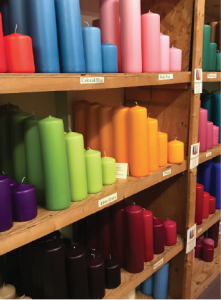
Keystone Candle doesn’t just sell any old candles shipped in from wherever. This homegrown business has been crafting its own products for more than 40 years. Today, it offers around 100 scents in votives, tapers, pillars, jars and even baking dishes.

“We make all our candles here,” said Kristen Cowles, the third generation of her family to work the business. “For our candle rings and other accessories, most are made in the U.S. or ordered from a U.S. facility.”

Inside, a virtual cornucopia of candle scents mingle into a delightful potency. There’s apple cinnamon, coffee cake, baked apple crisp, lavender, bayberry and “Night Before Christmas,” plus sweet pea, merlot and spiced pumpkin, to name just a few.

Pumpkin also is the name of the friendly resident cat that greets you at the door. He likes leading customers around the store.

Ito, a devoted customer who hails from Swatara Township, has bought Keystone Candles on a “constant, revolving-door basis” for 25 years, he said. His favorite is sandlewood, but he also likes mesquite, balsam pine, linen and citronella.

“They’re amazing. I buy them as gifts and keep buying them for the home and work,” said Ito, who works as a hairdresser in Susquehanna Township. “I also like that they will put candles in your own containers.”

George Morris and wife Lindy of “Imagination by Lindy” sell Keystone Candles with their own crafts in shows and fundraisers around Pennsylvania and their home state of Maryland. George said he favors the pumpkin pie and pecan waffle scents.

“As soon as we started selling them, so many people wanted to buy them,” George said. “The wax is scented all the way through. To me, they’re very high quality.”


So Popular

Like many family businesses, Keystone Candle originated as a small, home-based enterprise.

In the mid-1970s, Jeff and Cathy Brown began crafting homemade candles as a fundraiser for Middletown Christian School, where both worked as elementary-level teachers. Things changed, however, when Cathy’s parents, Art and Jane Eccles, started selling the Browns’ candles in their three gift shops. Before long, the candles became so popular that Jeff continued production in his basement.

In 1976, Cathy became pregnant with the couple’s first child, and Jeff decided that a growing family needed more income. He quit teaching and went into the candle business full-time with the Eccles.

“I knew when my dad was home because I could smell the candles on him when he walked past my bedroom at night,” daughter Katie recalled.

The popular business continued to grow and, soon, the Brown family’s basement became too cramped for the increasing production. The business moved into a rented garage near their Middletown home and acquired its first few employees. Candle Lite—Keystone Candle’s first incarnation—was in business.

The new location quickly attracted the public’s attention. In response, the Browns and Eccles opened a small retail shop at the entrance. A wholesale division kicked off when other storeowners ordered the candles to sell in their own businesses.

Soon, the Eccles closed their gift shops to focus exclusively on making and selling candles. The business outgrew the garage and was moved into its current location on state Route 322/Paxton Street in Swatara Township. Cathy left teaching to work the factory and help with retail after her mother’s death in 1988.

The business continued to grow and was renamed Keystone Candle. The Browns took it on as their own after Art died in 1997. Daughters Kristen and Katie stayed on, too.

“They’re all fabulous, very, very nice people,” Ito stated.


It’s Our Family

Soon enough, the family faced another challenge. In July 2000, a fire gutted the business, just as work began on that year’s stock for Christmas, the busiest season.

“We had just gotten a wax shipment in, and we still had to pay the bill,” Kristen recalled. “It was a total loss.”

Fortunately, a fire sale held the following week attracted so many loyal customers that local police showed up to direct traffic in the area. For the next three years, Keystone Candle operated from a rented location on Derry Street as the permanent site was rebuilt.

“When you have such a devastation like that, you find out who your friends and family really are,” Kristen noted. “It’s one of those things when you just pull together and keep going.”

Today, Cathy manages the business’ bills and checks on a semi-retired basis. Jeff, who recently had knee surgery, comes in most days to help out. The business also employs 15 full- and part-time workers.

Kristen manages the store, and Katie works the factory, as does Kristen’s husband Peter. Kristen and Peter’s teenaged daughters, Taylor and Sydney, work summers there just like Kristen and Katie once did. Peter also writes the company’s blog.

“I’m very picky about making our candles,” Katie said. “Everything has to be perfect. I grew up with this business. It’s our family. That makes it mean even more to me.”


Keystone Candle is located at 7241 Paxton St. (state Route 322 East), Swatara Township. For more information, visit www.keystonecandle.com or call 717-564-2220.

Continue Reading

We Need a Hero: Shakespeare’s Pericles–a character worth rooting for.

Though not as often celebrated as some of his other works, William Shakespeare’s “Pericles, Prince of Tyre” is, by all accounts, one of his most popular plays.

Indeed, there’s not much to dislike. It has adventure, betrayal, love, reunion, redemption, and at the center is a character that takes it all in stride. There’s something truly cathartic about seeing a good hero prevail in a story that seemingly has the perfect set-up for a classic Shakespearean tragedy.

Gamut Theatre Group seeks to tell the story through a combination of elements, including original music and dance, in order to convey the deep emotions of this story by highlighting their universality. In talking with the director, Thomas Weaver, and the choreographer, Rachita Nambiar, it becomes evident that the essence of compassion is at the center of the theater’s production.

Weaver says this is exactly what makes this play so timely.

“’Pericles’ has become a popular title, these days,” he says, “and I can see why.”

The play follows a prince from his homeland of Tyre to various countries and cultures as he explores the lands and flees persecution from a tyrannical king in another region. As a result of his travels, Pericles finds a home in every place he visits, yet he faces incredible hardship. A production like this— where travel and new culture is a central element— can be very dynamic. Both Weaver and Nambiar use this to their advantage in their approach to the play, stylistically and thematically.

The play itself, and its creation, is a combination of various styles that lends itself to a diverse outlook. It is widely accepted that this story was written by multiple authors: William Shakespeare and, as Weaver describes, a “philandering London low-life” named George Wilkins. While, today, the idea of original content and work attribution is very important, it was common in early modern times to collaborate anonymously, especially with playwrights.

The authorship question, as it relates to “Pericles,” helps us to understand how the play can toe the line of so many thematic elements in what is one of the Bard’s shortest plays. It also helps us understand the technical approach Weaver has taken in directing the play and how the inclusion of Nambiar’s traditional dance techniques complements the collaborative attitude that surrounds much of Shakespeare.

With elements of tragedy, history, adventure and romance, it would be easy for the text to be convoluted. Weaver explains that it helps that Pericles is a sympathetic character and one who the audience believes deserves a happy ending.

“It’s rare to have a Shakespearean hero who you can 100 percent root for without reluctance,” he says.

Exuding that compassion is something the Nambiar believes is enhanced by the dance numbers included in the performance. Coming from a background of traditional south Indian ancient dance, Nambiar has used a combination of fusion techniques to blend these elements to enhance the story.

“These dance forms are traditionally very dramatic, so they complement the play nicely,” Nambiar says. “A lot of these dances are used to tell a story. They talk about the feelings in a way that really enhances the aura of the entire play.”

Audiences should be able to recognize and relate to the moments of joy, strength and victory that Pericles expresses in his first dance and the soft, romantic moments of the second. The inclusion of the dance not only makes the emotions of the play more tactile, but it serves as an interlude and celebration of success after a great deal of suffering.

Weaver believes it is precisely this expansive emotional and thematic range that has attracted people to the play for more than 400 years. The universal themes of Shakespeare allow us to examine our humanity, and watching a performance allows us to share those moments with each other.

“The story is adventure, not just for Pericles, but for the audience,” Weaver says. “And I’m very interested in what Shakespeare might be trying to tell us about the nature of adversity and suffering. It is important to see stories that celebrate hope in times of very real adversity.”

“Pericles, Prince of Tyre” runs Nov. 3 to 25 at Gamut Theatre, 15 N. 4th St., Harrisburg. For more information, visit www.gamuttheatre.org.

UPCOMING THEATER EVENTS
AT HARRISBURG’S PROFESSIONAL
DOWNTOWN THEATERS

At Gamut Theatre
www.gamuttheatre.org
717-238-4111

William Shakespeare’s
“Pericles, Prince of Tyre”
Nov. 3 to 25
Fridays and Saturdays at 7:30 p.m.
Sundays at 2:30 p.m.

The Popcorn Hat Players Present
“The Steadfast Tin Soldier”
Nov. 28 to Dec. 15
Saturdays at 1 p.m.
Wednesdays and Thursdays at 10 a.m. available by request for groups of 20 or more.


At Open Stage of Harrisburg
www.openstagehbg.com
717-232-6736

“A Christmas Carol”
Dec. 1 to 23
The Charles Dickens classic about redemption and the Christmas spirit returns for another triumphant year at Open Stage.

“A Very Court Street Cabaret Christmas”
Dec. 14 and 15 at 7:30 p.m.
The Court Street singers return performing holiday favorites with a few twists and laughs along the way.

Continue Reading

Sours? Sweet!: Mellow Mink brings Belgian style to central PA.

Matthew Miller remembers a certain day in 2007 as one that would change his life.

It was when he tried his first Belgium lambic, and he immediately fell in love with the taste of sour beer.

Fast-forward a decade or so, and Miller and his husband, Cole Taylor, opened Mellow Mink Brewing to share their affection for high-quality sours—and great craft beer—with the people of central Pennsylvania.

“We’re crafting tap lists to appeal to someone who’s completely craft beer naive, the whole way up to someone who has very specific tastes,” Miller said.

Miller, the director of brewing and blending, began home-brewing in 2009, then started writing specifically about sour beers in 2014 on his blog. Now, he’s doing what most people only dream of—turning his passion into a career. Miller is the brains behind the many new recipes and flavors Mellow Mink features on its rotating taps.

“The more involved I got with writing, the more the passion kind of took hold,” he said. “It eventually became a thing where, I brew a lot of beer and I write about a lot of beer, but I wanted to be able to take that to the next level so I could actually make enough to share with the public.”

Meanwhile, Taylor brings creative strategy to the table, focusing on perfecting Mellow Mink’s online presence, marketing and overall “vibe.”

“We want to take the brewery and elevate it to a more upscale level,” Taylor said. “I think there’s already been this whole culture established around different breweries that, atmospherically, tends to be more industrial. I wanted to create more of an upscale environment that kind of mixed more interior design with beer. But, while it is visually upscale, the attitude is very much down to earth.”

Or, as he describes it—“sophisticated but not snobby.’”

Miller said this type of setting aligns with the brewery’s specialization in sour beer, as it takes some serious time and TLC to perfect this type of ale — in fact, it’s comparable to the aging process of fine wines and cheeses.

“The wine world is filled with beautiful tasting rooms, estates and vineyards and things like that,” Miller said. “But in the brewing world, it does often come down to function over aesthetics. And we really wanted to kind of bridge the gap between those worlds.”


Crown Jewels

Miller and Taylor are joined by Cale Baker, Mellow Mink’s head brewer, who brings both his own and Miller’s new ideas to life. Baker also began home-brewing in 2009, and he’s been brewing professionally for about three years.

And, to ensure something for every palette, sour beer isn’t the only thing on tap.

Mellow Mink has around eight versatile, in-house blends on draft at all times. Right now, they’re playing with around 30 or 40 recipes, Miller said.

Miller said that he finds a lot of his inspiration from food, cocktails and other beverages to create new flavors. Specifically with sour beers, he typically incorporates tastes from fruits, yogurts and even cheeses and cured meats.

Both Miller and Baker said they’re inspired by brewers such as Cantillon, 3 Fonteinen, Jester King, The Rare Barrel, Russian River Brewing and Allagash. They agreed that the culture these breweries create around their beers influences and motivates them just as much as their incredible flavors.

Soon, they plan to start an aging program, where they’ll age beer in oak barrels and stainless tanks for anywhere from three months to a couple of years. Then, they’ll bottle-condition them, allowing the brews to continue to age for several years. Miller said these blends will likely be the “crown jewels” of Mellow Mink’s lineup.

Overall, Miller and Taylor want Mellow Mink to be a place that becomes a well-known feature of the community, as well as somewhere people can sit down, relax and try something that maybe they haven’t had before. They want to be a place that creates unique brews for drinking on site, for taking home and even saving for special occasions and for giving as gifts.

“Hopefully, 20 or 30 years from now, we’ll still have a Mellow Mink,” Miller said. “And hopefully, it’s something everyone knows and appreciates.”


Mellow Mink Brewing is located at 4830 Carlisle Pike, Mechanicsburg, in the shopping center near Planet Fitness and Karns Foods. For more information, call 717-693-7687 or visit www.mellowmink.com.

Continue Reading