A Very Good Year? Yes, assuming you like infrastructure and hate Act 47.

The days tick by and, before you know it, another year has passed us in the city of Harrisburg.

As I normally do for my January column, I’m reliving the recent past by reviewing the top news stories of the last 365 days.

I would say that it was an up-and-down year for Harrisburg, but I feel like I say that every year. In any case, buckle in for a trip down memory lane, assuming, that is, that your memories, like mine, mostly consist of taxes, housing and roadwork.

10. When the Rains Came
In journalism, the weather story may be the last refuge of the uninspired, and, accordingly, we don’t write a lot them. But even we take notice when the relentless rains start to affect people’s everyday lives. In 2018, the deluge began early, took a snow break for a late March blizzard, then continued for much of the year, obliterating outdoor events, delaying road projects and closing City Island briefly in July. In its history, Harrisburg has suffered much worse floods, but that was small comfort to the Pride of the Susquehanna riverboat, which lost weeks of sailing due to high water, leading to financial setbacks and appeals for donations.

9. New District, Same Result
The year started off on a hopeful note for area Democrats, as the state’s long-gerrymandered congressional districts were redrawn. The new 10th district, now centered around the Harrisburg area, still had Republicans in the majority, but their partisan advantage had narrowed. A snoozer of a Democratic primary led to the nomination of George Scott, a likeable, mild-mannered minister who, in the general election, raised a lot of money and fielded a large, enthusiastic team of volunteers. However, in the end, he could not dislodge the entrenched Republican incumbent, Scott Perry, who beat back the challenger by nearly three points.

8. Go Downtown
Harrisburg has suffered from decades of disinvestment. So, you might think that city officials would enthusiastically embrace multi-million-dollar redevelopment projects. Some, however, showed little love for a plan to convert two large, underused office buildings on Pine Street to apartments. City Council President Wanda Williams, claiming a lack of affordable units, objected to the projects. Harristown Development countered that some of the proposed units did meet the definition of “affordable” and, in any case, that the city as a whole, and downtown, in particular, would benefit greatly by an influx of new residents and their money. In the end, Williams’ objection could not derail the projects, which satisfied all other conditions set by a city that lacks a formal affordable housing policy.

7. Empty Spaces
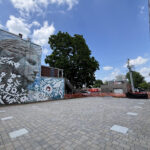
During Harrisburg’s golden age, the Market/Cameron street corridor buzzed with activity from factory workers, auto salesmen, postal clerks and ink-stained wretches. But that was long ago. Today, it’s largely a no man’s land, stuck between hope and despair. On the despair side, it lost one of its few remaining structures—the century-old Schell seed building. But the circle of urban life continues, and, in March, the commonwealth released two promising reports. The first set forth renovation plans for the nearby, historic train station, and the second outlined a long-term vision to restore the Paxton Creek watershed, which would add acres of green space to the blighted area and reduce the risk of flooding. Mayor Eric Papenfuse has called the Paxton Creek project potentially transformational, but that transformation remains many years and many more millions of dollars away.

6. House of Controversy
Every year, a story pops up seemingly from nowhere and then surprises me in its public interest. For 2018, that story was the ongoing saga at the House of Music, Arts & Culture—otherwise known as HMAC. The summertime drama started after a patron said that she was assaulted after leaving the venue. The police soon cleared HMAC of culpability, but not before Facebook exploded in an onslaught of online invective. Soon after, TheBurg reported that HMAC had filed for Chapter 11 bankruptcy and that its owners planned to sell the sprawling art space and restaurant. If HMAC does get new owners, 2019 could be a pivotal year for a place that has come a long way over a decade, when it was a blighted shell, but that, by its co-owner’s own admission, could use fresh leadership.

5. Park & Dine
Last January, I wrapped up my annual year-in-review column by stating that, for the first time in years, my top-10 list excluded the single-most persistent issue in Harrisburg—parking. Well, it’s back! In April, the city, Dauphin County, the Downtown Improvement District and Standard Parking inked a deal to provide free street parking after 5 p.m. throughout much of downtown. The early reviews were positive, with restaurant owners saying that business had picked up once patrons realized they could snag a drink or dinner without risking a $30 ticket. The one-year deal expires soon, so we’ll have to see what City Council and other stakeholders think of their “one-year experiment.”

4. Plan Jam
Second only to parking, the unfinished comprehensive plan is the city’s most evergreen story—with us year in, year out. It may now seem like a distant memory, but the city held a public meeting last January on the draft plan. That public hearing garnered many comments from residents, even as Mayor Papenfuse denounced the draft document as “unworkable” and “unsalvageable.” Papenfuse later threatened to replace the entire Planning Commission, even if it took years, to get a plan more to his liking. Nonetheless, the commission stuck with its draft and, in November, requested $50,000 to finish it up. So, could this be the year that Harrisburg finally gets a new comprehensive plan? Maybe, but I’m already reserving an entry for it on my 2019 list.

3. Drama Class
Generally speaking, Harrisburg is a much less dramatic place than it was a few years ago, during the height of the city’s financial crisis. I now will carve out a great, big exception for the school district, which has taken over as the center of city spectacle and dysfunction. Every month of 2018 seemed to feature some new problem—budget shortfalls, a tax hike, poor academic performance, a controversial grading policy, school board resignations, personnel issues, principal reshuffling and a battle over whether to re-appoint the superintendent, among other issues. I’ll go out on a limb and say that, with control of the school board at stake during upcoming municipal elections, city residents should expect more of the same this year.

2. All Roads Lead to (and from) Harrisburg
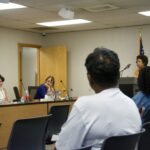
This past year, the long-awaited 3rd Street corridor project finally began digging, cutting and drilling. Then it stopped. Then it started again. City officials now say that the streetscape and paving project will conclude this year. But 3rd Street wasn’t the only stretch of road on the minds of city residents in 2018. The city kicked off its “Vision Zero” campaign with a public meeting in June, as it strives for zero pedestrian deaths, an ambitious goal considering the shockingly high rate of road fatalities. The year in infrastructure ended on a more hopeful note. In November, residents packed a public meeting on the city’s plan to convert much of N. 2nd Street to two-way traffic. Suburban commuters may have a different opinion, but the crowd that attended the meeting seemed to support the concept overwhelmingly.

1. The Long Good-Bye
In city life, an issue may arise under one set of assumptions, only to take numerous twists and turns before resolution. Such was the case with Harrisburg’s plan to leave Act 47, the state program for distressed municipalities. We began the year assuming the city would roll into a three-year wind-down of its involvement. That assumption was thrown into doubt after the state proposed doubling the city property tax as a condition for leaving. Appalled, Harrisburg officials asked the state legislature to allow the city to retain the extra taxing authority it has had under Act 47. That bill passed in October, though in a highly modified form that offers just five more years of enhanced taxing power. With that compromise, Harrisburg plans soon to exit Act 47 in 2019, allowing it, after many years, to shed the moniker, “distressed city.”

As I typically do, I will wrap up the January column with the disclaimer that, while these are my choices for the top Harrisburg news items of 2018, they may not be yours. You easily could make a case that I should have included the tragic deaths of a mother and son at the Dock Street Dam, the death of a U.S. marshal during a raid on a house in Allison Hill and the death of restaurateur Nick Laus, which was our single most-read online story of the year.

Here’s hoping that 2019 brings the people of Harrisburg nothing but good news, which I will happily recap a year from now. And more free parking.

Lawrance Binda is editor-in-chief of TheBurg.
Continue Reading

Slice of Life: Inside the Broad Street Market, a new generation takes the helm at Hummer’s.

Ryan Hummer

At just 11 years old, Ryan Hummer began working in the family business.

His grandfather, then his father, owned Hummer’s Meats in Kline Plaza in Harrisburg, and it’s where Ryan learned the ins and outs of running a butcher shop.

“I would stay at my grandpa’s house on the weekends, then go to the market with him to work,” Hummer said. “I learned a long time ago from my grandpa and dad about customer service and quality.”

The extended Hummer family actually began feeding central Pennsylvania nearly a century ago, as the related Rudy family had a stand in the Broad Street Market, making Ryan a fifth-generation butcher. His father still runs Hummer’s operation in Mount Joy and at several area farmers markets.

The Harrisburg business eventually migrated to the Broad Street Market, becoming a fixture inside the brick building, as did Ryan himself.

“I have worked in this market for almost 18 years, and people have watched me grow up,” he said.

A year ago, he took ownership of this part of the multi-generational enterprise under the slightly adjusted moniker, RG Hummer Meats and Cheese.

Locally sourced products, including pork delivered fresh weekly from Lancaster County farms, set Hummer’s apart from many other meat vendors. They also sell graded beef and a large variety of cheeses, as well as prepared foods. Hummer’s makes its own chicken salad, ham salad and meatloaf, among other sandwich and dinner staples. You’ll also find local favorites like scrapple and chicken potpie.

“When customers come to the stand, not only are they going to get a good experience from the clerks, but they are going to get a quality product every time,” Hummer said.

Hummer’s is especially known for its hams, which are free of additives and preservatives and are smoked and sealed in their own juices. In the lead-up to Easter, hams can be ordered bone in or boneless, Hummer said. Lamb and veal options are also available, and Hummer himself prepares the boneless, netted turkeys.

“I bone it out, net it, cook it and slice it down,” he explained.

If a holiday has a food associated with it, Hummer’s can provide it, including corned beef and brisket for St. Patrick’s Day and prime rib, ham and turkey for Thanksgiving and Christmas. Hummer also honors customers’ requests for certain items.

Timishia Goodson, a Midtown Harrisburg resident, has been a Hummer’s customer for about 10 years, long before she opened her bakery, Raising the Bar, inside the market’s stone building.

Goodson shops weekly at Hummer’s, choosing from a wide array of meats, cheeses and house-made prepared foods that line the long, refrigerated cases. The chicken, the sausages, the salads—they’re all excellent, she said. The sliced prime rib is her “go-to” to top off crostini for parties.

“They have a very large selection, and it’s all super-fresh,” she said.

Then Goodson mentioned a particular favorite, the brisket burger, which got the ear of her Raising the Bar partner and fellow baker, Casey Callahan.

“Everybody loves them!” Callahan exclaimed.

Callahan then told the story of how she got her mother to break a lifelong supermarket habit and begin to buy her meat at Hummer’s instead.

“The prices are similar, and the quality is much higher,” she said.

But it’s not just the product that draws people to Hummer’s. It’s also the service—the friendly, smiling guy behind the counter and his eager-to-please team.

“They’re very polite and extremely helpful,” Goodson said. “Great people.”

For Ryan Hummer, that sentiment goes both ways. He is deeply grateful for the community that has supported him and his family for so many years. He is involved in numerous community activities and donates to events whenever possible.

In fact, to Hummer, the Broad Street Market is itself a type of family, a place where he grew up and where, each week, he gets to serve and chat with the people he’s known for years.

“They have embraced me, and I always try to pay it forward,” he said. “Where else do you have a community atmosphere at the center of a city?


RG Hummer Meats and Cheese is located inside the brick building of the Broad Street Market in Harrisburg. For more information, visit www.broadstreetmarket.com or the RG Hummer Facebook page.

Continue Reading

No Parking, No Problem?


If you want to take in a view of Harrisburg, you could do worse than travel from South Allison Hill across the Mulberry Street Bridge.

The route connecting the Hill to the downtown business district puts in full view Harrisburg’s best assets and most glaring eyesores. The Susquehanna River, the downtown skyline and the glittering Capitol dome all inhabit the same panorama as industrial blight on Cameron Street and the gaping wall collapse at the McFarland apartments.

And then, smack-dab in the middle of it all—acres and acres of parking.

Between garages, surface lots and metered curbsides, Harrisburg has more than 24,000 parking spaces in its central business district alone. Five years ago, these spaces gave Harrisburg a ticket out of debt and bankruptcy, when they were leased to a private operator as part of a massive debt restructuring transaction.

That deal, which was underwritten by county and state taxpayers, carries a 40-year repayment schedule and expires in 2054. Far sooner than that, however, it’s possible many of Harrisburg’s parking spots won’t need to exist.

In the not-too-distant future, the emergence of autonomous vehicles (AV) promises to drastically reshape the way people work, travel and even park their cars. Vehicles controlled by artificial intelligence are already being deployed in industrial fleets, and experts expect they will be the country’s primary means of transport by 2040. When that point comes, it will bring big changes for American cities.

“When you look back at the early 2000s, AVs barely made it hundreds of feet,” said Brooks Rainwater, senior executive and director of the National League of Cities’ Center for City Solutions. “In the last 10 to 15 years, we’ve moved from autonomous vehicles being science fiction to fact. The vast changes we’re seeing are happening exponentially.”

Self-driving cars have the potential to upend all sectors of the economy, well beyond the transportation and automotive industries. AV evangelists say that autonomous driving will reduce carbon consumption, eliminate vehicle-related accidents and deaths, and encourage new models of car ownership, such as pay-per-use sharing or ride-hailing systems.

Skeptics say that a less onerous car rides will encourage people to spend more time on the road, increasing congestion and accelerating suburban sprawl. Millions of jobs in the trucking and transportation sectors will likely be lost to autonomous technology.

As transportation experts across the country prepare for autonomous vehicles to dramatically alter demands on public infrastructure, many agree on one thing: AVs could make parking lots and garages a thing of the past.

“There is strong evidence to suggest that current parking models could become obsolete in 20 years, if not sooner,” said Susan Shaheen, an adjunct professor at UC Berkeley and co-director of its Transportation Sustainability Research Center.

Shaheen explained that some curbside space still will be needed to dock, fuel or maintain AVs between trips. But according to Carnegie Mellon University public policy professor Rick Stafford, “when you take the driver out from behind that wheel, that car doesn’t have to stop and park somewhere.” Most passengers who reach a destination by autonomous vehicle will likely send it to park on its own, he said.

Since passengers won’t need to enter or exit their car from a parking space, autonomous vehicles can squeeze into tighter spots. Transportation experts also assume that driverless technology will invigorate ridesharing companies like Uber and Lyft, which are already piloting AV programs. It’s easy to envision private fleets of autonomous vehicles running in near-constant motion, stopping only to refuel or pick up passengers.

As a result, many experts expect that the autonomous revolution will greatly reduce the amount of real estate currently consumed by parking.

Lot of Concern
Researchers say there are as many as 2 billion parking spaces across the United States, and estimates vary for how many will remain in a fully autonomous future.

A report by the Urban Land Institute and Green Street Advisors said that parking needs could plummet by at least 50 percent as a result of autonomous technology. The global consulting company McKinsey Advisors put it differently, projecting that AVs could free up 5.6 billion square acres of parking real estate—an area larger than the state of Delaware.

Many planners are ready to say good riddance to unsightly garages and sprawling surface lots, which gobble up valuable real estate and increase congestion on city streets. But most cities—Harrisburg included—also depend on parking revenues to balance their budgets.

“We’re trying to project the exact impact, but our general hypothesis is that parking [revenues] that exist now in cities are likely to diminish,” Stafford said. “That raises a lot of concern from a city’s standpoint.”

A national analysis by Governing Magazine, which covers local and state public policy across the country, found that the largest 25 cities in the United States took in a combined $2.8 billion from parking revenue and enforcement in 2016. Small jurisdictions were more significantly reliant on vehicle revenues than large cities.

Unlike most of its peer cities, however, Harrisburg doesn’t have much say in how its parking assets are managed. The transaction it entered in 2013 calls for revenue from the parking system to consistently increase over its 40-year lease. Each year, these revenues are distributed to bondholders and then split among five different entities: the city of Harrisburg, the Pennsylvania Economic Development Financing Authority and Standard Parking (through its asset manager PK Harris and parent company Trimont).

According to Larry Cohen, director of the Lancaster Parking Authority and a member of the board of directors of the International Parking Institute, the presence of so many stakeholders, all with a valid claim to proceeds from the parking system, makes the burden of finances in Harrisburg “somewhat unique” among municipal parking systems across the country.

Could a massive disruption to the parking industry make 
it untenable?

Options
Parking professionals inter-viewed for this story said that autonomous vehicle technology hadn’t permeated their industry five years ago, when the terms of Harrisburg’s parking transaction were being 
hashed out.

Most now agree that their industry is in for a big change when autonomous technology becomes mainstream. But Albert Federico, a Swarthmore-based parking consultant, estimates that the industry has another decade before it will have to make serious predictions about future demand for parking.

“There are always forces that could be disruptive, what matters is how nimble can the industry be to adapt,” he said. “You have to be aware of potential disruptors, but on some level this is an essential public service and you need to err on the side of caution.”

Cohen said that 40 years is a long time to be locked into terms of any lease agreement, especially one that depends on optimistic budget projections. As a result, the viability of Harrisburg’s parking system may depend on its stakeholders’ willingness to revisit their agreement at some point in the future.

The operator at the top of the Harrisburg’s parking heap is Trimont, an international bond management firm. John Gass, the Atlanta-based manager for Harrisburg’s system, declined to comment for this story. Mayor Eric Papenfuse said that changes in the transportation industry do create concern for the bond deal, but declined to dwell too much on specifics.

“It would all be very theoretical at this stage, but it’s certainly something to think about,” Papenfuse said.

Since projections are still speculative, there’s not much Harrisburg’s operators can do but wait for more data to inform planning decisions. But city officials can future-proof any new infrastructure, such as parking garages, to prevent them from becoming obsolete in 20 years’ time.

For instance, Harrisburg leaders say they would welcome the construction of a parking garage near the site of the new federal courthouse at 6th and Reily Streets in Midtown Harrisburg, which is scheduled for completion in 2021. The $193 million project is expected to migrate 200 jobs and attract hundreds of patrons to a mostly residential neighborhood, a volume sure to strain the nearby supply of street parking.

Papenfuse said in December that he hopes a private developer will swoop in to meet the anticipated demand for parking spots. Harrisburg officials could follow the lead of the Pittsburgh Parking Authority, which is requiring the developer of a new parking garage to show that its design can accommodate adaptive reuse.

“If you’re going to build parking infrastructure now, build it so it can be something other than a parking garage some time in its life cycle,” said Mike Connor, a parking consultant who formerly managed the parking program in Arlington County, Va.

Architects and designers are scheming ways to turn existing parking garages into offices, apartments, and mixed-use spaces, he said, but traditional garage design makes many reuse options impossible.

Policy makers can prepare to replace revenue that could be lost when current parking models become obsolete. Since airports have already seen ride-sharing services chip away at their parking proceeds, many have started collecting fees from Uber and Lyft for every curbside pick-up and drop off at their terminals. Stafford said that could be a policy template for municipalities that want to monetize curbside real estate. Since driverless cars could also jeopardize state liquid fuels taxes, he said, many states may start to consider a shift to Vehicle Miles Traveled (VMT) taxes instead.

Even as they stare down a potential hit to their bottom line, many planners and engineers welcome any disruption that allows cars to cede space to humans. Freed from demands for parking, city leaders can widen sidewalks, plant greenery, or reclaim dank parking garages as spaces for commerce and housing. That should be especially good news to a city like Harrisburg, which plans to invest millions of dollars in pedestrian improvements in 2019.

“I do think that we’re moving towards a future that in many ways reflects the past, before vehicles overtook cities,” Rainwater said. “There will definitely be growing pains, as there is with any new technology, but I can’t think of a mayor who is not excited by all the great changes happening in mobility nationwide. I think we’re in a renaissance.”

Continue Reading

Fight for Your Might: At Thrive, workouts pack a punch.

When Rob Whitaker of Camp Hill began taking classes at Harrisburg’s Thrive Fit Co., he couldn’t physically complete a class.

“I was not fit at all,” said the 34-year old financial planner. “But when you come from a non-fitness background like I did, you want to be surrounded by positive people.”

Those positive people include his wife (the couple attends Thrive’s 6 a.m. class together twice a week) and Thrive owner Ashley Mentzer.

“Ashley is very optimistic and helps you want to achieve more—not just on a fitness level,” Whitaker said.

He has attended Thrive’s boxing-inspired workouts and boot camp classes for more than a year and is feeling much healthier as a result, both physically and mentally.

“I’m 6-5, a big guy,” he said. “My blood pressure went way down. I lost and continue to lose weight and inches.”


Passion, Positivity

Mentzer launched Thrive Fit Co. in 2017 through unconventional channels. She gained a following by holding pop-up classes in public places throughout Harrisburg, such as on the state Capitol steps.

“I started with two people on the first day,” Mentzer said. “It turned into eight and 10 and 20, and, some days, on the Capitol steps, we had 30.”

She began partnering with established fitness studios, hosting classes in their locations, bringing her tribe along.

Last summer, she organized the inaugural Thrive Fit Fest at City Island’s FNB Field. The daylong festival attracted nearly 500 people, who sampled fitness sessions and mingled with more than 60 Harrisburg-area health and wellness professionals.

The momentum continued.

Last September, Mentzer established a home for Thrive Fit Co. in the historic King Mansion on Front Street. Now, more than a dozen classes are offered weekly, including boxing-style HIIT (High Intensity Interval Training) workouts and boot camp classes targeting strength and toning in specific areas such as arms and abs.

Mentzer, who turns 29 this month, grew up in New Cumberland playing softball at Cedar Cliff, then got into cycling, triathlons and group fitness instructing. She earned her degree in communications design from Kutztown, works in marketing and is now a Harrisburg resident. Where does she get all her energy?

“Finding passion and positivity, seeing how fitness can change lives,” she said.


In a Flash

Boxing is a unique component of Thrive workouts.

Mentzer trained under Claudie Kenion at Capital Punishment Boxing Club and became certified to teach boxing two years ago. But there’s no sparring at Thrive.

“I’m not teaching you how to become a boxer,” she said. “I’m teaching you boxing for fitness.”

She said that was inspired by “the hottest studios in New York City” to offer boxing classes with a nightclub vibe.

I sampled her offerings, signing up for a “Box + HIIT” class.

After some quick warm-up exercises in the main studio, where a prominent sign proclaims “GOOD VIBES ONLY,” we moved into the boxing studio, took our places at 16 boxing bags and donned boxing gloves.

Mentzer, wearing a headset with a microphone, dimmed the main lights, launching a party atmosphere complete with dance music and disco lights.

Right away, she taught us proper stance and the one-two combination, a soft jab with the left glove followed by a powerful cross with the right. We quickly progressed into the three-four (left and right hooks) and five-six (left and right uppercuts) combinations, with Mentzer carefully explaining and demonstrating each move. Within a few minutes, she began calling out creative combinations (one, one, two, five, six) with the class punching out her combos for 30 seconds at a clip.

Every few minutes, we broke up the boxing with HIIT movements—100 jumping jacks, squats against the wall, arm circles and more. Mentzer constantly circulated, offering pointers and encouragement, adjusting posture or stance. Enthusiasm was high, and the 45-minute class went by in a flash.

“Once you learn the moves, you become more fluid,” said Emily Menario, 26, of Harrisburg.

Menario never boxed prior to her classes with Thrive, but she was “intrigued” by the concept, she said. A special education teacher for the Susquehanna Township School District, she began taking classes more than a year ago and was hooked.

“People are usually shocked when I tell them the workouts involve boxing,” she said. “But I explain that anyone can do it because Ashley is a highly motivating instructor.”


Change Lives

Perhaps it’s appropriate that Mentzer’s innovative fitness concepts are housed in the historic King Mansion, as the 1920s-era, Mediterranean-style manse was actually constructed with athletic components.

The basement, where Thrive is now located, housed the King family’s swimming pool and bowling alley. Today’s parking lot was originally a tennis court. The Kings believed in providing their six children with opportunities for both academic and athletic pursuits.

Mentzer said that today’s boxing studio was specially engineered with shocks to accommodate the weight of the boxing bags. Filled with water, each weighing 190 pounds, they are the only aqua bags offered in the region, she said.

The building’s longest tenant, for 54 years, was the Merchants & Business Men’s Mutual Fire Insurance Co. The King Mansion’s newest owner is Marc Kurowski, a principal at K&W Engineers and Consultants, whose offices are in the building.

Thrive continues to evolve. Mentzer said that heart-rate training, cooking and wellness classes are coming, and the 2nd Annual Thrive Fit Fest is set for June 22.

Her vision for Thrive is ambitious, going beyond just instruction.

“It’s bigger than fitness,” she said. “People coming through our doors want to change their lives.”


Thrive Fit Co. is located at 2201 N. Front St., Harrisburg (entrance on the Woodbine Street side). For more information, visit www.thrivefit.co or the Facebook page.

Continue Reading

Band Bond: In Olde Uptown, everyone’s jamming.

Burg in Focus: Yam Yam from GK Visual on Vimeo.

A “musical conversation.”

That’s how one member of Harrisburg-based band Yam Yam describes their sound, which is based on interaction and play between band members.

Specializing in funk, soul and jazz, the band gets its influences from many sources to form a uniquely vibrant, multi-layered sound. Over the years, Yam Yam has made a name for itself in and out of the city, performing at various venues with shows ranging from the weirdest to the wildest.

Following the recent release of their first album, which debuted at the Abbey Bar, band members sat down for a chat at their rehearsal space/house in Olde Uptown.

Yam Yam consists of Mike Dempsey on keys, Tom Fuller on guitar, Tyler Fuller on drums, Jason Mescia on saxophone and Xander Moppin on bass. Their current lineup has been together for two years, but some have been together longer. Tom and Tyler are brothers who grew up with an appreciation of music.

“We learned how to play instruments together,” Tyler said. “We’ve played together for probably 15 years now.”

Mescia said that the band “just kind of happened.”

“Serendipitous, that’s the word for it,” he said.

Tyler took it up a notch.

“It was actually super-serendipitous,” he said. “I had just moved in to this apartment, and those two were jamming next door.”

They all started to get to know each other and then met up to jam. Next thing they knew, Yam Yam was born.

“There’s a lots of cool music happening in this house,” Tom said. “The Flower Garden boys live over there [next door], we ‘Yam’ it up in here, and the Gobbo boys live upstairs. Everyone’s jamming!”

Flower Garden and Gobbo are two other groups you’ll often find on the local scene.

“We all play with each other all of the time,” Moppin said.

Special Sound

It’s clear, when listening to the new album, that Yam Yam is passionate about music and the power of improvisation. Their style relies on members creating unique sounds and then playing off of each other.

“I think improvising is kind of our biggest inspiration,” Dempsey said. “We like bands that make stuff up on the spot. That’s what we like to do.”

When writing music, band members tackle songwriting and rehearsal together as a team effort. Someone comes up with part of a song, and the others find ways to play off of it. Each member has his own specialty and unique sound to offer, and it’s the group’s task to find their part to accompany the sound.

Tom Fuller described the process as a “musical conversation.”

“The collective aspect of writing, I think, is what gives us our strength in the music,” Dempsey said. “Any individual can write a song, but writing it as a band is hard.”

Mescia believes this is where the band thrives.

“It gives us a special sound,” he said. “Everybody in the band is really good with having their own sound and personality within the band, but then they’re able to come together and work democratically, as well.”

Yam Yam started recording their album in 2017, and it’s been quite the growing process since. They spent hours recording overdubs in living rooms and basements and more hours at Rock Mill Studios in Mechanicsburg, working with Logan Summey. Aaron Miller, a friend of the band, attended a show and offered guidance on how to grow.

“He just gave us a direction and pushed us to be more professional,” Tyler said.

With Brian Wilson from the Beach Boys as inspiration, the band set out to taking full advantage of what the studio had to offer.

“Wilson was notorious for making the studio his instrument,” Moppin said. “It takes a really talented producer to make the studio your instrument so that you can play what you want.”

“We had some fun in the studio experimenting with our own sound,” Dempsey said. “It’s our first album, so we didn’t really know what it was going to sound like starting out. It really turned into something bigger than I ever dreamed of.”

Aside from their talent with music, the boys of Yam Yam are strong in their friendships and brotherly bond.

“I’d say that’s one thing that makes us special,” Mescia said. “Our drama isn’t that drama-y. We’re all just great friends.”


Yam Yam, along with friends Ex Mag, plays New Year’s Eve at Club XL, 801 S. 10th St., Harrisburg. For more information about the band, visit www.yamyamband.com or their Facebook page.

Continue Reading

Taste Times Two: Koda, Newfangled offer a flavorsome collaboration.

Photo by Dani Fresh.

Those of us who grew up with Italian grandmothers know what it’s like to live in an environment where food is an expression of love.

We’ve seen firsthand the smiles a good meal elicits. So, it’s no surprise that, as adults, we, too, are interested in creating a similar mood.

As a child, Christian DeLutis observed his grandmother creating praiseworthy meals from simple ingredients and soon learned that he was happiest behind a stove. His passion led him to the Pittsburgh Culinary Institute and, upon completion of the program, to top kitchens in Baltimore, Washington, D.C., and Ireland.

After spending years away from home, DeLutis decided that it was time to return to the area.

“Family is here,” he said. “I missed home, and I wanted to bring here what I learned over the years.”

Arriving back in central PA, he soon went to work with Tröegs Brewery in Hershey to develop their “snack bar.” The project was so successful that it created a national buzz, with magazines like “All About Beer” singing its praises, using words like “adventurous, forward thinking and experimental.” After five years at Tröegs, DeLutis decided that it was time to move on, to take his career to the next level and become his own boss.


Shared & Loved

Owning his own restaurant was a long-held dream for DeLutis, and he felt that the best way to execute his vision was to start from scratch.

He worked with locally based Yingst Homes to build his restaurant in an emerging planned community located just off Nyes Road between Locust Lane and Union Deposit Road in the Union Station development.

“We chose this area because it is not as tucked away as some planned communities,” he said. “We are convenient to most locations on the East Shore, and there is a parking lot out back that accommodates 100 cars.”

In a nod to his mother’s pet name for him, DeLutis chose the Native American word, “Koda,” for his eatery, which means ‘little bear.’

Upon walking into Koda, the dining room immediately stands out or, in current parlance, is “Instagram worthy.”

An enormous, blue neon sign hangs over the open kitchen spelling out the restaurant name and its founding year in Roman numerals. The space, with its high ceiling and unfinished wainscoting, has an industrial vibe, with elements of Americana pulled from various decades.

Hobnail drinking glasses hail from the 1930s, and tufted booths evoke the steakhouses of the 1950s. One can almost picture the British model Twiggy perched on any one of the mod, white plastic chairs that complement rectangular tables of the same color.

As for the food, DeLutis describes it as “nostalgic” and explains that he considers it “vintage cuisine viewed beneath a modern lens.” The made-from-scratch, Americana-inspired dishes include creative takes on comfort foods like Swedish meatballs (venison, currants, egg noodles, gravy), gnocchi (scallop, lobster, fennel cream) and crispy duck leg (baked beans, barley, bacon, molasses).

Last month, Brenden Orth was one of the first customers to visit the restaurant, just days after it opened. He left praising the homemade pretzel rolls that arrived hot at the table topped with honey butter and the pork tenderloin served with bacon, red cabbage and dumplings.

“Everything was delicious and seasoned perfectly, and my wife thought her salmon was the best she’s ever had,” he said.

The couple made a point to save room for dessert, ordering apple pie and baked Alaska.

“We shared and loved both,” Orth said.

DeLutis attributes the early praise to a well-choreographed team.

“I make no decision without the other three chefs: the chef de cuisine, the pastry chef and the lead cook,” he said. “We all have to nod in agreement when making decisions.”

Through experience, he’s learned that a positive, supportive work environment is key to maintaining top-notch employees.

“I believe that will result in good food and good service,” he said. “We’re not trying to be pretentious here.”


Fun, Approachable

But good food isn’t the only reason to venture out to Koda. In a trend that’s becoming increasingly popular, the restaurant is partnering with a new brewery, which is located under the same roof.

Newfangled Brew Works opened just before Koda, but the timing worked out well. The two operations share about 12,000 square feet of space, but they’re technically separate. So, you can enjoy a craft beer in the casual brewery or slip into Koda for a great meal and cocktail.

Run by brew master Adam Cole, Newfangled prides itself on serving crisp, American-style beers. So, while you’ll find a solid IPA and wheat beer, you probably won’t be faced with anything on the bleeding edge of hoppy or sour.

Cole earned his beer bona fides at well-known breweries like Harrisburg-based Appalachian Brewing Co. and Victory Brewing Co. in Downingtown. He said that his degree in biotechnology has translated well into brewing, too. Then there was his experience as a bomb technician in the Air Force, which, he said, has helped him enter the tough world of business ownership.

“I learned not to sweat the small stuff,” he said, with a laugh.

For now, Cole anticipates turning out between 700 and 1,000 barrels annually, offering four standard beers, along with seasonal brews. Wines and spirits will also be available, as will casual fare like tacos, chicharrones and pork carnitas served from an on-site taco truck.

The brewery, which accommodates about 100 patrons, is meant to be an easygoing, fun experience, marked by live music and even party games like Jenga, Connect4 and Ping Pong.

The partnership between Koda and Newfangled enables patrons to enjoy a beer, cocktail or glass of wine at either one place or the other, or both. Even though Cole and DeLutis are running each business separately, both are united in one goal: to foster socialization by creating a fun, approachable destination where everyone feels welcome.

Koda and Newfangled Brew Works are located at 8001 Union Station Blvd., Harrisburg (Lower Paxton Township). For more information, visit www.kodahbg.com and www.newfangledbrew.com.

Continue Reading

To Survive, to Thrive: Sickle Cell Council supports patients living with the debilitating illness.

Gwendolyn Poles

For Ronald Johnson and Dr. Gwendolyn Poles, the pain of sickle cell disease never really goes away. In fact, they’ve dealt with it for as long as either can remember.

“I have very few good days without pain,” said Johnson, of Harrisburg. “On my worst days, I can’t move. I thank God every morning for being in the land of the living.”

For Dr. Poles, most days range somewhere between “mild pain” to “10-out-of-10, emergency room pain.” Days without pain for the Lower Paxton Township resident are few and far between.

“I’ve been sick as long as I can remember,” said Poles. “I was diagnosed at 18 months old. My mother noticed that I had swelling of the feet.”

Poles, though, is not just a sickle cell sufferer—she’s also an activist. She is president of the South Central PA Sickle Cell Council, a Susquehanna Township-based organization that helps and supports those who live with this painful inherited blood disorder.


No Cure

The council offers clients and their families disease testing and consultation, psychosocial assessment, social work case management, individual counseling, advocacy and educational resources. Support groups are available for youth, adults and families.

Sickle cell disease is an inherited blood disorder that affects red blood cells. Patients with the disease have red blood cells comprised mostly of the abnormal hemoglobin “S.” At times, some cells convert into a sickle shape that can cause great pain when passing through small blood vessels. Patients often experience chronic or acute pain of crippling proportions.

“I’ve heard some people say it’s like having a baby,” Johnson noted of the disease’s highest pain levels.

Sickle cell is relatively common within numerous ethnic groups, particularly those of African and Middle Eastern origin. In the United States, 1 to 3 million African Americans carry the trait.

“It’s important for communities of color to know their sickle cell status,” said Debra Bizzard, case manager and social worker for the South Central PA Sickle Cell Council. “Sometimes, two carriers find out their status only when they have a child with full-blown sickle cell.”

Joseph Robinson, Jr., the council’s executive director, doesn’t have the disease, but he knows well how it affects the lives of patients and their families.

“The marker for sickle cell is pain,” Robinson said. “Many have to go to the emergency room and wind up staying in the hospital for six to eight days. A family who has to endure this often misses school or work, as well.”

As the council’s case manager/social worker, Bizzard provides support services for 148 clients.

“They call sickle cell ‘the invisible disease,’” she said. “There is no general cure for it at all. We just try to manage the illness.”


More Stigma

Upon intake, potential clients are given a comprehensive psychosocial assessment. Depression and anxiety are common for patients who try managing their lives around the disease.

“I’m totally disabled,” Johnson said. “I have no control over this disease. I never know when it’s going to hit.”

Median life expectancy for people with sickle cell is only 45 years, which tends to discourage some from pursuing higher education or careers.

“Some young people figure they’ve already lived half of their lives,” Bizzard said.

Poles and Johnson, however, have well exceeded this statistic.

Dr. Poles, 65, retired in 2013 as a physician with PinnacleHealth. She led a long and successful medical career in the area after earning a doctorate from the Philadelphia College of Osteopathic Medicine.

Johnson, 55, said that he tried holding jobs in the past but was derailed by a sickle cell crisis that required lengthy hospitalization. He tried to hide his illness from others while working because of the stigma it would entail, he said.

“Many (patients) have to go to the emergency room for morphine and stay for three to eight days,” he said. “That makes it difficult to hold a job. A boss may not be down with it. Others may not understand what’s going on because the person looks healthy to them.”

Bizzard added that sometimes hospital staff members don’t understand patients’ extreme pain due to a lack of knowledge about the disease. Sickle cell patients also tend to request high levels of narcotics to combat the pain, which can create even more stigma.

“We educate everyone about sickle cell disease: lawyers, physicians, nursing classes at Harrisburg Area Community College,” Robinson said. “Our function is to spread awareness and help anyway we can psychologically.”


The South Central PA Sickle Cell Council is located at 2000 Linglestown Rd., Harrisburg. For more information, call 717-234-3358 or visit www.scpascc.org. Office hours are 8 a.m. to 5 p.m. weekdays.

Continue Reading

Flip the Calendar, Turn the Page: A selection of buzzy books for 2019.

Another year, another stack of books to add to the “to-be-read” list.

At Midtown Scholar, we’re always on the lookout for the next great read, so we’ve dug up some of the most anticipated books expected to hit our shelves this year. Ranging from poetry and literary fiction to science fiction, fantasy and history, the year promises to deliver entertaining, thoughtful and educational reads from authors at the top of their game. Let us know what we missed and make sure to check out these books when they drop at the Scholar.


“Oculus” by Sally Wen Mao (Graywolf Press, Jan. 15)
Booksellers have learned to pay close attention to Graywolf Press. The indie darling of small publishers, Graywolf’s acclaim is starting to add up. Poetry lovers have a lot to look forward to in 2019, and that includes Sally Wen Mao’s second collection, “Oculus.” With poems that probe the violence of the spectacle—through technology, science, and film—Mao has crafted a collection that is unique and widely imaginative. With opening lines like, “Before everything was stolen, our lives were ours,” Wen, according to the publisher, “confronts the paradoxes of seeing and being seen, the intimacies made possible and ruined by the screen, and the many roles and representations that women of color are made to endure in order to survive a culture that seeks to consume them.” Sign us up.


“Maid: Hard Work, Low Pay, and a Mother’s Will to Survive” by Stephanie Land (Hachette Books, Jan. 22)
For readers of “Evicted” and “Educated,” Stephanie Land’s eye-opening memoir details her years working as a maid, probing the underbelly of upper-middle class America and the reality of what it’s like to be in service to them. “I’d become a nameless ghost,” Land writes, offering an insightful look at the stories of overworked and underpaid Americans. This one’s been on our radar for months now, and booksellers across the country are eager to get it on the shelves. American essayist Roxane Gay highly recommends Land’s memoir, writing that she delivers on “the ways in which our society is systemically designed to keep impoverished people mired in poverty, the indignity of poverty by way of unmovable bureaucracy, and people’s lousy attitudes toward poor people.”


“Black Leopard Red Wolf” by Marlon James (Riverhead Books, Feb. 5)
Here it is, readers—the must-read novel of the year. The first book in the Dark Star trilogy from Man Booker Prize winning author Marlon James, “Black Leopard, Red Wolf” draws from African mythology, fantasy and history to explore what happens when a mercenary is hired to find a missing child. Breathtaking in scope and ambition, James delivers a world that will satisfy the most ardent fantasy readers. But don’t take my word for it. Acclaimed British author Neil Gaiman boldly claims that James has created “a fantasy world as well-realized as anything Tolkien made.” Mic, drop.


“On the Come Up” by Angie Thomas (Blazer & Bray, Feb. 5)
It’s finally here—the highly anticipated second novel from the No. 1 New York Times bestselling author, Angie Thomas. If you enjoyed The “Hate U Give,” odds are you’ll fall in love with Thomas’s equally delightful YA novel, “On the Come Up.” The story follows a 16-year-old who wants to be one of the greatest rappers of all-time—against some pretty tough odds. Thomas has established herself as one of her generation’s most influential literary voices. So, if you’re a fan, don’t walk—run—to your nearest independent bookstore when this one drops in February.


“The City in the Middle of the Night” by Charlie Jane Anders (Tor Books, Feb. 12)
She’s already been called this generation’s Ursula K. Le Guin with notes of Philip Pullman. That’s high praise for Charlie Jane Anders, who has developed a following with her speculative fiction short stories and novels. In her new novel, “The City in the Middle of the Night,” Anders doesn’t disappoint. Set on a dying planet divided between a permanently frozen darkness on one side and blazing endless sunshine on the other, humanity clings to life. But life inside the cities is just as dangerous as the wastelands outside. Anders is writing science fiction at the top her game—readers should take note.


“The Other Americans” by Laila Lalami (Pantheon, March 26)
A Moroccan immigrant falls victim to a hit-and-run accident in California. With only one witness—whose fear of deportation prevents him from coming forward—the tragedy sparks a narrative “informed by the treacherous fault lines of American culture,” according to the publisher. Told through multiple points of view from a cast of several different characters, Laila Lalami’s “The Other Americans” is a timely, heart-rending novel that illuminates the Muslim-American experience in the 21st century. Her first book since the critically acclaimed novel, “The Moor’s Account”—a Pulitzer Prize finalist—Lalami is likely back with another hit.


“Stony the Road: Reconstruction, White Supremacy, and the Rise of Jim Crow” by Henry Louis Gates (Penguin Press, April 2)
When Henry Louis Gates writes a book, you pay attention. From one of our foremost scholars on American history, “Stony the Road” chronicles the African-American experience from the abolition of slavery and reconstruction to the rise of Jim Crow and the Harlem Renaissance. With appearances from historical figures like Frederick Douglass and W.E.B Dubois, Gates paints a vivid historical picture of one of America’s greatest tragedies.


“Naamah” by Sarah Blake (Riverhead Books, April 9)
Told from the perspective of Noah’s wife Naamah, Sarah Blake’s debut novel is a meditative re-telling of the flood from the reluctant heroine who rescued life on earth. With poignant and spare prose, “Naamah” captures the doubt, the resilience and the bravery of the woman at the heart of the great flood in Genesis. Riverhead Books continues to churn out hit after hit (and with the best book covers in the business, hands down), so it’s easy to get excited about this one. While different in style, “Naamah” is a thoughtful, complementary read to Madeline Miller’s “Circe.”


“Baron Wenckheim’s Homecoming” by Laszlo Krasznahorkai (New Directions, May 28)
Susan Sontag has called him the “Hungarian master of the apocalypse,” and noted critic James Wood once described the experience of reading his prose as “profoundly unsettling.” If that doesn’t sell you, Laszlo Krasznahorkai himself explained his last work was about “drawing our attention away from this world, speeding our body toward annihilation.” Krasznahorkai is a rare writer—eschewing traditional forms of plot, character and narrative. His sentences can go on for pages at a time, digressing into a stream of thought that might even make James Joyce roll his eyes. Kafka, Dostoevsky, Beckett and Nietzsche come to mind as philosophical and literary influences, and while this novel won’t hit the shelves until May, it will be worth the wait.


“On Earth We’re Briefly Gorgeous” by Ocean Vuong (Penguin Press, June 4)
Poet Ocean Vuong made shockwaves in the literary world back in 2016 with his acclaimed debut poetry collection, “Night Sky With Exit Wounds.” Now, Vuong is back with another debut—this time a novel (and just as delightfully titled)—“On Earth We’re Briefly Gorgeous.” Written as a letter from a son to a mother who cannot read, Vuong’s powerful debut is as much about the power of telling one’s own story as it is about the obliterating silence of not being heard. Writing with raw honesty, compassion and grace, Vuong proves to be a literary force in whichever form he chooses to write.

Alex Brubaker is manager of Midtown Scholar Bookstore.

Continue Reading

Decade of Service: Diversity, education in focus for Martin Luther King Jr. Day.

Mike Walsh’s journey with Martin Luther King Jr. Day began before it was ever connected to an idea of service in central Pennsylvania.

In college, he interned with U.S. Sen. Harris Wofford, who was an advisor to Dr. King in the 1960s. Wofford helped to pass a piece of legislation that President Bill Clinton signed into law, making Martin Luther King Jr. Day a national day of service in 1994.

Walsh later co-founded the Central PA MLK Committee and serves as the vice chair today. In January, the committee will celebrate 10 years of service throughout our region.

“Ten years ago, we thought about doing something here in central Pennsylvania,” Walsh said. “There were projects already taking place. We sort of organized this under an umbrella group.”

For several years, the group held its signature events inside a Harrisburg public school. For the past three years, state Rep. Patty Kim has taken the lead as the committee’s chair and expanded signature sites to other places, including the Hadee Mosque on Division Street and Beth El Temple on Front Street.

“I feel like my job as chair is to bring all of these different communities under one roof and to really come together,” Kim said.

The Hadee Mosque was selected as the main organizing site after Steelton’s Islamic Society of Greater Harrisburg received a hate letter. Kim said it was “therapeutic” to go there and heal together. It’s one of the highlights for Kim — getting to lock arms with people and find strength in the community’s diversity.

Although many of the projects take place in Harrisburg and Dauphin County, anyone can register their projects with the organization through its website. Walsh said that, in the past, they’ve had projects in York, Cumberland, Lancaster and Lebanon counties, too.

Kim presides over the signature site, where there is always an opening ceremony. The project there is typically family-focused, so that even kids can come participate. This year, the theme is “education,” and the day will begin at 9:30 a.m. at Susquehanna Township High School.

“There’s a lot of activities that are going to take place where volunteers are going to put together anti-bullying kits within Susquehanna Township school district schools,” Walsh said.

It’s all connected to King’s message that intelligence and character are goals of education. In addition to the anti-bullying kits, Kim said there will be crafts, artistic projects for children and opportunities for kids to read books about King and his message.

There also will be cultural tables at the high school with resources to connect different communities, something that Kim is passionate about.

“In the past couple years, the president has said some things that were very hurtful and divisive, and having our sites at a synagogue and a mosque were extra meaningful to me,” Kim said. “Being able to support these religious groups and learn more about them is pretty powerful”

Walsh said that the group of core volunteers comes from all walks of life and backgrounds, and the number grows every year. If you add up all the sites in the region, he expects the volunteers to number about 1,000. Last year alone, they had 300 people helping at the signature site at the temple, Kim said.

The projects range in terms of time and activity. Volunteers can check the committee’s website for information and background on the project and then register. That way, they know how many hours they’ll be there and what exactly they’ll do.

Organizations can also register their own events on the committee’s website, whether it’s for families or people with a specific skill.

Kim said she was “hooked” since her first day of service.

“It’s just a couple of hours, but you really leave feeling like you did something special for your community,” she said.


Due to inclement weather, Martin Luther King Jr. Day of Service events have been postponed. They will now take place on Sunday, Feb. 24. For more information, to register a project or to sign up for a project, visit www.centralpamlkday.org.

Continue Reading

Om for All: You can’t spell commUNITY without unity.

“All you have to do is lie down and not fall asleep,” said Erika Malorzo, founder of the commUNITY Yoga Space.

Malorzo was explaining yoga nidra, a form of guided meditation she offers that aims to help restore the body and mind.

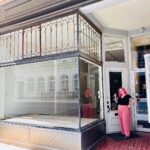
In September, Malorzo opened commUNITY Yoga, which is located on the first floor of a snug row house in the heart of Midtown Harrisburg. When you enter the space, it feels cozy and welcoming. Natural light bathes the room via the large picture window in the front, and the scent of incense floats gently in the air.

commUNITY Yoga’s central location is by design, as are many other components of the studio.

“The reason I’m here is to give back to the community,” explained Malorzo, herself a Midtown resident. “I’m here to serve the community and to show them some ways to take care of themselves.”

To further this, every class at commUNITY Yoga is offered on a pay-what-you-can basis.

“Everyone should have the opportunity to have a safe space to breathe, to let go, be a little healthier, to stretch, strengthen their body and mind, and to meet their neighbors,” she said.

Malorzo has long been intentional in her desire to connect people with yoga. She earned her 200-hour teaching certification in kripalu yoga years ago, but is also certified in yoga nidra, laughter yoga and yoga for children.

Kripalu, which centers around compassion for oneself and others, underscores Malorzo’s interest in providing classes for everyone. With modifications and tailoring based on the participants, she stresses that the classes are for all abilities.

“These classes center around gentle strengthening and stretching, but also fun,” she said. “Whatever works for your body, because everybody’s body is different.”

Another unique characteristic of commUNITY Yoga is its lack of a digital presence, beyond a phone number and address on Google. This is also by design, Malorzo explained, saying that she wants people to discover the studio organically.

If you’re interested in trying out a class, simply call the studio or stop by. A blackboard sits out front, decorated with friendly-looking script and a detailed class schedule. (The January to March schedule is now available.)

So far, Malorzo said, the community response has been heartwarming and positive.

Nicole, a Harrisburg resident, talked about discovering the studio while out walking her dog one day. She’s now a regular attendee at the morning classes, as well as yoga nidra.

“I really do appreciate it, and my body appreciates it,” she said.

The pay-what-you-can structure was a game changer for Amy, another studio attendee. She shared an anecdote about taking an introductory power yoga session and loving it, but soon discovering that the associated cost at many studios priced her out of attending.

“Even working a full-time job, there was just no way I could fit it into my budget,” she said.

Then her co-worker (also a studio attendee) mentioned commUNITY Yoga.

“It came at the right time,” she said. “I think it’s really sad that something like this usually costs so much and that it’s not accessible to more people. I really appreciate what Erika is doing here.”

For Mark, a studio regular, commUNITY Yoga has helped him turn over a new leaf in terms of self care.

“One of the things that makes this place special is the yoga nidra classes,” he said. “They give you clarity and space in your mind. They’re restful and rejuvenating all at once.“

Heather has experimented with almost all of the classes, but likes the laughter yoga classes best of all.

“It always puts me in a good mood, and it gives me a lot of energy,” she said.

Curious about laughter yoga? Laughter, Malorzo explained, has a host of benefits, including increased blood oxygen levels, more positive feelings and higher energy levels.

To experience this firsthand, I participated in a laughter yoga introduction. Malorzo had us stand in a circle as she briefly oriented us to the practice.

“Imagine you’re putting on your bathrobe, and you realize there’s a praying mantis inside,” she said.

She then briefly and wholeheartedly acted this out, laughing joyfully as she hopped and danced around the room.

Then it was our turn.

It was an atypical experience, but Malorzo made us feel comfortable. We wriggled, jumped and laughed around the room in our own interpretations of the prompt. It was endearing and silly and life affirming.

“Laughter is good for you,” she reminded us. “Laughter is good for your body, and you can feel its effect on you.”

With the new year upon us—a natural time for self-reflection—commUNITY Yoga offered the perfect setting to begin a new chapter, complete with rejuvenation and even some laughs.


commUNITY Yoga Space is located at 1417½ N. 3rd St., Harrisburg. For more information, call 717-856-0263 or see the blackboard outside the space, which lists the class schedule.

Continue Reading