Sweep of Justice: A man, a ticket, a mission

Illustration by Rich Hauck.

I’m no fan of winter here in central PA, but I carve out one big exception.

For two glorious months—January and February—street cleaning in Harrisburg usually stops because the cold, snow and ice prevent proper operation of the equipment.

Now, I’m all for keeping our storm drains clean, but I don’t understand why the sweeper needs to begin way before dawn, with the giant apparatus rumbling around the small streets in my neighborhood for a good hour, four times a month.

My complaint, though, seems to be an exception.

Folks in Harrisburg have no end of issues with street cleaning—its effectiveness, its reliability—but I’ve never heard anyone else grumble that it starts too early.

The number-one complaint seems to be this: If street cleaning stops in the winter, then why are cars still ticketed for street cleaning?

Ah, ancient Greece had its Riddle of the Sphinx. Harrisburg has its Riddle of the Street Cleaning.

And just as Greece had the legendary Oedipus crack its puzzle, Harrisburg has Steve Cline, a tall, rangy fellow who, while unlikely ever to be mistaken for a Greek hero, brashly took on Harrisburg’s great mystery.

I learned about Cline’s pursuit not through the ancient texts, but through an email.

He sent the email.

Back in March, he wrote to tell me that he was contesting a $50 ticket he had gotten the month prior for not moving his car on a street-cleaning day because there was no street cleaning. It had been suspended for the winter.

Cline felt the fact that they still ticketed was profoundly unfair. And, as he put it in his email, “It violates the social contract between citizens and the government for providing this service.”

Nor did he appreciate the menacing language on the ticket, which threatened a warrant for his arrest if he failed to pay it.

My initial thought: Yeah, good luck with that.

Now, I know Cline a little because, by profession, he’s a GIS specialist and has helped TheBurg create a few maps over the years. But his email was long, with many rambling questions, and while I meant to circle back to it when I had more time, I forgot all about it.

That is, until I got his second email.

This one came a week or so later, and, in it, he told me that he had pleaded not guilty and would have his day in court.

“I will be fighting the street cleaning ticket on the premise that street cleaning was not conducted, therefore my vehicle is not guilty of obstructing Capital Region Water’s ability to clean the streets,” he wrote.

“Fool,” I thought, and arrogantly chuckled to myself. Again, I failed to respond, this time more purposefully, thinking I wanted no part of this sinking ship.

So, at this point, I should explain for readers the labyrinthine system that is Harrisburg street cleaning.

Cline is correct that Capital Region Water (CRW) conducts the actual work and, indeed, with good reason—to keep drains clear and to minimize the gunk and garbage that flows into the Susquehanna River during rains.

Ticketing, however, is out of CRW’s hands. Parking enforcement vendor SP+ (aka Park Harrisburg) doles out the citations, enforcing regulations set by the city of Harrisburg. So, here we have three entities—CRW, SP+ and the city—all with a hand in laying Cline low.

In part, that’s what makes his (and maybe your) problem so tough to solve. There’s no single point of contact and no obvious solution.

During the winter, CRW has to suspend street cleaning—it has no choice. However, that suspension makes no difference to SP+, which, under contract, must continue enforcing the rules as promulgated. And the city, due to its own contractual parking arrangements, can’t unilaterally change those rules.

Ah, the inescapable trap of street cleaning.

Only, in this case, there proved to be a way out.

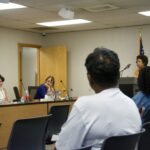
In mid-April, Cline appeared before magisterial district Judge Barbara Pianka armed with a two-page, point-by-point takedown of the whole rotten system.

Pianka, he said, shut him up halfway through his opus and, with a bang of the gavel, dismissed the charge against him; he’s not entirely sure why. That’s when I got a third email.

“Just wanted to let you know I had my court date today and I won my case!” he wrote. “The police officer tried to use some fuzzy logic, but the judge threw out my charges, and [I] walked out without paying a penny.”

Finally, he had my attention.

Now, I’m not advising you not to pay your street-cleaning ticket. I would have, but, then again, I’m probably more Ned Flanders than Karen Silkwood.

Nonetheless, Harrisburg, I present to you a hero for our times—a man who saw some snow on a dirty Midtown street and then saw his car and saw a ticket stuck in the wiper of his car and got mad. He fought the law, and he won.

About two weeks later, I received a final email from Cline. Heady with sweet victory, he was taking his battle to the next level.

He filed a right-to-know request with the state, yet another player in Harrisburg’s ridiculously complex parking system, and after that was rejected, he did the same with the city.

“I had success with my right to know request through the city,” he wrote to me, just as this column was going to press. “I have 15 months of street cleaning ticketing data!”

Stay tuned, readers. Cline has data, and he knows how to use it.

Lawrance Binda is editor-in-chief of TheBurg

Continue Reading

Fit Takes Flight: The sky’s the limit at 2nd annual Thrive Fit Fest.

Photo by Symmetry Co. Photography

June 22, according to Ashley Mentzer, will be “the best fitness day ever.”

Except, when she says it, it sounds like “ev-aaahhh.”

Mentzer, organizer of the 2nd Annual Thrive Fit Fest, said that fitness should be approachable and fun. She pointed to a publicity photo.

“This is what fitness looks like—all different shapes and sizes and body types,” she said. “We’re real people.”

Mentzer, 29, a New Cumberland native, is transforming Capital City Airport’s 16,000-square-foot hangar into “a hub for central PA’s fitness and wellness community.”

More than 60 fitness, health and wellness professionals will converge at the daylong festival to offer sample classes, demos, workshops and info—to help attendees’ health and wellness goals get off the ground.

“You can come whether you’re a fitness junkie or a fitness newbie and find something that challenges and interests you,” said Mentzer, owner of Thrive Fit Co., Harrisburg.

Crunch Fitness, Harrisburg and York, will kick off the day’s main stage festivities with a dance party-inspired workout. Additional main stage offerings include matte Pilates with Mechanicsburg’s Absolute Pilates, yoga with Lemoyne’s Central Penn Health Studio, an arms and abs-focused boot camp with Mentzer’s own Thrive Fit Co., and barre with Mechanicsburg’s and Lancaster’s Pure Barre.

“We were also on the main stage last year, and it was amazing to see so much buzz and energy,” said Laura Deitch, owner of Pure Barre Mechanicsburg and Lancaster.

Deitch said that barre is “inspired by ballet” to tone all areas of the body—upper, lower and abs. She launched Pure Barre two years ago but said that events like Thrive Fit Fest help her to continue raising awareness about barre’s benefits, as the low-impact workouts are accessible to all.

“One of the things that makes me most excited is the community aspect, having conversations with people and giving them the opportunity to try a class at the same time,” Deitch said. “The more we educate people about their options, the better their chance to live their best, healthiest life.”


Energetic, Engaging

The 2015 south-central Pennsylvania community needs assessment led by Penn State Health, which is Thrive Fit Fest’s presenting sponsor, found that one-third of residents are obese and about half participate in aerobic physical activity. Health providers listed “poor eating habits” as the top “risky behavior,” with “lack of exercise” close behind.

Shawnna Smith, a nurse at Penn State Health Medical Group Mechanicsburg who is also a certified personal trainer, is on the front lines of area health care.

“Some people understand the link between health and exercise; others have resistance,” Smith said. “So, part of our job is to get to the bottom of why they have that resistance. Exercise and fitness, if you find something you like, doesn’t have to be a chore.”

Besides Thrive Fit Fest fitness offerings, Penn State Health will provide blood pressure screenings, Orange Theory will offer a heart rate workshop, and the Healthy Grocer and Harvest Seasonal Grill will participate with food demos, recipes and nutritional information.

Additional activities will involve prenatal health and fitness, foot scans and workouts on two additional stages. Swag bags given to all attendees will contain numerous free passes or special rates at participating studios and businesses.

June is the perfect time to evaluate fitness goals, Mentzer said, because New Year’s resolutions have likely fallen by the wayside. So, fitness studios generally have lighter attendance, which can mean more focused attention and dedicated time for those who enroll.

About 500 people attended last year’s inaugural event at FNB Field on City Island, including Harrisburg resident Nada Walton, who brought her 11-year old daughter. A former competitive swimmer whose fitness routine now includes running, Walton said she enjoyed investigating cross-training fitness options.

“My daughter and I rocked out to a POUND workout,” she said. “I had never heard of it. We used drumsticks called ripstix, and the instructor [from Carlisle’s Fit Forward] was energetic and very engaging. My daughter was smiling the whole time.”

Walton and her daughter also enjoyed making peanut butter, painting kindness rocks and learning about York Barbell.

Fit Fest tickets are $25. Proceeds benefit the Warrior Princess Project of PA, an organization that collects gently used and new sports equipment and distributes it to area girls (and sometimes boys) to encourage athletic activities. Donation boxes will be located at Fit Fest.

Mentzer said that she was inspired to create Fit Fest after noticing a worldwide trend in fitness festivals, such as the U.K.’s Balance Festival. She predicts that 2019 attendance will double to 1,000 attendees. She has even bigger dreams for future Thrive Fit Fests, including community CPR training, a 5K and “bigger and better” collaborations between fitness studios.

“Removing walls and connecting health and wellness providers in one location takes the competition aspect away and helps people make life-altering health choices,” Mentzer said. “We don’t have to work against each other. Together, we can achieve the ultimate goal of getting people healthy.”


Thrive Fit Fest takes place on June 22, 7:30 a.m. to 1 p.m., at Capital City Airport, 210 Airport Rd., New Cumberland. For more information, visit www.thrivefitfest.com.

Continue Reading

Summer Sippers: Great white wines are meant for outdoor living.

As summer approaches in central Pennsylvania, our wine drinking choices change to better suit the weather.

The best quaffs are white wines of light or medium body that match the season’s warm, humid days and the lighter foods we tend to consume. I submit to you my choices for the best sipping wines to enjoy in these wonderful months.

From the Iberian Peninsula comes albariño, Spain’s finest white wine, known as alvarinho in Portugal, where it is used to make vinho verde (green wine). This apricot-scented liquid has the ability to age due to its acidity, which makes it perfect for lighter summer fare. With a floral nose and splash of brine due to the Atlantic influence, it should be brought together on the palate with soft cheese and sautéed fish. The best Spanish version is from the Rías Baixas region, while Portugal’s finest hails from Monçao, just across the Minho River.

One of the best Italian whites actually originates off the mainland on the island of Sardinia. Vermentino is a dry white wine of floral nose with citrus flavors and an almond finish. A versatile beverage, it’s made with or without oak, as well as dry or sweet. I prefer the product that originates near the center of the island. Complex and clean, this is a wine to try.

I am sure that everyone reading this has had pinot grigio. It’s a ubiquitous wine at almost any gathering, restaurant or bar. However, there are changes afoot, and high-quality quaffs can be found with a little research. In my opinion, the best pinot grigio hails from the Italian province of Trentino-Alto Adige. These mountain wines are light and minerally with good acid and stone fruit undercurrents. Another indication of quality are the words “estate bottled” on the label. This designates that the people who make the wine also grow the grapes, giving them full control of the winemaking process. The words “Denominazione di Origine” on the labels are an indication of quality for any Italian wine worthy of purchase.

Chenin blanc is a grape that doesn’t get much attention, but should be on all wine drinkers’ radar. It’s a popular quaff from South Africa, where it was labeled as “steen” until recently. This overlooked fruit is slowly making inroads on our own West Coast, with Oregon particularly stepping up. This grape makes my favorite summer sipper known as vouvray, a wine from France’s Loire Valley. It’s an amazing white wine with fruit that sings on the palate, as well as integrated acidity that keeps it all in check. Bottled dry, sweet or sparkling, this versatile wine can age or be consumed immediately. The most popular are the bottles labeled “demi-sec.” This is a middle ranking that literally means half-dry (sweet). It is, hands down, the best wine to drink during these summer months spent outdoors.

Keep sipping,

Steve

Continue Reading

Ding Goes the Bell: All aboard the Rockhill Trolley Museum.

The Rockhill Trolley Museum is raising money to restore this Valley Railways car. Donations can be made to the museum through its website or by calling 814-447-9576.

Learning to drive a trolley wasn’t exactly on my bucket list.

And why would it be? We don’t see them cruising down Front Street or carrying passengers to and from York. In fact, before visiting the Rockhill Trolley Museum, I wouldn’t have guessed that trolleys operated right here in downtown Harrisburg years ago.

But about 90 minutes outside the city lies an interactive playground of history you can touch, feel, sit on and, yes, even drive.

The Rockhill Trolley Museum, located in Rockhill Furnace, is home to 23 trolleys with 13 currently in operation, said museum President Joel Salomon. The museum houses large pieces of history that, for many older generations, seemed to vanish overnight.

Hidden away in one of Pennsylvania’s charming, but tiny towns, the museum is one of our state’s best-kept secrets, Salomon said. Since its inception nearly 60 years ago, the volunteer-run museum has laid and maintained three miles of track, transported trolleys cross-country (which, as I learned, is no easy feat) and painstakingly brought new life into some very old cars.

As I noticed on my tour with Salomon and volunteer Jim Cohen, visitors are often perplexed upon their arrival to the museum. And it’s easy to see why. There are no glass-encased artifacts or “Do Not Touch” signs in sight. Instead, I was encouraged to climb on board, feel the cool metal of the car’s body and take a seat inside.

“This is an actual operating museum. The trolleys are the exhibits,” said Salomon. “When you go to an antique car museum, you can only look at them. Here, we try to run two or three different trolleys a day.”

Almost as impressive as the cars themselves is the enthusiasm of the museum’s dedicated crew. According to Salomon, the museum has 25 to 30 volunteers, with 12 to 15 considered highly active.

“Our farthest-away volunteer lives five hours away in the Rochester area,” Salomon said. “Volunteers do everything from building tracks, maintaining the tracks and powering trolleys.”


Labor of Love

Notable local Harrisburg volunteer, Sloan Auchincloss, offered his support to the museum with time, personal interest and resources. Auchincloss passed last year, but his long history with the museum had spanned decades previously.

“[Auchincloss] was a member and friend of the museum for years,” said Salomon.

While he was most active during the 1970s and ‘80s, Auchincloss had more recently taken an interest in a rare, recently acquired car—a Valley Railways trolley car built in 1895 and locally operated until 1938. Before making its way into the museum, the car was gutted and transformed into a restaurant and, eventually, became somebody’s home.

Salomon and the rest of the volunteers have been actively raising money to restore the shell of this unique trolley car to its heyday, meaning they’ll need to search for almost all of its mechanical parts, seats, windows and more.

Thanks to a grant from the Auchincloss family, as well as several matching grants, the museum has $40,000 tucked away to help bring this distinguished trolley car back to its former glory.

Which, as I saw firsthand, is a labor of love.

Being entirely volunteer-run and privately funded means it can take anywhere from a few years to a couple of decades to restore a trolley car. And there’s no cutting corners at Rockhill.

Volunteers scour internet sites like eBay and reach out to connections around the world in search of original parts. As one may imagine, these can be tricky to come by. And if a car comes in that’s been badly beaten down, such as the Valley Railways car, it can take hours of research to identify its origins. Once the volunteers find out more, they’ll work to meticulously match every detail—from the stained glass patterned windows to the coat hooks hanging inside.

While I’ve ridden in a trolley or two on my travels, it was the rich history of each car and the devotion of the museum’s volunteers that left me with a new appreciation for historical preservation.

In fact, I was hard-pressed to find a question Salomon couldn’t answer—from when trolleys stopped running in Harrisburg (the answer, July 1939) to when they were most popular in America (in 1920, they were the fifth-largest industry, he said).

The museum officially opened its doors for the season on Memorial Day weekend for rail fans, history buffs and families to come ride in a little piece of history.

According to Cohen, the museum sees up to 50 visitors on any given day. The big draw, though, comes during special events, including the Pumpkin Patch Trolley days and the Polar Bear Express. With hundreds of Christmas lights twinkling across the tracks, the museum can attract upwards of 600 trolley passengers per night in December.

As we neared the end of our tour, Salomon expressed what he really wanted visitors to take away from their experience.

“We really want to show people that this is possible,” he said. “We can restore a trolley back to its former glory.”

And while the museum’s youngest visitors may not understand the historical impact of what they’re riding, Salomon insists that the kids who come will never forget ringing that trolley bell for the first time. And, if we’re being honest, I don’t think I will either.


The Rockhill Trolley Museum is located at 430 Meadow St., Rockhill Furnace. It is open Saturdays and Sundays from Memorial Day weekend through October, with special events running through December. Tickets are $8 for adults and $5 for children ages 2 to 12. For more information, visit rockhilltrolley.org.

Continue Reading

Artist in Focus: Jovana Sarver

If you love Harrisburg, you’re almost certain to love Jovana Sarver’s story.

A 2006 graduate of the Capital Area School for the Arts (CASA), Jovana left for the “big city” (Philadelphia) and even spent time in Iceland before coming back to her home city.

Here, she honed her artistry and today creates in a wide range of styles and media, both 2-D and 3-D. So, one day, she might be painting with oils and, the next, making gorgeous pots and paper objects. Or she may be drawing with charcoal or creating installations from fiber.

Whatever the medium, you’re sure to find her art fascinating, expertly rendered and wildly inventive.

To learn more about Jovana and her art, visit www.jovana-sarver.com.

Continue Reading

The Final Straw (and Hay): Try one more pasta dish before grilling season.

My mother always prepared our red sauce pasta the same way.

She cooked the pasta in a big pot of boiling salted water, tested every minute or so to make sure it wasn’t cooked beyond al dente, and then dumped it into a large bowl when done.

The sauce came next, poured over the pasta like hot lava, followed by freshly grated Parmesan Reggiano cheese. Meatballs and pork were served in separate dishes. There was always fresh Italian bread from the Italian bakery on S. 19th Street in Harrisburg and a green salad served at the end of the meal.

To this day, I think there is nothing better than this.

But as I add more pasta dishes to “Rosemary’s Cucina,” I have been incorporating more recipes that call for all the sauce ingredients to be cooked and tossed together in a deep sauté pan with the cooked pasta added at the end. This restaurant technique results in pasta that has totally absorbed the sauce and glistens beautifully on the plate.

I recently celebrated spring by making a pasta classic from Emilia Romagna, located in northern Italy. It’s called “paglia e fieno,” or “straw and hay.” It is so called because the dish traditionally is prepared with a mix of yellow egg pasta and green spinach pasta. I used fresh fettucine purchased from a newly discovered vendor at my farmers market. But you can use dried pasta, as well, either fettucine or tagliatelle—wider noodles that work so well with the creamy sauce.

As discussed many times in this column, so many classic Italian dishes have multiple versions and variations. I used a very simple recipe from cookbook author and restauranteur Lidia Bastianich. It is a luscious combination of fresh pasta (just briefly cooked), baby peas, prosciutto and sweet heavy cream. It drew rave reviews from hubby despite the peas! I would serve it to company, too.


Paglia e Fieno

Ingredients

  • 4 scallions
  • 2 tablespoons olive oil
  • 1 cup shelled fresh peas or frozen baby peas
  • 6 to 8 slices good prosciutto, cut into ½ inch ribbons
  • 2/3 cup chicken stock or canned low sodium chicken broth
  • ½ cup heavy cream
  • 1 pound fresh fettucine, a mix of yellow egg and spinach or a half pound each of dried egg and spinach fettucine
  • ¼ cup or more to taste of freshly grated Parmigiano-Reggiano or Grana Padano cheese


Directions

  • Bring a large pot of salted water to boil.
  • Trim the roots and tips from the scallions. Cut them in half length-wise, then crosswise into 3-inch strips.
  • Heat the oil in a large, heavy skillet over medium heat.
  • Add the scallions and cook until wilted, 1 to 2 minutes.
  • Scatter in the peas and cook until just tender (if you are using frozen peas, this will only take less than a minute). Add the prosciutto and toss for 1 or 2 minutes.
  • Pour in the chicken stock and bring the mixture to a boil. Then reduce the sauce to a simmer and cook until it is reduced by half.
  • Add the heavy cream and continue to simmer until the sauce thickens slightly, another 2 minutes.
  • Cook the pasta in the boiling salted water. If you’re using fresh pasta, it only needs 3 minutes from the time you toss it in the pot. If using dried pasta, follow the instructions for cooking it “al dente.” Save a little of the pasta cooking water in a measuring cup if needed to thin the sauce.
  • Drain the pasta when cooked, but leave some cooking water clinging to the strands. Work quickly!
  • Add the pasta to the simmering sauce and cook a few minutes more to further reduce the sauce. Only add the reserved pasta water if the sauce becomes too thick.
  • Serve in warm bowls and sprinkle with lots of grated cheese.


You can tinker with this recipe a little bit.

  • Sauté some sliced button mushrooms along with scallions.
  • Use chopped pancetta instead of prosciutto.
  • Use ricotta, thinned with some pasta water instead of cream.
  • Add a little grated lemon zest.
  • Substitute chopped sweet onion for the scallions.

My pasta adventures continue. A few nights ago, I cooked some bucatini pasta with my regular red sauce and chopped Italian sweet sausage in my deep sauté pan, adding a little pasta water and lots of grated cheese. It was delicious.

It’s early June. There is still time for a pasta dinner before your grill takes center stage.

Continue Reading

Passion & Peace: “The Gospel of Eureka,” a case study for harmony.

Eureka Springs, Ark.: home of “The Great Passion Play,” the epic drama depicting Jesus Christ’s last days on earth that draws 50,000 people a year—and the home of a thriving drag scene, bolstered by an ever-growing LGBTQ community. In a fascinating documentary directed by Donal Mosher and Michael Palmieri, we see “The Gospel of Eureka” unfold.

The beauty of Eureka Springs is its ability to mesh the LGBTQ community with the devout Christian community without a citywide meltdown. Eureka was the first city in the state to issue same sex marriage licenses in 2014 and passed the Non-Discrimination Ordinance 2223, including LGBTQ residents in the list of those protected against discrimination. In the 1970s, Anita Bryant, leader of the “Save Our Children” campaign that targeted gay men, tried to make her comeback by coming to Eureka Springs, and no one showed up to her show. But, “like any other town,” as a member of the drag community narrates, “Eureka is a tinder box, just waiting for the match to strike.”

Mosher and Palmieri do their best to show both sides of this matchbox. The film follows the bathroom ordinance battle in 2017, showing protests and marches from both camps. In one scene, we see a man holding a sign protesting the ordinance, saying, “Nothing’s gonna happen that God doesn’t want to happen” (when the reporter repeats the line for clarification, a look of amusement comes over his face). And in contrast, we see a parade of people marching down the street in support of gay pride.

While there is much controversy here and elsewhere in the country, Mosher and Palmieri spin the focus to capture the specific demographic that finds themselves in the middle of this Venn diagram: LGBTQ Christians and their allies. We meet several key players, such as Lea Keating and Walter Burrell, the gay Christian couple who own the Eureka Live Underground, which hosts drag shows on a regular basis. We meet a trans woman who found peace with herself upon moving with her husband to Eureka and loves to go to “The Great Passion Play.” We meet the man who runs a passion play-based merchandise shop and ensures that the messages on various items (T-shirts, etc.) are inclusive. We meet the pastor running “The Great Passion Play,” who prioritizes people’s civil rights over his own views on homosexuality.

What unfolds is a community of people who love each other and support each other, defying stereotypes as they go. “The Gospel of Eureka” is heartwarming and uplifting, a beacon of hope in a world that defaults to taking sides. It serves as a case study for harmony in controversy.

“The Gospel of Eureka” plays as a one-night only showing on June 12 at Midtown Cinema, 250 Reily St., Harrisburg. For more information, visit www.midtowncinema.com.


JUNE EVENTS
at Midtown Cinema

Digital Theatre Series
“Coriolanus”
Monday, June 3, 7 p.m.

“Small Island”
Sunday, June 30, 7 p.m.

[Untitled] Docs
“Grizzly Man”
Sunday, Jun 9, 7 p.m.

“The Gospel of Eureka”
Wednesday, June 12, 7 p.m.

Down in Front! presents
“Caged Heat”
Friday, June 14, 9:30 p.m.

3rd in the Burg $3 Movie
“Mean Girls”
Friday, June 21, 9:30 p.m.

Outdoor Film Series
“Moana”
Friday, June 28, at dusk

Continue Reading

Sign of the Salamander: The hellbender puts a face (an arguably ugly one) on river quality, habitat health

Unless you’ve been living under a rock, you probably know the Eastern hellbender is now our official state amphibian.

It’s the largest salamander in North America and actually does live under rocks. Although it’s not endangered, its population is declining. So why should people care about a big nocturnal salamander, also nicknamed the devil dog, the mud devil and, my personal favorite, the snot otter?

Experts say its very presence in Pennsylvania waterways, as an “indicator species,” signifies a healthy habitat and clean water.

“Historically, they lived in the Susquehanna all the way from New York down into Maryland, but most of those populations are gone now,” said Dr. Peter Petokas of Lycoming College. “Their range in the Susquehanna is limited now.”

This year marks Petokas’ 14th year of hellbender research, primarily in the Upper Susquehanna Basin.

The first 10 years were devoted to surveying waterways simply to find hellbenders. It’s no small task—the creatures typically live under huge, heavy rocks the size of car hoods. Petokas and teams of graduate students donned snorkeling or scuba gear in order to find and microchip more than 3,000 hellbenders for further study. They can live 30 to 50 years, eating crayfish, toads, snakes and fish.

Over the past several years, Petokas transitioned into conservation work.

Last summer, he helped release 99 juvenile hellbenders raised by the Bronx Zoo into upper Susquehanna waterways. It’s the first time anyone has attempted a restoration project with the hellbender in Pennsylvania. This summer, he’ll be checking on their health and condition. Meantime, more hellbenders are being reared for future releases.

Can the hellbender population be restored throughout the Susquehanna?

“It’s such a large watershed, my ideal goal is to reestablish the population in the healthier tributaries to start,” Petokas said. “It’s possible, as the quality of the river and its tributaries improve, the hellbender will disperse.”

Numerous partnerships and funding sources include the Pennsylvania Fish & Boat Commission, Upper Susquehanna Conservation Alliance, Chesapeake Bay Foundation and many others.

In the Harrisburg area, the lower Susquehanna and its tributaries—the Swatara, Yellow Breeches and Conodoguinet—no longer support hellbender populations, Petokas said. He’s considered doing a hellbender project in Perry County’s Sherman Creek, “a historic hellbender stream.”


Great Indicator

Petokas isn’t the state’s only hellbender expert.

Eric Chapman of the nonprofit Western Pennsylvania Conservancy has been studying western and central PA hellbender populations for a dozen years, primarily in the Allegheny River Basin—an area he calls “a hellbender stronghold.”

In 2014, he began relying on eDNA, testing water samples for DNA to determine if hellbenders are present in specific waterways. The process helps his team prioritize stream work. A large grant from the Smithsonian National Zoo launched the hellbender eDNA project across multiple states, including Pennsylvania.

Chapman said that most people will never see the reclusive animals in waterways—nor should they, as you need a scientific collectors’ permit in order to search for hellbenders. Instead, he recommends that people visit one of three Pennsylvania zoos to see the creatures—Philadelphia, Pittsburgh or Lehigh Valley.

“They’re such a great indicator of environmental health and quality,” Chapman said. “The biggest problem they face is sedimentation.”

When sediment settles around large rocks on the bottom of Pennsylvania’s waterways, it degrades hellbenders’ habitat. Acid mine drainage is another environmental issue hurting hellbender habitat.

Experts like Chapman and Petokas hope that naming the hellbender the official state amphibian raises environmental awareness.

The timing coincides with a recent environmental report by the state Department of Environmental Protection (DEP). For the first time, its “2018 Integrated Water Quality Monitoring Assessment Report” assessed the Susquehanna River’s middle and lower reaches for aquatic life. The hellbender was not one of those species, however.

“Focusing on just one indicator species can be problematic because that species may be sensitive only to some pollutants and not others,” said Beth Rementer, DEP spokesperson. “It is much more protective to look at groups of species—entire communities of aquatic organisms.”

The report determined that nearly 18,000 (21 percent) of 85,000 miles of Pennsylvania waterways are considered impaired for aquatic life.

The leading sources of impairment cited in the report are agriculture, abandoned mine drainage, urban runoff/storm sewers and habitat modification.

As a result, the report recommends the lower Susquehanna (from Duncannon in Perry County to Columbia in Lancaster County) be placed on the impaired waters list, due to high pH levels. This classification would mean additional study by the DEP to remedy the water’s health.

Placing the Susquehanna on the impaired waters list is something the watchdog nonprofit Chesapeake Bay Foundation (CBF) has been advocating for several years. B.J. Small of CBF’s Harrisburg office calls the recent classification a “breakthrough.” More than half of the bay’s water flows from Pennsylvania.

The CBF’s “2018 State of the Bay” report gives the bay’s health a grade of D+. According to the report, “the bay suffered a massive assault in 2018” with “extraordinary weather flushing enormous amounts of nitrogen, phosphorous and debris mostly from PA off our lands and into the bay.”

“It’s important that people realize hellbenders are in trouble, so they can better understand what we do to protect and restore water,” Small said.

The hellbender puts a face, albeit an arguably ugly one, on the state’s declining species.

“We tend to focus on the charismatic species such as the bald eagle, trout or river otter,” Petokas said. “But I believe the hellbender is a very unique species in its own right.”

Learn more about the “2018 Integrated Water Quality Monitoring Assessment Report” at www.dep.pa.gov.

Stories on environmental topics are proudly sponsored by LCSWMA.

Continue Reading

Look–Up in the Sky: Naylor Observatory allows those close by to see very far away.

If you contemplate the outer reaches of the universe, what celestial phenomena would you like to see?

A meteor shower? A comet that only appears once a lifetime? How about the terrain of the moon or Mars?

Fortunately, you don’t have to drive far from Harrisburg to get your heavenly fix.

The Naylor Observatory lies just outside of Lewisberry in York County, a short hop across the river though far enough away from the lights of the city and highway to offer a good look at the sky—on a clear night, that is.

The Astronomical Society of Harrisburg (ASH) holds regular viewing events there. Provided the evening’s conditions are right, you’ll be able to observe the night sky through several telescopes and share knowledge with the amateur astronomers at ASH.

The club holds regular viewings for the general public, which can draw a few hundred people. Visitors experience a distinctive ambience both in the sky and on the ground. Dotted along the observatory’s steep driveway is a series of red lights to gently guide your eyes.

“Red light best allows our eyes to transition to night vision, because the rods in our eyes don’t respond to red light,” said ASH member Courtland Barnabei.

Also red-lit on the observatory’s grounds are the compact outbuildings, four of which contain either retractable or removable roofs. These buildings have no heat or air conditioning, surrounding the telescopes with a stable ambient temperature. Inside, the telescopes are permanently mounted to underground piers.

“Wind is a huge factor for telescopes because air currents can distort images,” said ASH Secretary James Davis. “The mounting stabilizes them.”

You can bring your own telescope or use one belonging to ASH, but you don’t necessarily need one.

“The best observing is looking straight up,” said Chip Templin, ASH president. “Your eyes are looking out through various layers of atmosphere. But looking straight up cuts through the fewest number of layers.”

Using the club’s telescopes is an ASH membership perk.

“Most people make the mistake of buying a telescope, but then only use it a handful of times because it’s cumbersome to use or hard to set up,” said Barnabei. “You can use a free online star chart and binoculars instead.”

Some hobbyists even build their own rudimentary telescopes. You would think that a telescope is full of complicated mechanisms, but it’s actually mostly hollow, comprised of just two mirrors and a focuser eyepiece encased in a fiberglass cylinder. Light enters, bounces between the mirrors and through the lens to magnify faraway objects. Depending on the magnification power, some telescopes can see farther than others.

“The sky in Harrisburg doesn’t get dark enough to use certain telescopes,” Templin said.

The more sophisticated telescopes can automatically point to different objects in the sky simply by typing the object into a navigator controller. Davis routinely teaches classes on how to use telescopes, and he shared the secret for taking clear, detailed pictures of the moon. Press the lens of any camera to the telescope eyepiece, guide it to the moon, then click.

If you’d like to locate other celestial objects, ASH members recommend a number of good reference materials, accessible both at the observatory and online.

The “Observer’s Handbook” is like a celestial almanac, with different editions available for different regions. If you’re looking for a visual representation where you can cross-reference date, time of day and coordinate positions, try the “Skygazer’s Almanac.” If you want to be able to recognize what you’re observing when you locate something through the eyepiece, consult “The Messier Catalogue,” a set of 110 celestial objects catalogued by French astronomer Charles Messier.

Some celestial events are predictable or cyclical, so observers have plenty of advance notice to plan a proper star party, which is like a nighttime tailgate party for a heavenly happening. Cloudynights.com provides an online crowd-sourcing forum for sky-gazers. Having a worldwide reach allows hobbyists to leverage pictures, information and logistics of star parties worldwide.

If you’re looking for Pennsylvania’s utmost star party, Templin recommended Cherry Springs State Park, a dark sky park located a few hours north in Potter County, 2,300 feet in elevation.

ASH members often build vacations around premiere observing locations. In the United States, the southwestern desert and parts of Hawaii have the best conditions because of their sparse populations and lack of industry. Internationally, the best place to observe is the mountains of Chile. Also, “the Australian outback is dark, and it has some of the largest telescopes in the world,” said Davis.

ASH facilitates events and classes with local schools, educational centers, the State Museum planetarium and HACC. Regular offerings include 101-level astronomy, identifying constellations, cosmology and telescope how-to.

For ASH members, observing celestial bodies is a lifelong pursuit.

“With new information coming in every day, it’s impossible to learn everything,” said Doug Grove, ASH vice president. “Visitors can leverage the knowledge of the members who have been observing as long as we have.”

Indeed, astronomy is attractive because it’s a “learning hobby,” said Barnabei.

“The benefit of Naylor is that the membership facilitates the learning process,” Barnabei said. “You can come to our observatory with questions, and you’re certain to find a member who once asked themselves that exact same question.”

The Naylor Observatory is located at 670 Observatory Dr., Lewisberry. For more information about the Astronomical Society of Harrisburg, including classes and viewings, visit www.astrohbg.org.

Continue Reading

Community Corner: Notable June Events

June Community Corner  

HBG Flea
June 1: Explore the HBG Summer Flea market, 9 a.m. to 3 p.m., at Midtown Cinema, 250 Reily St., Harrisburg. Shop for local art, handmade gifts and vintage wares from local artists and curators. www.hbgflea.com

Summer Reading
June 1: Start your summer celebrating reading at Dauphin County Library System’s Summer Reading Club Liftoff at Fort Hunter Park, 5300 N. Front St., Harrisburg, 11 a.m. to 1 p.m. Become a club member and enjoy jugglers, face painting, games, music and Rita’s Italian ice. www.dcls.org

Unity Race
June 1: Celebrate Harrisburg’s racial and cultural diversity with music, song, poetry, dance and storytelling on the theme of “Unity in Diversity” at the 41st Annual Race Unity Day at the Fort Hunter Park, 5300 N. Front St., Harrisburg, 5 to 7:30 p.m. Bring a picnic dinner to enjoy during the program. 717-232-9163

Adult Prom
June 1: Whitaker Center, 222 Market St., Harrisburg, hosts “Adult Prom—A Social Science Experiment,” with two DJs, prom pictures, swag bags and adult-friendly elements like samples from local breweries, wineries, distilleries and restaurants, 7 to 10 p.m. Vote for Prom King and Queen in an online fundraiser to raise money for its STEM scholarship program. Tickets are $40, $70 for couples and $100 for VIP couples. www.whitakercenter.org

Bike Weekend
June 1-2: Enjoy Bike Weekend festivities including the Bikes and Beers ride in Hershey, Bike the Burg family ride, mountain bike rides on the parkway trails, the Five Bridges Bike Tour, Tour de Belt Greenbelt ride, the “Art of the Bike” show and the Tour de Belt After Ride Party. www.bikeharrisburg.org

Free Shakespeare
June 1-15: Don’t miss the 25th annual “Free Shakespeare in the Park” event with “Much Ado About Nothing.” The Gamut Theatre production runs 7:30 to 9:30 p.m. in Reservoir Park, Harrisburg. www.gamuttheatre.org 

Tour de Belt
June 2: The Capital Area Greenbelt Association hosts its 19th annual Tour de Belt bike ride, which starts at 10 a.m. at HACC and follows the 20-mile Greenbelt trail. All participants receive a 2019 Tour de Belt T-shirt. Proceeds go to Greenbelt restoration and maintenance. www.CAGA.org

Women in Tech
June 3: The Technology Council of Central Pennsylvania presents the 2019 Women In Technology Awards Gala at Spring Gate Vineyard and Winery, 5790 Devonshire Rd., Harrisburg, 5:30 to 8:30 p.m. www. tccp.org

Mid-Day Getaway
June 5, 12, 19, 26: Get away from your desk and unwind over lunch break at the McCormick Riverfront Library, 101 Walnut St., Harrisburg. Bring your lunch to the library between 11:30 a.m. and 1:30 p.m. for coloring, card games, board games or low-stress activities. www.dcls.org

Mixer
June 6: Build new relationships with local business professionals at the West Shore Chamber of Commerce’s June Evening Networking Mixer, 5 to 7 p.m., at Hollywood Casino at Penn National Race Course, 777 Hollywood Blvd., Grantville. The event is free and open to chamber members. www.wschamber.org

Light & Creativity
June 8: The Harrisburg Camera Club hosts its 9th Annual Light & Creativity workshop, 8 a.m. to 5 p.m., at Central Penn College Conference Center, Valley Road and B Street, Enola. Speakers include Kevin Holliday, Paula Chamlee, Mark Bowie and Penelope Taylor. www.lightandcreativity.org

Wellness in Nature
June 8: Learn about nature’s wellness and restorative benefits at “A Dose of Vitamin N(ature)” at Ned Smith Center, 176 Water Company Rd., Millersburg, 9 a.m. to 12 p.m., with a slow-pace, short-distance walk and an introduction to Shinrin-Yoku (forest bathing). Admission is $5 per person, ages 6 and older. www.nedsmithcenter.org

Bloom Festival
June 8: The Shippensburg Area Chamber of Commerce presents the 5th Annual Bloom Festival, 9 a.m. to 3 p.m., in downtown Shippensburg, on West Burd Street in the borough parking lot. The children’s area is open 9 a.m. to 3 p.m., with kids’ activities, music, crafts, retail and food vendors and more. www.shippensburgbloomfestival.com

Plant Swap
June 8: Head to Fredricksen Library, 100 N. 19th St., Camp Hill, for a Community Plant Swap, 1:30 to 3:30 p.m. Bring as many plants as you would like to take home. Plants should be divided into containers in advance. Penn State Extension Master Gardeners will be on hand to assist. www.fredricksenlibrary.org

Cancer Benefit
June 8: Head to Bucks Valley Winery and Vineyards, 333 Meadow Grove Rd., Newport, for the 5th annual “Toasting a Cure at the Vineyard,” benefitting PA Breast Cancer Coalition, 1:30 to 7:30 p.m. The event will feature Alicia Richards from ABC27 as emcee, live music, a cornhole tournament, silent auction and light fare. www.pbccbenefit.com

Fun Fest
June 8: Slate Hill Mennonite Church, 1352 Slate Hill Rd., Camp Hill, hosts its 6th Annual Community Hilltop Fun Fest, 4 to 8 p.m., rain or shine. Bring the whole family for carnival games and foods, kids’ activities, a petting zoo, a bounce house, prizes and more. Free parking is available at the Christian Life Assembly, 2645 Lisburn Rd. www.hilltopfunfest.com

Kids Club
June 9: Head to Harrisburg Mall, 3501 Paxton St., the second Saturday of each month for a free, fun-filled event for kids of all ages, 10:30 a.m. to 12:30 p.m. Each month’s event is hosted by a different group and may feature shows, crafts, interactive activities and more. www.shopharrisburgmall.com

Reading Blastoff
June 9: Kick off a space-themed summer reading program at Fredricksen Library, 100 N. 19th St., Camp Hill, 1 to 4 p.m., with face painting, crafts, characters and live music with Nick DiSanto at 3 p.m. www.fredricksenlibrary.org

Book Celebration
June 14: New Cumberland Public Library, 1 Benjamin Plaza, New Cumberland, hosts the “The Very Hungry Caterpillar” 50th Anniversary Celebration, 10:30 to 11:30 a.m., for children 4 to 7 years old. Visit the library for games, crafts and activities in honor of the well-loved children’s book by Eric Carle. www.newcumberlandlibrary.org

Music & Movie
June 14 & 21: Lower Paxton Township kicks off its “Free Summer Concert and Movie” lineup with the Lower Paxton Variety Band on June 14, followed by the Rob Scheps Core-tet on June 21. Following the June 21 concert, the movie “Sandlot” will be shown. Events begin at 7 p.m. at Heroes Grove Amphitheatre, 5010 Commons Dr. www.lowerpaxton-pa.gov/parks-recreation

Dads and Trolleys
June 15-16: Take your dad for a trolley ride at Rockhill Trolley Museum, 430 Meadow St., Rockhill Furnace, to celebrate Father’s Day. Dads with kids ride at the children’s $5 fare. www.rockhilltrolley.org

Yoga in the Park
June 15: Join Shannon Peffley of Yogi Expeditions for a peaceful morning of yoga, 10 to 11:30 a.m., at Detweiler Park. Cost is $10 per person. Meet at the park trailhead located at the Dauphin County Conservation District parking lot, 1451 Peters Mountain Rd., Dauphin. www.detweilerpark.org

Butterfly Workshop
June 15: Penn State Master Gardeners in Cumberland County will celebrate National Pollinator Week with a Butterfly Container Workshop at the Cumberland County Extension office, 310 Allen Rd., Carlisle, in two sessions, 10 to 11:30 a.m. and 12 to 1:30 p.m. www.extension.psu.edu

Explore Bugs
June 15: Join Wildwood Park naturalists for an evening of bug exploration at Detweiler Park, 1451 Peters Mountain Rd., Dauphin, with a small hike to one of Detweiler’s open fields, 8:30 to 10 p.m. Kids and adults will learn about moths, butterflies and fireflies. Cost is $5 per person. www.detweilerpark.org

Father’s Day
June 16: Take dad to Hershey Gardens, 170 Hotel Rd., Hershey, 9 a.m. to 6 p.m., to celebrate Father’s Day, with free admission for all dads. www.hersheygardens.org

Wildwood Camp
June 17-21: Wildwood Park, 100 Wildwood Way, Harrisburg, will host Wildwood Way Day Camp for children ages 6 to 8, 9 a.m. to 3 p.m. each day. Children will explore nature and the diverse wildlife at Wildwood Park. Registration fee is $135 per camper. www.wildwoodlake.org

Bubble Time
June 20: Kids ages 3 to 6 are invited to explore bubbles, experimenting with various ingredients to create the best ones, at the State Museum of Pennsylvania, 300 North St., Harrisburg, 11:30 a.m. to 12 p.m. This Curiosity Kids event is included with general admission to the museum, but space is limited. www.statemuseumpa.org

Business After Hours
June 20: Mingle with business professionals at Harrisburg Regional Chamber and CREDC’s free networking event, hosted by the Country Club of Harrisburg, 401 Fishing Creek Valley Rd., 5 to 7 p.m. www.harrisburgregionalchamber.org

Rescue Benefit
June 21: Stop by Zeroday Brewing Co., 250 Reily St., Harrisburg, for an evening of brews, art and live music while supporting Pitties.Love.Peace. dog rescue, 5 to 8 p.m. Adoptable pets will be available outside of Zeroday starting at 5 p.m., and live music will begin at 8 p.m. www.zerodaybrewing.com

3rd in The Burg
June 21: Enjoy the best of Harrisburg during 3rd in the Burg, the monthly arts and culture event at galleries, restaurants and art spaces throughout downtown and Midtown, 6 to 9 p.m. www.thirdintheburg.org

Civil War Days
June 21-23: Immerse yourself in local history during a three-day, community-wide series of events focused on the Harrisburg area’s role in the Civil War. Go on a battlefield tour, visit a re-enactor encampment and enjoy socials, among other activities. Get more details on Facebook: Civil War Days Harrisburg.

Summer Fridays
June 21-Aug. 23: Summer Fridays at The State Museum of Pennsylvania, 300 North St., Harrisburg, are “Pay as you wish,” 9 a.m. to 5 p.m. For general admission, the amount you pay for general admission is up to you. Art docents will be available for tours of “Art of the State,” 11 a.m. to 1 p.m. www.statemuseumpa.org

Summer Soiree
June 22:  Stroll through downtown Camp Hill while enjoying refreshments, art, outdoor dining, music and more, 5 p.m. to 8 p.m. Visit Downtown Camp Hill on Facebook for more information.

Free Museum Day
June 22: National Civil War Museum presents its Community Free Day, 10 a.m. to 4:30 p.m. Join staff and volunteers to celebrate Civil War Days with a day of activities designed to present history in a fun and educational setting. www.nationalcivilwarmuseum.org

Summer Yoga
June 22: Observe the summer solstice and International Day of Yoga at Simply Well, 28 S. Pitt St., Carlisle, 2:30 to 4 p.m. Enjoy 90 minutes of yoga, pranayama and meditation to honor the longest day of the year. The workshop is $20 per person and is appropriate for all levels. Bring a small notebook and pen for journaling. www.yogaatsimplywell.com

Summer Brunch
June 23: Get an inside look at and a taste of the best of Harrisburg’s brunch scene at three local eateries during Harrisburg Young Professionals’ Summer Brunch Tour. First stop is Home 231 at 11:30 a.m. on June 23. Enjoy good conversation, hot coffee and a variety of menu options. An RSVP is required to attend, and seating is limited. www.hyp.org

Autoharp Gathering
June 26-29: The 29th Annual Mountain Laurel Autoharp Gathering brings together hundreds of autoharp enthusiasts from around the world to Little Buffalo State Park Campground, Newport, for five days of workshops, concerts and around-the-clock music-making. Featured performers include Bryan Bowers, Rick Fitzgerald, Tom Schroeder, Allison Guinn, Bob Lewis and Michael Poole. www.mlag.org


Continue Reading