Homeward Bound: Kudos to folks offering creative solutions to homelessness

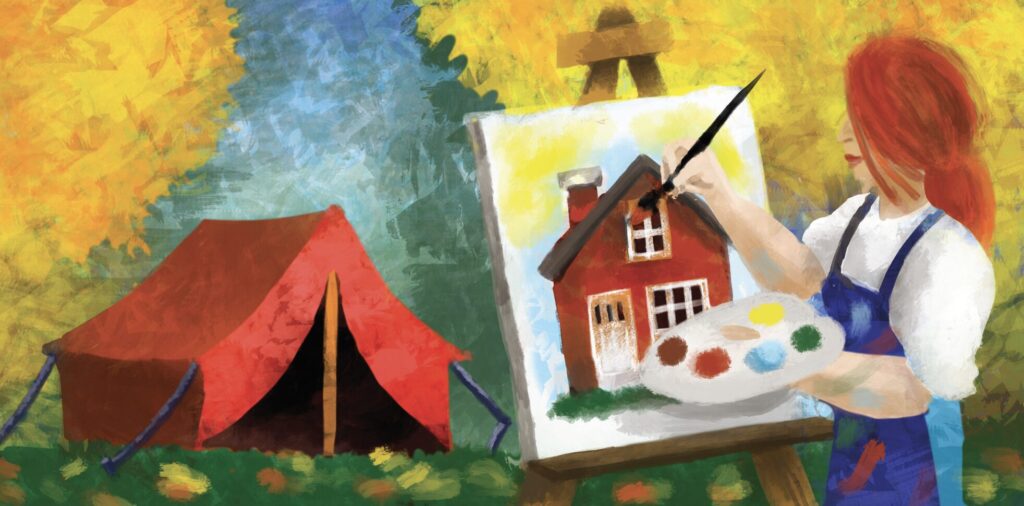
Illustration by Rich Hauck.

Many newspapers once had a feature called “cheers and jeers.”

In that column, the local newspaper complimented a few things it liked and criticized some others it didn’t. The Patriot-News did this for a number of years.

Well, I don’t have any jeers in this particular column (for that, you’ll have to read, well, most of my other columns), but I do have one big cheer.

In August, a nonprofit called Amiracle4sure opened what it calls “A Miracle Community,” a chunk of land in south Harrisburg where displaced occupants of “tent city” could relocate after Harrisburg’s largest homeless encampment was forced to shut down.

As of this writing, over 100 people had moved a few short blocks to the new location, a large, freshly graveled area that was once a parking lot. In so doing, Amiracle4sure hopes to bring a sense of structure and civility to the encampment, compared to the disorder and danger that marred tent city.

So, I offer a huge cheer to founder Marsha Curry-Nixon and her son, Tim White, for taking on this mission. Early days have been promising, but to succeed long-term, they’ll need to be steadfast, with support and encouragement from the larger community—including financial help.

There are more cheers to be had.

In recent years, Harrisburg has become something of a laboratory for creative ways to address the extraordinarily difficult problem of sheltering the unhoused. Nearby, also in south Harrisburg, three other projects are in various stages of completion.

Last year, Veterans Outreach of Pennsylvania opened Veterans Grove, which offers 15 tiny homes, plus a community center, for homeless veterans. On adjacent land, Tunnel to Towers has broken ground on a complex consisting of a 64-unit apartment building and a cluster of “comfort homes,” also for unhoused veterans. The third project, by Eden Village, will bring 32 tiny homes and a community center for the general unhoused population. It is still in the development and fundraising stage.

So, that’s four projects, each with its own model, offering innovative ways of addressing homelessness in Harrisburg. I applaud them all, even if none ends up being a “magic bullet” that will end the crisis for good.

Realistically, I hope that these efforts, combined, bring us to a place that’s somewhat closer to a solution.

In my view, “phase one” of this crisis was what we had before—chaos—folks sleeping under bridges, on the sidewalk, in the scrub. Evidently, some people, at least according to our social media, viewed “tent city” positively, as a type of community. There may have been positive elements, but, in my view, these were easily overwhelmed by profound problems and hazards, including frequent fires, interpersonal conflicts, drug use, medical emergencies and unsanitary conditions.

It seems that we’re now entering a new phase, which I’ll call “phase two.” This interim phase offers greater hope and respect for human dignity. It may be, as in the “Miracle Community,” simply a better encampment: cleaner, calmer, better organized. Or it may be quality transitional housing and support as embodied by Veterans Grove, Tunnel to Towers and Eden Village. Together, these projects offer a much-needed supplement to longstanding housing and shelter efforts in the city, such as those offered by Christian Churches United, Downtown Daily Bread and Bethesda Mission.

Ultimately, I would hope that we, as a community, could reach a final phase—permanent housing for everyone. Nationally, there are examples that may be worth emulating. Houston, for instance, has adopted a “housing first” model, which, according to that city, has substantially lessened homelessness by providing permanent housing then offering wraparound services once folks are securely housed. At the same time, this model hasn’t proven to be a panacea either. Houston still has a sizable, if reduced unhoused population, as some people refused to participate, returned to living outside or found themselves newly homeless.

Obviously, Harrisburg doesn’t have the resources of a huge, growing metropolis like Houston. Nonetheless, housing for everyone could serve as a north star as city and county leaders look to future solutions.
For now, I’m awed by the creativity and hard work of local people seeking solutions to this exceedingly complex and difficult issue here. Yes, it’s still early, and long-term success is hardly guaranteed. However, I also wouldn’t be surprised if, someday, other cities look to Harrisburg for ideas on how to address homelessness in their communities.

Lawrance Binda is publisher and editor of TheBurg.

If you wish to help our unhoused neighbors, I urge you to donate to the organizations.

If you like what we do, please support our work. Become a Friend of TheBurg!   

Continue Reading

November Publisher’s Note

Each October, hundreds of journalists gather in a hotel ballroom just outside of Harrisburg for the annual Keystone Awards ceremony.

For three hours, the PA Newsmedia Association celebrates the best in journalism in the commonwealth by handing out awards for reporting, writing, art, design, etc.

This year, TheBurg picked up 26 awards in total and, most importantly, received “News Organization of the Year,” one of just two news outlets in the state so honored. It’s the fifth straight year we’ve received this top award, which no other news company in Pennsylvania has ever done, according to records dating back to 1990.

My apologies for the obvious brag, but I’m so proud of our staff, both full- and part-time. Sure, I may lead the parade around here, but our reporters, writers, artists and other contributors truly make TheBurg what it is.

Speaking of our staff, I have what is, for us, a major announcement. For years, I’ve wanted to add a second full-time reporter to our staff, so I’m delighted to announce that Alexandra Jones will be joining us this month. There’s a good chance you’ll catch her at meetings, events and just out and about reporting stories. So, if you see her around town, please extend a warm welcome as she joins TheBurg family.

As it’s November, I have an annual reminder that TheBurg is not only a community news organization but a homegrown small business. As we enter the holiday season, we urge you to robustly support all the small businesses in the Harrisburg area. To help the cause, we always devote our November issue to “shop local,” hoping that folks will choose independent retailers over the big box, the national chain or the online behemoth. Happy shopping, everyone!

Lawrance Binda
Publisher/Editor

If you like what we do, please support our work. Become a Friend of TheBurg! 
Continue Reading

Worldwide Web: Friendship Force promotes global goodwill through travel, exchanges

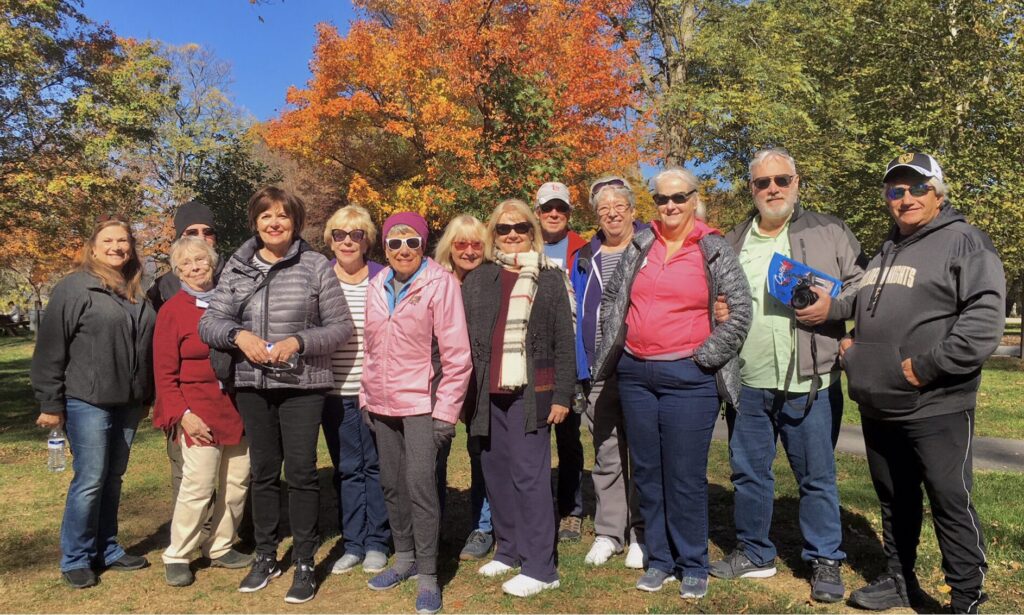
Members of Friendship Force

Katherine McFarland was walking around a lake and sipping coconut water from its husk when she felt friendship take root with her host in Rio de Janeiro.

This was the first of McFarland’s journeys with the Friendship Force of Greater Harrisburg, but far from the last. Since then, she’s taken “eight or 10” journeys during her “nearly 20 years” with FFGH, experiencing Cuba, Morocco, Brazil and most recently, a five-day stay with a Friendship Force host in Long Island, N.Y. She next plans to travel to Italy with six Greater Harrisburg club members.

“I joined Friendship Force because I’m a traveler,” said McFarland, 73, of Carlisle. “I really believe in spreading goodwill. There’s something very special about breaking bread with people that brings them together.”

Friendship Force International, from which the Greater Harrisburg chapter derives, is a nonprofit, global exchange organization with a stated mission “to promote peace and goodwill by bringing people together through educational programs, informational journeys,” according to the group’s website.

Through such journeys, the organization “sows the seeds of friendship across the physical and cultural barriers that divide us.” Today, FFI has nearly 300 local charters across the globe, with the Greater Harrisburg club boasting 85 members.

Greater Harrisburg was one of the first FFI charters established after the worldwide organization was created in 1977. To date, FFGH remains the only one in Pennsylvania.

Harrisburg exchanges have included journeys to most continents (South America, Europe, Africa and Asia), as well as domestic travels between various U.S. states. Harrisburg has also played host to ambassadors from Germany, Italy, Colombia, Japan, The Netherlands, Israel, India, Moldova, Thailand, Ireland, Kyrgyzstan, Hungary, Russia, Ukraine, New Zealand, Australia, England and Canada. In 2003, FFGH participated in a special peace-making trip to Jordan.

“Harrisburg is a great attraction for our visitors,” said FFGH member Ron Turo. “West of Newville, a very large Mennonite and Amish population is there that visitors like to see. The only covered bridge left in Cumberland County is in Hopewell Township.”

Turo, 70, of Mount Holly Springs, joined FFGH in 2020. Members are responsible for paying their own travel expenses, but Turo said that journeys with the organization “are much less expensive” than traveling on his own because he doesn’t have to pay for lodging. Instead, members stay with FFI host families when visiting locations.

“You get so much more immersion in their culture when you stay in a host home instead of a hotel,” he said. “The bottom line is that Friendship Force stands for the proposition that, when you meet people from other countries and live with them for a while, it leads to getting to know each other better and promotes understanding, which leads to peace.”

Turo’s journeys include leading chapter trips to Armenia-Georgia, Japan and Mongolia. He’s also visited Australia and plans to travel to San Antonio, Texas, in mid-October.

FFGH members also serve as hosts to organization members visiting from other regions. Turo said that, so far, he’s hosted couples from Washington state and Alberta, Canada.

“I take them to Harrisburg, Gettysburg and Kings Gap (State Park),” he said. “I try to show them the best in bucolic central Pennsylvania. We’ve had nothing but positive comments from our visitors.”

Despite the world’s wide variety of cultures, McFarland and Turo agree that, in general, people from across the globe share common traits. McFarland said it’s “promoting good will and understanding.”

“There’s kind of a global understanding that we have more in common than not in common with each other,” she said.

“They want peace; they want to feel comfortable with other people,” Turo noted. “They want their families to feel comfortable and safe. I think it’s important to respect other people’s cultures. People are very proud to show us their culture and country, and we’re proud to show them ours.”

For information or to apply to Friendship Force of Greater Harrisburg, visit www.friendshipforceharrisburg.org.

If you like what we do, please support our work. Become a Friend of TheBurg!

Continue Reading

At the Table: Thanksgiving feast to highlight chefs from Church World Service-Harrisburg’s program for refugee, women entrepreneurs

Alaa, a chef, at a CWS Marketplace event. Photo courtesy of CWS.

Church World Service had to scale back its offerings to refugee clients significantly this year, as federal funding cuts hit their bank account.

Yet, CWS’s Harrisburg office has worked to continue serving those most in need, even managing to keep one very special program for local women.

The CWS Marketplace allows refugee women the opportunity to use their skills and talents to build economic independence and a future—a program that staff members view as essential.

“We still care about this program very much because it’s not just a way to support the refugees, but it’s also a way to put the light on the refugee issues right now and what the refugees are going through,” said Sally Taha, CWS community engagement supervisor.

However, even this initiative faces an uncertain future as CWS works to come up with funds to fill its giant budget holes.

The organization’s most significant annual fundraiser will give the community a chance to support CWS’s mission and programs, while letting people experience the fruits of the marketplace program firsthand.

On Nov. 22, CWS will host “International Friendsgiving,” a to-go feast that features cuisine from around the world, made by marketplace program grads.

“International Friendsgiving is the way to have unrestricted funds to be used for the essential programs that we have,” Taha said. “Despite the challenges that our office has been facing, every day we have clients coming to us that have lots of things that they need help with.”


Piece of Home

Participants in the dinner are sure to have full plates, with a smattering of diverse dishes.

Friendsgiving plates will include “chana pilau,” chickpeas and rice, from Afghanistan; “doolsho,” cardamom sponge cake from Sudan; “ensalada rallada,” coleslaw, from Venezuela; “kibbeh,” a spiced ground meat dish, from Syria; and “zigni,” stew, from Eritrea.

Rukaya Alabbas, from Syria, is one of the chefs, cooking the “kibbeh” for Friendsgiving this year.

“Sharing my food feels like sharing a piece of my home,” she said. “And I love that this event helps raise money so other families can get the same support I once received.”

Alabbas previously participated in the CWS Marketplace, which currently assists about 10 women. Through the program, she was able to start her catering business and learn things like pricing, food safety, presentation and how to sell her dishes at events, she said.

The Marketplace aims to equip women to start their own businesses, which is exactly what Alabbas has accomplished.

“I wanted to start a business so I could support my family and share a part of my culture with my new community,” she said. “It has made me feel independent and proud. My children see me working hard and building something of my own, and that gives them motivation too. The extra income also helps us cover expenses and feel more stable as we are building a life here in the U.S.”

Through the program, CWS leads workshops, teaching women skills like advertising and budgeting and even helping them secure needed supplies such as sewing machines or cooking equipment. Women who graduate from the program have even been hired to return as mentors to new students.

Refugee women from a variety of cultures have made businesses out of creating soap, crafting home items and accessories and cooking, among other talents.

Alabbas learned to cook from her grandmother, something that, in her culture, is used to show love and comfort, she said.

“The Marketplace program taught me how to turn my passion for cooking into a business,” she said. “Starting over in a new country is not easy, but I’m now learning a new language, met many kind people, and built something from nothing. That makes me very happy.”

CWS purchases the women’s products and sells them at festivals, such as Kipona in Harrisburg, and pop-up events, as well as on their website. At events, Taha said that women are able to practice interacting with the public and marketing their products.

But the experiences selling their wares aren’t just impactful to the women themselves. Taha believes the program can have an important effect on the community as well.

“It opens doors for very rich conversations and that is priceless,” Taha said. “We use that program to show the community in Harrisburg how talented the refugee community is and what they bring with them from their home.”


Still Here

The Friendsgiving is just one way that CWS hopes to raise money to keep the Marketplace running, as well as highlighting the challenges of refugees right now.

“It really gives the opportunity to the community to support, and to show the support that they have always showed us,” Taha said. “It gives the opportunity for people to sit together and have a conversation about the refugees, the talent they bring in, the countries they come from, the challenges they’re facing.”

Individuals and groups can place meal orders. Each meal also comes with a brochure with discussion questions related to refugees for families or groups to consider.

Funds raised will not only help keep the Marketplace initiative alive but will aid CWS as a whole and the assistance they provide to recently resettled refugees. This year, that money is especially important, as the organization faced detrimental funding cuts and was forced to lay off a majority of its office staff.

“Yes, we are short staffed, but our role in the community is still there and clients are still there, and we are serving more than 500 people regularly,” Taha said.

CWS’s goal for the international dinner is to serve at least 1,000 meals—a big, but necessary lift for the organization and the chefs.

“We hope this year is going to be the biggest year,” Taha said.

For more information about Church World Service Harrisburg, visit www.cwsharrisburg.org.

If you like what we do, please support our work. Become a Friend of TheBurg!          
Continue Reading

Shops Up the Block: Harrisburg’s small business owners hope the community will step up for a successful holiday season

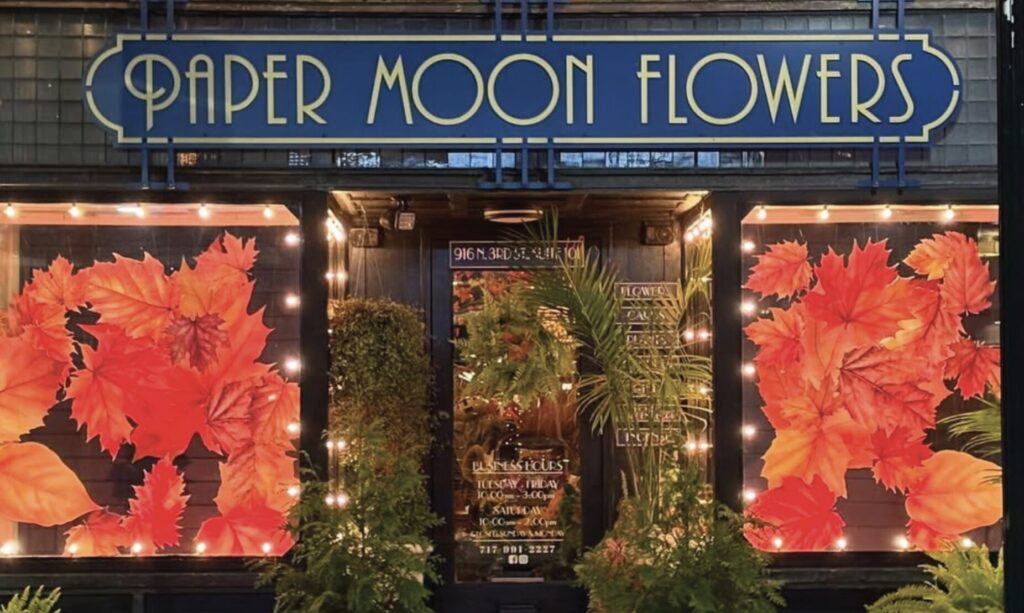
Paper Moon Flowers & Events

Community. Talk to almost any local business owner, and that’s the word that continuously pops up.

“When you make an effort to shop local, you’re immediately involved in the community,” said Kenzie Brinkman, owner of The Meadow, located at 1126 N. 3rd St. “You don’t just support local businesses, but you end up having conversations with people you don’t know, and you make new friends. There are so many benefits to it.”

“When I walk into JCPenney, it just has less soul than the local independently owned clothing store,” added Paul Sorrels, owner of several local businesses, including Full Circle Record Shop at 20 N. Cameron St. “The people working there don’t feel as committed and the energy isn’t there. There’s no community.”

It’s true. As the holiday season approaches, local brick-and-mortar businesses are gearing up for what they hope will be a good turnout from the local community as shoppers look for an authentic shopping experience, not one rooted in online clicks and delivery trucks.

Whereas the season used to be a surefire way for small businesses to round out the calendar year with a surge in sales, these days there is no guarantee that customers will show up. The reasons for that may vary—the online shopping boom and an uncertain economy are just two factors—but small business owners are hoping that, this year, a sense of community will help inspire local shoppers to visit their stores.

“I care about the returning customer,” said Shawn Durborow-Bowersox, owner of Paper Moon Flowers & Events, 916 N. 3rd St. “So, I’m not run by the dollar. I know if I keep my prices low, there is a reasonable chance I’ll get returning customers.”

An important day for these businesses is Small Business Saturday, which this year is slated for Nov. 29. A day dedicated to lifting up small local businesses, the event was created in 2010 and has since been the driving force behind consumers spending more than $200 billion at small businesses across the country.

Yet while the day has grown in popularity over the years, Brinkman admitted that she had to learn to not rely on it as a slam dunk for sales.

“The first year we were open, it was beyond our wildest dreams,” she said about the day. “But last year, there was a noticeably large dip in sales. We and other small businesses around us did about 20% less in sales year over year. It was really disheartening.”

Chantal Nga Eloundou, owner of Nyianga Store at 1423 N. 3rd St., echoed Brinkman’s stories of lackluster numbers.

“We have a sustainable number of customers, but it could be better,” she said. “I usually don’t see any business increase during the holiday season, but this year, we’re going to try some deals and discounts, so hopefully that will help.”

One of Eloundou’s issues, she said, is that she doesn’t have a website that could help her sell her products—mostly authentic African clothing—to a wider audience. Sorrels, the record shop owner, has a website for Full Circle, and he explained that it’s part of his business model as most of his inventory is available online.

Whereas the biggest challenges small businesses used to face came from big box stores like Best Buy, Walmart and the like, the bigger competitors now, he said, are online retailers. Between the ease with which someone can buy a product and the convenience of not having to venture out into a crowded shopping space, more and more consumers are turning to online shopping to meet their holiday gift needs.

“Amazon has only gotten better at what they do,” he said. “There’s only so much a small business can do to compete with that space. They make it so easy to get that thing you need.”

Still, he, along with Brinkman, Eloundou and Durborow-Bowersox, all stressed how they try and support their fellow local businesses as much as they can. In uncertain times like these, it’s not lost on any of them how important it is to band together and not only be part of the community but support it, as well.

“Our goal is to lift Harrisburg and Midtown up,” Brinkman said. “We can only do that if we’re here, and we can only be here if people make the effort to come out and see us. I know it can be hard, but we do it, too. If people make the effort, I think they would really enjoy it.”

And, to paraphrase an old Joni Mitchell song, you don’t know what you’ve got ‘til it’s gone

“If we all close down … well, you can’t care when it’s too late,” Brinkman said. “We really, really, really try to stay optimistic, but only time will tell.”

“Actually,” she paused, “this holiday season will tell.”

If you like what we do, please support our work. Become a Friend of TheBurg!

Continue Reading

Creative Shopping: Artist-owned galleries offer unique wares, personal experiences

Carlee Seele

Two blocks from the Susquehanna River, on a street whose Dutch translation is “dweller by the waters,” the potter whose name means “lively waters” realized that the letters of her gallery name—Vivi on Verbeke—fit perfectly in her storefront window’s 13 leaded-glass panes.

“And here we are, and we’re like everybody’s grandparents,” said Vivi Sterste. “And it’s great, because I meet people.”

In an age of mass-produced décor and e-commerce, artists can’t just dream up art. They must also get it into the world.

Three Harrisburg-area artists—Sterste, visual artist and poet Julia Mallory, and jewelry artisan Carlee Seele—pour their creative sparks into their work and into the galleries they fashioned for reflection, gathering, learning, shopping, and passing on knowledge to new generations of makers.


Galleries Born

Sterste founded Vivi on Verbeke in 2013 because it all came together—motoring with her partner, a Verbeke Street storefront for sale, a book on her favorite potter falling off the shelf around the corner at Midtown Scholar Bookstore.

In her boho, brick-walled gallery, the daughter of Latvian refugees from Soviet brutality picked up a mug. It depicts a scowling, orange-faced man on the front and a single word, “Ick,” on the back.

“Who does that remind you of?” she said. “We can’t get too political.” She then added, “I make what I feel like making at the time.”

In other pieces, the great beauty she finds around her—river currents and sunsets—shimmers through a lustrous glaze. Photos by her partner, Jeb Boyd, revel in the loveliness of the unexpected.

Boyd used to tell Sterste, “People don’t understand. There’s so much beauty in Harrisburg.”

A few Midtown blocks away from Vivi, Julia Mallory opened Ten Oh! Six in 2024. Born and raised in Harrisburg, Mallory is a poet who, around 2020, dove into collage and painting.

“I needed another way to say the things that I needed to say,” she said. “I feel like visual art has allowed me that range to do so.”

She’s happy to explain her poetry, but art patrons are welcome to “make whatever you want of it as a viewer.” Ten Oh! Six displays collages inspired by a second reading of Toni Morrison’s “Song of Solomon,” and an exhibit titled “Generational Possibilities” of her acrylics, black swirls on bright backgrounds sliced by ribbons of color.

“I honestly think it is capturing something that defies our traditional use of language,” she said. “You can’t reduce it to a single understanding.”

Across the river, in revitalizing New Cumberland, Carlee Seele owns Moss Creek Art. Around 2008, she was a practicing dental hygienist who took a jewelry class when she couldn’t find a medallion she had in mind. Her dental instruments? Handy for carving details.

“I still use all my dental instruments,” she said, pointing to her small worktable behind the Moss Creek Art counter. “Of course, they are nonhygienic now, but I still use all of those things to do the precision work.”

As jewelry making and glass art consumed her home, her husband kindly suggested that she accept a friend’s offer of a building for rent. Moss Creek Art opened its doors in 2019.

Custom work kept the gallery open through COVID.

“We will scrap,” Seele said. “We will redesign. We will repair.”

Seele’s primary business line emerged from a customer’s request that her late husband’s ashes be incorporated into custom jewelry. A gallery corner displays wine glasses, walking sticks, beads and jewelry—all the ways that glass can be fused or kiln-fired to cradle the cremated ashes of pets or family members.

Working with the ashes of children “eats me up the most,” but Seele is “providing a service, a connection for people with their passed-on loved ones so they can carry them around, and it creates an emotional bond.”


Business of Artistry

Seele complements her work with curated pieces from skilled local artisans, for appeal to a wide variety of tastes. One woodworker infuses wood with flowing streams of color, while a woodturner creates meticulous segmented vases and pens.

A former patient of Seele’s started by making intricate boxes before adding hats adorned with hand-burned designs.

“I sell her hats all day long,” Seele said. “She’s one of our local artists. She’ll be here forever, hopefully.”

In the online retail age, local galleries win on their own turf, Seele said—at the spot where customers want pieces from the artists they meet.

“My tagline is, ‘A piece of me becomes you,’” she said. “You can go to any artist to get whatever, but you gravitate toward that person because of what they represent.”

Mallory established Ten Oh! Six for the display and teaching of art but maximized it as an open-concept space devoted to the needs of the community, “using creativity as a means of transformation.”

Workshops have immersed participants in collage, poetry and dealing with grief. Soul Salons exhibit the works and letters of two Black icons who share birthdays, such as poet Sonia Sanchez and Otis Redding (Sept. 9).

Art displays warm the former storefront into more than a multi-purpose room.

“People comment on the energy of the space,” she said. “They love the way that it looks in here. They love the so-called good vibes. It is very inviting.”

Creating visual art, writing poetry, managing a business, and earning a livelihood “is a lot,” Mallory admits. “Even balance requires movement. You just keep at it.”

A consumer who spends $50 on a box-store print could put the same money toward a local artist’s print, but artists also bear a responsibility for making their work accessible.

“We have to be engaging so people recognize the availability of the work,” Mallory said.

Sterste often gets the question, “How’s business?”

The answer: “I’m an artist. I do what I do. We create this space to share with people, to engage with people, to inspire people.”


Teach the Future

In 2022, Mallory held a program exposing teens to art-making and careers, “just to introduce them to the possibilities that exist in the creative trades,” she said. “I remember shipping my first originals to people and thinking, ‘Oh, my gosh, this is a whole thing. There’s a whole process.’”

Seele’s gallery blends high-caliber artists with “a little hub for helping out new artists,” from high school students to retirees getting out of their comfort zones. Knowledge of the business of art, such as buying supplies wholesale, must be passed on.

“AI is not going to make this stuff,” Seele said. “We have to push the craft and teach it to someone else. We have to teach the future.”

Sterste, a former teacher, tells young artists who visit her gallery, “You can do this. You can start saving your money.”

“Most of the stuff we create or they say now ‘repurposing’ or ‘recycling,’ we’ve been doing forever,” she said. “You can do collaboratives. You can get together. Share the rent.”


Creating Community

Asked how she juggles art, family and business, Seele laughed.

Her daughter helps around the house. Her husband, Phil Seele, is Mr. Fix-it for things like the kiln. Her mother, floral designer Sandy Osterlund, creates the gallery’s elegantly natural décor.

“We’re creating a little creative hub for people to come and experience small-town shopping and bringing the community together through events,” she said.

Mallory plans Kwanzaa celebrations and writing workshops as the year ends. She draws her energy from people who “have a different curiosity” and pop into Ten Oh! Six for book clubs, films, art, healing and “building the things you want to see in the world.”

“People are looking for outlets for things of a little different flavor than they might not get otherwise,” she said.

Sterste is accustomed to switching her brain from business to art. She quotes author Joseph Campbell: “Where you stumble, there lies your beauty.”

And she finds joy in her chosen location, there amid Midtown Harrisburg’s “dynamic, suffering, misfit group of really interesting people.”

“Wherever we go, whoever we meet,” she said, “there’s something if you keep open to it.”

Moss Creek Art, 315 Bridge St., New Cumberland. www.mosscreekart.com.

Ten Oh! Six, 1006 N. 3rd St., Harrisburg, www.tenohsixstudio.com. See Facebook for events.

Vivi on Verbeke, 258 Verbeke St., Harrisburg, Facebook.

If you like what we do, please support our work. Become a Friend of TheBurg!

Continue Reading

Fabric of Another Era: A son reflects on his mother’s legacy as a long-time Harrisburg shop owner

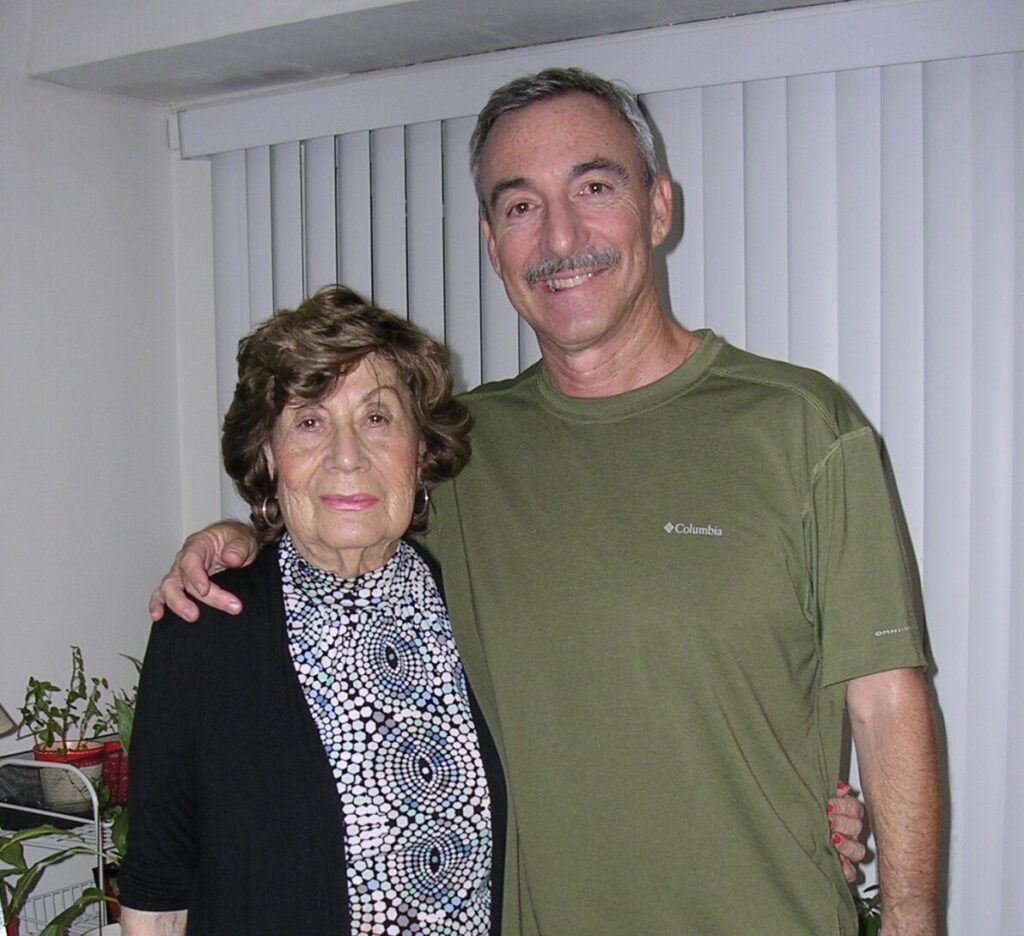
Lil Gottlieb & Ron Gottlieb

If you had the chance to step into Lil’s Dress Shop, you were stepping into a community built by my mother, Lil Gottlieb.

From the early 1960s to the 2000s, she ran one of the only women-owned businesses in the male-dominated Broad Street Market area of Harrisburg. This November, she would have turned 100.

Her children’s clothing store wasn’t just a place to buy a dress; it was a place of connection. Lil didn’t just sell clothes—she offered an extra pair of socks, a hair ribbon, a small gift (a tchotchke) and a warm hug. The selling space was small, no more than 700 square feet, and her business motto was simple and effective: “Stack it high and let it fly.”

In an era defined by a male-dominated business community, Lil thrived alongside neighbors like Greenberg’s, Irving’s Shoes, Bill’s 5&10 Furniture, the Army Navy Store, A.J. Lehrman and Sons, Joe the Motorist, Penn Photo and Alsedeks. These men, the owners of all the businesses beside Lil’s, were kind and generous to her, respecting her as a fellow business owner. You knew who you did business with, in those years.

When our father passed away far too early, my mother became a single parent, but her hard work never wavered. She built our future, putting my brother, Alan, and me through college without the need for a single student loan.

A master of connection, my mother was a human LinkedIn and Facebook who never touched a computer. I watched firsthand as she treated people from all backgrounds and socioeconomic statuses with equal respect. She was extraordinarily open-minded for the time period. These lessons have inspired my own life. which is why I have been drawn to service in nonprofit organizations for so many years.

I learned the meaning of hard work by helping her “schlepping” bolts of material as a young boy. When big box stores came along, they drove many small Midtown businesses into the suburbs. They, like e-commerce today, offered conveniences like parking or delivery, and promises of lower prices. However, they could never replace the value of community, hard work, and the personal touch that can only be built face-to-face in your own neighborhood.

That was the foundation of my mother’s business. I saw how she created a business based on trust and relationships—something big box stores and e-commerce could never replicate.

Her legacy is a reminder of all this.

Ron Gottlieb is a native of Uptown Harrisburg and a 1972 graduate of Susquehanna Township High School. He now lives in the Phoenix area.

If you like what we do, please support our work. Become a Friend of TheBurg!

Continue Reading

Blended Family: In Mechanicsburg, herbs and teas span generations

The Rosemary House

Herbs and teas bring people together in a post-Civil War-era building located in downtown Mechanicsburg.

Bertha Reppert opened The Rosemary House in 1968. She was a fifth-generation herbalist, dating back to a German herb doctor who worked in Poland. More than half a century later, her daughter continues the family tradition.

“My mother was pretty revolutionary or cutting edge,” Susanna Reppert Brill said. “Back then, people did not understand all of the different uses of herbs.”

At the time, Brill explained, Colonial-era crafts or potpourris were becoming popular as the bicentennial of America’s founding approached. Her mother chose a building on Market Street in Mechanicsburg for her business because it was close to the schools her children attended. Every day, after the last bell rang, Brill would sit at a small desk and absorb her mother’s knowledge.

She initially pursued a public policy degree at Penn State Capital Campus (now Penn State Harrisburg), but her love for plants returned her to the family business. She became the store’s manager in 1985 and owner in 1999.

“I enjoy the work and being entrenched in the town,” she said.

The Rosemary House hasn’t changed much in 57 years, Brill said. Teas and herbs line the walls, some in large buckets, others in tiny drawers. Brill keeps her stock focused on her core purpose and only expands to what she calls “herb-adjacent” items such as teapots, incense, mortars and pestles.

Anyone curious about the benefits of various teas and herbs, but completely clueless, doesn’t need to be nervous about walking into The Rosemary House. To help her customers understand medicinal benefits, Brill attended an herbal medicine course at David Winston’s Herbal Therapeutics School of Botanical Medicine. She also regularly reads related journals and attends conferences to learn from her peers.

The store’s name is a tribute to one of the oldest recorded herbs. Brill said it is also one of the most useful. Rosemary is used for cooking and medicine as well as added to cosmetics, insecticides and fragrances. In the language of flowers, rosemary is the symbol of remembrance and sacred to friendship—both cornerstones of The Rosemary House. The community atmosphere is one of Brill’s favorite aspects of the business.

“Some people remember coming in here with their mother and, now that mom has passed, they return for the memories,” she said.

The store hosts several events each year, including afternoon teas, herb classes and an annual “Fairy Festival” in September.

“Fairies are magical—they are something to believe in,” Brill said. “They are the little people who live at the bottom of the garden.”

The Fairy Festival is held in The Rosemary House’s gardens, a community gathering space. Anyone can visit the garden from dawn to dusk, even if the shop is closed. It serves as an oasis on a busy Mechanicsburg street where friends can enjoy conversation or people can quietly sit and ponder their thoughts or read a book. And if you forgot your book, there are plenty to choose from in The Rosemary House’s lending library.

The Rosemary House also has a website, but Brill is proud that most of her sales still come from customers visiting her shop. The website’s core purpose is to serve customers who have moved away, especially those who still want to purchase the store’s signature product, “Roastmary”—a blend of rosemary, garlic, salt and pepper. The combination can be used in a variety of dishes to, as Brill says, “dazzle your tongue and impress your friends.”

Brill’s longstanding family history in the herbal sphere continues to grow like the plants themselves. The seventh generation of the family, her son Cedar and daughter Angelica, are her official “herbalists in training.”


The Rosemary House is located at 120 S. Market St., Mechanicsburg. For more information, visit
www.therosemaryhouse.com.

If you like what we do, please support our work. Become a Friend of TheBurg!

Continue Reading

Second Chance Strut: Peacock Alley Boutique offers quality consignment, crafts

Annette Heffelfinger-Bly and Robin Dooley

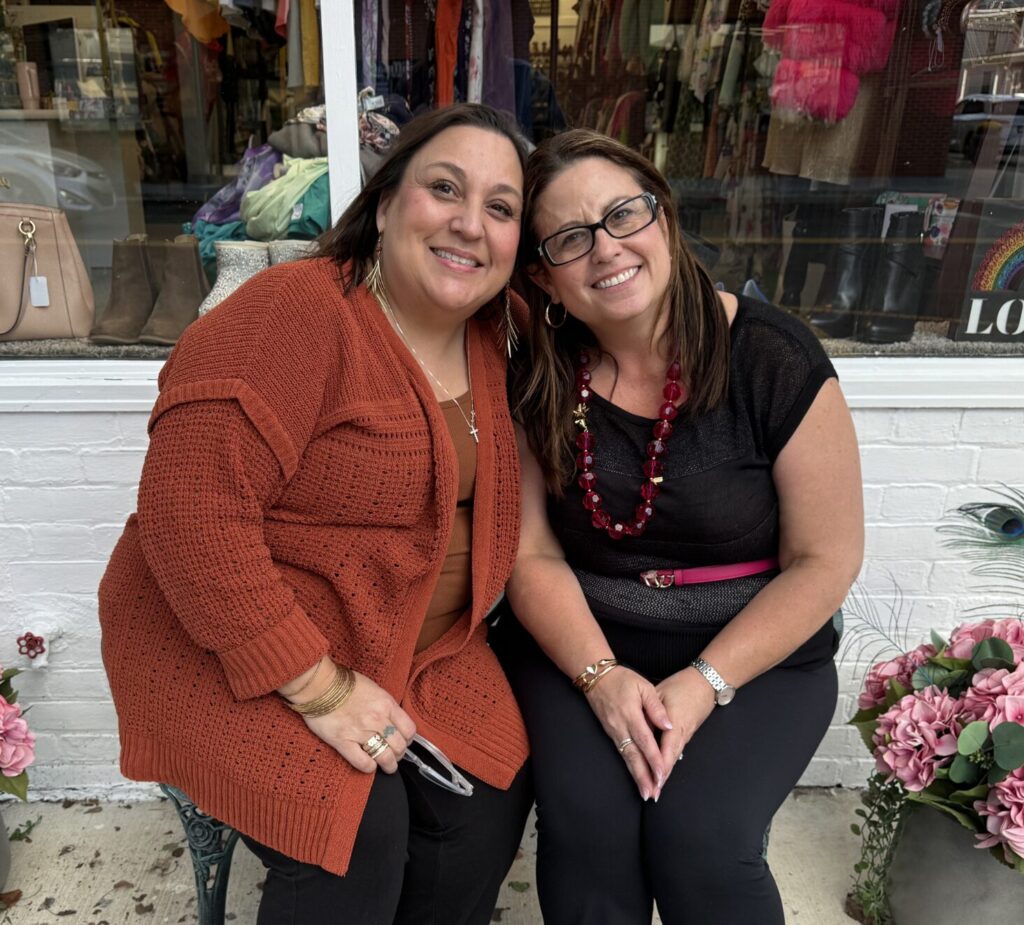
Annette Heffelfinger-Bly and Robin Dooley have been friends for more than 45 years.

The two women grew up together in New Cumberland and graduated from St. Theresa School, and while they both live outside the borough now, their ties to their hometown remain strong.

So, when they decided to open their consignment shop and boutique, they knew they wanted to do it in New Cumberland.

Peacock Alley Boutique and Collective, located on Bridge Street, is part of the ongoing revitalization of downtown New Cumberland. The name comes from Annette’s love of peacock—she even had a peacock-themed wedding—and the vibrant blue, green and purple hues found in a peacock’s plumage can be found throughout the shop’s decor.

While both women have full-time jobs outside of the boutique, their passion for their small business venture is evident. They describe the boutique as “a reflection of our friendship, our love for sustainable fashion, and our belief that every piece deserves a second chance to shine.”

“We love consignment,” Annette said. “It’s affordable, and I love looking in every nook and cranny and finding the surprise buy.”

Robin said opening the boutique with her best friend was a “no-brainer.”

“We love our hometown, we have so many memories here, and we hope to make more with all our customers whom we adore and are so thankful for,” she said.

Peacock Alley initially opened in May 2024 in a small suite near Wild Rabbit Pies & Pints, offering a handpicked selection of pre-loved clothing, shoes, handbags and accessories.

“We knew it would be hard for people to see us,” Annette said, so they relied on social media, word of mouth, and the support of other small businesses in town to help drive customers to their boutique.

When their current storefront at 303 and 305A Bridge St. became available, the timing was perfect for them to expand, Annette said.

Since moving into their current space, the boutique has become more than a consignment store. Along with their regular inventory, the shop offers space for a variety of local crafters to showcase their work. Shoppers can find everything from locally made fragrances and cosmetics to jewelry, floral arrangements, candles and much more. Peacock Alley is open to featuring any kind of local craft vendor as long as shelf space is available, Annette said.

“We’re doing all we can to be a one-stop shop for the community and anyone else who happens to come through town,” she said. “We’re always changing, always pivoting.”

Annette and Robin are both business owners and patrons. They often support the consigners and craft vendors featured in the store when buying for themselves or others.

“We shop our shop,” Annette said. “We call this our happy place.”

The boutique is currently open on weekends, but the owners hope that will change as downtown New Cumberland continues to grow.

“We would love for all of the shops down here to be open six or seven days a week,” Annette said. “We hope that it gets to that point for all of us.”

Peacock Alley Boutique and Collective is located at 303 and 305A Bridge St., New Cumberland. The boutique is open Fridays from 2 to 6 p.m. and Saturdays and Sundays from noon to 5 p.m., as well as during New Cumberland’s Second Thursday events. For more information, visit www.thepeacockalleyboutique.com or “Peacock Alley Boutique” on Facebook.

If you like what we do, please support our work. Become a Friend of TheBurg!
Continue Reading

Music Capital: A new venue, a major renovation bring live music back in a big way to downtown Harrisburg

The Emo Night Tour

When I arrived at Capital City Music Hall in late September, owner Justin Browning was drilling into the equipment stand in the center of the first floor, helping about 20 crew members with renovation work.

The room was covered in sawdust and machinery, and it was obvious to see that the folks inside had been busy making huge changes to the look and feel of the landmark downtown Harrisburg building.

For folks familiar with the building’s former life as the Federal Taphouse restaurant, the exterior hasn’t changed much, but visitors will immediately observe a wildly different look inside, which Browning cited as the biggest renovation job his company has ever done. Head of Operations Michael McPhillips said the team emptied more than 30,000 tons of debris into about 20 dumpsters over the last six months to prepare for the overhaul of the music venue.

To one’s right, the bar area largely looks the same. Then, when you enter the center of what’s being called the “Main Room” to seek out a good vantage point for a show, the expanse of the space is impossible to ignore, especially since the second floor has been opened up to create a wraparound mezzanine view for shows. The building’s height and old-fashioned windows on either side of the bar give the room a sanctuary vibe and draw attention to the massive stage.

The stage matches the room in magnitude, boasting one of the largest tech and lighting systems in the area, with a giant screen behind it.

“It’s the most updated tech in a venue in Harrisburg,” said McPhillips, who gives much of the credit for the stage and sound system to Hershey AV Solutions. “Just to see it in action is going to be really cool.”

This venue will have a much broader range of acts than Lovedrafts Brewing Co. did at its former location in Mechanicsburg, Browning said.

“This is drastically different,” he said. “We’re going to have all genres available, and some comedy nights, and vendor events.”

The former, west shore space was known for its punk, metal and hardcore acts, and those bands will still be featured, but the types of music will be expanded, “so we can have a fuller calendar,” Browning said.

He added that staff members from the brewery have remained within the company’s other bars and restaurants, which include JB Lovedraft’s MicroPub, Sawyer’s, Nocturnal and now, Capital City Music Hall, all located on the same block in downtown Harrisburg.

Blood, Sweat & Tears

The venue is meant to be an all-ages space, said Vice President Joshua Stambaugh, though that remains dependent on the show.

“It’s been exciting to see the calendar filling up with bands who we’re excited to see live,” he said.

In addition to the main stage, the renovation includes a more intimate listening room on the lower level, outfitted with the stage and equipment that used to be at Lovedraft’s Brewing Company.

“We’d like to use the space for smaller shows and showcase local artists there,” Browning said.

There are also new bathrooms and upgraded elevators. Behind the scenes, bands and crew will find a production office, a talent kitchenette and three green rooms.

Browning pointed out that, while many features in the building are new, the team tried to reuse whatever they could responsibly repurpose, such as some furniture pieces from the building’s past, when it housed SpyClub, and later, Dragonfly, before evolving into Federal Taphouse.

Browning, along with business partner Craig Dunkle, has spent the past few years championing the revitalization of Restaurant Row along 2nd Street, with an emphasis on breathing fresh life into beloved spaces along the 200-block.

“We’ve had a lot of support,” Browning said of the other downtown business owners, many of whom wrote letters endorsing the venture for city approvals.

There are advantages to the operational side of running a concert venue as opposed to the other restaurants and spaces the team has run previously, as the space is only open for scheduled events.

“It’s so much easier booking music outside of brewing, distilling and operating a restaurant,” Browning said.

However, light fare will be offered. Browning said the kitchen has pizza, hot dogs, nachos, popcorn and soft pretzels for folks who need a bite, though he hopes most attendees will choose to dine at other downtown eateries while in town.

The new venue faces its fair share of challenges, of course. For one, the entertainment landscape—and ticketing habits—have dramatically changed since JB Lovedraft’s MicroPub first started booking music nearly a decade ago.

“With a new venue, people are super hesitant to buy tickets, so we’re really seeing a lack of pre-sale. We’re getting a lot more walk-up sales,” McPhillips said. “That said, this is less confusing for customers since the focus is on one singular thing, which helps us, and everyone else.”

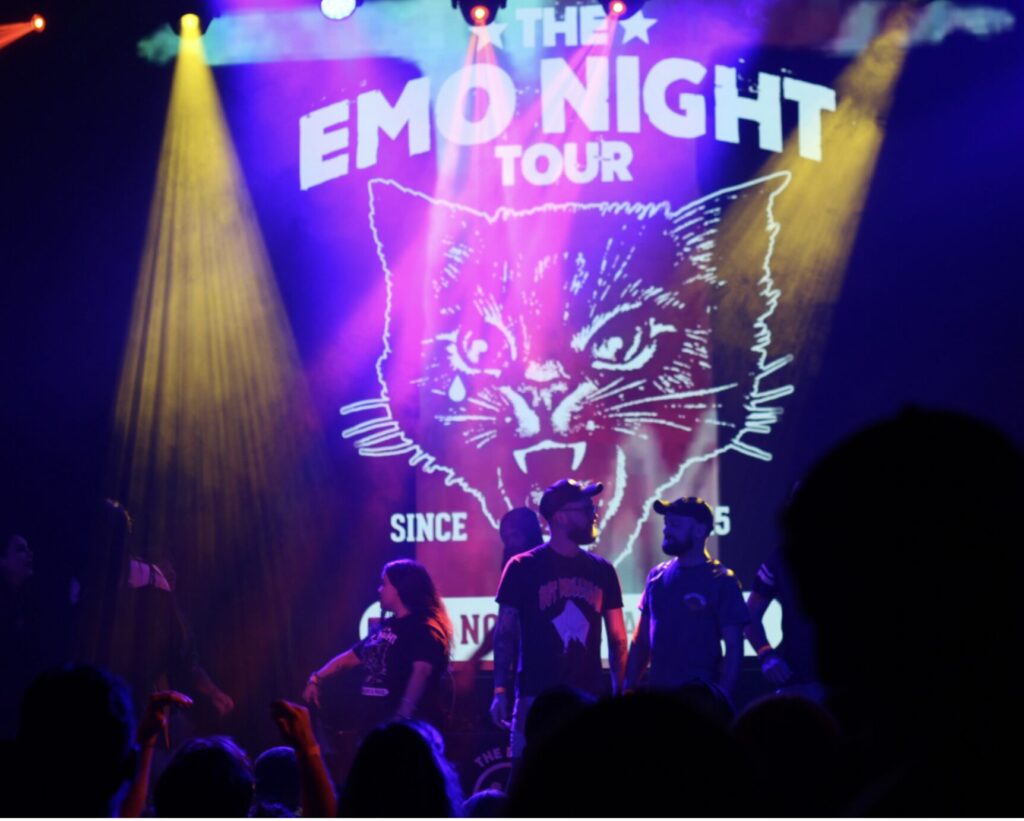
When I headed back to Capital City Music Hall a week later, there weren’t any signs of drills and sawdust. Instead, the Emo Night Tour headlined a DJ set at the venue’s opening night, where some 400 people danced to emo and pop-punk hits, filling the room with voices singing along to Fall Out Boy, The Killers and My Chemical Romance.

Opening night was declared a success.

“There’s been a lot of blood, sweat and tears going into this, and I’m super happy to see it come to fruition,” McPhillips said.

Capital City Music Hall is located at 234 N. 2nd St., Harrisburg. For more information, visit www.capcitymusichall.com.

If you like what we do, please support our work. Become a Friend of TheBurg!
Continue Reading