Beat Maker: With Keyzus, you can feel the vibes

Musician Sterling Walden, aka Keyzus. Photo by DeAndra Chatman

When it comes to getting his emotions out, Sterling Walden doesn’t need words. Instead, he uses a mixture of sounds, wavelengths and vibrations to convey his feelings.

“Vibrations are the healing blood of the world. In the end, we are all just vibrations,” he said. “Everything is just atoms that are vibrating together.”

The multi-talented music producer created these beats or “vibrations with a little bump to it” for artists all across Harrisburg and the United States. Walden, aka “Keyzus,” music ranges from party songs to smooth R&B and meditation music.

His goal is to not only make amazing music but to promote relaxation through sounds. He released his first instrumental album, “Come Home Keyzus,” in May of this year.

“Usually, when I sit down to make a beat, I have no idea what kind of beat I’m going to make,” he said. “Whatever feeling I have at the moment–[the beat] just comes to me.”

Walden got the name Keyzus from his love of his keyboard his parents got him in the sixth grade. He would lock himself in his room and play for hours. However, it wasn’t until he discovered his brother’s “MTV Music Generator” game that he started making beats.

On his first try, he made five songs and was immediately addicted to it. When his brother got over the game, Walden started going to Blockbuster himself to rent the game and played it on his friend’s PlayStation.

When he finally bought the game, he was playing in his basement when a guy who was installing his father’s car stereo came down and listened to them. “He was like, ‘Yo, your beats are dope, but the program that you’re using is pretty much bullshit.”

The man took Walden over to his house and introduced him to a music program called Reason and Fruity Loops (now called FL Studio, which he still uses to this day.)

Since then, Walden, 32, has created hundreds of tracks for himself and other artists. He’s worked with a plethora of Harrisburg-based musicians including Rawston George, Alonda Rich, John Born and more. He’s also worked with popular artists such as Fetty Wap, Rick Ross, Maino, and “Glee’s” Samantha Marie Ware. His music was also featured in a CHAMPS footwear commercial and on Starz network.

Even though he has worked with artists across the country, he still loved the uniqueness and variety of artists in Harrisburg, his hometown.

“I really like the range of music here,” he said. “You get real golden age hip-hop, some trap, alternative–just a big range. I feel like Harrisburg is bursting at the seams right now, and it’s only going to take one person to really blow it up.”

Currently, Walden is operating his label “Maschine Life” out of Harrisburg. Though many of the artists under the label are musicians, Walden considers Maschine Life to be an art label rather than a record one. Under Maschine Life there are painters, photographers and graphic designers. Walden himself is also a visual artist.

“We just wanted to be that one-stop shop for people,” he said. “Even if they are not a part of Maschine Life, they can find anything in Harrisburg art-wise.”

In 10 years, Walden sees himself on a farm either “in Georgia or Africa,” he said with a laugh.

“I’ll be playing my guitar, and still making music, but this time it’ll just be for me.”

For more information on Keyzus and Maschine Life visit https://www.maschinelife.com/. His music is available on Apple Music, Spotify, and other music streaming services.

This story is one in a series of local musician profiles in celebration of African American Music Appreciation Month.

Continue Reading

Capital Region Water proposes new stormwater fee for system upgrades; Harrisburg mayor “strongly” objects to plan

Capital Region Water is adding greening features to reduce stormwater runoff, including this bump-out, as part of the city’s 3rd Street multimodal project.

Capital Region Water is set to propose a new stormwater fee, as it seeks to better distribute the cost of some $100 million in infrastructure improvements and greening projects over the next 20 years.

Under the plan, cost impacts will range from modest to substantial, depending on the type of customer and the amount of hard, impervious surfaces on a property.

Most residential customers would see an additional stormwater fee of $74 per year, spread out in payments of $6.15 per month, starting in January, according to CRW. That cost would be offset somewhat by reduced increases in wastewater fees, CRW officials said.

Commercial and government customers, however, could experience much greater increases, as CRW will base the new stormwater fee on the total amount of impervious surface owned by an entity.

“We’re at the point where we have to start rolling this out because we have to start making the improvements,” said CRW board Chairman Marc Kurowski. “It’s also commensurate with our mission. We’re supposed to be treating sewer water. It’s part of what we’re supposed to do.”

In addition to Harrisburg, CRW serves several surrounding municipalities, including Penbrook, Paxtang and Steelton and parts of Susquehanna, Swatara and Lower Paxton townships.

At its meeting tonight, the CRW board is slated to introduce the plan, setting in motion a 90-day comment period. Comments received may guide changes to the plan before the expected Jan. 1 implementation, Kurowski said.

Harrisburg, like many old cities, has a combined sewer system, meaning that wastewater and sewer water flow through the same pipes to CRW’s treatment plant. When rain falls, the amount of water flowing in often overwhelms the system, leading to untreated sewer and wastewater discharge into streams, the Susquehanna River and, ultimately, the Chesapeake Bay.

CRW’s existing system captures and treats only 53 percent of the 1.6 billion gallons of combined wastewater volume, discharging some 796 million gallons directly into local waterways each year.

Five years ago, CRW entered into a “partial consent decree” with the federal Environmental Protection Agency (EPA) to significantly reduce the discharge of raw pollutants into the river.

“We just didn’t volunteer to boost rates,” Kurowski said. “It’s a compendium of things, but this is another unfunded mandate that comes down from the feds to us, and we have to figure out how to deal with it.”

In recent years, CRW has been boosting sewer rates significantly, in part to pay for greening projects, pipe replacement and other measures intended to help remedy the situation. With $5 million a year generated from the new fee, a separate stormwater fund would be set up to pay for those improvements.

If the fee is implemented, customers would have three parts to their monthly CRW bill starting next year: for drinking water, wastewater and stormwater. Currently, stormwater and wastewater are charged in a single fee.

Charlotte Katzenmoyer, CRW’s new CEO, described the proposed stormwater fee as “more equitable” than the current system of boosting wastewater rates to pay for stormwater projects. That’s because, she said, the new fee would be based on the total square footage of impervious surface, so that property owners that contribute more to the problem, such as large commercial customers, would pay more.

In fact, some property owners, such as those that own large surface parking lots, currently may pay no sewer fee at all, but contribute greatly to the problem of stormwater runoff and water pollution.

“It was determined that the best method of dealing with that affordability issue is to shift some of the burden of those wastewater rate increases from the residential customers to the property owners who generate the most stormwater and, therefore, create the most burden on our combined sewer system,” she said.

CRW, she said, used several mapping technologies, including the Lidar (light detection and ranging) 3-D surveying method, to aerially determine all of the hard surfaces in their service area. It then cross-referenced those with Dauphin County property records.

The stormwater fee takes into account nearly all impervious surfaces, with the exception of public roads.

Katzenmoyer added that, while most residential customers will pay a new, $74 yearly stormwater fee, they should see slower growth in the wastewater fee.

For example, CRW’s 2019 wastewater rate increased by 9.4 percent over the 2018 rate for the average residential customer. However, that rate is expected to increase by a much lesser amount, 3.7 percent, for 2020, according to CRW.

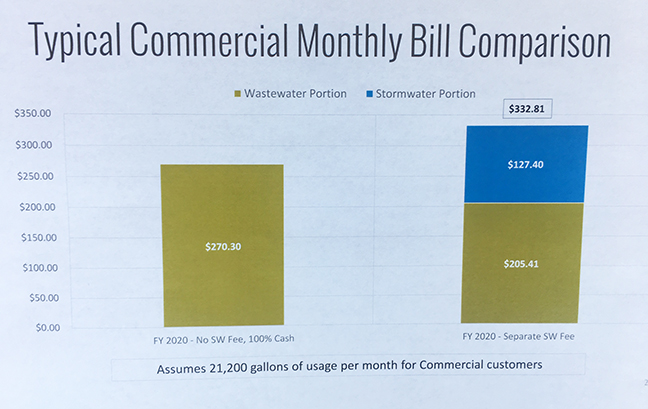
According to CRW, a typical monthly residential bill for 2020 would actually be lower with the separate stormwater fee than it would have been if no change were made—$35.60 versus $38.74. However, the typical commercial bill would rise significantly—from $270.30 to $332.81 a month (see graphics).

That argument, however, has not persuaded Harrisburg Mayor Eric Papenfuse, who said he vigorously objects to the stormwater fee.

In 2020, the city would pay an annual stormwater fee of $163,880, he said. In fact, the city is one of the “top 15” most-impacted customers, according to CRW.

However, Papenfuse said he is most concerned with the fee’s impact on the city’s poorer residents. He believes that landlords and entities like the Harrisburg school district and Standard Parking would simply pass on the fee, multiplying the cost to residents and users.

“I am strongly opposed to the stormwater fee,” he said. “I am concerned it is shifting the burden to poor communities that can least afford it.”

Papenfuse said he is also concerned that the fee would deter business investment and development in Harrisburg. He said that he sees the fee as working against his goal of creating a “positive economic climate for growth” in the city.

Several neighboring municipalities have already enacted the fee, which was enabled by a recent amendment to the Pennsylvania’s Municipal Authorities Act.

Coincidentally, the commonwealth would have the second-highest stormwater fee among CRW’s customers. Norfolk Southern Railway owns the most impervious surface in the service area, so would pay the most, Katzenmoyer said.

Papenfuse added that he was concerned that the commonwealth and Dauphin County would both oppose the fee. Katzenmoyer said that they’ve held discussions with both and, overall, described news of the fee among the “top 15” customers as “mixed.”

“Some of them get it,” she said. “The county commissioners have property in some of these other townships. So, they’ve already seen a fee from some of these other townships, where they have property. So, it wasn’t a surprise to them.”

She added that CRW is starting to set up meetings with the “top 50” most-impacted users.

“On the commercial side . . . without the stormwater fee, they’re not paying their fair share, because the stormwater fee is the major component that overburdens our system,” she said. “So, they should be paying more, because they’re generating most stormwater, not the residential customer. So, that’s why this is more equitable.”

Capital Region Water is slated to introduce the proposed stormwater fee tonight at its board meeting, which is scheduled to start at 6 p.m., at its offices at 212 Locust St., Harrisburg.


Continue Reading

Bethesda Mission gets OK for phase 2 of new community center

Harrisburg City Council in session on Tuesday night

Bethesda Mission has received the go-ahead to expand its community center on Herr Street, a plan that includes the demolition of the historic Shamrock Fire Station.

Harrisburg City Council on Tuesday night unanimously approved the project’s final land development plan, which allows the social service organization to demolish the 111-year-old fire station on the 1400-block of Herr Street and build a two-story structure in its place.

“The problem with the fire station is that it was built as a fire station,” said Bethesda Mission Executive Director Scott Dunwoody. “It’s not a well-functioning building at all for our needs.”

Originally, Bethesda Mission had planned to retain and renovate the fire station, where it has operated its teen center since 1990, as part of its expansion plan. It was going to connect to the building next door, the former Kurzenkabe Press facility, where Bethesda Mission is finishing up a $1.6 million renovation.

However, the organization later found that that plan would cost about $700,000 more—and would result in 700 square feet less space—than tearing down the fire station and building a new, two-story addition, which still is expected to cost $1.4 to $1.7 million.

Therefore, it changed its plan, requiring a new approval from the city Planning Commission and City Council.

Initially, the plan to demolish the fire station was opposed by the city’s Fire Bureau. However, Bethesda Mission adjusted its plan so that the addition would mimic the old station in design and materials used, said the city’s Planning Director Geoffrey Knight.

“They created a new design, a façade for Herr Street,” Knight said. “It will be a new construction but will largely reflect the design of the fire station and use materials similar to the fire station.”

Bethesda Mission also agreed to construct a pocket park and include a commemorative marker to honor a Shamrock firefighter who died after battling a fire at the Harrisburg Pipe and Pipe Bending plant in 1918.

Dunwoody said that the fire station would not be razed until the project begins. He hopes to complete fundraising by the end of 2019 and begin construction in 2020.

Together, the two buildings will total nearly 20,000 square feet–9,000 square feet from the press building renovation and 10,400 square feet from the new, two-story building.

“We’ve already been in North Allison Hill for 30 years,” Dunwoody said. “We believe this will allow us to serve there for another 30 to 50 years.”

Continue Reading

Students come from a world away to attend HU’s AI boot camp.

Majid Shaalan at work, teaching at HU’s AI Bootcamp.

Some are fearful of artificial intelligence taking over the world. While it might not be there yet, it is taking over Harrisburg University this summer.

As part of HU’s international outreach program, a month-long Applied Artificial Intelligence International Bootcamp kicked off last week. Twenty undergraduate and graduate students from India traveled the long distance to learn from AI experts and gain hands-on experience.

“We have something special that we can share with the world,” said HU’s Director of Computer and Information Sciences Majid Shaalan.

Students come from different educational backgrounds, some computer science majors and others studying engineering. Shaalan, along with two other instructors and six teaching aides, guide the students through project-based, learning-focused activities.

Throughout the course of the month, they will complete 10 projects—models built by the students themselves that solve fundamental problems in areas such as healthcare, Shaalan explained.

Each Friday, faculty take students on a site visit to a local company to show them a glimpse of their classroom knowledge applied in the real world. Shaalan highlighted their most recent trip to the Harley Davidson factory in York.

“We want to give them a flavor of how AI is theoretically designed and applied,” said HU lecturer in computer and information sciences, Brian Grey. “Hopefully, it sparks an interest or passion in the area.”

After last summer, the first year of AI Bootcamp, two students returned to HU to enroll as students. Others went on to further explore AI at their own schools or in the workplace.

“It’s changing people’s lives and helping them to figure out their ways,” Shaalan explained.

He also pointed out the only other U.S. institution hosting an in-person AI boot camp is the University of California, Berkeley, as most others are online. Shaalan believes HU’s program is “one of a kind.”

Gargi Bagar is a third-year engineering student from Nagpur, India. She heard about the boot camp through professors at her college.

“I wanted to get exposure and learn things,” Bagar said. “There’s a lot of opportunities in this field. I wanted to do something on my own.”

Bagar had no previous experience working with AI. However, it’s something her father always encouraged her to try.

To Shaalan, that is one of the aspects that makes AI camp so successful—the diversity.

“Some people are very educated and knowledgeable [with AI], and others are good at math or programming,” he said.

There are a variety of skill levels and interests amongst students, but everyone can learn more, he explained.

Shaalan sees the bootcamp continuing to expand in the coming years by adding more entrepreneurial, business analysis and engineering aspects to the experience. He’s also looking at the possibility of taking a team of educators to different countries to hold short boot camps for those who can’t travel to the United States.

While AI has been around for awhile, Grey believes its development is still taking off.

“These students have the opportunity of being at the beginning,” he said.

Continue Reading

Harrisburg receives federal “Brownfields” grant, plans more site cleanup

Bryan Davis, executive director of the Harrisburg Redevelopment Authority, spoke today from the future expansion site of Hamilton Health Center.

Harrisburg’s Allison Hill is littered with brownfield sites, the legacy of the many factories and other industrial companies that once operated there.

Today, the city announced the receipt of a $300,000 federal Brownfields Program grant, which will help remediate some of the residual contamination, with the goal of putting those sites back into productive use.

“A key element of the federal program is to redevelop a lot of these old, abandoned sites versus going into pristine, non-touched natural environment,” said John Armstead, the Mid-Atlantic land, chemical and redevelopment regional division director of the Environmental Protection Agency (EPA).

The grant will be used to identify brownfield sites that have potential for redevelopment, conduct environmental assessments and plan the clean up of the sites, Armstead said.

“[The grant is] critical to us because we have so many properties that have a history of being along rail lines, being in creek beds and that have possible contamination, but in many instances, people just don’t know,” said Bryan Davis, the executive director of the Harrisburg Redevelopment Authority.

Last year, the authority received a $200,000 Brownfields Program grant. That grant, said Armstead, was leveraged for $26 million in redevelopment, as the money is used to clean up sites that otherwise would be difficult to redevelop.

This time around, potential projects for the grant may include an expansion of N.F. String and Son, Inc., one of the largest employers in the area, the redevelopment of an abandoned Coca-Cola bottling plant on Allison Hill and the creation of a new grocery store in Harrisburg, said Mayor Eric Papenfuse.

“We’ve created over a thousand jobs in the city over the last 12 months alone, and that number continues to grow,” Papenfuse said. “It’s an exciting time to invest, and this grant will lay the groundwork for additional dollars coming right here into the heart of Allison Hill.”

Hamilton Health Center built on a previous brownfield site, demonstrating the potential for development and revitalization in Allison Hill, said CEO Jeannine Peterson. She said that she hoped the grant would further the redevelopment of the area.

“We’re looking for the investment to come here,” she said. “The EPA saw it, and they gave funding to the Harrisburg Redevelopment Authority to get it started. We are so happy that the second round [of funding] is coming here. We are hoping that other businesses see the vision that we grasped over 10 years ago and come and take advantage of the area.”

The grant could also bring the potential for further community engagement. Julie Waters, the neighborhood revitalization manager of Tri-County Community Action, an advocacy group for residents of the tri-county area, said that the community is a crucial part of revitalization efforts.

“This funding stream brings great momentum that’s building in this community and in the city,” she said. “It provides another opportunity for residents to raise their voices and share their expertise so that the way the community looks and functions reflects their needs.”

Continue Reading

Art Debut: Annual “Art of the State,” a feast for the eyes, the emotions; winners announced

The State Museum of Pennsylvania houses many collections, but none quite as diverse and rich as this one.

On Sunday, the museum unveiled this year’s “Art of the State” with an opening reception and awards ceremony, marking an exceptional 52nd edition of the annual juried contest and exhibit.

The exhibit honored some of the best artists from across the commonwealth, with artists both seasoned and emerging joining forces to create a tour de force.

Applications for this juried show started shortly after the new year. Entrants numbered 2,170, and, in the end, 110 works of art from 103 artists across 35 counties were selected. Cash prizes were awarded for painting, works on paper, photography and digital arts and sculpture and craft.

As the State Museum’s curator of fine arts, Amy Hammond, along with Carol Buck, curator of installations, took great care in presenting this latest edition of “Art of the State.”

By purposeful design, Hammond’s presentation replicates that of an upscale gallery, elevating what could be an unwieldy task in highlighting 110 works of diverse media. In this massive undertaking, many hands worked together—from collecting and cataloging to the final finish as the last piece is hung.

The power of art is such that it can transform a mere viewer to a full-in participant. There is art that speaks in a whisper, art that leaves us thunderstruck, and art that bowls us over with a feather.

In no particular order, the following are 10 “snapshots” from the 2019 class of “Art of the State”:

James Evangelista’s “The Law’s Must Change” (pictured top) is a close-up a child’s face peering through a wire fence. No work is more charged politically or fraught emotionally as one imagines a child separated from their family and freedom. This photo speaks a thousand words without uttering a sound.

“Zen Teraglyph” is a color photograph by John Meza that depicts a series of crop circles dusted by new fallen snow echoing down the centuries with man’s fascination of mysteries manifested from beyond the natural realm.

The perfection achieved in Bill Snyder’s night skyscape, “Mars Milky Way and Seneca Rocks, almost makes one think it was staged that way. Along with Mars’ amber glow is sprinkling stardust from the Milky Way, making a serendipitous moment captured on film.

Michael Munchel’s “Salon de Musica” is a photographic study of a haunted habitué no longer present. His depiction details a salon of spirits only in showing an ambiance of abandonment. The photo features a neon pink piano as its primary focus. A diffused use of color, tinting and light only heightens the melancholy mood.

At face value, Donna Barlup’s whimsical watercolor painting captures its title perfectly, a girl sitting astride her father’s shoulders gives her the “Best Seat in the House” (pictured). Perhaps they are at a country fair, but the painting shares its deeper meaning—that special bond between daughter and father. Barlup achieves an artistic nonchalance as only a master watercolorist could attain.

The world would look a lot different to us if we only saw it in black and white. If color is king, then Chuck Olson’s “The Meeting Place” delivers the goods. But more than that, the title carries additional import as the oil painting converges head-on at the intersection of abstraction and color.

Michelle Thomas’s acrylic work on canvas, “Route 29 South, Late Autumn,” captures a stretch of road in northeastern Pennsylvania that could just as easily be an unknown destination in our imagination. Brilliantly inserting the viewer behind the wheel creates an eerie sense of entering a dreamscape. What lies around the bend is entirely up to you.

“Embrace the View” is Paul Sirofchuck’s gift to sculpture and craft at its finest. This thought-provoking, imagination-invoking combination of solid cherry, wenge, brushed aluminum and polished mirror standing 7 feet tall, is a statement piece of its own accord. If beauty is truth, then this is as honest as it gets.

Qay San’s “Emergence of the Grid” demonstrates pottery’s testament to time immemorial in its tonal and textural tribute to what looks like could be a Mayan artifact that speaks to lost civilizations. A time when life was lived completely off the grid.

Sandra Moore’s “Fat Egg II” takes Native Okeewemee red clay from North Carolina to create a vessel that defies description. The artist states, “Hot clay dictates the moment when the painting of line and direction of smoke is embedded into the burnished layers of the clay resulting in translucent planes of line and smoke.” The piece tells the story of each of those moments.

More than ever, “Art of the State” exemplifies the vast richness of art and artists distributing a common wealth to all who visit.

“Art of the State” runs through Sept. 8 at the State Museum of Pennsylvania, 300 North St., Harrisburg. It close coincides with the Art Association of Harrisburg’s citywide Gallery Walk.


And the Winners Are:

The State Museum of Pennsylvania today announced the winners of 2019 “Art of the State” juried competition. Awards are $500 for first place, $300 for second place and $200 for third place. 

Photography
1st Sanh Tran, “Untitled, No. 1 (Country Mouse)”
2nd Lisa Bennett, “Constructed Lights 5095-45”
3rd James Evangelista, “The Laws Must Change”
Honorable Mention: Irene VanBuskirk, “Divided Attention”
Honorable Mention: Kyle Yates, “Indiana Theater” 

Painting
1st Denny Bond, “DIY”
2nd Debbie Baer, “Hostile Takeover”
3rd Robert Arnosky, “Wish I Was There”
Honorable Mention: Paige Tibbe, “Mike” 

Work on Paper
1st Geoffrey Beadle, “Samuel Illuminated”
2nd Cassaundra Flor, “Aeolian Cityscape”
3rd Lauren Scavo-Fulk, “Building and Tree”
Honorable Mention: Terri Fridkin, “Freeriding”
Honorable Mention: Linda Aragon, “Maria” 

Craft
1st Amy LeFever, “Untitled”
2nd Paul Sirofchuck, “Embrace The View”
3rd Sue Reno, “In Dreams I Slept in a Cabin”
Honorable Mention: E. Douglas Wunder, “Scramble”
Honorable Mention: Janine Wang, “Snug Stones” 

Sculpture
1st Diane Pepe, “Installation: Selective Processes of Memory”
2nd Brian Glaze, “WPA”
3rd Jennifer Rubin Garey, “Transformation”
Honorable Mention: Tyler Stanton, “Tree House Credenza” 

The State Museum Purchase Award
Cassaundra Flor: “Aeolian Cityscape”
Sanh Tran: “Untitled, No. 1 (Country Mouse)” 

William D. Davis Memorial Award for Drawing
Richard Huck, “Assault”

Art Docents Choice Award
Paul Sirofchuck, “Embrace The View”

Continue Reading

D&H, Make-a-Wish form yearlong partnership to help area youth

Max shakes hands with Dan and Michael Schwab of D&H during a recent event announcing the Make-A-Wish sponsorship in the Dauphin County Administration Building.

Back in October, Storm Troopers and Darth Vader greeted Max, a 13-year-old with a neuromuscular disorder at the D&H headquarters.

The surprise didn’t stop there. More than 700 employees from the technology distribution company told Max that they would be granting his wish: he and his family were going to Universal Studios.

“It was probably the most meaningful event that we’ve had in my 25 years at D&H, and the employees at D&H were honored to be involved in the wish reveal,” said Dan Schwab, co-president of D&H.

After helping to fund Max’s wish, Harrisburg-based D&H has pledged to fund wishes of local children with life-threatening conditions through a yearlong partnership with Make-A-Wish Philadelphia, Delaware and Susquehanna Valley.

Although D&H frequently does philanthropic initiatives as part of its charity organization called D&H Cares, Schwab said that the company has never done an initiative of this magnitude.

Starting in April 2020, the company will grant approximately 12 to 14 wishes per year.

Beyond providing funding for wishes, D&H hopes to spread awareness about the Make-A-Wish Foundation.

“One of the big misconceptions about Make-A-Wish is that people think that it’s only for children who are terminal,” Schwab said. “[Make-A-Wish] is for kids who have a life-threatening disease. A lot of parents don’t realize that their children may be eligible, and so in order to drive awareness and highlight our commitment to Dauphin County, we wanted to make sure that all wishes are funded.”

The largest privately owned company in the region, D&H maintains a commitment to the local area and to its employees, who also own 36 percent of the company, Schwab said. Long based in Harrisburg, D&H earlier this year announced an impending move to Lower Paxton Township, about six miles from its current headquarters on N. 7th Street.

“We run the company like a family,” Schwab said. “We focus a lot on the health and wellness of our employees, but we also focus on our contributions to the community, because we all live, work and play in the local area.”

D&H was founded over a century ago and has been operating in Dauphin County for 70 years.

Schwab hopes that the company’s partnership with Make-A-Wish will deepen the company’s commitment to the community.

“We never want to forget our roots and our commitment to the local community that helped us become successful,” Schwab said.

For more information on D&H, visit www.dandh.com For more information on Make-A-Wish Philadelphia, Delaware and Susquehanna Valley, visit www.philadesv.wish.org.

Continue Reading

The Week that Was: A summary of news and features around Harrisburg.

Harrisburg school Director Carrie Fowler spoke to the press outside of the Dauphin County courthouse on Monday.

From schools to trash to art, there was no lack of Harrisburg news this past week. Here are some of the stories that you may have missed–or already forgot.

Art Festivals abound this summer in Pennsylvania. Find out what’s being shown from the Schuylkill to the Allegheny.

Carlisle Arts Learning Center opened its newest exhibit, “Works and Working,” featuring artwork from a variety of techniques and disciplines. Learn about the new show here.

Death Cab for Cutie brought major concerts back to the Harrisburg waterfront with a show in Riverfront Park, part of the H.U. Concert Series. It was a damp but fun evening, said our reporter.

Devin DePamphilis is a young photographer with a bright future ahead—or maybe he’ll just decide to become a dentist. Click here to learn about his award-winning photography.

Harrisburg entered into an intergovernmental cooperation agreement so that the city soon will begin picking up Steelton’s trash. We published stories both about the City Council vote and the official announcement.

Harrisburg school district conceded the fight over receivership, surprising a packed courtroom by voluntarily agreeing to a state Department of Education takeover. Click here for the full story. 

Harrisburg’s historic markers are getting a facelift, thanks to a combined effort by Historic Harrisburg Association and Midtown Action Council. Click here for the full story.

Harrisburg musician Nyshae Bell, under the name Ayana Aura, sings of her life and struggles, featured as part of TheBurg’s continuing series on local black musicians for African American Music Appreciation Month. Click here to read her story.

Janet Samuels was named the receiver for the Harrisburg school district and presided over her first school board meeting. Get all the details here and here.

Moss Creek Art opened recently in New Cumberland, featuring a variety of custom-made jewelry and art pieces. Find out how owner Carlee Seele took the unusual journey from dentist to artist.

Mostly Toasted debuted in the Broad Street Market, specializing in gourmet-style grilled cheese sandwiches. Get all the tasty, gooey details by reading our story.

Quirky hotels were once a mainstay across the American landscape, but many have faded away over the years. In central PA, a few still exist, and you can stay there. Read our feature story here.

Sara Bozich has a weekend full of fun in store, including 3rd in the Burg and a new brewery featured at Sip @ Soma. Find out her recommendations here.

Strawberry Square in downtown Harrisburg saw two new openings this past week, as both Curry in a Hurry and a new Sprint store held ribbon-cuttings. Curry in a Hurry is the food court outpost of the legendary Shipoke restaurant, A Passage to India.

Do you receive TheBurg Daily, our daily digest of news and events? If not, subscribe here. 

Continue Reading

Songs of Her Life: From her struggles, Ayana Aura sings

While driving to the mall with her mother back in 2015, Nyshae Bell was casually singing along to the radio (well casually for her–others might call it a mini-performance).

Bell suddenly turned to her mother and said, “Mom, I want to make it by 25.” Without hesitation, her mother responded, “You can make it now.”

That was all the encouragement she needed to dive headfirst into her music. Now 24, Bell, better known as “Ayana Aura,” (pictured) is working on her third EP titled, “Not Like You.” For years, the singer and songwriter brought her soulful voice to venues across Harrisburg and Pittsburgh.

“I make songs for sad girls, girls who want money or got money, girls who like girls, girls who are happy in their skin—all girls,” she said.

Bell was never one to take her music seriously. When she was younger, her mother would often catch her singing, using a hairbrush as a mic.

But, when she developed depression at 12 years old, singing became the only light she had left. It didn’t help that she felt like her family wasn’t paying much attention to her. But, when people would hear her sing, they would stop, listen, and admire her voice, and finally pay attention to her.

So, she kept singing. She started performing at local mic nights around her Milton Hershey High School. However, she did not start taking her music seriously until she was in college. Her friend introduced her to local musicians Hippyswizzy and Treble. As soon as they heard she sing they wanted her to join their group.

She and her group, called “Soullive,” had their first major performance in 2014 where they opened for Bow Wow for his 28th birthday party in New Castle.

“That was my first big crowd, I was like, ‘Oh my gosh,’” Bell said. “I messed up a couple of times, but that’s all a part of growth.”

After that, Bell started to work on music for herself. She released her first single, “717,” which was an ode to Harrisburg. The song was featured on her first EP, “City of Dreams,” released in 2017. The song makes her cringe to this day, though she reassures that it’s not a bad song. The reason why she cringes is because she knew she wasn’t really opening up in her music.

Her next EP, “Cupid Stupid,” features three anti-Valentine’s Day tracks where Bell talks about her struggles with finding love.

“I didn’t want to let people in with my music,” she said. “Now, I am being more honest with myself and with my music because I feel that there are other people out there who feel the same way I feel.”

Bell is currently brainstorming visuals to go with her latest song, “Netflix & Chill,” and crafting her next EP. According to Bell, “Not Like You” will be her biggest project yet.

She hopes her music will push people to open up more about their personal struggles, whether with mental health or love, and also encourage more women to create music.

“Men have always had power. It’s time to take it back,” she said. “If you have a voice and talent, why not use it for good?” 

You can hear Bell live on July 7 at the “Baddies Blossom” show at La Cultura on 214 Verbeke St., Harrisburg. Doors open at 5:30 p.m. To listen to her music now, visit https://soundcloud.com/ayana-aura.

This story is one in a series of local musician profiles in celebration of African American Music Appreciation Month.

Continue Reading

Of Drills and Jewels: With her new shop, Carlee Seele has moved from dental work to artwork

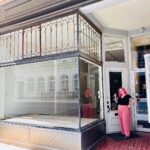
Carlee Seele in front of her new shop, Moss Creek Art, in New Cumberland.

Carlee Seele worked in dentistry when she discovered that her dental tools had another purpose: jewelry making.

After she created her first piece, a dragonfly pendant, her friends began to ask for custom-made jewelry of their own, so she set up shop in her basement. Now, she has opened her brick-and-mortar shop, Moss Creek Art, in New Cumberland.

“Having this new location, I want to focus on better customer service, being a little more personable with everybody and letting people know I’m available,” Seele said. “I’m just trying to stay afloat and help people along the way.”

Although the New Cumberland native started her career making jewelry, her work now includes glass wall art, cremation pieces, lighting, dishes and wall art, among other glass pieces. Seele does not blow glass, but she creates her work through a process of kiln-fusing and torch fire.

Seele relies on her history in dentistry and on the help of online jewelry-making communities to create her one-of-a-kind pieces.

“Jewelry-making is not really that much different from dentistry,” she said. “You’re using a lot of similar techniques where you’re molding the metal and then polishing it. It’s just that you’re working in a studio versus a sterilized oral cavity. But I’m still using a lot of the same instruments. Dremel tools are just like dental drills.”

The interior of the shop.

Of Seele’s most popular items are her cremation ash pieces, in which she incorporates a small amount of ashes or hair from a deceased loved one or pet and incorporates it into a piece of glass jewelry.

“Someone who has had a loved one pass away comes in and they’re distraught, and you make a connection with them and help them feel better,” she said. “The cremation pieces give people a chance to carry their loved one around instead of just putting them on a fireplace mantle.”

Seele said that the biggest inspiration for her pieces is nature and travel. However, although she enjoys making nature-inspired pieces, her main focus is creating pieces to satisfy her customers.

“I try to pay attention to what people are asking for,” she said. “You can always make what you want, but if it doesn’t sell, you’re not going to make rent. So, I’m trying to pay attention to what touches people and what talks to them. It’s really about what talks to the person, so a piece of me becomes a piece of them eventually.”

In the near future, Seele hopes that other artists will open stores in New Cumberland.

“I want to bring back a resurgence of art and music down here,” she said. “There are a couple vacant spaces, so hopefully, we’ll have more galleries move in. The more the better. I think competition’s good, because I’m not the only artist around. Come down to take some time, walk around and explore the area.”

Moss Creek Art is located at 315 Bridge St in New Cumberland. For more information, visit https://www.mosscreekart.com/.

Continue Reading