Road Rethink: Forster Street is an artifact of poor ’50s planning. It’s time to reassess.

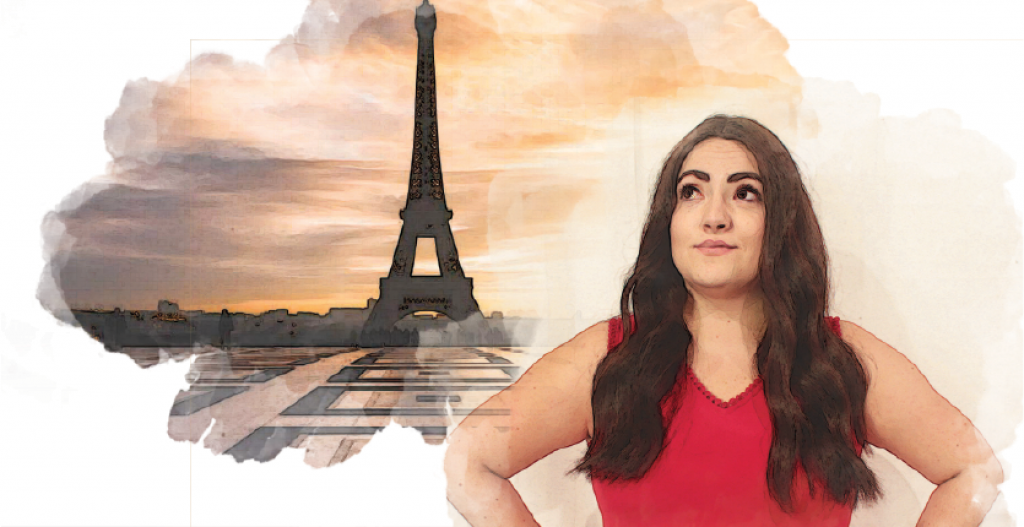
Illustration by Rich Hauck.

How’s 1952 treating you?

“The Perry Como Show,” Doris Day, duck and cover. Great stuff.

Wait, you don’t recall these things?

Well, in a sense, you are living in 1952—in Harrisburg, we all are.

In that year, Gov. John S. Fine approved the widening of Forster Street, allowing the state to blast through a leafy, quaint residential neighborhood to create what eventually would become a nine-lane (six through, two parking, one turning lane) asphalt hellscape.

We are now living in someone else’s reality, someone else’s vision of Harrisburg, namely a bunch of state officials and engineers, long gone, who sketched out a future ruled by the automobile.

I have in mind Judge Doom from “Who Framed Roger Rabbit?” as he dreamily imagined “eight lanes of shimmering cement” in place of Toon Town.

“They’re calling it a freeway,” he said, lost in a reverie. “My God, it’ll be beautiful.”

Like in the movie, plenty of stuff was inconveniently in the way on and near Forster Street—not fictional cartoon characters, but very real houses, businesses and human beings. But that was nothing that condemnation orders, property takings, bulldozers and blacktop couldn’t remedy.

Where Judge Doom failed, the commonwealth of Pennsylvania succeeded.

As we enter the 2020s, it’s perfectly reasonable to reassess this experiment. After all, 70 years seems plenty of time to judge whether or not something has worked.

In terms of moving workers to their jobs—the state’s only concern during Howdy Doody times—I’d give Harrisburg’s mini-freeway a grade of “C-minus.”

It basically accomplished that mission, but at a very high cost. Yes, the street successfully carries traffic from the Harvey Taylor Bridge to the Capitol Complex and back, but it’s also poorly engineered. Its width, speed off of the bridge and intersections with other busy city streets encourage speeding and light-running, which inevitably means crashes.

It’s also, for 22 hours a day, far too wide. All of those lanes are unnecessary to carry the average traffic load for about 95 percent of the 168-hour week, a sign of poor road design, planning and vision. In other words, Forster Street is vastly overbuilt, which may not have been obvious in the 1950s, but is now.

In terms of its impact on Harrisburg—can I go lower than “F?”

Forster Street ripped the heart out of Harrisburg, dividing neighborhoods and creating a vast, dangerous chasm smack in the middle of the city. Built as an integrated series of walkable neighborhoods, Harrisburg became fragmented and inhospitable. Soon, Front and 2nd streets also became mini-highways, making residents feel that they were living on one big traffic island—and who wants that?

It’s difficult to exaggerate the disaster that this was for the city. These road projects kicked off a decades-long death spiral of urban flight, depopulation and disinvestment that we’re only now emerging from. Yes, state workers got to their jobs a little faster, paid for by the ruination of the capital city.

My understanding is that two aligned forces pushed the Forster Street expansion.

The first consisted of state officials under the sway of the wealthy and influential road construction industry, as well as powerful political boss Harvey Taylor, who saw the expansion of the Capitol complex and the grand boulevard leading up to it as a living monument to himself. In retrospect, they deserve all the censure we can muster.

The second force consisted of rank-and-file engineers and planners who likely believed this truly was the future. After all, Harrisburg was hardly alone in the urban highway trend. Roads were plowing through city after city, soon destabilizing and destroying them, too. If you were a civil engineer in the 1940s and ‘50s, knocking down buildings and throwing up highways was the thing to do.

But that was 70 years ago. Time moves on. Societies change, cities change, Harrisburg has changed. But Forster Street is essentially the same as the day the project’s ribbon was cut in the 1950s. It’s like we’re in a time warp, living out someone else’s failed vision of the future.

So, where to now?

It’s time for a rethink. The state should be working with the city to assess all of its road infrastructure in Harrisburg—what works, what doesn’t, and what might prepare us for the future, not just ignore or patch up past mistakes.

The thing is—we already know generally what this would look like based upon similar efforts in many cities around the country.

No, we can’t go back in time and magically return Forster to a small neighborhood street, but we can integrate it better into its city. This might mean a slimmer street with wider sidewalks, more green infrastructure, differentiated pavement, bump-outs, bike lanes and other measures that put pedestrians and cyclists on a more equal footing with autos. People shouldn’t fear for their lives simply because they want to cross the street between downtown and Midtown Harrisburg.

Harrisburg circa 1950 was a vastly different city than it was 70 years earlier—the mud-street, horse-centric 1880s. Likewise, Harrisburg of 2020 is vastly different than Harrisburg of 1950. To me, a rethink every 70 or so years is entirely reasonable.

Lawrance Binda is co-publisher/editor-in-chief of TheBurg.

Continue Reading

Flower Power: This month, you may see a very long line down 3rd Street. Here’s why.

Hari Chakra. Photo by Dani Fresh.

When I’m downtown, I often walk past a stand full of vibrantly colored flowers.

Most of the time, I’m headed to interview a business owner or attend a press conference in city hall. I’ve never had a reason to buy flowers, although glimpsing the rainbow of hues is always a bright spot of my day.

In October, I received my first lei. A man with a friendly smile waved me over as he stood propped against a minivan opposite his table full of flowers. He turned to reach inside the car, pulled out a necklace strung with bright orange marigolds and placed it over my head.

I’ve had my share of interesting encounters in Harrisburg, but this was a new one.

I thanked him and continued on my way, walking the streets like I was Hawaiian royalty. A few quizzical looks were shot my way, but what a fun story I had to tell.

And then it happened again a couple months later—another lei.


Rain or Shine

In the coldest months, Hari Chakra pulls up to his spot on N. 3rd Street, between Locust and Cranberry streets, and places a single flower on top of his van. He was taught this trick for days like this—really cold ones. After awhile, he will check on the flower, seeing if it has frozen. He handed me today’s test flower, prompting me to feel the petals. If it felt stiff, he would have to keep the bulk of his flowers in the van for the day.

“We’ve made a declaration—we will always be here, no matter what,” Chakra said. “Rain, shine, snow or sleet.”

Five days a week, Chakra drives about an hour from his home in Port Royal to pick up flowers from a wholesaler to bring to the city. He sets up shop in his usual location and lays out some of the eye-catching clusters.

He’s been doing this since 2003, shortly after he moved to the United States from Ghana. At first, he was taken under the wing of Mike Blum, who started this flower business. The pair became partners, but also good friends. Blum even lived with Chakra and his family for about six years.

“We became very close,” Blum said. “We were a team.”

Unfortunately, Blum had two heart attacks over the course of a few years, limiting his ability to work. He then decided to move to Boston to take care of his elderly mother. Chakra was sad to lose his partner, but he had been trained by the best, he said. The business became his.

“It was hard for me to give that up,” Blum said. “But it got to the point where I just couldn’t do it anymore. I knew he could take care of it.”

Although Blum remained in Boston, even after his mother passed, he still has been known to re-appear in Harrisburg to help with sales on the busiest holidays of the year. If you stop by the stand on Valentine’s Day this month, you will see him there making bouquets and catching up with old friends.


Never Disappoint

 Within the span of the hour or so that I stood speaking with Chakra, a handful of people came up to purchase a bouquet or waved as they walked past.

“In Harrisburg, everybody knows us,” he said.

On normal days like this, there’s a steady flow of customers. Many are regulars that come a few times a week, while others stop by for special occasions. No matter the budget, Chakra can create an arrangement for his customers.

“When people want to make up with their wives and fiancés, we are here for them,” he said, with a chuckle and a sly grin.

However, if you have walked down 3rd Street on Valentine’s or Mother’s Day, you’ve seen the line. The typical steady flow turns into a multi-block-long pileup of eager flower buyers.

Chakra told me the story of one Valentine’s Day that was particularly challenging.

“It was so cold,” he said. “We had three heaters in the truck and still the flowers were freezing.”

He had to cover the back of the large U-Haul truck with cardboard, attempting to protect the flowers from the wind. People were shouting their requests from their cars, only running out to quickly swap their cash for a bouquet.

“As long as we are determined to work hard, you will get it,” he said. “We will never disappoint.”


 Brightens My Day

Midtown resident Heidi Richel-Haines was in her senior year at Penn State University when her boyfriend walked into her room with two huge armfuls of flowers. Her roommates gawked at the sight, wondering how their friend had gotten so lucky.

“We both laughed because we knew where he got them from,” Richel-Haines said. “Your money goes far there.”

The wooing of Richel-Haines with flowers became a regular treat. She received so many that she would end up giving some to her roommates—sharing the wealth.

These days, about 18 years later, Richel-Haines works in the state Capitol building, near the flower stand. Every time she walks by, memories of her days in college flood her mind. Every so often, she stops by.

“I decided to treat myself on paydays,” she said. “Being a single person, I don’t have all the money in the world, but your money goes far there. It really just brightens my day.”

This, I realized, is why Chakra gives out leis to lucky passersby and works with any budget to create a beautiful bouquet—he just wants to make people happy.

“You can have a lot of money, but, if you can’t make people happy, then what is the point?” he said. “This is a job that you help people out and make them feel happy.”

On his off days, Chakra loves spending time with his family. He plays soccer with his youngest daughter and practices running track with her. All of his work is for his wife and five daughters, he said.

But it’s not only his family he seeks to benefit through his business; his mission is citywide.

“We have all the power to make the world a good place to be,” Chakra said. “It begins with ourselves.”

Mike and Hari’s Flowers is located on N. 3rd Street between Locust and Cranberry streets. For more information, visit their Facebook page.

Continue Reading

Wonder in Song: The quirky, whimsical “Amelie” floats from big screen to Open Stage.

They say times are hard for dreamers
And, who knows, maybe they are
People seem stuck, or lost at sea!
And I might be a dreamer
But it’s gotten me this far
And that is far enough for me…

— “Times Are Hard for Dreamers,” “Amélie”

In my college years, my roommate introduced me to “Amélie,” a French film directed by Jean-Pierre Jeunet (“The City of Lost Children,” “A Very Long Engagement”). The film garnered a myriad of award nods, including five Academy Award nominations and international acclaim for the beautiful acting performances, idiosyncratic narrative and stylish production design.

My roommate (whose quirky, hipster style was largely influenced from Audrey Tautou’s colorful wardrobe in the film and the adorable, I’m-trying-but-trying-not-to-look-like-I’m-trying bob and bangs haircut) gushed over the film nonstop, and she idolized the dreamy, altruistic Amélie.

Needless to say, I found myself watching the film a lot, and like many of the people who have experienced this story, I also found myself inspired by the titular character’s journey. Like many of the plays in Open Stage’s season of “Metamorphosis,” “Amélie” is a story I’ve had a longstanding relationship with, and I find that relationship coming full circle with “Amélie,” the musical adaptation of said 2001 French film, which debuts on Feb. 1 as part of Open Stage’s 34th season.

“Amélie” is the story of Amélie Poulain, a shy waitress who, through a series of fateful events, finds herself inspired to change the lives of the people around her, a cast of eccentrics who find love, direction and even closure through Amélie’s deeds. Meanwhile, Amélie herself struggles to find human connection while working diligently to connect others to their hopes and dreams.

In 2015, a musical based on the film was work-shopped, premiered and, eventually, moved to Broadway in 2017. With music by Daniel Messé (from the indie folk band Hem), lyrics by Messé and Nathan Tysen (“Tuck Everlasting,” “The Burnt Part Boys,” “Sesame Street”), and a book by Craig Lucas (“Reckless,” “An American in Paris,” “Prelude to a Kiss”), the production received mixed reviews and a short run in a competitive Broadway season (this was the same year that blockbusters such as “Come From Away” and “Dear Evan Hansen” premiered). But Stuart Landon, Open Stage’s producing artistic director, saw the promise of the simple, yet somehow sweeping story and placed it in this year’s main stage season.

Like other Broadway musicals presented in Open Stage’s 120-seat theater, this gorgeous musical has been boiled down to a simpler, small cast production, designed by scenic artist M.O. Geiger, who has created a whimsical backdrop to Jen Kilander’s beautifully saturated costume design and Tristan Stasiulis’ fast-paced lighting. Helmed by Nicholas Werner as musical director (“Carrie the Musical,” “Ragtime”), Kelly Strange as choreographer (“Fun Home,” “Carrie the Musical,” “Ragtime”) and Stuart Landon as director, this production team strives to bring the original charm, quirk and romanticism of “Amélie’s” story to life for Harrisburg audiences.

The Broadway production starred Phillipa Soo, known best for her performance in “Hamilton,” who was lauded for her performance in the original cast. These are some large shoes to fill, and Harrisburg actor Gabriella DeCarli will be tackling the role of Amélie at Open Stage. This is a vocally as well as emotionally challenging role, but DeCarli, a performer with a long list of professional credits at local theaters, is up for the challenge

“Amélie and I are similar in a lot of ways, which has made playing her so enjoyable,” DeCarli said. “The main thing we have in common is our wild sense of imagination. Growing up as an only child (like Amélie), I spent a lot of time trying to find ways to entertain myself. My imagination tended to take the driver’s seat, and I am lucky that I haven’t lost that sense of imagination as an adult.”

Amélie is not your typical heroine, but her childlike wonder and that sense of imagination makes for a stirring and heartwarming story.

“At its core, ‘Amélie’ is a story about doing good in the world,” said Landon. “And the world has become a dark place loaded with fear, despair and uncertainty. The beauty of musical theater, and I think this musical, in particular, is that it casts a shining light on the lives of people who experience it. We strive to ‘open your mind’ here at Open Stage, and I believe that ‘Amélie’ will inspire people to open their hearts, as well.”

“Amélie” runs Feb. 1 to March 8 at Open Stage, 25 N. Court St., Harrisburg. Tickets can be purchased at www.openstagehbg.com or by calling the box office at 717-232-6736. Open Stage’s new walk-up box office hours are Tuesday through Friday, 4 to 6 p.m., and up to one hour before performances.

Continue Reading

Family Style: Mayor John McDonald sets out to affirm, enrich Penbrook’s sense of small-town community.

For Penbrook Mayor John McDonald, work and family are inseparable.

Since taking office last year, McDonald, a father of three, said his greatest goal as mayor is maintaining a sense of family within this small community of about 3,000 residents just outside of Harrisburg.

“I would love to see this continue to be a big family-oriented borough.” McDonald said recently.

McDonald, 35, is the first African American to serve as mayor since Penbrook was incorporated as a borough in 1894. Although McDonald said he’s honored to carry this distinction, he also believes that race is incidental to serving in the post.

“Really, I’m just another person in the job,” he said with a shrug.

Most likely, former Penbrook mayor PeggyAnne Miller would dispute McDonald’s modest assessment of his public service. When a move to Lower Paxton Township caused Miller to resign as mayor last year, she quickly recommended McDonald, then a Penbrook councilman, as her replacement.

“John has a young family in the borough, and he’s done a lot of work with our summer programs. He’s very interested in our kids and our parks and getting our community involved in things,” Miller explained. “He just is very involved with the borough and is a very dedicated person.”

McDonald was appointed as mayor by the Penbrook Borough Council last June to fill the remainder of Miller’s term, which expires in December 2021. He now plans to run for an elected term as mayor in 2021, which is fine with his friend David Deardorff.

“I wish John continues as mayor and stays mayor for a very long time,” said Deardorff, a 14-year borough council veteran. “John’s real good here serving on the borough. He’s gotten a whole lot of nonpartisans to come out and help. This borough has become more family-oriented under his leadership. I like his community involvement, I love his personality, and I love his family.”

McDonald grew up in Oberlin and graduated from Central Dauphin East High School in 2002 before settling in Penbrook 11 years ago with wife Brenda. Daughter Mykenzie, 18, graduates from CD East in June, while sons John III, 8, and Dwayne, 5, attend Southside Elementary School.

Ten years ago, McDonald began his career as a corrections officer at the Dauphin County prison after earning degrees in criminal justice from Thompson Institute and Lockhaven University.

“I felt it was the best way to help people,” McDonald said, explaining why he pursued a career in that field. “It was the best way to bridge people. I’m a people person by heart.”

McDonald first decided to run for borough councilman four years ago “because it was something different. I wanted to see how the political side works.”

He was further encouraged to run for the post by a coworker, Ken Cramer, who also happened to serve on borough council at the time.

As it turned out, McDonald learned “a whole lot” during his tenure.

“Being able to cover a small government’s budget is mind-blowing,” he recalled. “Then learning about all ordinances we have throughout the state and rewording those to match our community.”

As mayor, he said that his greatest responsibility is keeping the community safe.

“We don’t have a whole lot of crime here,” McDonald said. “But I don’t want us to become too complacent about it, either.”

In fact, McDonald’s experience in the criminal justice field was a major reason that Miller recommended him for mayor.

“I’m really happy, and I think the police officers and chief are as happy with him as mayor, too,” she said.

Since becoming mayor, McDonald may be most proud of December’s grand re-opening of the newly renovated Elm Street Station Park. He spent months working with a borough parks subcommittee overseeing the project’s fine points, which involved the installation of new landscaping, children’s playground amenities, picnic and game tables and an adult exercise area with benches.

This project was a perfect fit for the family atmosphere that McDonald is working to foster in the borough.

“I love the fact that we’re a small borough and family-oriented,” McDonald said. “I believe it’s a great place to raise my children.”

Continue Reading

It Takes This Village: How the Midtown community rallied around one family’s adoption.

As the “Friends” gang is to Central Perk and the “Seinfeld” group is to Monk’s Café, so are Kenny and Beth Johns to Ted’s Bar & Grill in Midtown Harrisburg.

On a typical weekend, you can find them there chatting with friends over a meal and a drink. The managers and cooks have become friends, and the Johnses have become a pair of regulars.

While the couple is well known at Ted’s, their 2-year-old son Julien is the one who steals the show. Perched on the to-go counter, the toddler calls out for “more fries” and takes the role of the smallest chef in the kitchen. His signature meal (which any good regular has) is chicken tenders and fries.

“Julien is intelligent, bright and warms the atmosphere when he comes in,” said Jesse Hamilton, managing partner of Ted’s.

It was only a couple of years ago that Kenny and Beth were at Ted’s for a breakfast fundraiser, surrounded by friends supporting their mission of adoption, a journey that would eventually bring them Julien.


New Dreams

In 2013, the Johnses moved to Midtown Harrisburg, and they quickly knew it was their permanent home, where they would raise their family. After a few years, they were ready for kids, but endured more than two years of miscarriages, surgeries and specialists, which left them doubting whether they would ever be parents.

Throughout the couple’s long struggle, family and friends were always there, but they could do little besides offer kind words and encouragement.

In 2017, Beth finally told people that, yes, they needed help. They were going to adopt—and they needed their community to support them.

The couple created a GoFundMe page to aid with the high cost of adopting. Their friends held a concert and yard sale to help. Not only did their circle of Midtown friends get involved, but even strangers from the large neighborhood donated. The family they wanted was finally coming into focus.

Near the end of the year, they got the call. Their son was born, and they dropped everything to go meet him.


City Boy

Raising their son in Midtown embedded the Johns family into their community even more than before.

“We’ve engaged with this community in such a new and different way,” Beth said. “We’ve gotten to know our neighbors because they know him.”

After playing in what Julien deems “my park” on Sayford Street, the family often heads to Midtown Scholar Bookstore for his apple juice and the Broad Street Market for a soft pretzel.

“He’s super-social,” Beth said. “He has friends all around town.”

Soon enough, Julien will be able to order off a kid’s menu at Ted’s, an addition that Hamilton is creating, in part, due to inspiration from the Johns family.

“The Johnses are able to see Harrisburg as a great place to raise a family in,” Hamilton said. “They look at a philosophy of digging their roots in, and I don’t think many people look at their time in Harrisburg as that. I was certain I needed to take a position to welcome families.”


Round Two

Not long ago, Kenny and Julien took a trip around town, stopping for a selfie with the owners, managers and employees of all their favorite Midtown spots. They say a picture is worth a thousand words right? Well, in this case, it’s worth a lot more.

These snapshots would serve as evidence of their role in the community for their parent profile book. They’re adopting again.

“We’ve always known that we wanted more than one,” Kenny said. “We felt like it was the right time.”

This time, the Johnses are going all in to involve Midtown on their journey of making their family of three a family of four.

They sold T-shirts and mugs, held an ultimate Frisbee competition, hosted a barbecue and sent out more letters than they could count. Businesses like Yellow Bird Café, Evanilla, Dalicia Bakery, Keystone Restaurant and, of course, Ted’s, have all donated to the family.

“It takes a village to raise a child,” has become the couple’s motto.

“Throughout our whole story, our village has been there,” Beth said.

To follow the Johns family’s story, visit their Facebook page: “Kenny and Beth Adopt.”

Continue Reading

Love & Business: It’s a family affair at L&L Beauty.

Lynette Holmes, Leroy & Lynnae Armstrong

Hair is one of the most prominent staples of black culture. Our hair can tell the story of who we are, where we’ve been, our family lineage, etc. Because our hair is so important to us, beauty supply stores are like a second home.

In my 22 years going in and out of beauty supply shops, I’ve only seen a handful that were black-owned. That’s why it was so refreshing stepping into L&L Beauty Supply store.

Lynnae Armstrong, co-owner of L&L, greeted me with a smile as soon as I walked in.

The walls of the store were lined with colorful hair, from grey and red to ombre pink and lavender. There are shelves stacked with natural hair products, makeup, nail polish, accessories and more. The store, which officially opened on Nov. 23, has numerous national black-haircare brands such as SheaMoisture and Dark and Lovely, but also locally produced products. It was like walking into a candy store; I didn’t know where to start.

“In America, black people spend approximately $7.5 billion annually on hair supplies, beauty products, makeup, skin products,” said Lynette Holmes, co-owner of L&L and Armstrong’s mother. “We are the top consumer in that particular area, and with us spending so much money, why would we not want a stake in it?”

It didn’t take much contemplation before Holmes, Lynnae and her husband Leroy Armstrong decided to go into business together. They all read various reports about the lack of black-owned beauty supply stores and had a discussion about it. The conversation took place over a few sessions until one night they really dove into their mode of attack and decided to open L&L. The next day, they went out and registered their business name.

According to Holmes, she makes up one of the “L’s” while Leroy and Lynnae make up the other. The two have been inseparable since the beginning stages of their love story. Though they went to the same school and Leroy was even in her house once, the two didn’t start talking until they met on a dating website.

After talking for a few days, they met up at his church then started to go on more and more dates outside the church. Within days, they were in a whirlwind romance. The first week, they introduced their parents to one another. By the second week, they had their names tattooed on each other.

“Thank God we ended up married,” Lynnae said between a fit of laughter.

The couple, who have been together for five years and married for one, also own a general contracting business and buy and sell houses together, so working together at L&L was nothing new.

“We’re together all day every day,” Leroy said. “We’re accustomed to each other.”

Though there are some ups and downs, all three love working together. They are open and blunt with one another, which they say benefits their business more than harms it. There’s no such thing as beating around the bush when you’re working with your family.

“We’re a family running a business,” Holmes said. “We laugh, we love, we fight. We’re family.”

L&L is still in the process of growing its business and adding more local entrepreneurs and artists into the store. Currently, some of the local vendors they have are Wow Damn Foxy Hair, a line of haircare products, These Lips are Da’ Balm homemade lip balms and Lyniques Accessories, which was created by Holmes herself.

The products in the store are all handpicked from places across the East Coast, from New York all the way to Florida. According to Holmes and Leroy, they select their products based on recent trends, customer feedback and their own hair care experiences.

“We just use the basic knowledge of being an African American,” Leroy said. “We know what we want to put in our hair and what other people want from us growing up.”

In five years, the three see L&L becoming a franchise and inspiring other African Americans to open their own stores. Lynnae hopes that the store brings in enough business that they can one day donate to up-and-coming local businesses and promote black entrepreneurship.

“We don’t want [L&L] to just be a beauty supply store,” she said. “We want it to be a place where you can just buy black. Period.”

L&L Beauty Supply Store is located at 310 Reily St., Harrisburg. For more information, visit their Facebook Page @LLBeautySupplyStore.

Continue Reading

Michael’s Mission: Harrisburg man devotes his life to tracking down artifacts of slavery.

Michael Doub describes it as a hunger.

He has a need to know more. He wants to know the truth about a single, vital subject—the history of slavery in the United States.

Over 30 years, he has sought, discovered and amassed a collection of historical artifacts that is believed to be one of the largest privately held collections of its kind in the country.

“I’ve always had a love of history,” said Doub, who lives in Harrisburg.

It was during his travels for the U.S. Navy that he began exploring museums. He was drawn to exhibits that focused on African Americans and slavery, but he realized that something was missing from the exhibits. While there were words and stories to read, there were few artifacts.

“It became a hunger for more information, and the more I got into it, the more I found myself questioning things,” he said. “It increases, because when you learn about slavery, you learn about the Civil War.”

So began his quest. He pointed to a brown case.

“That was my first item—my first set of shackles,” he said. “They are child’s shackles I bought at an antiques store in Mechanicsville, Virginia.”

He pointed to another set of shackles in the same case.

“If you look closely, you can see damage—someone tried to escape from these,” he said.

Doub thinks they’re about 200 years old. In all, he has about a dozen pairs of shackles. They’re similar to handcuffs, heavy, made of iron with D-shaped pieces that fit around wrists, connected by thick, chained links. There’s a progression in size, from the child’s shackles to those used on women and men.


His Passion

Michael and Ruby Doub have been married for 30 years and describe a “tight-knit family” of children and grandchildren. His career with the U.S. Department of Defense has stretched 41 years, focused on information technology for the Navy’s Trident nuclear submarines.

Ruby Doub is employed by Dauphin County and serves as the assistant to commission Chairman Jeff Haste. She’s also a former board member of the National Civil War Museum and Gamut Theatre, and, in fact, the couple enjoys attending Harrisburg’s arts, theater and history-focused events.

“I wasn’t supportive at first,” Ruby said, of her husband’s avocation. “I didn’t understand why he was spending money on these things, and he wasn’t always upfront with me.”

One time, Doub dropped his wife and daughter off at a soccer tournament in New Jersey. Rather than parking right away, he retraced their route to a roadside yard sale where an artifact had caught his eye. He purchased it and returned to his daughter’s soccer game.

“As I grew into my love for history throughout the years, I’ve become more and more proud of the collection and his passion for history,” Ruby said.

The collection is comprised of more than 100 artifacts—all of them mounted in plain brown cases. Each one required a search on Doub’s part. He tracked them down through magazine and newspaper ads for “relics,” at estate and yard sales, antique stores and barns. He traveled by car, train and airplane, purchasing tickets and gas, covering many miles through the Carolinas, Maryland, Georgia—primarily the southern states—but one local item hailed from Lancaster County.

He pictured one journey, in North Carolina. It’s where he purchased shackles, mixed with tractor parts, found in an old barn. He described the driveway, where red clay got stuck in his tires.

Some sellers acknowledge the artifacts’ uses, while others were oblivious, he said. Some were reluctant to say much at all.

Primarily constructed of metal, the artifacts look cold and heavy—physically, as well as in subject matter. Each artifact stands as a visual reminder of slavery. Although varied, each one was used to exert control.

Rattlers were attached around a slave’s legs or neck. They made noise if a slave tried to run; some cut into a slave’s legs with movement. Some items prevented slaves from eating—they were primarily used on women preparing food in a master’s kitchen. There are slave collars. Many of the items have bells, locks, or prongs. One bears the mark of the British crown.


Real, Raw

Some of the artifacts have been publicly displayed—at the State Museum of Pennsylvania, Harrisburg University, Messiah College, Penn State Harrisburg as well as Penn State University’s main campus and the National Civil War Museum. Doub often includes a talk titled, “The Danger of Forgetting.”

“There is a limitation to what people really want to know about slavery,” he said.

That’s why he believes that many museums don’t display artifacts like his; they’re too “real” and “raw.” But to him, they’re also “priceless.”

One question he cannot answer is whether his own ancestors were slaves. But he has wondered. A genealogy deep dive may be his next quest.

Has Wayne Motts, National Civil War Museum CEO, ever seen anything like Michael’s collection before?

“Never. Not in any museum,” Motts said. “Finding slavery-related items is rare. I don’t think it has to do with museums not wanting to display them—I think it’s finding them [that’s difficult].”

Motts was quick to point out that, when the museum was built in 2001, it was the first of its kind to put the issue of slavery “up front” as the cause of the Civil War.

“Slavery is a painful story, but that pain needs to be discussed,” he said. “The significance of Michael’s collection cannot be understated. They are historical materials, educational materials, artifacts to be preserved, interpreted, to tell the stories of slavery.”

All museums and historical collections begin with an individual—someone who sees the value in preserving the past. Someone who has a hunger for the truth. Someone like Michael Doub.

“Anyone who says one person can’t make a difference, can look at this,” Motts said.

Indeed, Doub said that his artifacts often have a profound impact on those who see them.

“People have multiple reactions—tears, questions, religious responses and some people just stare,” Doub said. “They say, ‘We knew about slavery, but we didn’t know about this.’”

To contact Michael and Ruby Doub about exhibiting their artifacts or presenting “The Danger of Forgetting,” you may email them at [email protected]. For more information on the National Civil War Museum, One Lincoln Circle, Reservoir Park, Harrisburg, visit www.nationalcivilwarmuseum.org.

Continue Reading

“Greed” Is Good: The movie, that is.

There is power in satire, as it lets us pretend for one moment that the mirror we’re looking in is actually a window. This is what Michael Winterbottom’s movie “Greed” attempts to do.

The film follows a biographer (David Mitchell), who is doing a story on Sir Richard “Greedy” McCreadie (Steve Coogan), a twistedly successful, high-profile businessman whose accomplishments are working the system and lowballing everyone he does business with. We quickly get a sense of Greedy McCreadie through flashbacks to his unsavory business decisions in the retail industry (his empire rose through multiple failed businesses and a few seriously corrupt ones), interviews with family members and people he’s worked with, and a documentation of the days leading up to his 60th birthday party.

Sir Richard wants a birthday that reflects his favorite movie, “Gladiator,” and he wants it dripping with celebrities. In preparation for the big day, he has hired a construction crew to build an amphitheater in Mykonos, Greece, and an event planner (Dinita Gohil) to bear the brunt of his demands. The entire McCreadie family has gathered in preparation for the big day, including his mother (Shirley Henderson), the woman from whose cloth he was clearly cut; his tax-evading ex-wife, Samantha (Isla Fisher); his daughter, Lily (Sophie Cookson) and the cast of the reality show she is in (she and her “boyfriend” are constantly flanked by a camera crew); his son, Finn (Asa Butterfield), who does not get along with him at all; and the model hired to be his girlfriend for the party (Shanina Shaik). The entire family is entrenched in this charade of extravagance, and Greedy McCreadie, with his leathery suntan and blindingly white teeth, becomes an easy target for everyone’s hatred.

By the time the family has arrived, five days before the party, the amphitheater is only half-built. A group of Syrian refugees has taken up camp on the public beach, which Sir Richard complains is “right in the middle of our view.” Construction workers keep quitting because Sir Richard is paying them different day rates depending on what country they’re from. The film stacks circumstance upon circumstance, and the ensemble of cast members plays their parts well, leading us into this gaudy circus of excess and self-indulgence that keeps you laughing, cringing and shaking your head.

Winterbottom’s web of satire is a little delicate at times. Sometimes, the veil is a bit too transparent, and the political message of the film, while important, tends to overshadow the actual through-line of the story. Mitchell and Gohil’s characters attempt to steer the story toward its moral with their outsider perspective, but the maneuver is a bit clunky. The film still maintains its fun, and the message maintains its power and relevance, but the blending of the two is not as smooth as one would hope.

But it does make for a hell of a ride, and that’s what we need from a good satire. We need a moment to forget how accurate the story is to our own world. Once the credits roll and we step back out into the light of the lobby, we can connect with how true these characters are to the celebrities of our own society. But, until then, let’s just take comfort in the disaster that Michael Winterbottom has orchestrated for us to enjoy. If you are in the mood for a good satire, be sure to check out “Greed.”

“Greed” plays this month at Midtown Cinema, 250 Reily St., Harrisburg. For more information, visit www.midtowncinema.com.


FEBRUARY EVENTS
At Midtown Cinema

Red Carpet Party
Sunday, Feb. 9, 7 p.m.

Down in Front! Presents
“Space Mutiny” (1988)
Friday, Feb. 14, 9:30 p.m.

3rd in the Burg
“Airplane” (1970)
Friday, Feb. 21, 9:30 p.m.

Moviate Presents
“Rolling Stone—Life and Death of Brian Jones”
Sunday, Feb. 23, 7 p.m.

Continue Reading

A Voice for the Ages: Frederick Douglass biographer David W. Blight kicks off Black History Month in Harrisburg.

David W. Blight wrote his first book about Frederick Douglass 30 years ago and never dreamed there would be another—let alone a full biography.

However, “some lives are, in a way, made for biography,” Blight said during a recent interview.

Over the years, much of Blight’s work intersected with that of Douglass (1818–1895), a larger-than-life historical figure who escaped from slavery on Maryland’s Eastern Shore to rise to prominence as a civil rights leader. Douglass was considered an eloquent writer and orator whose words advocated for the abolishment of slavery and equality for all.

Blight—a renowned historian, professor and director of the Gilder Lehrman Center for the Study of Slavery, Resistance and Abolition at Yale University—has written or edited a dozen books and garnered numerous accolades.

But it wasn’t until a visit to Savannah, Ga., 12 years ago that he felt compelled to write a book that would become what’s now considered the definitive biography of Douglass. It’s all thanks to a man named Walter Evans, who Blight met during that visit. A historical artifact collector, Evans spread a treasure trove of information about Douglass across his dining room table for Blight to examine.

“I realized this was an, ‘Oh my God moment,’” Blight recalled. “At the core of this collection were nine Douglass family scrapbooks kept by his sons during the last third of Douglass’ life…They were stunning in their scale.”

Blight visited Evans’ dining room table as often as he could for about six years, pouring over the previously undiscovered material. At the beginning, he used a flip phone to take photos and transcribe hundreds of pages of information. It took him another six years to write “Frederick Douglass: Prophet of Freedom,” which earned him the 2019 Pulitzer Prize in history.

Area history and book lovers have the opportunity to hear and meet Blight on Feb. 1 during an appearance at Harrisburg’s Midtown Scholar Bookstore. Alex Brubaker, the bookstore’s manager, calls Blight’s appearance an “exciting kickoff to Black History Month” and one of the highlights of the bookstore’s 2020 calendar.

“We’re such fierce advocates for good books and stories here at the Scholar, but this one stands out as a must-see event,” Brubaker said. “There’s so much to learn from the past to help illuminate our present conditions, and to have one of our current leading historians tackle such a renowned American figure—it feels extra significant when we look out across our 2020 event series.”


A Prophet

Douglass was known for expressing his rage with words rather than physical violence, Blight said. And the Bible had a “profound effect” on Douglass’ words, which in turn, inspired Blight’s choice of book title.

“I always felt like Douglass had a prophetic voice; he was a wielder of words,” said Blight. “‘Prophet’ means he was a voice in the 19th century, a voice like no other about America’s greatest problems—Civil War, slavery and the transformation of our Constitution.”

Blight was quick to point out, that for all his attributes, Douglass also had his flaws, including a dysfunctional family.

“I’m not trying to suggest he had it all figured out,” said Blight, “But he often faced what we don’t want to face—that’s the role of a prophet.”

Blight stressed that the book, though more than 900 pages long, is written for a general audience, for “good history and story—what all biographies should do.”

The Rev. Dr. David T. Miller, pastor of Harrisburg’s oldest African American congregation, Wesley Union African Methodist Episcopal (A.M.E.) Zion Church, said he is “definitely elated” about Blight’s visit to Harrisburg.

Miller has read and studied countless sermons and speeches written by Douglass, who was an ordained minister within the A.M.E. Zion Church.

“When you look at the sermons he wrote, to encourage and inspire individuals, Douglass would say, ‘The way we are being treated is not right, but there is a way to address it…[channeling] being mad and upset into what is called righteous indignation,’” Miller said.

Douglass’ words are enduring, Miller said, because they encouraged Americans to work collectively to tackle societal issues, especially by focusing on youth.

“The same things that resounded then still make sense today,” Miller said, citing familiar Douglass quotes: “If there is no struggle, there is no progress,” and, “It is easier to build strong children than to repair broken men.”


Words Reach

Douglass actually spoke in Harrisburg several times, according to Lenwood Sloan, longtime Harrisburg area community activist. One of those appearances occurred in 1859 at the invitation of abolitionist Dr. William Rutherford whose family owned farms—in what is now Allison Hill—that served as stations on the Underground Railroad as escaped slaves made their way north.

“In 1859, we were at the edge of the century moving into the crisis that would become the Civil War,” said Sloan, who has portrayed Douglass.

The 1850 Fugitive Slave Act created a bounty office at 3rd and Walnut streets, where the post office is today. Douglass spoke a block away, at 4th and Walnut streets, a location that now is the proposed site of the Commonwealth Monument Project. That bronze monument, honoring four prominent Harrisburg abolitionists and suffragists, is slated to be unveiled on June 15.

“We have records of Douglass coming back to Harrisburg in 1882 to speak about the safety of voters, and this is a conversation we’re still having today about suppression of voters and the struggle to preserve the safety of our citizenship,” said Sloan.

Many of Douglass’ words reach across the decades.

“‘As long as heaven allows…I will use my voice, my pen, or my vote’ is a quote I use often because it’s timeless,” Blight said. “We all have a voice and a vote, and some of us have a pen. That’s all Douglass ever had. He had no other form of power.”

David W. Blight will appear on Feb. 1, 5 to 7 p.m., at Midtown Scholar Bookstore, 1302 N. 3rd St., Harrisburg. For more information, see midtownscholar.com.

Continue Reading

January News Digest

Former Mayor Reed Dies

Long-time Harrisburg Mayor Stephen R. Reed died late last month, the seven-term, often-controversial mayor defining an era of Harrisburg’s history.

Reed, 70, died following a long battle with prostate cancer. He left behind a complicated legacy, one marked both by the city’s nascent renaissance and its eventual financial collapse.

Born in Chambersburg, Reed later moved to Harrisburg and attended Bishop McDevitt High School. As a teenager, he already was involved in Democratic politics and left Dickinson College to pursue his political ambitions.

At just 25 years old, he was elected to the state Assembly, serving five years, and also was elected Dauphin County commissioner. His true desire, though, was to lead his struggling hometown, and he was elected mayor in 1981.

At the time, Harrisburg was suffering from decades of deindustrialization, depopulation and disinvestment, as well as devastating flooding. He immediately made big plans for change.

Through 28 years in office, Reed had many successes, including reviving City Island, attracting a minor league baseball team, opening the National Civil War Museum and reinvigorating the moribund downtown.

Over time, though, questions arose over how the city financed these and other projects. In the early 2000s, a bungled retrofit of the city’s troubled incinerator revealed Harrisburg’s fragile financial state and very high levels of debt. It also was discovered that Reed had spent millions of public dollars buying artifacts for a series of museums he hoped to build.

In 2009, Reed lost a bid for an unprecedented eighth term, and, soon, the city was placed into the state’s Act 47 program for financially distressed municipalities then put directly into state receivership.

Meanwhile, the state launched an investigation into Reed’s dealings and, in 2015, charged him with 499 criminal counts, most later dismissed due to statute of limitations restrictions. In 2017, he was given probation after pleading guilty to 20 criminal counts related to museum artifacts found in his possession.

Reed left behind a complex legacy, one of rebuilding and distress, one the city lives with to this day.


Police Promotions, Hires Announced

You might say it’s the year of the police officer in Harrisburg.

The 2020 budget is increasing pay for many officers, and, last month, 28 officers were sworn in or promoted.

“It is an exciting time to become a Harrisburg police officer,” said Mayor Eric Papenfuse. “The city is on the right track, and it is a very, very exciting day.”

In a ceremony at Whitaker Center, 10 young officers with a wide range of experience and skill were sworn into the city’s Police Bureau. A few received education at local and state schools including HACC and Penn State University. Others have experience working as emergency medical technicians or serving in the U.S. Marine Corps.

“It’s a very diverse group,” Papenfuse said. “We really are getting the very brightest and the very best.”

Many of the new officers began their six-month education at the Police Academy at HACC last month. After graduation, they will undergo in-house training and field training with the bureau.

“I’m excited, nervous, but excited,” new officer Jarrod Haar said. “I have been trying to do this for a while.”

Eighteen officers were promoted within the bureau. Two were sworn in as captains, four became lieutenants, six became sergeants and six were promoted to corporals.

With each step up in the bureau, “the burden only gets heavier,” Police Commissioner Thomas Carter said.

Six officers were recognized for their retirement, including a police dog, Officer Beau.

Promotions were announced for the following officers:

  • Dennis Sorensen
  • Terry Wealand
  • Todd Abromitis Sr.
  • James T. Galkowski
  • Thomas McGarrity
  • Russell Winder Jr.
  • Quinten Kennedy
  • Robert Minnier
  • Brian Henry
  • Marc McNaughton
  • Robert Minnier
  • Robert Yost
  • Antwyn Chatman
  • Teresa Covey
  • Derek Fenton
  • Joseph Marshall
  • Matthew Nordstrom
  • Matthew Novchich

The following new police officers were sworn in:

  • Joshua C. Cook
  • Andrew J. Dick
  • Aida Eminagic
  • Jarrod Haar
  • Jenelle L. Keppley
  • Michael D. Klock
  • Brendan J. Kovach
  • Austin Snyder
  • Jeffrey H. Teeter
  • Sethton A. Wiest


 Interim Principal Named

A long-time Lancaster educator has been named the new interim principal of Harrisburg High School, John Harris Campus.

Acting Superintendent Chris Celmer last month announced the selection of Dr. Jay Vance Butterfield as interim principal. Since 2008, Butterfield has served as director of secondary education for the Lancaster school district.

“The school district of Lancaster is similar to Harrisburg school district, and I am confident that we will be able to make great strides together,” Butterfield said.

The district is currently conducting a nationwide search for a permanent principal, with Butterfield expected to serve in the position until a replacement is named.

In his previous post, he supervised all secondary principals and secondary instructional programs. He also has served as principal of Wheatland Middle School, focus principal of JP McCaskey Campus, principal of McCaskey East High School, principal of Central York High School and assistant principal of Hempfield High School.

At Harrisburg High, Butterfield replaces Jaimie Foster, who was appointed to the post in June after Dr. Janet Samuels was named receiver of the 6,700-student school district. She was the third person to serve as principal over the past year.

“I look forward to standing shoulder to shoulder with this community to help make John Harris Campus a center of learning and a beacon of hope for the future of Harrisburg,” Butterfield said.

He said that he expects a “safe and orderly environment, where students are in class, learning, each and every period of each school day.”


Capital Region Water Buys Building, Plans Move

Capital Region Water is heading Uptown, with plans to consolidate its staff in a newly purchased office building on Front Street.

CEO Charlotte Katzenmoyer said last month that the municipal water/sewer authority has purchased a two-story building at 3003 N. Front St. in Harrisburg, the former home of Quandel Construction Group.

“CRW has been tossing around this option for awhile,” she said. “We did feel for a long time that a long-term lease was not a prudent financial option for us.”

According to Dauphin County property records, CRW paid $4.4 million for the 37,632-square-foot building, which includes about 70 parking spaces.

Katzenmoyer said that, with its current lease expiring, the CRW board felt that it didn’t make fiscal sense to continue leasing space in its downtown office building on the 200-block of Locust Street. CRW’s predecessor, the Harrisburg Authority, moved into that building in 2009.

“The most cost-effective option for us long-term was purchasing a building,” she said. “We started looking for buildings that fit our needs in terms of space and cost, as well as accessibility for our customers.”

In addition to 35 administrative personnel now located downtown, CRW will move its 15-person customer service staff to the new Front Street location. Customer service is currently located at CRW’s facility at 100 Pine Dr., on the border with Susquehanna Township.

CRW expects to make the move in “mid or late summer,” once the first-floor customer service center is built out, Katzenmoyer said. She added that the rest of the 11-year-old building is in “excellent shape,” needing only some fresh carpet and new paint.

In scouting a new location, parking was an important consideration, she said, as CRW now pays for its staff to park downtown. CRW also wanted its customer service center to be more accessible to transit, so that people could reach their office by bus.

“As we were looking for buildings, it seemed like this was a perfect fit for us,” she said.


Harristown Debuts 3 Apartment Buildings

Harristown Enterprises has largely completed the renovation of three downtown buildings, bringing more than 80 new apartments onto Harrisburg’s housing market.

The city-based company has begun leasing the Fox on Washington, a boutique building with eight units, as well as the BenMar, two adjoining buildings that total 74 units.

“We’re very excited to have reached this important point,” said CEO Brad Jones.

Tenants have already begun to move into the Fox on Washington, a 114-year-old brick building on the corner of S. 2nd and Washington streets in Shipoke.

That 1906 building, originally the Fox Hotel, had long housed Santanna’s Seafood House, with apartments upstairs, but had been empty for decades before Harristown purchased it from UPMC Pinnacle in 2018.

The entire building has now been converted to apartments, with two, two-bedroom and six, one-bedroom units.

On the other side of downtown, Harristown has begun to sign leases for a project on Pine Street called the BenMar Apartments, as BenMar was the original name of one of the buildings.

That project consists of two adjoining, mid-century office buildings that Harristown converted to a mix of one- and two-bedroom residential units. This project began about a year ago.

The larger of the two buildings is at 116 Pine St., with 49 apartments in a mid-

century modern architectural style. The building next door at 124 Pine St., with 25 apartments, has been renovated with a modern farmhouse look. Both buildings date from the mid-1950s.

Rents for all three of the buildings range from $1,050 to $1,475 a month depending

upon the size of the units and number of bedrooms and bathrooms.

With these buildings, Harristown has delivered some 150 new apartments downtown over the last few years, mostly converting old, rundown office buildings into residential space. It now is seeking final city approval for another residential project, with plans to convert an office building at 17 S. 2nd St. into 30 new, market-rate units.


Midtown Cinema Renovation Clears Hurdle

Midtown Cinema is a step closer to a major makeover, as the city’s historic review board has given the project its blessing.

Last month, the Harrisburg Architectural Review Board (HARB) unanimously approved plans by owner Lift Development for a substantial renovation of the arthouse theater’s façade.

“We’re very pleased with this result,” said Lift Development principal John Tierney, following the vote.

Tierney said that he expects work to begin this month following the cinema’s annual Academy Awards gala. Construction is expected to take about four months, concluding with the opening of the Harrisburg Jewish Film Festival in June.

The façade will feature a mostly glass exterior topped by a new marquee and new fiber cement board panels. On the east side, a trellis will extend the building’s footprint, with picnic tables underneath for outside seating.

Originally, the trellis was expected to be a mix of metal and wood. However, on Monday, Tierney said that it may be exclusively wood due to higher-than-expected price quotes for the metal component.

The 1940-era building was originally a grocery store and later housed a blood plasma center. It opened as Midtown Cinema in 2001.

HARB had no quibble with the modern-style design, and the city does not consider the building to contribute to the historic nature of the district, according to Frank Grumbine, Harrisburg’s historic preservation specialist and archivist.

“Overall, this project makes [the building] a higher overall quality,” said HARB member Jeremiah Chamberlin.

Several members, though, requested preservation of the existing mid-century-style sign that reads, “Reily. Midtown Center.”

Architect Rich Gribble of Camp Hill-based ByDesign Consultants said that they had a plan for the sign.

“We’d like to take that sign and put it into the new lobby, as opposed to installing it outside, since it’s technically not the name of the cinema,” he said.

Tierney later said that, as part of the renovation, they plan to remove the drop ceiling, opening up the lobby closer to the roofline, which would create enough space to hang the large sign inside.

The cinema plans to remain open during the renovation, though construction work may limit the availability of all three screens and could affect show times.


Home Sales, Prices Up

Home sales and prices both increased in December, as the residential market continued to be strong in the Harrisburg area.

For the three-county region, home sales jumped 15.4 percent compared to the year-ago period, while the median sales price increased 3.6 percent, according to the Greater Harrisburg Association of Realtors (GHAR).

In Dauphin County, residential sales rose to 273 units compared to 238 in December 2018, while the median sales price increased to $166,900 from $165,000, said GHAR.

Cumberland County saw sales go up to 283 units versus 234 a year ago as the median price rose to $215,000 compared to $207,900. In Perry County, sales dipped in December to 21 units from 28 units in the prior year, while the median sales price rose to $182,500 from $161,450, stated GHAR.

Throughout the region, the average days on the market fell considerably, down 8.3 percent from the year-ago period, GHAR said.


So Noted

Dallas J. Zulli was named last month as the new chief financial officer and chief operating office of Camp Hill-based Smith Land & Improvement Corp. According to the company, Zulli brings 16 years of experience in commercial banking and real estate finance, most recently as vice president, senior commercial relationship manager, with F&M Trust in the Capital Region.

Harrisburg Young Professionals has announced its leadership team for 2020. Renee Custer is serving as president, Mary Kate Grimes and Faniel Yemane as vice presidents, Monika Kohli as secretary and Nick Barbera as treasurer. All began their terms on Jan. 1.

Jordan Piscioneri of Century 21 Realty Services in Camp Hill has been named 2020 president of the Greater Harrisburg Association of Realtors, according to GHAR. GHAR also announced that Kelly Spasic with Help U Sell Detwiler Realty in Carlisle is serving as 2020 president for the Greater Harrisburg Realtors Foundation.

Knead Slice Shop opened for limited hours last month at 927 N. 3rd St., Harrisburg. The pizzeria, another location for the Broad Street Market favorite, expects to expand its hours through February.

Richard Sills has been named 2020 president of the AACA Museum in Hershey. The museum also added four new members to its 20-member board.

Tom Sposito will serve as chair of the board of directors of the Harrisburg Regional Chamber for 2020, it was announced last month. In addition, Benjamin C. Dunlap, Jr. of Nauman Smith will serve as the CREDC board of directors chair.

Queen’s BBQ & Southern Cuisine expects to open this month at 912 N. 3rd St. in Harrisburg. Owners Anya and Titus Queen have been offering tastes and taking donations since last month, as they make their final preparations for a grand opening.


Changing Hands

Adrian St., 2425: S. & V. Heckman to Z. Kissinger, $69,900

Antoine St., 522: J. Moe to Wells Fargo Bank NA, $55,700

Berryhill St., 2108: K. Nguyen to T. Dinh, $41,000

Berryhill St., 2140: U.S. Bank NA Trustee to PA Deals LLC, $38,550

Berryhill St., 2427: K. McGovern to S. Shrestha, $63,000

Brookwood St., 2320: K. Connor to A. Rahman, $42,000

Burchfield St., 315 & 317: ZTK Properties LLC to Greenbrook Enterprises LLC, $107,000

Calder St., 517: PA Deals LLC to E. Drum, $119,900

Chestnut St., 1907: Tassia Corp. to R. Sherwood, $63,000

Clinton St., 326: Dobson Family Partnership to J. Freiberg & G. Fraizer, $53,775

Crescent St., 349: N. Patel & T. Calle to F. Mejias, F. Ambrocio & G. Marilena, $45,000

Fulton St., 1717: M. Valentin & R. Cruz to D. Canty & D. Muncer, $138,000

Green St., 1407: J. Davis to Alex Manning Enterprises LLC, $69,900

Green St., 1933: J. & A. Rowe to K, & J. Karl, $200,000

Green St., 2001, et al: WCI Partners LP to D&B Legacy, $5,665,000

Green St., 2438: R. Diggs Jr. to I. Almabruk, $59,000

Green St., 3200: T. Martindale to Hoffman Properties LLC, $153,500

Greenwood St., 2518: J. & P. Patel to J. Alvarez, $54,000

Hale Ave., 439: A. Zaheer to M. Ali, $48,000

Hale Ave., 446: H. Phan to A. Mohammed, $75,000

Hamilton St., 234: L. Jones to K. Muncy, $115,900

Harris Terr., 2449: Kalynn Investment LLC to Inoma Properties East Shore LLC, $48,000

Hoffman St., 3214: J. Gantt & H. Mahmood to D. & C. Harmon, $119,000

Hoffman St., 3238: E. Andrade to HBK Properties 1 LLC, $55,000

Hunter St., 1505: R. & M. Caplan to Community 1st Realty LLC, $35,000

Kensington St., 1954: S. Sachdeva to Ruell Rentals LLC, $45,000

Lexington St., 2726: Valley Real Estate Holdings LLC to S. Marouf, $33,000

Locust St., 121: Family Children’s Service to 121 Locust Street LLC, $195,000

Maclay St., 330: Keystone Properties Group LLC to Ruell Rentals LLC, $39,500

Manada St., 2007: Habitat for Humanity of Greater Harrisburg Area to J. Rutherford Jr., $73,000

Mulberry St., 1158: S. Patel & Slate House Group to SJJR LLC, $67,000

N. 2nd St., 933: C. Annis & S. Dodd to J Matsumoto Holdings Inc., $64,300

N. 2nd St., 1225: S. Shaffer to M. Itterly, $130,000

N. 2nd St., 2015: W. Hoover to J. & K. Miller, $240,000

N. 4th St., 1328: R. & S. Wale to Harrisburg Homes Investment LLC, $42,000

N. 4th St., 2239: I. Druker to A. Britton, $51,700

N. 6th St., 2722: R. & T. Ruiz to S. Morton & R. Bushner, $70,000

N. 6th St., 3123: J. & N. Alishofski to Rustik Touch LLC, $48,000

N. 6th St., 3223: J. & L. Hairston to J. Crossett & M. Hochstetler, $63,500

N. 15th St., 1340: Z. Yap to M. Alvarez, $43,000

N. 17th St., 62: Azzu Rental LLC to M. Reyes, $30,000

N. Front St., 1829, Parking Lot & Common Area: Cityscape Investors II LLC & W. Jackson to Harrisburg Redevelopment Group LLC, $976,924

N. Front St., 1829, Units MBB, MBC, MBD, M1B, M1C, M2A, M2B, M2C, M2D, M2E: Tracy Partners LP to Harrisburg Redevelopment Group LLC, $608,075

N. Front St., 3003: 3003 North Front Street Associates to Capital Region Water, $4,400,000

Park St., 1626: C. Myers to Revive Our City LLC, $30,000

Penn St., 2151 & 2153: Hari Group LLC to R. Rammouni, $30,000

Penn St., 2235: L. & D. Burkhart to M. Brown, $57,000

Pine St., 121: Pennsylvania Tavern Association to Bowser Properties LLC, $89,000

Reel St., 2713: K. Williams to M. Rodriquez, $68,900

Reily St., 210: J. Manzella to M. & J. Good, $134,900

Rolleston St., 1322: K. & P. Ducarme to J. Perdue, $125,000

Rudy Rd., 1829: J. Hocker to Yogi Investments LLC, $40,500

Rudy Rd., 1923: J. & A. Burns to T. Bui & H. La, $65,000

Rudy Rd., 1934: S. Spriggs to M. Lantigua, $85,000

Rumson Dr., 2975: R. & N. Logan to Proline Properties LLC, $44,000

Showers St., 605: J. Moore to E. Hagarty & K. Merritt, $165,000

S. 12th St., 1445: Dobson Family Partnership to W. Gleason, $75,000

S. 12th St., 1502: A. Smithson to W. Taulbee & C. Odoms, $35,100

S. 13th St., 1237: Willow LLC to Maples Property LLC, $160,000

S. 17th St., 101: RCK Properties Inc. to Next Day Marble & Granite LLC, $600,000

S. 19th St., 216: L. & D. Burkhart to L. Thompson, $49,000

S. 19th St., 1336: Kupprat Property & Investments LLC to K. Allison, $89,900

S. 25th St., 438: W. Junkin to CR Property Group LLC, $62,000

State St., 231, Unit 403: C. & G. Freeman to M. Mardenborough, $144,000

State St., 1402: A. & R. Sharp to E. Zeigler, $96,000

Susquehanna St., 1336: Frog Hollow Associates LLC to Green Scapes Investments LLC, $99,659

Susquehanna St., 1816: R9 Holdings to R. & C. Steele, $44,500

Susquehanna St., 2034: F. Stoltzfus & F. Ellenberg to A. Holland, $30,000

Swatara St., 1513: Tri County HDC Ltd. to A. Houtz, $101,900

Swatara St., 2003: D. & K. Condon to C. Lillo, $58,000

Taylor Blvd., 20: US Bank NA to S. Davis, $97,900

Walnut St., 1201: D. Wise to M. Lorenzo, $50,000

Woodbine St., 219: D. Wenner & J. Sourbeer to J. & S. Compton, $72,500

Continue Reading