Town & Truck: Tuck into New Cumberland’s monthly food, art event.

If you’re a fan of 3rd in the Burg, you’ll soon be able to warm up on the west shore for Harrisburg’s big night.

Starting this month, New Cumberland will hold a food and arts-focused event in their downtown every second Thursday of the month, going through September.

The New Cumberland Food Truck and Restaurant Rally’s main attraction is a collection of food trucks in the parking lot of Baughman Church. Attendees then ripple through downtown to visit several surrounding restaurants and small businesses that feature their own special events.

Under the right weather conditions, the average food truck rally brings several hundred people to New Cumberland.

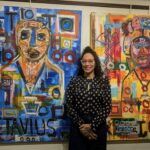
“Food trucks are a really big draw, very trendy,” said Carlee Seele, owner of the Moss Creek Art gallery. “The trucks that make a name for themselves get a really big following, especially with the younger crowd—Gen Xers and millennials.”

Plus, food trucks give people the chance to try new or unusual foods. With six to eight trucks at each rally, cuisines range from American fare and desserts to more exotic choices. Regular trucks include (but are certainly not limited to) Marsico’s Italian Food Cart, It’s All Greek to You, The Lucky Penny Burger Co., Mad Dash Grilled Cheese, FireBox Street Grill, Get Smoke’d BBQ and The Sweet Patch.

“Food trucks add variety and creativity to our downtown and help us get more feet on the street,” said Cindy Washburn, co-owner of Oxford Hall and a marketing committee member for the New Cumberland Business & Professional Group. “We don’t have a Cuban restaurant, but people will come downtown to try Cuban food out of the truck.”

Many shops stay open until 7 p.m. to offer visitors more reasons to drop in, such as free music, giveaways, happy hours, hors d’oeuvres and wine.

“Did you know that New Cumberland has an open container law?” Seele said. “Guests can treat New Cumberland like Mardi Gras, bringing your wine glass from place to place.”

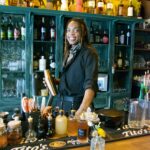
Fortunately, a distillery is another popular stop on the self-guided walking tour.

The New Cumberland Business & Professional Group strives to position New Cumberland as a destination, to create an atmosphere that is “more artsy, eclectic and interesting,” said Washburn. In addition, artists will demonstrate how they create their wares, and there will be live music in the parking lot of Baughman Church.

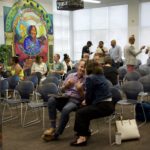
The artsy event is enmeshed with a down-home spin, complete with picnic tables in the parking lot. It’s the kind of townie event where you bring your own lawn chair.

New Cumberland really is that kind of friendly place. According to event marketing Chair Gennifer Richie, the group timed the monthly event on second Thursdays so they wouldn’t detract from nearby towns that already hold their walkabouts on Fridays.

Their community’s bond and spirit of cooperation extends among local competitors.

“The food truck event plays right in with the efforts our community is working toward,” Richie said. “We’ve got businesses in town all working together, community members creating and doing more activities together. We’re promoting safe, healthy living activities, economic development and town revitalization.”

Washburn moved to New Cumberland from Carlisle 30 years ago to create her destination business, much in the same way she sees the food truck events as a destination.

“As small business owners, we’re always competing with the big guys,” she said. “We want people to discover our businesses. The food trucks were part of a strategic maneuver to bring attractive inventory downtown.”

In addition to presenting a compact, walkable downtown, New Cumberland is uniquely positioned due to its location and proximity to major highways, an airport and the train station, she said.

“This has done something to the dynamic of the diversity of the community,” Washburn said. “New Cumberland is accessible, like a cool truck stop on the way to bigger cities.”

At the same time, New Cumberland has head-turning historical buildings that are currently in the midst of being inventoried.

“The neighborhoods and homes here are beautiful, and they get snapped up quickly when they go on the market,” Washburn said. “It’s not unusual to talk to someone to find their families have been rooted here for 100 years or more.”

With the turnover of downtown business owners and some landmark business closures, Seele sees New Cumberland as an underdog of sorts.

“New Cumberland’s pent-up energy will hopefully get released, bringing some revitalization back into the town,” she said.

This will apply even more with the end of the quarantine.

“We want to bring the community back, revive the social part of New Cumberland, and bring back people hanging outside,” she said. “As people get more comfortable, we want to bring people back together again in a healthy way.”

For more information on the New Cumberland Food Truck and Restaurant Rally, visit NewCumberlandPA.org.

Continue Reading

Artistic Vision: Emily Shifflet translates eye movements into paintings.

One of Emily’s paintings.

Emily Shifflet creates art with her eyes—literally.

She has Rett Syndrome, which prevents her from any useful movement of her body, except for her eye muscles.

According to the website Reverserett.org, “Rett Syndrome is like autism, cerebral palsy, Parkinson’s, epilepsy and anxiety disorder…all in one little girl.” (Girls are most often afflicted.)

“Add chronic lung disease and major digestive disorders, and you have a body that doesn’t allow her to live her life in this world,” added Jenny Murphy Shifflet, Emily’s mom.

Emily has, however, found a way to live, communicate and contribute greatly through the technology called Tobii Dynavox, which facilitates communication through eye movement. According to Emily’s behavioral consultant, Laura Myers, Dynavox is “like an iPad and computer combined.”

A black bar across the bottom of the device directs beams into Emily’s eyes and reads where they’re moving. With that action, she can choose from options programmed specifically for her—about how she’s feeling, what she wants to do, or activities she wants to interact with.

“The Tobii eye gaze has opened up lots of new opportunities to engage in different ways,” said mother Jenny.

That’s how Emily has emerged as an artist. Myers said that the art program was downloaded to give her a different outlet.

“It went from just something to do, to this is what I like to do, and [then] get the word out about Tobii and Rett Syndrome,” said Myers.

Sitting in her chair, with a blonde braid down her shoulder and sporting hoop earrings, Emily said, through her Tobii, “I like to do art.”

Specifically, she likes to paint, her works then transformed into cards. Jenny decided, in October, to form Eye Gaze Designs by Emily and offer her daughter’s art to the public. She said she created the business for three reasons.

“One, for an opportunity for Emily to create her art,” she said. “Two, for the public to see her ability and not just her disability, and, three, to raise money for research for Rett Syndrome.”

The idea arose when Jenny’s friends began saying of Emily’s art, “Put that on a note card, and I’ll buy them.”

The software allows Emily to choose background, color and a variety of brushes.

Jenny described her daughter’s art as abstract, feeling-based. Emily leans towards bright colors, and she mixes and layers hues. Since her mood influences her art, some pieces are darker, coinciding with less happy spirits. On occasion, the temperamental artist will show up, and she will erase pieces that her family finds exceptional.

Jenny said that art has “helped her self-esteem, given her a purpose.” Emily enjoys being called an artist, which was clear when speaking to her. A subtle, but distinct smile crossed her face when addressed by the label.

“Art has provided a chance to get out and socialize with people who don’t know that this kind of tech is out there, for people who are differently abled,” Myers said.

Emily loves giving cards to people. She smiles and moves her body in excitement. So far, Eye Gaze Designs by Emily has sold about 2,000 cards and offered calendars at Christmastime. Jenny said, with a laugh, that they are calling her present project the “Pandemic Painting Series.”

Kidding aside, the family has been in isolation since the end of February due to COVID-19, which poses a serious threat to Emily’s fragile health. Emily doesn’t like being stuck in the house. What 24-year-old would? Typically she would be at yoga, ice skating, seeing a movie, or attending an event to speak about Rett Syndrome.

For now, she has more time to paint—though using eye muscles in this way proves very tiring, and she can paint for no more than an hour at a time.

Emily’s artistic bent wasn’t evident before she began using the art program, though the spunkiness that shows up in her art has always been a part of her personality. Jenny described her as a “huge flirt and fighter,” a free spirit.

Emily chimed in, “Let’s go four-wheeling.”

Her dad at times carries her on the family’s four-wheel vehicle for rides in their backyard. Apparently, she’s also a joker, and Myers said that Emily likes to take selfies, catching people eating in the background unaware.

Emily had an art exhibit scheduled at the Cocoa Beanery in Hershey for April, but that was cancelled when the café had to close. This is not the first setback for the budding artist, and it certainly won’t be her last challenge. But Jenny said that her daughter is “helping people understand that there is ability within people with a disability.”

She’s using her eyes to help people see it.

To view Emily Shifflet’s art, visit www.eyegazedesignsbyemily.com.

Continue Reading

Rebounding Your Business: After COVID-19, how will you get back up and running?

As numbers of those testing positive appear to be stabilizing, business owners are asking themselves, where do I start to make preparations to rebound from this pandemic?

While no one has a sure-fire answer to get everyone back on their projected paths for 2020, there are five things you can begin to do in order to steer your business in the right direction.

1. First and foremost, keep yourself healthy. Take the necessary precautions that have continually been stressed by the Centers for Disease Control (CDC) and protect yourself by wearing a mask and gloves and washing your hands consistently. We all play a part to help keep each other safe—set the example and wear protective attire until the pandemic is under control. It is easy to take these suggested measures seriously when we are aware of how often we are in contact with surfaces that could have been affected by someone who has been exposed to COVID-19. Most importantly, try and stay mentally and physically strong. Stress increases your chance of illness, so avoid items that will add stress to your current situation.

2. Stay informed. Knowledge is power, and in an atmosphere where we are largely powerless over our circumstances and results, it’s imperative to continue to educate yourself on what is happening in your specific region, as well as the regions of your customers. As things continue to change daily, staying on top of the newest releases can be overwhelming, but, as a leader, it is necessary. Your team and clients may look to you for information on how they or their business can be supported. Reliable sources such as the CDC, the PA Department of Health, and the U.S. Small Business Administration are worth bookmarking.

3. Consider the safety of your environment that your team or clients will be returning to. Everyone, rightfully so, is going to want assurance that they will be working in a sterile environment. Consider how you will incorporate disinfecting measures prior to your team’s return and on a regular basis. All surfaces throughout your facility should be thoroughly disinfected to confirm COVID-19 does not exist. Incorporate continual risk mitigation techniques that will reduce exposure, including daily disinfecting throughout the day by all members of your team or designated personnel and having a contract to perform thorough disinfecting applications, in the event your space has become cross-contaminated. It could be as simple as someone coughing or sneezing that warrants your response to address the cleaning with a professional company.

The thorough disinfecting application should be completed by experienced professionals that perform bio-hazard treatment services. These professionals will approach the situation prepared to protect all personnel and are experienced with disinfecting infectious diseases. Unlike risk mitigation that you can incorporate during the workday, these treatments will cover all surfaces, of all material types, and be circulated through the air systems, typically through a fogging application.

This type of treatment needs to be thorough and beyond a regular janitorial cleaning. Inquire if the company performs regular bio-hazard cleanup services, also about the EPA listing of the product being used, the effectiveness rating, the type of product, and the dwell time. Confirm the disinfectant is safe for the contents within your space and that there will not be a residue left behind or harsh fumes that could cause respiratory issues.

Confirm the company will take ownership for the service they are providing. In times of widespread disaster and crisis, unfortunately, many opportunistic individuals and business owners see a chance to make a rapid shift or diversify their business services. Particularly in a time where health and safety are critical, it is important to use providers that have experience and training dealing with bio-hazard situations and infectious/communicable diseases.

4. Make sure you are maintaining communication with your employees and customers. Although we are not certain when normal operations will continue, your commitment to communicate is as important now as it was before. Continue to develop the relationships you have invested time building, prior to this pandemic. During these times, how we relate to each other and stay connected is fundamental. Everyone wants to know that they are not alone—offer support and be willing to share that they are being thought of. Regular communication doesn’t need to be anything specific but should be authentic.

5. Be mindful of how your business may be transformed or may need to transform. Uncertainty is an opportunity for you to be creative. Allow yourself to think outside of the box, or better yet, get rid of the box. Create a shift focusing on untraditional ways to operate and serve your clients. Maybe this is a great time to make changes? What processes and procedures do you currently have in place that may be outdated or that cannot co-exist with your new ideas?

Most importantly, take this time to really think about the end result you are working towards. Create a map that identifies your target. This doesn’t have to be a detailed plan. Obviously, we are not in complete control of everything, so focus on the direction you are going rather than the specific details. Seize this time to get clear on the results you will focus on. Your mindset matters—take care of yourself and don’t allow yourself to fall into a negative trap. We are made to thrive, not survive! Let’s commit to being a community that supports each other and helps one another. As community supporters of TheBurg, we have great hope that this state of affairs will help us build stronger connections, allowing us to grow personally and in business together.

Service1st Restoration is located at 330 East Park Dr., Harrisburg. For more information, call 717-232-5444 or contact President Jaime Novinger-Toigo at [email protected] or Siera Sambrosky, marketing director, at [email protected].

Service1st Restoration is a property disaster company serving the business community 24/7/365 with emergency services including: fire restoration, smoke and odor removal, water mitigation and remediation, commercial structural drying, structure and content cleaning, mold remediation, IAQ testing, bio-hazard cleanup services, virus decontamination and disinfecting services, including COVID-19.

Continue Reading

Fire in the Belly: Dave Houseal’s passion for Harrisburg firefighting history cannot be extinguished.

Dave Houseal as a Harrisburg firefighter, 1985.

David Houseal’s first memories of firefighting go back to when he was 5 or 6 years old in the mid-1950s, when his family lived in a house across the street from the old Progress firehouse in Susquehanna Township.

Whenever the wail of the station’s roof siren would pierce the air, young Houseal never failed to scramble up to his home’s top-floor attic for a bird’s eye view of the action.

As it turned out, that same little boy who hurried to watch the fire engines would grow up to become a Harrisburg firefighter and a noted curator of the city’s firefighting history.

“Firefighting is a very noble profession,” he said succinctly.

After a long career with the Harrisburg Fire Bureau, Houseal, now 69, retired as a chief in 2003.

Retirement, however, didn’t put a stop to Houseal. He’s since developed a second career as a book author and serves as historian of the Harrisburg bureau, a post he’s held since his appointment by former Mayor Stephen Reed.

Housel has authored several books about the Harrisburg area’s firefighting history and his own experience during his years of service. His first book, “We Can See It from the Bridge,” was published in 2010, titled after a phrase common to Harrisburg firefighters.

“I’ve always been a voracious reader, but there never really was anything to read about firefighting,” Houseal said. “A lot of people were craving books for firefighters written by firefighters. I draw a lot on my own stuff that I have and voluminous correspondence from others.”


Just Awesome

Today, Houseal is pounding the keyboard to finish a fifth book in his converted writer’s cottage outside his South Hanover Township home. At first, his work was published in conjunction with “Engine 82” author Dennis Smith, “a really good friend,” he said. After Smith died five years ago, Houseal began self-publishing his books in conjunction with David A. Smith Printing of Harrisburg.

Years ago, Houseal also was appointed as chairman of the steering committee that established the Pennsylvania National Fire Museum.

“Dave has been involved with the Pennsylvania National Fire Museum since its inception and continues to be a driving force in the museum,” said Jason Lloyd, Harrisburg Bureau of Fire battalion chief and owner of the Allison Hook & Ladder Co. #2 firehouse. “While he’s contributed in so many ways to the fire companies he’s been involved with, I believe his involvement with the history of the service is his greatest accomplishment.”

Since 2003, the museum has been based in an 1899-era firehouse that once was home to the Reily Hose Co. No. 10 of Harrisburg. From the beginning, Houseal has tackled the role of historian with profound enthusiasm.

“Dave literally digs through endless archives at the museum, online resources and his family’s personal records to post events daily,” Lloyd said.

Among his many source materials: newspaper articles, historical photos and turn-of-the-century Sanborn city directory maps, meticulously research and cross-referenced. Much of his research eventually appears on the very active PA Fire Museum Facebook page.

“It’s just awesome what he does,” Lloyd said.


Dynasty

Considering Houseal’s lineage, it’s little wonder that he sprouted an avid interest in firefighting.

His father, Robert M. Houseal Jr., grandfather, Robert Houseal Sr., and two great-uncles all served as firefighters in the Harrisburg area, with Robert Sr. and Robert Jr. each attaining the posts of fire chief.

Houseal began volunteering as a local firefighter as soon as he was old enough to do so.

After serving four years in the U.S. Navy, he returned to Harrisburg to become the first graduate of HACC’s fire science program in 1974. A year later, he joined the ranks of the Harrisburg bureau, where he remained for nearly 30 years.

Nonetheless, Houseal said that he “never felt pressured” to continue the family’s firefighting dynasty. Instead, it was a passion he developed all on his own.

“I liked the people I worked with,” he said. “Being there was like a family.”

Firefighting research also is family tradition started by Houseal’s father.

“Grandpa always thought he was right about everything,” Houseal said. “So, that started dad to dig in and look for facts.”

Eventually, Houseal’s father compiled enough material during his long hours at the Pennsylvania State Library to fill four filing cabinets. After his father’s death in 1976, Dave became the obvious heir of these voluminous files, all of which provided a running start for his own recordkeeping.

“This is the kind of thing that makes Dave truly special,” Lloyd said. “He truly has a passion for both the fire service and the history.”

The Pennsylvania National Fire Museum is located at 1820 N. 4th St., Harrisburg. For more information, visit www.pnfm.org or call 717-232-8915.

Continue Reading

Your House Is an Arthouse: Watch great movies, support Midtown Cinema, with video on demand.

The world has shut down.

Well, it’s not, really. But for a lot of businesses, it might as well be the case. Many are struggling to engage their customers from their homes, an act that proves difficult for businesses that promote a collective experience.

Take movie theaters, for example. As someone who has worked at one for over six years, I cannot tell you how many times we’ve had the conversation about competing with digital content. There’s certainly no shortage of movies to watch on TV or online. But movie theaters stay in business because they push the idea of movie-watching as an event.

There’s nothing quite like seeing a film projected on a screen several times the size of your TV screen or that moment when the lights go down and everything gets silent for just that one second. These are things you can’t experience in your own home. And not only is it the experience of choosing the perfect seat or enjoying your favorite concession, but it is an experience best shared with others—collectively with strangers, many worlds colliding together to take in one story. There’s an energy you feel in a crowded movie theater. Funny scenes become funnier when you have others to laugh with, and upsetting scenes hit closer to home when there are dozens of other people in the room amplifying that emotion.

But, unfortunately, being a part of a crowd right now is the last thing that people want to do. So. What will happen to the movie theaters?

Cinemas across the world are struggling with this same question. If people can’t go to the movies, then will cinemas be able to survive the temporary closure?

Well, bigger theaters had already sort of answered this question before COVID-19 even came into the picture. Some chains (e.g. AMC) have even made their own video-on-demand (VOD) platforms, simply to capitalize on more than one market. When communities began adhering to social distancing orders, many larger theaters had the luxury of closing down without worrying about breaking the bank. Sure, they wouldn’t make any money, but they wouldn’t go under either.

But for independent cinemas, the situation was more dire. In the beginning stages of social distancing, many cinemas, Midtown Cinema included, sent a message to their patrons: “We’re closing down. We’ll be back. We’re still selling gift cards and memberships that you can use when we do.” And that, initially, was all that independents put their hope in. There was a lot of speculation and a lot of finger-crossing.

Luckily, film distributors, especially the smaller companies, understood that, if these smaller, independent cinemas were to go out of business, they would lose a lot of the screens where their smaller films play. So, many distributors worked out a deal with the independents. Since most of the smaller films that were slated for release are instead going straight to VOD, independent cinemas now have the chance to provide their patrons with a link discrete to their own cinema, for which they get a portion of the proceeds every time the film is rented. This is not unlike the arrangement for a film that plays on the cinema screen—the distributor takes a good percentage of any ticket that is purchased. Except that, now, the cinemas get a cut instead of the distributors.

So why does this work? Like I said before, we may be small potatoes, but those potatoes add up in the end. Distributors need us. Or, at least, they want us, because a lot of indie film fans look to their cinema to guide what they watch. These films would go unnoticed if not for the cinemas.

Independents like Midtown Cinema know that they have a loyal fan base waiting for them to open up their doors, people who want to be supportive and keep the cinema alive. Really, right now, independent cinemas are receiving more support than they’ve ever received—from both distributors and patrons. And Midtown Cinema, for one, is very grateful.

Midtown Cinema is located at 250 Reily St., Harrisburg. For more information, visit www.midtowncinema.com.


On Demand

Midtown Cinema currently has the following video-on-demand titles available through www.midtowncinema.com:

“And Then We Danced”
“Bacurau”
“Balloon”
“Beanpole”
“Best of CatVideoFest”
“The Booksellers”
“Colonel Redl”
“Confidence”
“Corpus Christi”
“Deerskin”
“Diana Kennedy: Nothing Fancy”
“Dona Flor And Her Two Husbands”
“Extra Ordinary”
“Fantastic Fungi”
“The Hottest August”
“Incitement”
“L’Innocente”
“Mephisto”
“Mossville”
“No Data Plan”
“Once Were Brothers: Robbie Robertson and The Band”
“Pahokee”
“The Perfect Nanny”
“The Roads Not Taken”
“Saint Frances”
“Slay The Dragon”
“Sorry We Missed You”
“The Times Of Bill Cunningham”
“The Traitor”
“Vitalina Varela”
“The Whistlers”
“The Wild Goose Lake”
“The Woman Who Loves Giraffes”
“Zombi Child”

Continue Reading

Diamonds are Forever: SAM exhibit honors Negro Leagues centennial.

Painting by Graig Kreindler, “Quiet Confidence”

The answer: Visibility. Status. Power.

The question: What can art restore to our collective memories of Negro League ballplayers, their careers and significance often lost in time?

The Susquehanna Art Museum’s “Separate and Unequaled: Celebrating the 100th anniversary of The Negro League” revives the images of the men—and a few women—who played baseball when legally sanctioned prejudice kept them off Major League diamonds.

The exhibit, suggested by Harrisburg-area Negro Leagues researcher Ted Knorr, commemorates the centennial of the Negro National League, formed to provide high-level opportunities for African-American players.

Just like sports, art breaks boundaries by raising awareness of overlooked cultures and moments, said SAM Executive Director Alice Anne Schwab.

“Harrisburg had one of the preeminent Negro League teams here, and I don’t think that’s so well known in all walks of life,” she said. “It’s so cool to be able to tell that story.”

The exhibit spotlights 11 works from four artists.

Graig Kreindler’s Josh Gibson seems about to stand up and stare down any pitcher who dared test the legendary slugger. Phillip Dewey’s Hank Aaron takes a mighty swing, while peepholes reveal images of Little Rock High School’s raucous desegregation and the assassination of Martin Luther King, Jr. In Paul Kuhrman’s portrayal of three women uniformed players from a novelty exhibition team, Mamie Johnson, Toni Stone and Connie Morgan, link arms like Raphael beauties.

And Herbert “Rap” Dixon strikes the classic ballplayer’s pose, right hand on knob of bat like a cane, left hand on hip. Dixon’s image, framed by Dewey in ornate wood, represents the Harrisburg Giants, a team whose 1920s iteration played a brief but crucial role in Negro League history.

“Though they were world-class athletic talents, because of segregation, they were not given the same opportunity that equally talented or lesser white players had,” said SAM Director of Exhibitions Lauren Nye.


Giant Footprints

Around 1890, Harrisburg newspapers started referencing the baseball team formed by the civic-minded, entrepreneurial Colonel William Strothers. Strothers (“Colonel” was his given name) was once a police officer in his adopted city of Harrisburg. He founded a pool hall, cigar store, lunchroom and barbershop.

Through it all wove baseball. Organized play by African-American players on segregated and integrated teams in Harrisburg dated to 1867. When creation of the National Negro League and the Eastern Colored League division introduced organization and an elevated stage to African-American baseball’s patchwork of teams, Strothers made up his mind to compete.

Dixon was a key selection. He started as a 13-year-old slugger in 1916 for his hometown Keystone Giants in Steelton. Playing around town, he caught the eye of Strothers.

“Dixon doesn’t have to go to New York or Baltimore to play,” said Knorr. “The Major Leagues are coming to him.”

Then there was Oscar Charleston, considered one of the greatest ballplayers of all time. Charleston had power, hitting, fielding, throwing and running equal to the all-time greats on both sides of the color line.

In September 1922, Charleston and his Indianapolis ABCs played the Harrisburg Giants. This may have been when he met a young, widowed, Harrisburg preacher’s daughter named Jane Blalock Howard. They married in 1922. So, when Strothers came calling with an offer to serve as player-manager for the Giants, Charleston was ready.

Strothers bankrolled the highest-paid team in the Negro League, and, from 1924 through 1927, the Harrisburg Giants are “Major League-equivalent,” said Knorr. Charleston, Dixon and teammate Fats Jenkins comprised what Knorr called “the greatest outfield ever to play the game, certainly in the Negro Leagues.”

Before leaving the soon-to-fold ECL in 1927, the Giants amassed the league’s second-best record but never won a pennant. Strothers died in 1933, but the Giants reemerged in various versions over the years.

How good were those 1920s Giants? Five former Harrisburg players, including the intact Dixon-Charleston-Jenkins outfield, played in 1932 for the Pittsburgh Crawfords, considered one of the greatest teams in Negro Leagues history. Charleston and Giants teammate Ben Taylor are among 35 Negro Leaguers in the National Baseball Hall of Fame. Others, including Dixon, have been nominated.

Dixon would go on to become the first African American to hit a home run at Yankee Stadium. That was in the first game of a 1930 Negro League exhibition double-header. In the second game, he hit two more.


In Their Eyes

Exton, Pa.-based artist Dane Tilghman submitted two works to the SAM exhibit, including the Larry Doby painting. His work has incorporated African-American players for about 30 years, since his flea-market find of baseball cards dedicated to Negro League players.

In Tilghman’s travels, he met surviving players, seeking out details for the stories he wanted to tell. He felt blessed to meet many players in their final years, soaking up their wisdom and seeing “how they would gleam when they started talking about the particular players they played against and how they fared against the Major League guys.”

“They brought everything they had to the game,” Tilghman said. “A Negro League game on a Sunday afternoon would fill any of the Major League stadiums. You could see it in their eyes.”


Harrisburg Hits

A few “Harrisburg, who knew?” moments in African-American baseball history include:

  • The 1868 meeting of the National Association of Base Ball Players that yielded the first written rule against integration was held in Harrisburg, said Harrisburg historian Calobe Jackson, Jr.
  • The powerhouse pitcher Rube Foster traveled to Harrisburg for games early in the 20th century. After retiring, he founded the Negro National League to recast a system that shuttled African-American teams to inferior venues and put them under the financial thumb of booking agents.
  • Most of the players in the SAM exhibit played in Harrisburg, where the strategic convergence of roads and railroads attracted top teams, said Jackson.
  • As a child in the 1930s, Warren, Pa., native Robert Peterson witnessed the Harrisburg Giants barnstorming against a white team. That game sparked Peterson’s curiosity about African-American baseball, according to Jackson. The historian’s landmark 1970 work, “Only the Ball Was White,” helped trigger the movement that enshrined Negro League players in the Hall of Fame.
  • During World War II, Pittsburgh Pirates great Honus Wagner managed the Harrisburg-St. Louis Stars on a fundraising tour for the war effort.

 “Separate and Unequaled,” runs through July 19 at the Susquehanna Art Museum, Pollock Education Center Gallery, 1401 N. 3rd St., Harrisburg. This schedule may change due to COVID-19 restrictions. For more information, visit www.susquehannaartmuseum.org.

Continue Reading

Nature Shapers: Fresh-air art refreshes the homebound at Wildwood Park.

Image from last year’s “Art in the Wild”

Here’s your perfect antidote to mind-numbing weeks of coronavirus-induced cabin fever.

It’s close by, it’s creative, and it’s outdoors. Gloriously outdoors, under golden sunlight and towering trees, straddling a glistening lake, rare birds that strut and soar, and an explosion of green lushness that is the essence of Dauphin County’s Wildwood Lake sanctuary.

For those who have spent untold hours trapped inside, obeying the governor’s statewide stay-at-home order, this open-air art exhibit is a welcome injection of natural beauty and artistic flair, combined with a simple, silent reminder to rejoice in simply being alive.

The seventh annual “Art in the Wild” exhibition is more welcome than ever, as it serves up 16 displays of human-created environmental art, woven into Mother Nature’s handiwork.

This year’s rendition may be a bit more scaled-back than in past years, and modifications may be made to protect public health and promote social distancing, but the green light is still on.

“We are on like Plan F,” said environmental educator Richelle Corty, explaining the many iterations of planning after the COVID-19 pandemic hit just as artists began creating their installations back in March.

Even though Wildwood’s Olewine Nature Center and park restrooms are currently closed, and all other Wildwood programming has been canceled through May 30, park trails are still open. And “Art in the Wild” has survived like a wildflower poking through the concrete.

Corty said that about half the exhibits this year are from first-time entrants and half are from returning artists. Prizes will be awarded for first, second and third place, and for “People’s Choice.”

“[The artists] really want to do this,” said Corty. “They don’t have awards and judges in mind. They like the feedback and use the positive feedback to improve, but a lot of them want to do it because it’s something they love to do.”

This year’s theme is “Woodland Harmony.”

Corty said many artists played upon the theme of musical harmony, using instrumentalism or a musical staff. Others interpreted it to mean peace among nature, utilizing different shapes representing unity and tolerance.

The natural lifecycle proved to be a popular direction for artists, such as the metamorphosis of a caterpillar into a butterfly and the transition of tadpoles into frogs.

“At these times, people are drawn toward the peace they feel in nature,” Corty said. “The theme speaks to the present moment.”

Before the pandemic, “Art in the Wild” was looking forward to its largest year ever, featuring four area high schools and showcasing 20 installations. The art displays dovetail well with 3-D art classes offered in many high schools, Corty said. But with the governor’s school closure order, students lost access to their classrooms and their tools and could no longer participate.

Some artists couldn’t access their workspaces and ended up creating while under quarantine at home. One teacher, shut out from her school, found someone with a personal kiln for her ceramic pieces.

Many artists use durable natural materials, such as branches, in their work. Corty said. Wildwood has a remnant pile, which artists have free access to, along with anything fallen along the trails. Visitors are not allowed to take live animals and plants from the park, but artists are permitted to use fallen trees, logs and vines.

“I think it’s one of our programs that reaches the most people,” Corty said.

Usually, Wildwood offers a map of the exhibits along the 3.1-mile trail, but the brochure probably won’t be published until June to obey the governor’s guidance about touching shared surfaces.

May 11 is the final cut for installations. Tentatively, the exhibit will be unveiled on May 16.

The exhibit might be one of the few surviving outdoor art exhibits of the year in the area, Corty said. While “Media Day” and the “Meet the Artists” reception have fallen by the wayside, it is expected that installations will be outside through September.

Visitors drink it in. So do the artists.

“I love how ‘Art In The Wild’ allows artists to use their creativity in unique ways while providing our communities with great recreational alternatives,” one artist said.

“I think it’s going to really help lift people’s spirits to see all the artwork on display as usual,” added another. “Thank you for continuing to support our community!”

One participating artist regularly signs his emails, “For the Love of Art.”

That’s a passion that no voracious, single-stranded virus can vanquish.

“Art in the Wild” runs from mid-May to early autumn at Wildwood Park, 100 Wildwood Way, Harrisburg. For more information, visit www.wildwoodlake.org.

Continue Reading

Kindred Spirits: State distilleries lend a hand, produce hand sanitizer.

Sanitizer from the PA Distillers Guild. Photo courtesy of Rob Cassell.

By the time you’re reading this, the Pennsylvania Distillers Guild will have produced some 2.4 million 4-ounce bottles of hand sanitizer, predicts Rob Cassell.

And if that’s not impressive enough, consider all the partnerships he’s forged and red tape he’s cut through since March.

“To me, I feel like what you’re seeing happen between public-private partnerships and businesses converting to creative solutions is like what our grandparents talked about happening during World War II,” said Cassell, guild president and master distiller at North Philadelphia’s New Liberty Distillery.

By early-to-mid March, hand sanitizer was in short supply. That’s when many of the guild’s 140 distilleries shifted production of their typical alcoholic spirits—whiskey, vodka, rum or gin—to alcohol-based germ-fighting mixtures. The basic recipe for hand sanitizer calls for high-proof alcohol (ethanol), hydrogen peroxide and glycerin, following guidelines issued in a federal authorization by the World Health Organization (WHO).

Cassel reached out to the Pennsylvania Liquor Control Board, which, within 48 hours, granted a temporary code allowing distilleries to produce hand sanitizer during this time of crisis.

Next, Cassell tapped into state funding to underwrite the costs of materials and machinery allowing distilleries to be sanitizer savvy. He credits Philadelphia-area senators Vincent Hughes and Tom Killion, along with the city’s economic development corporation, PIDC, which all connected the dots to state Department of Community and Economic Development funding.

Thanks to the guild’s pre-coronavirus networking and camaraderie, Cassell knew exactly who could concoct FDA-compliant hand sanitizer formulas: his fellow distillers at Pittsburgh’s Boyd & Blair and Philadelphia area’s Five Saints Distilling—both are former pharmacists.

Next, he reached out to the Pennsylvania Manufacturers’ Association to locate a source for small plastic bottles.

“In a crazy twist of fate, they put me in touch with a plastic manufacturer in Boyertown—my hometown,” Cassell said. “I spoke to them on a Sunday morning and, by Tuesday, I had 66,000 bottles on site.”

Logistics and supply chain issues were the next issues to tackle.

“We’ve been able to centralize purchasing to get access to raw materials—suppliers would rather deal with one big customer,” Cassell said. “Then we created a multi-phase plan for production throughout the entire state, with key facilities in Philadelphia, Harrisburg and Pittsburgh.”

Blending is centralized in those three key cities, distributed to outlying distillers for bottling and then delivered into the hands of those who need the precious commodity.

The end result is a cost-effective, quality product. Hand sanitizer, in 4-ounce bottles, is sold to the state Department of Health at a nonprofit price and distributed to police departments, hospitals, postal workers and others, at the rate of 300,000 to 400,000 bottles weekly.

“In an age where people are price-gouging, it feels good to provide something of civic duty,” Cassell said. “You can only do that with the camaraderie of a trusted network.”


Welling Up

Keep in mind—all of these wheels were set into motion within two or three weeks. But the groundwork and network is something Cassell built from the ground up, beginning in 2005. That’s when he launched New Liberty, the state’s first craft distillery, and began lobbying the state legislature to create a distillery license—which came to fruition and is currently in use.

As the state’s distilleries grew, Cassell formed the nonprofit guild, which is now 140 distilleries strong. Dan Healy of Harrisburg’s Midstate Distillery is a member.

“In this case, for the sanitizer, we’re all on the same team trying to fill the need in our communities in this very unprecedented time,” he said. “There’s nothing but effort to help each other and move forward as group. So, I’m interested to see how this affects us as an industry, to further solidify us as a guild.”

Midstate’s hand sanitizer is in good hands—Healy is distributing it to first responders, including the Harrisburg police and fire bureaus, health care workers and area senior homes. He’s bottling it in bulk-size, 1-gallon bottles.

Like many of the state’s distillers, Healy is trying to do the right thing by producing hand sanitizer, while trying to stay afloat through curbside liquor sales after 600 state stores shut down.

Pennsylvania distilleries are able to ship directly to in-state customers—that’s how Yianni Barakos, co-owner of Gettysburg’s Mason Dixon Distillery, is putting bottles into customers’ hands while he too focuses on hand sanitizer.

“It’s been a constant emotional rollercoaster, fielding dozens of messages and requests from people, hearing their stories—I’m welling up right now,” said Barakos. “But I’m trying to put it [sanitizer] where I think it’s going to do the most amount of good.”

Barakos is selling sanitizer to a regional health care system, not to make a profit, but to cover wages.

“Once this virus slows down, I highly doubt it’s going to be business as usual, but I’ll do everything I can to get my staff back and working,” he said. “We’ll be reliant on people coming back out and supporting us.”

In addition to learning a new recipe for a new product, the state’s distilleries are distilling some additional wisdom.

“The critical shortage of hand sanitizer—the level of need was shocking to me,” said Chad Butters of the Lehigh Valley’s Eight Oaks Farm Distillery, one of the first in the state to begin mixing sanitizer back in mid-March. Midstaters may be familiar with the name because Eight Oaks operates a stand in Harrisburg’s Broad Street Market.

Eight Oaks has received nearly $100,000 in community donations, underwriting 27,000 8-ounce bottles of sanitizer given to community organizations and first responders. Aside from the philanthropic efforts, Eight Oaks is also selling bottles by the case to sustain employees and costs.

“Certainly after-action needs to be done on the back end of all this—how did this happen?” Butters said. “There are manufacturing lessons to be learned from all of this, and the American worker and manufacturers are going to be way more valued.”

Rob Cassell encourages anyone from the service industry who is out of work and interested in a job bottling hand sanitizer to email him at info@ padistillersguild.com. For more information, see padistillersguild.com, newlibertydistillery.com, midstatedistillery.com, masondixondistillery.com and eightoaksdistillery.com.

Continue Reading

April News Digest

“Gradual” Reopening Set for Early May

Gov. Tom Wolf has set a date of May 8 to begin a “gradual” reopening of the state’s economy, though he urged residents to continue practicing social distancing and other safety measures.

Wolf set that target date to begin the process of business re-openings, though he emphasized that ending the shutdown would be regional, likely beginning with the northwest and north-central regions that have shown relatively few confirmed cases of COVID-19.

“We’ve done the mitigation stage in a measured, commonsense way, and the plan is to move out of this stage in a measured, commonsense way,” he said.

The areas hardest hit by the COVID-19 pandemic would likely to be the last ones to have the business shutdown end.

“We’re going to do this on a regional basis,” he said. “If we open in a rural area, it doesn’t mean we’ll end the shutdown or stay-at-home order in a place like Philadelphia.”

Wolf also stressed that Pennsylvanians should continue measures such as staying at home and social distancing, even after shutdown orders end.

“If we go too quickly, this might be unsafe for people,” he said. “If we move too quickly, people may not want to go to work because they’re afraid, or may not want to go into a store to buy something because they’re afraid.”

Wolf also set six criteria for businesses to reopen, including:

  • Re-openings will be “data driven,” will be based upon “quantifiable criteria” and will be targeted and regional.
  • Before allowing businesses to reopen, the state will issue “guidance and recommendations” for employers and workers.
  • Reopening will necessitate the availability of “adequate personal protective equipment” and “diagnostic testing.”
  • Reopening will require a monitoring and surveillance program allowing the commonwealth to deploy “swift actions” for containment or mitigation.
  • Protections for vulnerable populations, especially at congregate care facilities and prisons, will remain in place throughout the reopening process.
  • Limitations on large gatherings unrelated to work will remain in place for the duration of the reopening process.

Wolf also set May 1 for the resumption of residential and commercial construction projects that have not been given an exemption under the current shutdown order. In Pennsylvania, the construction industry has been especially vocal in protesting the mandated closing of “non-life-sustaining” businesses.


State Street Redesign Funded

Harrisburg took a step towards making State Street safer for pedestrians last month, agreeing to allocate money for a final road design.

City Council unanimously approved hiring civil engineering firm Wallace, Montgomery & Associates to complete the “State Street Rapid Response” design, including an expenditure of $57,500.

“State Street is the most dangerous street in the city,” city Engineer Wayne Martin told council members through the virtual meeting.

Over a year ago, Harrisburg released its “Vision Zero” action plan for the city, with a goal of eliminating pedestrian deaths. The initiative came after numerous pedestrian fatalities on city streets, especially on state-owned State Street on Allison Hill.

Harrisburg made improving State Street its number-one “Vision Zero” priority, but its plan was rejected at the district level by the state Department of Transportation.

Martin explained that the city then appealed directly to PennDOT’s top officials, including the former and interim transportation secretaries.

“We agreed on the configuration for the State Street corridor, a path forward, if you will,” Martin said.

Wallace Montgomery now needs to finalize the engineering design. The total project includes numerous changes to State Street, including a narrower road, bus stop improvements, new ADA ramps, new curbing and lighting.

The $57,500 design expense will come from the city’s engineering budget and includes design revisions, highway occupancy permits and the cost of a public meeting, Martin said.

The public meeting was originally slated for last month. Martin said that he now hopes for a June meeting, but added that the timing is uncertain due to continuing social distancing requirements.

The city, Martin said, still must firm up a final cost for the actual roadwork and identify funding sources. He said that he hoped to fund the project through state and other grant monies.

“PennDOT has not said they would pay for some of these improvements, but they haven’t rejected it either,” he said. “They left that door open. So, we will seek funding from PennDOT and other sources of funds.”

Martin said that he hopes the actual roadwork will begin in the late summer, but the timing depends upon lifting COVID-19 mitigation restrictions.


Schools to Remain Closed

Pennsylvania schools will remain closed for the rest of the academic year, the state ordered last month.

Gov. Tom Wolf said that the step was necessary to help prevent the spread of the COVID-19 virus.

“We must continue our efforts to mitigate the spread of the virus during this national crisis,” Wolf said. “This was not an easy decision, but closing schools until the end of the academic year is in the best interest of our students, school employees and families.”

Wolf first ordered schools closed in March, setting an early April reopening date. He then said that schools would be closed until further notice before the final announcement that they would remain shut through June.

The closure mandate applies to all schools, including public, private and cyber charter schools.

Wolf said that, although schools are closed, they’re “strongly encouraged” to continue to offer education in “the most appropriate and accessible ways possible,” whether through online or paper-based lessons.

Schools will stay closed until Wolf lifts his “stay at home” order and the state explicitly allows them to reopen, according to the PA Department of Education (PDE).

“As schools and communities adapt to the prolonged school closure, PDE will continue to work with our state, educational, and business and nonprofit partners to meet the needs of students,” said education Secretary Pedro Rivera.


Home Sales Stable

Harrisburg area home sales were relatively stable in March, with sales units and prices mostly unchanged from the year prior.

For March 2020, 551 residential units sold in Dauphin, Cumberland and Perry counties, compared to 558 units in March 2019, according to the Greater Harrisburg Association of Realtors (GHAR). The median price increased to $180,000 from $175,000 over the same period.

In Dauphin County, 278 homes sold at a median price of $169,000 compared to 276 homes at a median price of $162,000 in the year-ago period, said GHAR. In Cumberland County, 242 houses sold compared to 255 the previous March, while the median price rose slightly to $205,000 versus $202,000, according to GHAR.

Perry County had 31 homes sales versus 27 a year ago, with a median price of $171,500 compared to $160,000 in March 2019, GHAR said.


So Noted

Artsfest is going virtual this year after the three-day live event in Riverfront Park was cancelled due to restrictions on public gatherings. Harrisburg Mayor Eric Papenfuse asserted that that “virtual” Artsfest is expected only for this year, and the city intends to bring the event back to the park over Memorial Day weekend in 2021. Harrisburg’s other major summer waterfront celebration, Kipona, is still scheduled for Labor Day weekend.

Don McKenna has been named president of Penn State Health Hampden Medical Center, the 300,000-square-foot, acute care hospital in Cumberland County scheduled to open in 2021. In this role, McKenna will oversee an initial workforce of about 650 full- and part-time clinical and support staff, with expectations that the workforce will grow to 1,000 within three years. McKenna previously was the president and chief executive officer of Jupiter Health in Florida.

Gamut Theatre Group
last month cancelled all live events through Sept. 1. This includes June’s popular annual “Shakespeare in the Park” performances. Founders Clark and Melissa Nicholson said they made the decision out of an abundance of caution because of the spread of the COVID-19 virus.

Impact Harrisburg and the city of Harrisburg last month launched a “Business Stabilization Program,” a $1 million fund that will provide up to $10,000 to city businesses that have lost revenue due to the COVID-19 emergency. Those interested in applying for a grant should visit www.impactharrisburg.org.

Open Stage went virtual last month, staging the first act of its production of “Angels in America” via a Zoom live-streaming event. The second act, titled “Perestroika,” continues this month on Zoom. For more information, visit www.openstagehbg.com.

Shannon Gority has been named the new executive director of the Pennsylvania office of the Chesapeake Bay Foundation. Most recently, Gority worked as a consultant for both government and private industry and, before that, was the first CEO of Capital Region Water. She holds degrees from Juniata College and Penn State in civil and environmental engineering


In Memoriam

Gerald Welch, a director for the Harrisburg school board, died last month due to complications from COVID-19. Welch, 56, won his board seat last year, one of five challengers to emerge victorious as part of a reformist slate. Welch often stated his belief in the power of education, citing his own experience as a high school dropout who later would go on to earn a master’s degree in social work.


Changing Hands

Adrian St., 2454: M. Makinde to C. Grant & M. Rinaldi, $70,500

Barkley Lane, 2506: Seneca Leandro View LLC to B. Mehaffie, $88,900

Barkley Lane, 2518: B. & C. Smith to L. & B. Grotjan, $88,000

Berryhill St., 2106: E. Irby to P. Bates, $53,000

Boas St., 426½: M. Richards to N. Patterson, $142,000

Briggs St., 235: JLS Rentals LLC to U. Maillet, $190,000

Briggs St., 1919: G. Neff to C. Pizarro & L. Mendieta, $38,500

Chestnut St., 1911: S. Jawhar to C. & N. Ovalles, $45,000

Cumberland St., 1723: T. Hardison to K. Robinson, $85,000

Derry St., 2100: JOG Investments LLC to OC Highway LLC, $45,000

Derry St., 2606: S. Carper to DLK Properties LLC, $48,000

Emerald Ct., 2456: Secretary of Veterans Affairs to PA Deals LLC, $67,000

Emerald St., 221: M. Horgan to J. Gilchrist & N. Matrese, $144,900

Emerald St., 652: E. Vielle to D. Fernandez, $30,000

Fulton St., 1704: R. Ziegler to W. Ferguson, $143,500

Grand St., 915: H. Senior to A. & A. Zlogar, $104,000

Green St., 2015: J. Blouch to B. Koreny, $217,500

Greenwood St., 2116: Crist Holdings LLC to J. Valverde, $40,000

Holly St., 1947: Federal Home Loan Mortgage Co. & Green River Capital LLC to R. Grullon, $54,000

Hudson St., 1105: E. Nowlin to B. Barkdoll, $129,000

Hudson St., 1241: T. Poole to P. Oliverio, $130,000

Jefferson St., 2239: Dobson Family Limited Partnership to HBK Properties 1 LLC, $44,000

Lewis St., 421: K. Wakefield to J. Barber, $125,000

Linden St., 128: Secretary of Housing & Urban Development to D. Vanlee, $30,500

Logan St., 2208: CR Property Group LLC to J. Lessley, $100,000

Logan St., 2415: T. Drazien to Z. & S. Shatto, $64,000

Luce St., 2304: L. & A. Scotto to CR Property Group LLC, $44,000

Market St., 1223: Crist Holdings LLC to SNB Real Estate Solutions LLC, $30,000

Market St., 1615 and Argyle St., 10 & 12: R. & N. Ressler to N&R Group LLC, $90,000

Muench St., 202: L. & K. Martin to PD Estate Properties LLC, $85,900

Muench St., 211: J. Laubach to M. & H. Hess, $197,500

Muench St., 271: WCI Partners LP to C. Halpert, $107,500

N. 2nd St., 1701: C. Troutman & B. Jackson to SPG Capital LLC, $125,000

N. 2nd St., 2700: J. Norris to M. Norford & S. Bernard, $264,900

N. 3rd St., 1642: Saratoga Properties LLC to Heinly Homes LLC, $55,000

N. 5th St., 1730: E. Bish to M. Davis, $82,500

N. 5th St., 2206: J. Caputo Jr. to D. de la Cruze, $49,000

N. 16th St., 1008: Truemac Homes LLC to L. Storm, $82,000

N. 16th St., 1214: Susquehanna Valley Investment Properties LLC to F. Guzman, $42,000

N. Front St., 321: Clark Resources Inc. to 321 N. Front St. LLC, $450,000

N. Front St., 2515: 324 Mishika LLC to Penn Medical Real Estate LLC, $350,000

Peffer St., 221: C. Chapman to N. Laume, $123,500

Penn St., 2211, 2213 & 2219: WK Rentals LLC to PA Deals LLC, $210,500

Penn St., 2220: Limitless Possibilities Inc. to Inder Group Real Estate LLC, $40,000

Race St., 544: L. Fisher to Impact Access Inc., $87,500

Radnor St., 528: E. Chattah to G. Romero, $80,000

Royal Terr., 123: A. Eckert to NHP Real Estate Development LLC, $39,000

Royal Terr., 125: J. Holmes to El Pejano Trucking LLC, $32,000

Rudy Rd., 2237: F. Prunty to J. Flower & J. Shamitko, $192,000

Showers St., 624: K. Kearn to Z. Einhorn & C. Brinton, $94,900

S. 13th St., 1229: D. Leon to D&F Realty Holdings LP, $100,000

S. 18th St., 321: Golden Lover Realty LLC to Theodore Canton LLC, $37,500

S. Front St., 809: E. Revene to B. Lilly, $150,000

State St., 124: TKP Investments LLC to 122-124 State St. LLC, $195,000

State St., 231, Unit 402: LUX Rentals LLC to M. & M. Vaccaro, $121,000

Susquehanna St., 1210: E. & C. Seaman to SPG Capital LLC, $80,400

Swatara St., 2048: CR Property Group LLC to J. Niemuth, $100,000

Sycamore St., 1617: A. Quarles to CR Property Group LLC, $60,000

Vernon St., 1345: P. Aurelio & G. Ramos to Urban Lighthouse Ministries, $50,000

Wayne St., 1700: R. & D. Shepler to Tall Kid Re Holdings LLC, $128,500

Whitehall St., 2035: B. Burns to C. & N. Ovalles, $53,000

Wiconisco St., 611 & 2641 Agate St.: Stop & Shop Store to Thanos Ventures Ltd., $190,000

Woodbine St., 228: HCH Investments LP to Montalvo Investments LLC, $45,000

Zarker St., 1938: Saratoga Properties LLC to NHP Real Estate Developments LLC, $30,500

Continue Reading

PA raises COVID-19 fatalities substantially; new cases follow weeks-long trend

The state Department of Health today substantially increased the number of COVID-19-related fatalities in PA, upping the total by 479 deaths.

In its daily update, the department stated that it increased the fatality count “as a result of our continued work to reconcile data from various sources.” These deaths occurred over the last two weeks, according to the department. As a result, 2,195 fatalities in PA have now been attributed to the pandemic.

For the past two weeks, the department has reported changeable fatality data, which department Secretary Rachel Levine has attributed to conflicting data, to variable county-level data reported to the state and to “probable” COVID-19 deaths.

This higher death total is reflected in today’s local county-specific figures, though most of the newly confirmed fatalities were in the Philadelphia area.

Around central PA, the COVID-19 fatality data now is as follows:

  • Adams County: 4 deaths (yesterday, 1)
  • Cumberland County: 15 deaths (yesterday, 10)
  • Dauphin County: 21 deaths (yesterday, 20)
  • Franklin County: 6 deaths (yesterday, 4)
  • Lancaster County: 103 deaths (yesterday, 78)
  • Lebanon County: 9 deaths (yesterday, 8)
  • Perry County: 1 death (yesterday, 1)
  • York County: 9 deaths (yesterday, 9)

In addition, the state health department today reported 1,102 new COVID-19 diagnoses, bringing the total number of confirmed cases to 44,366 since the pandemic began in PA in early March.

The new positive cases fall in the range of 1,000 to 1,500 new daily cases reported on most days for nearly three weeks. Almost 21 percent of all tests performed in the state have turned out positive for the virus.

“As we see the number of new COVID-19 cases continuously change across the state that does not mean we can stop practicing social distancing,” Levine said.

Locally, total diagnosed cases are as follows:

  • Adams County: 130 cases (yesterday, 124)
  • Cumberland County: 324 cases (yesterday, 296)
  • Dauphin County: 558 cases (yesterday, 553)
  • Franklin County: 264 cases (yesterday, 237)
  • Lancaster County: 1,703 cases (yesterday, 1,678)
  • Lebanon County: 648 cases (yesterday, 635)
  • Perry County: 30 cases (yesterday, 27)
  • York County: 624 cases (yesterday, 614)

Philadelphia County continues to have the most confirmed cases with 11,885 cases, followed by Montgomery County with 4,177 cases. The two counties also have reported the most deaths statewide from the disease: 424 and 329, respectively.

Nursing homes and personal care facilities have been particularly hard hit by the virus. Out of total deaths, 1,428, or about 65 percent, have occurred in residents from nursing or personal care facilities, according to the health department.

In nursing and personal care homes, there are 7,698 resident cases of COVID-19, and 975 cases among employees, for a total of 8,280 at 452 distinct facilities in 41 counties, according to the health department.

Statewide, 214,884 coronavirus tests have been performed, with 170,518 people testing negative, according to the state health department. Yesterday, the state reported that 209,088 people had been tested for the virus.

Of the patients who have tested positive to date, the age breakdown is as follows, according to the health department:

  • Nearly 1 percent are aged 0-4
  • Nearly 1 percent are aged 5-12
  • 1 percent are aged 13-18
  • Nearly 6 percent are aged 19-24
  • 38 percent are aged 25-49
  • 27 percent are aged 50-64
  • 26 percent are aged 65 or older.

Most of the patients hospitalized are 65 or older, as are most of the reported deaths, according to the state. There have been no pediatric deaths to date.

Levine continued to emphasize that Pennsylvanians should do the following:

  • Wash your hands with soap and water for at least 20 seconds or use hand sanitizer if soap and water are not available.
  • Cover any coughs or sneezes with your elbow, not your hands.
  • Clean surfaces frequently.
  • Stay home to avoid spreading COVID-19, especially if you are unwell.

 “We must continue to stay home to protect ourselves, our families and our community,” Levine said. “If you must go out, please make as few trips as possible and wear a mask to protect not only yourself, but others. We need all Pennsylvanians to continue to heed these efforts to protect our vulnerable Pennsylvanians, our health care workers and frontline responders.”

For more information, visit the PA Department of Health’s COVID-19 website.

Continue Reading