“Fighting Chance”: More than 300 Harrisburg businesses receive grants under “stabilization” program

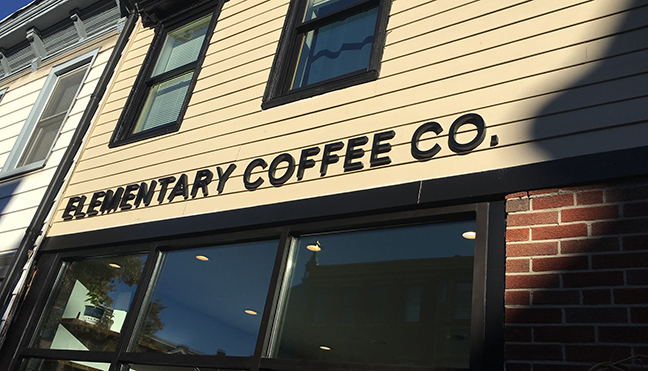
Elementary Coffee Co. shop, temporarily closed, on North Street in Harrisburg

Until mid-March, Lori Reese felt optimistic about her small, growing Harrisburg-based business.

Then COVID hit.

As a professional personal organizer, Reese could no longer meet with her clients, much less visit with them to help get their houses, businesses and lives in order.

So, she was excited when she read about the Neighborhood Business Stabilization Program, a $1 million-plus pool of money funded by the city of Harrisburg and Impact Harrisburg, a nonprofit set up to help spur economic activity in the city.

“I’ve had a drop in business obviously because a lot of what I do is hands-on, face-to-face work with clients,” said Reese, owner of Consider It Done LLC, who runs her business from her home office in the city’s Riverside neighborhood. “When I saw the news (about the program), I thought, ‘Wow, this a great opportunity.”

She quickly applied and just learned that she received a $5,000 grant from the program, which, she said, will help her weather the economic crisis caused by the coronavirus pandemic.

Reese was one of 313 city-licensed businesses to receive $5,000 grants from the program’s first funding round.

According to Sheila Dow Ford, executive director of Impact Harrisburg, all qualified businesses that applied received $5,000 grants.

“We wanted to fund as many businesses as we possibly could across the broad spectrum,” she said, during a virtual press conference today. “So we are hoping we hit the mark in that regard.”

She added that Impact Harrisburg still has to notify some recipients, so applicants who haven’t heard yet “shouldn’t be discouraged.”

A screen grab from today’s virtual press conference

The program allowed businesses to request up to $10,000, but, given the large number of applicants, Impact Harrisburg decided to give across-the-board $5,000 grants to all qualified applicants.

Even that exceeded the initial $1 million fund, so Impact Harrisburg kicked in another $750,000. Tonight, Harrisburg City Council is expected to vote to contribute an additional $500,000, which would bring the total fund to $2.25 million.

The city’s $1 million share originates from two sources. The first $500,000 came from its revolving loan fund, a dormant program started under former Mayor Steve Reed that once leant money to city-based businesses. The second $500,000, if approved by council, originates from federal funding the city will receive as part of the Coronavirus Aid, Relief and Economic Security (CARES) Act.

Mayor Eric Papenfuse said that, with the additional money, a second funding round will be opened to encourage more applicants.

“Our goal is to keep these businesses afloat so, when it is time to reopen, they have a fighting chance of surviving and bouncing back, hopefully stronger than ever,” he said.

To illustrate the community impact, today’s virtual press conference featured three small business owners who received grants: Andrea Grove of Elementary Coffee Co., Angel Fox of Fox’s Wash and Go and Hector Ortiz of Roots of My Land, an Ecuadoran restaurant.

Fox said that the grant will allow her to repair washing machines in her Allison Hill laundromat, as customers have been “over-stuffing” the machines to try to stretch their own limited financial resources.

Grove said that, beyond the money, she appreciated that care was taken to distribute the grants to all deserving, qualified applicants.

“What has been so beautiful about this grant program is that everybody I know got this,” she said. “We desperately need this money, but so many other people need it as well. That is a beautiful testament to the care that this community has for each individual business and the position that they are in.”

For Reese, the money will help her sustain her business, but will also help offset additional costs brought on the crisis. Like many companies, she’s been forced to do more business online, which has meant extra, unanticipated costs to expand her virtual presence, capabilities and security.

Reese also mentioned a non-financial benefit of the program. Much like Grove, she said that she appreciates the effort, caring and the creativity that her city and Impact Harrisburg showed for the small business community here.

“I feel valued as a city business and a city resident,” she said. “Because it’s local, it means more to me.”

For more information about the Neighborhood Business Stabilization program, visit the Impact Harrisburg website.


 

Continue Reading

New COVID-19 cases in PA continue gradual decline, fatalities remain elevated

An image from the PA Department of Health lab in Exton

Newly diagnosed COVID-19 cases remained below 1,000 today, as the commonwealth reported 837 additional coronavirus infections.

Today’s data reflects a general, gradual decline in new cases over the past month. Of the new cases, 329 are in residents of nursing and personal care homes.

Yesterday, the state reported the fewest new COVID-19 cases since March, with just 543 new infections confirmed. Case numbers reported on Mondays have tended to be the lowest of the week due to less reporting to the state Department of Health, Secretary Rachel Levine has said.

With today’s additional cases, 57,991 Pennsylvanians have now been diagnosed with the coronavirus.

Locally, total diagnosed cases are as follows:

  • Adams County: 167 cases (yesterday, 167)
  • Cumberland County: 461 cases (yesterday, 451)
  • Dauphin County: 851 cases (yesterday, 830)
  • Franklin County: 522 cases (yesterday, 513)
  • Lancaster County: 2,295 cases (yesterday, 2,256)
  • Lebanon County: 825 cases (yesterday, 815)
  • Perry County: 35 cases (yesterday, 35)
  • York County: 793 cases (yesterday, 784)

Overall, 19.6 percent of PA residents tested have shown to be positive for the virus.

The health department today also reported an additional 75 COVID-19-related fatalities, meaning that 3,806 Pennsylvanians now have died from the disease. The majority of new fatalities—59—were residents of nursing or personal care homes.

Around central PA, the COVID-19 fatality data now stands as follows:

  • Adams County: 5 deaths (yesterday, 5)
  • Cumberland County: 33 deaths (yesterday, 33)
  • Dauphin County: 38 deaths (yesterday, 36)
  • Franklin County: 12 deaths (yesterday, 12)
  • Lancaster County: 168 deaths (yesterday, 168)
  • Lebanon County: 17 deaths (yesterday, 16)
  • Perry County: 1 death (yesterday, 1)
  • York County: 14 deaths (yesterday, 13)

Statewide, Philadelphia County continues to have the most confirmed cases with 15,218 cases, followed by Montgomery County with 5,442 cases. The two counties also have reported the most deaths statewide from the disease: 871 and 534, respectively.

“As counties move from red to yellow, we need all Pennsylvanians to continue to follow the social distancing and mitigation efforts in place,” Levine said.

This week, the state plans to move 13 counties in the southwest portion of the state into the yellow phase, joining 24 counties in the northwest and north-central parts of PA that moved to yellow last week.

Nursing homes and personal care facilities have been particularly hard hit by the virus. Out of total deaths, 2,611, or 68.6 percent, have occurred in residents from nursing or personal care facilities, according to the health department.

In nursing and personal care homes, there are 12,130 resident cases of COVID-19, and 1,724 cases among employees, for a total of 13,854 at 540 distinct facilities in 44 counties, according to the health department.

In addition, 3,923 of total cases in PA are in health care workers.

Statewide, 295,980 coronavirus tests have been performed, with 237,989 people testing negative, according to the state health department. Yesterday, the state reported that 288,858 people had been tested for the virus.

Of the patients who have tested positive to date, the age breakdown is as follows, according to the health department:

  • Nearly 1 percent are aged 0-4
  • Nearly 1 percent are aged 5-12
  • 1 percent are aged 13-18
  • Nearly 6 percent are aged 19-24
  • Nearly 37 percent are aged 25-49
  • 26 percent are aged 50-64
  • 28 percent are aged 65 or older.

Most of the patients hospitalized are 65 or older, as are most of the reported deaths, according to the state. There have been no pediatric deaths to date.

Levine continued to emphasize that Pennsylvanians should do the following:

  • Wash your hands with soap and water for at least 20 seconds or use hand sanitizer if soap and water are not available.
  • Cover any coughs or sneezes with your elbow, not your hands.
  • Clean surfaces frequently.
  • Stay home to avoid spreading COVID-19, especially if you are unwell.

“We must continue to protect our most vulnerable Pennsylvanians, which includes our seniors, those with underlying health issues, our healthcare workers and our first responders,” Levine said. “I am proud of the work that Pennsylvanians have done so far, but we cannot stop now, we must continue to take the necessary steps to protect ourselves from COVID-19.” 

For more information, visit the PA Department of Health’s COVID-19 website.

Continue Reading

Harrisburg school district expects $4.2 million budget deficit, but no tax hike, for next school year

Harrisburg school district Receiver Janet Samuels (file photo)

The COVID-19 outbreak has blasted a $4.2 million hole in the Harrisburg school district’s planned budget for next year, but district officials don’t expect to have to raise taxes.

That was the main takeaway from the school district’s virtual budget workshop on Monday, where the preliminary 2020-21 spending plan was unveiled.

“Given these new projections, the revised budget deficit is now more than $4.2 million,” said Acting Superintendent Chris Celmer. “Sometimes, with crisis comes opportunity. We’re hopeful, even with all the unknowns, that we will be able to move the district forward.”

According to the district, the proposed $157.6 million budget was in balance until the economic crisis caused by the pandemic ruined projections.

Since then, the district has had to substantially ratchet down expected revenues from earned income taxes, PILOT tax payments, real estate taxes and increases in the state’s basic and special education subsidies, resulting in a $4.2 million budget deficit.

The district plans to fill that gap with $4.7 million that it expects to receive from federal Coronavirus Aid, Relief and Economic Security (CARES) Act funding. These are one-time funds, meaning that the district may face tough revenue and spending choices next year if the economy and tax revenues don’t quickly improve.

The proposed $157.6 million budget compares to a $149 million projected final budget for the 2019-20 school year. The increased spending is due to increases in employee salaries and benefits, among other higher expenses.

In a small bright spot, school officials stated that they hope to refinance and reduce the district’s substantial debt by taking advantage of historically low interest rates.

District Receiver Janet Samuels is expected to approve the preliminary budget at the district’s next business/school board meeting on Monday, May 18. Another virtual budget workshop is scheduled for June 15 before final action on a 2020-21 spending plan, which is expected on June 22.

Continue Reading

PA reports lowest daily number of new COVID-19 cases in six weeks

An image from the state Department of Health lab in Exton, Pa.

The commonwealth today reported the lowest number of new COVID-19 cases in about six weeks, with just 543 new infections recorded.

This was the fewest number of newly positive cases since March 28, when 533 new cases were reported. At the time, cases were surging and, within a week, would hit nearly 2,000 new cases.

For the past month, new cases have ranged closer to 1,000 each day.

Historically, Monday case numbers have been the lowest of the week due to less reporting to the state Department of Health, Secretary Rachel Levine has said.

With the additional cases, 57,154 Pennsylvanians have now been diagnosed with the coronavirus.

Locally, total diagnosed cases are as follows:

  • Adams County: 167 cases (yesterday, 156)
  • Cumberland County: 451 cases (yesterday, 434)
  • Dauphin County: 830 cases (yesterday, 823)
  • Franklin County: 513 cases (yesterday, 493)
  • Lancaster County: 2,256 cases (yesterday, 2,223)
  • Lebanon County: 815 cases (yesterday, 811)
  • Perry County: 35 cases (yesterday, 35)
  • York County: 784 cases (yesterday, 773)

Overall, about 20 percent of PA residents tested have shown to be positive for the virus.

PA Gov. Tom Wolf today cited these lower case numbers to say that the commonwealth is making progress against the disease and should not reopen “prematurely.”

The health department today also reported an additional 24 COVID-19-related fatalities, meaning that 3,731 Pennsylvanians now have died from the disease. The majority of new fatalities—23—were residents of nursing homes.

Around central PA, the COVID-19 fatality data now stands as follows:

  • Adams County: 5 deaths (yesterday, 5)
  • Cumberland County: 33 deaths (yesterday, 33)
  • Dauphin County: 36 deaths (yesterday, 36)
  • Franklin County: 12 deaths (yesterday, 12)
  • Lancaster County: 168 deaths (yesterday, 166)
  • Lebanon County: 16 deaths (yesterday, 16)
  • Perry County: 1 death (yesterday, 1)
  • York County: 13 deaths (yesterday, 13)

Statewide, Philadelphia County continues to have the most confirmed cases with 15,008 cases, followed by Montgomery County with 5,292 cases. The two counties also have reported the most deaths statewide from the disease: 857 and 525, respectively.

“As we prepare to move a number of counties from red to yellow, we need all Pennsylvanians to continue to follow the social distancing and mitigation efforts in place,” Levine said.

This coming week, the state plans to move 13 counties in the southwest portion of the state into the yellow phase, joining 24 counties in the northwest and north-central parts of PA that moved to yellow last week.

Nursing homes and personal care facilities have been particularly hard hit by the virus. Out of total deaths, 2,552, or 68.4 percent, have occurred in residents from nursing or personal care facilities, according to the health department.

In nursing and personal care homes, there are 11,801 resident cases of COVID-19, and 1,655 cases among employees, for a total of 13,456 at 540 distinct facilities in 44 counties, according to the health department.

In addition, 3,790 of total cases in PA are in health care workers.

Statewide, 288,858 coronavirus tests have been performed, with 231,704 people testing negative, according to the state health department. Yesterday, the state reported that 284,383 people had been tested for the virus.

Of the patients who have tested positive to date, the age breakdown is as follows, according to the health department:

  • Nearly 1 percent are aged 0-4
  • Nearly 1 percent are aged 5-12
  • 1 percent are aged 13-18
  • Nearly 6 percent are aged 19-24
  • Nearly 37 percent are aged 25-49
  • 26 percent are aged 50-64
  • 28 percent are aged 65 or older.

Most of the patients hospitalized are 65 or older, as are most of the reported deaths, according to the state. There have been no pediatric deaths to date.

Levine continued to emphasize that Pennsylvanians should do the following:

  • Wash your hands with soap and water for at least 20 seconds or use hand sanitizer if soap and water are not available.
  • Cover any coughs or sneezes with your elbow, not your hands.
  • Clean surfaces frequently.
  • Stay home to avoid spreading COVID-19, especially if you are unwell. 

“We must continue to protect our most vulnerable Pennsylvanians, which includes our seniors, those with underlying health issues, our healthcare workers and our first responders,” Levine said. “I am proud of the work that Pennsylvanians have done so far, but we cannot stop now, we must continue to take the necessary steps to protect ourselves from COVID-19.” 

For more information, visit the PA Department of Health’s COVID-19 website.

Continue Reading

Gov. Wolf strikes back at calls to reopen counties, accuses commissioners of cowardice, surrender

PA Gov. Tom Wolf (right) today at a virtual speech and press conference

Gov. Tom Wolf today struck back today at “cowardly local politicians” who want to open their economies “prematurely,” accusing them of “surrender” in the face of a “deadly” enemy.

Wolf made his remarks during a virtual press conference following a weekend during which the commissioners of several central PA counties, including Dauphin, Cumberland, Perry, Lebanon and York, said that they would move unilaterally into the less restrictive “yellow” category, perhaps as early as this week.

“These are politicians who were elected to serve their fellow citizens,” Wolf said. “Others are business owners who have chosen to serve their customers by putting them in harm’s way. These folks are choosing to desert in the face of the enemy, in the middle of a war that we Pennsylvanians are winning and that we must win.”

This week, 13 counties in southwest PA will join 24 other counties in the northern areas of the state to move into the “yellow” category, which allows for greater movement and business openings. All of the Harrisburg area remains in the most restrictive “red” category.

For one, Jeff Haste, chairman of the Dauphin County board of commissioners, on Friday released a letter accusing the state of heavy-handed tactics and urging Wolf to allow “businesses and communities to reopen.”

“For centuries, our people and businesses have shown they can adapt to changes to survive and prosper,” Haste stated. “They cannot, however, do a thing when a dictator and an unelected secretary place them in lockdown.”

Some local district attorneys also have said that they would not prosecute violations of state-mandated business closures or stay-at-home orders.

Both Wolf and Haste cited the “progress” made in PA in tamping down the COVID-19 pandemic, saying that the state has successfully “flattened the curve,” or the rate of infection. They also both said that the state, through its business closures and stay-at-home orders, in place since late March, prevented the health care system from becoming overwhelmed.

But they interpreted this progress in very different ways.

Haste cited it as a reason to reopen, in addition to minimizing further harm to businesses and the community.

“I trust and have faith in the great people and businesses of Pennsylvania to operate in a manner that protects those of our population in harm’s way and allows our residents to go back to work, enjoy their communities and have a quality of life,” Haste stated.

Wolf, though, said that loosening restrictions “prematurely” would amount to “surrender” and endanger lives. He also called Pennsylvanians “heroes” for agreeing to upend their lives to help prevent the spread of the virus.

“These heroic acts deserve to be met not by surrendering, but by staying the course,” he said. “And that’s what I intend to do.”

He also said that business owners who follow the commissioners and open before state guidance allows could face penalties, such as losing liquor licenses, health certifications and certificates of occupancy.

“Finally, the politicians who are encouraging the people they’re elected to lead to quit the fight are acting in a most cowardly way,” he said. “This is not the time to give up. This is not the time to surrender. This is the time to rededicate ourselves to the task of beating this virus.”

Continue Reading

April home sales down, prices up in the Harrisburg area

A house for sale in downtown Harrisburg

Sales dropped but prices rose in the Harrisburg area, as the realtor’s association released its first report during a full month of COVID-19 restrictions.

In April, 455 homes sold in the three-county area, compared to 619 in April 2019, but the median price increased to $200,000 compared to $180,000 a year ago, according to the Greater Harrisburg Association of Realtors (GHAR).

In Dauphin County, 212 houses sold at a median price of $173,000, versus 294 houses at a median price of $167,000 in the year-ago period, GHAR said.

Cumberland County saw 222 houses change hands compared to 296 a year ago, while the median price rose to $235,000 from $202,500. Perry County bucked the trend, with 21 houses selling for a median price of $173,000 compared to 29 houses for $200,000 a year ago.

For the three-county region, days on the market dropped to an average of 50 days versus 53 days the previous April, according to GHAR.

Continue Reading

New COVID-19 cases approach 1,300, as reported fatalities fall in PA

The state Department of Health’s lab in Exton, Pa.

Nearly 1,300 Pennsylvanians have been newly diagnosed with COVID-19, and the Department of Health today also reported 19 additional fatalities from the disease.

The department stated there were 1,295 newly diagnosed cases as of midnight, bringing the total to 56,611 cases since the pandemic began in early March. Many of the new cases—406—are in residents of nursing homes.

Overall, about 20 percent of PA residents tested have shown to be positive for the virus.

Locally, total diagnosed cases are as follows:

  • Adams County: 159 cases (yesterday, 156)
  • Cumberland County: 434 cases (yesterday, 425)
  • Dauphin County: 823 cases (yesterday, 797)
  • Franklin County: 493 cases (yesterday, 478)
  • Lancaster County: 2,223 cases (yesterday, 2,185)
  • Lebanon County: 811 cases (yesterday, 805)
  • Perry County: 35 cases (yesterday, 34)
  • York County: 773 cases (yesterday, 767)

Newly diagnosed cases peaked in the state in early April at nearly 2,000 positive cases. For nearly a month, new daily cases have hovered around 1,000.

The health department today also reported an additional 19 COVID-19-related fatalities, meaning that 3,707 Pennsylvanians now have died from the disease. The majority of new fatalities—11—were residents of nursing homes.

Health Secretary Rachel Levine has stated previously that data reported on weekends may be lower due to less reporting to her department. In addition, daily fatality data has been very uneven, swinging up and down due to reporting delays and conflicting information that has to be resolved.

Around central PA, the COVID-19 fatality data now stands as follows:

  • Adams County: 5 deaths (yesterday, 5)
  • Cumberland County: 33 deaths (yesterday, 33)
  • Dauphin County: 36 deaths (yesterday, 36)
  • Franklin County: 12 deaths (yesterday, 12)
  • Lancaster County: 166 deaths (yesterday, 166)
  • Lebanon County: 16 deaths (yesterday, 16)
  • Perry County: 1 death (yesterday, 1)
  • York County: 13 deaths (yesterday, 13)

Statewide, Philadelphia County continues to have the most confirmed cases with 14,883 cases, followed by Montgomery County with 5,260 cases. The two counties also have reported the most deaths statewide from the disease: 857 and 525, respectively.

“As we prepare to move a number of counties from red to yellow, we need all Pennsylvanians to continue to follow the social distancing and mitigation efforts in place,” Levine said.

This coming week, the state plans to move 13 counties in the southwest portion of the state into the yellow phase, joining 24 counties in the northwest and north-central parts of PA that moved to yellow last week.

Nursing homes and personal care facilities have been particularly hard hit by the virus. Out of total deaths, 2,529, or 68.2 percent, have occurred in residents from nursing or personal care facilities, according to the health department.

In nursing and personal care homes, there are 11,645 resident cases of COVID-19, and 1,645 cases among employees, for a total of 13,290 at 539 distinct facilities in 44 counties, according to the health department.

In addition, 3,759 of total cases in PA are in health care workers.

Statewide, 284,383 coronavirus tests have been performed, with 227,772 people testing negative, according to the state health department. Yesterday, the state reported that 277,107 people had been tested for the virus.

Of the patients who have tested positive to date, the age breakdown is as follows, according to the health department:

  • Nearly 1 percent are aged 0-4
  • Nearly 1 percent are aged 5-12
  • 1 percent are aged 13-18
  • Nearly 6 percent are aged 19-24
  • Nearly 37 percent are aged 25-49
  • 26 percent are aged 50-64
  • 28 percent are aged 65 or older.

Most of the patients hospitalized are 65 or older, as are most of the reported deaths, according to the state. There have been no pediatric deaths to date.

Levine continued to emphasize that Pennsylvanians should do the following:

  • Wash your hands with soap and water for at least 20 seconds or use hand sanitizer if soap and water are not available.
  • Cover any coughs or sneezes with your elbow, not your hands.
  • Clean surfaces frequently.
  • Stay home to avoid spreading COVID-19, especially if you are unwell.

 “We must continue to protect our most vulnerable Pennsylvanians, which includes our seniors, those with underlying health issues, our healthcare workers and our first responders,” Levine said. “I am proud of the work that Pennsylvanians have done so far, but we cannot stop now, we must continue to take the necessary steps to protect ourselves from COVID-19.” 

For more information, visit the PA Department of Health’s COVID-19 website.

Continue Reading

Health Department update shows another 1,000-plus positive for COVID-19 in PA

The PA Department of Health lab in Exton.

New cases of COVID-19 remained around 1,000 on Saturday, as the PA Department of Health also reported 72 additional fatalities from the disease.

The department today stated that there were 1,078 newly diagnosed cases, bringing the total to 55,316 cases since the pandemic began in early. Many of the new cases—320—are in residents of nursing homes.

Overall, about 20 percent of PA residents tested have shown to be positive for the virus.

Locally, total diagnosed cases are as follows:

  • Adams County: 156 cases (yesterday, 154)
  • Cumberland County: 425 cases (yesterday, 414)
  • Dauphin County: 797 cases (yesterday, 764)
  • Franklin County: 478 cases (yesterday, 452)
  • Lancaster County: 2,185 cases (yesterday, 2,122)
  • Lebanon County: 805 cases (yesterday, 797)
  • Perry County: 34 cases (yesterday, 34)
  • York County: 767 cases (yesterday, 753)

Newly diagnosed cases peaked in the state in early April at nearly 2,000 positive cases. For nearly a month, new daily cases have hovered around 1,000.

The health department today also reported an additional 72 COVID-19-related fatalities, meaning that 3,688 Pennsylvanians now have died from the disease in less than two months. The majority of new fatalities—60—were residents of nursing homes.

Around central PA, the COVID-19 fatality data now stands as follows:

  • Adams County: 5 deaths (yesterday, 5)
  • Cumberland County: 33 deaths (yesterday, 31)
  • Dauphin County: 36 deaths (yesterday, 37)
  • Franklin County: 12 deaths (yesterday, 11)
  • Lancaster County: 166 deaths (yesterday, 165)
  • Lebanon County: 16 deaths (yesterday, 16)
  • Perry County: 1 death (yesterday, 1)
  • York County: 13 deaths (yesterday, 13)

Statewide, Philadelphia County continues to have the most confirmed cases with 14,637 cases, followed by Montgomery County with 5,116 cases. The two counties also have reported the most deaths statewide from the disease: 856 and 523, respectively.

“As we prepare to move a number of counties from red to yellow, we need all Pennsylvanians to continue to follow the social distancing and mitigation efforts in place,” health Secretary Rachel Levine said.

Yesterday, the state moved 24 counties in the northwest and north-central parts of the state from “red” to “yellow” categories, thereby loosening business restrictions and stay-at-home orders there. It plans to move another 13 counties in the southwest portion of the state into the yellow phase on Friday.

Nursing homes and personal care facilities have been particularly hard hit by the virus. Out of total deaths, 2,518, or 68 percent, have occurred in residents from nursing or personal care facilities, according to the health department.

In nursing and personal care homes, there are 11,239 resident cases of COVID-19, and 1,605 cases among employees, for a total of 12,844 at 530 distinct facilities in 44 counties, according to the health department.

In addition, 3,685 of total cases in PA are in health care workers.

Statewide, 277,107 coronavirus tests have been performed, with 221,791 people testing negative, according to the state health department. Yesterday, the state reported that 270,559 people had been tested for the virus.

Of the patients who have tested positive to date, the age breakdown is as follows, according to the health department:

  • Nearly 1 percent are aged 0-4
  • Nearly 1 percent are aged 5-12
  • 1 percent are aged 13-18
  • Nearly 6 percent are aged 19-24
  • 37 percent are aged 25-49
  • 26 percent are aged 50-64
  • Nearly 28 percent are aged 65 or older.

Most of the patients hospitalized are 65 or older, as are most of the reported deaths, according to the state. There have been no pediatric deaths to date.

Levine continued to emphasize that Pennsylvanians should do the following:

  • Wash your hands with soap and water for at least 20 seconds or use hand sanitizer if soap and water are not available.
  • Cover any coughs or sneezes with your elbow, not your hands.
  • Clean surfaces frequently.
  • Stay home to avoid spreading COVID-19, especially if you are unwell.

 “We must continue to protect our most vulnerable Pennsylvanians, which includes our seniors, those with underlying health issues, our healthcare workers and our first responders,” Levine said. “I am proud of the work that Pennsylvanians have done so far, but we cannot stop now, we must continue to take the necessary steps to protect ourselves from COVID-19.”

For more information, visit the PA Department of Health’s COVID-19 website.

Continue Reading

The Week that Was: News and features around Harrisburg

The PA state Capitol. Photo by Dani Fresh

The coronavirus pandemic continues to dominate our lives, two months after the first case was diagnosed in Pennsylvania. Similarly, it again dominated the news, with basically all of our stories somehow tied to it. If you missed any of our coverage from the past week, we have it all listed and linked below.

COVID-19 pandemic appeared to ease a bit in Pennsylvania this past week, as most days had new cases below 1,000. However, the state twice raised the fatality rate significantly. We had an update each day, and here’s the latest.

Coronavirus pandemic has nearly everyone down, anxious and wondering what comes next. Our contributor, Karen Hendricks, shared her thoughts in a beautifully written blog post that surely reflects how others are feeling during this time.

Dauphin County reported 13 positive COVID-19 cases after a facility-wide testing of the county prison. More than 1,000 inmates and staff were tested, with a small percentage testing positive. Check out our online story for the details.

Harrisburg and Impact Harrisburg expect to more than double the grant money available through the Neighborhood Business Stabilization Program. The initial $1 million pot of money has already been exhausted, with much need left in the community. We covered the issue in an online story.

Harrisburg area likely will remain in the “red” category for at least another month. Gov. Tom Wolf revealed that the next counties to enter the “yellow” category of reopening would be in the southwest part of the state, as he extended his “stay-at-home” order for all red areas. We had the blow-by-blow in our online stories.

Healthy Steps Diaper Bank is teaming with Hamilton Health for a drive-through diaper distribution this weekend. Like many essentials, diapers are in great demand and low supply. Read our online story to find out the details and to make a donation.

Midtown Scholar Bookstore hosted a very timely book talk, featuring Catharine Arnold, author of “Pandemic 1918.” We sat in on the virtual event, seeing comparisons between the two pandemics, a century apart.

Nora Carreras is the newest member of the Harrisburg school board. Receiver Janet Samuels made the decision to fill the open seat following the recent death of board Director Gerald Welch. Find out more in our online story.

Nursing home residents constitute a huge number of positive COVID-19 cases, as well as the far majority of fatalities in PA. In an editorial, our editor questions why nursing home data is being lumped in with the general population data as the commonwealth makes decisions about re-openings.

Polling stations will change for several wards in Dauphin County for the June 2 primary, due to the pandemic. Our online story has the details on which ones will be affected.

Sara Bozich sometimes stares out the window and sometimes stares at her computer. In her weekly blog post, she has some great ideas for your own computer staring with virtual events and delicious takeout ideas.

TheBurg editor has some somber impressions of his empty city, as well as a few “wishes” for the Harrisburg area as we come out of the pandemic. This past week, we published his magazine column for our online readers.

TheBurg Podcast dropped on Friday, going into greater depth on stories from our May issue. Host Karen Hendricks interviews writers of several feature stories, including photographer Dani Fresh, whose photo story is certainly a highlight. You can subscribe to TheBurg Podcast or link to it here.

Wolf administration is planning a “Commonwealth Civilian Coronavirus Corps,” a workforce that would be deployed throughout PA to conduct testing and contact tracing. Read more in our online story.

Do you receive TheBurg Daily, our daily digest of news and events delivered right to your email inbox? If not, subscribe here!

Are you a member of our new membership program, Friends of TheBurg? Please join and become part of TheBurg family!

Continue Reading

Tome for Our Times: Author discusses “Pandemic 1918” at Midtown Scholar virtual book talk.

In 1918, as World War I finally wound down, another disaster shook the globe: a deadly flu pandemic nicknamed the Spanish flu. The virus killed an estimated 50 million people, severed economies and became a major moment in global history.

A century later, journalist, academic and historian Catharine Arnold unpacks the historical event in her book “Pandemic 1918: Eyewitness Accounts from the Greatest Medical Holocaust in Modern History.”

On Thursday, Arnold joined WITF health reporter Brett Sholtis for Midtown Scholar’s virtual book talk series. The two discussed the details of Arnold’s book, the Spanish flu and how it overlaps and contrasts with today’s COVID-19 pandemic.

“When we began to receive those reports from China, my immediate response was ‘Oh my god, this is exactly what happened last time, and hopefully [our governments] will handle it a lot better than they did in World War I,’” Arnold said.

Through eyewitness accounts, Arnold uncovers just how each wave of the Spanish flu impacted the globe. The book tells the story of how families grappled with the loss of their loved ones, with soldiers returning from war, cities creating massive graves, government coverups and more.

Instead of just facts and figures, Arnold used documents, family memories, and memoirs to give the book a more personal approach.

“I just looked everywhere I could to find data to humanize [the story] and really bring it to life,” she said.

Some people with the Spanish flu had relatively mild, flu-like symptoms similar to those with COVID-19. Yet, according to Arnold, others developed harsher symptoms such as vomiting, bleeding of the lungs, blue skin and even white hair.

The 1918 flu may have been different symptomatically and, today, there is no war to further add to the misery. But Sholtis and Arnold did highlight some of the similarities between the Spanish flu and the COVID-19 pandemic.

Sholtis compared the theory that the 1918 virus was created by the Germans to the conspiracy theories that are running rampant right now.

“When there’s a massive traumatic episode like the one we are suffering now, certain people will always find someone to blame,” Arnold said. “Instead of just saying ‘It happened,’ [they say], ‘there’s a reason, but we don’t know why.’”

There were also anti-mask movements during the 1918 pandemic. According to Arnold, some people claimed that the masks were uncomfortable and some even said it was unconstitutional. The movement mimics the various “reopen” protests throughout the nation, including in Harrisburg, where people have demanded that their states reopen businesses.

“When I see the stuff that is happening at the moment, I find it utterly terrifying and bewildering because, yes I know, I want a hair cut, I want to get my nails done,” she said. “But, I’m not prepared to put my safety and the safety of my family and the people on my street… I’m not prepared to put all that at stake simply for a minor beauty procedure.”

During the Q&A portion of the book talk, one audience member asked what historians could do now to help future researchers better understand the current COVID-19 pandemic.

“We got a thing running with the BBC called ‘COVID Diaries’ where people are filing their responses to it,” Arnold said. “I think we need to encourage more of that. It’s much easier to do now with social media.”

When asked what she thinks the world will look like after the pandemic, especially in England and the United States, Arnold said the world is beginning to feel a lot like the 1950s–minus the Cold War and McCarthyism.

“The way we live our lives is also more intimate because we’re on lockdown with our families or socially isolated,” she said. “Our values have changed, and it’s been a wakeup call that we all have to help each other and stick together.”

To purchase “Pandemic 1918,” visit the Midtown Scholar website. For more on Midtown Scholar’s virtual book talks, visit www.crowdcast.io/midtownscholar.

Continue Reading