Burg View: Case Count

PA Department of Health Secretary Rachel Levine (right)

When calculating COVID-19 data, should nursing home cases be counted with the rest of the population?

For Department of Health Secretary Rachel Levine, the answer is an emphatic yes. She insists that all cases should be counted together. On Monday, while answering a reporter’s question, she said the following:

“We are not going to separate nursing home cases from other cases in the counties. What we have certainly learned in this global pandemic of COVID-19 is that we are all interconnected. One section of our community, such as a nursing home or personal care home, impacts the general community, and the community impacts that facility. The staff goes back and forth. So, it really is an example of how we are all connected, and it’s very important to include those type of facilities among other congregant settings in the total counts for a county.”

I respectfully disagree with her argument, which, frankly, I find illogical.

In fact, nursing homes have indeed been cut off from the general community—they’re no longer interconnected. Not even family members can visit their loved ones anymore.

Even in normal times, nursing homes are very unique places. They’re comprised almost entirely of elderly, frail people, many with serious underlying health conditions. In addition, the residents live in very close quarters. Unfortunately, these conditions became the perfect breeding ground for the coronavirus.

The data reflect this.

As of Monday, 67 percent of total COVID-19-related deaths statewide have been residents of nursing homes or personal care facilities. Meanwhile, there are nearly 10,000 positive cases of COVID-19 in nursing homes–about 19 percent of total cases. These residents there aren’t going anywhere and can’t have visitors, so they pose little danger of virus spread to the broader community.

As Levine states, the staff does venture outside the facility, and they represent another 2.4 percent of total cases. At this point in the pandemic, we should reasonably expect–we should insist–that nursing home staff be routinely tested and avoid venturing out.

Now, this issue wouldn’t matter so much if the stakes weren’t so high—but they are. They’re sky-high.

For almost two months, people have been stuck inside their houses. Many have lost their livelihoods. Businesses are beginning to go under. People are suffering financially, personally and psychologically. Their lives have been profoundly impacted. They’ve canceled weddings, missed graduations, skipped funerals and can’t go to school. People can’t see loved ones, and those who live alone basically can’t see anyone.

Given the enormous stakes, state officials need to exercise the greatest wisdom when making decisions on our behalf. For one, they need to recognize the obvious fact that there is a tremendous difference between cloistered nursing home populations and the broader population outside those facilities. This difference must be taken into account.

Let’s say, for instance, you live in Montgomery County.

You’ve already been in lockdown for almost two months, and let’s face it, with nearly 5,000 positive cases, there’s little chance you’re getting out anytime soon, based upon the state’s own “color” categories and metrics.

Meanwhile, 80 nursing homes in the county make up nearly one-third of all those positive cases. Should you have to suffer under lockdown for an additional month or two or three because the state has decided to lump together nursing facility cases with non-nursing facility cases?

It simply doesn’t make sense.

To date, most Pennsylvanians have understood that sacrifice has been necessary, but we also shouldn’t have to sacrifice unnecessarily. Combining this data has the very real effect of prolonging the shutdown substantially, adding to our suffering with no real benefit to public health.

I urge Secretary Levine to reconsider and reverse her position on this issue.

Lawrance Binda is co-publisher and editor-in-chief of TheBurg.

Continue Reading

COVID-19 cases top 50,000 in PA, as new cases hit month-long low

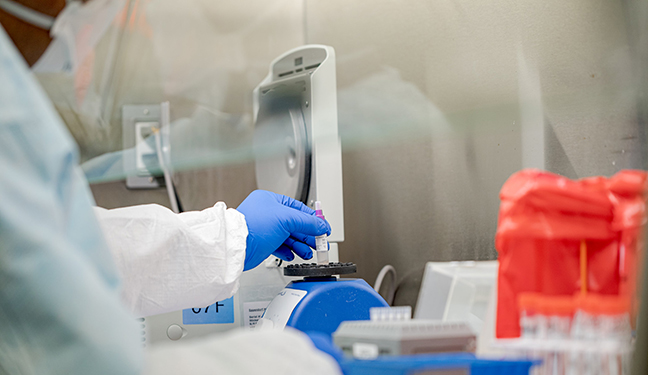
The state Department of Health lab in Exton, Pa.

The total number of COVID-19 cases in PA broke through 50,000 today, though new cases sank to their lowest point in over a month.

The state Department of Health today reported 825 newly diagnosed cases, bringing the total to 50,092 since the pandemic began in early March.

This represents the lowest number of new daily cases since March 31, when 756 new cases were registered.

Case numbers have tended to dip on Mondays, which health Secretary Rachel Levine has attributed to less frequency of reporting to the department over weekends.

For more than three weeks, new cases in PA have generally ranged from 1,000 to 1,500 each day. Overall, about 20 percent of PA residents tested have shown to be positive for the virus.

Locally, total diagnosed cases are as follows:

  • Adams County: 148 cases (yesterday, 145)
  • Cumberland County: 375 cases (yesterday, 373)
  • Dauphin County: 652 cases (yesterday, 634)
  • Franklin County: 377 cases (yesterday, 351)
  • Lancaster County: 1,991 cases (yesterday, 1,936)
  • Lebanon County: 756 cases (yesterday, 735)
  • Perry County: 34 cases (yesterday, 34)
  • York County: 702 cases (yesterday, 679)

“As we prepare to move a number of counties from red to yellow, we need all Pennsylvanians to continue to follow the social distancing and mitigation efforts in place,” health Secretary Rachel Levine said today.

On Friday, the state plans to move 24 counties in the northwest and north-central parts of the state from “red” to “yellow” categories, thereby loosening business restrictions and stay-at-home orders there.

The commonwealth also reported an additional 14 deaths from the disease for the 24 hours ending at midnight. Since the pandemic began, 2,458 Pennsylvanians have now died due to COVID-19, according to the department.

Around central PA, the COVID-19 fatality data now is as follows:

  • Adams County: 4 deaths (yesterday, 4)
  • Cumberland County: 18 deaths (yesterday, 18)
  • Dauphin County: 28 deaths (yesterday, 28)
  • Franklin County: 8 deaths (yesterday, 8)
  • Lancaster County: 113 deaths (yesterday, 112)
  • Lebanon County: 10 deaths (yesterday, 10)
  • Perry County: 1 death (yesterday, 1)
  • York County: 11 deaths (yesterday, 11)

Statewide, Philadelphia County continues to have the most confirmed cases with 13,316 cases, followed by Montgomery County with 4,645 cases. The two counties also have reported the most deaths statewide from the disease: 424 and 382, respectively.

Nursing homes and personal care facilities have been particularly hard hit by the virus. Out of total deaths, 1,646, or about 67 percent, have occurred in residents from nursing or personal care facilities, according to the health department.

In nursing and personal care homes, there are 9,345 resident cases of COVID-19, and 1,224 cases among employees, for a total of 10,569 at 494 distinct facilities in 44 counties, according to the health department.

In addition, 3,084 of total cases in PA are in health care workers.

Statewide, 245,590 coronavirus tests have been performed, with 195,498 people testing negative, according to the state health department. Yesterday, the state reported that 240,641 people had been tested for the virus.

Of the patients who have tested positive to date, the age breakdown is as follows, according to the health department:

  • Nearly 1 percent are aged 0-4
  • Nearly 1 percent are aged 5-12
  • 1 percent are aged 13-18
  • Nearly 6 percent are aged 19-24
  • Nearly 38 percent are aged 25-49
  • Nearly 27 percent are aged 50-64
  • 27 percent are aged 65 or older.

Most of the patients hospitalized are 65 or older, as are most of the reported deaths, according to the state. There have been no pediatric deaths to date.

Levine continued to emphasize that Pennsylvanians should do the following:

  • Wash your hands with soap and water for at least 20 seconds or use hand sanitizer if soap and water are not available.
  • Cover any coughs or sneezes with your elbow, not your hands.
  • Clean surfaces frequently.
  • Stay home to avoid spreading COVID-19, especially if you are unwell.

“We must continue to protect our most vulnerable Pennsylvanians, which includes our seniors, those with underlying health issues, our healthcare workers and our first responders,” Levine said. “I am proud of the work that Pennsylvanians have done so far, but we cannot stop now, we must continue to take the necessary steps to protect ourselves from COVID-19.”

For more information, visit the PA Department of Health’s COVID-19 website.

Continue Reading

New daily COVID-19 cases dip below 1,000 again in PA

An image from the PA Department of Health lab in Exton.

Nearly 1,000 additional Pennsylvanians have tested positive for the coronavirus, the state Department of Health announced today.

In its daily update, the department said that 962 more residents are confirmed positive for COVID-19, bringing the total to 49,267 since the pandemic began in early March.

This data is in line with a three-week trend, which has largely seen newly reported cases range from 1,000 to 1,500 each day. Overall, about 20 percent of PA residents tested have shown to be positive for the virus.

Case numbers have tended to dip on Sundays and Mondays, which health Secretary Rachel Levine has attributed to less frequency of reporting to the department over weekends.

Locally, total diagnosed cases are as follows:

  • Adams County: 145 cases (yesterday, 141)
  • Cumberland County: 373 cases (yesterday, 365)
  • Dauphin County: 634 cases (yesterday, 617)
  • Franklin County: 351 cases (yesterday, 325)
  • Lancaster County: 1,936 cases (yesterday, 1,904)
  • Lebanon County: 735 cases (yesterday, 710)
  • Perry County: 34 cases (yesterday, 33)
  • York County: 679 cases (yesterday, 664)

“As we see the number of new COVID-19 cases continuously change across the state that does not mean we can stop practicing social distancing,” Levine said.

The commonwealth also reported an additional 26 deaths from the disease for the 24 hours ending at midnight. Since the pandemic began, 2,444 Pennsylvanians have now died due to COVID-19, according to the department.

Around central PA, the COVID-19 fatality data now is as follows:

  • Adams County: 4 deaths (yesterday, 4)
  • Cumberland County: 18 deaths (yesterday, 17)
  • Dauphin County: 28 deaths (yesterday, 25)
  • Franklin County: 8 deaths (yesterday, 8)
  • Lancaster County: 112 deaths (yesterday, 112)
  • Lebanon County: 10 deaths (yesterday, 10)
  • Perry County: 1 death (yesterday, 1)
  • York County: 11 deaths (yesterday, 11)

Statewide, Philadelphia County continues to have the most confirmed cases with 13,179 cases, followed by Montgomery County with 4,552 cases. The two counties also have reported the most deaths statewide from the disease: 423 and 381, respectively.

Nursing homes and personal care facilities have been particularly hard hit by the virus. Out of total deaths, 1,635, or almost 67 percent, have occurred in residents from nursing or personal care facilities, according to the health department.

In nursing and personal care homes, there are 9,122 resident cases of COVID-19, and 1,194 cases among employees, for a total of 10,316 at 492 distinct facilities in 44 counties, according to the health department.

In addition, 3,031 of total cases in PA are in health care workers.

Statewide, 240,641 coronavirus tests have been performed, with 191,374 people testing negative, according to the state health department. Yesterday, the state reported that 235,376 people had been tested for the virus.

Of the patients who have tested positive to date, the age breakdown is as follows, according to the health department:

  • Nearly 1 percent are aged 0-4
  • Nearly 1 percent are aged 5-12
  • 1 percent are aged 13-18
  • Nearly 6 percent are aged 19-24
  • Nearly 38 percent are aged 25-49
  • Nearly 27 percent are aged 50-64
  • Nearly 27 percent are aged 65 or older.

Most of the patients hospitalized are 65 or older, as are most of the reported deaths, according to the state. There have been no pediatric deaths to date.

Levine continued to emphasize that Pennsylvanians should do the following:

  • Wash your hands with soap and water for at least 20 seconds or use hand sanitizer if soap and water are not available.
  • Cover any coughs or sneezes with your elbow, not your hands.
  • Clean surfaces frequently.
  • Stay home to avoid spreading COVID-19, especially if you are unwell. 

“We must continue to stay home to protect ourselves, our families and our community,” Levine said. “If you must go out, please make as few trips as possible and wear a mask to protect not only yourself, but others. We need all Pennsylvanians to continue to heed these efforts to protect our vulnerable Pennsylvanians, our health care workers and frontline responders.” 

For more information, visit the PA Department of Health’s COVID-19 website.

Continue Reading

Three-week virus trend unchanged, as PA reports 1,334 new COVID-19 cases

PA Department of Health Secretary Rachel Levine (right) during her virtual update on Saturday

More than 1,300 additional Pennsylvanians have tested positive for the coronavirus, the state Department of Health announced today.

In its daily update, the department said that 1,334 more residents have been confirmed positive for COVID-19 as of midnight, bringing the total to 48,305 since the pandemic began in early March.

This data is in line with a three-week trend, which has largely seen newly reported cases range from 1,000 to 1,500 each day. Overall, almost 21 percent of PA residents tested have shown to be positive for the virus.

Locally, total diagnosed cases are as follows:

  • Adams County: 141 cases (yesterday, 140)
  • Cumberland County: 365 cases (yesterday, 349)
  • Dauphin County: 617 cases (yesterday, 601)
  • Franklin County: 325 cases (yesterday, 313)
  • Lancaster County: 1,904 cases (yesterday, 1,820)
  • Lebanon County: 710 cases (yesterday, 694)
  • Perry County: 33 cases (yesterday, 32)
  • York County: 664 cases (yesterday, 651)

“As we see the number of new COVID-19 cases continuously change across the state that does not mean we can stop practicing social distancing,” said department Secretary Rachel Levine.

The commonwealth also reported an additional 64 deaths from the disease for the 24 hours ending at midnight. Since the pandemic began, 2,418 Pennsylvanians have now died due to COVID-19, according to the department.

Around central PA, the COVID-19 fatality data now is as follows:

  • Adams County: 4 deaths (yesterday, 4)
  • Cumberland County: 17 deaths (yesterday, 17)
  • Dauphin County: 25 deaths (yesterday, 25)
  • Franklin County: 8 deaths (yesterday, 7)
  • Lancaster County: 112 deaths (yesterday, 106)
  • Lebanon County: 10 deaths (yesterday, 9)
  • Perry County: 1 death (yesterday, 1)
  • York County: 11 deaths (yesterday, 11)

Statewide, Philadelphia County continues to have the most confirmed cases with 12,948 cases, followed by Montgomery County with 4,487 cases. The two counties also have reported the most deaths statewide from the disease: 422 and 369, respectively.

Nursing homes and personal care facilities have been particularly hard hit by the virus. Out of total deaths, 1,614, or almost 67 percent, have occurred in residents from nursing or personal care facilities, according to the health department.

In nursing and personal care homes, there are 8,827 resident cases of COVID-19, and 1,148 cases among employees, for a total of 9,975 at 478 distinct facilities in 44 counties, according to the health department.

In addition, 2,989 of total cases in PA are in health care workers.

Statewide, 235,376 coronavirus tests have been performed, with 187,071 people testing negative, according to the state health department. Yesterday, the state reported that 227,448 people had been tested for the virus.

Of the patients who have tested positive to date, the age breakdown is as follows, according to the health department:

  • Nearly 1 percent are aged 0-4
  • Nearly 1 percent are aged 5-12
  • 1 percent are aged 13-18
  • Nearly 6 percent are aged 19-24
  • Nearly 38 percent are aged 25-49
  • Nearly 27 percent are aged 50-64
  • Nearly 27 percent are aged 65 or older.

Most of the patients hospitalized are 65 or older, as are most of the reported deaths, according to the state. There have been no pediatric deaths to date.

Levine continued to emphasize that Pennsylvanians should do the following:

  • Wash your hands with soap and water for at least 20 seconds or use hand sanitizer if soap and water are not available.
  • Cover any coughs or sneezes with your elbow, not your hands.
  • Clean surfaces frequently.
  • Stay home to avoid spreading COVID-19, especially if you are unwell.

“We must continue to stay home to protect ourselves, our families and our community,” Levine said. “If you must go out, please make as few trips as possible and wear a mask to protect not only yourself, but others. We need all Pennsylvanians to continue to heed these efforts to protect our vulnerable Pennsylvanians, our health care workers and frontline responders.”

For more information, visit the PA Department of Health’s COVID-19 website.

Continue Reading

The Week that Was: News and features around Harrisburg

Qui Qui Musarra, chef and an owner at Rubicon, Mangia Qui, & Suba, from a Dani Fresh photo feature in the May issue of TheBurg, which was released this week.

Around TheBurg, week six of the shutdown didn’t seem that different from weeks five, four, etc., etc. Amid the holding pattern, there was some bad news and some very good news. If you missed any of our coverage, we have it all listed and linked below.

COVID-19 pandemic continued to plague the commonwealth, and, each day, we reported on the health department’s grim tally. Click here for the latest update on cases and fatalities.

Gov. Tom Wolf offered further detail on beginning to dial back restrictions on movement and businesses. When will your area migrate from the red to the yellow category? Two online stories, one on Monday and one on Friday, offered information on counties that will make the move next week.

Harrisburg residents and officials should be commended for creatively stepping up to help those in need during the pandemic. So says our editor, who penned a blog post praising the local response to the crisis.

Harrisburg City Council
funded its portion of the new Neighborhood Business Stabilization Program, designed to inject funding into hurting city businesses. At its virtual legislative session, council also approved a couple of important development projects. Our online story has the details.

Invasive pests are a huge problem in Pennsylvania, especially as we transition to warmer weather. Our magazine feature describes the scope of the issue and how people can help.

One Midtown is a new Friends of Midtown program designed to encourage people to patronize local businesses during the pandemic. Read our online story–then show off your receipts!

Sara Bozich continues to stare out her window, hoping that one day she’ll be able to enjoy adult company again. Until then, she has a weekly list of virtual things to do this weekend and some local businesses to patronize.

TheBurg came out with our May issue, a bit slimmed down but still full of community news and features. We continue delivering the hard copy to places that are open for business, but encourage people to read it online, as well.

TheBurg team of reporters, writers, designers and artists picked up 16 Keystone Media Awards, including the coveted “sweepstakes” award for best overall performance in our category. What and who won? To find out, check out our proud editor’s blog post.

Do you receive TheBurg Daily, our online digest of news and events delivered right to your email inbox? If not, subscribe here!

Continue Reading

Wolf announces loosening of shutdown restrictions for 24 PA counties

Gov. Tom Wolf today during his virtual speech.

Gov. Tom Wolf made it official today—state-at-home and business restrictions will be relaxed first in the northwest and north-central parts of the commonwealth.

In a virtual announcement, Wolf specified that 24 counties will be the first to migrate from a “red” to a “yellow” category on May 8, primarily in largely rural areas of Pennsylvania lightly impacted by the COVID-19 pandemic.

“Over the past two months, Pennsylvanians in every corner of our commonwealth have acted collectively to stop the spread of COVID-19,” Wolf said. “We have seen our new case numbers stabilize statewide and while we still have areas where outbreaks are occurring, we also have many areas that have few or no new cases.”

The 24 counties are Bradford, Cameron, Centre, Clarion, Clearfield, Clinton, Crawford, Elk, Erie, Forest, Jefferson, Lawrence, Lycoming, McKean, Mercer, Montour, Northumberland, Potter, Snyder, Sullivan, Tioga, Union, Venango and Warren.

Those counties, he said, have relatively low per-capita rates of COVID-19 cases, along with the ability to conduct testing and contact tracing of their populations.

The Wolf administration is using a three-color system to guide re-openings. Most of the state remains under a “red” phase, which includes a stringent “stay-at-home” order and the mandatory closure of the physical locations of “non life-sustaining” businesses.

In the “yellow” category, stay-at-home restrictions are lifted, and businesses may operate their physical locations under certain safety procedures. Closures of schools, gyms, casinos and other indoor recreation centers, hair and nail salons, as well as limitations around large gatherings, remain in place.

“Operations that cannot allow for social distancing must remain closed,” Wolf said today.

The “green” phase indicates a general reopening, as long as state Department of Health and U.S. Centers for Disease Control guidelines are followed.

Wolf said that counties could be moved back into the red category if COVID-19 case counts increase, and he urged PA residents everywhere to continue to minimize contact with one another.

Wolf declined to offer a timeline for lifting restrictions in other parts of the state, but did say that “we have our eyes on counties in the southwest and a few in the south-central region that have lower new-case rates.”

“We’re going to be reopening facilities in these counties as quickly as we can, but we want to maintain public safety,” he said.

To guide reopening decisions, the state is using a “risk-based decision support tool” developed by Carnegie Mellon University. This analysis tool factors in such criteria as reported number of COVID cases per population of an area; ICU and medical/surgical bed capacity; population density; population over age 60; and re-opening contact risk, such as the number of workers employed in a currently closed industry sector.

“Our goal since this pandemic was first identified in Pennsylvania has been to save lives while ensuring that the public health system does not become overwhelmed with people suffering from COVID-19,” Department of Health Secretary Dr. Rachel Levine said. “Our contact tracing and testing plans will ensure that as we begin to resume our daily activities, we can do so safely and without fear.”

Continue Reading

Another 1,200 PA residents test positive for COVID-19, in line with long-term trend

An image from the state Department of Health lab in Exton, Pa.

More than 1,200 more Pennsylvanians have tested positive for the coronavirus, the state Department of Health announced today.

In its daily update, the department said that 1,208 more residents are confirmed positive for COVID-19, bringing the total to 46,971 since the pandemic began in early March.

This data is in line with a three-week trend, which has largely seen newly reported cases range from 1,000 to 1,500 each day. Overall, about 21 percent of PA residents tested have shown to be positive for the virus.

Locally, total diagnosed cases are as follows:

  • Adams County: 140 cases (yesterday, 137)
  • Cumberland County: 349 cases (yesterday, 343)
  • Dauphin County: 601 cases (yesterday, 584)
  • Franklin County: 313 cases (yesterday, 284)
  • Lancaster County: 1,820 cases (yesterday, 1,765)
  • Lebanon County: 694 cases (yesterday, 676)
  • Perry County: 32 cases (yesterday, 30)
  • York County: 651 cases (yesterday, 641)

“As we see the number of new COVID-19 cases continuously change across the state that does not mean we can stop practicing social distancing,” said department Secretary Rachel Levine.

The commonwealth also reported an additional 62 deaths from the disease for the 24 hours ending at midnight. Since the pandemic began, 2,354 Pennsylvanians have now died due to COVID-19, according to the department.

Around central PA, the COVID-19 fatality data now is as follows:

  • Adams County: 4 deaths (yesterday, 4)
  • Cumberland County: 17 deaths (yesterday, 16)
  • Dauphin County: 25 deaths (yesterday, 25)
  • Franklin County: 7 deaths (yesterday, 6)
  • Lancaster County: 106 deaths (yesterday, 104)
  • Lebanon County: 9 deaths (yesterday, 9)
  • Perry County: 1 death (yesterday, 1)
  • York County: 11 deaths (yesterday, 9)

Statewide, Philadelphia County continues to have the most confirmed cases with 12,544 cases, followed by Montgomery County with 4,406 cases. The two counties also have reported the most deaths statewide from the disease: 424 and 362, respectively.

Nursing homes and personal care facilities have been particularly hard hit by the virus. Out of total deaths, 1,560, or about 66 percent, have occurred in residents from nursing or personal care facilities, according to the health department.

In nursing and personal care homes, there are 8,478 resident cases of COVID-19, and 1,097 cases among employees, for a total of 9,575 at 452 distinct facilities in 44 counties, according to the health department.

In addition, 2,878 of total cases in PA are in health care workers.

Statewide, 227,448 coronavirus tests have been performed, with 180,477 people testing negative, according to the state health department. Yesterday, the state reported that 221,365 people had been tested for the virus.

Of the patients who have tested positive to date, the age breakdown is as follows, according to the health department:

  • Nearly 1 percent are aged 0-4
  • Nearly 1 percent are aged 5-12
  • 1 percent are aged 13-18
  • Nearly 6 percent are aged 19-24
  • Nearly 38 percent are aged 25-49
  • 27 percent are aged 50-64
  • Nearly 27 percent are aged 65 or older.

Most of the patients hospitalized are 65 or older, as are most of the reported deaths, according to the state. There have been no pediatric deaths to date.

Levine continued to emphasize that Pennsylvanians should do the following:

  • Wash your hands with soap and water for at least 20 seconds or use hand sanitizer if soap and water are not available.
  • Cover any coughs or sneezes with your elbow, not your hands.
  • Clean surfaces frequently.
  • Stay home to avoid spreading COVID-19, especially if you are unwell.

“We must continue to stay home to protect ourselves, our families and our community,” Levine said. “If you must go out, please make as few trips as possible and wear a mask to protect not only yourself, but others. We need all Pennsylvanians to continue to heed these efforts to protect our vulnerable Pennsylvanians, our health care workers and frontline responders.”

For more information, visit the PA Department of Health’s COVID-19 website.

Continue Reading

Burg Blog: And the Keystone Goes to …

Each day, it seems like we’re faced with an overload of bad news. So, it was wonderful to get some good news for a change.

On Thursday, we learned that TheBurg received 16 individual and group Keystone Media Awards, a peer-reviewed contest sponsored by the Pennsylvania NewsMedia Association Foundation.

According to PNA, it received more than 2,700 entries from 122 news organizations, with entries judged by working journalists in Colorado.

Our awards cover a wide range of areas, including reporting, writing, photography, illustration and design and include the prestigious “Sweepstakes” award for the best performance statewide in our category.

But let us delay no further. As I have in recent years, I have all the winners listed below, with links so you can see what the judges deemed to be some of the best work done statewide in 2019.


Editorial Writing: First Place, Lawrance Binda (3 editorials)

Make Forster Safer

Cursed City

Where Are the Incumbents?


Column Writing: First Place, Lawrance Binda (3 columns)

Column What’s Up, HBG Engaged, Gimme Shelter


Ongoing News Coverage: Second Place, Lawrance Binda (5 articles)

State Takes Over Harrisburg School District

Judge expected to issue order barring Harrisburg school board from entering into contracts

State to take over Harrisburg school district as administration concedes receivership fight

Harrisburg school district leaders swept out as receiver brings in outside team

Harrisburg school district finances “in shambles,” computers missing as recovery team begins work

School receiver calls financial audit “clear indictment” of former administration practices


News Feature Story: First Place, Susan Ryder

“Out by Sunday”: With a property sale, a homeless camp disbands and long-time residents wonder where to go next


Sports Feature: First Place, Maddie Conley

The Trainer Is In


Diversity: First Place, Yaasmeen Piper, Diane McCormick, Maddie Conley, Barbara Trainin Blank (5 articles)

Diversity submission


Lifestyle/Entertainment Beat: Honorable Mention, Stephanie Kalina-Metzger

Lifestyle Beat Food


News Page Design: First Place, Megan Caruso, Kristen Fava, Billy Hicks


Feature Page Design: First Place, Megan Caruso


Feature Page Design: Second Place, Megan Caruso


Graphic/Photo Illustration: First Place, Rich Hauck


Graphic/Photo Illustration: Second Place, Stephen Haas


Graphic/Photo Illustration: Honorable Mention, Rich Hauck


Feature Photo: Honorable Mention, Billy Hicks


Photo Story/Essay: Second Place, Landon Wise

Continue Reading

Burg View: Harrisburg Together, Stronger

Part of Harrisburg’s 3rd Street commercial district, full of small businesses devastated by the shutdown

The COVID-19 pandemic is a unique type of misery rarely experienced—a profound health, economic and social crisis all wrapped up into one singular horror.

Humans, though, can be a pretty resilient and innovative bunch, and, in the Harrisburg area, we’ve seen numerous cases of people using their specific strengths and skills to try to help those most affected.

Since the pandemic hit, we’ve written stories about these efforts, such as the Hope Tree, which blinks brightly every night in Riverfront Park, “Grub for Scrubs,” an initiative designed to assist both suffering restaurants and stressed health care workers, and, most recently, the “One Midtown” campaign. There are many others.

On Tuesday night, more hope arrived for hurting businesses, as Harrisburg City Council funded its portion of the $1 million Neighborhood Business Stabilization Program. This joint program between the city and the nonprofit Impact Harrisburg will award up to $10,000 to city-licensed businesses to help them weather the economic storm.

This program should be applauded for many reasons, but I especially like it because it shows that government, so often maligned, can be creative and focused in addressing an extremely serious problem—and one that ordinarily would fall outside its purview.

In the case of this new program, two entities have combined forces to put money exactly where it’s needed—to help keep small businesses in the city breathing until they’re able to survive on their own again.

Impact Harrisburg, a creature of the Harrisburg Strong Plan (remember that?), still has money available from when it was originally funded some seven years ago. Meanwhile, the city is turning an ugly duckling into a swan by tapping a stink-bomb of a program—the decades-old, dormant revolving loan program (I get nauseated just thinking about it)—where over $2 million sits awaiting good use.

No doubt the Impact Harrisburg board has a tough task ahead selecting who will receive funds. According to city Solicitor Neil Grover, the program is already over-subscribed with the application deadline still a week away.

I don’t envy their position. I’m confident that board members will use their best judgment, but they’re also setting themselves up for criticism, unfortunately. That often happens when selecting winners and losers, and now the stakes are especially high.

Also, I know my city, where, too often, no good deed goes unpunished, and some people always seem to be on the edge of outrage.

But, hey, tough times call for tough leaders, and that time has arrived for Impact Harrisburg. It may turn out that no applicant gets everything they want or need, but those who qualify get something. I’m interested to see they approach Harrisburg’s version of a Solomon’s choice.

So far, I’ve been incredibly impressed with this community’s imaginative and earnest response to the sudden catastrophe that’s befallen us. People have stepped up strongly to support health care workers, restaurants, businesses and even community journalism. We now can add city officials to this long list of creative thinkers piecing together creative solutions.

To learn more about the Neighborhood Business Stabilization Program, visit the Impact Harrisburg website.

Lawrance Binda is co-publisher and editor-in-chief of TheBurg.

Continue Reading

Nearly 1,400 new COVID-19 cases reported in PA, in line with recent trend

An image from the state Department of Health lab in Exton, Pa.

Nearly 1,400 more Pennsylvanians have tested positive for the coronavirus, the state Department of Health announced today.

In its daily update, the department said that 1,397 more residents have been confirmed positive for COVID-19, bringing the total to 45,763 since the pandemic began in early March.

This data is in line with a three-week trend, which has largely seen newly reported cases range from 1,000 to 1,500 each day. Overall, about 21 percent of PA residents tested have shown to be positive for the virus.

Locally, total diagnosed cases are as follows:

  • Adams County: 137 cases (yesterday, 130)
  • Cumberland County: 343 cases (yesterday, 324)
  • Dauphin County: 584 cases (yesterday, 558)
  • Franklin County: 284 cases (yesterday, 264)
  • Lancaster County: 1,765 cases (yesterday, 1,703)
  • Lebanon County: 676 cases (yesterday, 648)
  • Perry County: 30 cases (yesterday, 30)
  • York County: 641 cases (yesterday, 624)

“As we see the number of new COVID-19 cases continuously change across the state that does not mean we can stop practicing social distancing,” said department Secretary Rachel Levine.

The commonwealth also reported an additional 97 deaths from the disease for the 24 hours ending at midnight. Since the pandemic began, 2,292 Pennsylvanians have now died due to COVID-19, according to the department.

Around central PA, the COVID-19 fatality data now is as follows:

  • Adams County: 4 deaths (yesterday, 4)
  • Cumberland County: 16 deaths (yesterday, 15)
  • Dauphin County: 25 deaths (yesterday, 21)
  • Franklin County: 6 deaths (yesterday, 6)
  • Lancaster County: 104 deaths (yesterday, 103)
  • Lebanon County: 9 deaths (yesterday, 9)
  • Perry County: 1 death (yesterday, 1)
  • York County: 9 deaths (yesterday, 9)

Statewide, Philadelphia County continues to have the most confirmed cases with 12,297 cases, followed by Montgomery County with 4,307 cases. The two counties also have reported the most deaths statewide from the disease: 424 and 351, respectively.

Nursing homes and personal care facilities have been particularly hard hit by the virus. Out of total deaths, 1,505, or almost 66 percent, have occurred in residents from nursing or personal care facilities, according to the health department.

In nursing and personal care homes, there are 8,112 resident cases of COVID-19, and 1,032 cases among employees, for a total of 9,144 at 452 distinct facilities in 44 counties, according to the health department.

Statewide, 221,365 coronavirus tests have been performed, with 175,602 people testing negative, according to the state health department. Yesterday, the state reported that 214,884 people had been tested for the virus.

Of the patients who have tested positive to date, the age breakdown is as follows, according to the health department:

  • Nearly 1 percent are aged 0-4
  • Nearly 1 percent are aged 5-12
  • 1 percent are aged 13-18
  • Nearly 6 percent are aged 19-24
  • Nearly 38 percent are aged 25-49
  • 27 percent are aged 50-64
  • 26 percent are aged 65 or older.

Most of the patients hospitalized are 65 or older, as are most of the reported deaths, according to the state. There have been no pediatric deaths to date.

Levine continued to emphasize that Pennsylvanians should do the following:

  • Wash your hands with soap and water for at least 20 seconds or use hand sanitizer if soap and water are not available.
  • Cover any coughs or sneezes with your elbow, not your hands.
  • Clean surfaces frequently.
  • Stay home to avoid spreading COVID-19, especially if you are unwell.

“We must continue to stay home to protect ourselves, our families and our community,” Levine said. “If you must go out, please make as few trips as possible and wear a mask to protect not only yourself, but others. We need all Pennsylvanians to continue to heed these efforts to protect our vulnerable Pennsylvanians, our health care workers and frontline responders.”

For more information, visit the PA Department of Health’s COVID-19 website.

Continue Reading