Mourning in America: Pandemic has changed how we grieve, hold funerals

Wildflowers along the Susquehanna River

Funerals, once a time of gathering with family and friends, sharing memories and comforting, familiar foods, has become another way of life upended by COVID-19.

People are feeling this loss of community, with funerals now relegated to 10 in attendance in the Harrisburg area. The “yellow” phase, which allows for 25 attendees, still will create hard decisions for families.

“Rituals are built on community and holding each other up,” said Rev. Virginia Cover, pastor at Grace Lutheran Church in Camp Hill. “It’s a very difficult decision to make, who will be the 10 people.”

Susan Resavy, director of family services for Hospice of Central Pennsylvania, said people understand intellectually that this is needed, but it’s still emotionally heartbreaking.

“It’s not going to feel the same,” she said. “Acknowledge that this is really hard.”

Peter Stegman, general manager of Hetrick-Bitner Funeral Home of Harrisburg, said that, at times of stress, we look to be supported by others. When that’s taken away, “it’s confusing and overwhelming.” Gathering provides support through hugs and wiping away of tears, which is “not conducive to social distancing,” he said.

COVID-19 has also created a collective trauma. And this, accompanied by the death of a loved one, has exacerbated the anxiety that normally accompanies grief.

“A communal laying to rest is not happening, and full acknowledgement of grief is not happening,” Cover said.

Local funeral homes are working to assist families through this stunted process.

“In a world that is built on tradition, we are trying to encourage people to embrace new and creative traditions to help them connect to a greater network of relatives and friends,” said Stegman.

Those new and creative traditions include live-streaming funerals, allowing folks to virtually participate, and in Cover’s case, holding a home funeral.

Resavy said that, even with the ability to gather virtually, it’s healthy for people to plan a larger gathering for later.

“Whether it’s three months down the road or six months down the road, have the event,” she said.

Hetrick-Bitner Funeral Homes is permitting the delayed use of its facilities—letting family and friends hold larger gatherings when allowable.

“We don’t want them to feel as though they did what they did but regret it,” Stegman said.

Perhaps even worse is being told that a family can’t hold a funeral at all. A number of families have been told, erroneously, that they are not permitted to have a funeral right now, Stegman said.

Often, families arrive fearful over what they can and can’t do, Stegman said. So, he tries to focus families on what they can control.

“Who’s going to attend, how to include others, and where we are going to do it,” he said.

Cover pointed out that mourning is also put on hold for the extended family, friends and neighbors.

“People say, ‘I didn’t even get to bring a casserole,’” she said.

There are ways to support people in this harsh time of isolated grief. People can call and send cards or flowers.

The Hospice of Central Pennsylvania is “making a lot more contacts with families,” said Resavy. They are holding Zoom teleconferencing events and virtual support groups. Grieving people, she said, “should look for support in the community.”

Cover holds monthly caregiver and grief support group meetings on Zoom.

COVID-19 has altered the way that we live and has taken away milestone events for many, but traditional ways of mourning needn’t end completely.

“Plan something when you can,” Resavy said. “That’s what’s important. Then, at some point, do what you would normally do.”

 For more information about Hospice of Central Pennsylvania, visit https://hospiceofcentralpa.org.

To contact Grace Lutheran Church about its Caregiver and Grief Support Group, email [email protected].

Continue Reading

Weekend Roundup with Sara Bozich

Hey hey, you might not know it, but IT’S THE WEEKEND (almost, I mean I guess it depends). For your Friday (TOMORROW), plan ahead and go get some of Tröegs new Perpetual Beer Cheese (find it at Tröegs, Giant, or Caputo Brothers Creamery). Then grab your fave beer, then logon to our Virtual Happy Hour at 5 p.m. (Friday) to hear from Tröegs and Caputo Brothers and Pennsylvania’s own Madam Fromage to taste and enjoy the cheese. Oh, I’ll be moderating! Mostly eating cheese and drinking beer, tho. Otherwise weekend includes: garden + plant things + burgers on the grill. THAT’S IT! Ya know, besides laundry, cooking, cleaning, work, and toddler wrangling. CHEERS!  

Top Picks:

More ideas

Top picks to-go/delivery

Boneshire Brew Works  4-packs and growler sales 4-7 p.m. Thursday and Friday; 12-4 p.m Saturday Order online Tattered Flag Brewery & Still Works  Food, to-go beer, spirits, canned cocktails – 11 a.m. to 7 p.m. Order online Appalachian Brewing Co. – Mechanicsburg Food take-out only 4-8 p.m Monday-Thursday; 12-8 p.m. Friday-Sunday Beer + spirits take-out only – 12-8 p.m. Daily at the Mechanicsburg location Call 717-221-1080 to order View menu Ploughman Cider  Take-out cider a the Taproom 12-5 p.m. Friday and Saturday Online cider sales now available. HOLLA Spirits  Spirits available to order online 20% of all sales go to U.S. Bartenders’ Guild COVID-19 Relief Program and other virus relief funds – Read more MoMo BBQ Co.  Open for take-out and limited delivery, 11 a.m. to 4 p.m. Family meals available. View menus on Facebook. Call 717-550-7995 R.G. Hummer Meats & Cheese  OPEN during Broad Street Market Hours (See more below) Shop in-person or Call-ahead pre-orders 717-232-4150 Fresa Bistro Open for take-out and limited call-in delivery Call 717-216-8754 or use GrubHub Broad Street Market Open mostly normal hours; limited customer entry; some vendors closed – BUT – many offering online delivery Cornerstone Coffeehouse 7 a.m. to 3 p.m. daily for carryout Limited food menu available There are more and more restaurants doing pick-up/delivery — check-in with your favorites.

Culture + Chill

Check out our Culture Vulture series – ways to experience life outside while, ahem, inside. Midtown Scholar Bookstore Shop online here, plus SAVE 10% on used books with code SCHOLARSALE Shop new books through affiliate BookShop Enjoy virtual author events Midtown Cinema Purchase a gift card or renew your membership now to keep them going, then reap the benefits of your purchase once they reopen! Secure a future movie night for two – with two tickets, two small popcorns, two small sodas, and two bags of candy! Stash Vintage Shop online via Etsy All local orders free pickup or free delivery (over $35) Save 25% off your purchase of 2 or more items online, plus look for flash sales
Stay home + stay healthy!
Continue Reading

New COVID-19 cases continue below 1,000 in PA, fatalities again revised higher

An image from the cover of TheBurg’s May 2020 issue. Photo: Justin Ward

New coronavirus diagnoses continue to sink in number, though the state again adjusted up disease-related fatalities.

The state Department of Health today reported that 707 new cases of COVID-19 had been diagnosed as of midnight.

New daily cases in PA peaked in early April at nearly 2,000 cases, but have shown a gradual, relatively steady decline since. The state reported 837 new cases yesterday and 543 on Monday.

Of the new cases today, 278 are in residents of nursing and personal care homes.

With the additional cases, 58,698 Pennsylvanians have now been diagnosed with the coronavirus.

Locally, total diagnosed cases are as follows:

  • Adams County: 169 cases (yesterday, 167)
  • Cumberland County: 463 cases (yesterday, 461)
  • Dauphin County: 871 cases (yesterday, 851)
  • Franklin County: 545 cases (yesterday, 522)
  • Lancaster County: 2,325 cases (yesterday, 2,295)
  • Lebanon County: 849 cases (yesterday, 825)
  • Perry County: 35 cases (yesterday, 35)
  • York County: 803 cases (yesterday, 793)

Overall, 19.3 percent of PA residents tested have shown to be positive for the virus.

The health department today also reported an additional 137 COVID-19-related fatalities, meaning that 3,943 Pennsylvanians now have died from the disease. The majority of new fatalities—94—were residents of nursing or personal care homes.

In addition, these deaths occurred over “the past several weeks,” according to the health department, not just the prior 24 hours. The department often has to update fatality counts due to inconsistent reporting to the state and data conflicts.

Around central PA, the COVID-19 fatality data now stands as follows:

  • Adams County: 5 deaths (yesterday, 5)
  • Cumberland County: 35 deaths (yesterday, 33)
  • Dauphin County: 39 deaths (yesterday, 38)
  • Franklin County: 13 deaths (yesterday, 12)
  • Lancaster County: 172 deaths (yesterday, 168)
  • Lebanon County: 19 deaths (yesterday, 17)
  • Perry County: 1 death (yesterday, 1)
  • York County: 14 deaths (yesterday, 14)

Statewide, Philadelphia County continues to have the most confirmed cases with 15,376 cases, followed by Montgomery County with 5,513 cases. The two counties also have reported the most deaths statewide from the disease: 904 and 556, respectively.

“As counties move from red to yellow, we need all Pennsylvanians to continue to follow the social distancing and mitigation efforts in place,” Levine said.

This week, the state plans to move 13 counties in the southwest portion of the state into the yellow phase, joining 24 counties in the northwest and north-central parts of PA that moved to yellow last week.

Nursing homes and personal care facilities have been particularly hard hit by the virus. Out of total deaths, 2,705, or 68.6 percent, have occurred in residents from nursing or personal care facilities, according to the health department.

In nursing and personal care homes, there are 12,408 resident cases of COVID-19, and 1,806 cases among employees, for a total of 14,214 at 543 distinct facilities in 44 counties, according to the health department.

In addition, 4,066 of total cases in PA are in health care workers.

Statewide, 302,869 coronavirus tests have been performed, with 244,171 people testing negative, according to the state health department. Yesterday, the state reported that 295,980 people had been tested for the virus.

Of the patients who have tested positive to date, the age breakdown is as follows, according to the health department:

  • Nearly 1 percent are aged 0-4
  • Nearly 1 percent are aged 5-12
  • 1 percent are aged 13-18
  • Nearly 6 percent are aged 19-24
  • Nearly 37 percent are aged 25-49
  • 26 percent are aged 50-64
  • 28 percent are aged 65 or older

Most of the patients hospitalized are 65 or older, as are most of the reported deaths, according to the state.

Levine continued to emphasize that Pennsylvanians should do the following:

  • Wash your hands with soap and water for at least 20 seconds or use hand sanitizer if soap and water are not available.
  • Cover any coughs or sneezes with your elbow, not your hands.
  • Clean surfaces frequently.
  • Stay home to avoid spreading COVID-19, especially if you are unwell.

 “We must continue to protect our most vulnerable Pennsylvanians, which includes our seniors, those with underlying health issues, our healthcare workers and our first responders,” Levine said. “I am proud of the work that Pennsylvanians have done so far, but we cannot stop now, we must continue to take the necessary steps to protect ourselves from COVID-19.” 

For more information, visit the PA Department of Health’s COVID-19 website.

Continue Reading

Burg View: Worn-Out Welcome

A man carries an American flag with “Trump: Making America Great Again” along N. 3rd Street during the April 20 “Reopen PA” rally in Harrisburg

So, here we go again.

On Friday, “Reopen PA” says they’ll be back in town, at the state Capitol, to protest the commonwealth’s lockdown orders and business restrictions, with no doubt the usual abundance of MAGA hats, pro-Trump flags and vendors hawking Trump/Pence 2020 T-shirts.

And, on its face, that’s perfectly fine.

They have a right, as do you and I, to protest and ask the government for a redress of grievances.

But here’s what they don’t have a right to do. They have no right to terrorize the residents of the capital city.

Nearly a month ago, during the first Reopen PA/Trump rally, protesters jumped off the back of a military-style vehicle, dressed in combat gear and began unloading guns off the rear of the truck.

They circled the Capitol building for hours in their cars and trucks, gridlocking several major streets, preventing us, as well as emergency vehicles, from being able to go anywhere.

They leaned on their horns all morning and all afternoon, creating unceasing, ear-splitting cacophony in our neighborhoods.

They open-carried enormous weapons through our quiet residential streets.

And the authorities just let it roll.

The Capitol and state police, of course, were vigilant in protecting the big, empty white building with the green dome.

As I covered the event, police shouted at me when they thought I had encroached too far from the sidewalk onto 3rd Street—just as some guy waving an enormous American flag, which he had desecrated by writing, in giant letters, the word “Trump” on it, conspicuously marched down the middle of the road (pictured above).

That day, the residents of downtown and Midtown Harrisburg felt like sitting ducks, with little visible law enforcement—local, state, whatever—standing between us and some very angry, very well-armed people.

The irony was that then, presumably like this Friday, the subjects of the protest–the governor, the health secretary and most legislators–weren’t even in the capital city. The only people here were the residents, and we bore the brunt of the hate, anger and aggressiveness aimed at other people.

By choosing to live in Harrisburg, we know that sometimes we’ll be inconvenienced by this or that protest or demonstration. And that’s fine. That’s democracy.

However, we shouldn’t have to fear for our safety, either.

So, to the protesters—welcome to Harrisburg. Please respect our city, our regulations and the people who live here. And please limit your protest to the immediate area around the Capitol building. The “Golden Rule” applies. I’m pretty sure that you also don’t want eight hours of horns blaring, gridlocked streets and scary-looking dudes armed to the teeth wandering around your street or cul de sac.

And to our elected and law enforcement officials—you have a duty not only to protect the guys in the gray suits but to protect us. We have ordinances about noise, traffic, public disturbances, etc., in our neighborhoods. Please enforce them.

Lawrance Binda is co-publisher/editor-in-chief of TheBurg.

Continue Reading

Harrisburg Council approves major Allison Hill project; mayor says city will follow state mandates in reopening

A screen grab of Harrisburg City Council’s virtual legislative session on Tuesday

One of the largest housing developments on Allison Hill in recent years is slated to move forward, as Harrisburg City Council approved a plan for a multi-building project just off of Market Street.

On Tuesday evening, council unanimously approved the land use plan by TLC Cornerstone Renewal to construct 26 townhouses, a 24-unit apartment building and a community center in a five-block area bounded by N. 15th Street, Walnut Street and Crabapple Street.

“This is such a blighted area,” council President Wanda Williams said during last week’s council work session, when the project was discussed. “It certainly will enhance this area.”

At that work session, developer Tarik Casteel, president of TLC, told council members that he hopes to break ground in the early fall on the $14.7 million affordable housing project on the 2.1-acre site.

“This project will be big in this community,” he said. “It’s definitely needed, not just in this community but in several areas of the city of Harrisburg.”

A rendering of TLC’s planned project for Allison Hill

Nearly two years ago, TLC cut the ribbon on its first big project, the 20-unit Harrisburg Uptown Building (HUB) and the HUB Veteran Housing Campus.

Casteel told council that the new Allison Hill project would be just the first phase of a three-phase project for the area. He expects a 16-month construction period for the first phase.

“In Allison Hill, there is definitely a need,” he said. “This was one of the worst areas of the city. That’s why we wanted to come into this area, because it is the worst.”

In other action, council approved the distribution of federal housing funds to city-based nonprofits. Recipients of Community Development Block Grant (CDBG) funding include:

  • A Miracle for Sure: $13,810
  • Center for Employment Opportunities: $13,810
  • Communities in Schools: $13,810
  • Heinz Menaker Senior Center: $14,000
  • Latino Hispanic American Community Center (LHACC): $13,810
  • Neighborhood Dispute Settlement: $13,810
  • Pennsylvania Immigrant and Refugee Women’s Network: $13,810
  • The Salvation Army Harrisburg Capital City Region: $25,000

The city also distributed federal Emergency Solutions Grant (ESG) funding to the following organizations:

  • Capital Area Coalition on Homelessness: $24,000
  • Christian Churches United of the Tri-County Area: $63,000
  • Shalom House: $43,100
  • YWCA Greater Harrisburg: $50,000

Also at the meeting, Harrisburg Mayor Eric Papenfuse made an opening statement, telling council members that the city would follow state mandates regarding business closures and stay-at-home orders, not the Dauphin County commissioners.

“I know I speak for all of us when I say we believe in the governor’s decision-making power, we believe in the Department of Health, and we believe in following those guidelines,” he said.

Several commissioners in central PA have threatened to unilaterally move their counties from the most restrictive “red” category to the less restrictive “yellow” category, which allows for greater freedom of movement and business operations. Locally, Dauphin County commission Chairman Jeff Haste issued a letter recently criticizing Gov. Tom Wolf and urging him to begin relaxing restrictions in the commonwealth and the county.

“I know that everyone is eager to get back to work and have the city reopen, but we have to let science guide us, we have to go slow, and we have to work collectively on this issue to make sure that we don’t have a relapse that ends up having us backslide even further and causing additional loss of life and harm,” Papenfuse said.

He added that, if the commissioners defy the state and move Dauphin County to the yellow phase, “we will not recognize that, the governor will not recognize that, and the city will remain in the red phase.”

Continue Reading

“Fighting Chance”: More than 300 Harrisburg businesses receive grants under “stabilization” program

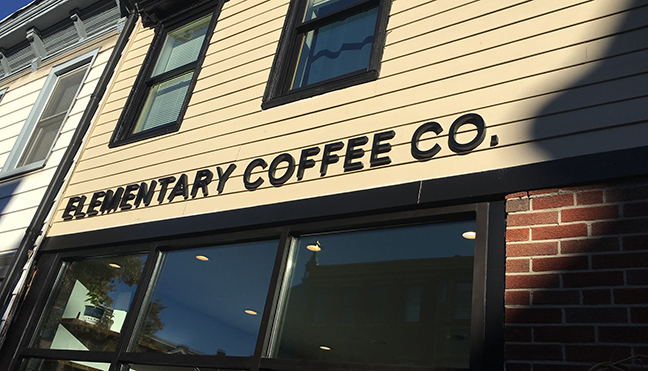
Elementary Coffee Co. shop, temporarily closed, on North Street in Harrisburg

Until mid-March, Lori Reese felt optimistic about her small, growing Harrisburg-based business.

Then COVID hit.

As a professional personal organizer, Reese could no longer meet with her clients, much less visit with them to help get their houses, businesses and lives in order.

So, she was excited when she read about the Neighborhood Business Stabilization Program, a $1 million-plus pool of money funded by the city of Harrisburg and Impact Harrisburg, a nonprofit set up to help spur economic activity in the city.

“I’ve had a drop in business obviously because a lot of what I do is hands-on, face-to-face work with clients,” said Reese, owner of Consider It Done LLC, who runs her business from her home office in the city’s Riverside neighborhood. “When I saw the news (about the program), I thought, ‘Wow, this a great opportunity.”

She quickly applied and just learned that she received a $5,000 grant from the program, which, she said, will help her weather the economic crisis caused by the coronavirus pandemic.

Reese was one of 313 city-licensed businesses to receive $5,000 grants from the program’s first funding round.

According to Sheila Dow Ford, executive director of Impact Harrisburg, all qualified businesses that applied received $5,000 grants.

“We wanted to fund as many businesses as we possibly could across the broad spectrum,” she said, during a virtual press conference today. “So we are hoping we hit the mark in that regard.”

She added that Impact Harrisburg still has to notify some recipients, so applicants who haven’t heard yet “shouldn’t be discouraged.”

A screen grab from today’s virtual press conference

The program allowed businesses to request up to $10,000, but, given the large number of applicants, Impact Harrisburg decided to give across-the-board $5,000 grants to all qualified applicants.

Even that exceeded the initial $1 million fund, so Impact Harrisburg kicked in another $750,000. Tonight, Harrisburg City Council is expected to vote to contribute an additional $500,000, which would bring the total fund to $2.25 million.

The city’s $1 million share originates from two sources. The first $500,000 came from its revolving loan fund, a dormant program started under former Mayor Steve Reed that once leant money to city-based businesses. The second $500,000, if approved by council, originates from federal funding the city will receive as part of the Coronavirus Aid, Relief and Economic Security (CARES) Act.

Mayor Eric Papenfuse said that, with the additional money, a second funding round will be opened to encourage more applicants.

“Our goal is to keep these businesses afloat so, when it is time to reopen, they have a fighting chance of surviving and bouncing back, hopefully stronger than ever,” he said.

To illustrate the community impact, today’s virtual press conference featured three small business owners who received grants: Andrea Grove of Elementary Coffee Co., Angel Fox of Fox’s Wash and Go and Hector Ortiz of Roots of My Land, an Ecuadoran restaurant.

Fox said that the grant will allow her to repair washing machines in her Allison Hill laundromat, as customers have been “over-stuffing” the machines to try to stretch their own limited financial resources.

Grove said that, beyond the money, she appreciated that care was taken to distribute the grants to all deserving, qualified applicants.

“What has been so beautiful about this grant program is that everybody I know got this,” she said. “We desperately need this money, but so many other people need it as well. That is a beautiful testament to the care that this community has for each individual business and the position that they are in.”

For Reese, the money will help her sustain her business, but will also help offset additional costs brought on the crisis. Like many companies, she’s been forced to do more business online, which has meant extra, unanticipated costs to expand her virtual presence, capabilities and security.

Reese also mentioned a non-financial benefit of the program. Much like Grove, she said that she appreciates the effort, caring and the creativity that her city and Impact Harrisburg showed for the small business community here.

“I feel valued as a city business and a city resident,” she said. “Because it’s local, it means more to me.”

For more information about the Neighborhood Business Stabilization program, visit the Impact Harrisburg website.


Continue Reading

New COVID-19 cases in PA continue gradual decline, fatalities remain elevated

An image from the PA Department of Health lab in Exton

Newly diagnosed COVID-19 cases remained below 1,000 today, as the commonwealth reported 837 additional coronavirus infections.

Today’s data reflects a general, gradual decline in new cases over the past month. Of the new cases, 329 are in residents of nursing and personal care homes.

Yesterday, the state reported the fewest new COVID-19 cases since March, with just 543 new infections confirmed. Case numbers reported on Mondays have tended to be the lowest of the week due to less reporting to the state Department of Health, Secretary Rachel Levine has said.

With today’s additional cases, 57,991 Pennsylvanians have now been diagnosed with the coronavirus.

Locally, total diagnosed cases are as follows:

  • Adams County: 167 cases (yesterday, 167)
  • Cumberland County: 461 cases (yesterday, 451)
  • Dauphin County: 851 cases (yesterday, 830)
  • Franklin County: 522 cases (yesterday, 513)
  • Lancaster County: 2,295 cases (yesterday, 2,256)
  • Lebanon County: 825 cases (yesterday, 815)
  • Perry County: 35 cases (yesterday, 35)
  • York County: 793 cases (yesterday, 784)

Overall, 19.6 percent of PA residents tested have shown to be positive for the virus.

The health department today also reported an additional 75 COVID-19-related fatalities, meaning that 3,806 Pennsylvanians now have died from the disease. The majority of new fatalities—59—were residents of nursing or personal care homes.

Around central PA, the COVID-19 fatality data now stands as follows:

  • Adams County: 5 deaths (yesterday, 5)
  • Cumberland County: 33 deaths (yesterday, 33)
  • Dauphin County: 38 deaths (yesterday, 36)
  • Franklin County: 12 deaths (yesterday, 12)
  • Lancaster County: 168 deaths (yesterday, 168)
  • Lebanon County: 17 deaths (yesterday, 16)
  • Perry County: 1 death (yesterday, 1)
  • York County: 14 deaths (yesterday, 13)

Statewide, Philadelphia County continues to have the most confirmed cases with 15,218 cases, followed by Montgomery County with 5,442 cases. The two counties also have reported the most deaths statewide from the disease: 871 and 534, respectively.

“As counties move from red to yellow, we need all Pennsylvanians to continue to follow the social distancing and mitigation efforts in place,” Levine said.

This week, the state plans to move 13 counties in the southwest portion of the state into the yellow phase, joining 24 counties in the northwest and north-central parts of PA that moved to yellow last week.

Nursing homes and personal care facilities have been particularly hard hit by the virus. Out of total deaths, 2,611, or 68.6 percent, have occurred in residents from nursing or personal care facilities, according to the health department.

In nursing and personal care homes, there are 12,130 resident cases of COVID-19, and 1,724 cases among employees, for a total of 13,854 at 540 distinct facilities in 44 counties, according to the health department.

In addition, 3,923 of total cases in PA are in health care workers.

Statewide, 295,980 coronavirus tests have been performed, with 237,989 people testing negative, according to the state health department. Yesterday, the state reported that 288,858 people had been tested for the virus.

Of the patients who have tested positive to date, the age breakdown is as follows, according to the health department:

  • Nearly 1 percent are aged 0-4
  • Nearly 1 percent are aged 5-12
  • 1 percent are aged 13-18
  • Nearly 6 percent are aged 19-24
  • Nearly 37 percent are aged 25-49
  • 26 percent are aged 50-64
  • 28 percent are aged 65 or older.

Most of the patients hospitalized are 65 or older, as are most of the reported deaths, according to the state. There have been no pediatric deaths to date.

Levine continued to emphasize that Pennsylvanians should do the following:

  • Wash your hands with soap and water for at least 20 seconds or use hand sanitizer if soap and water are not available.
  • Cover any coughs or sneezes with your elbow, not your hands.
  • Clean surfaces frequently.
  • Stay home to avoid spreading COVID-19, especially if you are unwell.

“We must continue to protect our most vulnerable Pennsylvanians, which includes our seniors, those with underlying health issues, our healthcare workers and our first responders,” Levine said. “I am proud of the work that Pennsylvanians have done so far, but we cannot stop now, we must continue to take the necessary steps to protect ourselves from COVID-19.” 

For more information, visit the PA Department of Health’s COVID-19 website.

Continue Reading

Harrisburg school district expects $4.2 million budget deficit, but no tax hike, for next school year

Harrisburg school district Receiver Janet Samuels (file photo)

The COVID-19 outbreak has blasted a $4.2 million hole in the Harrisburg school district’s planned budget for next year, but district officials don’t expect to have to raise taxes.

That was the main takeaway from the school district’s virtual budget workshop on Monday, where the preliminary 2020-21 spending plan was unveiled.

“Given these new projections, the revised budget deficit is now more than $4.2 million,” said Acting Superintendent Chris Celmer. “Sometimes, with crisis comes opportunity. We’re hopeful, even with all the unknowns, that we will be able to move the district forward.”

According to the district, the proposed $157.6 million budget was in balance until the economic crisis caused by the pandemic ruined projections.

Since then, the district has had to substantially ratchet down expected revenues from earned income taxes, PILOT tax payments, real estate taxes and increases in the state’s basic and special education subsidies, resulting in a $4.2 million budget deficit.

The district plans to fill that gap with $4.7 million that it expects to receive from federal Coronavirus Aid, Relief and Economic Security (CARES) Act funding. These are one-time funds, meaning that the district may face tough revenue and spending choices next year if the economy and tax revenues don’t quickly improve.

The proposed $157.6 million budget compares to a $149 million projected final budget for the 2019-20 school year. The increased spending is due to increases in employee salaries and benefits, among other higher expenses.

In a small bright spot, school officials stated that they hope to refinance and reduce the district’s substantial debt by taking advantage of historically low interest rates.

District Receiver Janet Samuels is expected to approve the preliminary budget at the district’s next business/school board meeting on Monday, May 18. Another virtual budget workshop is scheduled for June 15 before final action on a 2020-21 spending plan, which is expected on June 22.

Continue Reading

PA reports lowest daily number of new COVID-19 cases in six weeks

An image from the state Department of Health lab in Exton, Pa.

The commonwealth today reported the lowest number of new COVID-19 cases in about six weeks, with just 543 new infections recorded.

This was the fewest number of newly positive cases since March 28, when 533 new cases were reported. At the time, cases were surging and, within a week, would hit nearly 2,000 new cases.

For the past month, new cases have ranged closer to 1,000 each day.

Historically, Monday case numbers have been the lowest of the week due to less reporting to the state Department of Health, Secretary Rachel Levine has said.

With the additional cases, 57,154 Pennsylvanians have now been diagnosed with the coronavirus.

Locally, total diagnosed cases are as follows:

  • Adams County: 167 cases (yesterday, 156)
  • Cumberland County: 451 cases (yesterday, 434)
  • Dauphin County: 830 cases (yesterday, 823)
  • Franklin County: 513 cases (yesterday, 493)
  • Lancaster County: 2,256 cases (yesterday, 2,223)
  • Lebanon County: 815 cases (yesterday, 811)
  • Perry County: 35 cases (yesterday, 35)
  • York County: 784 cases (yesterday, 773)

Overall, about 20 percent of PA residents tested have shown to be positive for the virus.

PA Gov. Tom Wolf today cited these lower case numbers to say that the commonwealth is making progress against the disease and should not reopen “prematurely.”

The health department today also reported an additional 24 COVID-19-related fatalities, meaning that 3,731 Pennsylvanians now have died from the disease. The majority of new fatalities—23—were residents of nursing homes.

Around central PA, the COVID-19 fatality data now stands as follows:

  • Adams County: 5 deaths (yesterday, 5)
  • Cumberland County: 33 deaths (yesterday, 33)
  • Dauphin County: 36 deaths (yesterday, 36)
  • Franklin County: 12 deaths (yesterday, 12)
  • Lancaster County: 168 deaths (yesterday, 166)
  • Lebanon County: 16 deaths (yesterday, 16)
  • Perry County: 1 death (yesterday, 1)
  • York County: 13 deaths (yesterday, 13)

Statewide, Philadelphia County continues to have the most confirmed cases with 15,008 cases, followed by Montgomery County with 5,292 cases. The two counties also have reported the most deaths statewide from the disease: 857 and 525, respectively.

“As we prepare to move a number of counties from red to yellow, we need all Pennsylvanians to continue to follow the social distancing and mitigation efforts in place,” Levine said.

This coming week, the state plans to move 13 counties in the southwest portion of the state into the yellow phase, joining 24 counties in the northwest and north-central parts of PA that moved to yellow last week.

Nursing homes and personal care facilities have been particularly hard hit by the virus. Out of total deaths, 2,552, or 68.4 percent, have occurred in residents from nursing or personal care facilities, according to the health department.

In nursing and personal care homes, there are 11,801 resident cases of COVID-19, and 1,655 cases among employees, for a total of 13,456 at 540 distinct facilities in 44 counties, according to the health department.

In addition, 3,790 of total cases in PA are in health care workers.

Statewide, 288,858 coronavirus tests have been performed, with 231,704 people testing negative, according to the state health department. Yesterday, the state reported that 284,383 people had been tested for the virus.

Of the patients who have tested positive to date, the age breakdown is as follows, according to the health department:

  • Nearly 1 percent are aged 0-4
  • Nearly 1 percent are aged 5-12
  • 1 percent are aged 13-18
  • Nearly 6 percent are aged 19-24
  • Nearly 37 percent are aged 25-49
  • 26 percent are aged 50-64
  • 28 percent are aged 65 or older.

Most of the patients hospitalized are 65 or older, as are most of the reported deaths, according to the state. There have been no pediatric deaths to date.

Levine continued to emphasize that Pennsylvanians should do the following:

  • Wash your hands with soap and water for at least 20 seconds or use hand sanitizer if soap and water are not available.
  • Cover any coughs or sneezes with your elbow, not your hands.
  • Clean surfaces frequently.
  • Stay home to avoid spreading COVID-19, especially if you are unwell. 

“We must continue to protect our most vulnerable Pennsylvanians, which includes our seniors, those with underlying health issues, our healthcare workers and our first responders,” Levine said. “I am proud of the work that Pennsylvanians have done so far, but we cannot stop now, we must continue to take the necessary steps to protect ourselves from COVID-19.” 

For more information, visit the PA Department of Health’s COVID-19 website.

Continue Reading

Gov. Wolf strikes back at calls to reopen counties, accuses commissioners of cowardice, surrender

PA Gov. Tom Wolf (right) today at a virtual speech and press conference

Gov. Tom Wolf today struck back today at “cowardly local politicians” who want to open their economies “prematurely,” accusing them of “surrender” in the face of a “deadly” enemy.

Wolf made his remarks during a virtual press conference following a weekend during which the commissioners of several central PA counties, including Dauphin, Cumberland, Perry, Lebanon and York, said that they would move unilaterally into the less restrictive “yellow” category, perhaps as early as this week.

“These are politicians who were elected to serve their fellow citizens,” Wolf said. “Others are business owners who have chosen to serve their customers by putting them in harm’s way. These folks are choosing to desert in the face of the enemy, in the middle of a war that we Pennsylvanians are winning and that we must win.”

This week, 13 counties in southwest PA will join 24 other counties in the northern areas of the state to move into the “yellow” category, which allows for greater movement and business openings. All of the Harrisburg area remains in the most restrictive “red” category.

For one, Jeff Haste, chairman of the Dauphin County board of commissioners, on Friday released a letter accusing the state of heavy-handed tactics and urging Wolf to allow “businesses and communities to reopen.”

“For centuries, our people and businesses have shown they can adapt to changes to survive and prosper,” Haste stated. “They cannot, however, do a thing when a dictator and an unelected secretary place them in lockdown.”

Some local district attorneys also have said that they would not prosecute violations of state-mandated business closures or stay-at-home orders.

Both Wolf and Haste cited the “progress” made in PA in tamping down the COVID-19 pandemic, saying that the state has successfully “flattened the curve,” or the rate of infection. They also both said that the state, through its business closures and stay-at-home orders, in place since late March, prevented the health care system from becoming overwhelmed.

But they interpreted this progress in very different ways.

Haste cited it as a reason to reopen, in addition to minimizing further harm to businesses and the community.

“I trust and have faith in the great people and businesses of Pennsylvania to operate in a manner that protects those of our population in harm’s way and allows our residents to go back to work, enjoy their communities and have a quality of life,” Haste stated.

Wolf, though, said that loosening restrictions “prematurely” would amount to “surrender” and endanger lives. He also called Pennsylvanians “heroes” for agreeing to upend their lives to help prevent the spread of the virus.

“These heroic acts deserve to be met not by surrendering, but by staying the course,” he said. “And that’s what I intend to do.”

He also said that business owners who follow the commissioners and open before state guidance allows could face penalties, such as losing liquor licenses, health certifications and certificates of occupancy.

“Finally, the politicians who are encouraging the people they’re elected to lead to quit the fight are acting in a most cowardly way,” he said. “This is not the time to give up. This is not the time to surrender. This is the time to rededicate ourselves to the task of beating this virus.”

Continue Reading